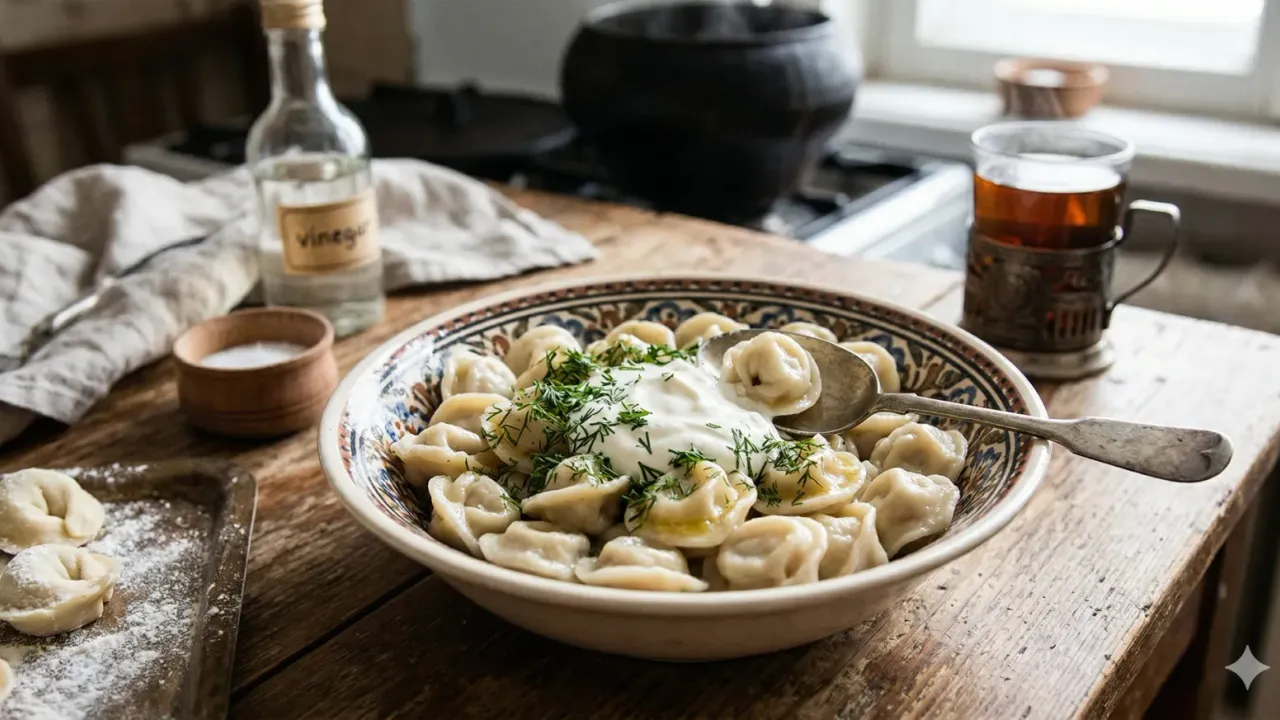
Pelmeni are the beloved meat dumplings of Russia. These small, tender parcels of seasoned beef and pork wrapped in thin dough have warmed Siberian kitchens for centuries. Moreover, they remain one of the most satisfying comfort foods in all of Eastern Europe. This pelmeni recipe teaches you the authentic method for making these Russian dumplings from scratch. The result is a juicy, flavorful dumpling that tastes incredible with sour cream, butter, or a splash of vinegar.
Prep Time: 60 minutes | Cook Time: 10 minutes | Total Time: 1 hour 10 minutes | Servings: 6 (about 60 pelmeni)
Difficulty: Medium | Calories: ~380 per serving
What Makes Pelmeni Special?
Pelmeni stand apart from other dumplings because of their unique construction. The dough is rolled paper-thin. The filling goes in raw. As a result, the meat cooks inside the sealed wrapper during boiling. This traps all the juices and creates a burst of flavor with every bite. Furthermore, the thin dough becomes silky and tender in the hot water. It clings to the meat without feeling heavy or doughy.
The origins of pelmeni trace back to Siberia. Harsh winters demanded food that could be preserved for months. Families shaped hundreds of dumplings and froze them in the snow outside their homes. Therefore, pelmeni became the original frozen convenience food. A pot of boiling water was all you needed to turn a frozen parcel into a hot, complete meal. Consequently, pelmeni spread across Russia and became a national staple.
What truly sets this recipe apart is the balance of beef and pork in the filling. Beef gives the dumplings structure and a rich, savory depth. Meanwhile, pork adds fat and moisture. The combination produces a filling that is juicy without being greasy. Additionally, grated onion releases liquid into the meat as it cooks. This creates a small pocket of broth inside each dumpling. That hidden broth is the hallmark of well-made pelmeni.

Choosing the Right Ground Meat
The filling is the heart of every pelmeni. However, not all ground meat works equally well. Your choice of meat determines the juiciness and flavor of the final dumpling. Here are the best options for making perfect pelmeni at home.
- Ground beef and pork blend (best choice): A 50/50 mix of beef and pork is the classic Russian ratio. The beef provides deep, savory flavor. The pork contributes essential fat that keeps the filling moist. Therefore, this combination produces the juiciest pelmeni with the most balanced taste.
- Ground beef, pork, and lamb triple blend: Siberian tradition calls for three meats. Adding a small portion of ground lamb introduces a slightly gamier note. Besides the extra complexity, lamb fat has a higher melting point. This means the filling holds together better during boiling.
- Ground chicken or turkey: For a lighter version, use ground chicken thigh meat. Dark meat is essential here. Breast meat alone dries out inside the thin wrapper. Consequently, always choose thigh meat or mix breast with a tablespoon of butter for moisture. Although the flavor is milder, these pelmeni are still delicious with sour cream.
- Ground lamb only: Pure lamb pelmeni are popular in Central Asian regions of Russia. The strong lamb flavor pairs well with cumin and coriander. However, some people find the taste too assertive. If you enjoy lamb, this variation offers a bold and satisfying alternative.
Ingredients for Pelmeni
Pelmeni Dough:
- 3 cups all-purpose flour
- 1 large egg
- 1 cup cold water
- 1 teaspoon salt
Meat Filling:
- 1/2 pound ground beef (80/20)
- 1/2 pound ground pork
- 1 medium onion, finely grated
- 2 cloves garlic, minced
- 1/2 teaspoon black pepper
- 1/2 teaspoon salt
- 2 tablespoons ice water
For Boiling and Serving:
- Water for boiling (about 4 quarts)
- 1 tablespoon salt for the water
- 1 bay leaf
- 2 tablespoons unsalted butter
- Sour cream for serving
- Fresh dill, chopped
- White vinegar (optional)
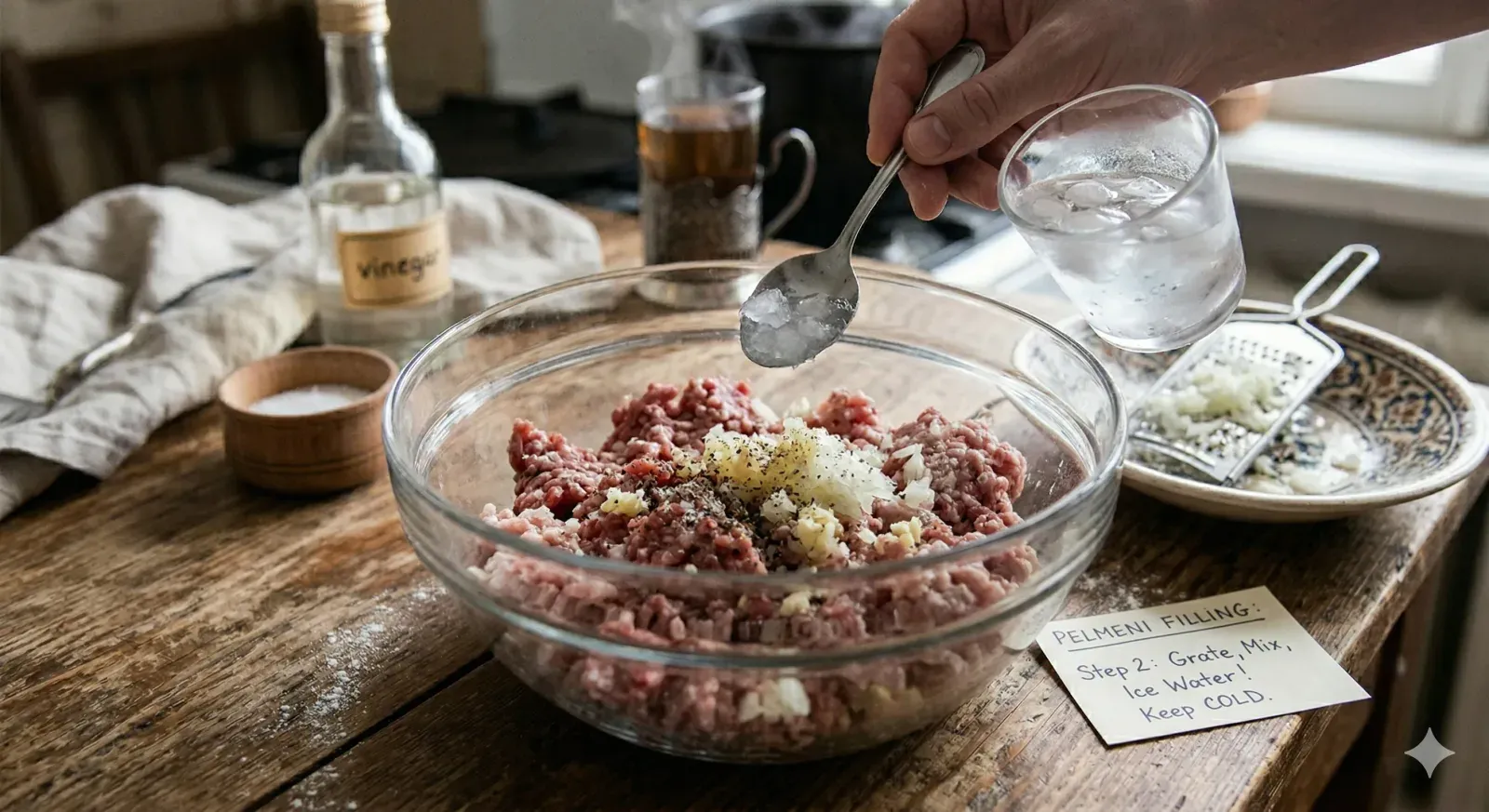
Pro tip: Add ice water to your meat filling. This may seem unusual, but it serves an important purpose. The cold water loosens the meat and creates steam pockets during cooking. Therefore, each pelmeni develops a tiny reservoir of broth inside. This is the secret to juicy, restaurant-quality dumplings. In fact, professional Russian cooks always add liquid to the filling.
Step-by-Step Instructions
Step 1: Make the Dough
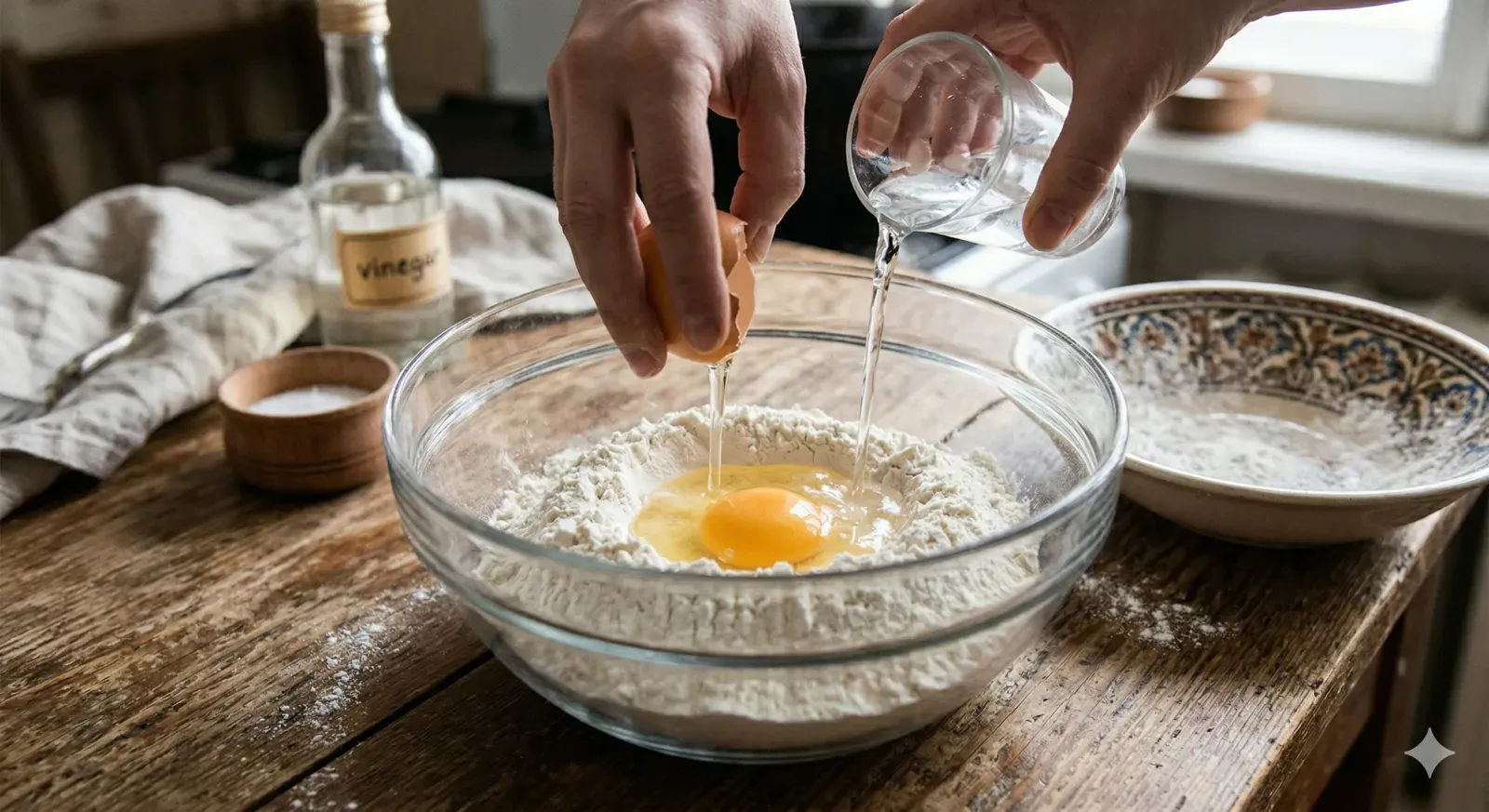
1 Combine the flour and salt in a large mixing bowl. Make a well in the center. Crack the egg into the well and add the cold water. Stir with a fork until a shaggy mass forms. Turn the dough onto a floured surface. Knead firmly for 8 to 10 minutes. The dough should become smooth, elastic, and slightly tacky. However, it should not stick to your hands.
Wrap the dough tightly in plastic wrap. Let it rest at room temperature for 30 minutes. This resting period relaxes the gluten strands. Consequently, the dough rolls out thinner and more evenly. Skipping this step makes rolling difficult. The dough springs back instead of staying flat. Patience here saves frustration later.
Step 2: Prepare the Filling
2 Place the ground beef and ground pork in a large bowl. Add the finely grated onion, minced garlic, salt, and pepper. Pour in the ice water. Mix everything with your hands until the filling is smooth and slightly sticky. The mixture should hold together when pressed. Additionally, the grated onion adds moisture that steams inside the dumpling.
Keep the filling cold while you work. Warm filling becomes soft and hard to handle. Therefore, place the bowl in the refrigerator between shaping batches. Cold filling holds its shape on the dough circles. It also seals more cleanly because the fat stays firm. Meanwhile, the onion juices distribute evenly through the chilled meat.
Step 3: Roll and Cut the Dough
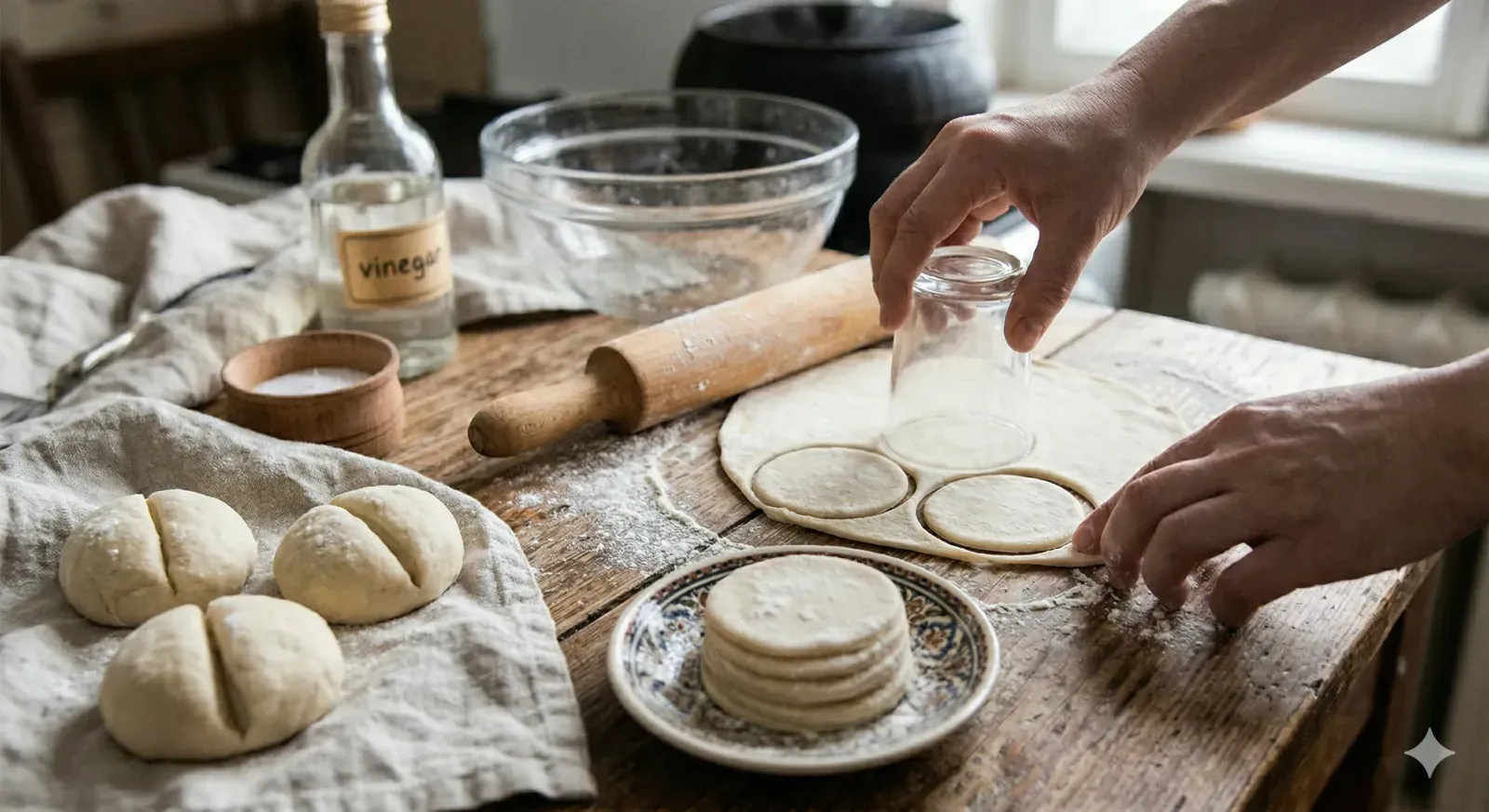
3 Divide the rested dough into four equal pieces. Keep the unused pieces covered to prevent drying. Take one piece and roll it out on a lightly floured surface. Aim for a thickness of about 2 millimeters. The dough should be thin enough to see your hand through it. Use a 3-inch round cutter or a drinking glass to stamp out circles.
Gather the scraps and press them together. You can re-roll them once. However, the second roll produces slightly tougher dough. Therefore, use those pieces first when shaping. Besides maximizing your dough, working quickly prevents the circles from drying at the edges. Dry edges do not seal properly. Lightly dust each circle with flour and stack them.
Step 4: Shape the Pelmeni
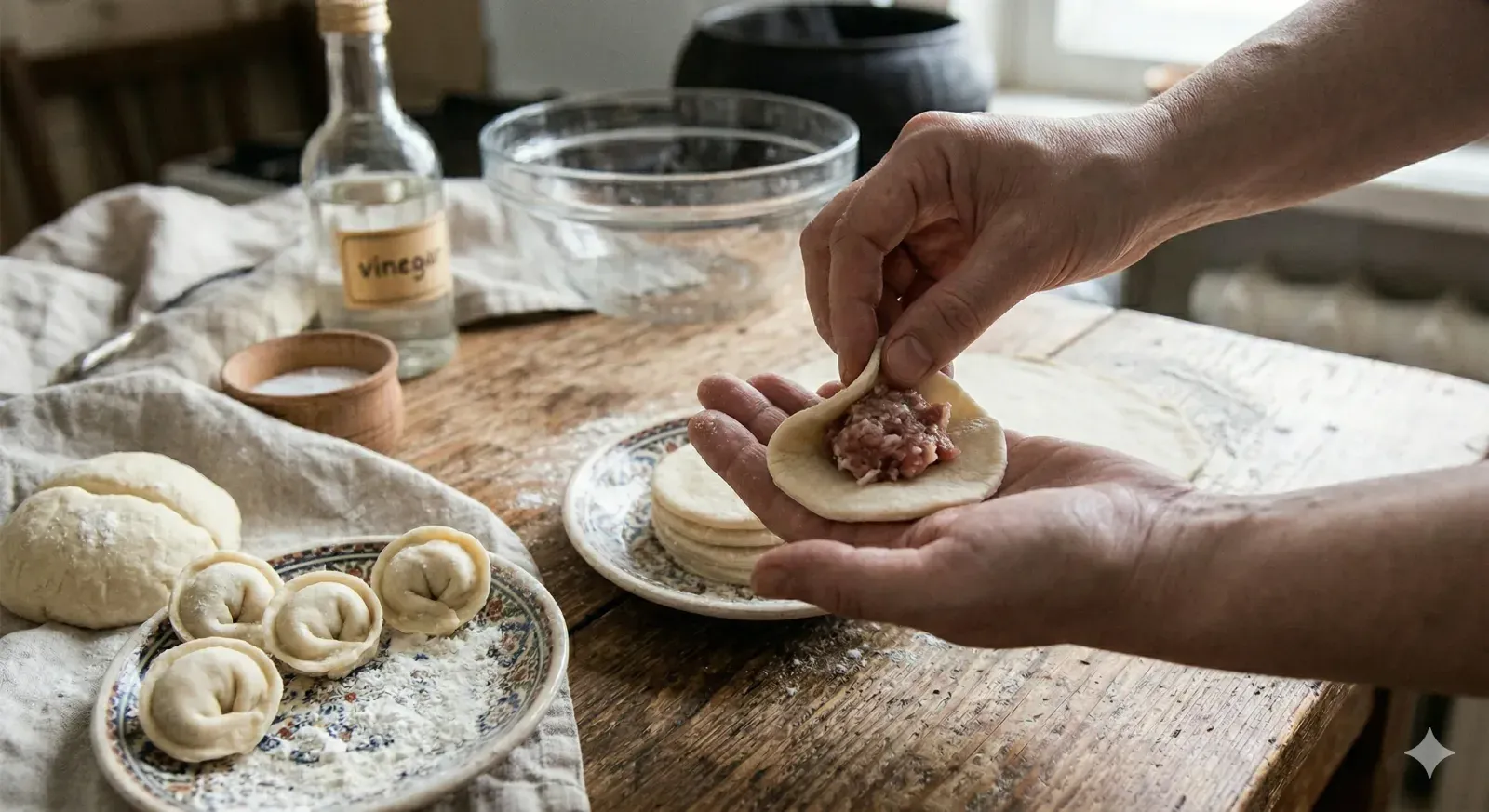
4 Hold a dough circle in your palm. Place one teaspoon of filling in the center. Do not overfill. Fold the circle in half to create a half-moon shape. Press the edges firmly to seal. Make sure no air is trapped inside. Air pockets cause pelmeni to burst during boiling. Then bring the two pointed corners together underneath. Pinch them firmly.
The finished pelmeni should resemble a small navel or belly button. In fact, the word “pelmeni” comes from a Uralic language meaning “ear bread.” Similarly, the shape echoes a folded ear. Place each shaped dumpling on a floured tray. Keep them from touching. Otherwise, they stick together. As a result, you lose the seal and the filling leaks out during cooking.
Step 5: Boil the Pelmeni
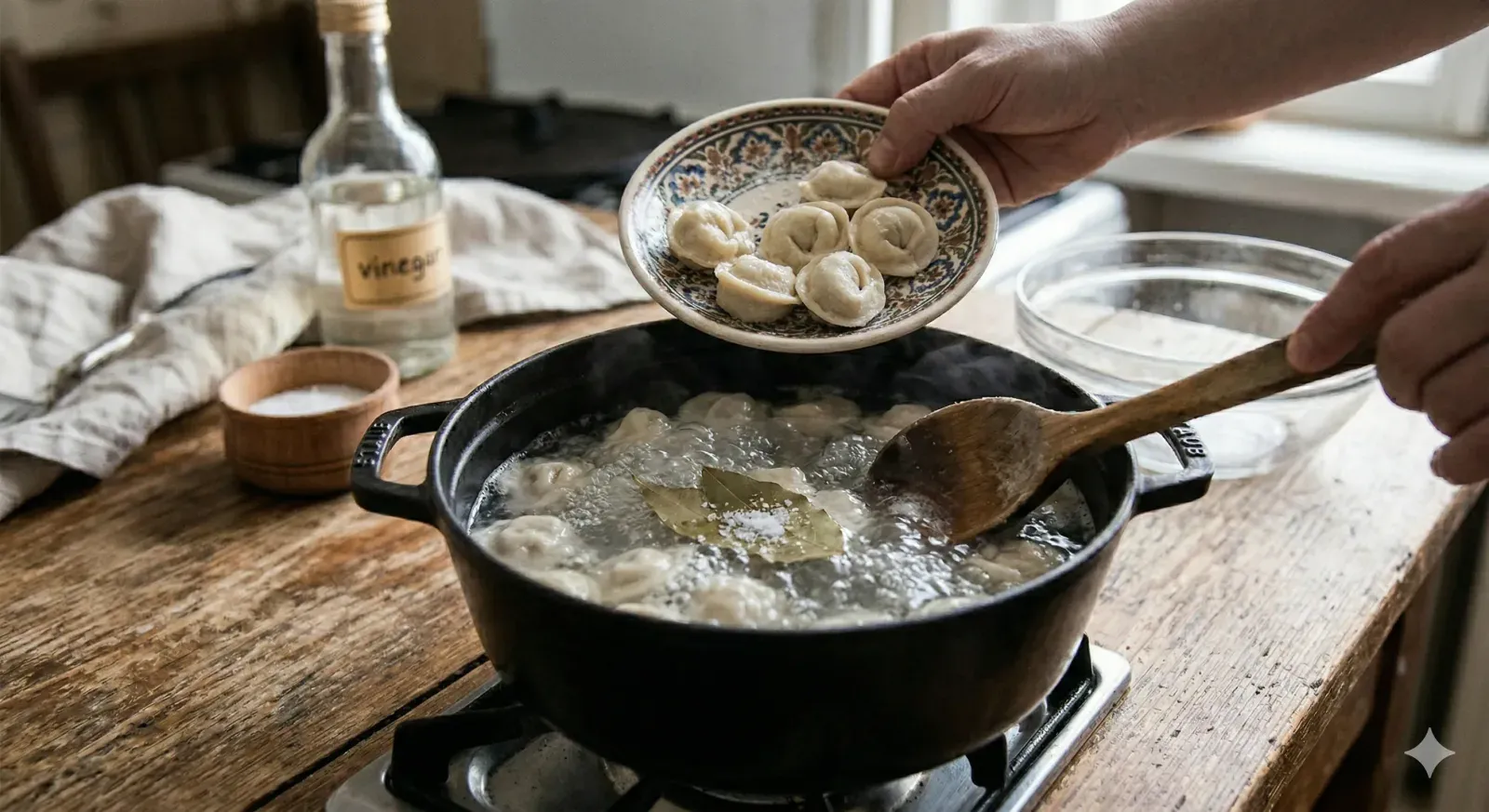
5 Bring a large pot of water to a vigorous, rolling boil. Add one tablespoon of salt and a bay leaf. Drop in 15 to 20 pelmeni at a time. Stir gently with a wooden spoon to prevent sticking. The pelmeni will sink to the bottom at first. After 2 to 3 minutes, they float to the surface. Continue cooking for 3 to 5 minutes after floating.
Do not overcrowd the pot. Too many dumplings lower the water temperature. Consequently, they cook unevenly and may stick together. Use a slotted spoon to transfer them to a warm bowl. Furthermore, maintain a steady boil throughout the process. A gentle simmer is not enough. The rolling boil keeps the pelmeni moving. This prevents them from settling and tearing on the pot bottom.
Step 6: Serve the Pelmeni
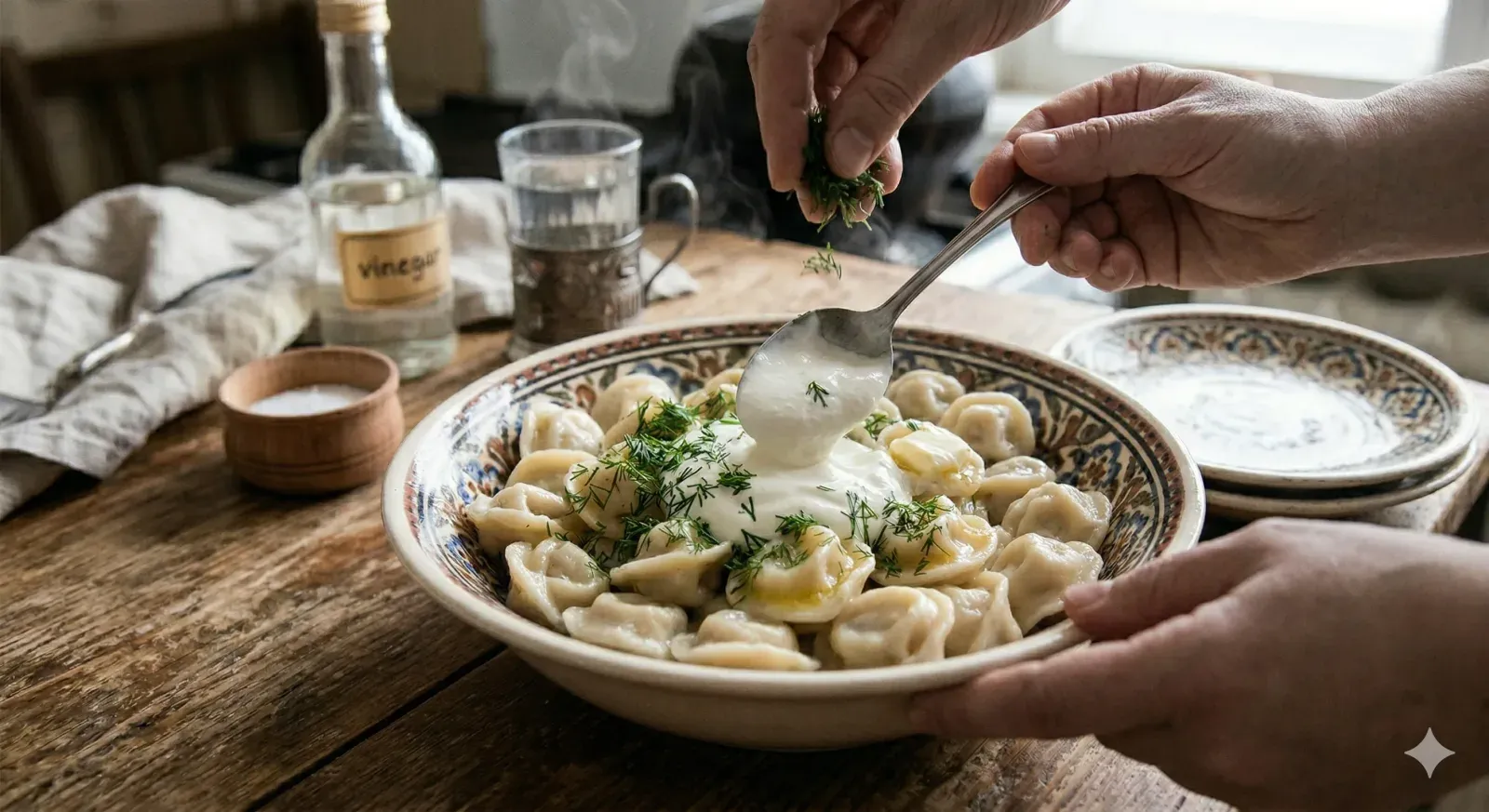
6 Transfer the hot pelmeni to a warm serving bowl. Add a generous knob of butter and toss gently. The butter coats each dumpling and prevents sticking. Serve immediately with a large dollop of sour cream on top. Sprinkle chopped fresh dill over everything. For extra tang, add a splash of white vinegar. Some Russians also enjoy pelmeni in a shallow pool of the cooking broth.
Expert Tips for Perfect Pelmeni
Keep Everything Cold
Cold filling is essential for clean shaping. Warm meat spreads and makes sealing difficult. Therefore, refrigerate the filling between batches. Place the bowl on ice if your kitchen is warm. Cold fat in the meat stays firm. It melts only during boiling. As a result, the juices stay locked inside the sealed wrapper instead of leaking into the water.
Seal the Edges Thoroughly
A poor seal is the number one reason pelmeni burst. Press firmly around the filling with your fingertips. Make sure the dough edges are not dusted with excess flour. Flour prevents the dough from bonding to itself. Instead, lightly wet the edge with a finger dipped in water. The moisture helps create a strong seal. Consequently, your dumplings survive the boil intact.
Grate the Onion, Do Not Chop It
Grating the onion on a box grater releases its juice directly into the meat. Chopped onion pieces, in contrast, create uneven pockets. They also poke through the thin dough. Furthermore, grated onion distributes flavor more evenly throughout the filling. Every bite tastes seasoned. This small detail makes a noticeable difference in the final dumpling.
Pelmeni vs. Other Dumplings: A Regional Comparison
Dumplings appear in nearly every food culture. However, each version reflects its region’s ingredients and traditions. Here is how pelmeni compare to other popular dumplings around the world.
| Feature | Russian Pelmeni | Polish Pierogi | Chinese Jiaozi | Italian Tortellini |
|---|---|---|---|---|
| Dough | Thin, elastic | Thick, soft | Thin, firm | Thin, egg-rich |
| Filling | Raw mixed meat | Cooked potato/cheese | Raw meat or vegetables | Cured meat/cheese |
| Shape | Ring or ear shape | Half-moon, crimped | Pleated crescent | Ring with tail |
| Cooking Method | Boiled | Boiled then fried | Boiled, steamed, or fried | Boiled in broth |
| Serving Style | Butter and sour cream | Butter and onions | Soy sauce and vinegar | In brodo (broth) |
| Size | Small (bite-sized) | Medium | Small to medium | Small |
Serving Suggestions
Russian pelmeni are wonderfully versatile. The classic serving method is the simplest. Toss the hot dumplings with butter and serve them with sour cream. However, there are many other ways to enjoy them. For example, a proper Russian pelmeni spread gives guests several topping options.
The Perfect Accompaniments:
- Sour cream (smetana): The most essential pelmeni topping. Its cool tanginess cuts through the rich meat filling beautifully.
- White vinegar: A splash of vinegar is a traditional Siberian addition. The acidity brightens the heavy, meaty flavors. Moreover, it aids digestion after a large bowl of dumplings.
- Melted butter: Tossing pelmeni in butter right after draining coats them in richness. It also prevents them from sticking together on the plate.
- Mustard: Hot Russian mustard adds a sharp kick. Dip each dumpling for a burst of heat. This pairing is especially popular in the Urals region.
- Broth: Serving pelmeni in a bowl of clear chicken or beef broth turns them into a comforting soup. Add dill and a few drops of vinegar for a complete meal.
Beverage Pairings:
- Chilled vodka: Ice-cold vodka between bites of hot pelmeni is the quintessential Russian pairing. The clean spirit refreshes the palate after each rich dumpling.
- Russian kvass: This lightly fermented bread drink is mildly sweet and tangy. It complements the savory filling without overpowering it.
- Dark beer: A malty stout or porter echoes the depth of the meat filling. The carbonation also cleanses the palate between bites.
- Hot black tea: Strong tea served in a glass with sugar is the classic non-alcoholic option. Similarly, it is the preferred choice for family meals.
Storage and Reheating
Refrigerator: Store cooked pelmeni in an airtight container for up to 3 days. Toss them with a little oil before storing. This prevents them from sticking into a solid mass. However, the texture is best within the first day. Reheated pelmeni lose some of their delicate chewiness.
Freezer (uncooked): Freeze shaped, uncooked pelmeni on a parchment-lined baking sheet. Once solid, transfer them to a freezer bag. They keep for up to 3 months. Cook directly from frozen. Simply add 1 to 2 extra minutes to the boiling time. In fact, freezing is the traditional preservation method. Siberian families stored thousands of pelmeni in the snow.
Reheating: The best method is to drop refrigerated pelmeni into boiling water for 1 to 2 minutes. Alternatively, pan-fry them in butter over medium heat until golden on both sides. The microwave works in a pinch. However, it tends to dry out the thin dough. Instead, the pan-fry method actually improves leftover pelmeni. Consequently, many Russians prefer fried pelmeni as a second-day treat.
Common Mistakes to Avoid
1. Rolling the Dough Too Thick
Thick dough produces heavy, bready dumplings. The filling-to-dough ratio shifts in the wrong direction. Therefore, roll the dough to about 2 millimeters. You should almost see through it. Thin dough cooks quickly and wraps the filling like a second skin. If the dough tears, it is too thin. Find the balance just before that point.
2. Overfilling the Dumplings
One teaspoon of filling per dumpling is the right amount. More filling sounds generous. However, it prevents a proper seal. The meat expands slightly during cooking. Consequently, overfilled pelmeni burst open in the pot. You lose the precious broth inside. Stick to one level teaspoon. Instead, make more dumplings rather than bigger ones.
3. Using Lean Meat Only
Extra-lean ground beef produces dry, crumbly filling. Fat is essential for moisture inside the dumpling. Use 80/20 ground beef at minimum. The pork in the blend adds even more moisture. Besides juiciness, fat carries flavor. Lean-only pelmeni taste bland in comparison. The filling should feel slightly sticky when mixed. That stickiness signals proper fat content.
4. Crowding the Pot
Dropping all 60 pelmeni into one pot is tempting. Resist that urge. Overcrowding drops the water temperature sharply. The dumplings stick together and cook unevenly. As a result, some are mushy while others remain underdone. Cook in batches of 15 to 20. Keep the water at a rolling boil between batches. Likewise, stir gently after adding each batch.
Frequently Asked Questions
What is the difference between pelmeni and pierogi?
Pelmeni use a thinner dough and always contain a raw meat filling. The meat cooks inside the wrapper during boiling. Pierogi, in contrast, have a thicker, softer dough. They are typically filled with pre-cooked ingredients like mashed potato and cheese. Additionally, pelmeni are smaller and shaped into a distinctive ring form. Russians serve them with butter and sour cream. Pierogi are often pan-fried after boiling.
Can I freeze pelmeni before cooking?
Yes, pelmeni freeze exceptionally well. Place shaped dumplings on a parchment-lined baking sheet. Freeze until solid. Then transfer them to a freezer bag. They keep for up to 3 months. Cook them directly from frozen. Simply add 1 to 2 extra minutes to the boiling time. In fact, many Russian families make large batches specifically for freezing.
What meat is traditionally used in pelmeni?
Traditional pelmeni use a mixture of ground beef and ground pork. The beef provides structure and deep savory flavor. Meanwhile, the pork adds moisture and richness. Some Siberian recipes also include ground lamb for a gamier taste. The key is combining at least two meats. Furthermore, the meats should not be extra-lean. Fat content is crucial for juicy dumplings.
Why are my pelmeni falling apart when boiling?
Pelmeni fall apart for three common reasons. First, the dough may be too thin or too dry. Second, the edges may not be sealed properly. Press firmly around the filling. Make sure no air is trapped inside. Third, dropping too many dumplings at once crowds the pot. Consequently, they stick together and tear. Use a large pot and cook in batches of 15 to 20.
How do I know when pelmeni are done cooking?
Pelmeni are done 3 to 5 minutes after they float to the surface. The floating indicates that the meat filling has cooked and released steam inside the wrapper. Cut one open to check. The meat should no longer be pink. Additionally, the dough should be tender but not mushy. If the dough feels gummy, they need another minute. However, overcooking makes them fall apart.
What are the best ways to serve pelmeni?
The most traditional way is to toss boiled pelmeni with butter and serve with sour cream. Russians also enjoy them in a light broth with dill. A splash of white vinegar is another classic option. For a different texture, pan-fry boiled pelmeni in butter until golden and crispy. Similarly, serving them in a bowl of clear chicken broth creates a satisfying dumpling soup.
Variations and Adaptations
Mushroom Pelmeni (Vegetarian):
Replace the meat with finely chopped mushrooms sauteed with onion and garlic. Use a mix of cremini and shiitake for depth. Season with salt, pepper, and a touch of soy sauce. The mushrooms provide an umami richness. However, they release moisture during cooking. Therefore, squeeze out excess liquid before filling. These vegetarian pelmeni taste earthy and satisfying.
Siberian Three-Meat Pelmeni:
Combine equal parts beef, pork, and lamb for the most traditional Siberian version. The three meats create a complex flavor profile. Lamb adds a slightly wild, aromatic note. Besides the richer taste, the triple blend produces an exceptionally juicy filling. Season simply with salt and pepper. Let the meat flavors speak for themselves.
Pan-Fried Pelmeni:
Boil the pelmeni first until cooked through. Then heat butter in a skillet over medium-high heat. Fry the boiled pelmeni until golden and crispy on both sides. This takes about 3 minutes per side. The contrast between the crunchy exterior and juicy interior is outstanding. In fact, fried pelmeni are a beloved street food across Russia. Serve them with sour cream for dipping.
Pelmeni in Broth:
Cook the pelmeni directly in homemade chicken or beef broth instead of plain water. Ladle the dumplings with the broth into deep bowls. Add fresh dill, a crack of black pepper, and a splash of vinegar. This creates a hearty dumpling soup. Moreover, the broth absorbs flavor from the meat filling as the pelmeni cook. Consequently, the liquid becomes a rich, savory base.
The Cultural Significance of Pelmeni
Pelmeni are far more than a simple dumpling in Russian culture. They represent survival, ingenuity, and family tradition. The dish originated among the indigenous Komi and Udmurt peoples of the Ural Mountains. Traders carried pelmeni along the routes connecting Siberia to western Russia. Furthermore, the ability to freeze thousands of dumplings in the harsh winter climate made pelmeni essential for survival. They were a lifeline during the coldest months.
Making pelmeni has always been a communal activity. Families gather around the kitchen table to shape hundreds of dumplings together. Grandmothers teach grandchildren the proper pinching technique. The process turns cooking into a social event. In fact, the size and neatness of your pelmeni once indicated your skill as a home cook. Meanwhile, the speed at which you could shape them showed your experience. Every Russian family guards their filling recipe closely.
Today, pelmeni remain a staple of Russian home cooking. Grocery stores sell frozen versions, but homemade pelmeni hold a special place. They appear at holiday gatherings, casual dinners, and late-night snacks. The dish connects modern Russians to their Siberian heritage. Similarly, it bridges generations through the shared ritual of shaping dough and filling. A bowl of hot pelmeni with sour cream is the taste of home for millions across Russia.
Conclusion
Making authentic Russian pelmeni at home is deeply rewarding. The process requires patience, especially during shaping. However, the result is worth every minute of effort. Thin, silky dough wraps around a juicy, seasoned meat filling. Each dumpling holds a small burst of broth inside. Moreover, the simple combination of butter, sour cream, and dill elevates these dumplings into something extraordinary.
Whether you serve pelmeni in broth, tossed with butter, or pan-fried until crispy, they deliver pure comfort. This recipe connects you to centuries of Russian and Siberian culinary tradition. Furthermore, the freezer-friendly nature of pelmeni means you can enjoy homemade dumplings any night of the week. Try this recipe and taste why pelmeni have endured as one of Russia’s most cherished dishes. For more European classics, explore our full collection at myvietkitchen.com/category/european-dishes/.