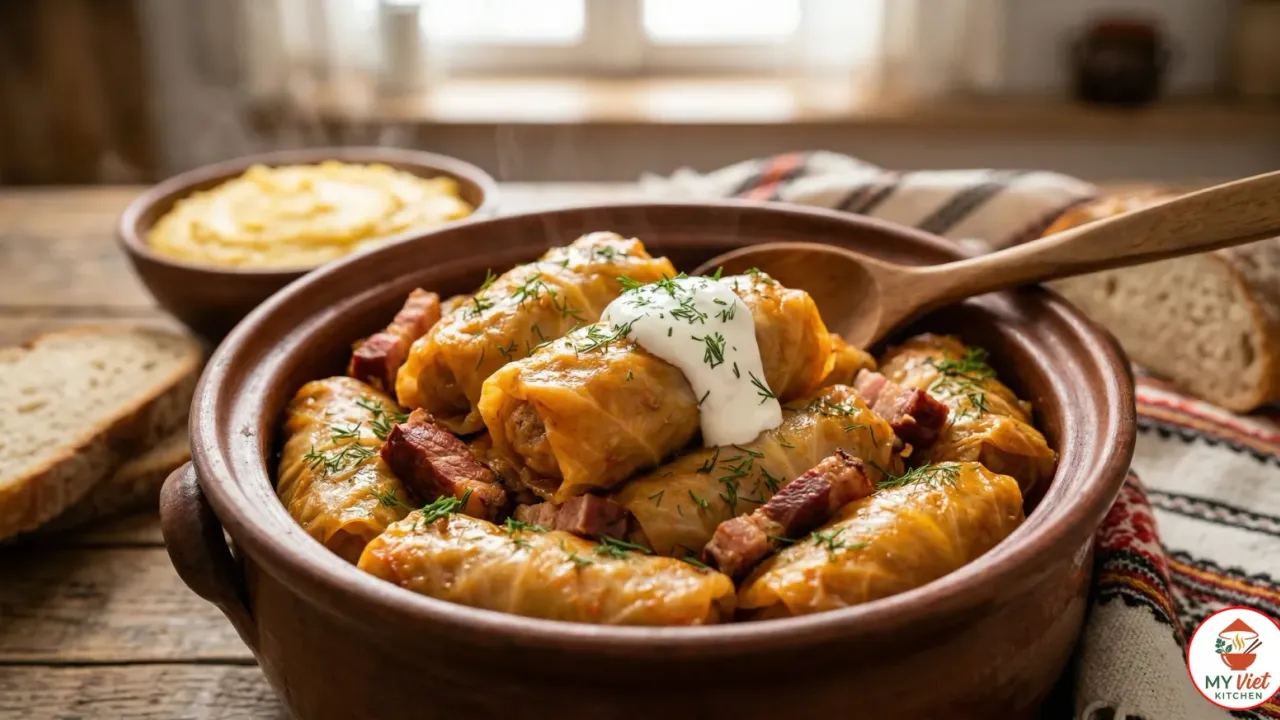
Sarmale are the pride of Romanian cooking, and this sarmale recipe walks you through every step of making these tender, tangy cabbage rolls at home. Stuffed with a savory blend of seasoned pork and rice, then wrapped in sour fermented cabbage leaves and slow-cooked for hours with smoked meat and tomato sauce, sarmale deliver a depth of flavor that few dishes can match. Indeed, they are one of Eastern Europe’s greatest comfort foods. If you love comfort food with a sour, smoky edge, this sarmale recipe will become a favorite in your kitchen.
Prep Time: 60 minutes | Cook Time: 180 minutes | Servings: 8
Difficulty: Medium | Calories: ~380 per serving
What Makes This Sarmale Recipe Special?
Sarmale stand apart from other stuffed cabbage rolls because of one critical ingredient: sour fermented cabbage. While Polish golabki and German kohlrouladen use fresh cabbage, Romanian sarmale instead rely on whole heads of cabbage that have been fermented in brine for weeks. This fermentation gives each leaf a tangy bite that cuts through the richness of the pork filling. The result is a roll that tastes complex and layered rather than heavy.
The other secret is time. A proper sarmale recipe calls for at least three hours of slow cooking in a low oven. During that time, the rice in the filling swells and drinks up the sour, tomato-laced juices that surround the rolls. Meanwhile, the smoked pork nestled between the layers releases its deep, woodsy flavor into every corner of the pot. As a result, when you finally lift the lid, the entire kitchen fills with an aroma that no quick recipe can replicate.
Sarmale have roots that stretch across the Ottoman Empire, where stuffed grape and cabbage leaves traveled from Turkey through the Balkans and into Central Europe. In Romania, the dish evolved into something uniquely local. Eventually, Romanians replaced grape leaves with their beloved sour cabbage, added smoked pork for depth, and made sarmale the centerpiece of every holiday table. Today, no Christmas or New Year celebration in Romania is complete without a huge pot of sarmale.

Choosing the Right Cabbage for Sarmale
The cabbage is the foundation of any sarmale recipe. Picking the right type makes the difference between authentic, tangy rolls and bland imitations. Here are your main options.
- Whole fermented sauerkraut head (best choice): This is the traditional option. Look for it at Eastern European grocery stores or online. The whole head gives you large, pliable leaves that are easy to roll. Furthermore, the flavor is tangy, salty, and perfect for sarmale.
- Loose sauerkraut leaves: Some stores sell individual fermented cabbage leaves. These work well and save you the effort of separating a whole head. However, check that the leaves are large enough to wrap around the filling.
- Fresh cabbage (alternative): If you cannot find fermented cabbage, blanch fresh green cabbage leaves in salted boiling water for 3 minutes until pliable. The flavor will be milder and sweeter. Add lemon juice or vinegar to the cooking liquid to compensate for the missing tang.
Ingredients for Sarmale
Cabbage and Meat Filling:
- 1 large head of sauerkraut (fermented whole cabbage), about 4 pounds
- 1.5 pounds ground pork, or a mix of pork and beef
- 1/2 cup long-grain white rice, uncooked
- 1 large onion, finely diced
- 2 tablespoons lard or vegetable oil
- 1 teaspoon sweet paprika
- 1 teaspoon dried thyme
- 1/2 teaspoon black pepper
- Salt to taste
For the Cooking Liquid:
- 1 can (14 oz) crushed tomatoes or tomato sauce
- 2 tablespoons tomato paste
- 1 cup sauerkraut juice from the cabbage
- 2 bay leaves
For Layering and Serving:
- 8 ounces smoked pork ribs or smoked bacon, cut into pieces
- Leftover sauerkraut, shredded, for lining the pot
- Fresh dill for garnish
- Sour cream for serving
Pro tip: The uncooked rice in the filling is intentional. Do not cook the rice before mixing it into the meat. Raw rice absorbs the tangy sauerkraut juices during the long, slow cook, and this is what gives each sarmale its distinctive moist, flavorful center. Cooked rice would turn mushy and bland.
Step-by-Step Instructions
Step 1: Prepare the Cabbage Leaves
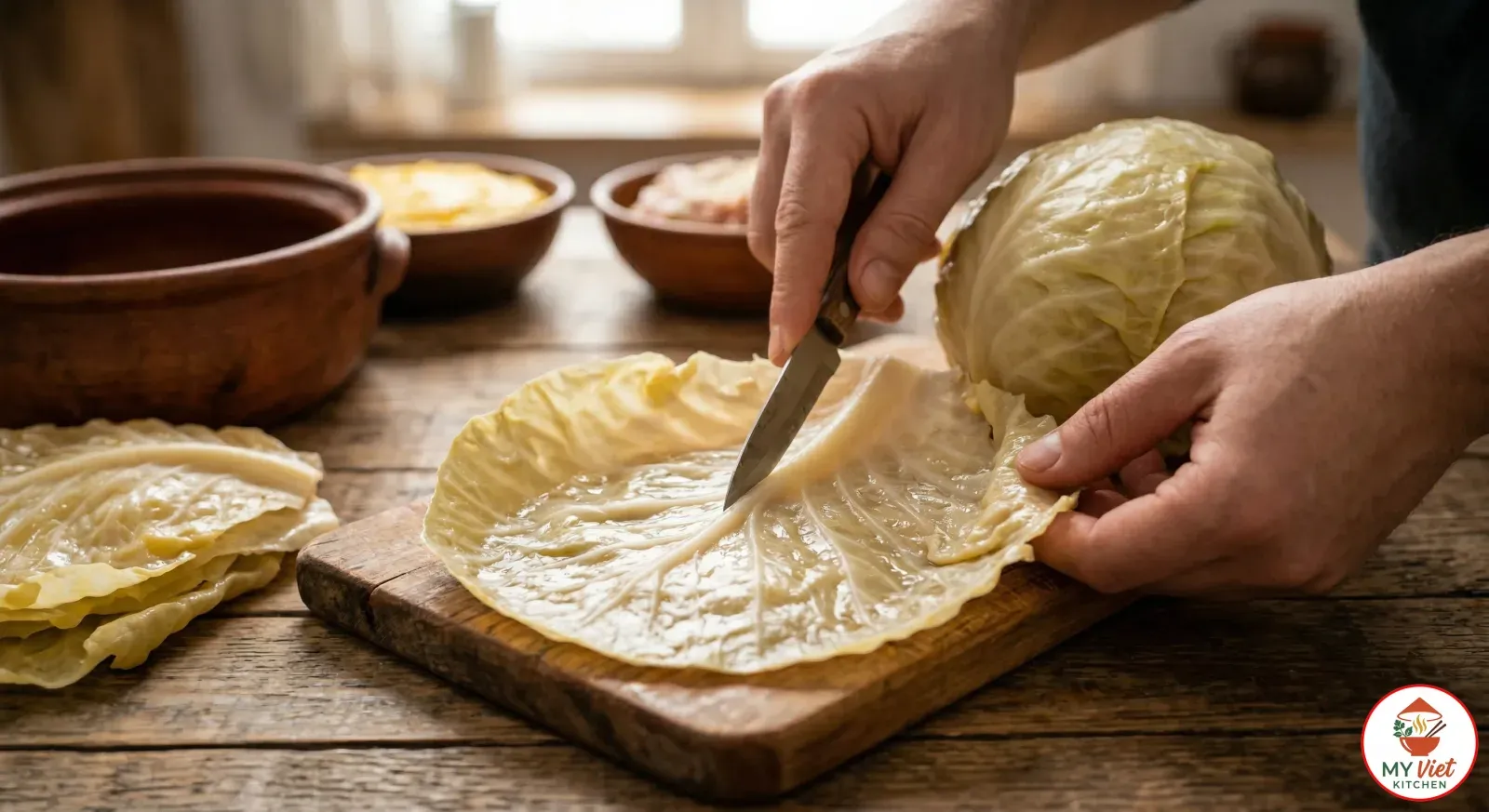
1 Carefully peel the leaves from the fermented cabbage head one by one. Work gently so they stay whole. If a leaf tears, set it aside for lining the pot later. Rinse each leaf under cold water if the salt level is too strong for your taste.
Next, place each leaf flat on a cutting board and trim the thick central rib with a sharp knife. You want to shave it down so it sits flush with the rest of the leaf. This makes rolling much easier and prevents the roll from being stiff in the center. You should end up with about 20 to 25 usable leaves from one large head.
Step 2: Make the Filling
2 Heat the lard or oil in a skillet over medium heat. Add the diced onion and cook for 5 to 7 minutes until soft and lightly golden. The onion should be translucent but not browned. Let it cool for a few minutes before adding it to the meat.
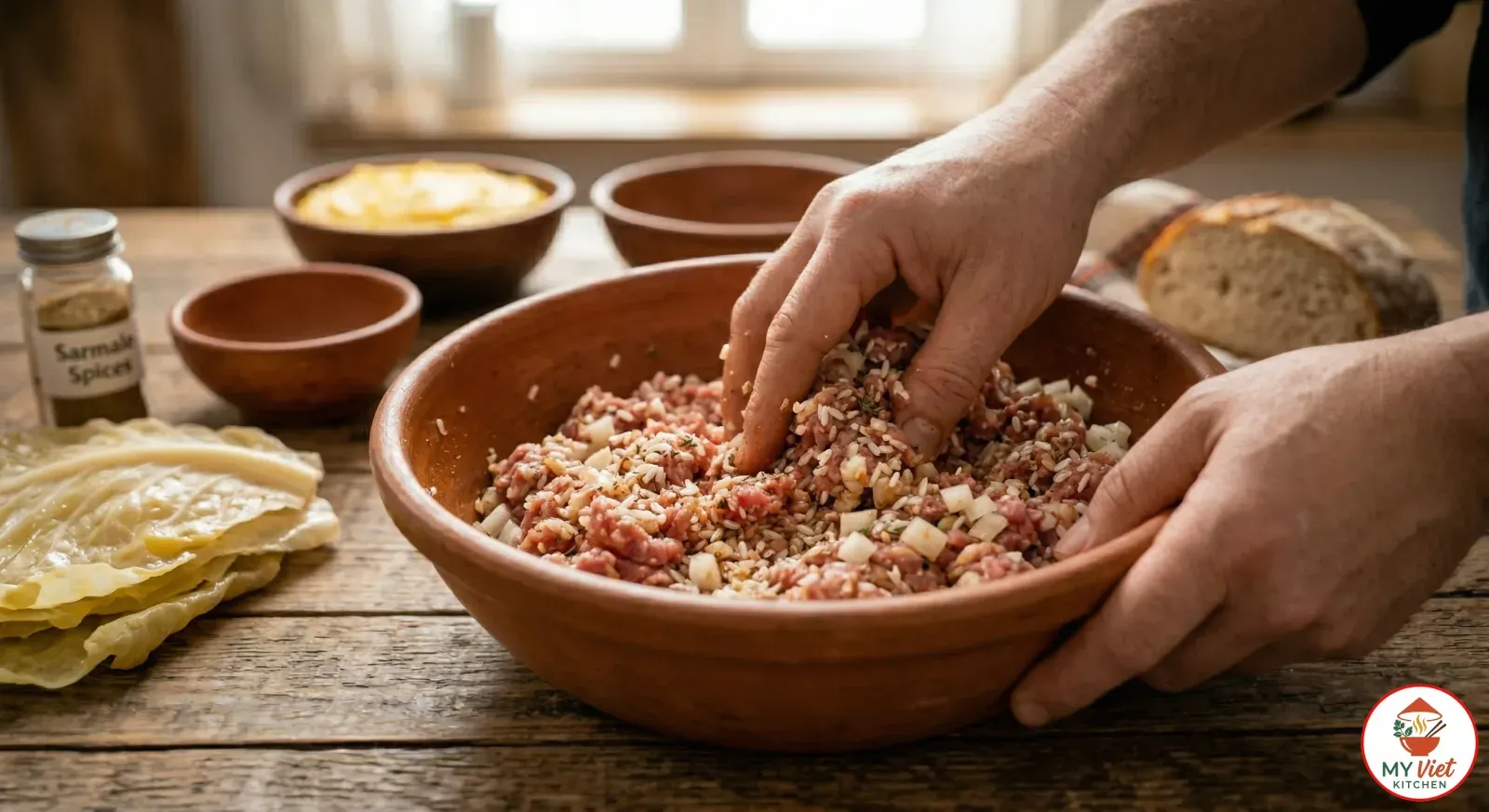
In a large bowl, combine the ground pork, uncooked rice, sauteed onion, paprika, thyme, black pepper, and salt. Mix everything by hand until the filling is smooth and uniform. At this point, the mixture should hold together when you squeeze a handful. If it feels dry, add a splash of water or sauerkraut juice to moisten it. Taste a small pinch for seasoning and adjust the salt.
Step 3: Roll the Sarmale
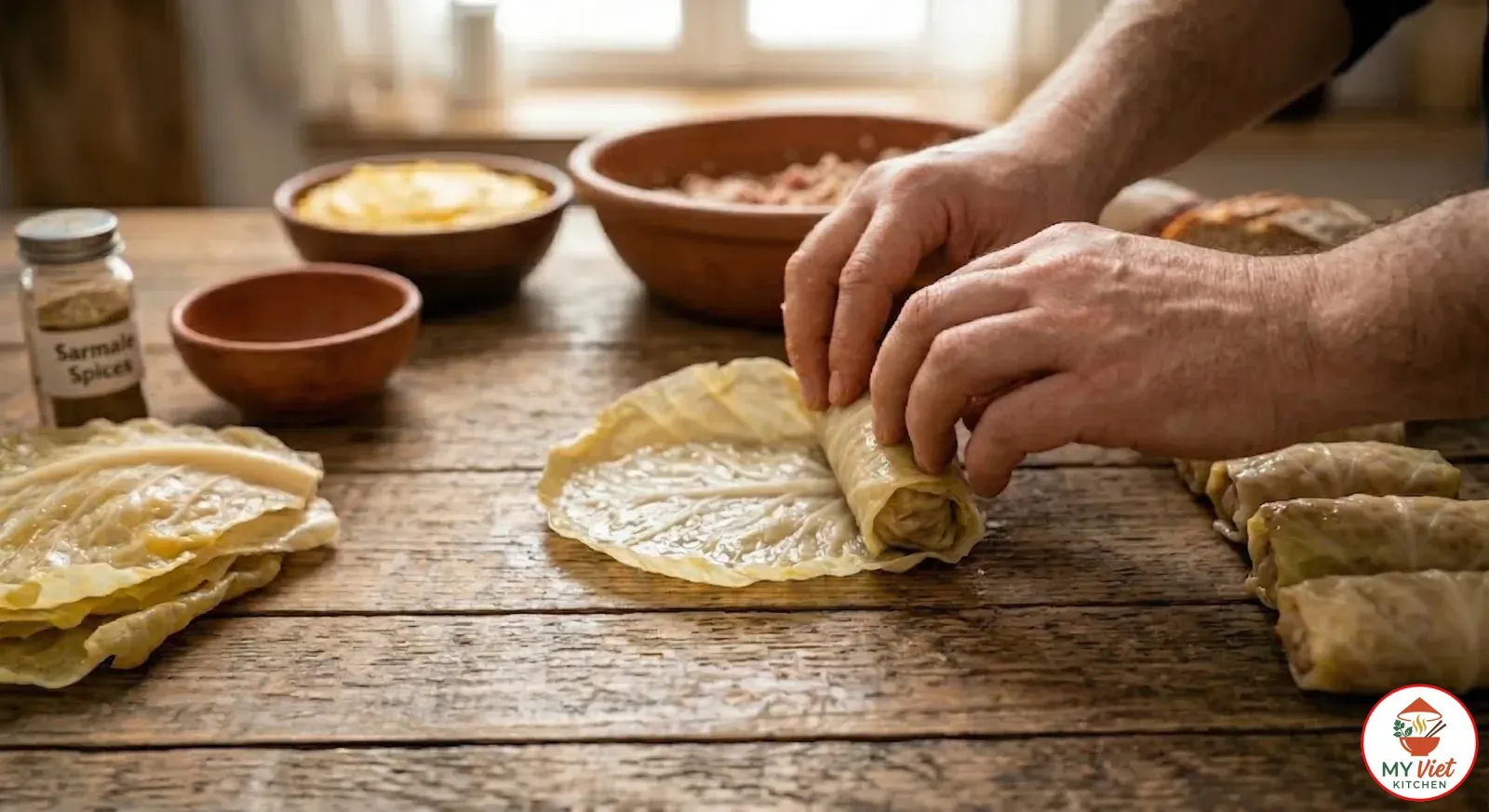
3 Lay a cabbage leaf flat on your work surface with the stem end facing you. Place about 2 tablespoons of filling near the base of the leaf. Fold the left side over the filling, then fold the right side over. Now roll from the bottom toward the tip of the leaf, keeping the roll snug and tight.
Each roll should be about the size of your thumb and index finger together. Do not overstuff them, because the rice will expand during cooking and can burst through thin spots in the cabbage. Similarly, for smaller leaves, use less filling and make tighter rolls. Set the finished sarmale seam-side down on a tray as you work through the rest.
Step 4: Layer and Cook
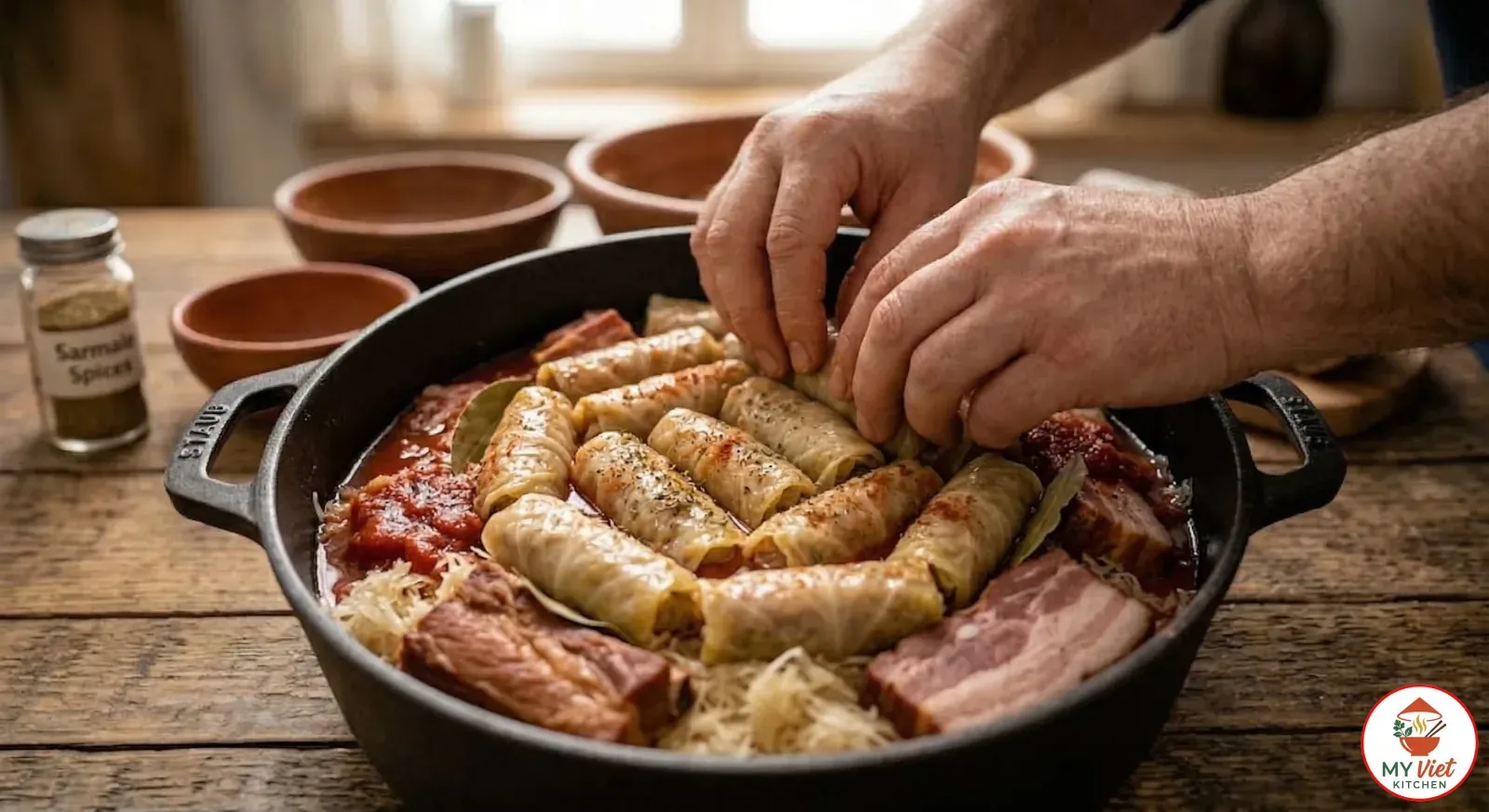
4 Preheat your oven to 325 degrees Fahrenheit (160 degrees Celsius). Take a heavy Dutch oven or deep oven-safe pot and line the bottom with a thick layer of shredded sauerkraut and torn cabbage leaves. This bed prevents the rolls from sticking and burning on the bottom.
Arrange the first layer of sarmale in tight rows, seam-side down. Tuck pieces of smoked pork between the rolls. Add another layer of shredded sauerkraut on top, then repeat with more sarmale and smoked pork until all the rolls are in the pot. Pour the crushed tomatoes over the top. Mix the tomato paste with half a cup of warm water and pour that in too. Finally, add the sauerkraut juice and bay leaves. The liquid should come about three-quarters of the way up the rolls.
Cover the pot tightly with a lid or foil. Place it in the oven and cook for 3 hours. Most importantly, this low, steady heat is what makes the sarmale recipe work. After 3 hours, the rolls will be plump, the rice will be tender, and the sauce will be thick and deeply flavored.
Step 5: Rest and Serve
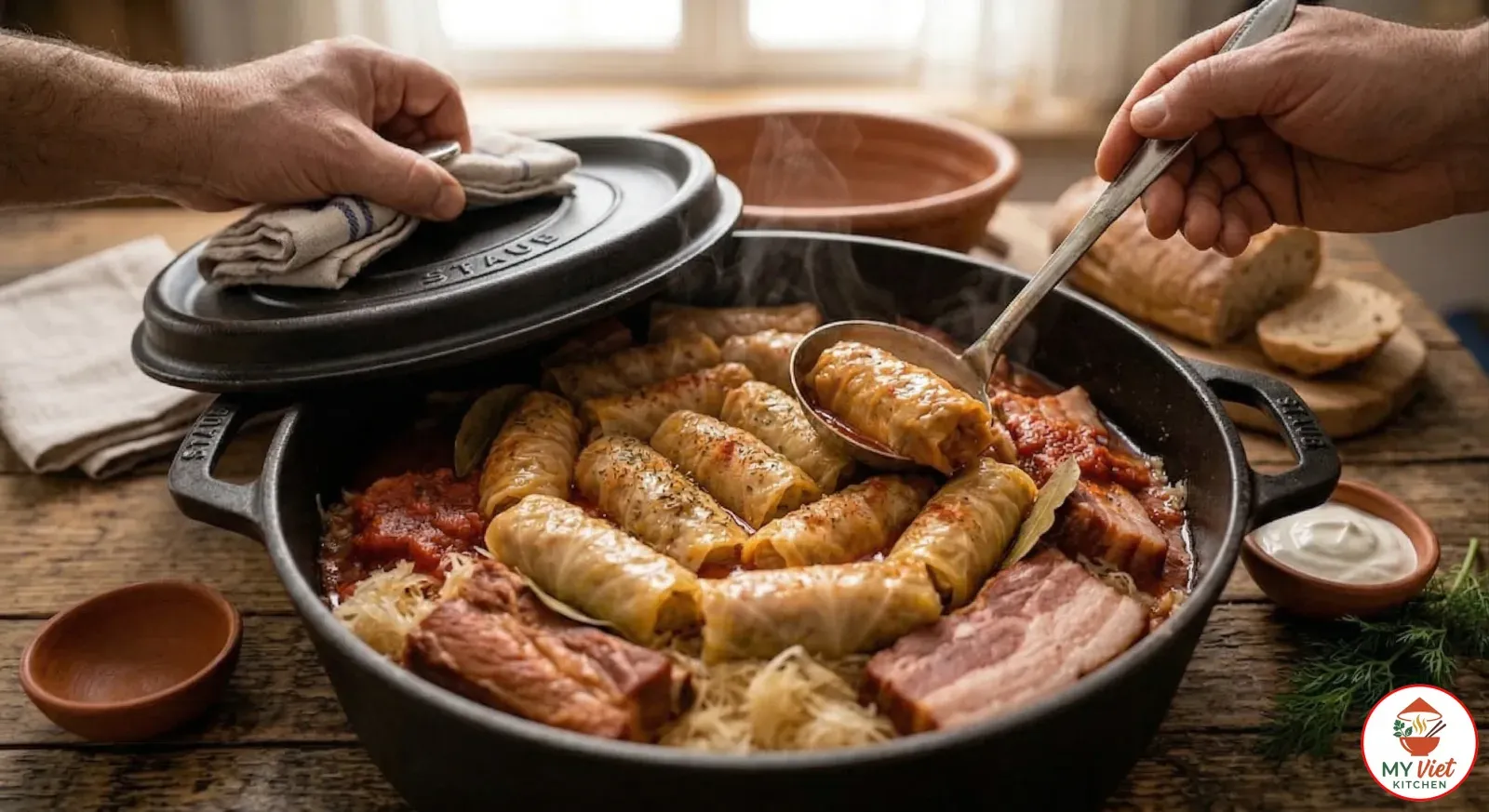
5 Take the pot out of the oven and let it rest with the lid on for 20 minutes. This resting period lets the rolls firm up and allows the sauce to thicken further. After all, sarmale that are served immediately can fall apart, so patience here pays off.
Use a large spoon to lift the sarmale out gently. Place 3 to 4 rolls on each plate with a generous spoonful of the sauerkraut and tomato sauce from the pot. Add a big dollop of cold sour cream on top and finish with a scatter of chopped fresh dill. The contrast between the hot, tangy rolls and the cool cream is what makes this dish so satisfying.
Expert Tips for Perfect Sarmale
Use Raw Rice, Not Cooked
This is the most important tip for any sarmale recipe. The rice must go into the filling uncooked. During the long cooking time, raw rice absorbs the tangy sauerkraut juice and tomato sauce, giving each roll a moist and flavorful interior. If you cook the rice first, it turns into a dense, starchy paste inside the rolls and loses the ability to soak up those delicious pan juices.
Pack the Pot Tightly
Sarmale should fit snugly in the pot with no gaps between the rolls. When they are packed tight, they hold their shape during cooking and do not unravel. Leave space, and they float around in the liquid and fall apart. In other words, think of it like a puzzle where every piece touches its neighbor.
Layer with Smoked Meat
The smoked pork tucked between the layers is not optional. It adds a rich, woodsy flavor that infuses the entire pot. Smoked ribs, smoked bacon, or even a smoked pork knuckle all work well. As the meat cooks, its smoky fat renders into the sauce and gives the sarmale their characteristic depth. Consequently, without it, the dish tastes flat.
Sarmale vs. Other Stuffed Cabbage Rolls
Stuffed cabbage rolls appear in many European cuisines, but each country puts its own stamp on the dish. Here is how Romanian sarmale compare with their closest relatives.
| Country | Dish Name | Cabbage Type | Key Differences |
|---|---|---|---|
| Romania | Sarmale | Sour fermented cabbage | Slow-cooked 3+ hours with smoked pork and sauerkraut juice; tangy and smoky |
| Poland | Golabki | Fresh blanched cabbage | Baked in tomato sauce or mushroom gravy; milder flavor; shorter cook time |
| Germany | Kohlrouladen | Fresh cabbage | Often uses beef filling with mustard; braised in broth with onions |
| Turkey | Lahana sarmasi | Fresh or pickled cabbage | Spiced with mint and sumac; sometimes uses grape leaves instead |
| Serbia | Sarma | Sour cabbage (similar to Romanian) | Very close to sarmale but may include more beef and less rice |
Serving Suggestions
In Romania, sarmale are the star of the plate. They are served hot with their cooking sauce and always with sour cream on top. The sides are simple because the cabbage rolls themselves carry all the flavor.
The Perfect Accompaniments:
- Mamaliga (Romanian polenta): This is the most traditional side for sarmale. Creamy, golden mamaliga soaks up the tangy tomato sauce beautifully. Slice it or serve it soft, alongside the rolls.
- Crusty bread: A thick slice of country-style bread works well for mopping up the rich sauce from the pot. Many families serve warm, fresh bread baked the same day.
- Hot chili peppers: A few sharp, pickled or fresh hot peppers on the side add a spicy kick that complements the sour cabbage perfectly. This is a common pairing in Romanian households.
- More European comfort dishes: Pair sarmale with other Balkan or Eastern European favorites for a feast-style meal.
Beverage Pairings:
- Romanian red wine: A bold Feteasca Neagra or a Pinot Noir from the Dealu Mare region pairs wonderfully with the smoky, tangy sarmale.
- Tuica (plum brandy): A small glass of cold tuica before the meal is a Romanian tradition. Its fruity, fiery character opens the appetite for the rich rolls ahead.
- Sparkling water with lemon: A light, bubbly drink cleanses the palate between bites without competing with the complex flavors of the sarmale.
- Black tea: A hot cup of strong black tea rounds out the meal, especially during cold winter holidays when sarmale are most often served.
Storage and Reheating
Refrigerator: Store leftover sarmale in their cooking sauce in a sealed container for up to 5 days. The flavor actually improves on the second and third day as the sour cabbage and spices continue to meld. Many Romanian cooks consider day-two sarmale the best version of the dish.
Freezer: Sarmale freeze beautifully for up to 3 months. Let them cool completely, then pack rolls and sauce into freezer bags or containers. Thaw overnight in the fridge before reheating. The texture holds up well even after freezing.
Reheating: Warm the sarmale gently in the oven at 325 degrees Fahrenheit for 30 minutes, or heat them on the stovetop over low heat. Add a splash of water or sauerkraut juice if the sauce has thickened too much. Avoid microwaving if possible, as it can make the cabbage leaves rubbery.
Common Mistakes to Avoid
1. Overstuffing the Rolls
This is the most common mistake beginners make with this sarmale recipe. The raw rice inside the filling expands significantly during cooking. If you pack too much filling into each leaf, the rolls will burst open and fall apart in the pot. Use about 2 tablespoons of filling per roll and leave room for the rice to swell. Smaller, tighter rolls always turn out better than large, overstuffed ones.
2. Cooking at Too High a Temperature
Sarmale need low and slow heat. Cooking them at 400 degrees or above will boil the liquid too fast, dry out the tops of the rolls, and leave the centers undercooked. Keep the oven at 325 degrees Fahrenheit and let time do the work. The gentle simmer allows the rice to cook evenly and the flavors to develop properly over those three hours.
3. Skipping the Smoked Meat
Some cooks leave out the smoked pork to save money or calories, but this is a mistake. The smoked meat is not just a garnish. It is a key flavor builder that gives the entire pot its rich, woodsy backbone. Without it, the sarmale taste one-dimensional. Even a small amount of smoked bacon tucked between the layers will make a noticeable difference in the final flavor.
4. Not Using Enough Liquid
The cooking liquid should come about three-quarters of the way up the sarmale in the pot. Too little liquid means the top layer dries out and the rice does not cook through. If the level drops during cooking, add more sauerkraut juice or water. The sauce should be thick and flavorful at the end, not thin and watery or dried up completely.
Frequently Asked Questions
What are sarmale made of?
Traditional Romanian sarmale contain ground pork mixed with rice, sauteed onion, and spices like paprika and thyme. This filling gets wrapped in fermented sauerkraut leaves and slow-cooked in a sauce of crushed tomatoes, sauerkraut juice, and smoked pork. Every plate comes with a big dollop of sour cream and fresh dill on top.
What is the difference between sarmale and regular stuffed cabbage?
The biggest difference is the cabbage itself. Sarmale use sour, fermented cabbage leaves that give the rolls a distinct tangy flavor. Regular stuffed cabbage rolls in Western cuisines use fresh blanched cabbage, which produces a milder, sweeter taste. Additionally, Romanian sarmale cook for much longer and always include smoked meat for depth.
Can I make sarmale with fresh cabbage?
Yes, but the flavor will differ from the traditional version. Blanch fresh cabbage leaves in salted boiling water for 3 minutes to make them flexible. To mimic the sour tang, add extra vinegar or lemon juice to the cooking liquid. For the most authentic sarmale recipe, fermented cabbage is always the better choice.
How long do sarmale take to cook?
Plan for about 3 hours of oven time at 325 degrees Fahrenheit. This slow cook is essential because it allows the raw rice in the filling to fully absorb the juices and the pork to become very tender. Rushing the process at a higher temperature will give you undercooked rice and tough rolls.
Do sarmale taste better the next day?
Yes, and most Romanian families will confirm this. The flavors meld and intensify overnight in the fridge. Specifically, the sauerkraut tang deepens, the smoked pork flavor spreads through every roll, and the sauce thickens to a rich consistency. Making a large batch and eating leftovers over several days is the traditional approach.
When do Romanians eat sarmale?
Sarmale are the centerpiece of Romanian holiday meals. They appear at Christmas, New Year, Easter, weddings, and baptisms without fail. However, they are also enjoyed year-round as a hearty Sunday dinner or special-occasion comfort food. In Romania, a celebration without sarmale is not truly a celebration.
Variations and Adaptations
Grape Leaf Sarmale:
In southern Romania and neighboring countries, cooks swap cabbage for brined grape leaves. The rolls are smaller and more delicate. Grape leaf sarmale have a slightly bitter, herbal flavor that works well with lamb or a mix of lamb and rice. Serve them cold or at room temperature with lemon wedges as a summer appetizer.
Vegetarian Sarmale:
Replace the pork with a filling of rice, sauteed mushrooms, diced carrots, and finely chopped walnuts. Season with paprika, thyme, and a squeeze of lemon. Skip the smoked meat and use mushroom broth in the cooking liquid for a deep umami base. These lighter rolls are perfect for Lent or plant-based diets.
Transylvanian-Style Sarmale:
In Transylvania, sarmale often include a mix of pork and beef with a heavier dose of paprika and a touch of caraway seeds. The pot is sometimes finished with a layer of sour cream poured over the top before the final 30 minutes of baking. This creates a golden, slightly caramelized crust on the uppermost rolls.
The Cultural Significance of Sarmale
In Romania, sarmale are far more than a recipe. They are a symbol of togetherness, hospitality, and celebration. When a Romanian family gathers, the pot of sarmale on the table signals that the occasion matters. Grandmothers pass down their rolling technique and secret spice blends to daughters and granddaughters, and every family insists that their version is the best.
At weddings, sarmale are served in enormous quantities, often hundreds of rolls for a single event. The bride’s family typically prepares them, and the quality of the sarmale reflects the family’s cooking skill and generosity. At Christmas and New Year feasts across Romania, sarmale sit at the center of the table alongside mamaliga, smoked sausages, and pickled vegetables.
The dish also connects Romania to the wider Balkan and Ottoman culinary tradition. Similar stuffed rolls appear from Turkey to Hungary, each adapted to local tastes and ingredients. Yet Romanian sarmale are unique because of the sour cabbage and the insistence on slow cooking with smoked pork. For Romanians living abroad, making sarmale is an act of nostalgia and identity. One pot of these tangy, smoky rolls can bring the warmth of a Romanian kitchen to any home in the world.
Conclusion
This sarmale recipe captures the heart of Romanian home cooking. The keys to success are simple: use sour fermented cabbage for authentic tang, keep the rice raw in the filling so it absorbs the juices, layer in smoked pork for depth, and cook low and slow for three full hours. Follow these steps and you will produce a pot of tender, tangy cabbage rolls that taste like they came from a Romanian grandmother’s kitchen.
Ready to explore more European comfort food? Browse our European dishes collection for classics like borscht, goulash, and pierogi. For more stuffed and rolled dishes from around the globe, also check out our Asian recipes collection.