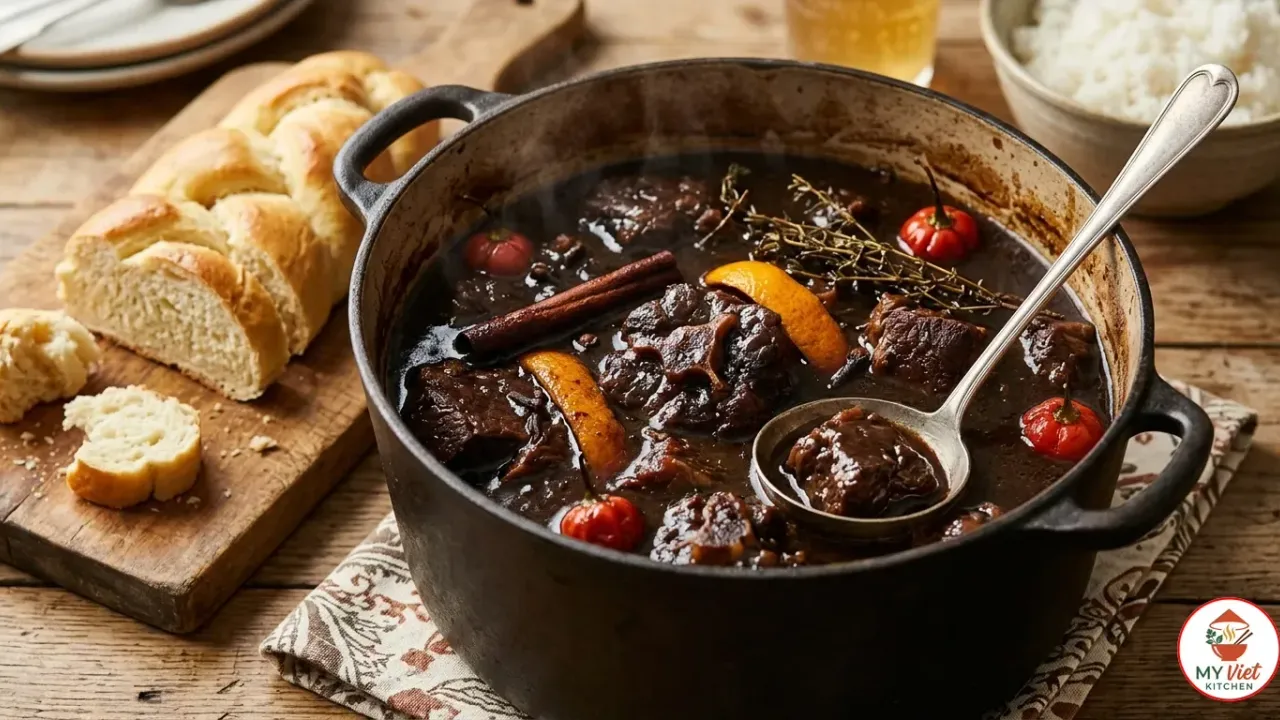
Pepperpot is the crown jewel of Guyanese cooking. This rich stew of beef shin and oxtail simmers in cassareep — a thick, dark syrup made from cassava root. It creates a dish unlike anything else in Caribbean cuisine. The sauce turns jet-black and glossy. Warm notes of cinnamon and clove float through every bite. For Guyanese families, pepperpot is more than dinner. It is Christmas morning, family love, and cultural pride in a single pot.
Prep Time: 30 minutes | Cook Time: 3 hours | Servings: 8
Difficulty: Intermediate | Calories: ~480 per serving
What Makes Pepperpot Special?
Pepperpot traces its origins to the indigenous Amerindian peoples of the Guiana region. Long before European contact, these groups found that boiling cassava juice into a thick syrup made a strong preservative. They used this syrup — cassareep — to cook and preserve wild game in large clay pots. As a result, the meat could last for days in the tropical heat without spoiling. Over centuries, this practical technique evolved into the celebrated stew that defines Guyanese cuisine today.
What sets pepperpot apart from other Caribbean stews is cassareep itself. In fact, no other ingredient in cooking behaves quite like it. Cassareep adds a rich bittersweet taste, a dark color that nears black, and a quality that helps the stew get better over many days. Additionally, the flavor is earthy, slightly bitter, and warm with burnt sugar. Because of this, pepperpot tastes nothing like a normal beef stew. Instead, it sits in its own class entirely.
The spicing in pepperpot is restrained but precise. First, cinnamon and cloves provide a warm, aromatic backbone. Then, a strip of orange peel adds a subtle citrus lift to the heavy, dark sauce. Furthermore, wiri wiri peppers bring a gentle, fruity heat that builds slowly. Together, these aromatics create a stew that is deeply savory, slightly sweet, and warmly spiced. Ultimately, the result is a dish of remarkable elegance despite its humble origins.

Choosing the Right Cuts of Beef
Your choice of meat for pepperpot shapes the texture and body of the final stew. Traditionally, recipes call for a mix of cuts that give both tender meat and rich collagen. Here is what to look for at the butcher counter.
- Beef shin (essential): Shin is the workhorse of pepperpot. The meat contains abundant connective tissue that breaks down during the long simmer into gelatin. This gelatin gives the sauce its characteristic thick, glossy body. Cut the shin into 2-inch chunks for even cooking. After three hours, the meat becomes fork-tender while retaining its shape.
- Oxtail (highly recommended): Oxtail delivers extraordinary richness. Each piece is wrapped in collagen that melts into the cooking liquid over hours of gentle simmering. The bone marrow adds another layer of depth. The meat pulls apart easily when done. Oxtail is the cut that transforms pepperpot from a good stew into an unforgettable one.
- Cow heel or pig trotters (traditional): These gelatinous cuts provide the ultimate body to the sauce. Cow heel in particular is prized in authentic Guyanese pepperpot for the silky, almost sticky quality it gives the gravy. If you enjoy rich, unctuous sauces, include one of these cuts. Have the butcher cut them into manageable pieces.
- Stewing beef or chuck (alternative): If oxtail or cow heel are unavailable, a good chuck roast works as a substitute. Choose well-marbled pieces and cut them into large chunks. The stew will still taste excellent, though the sauce may lack some of the glossy richness that collagen-heavy cuts provide.
Ingredients for Pepperpot
Main Ingredients:
- 2 pounds (900g) beef shin, cut into 2-inch chunks
- 1 pound (450g) oxtail, cut into pieces
- 1 pound (450g) cow heel or pig trotters (optional)
- 2 tablespoons vegetable oil
- 6 cups (1.4L) water
For the Pepperpot Sauce:
- 1/2 cup (120ml) cassareep
- 2 tablespoons brown sugar
- 1 tablespoon salt
- 1 cinnamon stick
- 5 whole cloves
- 1 strip of orange peel (about 3 inches)
- 3 wiri wiri peppers, left whole
- 1 tablespoon dried thyme
For Serving:
- Homemade bread (plait bread or hard dough bread)
- Steamed white rice (alternative)
Pro tip: Good cassareep makes good pepperpot. Look for brands that list cassava, sugar, and spices as the main items. Avoid any bottle that looks watered down or too thin. Good cassareep should pour like molasses and have a deep, near-black color. Also, taste it before adding it to the pot. It should be bittersweet and rich, not just sweet. Adjust the amount based on how strong it is.
Step-by-Step Instructions
Step 1: Prepare the Meats
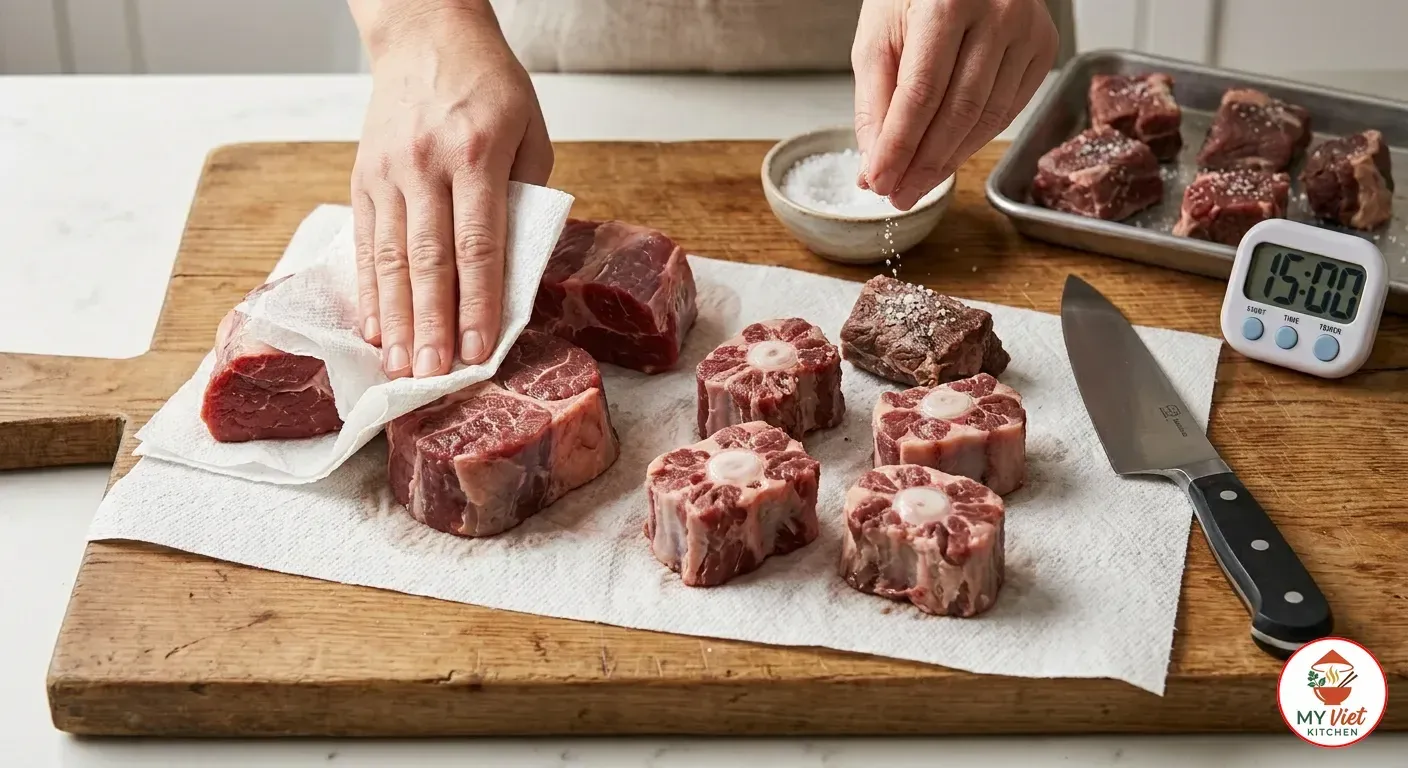
1 Begin by cutting the beef shin into big 2-inch chunks. Larger pieces hold up better during the long simmer and give more filling bites in the finished stew. Then separate the oxtail into pieces along the natural joints. If using cow heel, make sure the butcher has cut it into parts that fit your pot.
Next, pat every piece of meat dry with paper towels. Moisture stops the meat from browning well, so this step matters. Season lightly with salt. Later, the cassareep and more salt will build the flavor. Also, let the meat sit at room temperature for 15 minutes before browning. Otherwise, cold meat drops the oil heat and steams rather than sears.
Step 2: Brown the Meats
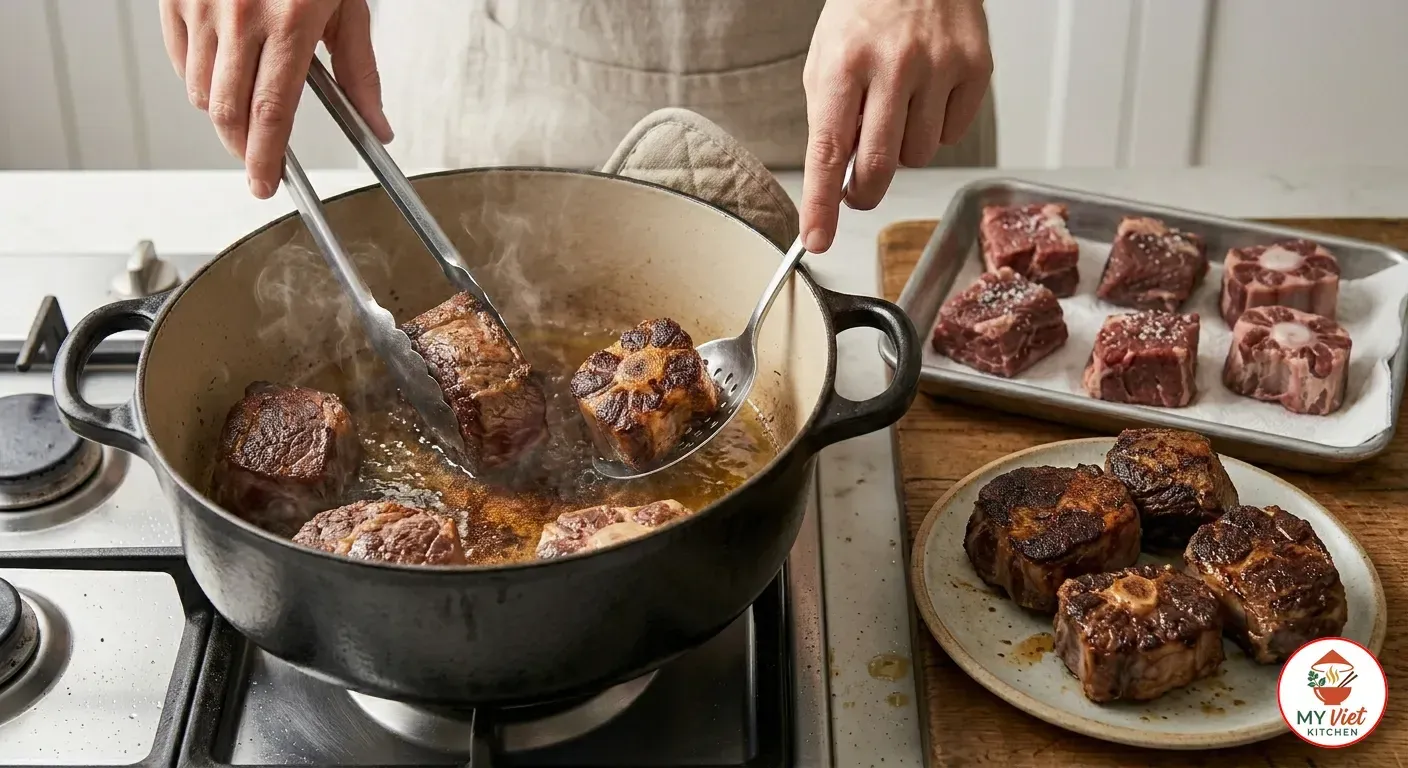
2 Heat the oil in a large, heavy pot or Dutch oven over medium-high heat. Working in batches so the pot is not crowded, sear the beef shin until a deep golden crust forms on all sides. This takes about 4 minutes per side. Transfer each batch to a plate. Then brown the oxtail pieces, followed by the cow heel if using.
Browning is essential for pepperpot, even though the cassareep will darken the whole stew later. Because of the Maillard reaction, hundreds of new flavor compounds form on the meat. In turn, these dissolve into the cooking liquid during the long simmer and add a savory depth that cassareep alone cannot give. So do not rush this step. Properly browned meat is the difference between a good pepperpot and an extraordinary one.
Step 3: Build the Pepperpot Base
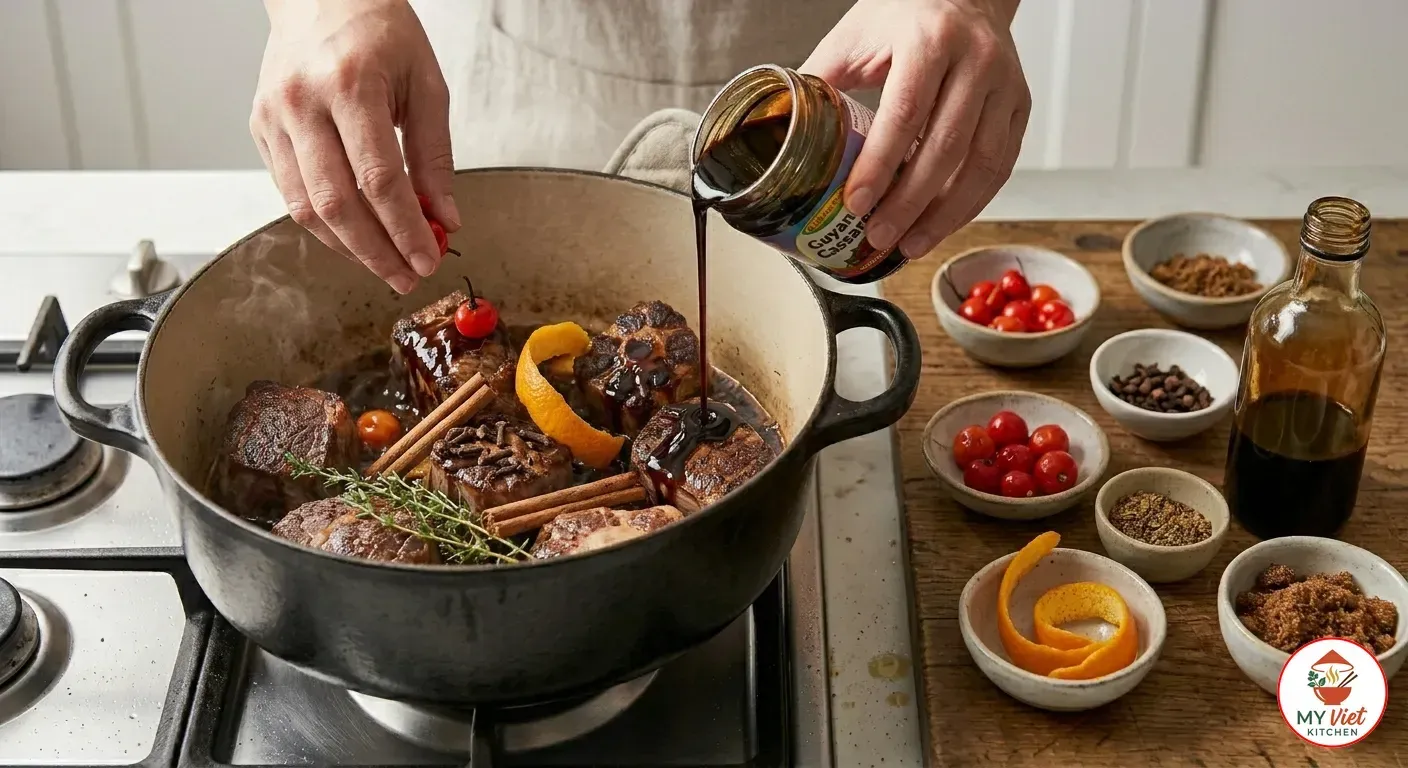
3 Return all the browned meats to the pot. Then pour in the cassareep and water. The liquid should cover the meat by about one inch. Stir until it turns a dark brown color. As it cooks, the color will darken even more, creating the jet-black sauce that defines real pepperpot.
Now add the cinnamon stick, whole cloves, orange peel strip, whole wiri wiri peppers, dried thyme, brown sugar, and salt. Stir everything together gently. Then bring the mixture to a full boil over high heat. While it heats, watch the pot carefully. Skim any foam that rises to the surface with a large spoon, because this foam contains impurities that can cloud the sauce if left in.
Step 4: Slow Simmer
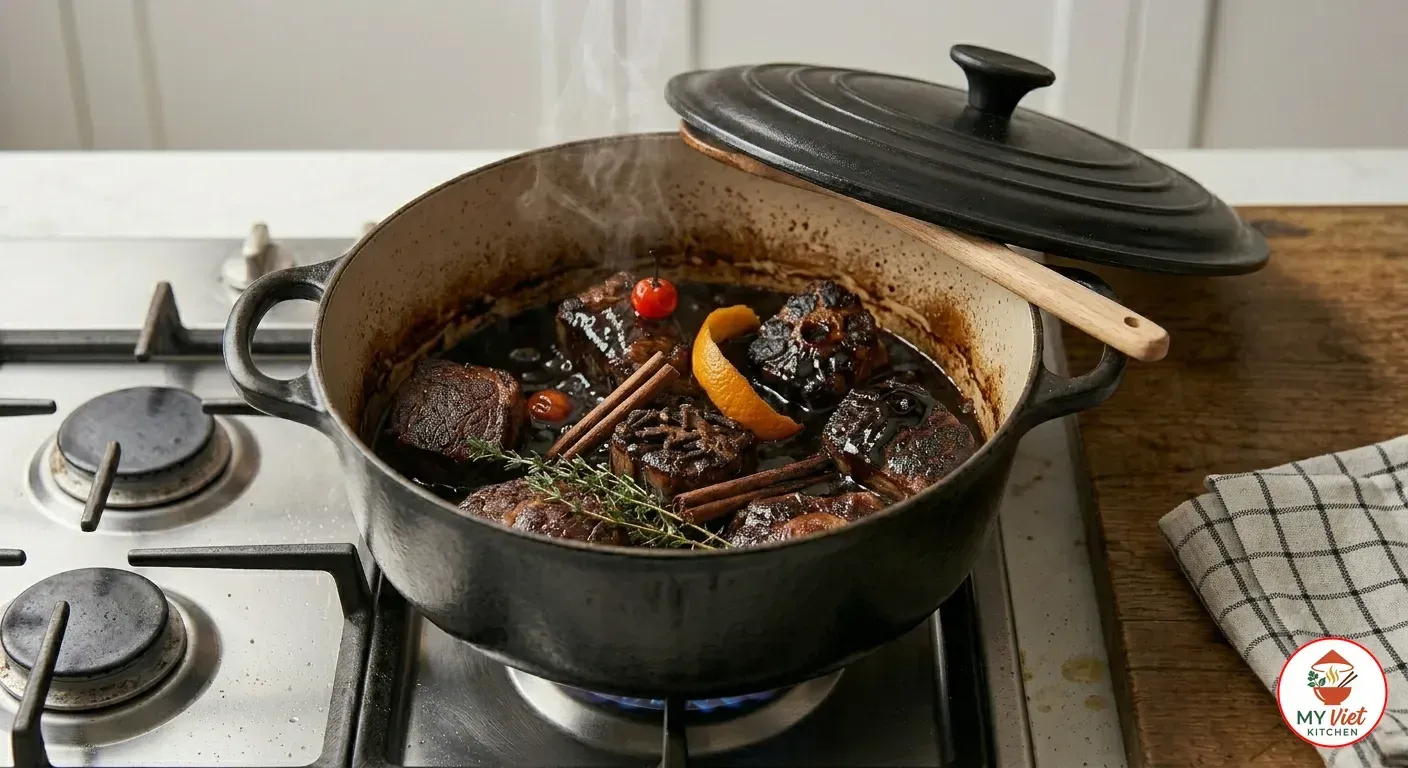
4 Reduce the heat to the lowest setting that keeps a gentle simmer going. Cover the pot with a lid slightly open to let steam escape slowly. This helps the cassareep sauce get thicker and bolder over time. Cook for 2.5 to 3 hours, stirring every 30 minutes so nothing sticks to the bottom.
During the simmer, great things happen inside the pot. First, the collagen in the beef shin and oxtail melts into gelatin. This gelatin makes the sauce thick and shiny in a way that no other method can match. Meanwhile, the cassareep keeps getting more intense. At the same time, cinnamon and cloves slowly release their oils into the liquid. After about two hours, you will see a deep, glossy look on the surface. By the three-hour mark, the beef should be fork-tender. Test it by pressing a piece with a fork. It should give way with no effort at all.
Step 5: Adjust and Serve
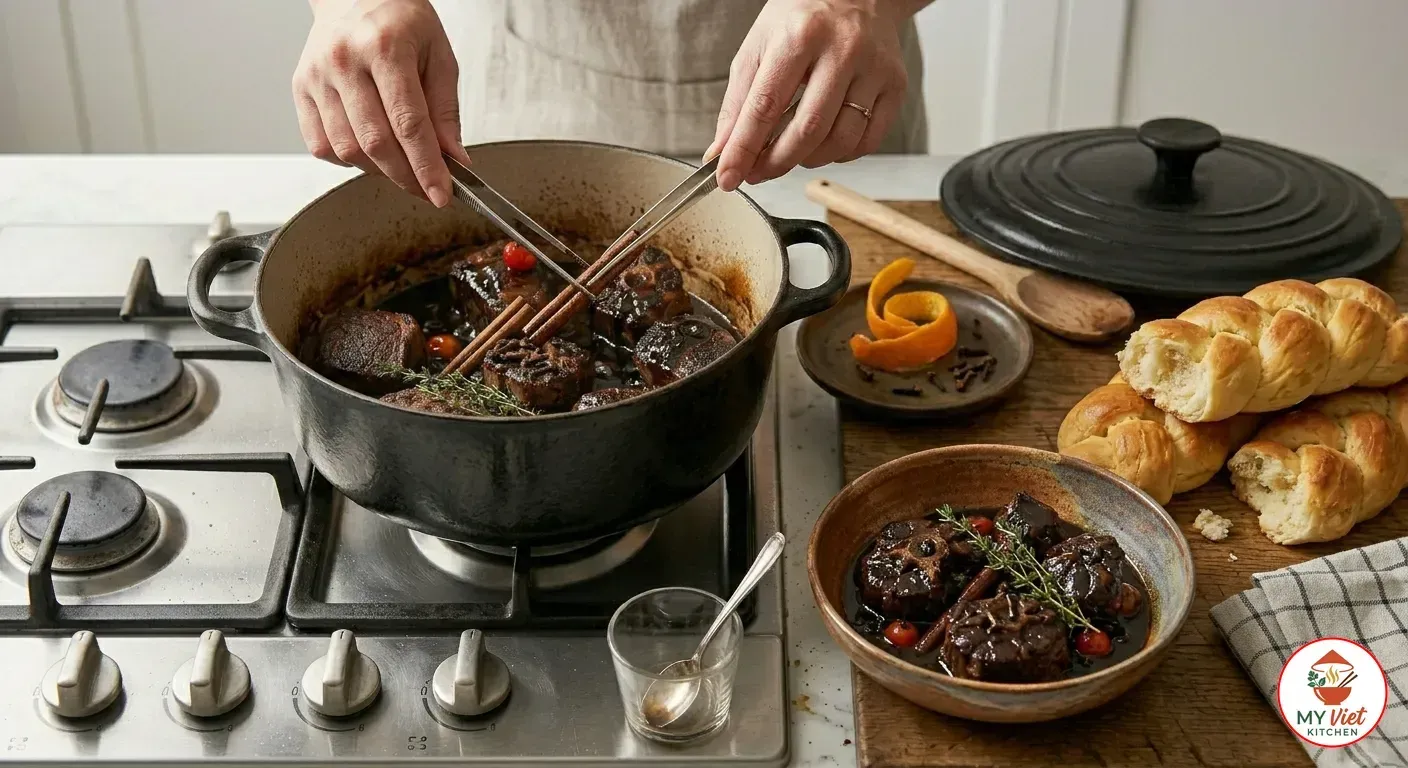
5 Taste the pepperpot and adjust the seasoning carefully. For example, add more cassareep if you want a deeper, more complex flavor. Similarly, add brown sugar if the sauce needs more sweetness to balance the bitterness. Also adjust the salt as needed. Overall, the sauce should strike a balance between sweet, savory, bitter, and gently spicy. Finally, remove the cinnamon stick, cloves, and orange peel strip before serving.
Next, ladle the pepperpot into deep bowls, making sure each serving has a generous mix of beef shin, oxtail, and sauce. Serve with thick slices of warm homemade bread. Plait bread is the traditional Guyanese choice, though any dense, slightly sweet bread works beautifully for soaking up the dark, rich gravy. Alternatively, steamed white rice is an equally authentic option. Either way, the contrast between the dark, glossy stew and the white bread or rice is visually striking and deeply satisfying.
Expert Tips for Perfect Pepperpot
Use Multiple Collagen-Rich Cuts
Above all, the defining quality of a great pepperpot is its thick, glossy sauce. This texture comes entirely from collagen that melts out of the meat during the long simmer. Beef shin provides a solid base. Moreover, oxtail adds even more richness. Including cow heel takes the sauce to another level of silky body. Therefore, using a mix of these cuts ensures the sauce reaches the right thickness without any thickeners. Think of the meat selection as building layers of texture rather than simply adding protein.
Keep the Peppers Whole
Wiri wiri peppers are extremely hot. However, leaving them whole and unpierced allows their fruity aroma to infuse the stew slowly without releasing all the capsaicin. As a result, the heat stays gentle and pleasant rather than fierce. If you want more spice, pierce one pepper with a knife tip during the last hour of cooking. For less heat, remove the peppers entirely after two hours. This approach gives you full control over the spice level while keeping the pepper’s aromatic quality.
Taste and Balance as You Go
Pepperpot requires careful balancing of four flavors: sweet, bitter, savory, and spicy. Specifically, cassareep brings bitterness, while brown sugar adds sweetness. Meanwhile, the meat provides savory depth, and the peppers contribute heat. Because these elements shift as the stew reduces, you should taste the sauce at the one-hour mark and again near the end. If the bitterness dominates, add more sugar. If the stew tastes flat, add more cassareep. Ultimately, this ongoing adjustment is what separates a good pepperpot from a masterful one.
Pepperpot Compared to Other Caribbean Stews
The Caribbean is home to many great stews, and each one reflects the cooking heritage of its island or region. However, pepperpot stands apart because it uses cassareep, which no other major Caribbean dish calls for. Here is how Guyanese pepperpot compares to other beloved stews.
| Dish | Country | Key Ingredients | Key Characteristics |
|---|---|---|---|
| Pepperpot | Guyana | Beef, oxtail, cassareep, cinnamon, cloves | Dark, glossy, bittersweet, improves over days |
| Brown Stew Chicken | Jamaica | Chicken, browning sauce, scotch bonnet, allspice | Spicy, tomato-based, quick to prepare |
| Callaloo Soup | Trinidad | Dasheen leaves, okra, coconut milk, crab | Green, creamy, rich from coconut and crab |
| Sancocho | Dominican Republic | Mixed meats, root vegetables, cilantro, citrus | Hearty, brothy, loaded with starchy vegetables |
| Oil Down | Grenada | Breadfruit, salted meat, coconut milk, turmeric | Golden, coconut-rich, one-pot national dish |
Serving Suggestions
Pepperpot is a complete meal on its own. The rich, dark stew needs only a simple starch to soak up the sauce. Traditionally, Guyanese families serve it with fresh bread, and this pairing is one of the most satisfying in Caribbean cuisine.
Classic Accompaniments:
- Plait bread: This is the traditional partner for pepperpot. The soft, slightly sweet bread tears apart easily and absorbs the dark cassareep sauce beautifully. Many Guyanese families bake fresh plait bread specifically to serve alongside their pepperpot during the holiday season.
- Hard dough bread: Dense and chewy, hard dough bread holds up well against the thick sauce. Its neutral flavor lets the complex spicing of the pepperpot shine. Slice it thick and use it to scoop up every drop of gravy from the bowl.
- Steamed white rice: An equally traditional option that provides a clean, neutral base. The rice absorbs the cassareep sauce and creates a satisfying contrast in both color and texture. Long-grain rice works best for its fluffy, separate grains.
- Roti or flatbread: For those who prefer a Caribbean flatbread, dhalpuri or paratha roti pair wonderfully with pepperpot. The layered, flaky texture adds another dimension to the eating experience.
Beverage Pairings:
- Ginger beer: The spicy warmth of ginger beer complements the warm spices in the pepperpot. The carbonation refreshes the palate between bites. A homemade version with real ginger root elevates the pairing even further.
- Mauby: This traditional Caribbean bark drink has a bittersweet profile that echoes the cassareep in the pepperpot. The pairing feels deeply authentic and balanced. Look for it in Caribbean grocery stores.
- Full-bodied red wine: A Malbec or Shiraz with dark fruit notes and soft tannins pairs beautifully with the rich, spiced beef. The wine’s structure stands up to the bold flavors without competing.
- Sorrel drink: This festive Caribbean hibiscus drink is the traditional Christmas beverage served alongside pepperpot. Its tart, cranberry-like flavor provides a bright counterpoint to the dark, heavy stew.
Storage and Reheating
Refrigerator: Pepperpot stores very well thanks to the preservative qualities of cassareep. First, allow the stew to cool to room temperature, then transfer to an airtight container. It keeps for 7 to 10 days in the refrigerator, which is much longer than most stews. Moreover, the flavor improves with each passing day as the spices, cassareep, and meat continue to meld. Traditionally, Guyanese families keep the pot on the counter and simply reheat it daily, though refrigeration is safer in modern kitchens.
Freezer: Portion the pepperpot into freezer-safe containers, leaving about an inch of headroom for expansion. Then label and freeze for up to 3 months. Notably, the gelatin-rich sauce freezes and thaws nicely. Before reheating, thaw overnight in the refrigerator. Both the oxtail and beef shin keep their tender texture well after freezing.
Reheating: Warm pepperpot gently on the stovetop over medium-low heat. Because the sauce thickens when cold, add a few tablespoons of water while stirring to restore the right thickness. Then bring it to a gentle simmer and cook for 10 to 15 minutes. However, avoid rapid boiling, which can cause the tender meat to fall apart too much. Finally, taste and adjust the seasoning after reheating, since cold storage can mute the sweetness and salt.
Common Mistakes to Avoid
1. Using Too Little Cassareep
Cassareep is the soul of pepperpot. If you reduce the amount, the stew will taste like ordinary beef stew with dark coloring. In other words, the cassareep must be present in a large enough amount to deliver its bittersweet depth and preservative quality. So start with half a cup for this recipe and add more to taste. The sauce should have a clear cassareep flavor that is balanced by the sugar and spices, not merely tinted by a small splash.
2. Cutting the Peppers
Wiri wiri peppers pack extreme heat. If you chop or pierce them, the capsaicin floods the sauce and can make the stew unbearably spicy. Therefore, always add them whole and unpierced. This way, the fruity aroma infuses the liquid while the heat stays controlled. However, if you do pierce a pepper by accident and the stew gets too hot, add more brown sugar and a splash of coconut milk to tame it. Indeed, prevention is far easier than correction.
3. Rushing the Cooking Time
Pepperpot simply cannot be rushed. The three-hour simmer is essential for breaking down collagen into gelatin and for allowing the cassareep to develop its full depth. If you try to cook pepperpot in under two hours, the result will be tough meat and a thin, flat sauce. In contrast, the low, slow simmer creates a rich texture and deep flavor. Still, if you are short on time, use a pressure cooker for the initial cook, then transfer to a regular pot and simmer uncovered for at least 30 minutes to reduce the sauce.
4. Neglecting the Sweet-Bitter Balance
Cassareep has a natural bitterness that must be balanced with brown sugar. Without enough sweetness, the stew tastes harsh and flat. On the other hand, with too much sugar, it becomes cloying. The correct balance produces a sauce that is neither clearly sweet nor bitter but sits in a complex space between the two. For that reason, taste the sauce often during cooking and adjust in small amounts. This balancing act is the skill that sets apart a truly great pepperpot.
Frequently Asked Questions
What is cassareep and where can I buy it?
Cassareep is a thick, dark syrup made from cassava root juice that has been boiled down with spices and burnt sugar. It is the key ingredient in Guyanese pepperpot. In fact, you cannot swap it out without changing the dish entirely. You can find cassareep in Caribbean grocery stores, West Indian markets, and also through online retailers. Look for brands that list cassava as the main ingredient. Ideally, the syrup should pour like molasses and have a deep, nearly black color.
Can I make pepperpot without oxtail?
Yes, you can use beef shin alone or combine it with chuck roast. However, oxtail provides exceptional collagen that gives the sauce its glossy body. Without it, consider adding cow heel or pig trotters to make up the difference. Alternatively, a tablespoon of unflavored gelatin stirred in near the end of cooking can help with texture. Either way, the flavor will remain excellent regardless of the cut you choose.
How long does pepperpot last and can I reheat it?
Pepperpot is famous for its longevity, because the cassareep acts as a natural preservative. When stored in the refrigerator, it lasts 7 to 10 days. Traditionally, the stew sits on the stove and is reheated daily, sometimes for weeks. Additionally, it freezes well for up to 3 months. Simply reheat gently on the stovetop, adding water to restore the right thickness. Most importantly, many families agree that pepperpot tastes better with each reheating as the flavors deepen.
What can I substitute for wiri wiri peppers?
Scotch bonnet or habanero peppers are the closest substitutes. Use one Scotch bonnet in place of three wiri wiri peppers. For milder heat, a bird’s eye chili works well. Keep substitution peppers whole to control the heat level. The key is choosing a pepper with fruity undertones rather than pure heat, as this complements the warm spices in the pepperpot.
Is pepperpot the same as Jamaican pepperpot soup?
No, these are entirely different dishes that share only a name. Guyanese pepperpot is a dark, thick beef stew made with cassareep, and it has roots in Amerindian cooking. By contrast, Jamaican pepperpot soup is a green, lighter soup made with callaloo, okra, and coconut milk. In short, the two dishes come from separate culinary traditions and differ in every way.
Why is pepperpot associated with Christmas in Guyana?
Pepperpot is the centerpiece of Guyanese Christmas celebrations. Families begin preparing it on Christmas Eve, and the pot remains on the stove throughout the holiday season. As a result, every visitor receives a bowl with fresh bread as a gesture of hospitality. Moreover, the dish’s ability to improve with daily reheating makes it perfectly suited for the extended holiday period. Undoubtedly, this tradition connects generations and remains one of the most cherished customs in Guyanese culture.
Variations and Adaptations
Pork Pepperpot:
Simply replace the beef and oxtail with pork shoulder and pork trotters. Pork absorbs cassareep nicely and develops a slightly sweeter flavor. Cut the pork shoulder into large chunks and brown them well before adding to the pot. The cooking time stays the same. Additionally, pork trotters add lots of gelatin for a silky sauce. This variation is popular in many Guyanese homes and is considered equally traditional.
Lamb or Goat Pepperpot:
Lamb shoulder or goat leg also works very well in pepperpot. In particular, the gamey flavor of these meats pairs nicely with the warm spices and bittersweet cassareep. Use bone-in cuts for the most collagen. Goat pepperpot is especially popular during festive occasions. Furthermore, increase the cinnamon slightly when using lamb or goat, since the extra warmth complements the stronger meat flavor.
Slow Cooker Pepperpot:
After browning the meats on the stovetop, transfer everything to a slow cooker. Then add all remaining ingredients and cook on low for 8 to 10 hours or on high for 5 to 6 hours. As a result, the slow cooker produces very tender meat with minimal effort. However, the only adjustment needed is reducing the liquid. So transfer the finished stew to a regular pot and simmer uncovered for 20 to 30 minutes to reach the proper glossy thickness.
Pressure Cooker Pepperpot:
For those short on time, an electric pressure cooker reduces the cooking time to about 45 minutes. First, brown the meats using the saute function, then add all remaining ingredients. Cook on high pressure for 40 minutes with a natural release. The meat will be perfectly tender. After releasing the pressure, switch to saute mode and simmer uncovered for 15 minutes to reduce and thicken the sauce. Notably, this method keeps nearly all the flavor depth of the traditional long simmer.
The Cultural Significance of Pepperpot
Pepperpot is far more than a recipe in Guyana. It is a living cultural artifact that connects modern Guyanese people to the indigenous Amerindian communities who first created it. In fact, the dish predates European colonization by centuries. When the Arawak and Carib peoples developed cassareep as a preservation method, they created something that would outlast empires and survive cultural upheaval. Today, pepperpot carries the weight of that entire history in every bowl. Truly, it is a dish that cannot be separated from the land and people who gave it life.
In modern Guyana, pepperpot goes beyond ethnicity and religion. Indian-Guyanese, Afro-Guyanese, Indigenous, Chinese-Guyanese, and Portuguese-Guyanese families all make their own versions. As a result, the dish has become a unifying symbol of national identity. According to Taste Atlas, pepperpot ranks among the most celebrated dishes in South American and Caribbean cuisine. For Guyanese communities around the world — in New York, Toronto, London, and beyond — preparing pepperpot at Christmas is an act of cultural preservation. It keeps the tie to home alive across oceans and generations. Eventually, the pot simmers, the bread is baked, and for a few hours, a kitchen in Brooklyn can feel like a kitchen in Georgetown. That is the real power of pepperpot. Explore more Caribbean dishes on our site to discover the rich culinary traditions of the region.
Conclusion
Pepperpot is one of the most rewarding stews you will ever make. The ingredients are few, and the technique is straightforward. Yet the slow alchemy of cassareep, beef, and warm spices produces something that goes beyond the sum of its parts. In the end, the dark, glossy sauce, the fork-tender meat, and the complex play of sweet, bitter, and spice create a dish that stays with you long after the bowl is empty. So give it the three hours it requires. You will understand why Guyanese families have treasured this stew for centuries.
Looking for more hearty stews from around the world? Browse our collection of Caribbean dishes and discover recipes like jollof rice, feijoada, and Irish stew. If you try this pepperpot recipe, leave a rating and share your experience in the comments below.