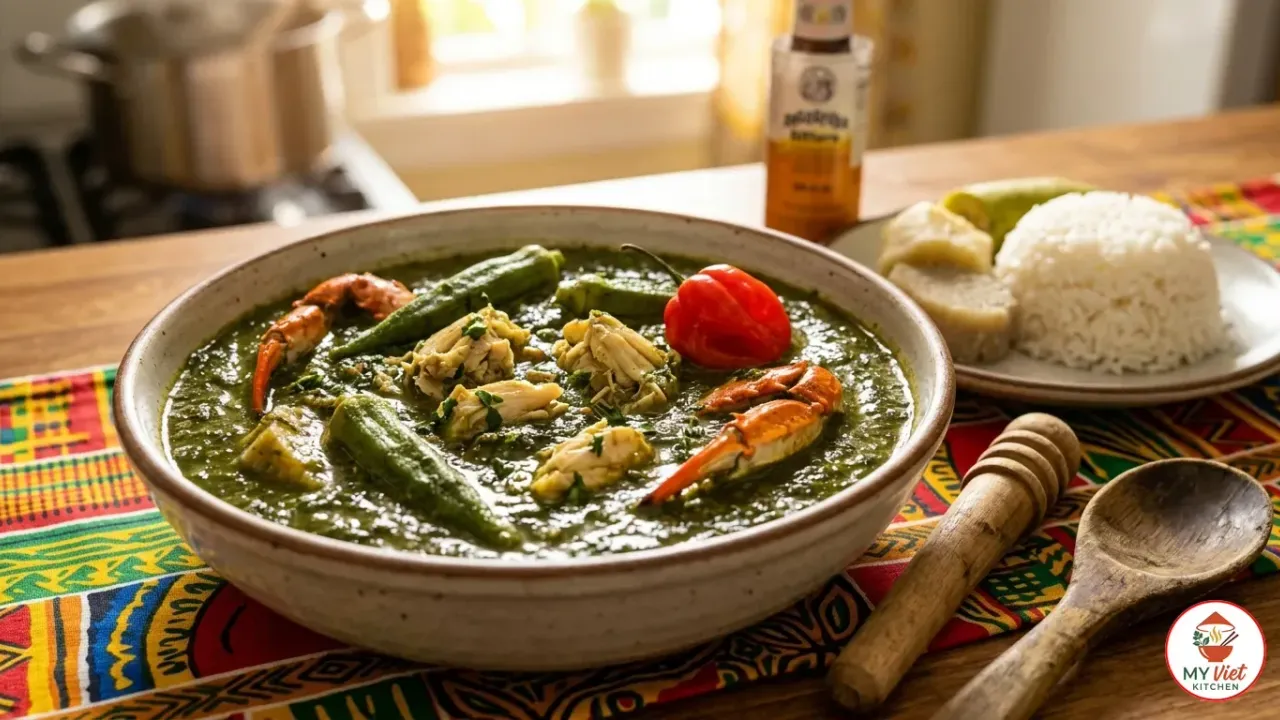
Callaloo is the soul of Trinidadian cooking, a rich and velvety stew that has earned its place as the national dish of Trinidad and Tobago. Made from dasheen leaves simmered with coconut milk, okra, and fiery Scotch bonnet pepper, this deeply flavorful callaloo recipe captures the essence of Caribbean cuisine. Whether you serve it alongside rice and stewed chicken or ladle it over ground provisions, callaloo transforms any meal into a celebration of island flavor. This callaloo recipe guides you through every step for authentic results at home.
Prep Time: 20 minutes | Cook Time: 45 minutes | Servings: 6
Difficulty: Easy | Calories: ~285 per serving
What Makes This Callaloo Recipe Special?
Callaloo is not just another leafy green stew. It is a dish that builds flavor from the ground up. The dasheen leaves give a mild, earthy base. They absorb every note of spice in the pot. Meanwhile, the okra breaks down during cooking. It acts as a natural thickener. This gives callaloo its silky body. As a result, the final dish has a smooth, creamy feel that clings to every grain of rice.
What truly elevates this callaloo recipe is the coconut milk. It softens the earthy bite of the dasheen leaves and adds a gentle sweetness. This balances the heat of the Scotch bonnet pepper. In Trinidad, cooks place the whole pepper on top of the stew. They never pierce it. This lets the pepper’s floral scent flow into the broth while keeping the heat mild. Therefore, even people who avoid spicy food can enjoy this callaloo recipe with ease.
Blue crab transforms this callaloo recipe from a simple side dish into a showstopping main course. The sweet, briny crab meat mingles with the coconut and dasheen. This creates a flavor that is pure Trinidad. However, even without crab, callaloo delivers great depth. In fact, many home cooks prepare it as a meatless dish during the week. They save the crab version for Sunday lunch.

Choosing the Right Dasheen Leaves
The type of greens you use shapes the taste and texture of your callaloo recipe. Dasheen leaves are the gold standard, but several good options exist if fresh dasheen is not sold in your area. Here are your best choices.
- Fresh dasheen (taro) leaves (best choice): These large, heart-shaped leaves from the taro plant are the traditional choice for Trinidadian callaloo. They have a mild, slightly mineral flavor and break down into a beautifully smooth puree. Look for leaves that are deep green, firm, and free of yellowing.
- Frozen dasheen leaves: Many Caribbean grocery stores carry frozen dasheen leaves, which work nearly as well as fresh. They save significant prep time because they are already cleaned and stripped from stems. Thaw them fully and drain excess water before cooking.
- Spinach or Swiss chard (substitute): If dasheen leaves are unavailable, mature spinach or Swiss chard can serve as a substitute. They cook faster and produce a thinner consistency. You may need to increase the okra by a few pods to compensate for the reduced body. The flavor will be different, but the dish will still be satisfying.
Ingredients for Callaloo
Main Ingredients:
- 1 large bundle dasheen leaves (about 12 leaves), stripped and roughly chopped
- 10 okra, tops trimmed and left whole
- 1 cup full-fat coconut milk
- 6 cups vegetable or chicken stock
- 1 pound blue crab, cleaned and quartered (optional)
Aromatics and Seasonings:
- 1 medium onion, finely diced
- 4 cloves garlic, minced
- 3 green onions (scallions), chopped
- 4 sprigs fresh thyme
- 1 whole Scotch bonnet pepper (do not cut)
- 6 pimento (chadon beni) leaves or cilantro, chopped
Cooking Fats and Finishing:
- 2 tablespoons butter or coconut oil
- 1 tablespoon vegetable oil
- 1/2 teaspoon smoked paprika
- Salt and black pepper to taste
Pro tip: Always keep the Scotch bonnet pepper whole and uncut in the pot. This technique infuses the callaloo with the pepper’s fruity aroma without releasing its full fire. If the pepper accidentally bursts during cooking, the heat will increase dramatically, so handle it gently when stirring.
Step-by-Step Instructions
Step 1: Prepare the Dasheen Leaves
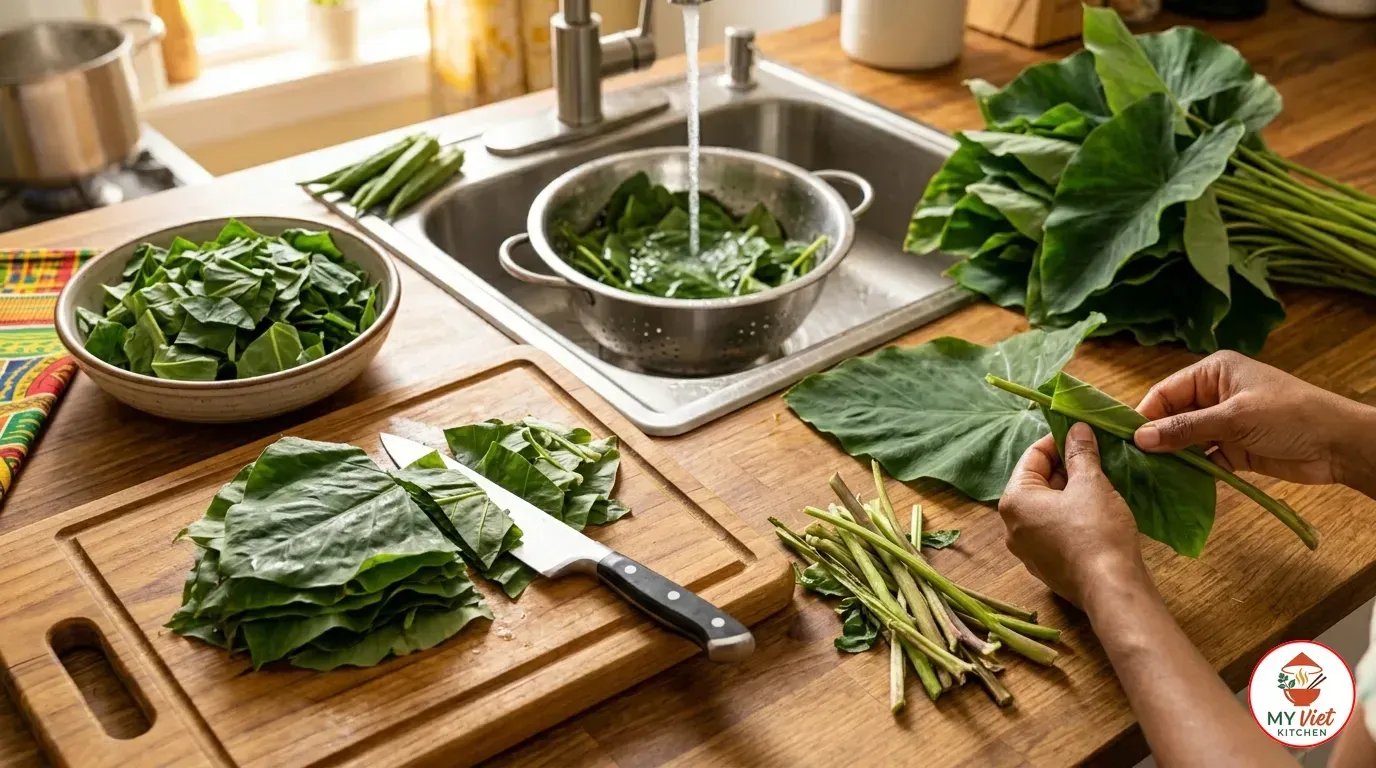
1 Strip each dasheen leaf from its thick central stem. Fold the leaf in half and pull the stem away. The stems are too tough and will not break down, so toss them. Wash each leaf well under cold water to remove dirt or grit. Then chop the leaves into large pieces. You do not need small cuts here, because the leaves get blended later. If using frozen dasheen, thaw fully and squeeze out extra water before cooking.
Step 2: Build the Aromatic Base
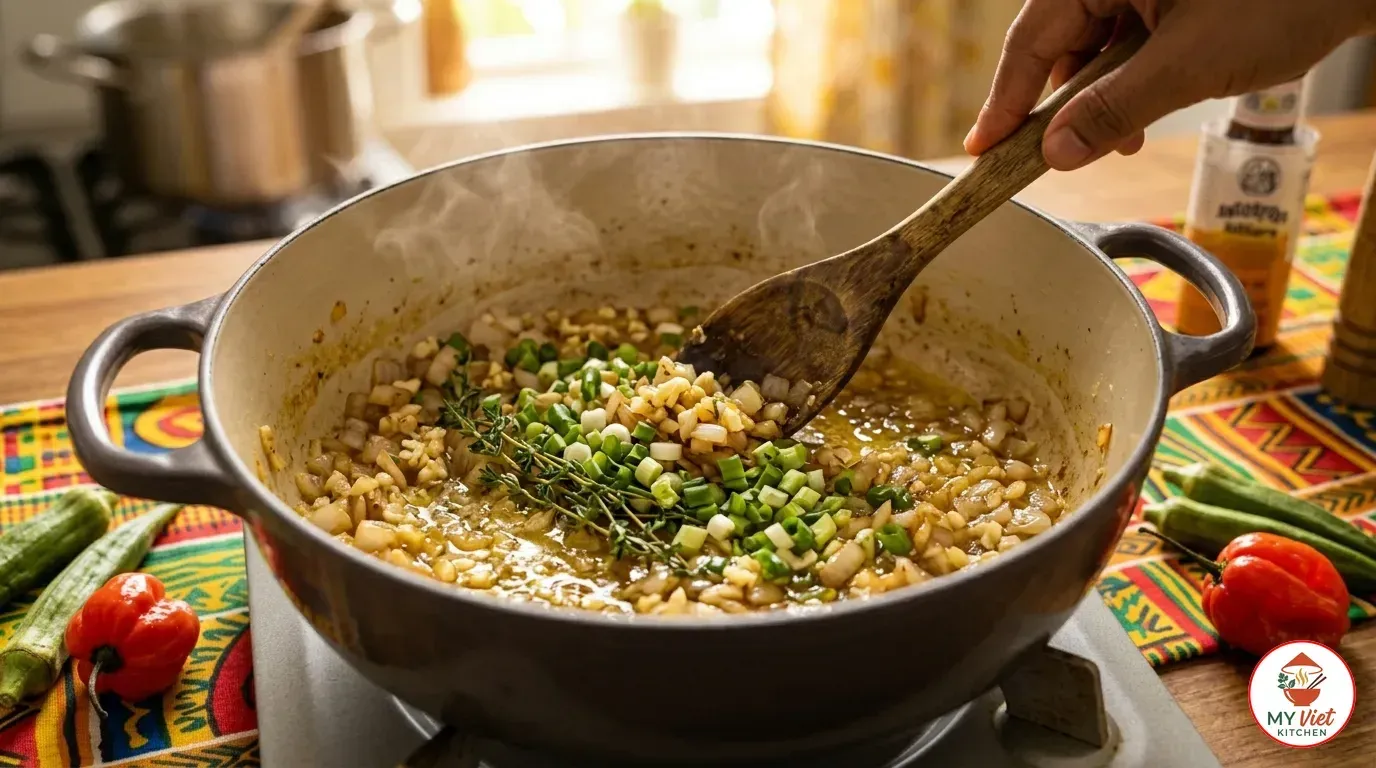
2 Heat the butter and oil in a large pot or Dutch oven over medium heat. Once the butter melts and foams, add the diced onion. Cook for 3 minutes until soft. Next, add the garlic, green onions, and thyme sprigs. Stir and cook for 2 more minutes until the garlic smells great. This base is the flavor core of your callaloo recipe. Take the time to build it right.
Step 3: Add the Leaves and Liquid
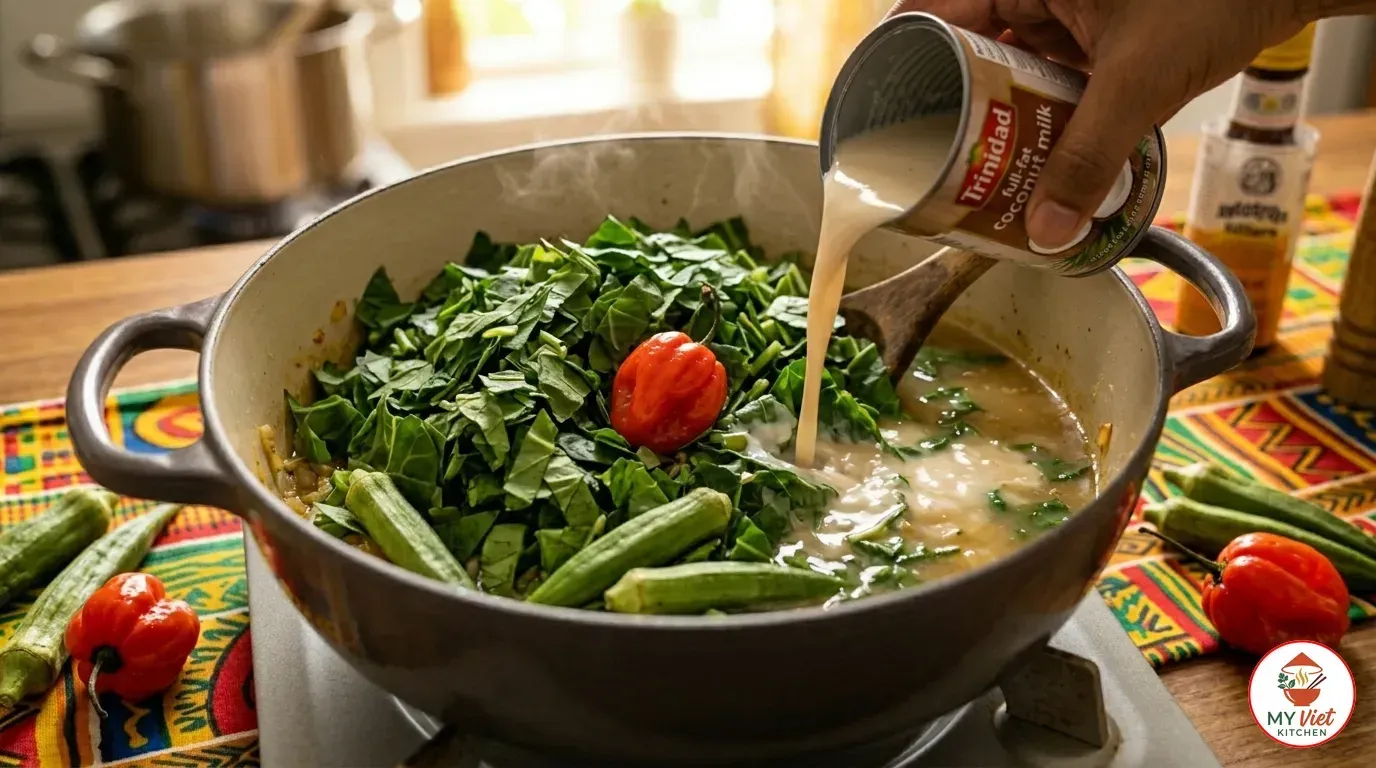
3 Add all the chopped dasheen leaves to the pot. They look like a huge amount, but the leaves shrink fast. Toss in the whole okra, chadon beni or cilantro, and smoked paprika. Pour in the stock and coconut milk. Stir it all together. Then gently place the whole Scotch bonnet pepper on top. Do not press or pierce it. Bring to a boil, then lower the heat to a gentle simmer right away.
Step 4: Simmer Until Tender
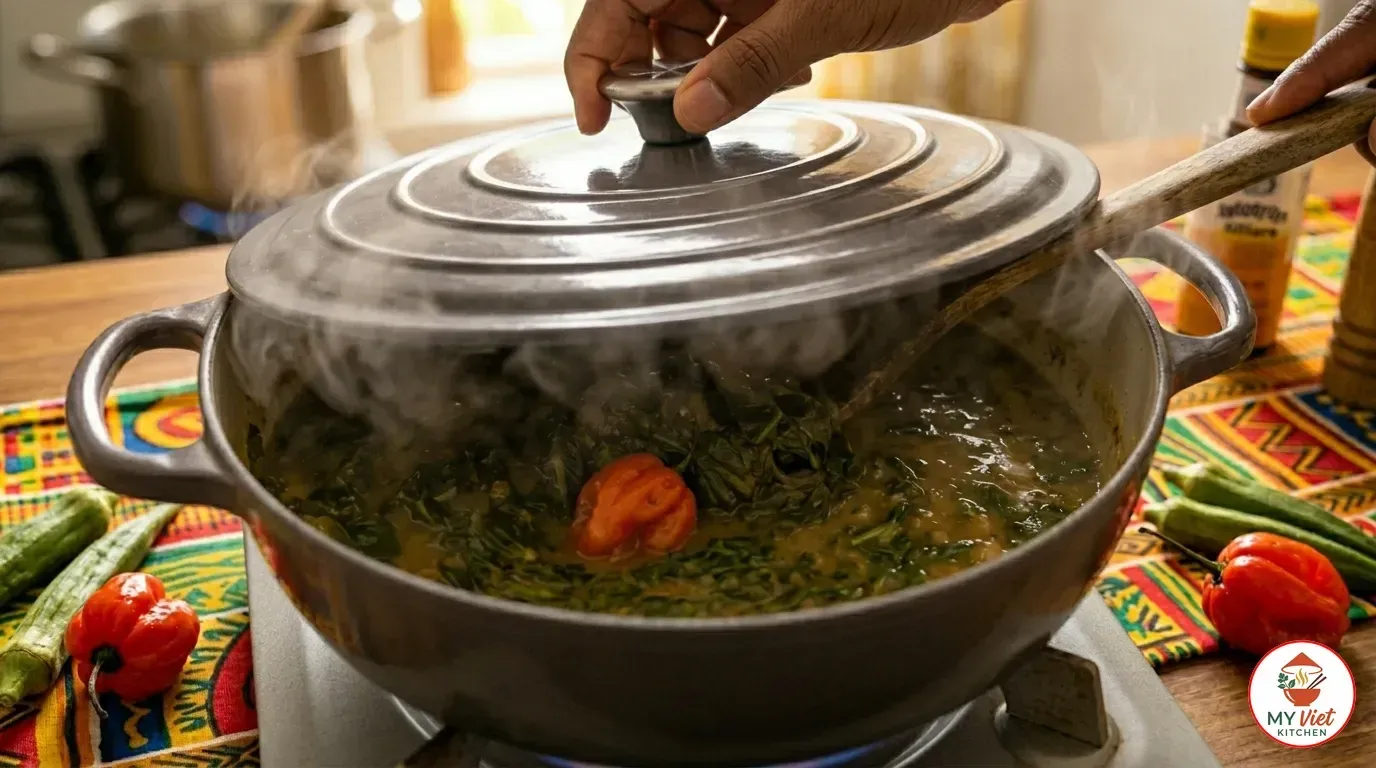
4 Cover the pot and let the callaloo simmer for 30 to 35 minutes. Stir now and then with a wooden spoon. Be careful not to bump the Scotch bonnet pepper. The dasheen leaves should turn very soft. The okra should start to fall apart. This is good, because the okra thickens the stew as it breaks down. If you are adding crab, drop in the cleaned and quartered pieces during the last 15 minutes. The crab only needs that long to cook and release its sweet flavor into the broth.
Step 5: Blend to a Velvety Consistency
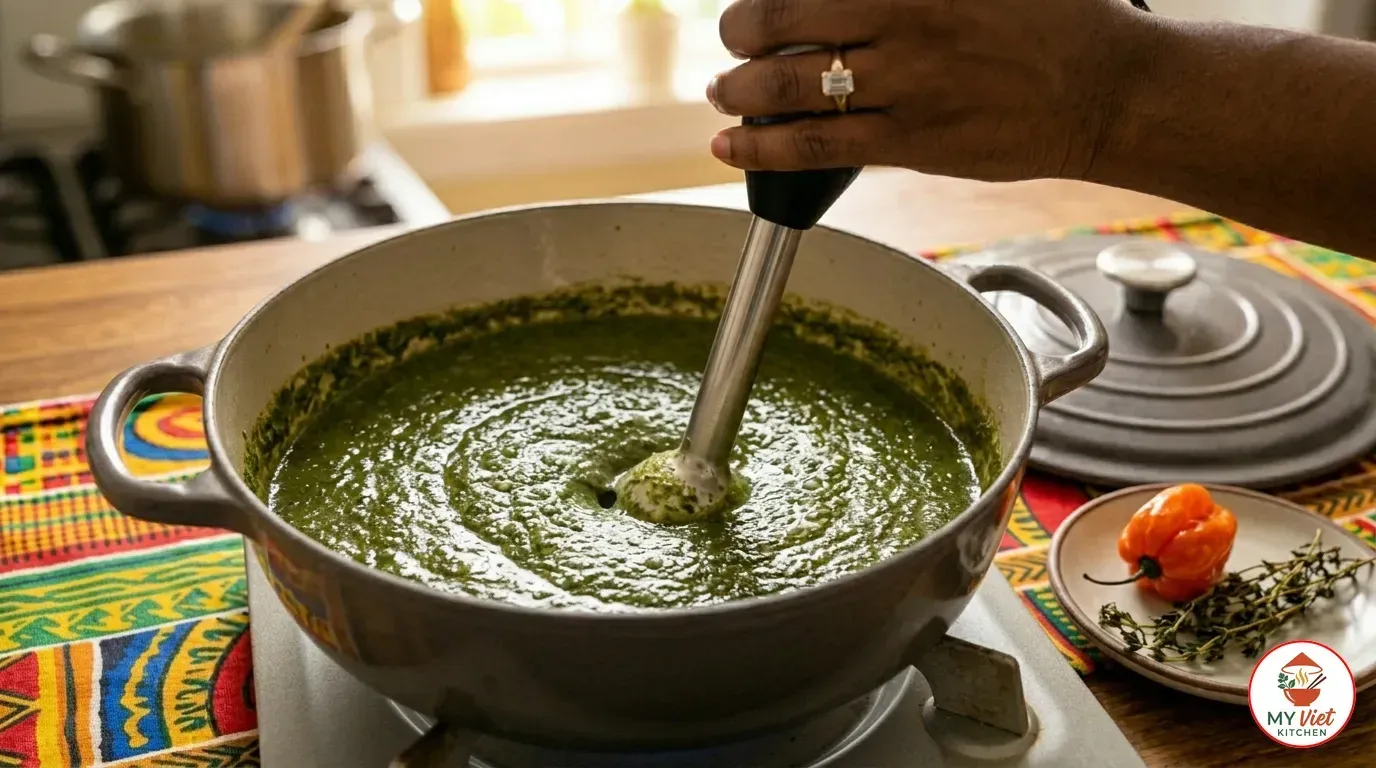
5 Use a slotted spoon to lift out the Scotch bonnet pepper. Set it aside. Also remove the thyme sprigs and any crab pieces. Now use an immersion blender to puree the callaloo right in the pot. Blend until smooth and velvety. In Trinidad, cooks use a swizzle stick called a lele. They spin it between their palms to blend the stew. If you prefer a chunkier texture, blend less. Put the crab pieces back in the pot after blending. You can also set the pepper back on top for more heat during the final simmer.
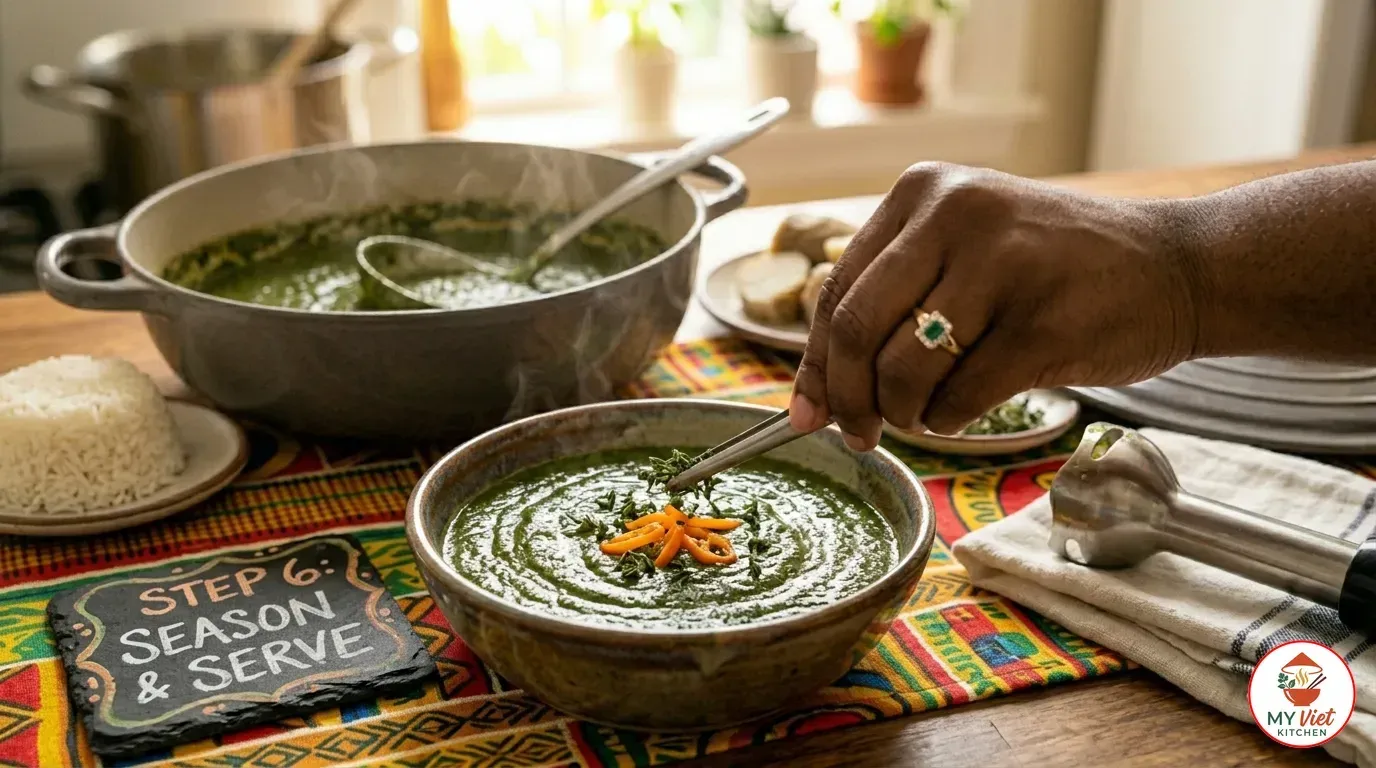
Step 6: Season and Serve
6 Taste the callaloo and adjust salt and pepper as needed. Let it simmer for 5 more minutes so the flavors come together. It should have the body of a thick, pourable soup. If it is too thick, add a splash of stock. If too thin, simmer it uncovered a bit longer. Serve hot over fluffy white rice. You can also ladle it next to boiled green bananas, yams, cassava, or fried dumplings. For a full Sunday lunch, pair this callaloo recipe with stewed chicken, macaroni pie, and fried plantains.
Expert Tips for Perfect Callaloo
Keep the Scotch Bonnet Whole
The whole Scotch bonnet pepper technique is the hallmark of Trinidadian callaloo. By leaving it intact, you extract the aromatic, fruity flavor without the overwhelming heat. Cutting or bursting the pepper releases capsaicin directly into the stew. Therefore, handle the pepper gently when stirring and remove it before blending.
Use Full-Fat Coconut Milk
Light coconut milk produces a thinner, less flavorful callaloo. The fat in full-fat coconut milk carries flavor compounds and creates the rich, creamy texture that defines authentic callaloo. Shake the can well before opening to distribute the cream evenly. For extra richness, you can add a second splash of coconut milk after blending.
Blend with a Swizzle Stick for Tradition
The lele, or swizzle stick, is a wooden stick with prongs at the end. You spin it between your palms. It breaks down the leaves and okra bit by bit. This gives a slightly chunkier result than a blender. If you want the most real feel, Caribbean markets and online shops sell them at a low cost.
Callaloo Across the Caribbean: A Regional Comparison
The word “callaloo” means very different things depending on which Caribbean island you visit. While Trinidad’s version is a rich, blended coconut stew, other islands use the same name for completely different preparations. Here is how callaloo varies across the region.
| Country | Main Greens | Style | Key Characteristics |
|---|---|---|---|
| Trinidad and Tobago | Dasheen (taro) leaves | Blended stew | Coconut milk, okra, crab, pureed to velvety consistency |
| Jamaica | Amaranth leaves | Sauteed side dish | Quick-cooked with onion, garlic, tomatoes, Scotch bonnet |
| Barbados | Taro or spinach | Steamed dish | Often served with cou-cou (cornmeal and okra) |
| Guyana | Taro leaves | Blended stew | Similar to Trinidadian, sometimes with salted meat |
| Haiti | Amaranth or jute leaves | Blended soup | Called lalo, often includes crab and other seafood |
Serving Suggestions
In Trinidad, callaloo is the star of Sunday lunch, which is the most important meal of the week. Families gather around a table loaded with multiple dishes. The callaloo is served in a large bowl at the center, and everyone ladles it generously over rice or alongside their favorite sides.
Classic Accompaniments:
- White rice: The most traditional pairing. The fluffy rice absorbs the rich callaloo and creates a comforting, complete meal.
- Pelau (seasoned rice): Trinidad’s one-pot rice dish with pigeon peas and caramelized chicken pairs beautifully with callaloo.
- Macaroni pie: A baked, firm Caribbean-style macaroni and cheese that provides a rich, creamy contrast alongside the stew.
- Provisions (ground provisions): Boiled green bananas, cassava, yams, and dasheen root add starchy substance that soaks up the callaloo.
- Fried dumplings or bake: These golden, crispy breads are perfect for scooping up thick callaloo. They are essential at any Trinidadian table.
Beverage Pairings:
- Sorrel drink: A deep red hibiscus-based drink spiced with cloves and cinnamon. It is tart, refreshing, and iconic in Trinidad.
- Mauby: A bittersweet bark-based drink that is an acquired taste but beloved by Trinidadians. It cuts through the richness of the callaloo perfectly.
- Coconut water: Fresh coconut water is a natural complement to the coconut milk in the callaloo and provides light, tropical refreshment.
- Rum punch: A classic Caribbean rum punch with lime, Angostura bitters, and sugar syrup makes any callaloo meal feel like a celebration.
- Carib or Stag beer: These popular Trinidadian lagers are light and crisp, making them a reliable choice alongside the hearty stew.
Storage and Reheating
Refrigerator: Store leftover callaloo in an airtight container for up to 4 days. Like many stews, callaloo tastes even better the next day because the flavors continue to develop and meld as it rests. If you included crab, store the crab pieces separately to prevent them from becoming rubbery.
Freezer: Callaloo without crab freezes exceptionally well for up to 3 months. Portion it into freezer-safe containers, leaving a half inch of headroom for expansion. Thaw overnight in the refrigerator before reheating. Avoid freezing the crab version, because shellfish texture degrades significantly after freezing.
Reheating: The best method is on the stovetop over low heat. Add a splash of stock or coconut milk to restore the silky consistency. Stir occasionally and heat for 8 to 10 minutes. You can also microwave individual portions in 2-minute intervals, stirring between each round.
Common Mistakes to Avoid
1. Cutting the Scotch Bonnet Pepper
Slicing or piercing the Scotch bonnet releases its seeds and capsaicin oils directly into the stew. This makes the callaloo extremely spicy and overpowers the subtle flavors of the dasheen and coconut. Instead, always add the pepper whole. If you want more heat, gently press the pepper with a spoon toward the end of cooking.
2. Skipping the Okra
Some cooks remove okra because of its slimy reputation. However, in callaloo, the okra is essential. Its mucilage acts as a natural thickener that gives the stew its characteristic body. Without okra, callaloo becomes watery and thin. Leave the okra whole to minimize sliminess while still gaining its thickening power.
3. Using Light Coconut Milk
Light coconut milk is mostly water. It lacks richness. A good callaloo recipe needs the full-fat version for real flavor and texture. The fat carries taste and builds the creamy body that defines this dish. Always reach for the full-fat can.
4. Not Cooking Long Enough
Dasheen leaves need at least 30 minutes of simmering to break down properly. If you rush this step, the leaves remain fibrous and the callaloo will not blend to a smooth consistency. Furthermore, the okra needs time to release its thickening agents and the flavors need time to develop. Patience is essential here.
Frequently Asked Questions
What are dasheen leaves and where can I buy them?
Dasheen leaves come from the taro plant and are the traditional green used in Trinidadian callaloo. You can find them fresh or frozen at Caribbean, Asian, or African grocery stores. If they are unavailable in your area, mature spinach or Swiss chard can serve as a substitute. However, the flavor and texture will differ from the authentic version.
What is the difference between Trinidadian callaloo and Jamaican callaloo?
Trinidadian callaloo is a thick, blended stew made with dasheen leaves, coconut milk, okra, and often crab. Jamaican callaloo, by contrast, is a quick-sauteed side dish made with amaranth leaves, onions, garlic, and tomatoes. The two dishes share a name but are fundamentally different in preparation, texture, and flavor profile. In other words, they are entirely separate dishes that happen to share a word.
Can I make callaloo without crab?
Yes, callaloo is absolutely delicious without crab. Many Trinidadian families prepare it this way during the week and save the crab version for special occasions. The dasheen leaves, coconut milk, and okra provide plenty of body and flavor on their own. For extra richness, consider adding salted pigtail, smoked turkey necks, or a handful of dried shrimp as an alternative protein source.
Why is my callaloo slimy?
Sliminess comes from the okra, which releases mucilage when cooked. In callaloo, this is actually desirable in moderation because it thickens the stew naturally. If you find the texture off-putting, keep the okra pods whole instead of slicing them. You can also add a squeeze of fresh lime juice, which helps reduce the mucilaginous texture. Most importantly, blending the callaloo at the end distributes the texture evenly and eliminates any noticeable sliminess.
Is callaloo healthy?
Callaloo is very nutritious. Dasheen leaves are rich in iron, calcium, vitamin A, and vitamin C. The coconut milk provides healthy medium-chain fats, and the okra contributes dietary fiber. A serving of callaloo without crab contains approximately 285 calories. The dish is naturally gluten-free and can easily be made vegan by using vegetable stock and coconut oil instead of butter.
What is a swizzle stick and do I need one for callaloo?
A swizzle stick, called a lele in Trinidad, is a wooden stick with prongs at the end. Cooks spin it rapidly between their palms to blend callaloo directly in the pot. It produces a slightly chunkier, more traditional texture than an immersion blender. While a lele is a wonderful tool, it is not strictly necessary. An immersion blender or a standard blender works perfectly well as a modern substitute.
Variations and Adaptations
Callaloo with Salted Pigtail:
Soak salted pigtail overnight in cold water, changing the water twice to remove excess salt. Boil the pigtail for 30 minutes until tender, then chop it into small pieces. Add the pigtail to the callaloo at the same time as the dasheen leaves. The salty, smoky pork adds rich umami depth that pairs beautifully with the coconut milk. This variation is a beloved weekday version in many Trinidadian households.
Vegan Callaloo:
Replace the butter with coconut oil and use vegetable stock instead of chicken stock. Omit the crab entirely. The coconut milk, dasheen leaves, and okra provide all the richness and body you need. For added protein, stir in a can of drained chickpeas during the last 10 minutes of simmering. This version is naturally plant-based and incredibly satisfying.
Callaloo Soup:
Add an extra 2 cups of stock to create a thinner, soup-like consistency. Include diced potato and carrot for added substance. Blend until completely smooth, then serve in bowls with a swirl of coconut cream on top. This lighter version works well as a starter course or a comforting lunch. Additionally, it freezes beautifully and reheats quickly for busy weeknights.
Callaloo with Shrimp:
Replace the crab with 1 pound of large shrimp, peeled and deveined. Add the shrimp during the last 5 minutes of cooking so they stay tender and do not become rubbery. The shrimp cook quickly in the hot broth and add a sweet, delicate seafood flavor. This substitution works especially well when blue crab is out of season or hard to find.
The Cultural Significance of Callaloo
Callaloo holds a place of honor in Trinidad that goes far beyond the kitchen. It is the national dish of Trinidad and Tobago. It stands for the island’s blend of African, Indian, European, and native roots. The dish is a symbol of the country’s mixed culture. In fact, the phrase “callaloo nation” is often used to describe Trinidad’s diverse people.
The roots of callaloo trace back to West African one-pot stews. These came to the Caribbean during the slave trade. Enslaved Africans used local plants like dasheen leaves and coconut milk. Over time, Indian, Chinese, and European settlers added their own touches. As a result, this callaloo recipe is a living record of the island’s rich past.
Sunday lunch in Trinidad is sacred, and callaloo is at its heart. Families cook all morning. The spread often includes callaloo, rice, stewed chicken, macaroni pie, and plantains. It is a time for family, sharing, and connection. For those living abroad, making callaloo is an act of love. It is one of the first dishes they teach their children. It is also one of the last they would ever give up.
During Carnival, callaloo takes on even more meaning. It fuels the energy of the fetes, liming sessions, and family parties. The dish is so tied to Caribbean identity that no party feels complete without it.
Conclusion
This callaloo recipe delivers the rich, velvety stew that has made it the national dish of Trinidad and Tobago. The key steps are simple. Simmer dasheen leaves with coconut milk and okra until tender. Then blend to a smooth texture. The whole Scotch bonnet adds gentle heat. The blue crab lifts it to a feast-worthy main dish. Follow this callaloo recipe step by step, and you will produce a stew that is bold, silky, and true to its Caribbean roots.
Ready to explore more Caribbean flavors? Browse our collection of Caribbean dishes, including jerk chicken, Trinidadian roti, and Jamaican rice and peas. Also, discover our stew recipes from around the world for more inspiration.