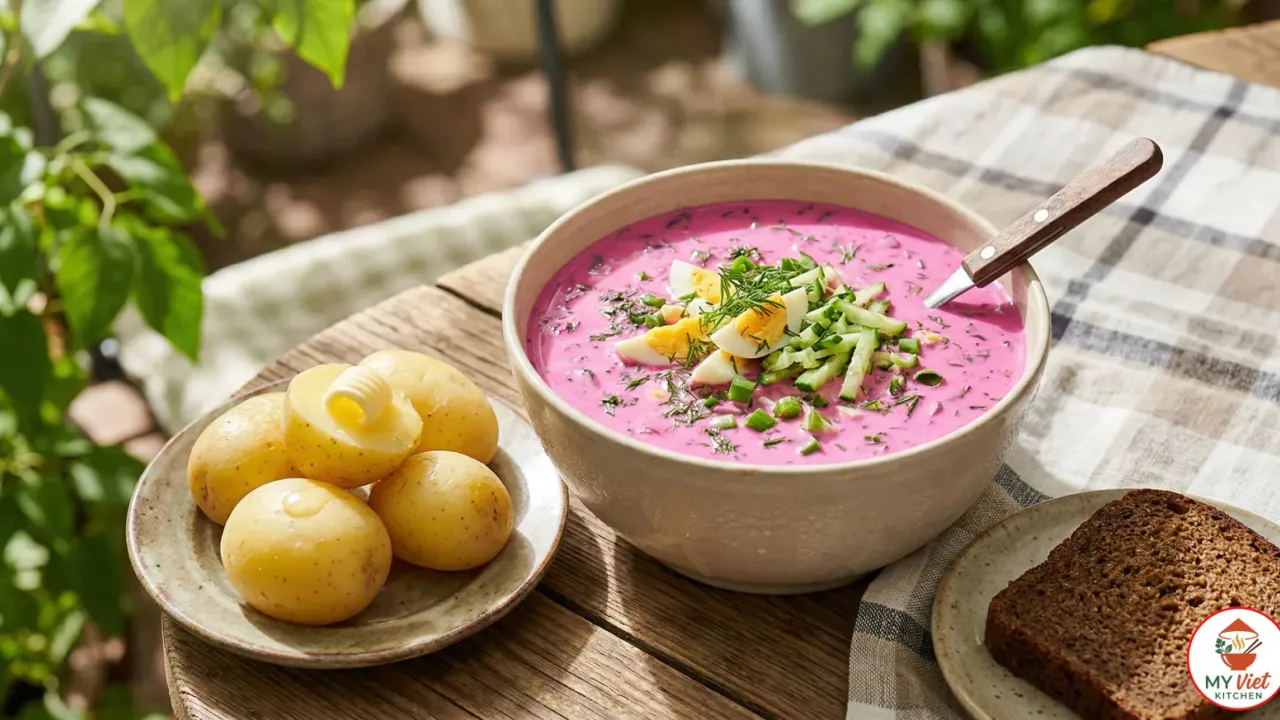
Saltibarsciai is the beloved Lithuanian cold beet soup that turns a striking shade of pink and tastes like summer in a bowl, and this recipe walks you through exactly how to make it at home. Also known as cold pink soup or Lithuanian cold borscht, this chilled soup combines cooked beets with tangy kefir, crisp cucumbers, fresh dill, and hard-boiled eggs. Indeed, it is one of the most refreshing dishes in all of European cooking. This saltibarsciai recipe follows the traditional method used in Lithuanian kitchens for generations. Every bowl arrives at the table ice-cold alongside a hot boiled potato, creating the signature contrast that makes this dish so satisfying on a warm day.
Prep Time: 20 minutes | Cook Time: 40 minutes | Servings: 6
Difficulty: Easy | Calories: ~180 per serving
What Makes Saltibarsciai Special?
Saltibarsciai holds a place of deep affection in Lithuanian cuisine that few other dishes can match. When summer arrives in the Baltics and temperatures climb, this cold soup appears on every family table, at every countryside homestead, and on the menu of every traditional restaurant from Vilnius to the seaside resort town of Palanga. It marks the season as surely as the long white nights and the blooming linden trees. Lithuanians do not just eat saltibarsciai because it cools them down. In fact, they eat it because it tastes like home.
So what sets this soup apart from other beet soups around the world? The answer starts with the base. While hot borscht uses meat broth and often includes cabbage, tomatoes, and potatoes simmered for hours, saltibarsciai builds its flavor on chilled kefir and sour cream. This fermented dairy base gives the soup a bright, tangy backbone that pairs beautifully with the natural sweetness of cooked beets. As a result, the taste feels both refreshing and substantial at the same time.
Moreover, the color deserves attention on its own. When you stir grated beets into white kefir, the soup transforms into a vivid, almost electric pink. Specifically, the shade depends on your beets and your dairy ratio, but it always lands somewhere between fuchsia and rose. This cheerful color brightens any table and makes saltibarsciai one of the most visually striking soups in all of European cooking. Consequently, first-time tasters often stop to admire the bowl before they even pick up a spoon.

Choosing the Right Beets for Saltibarsciai
The beets you select directly shape both the color and the flavor of your saltibarsciai. Not all beets perform equally in this cold soup, so choose carefully. Here are your best options so you know what to look for at the store or the farmers market.
- Red beetroot (best choice): Standard deep red beets produce the richest color and the most balanced sweet-earthy flavor. Choose firm beets with smooth skin and no soft spots. Medium-sized beets cook more evenly than very large ones, which can turn woody in the center. These are the variety Lithuanian cooks reach for first.
- Baby beets: Smaller and more tender than full-sized beets, baby beets cook faster and taste sweeter. They work well if you want a milder, less earthy soup. The color they produce is slightly lighter but still a beautiful pink. Use five or six baby beets in place of four medium ones.
- Golden or Chioggia beets (not recommended): These varieties lack the deep red betanin pigment that gives saltibarsciai its signature pink color. Golden beets will produce a pale, yellowish soup that looks nothing like the original. Chioggia beets lose their red rings when cooked and turn a dull orange. Save these beautiful beets for salads where their color shows best.
Ingredients for Saltibarsciai
For the Soup Base:
- 4 medium beets (about 1.5 pounds), scrubbed clean
- 4 cups kefir, well chilled
- 1 cup sour cream (full-fat for best results)
- 1 cup cold water or reserved beet cooking liquid
- 1 tablespoon white vinegar or fresh lemon juice
- 1 teaspoon salt, plus more to taste
- 1/2 teaspoon white pepper
For the Vegetables and Garnish:
- 2 medium cucumbers, peeled and diced small
- 6 radishes, thinly sliced
- 4 green onions, finely sliced
- 1/4 cup fresh dill, finely chopped
For Serving:
- 4 hard-boiled eggs, peeled and chopped
- 6 medium potatoes, boiled hot and kept warm
- Extra fresh dill for garnish
Pro tip: Always chill your kefir and sour cream thoroughly before making saltibarsciai. Cold ingredients are essential because the soup is never heated after assembly. If you add warm beets to cold kefir, the soup becomes lukewarm and loses its refreshing appeal. Let the cooked beets cool completely, then grate them directly into the cold base.
Step-by-Step Instructions
Step 1: Cook the Beets
1 Wash the beets under cold running water, scrubbing away any dirt with a vegetable brush. Leave the skins on and trim the stems and roots to about one inch. Keeping the skin intact prevents the beets from bleeding out their color into the cooking water. Then place the beets in a large pot and cover with cold water by at least two inches.
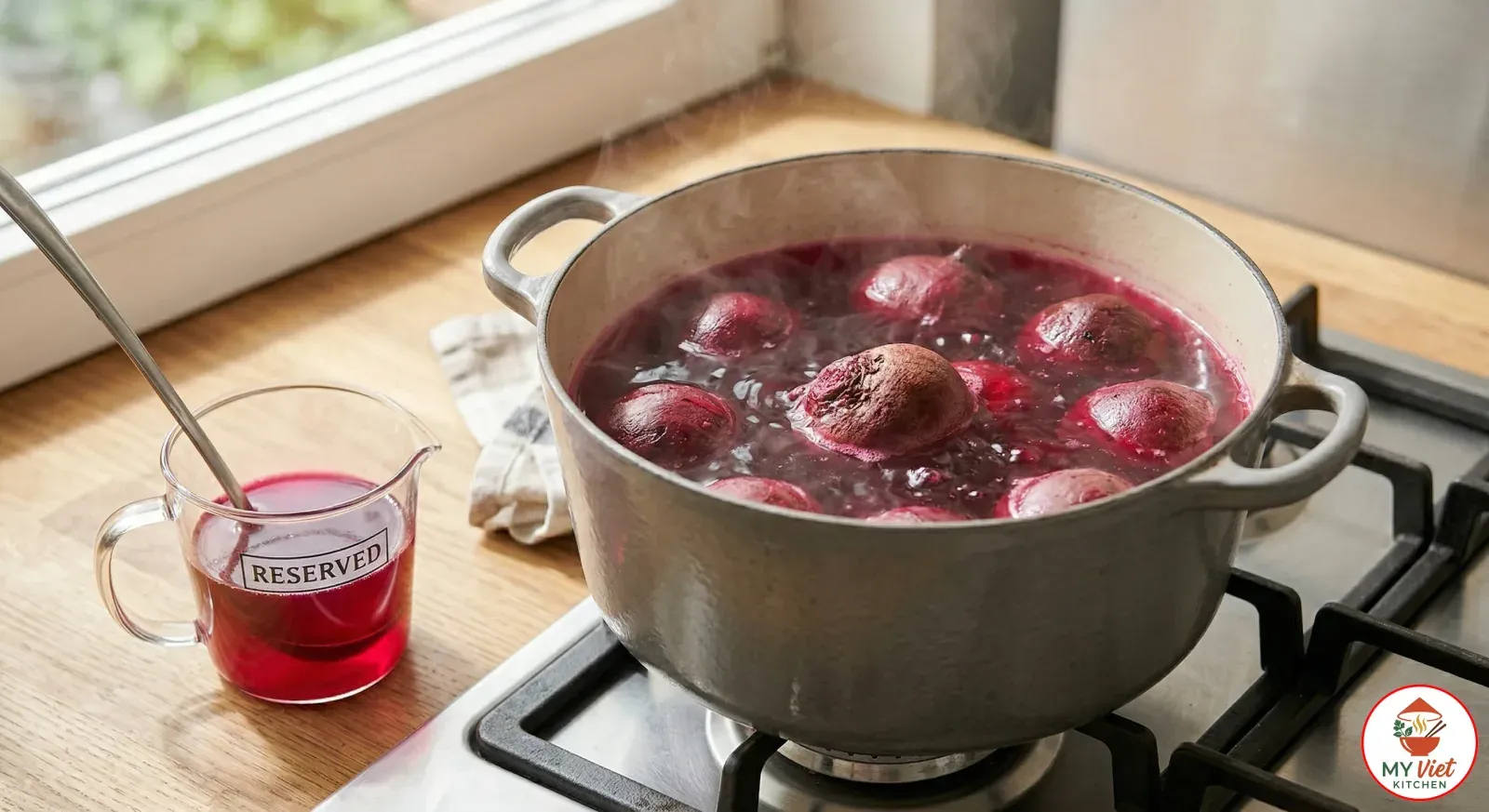
Bring the water to a boil over high heat, then reduce to a steady simmer. Cook for 35 to 40 minutes until a knife slides through the center of the largest beet with no resistance. Drain the beets and reserve one cup of the cooking liquid. This pink-tinted water adds color and subtle sweetness to the soup base. After that, let the beets cool until you can handle them, then peel off the skins with your fingers. They should slip right off. Grate the peeled beets on the coarse side of a box grater and set aside to cool completely.
Step 2: Prepare the Vegetables and Eggs
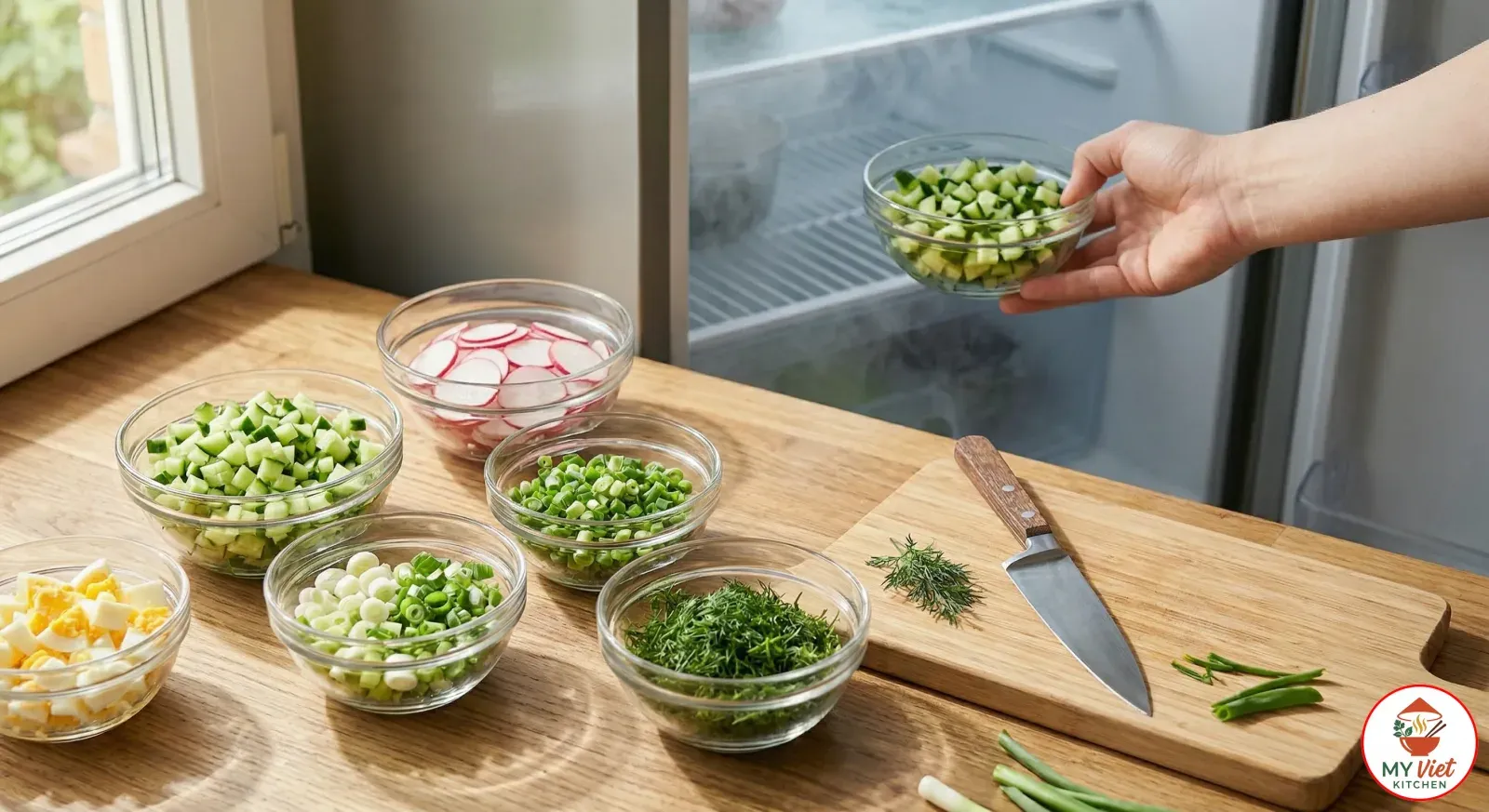
2 While the beets cool, prepare the rest of the fresh ingredients. Peel the cucumbers and cut them into small, even dice about a quarter inch across. Next, slice the radishes into thin rounds. Chop the green onions into fine rings, using both the white and green parts. Finely chop the dill, keeping the feathery fronds and discarding the thick stems.
Peel the hard-boiled eggs and chop them into rough pieces. However, keep the eggs separate from the vegetables because you will add them as a garnish at serving time rather than stirring them into the soup. Finally, place all the prepared vegetables in the refrigerator. Everything must stay cold for the best result. Warm ingredients will raise the temperature of the finished soup and dull its refreshing effect.
Step 3: Build the Soup Base
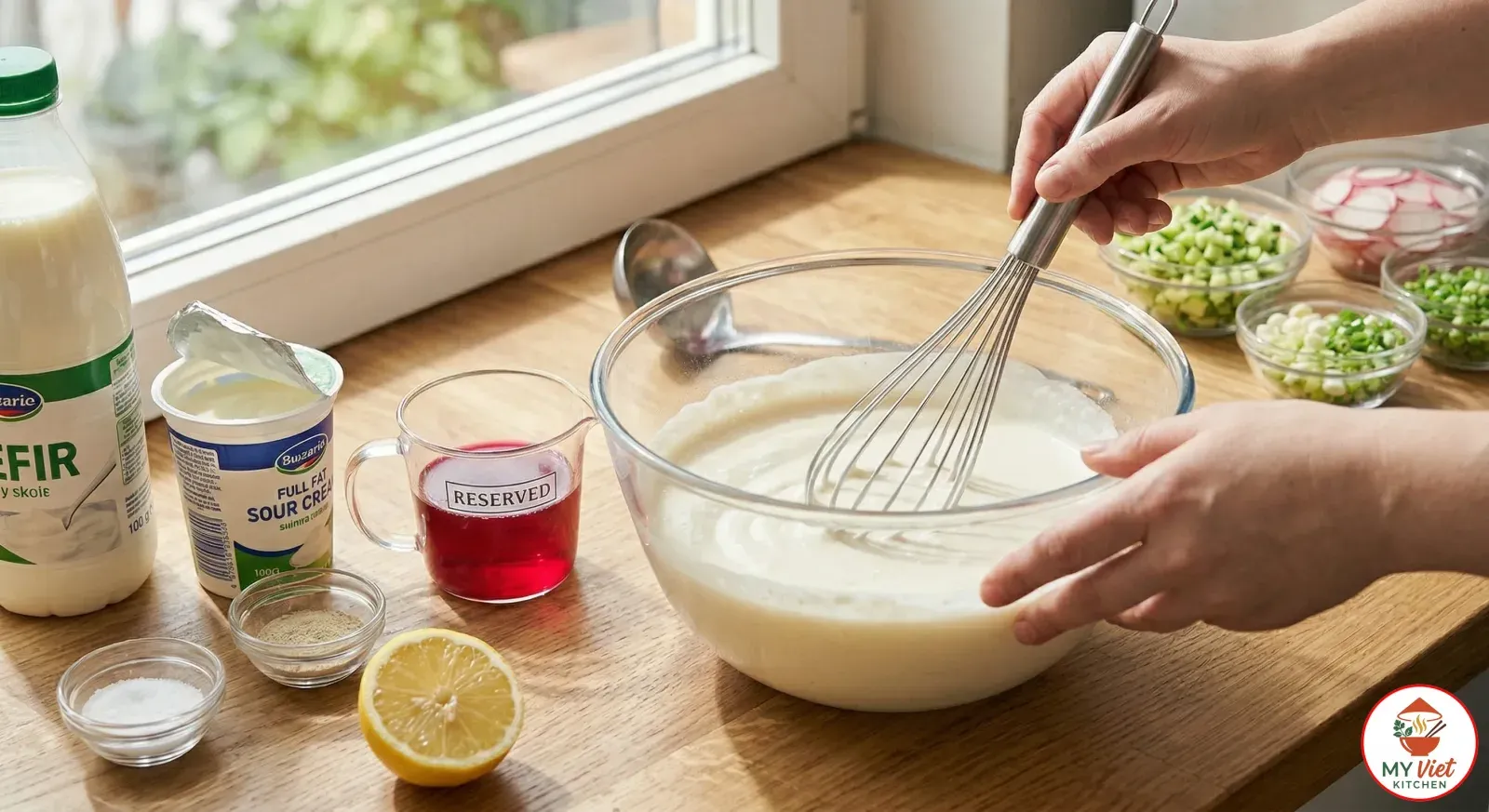
3 Pour the cold kefir into a large mixing bowl. Add the sour cream and whisk steadily until the two merge into a smooth, creamy liquid with no lumps. The sour cream adds richness that balances the lean tang of the kefir. Together, as a result, they create the creamy base that defines saltibarsciai and sets it apart from broth-based soups.
Stir in the reserved beet cooking liquid or cold water to thin the base to your preferred consistency. Lithuanian cooks like it thick enough to coat a spoon but thin enough to sip easily. Add the vinegar or lemon juice, salt, and white pepper. The acid serves two purposes. For one thing, it brightens the flavor by cutting through the richness of the dairy. Additionally, it stabilizes the pink color by keeping the beet pigment from turning dull or brownish. Give the base a thorough stir and taste it. Then adjust the salt and acid now before adding the beets and vegetables.
Step 4: Combine and Chill
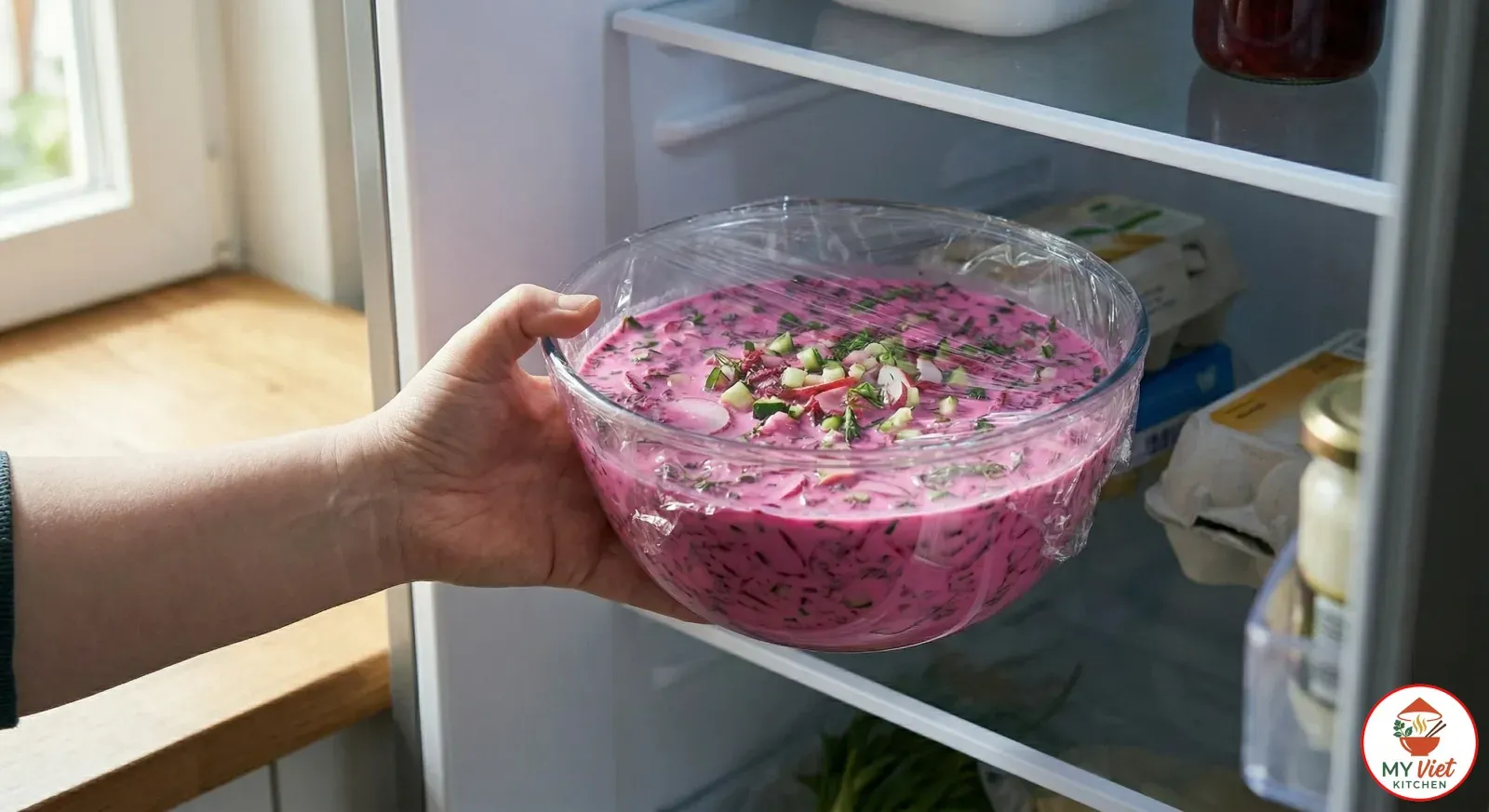
4 Add the cooled grated beets to the kefir base. Stir well and watch the soup turn a brilliant pink. The deeper your beets, the more intense the color will be. Fold in the diced cucumbers, sliced radishes, green onions, and most of the chopped dill. Also, save a tablespoon of dill for the final garnish.
Cover the bowl tightly with plastic wrap or a lid. Place it in the refrigerator for at least one hour. This chilling time is not optional because the flavors need time to meld, and the soup must reach a thorough cold to deliver the experience that makes saltibarsciai so satisfying. Specifically, during this rest, the beet juice infuses fully into the kefir, the herbs release their oils, and the cucumbers absorb some of the tangy base. Afterwards, give the soup a good stir before serving.
Step 5: Serve with Hot Potatoes and Eggs
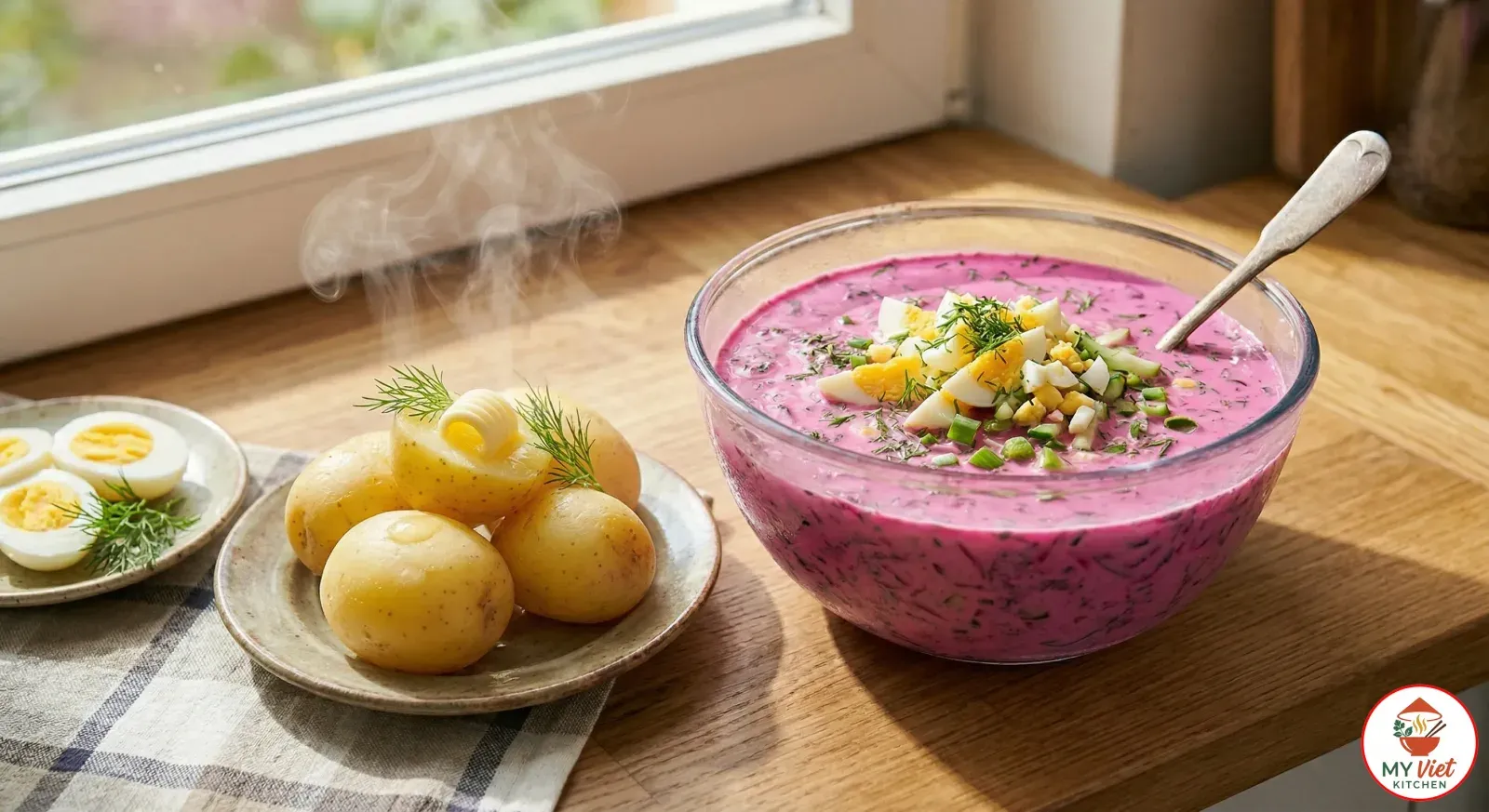
5 Just before serving, boil the potatoes in salted water until tender. Keep them warm. Then taste the chilled soup one final time and adjust the salt, pepper, or acid if needed. The flavors shift slightly after chilling, so this last check matters. Ladle the cold soup into deep bowls, filling them generously.
Top each bowl with chopped hard-boiled eggs and a pinch of fresh dill. Place a hot boiled potato on the side of each bowl or on a small plate next to it. The contrast between the ice-cold pink soup and the steaming hot potato is the heart of the saltibarsciai experience. Typically, diners break pieces of potato into the soup or take bites between spoonfuls. In either case, the warm starch and cold tang play off each other in a way that no single temperature could achieve.
Expert Tips for Perfect Saltibarsciai
Keep Everything Cold
Temperature matters more in this soup than in almost any other recipe. The kefir, sour cream, and water should all come straight from the refrigerator. The cooked beets must cool completely before they go into the base. If you rush this step and mix warm beets into cold kefir, then the soup ends up lukewarm and loses its entire appeal. Furthermore, on very hot days, chill your serving bowls in the freezer for 10 minutes before ladling the soup. This small detail keeps the saltibarsciai perfectly cold from the first spoonful to the last.
Use Acid to Lock In the Pink Color
The vivid pink of saltibarsciai comes from betanin, a natural pigment in red beets. Betanin stays bright in acidic conditions but fades in neutral or alkaline ones. Adding a tablespoon of vinegar or lemon juice to the soup base preserves the color and keeps it vibrant for days in the fridge. Without acid, the pink can turn brownish or dull after a few hours. In other words, acid lowers the pH and stabilizes the pigment molecules. In addition, the acid also sharpens the flavor in a way that makes each spoonful taste brighter.
Adjust the Thickness to Your Taste
Lithuanian families disagree about how thick saltibarsciai should be. For instance, some prefer it almost like a smoothie, packed with grated beets and vegetables. Others want a thinner, more brothy consistency. Start with the ratio in this recipe and adjust from there. For example, add more cold water or beet cooking liquid if you want it thinner. Stir in extra sour cream for a richer, thicker version. Ultimately, there is no wrong answer because the best consistency is whichever one you enjoy most.
Saltibarsciai vs. Other Cold Soups: A Comparison
Cold soups appear in many cuisines around the world, and each one takes a different approach to chilling down a meal. Here is how saltibarsciai compares to its closest counterparts so you can see what makes the Lithuanian version distinct.
| Soup | Country | Base | Key Difference |
|---|---|---|---|
| Saltibarsciai | Lithuania | Kefir and sour cream | Pink beet soup, served with hot potato on the side |
| Chlodnik | Poland | Buttermilk or yogurt | Very similar to saltibarsciai, often includes beet greens |
| Svekolnik | Russia | Kvass or kefir | Sometimes uses kvass for a slightly fermented tang |
| Gazpacho | Spain | Tomatoes and olive oil | No dairy, uses raw vegetables blended smooth |
| Tarator | Bulgaria | Yogurt | Cucumber-based with walnuts, no beets at all |
| Vichyssoise | France | Cream and potato | Leek and potato base, no beets, fully pureed |
Serving Suggestions
Lithuanians serve saltibarsciai as a main course during warm months, and a large bowl with a potato on the side makes a complete meal. You can also serve smaller portions as a starter before a heavier main dish. Here are the traditional and modern pairings that work best with this cold soup.
The Perfect Accompaniments:
- Hot boiled potatoes (essential): This is not optional. Every Lithuanian will tell you that saltibarsciai without a hot potato is incomplete. The warm starch absorbs the cold, tangy soup and creates the temperature contrast that defines the dish. Use waxy potatoes that hold their shape after boiling.
- Dark rye bread: A slice of dense Lithuanian rye bread adds an earthy, slightly sour flavor that pairs naturally with the tangy kefir base. Spread it with butter for a richer bite between spoonfuls of cold soup.
- Smoked fish: Cold smoked salmon or mackerel served alongside the soup turns a light meal into a substantial one. The smoky, salty fish complements the sweet beets and tangy dairy beautifully.
- Fresh garden salad: A simple salad of lettuce, tomatoes, and cucumbers dressed with oil and vinegar adds crunch and freshness without competing with the bold flavors of the soup.
Beverage Pairings:
- Kvass: This mildly fermented rye bread drink shares a tangy character with the kefir in the soup. Kvass has accompanied Lithuanian meals for centuries and tastes especially refreshing alongside cold saltibarsciai on a hot day.
- Light Lithuanian beer: A pale lager from Lithuanian breweries like Svyturys or Kalnapilis provides gentle bitterness that balances the creamy sweetness of the soup. Avoid heavy dark ales that would overpower the delicate flavors.
- Sparkling water with lemon: The simplest pairing works beautifully here. Cold sparkling water with a squeeze of lemon cleanses the palate between bites and keeps the meal feeling light and refreshing.
- Dry rose wine: A chilled rose brings fruity acidity that echoes the beet flavor in the soup. The wine’s light body does not overwhelm the soup, and both share a similar pink hue on the table.
Storage and Reheating
Refrigerator: Saltibarsciai keeps well in a sealed container in the fridge for up to 3 days. The flavor actually improves overnight as the beet juice fully infuses the kefir base and the herbs release more of their oils. Store the soup without the eggs and fresh dill garnish. Add those just before serving for the freshest taste and appearance.
Freezer: Freezing is not recommended for saltibarsciai. The kefir and sour cream base separates and turns grainy after thawing, and the cucumbers become mushy. If you need to prepare ahead, cook and grate the beets up to 2 days in advance and store them separately. Assemble the full soup the day you plan to serve it.
Reheating: This soup is never heated. Serve it cold, straight from the refrigerator. If the soup has thickened during storage, stir in a splash of cold kefir or water to bring it back to the right consistency. Always taste and adjust the seasoning after chilling because cold temperatures mute flavors slightly. You may need a pinch more salt or a squeeze of lemon juice to bring it back to life.
Common Mistakes to Avoid
1. Adding Warm Beets to Cold Kefir
This is the most common error and it ruins the soup’s entire character. Essentially, warm beets raise the temperature of the kefir base and create a lukewarm soup that tastes flat and unappetizing. Always let the cooked beets cool completely before grating them into the dairy base. Instead, if you are short on time, spread the grated beets on a plate and refrigerate them for 20 minutes. Patience at this step protects the cold, refreshing quality that makes saltibarsciai worth making.
2. Skipping the Acid
Leaving out the vinegar or lemon juice creates two problems at once. First of all, the beautiful pink color fades to a dull brownish tone within hours because the beet pigment is unstable without acid. Second, the flavor falls flat because the dairy base needs brightness to balance its richness. Just one tablespoon of acid makes all the difference, so add it to the kefir base before mixing in the beets, and your soup will stay vibrant and lively for days.
3. Using Watery, Low-Quality Kefir
Thin, watery kefir produces a weak soup that tastes diluted and lacks body. Instead, look for full-fat kefir with a thick, creamy texture. European-style kefir from brands that use traditional fermentation methods tends to have the best flavor and consistency. If your kefir is too thin, then increase the sour cream to compensate. The base should feel rich and creamy on the tongue, not watery like skim milk.
4. Forgetting the Hot Potato
Serving saltibarsciai without a hot boiled potato is like serving cereal without milk. In fact, the potato is not a side dish but a core part of the experience. The contrast between the ice-cold soup and the steaming potato creates a sensory interplay that defines the dish. Without it, you are missing the element that Lithuanians consider essential. Boil the potatoes just before serving so they arrive at the table still hot.
Frequently Asked Questions
What does saltibarsciai mean in Lithuanian?
The word saltibarsciai combines two Lithuanian roots. Salti means cold, and barsciai refers to beet soup. Together, the name translates to “cold beet soup,” which describes the dish perfectly. Unlike hot borscht, which simmers on the stove for hours, saltibarsciai is always served chilled. The name tells both the temperature and the main ingredient in a single word, which is typical of straightforward Lithuanian food naming.
Can I use buttermilk instead of kefir?
Buttermilk works as a substitute, though the flavor will differ slightly. Kefir has a more complex tang because it contains a wider range of beneficial bacteria and yeasts from fermentation. Buttermilk provides similar acidity but a simpler taste. For the closest result, mix half buttermilk and half sour cream thinned with cold water. Avoid using plain yogurt as the sole base because it tends to be too thick and needs so much thinning that the flavor becomes weak.
Why is my saltibarsciai not pink enough?
Several factors affect the color intensity. Older beets that have been stored for months produce less vivid juice than fresh, firm beets. Using too much dairy relative to beets dilutes the pink. Also, skipping the acid allows the betanin pigment to degrade quickly. To fix a pale soup, grate in more cooked beets or add a splash of pure beet juice from the cooking liquid. A squeeze of lemon juice will also brighten whatever color is present.
Is saltibarsciai healthy?
Saltibarsciai is a nutrient-dense soup with relatively few calories. Beets provide folate, manganese, and nitrates that support heart health. Kefir delivers probiotics that benefit gut health along with protein and calcium. The fresh vegetables add fiber, vitamins, and crunch. A full serving comes in around 180 calories before adding the potato, making it one of the lighter main courses in Lithuanian cooking. For an even lighter version, use low-fat kefir and reduce the sour cream.
How long does saltibarsciai keep in the fridge?
The soup stores well for up to 3 days in a sealed container. It actually tastes better on the second day because the flavors have more time to meld. Keep the chopped eggs and fresh dill separate and add them just before serving. The soup may thicken as it sits in the fridge. Thin it with a splash of cold kefir or water and re-season with salt and lemon juice before serving leftover portions.
Can I make saltibarsciai without cooking the beets?
Raw beets are not recommended for this soup. They have a tough, earthy, almost chalky flavor that does not blend well with the creamy kefir base. Cooked beets are sweeter, softer, and release their juice much more freely. You can save time by using pre-cooked vacuum-packed beets from the grocery store. Just check the label to ensure they contain no added vinegar or seasonings, which would alter the taste of the finished soup.
Variations and Adaptations
Vegan Saltibarsciai:
Replace the kefir and sour cream with coconut milk kefir or cashew-based sour cream. The soup will taste different from the traditional version, but it retains the refreshing cold beet character. Omit the hard-boiled eggs or replace them with diced avocado for richness. Use vegetable broth or plain water in place of the beet cooking liquid. Season generously with lemon juice because plant-based alternatives often need more acid to achieve a bright, tangy flavor.
Extra Creamy Version:
For a richer soup, increase the sour cream to two cups and reduce the water or beet cooking liquid. This produces a thicker, more indulgent saltibarsciai that coats the spoon heavily. Some Lithuanian families fold in a few tablespoons of cream cheese for an even smoother texture. This heavier version works best as a starter served in smaller portions rather than as a full main course.
Shrimp Saltibarsciai:
Add chilled cooked shrimp to the soup for a modern twist that turns it into a more substantial meal. Poach small shrimp in seasoned water, cool them in ice water, and fold them into the finished soup. The sweet, briny flavor of shrimp pairs surprisingly well with the tangy beet and kefir base. This variation appears on some modern Lithuanian restaurant menus and adds protein without changing the essential character of the dish.
Beet Greens Saltibarsciai:
If your beets come with fresh, vibrant green tops, do not throw them away. Blanch the greens in boiling water for 30 seconds, then shock them in ice water. Chop them finely and stir them into the soup along with the grated beets. The greens add a slightly mineral, spinach-like flavor and a pop of green color against the pink. This version is common in the Polish cousin of this soup, called chlodnik, and it works beautifully with the Lithuanian recipe as well.
The Cultural Significance of Saltibarsciai
Saltibarsciai is much more than a cold soup in Lithuanian culture. It is a marker of the season, a symbol of home cooking, and a dish that connects generations. When the first warm days of late spring arrive, Lithuanian households begin making saltibarsciai as naturally as they open windows to let in fresh air. The appearance of this pink soup on the table signals that summer has arrived, and it stays in regular rotation until the cooler days of autumn return.
The dish also reflects the broader Baltic relationship with fermented dairy. Lithuania has a long tradition of kefir, buttermilk, and sour cream production. Farm families made these products from fresh cow’s milk, and they became staples of daily cooking. Saltibarsciai puts fermented dairy at the center of the plate rather than on the side. In this way, it celebrates an ingredient that Lithuanian agriculture has produced for centuries. Lithuanian food culture values simplicity, seasonality, and honest ingredients, and saltibarsciai embodies all three principles.
Furthermore, saltibarsciai brings people together around the table in a way that honors the communal spirit of Lithuanian dining. It arrives in a large bowl for the whole family to share, accompanied by a pot of steaming potatoes. Everyone customizes their own bowl with more or less egg, dill, and potato. This communal, self-serve style mirrors the broader Lithuanian approach to meals, where the table is set generously and everyone takes what they need. In the end, a bowl of saltibarsciai is not just food. It is a taste of Lithuanian summer, shared with people you care about.
Conclusion
This saltibarsciai recipe gives you everything you need to bring authentic Lithuanian cold beet soup into your own kitchen. The keys are cooking your beets until tender, keeping all ingredients thoroughly chilled, adding acid to preserve the vivid pink color, and never forgetting the hot boiled potato on the side. These simple principles produce a soup that looks stunning and tastes even better. Whether you serve it as a refreshing main course on a hot day or as an elegant starter at a dinner party, saltibarsciai delivers a flavor experience that no other soup can match.
Ready to explore more Baltic and Eastern European comfort food? Browse our European dishes collection for recipes like cepelinai, borscht, and gazpacho. Each one brings a distinctive taste of European tradition to your table.