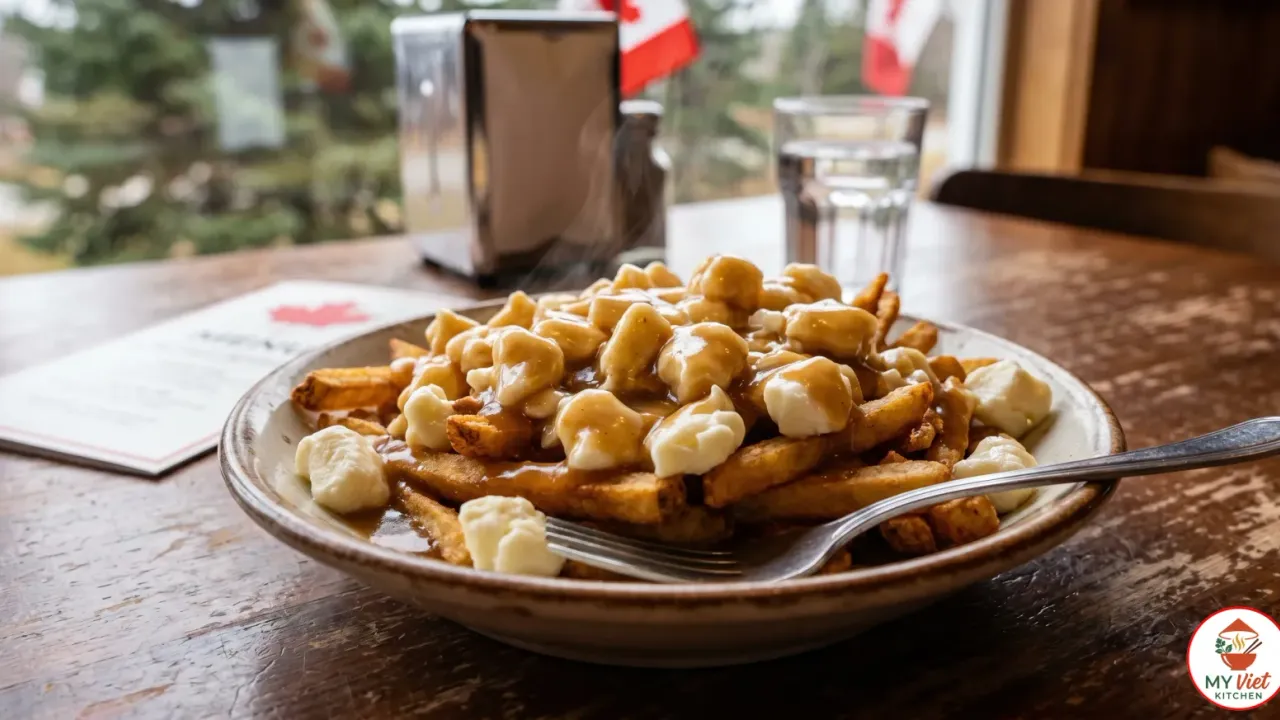
Nothing says Canadian comfort food quite like a plate of poutine. This beloved dish layers crispy golden fries with fresh, squeaky cheese curds and rich brown gravy. Originally from rural Quebec, poutine has grown into a national treasure that Canadians enjoy from coast to coast. In this recipe, you will learn how to make authentic poutine at home with a simple double-fry method and a gravy that rivals any late-night diner.
Prep Time: 20 minutes | Cook Time: 40 minutes | Servings: 4
Difficulty: Easy | Calories: ~620 per serving
What Makes Poutine Special?
Poutine stands out because of its perfect balance of textures and flavors. The fries bring a satisfying crunch, while the cheese curds add a mild, milky richness. Then the hot gravy ties everything together with deep, savory warmth. As a result, every bite delivers a different combination of crispy, soft, and saucy.
This dish first appeared in Quebec during the late 1950s. According to popular legend, a restaurant owner in Warwick tossed cheese curds onto a bag of fries for a customer. Gravy joined the mix shortly after, and poutine quickly became a late-night favorite across the province. Furthermore, it has since earned recognition as one of Canada’s most iconic dishes.
Unlike loaded fries or cheesy chips from other countries, true poutine depends on three specific elements. You need freshly fried potatoes, real cheese curds that squeak, and a light brown gravy. Replacing any of these changes the dish entirely. Therefore, using the right ingredients matters more here than with most recipes.

Choosing the Right Potatoes for Poutine
The type of potato you pick directly affects how crispy your fries turn out. Starchy potatoes work best because they fry up light and crunchy on the outside while staying fluffy inside. Here are your top choices.
- Russet potatoes (best choice): These high-starch potatoes fry up exceptionally crispy and hold their shape well under hot gravy.
- Yukon Gold: These deliver a slightly creamier texture with a buttery flavor, though they produce a softer fry.
- Kennebec potatoes: Professional chip shops love these for their low sugar content, which prevents dark spots during frying.
Ingredients for Poutine
Main Ingredients:
- 2 pounds russet potatoes, cut into 1/4-inch thick fries
- Vegetable oil for frying
- 1 teaspoon salt
- 2 cups fresh cheese curds, at room temperature
For the Gravy:
- 2 tablespoons unsalted butter
- 2 tablespoons all-purpose flour
- 2 cups beef broth
- 1 cup chicken broth
- 1 tablespoon ketchup
- 1 teaspoon Worcestershire sauce
- 1/2 teaspoon black pepper
- 1/2 teaspoon apple cider vinegar
Pro tip: Bring your cheese curds to room temperature before assembling the poutine. Cold curds straight from the fridge take too long to soften under the gravy, so the fries lose their crispiness while you wait.
Step-by-Step Instructions
Step 1: Prepare the Fries
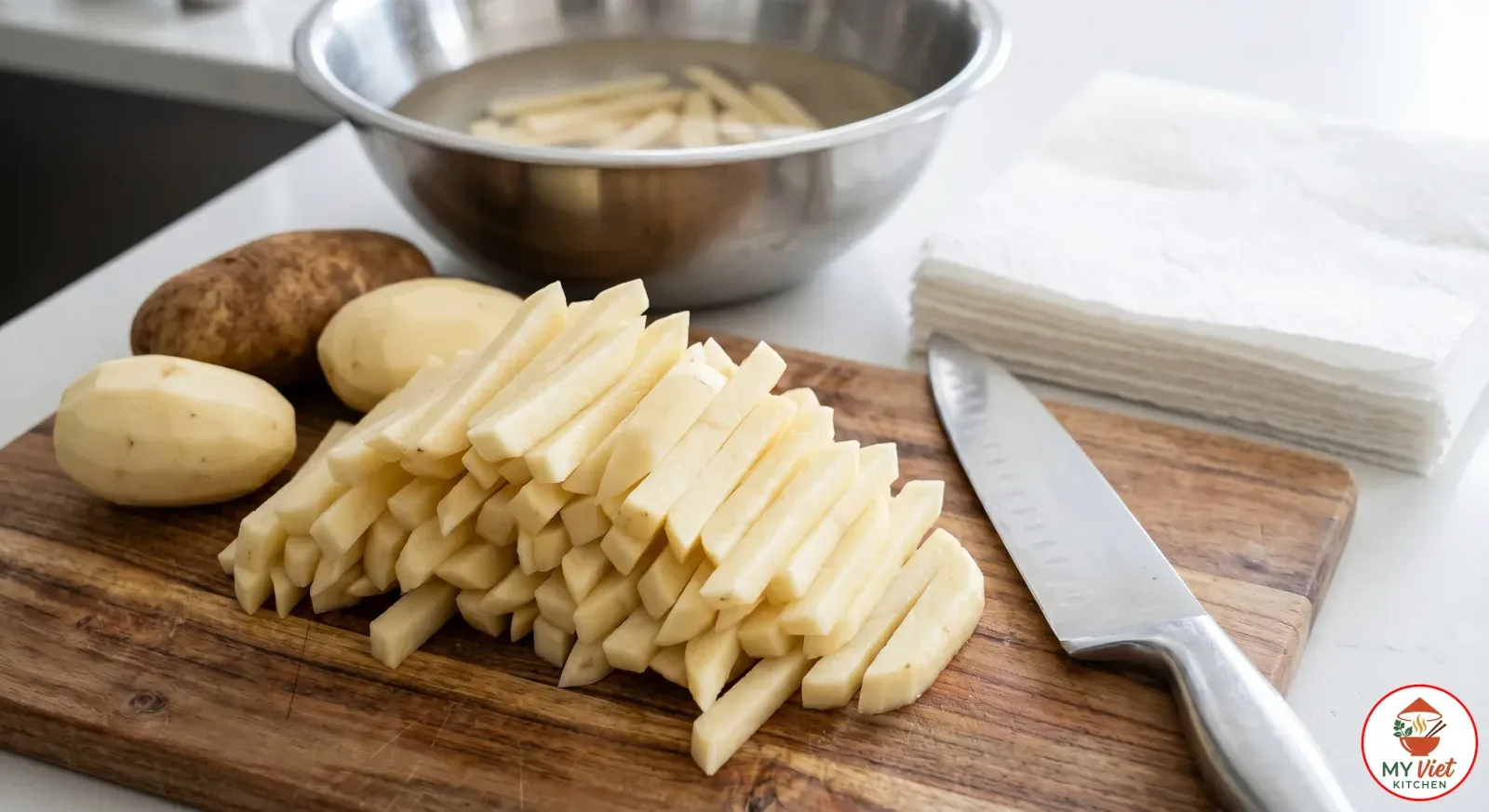
1First, peel the russet potatoes and cut them into quarter-inch thick sticks. Then, soak the cut fries in a bowl of cold water for at least 30 minutes. This step removes excess starch from the surface, which helps the fries turn crispier during frying. After soaking, drain the fries and pat them completely dry with clean paper towels. Removing all moisture prevents dangerous splattering when the potatoes hit the hot oil.
Step 2: First Fry at Low Temperature
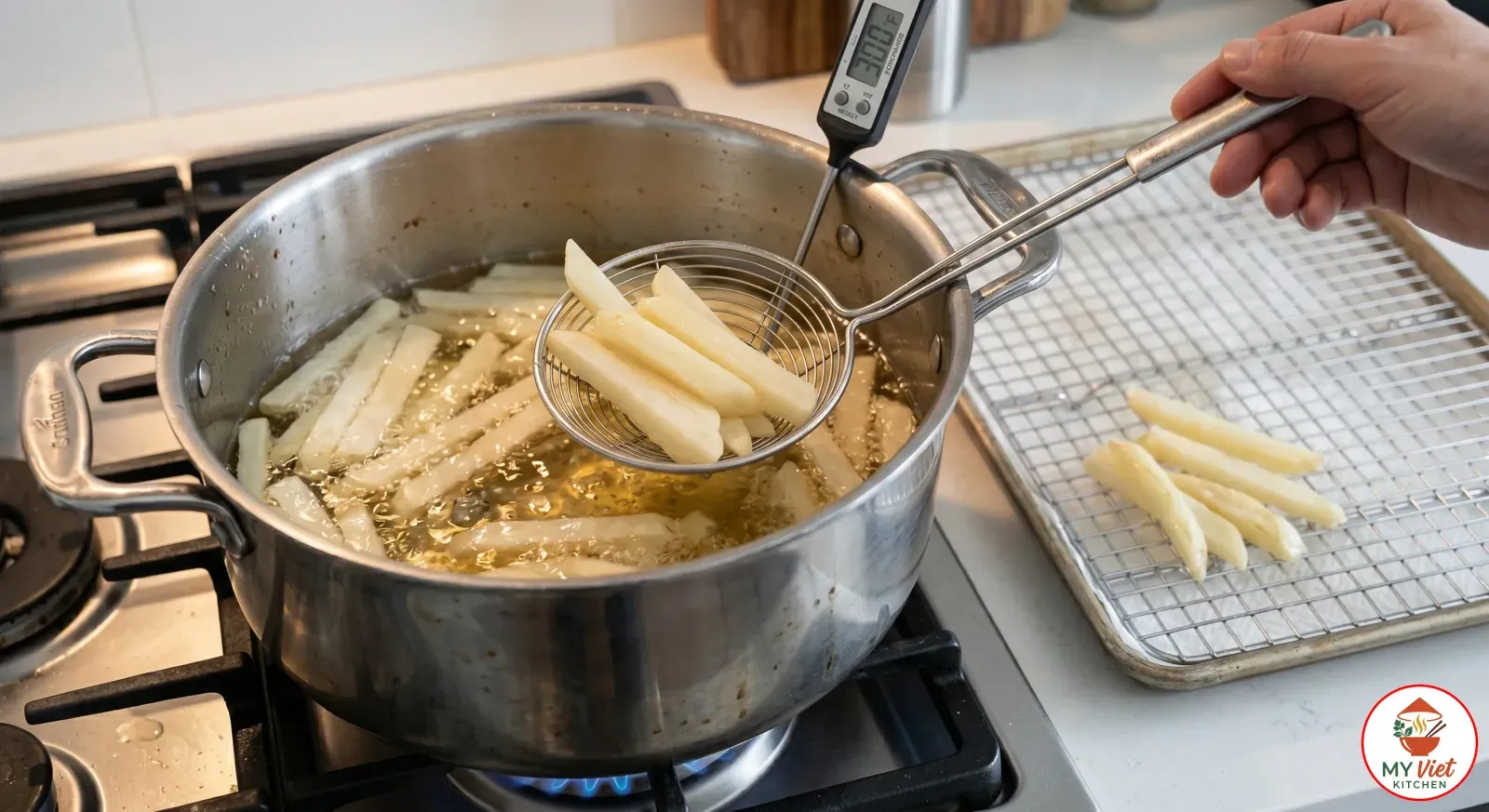
2Heat vegetable oil in a deep pot or fryer to 300F. Carefully lower the fries into the oil in small batches. Fry each batch for 5 to 6 minutes until the potatoes turn pale and feel soft when pressed. During this stage, the inside of the fry cooks through without browning the outside. After that, remove the fries with a slotted spoon and spread them on a wire rack to drain. Let them cool for at least 10 minutes before the second fry.
Step 3: Make the Gravy
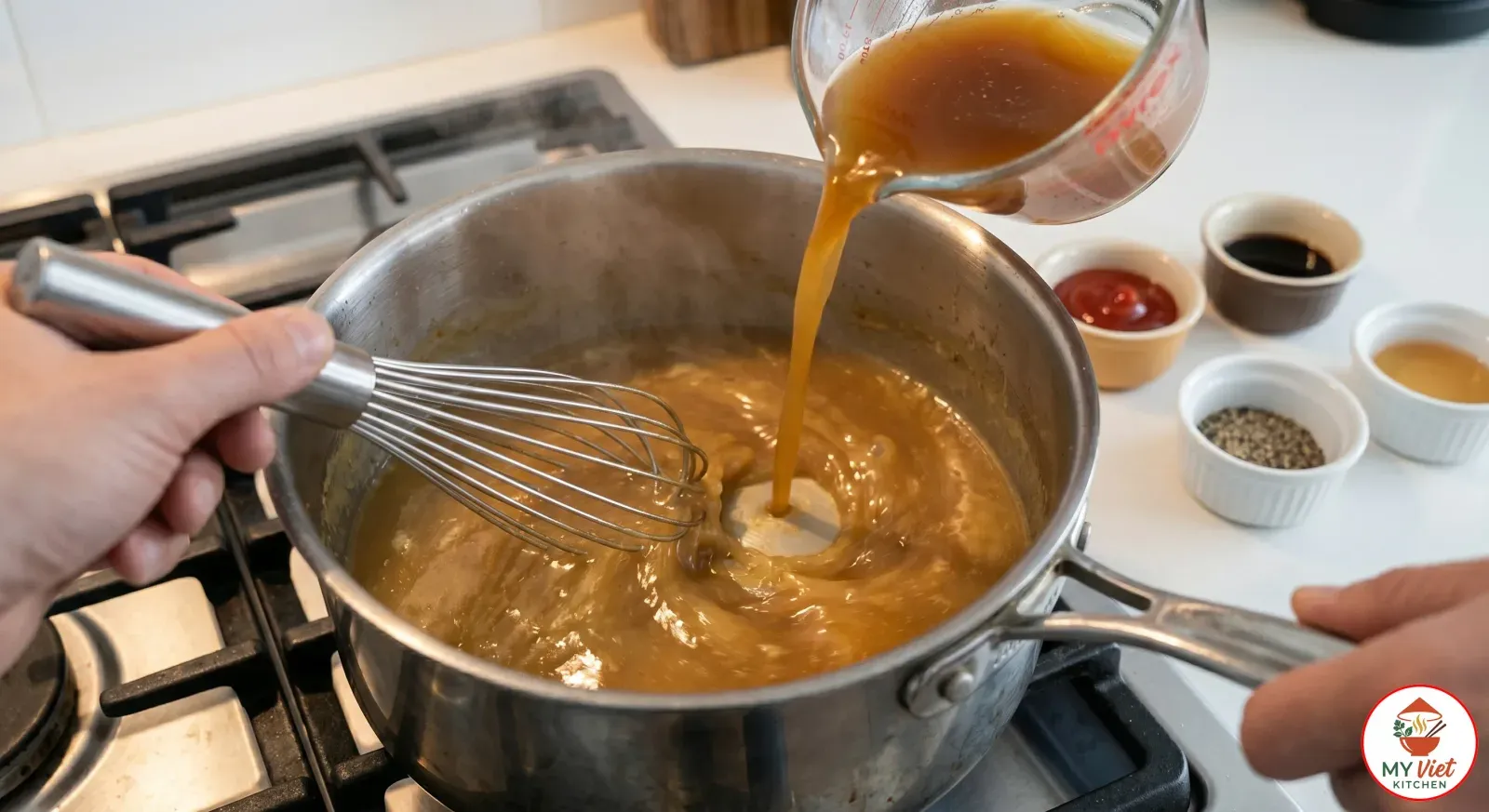
3While the fries cool, prepare the gravy. Melt the butter in a saucepan over medium heat. Then whisk in the flour and cook for one minute until it smells nutty. Gradually pour in the beef broth and chicken broth while whisking constantly to prevent lumps. Next, stir in the ketchup, Worcestershire sauce, black pepper, and apple cider vinegar. Simmer the gravy for 8 to 10 minutes until it thickens enough to coat the back of a spoon. Keep the gravy warm on low heat until you are ready to assemble.
Step 4: Second Fry for Crispiness
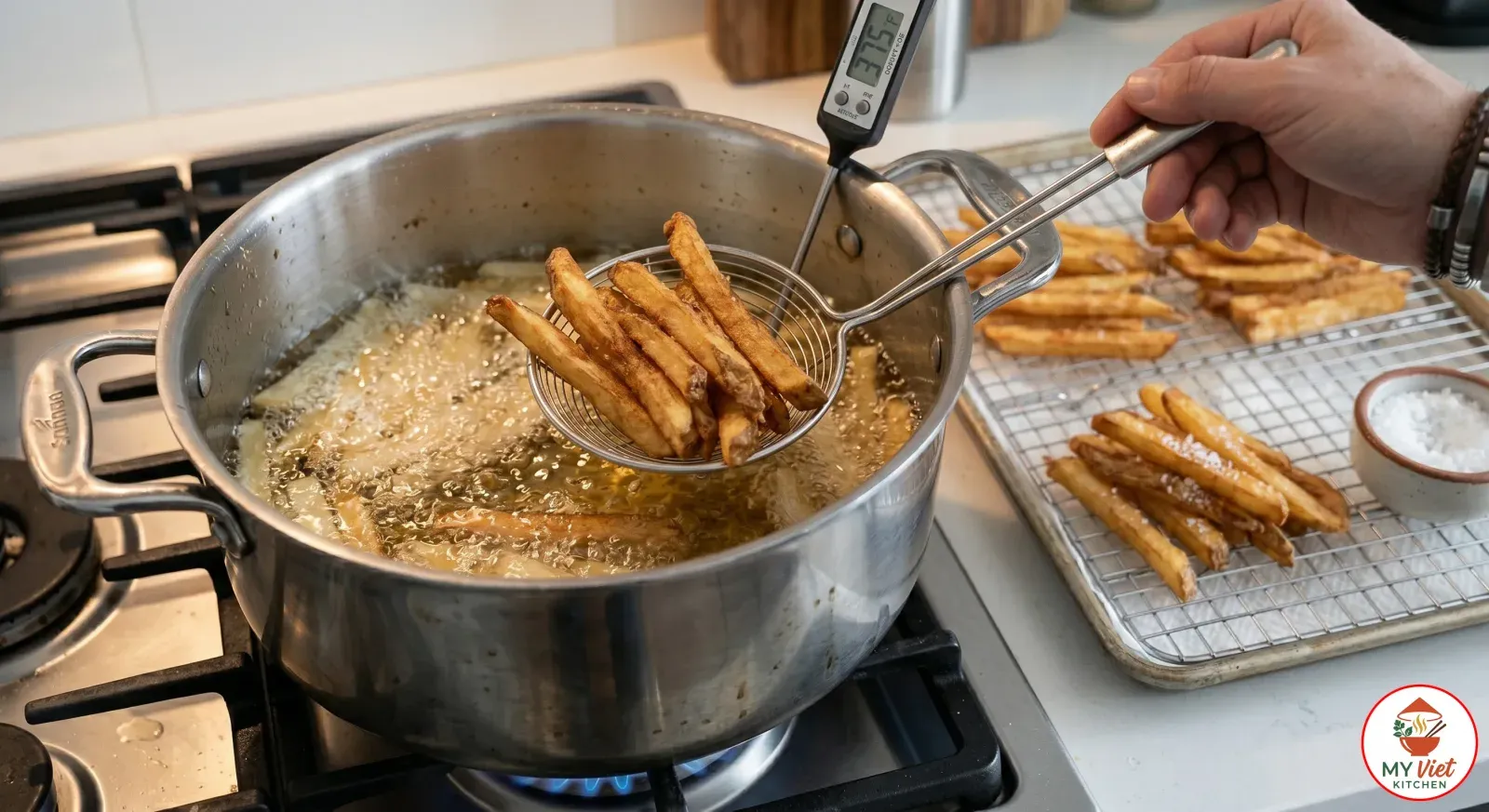
4Now raise the oil temperature to 375F for the second fry. Working in small batches again, lower the par-cooked fries into the hot oil. Fry each batch for 2 to 3 minutes until they turn golden brown and very crispy. The higher temperature creates a crunchy shell that holds up under the hot gravy. Immediately after removing the fries, season them with salt while still hot. The salt sticks better to the surface when the oil is fresh.
Step 5: Assemble the Poutine
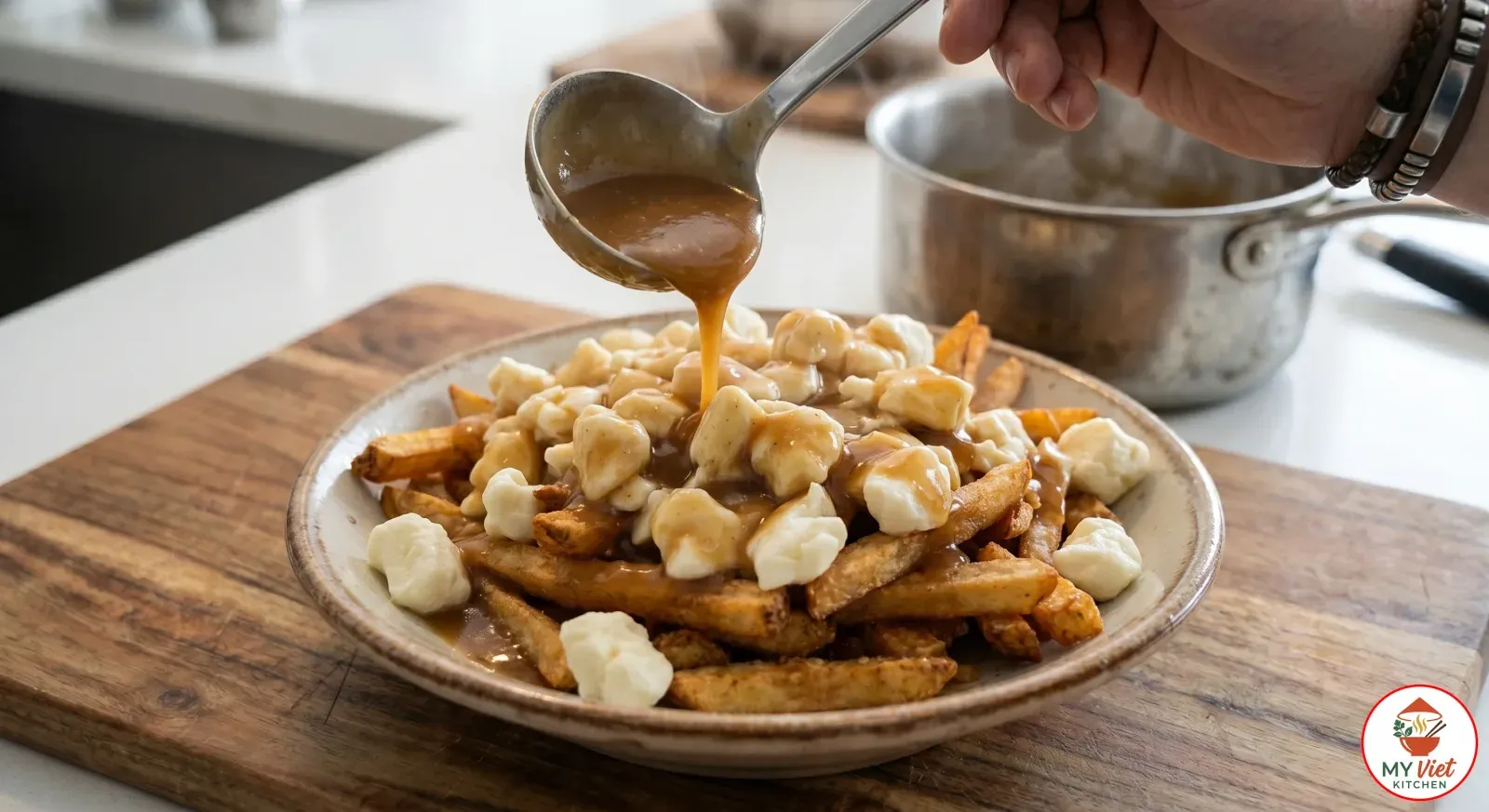
5Place the hot, crispy fries on a large serving plate or shallow bowl. Scatter the room-temperature cheese curds generously over the fries. Then immediately ladle the piping hot gravy over everything. The heat from the gravy and the fries softens the curds just enough so they turn slightly gooey without fully melting. Serve the poutine right away for the best texture and flavor.
Expert Tips for Perfect Poutine
Double-Fry for Maximum Crunch
The double-fry method separates great poutine from average fries with gravy. The first fry at 300F cooks the inside of the potato. Then the second fry at 375F creates a hard, crispy shell. Consequently, the fries stay crunchy even after the hot gravy hits them.
Use Fresh Cheese Curds
Fresh cheese curds make or break this dish. Look for curds that squeak when you bite them, because the squeak means they are fresh. Ideally, buy them the same day you plan to cook. Older curds lose their bounce and do not soften properly under the gravy.
Keep the Gravy Light
Traditional poutine gravy stays light and pourable. It should flow freely between the fries and curds rather than sitting like a thick paste on top. If your gravy feels too thick, simply whisk in a splash of broth to thin it out.
Classic Poutine vs. Loaded Poutine
The classic version and modern loaded versions both have their fans. However, they deliver very different eating experiences. Here is a quick comparison to help you decide.
| Feature | Classic Poutine | Loaded Poutine |
|---|---|---|
| Ingredients | Fries, curds, and gravy only | Adds pulled pork, bacon, or smoked meat |
| Flavor Focus | Clean balance of three elements | Rich and complex with many layers |
| Authenticity | Traditional Quebec recipe | Modern fusion creation |
| Best For | Purists and first-timers | Adventurous eaters and big appetites |
| Calorie Count | Around 620 per serving | 800 to 1200 per serving |
Serving Suggestions
Poutine works beautifully as a main course or a generous side dish. In Canada, people enjoy it at diners, food trucks, and family dinners alike. The key is to serve it immediately after assembly, because the fries lose their crunch over time.
The Perfect Accompaniments:
- Coleslaw: The cool, tangy crunch balances the richness of the gravy and provides a refreshing contrast.
- Pickles: Vinegary dill pickles cut through the heaviness of the cheese and gravy with a bright, sharp bite.
- Green salad: A simple lettuce salad with lemon dressing adds freshness alongside this indulgent dish.
- Smoked meat sandwich: In Montreal, people often pair poutine with a classic smoked meat sandwich for the ultimate comfort meal.
Beverage Pairings:
- Canadian lager: A cold, crisp beer pairs naturally with the salty, savory flavors of poutine.
- Hard apple cider: The sweet acidity of cider cleanses the palate between rich, cheesy bites.
- Root beer: This classic non-alcoholic option adds a sweet contrast that kids and adults enjoy equally.
Storage and Reheating
Refrigerator: Store leftover poutine in an airtight container for up to two days. However, the fries will lose their crispiness once refrigerated. The gravy and curds hold up well on their own.
Freezer: Freeze the gravy separately in sealed containers for up to three months. Unfortunately, cheese curds and cooked fries do not freeze well. Instead, make fresh fries and curds when you reheat the gravy.
Reheating: Spread leftover fries on a baking sheet and bake at 400F for 8 to 10 minutes to re-crisp them. Warm the gravy in a small pot over medium heat. Then assemble fresh poutine with the reheated components and new cheese curds for the best results.
Common Mistakes to Avoid
1. Using Shredded Cheese Instead of Curds
Shredded mozzarella or cheddar melts completely into a gooey mess. Real cheese curds hold their shape and create that signature half-melted texture. Consequently, always seek out fresh curds from a cheese shop or specialty store.
2. Serving the Poutine Too Late
Poutine waits for nobody. The fries absorb the gravy quickly, so every minute counts. Assemble and serve the dish immediately after the second fry. Otherwise, you end up with soggy fries rather than crispy ones.
3. Making the Gravy Too Thick
A thick, paste-like gravy smothers the fries and overwhelms the curds. Traditional poutine gravy flows easily between the layers. If your gravy looks too heavy, add a splash of broth and whisk until it reaches a pourable consistency.
Frequently Asked Questions
What cheese do you use for poutine?
Authentic poutine uses fresh white cheese curds, ideally from Quebec. They should feel springy and squeak when you bite into them. Avoid shredded mozzarella or cheddar, because these cheeses melt differently and produce a completely different texture. If you cannot find curds locally, check online specialty cheese shops that ship fresh curds overnight.
Can I bake the fries instead of frying them?
Yes, you can bake the fries at 425F for 25 to 30 minutes, flipping them halfway through. However, baked fries will not reach the same crispiness as double-fried ones. For a better crunch in the oven, toss the cut potatoes with a tablespoon of oil and a teaspoon of cornstarch before baking.
What type of gravy goes on poutine?
Traditional poutine calls for a light brown gravy. Most recipes blend beef and chicken broth together for a balanced flavor. The gravy should coat a spoon but still pour easily. Avoid cream-based or mushroom gravies for the classic version, since they change the authentic taste significantly.
Where did poutine originate?
Poutine originated in rural Quebec, Canada, during the late 1950s. Several small towns claim to have invented it, with Warwick and Victoriaville being the most cited. The dish started as a simple snack at local diners and casse-croutes. Since then, it has spread across Canada and around the world as a beloved comfort food.
How do I keep the fries crispy under the gravy?
Double-frying creates a sturdy outer shell that resists the gravy longer. Also, serve the poutine right after assembly so the fries hold their crunch. Additionally, pouring the gravy in a zigzag pattern rather than flooding the plate helps some fries stay dry and crispy on the side.
Variations and Adaptations
Pulled Pork Poutine:
Top the classic poutine with slow-cooked pulled pork for a hearty meal. The smoky, tender meat pairs wonderfully with the gravy and curds. As a result, this version turns a snack into a full dinner that satisfies big appetites.
Vegetarian Mushroom Poutine:
Replace the beef broth with vegetable broth and add sauteed mushrooms on top. The mushrooms bring an earthy depth that mimics the savory quality of the traditional gravy. Therefore, vegetarians can enjoy poutine without missing any of the rich flavor.
Montreal Smoked Meat Poutine:
Layer sliced Montreal smoked meat over the fries before adding curds and gravy. The peppery, smoky meat makes this version especially popular in Quebec. Likewise, this variation has become a staple at delis and diners across the country.
The Cultural Significance of Poutine
Poutine holds a special place in Canadian identity. What started as a humble snack in rural Quebec has grown into a symbol of Canadian culture. In the 1950s, truckers and late-night diners helped spread the dish beyond its small-town roots. By the 1980s, fast food chains across Canada had added poutine to their menus.
Today, poutine festivals take place in cities across the country, including Montreal, Ottawa, and Toronto. Chefs compete to create the most creative versions, from foie gras poutine to butter chicken poutine. Despite these gourmet twists, the classic recipe remains the most popular choice. Above all, poutine represents the idea that simple ingredients, when combined thoughtfully, can create something truly extraordinary.
Conclusion
Making authentic poutine at home is simpler than you might expect. With a double-fry technique for maximum crunch, a light brown gravy, and fresh squeaky cheese curds, you can recreate this Canadian classic in your own kitchen. Remember to soak the potatoes, fry them twice, and serve everything immediately for the best results.
Ready to explore more comfort food from around the world? Browse our complete recipe collection for dishes from every continent. If you enjoy hearty North American favorites, try our Mac and Cheese or BBQ Ribs recipes for more satisfying meals the whole family will love.