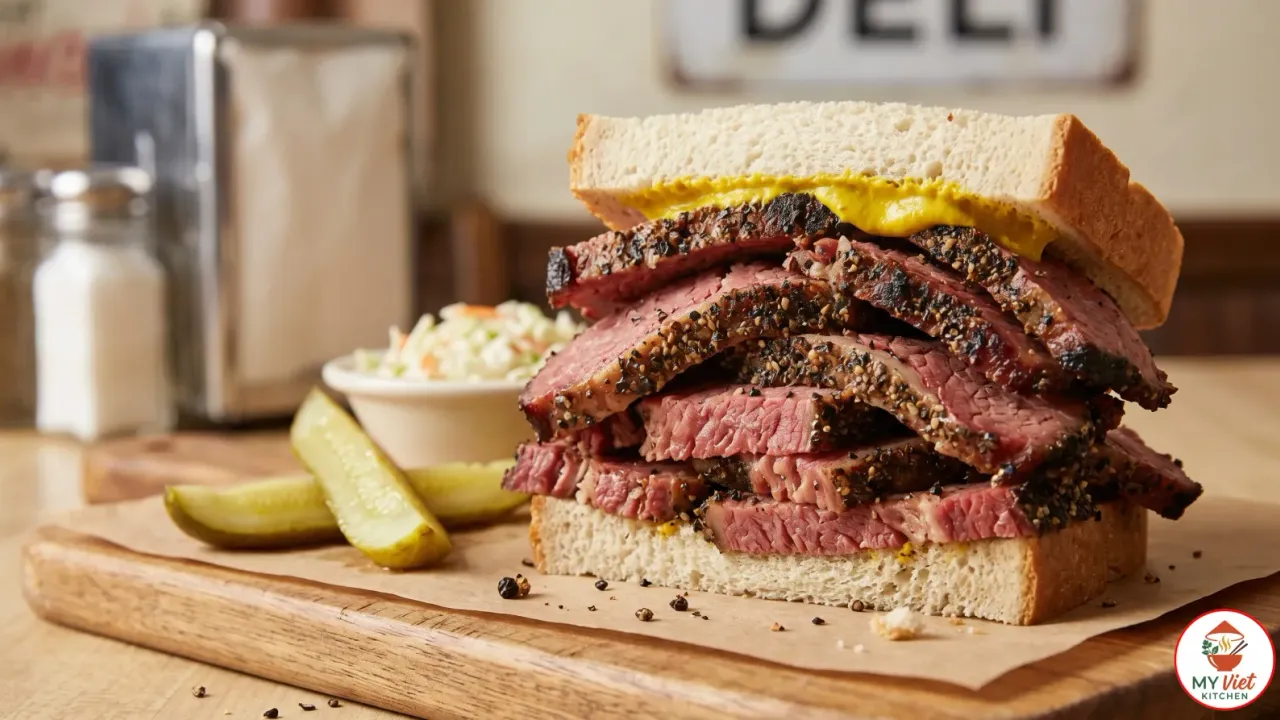
The Montreal smoked meat sandwich stands as one of Canada’s most beloved culinary treasures. This iconic deli sandwich features thick slabs of peppery, cured brisket piled high on soft rye bread with a generous swipe of yellow mustard. Originally brought to Montreal by Romanian Jewish immigrants in the early 1900s, this sandwich has since become a symbol of the city’s vibrant food culture. In this guide, you will learn how to cure, smoke, and steam brisket at home so you can build the perfect Montreal smoked meat sandwich from scratch.
Prep Time: 30 minutes (plus 7-10 days curing) | Cook Time: 8 hours | Servings: 8
Difficulty: Medium | Calories: ~480 per serving
What Makes a Montreal Smoked Meat Sandwich Special?
At its core, a Montreal smoked meat sandwich is about balance. The brisket undergoes a multi-day dry cure with coarsely cracked black pepper, coriander, and aromatic spices. After curing, the meat is smoked over hardwood until it develops a dark, flavorful bark. Then comes the step that truly sets it apart: steaming. This final stage transforms the firm smoked brisket into something remarkably tender, almost melting on the tongue.
Unlike its cousin the New York pastrami, Montreal smoked meat relies on a drier, more pepper-forward spice blend. The result is a bolder, more assertive flavor profile. Furthermore, the hand-sliced meat is always served thick, never shaved thin on a machine. This slicing style gives each bite a satisfying, meaty texture that defines the authentic experience.
Montreal’s famous delis, especially Schwartz’s and the Main, have served this sandwich for over a century. However, you do not need to travel to Quebec to enjoy it. With patience and the right technique, you can recreate this Canadian classic in your own kitchen. The process takes time, but every step builds layers of flavor that make the wait worthwhile.
Choosing the Right Brisket
The brisket is the foundation of your Montreal smoked meat sandwich. Selecting the right cut makes all the difference in the final texture and flavor. Here are your main options:
- Brisket Flat (best choice): This lean, uniform cut cures evenly and slices beautifully. It offers the clean, meaty texture that defines a great smoked meat sandwich.
- Whole Packer Brisket: This includes both the flat and the fattier point section. It provides more marbling, but the uneven thickness can make curing less consistent.
- Brisket Point: This is the fattier end of the brisket. While incredibly juicy, it can be too rich for sandwiches and is better suited for burnt ends.
Look for a brisket flat that weighs between 4 and 6 pounds. Additionally, choose one with a thin, even fat cap on one side. This fat layer protects the meat during smoking and adds moisture during steaming.

Ingredients for Montreal Smoked Meat Sandwich
For the Spice Cure:
- 5 lbs beef brisket flat
- 1/4 cup coarse black pepper
- 2 tablespoons coriander seeds
- 1 tablespoon mustard seeds
- 1/2 cup kosher salt
- 2 tablespoons brown sugar
- 1 tablespoon garlic powder
- 1 teaspoon ground cloves
- 1 teaspoon ground allspice
- 1 tablespoon paprika
- 2 teaspoons onion powder
- 1 tablespoon Prague powder #1 (curing salt)
For Assembly:
- 8 slices light rye bread
- Yellow mustard for serving
- Dill pickles for serving
- Coleslaw (optional)
Pro tip: Use Prague powder #1 (also called pink curing salt) for the signature rosy color. Do not substitute with Himalayan pink salt, as they serve completely different purposes. Curing salt prevents bacterial growth and creates the distinctive flavor of cured meats.
Step-by-Step Instructions
Step 1: Prepare the Spice Rub and Cure
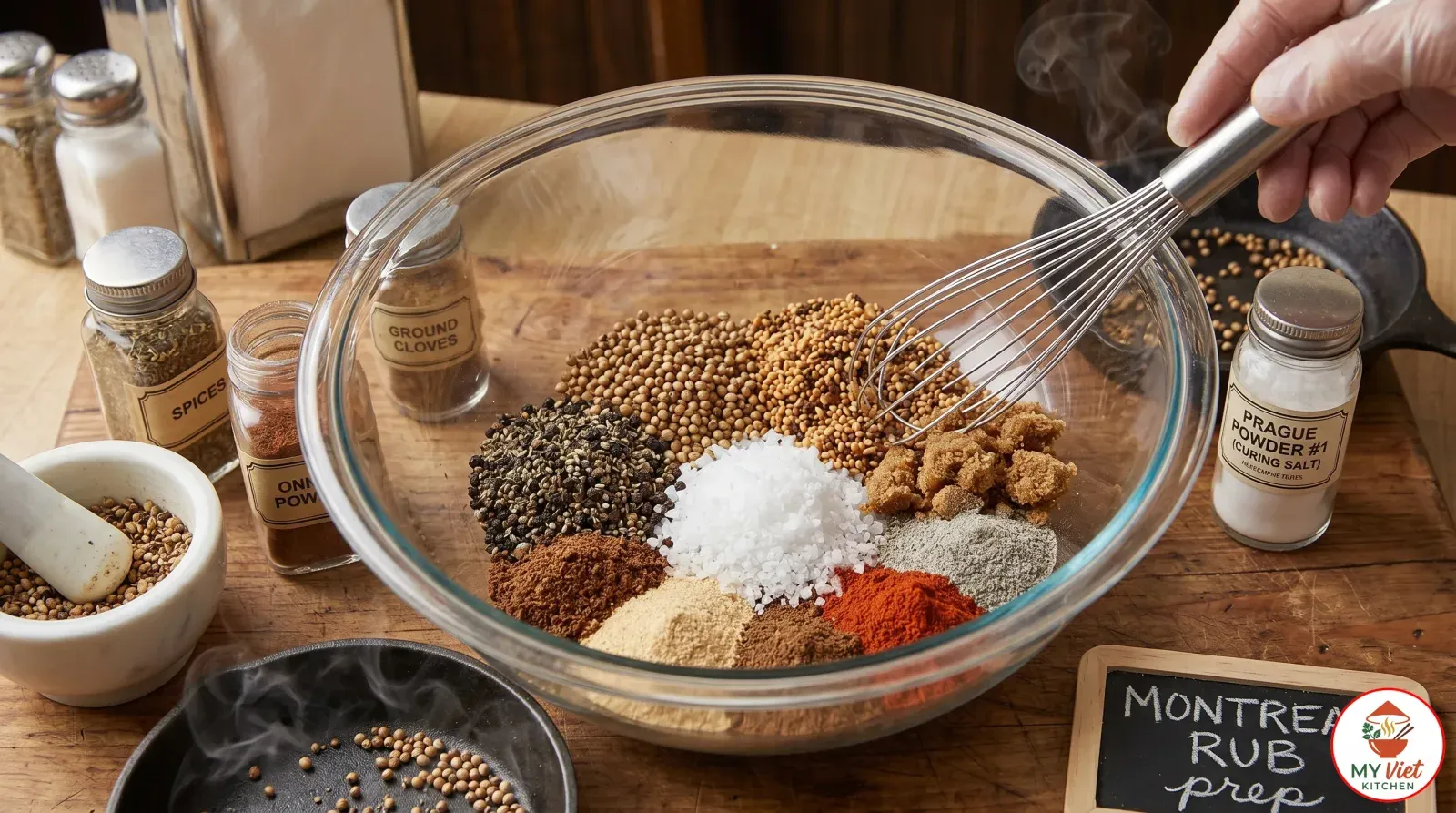
1First, toast the coriander seeds and mustard seeds in a dry skillet over medium heat for about 2 minutes. Stir them constantly until they become fragrant and start to pop. Then, transfer them to a mortar and pestle and crush them coarsely. You want visible pieces, not a fine powder. After that, combine the crushed spices with the black pepper, kosher salt, brown sugar, garlic powder, cloves, allspice, paprika, onion powder, and curing salt in a bowl. Mix everything thoroughly.
Step 2: Cure the Brisket
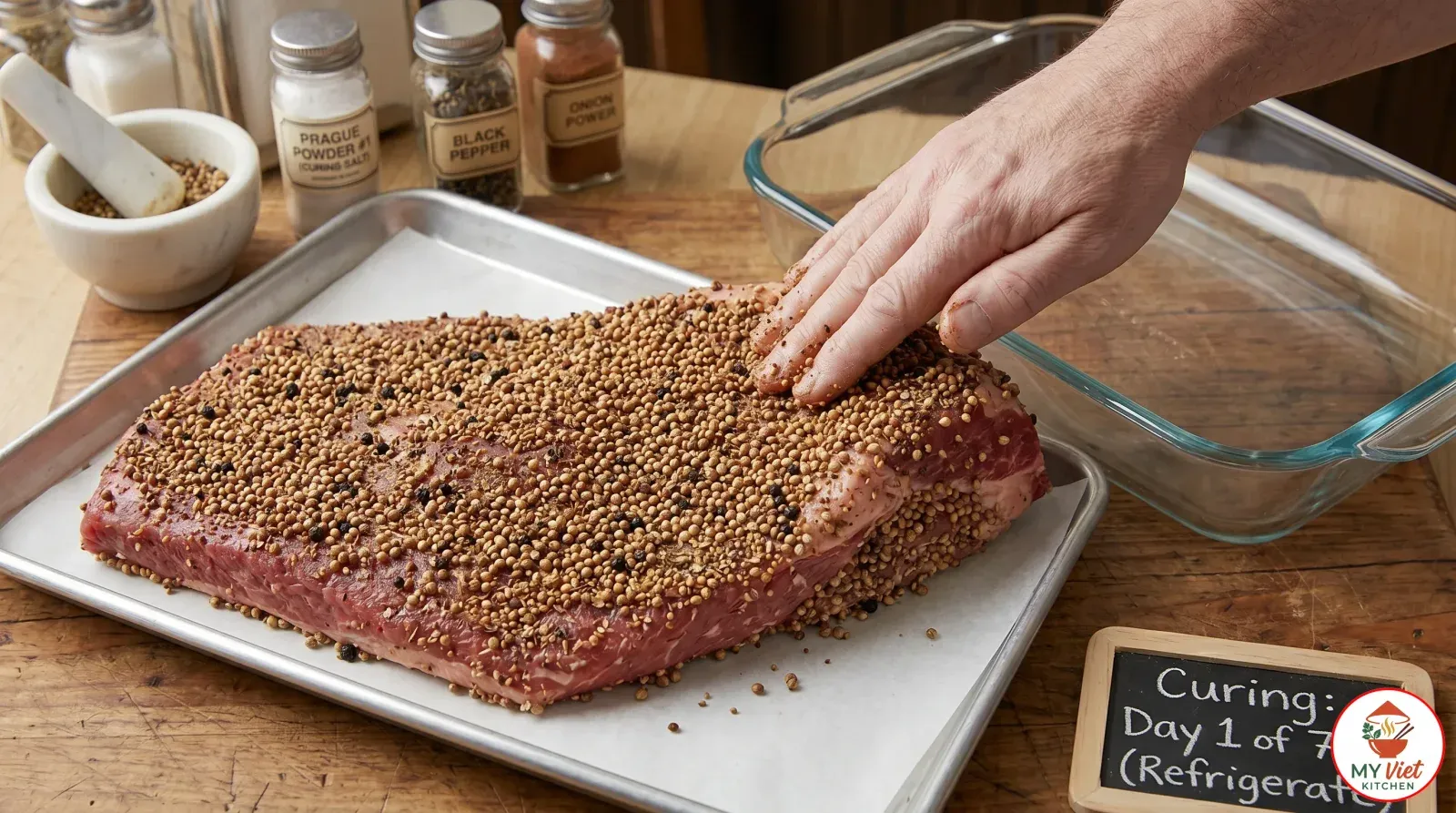
2Pat the brisket dry with paper towels. Then, rub the entire spice mixture generously over every surface of the meat. Press the spices firmly into the flesh so they adhere well. Place the coated brisket in a large resealable bag or a non-reactive container. Squeeze out as much air as possible if using a bag. Refrigerate for 7 to 10 days, and flip the brisket once daily. This step allows the cure to penetrate deeply and develop the characteristic flavor.
Step 3: Rinse and Soak the Brisket
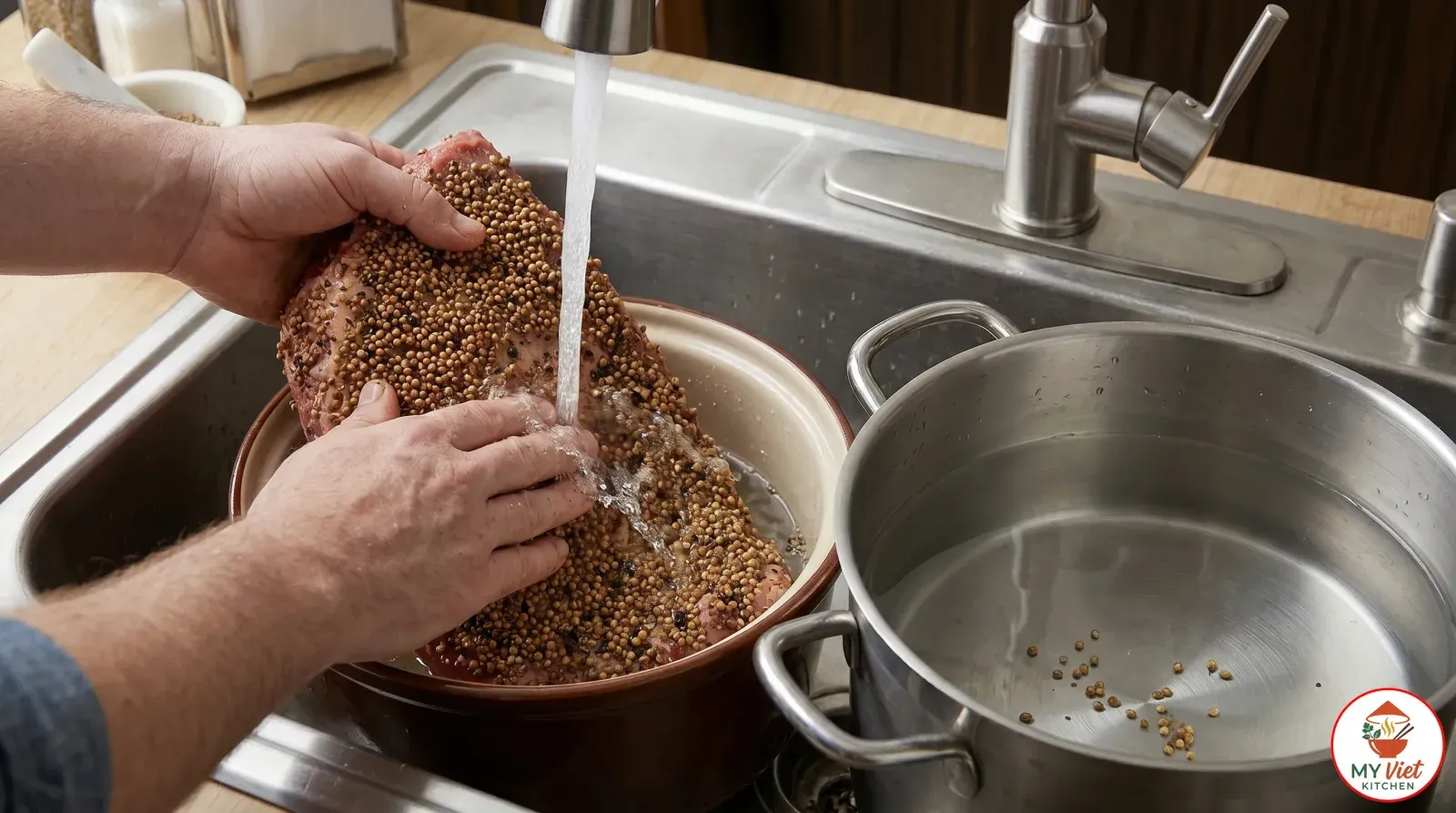
3After the curing period, remove the brisket from the refrigerator. Rinse it thoroughly under cold running water to wash away excess salt and loose spices. Next, place the brisket in a large pot and cover it with cold water. Soak for 2 hours, and change the water every 30 minutes. This soaking step is essential because it prevents the finished meat from tasting overly salty.
Step 4: Smoke the Brisket
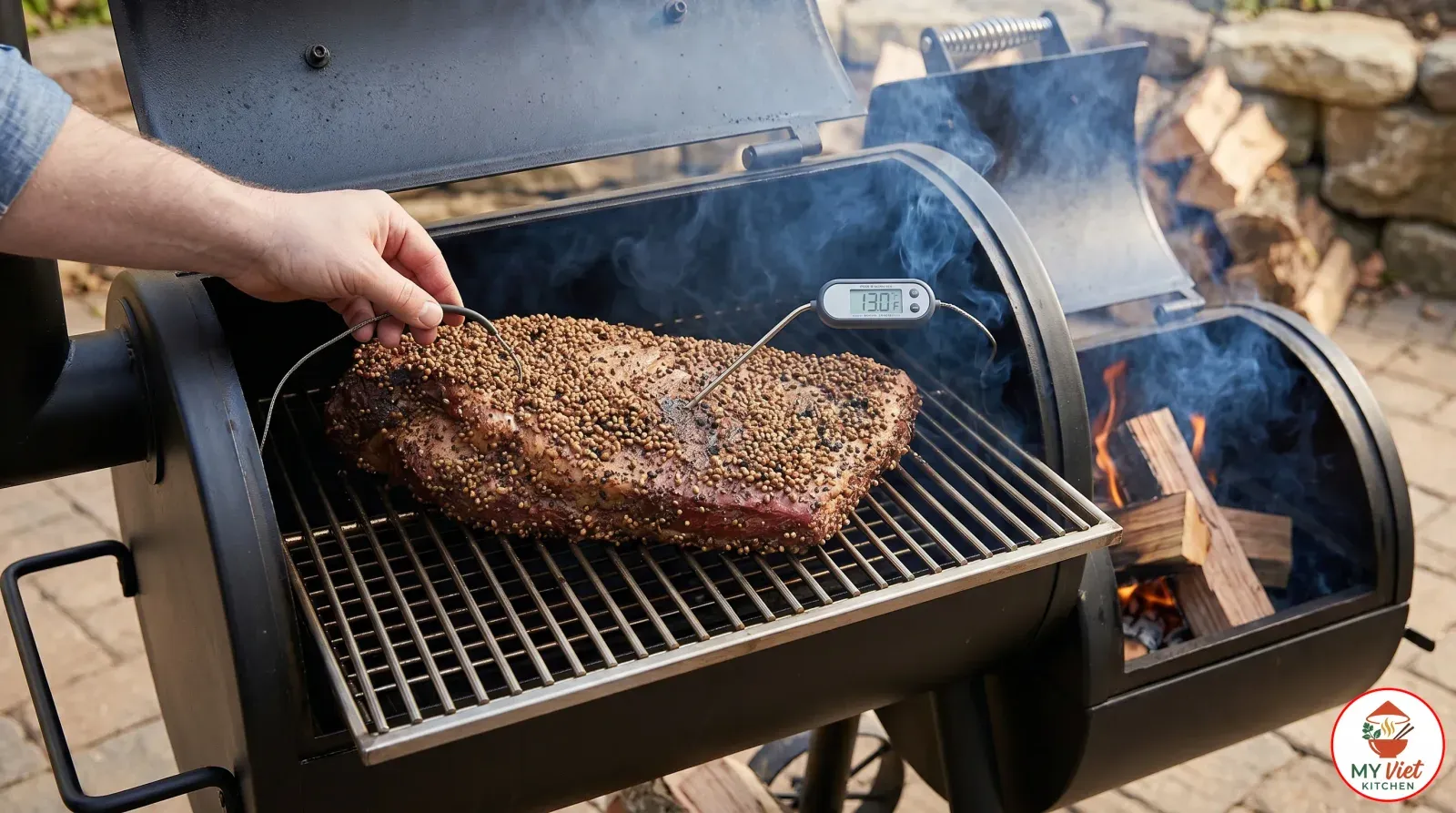
4Set your smoker to 225 degrees Fahrenheit. Use maple or cherry wood chips for a mild, slightly sweet smoke flavor. Place the brisket fat-side up on the grate and close the lid. Smoke for 4 to 5 hours until the internal temperature reaches 165 degrees Fahrenheit. During this time, maintain a consistent temperature and avoid opening the smoker too often. The low, slow heat builds a beautiful dark bark on the exterior.
Step 5: Steam Until Fork-Tender
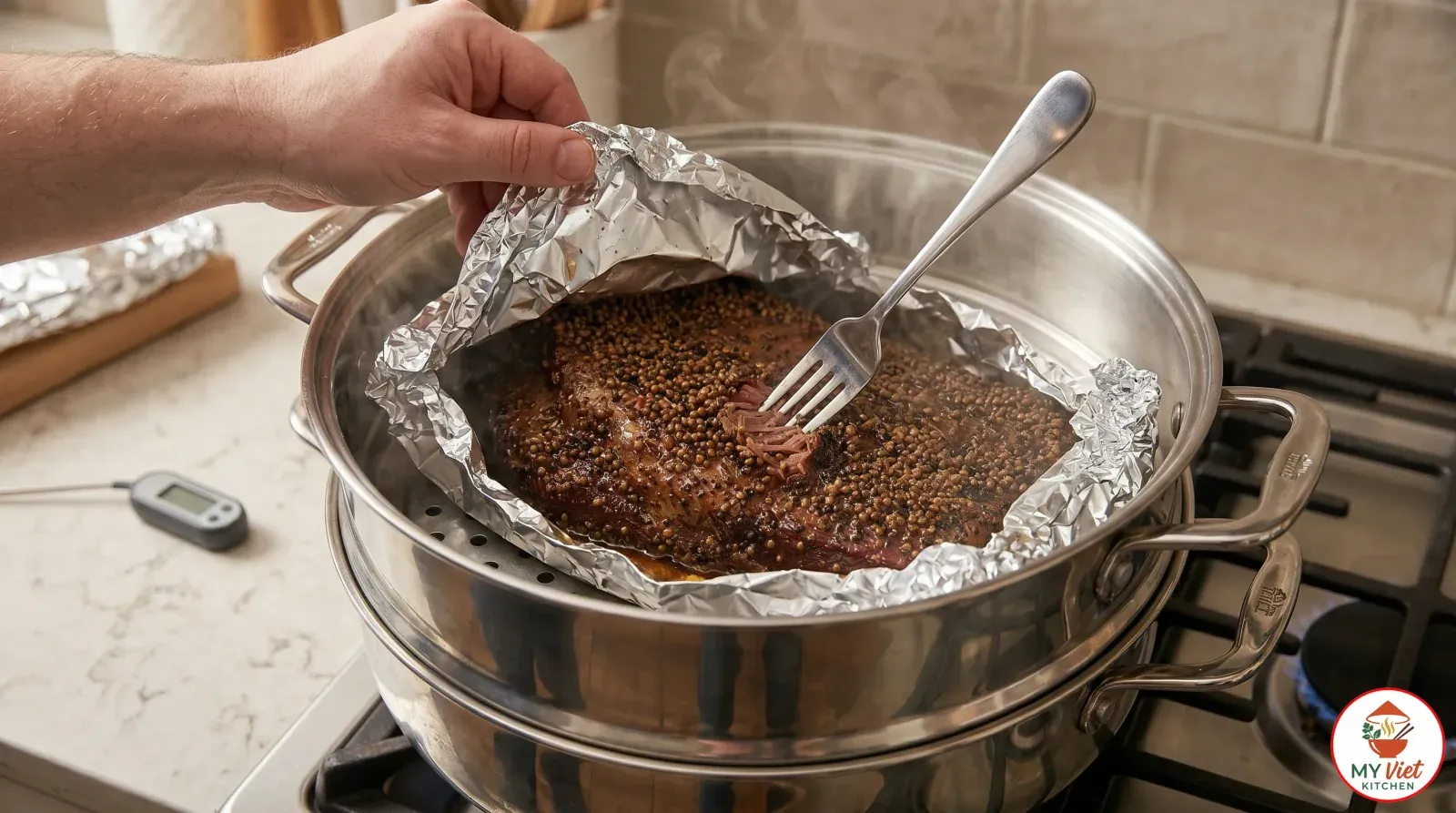
5Wrap the smoked brisket tightly in aluminum foil. Then, place it in a steamer basket over simmering water. Steam for 2 to 3 hours until the internal temperature reaches 195 to 200 degrees Fahrenheit. The meat should feel very tender when you press it, and a fork should slide in with almost no resistance. This steaming process breaks down the remaining collagen and transforms the texture into something extraordinary.
Step 6: Slice and Assemble the Sandwich
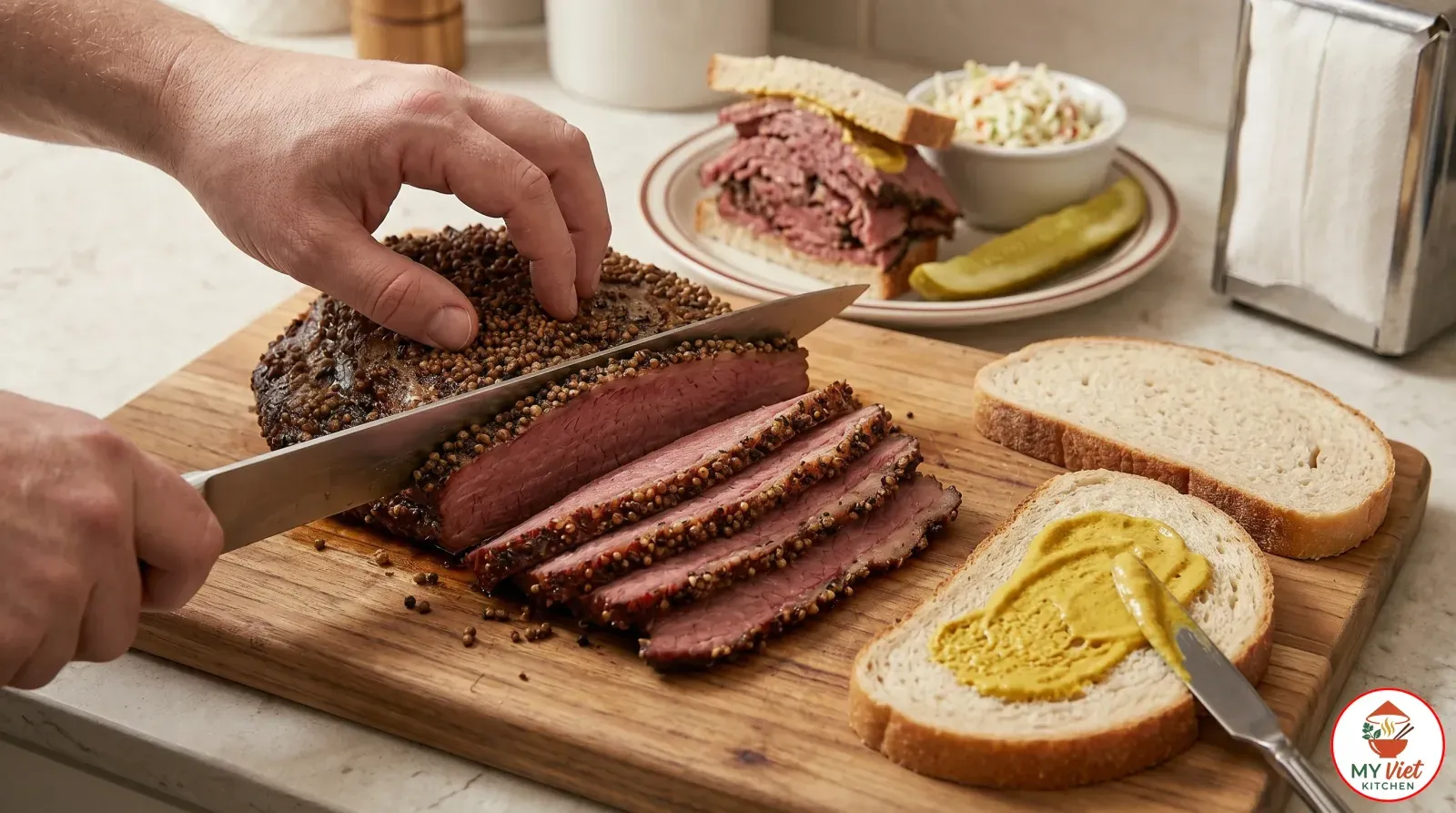
6Let the brisket rest for 15 minutes before slicing. Use a sharp carving knife and cut against the grain into thick slabs, about a quarter inch each. Pile the sliced meat generously on fresh light rye bread. Add a bold swipe of yellow mustard on the top slice. Finally, serve immediately with crunchy dill pickles on the side. A proper Montreal smoked meat sandwich should be tall, messy, and absolutely loaded with meat.
Expert Tips for Perfect Results
Slice by Hand, Not by Machine
In Montreal, smoked meat is always sliced by hand. A deli slicer produces uniform, thin pieces that lack the rustic texture of hand-cut slabs. Consequently, the thick, slightly uneven slices create pockets that trap mustard and juices, making each bite more flavorful.
Control Your Cure Time
Seven days is the minimum for a proper cure. However, ten days will deliver a deeper, more complex flavor. If you go beyond ten days, the salt can overpower the spices. Therefore, mark your calendar and stick to the timeline for the best results.
Montreal Smoked Meat vs. New York Pastrami
People often confuse these two deli legends. While they share a common ancestry in Romanian cured meats, they evolved differently. Here is a comparison of the key differences:
| Feature | Montreal Smoked Meat | New York Pastrami |
|---|---|---|
| Curing Method | Dry rub with cracked spices | Wet brine with pickling liquid |
| Dominant Spice | Black pepper and coriander | Black pepper and garlic |
| Sugar Content | Minimal | Higher, often with molasses |
| Slicing Style | Thick, hand-cut slabs | Thin, machine-sliced |
| Bread | Light rye | Rye with seeds |
| Condiment | Yellow mustard only | Spicy brown mustard |
Serving Suggestions
A Montreal smoked meat sandwich shines on its own. Still, the right side dishes can turn it into a complete meal. Here are some traditional and creative accompaniments:
The Perfect Accompaniments:
- Dill pickles: The tangy crunch cuts through the rich, fatty meat perfectly.
- Coleslaw: A creamy coleslaw adds freshness and contrast to the smoky flavors.
- Poutine: For a truly Canadian experience, pair your sandwich with crispy fries, gravy, and cheese curds.
- Cherry pepper rings: These add a mild heat that works beautifully with the peppery meat.
Beverage Pairings:
- Black cherry soda: A classic Montreal deli pairing that balances the salty, spicy meat.
- Amber ale: The malty sweetness complements the smoke and pepper flavors nicely.
- Dr. Brown’s Cel-Ray soda: This celery-flavored soda is a traditional deli drink that refreshes the palate.
Storage and Reheating
Refrigerator: Store leftover smoked meat in an airtight container for up to 5 days. The flavors actually deepen and improve after a day or two in the fridge.
Freezer: Wrap individual portions tightly in plastic wrap, then in aluminum foil. Freeze for up to 3 months. Label each package with the date so you can track freshness easily.
Reheating: Steaming is the best method for reheating. Place the sliced meat in a steamer for 10 to 15 minutes until heated through. Alternatively, wrap it in foil and warm it in a 300-degree oven for 20 minutes. Avoid microwaving, as it dries out the meat quickly.
Common Mistakes to Avoid
1. Skipping the Soak After Curing
Without soaking, the finished meat will taste overwhelmingly salty. Always soak the cured brisket for at least 2 hours, and change the water frequently. This simple step makes a huge difference in the final flavor balance.
2. Smoking at Too High a Temperature
If the smoker runs above 250 degrees, the exterior will dry out before the interior cooks properly. Keep the temperature steady at 225 degrees Fahrenheit. Patience is the key to a tender, juicy result.
3. Slicing with the Grain
Always cut against the grain. Slicing with the grain produces long, chewy fibers that are tough to bite through. Look for the direction of the muscle fibers and cut perpendicular to them. As a result, each slice will be tender and easy to eat.
Frequently Asked Questions
What is the difference between Montreal smoked meat and pastrami?
Montreal smoked meat uses a dry spice rub heavy on black pepper and coriander, while New York pastrami typically relies on a wet brine with more sugar. Additionally, Montreal smoked meat is steamed after smoking, which gives it a uniquely tender texture. The slicing style also differs, since Montreal meat is cut thick by hand.
Can I make Montreal smoked meat without a smoker?
Yes, you absolutely can. Use a charcoal grill with indirect heat and soaked wood chips for a similar effect. Alternatively, add a teaspoon of liquid smoke to the cure and then steam the brisket in the oven at 275 degrees Fahrenheit, wrapped in foil, for 4 to 5 hours. The result will not be identical, but it will still taste delicious.
How long does it take to cure Montreal smoked meat?
The curing process requires 7 to 10 days in the refrigerator. During this time, the salt and spices penetrate the brisket fully. Shorter curing times produce a weaker flavor, so patience is important here. Flip the meat daily for even results.
What bread is best for a Montreal smoked meat sandwich?
Light rye bread is the traditional and best choice. It has a mild, slightly tangy flavor that supports the bold, peppery meat without competing with it. Avoid pumpernickel or dark rye, because their stronger flavors overpower the delicate spice balance.
Variations and Adaptations
Smoked Meat Poutine:
Chop the smoked meat into bite-sized pieces and pile it on top of classic poutine. The smoky, peppery meat pairs wonderfully with gravy and melted cheese curds. This is a popular variation in Montreal restaurants.
Smoked Meat Reuben:
Replace corned beef with Montreal smoked meat in a Reuben sandwich. Add sauerkraut, Swiss cheese, and Russian dressing on grilled rye bread. The smokier flavor of the Montreal meat gives this classic sandwich an exciting twist.
Smoked Meat Eggs Benedict:
For a decadent brunch option, place sliced smoked meat on toasted English muffins. Top with poached eggs and hollandaise sauce. The rich, smoky meat elevates this breakfast favorite to something truly special.
The Cultural Significance of Montreal Smoked Meat
Montreal smoked meat is far more than just a sandwich. It represents a piece of the city’s immigrant history and cultural identity. Romanian Jewish immigrants brought their meat-curing traditions to Montreal in the late 1800s and early 1900s. Over time, they adapted their recipes to local ingredients and tastes, eventually creating something entirely new.
The delis that serve this sandwich have become landmarks. Schwartz’s Deli, founded in 1928, still draws long lines of locals and tourists alike. These establishments preserve a culinary tradition that connects generations of Montrealers. Moreover, the debate over which deli serves the best smoked meat remains one of the city’s most passionate conversations.
In 2019, the city of Montreal officially recognized smoked meat as part of its intangible cultural heritage. This acknowledgment highlights how deeply this simple sandwich is woven into the fabric of Quebec identity. Every bite carries nearly a century of tradition, community, and craft.
Conclusion
Making a Montreal smoked meat sandwich at home is a rewarding project that delivers extraordinary results. The process demands patience through the curing and smoking stages, but the payoff is a sandwich that rivals the best delis in Montreal. Focus on quality brisket, a well-balanced spice cure, and proper steaming to achieve that signature tender texture.
Ready to explore more iconic dishes from around the world? Check out our complete recipe collection for step-by-step guides to classic comfort foods from every continent. If you love Canadian cuisine, do not miss our guide to classic poutine and traditional tourtiere.