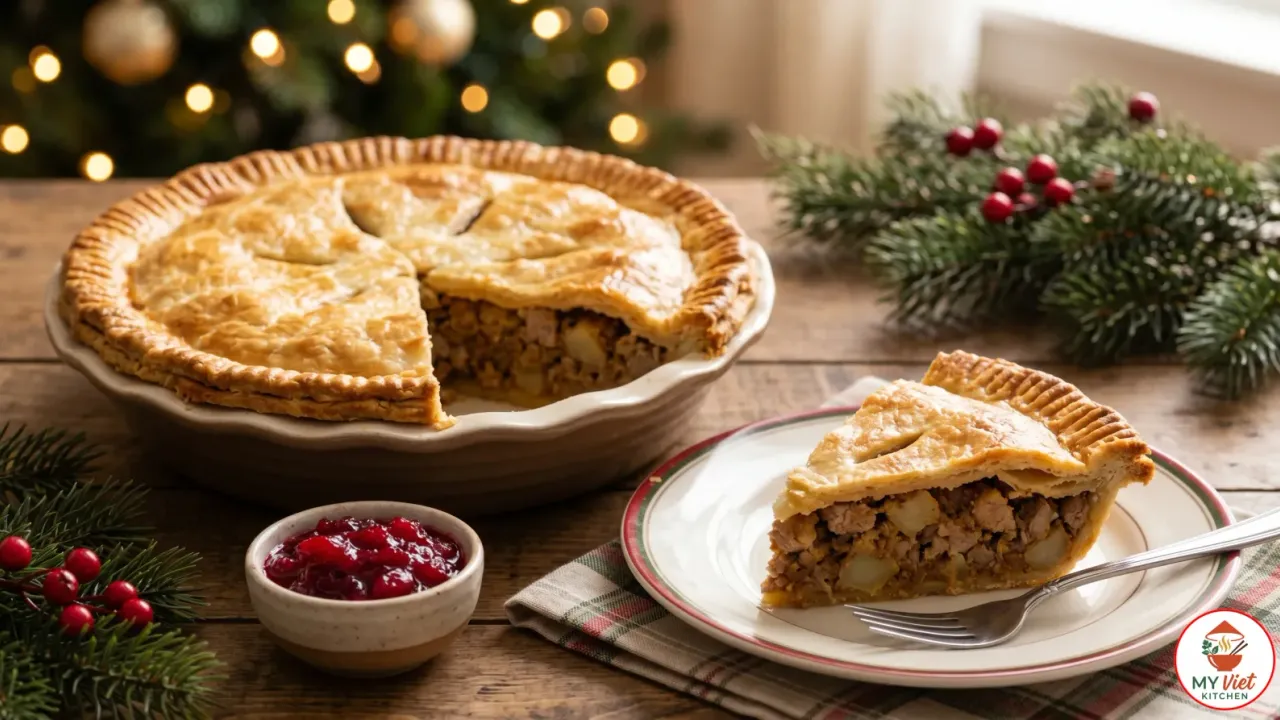
Few dishes capture the heart of Canadian holiday cooking quite like tourtiere. This classic French-Canadian meat pie features a buttery, flaky crust wrapped around a warmly spiced pork filling. Families across Quebec have passed this recipe down for generations, and it remains a centerpiece of Christmas Eve dinner tables to this day. In this guide, you will learn how to make authentic tourtiere at home with simple ingredients and clear steps that deliver incredible results every time.
Prep Time: 30 minutes | Cook Time: 50 minutes | Servings: 8
Difficulty: Medium | Calories: ~480 per serving
What Makes Tourtiere Special?
Tourtiere stands out from other meat pies because of its unique warm spice blend. The combination of cinnamon, cloves, and nutmeg gives the filling a distinctly French-Canadian character that you will not find in British or Australian pies. As a result, each bite delivers a savory warmth that feels both comforting and festive at the same time.
This beloved dish traces its roots to early French settlers in Quebec. They adapted their traditional meat pies using local ingredients and the spices they brought from Europe. Over time, tourtiere became closely tied to Christmas Eve celebrations in Quebec. Families still gather around the table to share a freshly baked tourtiere after midnight mass, continuing a tradition that stretches back centuries.
Furthermore, every region in Quebec puts its own spin on this pie. In Montreal, the filling uses finely ground pork with warm spices. However, in the Lac-Saint-Jean region, cooks prepare a much larger, deep-dish version with cubed game meats and potatoes. Both styles share the same soul, yet they taste completely different. Therefore, no single recipe can claim to be the only authentic version.

Choosing the Right Meat for Tourtiere
The type of meat you select shapes the flavor and texture of your tourtiere. Ground pork serves as the traditional base, but many families blend in other meats for added richness. Here are the most popular options for your filling.
- Ground pork (best choice): This delivers the classic tourtiere flavor with a tender, juicy filling that absorbs the spices beautifully.
- Pork and veal blend: Adding ground veal creates a lighter, more delicate texture while keeping the filling moist and flavorful.
- Pork and beef blend: Ground beef adds a deeper, bolder taste that pairs especially well with the cinnamon and clove spices.
Ingredients for Tourtiere
For the Meat Filling:
- 1 pound ground pork
- 1/2 pound ground veal or beef
- 1 medium onion, finely diced
- 2 cloves garlic, minced
- 1 medium russet potato, peeled and diced small
- 1/2 cup beef broth
- 1/2 teaspoon ground cinnamon
- 1/4 teaspoon ground cloves
- 1/4 teaspoon ground nutmeg
- 1/2 teaspoon dried savory
- 1 teaspoon salt
- 1/2 teaspoon black pepper
For the Pie Pastry:
- 2 1/2 cups all-purpose flour
- 1 teaspoon salt
- 1 cup cold unsalted butter, cubed
- 1/3 cup ice water
- 1 egg beaten with 1 tablespoon water for egg wash
Pro tip: Always let the meat filling cool completely before spooning it into the pie crust. Hot filling melts the butter in the pastry, which prevents the crust from turning flaky. For the best results, chill the filling in the refrigerator for at least 30 minutes before assembly.
Step-by-Step Instructions
Step 1: Cook the Meat Filling
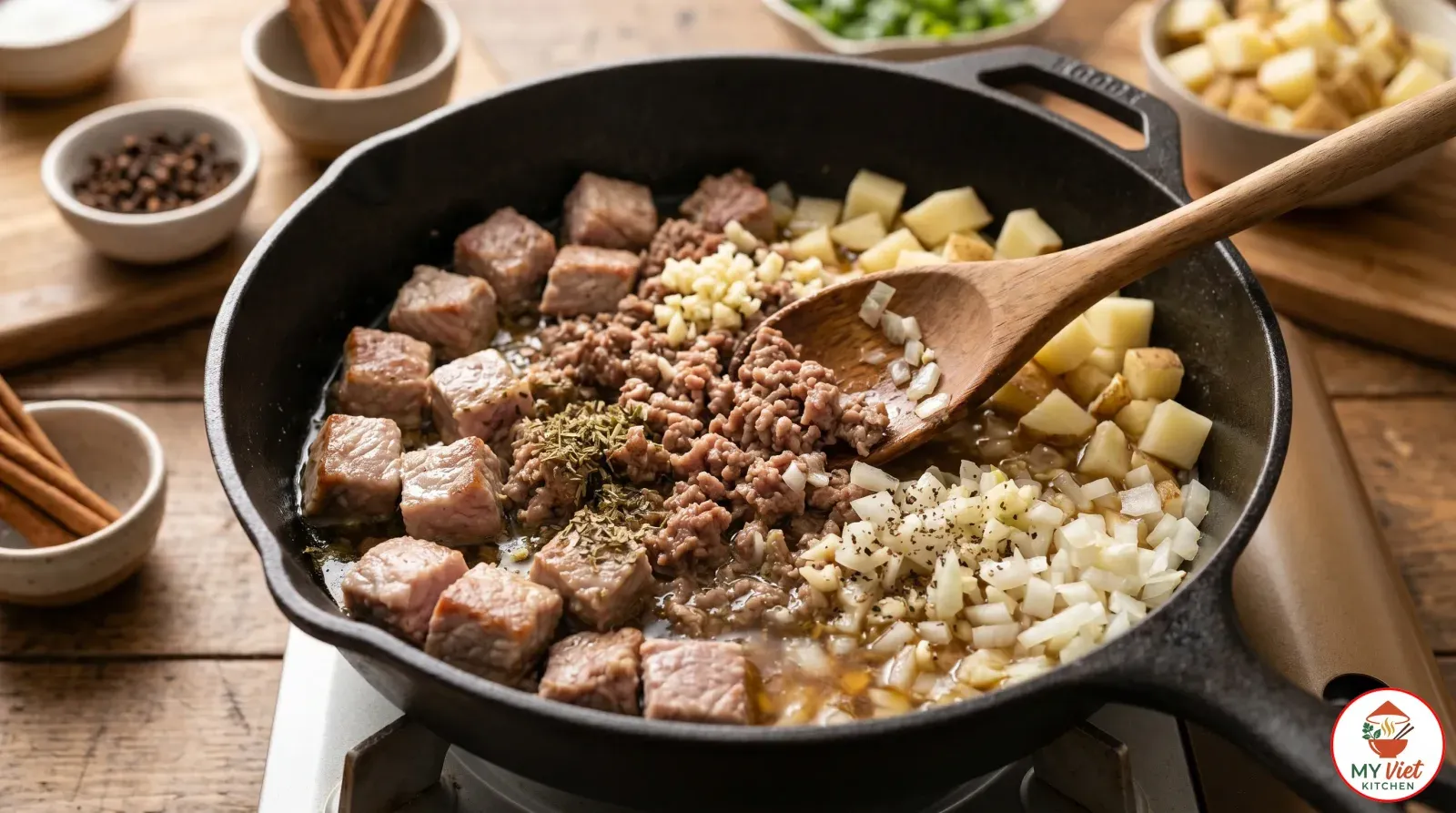
1First, place a large skillet over medium-high heat and add the ground pork and veal. Break the meat apart with a wooden spoon and cook until it turns brown, about 6 to 8 minutes. Then add the diced onion and minced garlic. Stir frequently and cook for another 3 minutes until the onion softens. Next, add the diced potato, beef broth, cinnamon, cloves, nutmeg, savory, salt, and pepper. Reduce the heat to medium-low and simmer for 20 minutes. The potato should feel tender and most of the liquid should absorb into the filling. After that, remove the skillet from heat and let the filling cool completely.
Step 2: Prepare the Pie Dough
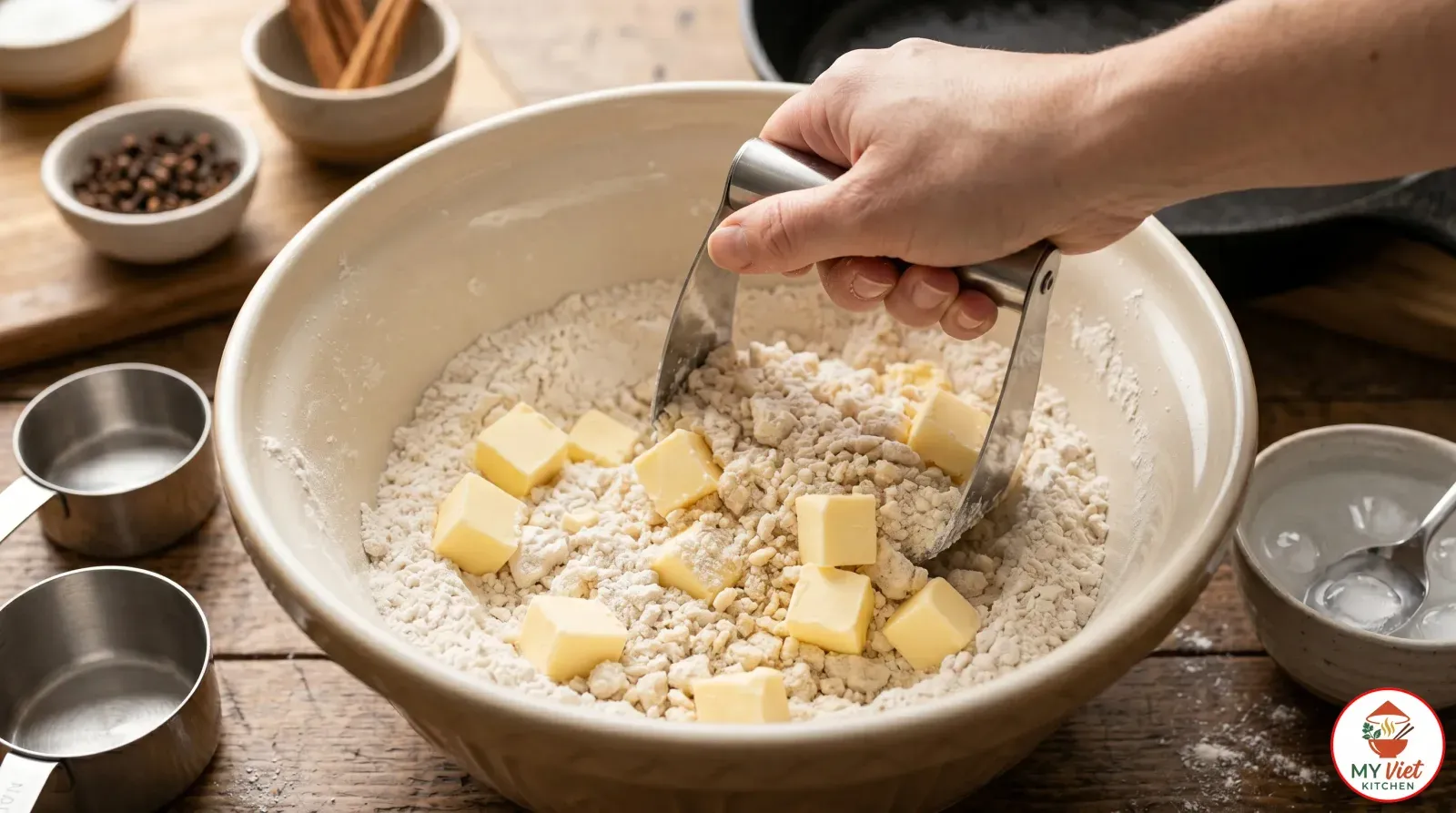
2While the filling cools, prepare the pastry. Whisk the flour and salt together in a large mixing bowl. Add the cold cubed butter and work it into the flour using a pastry cutter or your fingertips. Keep cutting until the mixture looks like coarse breadcrumbs with pea-sized butter pieces throughout. Then drizzle in the ice water one tablespoon at a time. Mix gently after each addition until the dough just comes together. Divide the dough into two equal portions, shape each into a flat disc, and wrap them in plastic. Finally, refrigerate the dough for at least 30 minutes so the butter firms up again.
Step 3: Assemble the Tourtiere
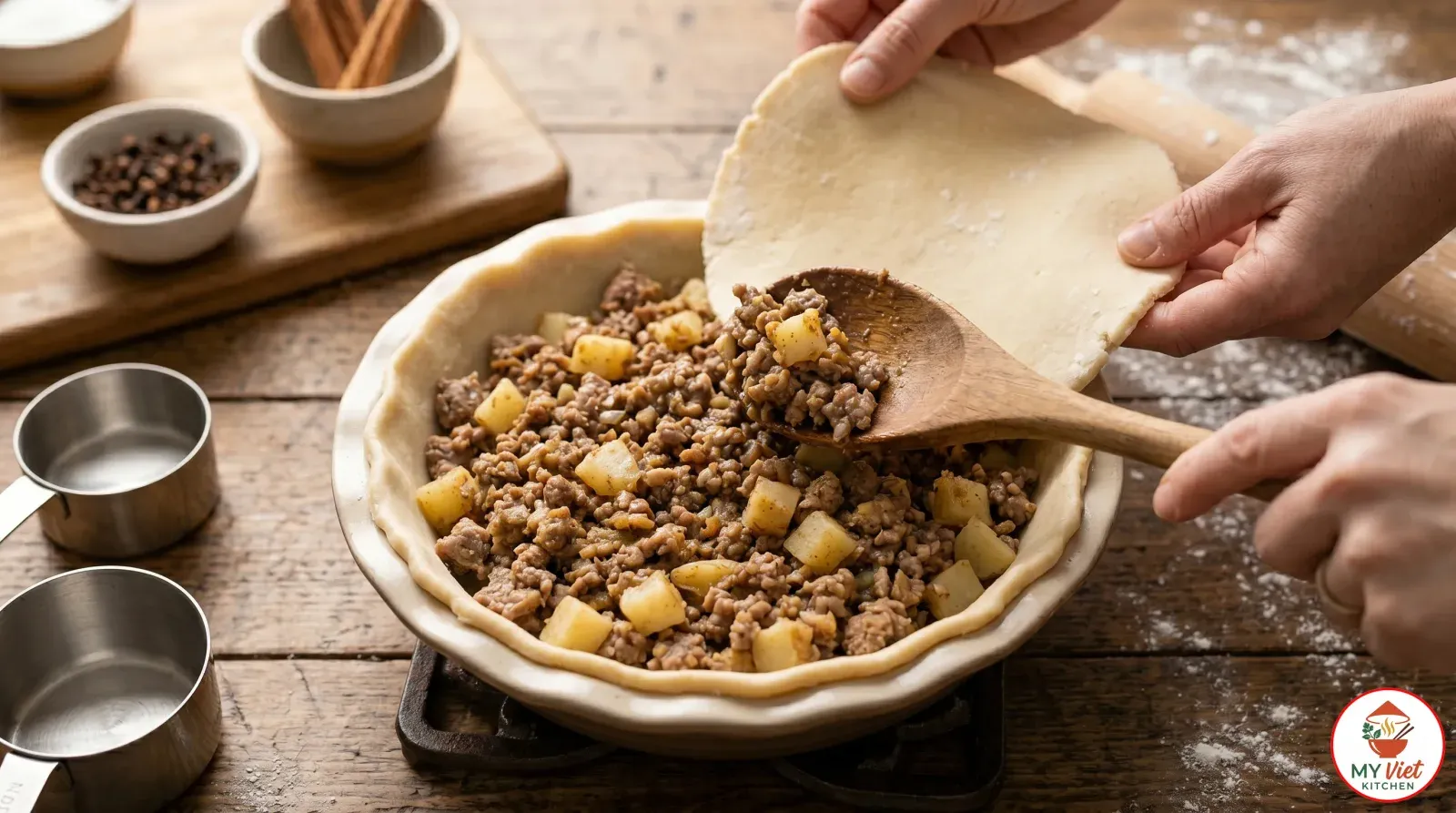
3Roll out one dough disc on a lightly floured surface into a 12-inch circle. Carefully transfer it to a 9-inch pie plate and press it gently into the bottom and sides. Spoon the cooled meat filling evenly into the crust. Then roll out the second dough disc into another 12-inch circle and place it over the filling. Trim any excess dough from the edges and crimp them together with a fork or your fingers to seal the pie. After that, cut three or four small slits in the top crust. These vents allow steam to escape during baking, which prevents the crust from turning soggy.
Step 4: Bake the Pie
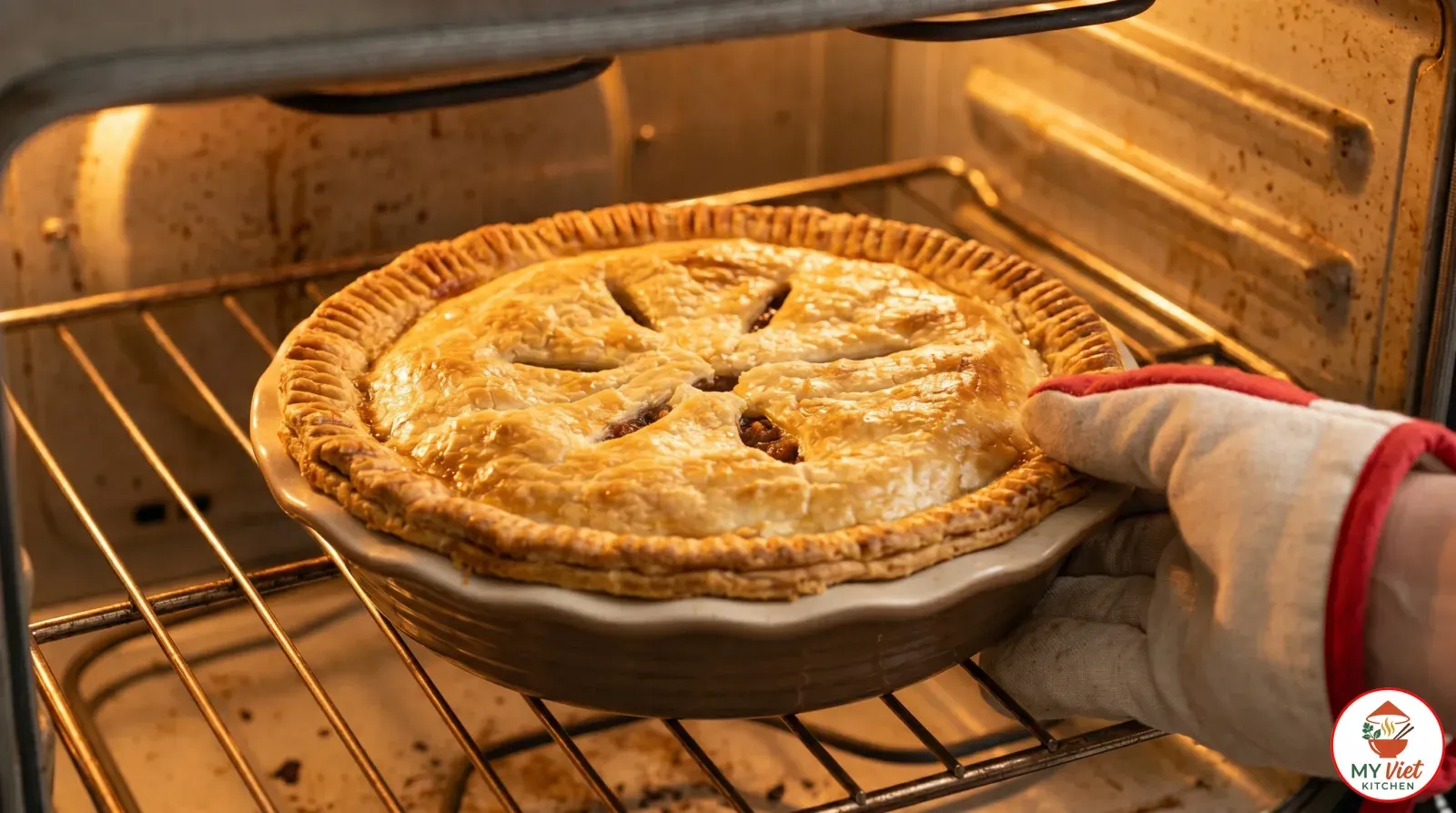
4Preheat your oven to 400F. Brush the entire top crust with the egg wash for a beautiful golden finish. Place the pie on the middle rack and bake for 15 minutes at 400F. Then reduce the oven temperature to 375F and continue baking for 30 to 35 more minutes. The tourtiere is ready when the crust turns deep golden brown and you see the filling bubbling through the steam vents. Let the pie rest on a wire rack for at least 10 minutes before slicing. This resting period allows the filling to set, so the slices hold together neatly on the plate.
Expert Tips for Perfect Tourtiere
Keep Everything Cold for Flaky Pastry
Cold butter creates steam pockets in the oven that produce a flaky crust. If the butter warms up during mixing, the dough turns tough and dense. Therefore, chill your butter, use ice water, and work quickly when handling the dough. If the dough feels soft at any point, return it to the refrigerator for 15 minutes before continuing.
Add Potato for the Right Texture
The diced potato in the filling serves an important purpose beyond flavor. As it cooks, the potato breaks down slightly and absorbs excess moisture from the meat. Consequently, the filling holds together firmly when you slice the pie. Without potato, the filling often turns loose and crumbly.
Toast Your Spices First
For a deeper, more complex flavor, toast the cinnamon, cloves, and nutmeg briefly in a dry pan before adding them to the filling. Toasting releases the essential oils in the spices, which intensifies their aroma. This simple extra step takes just one minute but makes a noticeable difference in the finished tourtiere.
Montreal-Style vs. Lac-Saint-Jean Tourtiere
Quebec has two main styles of tourtiere, and they differ significantly. Understanding these regional variations helps you choose which version best suits your taste and occasion.
| Feature | Montreal-Style | Lac-Saint-Jean |
|---|---|---|
| Meat | Finely ground pork and veal | Cubed game meat, pork, and beef |
| Size | Standard 9-inch pie | Large deep-dish casserole |
| Potatoes | Mixed into the filling | Layered in cubes between meat layers |
| Cooking Time | 45 to 50 minutes | 4 to 6 hours, slow-cooked |
| Best For | Quick weeknight dinner or holidays | Special occasions and large gatherings |
Serving Suggestions
Canadians traditionally serve tourtiere during the holiday season, especially on Christmas Eve after midnight mass. However, this hearty meat pie works wonderfully as a comforting weeknight dinner any time of year. The rich filling pairs best with bright, tangy sides that cut through the richness.
The Perfect Accompaniments:
- Homemade ketchup or chutney: A tangy fruit-based condiment balances the savory spiced filling and adds a sweet contrast.
- Cranberry sauce: The tart berries complement the warm cinnamon and clove flavors in the pie beautifully.
- Green salad: A crisp salad with a vinaigrette dressing provides a refreshing counterpoint to the buttery crust.
- Pickled vegetables: Tangy pickles and pickled beets bring an acidic brightness that pairs perfectly with rich meat pies.
Beverage Pairings:
- Pinot Noir: This light red wine echoes the warm spice notes in the filling without overwhelming the pastry.
- Canadian cider: A dry apple cider from Quebec cuts through the richness with crisp, fruity acidity.
- Dark ale: A malty, slightly sweet ale complements the savory meat and buttery crust.
Storage and Reheating
Refrigerator: Store leftover tourtiere covered in the fridge for up to four days. The flavors actually develop and deepen overnight, so many people enjoy it even more the next day.
Freezer: Wrap the baked or unbaked tourtiere tightly in plastic wrap and foil, then freeze for up to three months. Bake an unbaked frozen pie directly from the freezer at 375F, adding 15 to 20 extra minutes to the total baking time.
Reheating: Reheat slices in the oven at 350F for 15 to 20 minutes until heated through. Avoid the microwave if possible, because it softens the flaky crust. Covering the pie loosely with foil during reheating prevents the top from browning too much.
Common Mistakes to Avoid
1. Filling the Pie While the Meat Is Still Hot
Hot filling melts the butter in the raw pastry dough. As a result, the crust bakes up tough and greasy instead of light and flaky. Always cool your filling completely before assembly. For faster results, spread the filling on a sheet pan and refrigerate it for 30 minutes.
2. Skipping the Steam Vents
Without slits in the top crust, steam gets trapped inside the pie. This trapped moisture makes the bottom crust soggy and can cause the top to crack unevenly. Always cut three or four small slits before baking to let steam escape properly.
3. Overworking the Pie Dough
Kneading the pastry dough too much develops the gluten in the flour. Consequently, the crust turns chewy and bread-like rather than tender and flaky. Mix the dough only until it barely holds together, and you will achieve the perfect texture.
Frequently Asked Questions
What meat is traditionally used in tourtiere?
Traditional tourtiere uses ground pork as the main ingredient. Many Quebec families also blend in ground veal or beef for a richer, more complex flavor. In the Lac-Saint-Jean region, cooks prefer cubed game meats like venison, rabbit, or moose. Ultimately, the choice of meat depends on your family tradition and personal taste.
Can I make tourtiere ahead of time?
Yes, tourtiere works wonderfully as a make-ahead dish. You can assemble the pie up to 24 hours before baking and store it covered in the refrigerator. Alternatively, freeze the assembled pie for up to three months. Bake it directly from frozen at 375F and add 15 to 20 extra minutes. This make-ahead quality makes tourtiere especially popular during the busy holiday season.
What spices go in tourtiere?
The signature spice blend includes cinnamon, cloves, and nutmeg. These warm spices give tourtiere its distinctly French-Canadian character. Additionally, dried savory adds an herbal note that rounds out the flavor profile. Some cooks also include a pinch of allspice or ground ginger for extra warmth and depth.
What do you serve with tourtiere?
Canadians traditionally serve tourtiere with homemade ketchup, cranberry sauce, or fruit chutney. These tangy condiments balance the richness of the meat filling. On the side, a green salad with vinaigrette or pickled vegetables adds brightness. For a complete holiday meal, pair the pie with roasted root vegetables and a glass of Pinot Noir.
What is the difference between tourtiere and a regular meat pie?
Tourtiere sets itself apart through its warm spice blend of cinnamon, cloves, and nutmeg. Regular meat pies typically use herbs like thyme, rosemary, and parsley instead. Moreover, tourtiere always features a buttery double crust, while British or Australian pies often use puff pastry or just a top crust. The cultural connection to Quebec holiday traditions also makes tourtiere unique among meat pies worldwide.
Variations and Adaptations
Turkey Tourtiere:
Swap the pork and veal for ground turkey to create a lighter version. The turkey absorbs the warm spices just as well, and it produces a leaner filling. As a result, this version works great for health-conscious cooks who still want the classic tourtiere experience.
Vegetarian Lentil Tourtiere:
Replace the meat entirely with cooked green lentils and finely diced mushrooms. The lentils provide a hearty texture, while the mushrooms deliver deep umami flavor. Similarly, you keep all the same spices and potato in the filling, so the dish still tastes unmistakably like tourtiere.
Lac-Saint-Jean Deep-Dish Tourtiere:
For a more rustic approach, cube the meat instead of grinding it and layer it with potato cubes in a deep casserole dish. This version cooks slowly at 300F for four to six hours. Consequently, the flavors meld together beautifully, and the meat turns incredibly tender. This style feeds a crowd and makes an impressive centerpiece for holiday gatherings.
The Cultural Significance of Tourtiere
Tourtiere holds a deeply meaningful place in French-Canadian culture. For centuries, Quebec families have gathered on Christmas Eve to share this savory pie after attending midnight mass. The tradition connects generations, because grandmothers teach their grandchildren the family recipe each holiday season. In many households, the specific spice blend and meat ratio remain closely guarded family secrets.
Beyond the holiday table, tourtiere represents the resourcefulness of early French settlers in Canada. They adapted their European cooking traditions to local ingredients, creating a dish that belongs entirely to Quebec. Today, tourtiere competitions take place across the province, and bakeries sell thousands of pies during the holiday season. Above all, this humble meat pie reminds Canadians of the power of simple, honest food to bring people together around a shared table.
Conclusion
Making authentic tourtiere at home rewards you with a pie that tastes far better than anything from a store. The flaky butter pastry, warmly spiced pork filling, and golden crust come together into a dish that your family will request again and again. Remember to keep the dough cold, cool the filling completely, and cut steam vents in the top crust for the best results.
Ready to explore more hearty dishes from around the world? Browse our complete recipe collection for inspiration from every continent. If you love Canadian comfort food, also try our Poutine recipe for another taste of Quebec. For more savory pies and pastries, check out our Cornish Pasty recipe from across the Atlantic.