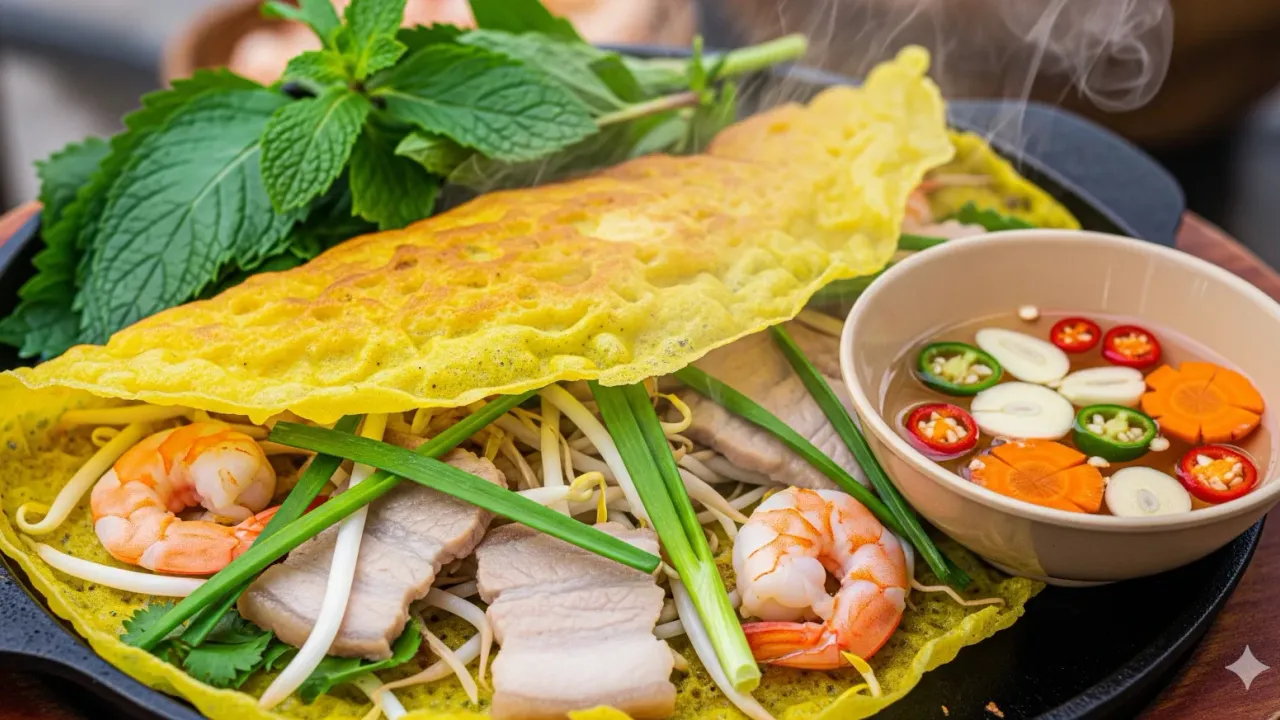
Imagine biting into a golden, paper-thin crepe that shatters with a satisfying crunch — that’s Bánh Xèo Miền Tây (Southern Vietnamese Sizzling Crepe), one of the most beloved street foods from the Mekong Delta region of Vietnam. Named after the loud sizzle it makes when the batter hits a blazing hot pan, this iconic dish features a coconut-scented, turmeric-yellow shell packed with juicy shrimp, tender pork belly, and crunchy bean sprouts, all wrapped in fresh herbs and dunked into a bright sweet-and-sour dipping sauce. What sets this Miền Tây version apart is the generous addition of coconut milk in the batter — the secret behind that irresistibly crispy, fragrant crust that keeps everyone coming back for more.
Prep Time: 30 minutes | Cook Time: 30 minutes | Servings: 4
Difficulty: Easy–Medium | Calories: ~420 per serving
What Makes Bánh Xèo Miền Tây Special?
Vietnam’s sizzling crepe comes in many regional forms, but the Southern (Miền Tây) version holds a special place in the hearts of food lovers. The Mekong Delta’s rich agricultural landscape — abundant with coconuts, fresh seafood, and diverse herbs — is reflected in every bite. While northern versions tend to be simpler and central versions are made smaller and drier, the Southern crepe is generous, indulgent, and deeply aromatic.
The defining characteristic is the batter itself. By incorporating coconut milk instead of plain water, the crepe develops a subtle natural sweetness and an unbeatable crispiness that holds up even after folding. The turmeric powder not only gives the crepe its signature golden color but also adds a gentle earthy warmth. When you bite through the shell, you get layers of textures: the crunchy exterior, the soft bean sprouts inside, and the savory burst of shrimp and pork belly.
Beyond the crepe itself, eating Bánh Xèo is an experience. You tear off a piece, pile on fresh herbs — lettuce, perilla, fish mint, Vietnamese basil — wrap it all in rice paper or a mustard leaf, then plunge it into tangy nước chấm. Every roll is a different combination. It’s communal, interactive, and endlessly satisfying.

Choosing the Right Shrimp and Pork Belly
The filling is the soul of your Bánh Xèo, so ingredient quality matters. Here’s how to pick the best:
- Small/medium shrimp (best choice): Choose small shrimp with thin, soft shells if you plan to cook them shell-on — it adds great flavor and texture. For shell-off, any medium shrimp works. Look for shrimp with heads and legs tightly attached to the body and legs that aren’t blackened. Avoid shrimp that feel mushy or have an off smell.
- Pork belly (ba rọi): Select a piece with a thin rind and a balanced ratio of lean meat to fat. A good belly should spring back when pressed and have a fresh pink color — avoid any pieces that look grayish-green or feel limp. The fat in pork belly renders down and bastes the crepe from beneath, contributing to the crispy bottom.
- Bean sprouts: Use fresh, firm bean sprouts. Wilted or slimy sprouts will release water into the crepe and make the shell go soft. Rinse well and drain completely before use.
Ingredients for Bánh Xèo Miền Tây (Serves 4)
For the Batter:
- 500g Vietnamese sizzling crepe flour mix (bột bánh xèo)
- 2 cans (approx. 800ml) coconut milk
- 1 can (approx. 400ml) warm water
- ½ tsp turmeric powder
- 2 stalks green onion, finely sliced
For the Filling:
- 500g medium shrimp, peeled and deveined
- 500g pork belly, thinly sliced
- 300g bean sprouts
- ½ tsp salt (for shrimp marinade)
- ⅓ tsp black pepper (for shrimp)
- ⅔ tsp salt (for pork marinade)
- ⅓ tsp black pepper (for pork)
- Cooking oil, as needed
For the Quick-Pickled Vegetables:
- 250g carrot, peeled and julienned
- 250g kohlrabi or white radish, peeled and julienned
- 6 tbsp rice vinegar
- 1 tbsp sugar
- ½ tsp salt
For the Dipping Sauce (Nước Chấm):
- 3 tbsp fish sauce
- 2 tbsp sugar
- 250ml water
- Juice of 1 lime
- 2 cloves garlic, minced
- 1–2 fresh chilies, minced (adjust to taste)
For Serving:
- Butter lettuce or green mustard leaves (cải bẹ xanh)
- Perilla (tía tô)
- Vietnamese basil (rau quế)
- Fish mint (rau diếp cá)
- Cucumber, sliced
- Rice paper (optional)
Pro tip: Can’t find bánh xèo flour mix? Make your own by combining rice flour, a small amount of tapioca starch (for extra crunch), and turmeric. The pre-mixed version found in Asian grocery stores is very convenient and reliable for beginners.
Step-by-Step Instructions
Step 1: Mix the Batter
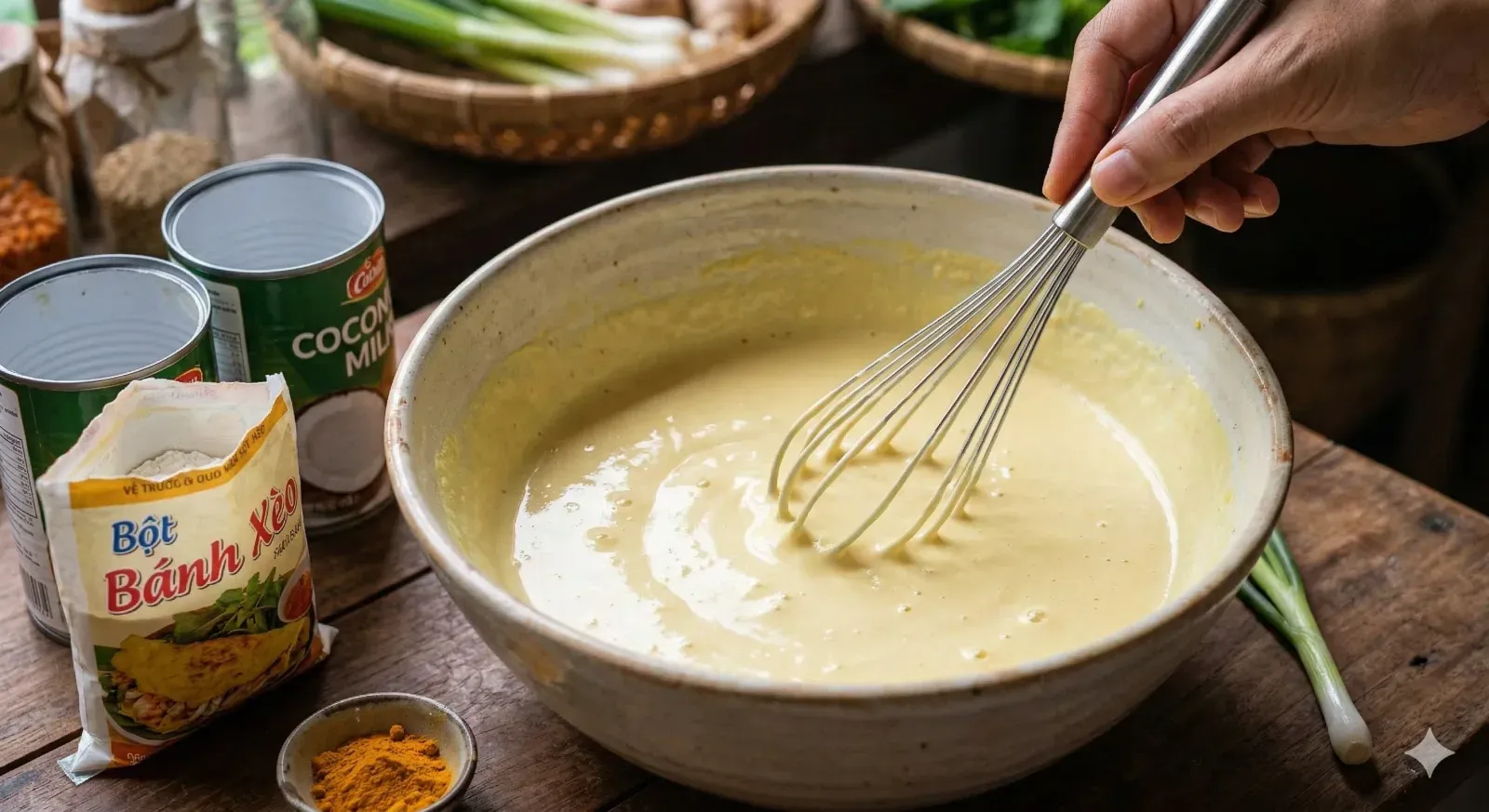
1Pour both cans of coconut milk into a large mixing bowl and add approximately one can’s worth of warm water. Stir gently until the coconut milk is evenly diluted. Add 500g of bánh xèo flour mix and ½ tsp turmeric powder. Whisk vigorously until the batter is completely smooth with no lumps. Let the batter rest for 20 minutes — this allows the starch granules to fully hydrate, which is key to achieving that paper-thin, lacy, crispy shell. Stir the batter once or twice during resting to prevent the starch from settling at the bottom.
Step 2: Marinate the Pork Belly and Shrimp
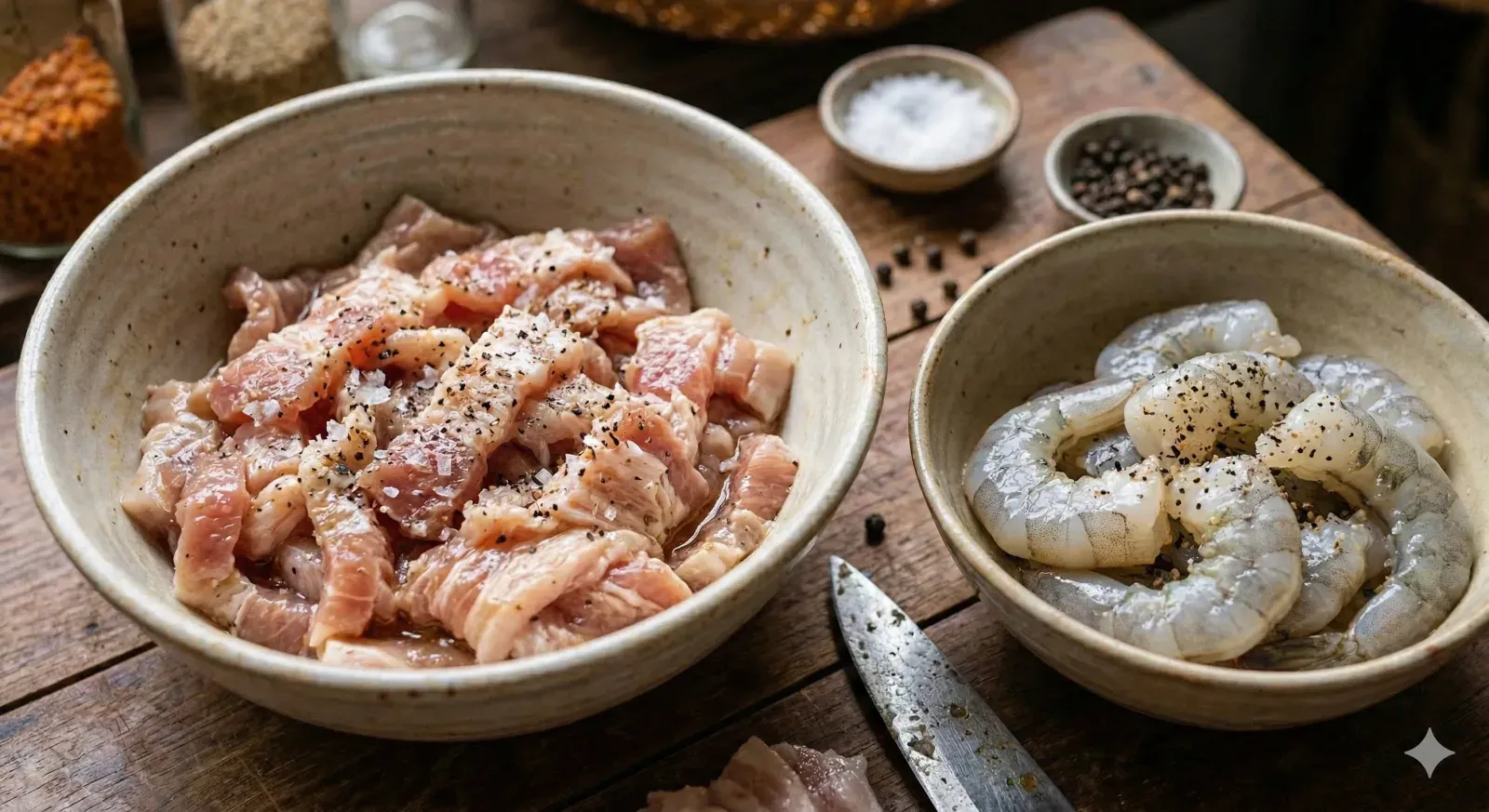
2Scrub the pork belly with coarse salt, rinse under cold running water several times, then slice into thin strips about 3–4mm thick and 4cm long. Season with ⅔ tsp salt and ⅓ tsp black pepper, toss to coat, and set aside for 10 minutes to absorb the flavors. For the shrimp, rinse with lightly salted water, then peel, remove the heads, and devein by running a shallow cut along the back of each shrimp. Pat dry with paper towels and season with ½ tsp salt and ⅓ tsp black pepper. Tip: If you prefer to cook the shrimp shell-on for extra flavor, choose small, thin-shelled shrimp so they stay tender.
Step 3: Prepare the Pickled Vegetables
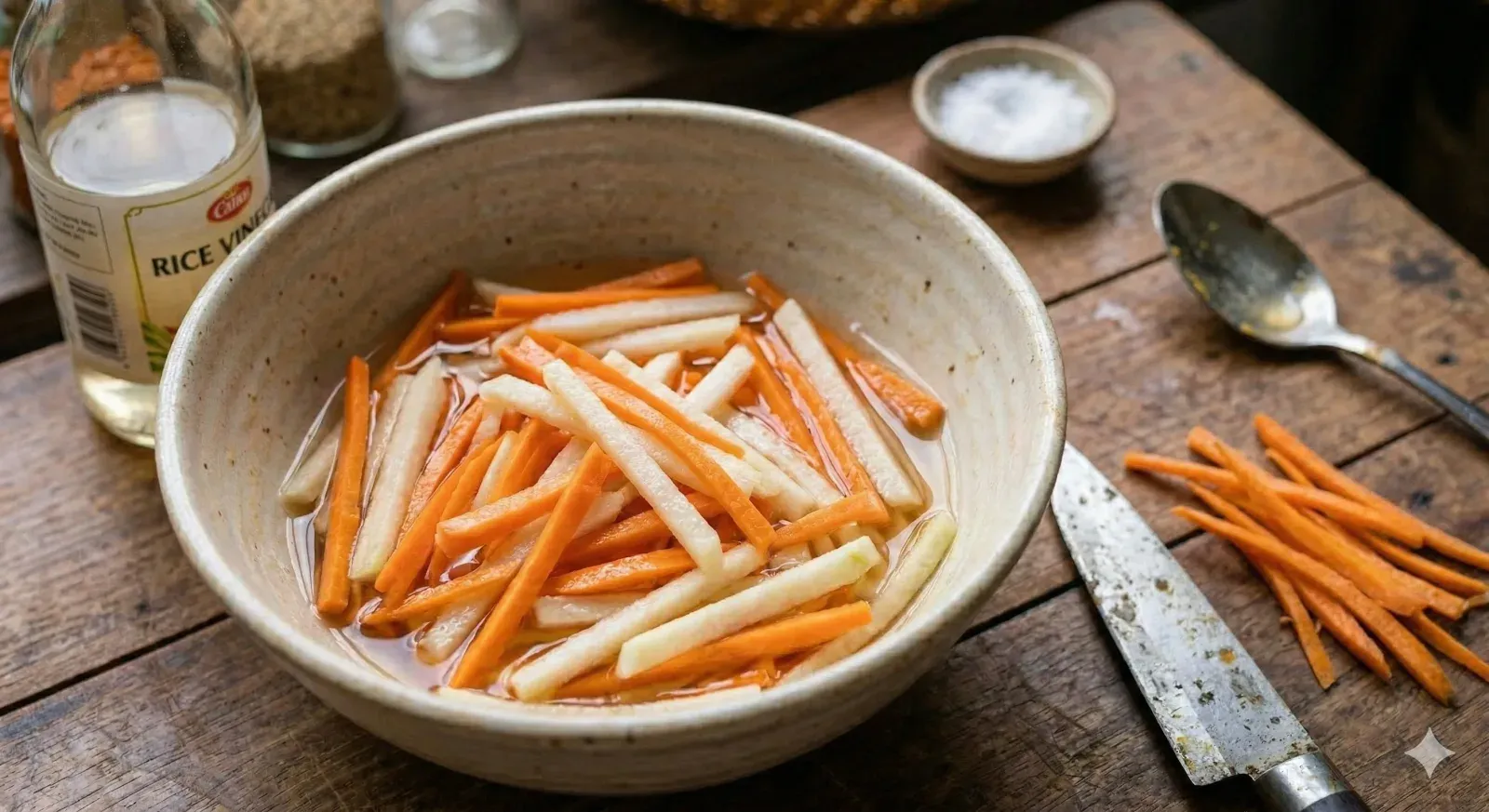
3Peel and julienne the carrot and kohlrabi (or white radish) into thin matchstick-sized strips. Place them in a mixing bowl and add 6 tbsp rice vinegar, ½ tsp salt, and 1 tbsp sugar. Toss well until the sugar dissolves, then let sit for at least 15–20 minutes. The vegetables will soften slightly and develop a pleasant tangy sweetness that cuts through the richness of the crepe. You can make these a day ahead — they keep well in the fridge and actually taste better after overnight marinating.
Step 4: Mix the Dipping Sauce
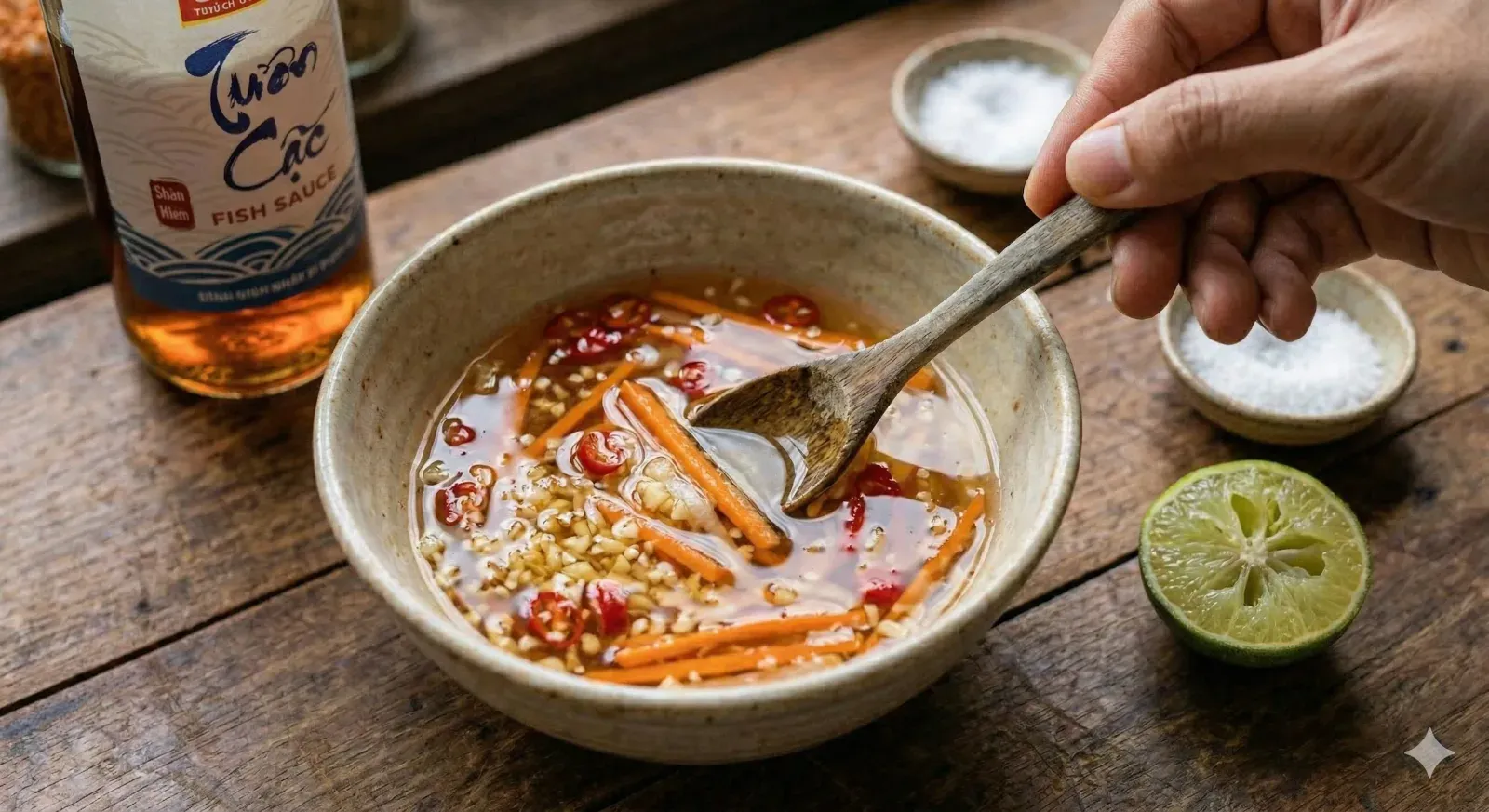
4In a small bowl, combine 2 tbsp sugar with the minced garlic and chili. Using a fork or spoon, crush and mix the aromatics into the sugar — this helps the sugar dissolve and extracts more flavor from the garlic and chili. Add 250ml of water, 3 tbsp fish sauce, and a generous squeeze of fresh lime juice. Stir well and taste. The ideal nước chấm for bánh xèo is slightly sweeter and more diluted than typical Vietnamese dipping sauce — it should be bright, refreshing, and just punchy enough to wake up all the flavors of the crepe and herbs.
Step 5: Cook the Crepes
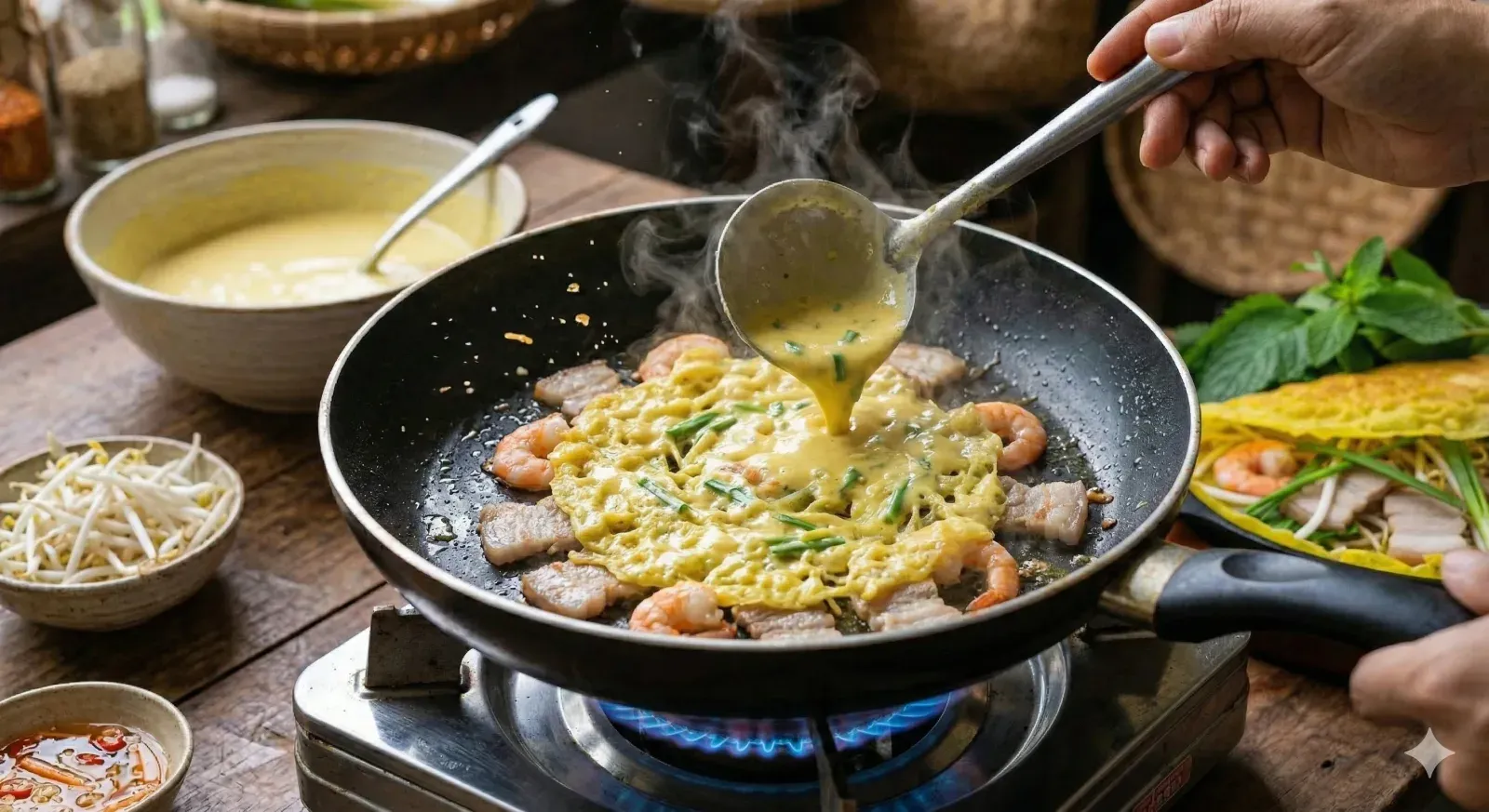
5Stir the sliced green onion into the rested batter and give it a good mix. Heat a large (28–30cm), deep-sided non-stick or carbon steel pan over medium-high heat. Brush a thin, even layer of cooking oil across the entire surface. Once the pan is very hot, add a portion of pork belly slices and shrimp. Stir-fry briefly until just cooked through — about 1–2 minutes — then spread them out evenly.
Immediately ladle a thin scoop of batter and swirl the pan to spread it into an even layer. Scatter bean sprouts over one half. Cover with a lid and turn up the heat to high for 30 seconds. Remove the lid, reduce to medium heat, and cook until the edges are golden and pull away from the pan. Add a drizzle of oil around the edges if needed. Once deeply golden, fold the crepe in half and slide onto a serving plate.
Expert Tips for a Perfectly Crispy Bánh Xèo
Use Beer Instead of Water
Swapping the warm water in the batter for cold lager beer is the most reliable trick to maximize crispiness. The carbonation creates tiny bubbles throughout the batter, resulting in a lighter, lacier shell that stays crunchy for much longer — even after folding and plating.
Keep the Batter Thin
Pour just enough batter to coat the pan in a single thin, even layer — roughly 80–100ml per crepe in a 28cm pan. A thick batter produces a doughy, chewy shell rather than a crispy one. Tilt and swirl the pan immediately after pouring so the batter spreads to the edges before it sets.
Make Sure the Filling is Dry
Stir-fry the pork and shrimp until they are cooked through and any excess moisture has evaporated before pouring the batter. A wet filling creates steam that softens the batter from underneath, preventing it from crisping up properly.
Choose the Right Pan
A large, deep-sided non-stick pan or a well-seasoned carbon steel pan gives the best results. The depth makes swirling the batter easier and contains the filling without spilling. Avoid shallow pans — they make folding difficult and lead to broken crepes.
Control the Heat Carefully
Start on medium-high to high heat when the filling goes in, then moderate slightly after pouring the batter. Too low and the shell steams rather than crisps; too high and the bottom burns before the edges are done. Watch the edges — when they turn deep golden and start to curl away from the pan, you’re ready to fold.
Bánh Xèo Regional Comparison: South vs. Central vs. North
Vietnamese sizzling crepes vary significantly by region. Here’s a quick guide to the key differences:
| Feature | Southern (Miền Tây) | Central (Miền Trung) | Northern (Miền Bắc) |
|---|---|---|---|
| Batter base | Coconut milk + rice flour | Rice flour + water | Rice flour + water |
| Size | Large (28–32cm pan) | Small (10–15cm pan) | Medium |
| Shell texture | Extra crispy, rich, fragrant | Thin and very crispy | Softer, slightly thicker |
| Typical filling | Shrimp, pork belly, bean sprouts | Shrimp, pork, green onion | Pork, shrimp, vegetables |
| Served with | Large herb platter, pickles, rice paper | Mustard leaves, rice paper | Herbs, lettuce |
| Dipping sauce | Sweet-sour fish sauce (nước chấm) | Fermented shrimp paste sauce (mắm nêm) or fish sauce | Sweet-sour fish sauce |
Serving Suggestions
In the Mekong Delta, Bánh Xèo is never eaten alone — it’s always surrounded by an abundant platter of fresh herbs and accompaniments. The ritual of assembling your own roll at the table is half the joy of the dish.
The Perfect Accompaniments:
- Butter lettuce or green mustard leaf: Acts as the wrapper, adding freshness and a mild bitterness that balances the richness of the crepe.
- Perilla (tía tô): Adds an anise-like aroma and deep purple color to each roll.
- Fish mint (rau diếp cá): An acquired taste — pungent and slightly fishy, but it’s an authentic Southern Vietnamese touch.
- Quick-pickled carrots and kohlrabi: The acidity cuts through the fat of the pork belly and refreshes the palate between bites.
- Rice paper: Optional, but wrapping everything in a sheet of softened rice paper makes for a more substantial, textured roll.
- Cucumber slices: Adds a cool, hydrating crunch.
Beverage Pairings:
- Vietnamese iced green tea (trà đá) — the classic street-food pairing
- Cold Vietnamese beer (Bia Saigon or Bia Hanoi)
- Soda with salted plum (soda xí muội)
- Sparkling water with lime
Storage and Reheating
Refrigerator: Bánh Xèo is best eaten immediately while the shell is still crispy. If you must store leftovers, keep the crepes in an airtight container in the fridge for up to 2 days. Store the herbs, pickles, and sauce separately.
Freezer: Not recommended — the batter-based shell does not freeze and reheat well, as it tends to become soggy and lose its texture entirely. However, you can freeze the cooked pork and shrimp filling separately for up to 1 month.
Reheating: The only effective way to revive a stored crepe is in a dry non-stick pan over medium-high heat for 3–5 minutes per side, without adding oil. This re-crisps the shell. Avoid microwaving — it will make the crepe soft and rubbery.
Common Mistakes to Avoid
1. Pouring the Batter Before the Pan is Hot Enough
A lukewarm pan leads to a crepe that sticks and never develops a proper crust. Always wait until the pan is genuinely hot — test it by flicking a drop of water onto the surface. If it sizzles and evaporates in under 2 seconds, you’re ready to pour.
2. Making the Batter Too Thick
A thick batter creates a bread-like texture rather than a crispy shell. The consistency should be thin and pourable — similar to crepe batter or thin pancake batter. If in doubt, add a small splash of water or beer and test one crepe before cooking the whole batch.
3. Skipping the Resting Time for the Batter
Resting allows the rice starch to fully absorb the liquid and swell slightly, which results in a smoother, more cohesive crepe that spreads easily and crisps uniformly. Rushing this step often leads to uneven texture and batter that tears when you try to fold the crepe.
4. Overcrowding the Pan with Filling
Adding too much shrimp and pork releases excessive liquid and creates steam that softens the batter. Stick to a moderate amount of filling spread in a single, even layer — remember the filling should be visible through the thin batter, not buried under it.
5. Folding Too Early
Fold the crepe only when the edges are a deep, uniform golden brown and you can see them beginning to pull away from the pan. Folding too soon traps moisture inside and makes the shell soft. Patience is rewarded with a shatteringly crispy result.
Frequently Asked Questions
What makes Southern Vietnamese Bánh Xèo different from other regional versions?
Southern-style Bánh Xèo uses coconut milk in the batter, giving it a richer, more fragrant flavor and exceptional crispiness. It is also notably larger than Central Vietnamese crepes, which are small and made without coconut milk. The Southern version is also served with a more expansive herb platter and often accompanied by rice paper for wrapping.
Can I use beer instead of water in the batter?
Yes — this is actually highly recommended! Replacing water with cold lager beer introduces carbonation into the batter, which creates a lighter, lacier, and crispier shell. This technique is widely used by Vietnamese home cooks and street food vendors alike. Use any mild, light lager; avoid dark beers, which have too strong a flavor.
Why is my Bánh Xèo not crispy?
The most common culprits are: batter poured too thick, the filling not stir-fried dry enough before adding the batter, the pan not hot enough, or insufficient oil in the pan. Try using beer in the batter, ensure your pan is very hot before pouring, and drizzle a little extra oil around the edges of the crepe as it cooks.
What vegetables are traditionally served with Bánh Xèo?
A Southern herb platter is incredibly diverse. Common choices include butter lettuce, green mustard leaf (cải bẹ xanh), fish mint (rau diếp cá), perilla (tía tô), Vietnamese basil (rau quế), young mango leaves, and sorrel leaves. The combination of bitter, herby, and aromatic leaves is what makes each roll complex and multi-layered. Use whatever you can find and don’t be afraid to experiment.
Can Bánh Xèo be made vegetarian?
Absolutely. Replace the shrimp and pork belly with a combination of mushrooms (shiitake, king oyster, or wood ear work especially well), firm tofu, and extra vegetables like corn or sliced zucchini. For the dipping sauce, use vegetarian fish sauce or light soy sauce. The coconut milk batter and herb platter remain the same, so the overall flavor profile is still wonderfully aromatic and satisfying.
Variations and Adaptations
Vegetarian Bánh Xèo:
Swap the meat and seafood for a mix of shiitake mushrooms, king oyster mushrooms, tofu, and thinly sliced vegetables. Use soy sauce in the dipping sauce instead of fish sauce. This version is popular during Buddhist fasting days and is equally delicious.
Duck Bánh Xèo (Bánh Xèo Vịt):
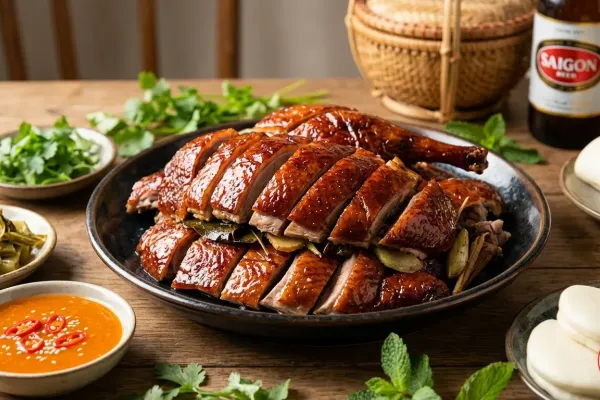
A rustic variant found in parts of the Mekong Delta uses shredded roasted or braised duck instead of pork belly. The gamey richness of the duck pairs beautifully with the crispy coconut shell and fresh herbs.
Mini Bánh Xèo (Bánh Khọt Style):
Use a special cast-iron mold pan with round indentations to make bite-sized crispy coconut cups filled with shrimp. These are technically a separate dish called Bánh Khọt, but the batter is very similar to Bánh Xèo and is a fun variation for parties or appetizers.
The Cultural Significance of Bánh Xèo
The name Bánh Xèo — literally “sizzling cake” — comes from the dramatic hissing sound the batter makes the moment it hits the blazing hot pan. That sound is the first signal that something delicious is coming, and in Vietnam, it’s a sound deeply associated with family gatherings, late-night street stalls, and weekend cooking sessions where the whole family crowds around the stove.
In the Mekong Delta, the dish reflects the region’s natural bounty. The waterways provide abundant shrimp and fish; the fertile fields yield lush herbs and vegetables; the coconut palms provide milk for the batter. Bánh Xèo is a dish born from the land, made by hand, and eaten communally — it embodies the Vietnamese value of ăn cùng nhau, eating together.
Across generations, the recipe is passed down not from cookbooks but from watching — watching a grandmother swirl the pan, learning when the edge is golden enough to fold, knowing by the smell when the crepe is ready. It is a dish of intuition and love, and that is ultimately what makes it so special.
Conclusion
Making Bánh Xèo Miền Tây at home is one of the most rewarding Vietnamese cooking projects you can take on. The technique is simple once you understand the fundamentals — a hot pan, thin batter, dry filling, and patience — and the result is a stunning, flavor-packed crepe that rivals anything you’d find at a Mekong Delta street stall. The key is in the coconut milk batter: it’s what gives this Southern version its distinctive richness, golden color, and unforgettable crunch. Once you master it, you’ll find yourself making this on repeat.
If you loved this recipe, explore more Southern Vietnamese classics on My Viet Kitchen: try our Bún Bò Huế, discover the art of Gỏi Cuốn (Fresh Spring Rolls), or dive into our full guide to Vietnamese Dipping Sauces. Happy cooking!