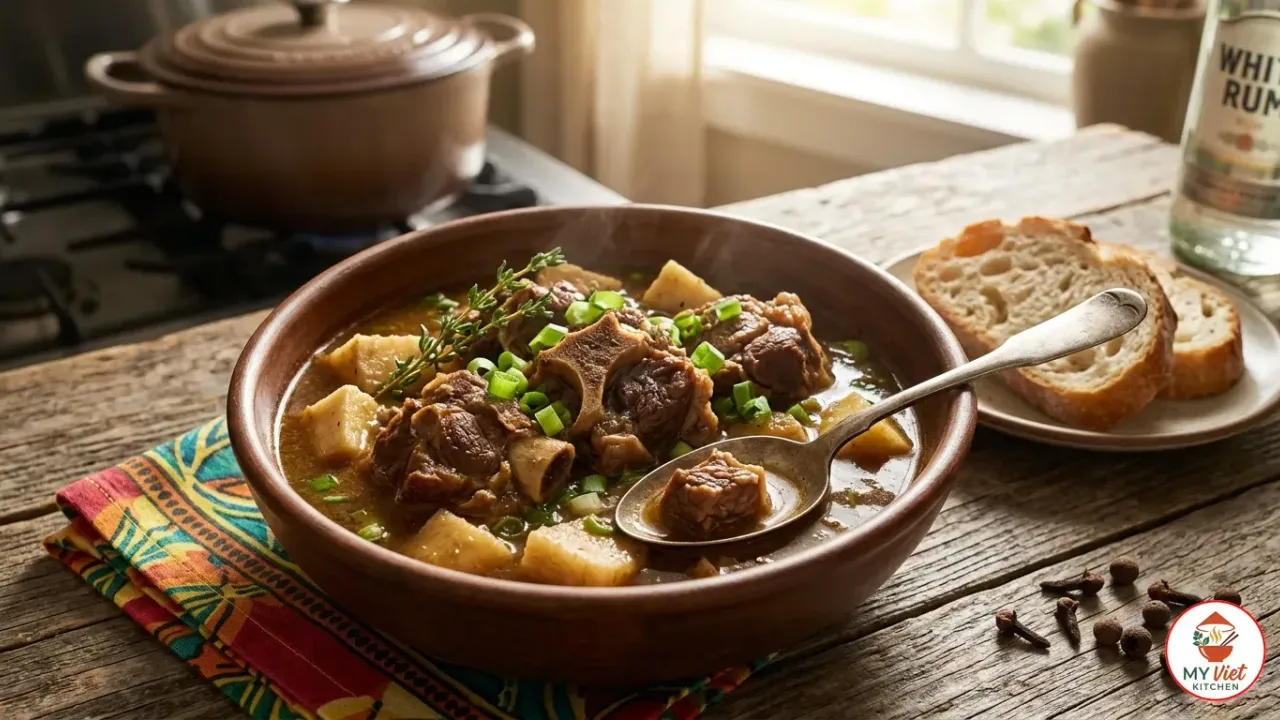
Goat water is the beloved national dish of Montserrat, a small volcanic island in the Eastern Caribbean. This rich, deeply spiced goat stew simmers for hours until the meat falls from the bone and the broth turns thick with aromatic warmth. Think of it as the Caribbean answer to Irish stew, but with cloves, allspice, Scotch bonnet pepper, and breadfruit replacing the restrained flavors of Northern Europe. This authentic goat water recipe walks you through every step so you can bring the soul of Montserrat to your kitchen.
Prep Time: 30 minutes | Cook Time: 3 hours | Servings: 6
Difficulty: Medium | Calories: ~410 per serving
What Makes Goat Water Special?
Goat water holds a unique place in Caribbean cuisine because it represents a tiny island with an outsized culinary identity. Montserrat has fewer than 5,000 people, yet its national dish rivals any recipe from the larger Caribbean islands. Indeed, every family on the island has its own version, passed down through generations of cooks who learned by watching and tasting rather than reading recipes.
What sets goat water apart from other Caribbean goat stews is the prominent role of whole cloves. While most Caribbean cooking leans on allspice and thyme, Montserratian cooks add whole cloves that fill the broth with a warm, sweet, almost spicy depth. A whole Scotch bonnet left intact adds gentle heat but not too much spice. Together, these create a stew that warms from the inside out.
The texture of properly made goat water falls somewhere between a soup and a stew. It should be thick enough to coat a spoon but still pourable. Additionally, breadfruit or dumplings add starchy body, and the long-simmered goat releases collagen that gives the broth a silky, almost velvety quality. In short, this is comfort food at its most elemental.

Choosing the Right Goat Meat for Goat Water
The cut of your goat meat shapes the success of this dish. Not all goat is equal, so here is what to look for at the butcher or market.
- Bone-in goat shoulder (best choice): This cut has the perfect balance of meat, fat, and connective tissue. After slow simmering, the collagen melts into the broth and the meat becomes incredibly tender. Ask your butcher to cut it into 2-inch pieces.
- Bone-in goat leg: Another excellent option with a leaner profile than shoulder. The bone marrow enriches the broth during cooking. Leg pieces take slightly longer to become tender, so add 15 to 20 extra minutes of simmering time.
- Lamb shoulder or leg (substitute): If goat is unavailable, bone-in lamb works well. The flavor is milder and slightly fattier. Reduce the cooking time by about 20 minutes because lamb tenderizes faster than goat.
Ingredients for Goat Water
Main Ingredients:
- 3 pounds bone-in goat meat, cut into 2-inch pieces
- 2 tablespoons vegetable oil
- 6 cups water or goat stock
- 1 pound breadfruit, peeled and cubed (or potatoes as substitute)
Aromatics and Vegetables:
- 1 large onion, diced
- 4 cloves garlic, minced
- 1 Scotch bonnet pepper, whole and pierced with a knife
- 2 medium tomatoes, diced
- 1 tablespoon tomato paste
- 2 green onions (scallions), chopped
Spices and Seasonings:
- 4 whole cloves
- 2 sprigs fresh thyme
- 2 bay leaves
- 1 teaspoon ground allspice
- 1/2 teaspoon ground cinnamon
- 1/2 teaspoon black pepper
- 1 tablespoon browning sauce
- 1 tablespoon white rum (optional)
- Salt to taste
- 2 tablespoons flour mixed with 3 tablespoons water (for thickening)
Pro tip: Browning sauce is essential for authentic goat water. It gives the stew its characteristic dark color and a subtle caramel depth. Look for Caribbean brands like Grace or Kitchen Bouquet at your local international grocery store. If you cannot find it, substitute with a teaspoon of dark soy sauce and a pinch of brown sugar.
Step-by-Step Instructions
Step 1: Season and Brown the Goat Meat
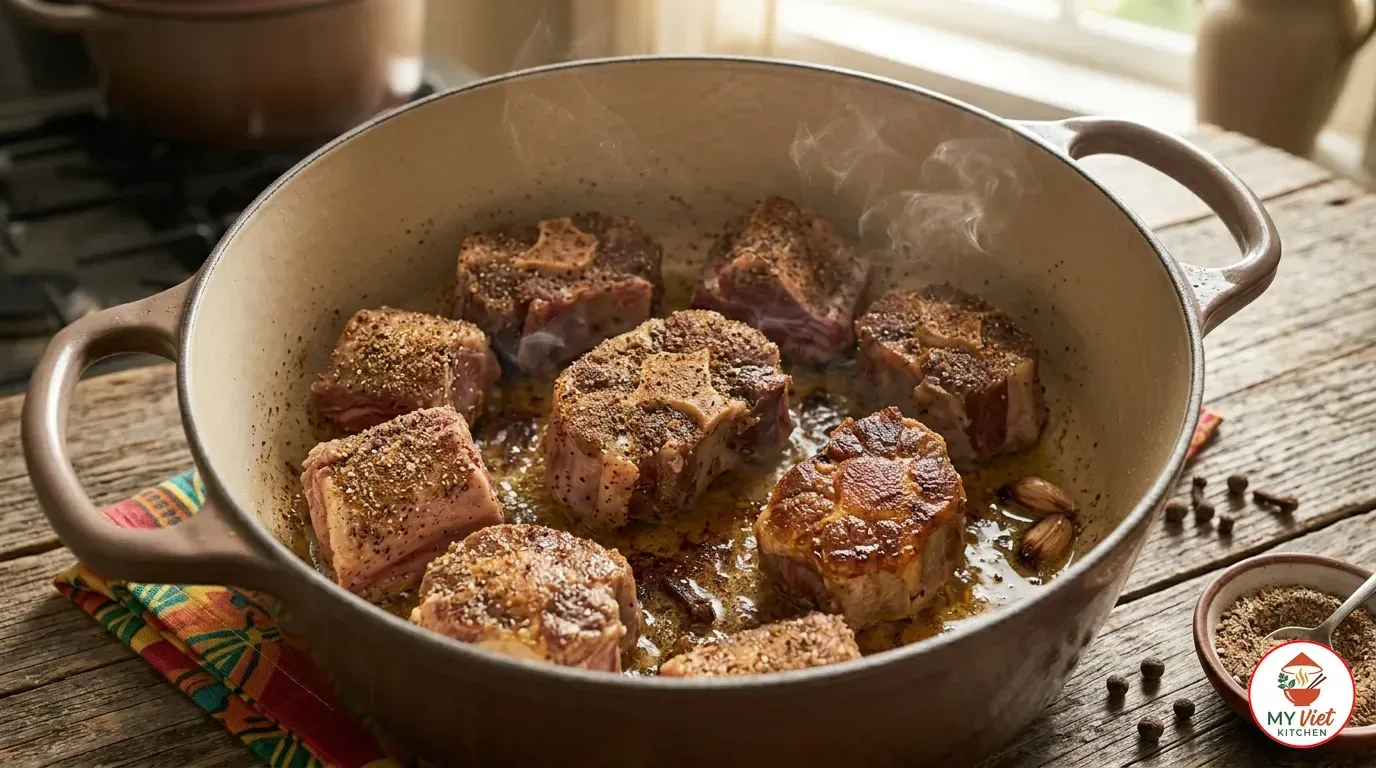
1 Season the goat meat generously with salt, black pepper, allspice, and cinnamon. Toss the pieces to coat evenly. Heat the vegetable oil in a large, heavy-bottomed pot or Dutch oven over medium-high heat until the oil shimmers. Working in batches to avoid crowding, brown the goat pieces on all sides for about 3 minutes per side. You want a deep golden crust, not gray steamed meat. Remove the browned pieces to a plate and set aside. Consequently, this browning step creates a flavorful fond on the bottom of the pot that becomes the backbone of your stew.
Step 2: Build the Aromatic Base
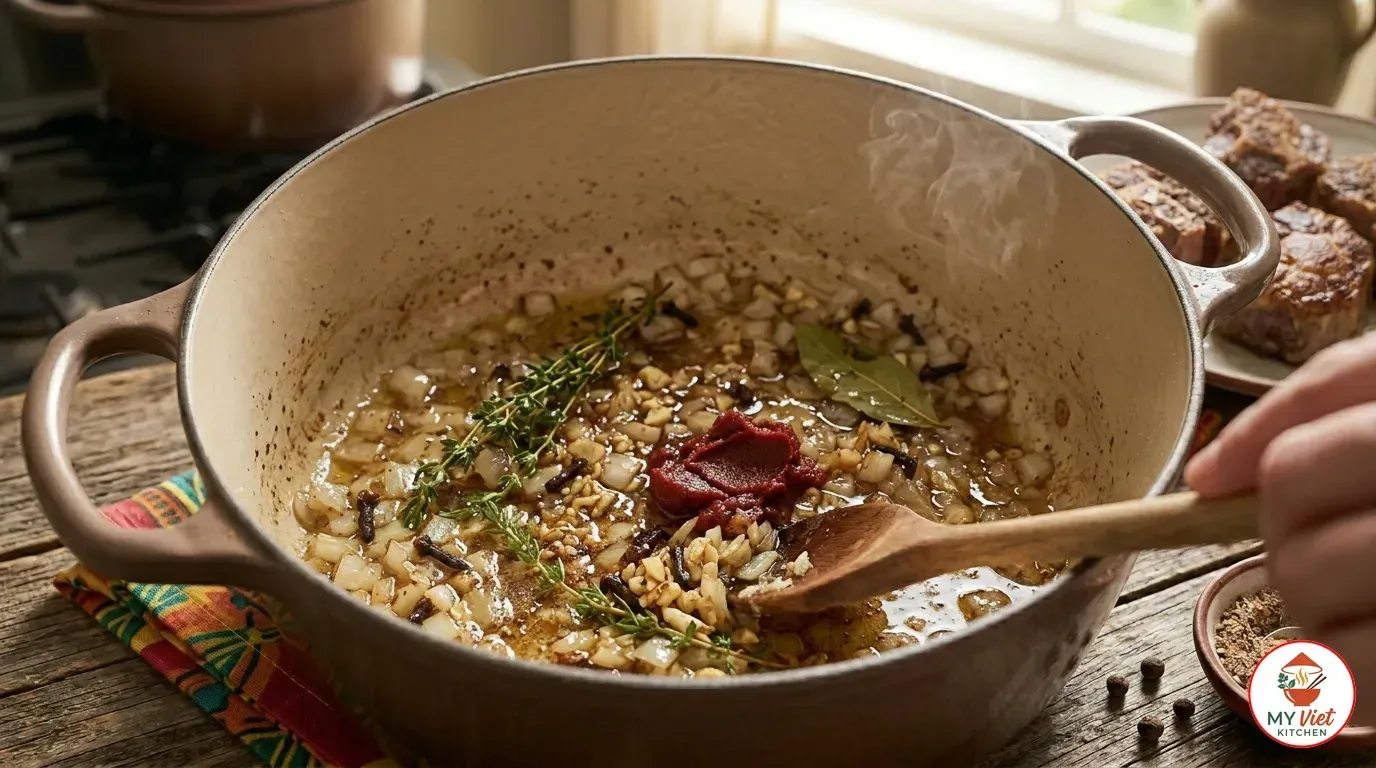
2 In the same pot, reduce heat to medium. Add the diced onion and cook for 3 to 4 minutes until soft and translucent. Then add the minced garlic, whole cloves, fresh thyme sprigs, and bay leaves. Stir for one minute until the garlic turns fragrant. Next, add the tomato paste and stir constantly for another minute. The paste will darken slightly and develop a deeper, more concentrated flavor. Do not let it burn. Ultimately, this aromatic base is the heart of the goat water.
Step 3: Simmer the Stew
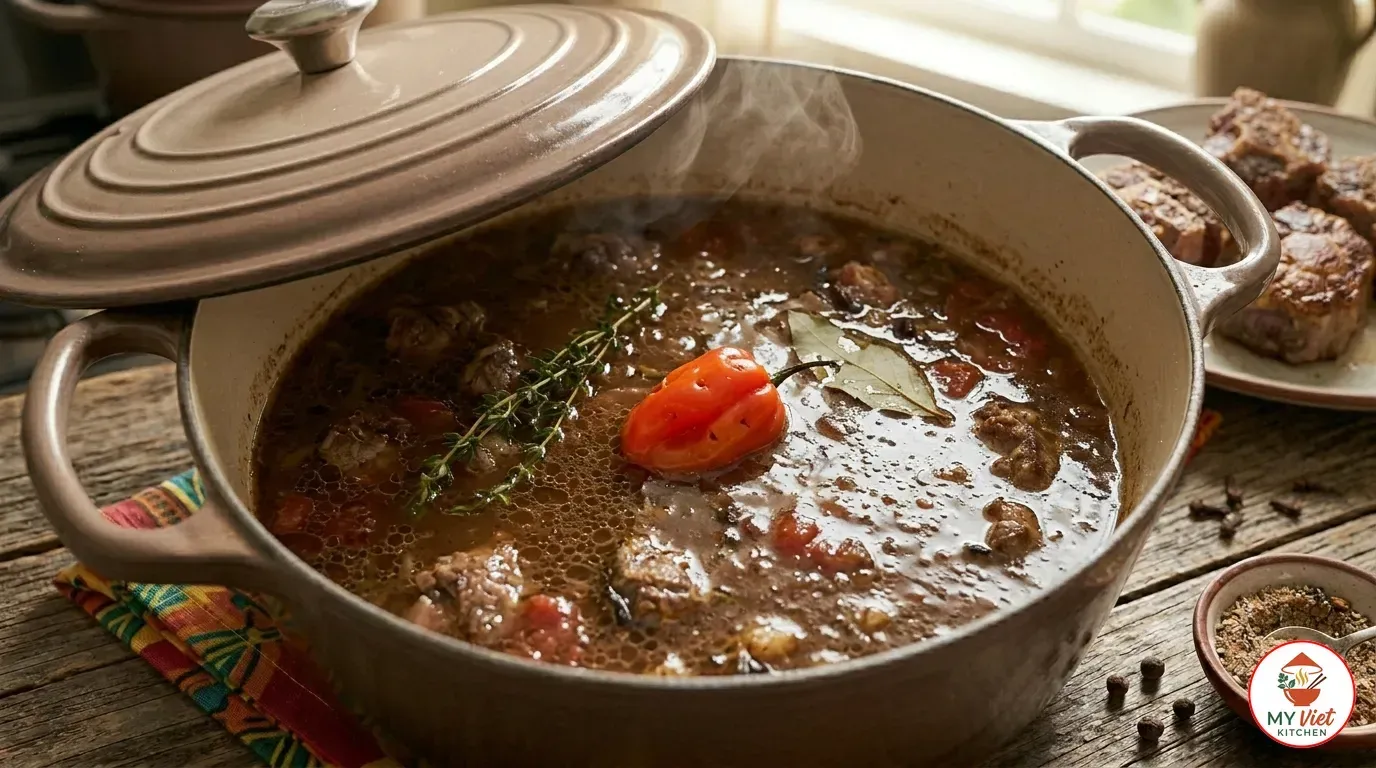
3 Return all the browned goat meat and any accumulated juices to the pot. Add the diced tomatoes, browning sauce, and 6 cups of water or stock. Drop in the whole pierced Scotch bonnet pepper. Bring everything to a boil over high heat, then immediately reduce to a low simmer. Cover the pot with a lid slightly ajar to let steam escape slowly. Simmer gently for 2 to 2.5 hours. Stir every 30 minutes and add more water if the level drops below the meat. Eventually, the goat is ready when it pulls away from the bone with almost no resistance.
Step 4: Add the Breadfruit
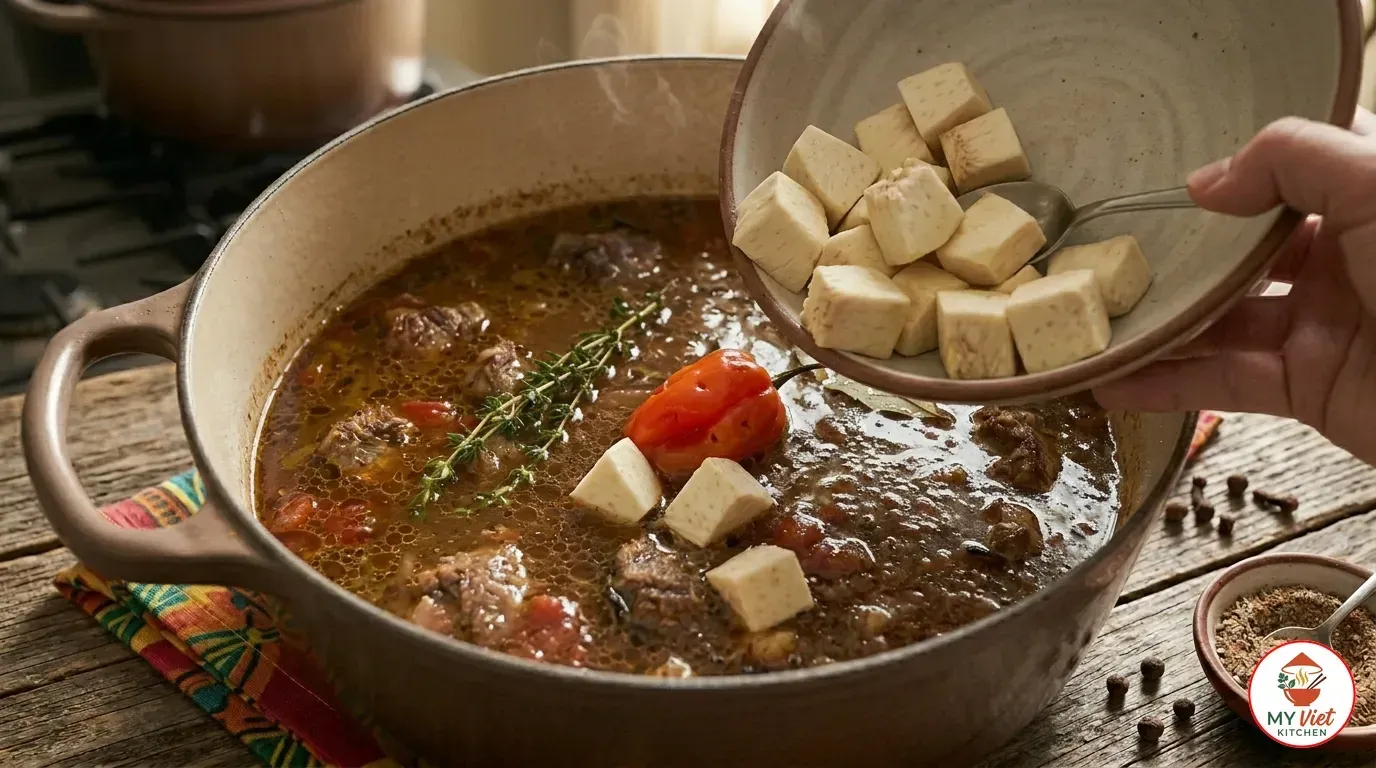
4 Once the goat reaches fork-tender perfection, add the cubed breadfruit to the pot. If you cannot find breadfruit, use waxy potatoes cut into similar-sized pieces. Continue simmering uncovered for 20 to 25 minutes. The breadfruit will soften and absorb the rich, spiced broth while adding starchy body to the stew. Stir gently so the breadfruit does not break apart completely. Alternatively, some cooks prefer to add dumplings at this stage instead of breadfruit.
Step 5: Thicken and Finish
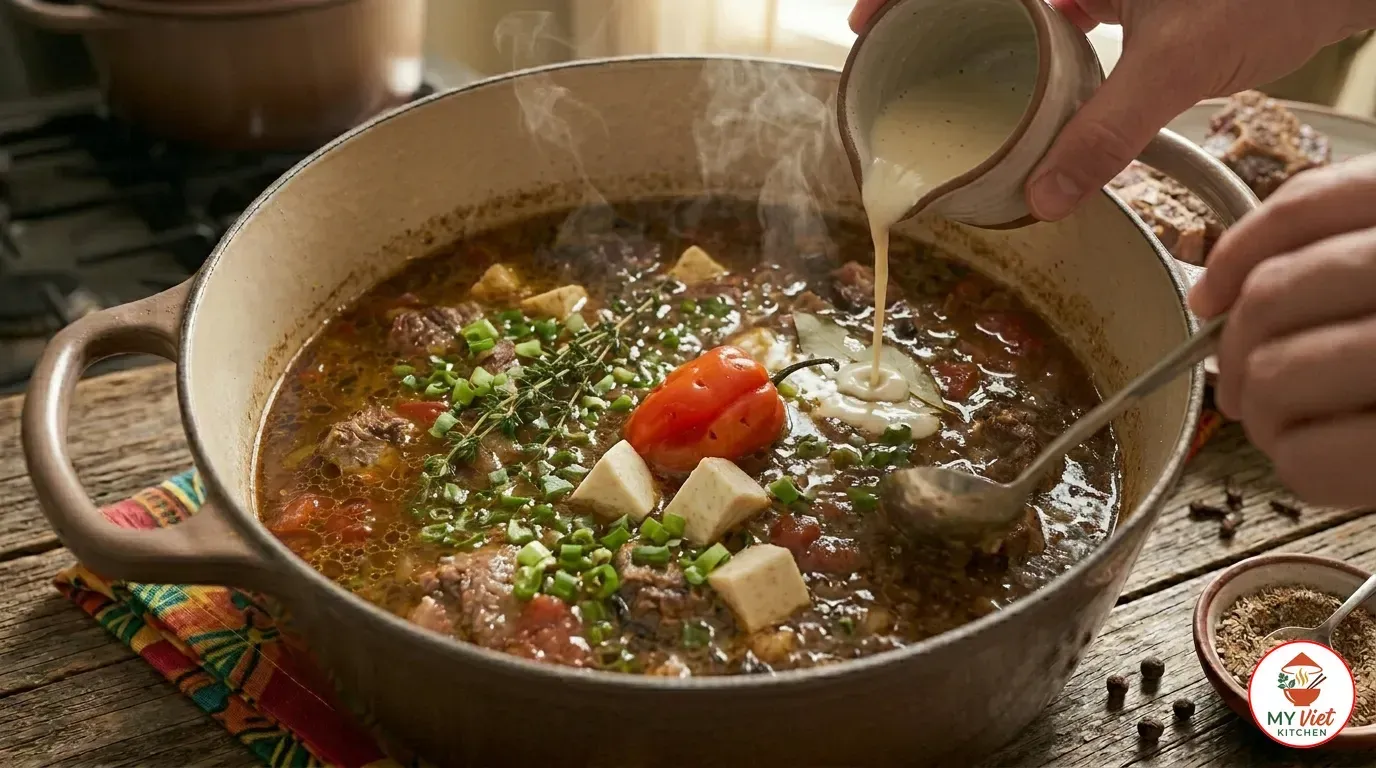
5 Stir the flour-water mixture into the pot slowly to thicken the broth. Add the chopped green onions and a tablespoon of white rum if desired. The rum adds a subtle warmth that rounds out the flavors. Then simmer for 5 more minutes, stirring occasionally. Then remove and discard the bay leaves, thyme sprigs, and whole Scotch bonnet pepper. Taste the stew and adjust salt and pepper as needed.
Step 6: Serve
6 Ladle the goat water into deep bowls, making sure each serving gets plenty of tender meat, breadfruit, and rich broth. Garnish with extra chopped green onions. Serve hot alongside crusty bread, white rice, or traditional Montserratian bread for dipping. This stew actually tastes even better the next day because the flavors continue to deepen and meld as it rests overnight in the refrigerator.
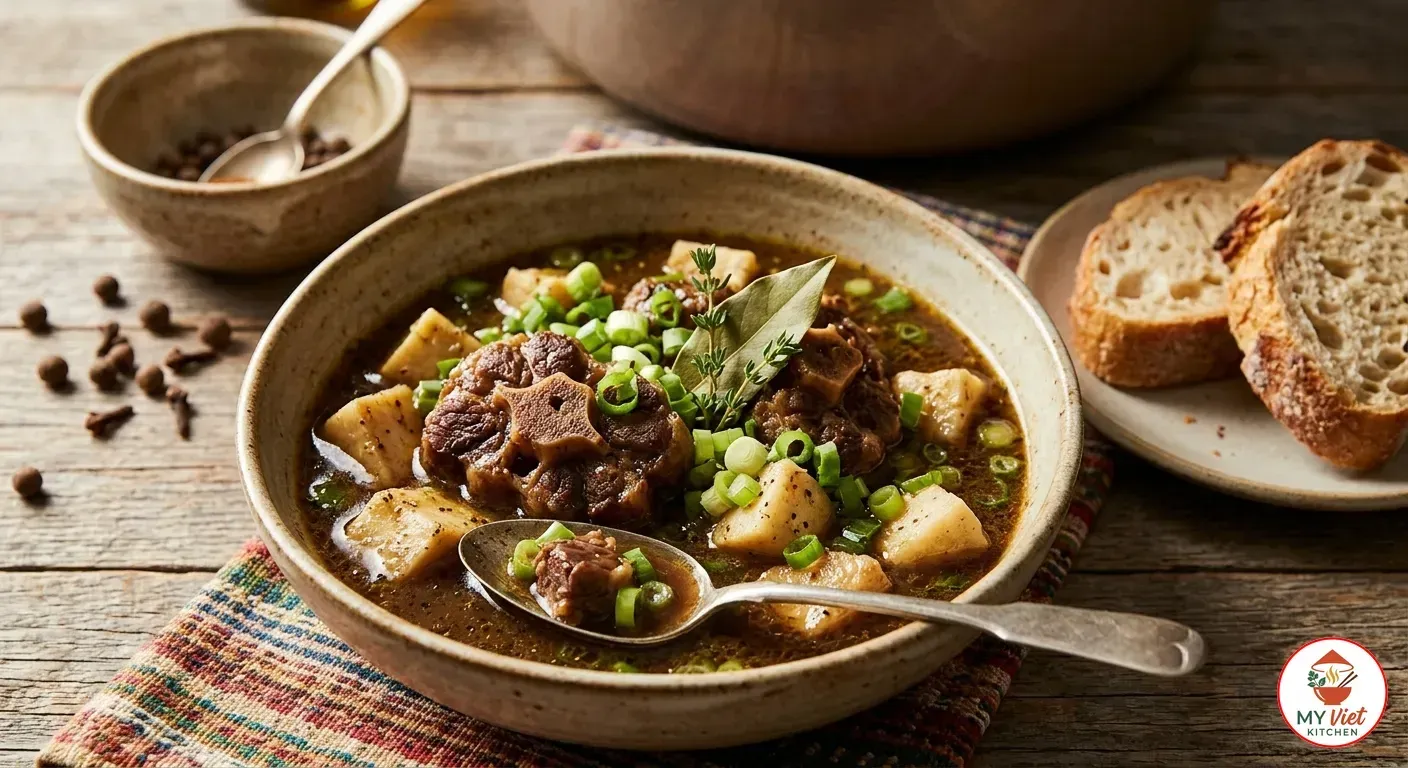
Expert Tips for Perfect Goat Water
Brown the Meat Properly
Browning is not optional. It creates complex flavors through the Maillard reaction that you cannot achieve by simply boiling the meat. Therefore, work in small batches so each piece makes direct contact with the hot pot. If you crowd the pan, the meat steams instead of searing. Pat the goat pieces dry with paper towels before adding them to the oil for the best crust.
Keep the Scotch Bonnet Whole
A whole Scotch bonnet with just a small knife puncture gives the stew gentle heat and fruity aroma without overwhelming spice. If you chop the pepper or break it open, the stew becomes intensely hot. Remove the pepper before serving. However, for a milder version, skip the piercing entirely and just let the whole pepper float in the broth.
Simmer Low and Slow
Goat meat is lean and muscular, so it needs long, gentle heat to break down the tough connective tissue. A hard boil will toughen the meat. Keep the stew at a bare simmer where bubbles lazily rise to the surface. Ultimately, patience here makes the difference between chewy, disappointing goat and meat that melts off the bone.
Goat Water vs. Other Caribbean Goat Stews
Several Caribbean islands have their own goat stew traditions. Here is how Montserratian goat water compares to its closest relatives.
| Feature | Goat Water (Montserrat) | Curry Goat (Jamaica) | Cabri (Haiti) |
|---|---|---|---|
| Primary spices | Cloves, allspice, thyme | Curry powder, allspice | Epis, cloves, lime juice |
| Heat source | Scotch bonnet (whole) | Scotch bonnet (chopped) | Piment bouc |
| Starch component | Breadfruit or dumplings | Potatoes | Usually none |
| Broth consistency | Thick and rich | Saucy, curry-based | Medium broth |
| Color | Dark brown (browning sauce) | Golden yellow (turmeric) | Medium brown |
| Cooking time | 2.5 to 3 hours | 1.5 to 2 hours | 2 to 3 hours |
Serving Suggestions
In Montserrat, goat water appears at every significant gathering. From Saturday afternoon cook-ups to festival celebrations, this stew is the centerpiece. The key is pairing it with sides that soak up the richly spiced broth.
Traditional Accompaniments:
- Crusty bread: The classic partner for goat water. Tear off pieces and dip them directly into the broth. Many Montserratians consider this the only correct way to eat goat water.
- White rice: A simple bed of steamed rice lets the stew take center stage. The rice absorbs the spiced broth beautifully.
- Fried plantains: Sweet, caramelized plantain slices create a wonderful contrast with the savory, spicy goat water.
- Ground provisions: Boiled yam, dasheen, or sweet potato served alongside the stew make for a hearty, traditional Caribbean meal.
- Rice and peas: For larger gatherings, rice and peas adds substance and rounds out the spread.
Beverage Pairings:
- Rum punch: A classic Caribbean rum punch with lime and nutmeg complements the warm spices in goat water beautifully.
- Ginger beer: The spicy, non-alcoholic kick of ginger beer echoes the warmth of the cloves and allspice in the stew.
- Sorrel drink: This tart hibiscus-based Caribbean beverage provides a refreshing contrast to the rich, heavy stew.
- Local beer: A cold Carib or Red Stripe lager cuts through the richness and cleanses the palate between bites.
- Fresh coconut water: Light and naturally sweet, coconut water is a cooling counterpoint to the spice.
Storage and Reheating
Refrigerator: Store leftover goat water in an airtight container for up to 4 days. The flavors actually improve overnight as the spices continue to meld with the meat and broth. Many cooks deliberately make extra for this reason.
Freezer: Goat water freezes exceptionally well for up to 3 months. Let it cool completely, then portion into freezer-safe containers. Leave an inch of headspace because the broth expands as it freezes. Thaw overnight in the refrigerator before reheating.
Reheating: The best method is on the stovetop over medium-low heat. Stir gently and add a splash of water if the stew has thickened too much during storage. Bring it to a gentle simmer and hold for 5 minutes to ensure everything heats through. Microwave works in a pinch at 50 percent power in 2-minute intervals.
Common Mistakes to Avoid
1. Skipping the Browning Step
Some cooks drop raw goat meat directly into boiling water. This produces a pale, one-dimensional stew that lacks depth. Always take the time to brown the meat first. The Maillard reaction creates hundreds of flavor compounds that transform the final dish. As a result, those extra 10 minutes of browning make a dramatic difference.
2. Boiling Instead of Simmering
A rolling boil toughens goat meat and makes the broth cloudy. Keep the heat low so the surface barely trembles. If you see vigorous bubbling, reduce the heat immediately. In contrast, gentle simmering extracts collagen slowly, producing tender meat and a silky broth.
3. Breaking the Scotch Bonnet
A burst Scotch bonnet pepper releases all its capsaicin into the stew, making it unbearably hot for most people. Keep the pepper whole with just a small puncture. This allows subtle heat and aroma to infuse the broth without turning it into a fire hazard. Remove the pepper before serving.
4. Not Using Enough Cloves
Cloves are the signature spice that separates goat water from other Caribbean stews. Too few cloves and the stew tastes generic. Generally, four whole cloves for a 3-pound batch provide the right balance of warmth and aroma without overpowering the goat. Do not substitute ground cloves because they dissolve and create a bitter, gritty texture.
Frequently Asked Questions
What is goat water?
Goat water is the national dish of Montserrat, a small Caribbean island in the Lesser Antilles. It is a thick, richly spiced stew made from bone-in goat meat that simmers for hours with cloves, allspice, thyme, Scotch bonnet pepper, tomatoes, and breadfruit. Despite its name, goat water is not a thin soup. It is a hearty, warming stew with deep, complex Caribbean flavors that people on the island eat at celebrations and family gatherings.
Why is it called goat water?
The name comes from the traditional cooking method where goat meat was simply boiled in water with basic seasonings. Over centuries, Montserratian cooks added spices, aromatics, and techniques that elevated the dish far beyond its humble origins. However, the original name remained. Essentially, in local dialect the word water refers to the broth or liquid base of any stew.
Can I make goat water with lamb instead of goat?
Yes, lamb is the best substitute if goat meat is unavailable. Use bone-in lamb shoulder or leg for the richest results. Lamb is milder and has more fat than goat, so the stew will taste slightly richer. Reduce the simmering time by about 20 minutes because lamb tenderizes faster. For true authenticity, though, goat is always the first choice.
What is the best cut of goat for goat water?
Bone-in shoulder is the best cut because it has the ideal ratio of meat, fat, and connective tissue. The bones release collagen during the long simmer, giving the broth its characteristic richness. Bone-in leg also works well. Avoid lean cuts like loin because they dry out over the extended cooking time. Instead, ask your butcher to cut the pieces into 2-inch chunks.
How long does goat water take to cook?
From start to finish, goat water takes about 3 to 3.5 hours. The active preparation is only about 30 minutes. After that, most of the time is hands-off simmering. The goat meat needs 2 to 2.5 hours of gentle heat to become fork-tender. You can cut the cooking time to 45 minutes by using a pressure cooker, though the flavor development is slightly less deep.
What do you serve with goat water?
Crusty bread is the most traditional partner. Montserratians tear off pieces and dip them into the rich broth. White rice, boiled ground provisions like yam and dasheen, and fried plantains also pair well. At festivals and larger gatherings, goat water often comes alongside rice and peas, coleslaw, and additional side dishes.
Variations and Adaptations
Pressure Cooker Goat Water:
Brown the meat and build the aromatic base as described, then transfer everything to a pressure cooker. Cook on high pressure for 40 to 45 minutes. Release the pressure naturally for 15 minutes, then quick-release the remaining steam. Add breadfruit after opening the lid and simmer on the stovetop for 15 minutes. This method cuts total time from 3.5 hours to about 1.5 hours.
Goat Water with Dumplings:
Instead of breadfruit, make simple Caribbean dumplings by mixing 1 cup flour with a pinch of salt and enough water to form a stiff dough. Roll into small cylinders and drop them into the simmering stew during the last 20 minutes. The dumplings cook directly in the rich broth, absorbing all those beautiful spiced flavors as they become tender and slightly chewy.
Mild Family-Friendly Version:
For a milder stew suitable for children or those who do not enjoy heat, omit the Scotch bonnet pepper entirely. Add an extra teaspoon of ground allspice and a tablespoon of ketchup for a touch of sweetness and color. The stew will still carry plenty of flavor from the cloves, thyme, and browning sauce.
Slow Cooker Goat Water:
After browning the meat and building the base on the stovetop, transfer everything to a slow cooker. Cook on low for 6 to 8 hours or on high for 4 to 5 hours. Add the breadfruit during the last hour. So this hands-off method works well for busy days when you want dinner ready and waiting.
The Cultural Significance of Goat Water
Goat water is far more than a recipe on Montserrat. It is the edible expression of the island’s identity. Montserrat, sometimes called the Emerald Isle of the Caribbean because of its Irish heritage and lush green hills, has a food culture shaped by African, Irish, and British influences. Goat water represents the blending of these traditions into something distinctly Montserratian.
The dish traces its roots to the island’s plantation era when goats roamed freely and provided an accessible source of protein for both enslaved Africans and Irish indentured servants. Over generations, cooks refined the simple boiled goat into a richly spiced stew that became the standard at weddings, funerals, holidays, and Saturday gatherings. In particular, no St. Patrick’s Day celebration on Montserrat is complete without a massive communal pot of goat water. Montserrat is one of the few places outside Ireland that observes St. Patrick’s Day as a public holiday.
After the Soufriere Hills volcanic eruptions in 1995 that destroyed the capital and displaced most of the people, goat water became a symbol of strength. Montserratians who moved to the Caribbean, the UK, and North America took the recipe with them. As a result, cooking goat water in a new kitchen became an act of love and memory. Today, the Montserratian diaspora keeps this tradition alive wherever they settle, and the dish remains the single most recognizable symbol of the island’s culinary heritage.
Conclusion
This goat water recipe captures the authentic flavors of Montserrat with clear, achievable steps for home cooks anywhere. Remember three essentials: brown the meat properly for deep flavor, simmer low and slow until the goat is fork-tender, and let the cloves and allspice do their aromatic work. The result is a thick, warming stew that fills your kitchen with the scent of the Caribbean and delivers comfort in every spoonful. Whether you have Montserratian roots or are simply discovering this island treasure for the first time, goat water rewards your patience with extraordinary flavor.
Explore more Caribbean and global stew recipes on our site. Try our Jamaican curry goat, Caribbean oxtail stew, or browse the full Caribbean dishes collection for more island-inspired cooking.