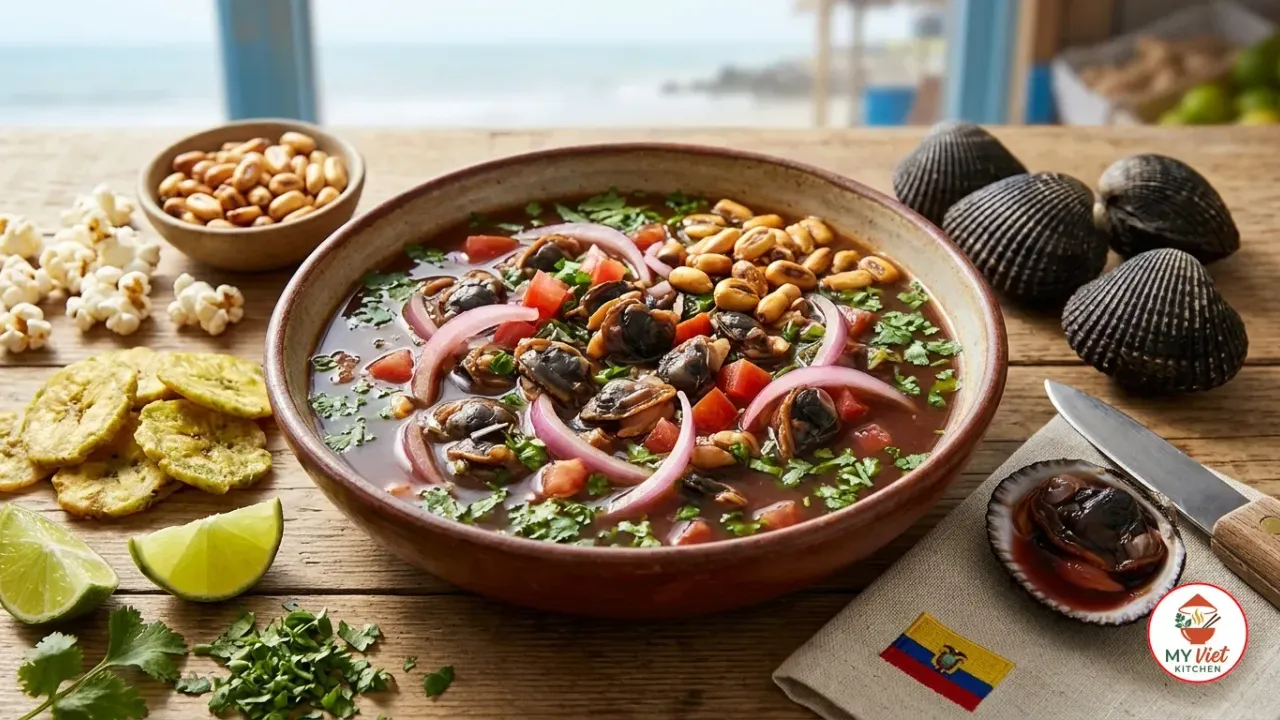
Ceviche de conchas negras is Ecuador’s most treasured seafood dish, a bold and briny ceviche built around the country’s prized black clams. These dark-shelled mollusks release a striking crimson juice when shucked, and that liquid becomes the backbone of a curing broth laced with bitter orange, red onion, and fresh cilantro. If you have ever traveled to the coastal provinces of Esmeraldas or Guayas, you have seen locals devouring bowls of this ceviche at market stalls before noon. This recipe brings that unmistakable Ecuadorian flavor to your kitchen in just 30 minutes.
Prep Time: 30 minutes | Cook Time: 0 minutes (no cooking required) | Servings: 4
Difficulty: Medium | Calories: ~180 per serving
What Makes Ceviche de Conchas Negras Special?
Ceviche de conchas negras stands apart from every other ceviche in Latin America because of its star ingredient. Black clams, known as conchas negras, thrive in the warm mangrove waters along the Pacific coast of Ecuador and Colombia. Their shells are dark and heavily ridged. The meat inside is tender with a deep, mineral-rich brininess. When you shuck them, they release a dark red liquid that stains the curing broth and gives the finished dish its signature color.
The flavor is unlike anything a white fish or shrimp ceviche can offer. Black clams carry an intense ocean taste, almost like a rich oyster liquor. That brine pairs well with the sour punch of bitter orange and the sharp bite of raw red onion. Textures also set this dish apart. Each clam is slightly chewy with a soft center. The cured onions add a silky crunch. Then a handful of tostado goes into the bowl at the last second, adding a nutty contrast that soaks up the citrus broth.
Ceviche traditions stretch across Latin America, but Ecuador claims its own distinct style. Ecuadorian ceviches tend to be soupier and more generous with the curing liquid. In many coastal towns, the ceviche arrives in a deep bowl swimming in tangy broth, meant to be sipped like a savory soup between bites. Furthermore, bitter orange juice rather than straight lime provides the acid in traditional Ecuadorian recipes. This citrus gives the broth a more complex, layered tartness that lime alone cannot achieve.

Choosing the Right Black Clams
The quality of your clams determines the success of this dish. Because ceviche de conchas negras uses raw shellfish, freshness is not negotiable. In particular, here are your best options for sourcing these clams.
- Fresh conchas negras from Latin markets (best choice): Look for tightly closed shells that feel heavy for their size. They should smell like clean ocean water, never sulfurous or sour. Fresh conchas negras offer the best texture and that essential dark juice that colors the ceviche.
- Frozen conchas negras: Some specialty seafood vendors ship frozen black clams. Thaw them slowly in the refrigerator overnight. Frozen clams lose some of their juice during thawing, so save every drop of liquid from the package to add back into the ceviche.
- Blood cockles (Asian markets): If conchas negras are unavailable, blood cockles from Southeast Asian fishmongers are the closest substitute. They share the same dark juice and chewy texture. The flavor is slightly milder, so increase the salt and citrus to compensate.
- Small littleneck clams (last resort): These will not replicate the dark color or intense minerality of true conchas negras, but they work in a pinch. Shuck them raw and add a splash of soy sauce for depth. The result will taste more like a generic clam ceviche than the Ecuadorian original.
Ingredients for Ceviche de Conchas Negras
Main Ingredients:
- 2 pounds fresh black clams (conchas negras), scrubbed clean
- 1 large red onion, thinly sliced into half-moons
- 2 ripe tomatoes, seeded and diced
- 1/2 cup fresh cilantro, finely chopped
- 1 fresh hot pepper (aji criollo or serrano), seeded and minced
For the Citrus Cure:
- 1 cup fresh bitter orange juice (naranja agria)
- 1 tablespoon ketchup or tomato paste
- 1 teaspoon salt
- 1/2 teaspoon ground black pepper
- 1/2 teaspoon ground cumin
For Serving:
- Tostado (toasted corn kernels)
- Chifles (fried green plantain chips)
- Popcorn (optional, traditional in Ecuador)
- Extra lime wedges
Pro tip: If you cannot find bitter orange juice, mix equal parts fresh lime juice and fresh orange juice. This blend replicates the sour-sweet-bitter balance of naranja agria. However, do not use bottled orange juice from concentrate, as its processed sweetness will throw off the entire flavor of the ceviche.
Step-by-Step Instructions
Step 1: Prepare and Cure the Red Onion
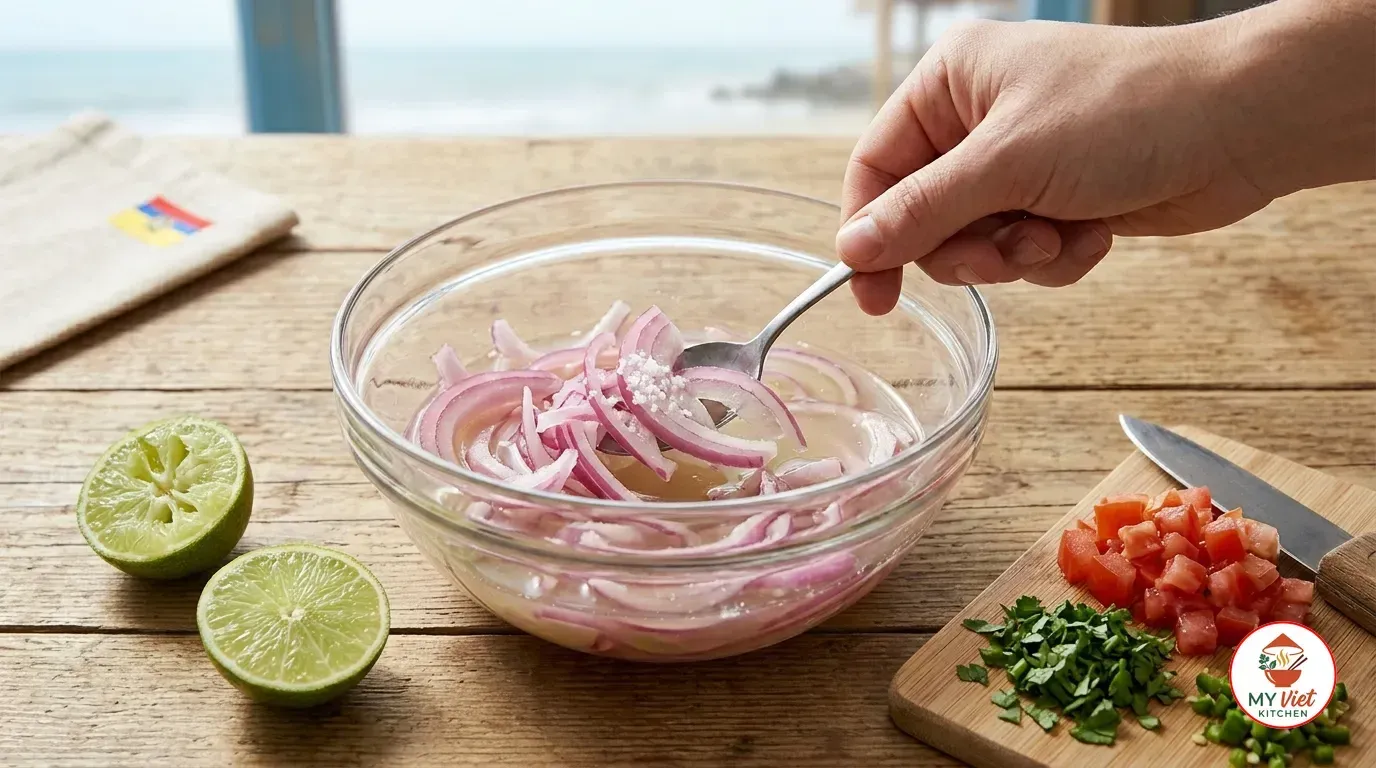
1 Slice the red onion into thin half-moons and place them in a bowl. Cover with a generous amount of fresh lime juice and a pinch of salt. Toss well and let the onion cure for at least 15 minutes. This step is critical because raw red onion can overpower the delicate clam flavor. The acid in the lime tames the harsh sulfur compounds, softens the onion’s bite, and turns the slices a beautiful translucent pink.
While the onion cures, prepare the rest of your ingredients. Dice the tomatoes, mince the hot pepper, and chop the cilantro. Having everything ready ensures the final assembly goes quickly, which matters because you want the clams to spend minimal time outside refrigeration.
Step 2: Shuck and Clean the Black Clams
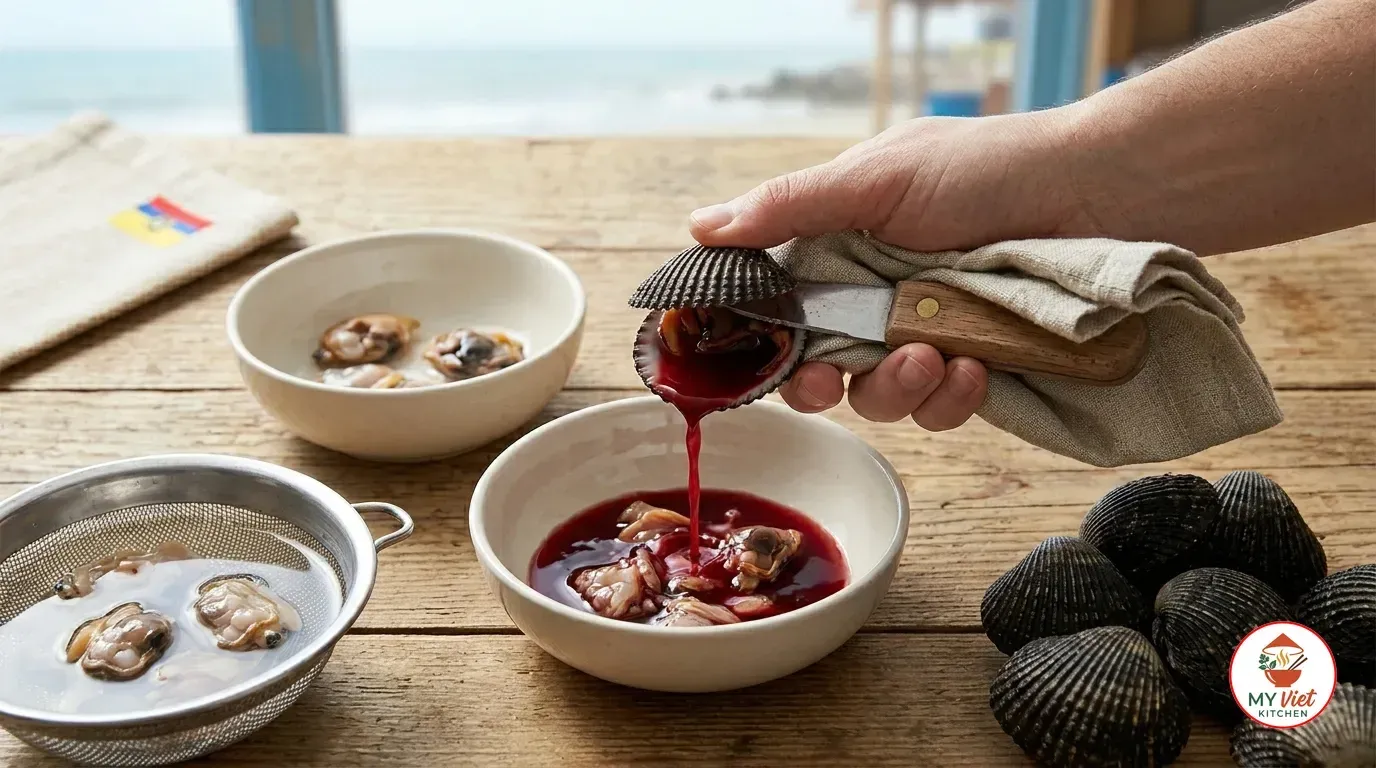
2 Hold each black clam firmly with a folded kitchen towel. Insert a sturdy shucking knife along the seam where the two shells meet, then twist to pop them open. Scrape the clam meat into a clean bowl. Most importantly, pour every drop of the dark red juice into the bowl as well. This juice gives the finished ceviche its dark color and deep, oceanic flavor.
Check each clam as you shuck it. Similarly, toss out any that smell bad or had open shells before you started. Fresh conchas negras should smell like clean seawater. After shucking all the clams, rinse the meat gently under cold water to remove grit or shell bits. Then return the meat to its dark juice.
Step 3: Mix the Citrus Cure
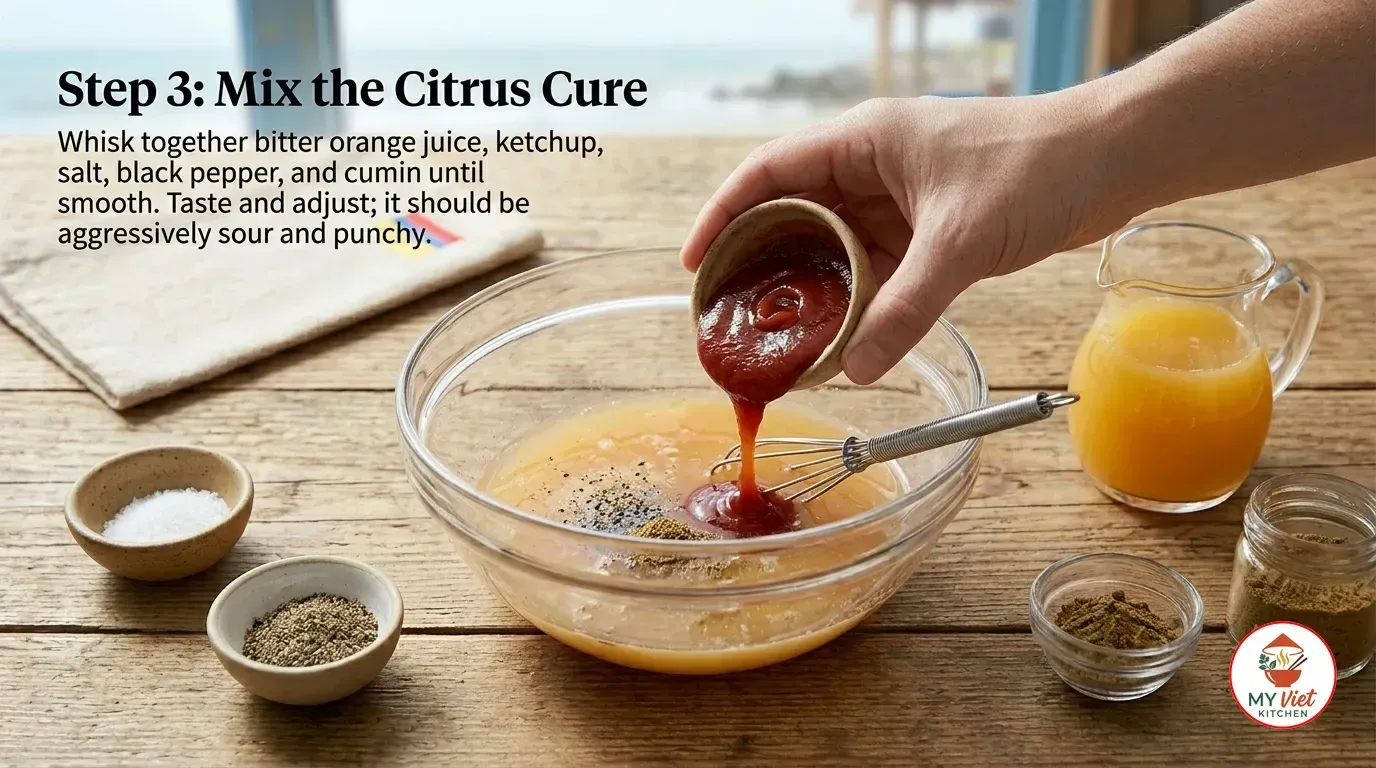
3 In a separate bowl, combine the bitter orange juice with the ketchup, salt, black pepper, and ground cumin. Whisk until the ketchup melts in fully and the mix turns a pink-orange color. This liquid is your leche de tigre, the tangy curing broth at the heart of all Ecuadorian ceviche.
Taste the cure before adding it to the clams. It should taste aggressively sour with a hint of sweetness and warmth from the cumin. Remember that the clam juice will dilute and enrich the broth, so the cure needs to be punchy on its own. Adjust the salt now rather than later, since adding salt after the clams are mixed in can lead to uneven seasoning.
Step 4: Combine All Ingredients
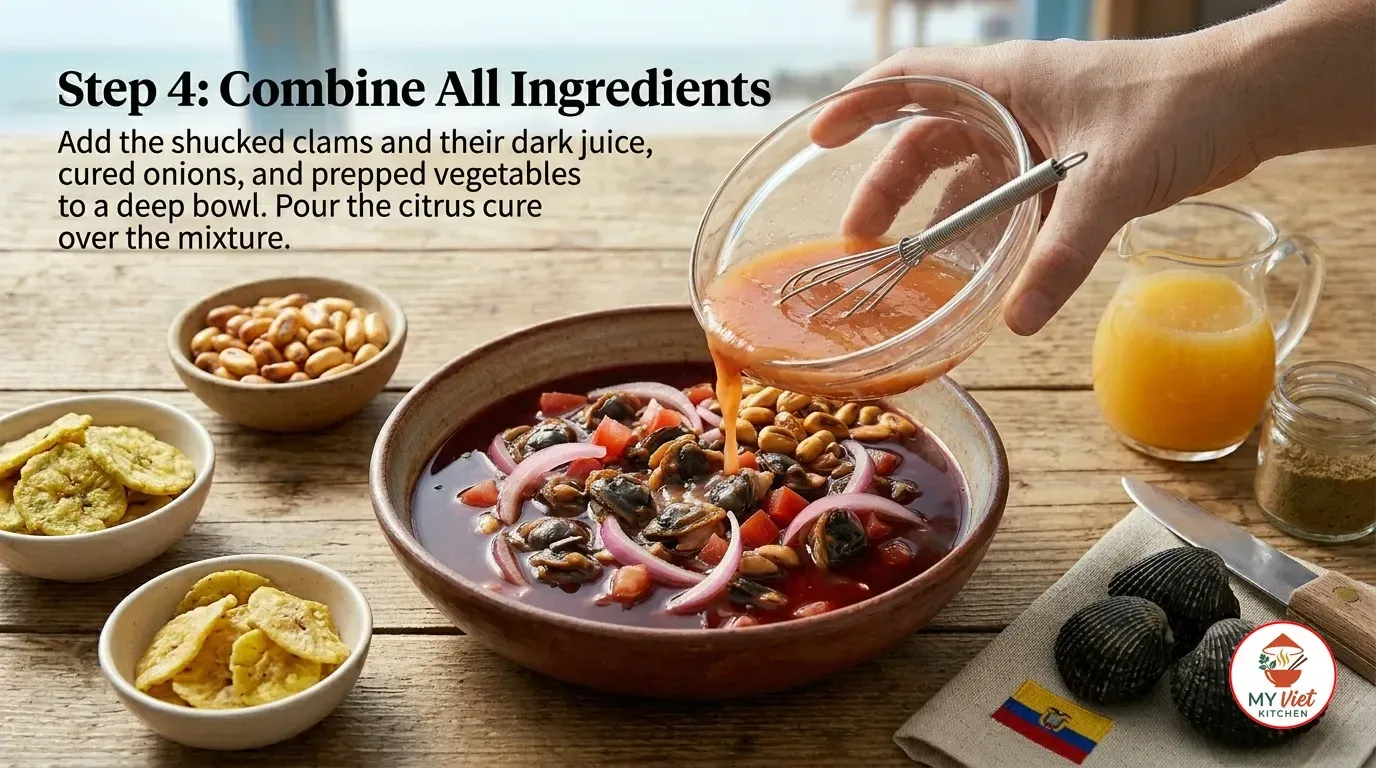
4 Drain the cured red onions and add them to the bowl with the shucked clams and their juice. Add the diced tomatoes, minced hot pepper, and chopped cilantro. Pour the citrus cure over everything and toss gently with a spoon. Be careful not to crush the clam meat. Each piece should stay intact and get evenly coated in the bright, tangy broth.
At this point, the ceviche will look striking. Indeed, the dark clam juice mixing with the orange citrus cure creates a deep reddish-brown broth with green cilantro, white onion, and red tomato. This dramatic color is exactly what you want. It signals an authentic ceviche de conchas negras and sets it apart visually from lighter fish or shrimp ceviches.
Step 5: Rest, Adjust, and Serve
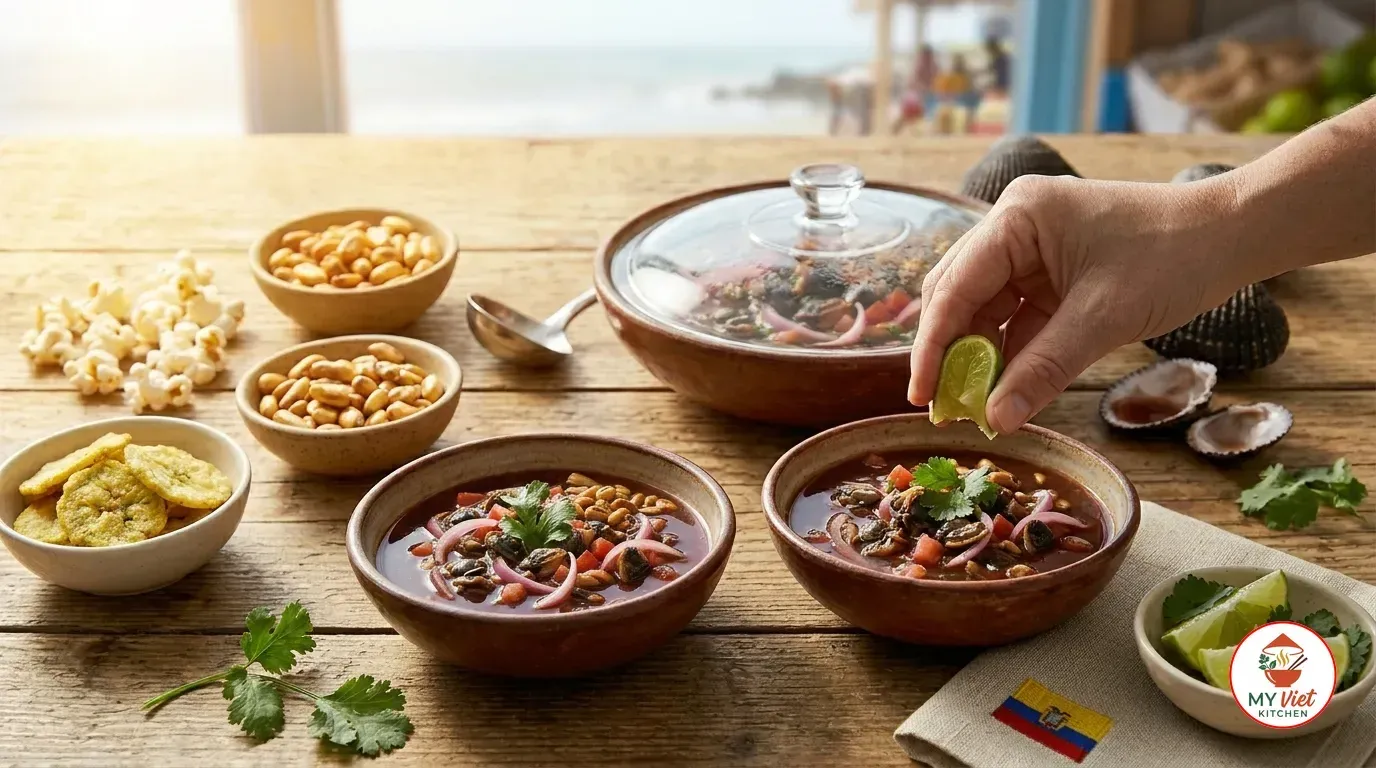
5 Cover the bowl and place it in the refrigerator for 10 to 15 minutes. This short rest allows the citrus to gently cure the clam surfaces and lets all the flavors marry together. Do not leave the clams in the acid for more than 30 minutes total, or the texture will turn rubbery and tough.
Pull the ceviche from the fridge and taste it one final time. Add more salt, lime juice, or hot pepper as needed. Ladle the ceviche into deep bowls, making sure each serving gets plenty of the dark, flavorful broth. Pile tostado, chifles, and popcorn on the side. In Ecuador, diners drop these crunchy sides directly into the broth, where they soften slightly and soak up the citrus juices.
Expert Tips for Perfect Results
Save Every Drop of Clam Juice
The dark liquid that seeps from the shucked conchas negras is not waste. It is liquid gold. This juice concentrates all the mineral, briny flavor of the ocean and stains the ceviche broth its iconic dark color. Shuck your clams over a bowl to catch every drop. If some juice spills onto your cutting board, scrape it into the bowl. Losing this liquid means losing half the character of the dish.
Do Not Over-Cure the Clams
Unlike fish ceviche, which can sit in citrus for an extended time, black clams become tough and chewy if they cure too long. Keep the total contact time with acid under 30 minutes. The clams should feel tender and slightly firm when you bite into them, never rubbery. Assemble the ceviche quickly and serve it promptly for the best texture.
Use Bitter Orange for Authenticity
Bitter orange, known as naranja agria, is the traditional citrus in Ecuadorian ceviche. It delivers a sour, slightly bitter, and faintly floral flavor that straight lime juice cannot match. Look for it in Latin grocery stores, where it is often sold as bottled juice. If you find fresh bitter oranges, juice them yourself for the best results. The difference in flavor is immediately noticeable.
Ecuadorian Ceviche vs. Peruvian Ceviche
Ecuador and Peru both claim ceviche as a national treasure, but their approaches differ significantly. Here is a side-by-side comparison of the two styles.
| Feature | Ecuadorian Ceviche | Peruvian Ceviche |
|---|---|---|
| Primary acid | Bitter orange juice (naranja agria) | Fresh lime juice |
| Presentation | Soupy, served in a deep bowl with broth | Drier, served on a flat plate with minimal liquid |
| Curing time | Brief cure or pre-cooked seafood | Short cure of 3 to 10 minutes for raw fish |
| Signature additions | Ketchup, mustard, cumin | Aji amarillo, celery, sweet potato |
| Common sides | Tostado, chifles, popcorn | Sweet potato (camote), corn (choclo) |
| Leche de tigre | Mixed into the broth | Served on the side or as a shot |
Serving Suggestions
In Ecuador, ceviche de conchas negras arrives at the table as a complete experience. The bowl is deep, the broth is abundant, and the sides are mandatory. Eating this ceviche without its traditional accompaniments would be like eating sushi without soy sauce.
Traditional Accompaniments:
- Tostado (toasted corn): These large, crunchy corn kernels are the classic side for Ecuadorian ceviche. Drop a handful directly into your bowl and let them soak up the citrus broth for a few seconds before eating. The nutty crunch against the soft clams creates an addictive contrast.
- Chifles (plantain chips): Thin slices of green plantain fried until golden and salted lightly. They add a starchy, slightly sweet crunch that balances the acid of the ceviche. Scoop up the clams and broth with a chifle like a chip.
- Popcorn: This may surprise outsiders, but popcorn is a beloved ceviche accompaniment in coastal Ecuador. Toss a handful into the broth right before eating. The kernels absorb the tangy liquid and turn into savory, citrus-flavored bites within seconds.
- Arroz blanco (white rice): In some coastal towns, a small mound of plain white rice appears alongside the ceviche. Alternate spoonfuls of rice with bites of briny clam to temper the acid and stretch the meal.
Beverage Pairings:
- Pilsener (Ecuadorian lager): A cold, crisp Ecuadorian Pilsener is the default pairing on the coast. The light malt and gentle bitterness complement the briny, acidic ceviche without competing for attention.
- Canelazo: For a non-traditional but delightful pairing, try this warm Ecuadorian drink made from cinnamon, sugar cane liquor, and naranjilla juice. The sweetness offsets the sour ceviche beautifully.
- Fresh coconut water: A clean, tropical choice that cools the palate between bites of spicy ceviche. Especially refreshing when the aji criollo brings heat.
- Sauvignon Blanc: A chilled New Zealand or Chilean Sauvignon Blanc with high acidity and herbaceous notes mirrors the citrus and cilantro in the ceviche.
Storage and Freshness
Refrigerator: Ceviche de conchas negras is best eaten the moment it is prepared. If you must store it, keep it in a sealed container in the coldest part of your refrigerator for up to 12 hours. The clams will continue to cure in the acid, so the texture will change noticeably. Add a fresh squeeze of lime before eating leftovers.
Freezer: Do not freeze ceviche de conchas negras. Freezing destroys the delicate texture of the raw clam meat, turning it mushy and waterlogged upon thawing. The fresh vegetables and cilantro also break down completely. This is a dish meant to be enjoyed immediately.
Reheating: Ceviche de conchas negras is never heated. It is a raw, cold dish by definition. If the ceviche has been sitting in the fridge, simply stir it, taste for seasoning, add fresh cilantro, and serve it as is. Never apply heat to raw ceviche.
Common Mistakes to Avoid
1. Discarding the Dark Clam Juice
Many first-time cooks see the dark red liquid from the shucked clams and assume it is waste. This is the biggest mistake you can make. That juice carries the deep, oceanic flavor and the dark color that define the dish. Without it, your ceviche de conchas negras will look and taste like an ordinary clam ceviche. Always shuck over a bowl and keep every drop.
2. Letting the Clams Sit Too Long in Citrus
Over-curing is the second most common error. Citric acid continues to denature proteins the longer it stays in contact with the shellfish. After about 30 minutes, the clams turn from pleasantly firm to unpleasantly rubbery. For that reason, add the citrus cure last and serve within 15 minutes of combining everything.
3. Using Stale or Low-Quality Shellfish
Since ceviche involves raw shellfish, freshness is paramount. Clams that smell fishy, feel slimy, or have cracked shells should go straight into the trash. Bad shellfish will ruin both the flavor and the safety of the dish. Buy from a reputable fishmonger, ask when the clams arrived, and prepare them on the same day you purchase them.
4. Skipping the Onion Cure
Raw red onion straight from the knife is sharp and aggressive. That harshness can overwhelm the briny sweetness of the clams. Curing the onion slices in lime juice for 15 minutes mellows the bite and adds a soft, pickled tang. This simple step transforms the onion from a liability into an asset.
Frequently Asked Questions
What are conchas negras?
Conchas negras are a species of ark shell, also known as blood clams or black clams, found in the mangrove estuaries along the Pacific coast of Ecuador, Colombia, and Central America. They have dark, ridged shells and release a distinctive crimson juice when opened. In Ecuador, they are highly prized and most commonly served raw in ceviche.
Is ceviche de conchas negras safe to eat raw?
Yes, this ceviche is safe to eat when you use fresh, high-quality clams from a trusted source. The citrus acid partially denatures the proteins in the clam meat, similar to what heat does during cooking. To minimize risk, buy clams that smell clean and briny, keep everything refrigerated during preparation, and consume the ceviche within a few hours of making it.
What can I substitute for bitter orange juice?
Mix equal parts fresh lime juice and fresh orange juice to approximate the flavor of naranja agria. Some cooks also add a small splash of grapefruit juice for extra bitterness. Avoid bottled juices or concentrates. Overall, the substitute works well, though true bitter orange delivers a floral tartness that the blend only gets close to.
Where can I buy conchas negras outside of Ecuador?
Look for them at Latin American seafood markets, especially those that cater to Ecuadorian or Colombian communities. Some online specialty seafood vendors ship frozen black clams. If you cannot find them at all, blood cockles from Asian seafood markets offer the closest substitute in terms of dark juice and chewy texture.
Why is ketchup added to ceviche de conchas negras?
Ketchup is a traditional ingredient in many Ecuadorian ceviche recipes. It adds mild sweetness, subtle tanginess, and a rosy tint to the broth. However, the amount is small and does not make the ceviche taste like ketchup. Instead, it bridges the gap between the sharp citrus and the briny clam flavor. You can substitute tomato paste for a less sweet option.
How is Ecuadorian ceviche different from Peruvian ceviche?
Ecuadorian ceviche features a soupy, broth-heavy presentation with bitter orange juice as the primary acid, and it often includes ketchup and mustard. Peruvian ceviche uses straight lime juice, is served nearly dry on a flat plate, and relies on aji amarillo peppers and sweet potato as defining elements. Both are outstanding, but they represent fundamentally different approaches to the same concept.
Variations and Adaptations
Ceviche Mixto with Conchas Negras:
Combine the black clams with cooked shrimp and raw white fish for a mixed ceviche that delivers multiple textures in every bite. Poach the shrimp briefly in salted water, dice the fish into small cubes, and add both to the standard conchas negras preparation. This variation is popular in restaurants along the Ecuadorian coast.
Spicy Conchas Negras:
Double the amount of aji criollo or add a habanero for serious heat. Include a tablespoon of Ecuadorian aji sauce, which blends hot peppers with onion and cilantro. The spice cuts through the rich brininess of the clams and adds an electrifying kick to each spoonful of broth.
Conchas Negras al Ajillo:
For a cooked alternative, saute the shucked clams briefly in olive oil with garlic, white wine, and a pinch of red pepper flakes. Finish with a squeeze of lime and chopped parsley. This Spanish-influenced preparation highlights the clams’ meaty texture and works beautifully as a tapa or appetizer with crusty bread.
Mango and Conchas Negras Ceviche:
Add diced ripe mango to the standard recipe for a tropical twist. The mango’s sweetness balances the aggressive citrus and brine, and its soft texture contrasts with the chewy clams. Garnish with toasted coconut flakes for an extra layer of flavor. This modern version appears on menus at upscale Ecuadorian restaurants.
The Cultural Significance of Conchas Negras
Ceviche de conchas negras is deeply tied to the identity of coastal Ecuador. In the mangrove towns of Esmeraldas, San Lorenzo, and Muisne, harvesting these clams is a way of life. Families wade into warm waters at low tide. They reach into the muddy roots of mangrove trees to pull out the dark clams by hand. This practice, known as concheo, has passed down through many generations. Women called concheras do most of this hard work. They carry the knowledge of where, when, and how to harvest in a way that keeps the clam beds healthy for the future.
Beyond the coast, ceviche de conchas negras holds a special place at Ecuadorian celebrations. It shows up at family dinners, New Year feasts, and seaside festivals. In Guayaquil, ordering a bowl from a street vendor is a weekend ritual. The dish carries the taste of the Pacific, the warmth of mangrove towns, and a food tradition older than Spanish rule. For many Ecuadorians, it is not just food. It is a link to home, to the coast, and to the rhythms of the tide.
In recent decades, overharvesting and mangrove loss have put clam numbers at risk. As a result, Ecuadorian fishing towns have set up seasonal harvest bans and mangrove protection zones. Eating conchas negras today means thinking about where your food comes from. If you buy from vendors who source from regulated areas, you help make sure future generations can still enjoy this remarkable dish.
Conclusion
Ceviche de conchas negras delivers a seafood experience unlike anything else in the ceviche world. The dark, briny clams, the sour punch of bitter orange, the crunch of tostado soaking in tangy broth: every element works together to create something extraordinary. The keys to success are simple. Start with the freshest clams you can find, save every drop of their dark juice, cure the onions properly, and never let the clams sit in acid for too long. Follow these steps and you will produce a bowl of ceviche that tastes like the coast of Ecuador.
Ready to explore more Latin American seafood? Browse our Latin American dishes collection for recipes like classic Peruvian ceviche, aguachile, and tiradito. Each recipe showcases the brilliant ways Latin American cooks transform raw seafood into unforgettable dishes.