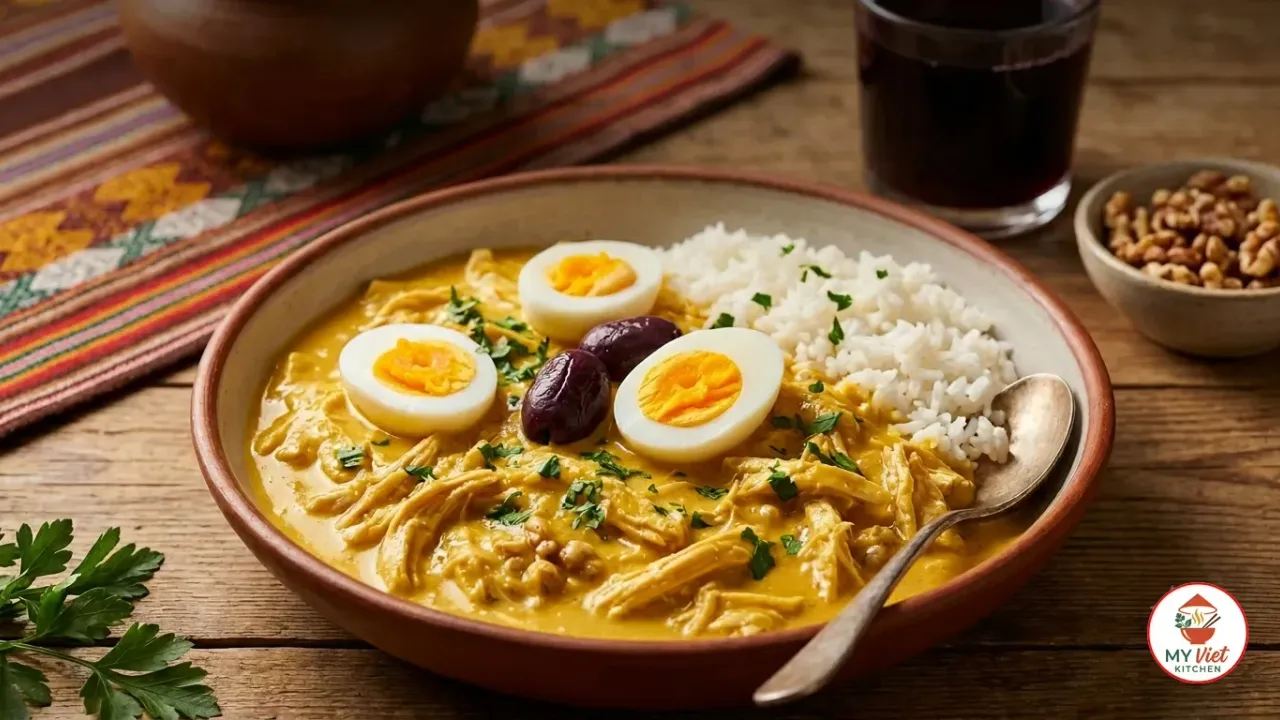
Aji de gallina is one of Peru’s most beloved comfort foods, and this aji de gallina recipe brings its golden, velvety richness to your kitchen. This Peruvian creamy chicken stew wraps tender shredded chicken in a rich sauce made from aji amarillo peppers, walnuts, bread, and Parmesan. Serve it over fluffy white rice with hard-boiled eggs and briny Botija olives on top. Few dishes match its depth of flavor. Follow this recipe step by step for a pot of creamy, spicy chicken that captures the soul of Peru.
Prep Time: 30 minutes | Cook Time: 45 minutes | Servings: 6
Difficulty: Medium | Calories: ~420 per serving
What Makes Aji de Gallina Special?
So what sets aji de gallina apart from other chicken stews? It all comes down to the sauce. Instead of a simple roux or cream base, this dish uses soaked bread blended with walnuts and milk into a smooth paste. That paste then meets aji amarillo, a bright yellow pepper that brings fruity heat and a bold golden color. The end result is a sauce that clings to each strand of chicken. It tastes rich, nutty, and warm.
Above all, what truly elevates this dish is the Parmesan cheese stirred in at the end. It adds an umami backbone that ties every element together. In fact, the mix of bread, nuts, cheese, and chili in one sauce reflects the fusion of Spanish, Native, and Moorish food traditions that defines Peru’s kitchen. In fact, food historians trace the dish to a medieval Spanish recipe called manjar blanco. It changed a great deal once it reached the Andes and met local chili peppers.
Today, aji de gallina appears on nearly every menu in Lima, from street-side carts to upscale restaurants. For instance, it is the dish grandmothers make on Sundays. It is the meal that students crave when they move away from home. And it is the plate that visitors love on their first trip to Peru. Making it at home is surprisingly straightforward, and this aji de gallina recipe walks you through each step with the detail you need to get it right.

Choosing the Right Aji Amarillo
Simply put, aji amarillo is the key ingredient in this recipe. Without it, the dish loses its identity. This yellow pepper gives the dish its color, gentle heat, and fruity taste. Here are your best options for sourcing it.
- Aji amarillo paste (best choice): This is the most convenient and consistent option. Sold in jars, it has already been cooked and pureed. Brands like Inca’s Food and Dona Isabel offer reliable quality. Three tablespoons give you the perfect balance of heat and color for this recipe.
- Frozen aji amarillo peppers: Available at Latin American grocery stores. Thaw them, remove the seeds and veins, then blend with a tablespoon of water. You will need about 5 to 6 peppers to equal 3 tablespoons of paste. The flavor is slightly brighter than the jarred version.
- Dried aji amarillo peppers: Soak them in hot water for 20 minutes, remove seeds, and blend into a paste. Dried peppers have a more concentrated, smoky quality. Use sparingly and taste as you go.
Ingredients for Aji de Gallina
For Poaching the Chicken:
- 2 pounds bone-in, skin-on chicken breasts
- 1 medium white onion, quartered
- 2 bay leaves
- 6 black peppercorns
- Water to cover
For the Creamy Sauce:
- 4 slices white bread, crusts removed
- 1 cup evaporated milk
- 1/2 cup walnut pieces
- 1 large white onion, finely diced
- 4 cloves garlic, minced
- 3 tablespoons aji amarillo paste
- 1 teaspoon ground cumin
- 1/2 teaspoon ground turmeric
- 1/2 cup grated Parmesan cheese
- 2 tablespoons vegetable oil
- 4 cups reserved chicken broth
- Salt and black pepper to taste
For Serving:
- 6 cups cooked white rice
- 4 hard-boiled eggs, halved
- 1/2 cup Botija olives
- Fresh parsley for garnish
Pro tip: Toast the walnuts in a dry skillet for 3 to 4 minutes before blending. Toasting releases their natural oils and deepens the nutty flavor of the sauce, which makes a noticeable difference in the finished aji de gallina.
Step-by-Step Instructions
Step 1: Poach the Chicken
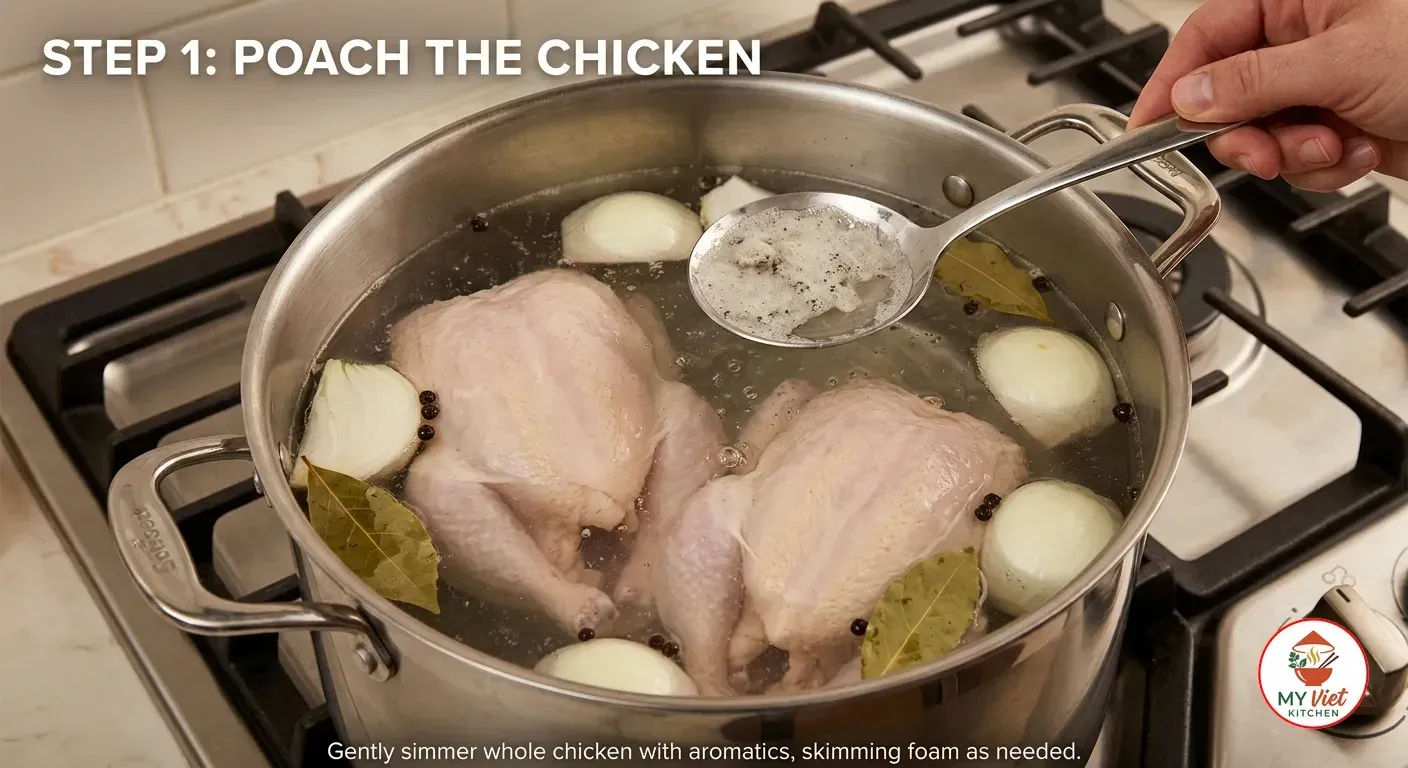
1 Place the chicken breasts in a large pot and cover with cold water by about 2 inches. Add the quartered onion, bay leaves, and peppercorns. Bring everything to a boil over high heat, then immediately reduce to a gentle simmer. Then skim off any foam that rises to the top during the first few minutes.
Simmer gently for 25 to 30 minutes until the chicken is cooked through. Because you start with cold water and bring it up slowly, you extract more flavor into the broth. Remove the chicken and set it on a cutting board to cool slightly. Strain and reserve 4 cups of the poaching liquid because this broth forms the backbone of the sauce. Once the chicken is cool enough to handle, remove the skin and bones, then shred the meat into bite-sized strands using two forks.
Step 2: Prepare the Bread and Walnut Base
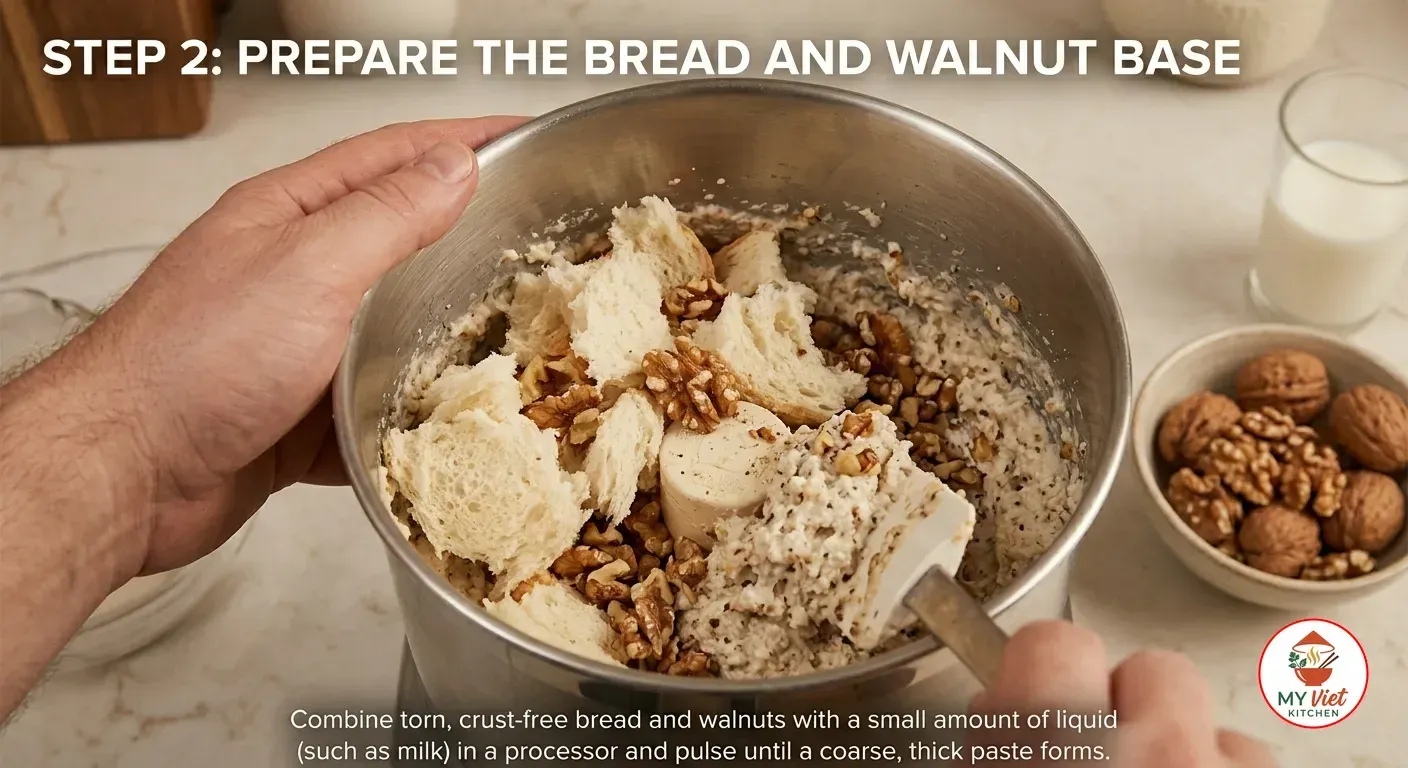
2 Tear the bread slices into rough pieces and place them in a bowl. Pour the evaporated milk over the bread and let it soak for 5 minutes. Essentially, the bread acts as a natural thickener. It gives the sauce its creamy body without flour.
Transfer the soaked bread and milk to a blender. Add the walnut pieces and 1 cup of the reserved chicken broth. Blend on high until completely smooth with no lumps remaining. This mixture should look like a pale, creamy liquid. The walnuts add richness and a subtle nuttiness that elevates the sauce far beyond a simple cream base. Set this blend aside while you build the aromatic foundation of the dish.
Step 3: Build the Sauce
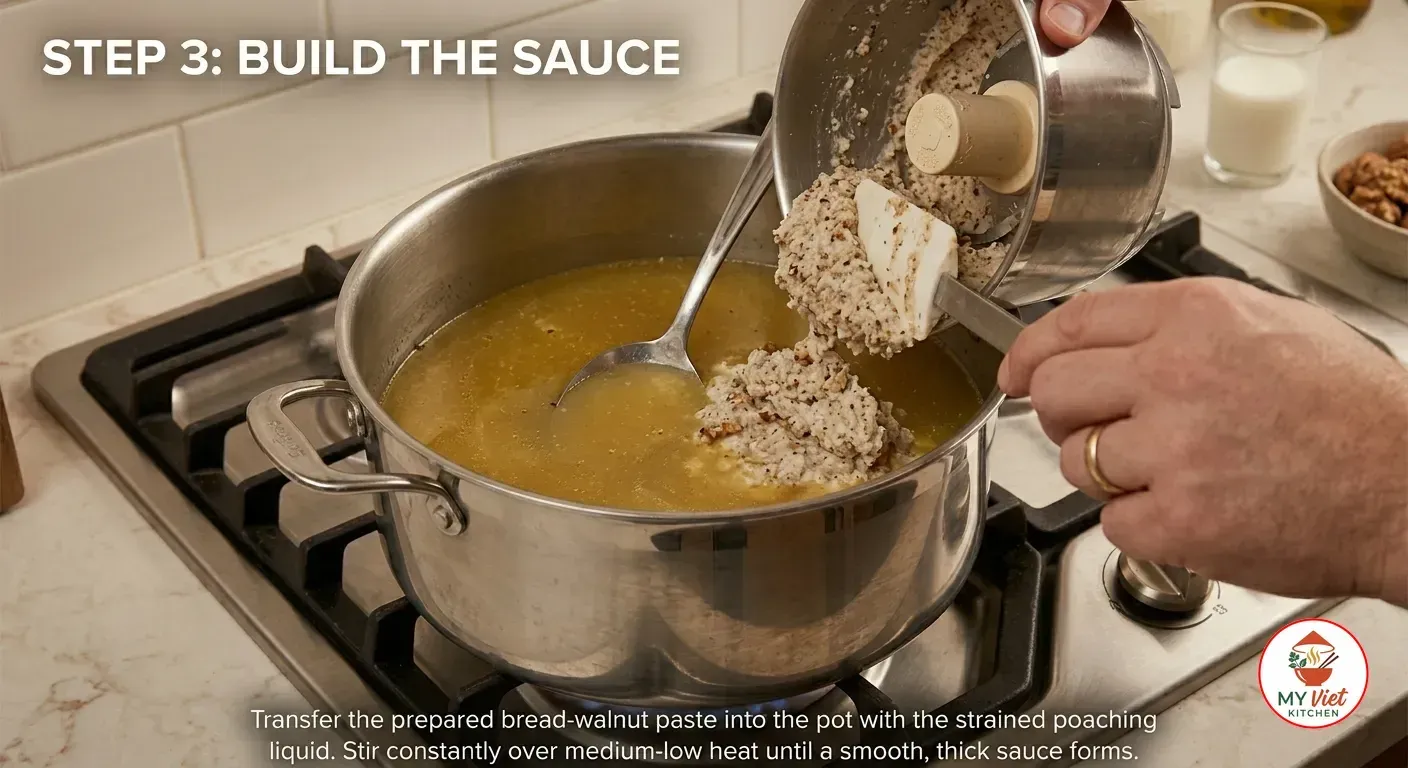
3 Heat the vegetable oil in a large, deep skillet or Dutch oven over medium heat. Add the finely diced onion and cook for 5 minutes, stirring occasionally, until soft and translucent. Next, add the minced garlic, aji amarillo paste, ground cumin, and turmeric. Stir constantly for 2 minutes as the kitchen fills with a fragrant, golden aroma.
Pour in the blended bread and walnut mixture, then add the remaining 3 cups of chicken broth. Stir everything together until the sauce is smooth and uniform in color. The aji amarillo paste tints the entire sauce a beautiful, deep gold. Bring this to a gentle simmer and let it cook for 5 minutes, stirring frequently. The sauce should start to thicken as the bread absorbs the liquid and the flavors combine.
Step 4: Simmer with Chicken and Finish
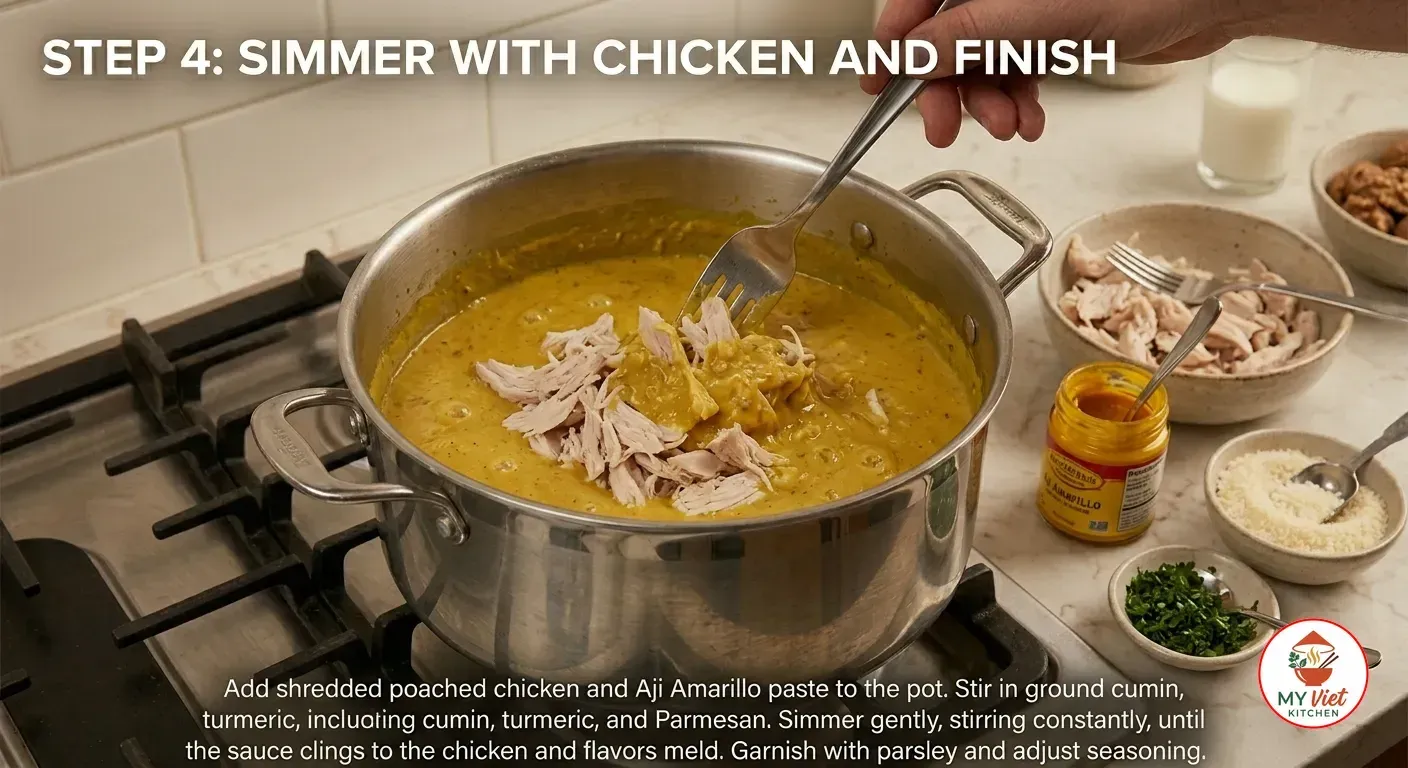
4 Add the shredded chicken to the sauce and stir until every strand is coated in the golden, creamy mixture. Sprinkle in the grated Parmesan cheese and fold it through gently. As a result, the Parmesan melts into the sauce. It adds a savory, umami depth that balances the fruity heat of the peppers.
Simmer the stew for 10 to 15 minutes on low heat, stirring occasionally. The sauce will continue to thicken as it cooks. You want a consistency that generously coats the chicken without pooling at the bottom of the pan. Taste and adjust with salt and pepper. To serve, mound white rice on each plate and ladle the aji de gallina alongside it. Garnish with halved hard-boiled eggs, Botija olives, and a scattering of fresh parsley.
Expert Tips for Perfect Aji de Gallina
Toast the Walnuts First
Raw walnuts work, but toasted walnuts transform the dish. Spread them in a single layer in a dry skillet and cook over medium heat for 3 to 4 minutes, shaking the pan often. They should turn lightly golden and smell fragrant. Toasting unlocks oils that make the sauce taste richer and more complex. In short, this small step takes minutes but makes a big difference.
Control the Heat with Aji Amarillo
Three tablespoons of aji amarillo paste gives this creamy chicken stew a pleasant warmth that most palates enjoy. If you prefer a milder dish, start with 2 tablespoons and add more after tasting. Conversely, if you enjoy more heat, go up to 4 tablespoons. The beauty of aji amarillo is its fruity, aromatic quality. Even at higher amounts, it adds flavor rather than just raw spiciness.
Blend the Sauce Thoroughly
The bread and walnut base must be perfectly smooth before adding it to the pan. Any lumps of unblended bread will create an uneven texture in the finished sauce. Blend for at least 60 seconds, scrape down the sides, and blend again. A high-powered blender works best, but a regular blender or immersion blender will do the job if you blend in smaller batches.
Aji de Gallina vs. Other Peruvian Chicken Dishes
Peru has several famous chicken preparations, and each showcases a different side of the country’s culinary diversity. Here is how aji de gallina compares to the other classics.
| Feature | Aji de Gallina | Pollo a la Brasa | Seco de Pollo |
|---|---|---|---|
| Cooking method | Stewed in sauce | Spit-roasted | Braised in cilantro sauce |
| Key flavor | Creamy, nutty, mildly spicy | Smoky, herbed, crispy | Herbal, tangy, aromatic |
| Main ingredient | Aji amarillo, walnuts, bread | Soy, cumin, garlic marinade | Cilantro, beer, aji peppers |
| Texture | Shredded in thick sauce | Whole pieces, crispy skin | Bone-in pieces in broth |
| Served with | Rice, eggs, olives | French fries, salad, aji sauce | Rice, beans, salsa criolla |
Serving Suggestions
In Peru, aji de gallina is always a main course. It arrives at the table as a generous mound of golden chicken alongside a bed of steamed white rice. The garnishes are not optional; they complete the dish. Here are the traditional accompaniments that every proper plate of aji de gallina includes.
The Classic Accompaniments:
- Steamed white rice: The neutral, fluffy rice absorbs the rich sauce and balances the dish’s bold flavors. Long-grain white rice works best. Peruvian cooks often serve a large mound of it on one side of the plate.
- Hard-boiled eggs: Halved eggs add protein and a creamy yolk that melts into the sauce when you cut into it. They also add visual contrast to the golden plate. Use two halves per serving.
- Botija olives: These small, dark, wrinkled Peruvian olives have an intense, slightly bitter flavor. They provide a sharp contrast to the rich, creamy sauce. Scatter 4 to 5 olives around each plate.
- Boiled potatoes: Some traditional preparations include boiled yellow potatoes underneath the chicken. The potato soaks up the sauce and adds a starchy base. Slice them thick and arrange under the chicken.
Beverage Pairings:
- Chicha morada: This iconic Peruvian drink made from purple corn, pineapple, cinnamon, and cloves is the classic pairing. Its sweet, fruity flavor complements the creamy heat of aji de gallina perfectly.
- Peruvian Cusquena lager: A cold, crisp lager refreshes the palate between bites of the rich stew. The mild bitterness of the beer cleanses without competing with the complex sauce.
- Sauvignon Blanc: A dry, citrusy white wine cuts through the richness of the cream and cheese while echoing the fruity notes of the aji amarillo peppers.
- Pisco sour: Peru’s national cocktail makes a festive appetizer pairing. Its bright citrus and egg white foam prepare the palate for the bold, creamy flavors that follow.
Storage and Reheating
Refrigerator: Aji de gallina keeps well in the fridge for up to 3 days. The sauce thickens as it cools, and the flavors actually improve overnight. Store the stew in a sealed container, separate from the rice. Many Peruvian cooks agree that leftover aji de gallina tastes better than the fresh batch.
Freezer: You can freeze the stew without the rice, eggs, or garnishes for up to 2 months. Let it cool completely before transferring to freezer-safe containers. Leave an inch of space at the top for expansion. Thaw overnight in the refrigerator before reheating.
Reheating: Warm the stew on the stove over medium-low heat, stirring often. Add a splash of chicken broth or evaporated milk if the sauce has become too thick. Do not boil vigorously because the Parmesan can separate at high temperatures. Serve over freshly cooked rice with new garnishes for the best presentation.
Common Mistakes to Avoid
1. Using the Wrong Chili Pepper
Aji amarillo has a unique fruity, aromatic heat that no other pepper replicates exactly. Substituting with cayenne, chipotle, or sriracha changes the flavor profile entirely. Cayenne adds raw heat without the fruity notes. Chipotle brings smokiness that does not belong in this dish. If aji amarillo paste is not available locally, order it online rather than reaching for a substitute that will take the dish in the wrong direction.
2. Skipping the Bread in the Sauce
The bread is not filler. It is a structural ingredient that creates the sauce’s thick, creamy body. Without it, you end up with a thin, watery sauce that slides off the chicken. While some cooks try flour or cornstarch instead, those thickeners make a very different texture. Instead, the bread soaks up the milk and broth. Then it breaks down into a silky base that clings to the meat.
3. Overcooking the Chicken
The chicken should be tender and moist, not dry and stringy. Poach it gently at a simmer, never a rolling boil. Remove it from the broth as soon as it reaches 165 degrees Fahrenheit internally. After all, overcooked chicken turns tough and fails to soak up the sauce. Since the shredded meat simmers again in the sauce, it continues cooking. Starting with perfectly poached chicken ensures the final dish stays juicy.
4. Not Using Enough Parmesan
Parmesan cheese is the secret weapon in aji de gallina. Half a cup may seem generous, but it melts into the sauce and provides the umami depth that makes this dish so addictive. If you reduce the Parmesan, the sauce falls flat. For best results, use real Parmigiano-Reggiano or a quality Parmesan. Grate it finely so it melts smoothly into the hot sauce.
Frequently Asked Questions
What does aji de gallina taste like?
Aji de gallina tastes creamy, mildly spicy, and deeply savory. The aji amarillo peppers contribute a gentle, fruity warmth rather than sharp heat. Walnuts add a subtle nuttiness, while the Parmesan brings umami richness. Together with the bread-thickened sauce, it creates a complex flavor that is comforting yet sophisticated. In other words, most people say it is unlike any other chicken dish they have tried.
What is aji amarillo paste and where can I buy it?
Aji amarillo paste is a puree of Peruvian yellow chili peppers that have a fruity, moderately spicy flavor. It is the cornerstone of Peruvian cooking and essential for this recipe. You can buy it at Latin American grocery stores, specialty food shops, or online through Amazon and Latin food retailers. Brands like Inca’s Food and Dona Isabel are widely available and offer consistent quality.
Can I make aji de gallina ahead of time?
Absolutely, and many cooks recommend it. The stew tastes even better after resting overnight because the flavors meld together. Make the aji de gallina up to 2 days ahead, store it in the refrigerator, and reheat gently on the stove. Cook the rice fresh when you are ready to serve, and prepare the eggs and garnishes at the last moment for the best presentation.
Is aji de gallina spicy?
Aji de gallina has a mild to moderate heat level. The aji amarillo peppers provide warmth that builds gently rather than hitting you immediately. The bread, evaporated milk, walnuts, and Parmesan all temper the spiciness significantly. Even people who normally avoid spicy food find this dish approachable and enjoyable.
What can I use instead of aji amarillo paste?
If aji amarillo paste is unavailable, blend roasted yellow bell pepper with a small amount of habanero pepper and a pinch of turmeric for color. Of course, this swap will not match the exact taste, but it gets you close. Another option is to use rocoto paste mixed with a bit of yellow bell pepper puree. However, for the most authentic result, sourcing real aji amarillo paste is worth the effort.
What is the difference between aji de gallina and aji de pollo?
Gallina means hen and pollo means chicken. Traditionally, aji de gallina used tougher, older hen meat that required long braising to become tender. Today, the vast majority of home cooks and restaurants use regular chicken breasts or thighs. The recipe, sauce, and accompaniments remain identical. You can use either and achieve excellent results with this recipe.
Variations and Adaptations
Vegetarian Aji de Gallina:
Replace the chicken with shredded king oyster mushrooms or jackfruit for a plant-based version. Use vegetable broth instead of chicken broth. The bread, walnut, and Parmesan sauce works beautifully with these substitutes. For a fully vegan version, swap the Parmesan for nutritional yeast and use coconut milk instead of evaporated milk. Even so, the sauce still gets a rich, creamy feel.
Aji de Gallina Empanadas:
Turn leftover aji de gallina into a spectacular filling for empanadas. Let the stew cool and thicken in the fridge, then spoon it into empanada dough circles. Fold, seal, and bake or fry until golden. The creamy filling inside a crispy shell creates an irresistible contrast. These make excellent party appetizers or lunch box items.
Aji de Gallina Pasta:
Toss the sauce with cooked fettuccine or penne for a Peruvian-Italian fusion that works surprisingly well. The thick, creamy sauce coats pasta just as beautifully as it coats rice. Add a squeeze of lime juice and some fresh cilantro on top. This variation is a great way to use leftover sauce and introduces this Peruvian classic to people who prefer pasta over rice.
The Cultural Significance of Aji de Gallina
Aji de gallina occupies a revered place in Peruvian culinary heritage. The dish tells the story of how Spanish colonial cooking merged with Indigenous Andean ingredients to create something entirely new. Specifically, Spanish settlers brought tricks for thickening sauces with bread and nuts. This method came from Moorish cooking on the Iberian Peninsula. In Peru, those ideas met aji amarillo, a pepper that had grown in the Andes for ages. The blend of Old World method and New World spice made a dish that belongs to both and yet feels brand new.
In Lima, aji de gallina is everywhere. You see it in the glass cases of local eateries, right next to lomo saltado and ceviche. Also, college cafeterias serve it every week. Home cooks pass recipes down for generations. Each family claims a small secret that makes theirs the best. Maybe it is extra Parmesan, a splash of white wine, or pecans in place of walnuts. Clearly, these variations reflect the deeply personal bond Peruvians have with their food.
Beyond Peru, aji de gallina has become an ambassador for Peruvian cuisine worldwide. As Peruvian food gains international recognition, this dish appears on menus from New York to Tokyo. Ultimately, making this dish at home ties you to a food tradition that spans ages and borders. Every pot of this golden stew carries the history of a nation in its taste.
Conclusion
This aji de gallina recipe gives you a true taste of Peru in your own kitchen. The keys are simple: poach the chicken gently, blend the bread and walnut base until smooth, use real aji amarillo paste, and finish with plenty of Parmesan. Follow this aji de gallina recipe step by step, and you will make a creamy, golden stew that rivals the best plates in Lima.
Looking for more Latin American favorites? Explore our American dishes collection for recipes like Colombian ajiaco, empanadas, and ceviche. You can also browse our full range of Asian dishes for more global comfort food inspiration.