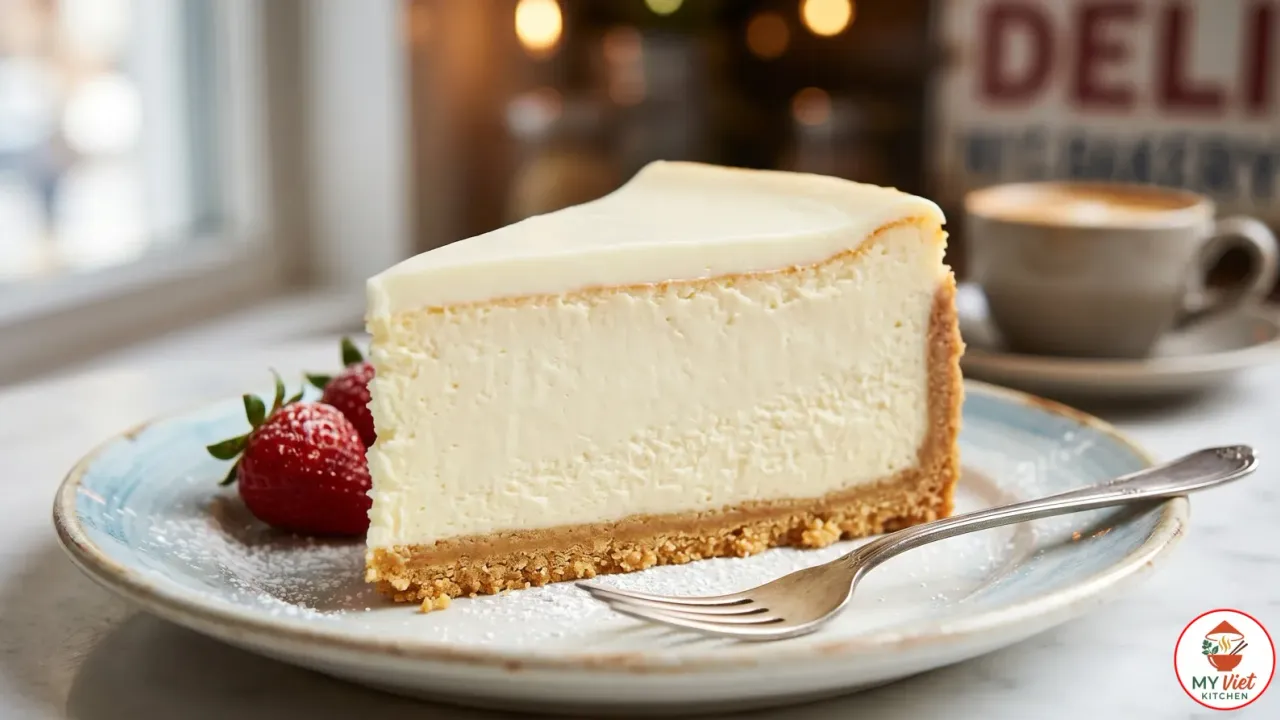
This New York cheesecake delivers the tall, dense, and impossibly creamy texture that made New York City famous for this dessert. It features a buttery graham cracker crust topped with a rich cream cheese filling and a silky sour cream layer. Moreover, this foolproof recipe walks you through every step, including the all-important water bath technique that prevents cracks and ensures a velvety smooth finish. If you love classic New York cheesecake, this recipe will become your go-to for every special occasion.
Prep Time: 25 minutes | Cook Time: 65 minutes | Servings: 12
Difficulty: Medium | Calories: ~420 per serving
What Makes New York Cheesecake Special?
The New York cheesecake traces its roots to Arnold Reuben, a German immigrant in New York City. In the early 1900s, he tasted a cheese-based pie at a dinner party and loved it. He then made his own version using cream cheese, a product recently born in New York. Since that moment, this dense, creamy treat has become one of America’s favorite desserts. Famous spots like Junior’s in Brooklyn and Lindy’s in Manhattan helped spread the style far and wide.
What truly sets New York cheesecake apart is its texture and simplicity. The filling uses cream cheese, eggs, and sour cream with very little flour. As a result, every bite feels dense, smooth, and rich. The top often has a thin sour cream layer that adds a gentle tang and a clean, polished look.
Additionally, New York cheesecake sits on a simple graham cracker crust rather than a pastry shell. This buttery, crumbly base pairs well with the silky filling above it. Unlike lighter, mousse-like cheesecakes from other regions, the New York version stands tall and slices cleanly on the plate.

Choosing the Right Cream Cheese
Cream cheese forms the base of every great New York cheesecake. The type you pick affects both texture and flavor. Here are your best options.
- Full-fat block cream cheese (best choice): This type gives you the richest flavor and the smoothest texture. Block cream cheese has less moisture than tub cream cheese, so it makes a denser, creamier cake.
- Whipped cream cheese: Skip this one for baking. It has extra air and moisture that stop the filling from setting well. The result will feel thin and loose.
- Reduced-fat cream cheese: This works in a pinch but gives a slightly less creamy texture. If you use it, add an extra tablespoon of sour cream to make up for the lost richness.
Ingredients for New York Cheesecake
For the Graham Cracker Crust:
- 2 cups graham cracker crumbs (about 14 full sheets)
- 0.33 cup granulated sugar
- 6 tablespoons unsalted butter, melted
For the Cheesecake Filling:
- 32 ounces (4 blocks) full-fat cream cheese, softened
- 1 cup granulated sugar
- 1 cup sour cream
- 1 tablespoon pure vanilla extract
- 2 teaspoons fresh lemon juice
- 1 tablespoon all-purpose flour
- 4 large eggs, room temperature
For the Sour Cream Topping:
- 1 cup sour cream
- 2 tablespoons granulated sugar
- 1 teaspoon vanilla extract
Pro tip: Let the cream cheese soften at room temperature for at least 2 hours before mixing. Cold cream cheese creates lumps in the batter that no amount of beating can fully smooth out. Similarly, use room-temperature eggs so the batter blends evenly.
Step-by-Step Instructions
Step 1: Make the Graham Cracker Crust
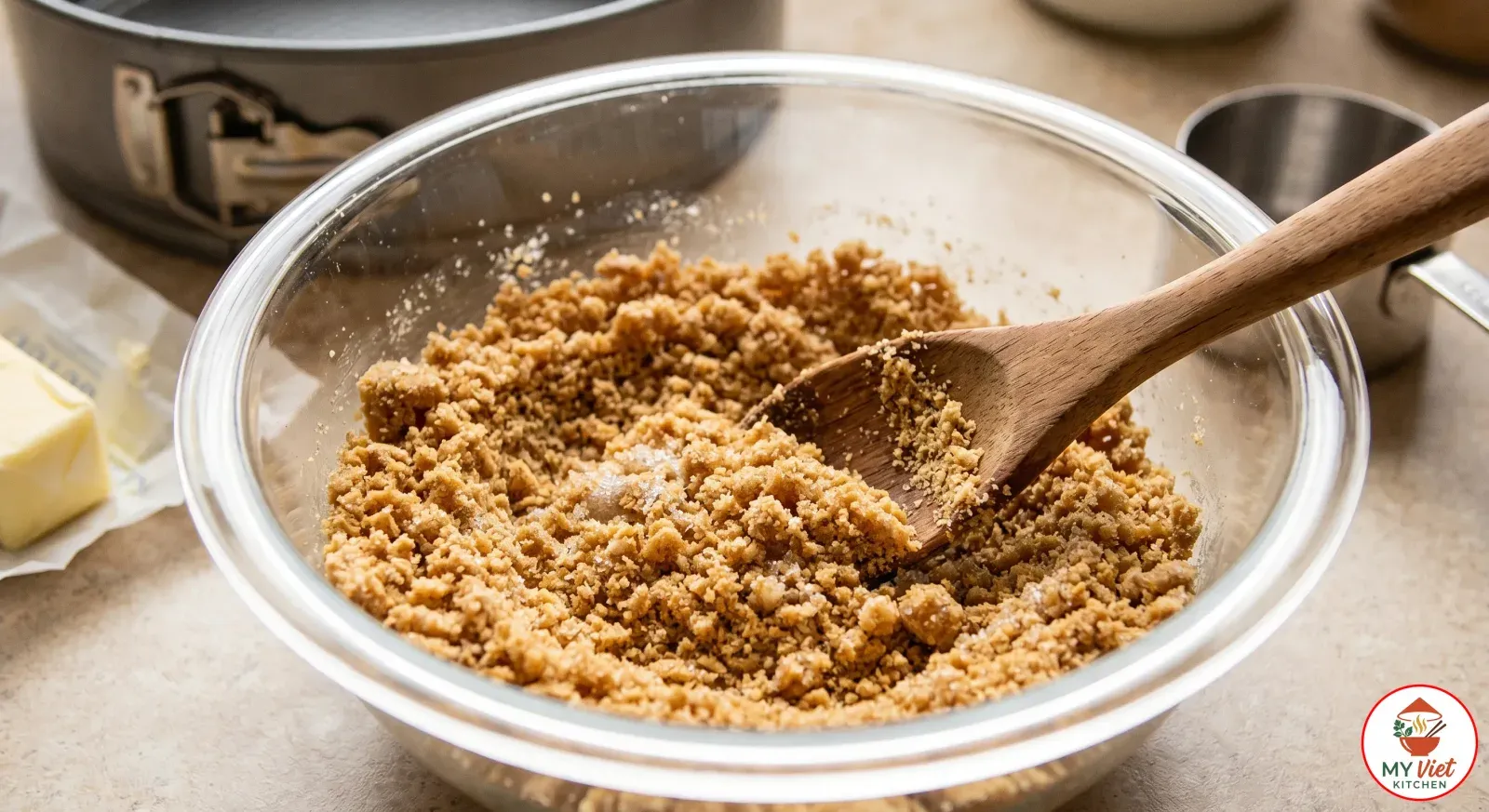
1Preheat your oven to 325 degrees Fahrenheit. Combine the graham cracker crumbs, sugar, and melted butter in a medium bowl. Stir until the mixture resembles wet sand. Then, pour it into a 9-inch springform pan and press firmly across the bottom and about 1 inch up the sides. Use the flat bottom of a measuring cup to pack the crust tightly and evenly. Bake the crust for 10 minutes until it feels firm to the touch. This pre-baking step ensures the crust stays crisp under the heavy filling. Remove the pan from the oven and let the crust cool completely while you prepare the filling.
Step 2: Prepare the Cheesecake Filling
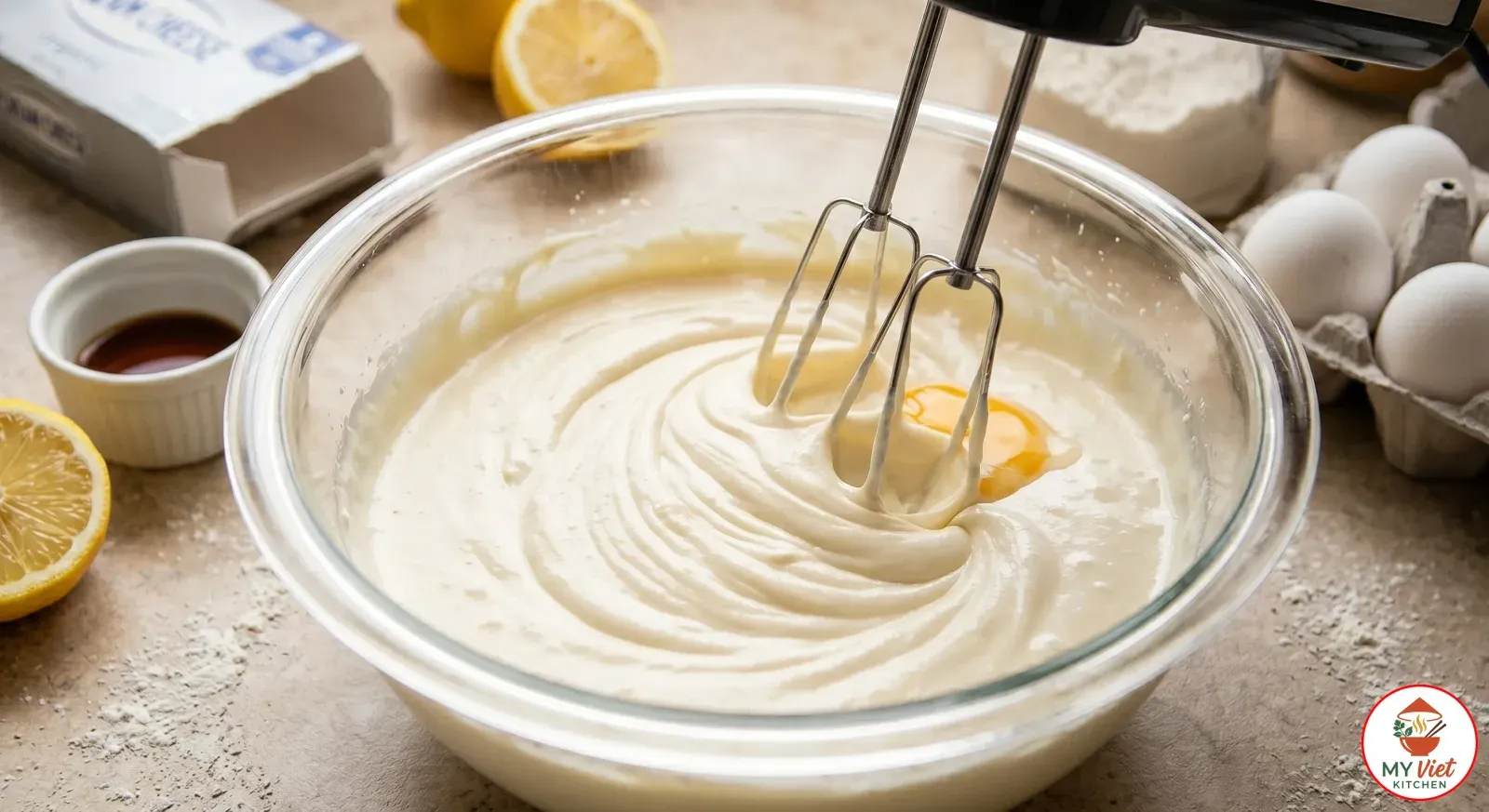
2Beat the softened cream cheese with an electric mixer on medium speed for about 2 minutes until completely smooth. Then, add the sugar and continue beating for another minute until light and fluffy. Next, mix in the sour cream, vanilla extract, and lemon juice until well combined. The lemon juice adds a subtle brightness that balances the richness of the cream cheese. Add the flour and mix briefly on low speed. Finally, add the eggs one at a time, beating on low speed after each addition just until the yolk disappears. Do not overmix at this stage, because excess air creates bubbles that cause cracks during baking.
Step 3: Bake with a Water Bath
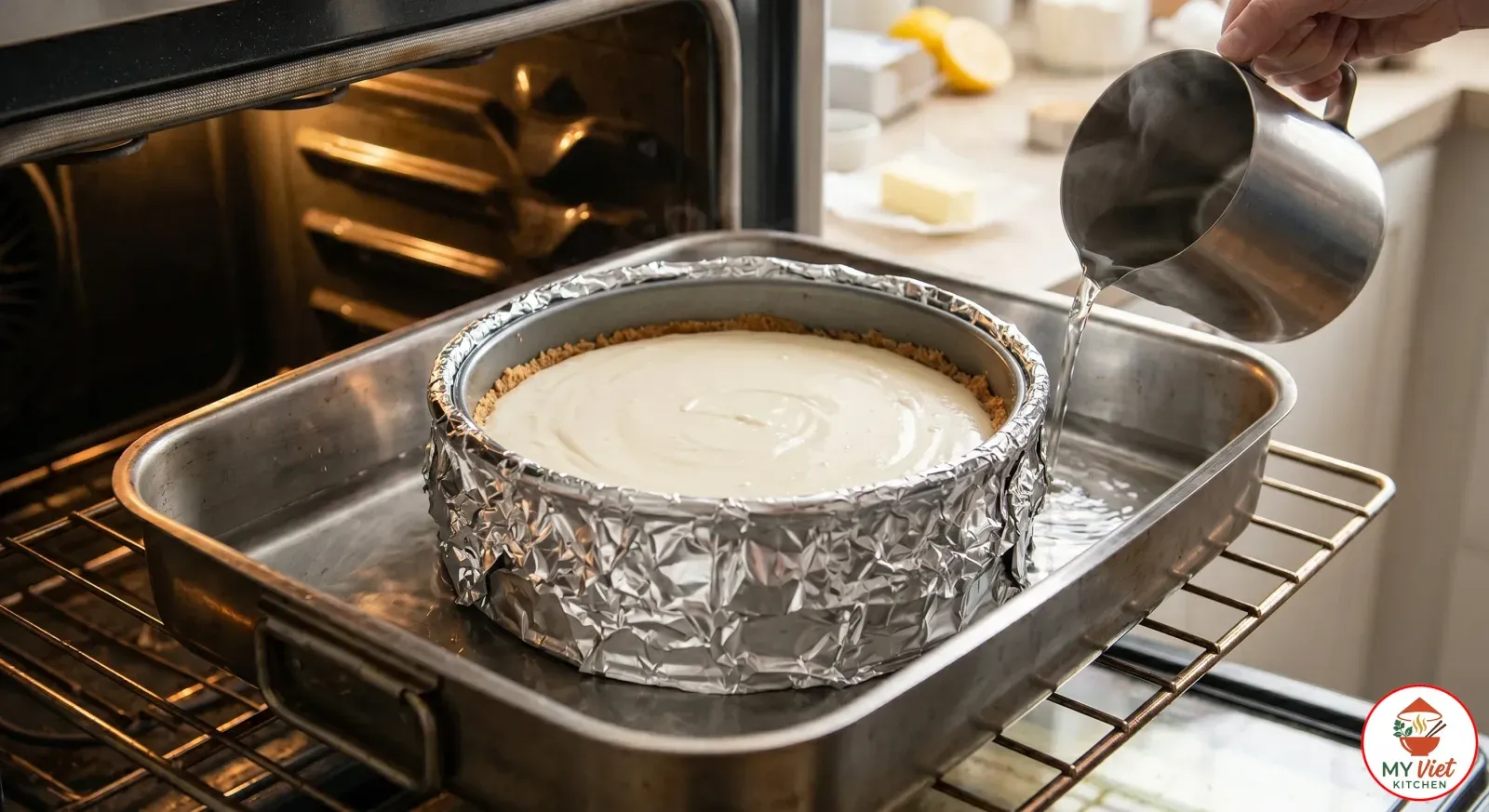
3Wrap the outside of the springform pan tightly with two layers of heavy-duty aluminum foil. This step prevents water from seeping into the pan during baking. Pour the filling over the cooled crust and smooth the top with a spatula. Place the wrapped pan inside a large roasting pan. Carefully pour hot water into the roasting pan until it reaches halfway up the sides of the springform pan. The water bath creates a humid, gentle environment that bakes the cheesecake evenly. Bake at 325 degrees Fahrenheit for 55 to 65 minutes. The edges should look firm and set, but the center should still jiggle like gelatin when you gently shake the pan.
Step 4: Add the Sour Cream Topping and Cool
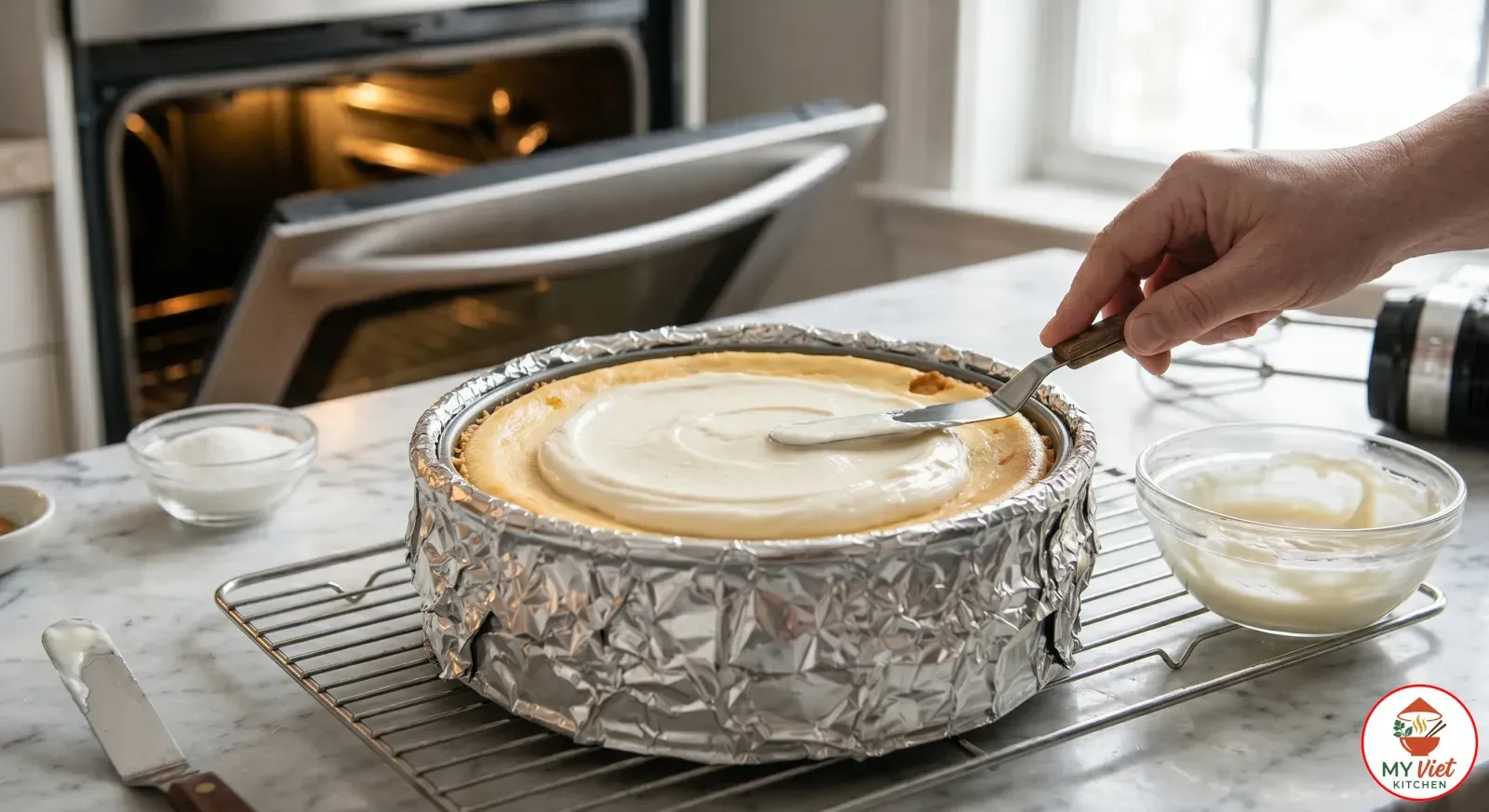
4While the cheesecake bakes, whisk together the sour cream, sugar, and vanilla extract for the topping. Once the cheesecake finishes baking, remove it from the water bath. Gently spread the sour cream mixture over the warm surface in an even layer. Return the cheesecake to the oven and bake for 5 more minutes. Then, turn off the oven, crack the door open about 2 inches, and let the cheesecake cool inside for 1 full hour. This gradual cooling process prevents thermal shock, which causes cracking. After that, transfer the cheesecake to the refrigerator and chill for at least 4 hours, or preferably overnight. The filling firms up beautifully and the flavors develop fully during this rest.
Expert Tips for Perfect New York Cheesecake
Room Temperature Ingredients Matter
Cold cream cheese and eggs create a lumpy batter, no matter how long you mix. Set out the cream cheese, sour cream, and eggs at least 2 hours before you begin. Room-temperature ingredients blend together smoothly with minimal mixing. As a result, you avoid incorporating excess air that leads to cracks.
Mix on Low Speed After Adding Eggs
Once you add the eggs, switch to low speed and beat only until each yolk disappears. High-speed mixing whips air into the batter. During baking, those air pockets expand and then collapse as the cheesecake cools, which causes the surface to crack. Gentle mixing keeps the texture dense and smooth.
Never Skip the Water Bath
The water bath is the single most important technique for a flawless New York cheesecake. It provides even, gentle heat and adds moisture to the oven environment. Without it, the edges overbake before the center sets, and cracks form across the top. Therefore, always wrap the pan well and use plenty of hot water.
New York Cheesecake vs. Japanese Cheesecake
These two popular styles take very different approaches. Here is a side-by-side comparison to highlight their unique characteristics.
| Feature | New York Cheesecake | Japanese Cheesecake |
|---|---|---|
| Texture | Dense, rich, and creamy | Light, fluffy, and airy |
| Key technique | Water bath baking | Meringue folding |
| Cream cheese amount | 32 ounces (4 blocks) | 8 ounces (1 block) |
| Eggs | Whole eggs beaten in | Whites whipped separately |
| Crust | Graham cracker crust | No crust typically |
| Sweetness | Moderately sweet and tangy | Lightly sweet |
Serving Suggestions
New York cheesecake tastes incredible on its own, but the right toppings and accompaniments elevate it even further. Here are some options to try.
The Perfect Toppings:
- Fresh strawberries: Sliced or whole strawberries add a bright, fruity contrast to the rich cream cheese filling.
- Blueberry compote: Warm blueberry sauce drizzled over each slice creates a classic diner-style presentation.
- Salted caramel sauce: A drizzle of salted caramel brings a sweet and salty element that pairs wonderfully with the tangy filling.
- Whipped cream: A dollop of freshly whipped cream keeps the presentation simple and elegant.
Beverage Pairings:
- Espresso or black coffee: The bitterness of coffee balances the sweetness of the cheesecake perfectly.
- Dessert wine or port: A sweet Riesling or tawny port complements the creamy richness of each bite.
- Chamomile tea: For a lighter pairing, the floral notes of chamomile tea create a soothing contrast.
Storage and Reheating
Refrigerator: Cover the cheesecake tightly with plastic wrap or store slices in an airtight container for up to 5 days. The flavor actually improves after the first 24 hours as the filling sets fully and the flavors meld together.
Freezer: Wrap the whole cheesecake or individual slices tightly in plastic wrap, then aluminum foil. Frozen cheesecake keeps well for up to 3 months. Thaw overnight in the refrigerator for the best texture and flavor.
Serving tip: New York cheesecake tastes best slightly chilled, straight from the refrigerator. Let it sit at room temperature for no more than 10 minutes before serving. For clean slices, dip your knife in hot water and wipe it dry between each cut.
Common Mistakes to Avoid
1. Overmixing the Batter
The biggest mistake home bakers make is overmixing the cheesecake batter, especially after adding the eggs. Excessive mixing incorporates air bubbles that expand during baking and collapse as the cheesecake cools. This causes deep cracks on the surface. To avoid this, mix on low speed and stop as soon as each egg disappears into the batter.
2. Skipping the Water Bath
Baking without a water bath exposes the cheesecake to harsh, dry heat. The edges overbake while the center stays underdone. Consequently, the surface cracks as the two zones cool at different rates. A water bath solves this problem by providing gentle, even heat throughout the entire baking process.
3. Cooling Too Quickly
Pulling the cheesecake out of the oven and placing it directly in the refrigerator causes rapid temperature change. This thermal shock makes the surface contract and crack. Instead, let the cheesecake cool gradually in the turned-off oven with the door cracked open. Then, bring it to room temperature before refrigerating.
Frequently Asked Questions
Why does my New York cheesecake crack on top?
Cheesecakes crack because of rapid temperature changes, overbaking, or overmixing. A water bath creates gentle, even heat that prevents cracks from forming. Additionally, avoid overmixing after adding the eggs, because excess air expands during baking and contracts while cooling. Always let the cheesecake cool slowly in the turned-off oven with the door slightly open.
How do I know when New York cheesecake is done?
A properly baked cheesecake has firm, set edges but a center that still jiggles gently when you shake the pan. The center firms up completely as it cools and chills. If the entire surface looks solid and puffed in the oven, then the cheesecake has overbaked. Pull it out while the center still wobbles slightly for the creamiest result.
Can I make New York cheesecake without a water bath?
Yes, but the results will not match the classic texture. Without a water bath, bake at a lower temperature of 300 degrees Fahrenheit for a longer time. The filling may turn out slightly less smooth, and the surface has a higher chance of cracking. For the best results, the water bath remains the most reliable method.
How far in advance can I make New York cheesecake?
You can make this cheesecake up to 3 days ahead, and many bakers recommend it. The flavor and texture actually improve after 24 hours of refrigeration. The filling sets completely and the flavors develop deeper complexity. Just cover it tightly with plastic wrap to keep it fresh.
Variations and Adaptations
Chocolate Marble Cheesecake:
Melt 4 ounces of semisweet chocolate and let it cool slightly. Remove 1 cup of the prepared filling and mix it with the melted chocolate. Pour the plain filling over the crust, then dollop the chocolate mixture on top. Use a knife to swirl the two batters together for a beautiful marble pattern. Bake as directed.
Pumpkin Spice Cheesecake:
Add 1 cup of canned pumpkin puree and 2 teaspoons of pumpkin pie spice to the filling mixture. Reduce the sour cream by 2 tablespoons to keep the batter from becoming too wet. This variation creates a seasonal twist that works perfectly for Thanksgiving and fall gatherings.
Oreo Crust Cheesecake:
Replace the graham cracker crumbs with crushed Oreo cookies, including the cream filling. Use the same amount and skip the added sugar since Oreos already contain plenty of sweetness. The dark chocolate crust creates a striking contrast against the white cheesecake filling.
The Cultural Significance of New York Cheesecake
New York cheesecake holds a special place in American dessert culture. It shows the spirit of New York City, where a German immigrant turned a simple cheese pie into something great. Cream cheese, first made in 1872 in Chester, New York, became the key to this iconic dessert. Over time, cheesecake grew into a staple at Jewish delis, Italian bakeries, and diners across the city.
Today, New York cheesecake appears on dessert menus worldwide. It symbolizes indulgence, celebration, and the simple joy of a well-made classic. Whether you serve it plain at a family dinner or topped with berries at a holiday party, this dessert brings people together. Discover more beloved American recipes on our homepage.
Conclusion
Making a perfect New York cheesecake at home requires patience, room-temperature ingredients, and a reliable water bath. These three elements work together to produce the dense, creamy, crack-free result that defines this classic dessert. Focus on gentle mixing, slow cooling, and proper chilling for the best texture and flavor. Once you master these basics, you will produce a cheesecake that rivals any New York bakery.
Try this recipe for your next celebration and experience the difference that proper technique makes. If you enjoy classic American desserts and comfort food, also explore our deep dish pizza recipe and our lobster roll recipe for more iconic dishes from the My Viet Kitchen collection.