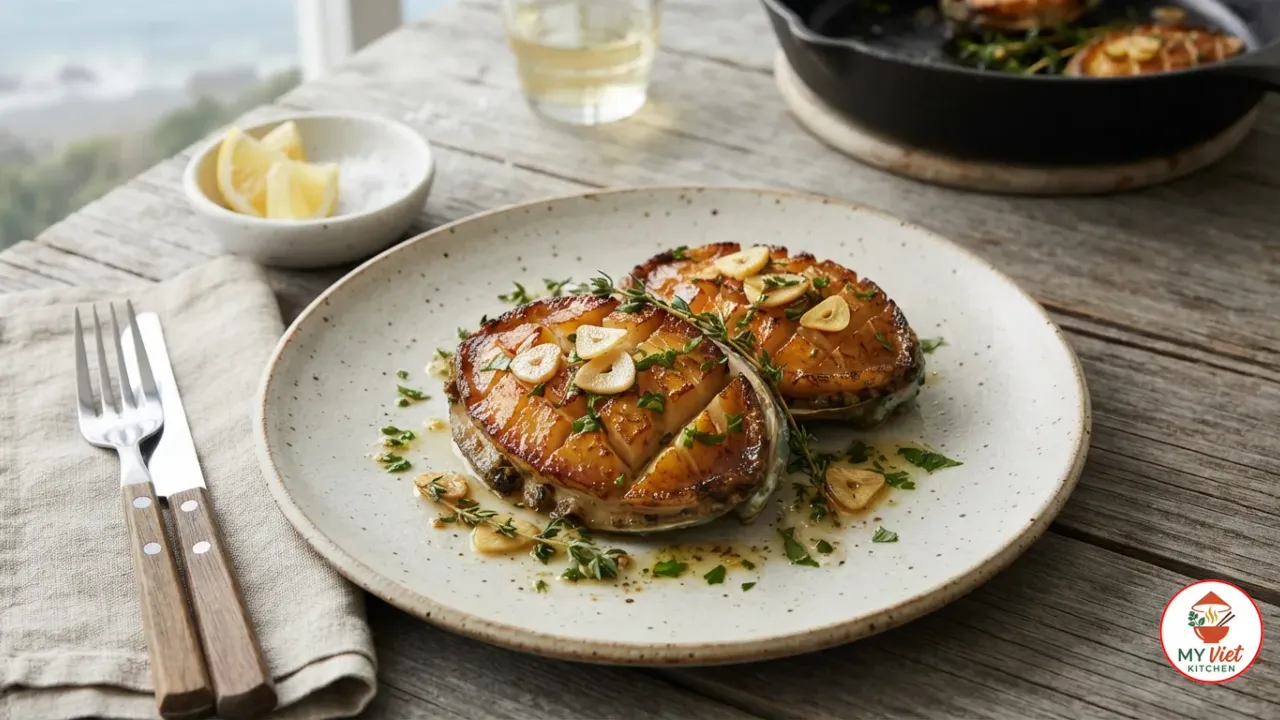
Pan-seared Australian wild abalone is one of the most luxurious seafood dishes you can prepare at home, and it takes less than five minutes to cook. This prized shellfish delivers a buttery, sweet flavor with a tender bite that rivals the finest restaurant presentations. Harvested by hand from the cold, pristine waters of Australia’s southern coastline, its quality is recognized worldwide. In this complete guide, you will learn how to clean, tenderize, and pan-sear this remarkable ingredient to golden perfection with a simple garlic butter sauce.
Prep Time: 20 minutes | Cook Time: 5 minutes | Servings: 2
Difficulty: Medium | Calories: ~210 per serving
What Makes Australian Wild Abalone Special?
This large marine gastropod clings to rocky reefs in cold ocean waters, and Australia produces some of the finest wild specimens in the world. Thanks to strict harvesting regulations, clean coastlines, and nutrient-rich currents, the southern coast of the continent provides the ideal habitat for several species. Greenlip, blacklip, and brownlip varieties all thrive in these cool, oxygen-rich waters where they feed on kelp and sea grass for years before reaching harvestable size.
What sets wild abalone apart from farmed varieties is the texture. These specimens develop firm, dense muscle from years of gripping rocks against strong ocean currents. As a result, the flesh has a satisfying chewiness that softens beautifully when properly tenderized and quickly seared. The flavor is clean, sweet, and subtly briny with none of the muddiness that can affect farmed shellfish. For these reasons, this wild-caught delicacy commands premium prices at fish markets and fine dining restaurants around the globe.
Pan-searing is arguably the best way to cook this shellfish because it creates a caramelized golden crust while keeping the interior tender and succulent. The high heat triggers the Maillard reaction on the surface, developing complex savory flavors that complement the natural sweetness of the meat. Moreover, the entire cooking process takes under three minutes, which prevents the proteins from seizing up and turning rubbery. This quick method lets the quality of the ingredient speak for itself.

Choosing the Right Abalone
Selecting high-quality abalone is the most important step in this recipe. The difference between a great dish and a disappointing one starts at the fishmonger. Here is what to look for when buying this prized ingredient for pan-searing.
- Fresh wild (best choice): Look for specimens that are still alive, with the foot muscle responding to touch by contracting. The flesh should smell like clean ocean water with no ammonia or fishy odor. Fresh wild-caught pieces deliver the best flavor and texture for pan-searing. Ask your fishmonger about the harvest date and origin.
- Frozen wild: Flash-frozen Australian specimens retain excellent quality and are more widely available than fresh. Thaw them slowly in the refrigerator overnight before cooking. Avoid thawing at room temperature, because uneven warming damages the delicate protein structure.
- Canned: While convenient, canned versions are already cooked during the processing. They work for stir-fries and soups but are not ideal for pan-searing since they lack the raw texture needed to develop a proper crust. Use them only when fresh or frozen is unavailable.
- Farmed: Australian farmed varieties are raised in ocean-fed tanks and offer consistent quality at a lower price point. The flavor is milder than wild-caught, and the texture tends to be softer. They still sear well, though the result will not match the depth of flavor from wild specimens.
If you enjoy premium Australian seafood, our barramundi recipe showcases another iconic fish from the continent with a completely different flavor profile.
Ingredients for Pan-Seared Abalone
Main Ingredients:
- 2 fresh Australian wild abalone (approximately 4 ounces each)
- 1 tablespoon extra virgin olive oil
- Flaky sea salt to taste
- Freshly cracked black pepper to taste
For the Garlic Butter Sauce:
- 3 tablespoons unsalted butter
- 2 cloves garlic, thinly sliced
- 1 tablespoon fresh lemon juice
- 1 teaspoon lemon zest
- 1 sprig fresh thyme
For Garnish:
- 1 tablespoon fresh flat-leaf parsley, finely chopped
- Lemon wedges for serving
Pro tip: Always use unsalted butter for the sauce so you can control the seasoning precisely. This shellfish has a natural brininess from the ocean, and salted butter can push the dish into overly salty territory. Additionally, unsalted butter has a higher smoke point, which matters when you are searing at high heat.
Step-by-Step Instructions
Step 1: Clean and Prepare the Shellfish
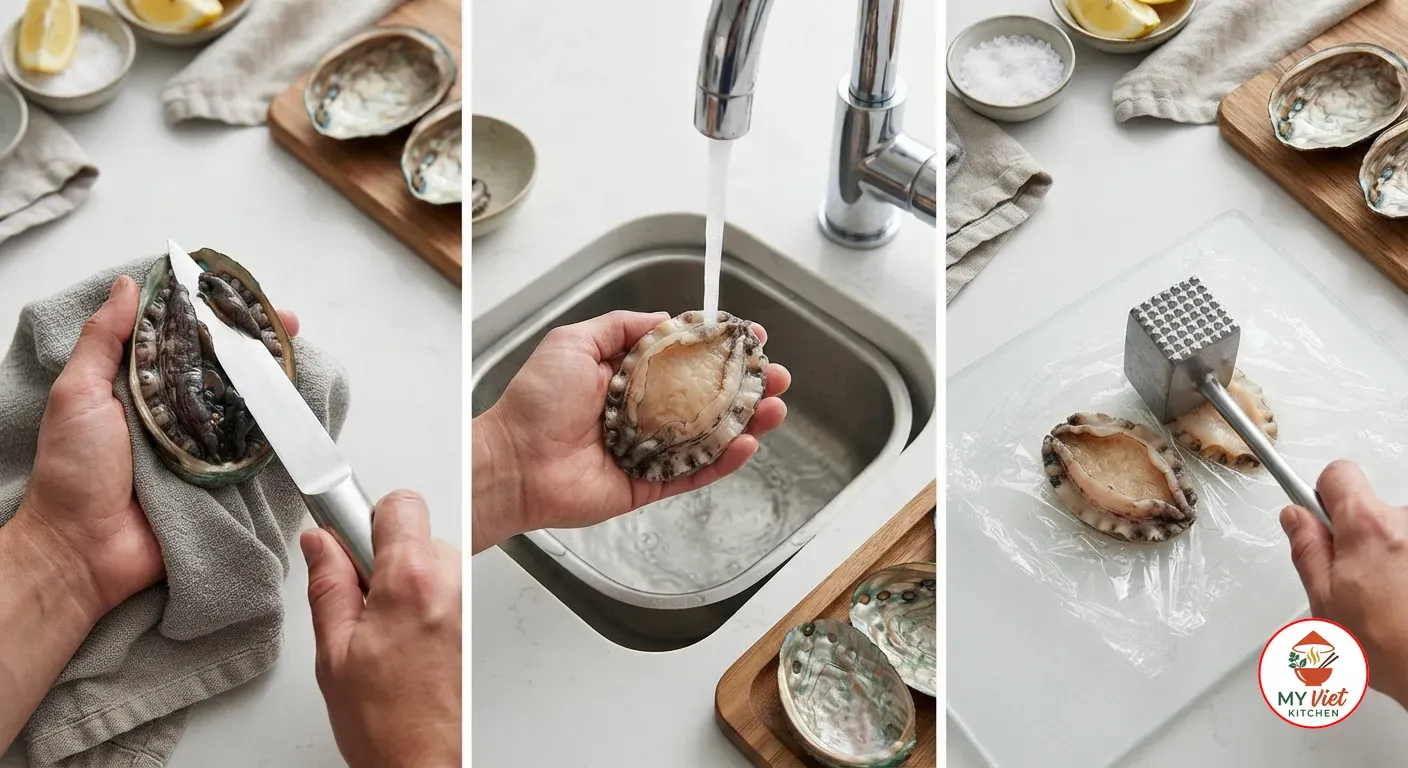
1 Start by removing the meat from its shell. Slide a sturdy spoon or a dedicated shucking knife between the flesh and the shell, working around the edge until the muscle releases. Trim away the dark viscera and the frilly skirt around the edges. These parts are edible but have a strong flavor that does not suit pan-searing. Scrub the foot thoroughly under cold running water to remove any sand or grit. Pat the cleaned piece completely dry with paper towels, because excess moisture will prevent proper browning.
Next, place each piece between two sheets of plastic wrap. Using a meat mallet or a heavy rolling pin, gently pound the flesh to an even thickness of roughly half an inch. Work from the center outward with moderate, consistent force. This step is essential because it breaks down the tough muscle fibers and ensures even cooking across the entire surface. Avoid pounding too aggressively, however, as this can shred the meat and create a mushy texture.
Step 2: Score and Season
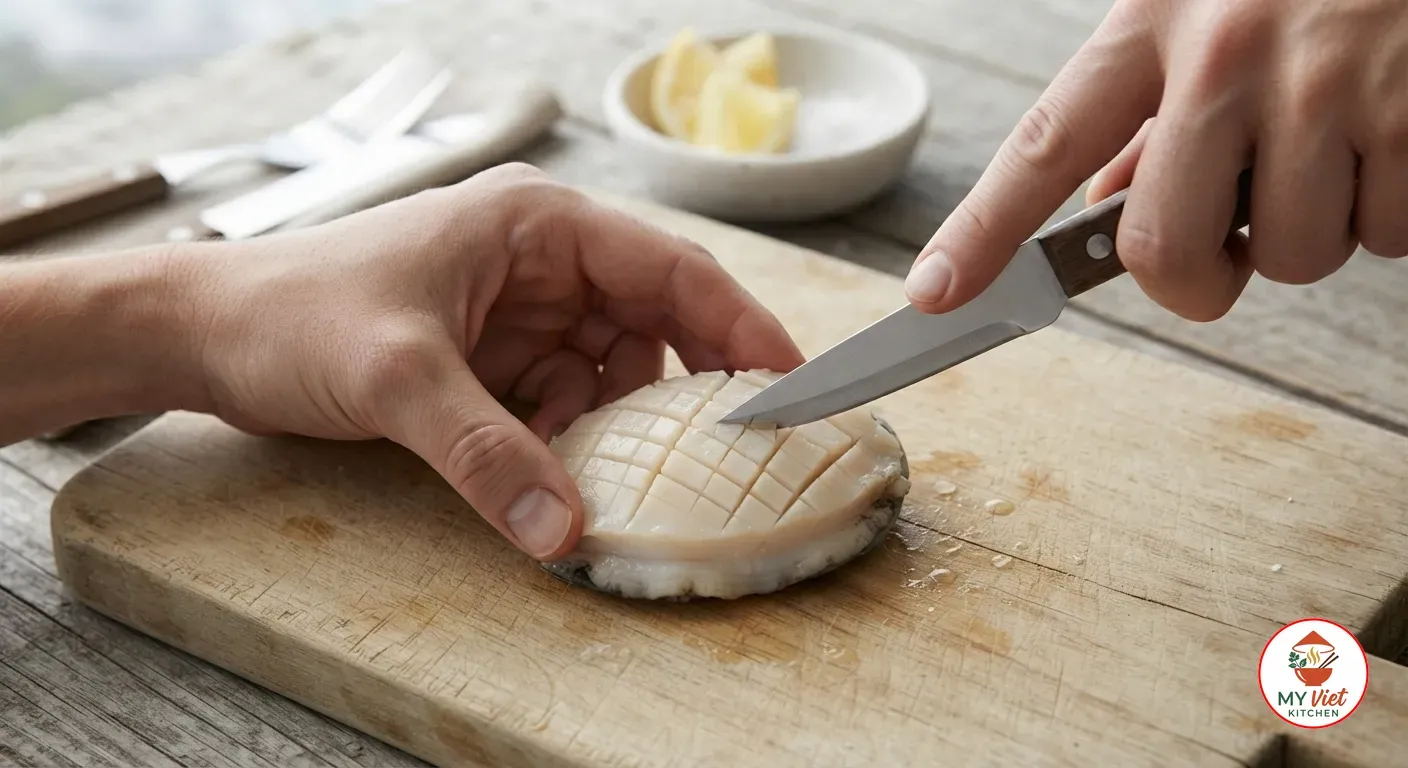
2 Using a sharp knife, score a shallow crosshatch pattern on one side of each piece. Make cuts about 2 millimeters deep and 5 millimeters apart in a diamond grid. Scoring serves two important purposes: it helps the thick muscle cook more evenly, and it creates channels for the garlic butter sauce to pool and penetrate the flesh. Season both sides generously with flaky sea salt and freshly cracked black pepper. Let the seasoned pieces rest at room temperature for 5 minutes before cooking. This brief rest takes the chill off and promotes a better sear.
Step 3: Pan-Sear Until Golden
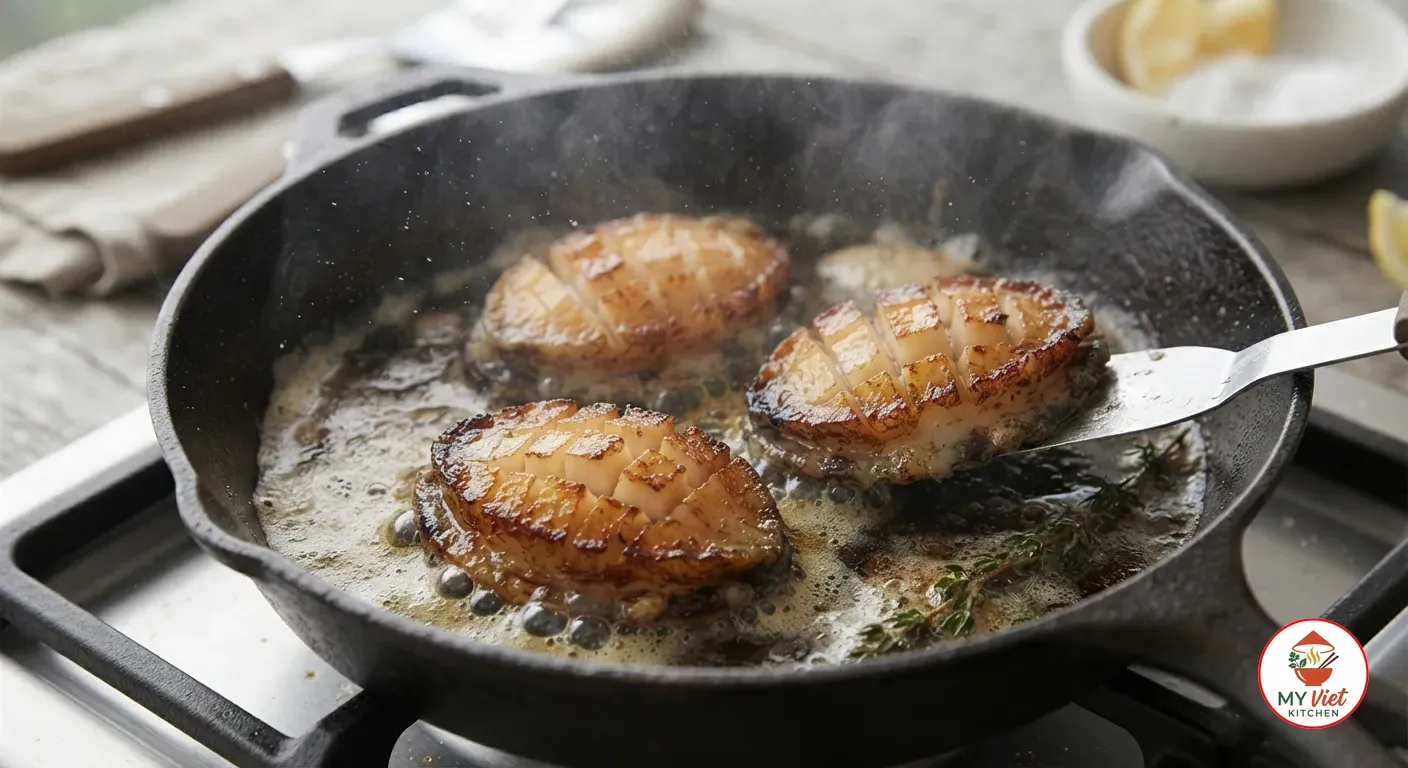
3 Heat the olive oil and 1 tablespoon of butter in a cast iron or heavy stainless steel skillet over high heat. Wait until the butter melts, foams, and the foam begins to subside. This signals that the water in the butter has evaporated and the fat is hot enough for searing. Carefully place the scored side down into the pan. You should hear an immediate, aggressive sizzle. If the pan is not hot enough, the meat will steam rather than sear.
Cook for 60 to 90 seconds without moving the pieces. Resist the urge to peek or shift them around, because uninterrupted contact with the hot surface creates the golden-brown crust you want. Then flip each piece once and sear the other side for another 60 seconds. The total cooking time should not exceed 3 minutes. Remove them immediately and transfer to a warm plate. Resting for 30 seconds off heat allows the muscle fibers to relax slightly before serving.
Step 4: Make the Garlic Butter Sauce
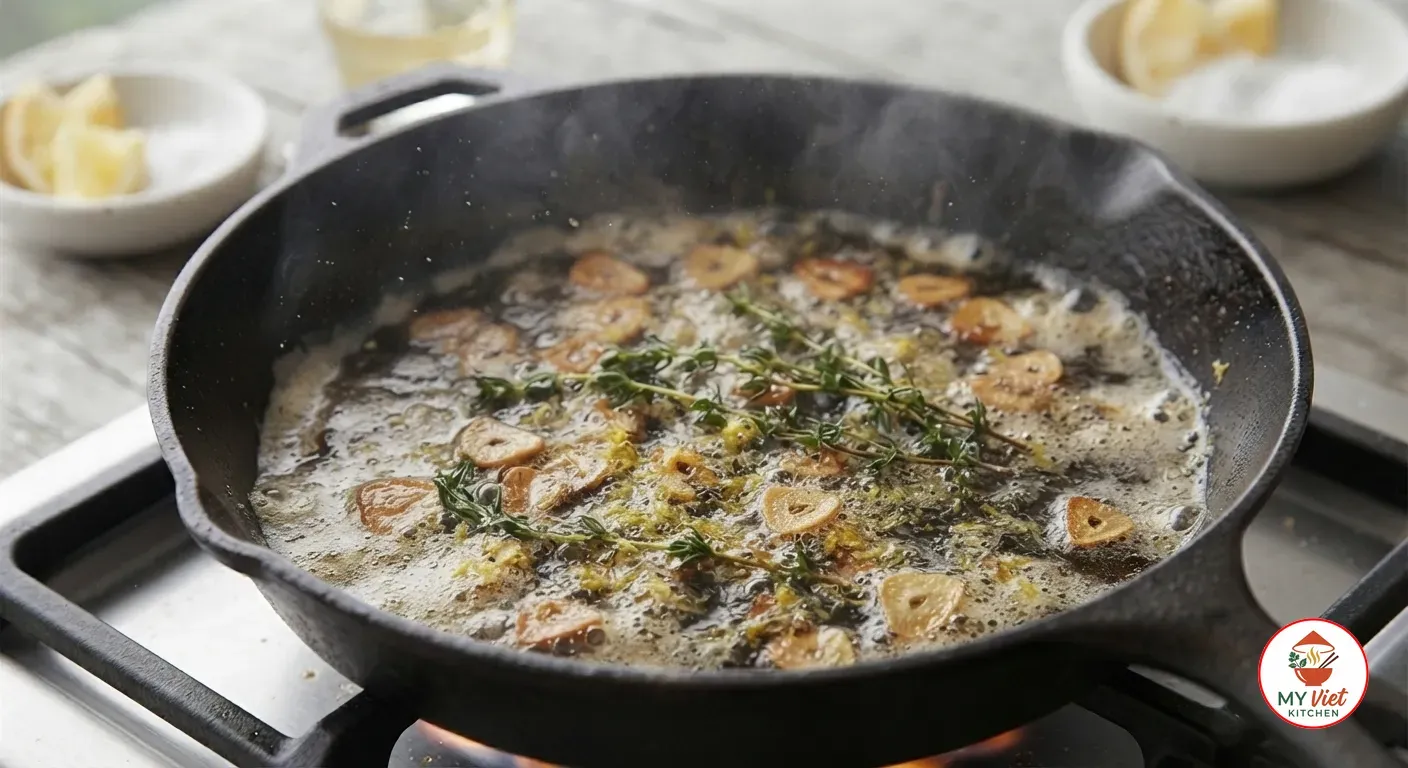
4 Reduce the heat to medium immediately after removing the seared pieces. Add the remaining 2 tablespoons of butter to the same skillet. As the butter melts, add the thinly sliced garlic. Cook the garlic for 30 to 45 seconds, stirring constantly, until it turns fragrant and just begins to turn golden at the edges. Do not let it brown completely, because burnt garlic tastes bitter and will overpower the delicate flavor of the dish.
Drop in the fresh thyme sprig and let it sizzle for a few seconds. Then add the lemon juice and lemon zest. Swirl the pan to combine everything into a cohesive sauce. The lemon juice will cause the butter to bubble vigorously, which is normal. Remove the skillet from the heat as soon as the sauce comes together. The residual warmth from the pan will keep it at the right temperature without overcooking the garlic.
Step 5: Plate and Serve
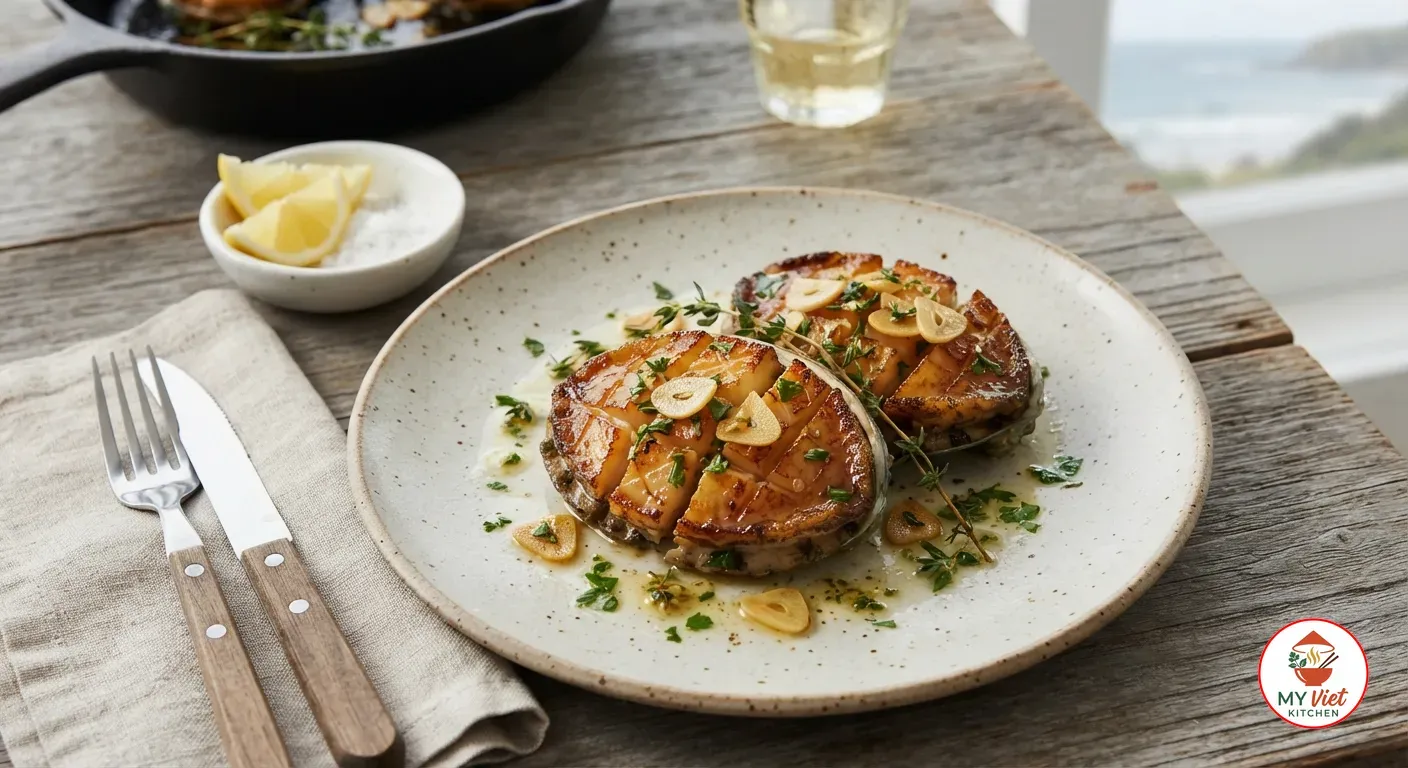
5 Place the seared pieces on warm plates. Spoon the garlic butter sauce generously over the top, making sure to include the sliced garlic and thyme. Sprinkle with freshly chopped flat-leaf parsley and add a wedge of lemon on the side. Serve immediately while still hot. This dish waits for no one, because the texture changes noticeably as it cools. For an elegant presentation, slice on a bias into 3 to 4 pieces to reveal the beautiful golden sear.
Expert Tips for Perfect Results
Do Not Overcook
The single most important rule when cooking abalone is speed. The proteins in the muscle contract rapidly under heat, and just 30 extra seconds can transform tender flesh into a rubbery disc. Keep the total searing time under 3 minutes. Pull each piece from the pan the moment you see a golden-brown crust on both sides. When in doubt, err on the side of undercooking. A slightly underdone result is still pleasant to eat, but an overcooked one is not recoverable.
Get the Pan Screaming Hot
A hot pan is essential for achieving a proper sear. If the skillet is not hot enough, the surface will not caramelize and instead the meat will release moisture and steam. Heat your cast iron or stainless steel pan over high heat for at least 2 minutes before adding the oil and butter. The fat should shimmer and the butter should foam immediately upon contact. Only then should you begin cooking. This intense heat creates the Maillard reaction that develops those rich, savory crust flavors.
Dry the Surface Completely
Moisture is the enemy of a good sear. Before cooking, pat each piece thoroughly with paper towels until the surface feels completely dry. Water on the surface will create steam when it hits the hot pan, which prevents direct contact between the flesh and the hot fat. That barrier of steam stops browning and leaves you with a pale, soft exterior rather than the crispy golden crust you want.
Australian Species Comparison
Australia is home to several commercially harvested species. Each variety offers a slightly different eating experience. Understanding the differences helps you choose the best option for your recipe and cooking method.
| Species | Flavor Profile | Texture | Best Cooking Method |
|---|---|---|---|
| Greenlip | Mild, sweet, delicate | Tender, softer flesh | Pan-searing, sashimi |
| Blacklip | Rich, briny, complex | Firm, meaty | Pan-searing, grilling |
| Brownlip | Sweet, clean, medium intensity | Moderately firm | Pan-searing, stir-fry |
| Tiger | Bold, oceanic | Very firm, chewy | Slow braising |
| Roe’s | Sweet, subtle | Small, tender | Quick sear, raw |
For pan-searing, greenlip and blacklip are the top choices. Greenlip offers a more delicate experience, while blacklip delivers a bolder, more complex flavor. Both species respond beautifully to the high-heat, quick-sear method described in this recipe.
Serving Suggestions
Pan-seared abalone is a luxurious centerpiece that pairs best with simple, clean accompaniments. You want side dishes that complement the shellfish without competing for attention. Keep the flavors light and the preparations elegant.
The Perfect Accompaniments:
- Steamed jasmine rice: The neutral, fragrant rice absorbs the garlic butter sauce beautifully and lets the seafood flavor shine through.
- Sauteed asparagus: Lightly charred asparagus with a squeeze of lemon provides a fresh, green contrast to the rich shellfish.
- Creamy mashed potatoes: Silky mashed potatoes create a luxurious base and soak up every drop of the butter sauce.
- Mixed green salad: A simple salad of baby greens, shaved radish, and a citrus vinaigrette brings freshness that balances the richness of the butter.
Beverage Pairings:
- Chardonnay: An unoaked or lightly oaked Australian Chardonnay mirrors the buttery richness of the dish without overpowering it.
- Riesling: A dry Australian Riesling from the Clare Valley offers crisp acidity and citrus notes that cut through the butter beautifully.
- Champagne or sparkling wine: The effervescence and acidity of sparkling wine cleanse the palate between each luxurious bite.
- Sake: A chilled junmai daiginjo sake brings a clean, floral quality that highlights the natural sweetness of the seafood.
Storage and Reheating
Refrigerator: Store cooked abalone in an airtight container in the refrigerator for up to 2 days. The texture will firm up slightly during storage, but the flavor remains good. Bring it to room temperature before reheating for the best results.
Freezer: Freezing cooked pieces is not recommended because the texture degrades significantly upon thawing. However, you can freeze raw, cleaned abalone for up to 2 months. Wrap each piece tightly in plastic wrap, then place it in a freezer bag with as much air removed as possible. Thaw slowly in the refrigerator overnight before cooking.
Reheating: Gently warm leftovers in a skillet over medium-low heat for 30 to 45 seconds per side. Add a tablespoon of butter to the pan to restore moisture and flavor. Do not use the microwave, as it will make the meat rubbery and tough. Keep in mind that abalone is always best served fresh from the pan, so try to cook only what you plan to eat immediately.
Common Mistakes to Avoid
1. Overcooking
This is by far the most common mistake home cooks make when preparing abalone. The muscle fibers seize rapidly under prolonged heat, turning the tender flesh into something resembling a rubber eraser. Sear each side for no more than 90 seconds. Set a timer if you need to. Once you see a golden-brown crust and the edges begin to curl slightly, the piece is done. Remove it from the heat without hesitation.
2. Skipping the Tenderizing Step
Wild specimens are powerful muscles that grip rocks against ocean currents for their entire lives. Without tenderizing, the raw flesh can be extremely tough, even with perfect cooking technique. Pounding to an even thickness breaks down the tough connective fibers and ensures the meat cooks uniformly. Never skip this step, regardless of how fresh or high-quality the shellfish appears.
3. Using a Cold or Non-Stick Pan
A non-stick pan cannot reach the temperatures needed for a proper sear. The coatings on non-stick surfaces begin to break down above 500 degrees Fahrenheit, and they simply do not conduct heat the same way cast iron does. Use a well-seasoned cast iron skillet or a heavy stainless steel pan instead. Preheat it for at least 2 minutes over high heat before adding any fat. The pan should be almost smoking before cooking begins.
4. Crowding the Pan
Placing too many pieces in the pan at once drops the temperature dramatically. Instead of searing, the shellfish releases moisture and begins to steam. This creates a grey, limp surface with no caramelization. Leave at least 2 inches of space between each piece. If you are cooking more than two, work in batches and wipe the pan clean between rounds to remove any burnt residue.
Frequently Asked Questions
What does abalone taste like?
Abalone has a delicate, sweet, and buttery flavor with a subtle briny undertone from the ocean. The texture is firm yet tender when cooked properly, somewhat similar to a cross between scallop and squid. Australian wild specimens are particularly prized for their clean ocean flavor and satisfying meaty bite. The key to experiencing the best taste is minimal cooking, so the natural sweetness remains intact.
How do you tenderize it before cooking?
Place the cleaned shellfish between two sheets of plastic wrap and pound it gently with a meat mallet or rolling pin. Work from the center outward using moderate, even force until the flesh reaches a uniform thickness of about half an inch. Additionally, scoring a shallow crosshatch pattern on the surface helps break down the fibers further. Both techniques combined ensure even cooking and tender results after searing.
Why is Australian abalone so expensive?
Wild-caught Australian abalone is expensive because of the labor-intensive harvesting process and strict sustainability regulations. Divers collect each one by hand from rocky ocean reefs, and government-imposed quotas limit the annual catch to protect wild populations. Furthermore, this species takes between 5 and 10 years to reach harvestable size. The combination of limited supply, high demand from global markets, and the sheer difficulty of harvesting makes it one of the most expensive shellfish available. According to NSW Department of Primary Industries, sustainable management of these fisheries is critical to preserving the marine resource.
Can you eat it raw?
Yes, fresh specimens can be eaten raw and are considered a delicacy in Japanese cuisine, where they are served thinly sliced as sashimi. The shellfish must be extremely fresh and sourced from a reputable supplier to ensure safety. Slice it paper-thin against the grain for the most tender texture. The raw meat has a clean, sweet ocean flavor with a pleasant chewiness. If you are uncertain about the freshness, however, cooking is always the safer choice.
How long should the cooking take?
For pan-searing, cook abalone for no more than 60 to 90 seconds per side over high heat. The total time should stay under 3 minutes. There is no middle ground: either cook fast and hot, or braise low and slow for 2 to 4 hours until fork-tender. Anything in between results in tough, chewy meat that is unpleasant to eat. Most home cooks prefer the quick-sear method because it preserves the natural sweetness and requires minimal effort.
Variations and Adaptations
Asian-Style with Oyster Sauce:
For a rich umami twist, replace the garlic butter sauce with a combination of oyster sauce, sesame oil, and a splash of Shaoxing wine. Sear the shellfish the same way, then drizzle the warm sauce over the top. Garnish with sliced scallions and toasted sesame seeds. This preparation draws inspiration from Cantonese Asian dishes and pairs wonderfully with steamed rice.
Grilled with Herb Oil:
Brush the tenderized pieces with a mixture of olive oil, minced garlic, lemon zest, and chopped fresh herbs like oregano and rosemary. Grill over direct high heat for 60 to 90 seconds per side on a well-oiled grate. The smoky char from the grill adds another layer of flavor that complements the natural sweetness beautifully. This method works especially well for outdoor summer entertaining.
Slow-Braised:
If you prefer a fork-tender texture, braising is an excellent alternative to searing. Place whole, cleaned pieces in a pot with chicken stock, soy sauce, ginger, and star anise. Cover and simmer at the lowest possible heat for 3 to 4 hours. The long, gentle cooking breaks down the tough collagen and transforms the firm muscle into something silky and yielding. This method is popular in Chinese and Vietnamese cuisine for celebratory meals and Lunar New Year feasts.
Crudo Style:
For those who appreciate raw seafood, thinly sliced fresh specimens dressed with citrus, olive oil, and a pinch of sea salt make an exquisite appetizer. Use only the freshest, sashimi-grade shellfish for this preparation. Slice the flesh paper-thin against the grain and arrange it on a chilled plate. Drizzle with yuzu juice or lime juice, a few drops of quality olive oil, and a sprinkle of microgreens. The simplicity allows the pure ocean flavor to take center stage.
The Cultural Significance in Australia
Abalone holds deep cultural significance in Australia, stretching back thousands of years. Indigenous Australians harvested it from coastal reefs long before European settlement, using the meat as a food source and the iridescent shells for tools, ornamentation, and trade. The rainbow-colored shells, known as mother of pearl, were among the most valued trade items between coastal and inland Aboriginal communities. Today, the cultural connection between Indigenous Australians and this marine resource remains strong, as many communities continue traditional harvesting practices alongside modern fisheries management.
In modern Australian cuisine, abalone represents the pinnacle of local seafood luxury. The country’s strict sustainability practices ensure that wild populations remain healthy for future generations. Each diver is licensed and must adhere to daily catch limits, minimum size requirements, and seasonal closures. This careful stewardship has made Australian abalone the gold standard in global seafood markets. Restaurants from Sydney to Melbourne to Perth proudly feature local preparations on their menus as a showcase of the nation’s marine bounty.
Beyond Australia, this delicacy is highly prized throughout East Asian cultures. In Chinese cuisine, braised preparations are a centerpiece of banquet meals and Lunar New Year celebrations, symbolizing prosperity and good fortune. The high demand from Asian markets has made it one of the country’s most valuable seafood exports. This cross-cultural appreciation connects Australian producers with dining tables across the world. If you enjoy exploring international seafood recipes, our collection features many more dishes that celebrate ocean flavors from different traditions.
Conclusion
Pan-seared Australian wild abalone is a dish that rewards simplicity and precision. The preparation is minimal, the ingredients are few, and the cooking time is measured in seconds rather than hours. Yet the result is undeniably luxurious. A golden, caramelized crust gives way to sweet, tender flesh drenched in garlicky lemon butter. The key lies in three fundamentals: proper tenderizing, a screaming hot pan, and the discipline to pull the shellfish from the heat before it overcooks.
Whether you are celebrating a special occasion, impressing dinner guests, or simply treating yourself to one of the ocean’s finest offerings, this recipe delivers an unforgettable eating experience. This wild-caught Australian treasure is a truly remarkable ingredient, and with the technique above, you can bring restaurant-quality results to your own kitchen. Explore more of our European dishes and international recipes for your next culinary project.