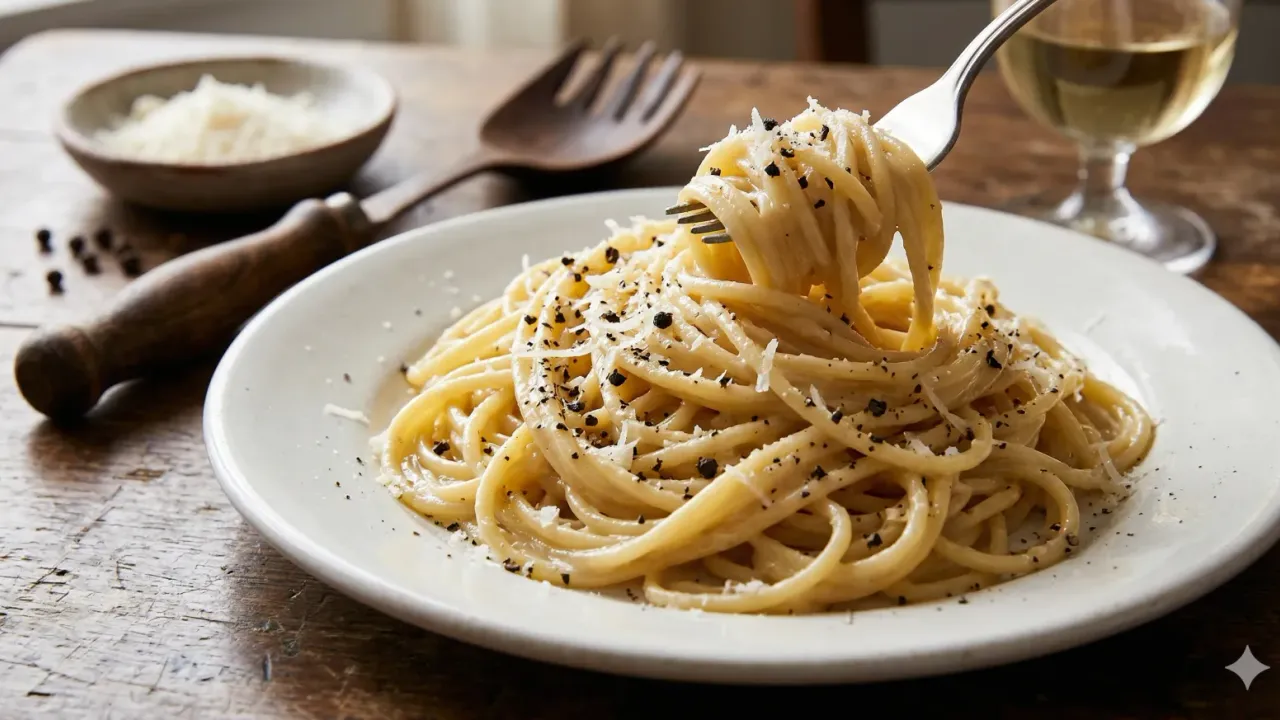
Cacio e pepe is the dish that proves genius lives in simplicity. This legendary Roman pasta transforms just three ingredients — Pecorino Romano cheese, black pepper, and pasta — into one of the most satisfying meals in all of Italian cooking. Every forkful delivers a glossy, clinging sauce that coats each strand with sharp, salty cheese and a slow-building pepper heat. No cream, no butter, and no garlic. Just technique, restraint, and ingredients that have fed Roman shepherds for centuries.
Prep Time: 10 minutes | Cook Time: 15 minutes | Servings: 4
Difficulty: Intermediate | Calories: ~480 per serving
What Makes Cacio e Pepe Special?
Cacio e pepe belongs to a group of dishes that Romans call the “holy trinity” of pasta — alongside carbonara and amatriciana. What sets it apart is its absolute refusal to hide behind complexity. There is no sauce simmering for hours on the stove. There is no layering of aromatics or slow reduction. Instead, the cook must coax a silky emulsion from nothing more than cheese, pepper, and the starchy water left behind by boiling pasta. That process demands precision. Too much heat, and the cheese seizes into rubbery clumps. Too little starch, and the sauce breaks into a greasy puddle.
The origins of cacio e pepe stretch back to the shepherds of Lazio and Sardinia. These men spent weeks traveling with their flocks through the Apennine mountains. They carried dried pasta, aged Pecorino Romano, and black peppercorns because all three ingredients were lightweight, durable, and calorie-dense. At camp, they boiled pasta over an open fire. Then they mixed the starchy water with grated cheese to create a quick, warming meal. The dish was born from necessity, not from a restaurant kitchen. Consequently, that humble origin explains its lasting power.
Today, cacio e pepe appears on the menu of nearly every trattoria in Rome. Despite its apparent simplicity, it remains one of the hardest pasta dishes to execute perfectly. The margin for error is razor-thin. Consequently, many cooks who master elaborate French sauces still struggle with this three-ingredient Roman classic. Mastering cacio e pepe teaches you more about the science of emulsification than almost any other recipe in the Italian canon. Once you understand how starch, fat, and protein interact in this dish, you unlock the logic behind dozens of other Italian pasta sauces.

Choosing the Right Cheese
The cheese is the soul of cacio e pepe. It provides the salt, the fat, and the dominant flavor. Choosing the wrong cheese — or handling it incorrectly — will sabotage the dish before you ever touch the stove. Here are the options worth considering.
- Pecorino Romano DOP (traditional choice): This is the only cheese that belongs in authentic cacio e pepe. Made from sheep’s milk and aged for at least eight months, Pecorino Romano DOP has a sharp, tangy bite and a crystalline texture. Look for the DOP seal on the rind, which certifies production in Lazio, Sardinia, or Grosseto province. Grate it finely on a microplane for the smoothest sauce.
- Pecorino Romano and Parmigiano-Reggiano blend (popular compromise): Many home cooks find pure Pecorino Romano too salty and sharp. Blending it with Parmigiano-Reggiano in a 2:1 ratio softens the flavor while preserving the traditional character. The Parmesan adds a nutty sweetness that balances the Pecorino’s intensity. This blend also melts slightly more easily due to the different protein structures in cow’s milk cheese.
- Parmigiano-Reggiano only (mild alternative): Using all Parmesan produces a milder, nuttier version of the dish. The result tastes pleasant but lacks the distinctive sharpness that defines cacio e pepe in Rome. This substitution works best for those who genuinely dislike the intensity of sheep’s milk cheese. However, most Italian cooks would not consider the result a true cacio e pepe.
- Pre-grated cheese (avoid if possible): Pre-grated Pecorino contains anti-caking agents like cellulose or potato starch. These additives prevent the cheese from melting smoothly into the pasta water. The result is a gritty, clumpy sauce rather than a silky one. Always buy a whole wedge and grate it yourself. The extra two minutes of effort make a dramatic difference in the final texture.
Ingredients for Cacio e Pepe
For the Pasta:
- 1 pound (450g) tonnarelli, spaghetti, or rigatoni
- 1 tablespoon coarse sea salt for the cooking water
For the Sauce:
- 2 cups finely grated Pecorino Romano cheese (about 7 ounces)
- 2 tablespoons whole black peppercorns
- 1 cup reserved pasta cooking water (starchy and cloudy)
Pro tip: Cook the pasta in less water than usual. Use a pot that is slightly smaller than you normally would. Less water means a higher concentration of starch in the cooking liquid. That extra starch acts as a stronger emulsifier, which helps the cheese melt into a creamier, more stable sauce. Many Roman chefs deliberately use a narrow, tall pot rather than a wide stockpot for this exact reason.
Step-by-Step Instructions
Step 1: Toast and Crack the Peppercorns
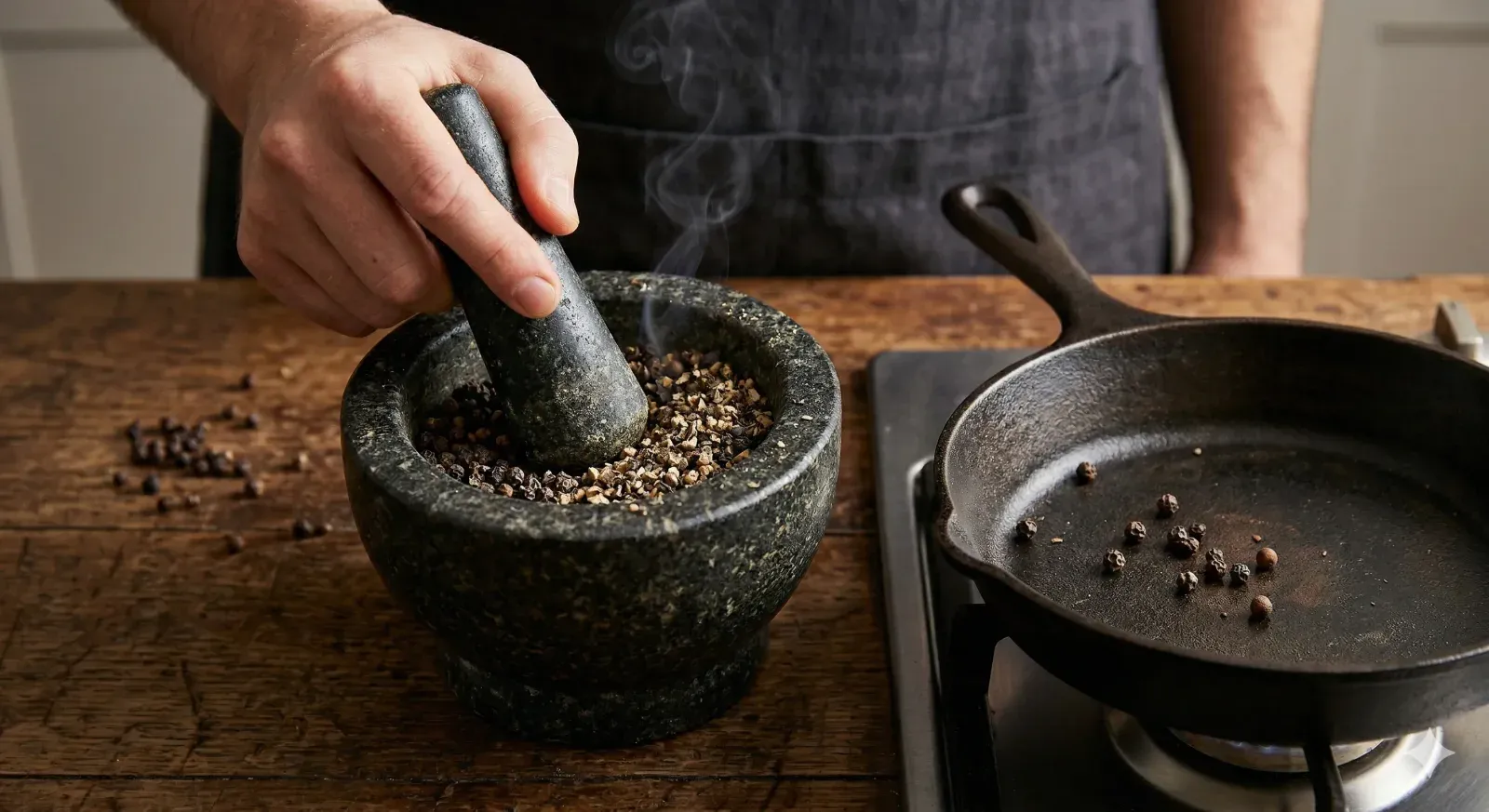
1 Place 2 tablespoons of whole black peppercorns into a dry, cold skillet. Set it over medium heat. Toast the peppercorns for about 2 minutes, shaking the pan occasionally. You will notice the aroma intensifying as the essential oils activate. When the first wisps of smoke appear, remove the pan from the heat immediately. Toasting unlocks volatile compounds in the pepper that raw grinding cannot access. The result is a deeper, more complex heat.
Transfer the hot peppercorns to a mortar and pestle or place them inside a sturdy zip-top bag. Crush them coarsely using the pestle or a heavy skillet. Aim for an uneven texture — some pieces should be quite fine while others remain chunky. This variety creates layers of pepper intensity in the finished dish. Fine particles dissolve into the sauce and deliver a background warmth. Meanwhile, the larger pieces provide bright, sharp bursts that surprise the palate with each bite. Do not use pre-ground pepper, as it lacks the aromatic punch that fresh-cracked delivers.
Step 2: Boil the Pasta
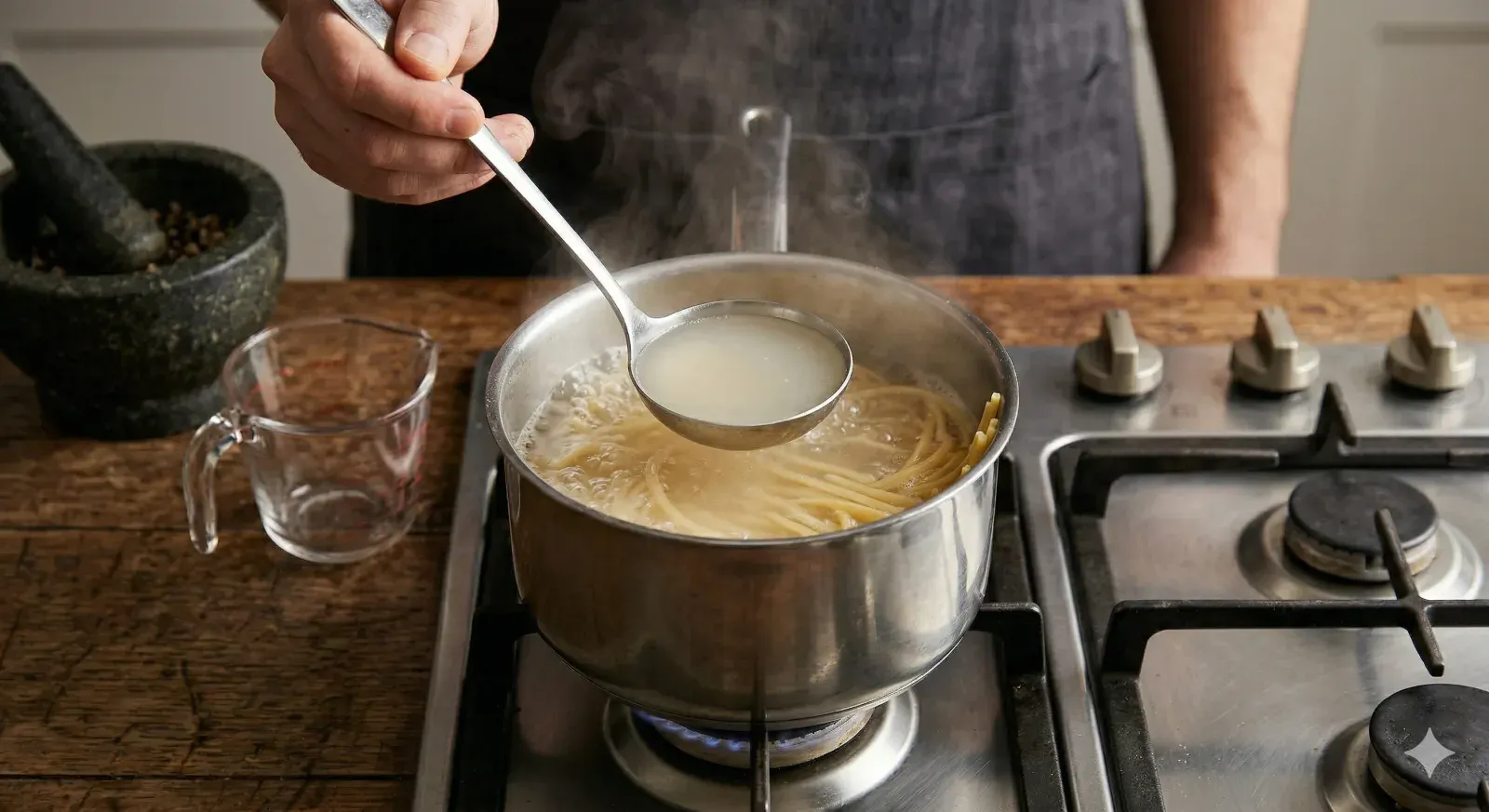
2 Bring a large pot of water to a rolling boil. Add the coarse sea salt and stir briefly. Drop the pasta into the boiling water. Cook it for exactly 2 minutes less than the time printed on the package. The pasta needs to be noticeably firm in the center — firmer than al dente. It will finish cooking in the pepper-infused water during the next step. Under-cooking at this stage is essential because overcooked pasta cannot absorb the sauce properly.
Before draining, scoop out at least 2 full cups of the cloudy pasta cooking water. Use a heatproof measuring cup or a ladle. This starchy liquid is the secret weapon of cacio e pepe. The dissolved starch molecules act as an emulsifier, bridging the gap between the water and the cheese fat. Without enough starch, the sauce splits into oily cheese and watery liquid. Save more water than you think you need — you can always discard what remains, but you cannot recreate it once the pasta is drained.
Step 3: Build the Pepper Base
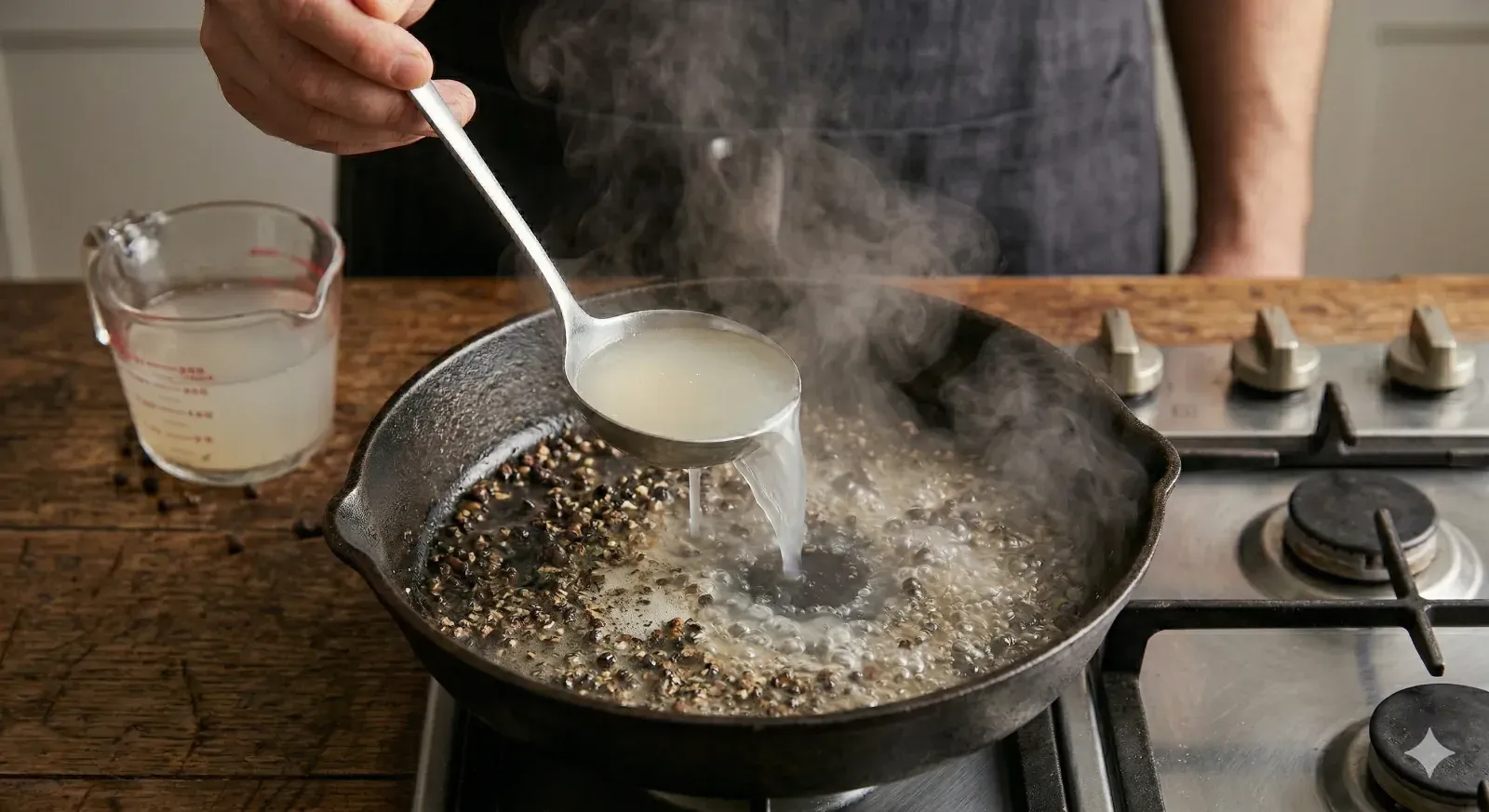
3 Add the crushed peppercorns to a large, dry skillet. Place it over medium heat and toast for about 1 minute, stirring constantly. The residual oils in the pepper will release a second wave of aroma. Now add one ladle — roughly half a cup — of the hot pasta cooking water to the skillet. The water will sizzle and steam on contact. This is exactly what you want.
Let the pepper water simmer gently until it reduces by approximately half. This step infuses the liquid with concentrated pepper flavor. The reduced water also becomes starchier as it evaporates, which further helps the eventual emulsion. Swirl the pan occasionally to keep the peppercorns moving. After about 2 minutes, the liquid should look slightly thickened and deeply aromatic. Remove the skillet from the heat and set it aside while you prepare the cheese mixture.
Step 4: Create the Cheese Cream
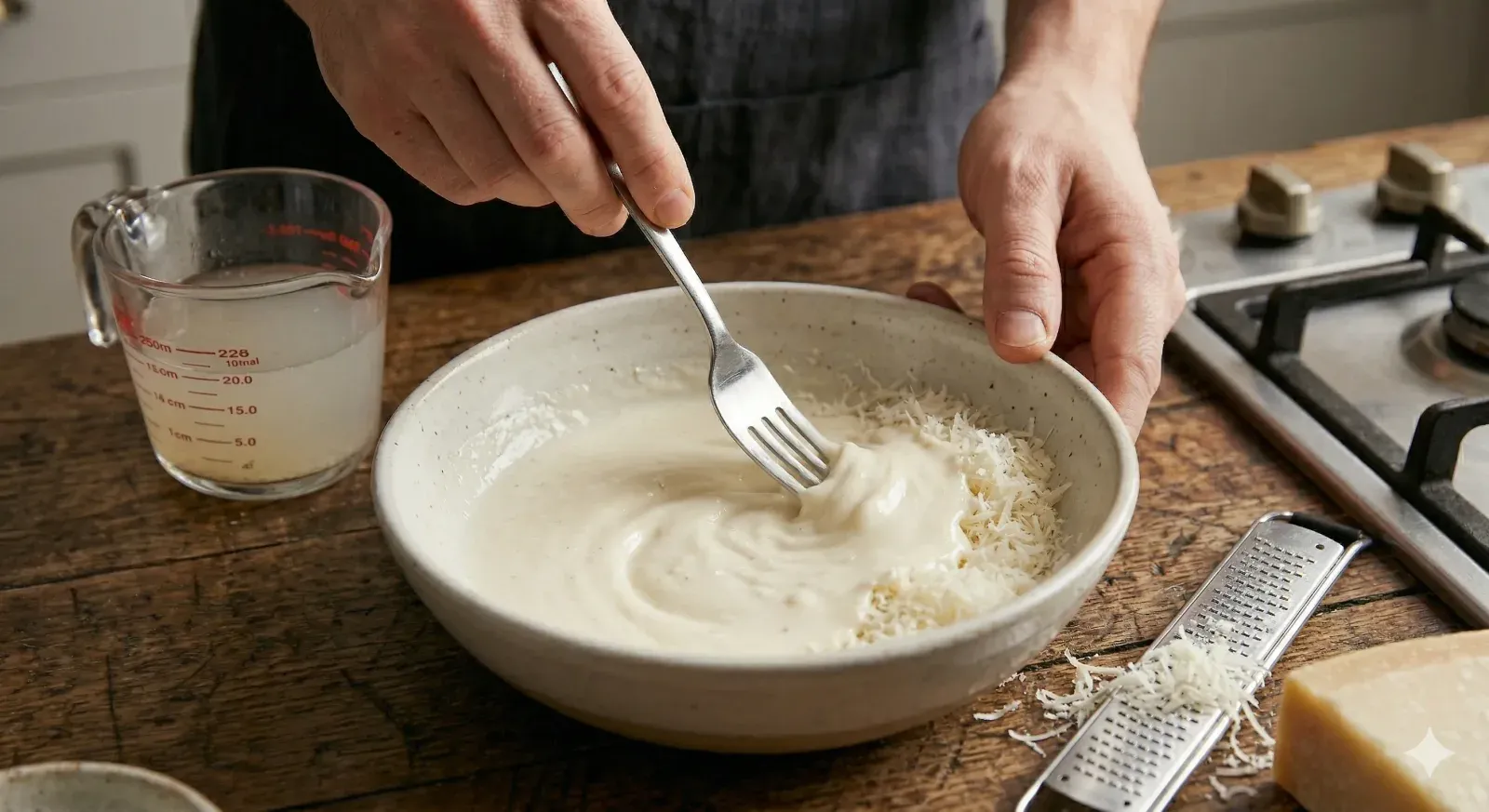
4 Place the finely grated Pecorino Romano into a large mixing bowl. This step is where most home cooks fail, so pay close attention to the temperature. Add warm pasta water — not boiling, not cold — a few tablespoons at a time. Stir vigorously with a fork after each addition. As a result, the cheese will begin to soften and absorb the liquid gradually.
Continue adding warm water and stirring until the mixture reaches the consistency of heavy cream. It should be smooth, pourable, and free of lumps. If the water is too hot, the proteins in the Pecorino will denature instantly and form tight, rubbery clumps that no amount of stirring can fix. Let the reserved pasta water cool for a minute or two before adding it to the cheese. Alternatively, mix a small amount of cold water into the hot pasta water to bring the temperature down. The ideal temperature range is between 140 and 160 degrees Fahrenheit.
Step 5: Combine and Serve
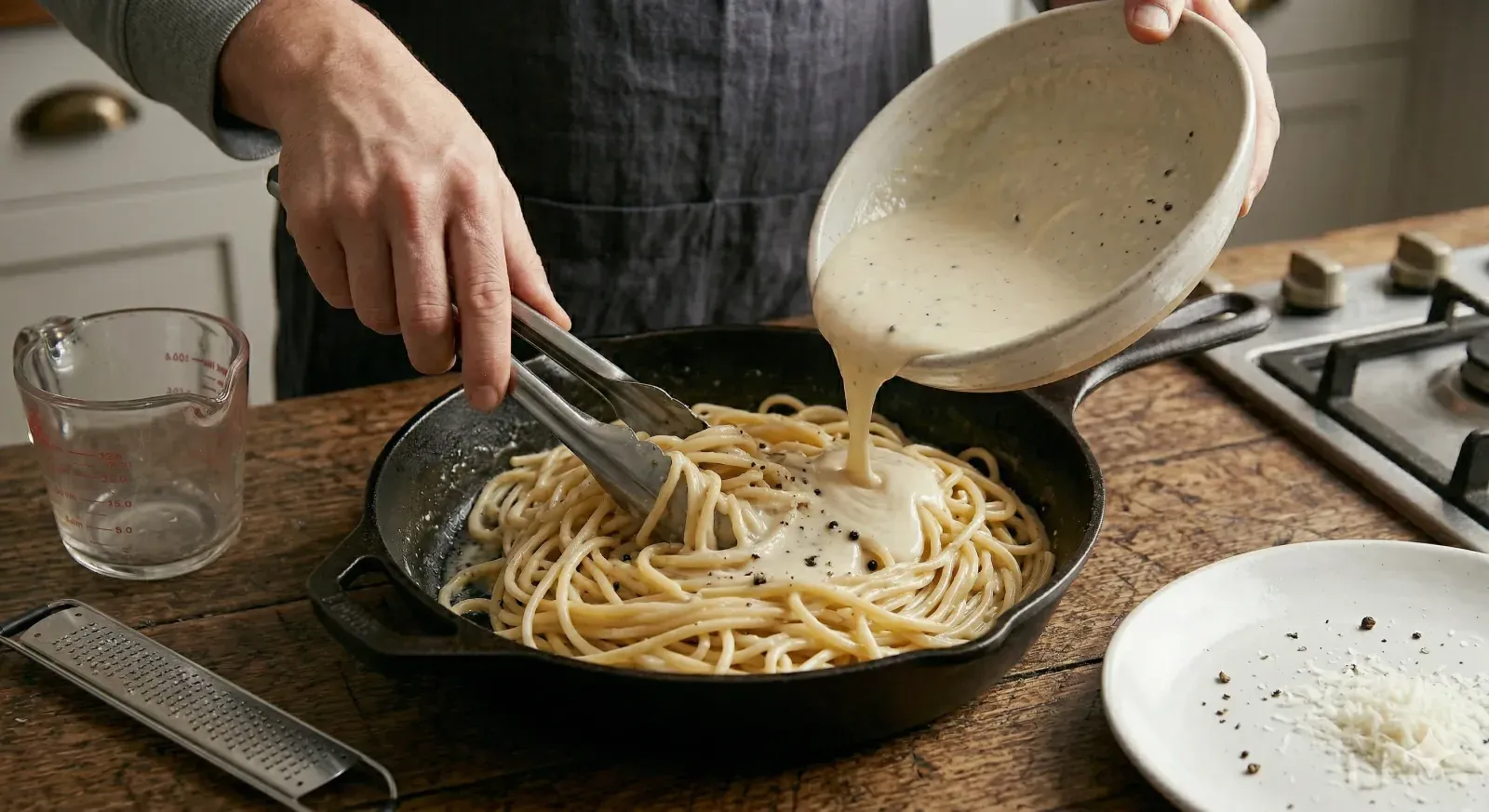
5 Transfer the drained pasta directly into the skillet with the reduced pepper water. Set the skillet over low heat. Toss the pasta gently in the pepper liquid for about 30 seconds. Furthermore, this step allows the pasta to absorb the pepper flavor and finish cooking to perfect al dente texture. The starch on the surface of the pasta also activates, which primes it to bond with the cheese.
Now remove the skillet from the heat entirely. This is the critical moment. Pour the Pecorino cream over the hot pasta. Immediately begin tossing vigorously with tongs or two forks. Lift the pasta high and let it fall back into the pan repeatedly. The agitation distributes the cheese evenly and encourages emulsification. As a result, within 30 seconds the sauce should become glossy, creamy, and clinging to every strand. If it looks too thick, add a splash of reserved pasta water. If it looks too thin, keep tossing — the sauce thickens as it cools slightly. Serve immediately on warm plates. Finish each portion with an extra crack of black pepper and a small shower of grated Pecorino.
Expert Tips for Perfect Cacio e Pepe
Grate the Cheese as Finely as Possible
A microplane produces the finest, fluffiest grated cheese. Those thin, airy shreds dissolve much faster than the coarser strands from a box grater. Fine grating increases the surface area dramatically. More surface area means more contact with the warm water, which translates to faster and smoother melting. If you only own a box grater, use the smallest holes available. Never use pre-shredded cheese from a bag. The anti-caking coatings on packaged cheese prevent the smooth emulsion that defines this dish.
Control the Temperature at Every Stage
Temperature management separates a silky cacio e pepe from a clumpy disaster. The cheese cream must be mixed with warm water, not boiling. The pasta must be tossed off the heat when the cheese is added. Even the serving plates should be warm, not hot. Excessive heat at any point causes the Pecorino proteins to coagulate instead of emulsifying. Think of the process like making a delicate custard. Gentle, controlled warmth produces smoothness. Sudden, intense heat produces lumps.
Work Quickly and Confidently
Cacio e pepe waits for no one. From the moment the pasta leaves the boiling water, you have roughly 90 seconds to complete the dish. Hesitation leads to cooling pasta, stiffening cheese, and a broken sauce. Have every component ready before you drain the pasta. The pepper water should be reduced. The cheese cream should be smooth. Your serving plates should be warm and waiting. Treat the final assembly like a sprint, not a stroll.
Regional Italian Cheese Pasta Comparison
Cacio e pepe belongs to a family of Roman cheese-based pasta dishes. Each variation adds one or two ingredients to the base formula. Understanding these cousins helps you appreciate what makes cacio e pepe distinct.
| Dish | Region | Key Ingredients | Key Characteristics |
|---|---|---|---|
| Cacio e Pepe | Rome | Pecorino Romano, black pepper | No fat added, relies entirely on starchy water emulsion |
| Carbonara | Rome | Pecorino, guanciale, egg yolks, pepper | Creamy egg-based sauce with crispy cured pork |
| Gricia | Rome / Amatrice | Pecorino, guanciale, pepper | Cacio e pepe plus rendered pork fat, no egg |
| Amatriciana | Amatrice | Pecorino, guanciale, tomato, pepper | Gricia with tomato sauce added, slightly sweet and tangy |
| Alfredo | Rome (modern) | Parmigiano-Reggiano, butter | Butter emulsion, milder flavor, no pepper |
Serving Suggestions
Cacio e pepe shines brightest when served as the star of a simple meal. Its bold, concentrated flavor needs space to express itself. Pair it with clean, refreshing sides that contrast the richness without competing for attention. Here are the best options.
Classic Accompaniments:
- Puntarelle salad: This classic Roman chicory salad, dressed with anchovies, garlic, and lemon, is the traditional partner for cacio e pepe. Its bitter crunch cuts through the richness of the cheese beautifully. Serve it alongside or just after the pasta course.
- Simple arugula salad: Peppery arugula leaves dressed with extra virgin olive oil and a squeeze of lemon provide a fresh contrast. The bitterness of the greens mirrors the pepper in the pasta. Keep the dressing minimal so it does not compete with the Pecorino.
- Grilled vegetables: Charred zucchini, eggplant, or artichoke hearts add a smoky dimension without overwhelming the pasta. Season them simply with olive oil and flaky salt. Their mild sweetness balances the sharpness of the aged cheese.
- Crusty bread: A slice of rustic Roman-style bread with a hard crust and chewy interior soaks up any sauce left on the plate. Italians call this act “fare la scarpetta,” meaning to make a little shoe — scooping every last trace of sauce with bread.
Beverage Pairings:
- Frascati (white wine): This crisp white wine from the hills south of Rome is the classic regional pairing. Its bright acidity and subtle almond notes cleanse the palate between bites. Frascati’s lightness balances the rich Pecorino without overpowering the pepper.
- Verdicchio (white wine): A dry Verdicchio from the Marche region offers citrus and green apple flavors. Its mineral backbone complements the salty, tangy Pecorino Romano perfectly. Serve it well chilled for maximum refreshment.
- Montepulciano d’Abruzzo (red wine): For red wine lovers, this medium-bodied red provides dark fruit flavors and gentle tannins. It stands up to the bold pepper heat without clashing with the cheese. Choose a younger vintage for the freshest fruit character.
- Sparkling water with lemon: For a non-alcoholic option, cold sparkling water with a wedge of fresh lemon refreshes the palate after each rich bite. The carbonation helps cut through the cheese coating. It is a simple choice that works reliably well.
Storage and Reheating
Refrigerator: Store leftover cacio e pepe in an airtight container for up to 2 days. The sauce will thicken and solidify as the cheese cools. Be aware that reheated cacio e pepe never matches the fresh version. The emulsion breaks down during cooling, and re-establishing it fully is nearly impossible. Still, leftovers remain tasty, just different in texture from the original.
Reheating: The gentlest method is a skillet over low heat. Add a splash of water — not pasta water, since you likely discarded it — and toss the cold pasta continuously. The added moisture helps loosen the solidified cheese. Heat it only until warm, not hot. Alternatively, add a teaspoon of butter to the skillet before adding the pasta. The butter fat helps re-emulsify the sauce slightly. Microwaving works in a pinch, but the result tends to be uneven, with rubbery cheese spots alongside dry pasta.
Freezer: Cacio e pepe does not freeze well. The cheese sauce breaks down completely during freezing and thawing. The texture becomes grainy and the pasta turns mushy. If you anticipate leftovers, consider cooking only as much pasta as you plan to eat. You can store ungrated Pecorino Romano and whole peppercorns indefinitely, so keeping the raw ingredients on hand is a better strategy than freezing the finished dish.
Common Mistakes to Avoid
1. Adding the Cheese Over Direct Heat
This is the most frequent cause of clumpy cacio e pepe. Pecorino Romano proteins begin to coagulate rapidly above 170 degrees Fahrenheit. A hot skillet on an active burner easily exceeds that threshold. Always remove the pan from the heat before introducing the cheese cream. The residual warmth of the pasta and the pepper water provides enough heat to melt the cheese. If you feel the pan cooling too much, return it to the lowest possible flame for just a few seconds.
2. Discarding the Pasta Water
Draining pasta directly into a colander without saving water first is a common kitchen habit. For most dishes, this matters little. For cacio e pepe, it is catastrophic. The starchy cooking water is the only emulsifier in the recipe. Without it, you have no way to bind the cheese into a smooth sauce. Set a measuring cup next to the stove before you start cooking. Make saving the water the first thing you do when the pasta is ready.
3. Using Pre-Ground Pepper
Pre-ground black pepper from a jar has lost most of its essential oils during storage. Those volatile compounds are what give pepper its floral, citrusy, and spicy dimensions. Freshly cracked peppercorns deliver ten times the aromatic impact. The difference is not subtle. Toasting whole peppercorns and cracking them yourself takes under five minutes. That small investment transforms the dish from pleasant to extraordinary.
4. Overcooking the Pasta Before Tossing
If the pasta is already soft when it leaves the boiling water, it will turn mushy during the tossing phase. Remember that the pasta spends another 30 to 60 seconds cooking in the pepper water. It also absorbs moisture from the cheese cream. Pulling it from the pot 2 minutes early ensures the final texture is perfectly al dente. Firm pasta also holds its shape better during vigorous tossing. Overcooked noodles break apart and release too much starch, which makes the sauce gummy rather than glossy.
Frequently Asked Questions
What does cacio e pepe mean in English?
Cacio e pepe translates directly to “cheese and pepper.” The word “cacio” is the Roman dialect term for cheese, specifically referring to Pecorino Romano. “Pepe” simply means pepper. The name describes the dish with characteristic Italian directness. There is no flourish, no metaphor — just an honest declaration of what sits on the plate. This naming convention is common in Roman cuisine, where dishes earn their titles from their ingredients rather than from the chef who invented them.
Why does my cacio e pepe get clumpy?
Clumping occurs when the Pecorino Romano encounters too much heat too quickly. The proteins in the cheese denature and form tight, rubbery masses instead of melting smoothly. To prevent this, always remove the skillet from direct heat before adding the cheese mixture. Use warm pasta water — around 150 degrees Fahrenheit — rather than boiling water when creating the cream. Toss the pasta continuously and vigorously so the cheese distributes evenly. If clumps start forming, add a splash of cool water immediately and toss faster.
Can I use Parmesan instead of Pecorino Romano?
Parmigiano-Reggiano can substitute for Pecorino, but the dish will taste distinctly different. Pecorino Romano is a sheep’s milk cheese with bold, salty, tangy notes. Parmesan is a cow’s milk cheese that is milder, nuttier, and less assertive. Roman purists would not accept the substitution. However, a blend of two parts Pecorino to one part Parmesan is a widely accepted compromise. This combination softens the sharpness while preserving the traditional flavor profile.
What is the best pasta shape for cacio e pepe?
Tonnarelli is the most traditional choice. This thick, square-cut fresh egg pasta is a Roman specialty. Its rough surface grabs the cheese sauce effectively. Spaghetti is the most popular alternative and works beautifully. Rigatoni offers an excellent option for those who prefer short pasta — the ridges and hollow center trap sauce inside each tube. Avoid delicate shapes like angel hair or thin spaghettini. They overcook during the tossing phase and cannot hold enough sauce to deliver the proper cheese-to-pasta ratio.
Is cacio e pepe the same as Alfredo?
These two dishes share a family resemblance but differ in fundamental ways. Cacio e pepe relies on Pecorino Romano, black pepper, and starchy water. It contains no added fat beyond what the cheese provides. Fettuccine Alfredo uses Parmigiano-Reggiano and butter, with American versions often adding heavy cream. The flavor profiles are distinct: cacio e pepe delivers sharp, peppery intensity, while Alfredo offers mild, buttery richness. Their origins also differ — cacio e pepe traces back centuries to Roman shepherds, while Alfredo was created by restaurateur Alfredo di Lelio in the early 1900s.
How do I save pasta water for cacio e pepe?
Before draining the pasta, use a heatproof measuring cup or ladle to scoop out at least 2 cups of the cloudy cooking water. Place the cup right next to the stove so you remember. The water looks milky because it contains dissolved starch from the pasta. That starch is the natural emulsifier that binds the cheese into a creamy sauce. Some experienced cooks deliberately use less boiling water to concentrate the starch further. Always save more than you think you need — leftover water costs nothing, but running out mid-recipe ruins the dish.
Variations and Adaptations
Cacio e Pepe with Crispy Guanciale (Gricia Style):
Adding crispy guanciale transforms cacio e pepe into its close cousin, pasta alla gricia. Dice 4 ounces of guanciale into small strips. Render them slowly in a cold skillet over medium-low heat until the fat melts and the meat turns golden and crispy. Remove the guanciale pieces and set them aside. Use the rendered fat in the skillet as the base for your pepper water. This variation adds a smoky, porky richness that complements the Pecorino beautifully. Scatter the crispy guanciale over the finished pasta as a garnish.
Cacio e Pepe Risotto:
Apply the same flavor principles to risotto for a creamy, comforting twist. Toast Arborio rice in olive oil. Add warm broth one ladle at a time, stirring constantly for about 18 minutes. Off the heat, fold in finely grated Pecorino Romano and a generous amount of freshly cracked black pepper. The naturally starchy risotto provides its own emulsification. The result is a creamy rice dish with the unmistakable sharp, peppery character of cacio e pepe. Serve it as a primo course or a standalone dinner.
Vegan Cacio e Pepe:
Soak 1 cup of raw cashews for 4 hours, then blend them with nutritional yeast, a splash of lemon juice, and warm pasta water until smooth. Season with salt and white miso paste for umami depth. The cashew cream mimics the texture of melted Pecorino. Toss it with pasta and freshly cracked pepper just as you would the traditional version. The flavor is not identical to the original, but it captures the creamy, peppery spirit of the dish for those avoiding dairy.
Gluten-Free Adaptation:
Use a high-quality gluten-free spaghetti made from brown rice and corn. These blends produce a convincing texture and release adequate starch into the cooking water. Avoid chickpea or lentil pasta for this recipe, as their flavors compete with the Pecorino. Cook the gluten-free pasta according to the package directions, checking it frequently since it can go from firm to mushy within seconds. Reserve extra cooking water, as gluten-free pasta sometimes releases less starch. The sauce technique remains exactly the same.
The Cultural Significance of Cacio e Pepe
Cacio e pepe occupies a sacred position in Roman food culture. It belongs to the quartet of canonical Roman pastas — alongside carbonara, amatriciana, and gricia — that define the city’s culinary identity. These four dishes share a common thread: Pecorino Romano cheese and black pepper. Each adds one element to the previous, building from the simplest (cacio e pepe) to the most elaborate (amatriciana). Together, they form a progression that tells the story of Roman cooking through incremental additions.
The dish also carries economic and social meaning. Cacio e pepe was poor people’s food. Its ingredients cost almost nothing. Dried pasta, a wedge of hard cheese, and a handful of peppercorns could feed a family for days. Shepherds ate it on the mountainside. Workers ate it in Roman taverns. Students ate it in cramped apartments. Nevertheless, today the same dish appears on menus at Michelin-starred restaurants, where chefs charge premium prices for what shepherds once assembled over a campfire. That transformation from poverty food to haute cuisine mirrors the broader story of Italian cooking — dishes that began as sustenance earned recognition as art through centuries of refinement.
A Roman Litmus Test
In modern Rome, cacio e pepe has become a cultural litmus test. Romans judge a trattoria by the quality of its cacio e pepe before anything else. A restaurant that serves a clumpy, broken version loses credibility instantly, regardless of what else the menu offers. As a result, according to Serious Eats, mastering this dish requires understanding the science behind emulsification as much as the tradition behind the recipe. That intersection of science and heritage is what keeps cacio e pepe relevant, debated, and beloved after all these centuries.
Conclusion
Cacio e pepe teaches a lesson that applies far beyond the kitchen: the hardest things to master are often the simplest in structure. Three ingredients, five minutes of active cooking, and zero room for error. That combination demands respect, practice, and a willingness to fail before you succeed. However, once you nail the silky emulsion, the sharp bite of aged Pecorino, and the slow pepper warmth that builds with every forkful, you will understand why Romans have guarded this recipe for centuries.
Ready to explore more Italian and European classics? Browse our full collection of European dishes for recipes like carbonara, risotto alla Milanese, and lasagna. If you try this cacio e pepe recipe, leave a rating and share how it turned out.