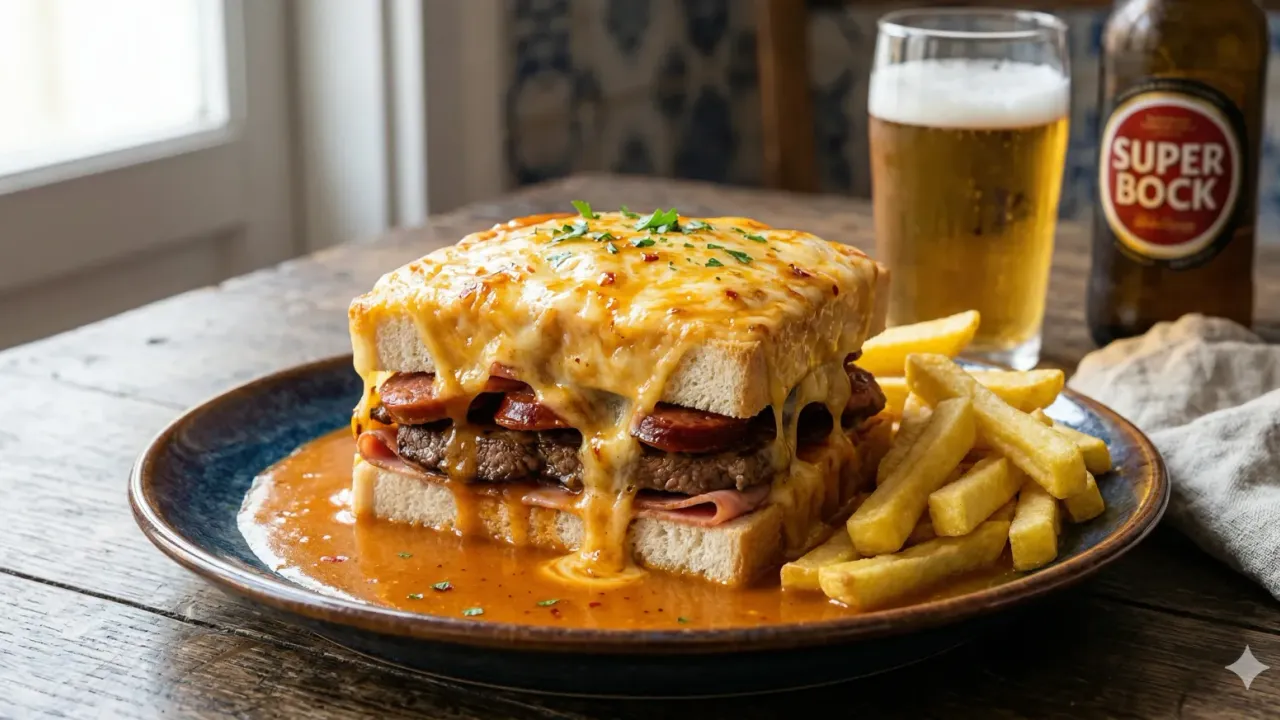
Francesinha is Porto’s proudest culinary creation, and this francesinha recipe walks you through every layer of this legendary Portuguese sandwich. Thick bread encases steak, ham, and smoky sausage. Melted cheese blankets the entire stack. Then a rich, spicy beer sauce drowns it all. This is not a delicate dish. It is bold, messy, and absolutely unforgettable. Once you try a homemade francesinha, you will understand why Porto guards this recipe with fierce local pride.
Prep Time: 30 minutes | Cook Time: 45 minutes | Servings: 4
Difficulty: Medium | Calories: ~980 per serving
What Makes Francesinha Special?
Most sandwiches try to be light and balanced. The francesinha does the opposite. It piles meat on meat, wraps everything in cheese, and then floods the plate with sauce. This sandwich was born in Porto in the 1950s. A returning emigrant named Daniel da Silva brought the idea back from France. He took the elegant croque monsieur and transformed it into something wilder. He added more meats, swapped the bechamel for a beer-based sauce, and created a dish that matched Porto’s appetite for bold, hearty food.
The magic of a great francesinha lives in its sauce. Every restaurant in Porto has a secret recipe. Some use more beer, others lean on tomato. A few add seafood stock or whiskey. The common thread is always a slow-simmered blend of beer, tomato, and chili that thickens into a glossy, spicy gravy. This sauce soaks into the bread, melts into the cheese, and ties every layer together into a single rich bite.
The name “francesinha” means “little French girl” in Portuguese. It is a playful nod to the French croque monsieur that inspired it. However, there is nothing little about this sandwich. A single serving fills an entire plate. In Porto, locals eat it for weekend lunch with a cold beer and a side of fries. Tourists line up for hours at famous spots like Cafe Santiago and Cervejaria Brasao. For many visitors, the francesinha is the single best thing they eat in all of Portugal.

Choosing the Right Meats for Francesinha
The meat layers define a great francesinha. You need at least three types of meat. Each one adds a different flavor and texture. Here are the best choices for an authentic result.
- Linguica or chourico sausage (essential): These Portuguese smoked sausages bring smoky, garlicky depth. Linguica is milder and thinner. Chourico is spicier and thicker. Either one works well. If you cannot find them, Spanish chorizo is the closest substitute.
- Thin beef steak (essential): A fast-seared, thin-cut beef steak adds richness to the center. Use sirloin, round steak, or minute steak. Keep it thin so it cooks quickly and fits neatly between the bread slices. Season simply with salt and pepper.
- Cured ham (essential): A slice of presunto or regular cooked ham gives a salty, savory base layer. Portuguese presunto is dry-cured and has a deeper flavor. However, deli ham works as an accessible substitute outside Portugal.
- Fresh sausage (optional): Some traditional recipes also include a fresh pork sausage called salsicha fresca. It adds another layer of meaty richness. A mild Italian sausage makes a decent stand-in if you want the full experience.
Ingredients for Francesinha
Sandwich Assembly:
- 8 slices thick white sandwich bread
- 4 thin beef steaks (about 4 oz each)
- 4 slices cooked ham or presunto
- 4 linguica or chourico sausages
- 8 slices semi-cured cheese (Flamengo, Edam, or young Gouda)
- 2 tablespoons butter
- Salt and black pepper to taste
Beer Sauce:
- 2 tablespoons butter
- 1 small onion, finely chopped
- 2 cloves garlic, minced
- 2 tablespoons all-purpose flour
- 1 cup lager beer (Super Bock, Sagres, or any lager)
- 1 cup beef broth
- 1/2 cup tomato puree
- 1 bay leaf
- 1 tablespoon piri-piri sauce or hot sauce
- 1 teaspoon Worcestershire sauce
- 1 teaspoon sweet paprika
- 1 tablespoon brandy or port wine
- Salt and pepper to taste
For Serving:
- French fries (thick-cut preferred)
- Extra beer sauce on the side
- Cold Portuguese lager beer
Pro tip: Make the beer sauce a day ahead. The flavors deepen overnight in the refrigerator. When you reheat it the next day, the sauce will be thicker, richer, and more complex. This trick saves time on the day you assemble the sandwiches and actually improves the final result.
Step-by-Step Instructions
Step 1: Make the Beer Sauce
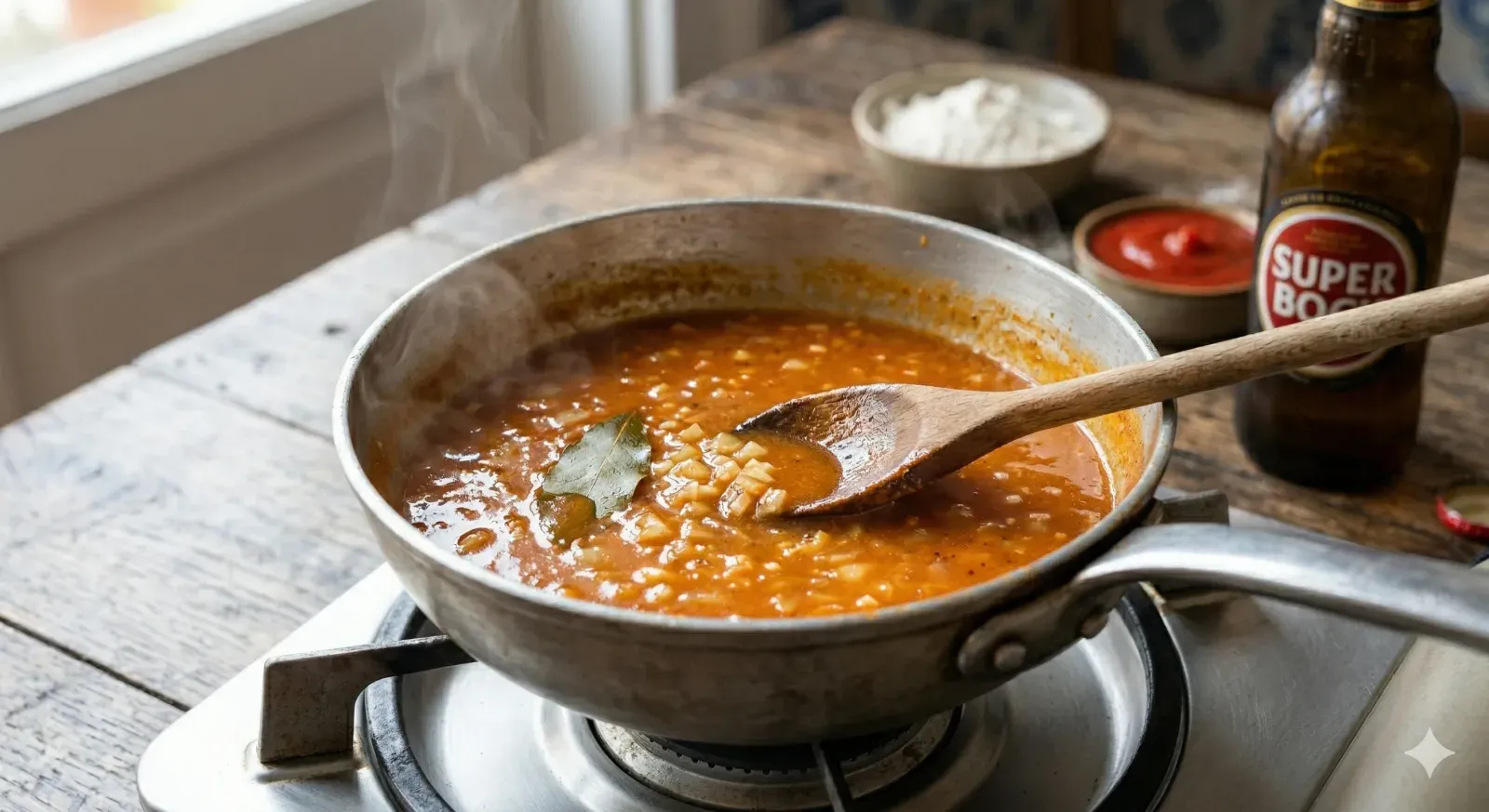
1 Melt two tablespoons of butter in a medium saucepan over medium heat. Add the finely chopped onion and saute for 3 to 4 minutes until it softens and turns translucent. Stir in the minced garlic and cook for another 30 seconds. The aroma should be sweet and fragrant without any browning.
Sprinkle in the flour and stir constantly for one full minute. This creates a roux that thickens the sauce. Next, pour in the beer slowly while stirring to prevent lumps. Add the beef broth, tomato puree, bay leaf, piri-piri sauce, Worcestershire sauce, sweet paprika, and brandy. Bring everything to a gentle simmer. Let it cook for 20 to 25 minutes, stirring now and then. The sauce should reduce by about a third and coat the back of a spoon. Season with salt and pepper. Remove the bay leaf and keep the sauce warm.
Step 2: Cook the Meats
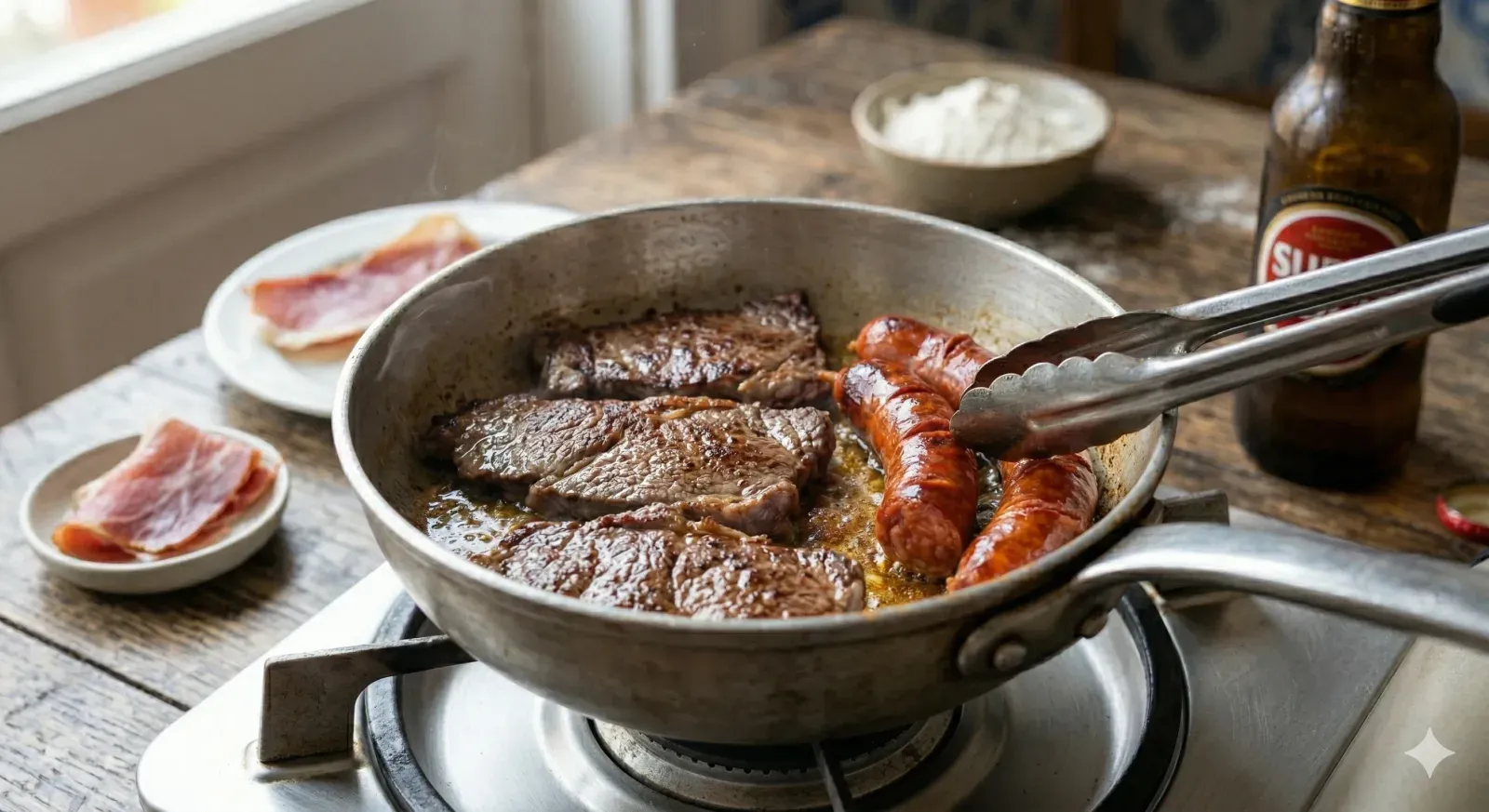
2 Season the beef steaks with salt and pepper on both sides. Heat a large skillet over high heat and add a tablespoon of butter. Once the butter foams, lay the steaks in the pan. Sear them for 2 minutes per side until they develop a brown crust. You want them medium to medium-well. Remove the steaks and set them aside on a plate.
In the same skillet, add the linguica sausages. Cook them over medium-high heat for about 5 minutes, turning occasionally until they are browned on all sides. The sausage fat will render into the pan and add flavor. Once browned, remove the sausages and slice them in half lengthwise. This flat shape fits better inside the sandwich and gives more surface area for the cheese to grip.
Step 3: Assemble the Sandwiches
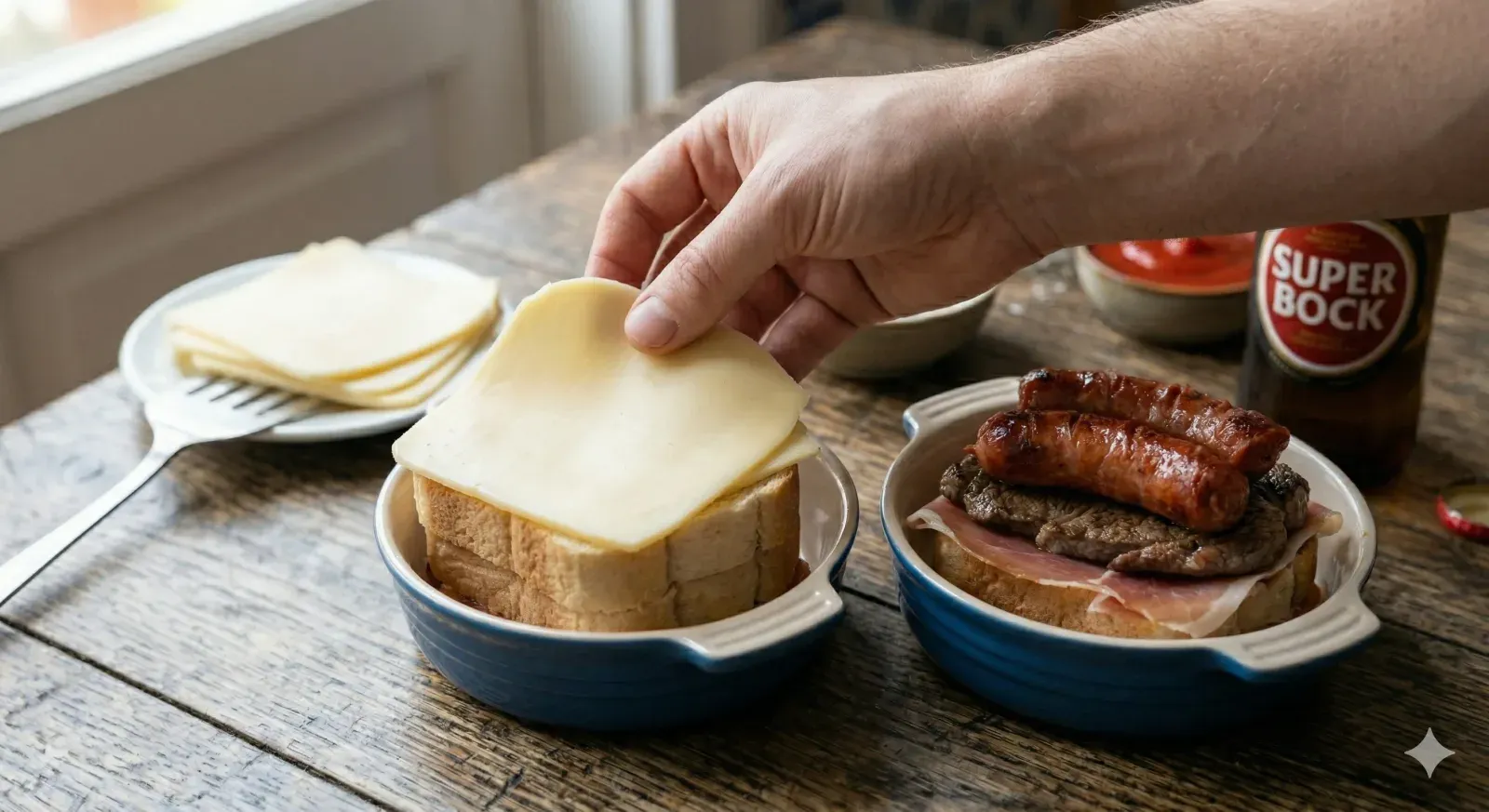
3 Preheat your oven to 350 degrees Fahrenheit. Take four individual oven-safe dishes or one large baking tray. Place a slice of bread on each dish. Layer the meats in this order: first the ham, then the seared beef steak, then the sliced sausage. Press down gently so the stack stays compact. Top with the second slice of bread.
Now cover each sandwich completely with cheese slices. Drape the cheese over the top and tuck it down the sides. You want a full cheese blanket with no bread showing. The cheese acts as a seal that holds everything together during baking. It also creates that beautiful golden crust that makes a francesinha so striking on the plate.
Step 4: Bake and Sauce
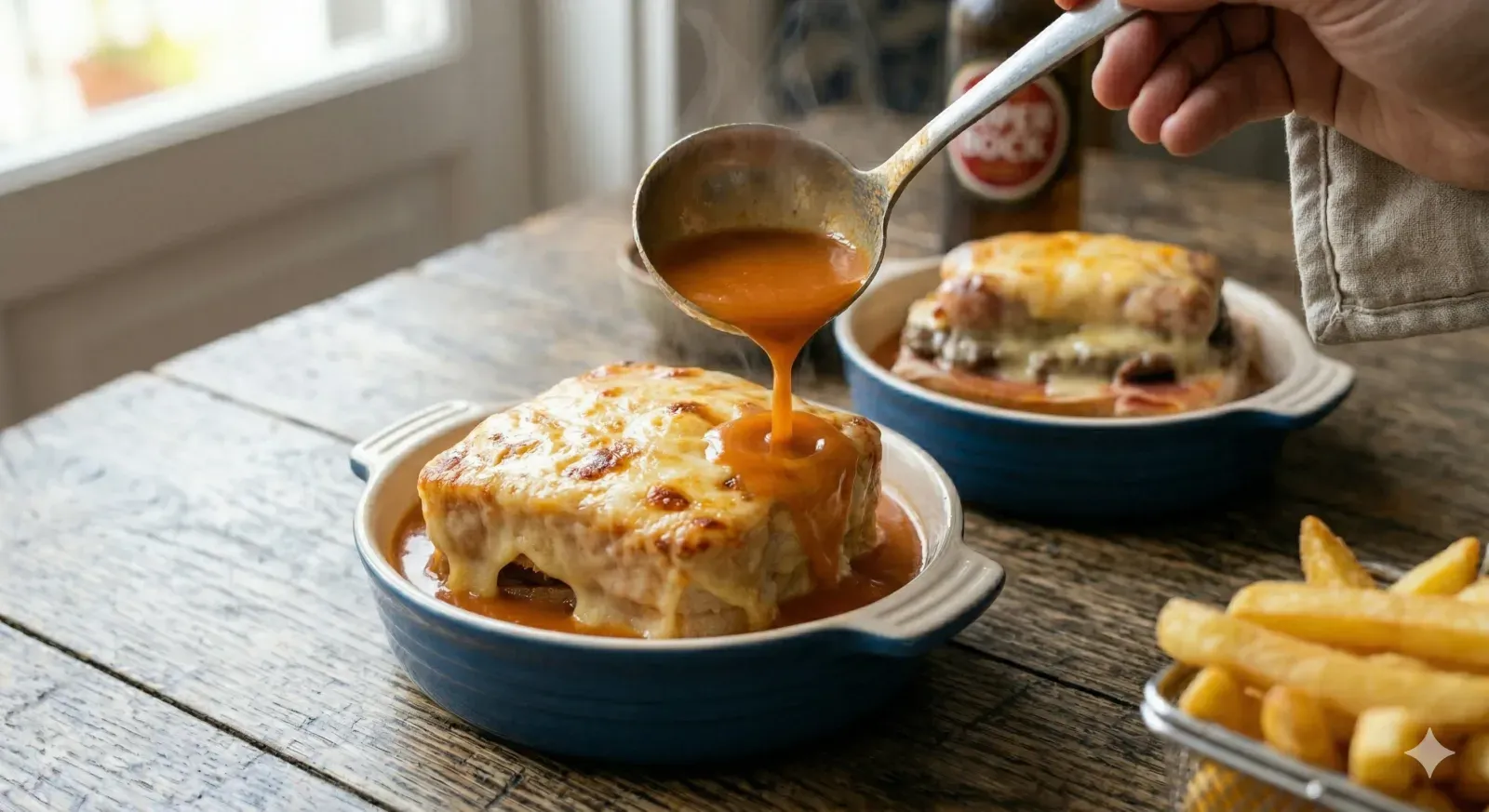
4 Place the assembled sandwiches in the preheated oven. Bake for 10 to 12 minutes until the cheese melts completely and turns golden brown in spots. Watch carefully during the last few minutes. You want the cheese bubbly and slightly caramelized but not burnt. The heat also warms all the meats through and toasts the bread underneath.
Remove the sandwiches from the oven. Immediately ladle the hot beer sauce generously over each one. The sauce should pool around the base and soak into every crevice. Serve right away with a big pile of thick-cut French fries alongside. In Porto, the fries sit right in the sauce so they soak up every drop. Put extra sauce in a small bowl on the side for dipping.
Expert Tips for the Perfect Francesinha
Sauce Is Everything
The sauce makes or breaks a francesinha. Spend extra time getting it right. Simmer it low and slow so the beer cooks off its raw alcohol taste. The final sauce should be smooth, slightly thick, and have a gentle heat that builds at the back of your throat. Taste it several times while cooking and adjust the salt, heat, and tomato balance. A great sauce ties every element together.
Choose the Right Bread
Use thick-sliced, sturdy white bread. Thin bread falls apart under the weight of the meats and sauce. Pullman loaf or pain de mie works best. The bread should be dense enough to absorb sauce without disintegrating. In Portugal, they use a firm white bread called pao de forma. Avoid sourdough or whole wheat, as they clash with the flavors.
Do Not Skimp on Cheese
The cheese layer is both structural and flavorful. Use enough slices to cover the entire sandwich, including the sides. As it melts in the oven, it seals the sandwich shut. This keeps the meats in place and creates a gooey, golden shell. Too little cheese means a sandwich that falls apart the moment you cut into it.
Regional Francesinha Styles
Although Porto claims the francesinha as its own, variations have spread across Portugal. Each version reflects local tastes. Here is a comparison of the most common styles.
| Region | Style | Key Differences | Sauce Character |
|---|---|---|---|
| Porto (classic) | Traditional francesinha | Beef, ham, linguica, thick bread, Flamengo cheese | Beer-based, tomato, piri-piri, medium spice |
| Braga | Braga-style francesinha | Often lighter with fewer meat layers | Milder sauce, less spicy, more tomato-forward |
| Lisbon | Lisbon adaptation | Sometimes adds shrimp or seafood | Lighter, occasionally cream-based variations |
| Aveiro | Coastal twist | May include bacalhau (salt cod) instead of beef | Fish broth added, subtle seafood notes |
| Modern/fusion | Gourmet francesinha | Wagyu beef, truffle cheese, craft beer sauce | Complex, sometimes with wine reduction or whiskey |
Serving Suggestions
A francesinha is a complete meal on its own. The sandwich is so large and rich that you rarely need much else on the table. Still, a few well-chosen sides and drinks turn it into a proper Portuguese feast.
Classic Accompaniments:
- Thick-cut French fries: The traditional and only real side dish. In Porto, fries sit on the plate next to the sandwich, soaking in the beer sauce. Cut them thick so they hold up without getting soggy too fast.
- Simple green salad: A small side salad with lettuce, tomato, and a light vinaigrette offers a fresh contrast. It helps cut through the richness. Not traditional, but a welcome addition if you want some balance.
- Fried egg on top: Many Porto restaurants offer a francesinha especial with a fried egg on top of the cheese. The runny yolk mixes into the sauce and adds even more richness. If you want the full indulgent experience, add the egg.
- Explore more European sides that pair well with Portuguese dishes for a broader spread.
Beverage Pairings:
- Super Bock or Sagres (Portuguese lager): The classic and essential pairing. A cold, crisp Portuguese lager washes down the richness. In Porto, a francesinha without a beer beside it is almost unthinkable.
- Vinho Verde: A young, slightly sparkling Portuguese white wine. Its acidity and fizz cut through the heavy cheese and sauce. This is a refreshing alternative to beer that stays true to Portuguese tradition.
- Port wine (tawny): A small glass of tawny port after the meal is a very Porto way to finish. The caramel and nutty notes complement the lingering spice from the sauce.
- Sparkling water with lemon: For a non-alcoholic choice, sparkling water with a squeeze of lemon cleanses the palate between bites. It is simple and effective.
Storage and Reheating
Refrigerator: Store leftover francesinha in an airtight container for up to 2 days. Keep the sauce in a separate container from the sandwich. The bread becomes soggy if stored together with sauce. Reheat them separately for the best texture.
Freezer: The beer sauce freezes well for up to 2 months. Store it in a sealed container or freezer bag. The assembled sandwich does not freeze well because the bread turns mushy. Instead, freeze the cooked meats and sauce separately. Thaw overnight in the fridge before reheating.
Reheating: Warm the sauce on the stovetop over medium-low heat, adding a splash of beer or broth if it has thickened too much. Place the sandwich in a 350-degree oven for 8 to 10 minutes until the cheese re-melts and bubbles. Never microwave a francesinha. The microwave turns the bread rubbery and the cheese into a gummy mess.
Common Mistakes to Avoid
1. Using Thin, Soft Bread
Thin sandwich bread cannot handle the weight of three meats, cheese, and a flood of sauce. It falls apart before you take the first bite. Always use thick-sliced, sturdy white bread. The bread is the foundation of the entire structure, so choose one that holds up under pressure.
2. Rushing the Sauce
A great francesinha sauce needs at least 20 minutes of simmering. Rushing it leaves the beer tasting raw and the flavors flat. The slow simmer lets the alcohol cook off and allows the tomato, spices, and broth to meld into a smooth, cohesive sauce. Patience here makes the biggest difference.
3. Not Enough Cheese
Skimping on cheese ruins the signature look and structure of a francesinha. The cheese layer must cover the top and sides completely. It melts into a sealed shell that holds everything together. Without enough cheese, the sandwich falls apart and looks nothing like the real thing.
4. Adding Sauce Before Baking
Always bake the sandwich first, then add the sauce after it comes out of the oven. If you pour sauce on before baking, the bread gets completely waterlogged. The cheese cannot crisp up properly either. Bake first for golden, bubbly cheese. Then drench with hot sauce right before serving.
Frequently Asked Questions
What is a francesinha?
A francesinha is a Portuguese sandwich from the city of Porto. It layers cured ham, sausage, and beef steak between thick white bread. The whole thing gets covered in melted cheese and then drenched in a spicy beer and tomato sauce. French fries on the side are the standard accompaniment. It is one of the most famous dishes in all of Portugal.
What kind of beer is best for francesinha sauce?
A Portuguese lager like Super Bock or Sagres gives the most authentic flavor. Any light, crisp lager will work as a substitute. The beer should be malty and smooth, not bitter or hoppy. Avoid IPAs, stouts, or dark ales. They overpower the tomato and spice and make the sauce taste harsh.
Can I make francesinha without piri-piri sauce?
Absolutely. Piri-piri sauce adds heat, but any hot sauce can fill that role. Tabasco and sriracha both work well. You can also use a pinch of cayenne pepper or crushed red pepper flakes. Adjust the amount based on your spice tolerance. The sauce should have a warm, background heat that does not burn.
What cheese is used in a traditional francesinha?
Portuguese queijo Flamengo is the traditional choice. It is a mild, semi-cured cheese that melts smoothly. Outside Portugal, Edam or young Gouda are the best substitutes. A blend of mozzarella and mild cheddar also works well. The key quality is smooth, even melting that covers the sandwich without turning oily or grainy.
Is francesinha the same as a croque monsieur?
They share a distant family tree, but they are very different sandwiches. The croque monsieur is French, uses bechamel and Gruyere, and typically contains only ham. The francesinha is Portuguese, uses a beer-tomato-chili sauce, and stacks multiple meats. In terms of intensity, the croque monsieur is a sedan. The francesinha is a truck.
How many calories are in a francesinha?
A single francesinha with sauce and fries contains roughly 900 to 1100 calories. It is an indulgent meal by design. In Porto, people treat it as a special occasion dish, not an everyday lunch. Sharing one between two people is perfectly reasonable. You can also skip the fries to cut the calorie count by about 300.
Variations and Adaptations
Francesinha Especial (with Egg):
Fry an egg sunny-side up and place it on top of the melted cheese before adding the sauce. The runny yolk mingles with the beer sauce and creates an even richer experience. This is the most popular variation in Porto. Nearly every restaurant offers it as an upgrade on the menu.
Chicken or Vegetarian Francesinha:
Replace the beef and sausage with grilled chicken breast for a slightly lighter version. For a vegetarian take, use thick slices of grilled portobello mushroom, roasted bell peppers, and smoked tofu. The beer sauce stays the same. These versions are not traditional, but they let more people enjoy the flavors of this iconic dish.
Seafood Francesinha:
In coastal towns like Aveiro, some restaurants swap the meat for shrimp, bacalhau, or grilled octopus. The sauce gets a splash of fish broth. This version is lighter than the original but still rich and flavorful. If you love seafood and Portuguese cuisine, it is a creative twist worth trying at home.
The Cultural Significance of Francesinha
Porto and the francesinha are inseparable. This sandwich is not just a meal. It is a symbol of the city’s identity. In Porto, asking someone about the best francesinha is like asking a New Yorker about the best pizza. Everyone has an opinion. Debates are passionate. Loyalties to specific restaurants run deep and span generations.
The francesinha also tells the story of Portuguese emigration and cultural exchange. Daniel da Silva spent years in France before returning to Porto in the 1950s. He brought back the croque monsieur and reinvented it with Portuguese ingredients and Portuguese boldness. The result was something entirely new. It blended French technique with the hearty appetites of northern Portugal.
Today, the francesinha has become a pilgrimage dish for food tourists visiting Porto. Travel guides list it alongside pasteis de nata and bacalhau as essential Portuguese eating. Restaurants compete fiercely for the title of best francesinha. Some places have been serving the same secret sauce recipe for over fifty years. In a country that takes its food seriously, the francesinha holds a place of honor at the very top.
Conclusion
This francesinha recipe brings the bold flavors of Porto straight to your kitchen. The keys to success are a patient, slow-simmered beer sauce, quality meats, and generous cheese. Layer everything with care and bake until golden. Then flood the plate with that glossy, spicy sauce. With thick fries and a cold beer alongside, you have one of the most satisfying meals in European cuisine.
Ready to explore more Portuguese and European classics? Browse our full collection of European dishes, including Bacalhau a Bras, Feijoada, and Bouillabaisse. Discover how every corner of Europe puts its stamp on the art of comfort food.