Bulgogi is Korea’s most beloved grilled beef dish. Thin slices of tender beef soak in a sweet and savory marinade before hitting a blazing hot grill. The result is smoky, caramelized meat with deep umami flavor. Also known as Korean BBQ marinated beef, bulgogi has won fans across the globe for good reason. This recipe shows you how to make authentic bulgogi at home with simple steps and easy-to-find items.
Prep Time: 20 minutes (plus at least 30 minutes marinating) | Cook Time: 15 minutes | Servings: 4
Difficulty: Easy | Calories: ~420 per serving
What Makes Bulgogi Special?
Bulgogi stands apart from other grilled beef dishes because of its unique marinade. Specifically, Asian pear is the secret weapon here. It contains natural enzymes that break down tough muscle fibers. As a result, even lean cuts become melt-in-your-mouth tender after a short soak. Soy sauce then adds salty depth. Brown sugar also creates caramelized edges on the grill. Meanwhile, sesame oil and garlic provide the nutty, aromatic base that defines Korean cooking.
Korean families have been making bulgogi for centuries. In fact, historians trace the dish back to maekjeok, skewered grilled meat from the Goguryeo kingdom (37 BC to AD 668). Over the centuries, the recipe evolved through the Joseon Dynasty. Consequently, cooks began slicing the beef thinner and adding soy-based marinades. By the 20th century, modern bulgogi took its current form. Still, it remains a staple at Korean BBQ restaurants and family tables alike.
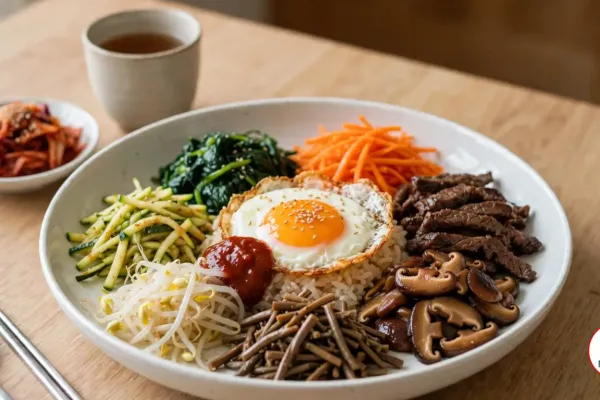
What truly sets bulgogi apart from Western-style grilled beef is the balance of flavors. Western marinades often lean heavily on acid and salt. Korean bulgogi, however, achieves a careful harmony of sweet, salty, nutty, and savory notes. Furthermore, the thin slicing technique ensures the beef cooks in seconds. This quick sear locks in juices while creating beautifully charred edges. If you enjoy dishes like bibimbap or kimchi jjigae, then bulgogi is a natural next step in your Korean cooking journey.

Choosing the Right Beef for Bulgogi
Your choice of beef matters more than any other single decision in this recipe. Specifically, the cut affects tenderness, flavor, and how well the meat holds the marinade. Here are your best options, ranked from most to least ideal.
- Ribeye (best choice): Rich marbling keeps the meat juicy during high-heat grilling. Fat melts into the marinade and creates the best caramelized flavor. Slightly more expensive, but worth every penny for special meals.
- Sirloin: Lean, affordable, and widely available. Slices thinly with ease. The Asian pear marinade compensates for its lower fat content by tenderizing the meat naturally.
- Tenderloin: Extremely tender but lacks the beefy flavor of ribeye. Works well for those who prefer a milder taste. Also ideal for children and picky eaters.
- Flank steak: A budget-friendly option that works when sliced very thin against the grain. Requires a longer marinating time of at least 2 hours. The texture is chewier, so thin cuts are essential.
Pro tip: Freeze the beef for 30 minutes before slicing. Partially frozen meat is much easier to cut into thin, even strips. Alternatively, ask your butcher to slice it thinly, or buy pre-sliced bulgogi meat from a Korean grocery store.
Ingredients for Bulgogi
Main Ingredients:
- 1.5 pounds beef sirloin or ribeye, thinly sliced against the grain
- 1 medium onion, thinly sliced into half-moons
- 3 green onions, cut into 2-inch pieces
- 1 tablespoon sesame seeds for garnish
For the Bulgogi Marinade:
- 1 medium Asian pear, peeled and grated
- 4 tablespoons soy sauce
- 2 tablespoons brown sugar
- 2 tablespoons toasted sesame oil
- 5 cloves garlic, minced
- 1 tablespoon fresh ginger, grated
- 1 tablespoon rice wine or mirin
- 1 teaspoon freshly ground black pepper
For Serving:
- Steamed short-grain rice
- Fresh lettuce leaves for wraps (red leaf or butter lettuce)
- Sliced garlic cloves
- Sliced green chili peppers
- Ssamjang (Korean dipping paste)
- Kimchi
Pro tip: Asian pear is the key to tender bulgogi. Its enzymes tenderize the beef gently, without turning it mushy the way kiwi can. If you cannot find Asian pear, grate half a ripe kiwi and marinate for no more than 30 minutes, or use 2 tablespoons of apple sauce as a backup.
Step-by-Step Instructions
Step 1: Prepare the Bulgogi Marinade
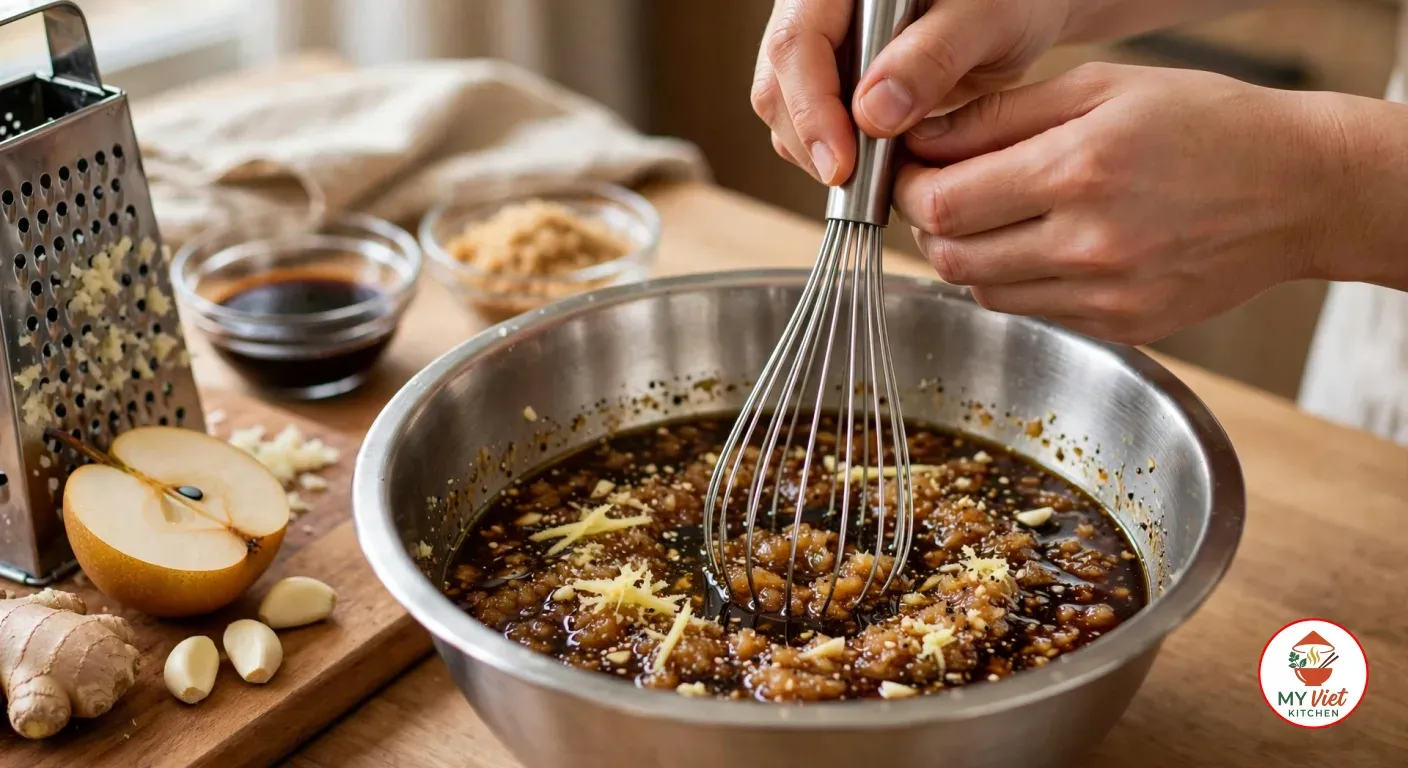
1 Start by grating the Asian pear directly into a large mixing bowl. You want the juice and pulp, so use the fine side of a box grater. Next, add the soy sauce, brown sugar, sesame oil, minced garlic, grated ginger, rice wine, and black pepper. Whisk everything together until the sugar dissolves fully.
The marinade should taste sweet, salty, and deeply aromatic. Therefore, give it a quick taste test now. If it seems too salty, add a pinch more sugar. Conversely, if it tastes too sweet, add a splash more soy sauce. Ultimately, getting this balance right at the start ensures your finished bulgogi hits all the right notes.
Step 2: Slice and Marinate the Beef
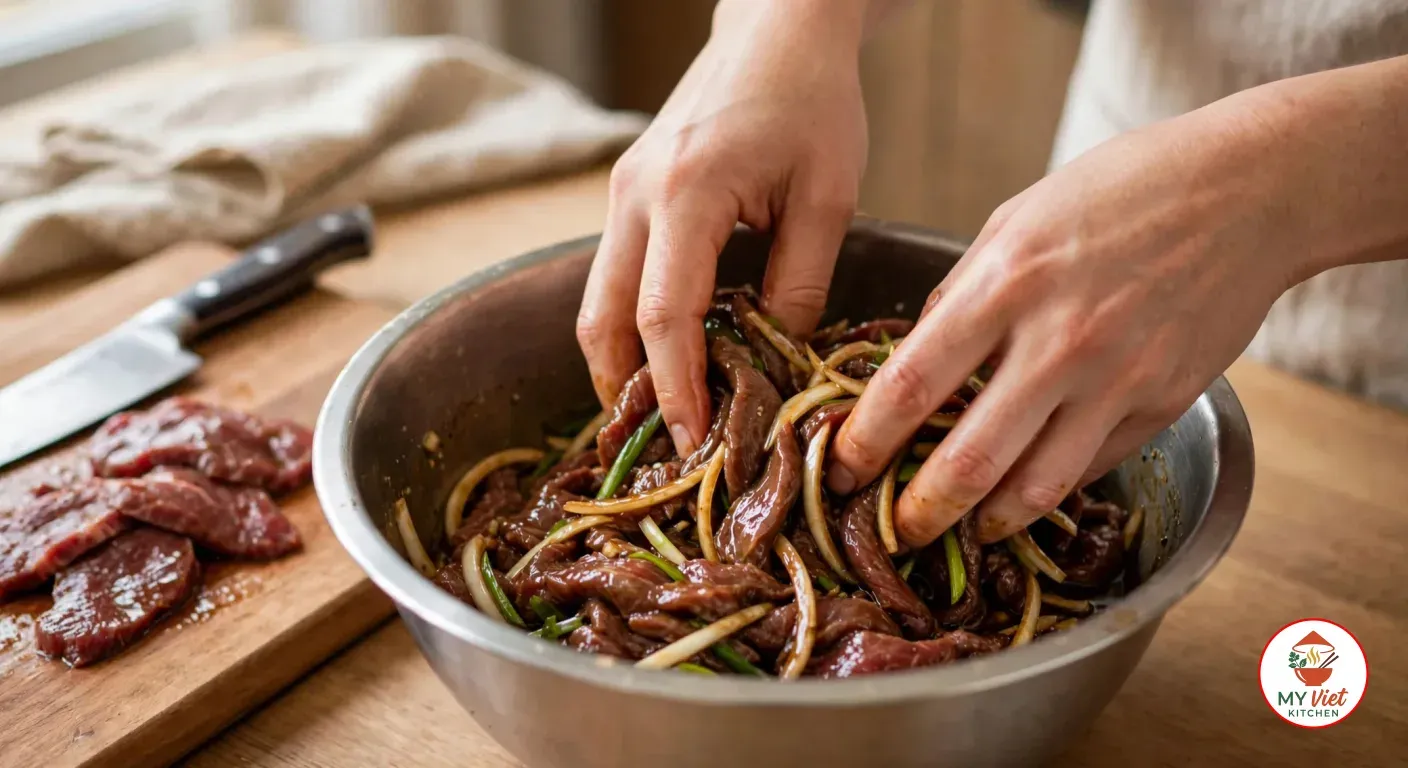
2 Slice the beef into thin strips, roughly 1/8 inch thick. Always cut against the grain for maximum tenderness. Cutting with the grain leaves long muscle fibers intact, which makes the meat chewy. Then place the sliced beef into the marinade bowl. Add the sliced onion and green onion pieces.
Then toss everything with your hands until each piece is well coated. Next, cover the bowl with plastic wrap. Refrigerate for at least 30 minutes. However, overnight marinating delivers far better results. The pear enzymes need time to work. Also, the soy sauce slowly penetrates deeper into the meat fibers. After 4 hours, the flavor difference is remarkable. So plan ahead when possible for the best outcome.
Step 3: Preheat the Grill or Pan
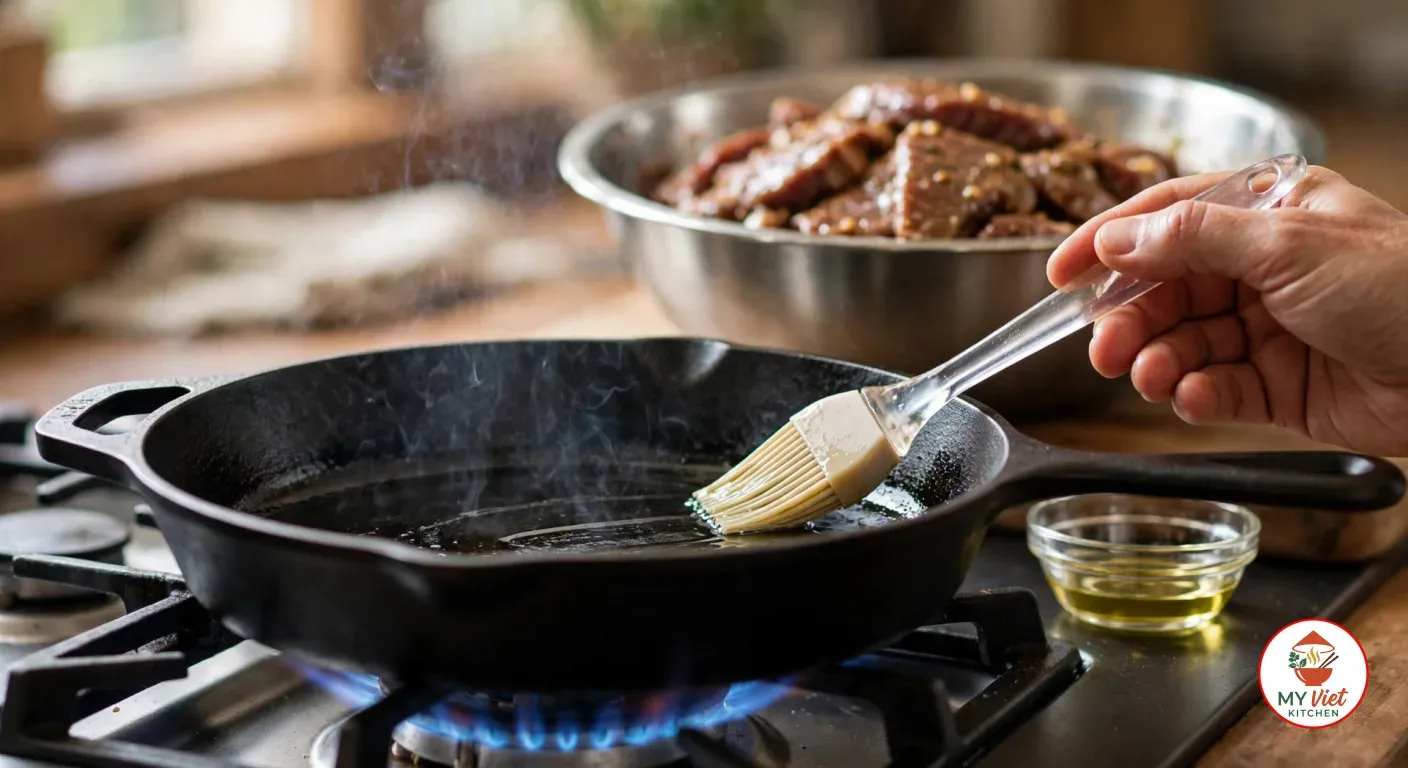
3 First, heat a grill, grill pan, or cast iron skillet over high heat. Then wait until the surface is smoking hot before adding any meat. High heat is essential for proper bulgogi because it creates the Maillard reaction. This process produces those savory, caramelized edges.
Next, lightly brush the cooking surface with a neutral oil like canola or grapeseed. Avoid olive oil here because its low smoke point causes burning. Instead, stick with high-smoke-point oils for the best results. A well-seasoned cast iron skillet works almost as well as a traditional Korean grill. Additionally, a portable tabletop grill gives you the authentic Korean BBQ experience right at home.
Step 4: Cook the Bulgogi
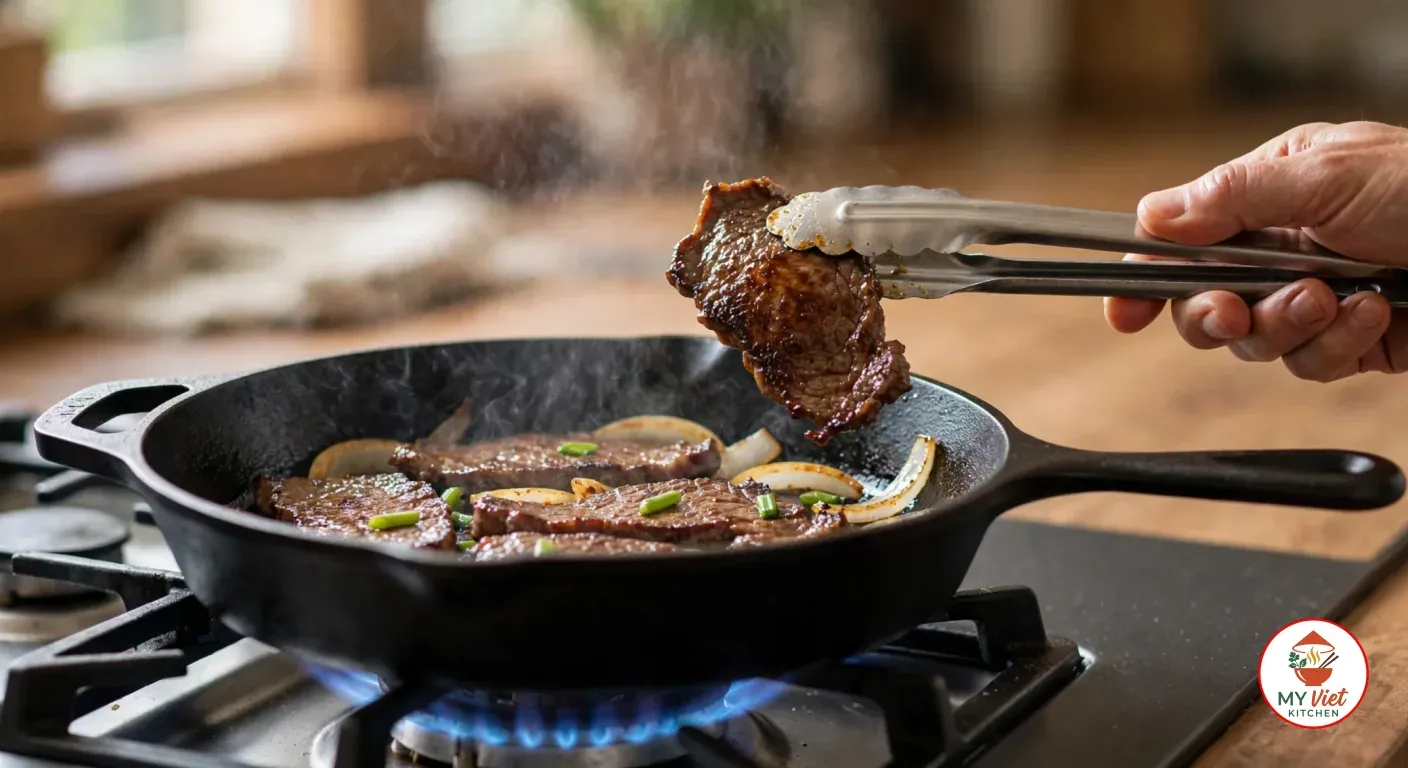
4 First, lift the beef from the marinade and shake off the excess liquid. Then spread the slices in a single layer on the hot surface. Do not crowd the pan. Instead, work in small batches, leaving a little space between the slices. Let each piece sear without moving it for about 2 minutes.
Then flip the beef and cook for another 1 to 2 minutes on the second side. Look for dark caramelized edges and slight charring. Specifically, these browned spots carry the most intense flavor. So resist the urge to move the meat around constantly. Letting it sit still on the hot surface is the key to proper browning. Afterward, transfer each batch to a warm plate while you cook the remaining beef.
Step 5: Serve the Bulgogi
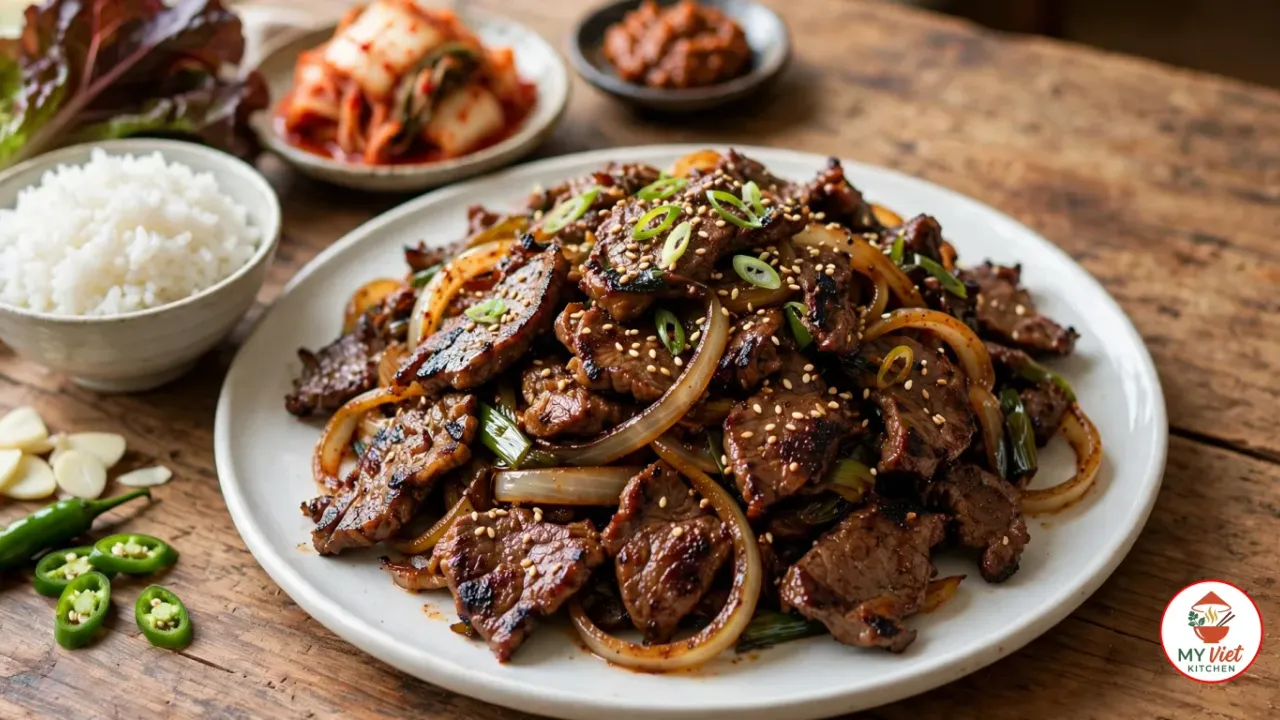
5 Arrange the cooked bulgogi on a large serving plate. Then sprinkle sesame seeds and sliced green onions over the top. Finally, serve immediately while the meat is still hot and sizzling.
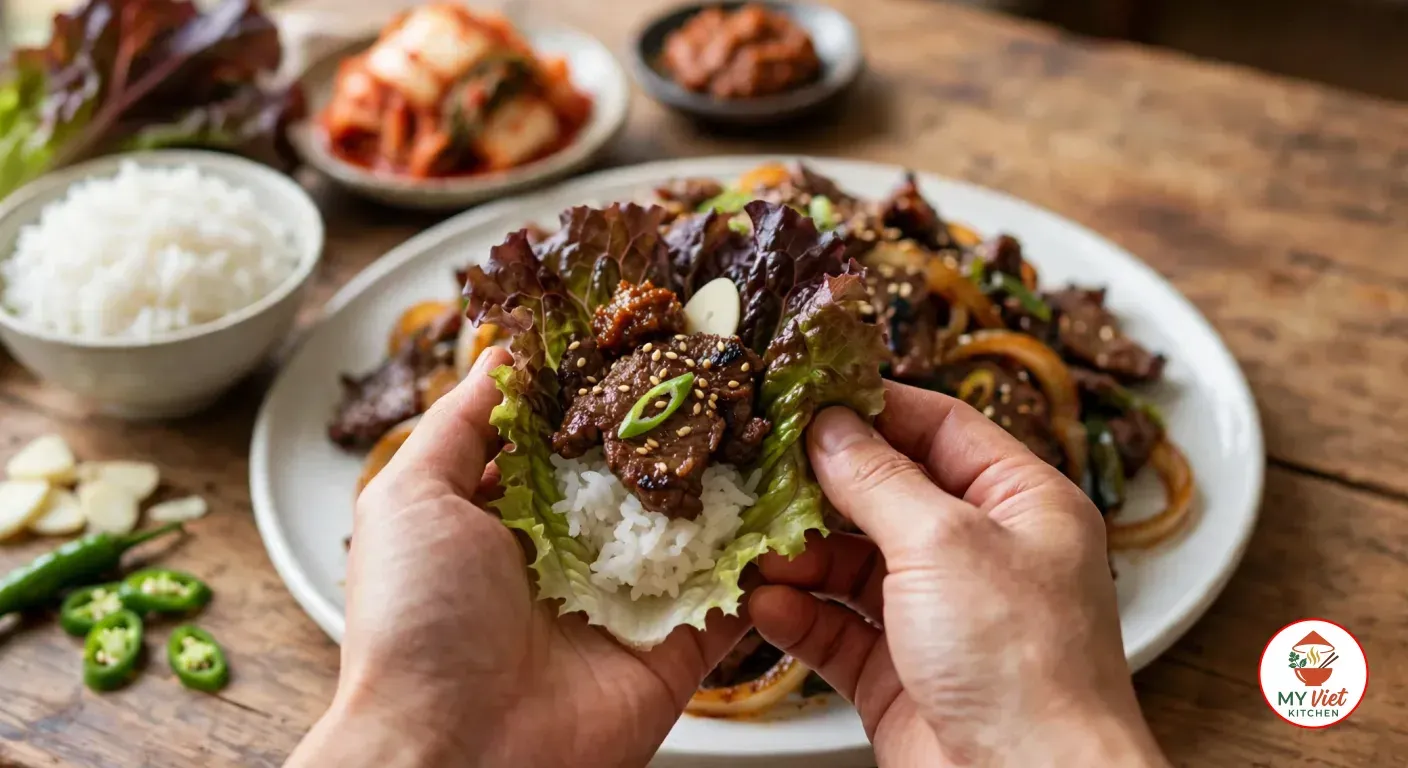
Also set out lettuce leaves, steamed rice, sliced garlic, green chili peppers, and ssamjang paste on the table. To eat Korean-style, first place a lettuce leaf in your palm. Then add a spoonful of rice and a few pieces of bulgogi. Next, top with a dab of ssamjang and a slice of garlic. Finally, wrap the leaf around everything and eat it in one bite. This lettuce wrap method is called ssam, and it delivers the perfect balance of fresh, savory, and spicy flavors.
Expert Tips for Perfect Bulgogi
Slice the Beef Paper-Thin
Thin slicing is non-negotiable for great bulgogi. Thick slices will not cook fast enough to caramelize before the inside overcooks. So aim for 1/8 inch or thinner. Furthermore, freezing the beef for 30 minutes firms it up and makes thin, even cuts much easier. Alternatively, Korean grocery stores sell pre-sliced bulgogi meat that saves you this step entirely.
Do Not Skip the Asian Pear
Asian pear does two things that no other ingredient can replicate as well. First, it tenderizes the beef through natural enzymes called calpains. Second, it adds a subtle fruity sweetness that rounds out the soy and sesame flavors. Some recipes skip the pear and use sugar alone. However, the texture difference is clearly noticeable. Specifically, pear-marinated beef is silky and soft. In contrast, sugar-only versions taste flat by comparison.
Drain Excess Marinade Before Grilling
Shaking off the excess liquid before placing the beef on the grill is a crucial step. Too much marinade on the cooking surface creates steam instead of sear. Consequently, steamed bulgogi lacks the charred, smoky flavor that defines the dish. So lift each piece and let the drips fall off. Then lay it flat on the hot grill. You want direct contact between meat and metal for maximum browning.
Bulgogi vs. Other Korean BBQ Dishes
Korean BBQ features many grilled meat dishes, each with its own flavor profile and technique. Understanding the differences helps you pick the right dish for any occasion. Here is a quick comparison of the most popular options.
| Dish | Meat | Marinade | Serving Style |
|---|---|---|---|
| Bulgogi | Thinly sliced beef | Sweet soy, Asian pear, sesame | Lettuce wraps or with rice |
| Galbi | Beef short ribs | Similar to bulgogi, slightly sweeter | Eaten off the bone |
| Samgyeopsal | Thick pork belly | None (grilled plain) | Lettuce wraps with ssamjang |
| Dak Galbi | Chicken thigh | Spicy gochujang-based | Stir-fried with vegetables |
| Dwaeji Bulgogi | Thinly sliced pork | Spicy gochujang marinade | With rice and kimchi |
Serving Suggestions
In Korea, bulgogi is rarely served alone. Instead, it arrives at the table surrounded by banchan, which are small side dishes that add variety and balance. Moreover, building a proper spread around your bulgogi turns a simple beef dish into a full Korean feast.
The Perfect Accompaniments:
- Steamed rice: Short-grain Korean rice is the classic base. Its sticky texture pairs perfectly with the saucy, caramelized beef. Every Korean meal starts with a bowl of well-made rice.
- Lettuce wraps (ssam): Red leaf lettuce or butter lettuce provides a crisp, fresh shell for wrapping the meat. Add rice, ssamjang, and garlic for the full experience.
- Kimchi: Tangy, spicy fermented cabbage cuts through the richness of the beef. No Korean table is complete without it. Similarly, radish kimchi (kkakdugi) works well too.
- Japchae (glass noodles): Sweet potato starch noodles stir-fried with vegetables and sesame oil. This side dish adds a chewy, slightly sweet element to balance the savory bulgogi.
- Pickled radish (danmuji): Bright yellow and crunchy. It refreshes the palate between bites of rich, smoky beef.
Beverage Pairings:
- Soju: Korea’s iconic clear spirit. Its clean, slightly sweet taste pairs naturally with the bold flavors of grilled bulgogi. Serve it chilled in small glasses.
- Korean beer (Cass or Hite): A cold, light lager washes down the rich beef and cleanses the palate between bites.
- Barley tea (boricha): For a non-alcoholic option, this nutty, caffeine-free Korean tea helps with digestion and complements the meal well.
Storage and Reheating
Refrigerator: Store cooked bulgogi in an airtight container for up to 3 days. In fact, the flavor actually deepens overnight as the marinade continues to season the meat. Additionally, cold leftover bulgogi makes an excellent topping for rice bowls or filling for Korean tacos.
Freezer: Freeze raw marinated beef for up to 2 months. Also flatten the bag so it thaws quickly and evenly. Similarly, cooked bulgogi freezes well for up to 1 month. Then thaw overnight in the refrigerator before reheating.
Reheating: Warm leftover bulgogi in a hot skillet over high heat for 2 to 3 minutes. This method restores the caramelized edges. However, avoid the microwave if possible because it steams the meat and removes the crispy char. Instead, a quick blast in a hot pan brings back the texture and flavor much better.
Common Mistakes to Avoid
1. Cutting the Beef Too Thick
Thick slices are the single most common mistake in homemade bulgogi. Pieces thicker than 1/4 inch do not cook fast enough on a hot grill. As a result, the outside burns before the center finishes cooking. Instead, thin slices sear quickly, lock in juices, and develop the proper char. So freeze the beef briefly to make thin cutting easier.
2. Overcrowding the Pan
Piling all the beef into the pan at once is tempting but counterproductive. When pieces overlap, they release moisture and steam instead of sear. Consequently, you end up with gray, boiled-looking meat rather than dark, caramelized bulgogi. Therefore, cook in small batches with space between each piece. Ultimately, patience here pays off with better flavor and texture.
3. Using Too Much Sugar
Some recipes call for excessive sugar, which causes the beef to burn before it caramelizes properly. Instead, brown sugar works better than white sugar because it browns more evenly. So stick to 2 tablespoons per 1.5 pounds of meat. Moreover, the Asian pear already adds natural sweetness. Therefore, you need less added sugar than you might expect.
Frequently Asked Questions
Can I make bulgogi on a regular stovetop?
Yes, a cast iron skillet or stainless steel pan on a stovetop works perfectly well. Simply heat the pan over high heat until smoking. Then cook the beef in small batches, just as you would on a grill. A grill pan with raised ridges also gives you those attractive grill marks. However, any heavy pan that retains heat will produce great results. Ultimately, the key is high heat and small batches.
What makes bulgogi different from teriyaki?
Both dishes use soy sauce and sugar, but they come from different culinary traditions. Specifically, bulgogi uses Asian pear and sesame oil as core flavoring agents. In contrast, teriyaki relies on mirin and a glaze-style sauce. Additionally, bulgogi is marinated before cooking, while teriyaki sauce is typically brushed on during cooking. As a result, the flavor profiles are distinct. Bulgogi is nuttier and more aromatic. Meanwhile, teriyaki is sweeter and shinier.
Can I use chicken or pork instead of beef?
Absolutely. Chicken thighs work well with the same marinade. Simply slice them thinly and grill until cooked through. For pork, use thinly sliced pork shoulder or loin instead. Korean pork bulgogi (dwaeji bulgogi) traditionally uses a spicier gochujang-based marinade. Furthermore, you can also try this marinade with mushrooms or tofu for a vegetarian version that still delivers bold flavor.
How do Korean restaurants slice beef so thin?
Most Korean restaurants use commercial meat slicers that cut beef to a uniform 1/16 inch. At home, however, freezing the beef for 30 to 45 minutes firms it up enough for thin slicing. Then press down firmly and slice at a slight angle against the grain. A sharp knife is also essential here, because dull knives tear the meat fibers instead of cutting them cleanly. Alternatively, Korean grocery stores sell pre-sliced bulgogi meat that saves this effort.
Variations and Adaptations
Spicy Bulgogi (Maewoon Bulgogi):
Add 2 tablespoons of gochugaru (Korean chili flakes) and 1 tablespoon of gochujang to the standard marinade. This version brings a fiery kick that heat lovers crave. The chili does not overpower the sweet soy base. Instead, it adds a warm, smoky layer of spice. Serve it with extra lettuce wraps and cold pickled radish to cool the palate.
Bulgogi Rice Bowl (Bulgogi Deopbap):
Simply skip the lettuce wraps and serve the cooked bulgogi directly over a bowl of hot rice. Then top it with a fried egg, sliced cucumbers, and a drizzle of gochujang sauce. This one-bowl meal is popular for quick weeknight dinners in Korea. Essentially, it combines the flavors of bulgogi with the simplicity of a rice bowl. If you love bibimbap, you will enjoy this variation too.
Bulgogi Japchae Combo:
Cook the bulgogi as directed. Then toss it with prepared glass noodles (japchae), sauteed spinach, and julienned carrots. Next, season with an extra splash of sesame oil and soy sauce. This hearty combination dish appears at Korean celebrations and holidays. Furthermore, it works beautifully as a party dish because you can make it ahead and serve it at room temperature.
Bulgogi Tacos (Fusion Style):
Place cooked bulgogi in small flour or corn tortillas. Then top with quick-pickled cabbage, sriracha mayo, and fresh cilantro. Korean-Mexican fusion tacos became a global food trend for good reason. In fact, the sweet, smoky beef pairs surprisingly well with tangy slaw and creamy sauce. Besides, these tacos make excellent party food and disappear fast at gatherings.
The Cultural Significance of Bulgogi
Bulgogi holds a special place in Korean culture and national identity. It consistently ranks among the top dishes that Koreans feel most proud of sharing with the world. In a 2023 survey of 9,000 people in 18 cities abroad by Korea’s agriculture ministry and the Korean Food Promotion Institute, bulgogi was one of the dishes people most associated with Korean food, after kimchi, bibimbap and Korean fried chicken. Specifically, it has become an ambassador for Korean cuisine at international food festivals and diplomatic events.
Family gatherings in Korea almost always feature bulgogi on the table. It brings people together around the grill in a meaningful way. Everyone cooks at their own pace, wraps their own lettuce bundles, and shares banchan side dishes. Moreover, this communal style of eating reflects Korean values of togetherness and shared meals. Likewise, bulgogi plays a central role in holiday celebrations like Chuseok (Korean harvest festival) and Seollal (Lunar New Year).
The global spread of Korean BBQ restaurants has turned bulgogi into a worldwide phenomenon. From Los Angeles to London, Seoul to Sydney, Korean BBQ joints serve bulgogi to millions of people each year. Furthermore, the Korean Wave (Hallyu) has sparked interest in Korean food alongside K-pop and K-dramas. As a result, more home cooks than ever are learning to make this dish.
Conclusion
Making authentic bulgogi at home is simpler than most people expect. In fact, the marinade comes together in minutes. Thin slicing takes a bit of practice, yet freezing the beef first makes it easy. Also, grilling happens fast over high heat. Most importantly, the flavor rivals what you get at top Korean BBQ restaurants. So master these five steps, and you will have a crowd-pleasing dish ready for any occasion.
Start with quality beef and a good Asian pear. Then give the marinade time to work its magic. Next, grill in small batches over blazing heat. Finally, wrap the smoky, caramelized beef in crisp lettuce with rice and ssamjang. That first bite will show you exactly why bulgogi has been a Korean treasure for centuries. For another Korean classic, try our bibimbap.