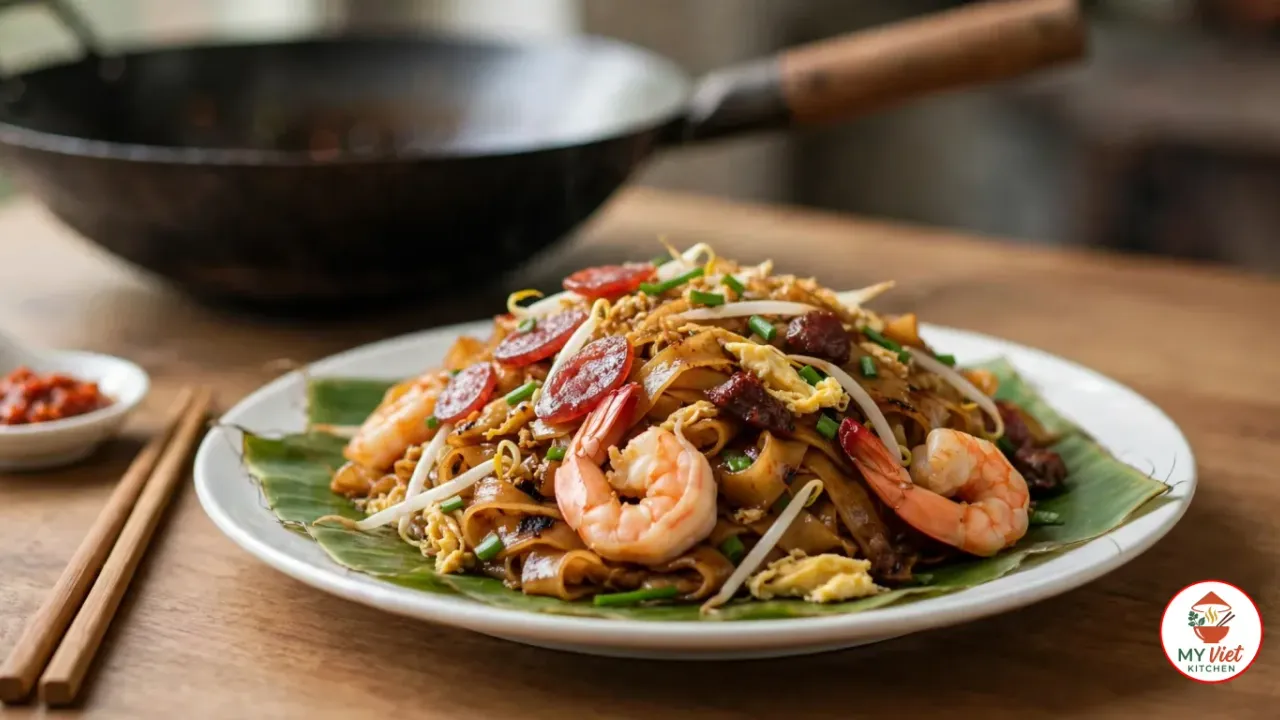
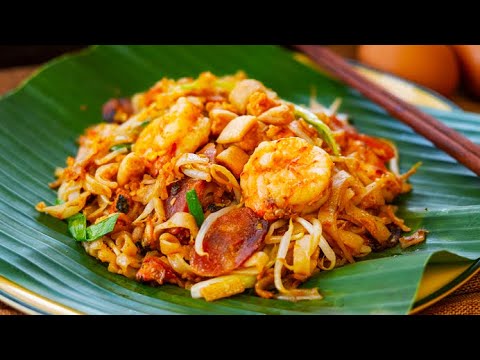
Char kway teow is a plate of flat rice noodles stir-fried over very high heat with garlic, soy sauce, chili paste, prawns, cockles, egg, bean sprouts and Chinese chives. Hawker stalls sell it across Malaysia and Singapore. This version follows the Penang style. It’s savory rather than sweet, with only a little dark soy sauce for color, and each plate cooks on its own so the noodles scorch instead of steaming.
Prep Time: 20 minutes | Cook Time: 15 minutes | Servings: 2
Difficulty: Medium | Calories: ~700 per serving
Where Does Char Kway Teow Come From?
The name comes from Hokkien, in which chhá-kóe-tiâu literally means “stir-fried flat rice noodles.” Malaysia’s National Department for Culture and Arts traces the dish to Chaozhou, in China’s Guangdong province. The department ties it to the Teochew and Hokkien migrants who reached the Malay Peninsula from the late 1800s into the early 1900s (JKKN).
Working people made and ate it first. The National Museum of Singapore holds a 1970s enamel bowl that once held cockles for see hum kway teow, the cockle version. Its catalog note says fishermen and cockle gatherers moonlighted as street hawkers in the evening, selling the dish for extra income (Roots.sg). Pork lard was once essential for the aroma, though many cooks now use plain cooking oil so more people can eat it (JKKN).
How Is Penang Char Kway Teow Different?
Mostly in color and sweetness. Singapore’s National Heritage Board describes the Singapore plate as Teochew kway teow mixed with yellow Hokkien mee, flavored with sweet dark soy sauce, garlic and lard. Penang’s version, the board adds, leaves out the dark soy sauce for a lighter taste (Roots.sg). A Penang-style recipe in Free Malaysia Today uses 2 tablespoons of light soy sauce for each plate and only half a teaspoon of dark (FMT).
Some Penang stalls still cook over charcoal. The MICHELIN Guide’s entry for Siam Road Char Koay Teow in George Town says its noodles are cooked over charcoal for remarkable wok hei. It also suggests paying extra for the prawn and cockle version (MICHELIN Guide). Penang plates often arrive on a square of banana leaf, and gourmet versions there and in Ipoh add duck eggs and extra seafood (Wikipedia). In Singapore, hawkers once used duck eggs for their fragrance and switched to chicken eggs when the supply dipped (Roots.sg).
This recipe sits on the Penang side: light soy sauce for salt, 2 teaspoons of dark soy sauce for color across two plates, and fish sauce. For a darker, sweeter Singapore-style plate, add 1 to 2 teaspoons of kecap manis, the Indonesian sweet soy sauce, to the sauce bowl.
Can You Get Wok Hei on a Home Stove?
Some of it. Wok hei is the smoky aroma that the National Heritage Board credits to stir-frying over very high heat. The board notes that the technique takes at least a month to pick up (Roots.sg). A household burner can’t match a hawker’s flame. Nagi Maehashi of RecipeTin Eats says home cooks should accept that the char is limited to some caramelizing on the noodle edges and the sausage (RecipeTin Eats).
What you can control is the load. Penang-style recipes cook one plate at a time (FMT), because cooking two plates’ worth at once cools the wok and the noodles end up stewing in their own steam. Heat the wok until it smokes and keep each batch to about 200 g (7 oz) of noodles. Stop tossing for 20 to 30 seconds at a time so the noodles touching the metal can scorch. A carbon-steel wok heats faster than a heavy cast-iron pan and lets you lift and toss.
Are Blood Cockles Safe to Eat?
Only once they’re cooked through, and in char kway teow they often aren’t. Recipes often add the cockles last and mix them in only briefly, The Meatmen’s Penang version among them (The Meatmen). In a Singapore case-control study of hepatitis A, eating partially cooked cockles (Anadara granosa) was significantly associated with the illness, while oysters, mussels and clams were not (PubMed). A 2011 review of hepatitis A in Singapore still called for public education on the risk of eating cockles raw or half-cooked (Annals, Academy of Medicine, Singapore).
So here the cockles boil in their shells before anything else. The FDA’s test for clams works for them too: the shells open as they cook, and any that stay closed go in the bin (FDA). The meat then joins the wok at the end only to warm up. The FDA also tells pregnant women, children, older adults and people with weakened immune systems to avoid undercooked shellfish, so for them, cook the cockles fully or leave them out.
Ingredients for Char Kway Teow
For the Noodles:
- 400 g (14 oz) fresh flat rice noodles (kway teow), or 160 g (5.5 oz) dried
- 200 g (7 oz) medium prawns, peeled and deveined, about 10
- 1 Chinese sausage (lap cheong), about 40 g, thinly sliced on the diagonal
- 200 g (7 oz) blood cockles in their shells, optional
- 4 cloves garlic, minced
- 1 tablespoon chili paste (cili boh or sambal), or to taste
- 2 eggs, duck or chicken
- 150 g (5 oz) bean sprouts
- 50 g (2 oz) Chinese chives (garlic chives), cut into 2-inch (5 cm) lengths
- 3 tablespoons lard or neutral cooking oil, divided
For the Sauce:
- 2 tablespoons light soy sauce
- 2 teaspoons dark soy sauce
- 2 teaspoons fish sauce
- 1 teaspoon sugar
- 1/4 teaspoon ground white pepper
Step-by-Step Instructions
Step 1: Prepare the Noodles and Ingredients
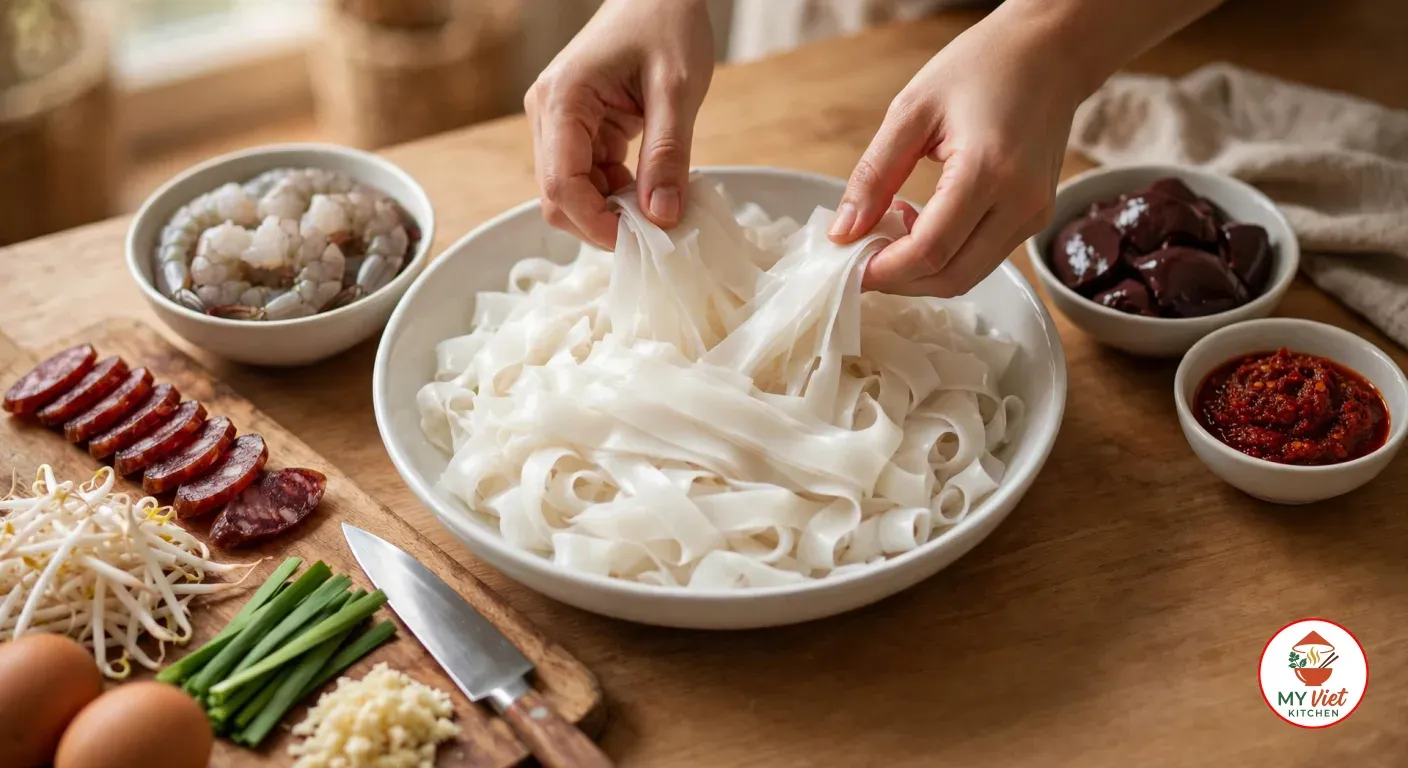
1Fresh rice noodles straight from the fridge are stiff and tear if you pull them apart cold. Warm the pack in the microwave for 1 to 2 minutes, or run the noodles briefly under warm water, then peel the strands apart gently and spread them out on a tray. Dried noodles need 30 minutes in room-temperature water and a thorough drain. If you’re using cockles, scrub the shells, drop them into a pan of boiling water and cook until they open. Throw away any that stay shut and pick the meat out of the rest. Slice the sausage, cut the chives and mince the garlic. Then split everything into two equal piles beside the stove, one per plate, because each plate cooks on its own in about 5 minutes.
Step 2: Mix the Sauce
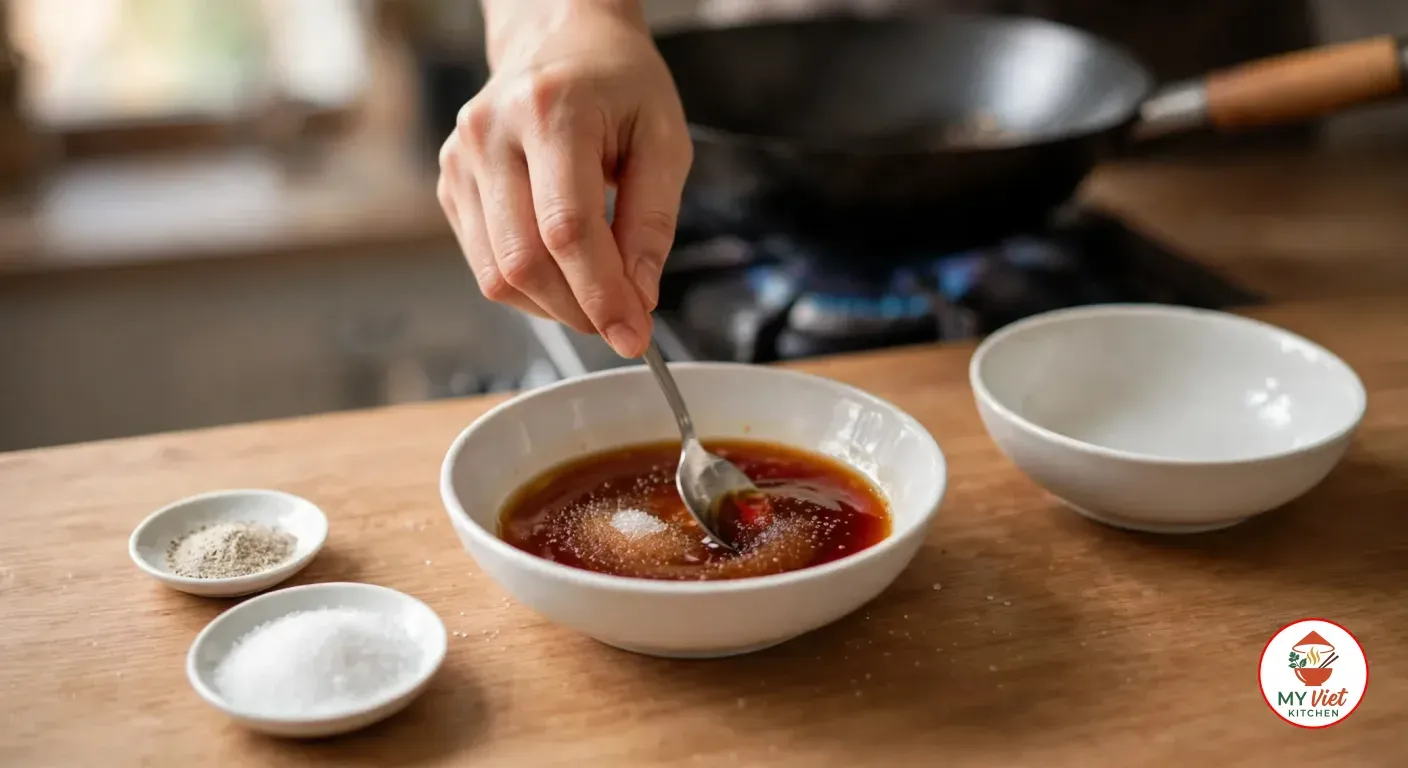
2Stir the light soy sauce, dark soy sauce, fish sauce, sugar and white pepper together in a small bowl until the sugar has dissolved, then pour half into a second bowl. Measuring now matters: once the noodles hit the wok, there’s no time to open bottles. For a sweeter Singapore-style plate, stir 1 to 2 teaspoons of kecap manis into the sauce at this point.
Step 3: Heat the Wok and Cook the Proteins
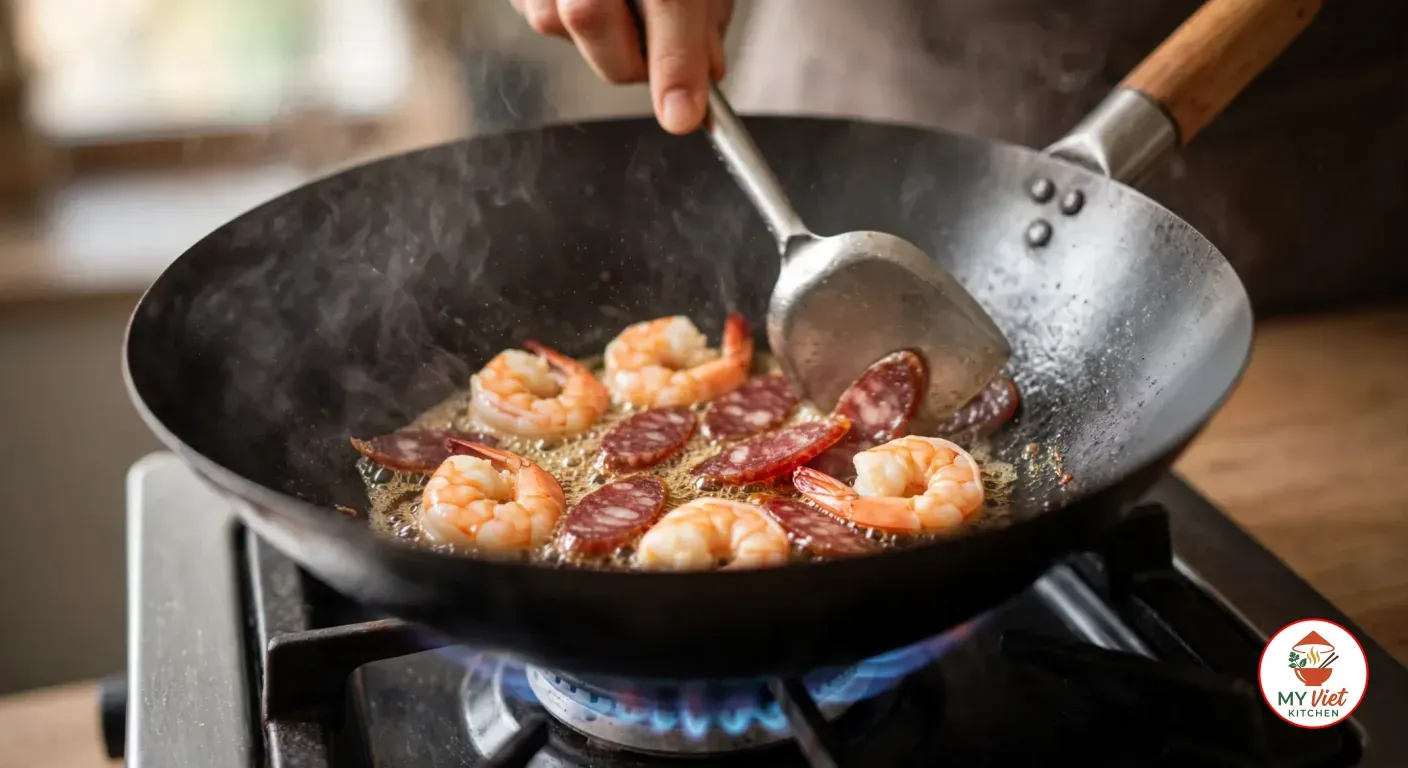
3Set a carbon-steel wok over your highest heat for about 2 minutes, until a thin wisp of smoke rises from it. Add 1 tablespoon of lard and swirl it up the sides. Add half the prawns and half the sausage and stir-fry for about 1 minute, until the prawns have turned pink and the sausage edges have crisped. Lift them onto a plate so the prawns don’t toughen while the noodles cook.
Step 4: Stir-Fry the Noodles
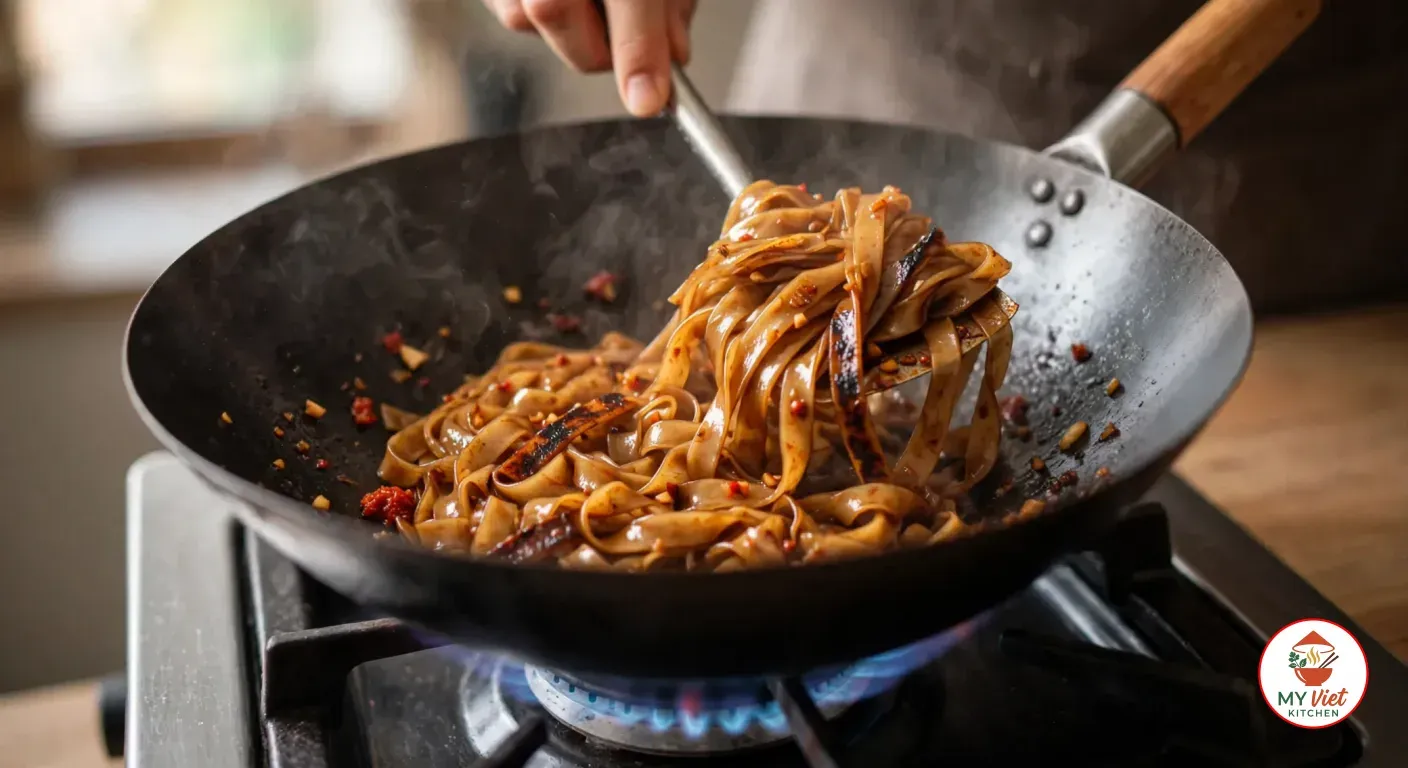
4Add half the garlic and half the chili paste to the fat left in the wok and stir for 10 to 15 seconds, until the garlic smells sweet but hasn’t browned. Add one pile of noodles and toss to coat them in the fat. Pour one bowl of sauce around the hot sides of the wok rather than straight onto the noodles, so it sizzles and reduces as it runs down, and toss again. Now leave the noodles alone for 20 to 30 seconds so the layer touching the metal scorches, then toss, and keep going like this for about 2 minutes, until they’re an even light brown with darker edges. Lift from underneath when you toss rather than stirring, because fresh rice noodles snap easily.
Step 5: Add the Eggs and Vegetables
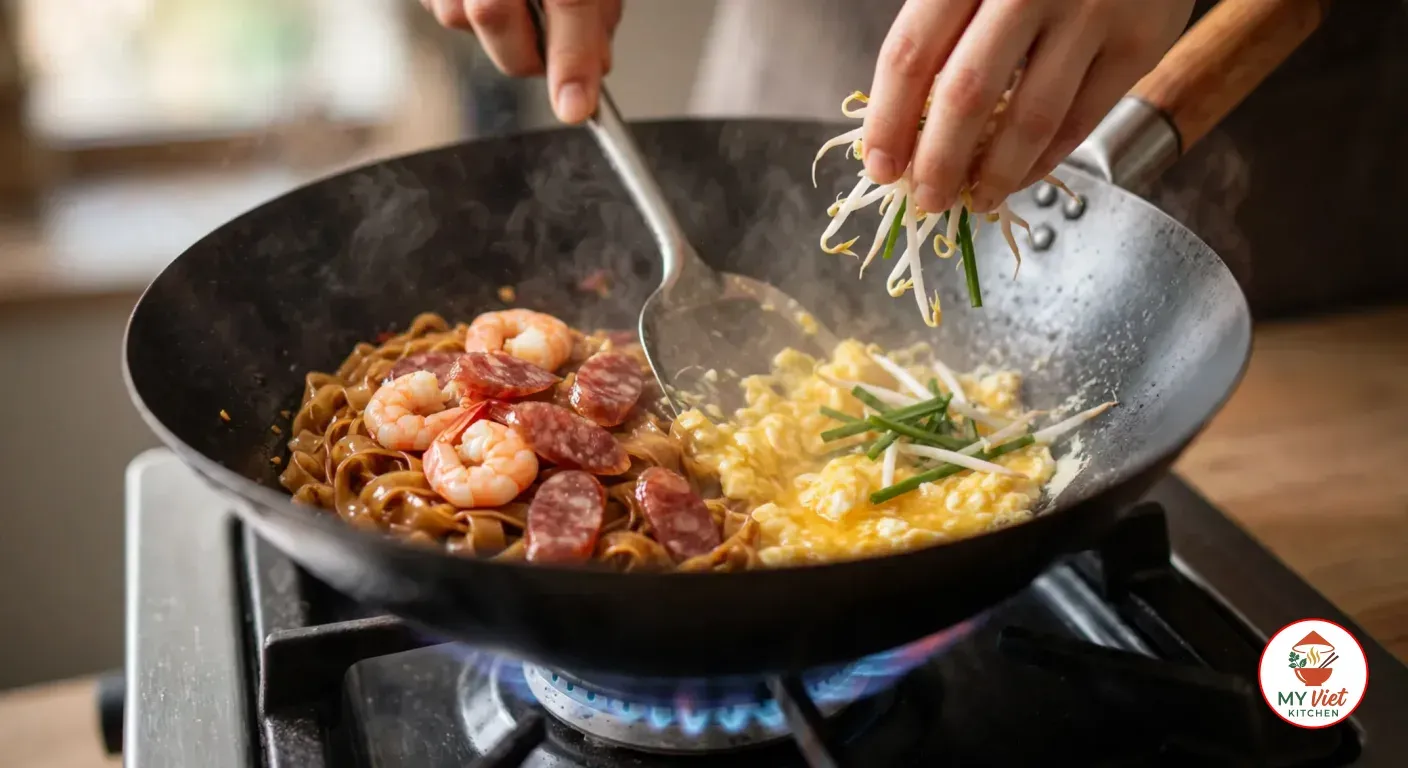
5Push the noodles up one side of the wok and add 1/2 tablespoon of lard to the space. Crack in one egg and let it set for about 15 seconds, then break it into curds and fold it through the noodles. Add half the bean sprouts, half the chives and half the cockle meat, return the prawns and sausage, and toss for 30 seconds. That’s just long enough to heat the sprouts through while they keep their crunch.
Step 6: Serve and Cook the Second Plate
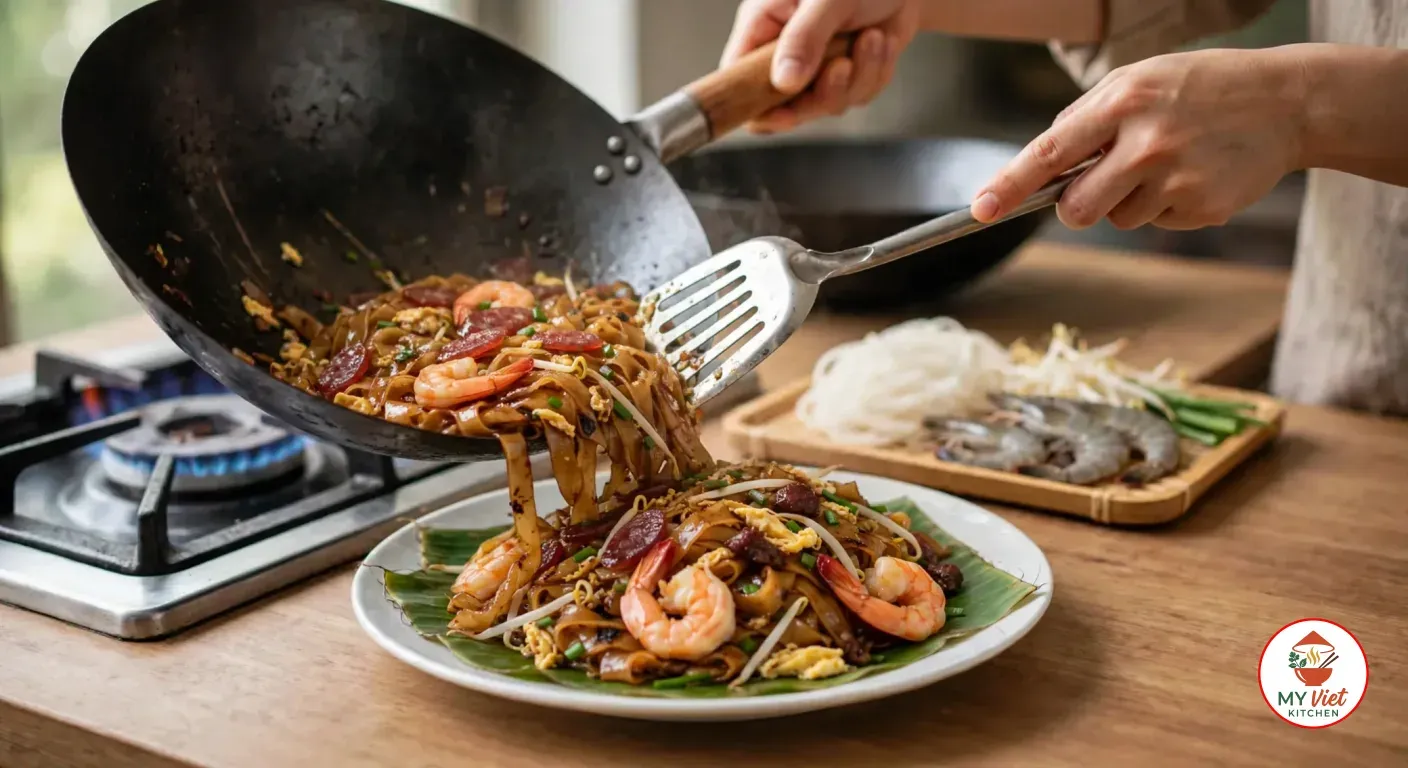
6Tip the noodles onto a plate, lined with a square of banana leaf if you have one, and serve at once with extra chili paste on the side. Scrape out any bits stuck to the wok, set it back over the heat until it smokes again, and repeat steps 3 to 5 with the second pile of ingredients and the second bowl of sauce.
Frequently Asked Questions
Can I use dried rice noodles?
Yes, though dried noodles break more easily than fresh ones. RecipeTin Eats swaps 200 g (7 oz) of dried noodles, no wider than 0.5 cm, for 500 g (1 lb) of fresh (RecipeTin Eats). For this recipe, that means about 160 g (5.5 oz). Soak them in room-temperature water for 30 minutes, until bendy but still firm, and drain them well. Hot water softens them so much that they fall apart in the wok.
Can I make char kway teow without pork?
Yes. Muslim cooks make it without lard or pork, sometimes adding beef or chicken (Wikipedia). Fry in a neutral oil, swap the Chinese sausage for slices of fried fish cake or chicken sausage, and keep the prawns. You lose some richness, but the scorched noodles and the sauce still carry the dish.
Why do my noodles turn mushy?
Too many noodles went into the wok at once, or they went in cold and wet. A crowded wok loses its heat, so the sauce boils instead of sizzling and the noodles stew. Cook one plate at a time, separate the noodles before they go in, drain soaked noodles thoroughly and never add water.
Is char kway teow gluten-free?
Not as written. Rice noodles contain no gluten, but most Chinese light and dark soy sauces are brewed with wheat, and Chinese sausage is often seasoned with soy sauce. Use a tamari made without wheat, and read the labels on the fish sauce, chili paste and sausage.
Sources
- Char kuey teow, Arts and Culture Information Gateway, National Department for Culture and Arts (JKKN), Malaysia
- Enamel bowl for holding cockles, National Museum of Singapore, Roots.sg
- Char Kway Teow, Intangible Cultural Heritage, National Heritage Board, Singapore
- Authentic Penang char kuey teow at home, Free Malaysia Today, 2021
- Siam Road Char Koay Teow, MICHELIN Guide
- Char kway teow, Wikipedia
- Char Kway Teow, RecipeTin Eats
- Penang Char Kway Teow, The Meatmen
- Acute hepatitis A in Singapore: importance of shellfish ingestion in a non-epidemic period, Annals of the Academy of Medicine, Singapore, 1987
- Changing Epidemiological Patterns of Hepatitis A Infection in Singapore, Annals, Academy of Medicine, Singapore, 2011
- Selecting and Serving Fresh and Frozen Seafood Safely, U.S. Food and Drug Administration