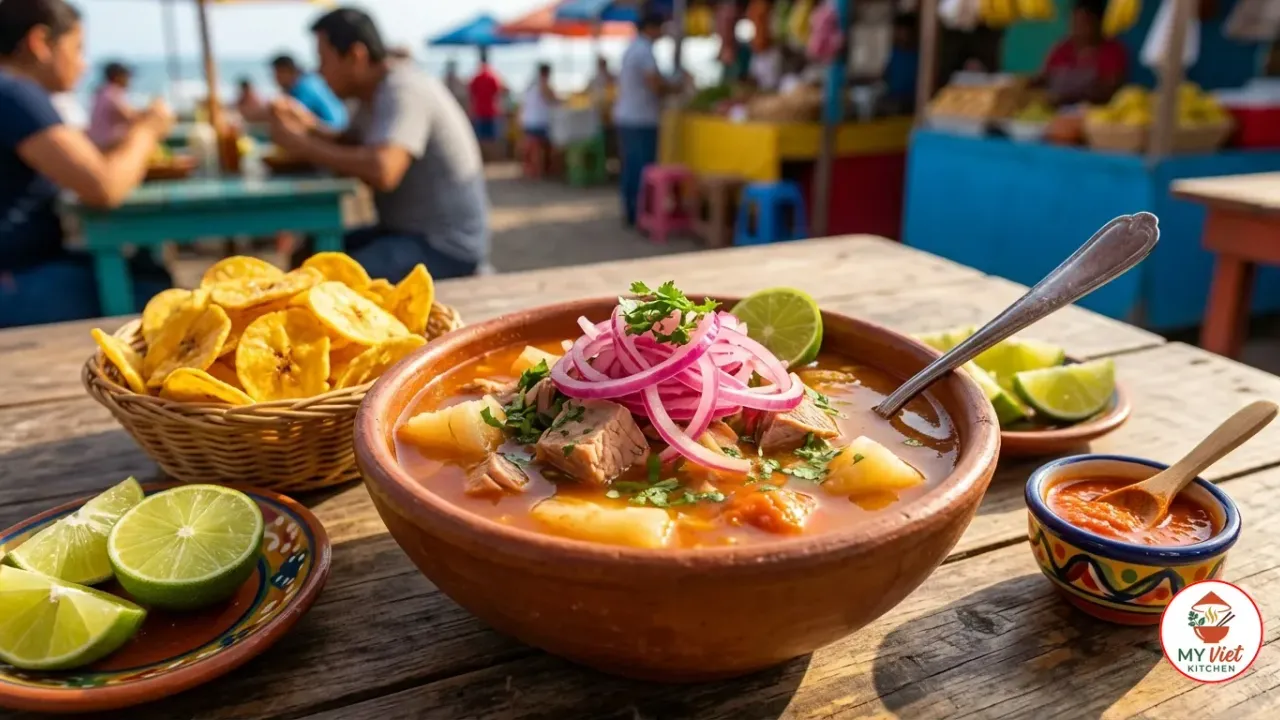
Encebollado is Ecuador’s most beloved fish soup, a hearty bowl of fresh tuna simmered with yuca in a fragrant tomato-cumin broth. Topped with tangy pickled red onions and a squeeze of fresh lime, this encebollado recipe brings the vibrant flavors of coastal Ecuador straight to your kitchen. Whether you are looking for a comforting weeknight dinner or want to explore authentic South American cuisine, this dish delivers bold flavor in every spoonful.
Prep Time: 20 minutes | Cook Time: 40 minutes | Servings: 6
Difficulty: Easy | Calories: ~320 per serving
What Makes Encebollado Special?
Encebollado holds a nearly sacred place in Ecuadorian food culture. Locals call it the country’s unofficial national dish, and you will find it served in street stalls, market kitchens, and family homes from Guayaquil to Esmeraldas. The magic lies in its simplicity: a handful of fresh ingredients transformed into something far greater than the sum of its parts.
What sets encebollado apart from other fish soups is the mix of textures and heat levels. The broth is hot, savory, and rich with cumin. The yuca adds a creamy starch that fills each spoonful. Then come the cold, sharp pickled onions and a burst of fresh lime. This mix of warm and cool, rich and tangy, is what makes each bite so good.
In Ecuador, encebollado is also famous as the best hangover cure. After a long night out, locals rush to their go-to soup vendor at dawn. The mix of warm broth, filling tuna, and tangy lime truly revives the body. However, you do not need a hangover to enjoy this soup. It works just as well as a hearty lunch or a light dinner any day of the week.
Choosing the Right Tuna for Encebollado
The fish is the star of this dish, so choosing the right variety matters. In Ecuador, cooks traditionally use fresh albacore tuna, known locally as albacora. The firm, meaty texture of tuna holds up well during simmering without falling apart. Here are your best options.
- Albacore tuna (best choice): Firm flesh with a mild, clean flavor that absorbs the broth beautifully
- Yellowfin tuna: Slightly richer taste with excellent texture for soups and stews
- Skipjack tuna: More affordable and widely available, with a stronger fish flavor
- Bonito: A traditional alternative in some coastal regions of Ecuador
Always buy the freshest tuna you can find. Look for bright red or pink flesh with no brown spots and a clean sea smell. The flesh should spring back when you press it. Avoid canned tuna, because it falls apart in the broth and turns mushy.
Ingredients for Encebollado
For the Soup Base:
- 1.5 lbs fresh albacore tuna steaks
- 1 lb yuca (cassava), peeled and cut into 2-inch chunks
- 4 Roma tomatoes, quartered
- 1 large red bell pepper, chopped
- 1 large red onion, roughly chopped
- 6 cloves garlic, minced
- 1 teaspoon ground cumin
- 1 tablespoon olive oil
- 1 bunch fresh cilantro
- 8 cups water or fish stock
- Salt and black pepper to taste
For the Pickled Onion Topping:
- 1 large red onion, thinly sliced into rings
- Juice of 3 limes
- Pinch of salt
- Splash of cold water
For Serving:
- Crispy ripe plantain chips (chifles)
- Extra lime wedges
- Fresh chopped cilantro
- Aji criollo hot sauce (optional)
Pro tip: If you cannot find fresh yuca at your local grocery store, check the frozen section of any Latin American market. Frozen yuca works perfectly and saves you the effort of peeling the tough outer skin.
Step-by-Step Instructions
Step 1: Cook the Yuca
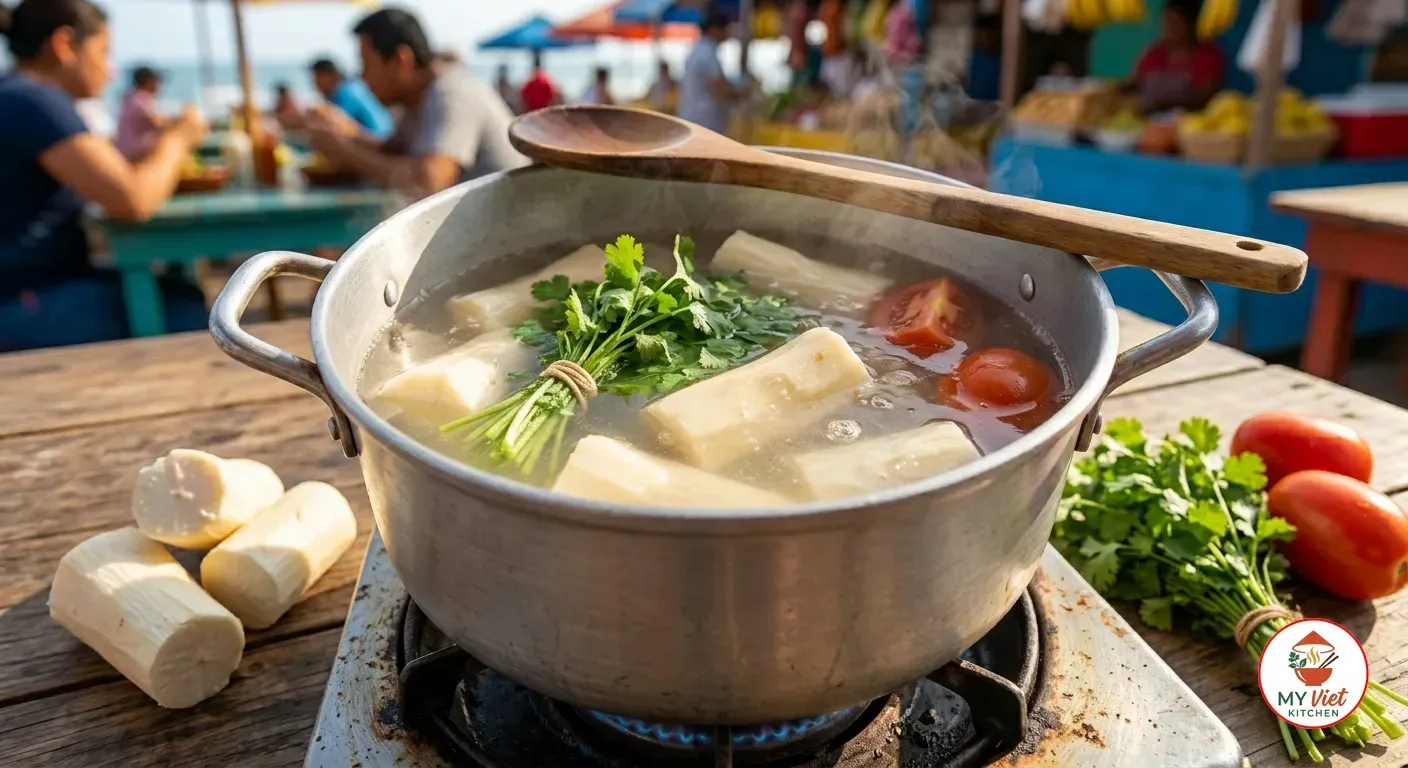
1Peel the yuca and cut it into 2-inch chunks, removing the fibrous core. Place the pieces in a large pot with 8 cups of water. Add half of the cilantro bunch tied with kitchen string and 2 quartered tomatoes. Bring everything to a boil over high heat, then reduce to a steady simmer. Cook for 20 minutes until the yuca is fork-tender but not mushy. The yuca will release its natural starch into the broth, giving it a silky body.
Step 2: Prepare the Pickled Onions
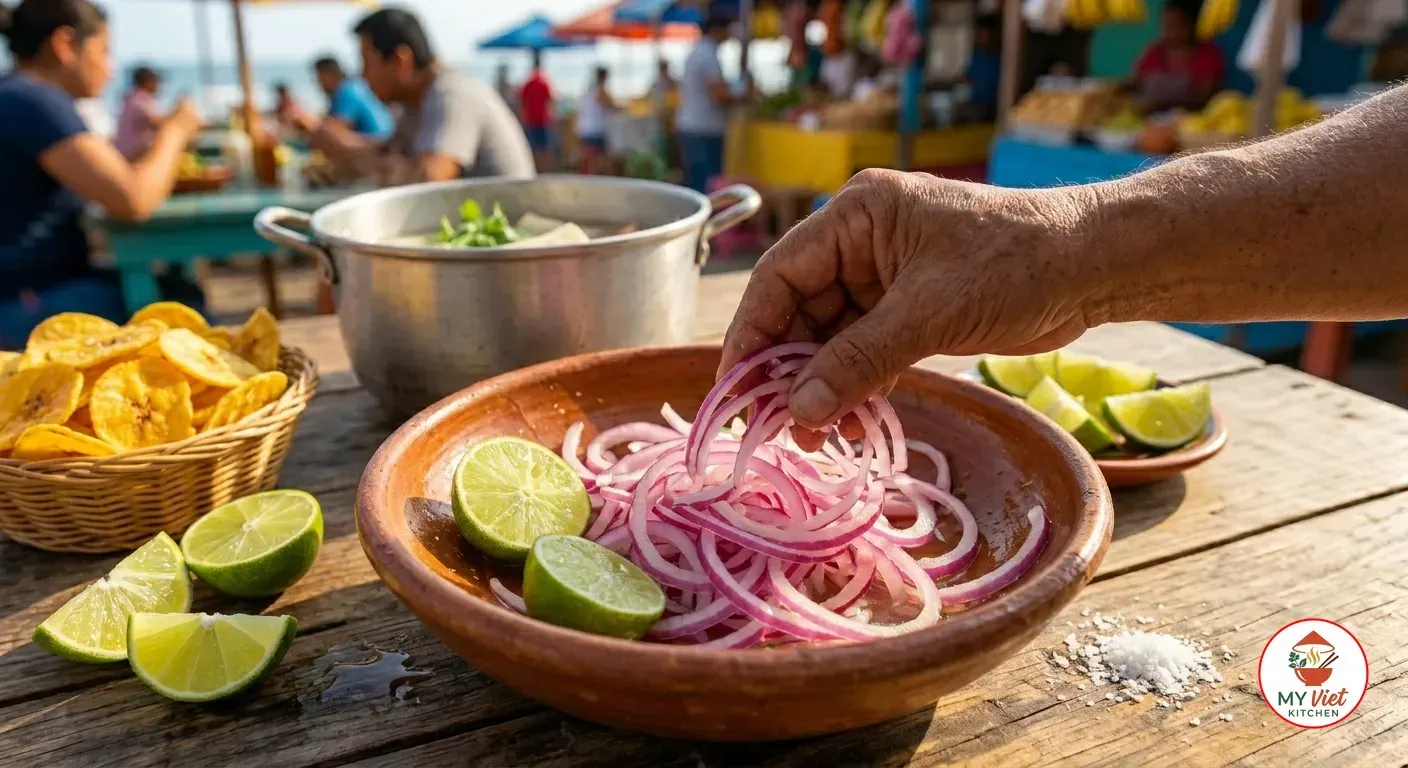
2While the yuca simmers, slice one red onion into thin rings. Place the rings in a bowl and squeeze the juice of 3 limes over them. Add a pinch of salt and a splash of cold water. Toss everything together and let the onions sit for at least 20 minutes. The acid from the lime juice softens the raw bite and turns the onions a gorgeous pink. These pickled onions are the signature garnish that gives encebollado its name.
Step 3: Build the Flavor Base
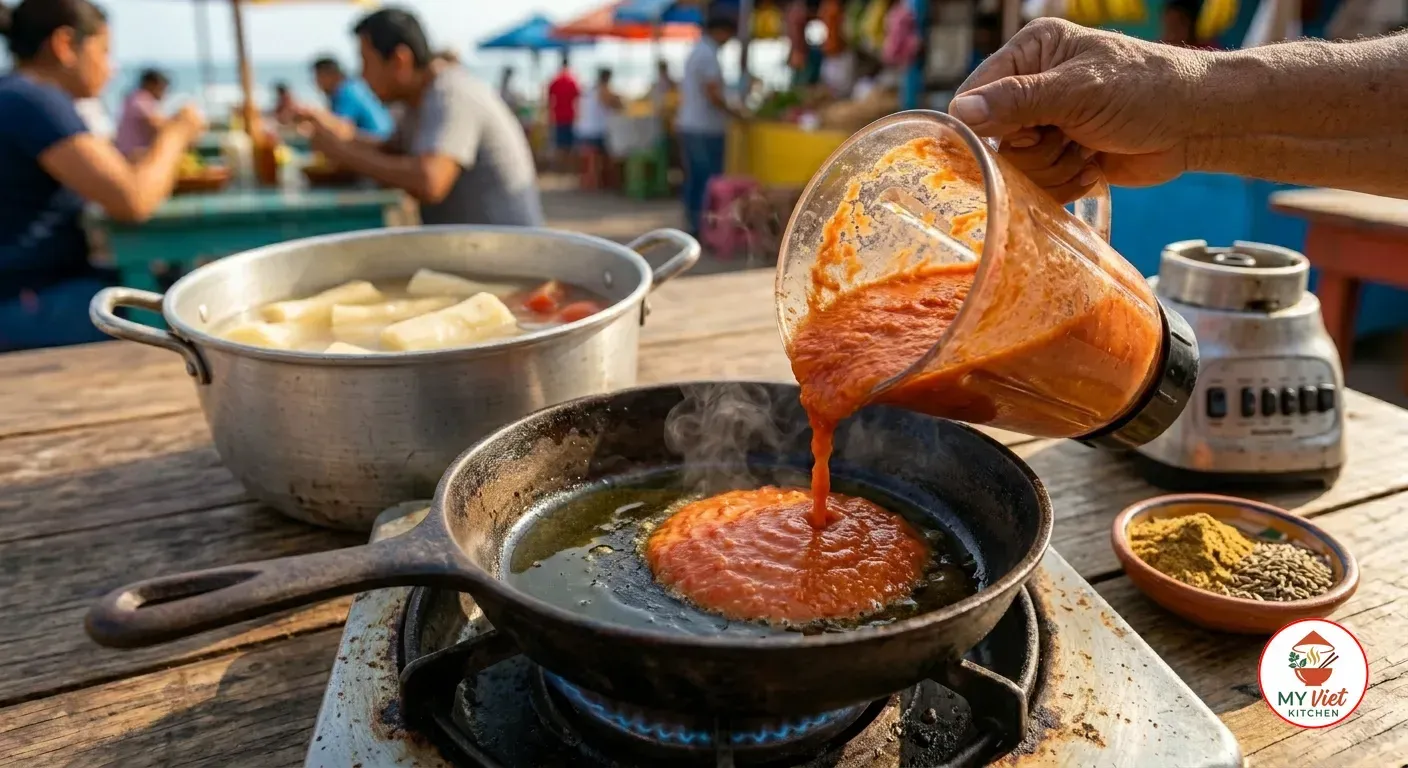
3Once the yuca is cooked, remove the spent cilantro and tomato pieces from the pot. In a blender, combine the remaining 2 fresh tomatoes, red bell pepper, chopped red onion, garlic cloves, and ground cumin. Blend until completely smooth. Heat olive oil in a skillet over medium heat and cook this mixture for 5 minutes, stirring often, until it darkens slightly and becomes fragrant. Then pour the cooked mixture directly into the yuca broth and stir well.
Step 4: Simmer the Tuna
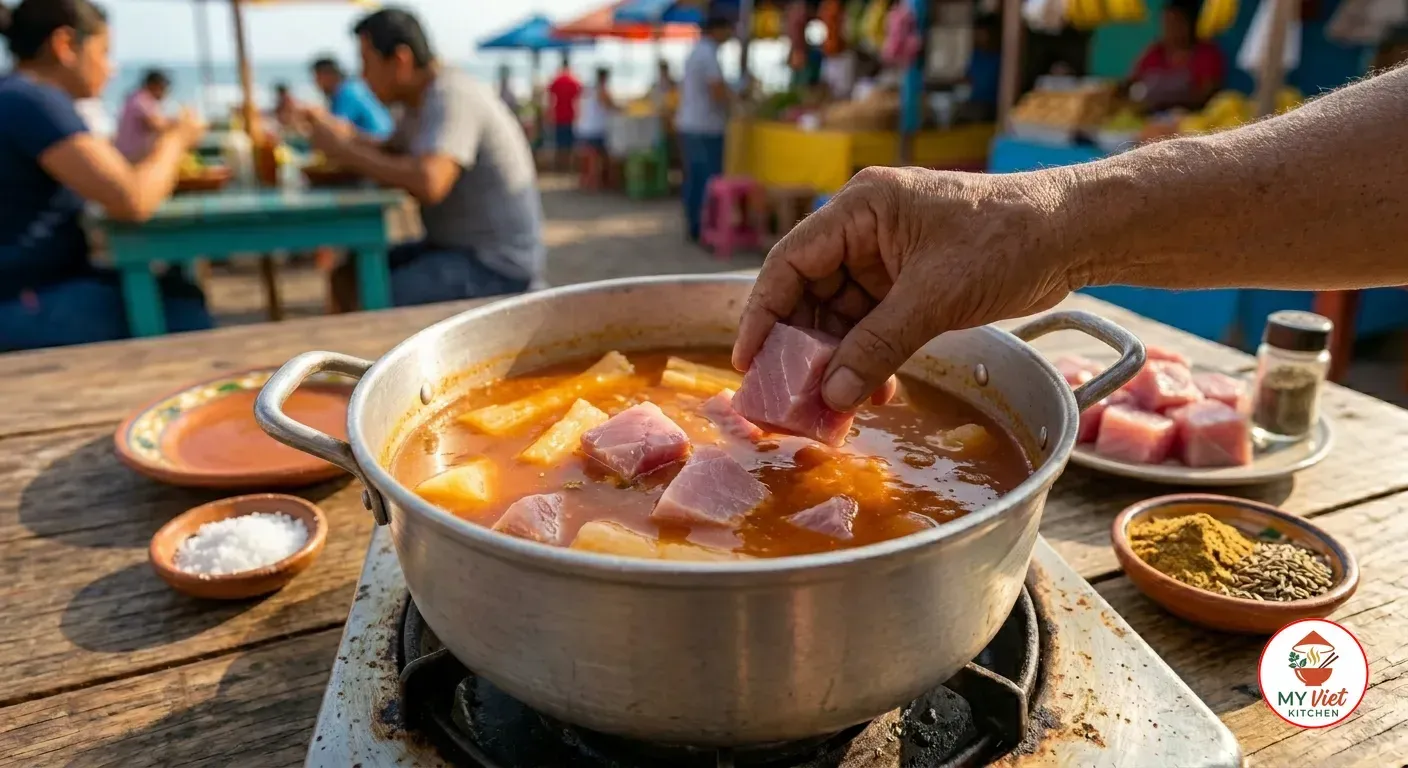
4Cut the tuna steaks into large, bite-sized chunks. Gently lower them into the simmering broth. Cook for 8 to 10 minutes over medium-low heat until the fish turns opaque and flakes easily with a fork. Avoid stirring too aggressively, because the tuna should stay in distinct pieces rather than breaking apart. Season the broth with salt and black pepper to your taste.
Step 5: Serve and Garnish
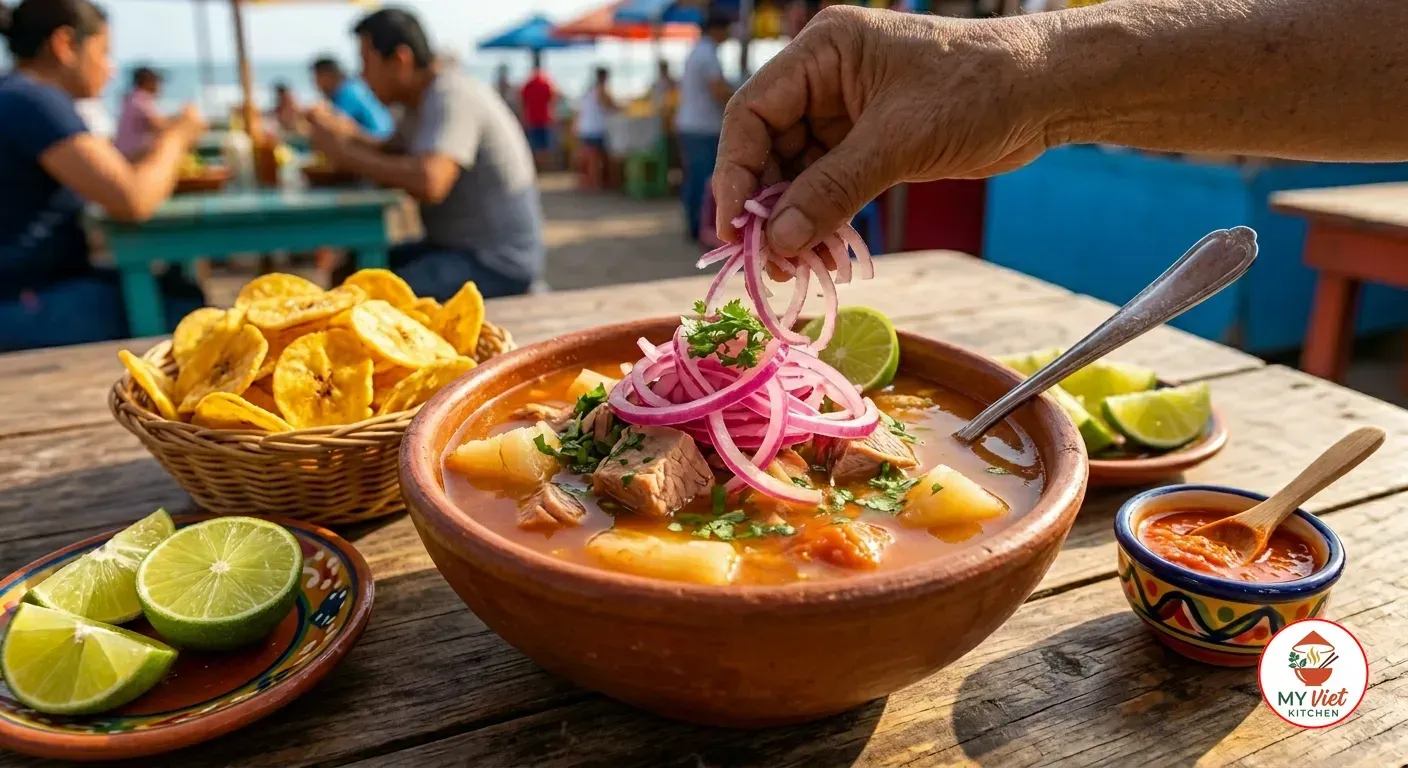
5Ladle the hot soup into deep bowls, making sure each serving gets plenty of tuna and yuca. Top generously with the pickled red onions and a handful of fresh chopped cilantro. Squeeze a lime wedge over the top and serve crispy plantain chips on the side. In Ecuador, people crush the chips into the soup for extra crunch. Serve immediately while everything is steaming hot.
Expert Tips for Perfect Encebollado
Do Not Overcook the Tuna
Tuna dries out quickly when cooked too long. Add it at the very end and simmer gently for no more than 10 minutes. The residual heat of the broth will continue cooking the fish even after you turn off the stove. Slightly underdone tuna is far better than chalky, overcooked pieces.
Use Fresh Limes Generously
Lime juice is key in encebollado. It lifts the broth, cuts the rich tuna, and makes the pickled onions pop. Always use fresh limes, not bottled juice. The taste gap is huge. Squeeze extra lime at the table right before you eat for the best flavor.
Toast the Cumin First
For deeper flavor, toast the ground cumin in a dry skillet for 30 seconds before you blend it. This step brings out the warm, earthy oils that define the soup. It takes just seconds but lifts the whole dish to a new level.
Encebollado vs. Other Latin Fish Soups
Latin America has a long history of fish soups. Each country puts its own spin on the idea. Here is how encebollado stacks up next to similar dishes from the region.
| Feature | Encebollado (Ecuador) | Caldo de Pescado (Mexico) | Sudado de Pescado (Peru) |
|---|---|---|---|
| Main fish | Fresh tuna | Red snapper or tilapia | Sea bass or grouper |
| Starch | Yuca (cassava) | Potatoes or none | Potatoes or rice |
| Key spice | Cumin | Chile peppers | Aji amarillo |
| Signature topping | Pickled red onions | Avocado and lime | Criolla salsa |
| Typical meal | Breakfast or lunch | Lunch or dinner | Lunch |
Serving Suggestions
In Ecuador, encebollado is a full meal in a single bowl. However, you can round out the spread with a few great sides.
The Perfect Accompaniments:
- Plantain chips (chifles): Crispy, salty chips that add crunch when crushed into the soup
- White rice: A side of plain rice soaks up extra broth and stretches the meal
- Toasted corn nuts: Another traditional Ecuadorian garnish that adds texture
- Aji criollo: A spicy Ecuadorian hot sauce made from fresh chilies and lime
Beverage Pairings:
- Pilsener beer: Ecuador’s most popular lager pairs perfectly with the brothy soup
- Fresh fruit juice: Maracuya (passion fruit) or naranjilla juice complement the citrus notes
- Sparkling water with lime: A refreshing non-alcoholic option that matches the acidity
Storage and Reheating
Refrigerator: Store leftover encebollado in an airtight container for up to 2 days. The flavors deepen overnight as the cumin and tomato meld together. Keep the pickled onions in a separate container so they stay crisp.
Freezer: You can freeze the broth and yuca for up to 2 months. However, freeze the tuna separately or add fresh tuna when reheating. Previously frozen and reheated tuna tends to become dry and tough.
Reheating: Warm the soup gently on the stovetop over medium-low heat. Avoid boiling, because this will overcook the fish. Add a splash of water if the broth has thickened. Always add fresh pickled onions and lime juice right before serving for the best flavor.
Common Mistakes to Avoid
1. Using Canned Tuna
Canned tuna falls apart in hot broth, making the soup murky and mushy. Fresh tuna is a must for the right texture. The firm chunks should hold their shape as you cook and serve. If fresh tuna is hard to find, frozen tuna steaks work well once thawed.
2. Skipping the Pickled Onions
The pickled red onions are not optional. They add the tangy bite that cuts through the rich, starchy broth. Without them, the soup tastes flat. The word encebollado means “onioned,” so leaving out the onions defeats the whole point of the dish.
3. Overcooking the Yuca
Yuca goes from tender to mushy very fast. Check it after 15 minutes and test with a fork every few minutes. You want pieces that hold their shape in the bowl but feel soft when you bite in. Mushy yuca makes the whole soup too thick.
Frequently Asked Questions
What is encebollado?
Encebollado is Ecuador’s national fish soup, made with fresh tuna, yuca, and a tomato-cumin broth. It gets its name from the generous topping of pickled red onions (cebolla means onion in Spanish). Ecuadorians enjoy it for breakfast, lunch, or as a late-night snack.
What kind of fish works best for encebollado?
Fresh albacore tuna is the traditional choice. Yellowfin tuna, skipjack, and bonito also work well. The key is using firm-fleshed fish that can hold its shape during simmering. Avoid delicate white fish like tilapia, because it falls apart too easily in the broth.
Can I substitute the yuca with potatoes?
You can, but the result will taste quite different. Yuca gives encebollado its creamy, chewy texture and adds starch that makes the broth thick and silky. Potatoes do not do the same thing. If you can, grab frozen yuca from a Latin grocery store for a more true-to-form result.
Why is encebollado considered a hangover cure?
The warm broth helps your body take in fluids, while the tuna and yuca give you a boost of energy. Also, the lime juice and pickled onions help calm a queasy stomach. Ecuadorians have used this cure for ages, and many swear it works better than any pill or drink.
How do you pronounce encebollado?
Say it as en-seh-boh-YAH-doh. The emphasis falls on the fourth syllable. The name comes from the Spanish word cebolla (onion), so it roughly translates to “onioned” or “covered with onions.”
Variations and Adaptations
Shrimp Encebollado:
Replace the tuna with large shrimp for a lighter version. Add the shrimp during the last 5 minutes of cooking so they stay tender and juicy. This variation is popular in the Esmeraldas province along Ecuador’s northern coast.
Spicy Encebollado:
Blend one or two fresh aji peppers into the tomato mixture for a fiery kick. Alternatively, serve with aji criollo hot sauce on the side so each person can adjust the heat level. Many street vendors in Guayaquil offer this spicy version by default.
Coconut Milk Encebollado:
In the Esmeraldas region, cooks sometimes add coconut milk to the broth for a richer, creamier soup. Stir in half a cup of coconut milk during the last few minutes of cooking. This version reflects the Afro-Ecuadorian culinary influence found along the Pacific coast.
The Cultural Significance of Encebollado
Encebollado is far more than a simple fish soup in Ecuador. It represents coastal identity, family tradition, and national pride. In cities like Guayaquil, Manta, and Esmeraldas, every neighborhood has its own legendary encebollado spot. Vendors wake before dawn to simmer fresh broth, and loyal customers line up by 6 a.m. for their morning bowl.
The dish also plays a social role. Sharing encebollado after a late night out is a bonding ritual among friends. Families pass down their recipes for it, and lively debates about the “best” bowl in town are part of daily life. In 2019, the government even named encebollado part of the country’s cultural heritage.
For Ecuadorians living abroad, cooking encebollado at home is a way to stay close to their roots. The smell of cumin, lime, and simmering tuna takes people back to the coastal markets where they first tasted this soup. Making it in your own kitchen connects you to that story, no matter where you live.
Conclusion
This encebollado recipe gives you everything you need to recreate Ecuador’s most iconic soup at home. With fresh tuna, tender yuca, a fragrant tomato-cumin broth, and those unforgettable pickled onions on top, every bowl delivers comfort and flavor in equal measure. The technique is straightforward, the ingredients are accessible, and the result is a dish that impresses every time.
Ready to explore more Latin American soups and stews? Check out our collection of Latin American recipes for more authentic dishes from across the region. Also try our Caldo de Res or Sancocho for your next cooking project. For more about Ecuadorian food culture, visit Laylita’s Recipes for another take on this classic dish.