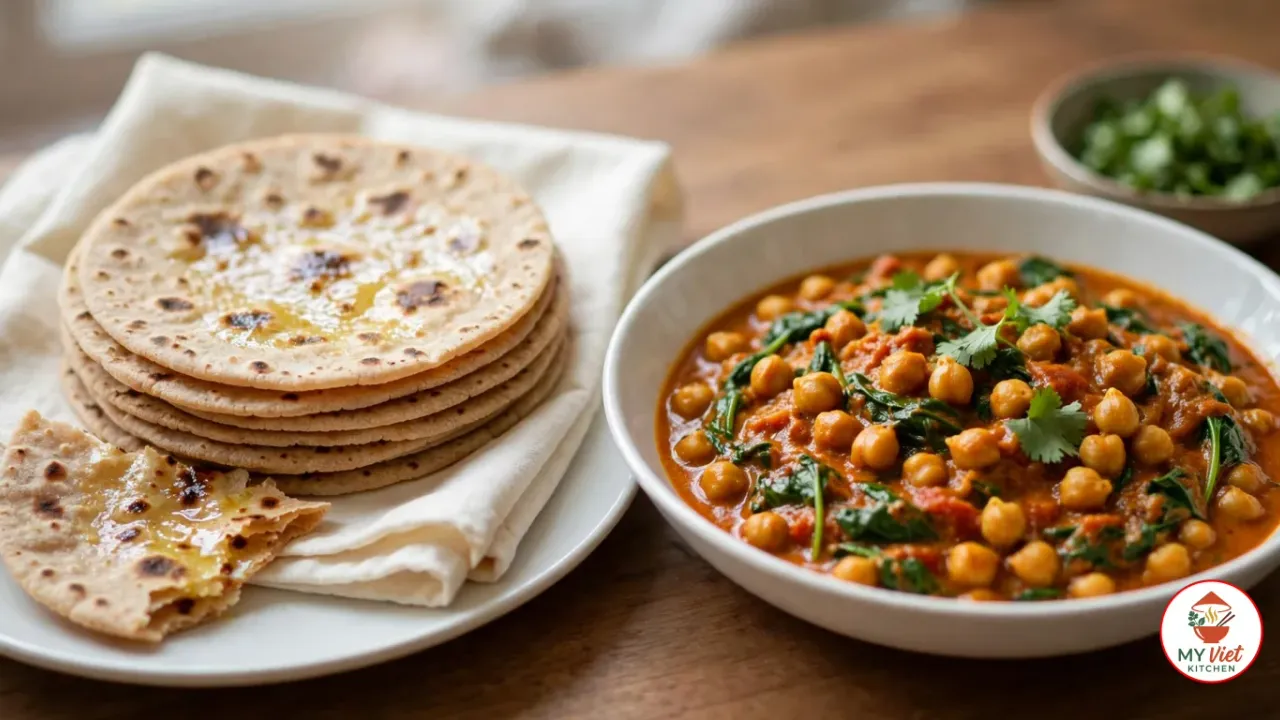
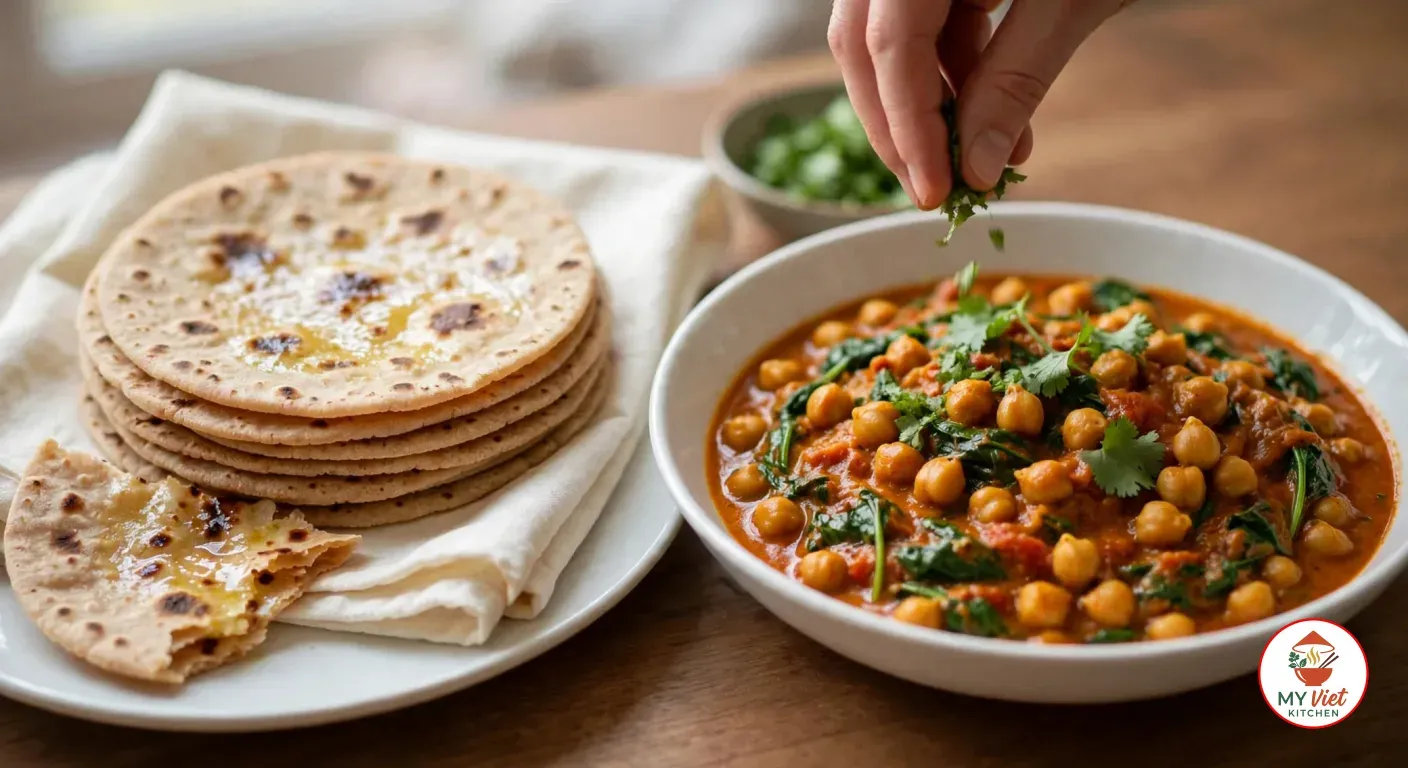
Chapati with curry is a meal of thin, unleavened whole wheat flatbread and a spiced sauce, eaten across India, Pakistan and Bangladesh. Torn pieces of the bread serve as the spoon (Wikipedia). Here the chapatis are made from atta and cooked on a dry tawa, and the curry is chickpeas and spinach simmered in pureed tomatoes with a little coconut milk.
Prep Time: 25 minutes | Cook Time: 50 minutes | Servings: 4 (8 chapatis)
Difficulty: Medium | Calories: ~610 per serving, with 2 chapatis

Is Chapati the Same as Roti?
Usually, though the names shift from one kitchen to the next. Roti is the broad word for bread on the Indian subcontinent, and in some regions, Bengal among them, it simply means chapati. A chapati puffed up over a flame is also called a phulka, from the word for “puffed” (Wikipedia).
Some cooks draw the line by fat. The recipe writer Swasthi Shreekanth keeps roti or phulka for the plain bread that puffs without oil and gets its ghee once it leaves the heat. Her chapati is cooked with ghee or oil on the tawa, may or may not puff, and is sometimes folded into layers (Swasthi’s Recipes). By her definition, the breads in this recipe are phulkas.
East Africa has a chapati of its own, fried rather than cooked dry. Indian labourers building the British-run railways took it to Kenya and Uganda (Wikipedia).
Which Flour Makes Soft Chapati?
Atta, the whole wheat flour sold in Indian groceries. It is milled from common wheat with the bran, germ and endosperm all kept, and it was traditionally ground at home on a stone mill called a chakki. Stone-ground atta takes up more water, and that makes a softer chapati (Wikipedia). The grinding also damages more of the starch than Western milling does, which suits a flatbread more than a fluffy loaf (Chowhound).
Without an Indian grocer, Tim Forster at Chowhound suggests white whole wheat flour, which is finely ground from hard wheat. A half-and-half mix of white whole wheat and all-purpose flour also works. Either way, expect a slightly denser bread than atta gives (Chowhound). Flours differ in how much water they take, so hold back the last few tablespoons and add them only if the dough feels stiff.
How Do You Get a Chapati to Puff?
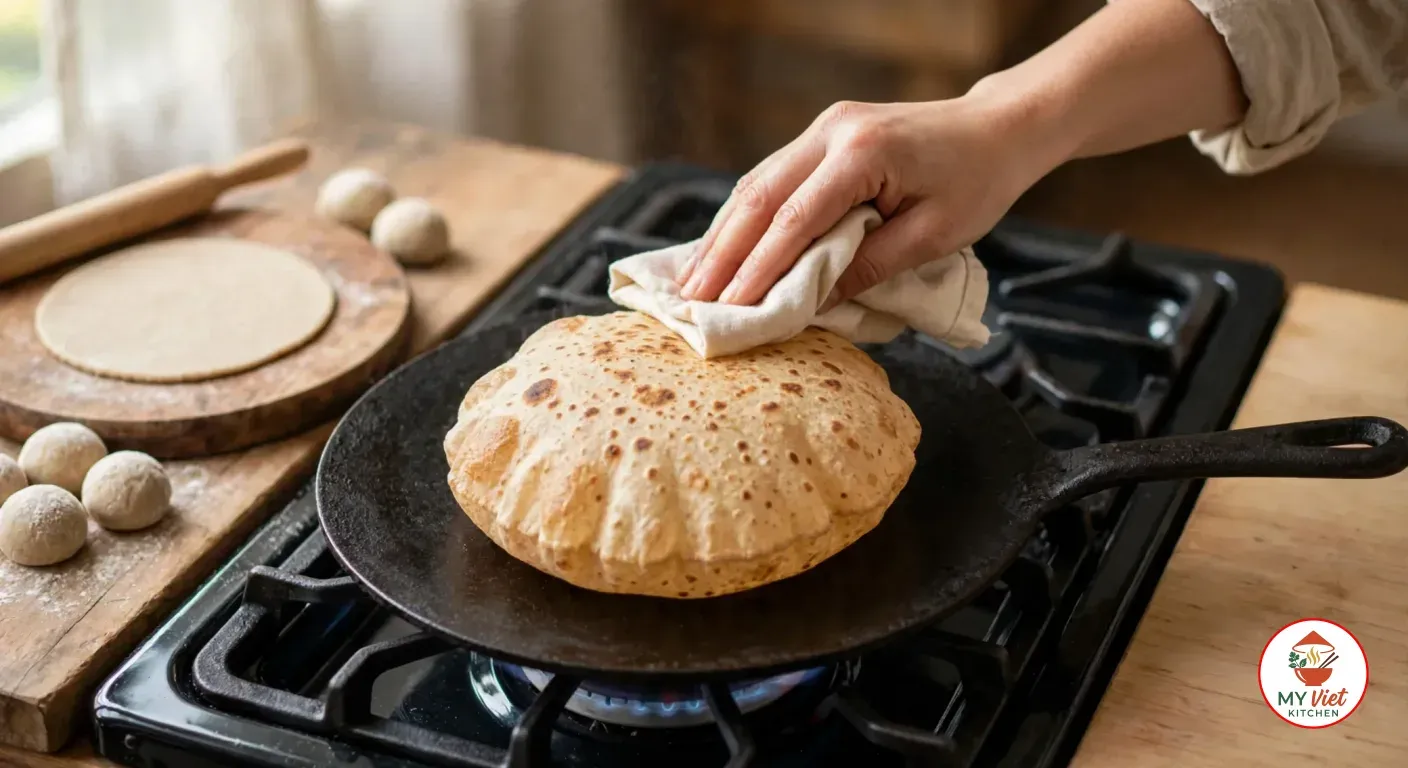
Steam does the work. As the dough heats, its water turns to steam and pushes the two faces of the bread apart. That inflation is what leaves a chapati soft and pliable. Each one needs 1 to 2 minutes on a griddle heated to 200 to 220°C, or about 390 to 430°F. It gets about 45 seconds on the first side, until bubbles form, and 90 seconds on the second. To puff it, press it on the tawa with a dry cloth, or hold it over a flame or hot coals for a few seconds (Wikipedia).
A thin patch or a tear lets the steam escape, so roll each round to an even thickness and brush off loose flour before it goes on the tawa. Heat matters too. Shreekanth cooks hers over medium-high heat, hot but not smoking, and warns that too low a flame leaves them hard and crusty (Swasthi’s Recipes). A chapati that only half puffs still tastes right.
What Curry Goes with Chapati?
Almost any. Chapati is eaten with curries, stews, chutneys, vegetable dishes such as sabzi and, very often, dal (Wikipedia). The curry here isn’t a named regional dish. It is a weeknight chickpea curry. Onions cooked until golden, garlic, ginger and ground spices go in first, then pureed tomatoes, two cans of chickpeas, a few handfuls of spinach and half a cup of coconut milk.
There’s no curry powder in it. The blend was adapted from garam masala and first sold by Indian merchants to British traders, and the first curry powder sold in England was advertised in London in 1784 (Wikipedia). Its main spices, cumin, coriander, turmeric and chili, go into the pan one by one here, and garam masala goes in at the end.
Ingredients for Chapati with Curry
For the Chapatis:
- 2 cups (about 240 g) atta (Indian whole wheat flour)
- 1/2 teaspoon salt
- 1 tablespoon cooking oil or melted ghee
- 3/4 cup (180 ml) warm water, plus 1 to 3 tablespoons if needed
- Atta for dusting
- 1 tablespoon melted ghee, for brushing
For the Chickpea and Spinach Curry:
- 2 tablespoons cooking oil
- 2 medium onions, finely chopped
- 3 cloves garlic, minced
- 1 tablespoon grated fresh ginger
- 3 medium tomatoes, pureed
- 1 1/2 teaspoons ground cumin
- 2 teaspoons ground coriander
- 1/2 teaspoon ground turmeric
- 1/2 to 1 teaspoon Kashmiri chili powder
- 2 cans (15 oz or 400 g each) chickpeas, drained and rinsed
- 1/2 cup (120 ml) coconut milk
- 1/2 cup (120 ml) water
- 3 cups (about 90 g) baby spinach
- 1 teaspoon garam masala
- Salt to taste
To Serve:
- Chopped fresh cilantro
Step-by-Step Instructions
Step 1: Make the Chapati Dough
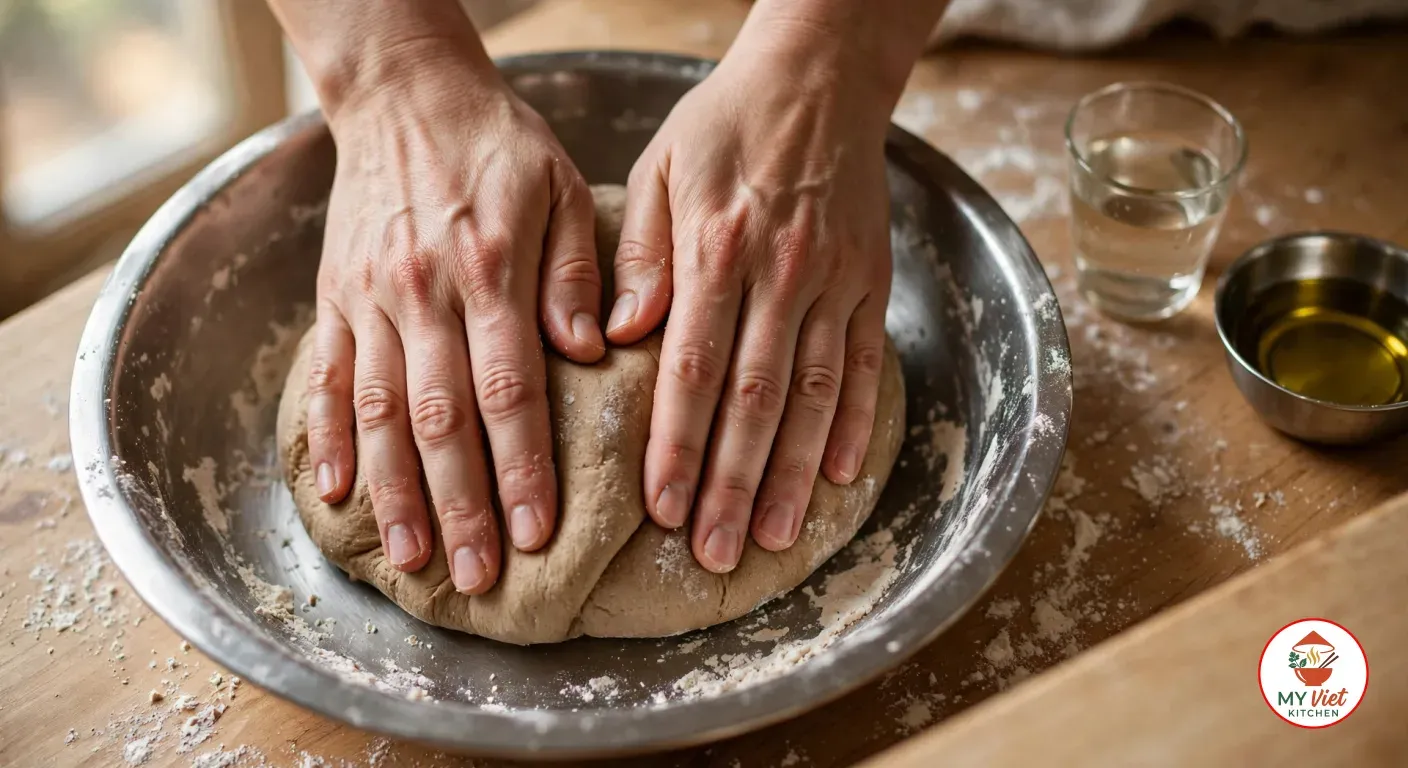
1Put the atta and salt in a large bowl and rub in the oil or ghee with your fingertips. Pour in about two-thirds of the warm water and mix with one hand, pressing the flour into the wet patches, then add the rest a little at a time until no dry flour remains. Knead for 8 to 10 minutes, in the bowl or on the counter, pushing the dough away with the heel of your hand and folding it back. It is ready when it feels soft and smooth and a fingertip leaves a dent that slowly fills. If it stays stiff, work in 1 to 3 tablespoons more water. Cover the bowl with a damp cloth and leave the dough for 30 minutes while you make the curry.
Step 2: Prepare the Curry Base
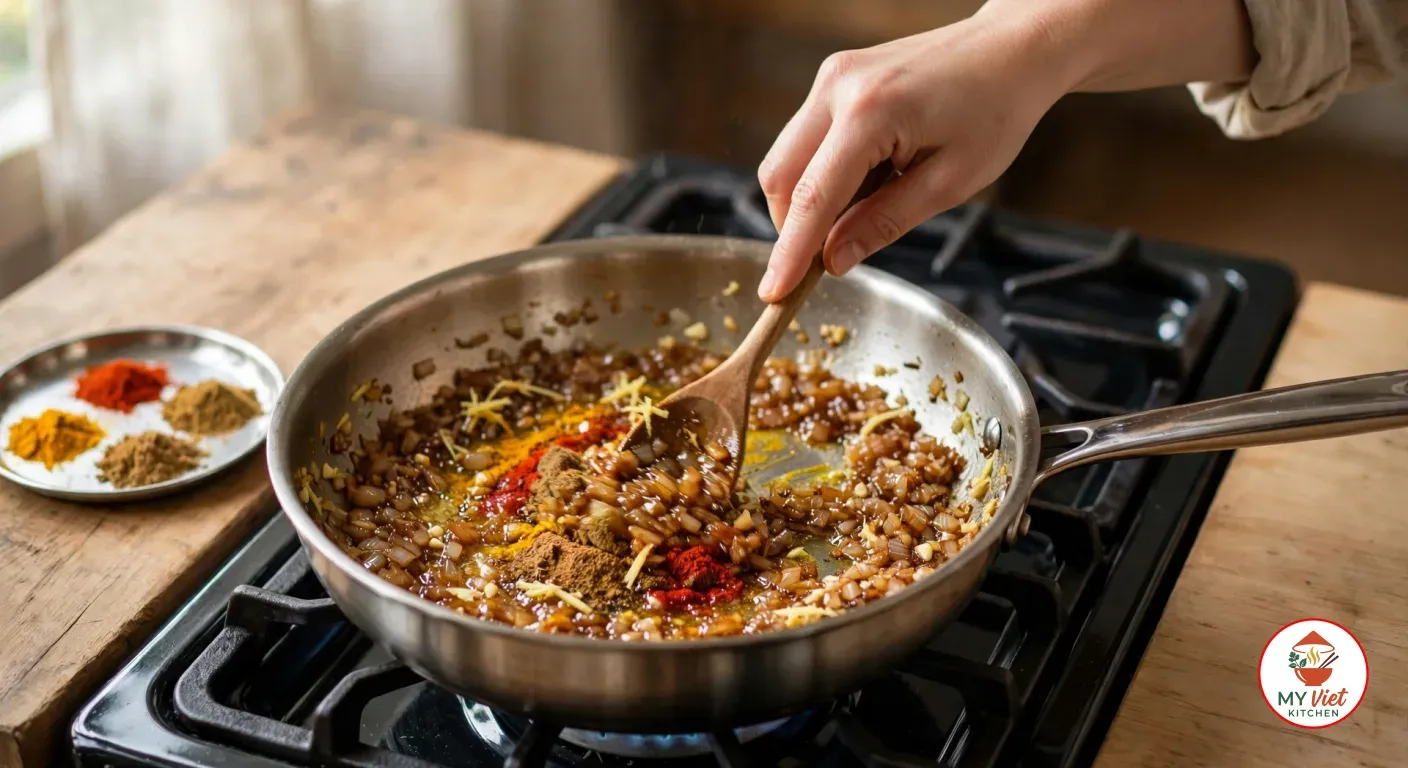
2Heat the 2 tablespoons of oil in a deep, heavy saute pan over medium heat. Add the onions and cook for 6 to 8 minutes, stirring now and then, until they turn golden brown at the edges and soft all through. Stir in the garlic and ginger and give them 1 minute. Add the cumin, coriander, turmeric and chili powder and keep stirring for 30 seconds, until they smell toasted. If the spices start to stick or darken, splash in a tablespoon of water.
Step 3: Build the Curry Sauce
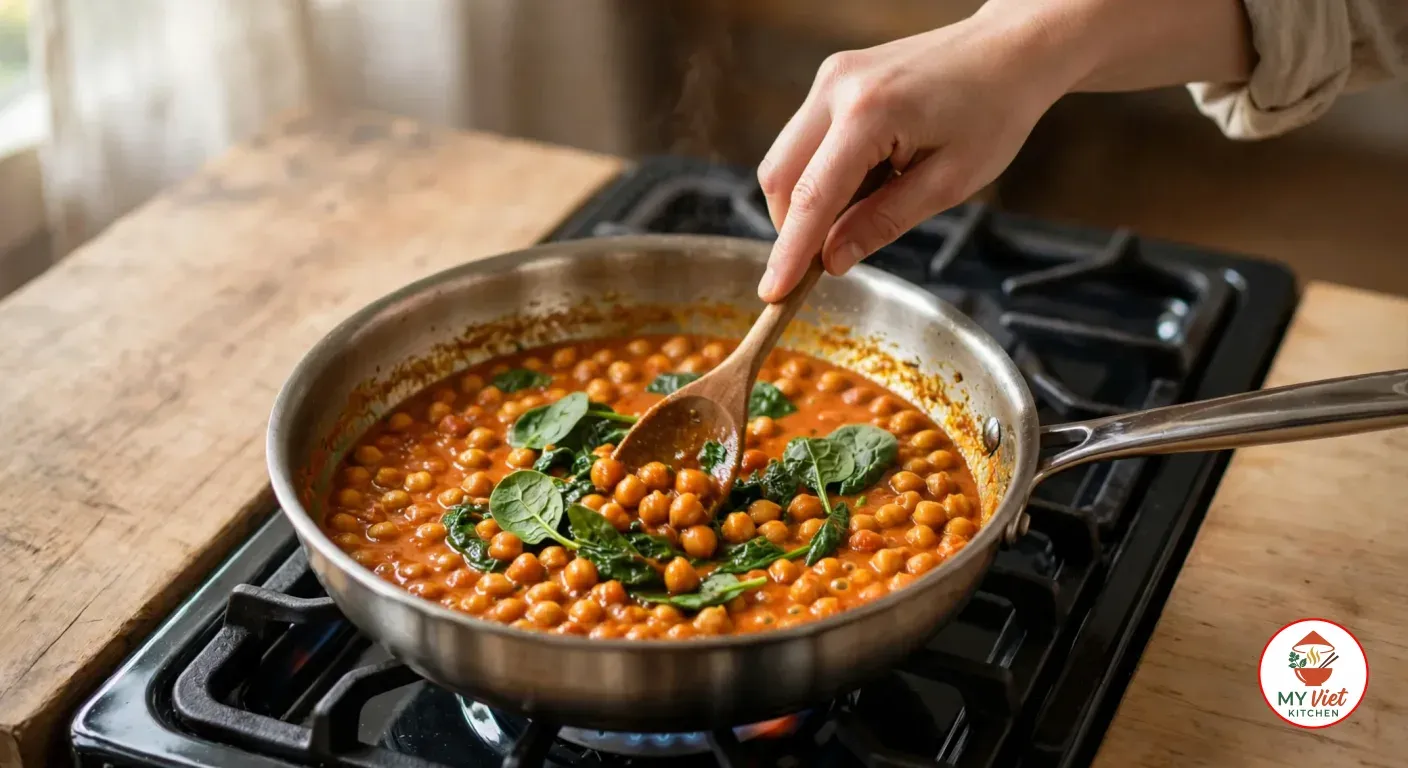
3Pour in the pureed tomatoes and cook for 8 to 10 minutes, stirring often, until the sauce thickens to a paste and a little oil gathers at the edges. Add the chickpeas, coconut milk and 1/2 cup of water, bring it to a gentle bubble and simmer for 10 minutes, until the sauce clings to the chickpeas. Stir in the spinach a handful at a time; it wilts in about 2 minutes. Season with salt, cover the pan and leave it over the lowest heat while you cook the chapatis.
Step 4: Roll and Cook the Chapatis
4Set a tawa or cast-iron skillet over medium-high heat. Divide the dough into 8 equal pieces, about 55 g each, and roll each between your palms into a smooth ball. Dip one ball in dusting flour, flatten it and roll it into a 7-inch (18 cm) round, giving it a small turn after every few passes so it stays even. Brush off the loose flour and lay it on the hot, dry tawa. After about 45 seconds, when small bubbles show, turn it over. Cook the second side for about 90 seconds, until brown spots appear underneath. Turn it once more and press the edges gently with a folded dry cloth so the steam fills it like a balloon. On a gas stove you can instead lift it with tongs and hold it over the flame for a few seconds. Move it to a cloth-lined basket, brush with a little ghee and fold the cloth over it. Roll the next round while each one cooks.
Step 5: Season and Serve
5Uncover the curry, stir in the garam masala and simmer for 1 minute more. Taste it and add salt, or a pinch more chili if you like more heat. Spoon it into bowls, scatter with cilantro and bring the chapatis to the table still wrapped in their cloth. To eat chapati with curry, tear off a piece of bread, fold it around a few chickpeas and some sauce, and eat it from your fingers.
Frequently Asked Questions
Can I make the chapati dough ahead?
Yes. Swasthi Shreekanth rests her dough for at least 30 minutes and up to 2 hours at room temperature (Swasthi’s Recipes). For longer, wrap it and refrigerate it overnight. Let it sit out for about 30 minutes before rolling, since cold dough is stiff and springs back under the pin.
Why are my chapatis hard?
The usual causes are a dry dough, a heavy hand with the dusting flour, or a tawa that isn’t hot enough. Shreekanth warns that kneading a dough without enough water makes hard flatbreads, and that low or even moderately low heat makes them hard and crusty. If everything else is right, she suggests trying another brand of atta, since they don’t all behave the same (Swasthi’s Recipes).
Is chapati eaten all over India?
In most of it, even in regions where rice is the everyday staple (Wikipedia). Kerala came to it late. The Vaikom Satyagraha, a 19-month protest against untouchability in Travancore, began in 1924. Sikh volunteers from Punjab ran a free community kitchen there, a langar, that served chapati and halwa. Chapati wasn’t common in Travancore, Kochi or Malabar before then, and a historian quoted by The New Indian Express credits the protest with bringing it into the state (The New Indian Express).
Can I make chapati with curry vegan?
Yes. Use oil in the dough and brush the cooked chapatis with oil instead of ghee. The curry has no dairy, since coconut milk is pressed from coconut flesh.
Sources
- Chapati, Atta (flour) and Curry powder, Wikipedia
- Chapati Recipe (Indian Flatbread), Swasthi Shreekanth, Swasthi’s Recipes, 2023
- The Special Stone-Ground Flour You Need For Roti, Tim Forster, Chowhound, 2024
- How chapati made its way into Kerala, The New Indian Express, 2023