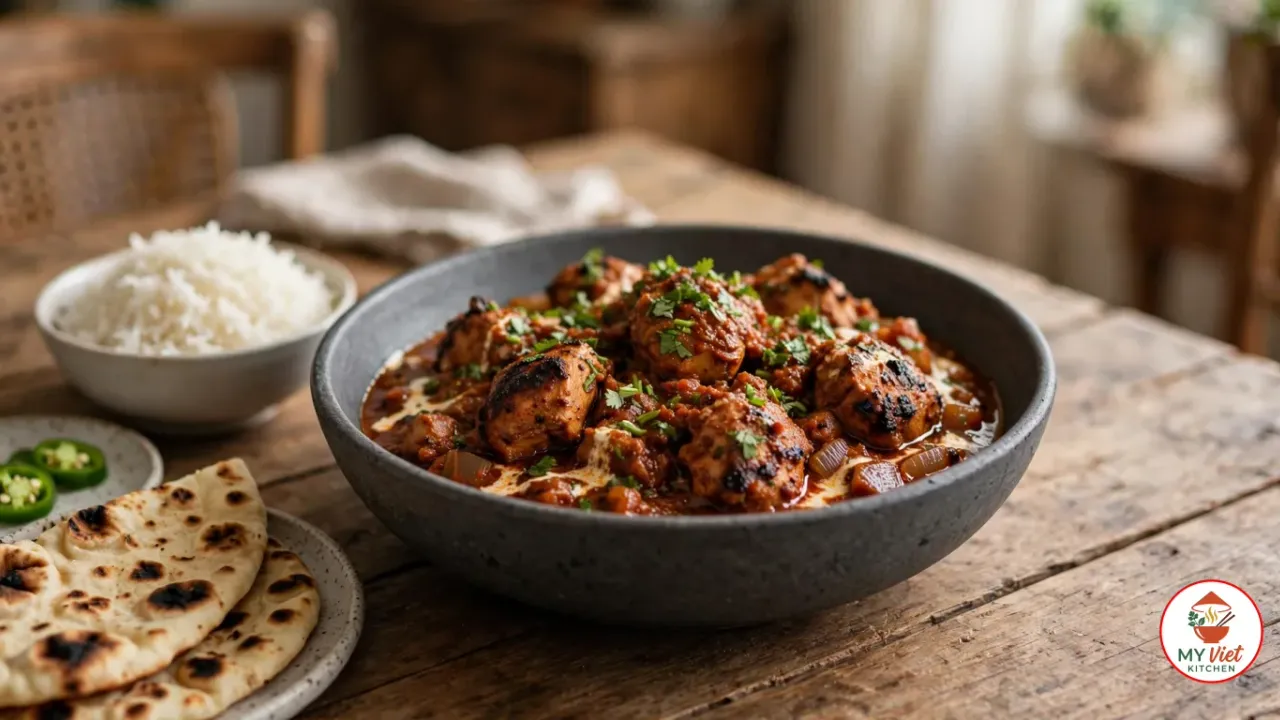
Chicken tikka masala is a curry of yogurt-marinated chicken pieces, roasted until charred at the edges and then simmered in a spiced tomato sauce with a little cream. It’s a fixture of British curry houses, and where it was first made is still disputed. In this version the tikka roasts on a rack in a very hot oven while an onion-heavy masala cooks on the stove. Plan on at least 4 hours for the marinade.
Prep Time: 30 minutes | Cook Time: 45 minutes | Total Time: 5 hours 15 minutes, including 4 hours of marinating | Servings: 4
Difficulty: Medium | Calories: ~560 per serving
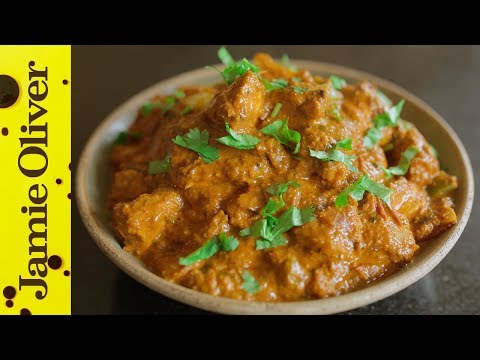
Was It Invented in Glasgow?
The name is a plain description. In South Asian cooking, tikka means meat in small pieces (Cambridge Dictionary) and masala is a mixture of spices (Cambridge Dictionary). Who first put the pieces in a creamy sauce is far less clear.
The best-known claim comes from Glasgow. In July 2009 Mohammad Sarwar, then the Labour MP for Glasgow Central, asked for EU Protected Designation of Origin status for the dish. He credited Ali Ahmed Aslam, owner of the Shish Mahal restaurant in the city’s west end. Aslam is said to have made a sauce from spices soaked in a tin of condensed tomato soup after a customer complained that his meal was too dry (BBC News).
Others dispute it. The food historian Peter Grove points to Sultan Ahmed Ansari of Glasgow’s Taj Mahal restaurant, who said he created the dish in the 1950s. Iqbal Wahhab, a London restaurant owner, says the tomato-soup detail was “completely made up” to entertain journalists. Rahul Verma, a food critic for The Hindu, traces the dish to Punjab. Sarwar’s bid for protected status failed (Wikipedia).
Its place in Britain is easier to pin down. In a 2001 speech on multiculturalism, Foreign Secretary Robin Cook called it “a true British national dish”. He said chicken tikka is Indian and that the masala sauce was added because British people wanted their meat served in gravy (The Guardian).
What Sets It Apart From Butter Chicken?
Sometimes it barely is. Some forms of chicken tikka masala are made and look much like butter chicken, and no single recipe defines the dish. A tomato and coriander-leaf sauce is common, but when a 1998 survey in Britain compared 48 recipes, chicken was the only ingredient they all shared (Wikipedia).
Here the sauce leans on the traits most cooks expect from a tikka masala. Two onions go into the pan and cook down until deep golden, then a fresh green chili, ground cumin and coriander go in before the tomatoes. Half a cup of cream softens the sauce without turning it pale, no butter is stirred in at the end, and a handful of chopped cilantro finishes it. The result is thicker, more onion-forward and a little hotter than butter chicken.
The chicken is handled differently too. It roasts until fully cooked, so it needs only 5 minutes in the sauce to heat through and pick up its flavor.
Why Roast the Tikka on a Rack?
Restaurant kitchens cook tikka on skewers in a tandoor, a clay oven fired with charcoal or wood that can reach about 480°C (900°F) (Wikipedia). A home oven set to 260°C (500°F) runs at roughly half that, so the setup has to make up some of the difference.
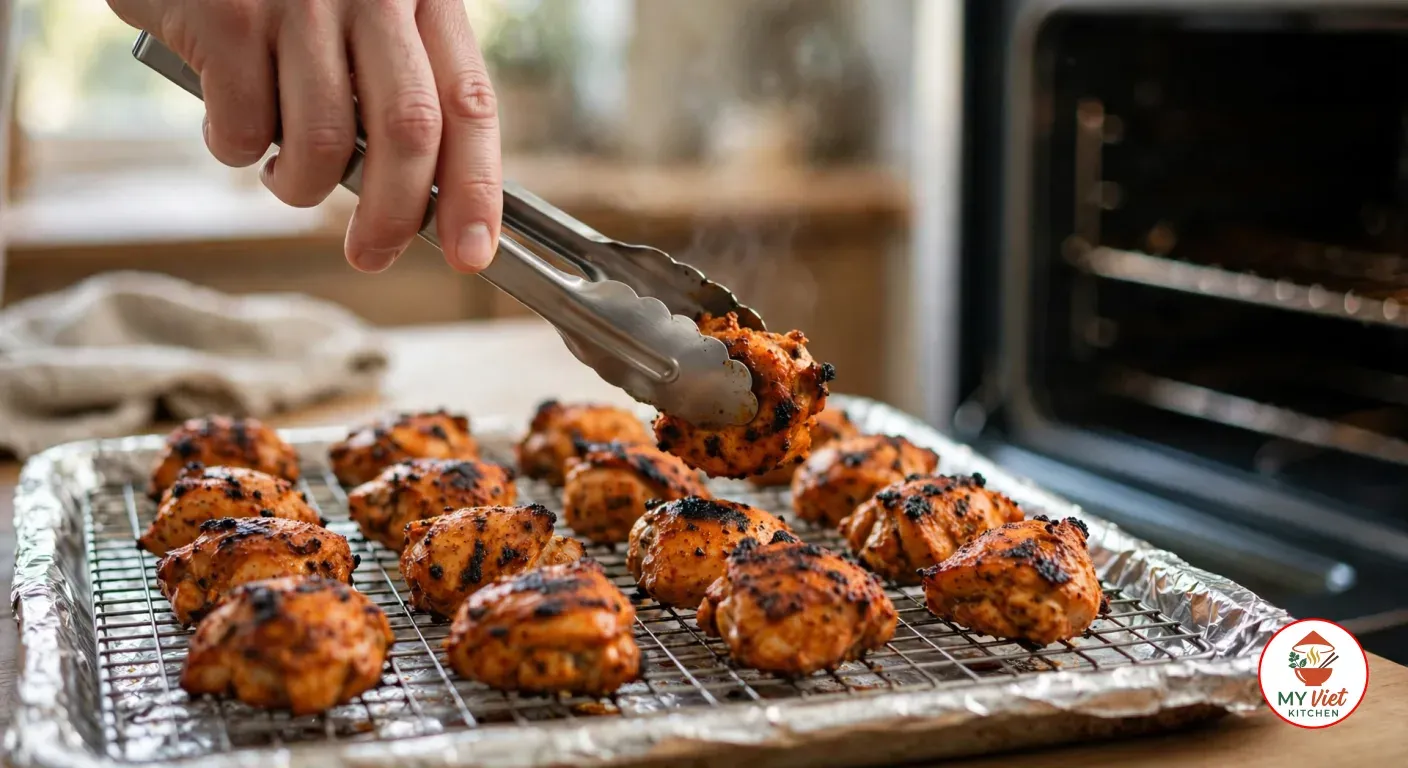
A wire rack lifts the pieces off the tray. Hot air reaches the underside, and the juices drip onto the foil instead of pooling around the chicken and steaming it. Shake off the extra marinade before the pieces go on the rack, since a thick coat of yogurt stays pale and wet long after a thin one has browned. Leave about 2 cm (¾ in) between pieces and roast them in the upper third of the oven, closer to the top element.
Color doesn’t prove the chicken is done. Check the thickest piece with an instant-read thermometer, because chicken is safe once it reaches 165°F (74°C) inside (CDC).
Ingredients for Chicken Tikka Masala
For the Chicken Tikka:
- 700 g (1½ lb) boneless, skinless chicken thighs, cut into 4 cm (1½ in) pieces
- 3/4 cup (180 g) full-fat plain yogurt
- 2 tablespoons lemon juice
- 1 tablespoon Kashmiri chili powder
- 1 teaspoon garam masala
- 1 teaspoon ground cumin
- 1/2 teaspoon ground turmeric
- 1 tablespoon ginger paste
- 1 tablespoon garlic paste
- 1 teaspoon salt
- 1 tablespoon neutral oil, for the rack
For the Masala Sauce:
- 3 tablespoons ghee or neutral oil
- 2 medium onions (300 g / 10 oz), finely chopped
- 1 or 2 green chilies, finely chopped
- 1 tablespoon ginger paste
- 1 tablespoon garlic paste
- 2 teaspoons ground coriander
- 1 teaspoon ground cumin
- 1 teaspoon Kashmiri chili powder
- 400 g (14 oz) canned crushed tomatoes
- 2 tablespoons tomato paste
- 1/2 teaspoon salt, plus more to taste
- 1/2 cup (120 ml) heavy cream
- 1 teaspoon garam masala
- 1 teaspoon dried fenugreek leaves (kasuri methi)
- 1 teaspoon sugar, if needed
- 1/2 cup (8 g) chopped cilantro, plus leaves to garnish
To Serve:
- Steamed basmati rice or naan
Step-by-Step Instructions
Step 1: Marinate the Chicken
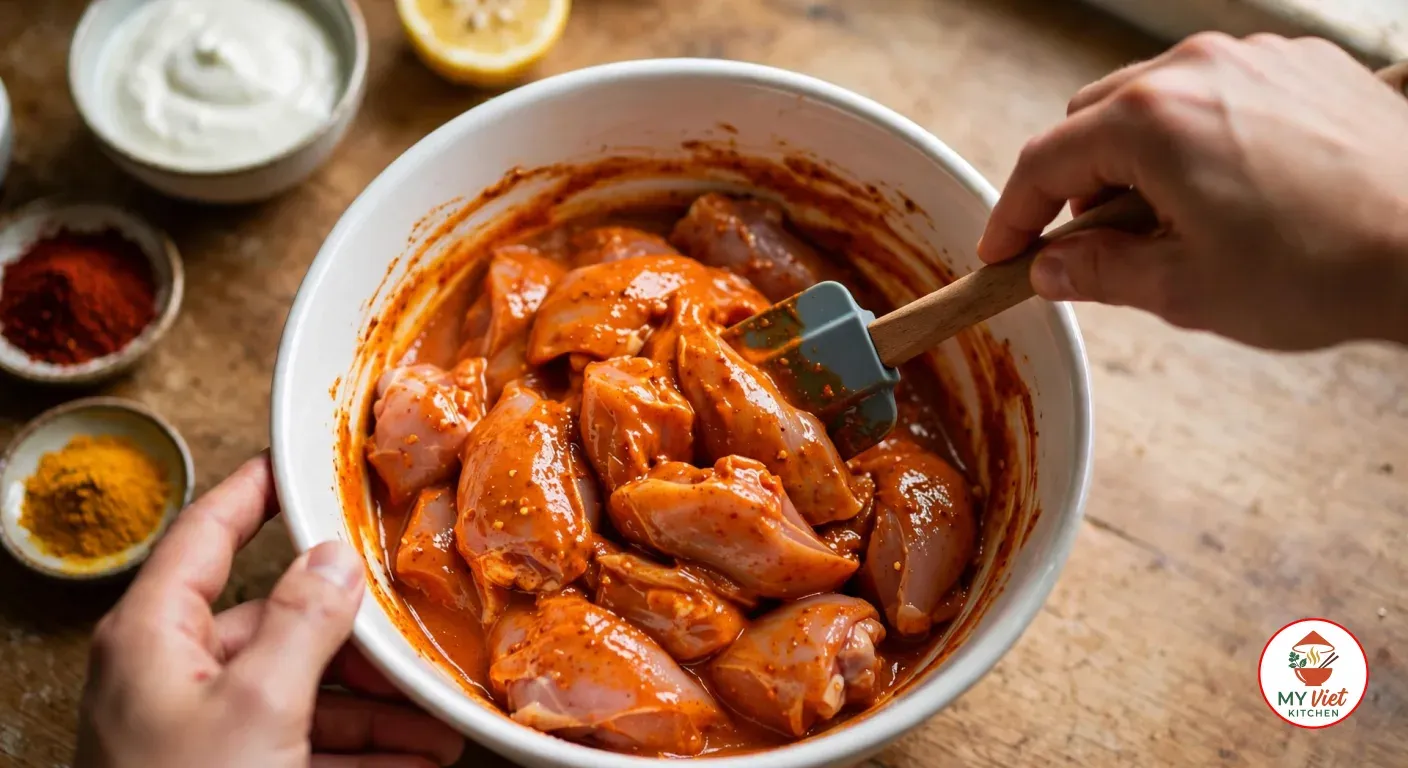
1Trim any thick lumps of fat from the thighs and cut them into 4 cm (1½ in) pieces. In a large bowl, whisk the yogurt with the lemon juice and the spices: the tablespoon of Kashmiri chili powder, a teaspoon each of garam masala and cumin, and the turmeric. Add a tablespoon each of ginger paste and garlic paste and the teaspoon of salt. The marinade should coat a spoon thickly. Turn the chicken through it until every piece is coated, then cover and chill for 4 to 24 hours.
Step 2: Cook the Chicken Tikka
2Set an oven rack in the upper third and turn the oven up to 500°F (260°C), or its highest setting. Line a baking sheet with foil, sit a wire rack on top and brush the rack with the oil. Lift the chicken out of the bowl a piece at a time, letting the excess marinade drip back, and spread the pieces on the rack about 2 cm (¾ in) apart. Discard whatever marinade is left behind. Give the chicken 15 to 18 minutes, flipping each piece halfway, until the edges blacken in spots and the thickest one reads 165°F (74°C). For darker char, switch the oven to broil for the last 2 or 3 minutes and keep the door in view. Start the sauce in step 3 while the chicken roasts.
Step 3: Build the Masala Sauce Base
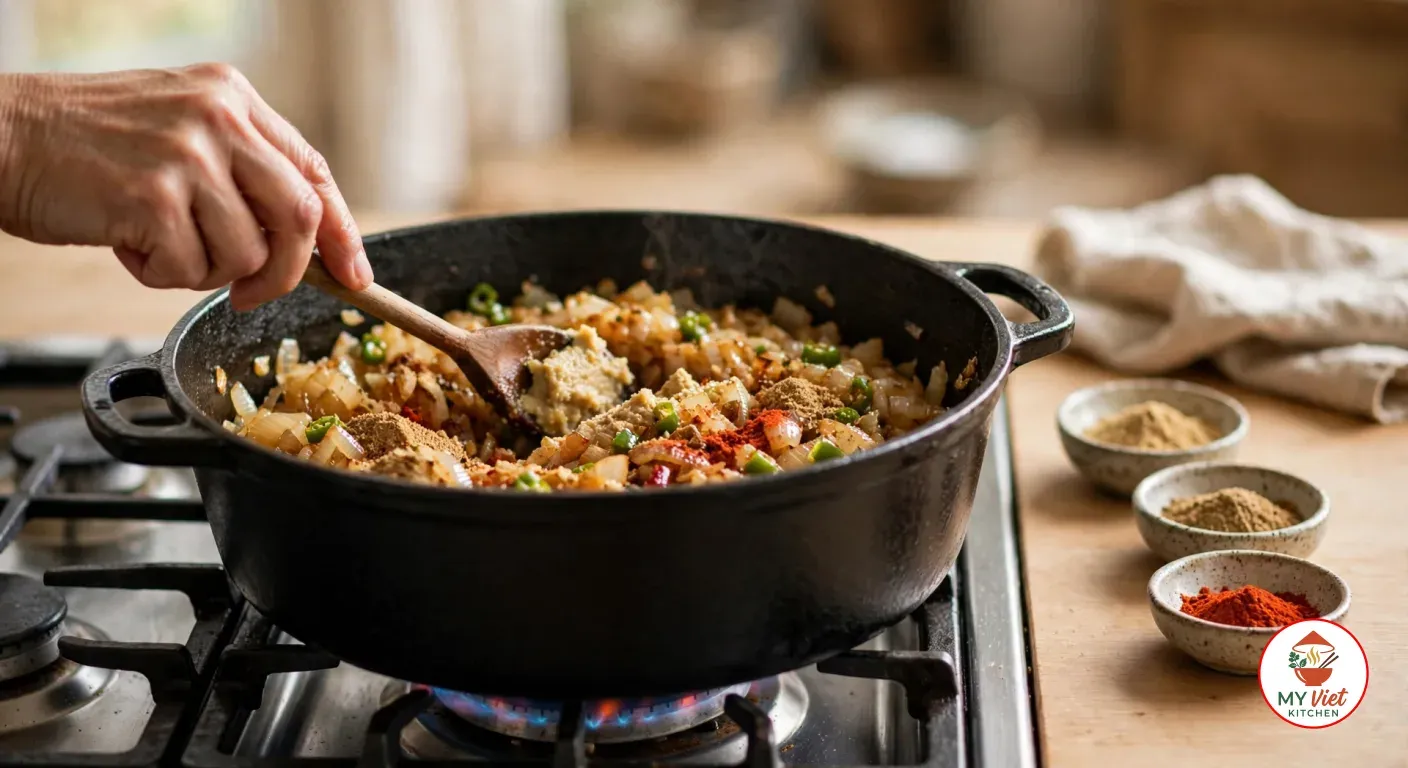
3Melt the ghee in a large, heavy pan or Dutch oven over medium heat. Add the onions and let them cook for 12 to 15 minutes, giving them a stir every minute or so, until soft and deep golden. If they start to catch on the bottom, add a tablespoon of water and scrape it up. Stir in the green chilies and the second tablespoons of ginger and garlic paste. Cook for a minute, until the raw garlic smell fades. Add the coriander, cumin and teaspoon of Kashmiri chili powder and stir for 30 seconds, just until fragrant, so the ground spices don’t scorch.
Step 4: Add Tomatoes and Simmer
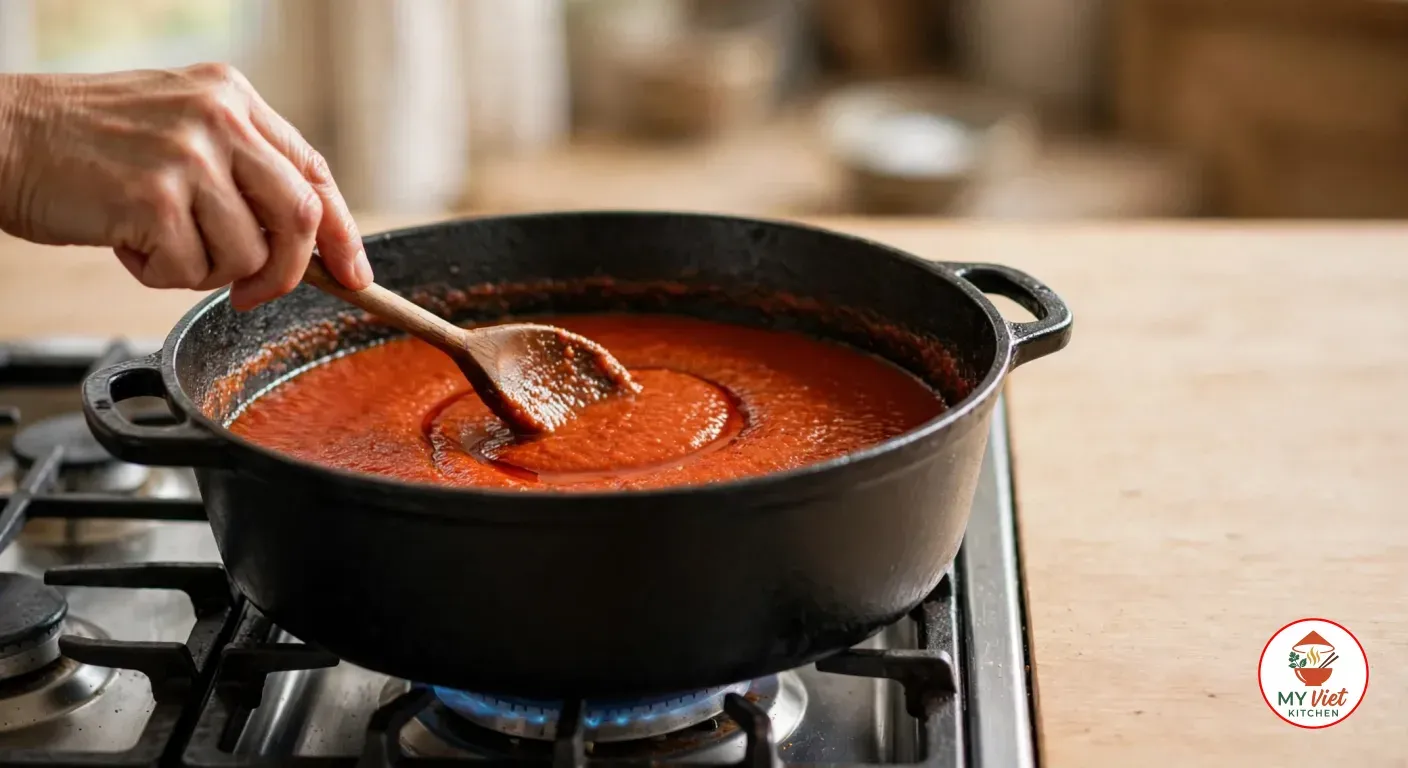
4Add the crushed tomatoes, tomato paste and 1/2 teaspoon of salt, scraping up anything stuck to the pan. Once it bubbles, turn the heat to medium-low and leave the pot uncovered for 15 to 20 minutes. Stir it now and then, and more often as it thickens and starts to spit. It’s ready when it has turned from bright red to a deeper, rusty red, beads of oil show at the edges, and a spoon drawn across the bottom leaves a clear trail. Leave it slightly chunky, or blend it smooth with an immersion blender.
Step 5: Finish with Cream and Chicken
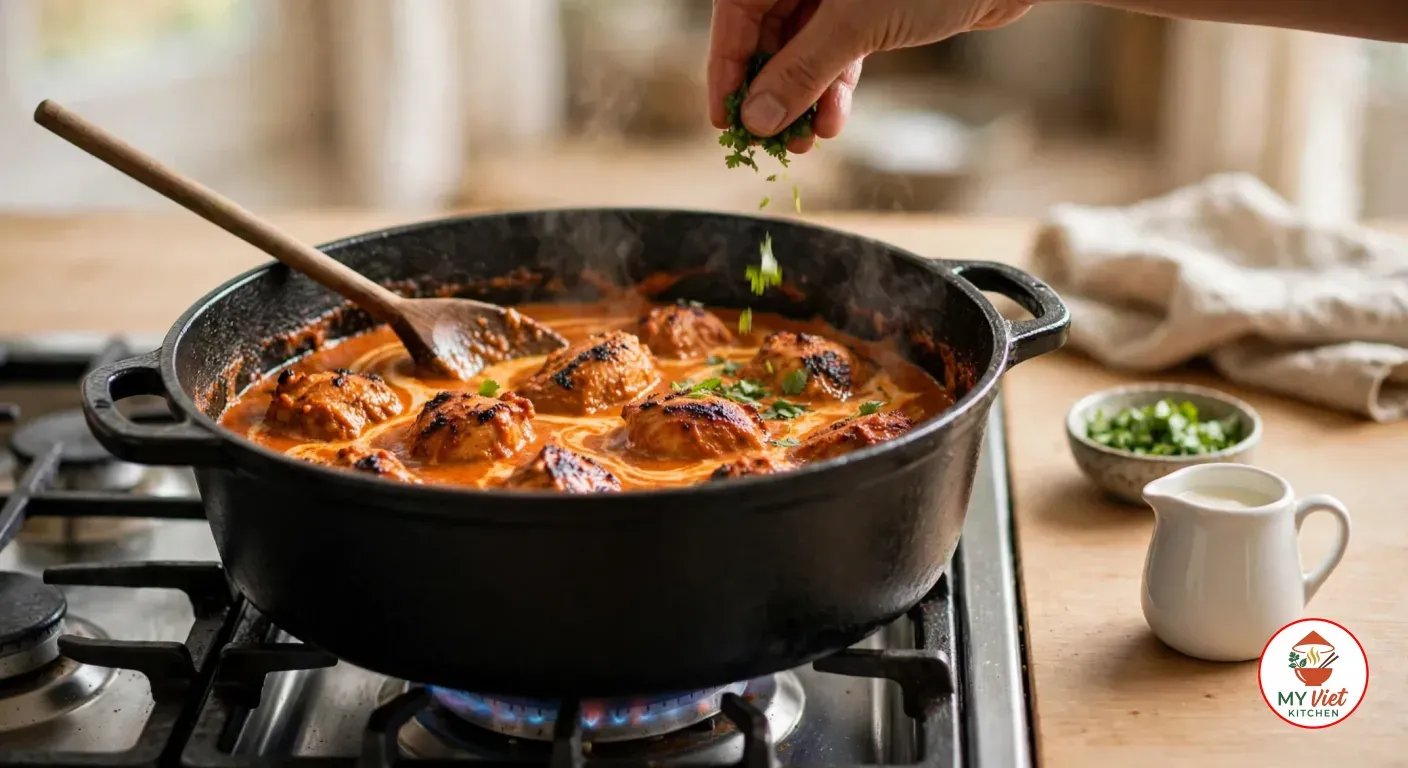
5Turn the heat to low and stir in the cream and the remaining teaspoon of garam masala. Rub the kasuri methi between your hands as you sprinkle it in. Taste the sauce, and if the tomatoes still taste sharp, add the sugar. Slide in the roasted chicken and let it heat through at a gentle simmer for 5 minutes. If the sauce clings too thickly, loosen it with a little water. Stir in the chopped cilantro, check the salt, and serve with basmati rice or naan, scattered with a few more cilantro leaves.
Frequently Asked Questions
Can I grill the chicken or use an air fryer?
Yes, either works. On a grill, thread the pieces onto metal skewers and cook them over high direct heat for 8 to 10 minutes in all. Give the skewers a quarter turn every 2 minutes. In an air fryer set to 400°F (200°C), cook them in a single layer and flip them once; they take 12 to 15 minutes. Check that the thickest piece reaches 165°F (74°C) before it goes into the sauce.
Can I make chicken tikka masala without dairy?
Yes. Marinate the chicken in unsweetened coconut or soy yogurt, cook the sauce in oil instead of ghee, and replace the cream with the same amount of full-fat coconut milk or cashew cream. Chetna Makan’s version in the video above finishes its sauce with cashew cream. To make it, soak 1/2 cup (70 g) of raw cashews in hot water for 20 minutes, drain them and blend with 1/2 cup (120 ml) of fresh water until smooth.
Why does my sauce taste sour or thin?
It usually needs more time on the heat. Canned tomatoes stay sharp and watery until they have simmered for 15 to 20 minutes and oil starts to bead at the edges of the pan. Keep it on the heat until the sauce holds a line when you drag the spoon through it. If it still tastes sharp after that, stir in the teaspoon of sugar.
How long do leftovers keep?
Two days in the refrigerator. The UK’s Food Standards Agency advises putting cooked leftovers in the fridge within two hours and eating them within 48 hours, or freezing them. It adds that frozen meats are usually best eaten within 2 to 3 months (Food Standards Agency). Warm leftovers until they’re steaming hot in the middle, loosening the sauce with a little water.
Sources
- Glasgow ‘invented’ Tikka Masala, BBC News, July 2009
- Robin Cook’s chicken tikka masala speech, The Guardian, April 2001
- Chicken tikka masala, Wikipedia
- Tandoor, Wikipedia
- Tikka, Cambridge Dictionary
- Masala, Cambridge Dictionary
- Chicken and Food Poisoning, Centers for Disease Control and Prevention
- How to chill, freeze and defrost food safely, Food Standards Agency