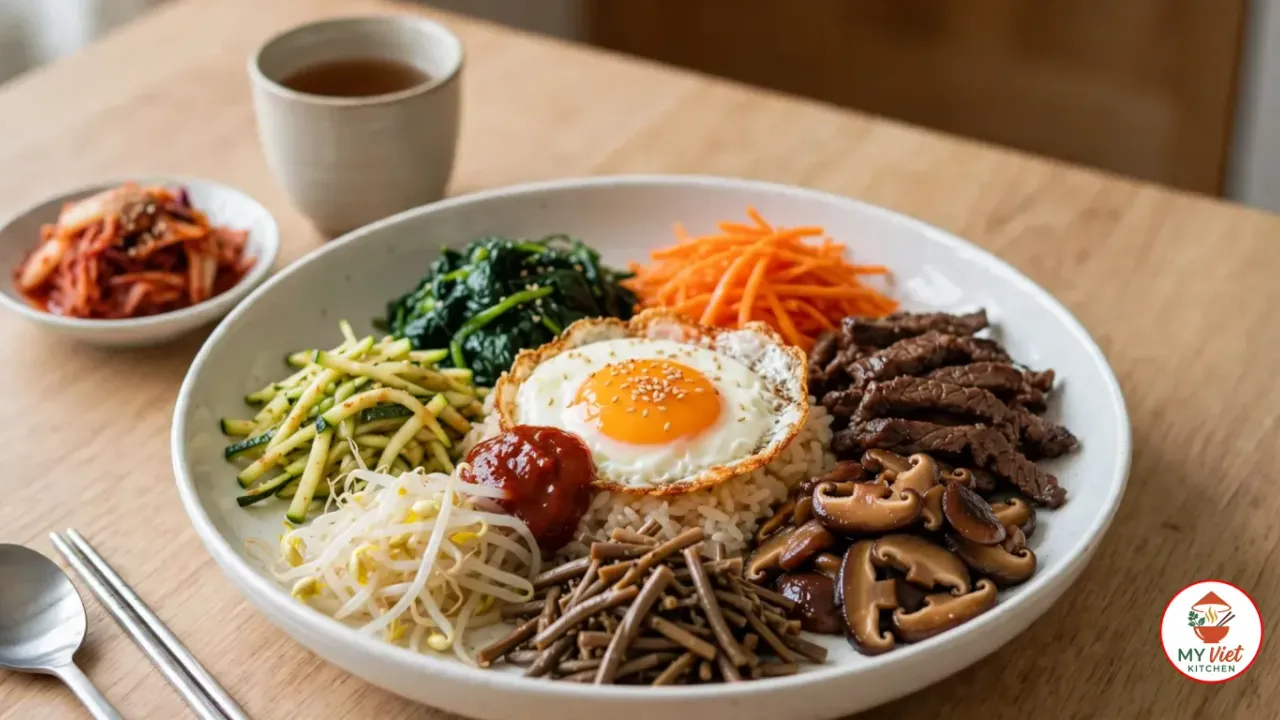
Bibimbap is Korea’s most iconic rice bowl, a vibrant and nutritious dish that brings together an array of seasoned vegetables, savory marinated beef, a golden fried egg, and fiery gochujang chili paste over a bed of steamed rice. The beauty of this dish lies in its visual artistry and the moment you mix everything together, creating a harmony of flavors and textures in every bite. This guide walks you through making authentic bibimbap at home, from preparing each topping individually to assembling the perfect colorful bowl.
Prep Time: 30 minutes | Cook Time: 20 minutes | Servings: 4
Difficulty: Medium | Calories: ~580 per serving
What Makes Bibimbap Special?
Bibimbap stands apart from other rice dishes because every component is prepared separately with its own seasoning before being artfully arranged on a single bowl of rice. This approach means each vegetable retains its distinct color, texture, and flavor right up until the moment you mix everything together. The contrast between the cool vegetables, warm rice, rich beef, runny egg yolk, and spicy gochujang creates an experience that changes with every bite.
Bibimbap has deep roots in Korean culture. Historians trace its origins to the Joseon Dynasty, where bibimbap was served as a way to use up leftover side dishes called banchan. On the eve of the Lunar New Year, families would combine their remaining vegetables, rice, and sauces into one bowl to start the new year fresh. Over time, this practical tradition evolved into one of Korea’s most celebrated dishes, with regional variations appearing across the country.
Jeonju, a city in southwestern South Korea, is considered the birthplace of the finest version. Jeonju-style bibimbap uses raw beef tartare instead of cooked beef, along with a wider variety of toppings including ginkgo nuts, pine nuts, and a special bean sprout broth. The city takes its recipe so seriously that it received official recognition as an Intangible Cultural Heritage. Whether you follow the Jeonju style or the simpler home bibimbap in this guide, the principles remain the same: fresh ingredients, careful preparation, and bold gochujang sauce.

Choosing the Right Rice for Bibimbap
Rice is the foundation of every bibimbap bowl, and the type you choose affects the entire eating experience. Korean cooking uses specific varieties that deliver the right texture and stickiness for mixing with toppings and sauce.
- Korean short-grain rice (best choice): Varieties like Calrose or Korean brands produce slightly sticky, plump grains that hold together when mixed with sauce. The mild sweetness and chewy texture complement the bold toppings perfectly.
- Japanese short-grain rice: Very similar to Korean varieties and works as an excellent substitute. Brands like Koshihikari produce a slightly more polished grain with similar stickiness.
- Brown rice or multigrain: For a healthier option, use Korean mixed grain rice (japgokbap). It adds nutty flavor and extra fiber. Cook it with slightly more water and a longer soaking time to achieve the right tenderness.
- Long-grain rice (not recommended): Jasmine or basmati rice lacks the stickiness needed for this dish. The individual grains do not hold the sauce well, and the texture feels wrong in the context of Korean flavors.
Ingredients for Bibimbap
Rice and Beef:
- 4 cups cooked short-grain rice, freshly made and warm
- 8 ounces beef sirloin, thinly sliced against the grain
- 2 tablespoons soy sauce
- 1 tablespoon sesame oil
- 1 tablespoon sugar
- 2 cloves garlic, minced
Vegetable Toppings:
- 2 cups fresh spinach
- 1 large carrot, julienned into thin matchsticks
- 1 medium zucchini, julienned into thin matchsticks
- 4 ounces bean sprouts
- 4 shiitake mushrooms, thinly sliced
- 1 cup fernbrake gosari, soaked and trimmed (optional)
- 4 eggs
- Sesame seeds for garnish
- Vegetable oil for cooking
Gochujang Sauce:
- 4 tablespoons gochujang (Korean chili paste)
- 1 tablespoon sesame oil
- 1 tablespoon sugar
- 1 tablespoon rice vinegar
- 1 tablespoon water
Pro tip: The key to great bibimbap vegetables is cooking each one separately in a very hot pan for just 1 to 2 minutes. This preserves their individual colors and textures. If you cook all the vegetables together, they steam rather than sear, and you lose the vibrant color contrast that makes this dish so visually stunning.
Step-by-Step Instructions
Step 1: Marinate the Beef
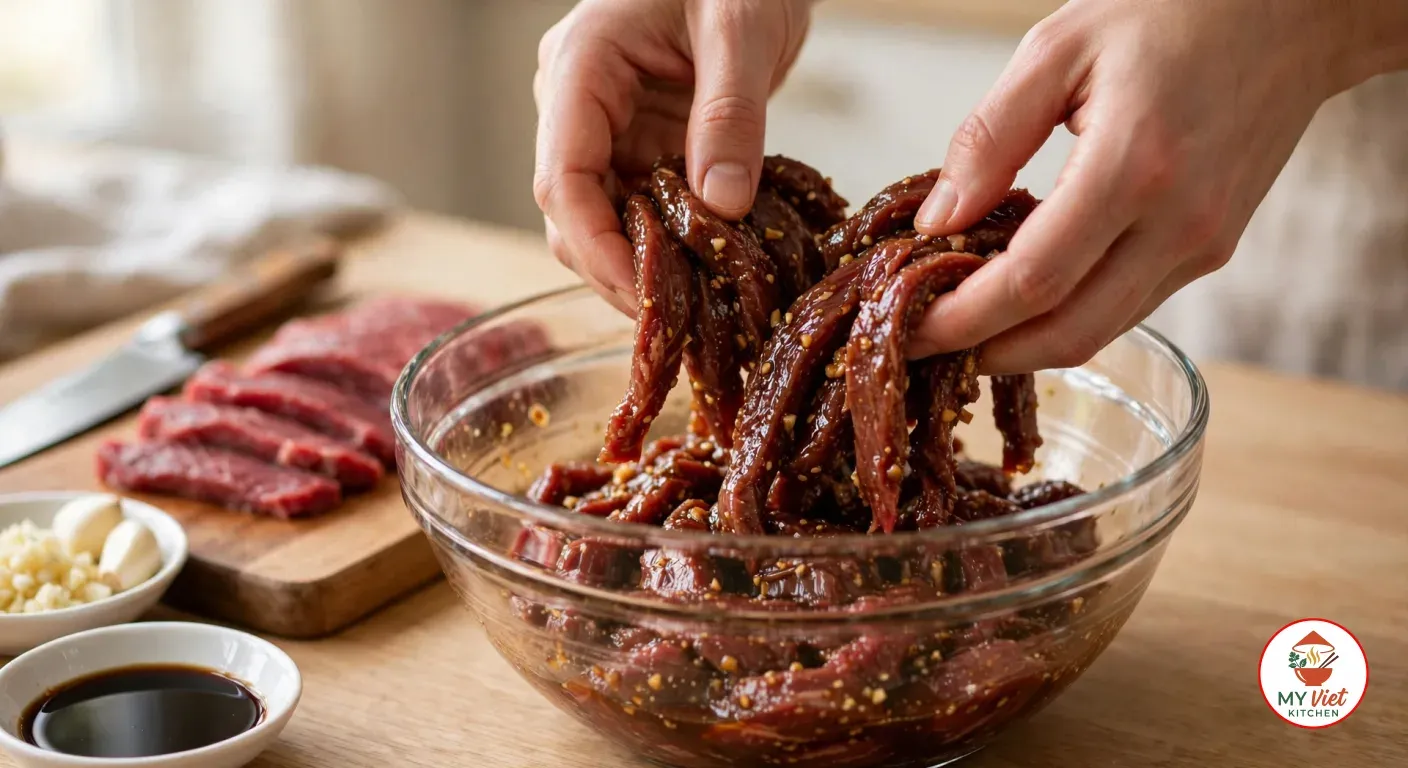
1 Slice the beef sirloin into very thin strips, cutting against the grain for maximum tenderness. In a bowl, whisk together the soy sauce, sesame oil, sugar, and minced garlic. Add the beef slices and toss until every piece is evenly coated.
Let the beef marinate for at least 15 minutes at room temperature, or cover and refrigerate for up to 2 hours for deeper flavor. The sugar in the marinade helps the beef caramelize beautifully when cooked at high heat, while the sesame oil adds a nutty fragrance that is characteristic of Korean cuisine.
Step 2: Prepare Each Vegetable Separately
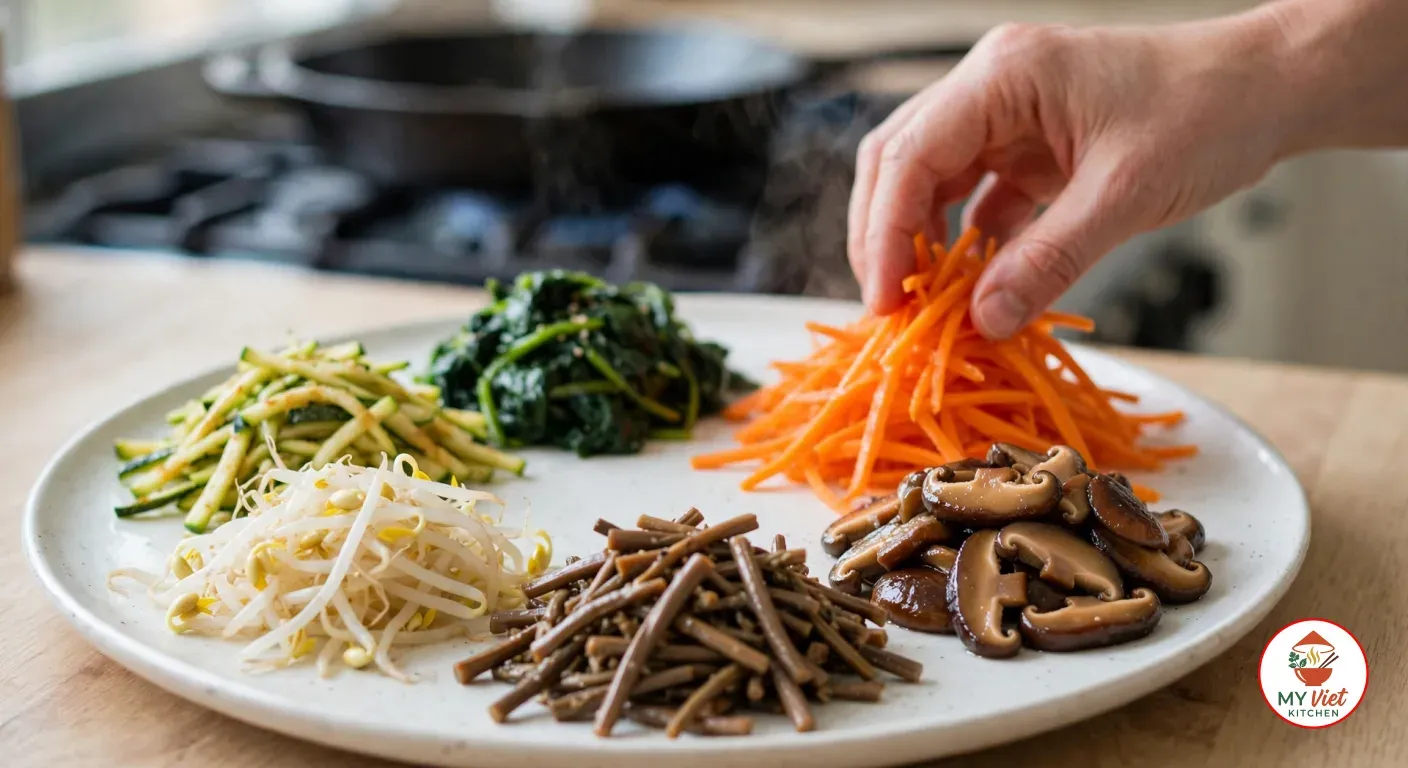
2 Start with the spinach. Bring a pot of water to a boil and blanch the spinach for just 30 seconds until it wilts. Drain immediately and squeeze out as much water as possible. Season with a drizzle of sesame oil and a pinch of salt. Next, heat a teaspoon of vegetable oil in a skillet over medium-high heat and saute the julienned carrots with a pinch of salt for 2 minutes until slightly softened but still vibrant orange.
Wipe the skillet clean between each vegetable. Saute the zucchini matchsticks for 2 minutes until lightly golden. Blanch the bean sprouts for 1 minute, drain, and season with sesame oil and salt. Saute the sliced shiitake mushrooms with a splash of soy sauce until they soften and turn glossy. If using fernbrake, saute it with soy sauce and sesame oil for 3 minutes. Arrange all the prepared toppings in separate piles on a large plate.
Step 3: Cook the Marinated Beef
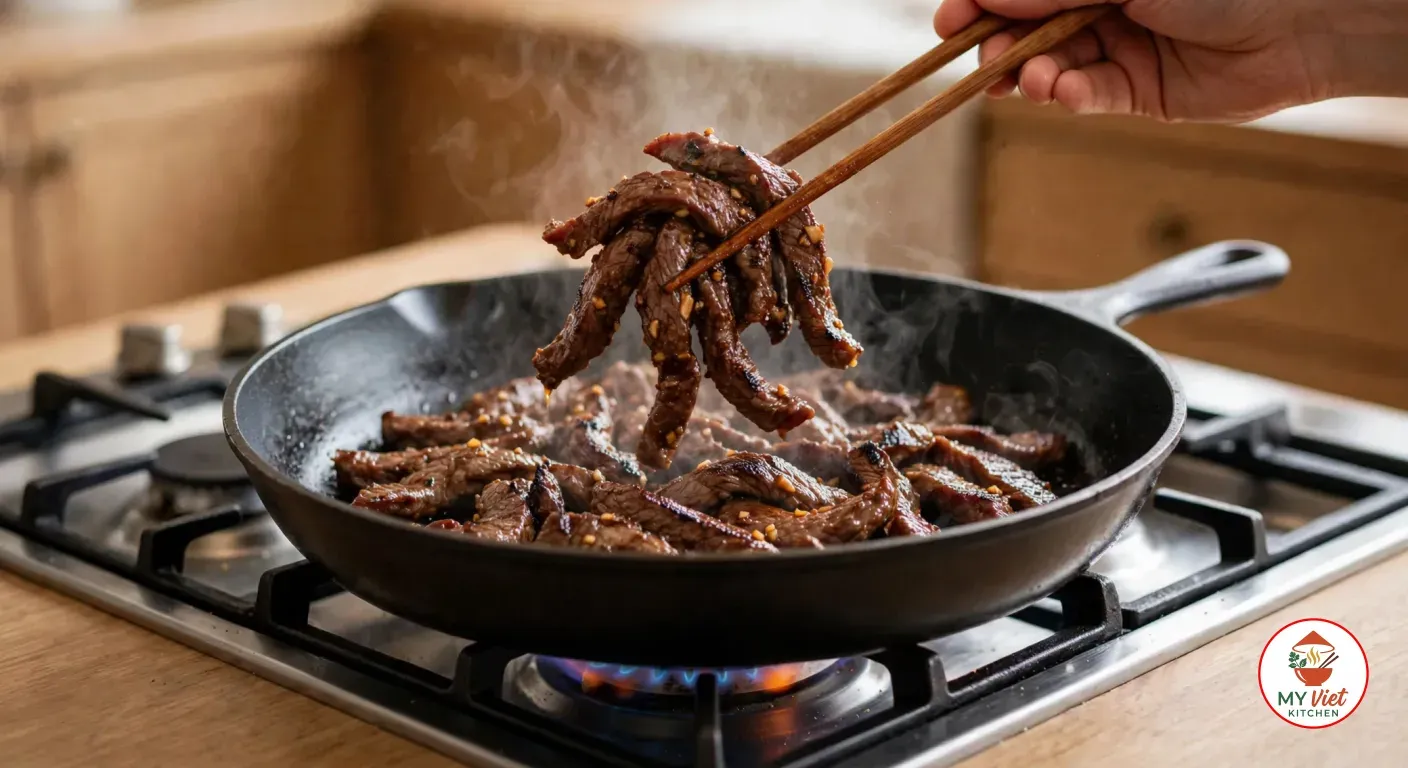
3 Heat a skillet or wok over the highest heat your stove allows. Add a small amount of oil and spread the marinated beef in a single layer. Let it sear undisturbed for about 1 minute to develop a caramelized crust. Then toss the strips and cook for another 1 to 2 minutes until the edges are slightly charred but the interior remains tender.
Avoid overcrowding the pan. If needed, cook the beef in two batches to ensure proper browning. Crowding the skillet causes the meat to steam instead of sear, which prevents the desirable caramelized edges. Set the cooked beef aside on the plate with your other prepared toppings.
Step 4: Make the Gochujang Sauce and Fry the Eggs
4 Whisk together the gochujang, sesame oil, sugar, rice vinegar, and water in a small bowl until completely smooth. Taste the sauce and adjust. It should be spicy, sweet, and slightly tangy. Set it aside while you prepare the eggs.
Heat a nonstick skillet with a thin film of oil over medium heat. Crack each egg into the pan, keeping them separated. Fry sunny-side up until the whites are set but the yolk remains runny, about 3 minutes. A runny yolk is essential because it acts as a rich, creamy sauce when mixed into the rice and vegetables. Remove the eggs carefully with a spatula.

Step 5: Assemble and Mix the Bibimbap
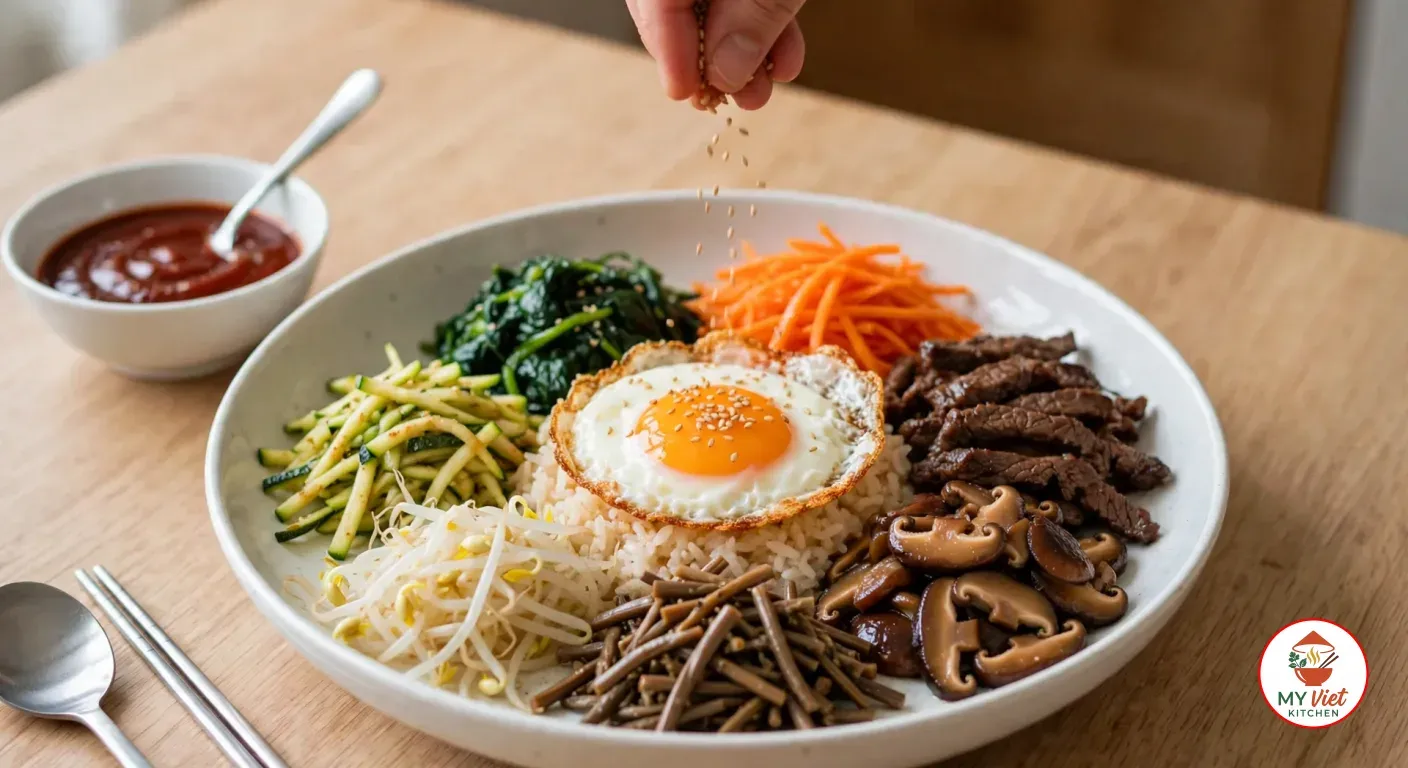
5 Divide the warm rice among four large bowls. Arrange each vegetable topping, the mushrooms, and the beef in separate neat sections on top of the rice, creating a colorful wheel pattern. Place a fried egg in the center of each bowl and sprinkle sesame seeds over everything.
Serve the gochujang sauce on the side or dollop it next to the egg. To eat, add as much sauce as you like and then mix everything together vigorously with a spoon. The mixing step is crucial. Do not eat the toppings separately. Break the egg yolk and fold it through the rice until every grain is coated with a blend of sauce, egg, and vegetable flavors. The first bite after a thorough mix is one of the most satisfying experiences in Korean cuisine.
Expert Tips for Perfect Bibimbap
Season Each Vegetable Individually
In bibimbap, Korean cooking treats each vegetable topping as a separate mini dish. Blanched spinach gets sesame oil and salt. Carrots get a quick saute with salt. Mushrooms get soy sauce. This individual seasoning ensures every component contributes its own distinct flavor to the final mixed bowl. Cooking everything together in one batch produces a uniform, bland result that lacks the depth of proper bibimbap.
Use a Hot Stone Pot for Dolsot Bibimbap
If you own a Korean stone pot (dolsot), brush it with sesame oil, add the rice, and heat it on the stovetop over medium heat for 5 minutes before adding toppings. The stone pot creates a golden, crunchy rice crust called nurungji on the bottom that is considered the best part. Pour a small amount of hot water around the edges after eating to loosen the crust and create a simple rice soup to finish the meal.
Keep the Egg Yolk Runny
A fully cooked egg yolk loses its ability to act as a creamy sauce when mixed into a bibimbap bowl. Fry the egg gently over medium heat until the white sets completely but the yolk stays liquid. When you break it during mixing, the golden yolk coats the rice and vegetables, adding richness and binding all the flavors together. This is one of the details that separates a good bowl from a great one.
Regional Bibimbap Variations
Different regions of South Korea have developed their own versions, each with unique ingredients and preparation methods. Exploring these variations reveals how versatile this single dish concept can be.
| Variation | Region | Key Differences |
|---|---|---|
| Jeonju Bibimbap | Jeonju | Raw beef tartare, bean sprout broth, pine nuts, over 30 toppings |
| Dolsot Bibimbap | Nationwide | Served in hot stone pot, crispy rice crust on bottom |
| Jinju Bibimbap | Jinju | Yukhoe (raw beef), seafood, clam broth, served with soup |
| Tongyeong Bibimbap | Tongyeong | Seafood-focused with raw fish and sea vegetables |
| Hoedeopbap | Coastal areas | Raw fish (sashimi) over rice with vegetables and spicy sauce |
Serving Suggestions
In Korea, bibimbap is often served alongside a spread of banchan (side dishes) that add even more variety to the meal. While the bowl is satisfying on its own, a few simple sides elevate the experience to a full Korean dinner.
The Perfect Accompaniments:
- Kimchi: No Korean meal is complete without kimchi. The tangy, spicy fermented cabbage cuts through the richness of the egg and beef and adds a probiotic punch to the meal.
- Doenjang jjigae (soybean paste stew): A small bowl of this savory, earthy stew is a classic pairing that adds warmth and depth to the meal.
- Pickled radish (danmuji): Bright yellow pickled radish provides a sweet, crunchy contrast that refreshes the palate between bites.
- Seaweed soup (miyeokguk): A light, mineral-rich seaweed soup balances the hearty rice bowl beautifully.
Beverage Pairings:
- Barley tea (boricha): The most common Korean meal accompaniment, this nutty, caffeine-free tea cleanses the palate and aids digestion.
- Soju: Korea’s iconic spirit pairs naturally with the bold flavors of gochujang and sesame oil.
- Korean rice wine (makgeolli): This milky, slightly sweet fermented rice drink complements the earthy vegetable toppings perfectly.
Storage and Reheating
Refrigerator: Store leftover toppings and rice separately for up to 3 days. Pre-prepared vegetable toppings actually work well as quick banchan side dishes for other meals. Do not store an assembled bowl, because the rice absorbs moisture from the vegetables and becomes soggy.
Freezer: Cooked rice freezes well for up to 1 month. Freeze it in individual portions wrapped tightly in plastic wrap. Most vegetable toppings do not freeze well, but the marinated beef can be frozen raw for up to 2 months and cooked directly from frozen.
Reheating: Reheat rice in the microwave with a splash of water and a cover to restore moisture. Warm the vegetable toppings quickly in a hot pan. Assemble a fresh bowl with the reheated components and fry a new egg, because reheated fried eggs lose their runny yolk, which is essential to the dish.
Common Mistakes to Avoid
1. Cooking All Vegetables Together
Tossing all the vegetables into one pan saves time but ruins the dish. Each vegetable has a different cooking time, moisture content, and ideal seasoning. Spinach needs 30 seconds of blanching, while mushrooms need 3 minutes of sauteing. Cooking them together produces a uniform, watery mix that lacks the colorful contrast and individual flavors that define great bibimbap.
2. Forgetting to Mix Before Eating
Eating the toppings individually off the top of the rice misses the entire point. Bibimbap is meant to be mixed thoroughly so that the gochujang sauce, egg yolk, sesame oil, and all the toppings combine into a unified, flavorful blend. Pick up your spoon and stir aggressively from the bottom up. Every grain of rice should be coated.
3. Skipping the Sesame Oil
Sesame oil is the aromatic backbone of Korean cooking, and it appears in nearly every component of bibimbap. A drizzle on the spinach, a splash in the beef marinade, a spoonful in the sauce. Leaving it out flattens the entire flavor profile. Use toasted sesame oil rather than light sesame oil for maximum nutty aroma. Even a final drizzle over the assembled bowl before mixing makes a noticeable difference.
Frequently Asked Questions
Can I make bibimbap vegetarian?
Yes, simply omit the beef or replace it with marinated and pan-fried tofu. Use all the same vegetables and the gochujang sauce as written. Many temple-style Korean meals feature a vegetarian version that emphasizes the variety and quality of the vegetables. Add extra mushrooms for umami depth in place of the beef.
What cut of beef is best?
Sirloin is the most commonly used cut because it is tender, affordable, and slices thinly with ease. Ribeye and flank steak also work well. For the most authentic experience, try thinly sliced beef bulgogi meat from a Korean grocery store, which is pre-sliced to the ideal thickness. Regardless of the cut, always slice against the grain for maximum tenderness.
How spicy is gochujang?
Gochujang has a moderate heat level that is more sweet and smoky than aggressively spicy. Most people who are sensitive to spice find it manageable, especially when mixed into a full bowl of rice and vegetables. Start with 1 tablespoon of sauce per bowl and add more to taste. Children and spice-sensitive diners can enjoy the dish with just a small amount of sauce.
Variations and Adaptations
Dolsot (Hot Stone Pot) Bibimbap:
Brush the inside of a Korean stone pot with sesame oil, add rice, and arrange toppings. Place the pot on a burner over medium heat for 5 to 8 minutes. The rice against the hot stone develops a golden, crunchy crust that crackles when you mix. Crack a raw egg on top and let the residual heat partially cook it. This is the most popular restaurant version in Korea.
Hoedeopbap (Raw Fish Bibimbap):
Replace the beef with fresh sashimi-grade raw fish such as salmon, tuna, or yellowtail. Add sesame leaves, sliced cucumber, and shredded lettuce. Use a spicier gochujang sauce with extra vinegar for brightness. This coastal variation is popular in seaside cities like Busan and makes a refreshing summer meal.
Leftover Rice Bowl:
Use whatever cooked vegetables and protein you have in the refrigerator. Top cold leftover rice with the ingredients, add gochujang sauce and a fried egg, and mix. This approach follows the original spirit of bibimbap, which was created to use up leftovers. It is a quick, satisfying weeknight dinner that comes together in minutes.
The Cultural Significance of Bibimbap
Bibimbap carries deep cultural meaning in Korean society. The five traditional vegetable colors represent the five elements of Korean philosophy: green for wood, red for fire, yellow for earth, white for metal, and black or brown for water. This philosophical connection transforms a simple rice bowl into a balanced expression of harmony and nature, reflecting the Korean belief that food should nourish both the body and the spirit.
In modern Korea, bibimbap has become a symbol of national pride. Korean Air serves it as an in-flight meal, and it has been featured in government-led campaigns to promote Korean cuisine internationally. The dish’s combination of health, beauty, and bold flavor makes it an ideal ambassador for Korean food culture. Every bowl tells the story of a cuisine that values balance, variety, and the art of bringing diverse ingredients together into something greater than the sum of its parts.
Conclusion
Making authentic bibimbap at home is a joyful cooking experience that rewards careful preparation with one of the most beautiful and satisfying meals in Asian cuisine. While preparing each topping separately requires a bit of effort, the result is a bowl so vibrant, flavorful, and nutritious that it makes the extra steps worthwhile. Master the technique of individual seasoning, invest in good gochujang, and do not skip the mixing. That moment when all the colors, textures, and flavors come together in your spoon is pure magic.
If you enjoyed this recipe, explore our collection of Asian recipes for more authentic dishes, including Korean Bulgogi and Kimchi Jjigae.