My Viet KitchenMy Viet Kitchen
HomeVietAsianEuropeanAfricanAmericanAustralianAboutContact
More
FAQPrivacy Policy
HomeVietAsianEuropeanAfricanAmericanAustralianAboutContactFAQPrivacy PolicySearch

Follow us

Home › Asian Dishes › Galbi (LA-Style Korean Short Ribs) with Asian Pear Marinade

My Viet Kitchenmyvietkitchen.com/galbi/

Galbi (LA-Style Korean Short Ribs) with Asian Pear Marinade

Asian DishesOctober 26, 20269 min read

Share
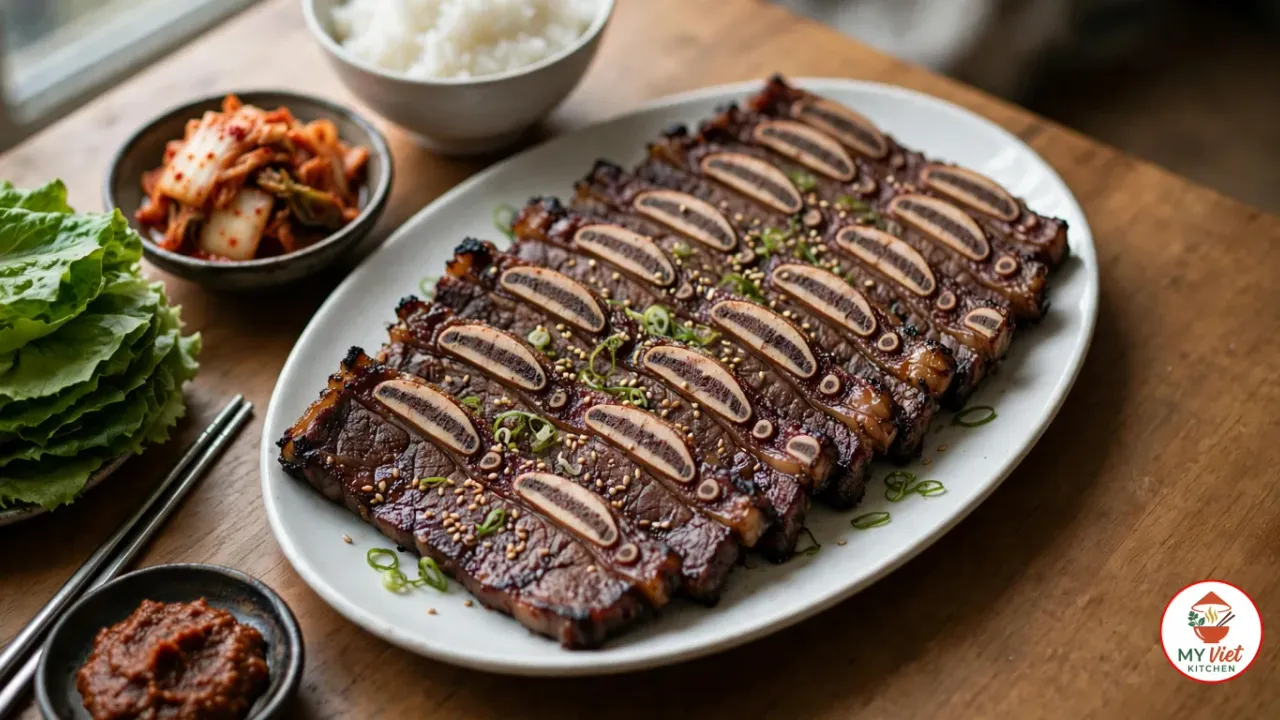
A white oval platter of grilled LA galbi, flanken-cut short rib strips with oval bone cross-sections and charred, glossy edges, scattered with sesame seeds and spring onion, beside leaf lettuce, napa cabbage kimchi, a dish of ssamjang, a bowl of rice and metal chopsticks on a wooden table

Prep 35 minutesCook 15 minutesTotal 8 hours 50 minutesYield 4 servings

Ingredients

  • 3 lb (1.4 kg) flanken-cut beef short ribs (LA galbi cut), about 1/3 inch (8 mm) thick
  • 1/2 Asian pear, peeled, cored and roughly chopped
  • 1/2 medium onion, roughly chopped
  • 6 cloves garlic
  • 1-inch (2.5 cm) piece ginger, peeled
  • 1/2 cup (120 ml) soy sauce
  • 1/2 cup (120 ml) water
  • 3 tablespoons brown sugar
  • 2 tablespoons honey
  • 1/4 cup (60 ml) mirin or rice wine
  • 2 tablespoons toasted sesame oil
  • 1/2 teaspoon ground black pepper
  • 3 spring onions, finely chopped
  • 1 tablespoon toasted sesame seeds
  • 2 spring onions, thinly sliced
  • 1 head green or red leaf lettuce, leaves separated
  • 1/4 cup (60 g) ssamjang
  • Kimchi
  • Steamed white rice

Method

  1. Rinse and Soak the Ribs. Rinse the ribs under cold running water, rubbing the cut edges of the bones to wash off any bone dust. Soak them in a large bowl of cold water for 20 minutes, then drain and pat dry with paper towels.
  2. Blend the Pear Marinade. Blend the pear, onion, garlic and ginger to a fine purée. Scrape it into a large bowl and stir in the soy sauce, water, brown sugar, honey, mirin, sesame oil, black pepper and chopped spring onions until the sugar dissolves.
  3. Marinate the Ribs. Dip each rib in the marinade and lay it flat in a glass dish or lidded container, stacking the ribs in layers. Pour the rest of the marinade over the top. Cover and refrigerate for 8 hours or overnight, up to 24 hours, turning the stack over once halfway.
  4. Grill the Ribs. Heat a grill or cast-iron grill pan over medium-high heat and oil the grates. Lift the ribs out of the marinade, let the excess drip back and discard the used marinade. Grill one layer of ribs at a time, giving each batch 2 to 3 minutes a side and turning once, until the edges are charred and the surface is glossy and dark brown.
  5. Rest, Cut and Serve. Rest the ribs on a board for 3 to 5 minutes. Cut between the bones with kitchen scissors into bite-size pieces, scatter with the sesame seeds and sliced spring onions, and serve with the lettuce leaves, ssamjang, kimchi and rice.

Nutrition 650 calories per serving, protein 37g, fat 48g, carbohydrates 16g, fiber 1g, sodium 950mg

In this recipe

  1. Which Cut Should You Buy for Galbi?
  2. What Does the Asian Pear Do in the Marinade?
  3. Can You Make Galbi Without a Grill?
  4. Ingredients for Galbi
  5. Step-by-Step Instructions
  6. Frequently Asked Questions
  7. Sources

Galbi is the Korean dish of grilled ribs, usually beef short ribs. The word means “rib” (Wikipedia), and the full name of the grilled dish is galbi gui (Korean Bapsang). This recipe uses the flanken cut, called LA galbi. The ribs soak briefly in cold water, rest overnight in a soy marinade built on grated Asian pear, then grill for 2 to 3 minutes a side.

Prep Time: 35 minutes | Cook Time: 15 minutes | Total Time: 8 hours 50 minutes (including 8 hours marinating) | Servings: 4

Difficulty: Easy | Calories: ~650 per serving

Which Cut Should You Buy for Galbi?

Two cuts work, and they look nothing alike. In the English cut, the ribs are separated and cut into short lengths. In the flanken cut, they are sliced thin across the bones, and Koreans call it “LA galbi” (Korean Bapsang). Each flanken strip has cut bones peeking out along its long edge (Wikipedia).

The older Korean style starts from the English cut. Wikipedia describes traditional galbi as cut to expose one smooth bone along the short edge, with the meat filleted in flat layers (Wikipedia). Korean Bapsang calls the butterflied English cut the classic for grilled galbi in Korea. LA galbi, it says, is convenient and increasingly popular in America and even in Korea (Korean Bapsang).

To butterfly an English-cut rib, hold the bone and slice the meat lengthwise close to it, almost to the other end, without cutting through. Open it like a book. Run the knife through the thick part 1/4 to 1/2 inch from the bottom, open it again, and repeat until the meat is one long thin strip. If that fails, Korean Bapsang simply slices the meat into 1/4 to 1/2-inch thick rectangles and marinates it for at least 6 hours (Korean Bapsang).

Nobody is sure where the “LA” comes from. Wikipedia reports that an article in the Encyclopedia of Korean Culture rated one theory the most plausible: Korean Americans in Los Angeles invented the cut in the late 20th century. Other theories tie it to a campaign to sell American beef in South Korea, or read “LA” as “Lateral Axis”, the direction of the cut. Today the cut is most commonly found in Korean supermarkets across the US (Wikipedia).

This recipe takes 3 pounds (1.4 kg) of strips about 1/3 inch (8 mm) thick, the thickness Korean Bapsang asks for in its LA galbi (Korean Bapsang). Maangchi’s video above is titled LA galbi too.

What Does the Asian Pear Do in the Marinade?

It sweetens and softens. Short ribs are a tough cut, and grated Korean pear is the traditional tenderizer for galbi, with a subtle fruity sweetness on top (Korean Bapsang). Korean Bapsang’s LA galbi recipe adds that grated onion and the alcohol in the marinade tenderize the meat too (Korean Bapsang).

Pear is the gentle option. A 2000 study in the Korean Journal of Food and Cookery Science marinated beef in sauces made with five fruit juices. The drop in shear force, a measure of toughness, ran pineapple, papaya, fig, kiwifruit, then pear (Korean Journal of Food and Cookery Science).

Stronger fruit can overshoot. America’s Test Kitchen added 1/2 cup of crushed pear or kiwi to its Korean beef marinade and soaked rib-eye slices for 30 minutes. Both batches cooked up mushy on the surface (America’s Test Kitchen). Korean Bapsang calls kiwi a very strong tenderizing agent and uses half a kiwi, or a third of a large one, for every 2 pounds of ribs (Korean Bapsang).

No pear? The same recipe swaps in an apple, or about 1/4 cup of maesilcheong (green plum syrup), apple juice or pineapple juice (Korean Bapsang).

Can You Make Galbi Without a Grill?

Yes. Korean Bapsang grills LA galbi on charcoal, on gas, or in a grill pan on the stovetop. Preheat to medium-high and give the ribs 2 to 3 minutes a side, turning only once. In Korea, the ribs are often grilled over wood charcoal, called sootbul (Korean Bapsang).

An oven broiler works too. Lay the ribs in one layer on a broiling pan on the top rack, about 6 inches below the broiler. Cook them 5 to 6 minutes until slightly charred, flip, and give them 3 to 4 minutes more, watching closely so they don’t burn (Korean Bapsang).

A plain non-stick pan needs another method, because the sugar and fruit in the marinade burn easily. Lay 4 or 5 ribs in the preheated pan, turn the heat down to medium and leave them 4 to 5 minutes. When the pan gets dry, pour in marinade through a strainer, flip, and cook 4 to 5 minutes more until the sauce is gone. Korean Bapsang likens it to a quick braise (Korean Bapsang).

How done the centre gets is your call. For whole cuts of beef, Australia’s Food Safety Information Council puts any food poisoning contamination on the outside only: brown the surface well, then cook the centre to taste. Its guide gives medium rare as 63°C, medium as 71°C and well done as 77°C, with a 3 to 5 minute rest. Mechanically tenderised beef, with small holes pushed into the surface, belongs with its higher-risk foods: 75°C in the centre (Food Safety Information Council).

Ingredients for Galbi

For the Ribs:

  • 3 lb (1.4 kg) flanken-cut beef short ribs (LA galbi cut), about 1/3 inch (8 mm) thick

For the Marinade:

  • 1/2 Asian pear, peeled, cored and roughly chopped
  • 1/2 medium onion, roughly chopped
  • 6 cloves garlic
  • 1-inch (2.5 cm) piece ginger, peeled
  • 1/2 cup (120 ml) soy sauce
  • 1/2 cup (120 ml) water
  • 3 tablespoons brown sugar
  • 2 tablespoons honey
  • 1/4 cup (60 ml) mirin or rice wine
  • 2 tablespoons toasted sesame oil
  • 1/2 teaspoon ground black pepper
  • 3 spring onions, finely chopped

For Serving:

  • 1 tablespoon toasted sesame seeds
  • 2 spring onions, thinly sliced
  • 1 head green or red leaf lettuce, leaves separated
  • 1/4 cup (60 g) ssamjang
  • Kimchi
  • Steamed white rice

Step-by-Step Instructions


Step 1: Rinse and Soak the Ribs

1Rinse the ribs under cold running water, rubbing the cut edges of the bones with your fingers to wash off any bone dust. Put them in a large bowl of cold water and soak for 20 minutes to draw out some of the blood. Drain, then pat each strip dry with paper towels.
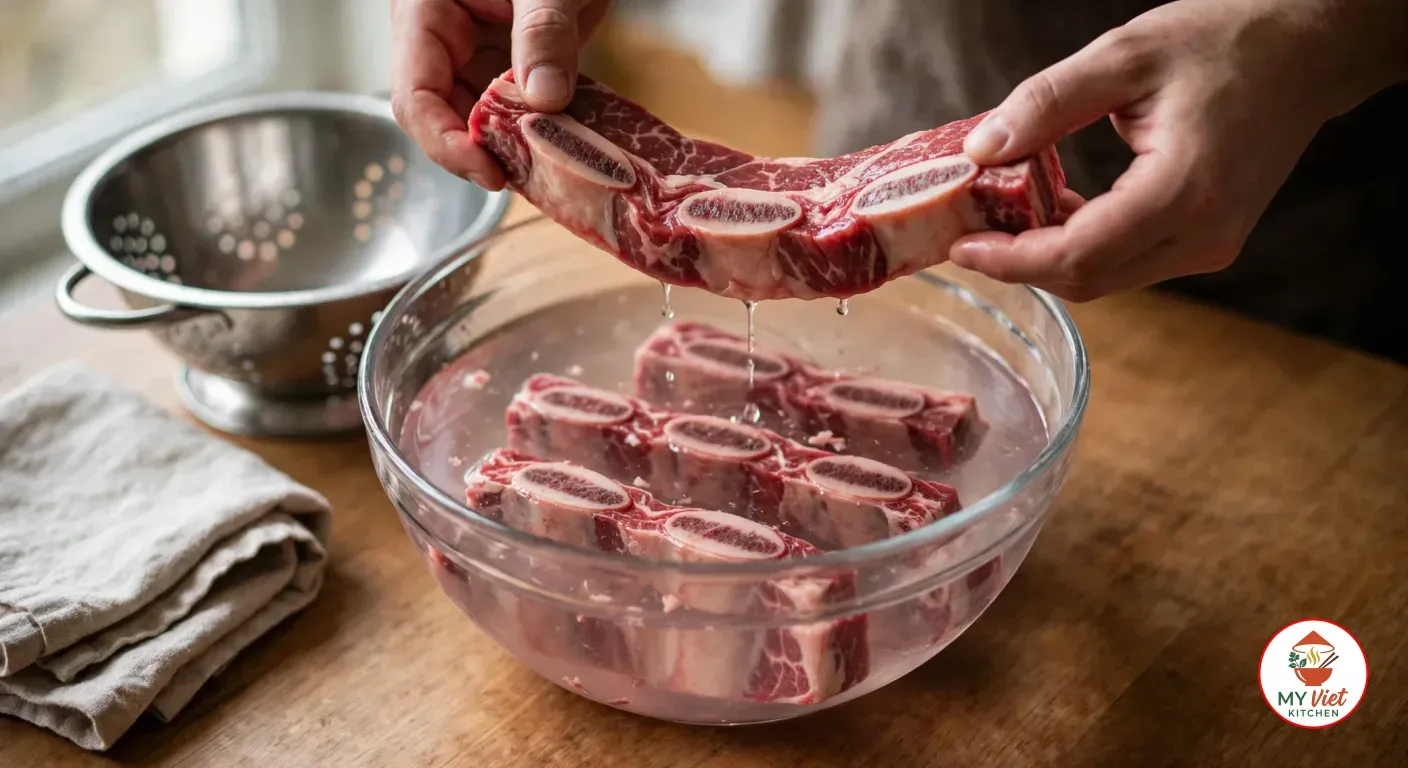
Two hands lifting a raw flanken-cut short rib strip with three oval bone cross-sections out of a glass bowl of cold water holding more ribs, beside a steel colander and a folded linen towel on a wooden counter
Step 1- Rinse and Soak the Ribs

Step 2: Blend the Pear Marinade

2Blend the pear, onion, garlic and ginger to a purée as fine as your blender will make it. Scrape it into a large bowl and stir in the soy sauce, water, brown sugar, honey, mirin, sesame oil, black pepper and chopped spring onions. Keep stirring until the sugar dissolves.
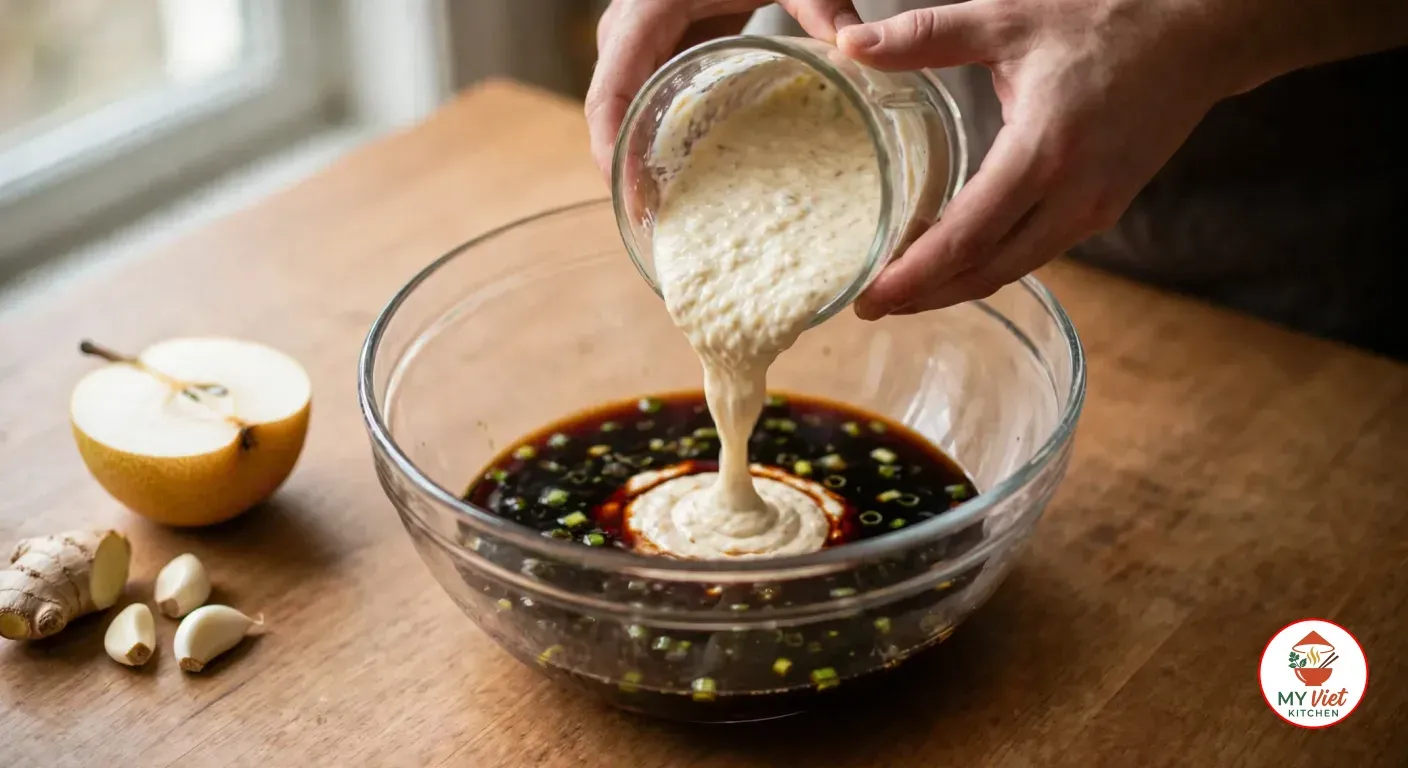
A hand pouring thick, pale pear and onion purée from a small glass jar into a glass bowl of dark soy marinade flecked with spring onion, beside half an Asian pear, a knob of ginger and garlic cloves
Step 2- Blend the Pear Marinade

Step 3: Marinate the Ribs

3Dip each rib in the marinade so both faces are coated and lay it flat in a glass dish or lidded container, stacking the ribs in layers. Pour the rest of the marinade over the top. Cover and refrigerate for 8 hours or overnight, up to 24 hours. Turn the stack over once halfway so the top layer gets its turn in the liquid.
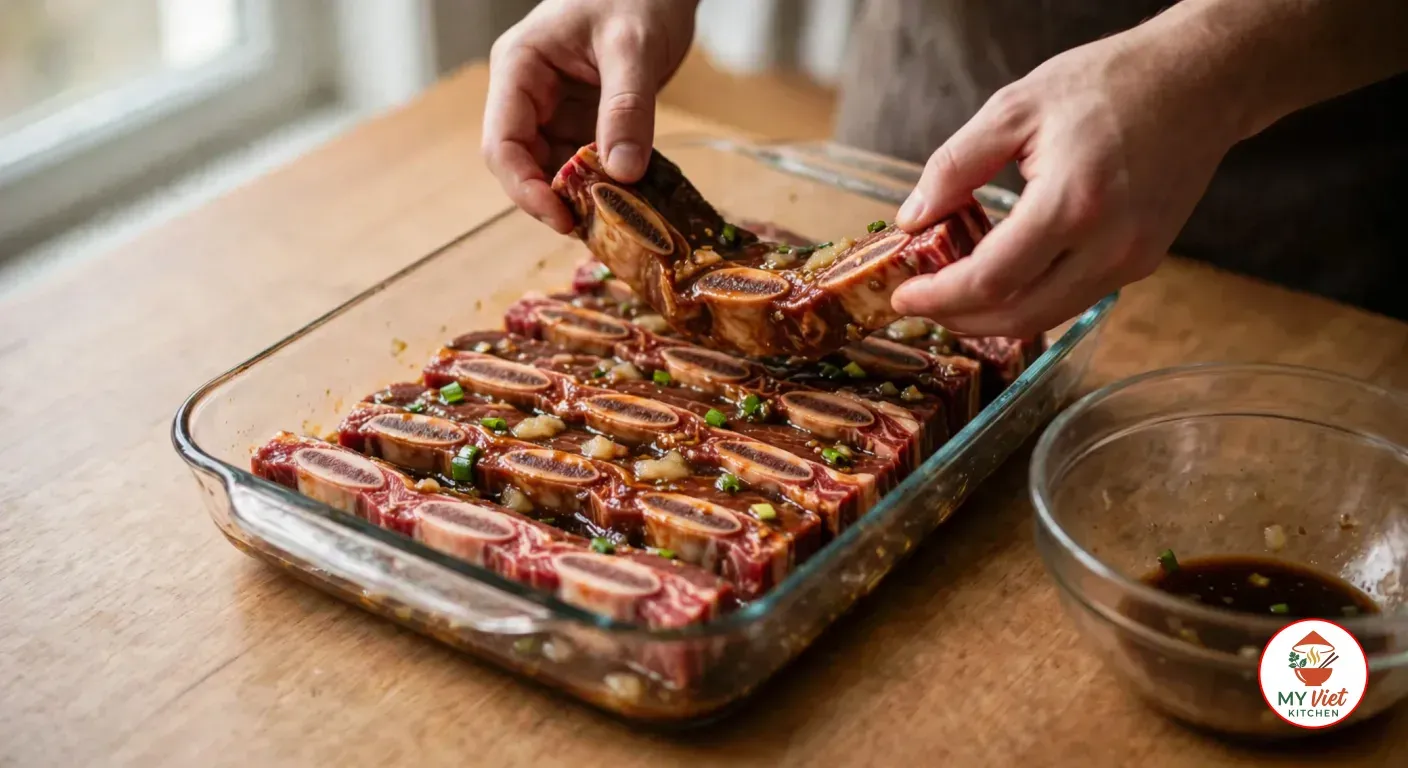
Hands laying a marinade-coated raw short rib strip on top of rows of flanken-cut ribs in a glass baking dish, with a glass bowl holding the last of the dark marinade beside it
Step 3- Marinate the Ribs

Step 4: Grill the Ribs

4Heat a grill or cast-iron grill pan over medium-high heat and oil the grates. Shake each rib over the dish as you take it out, and throw the used marinade away. Grill one layer of ribs at a time, giving each batch 2 to 3 minutes a side and turning once. Take them off when the edges are charred and the surface is glossy and dark brown. Stay close, as the sugar in the marinade scorches fast.
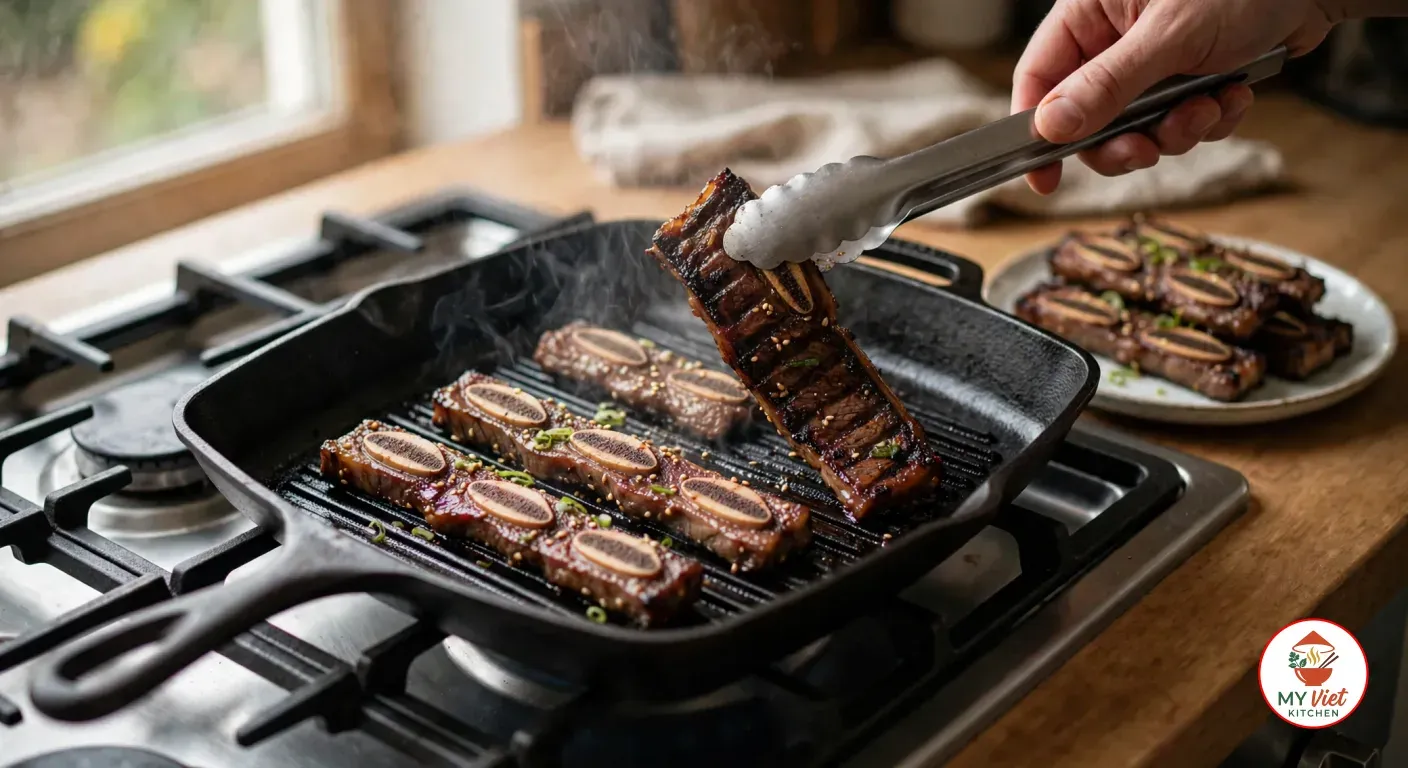
A hand flipping a charred, glossy flanken-cut rib strip with metal tongs on a black cast-iron grill pan over a gas flame, with three more ribs on the pan and a plate of grilled ribs on the counter
Step 4- Grill the Ribs

Step 5: Rest, Cut and Serve

5Rest the ribs on a board for 3 to 5 minutes. Cut between the bones with kitchen scissors into bite-size pieces, each with a small round of bone. Scatter over the sesame seeds and sliced spring onions, and serve with the lettuce leaves, ssamjang, kimchi and rice so everyone can wrap their own.
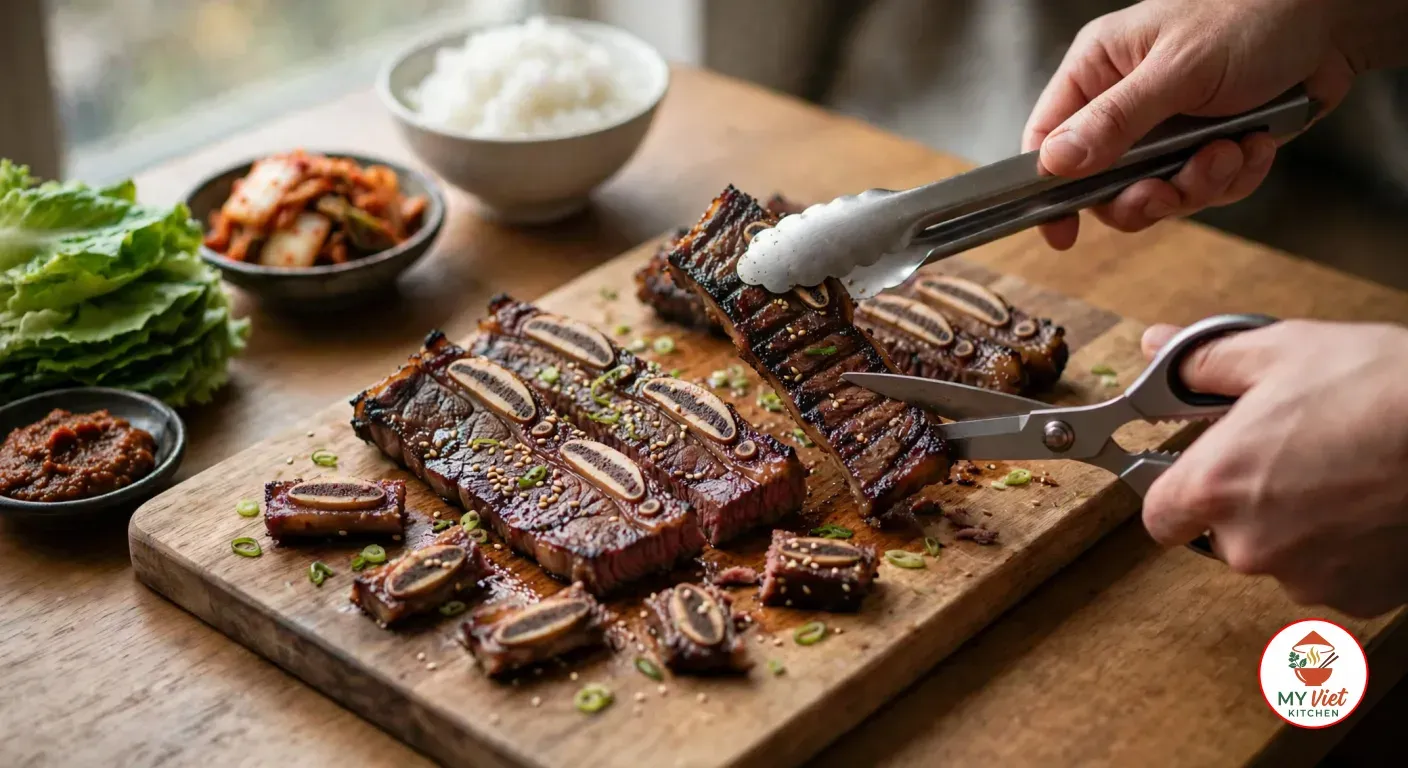
Hands snipping grilled LA galbi between the bones with kitchen scissors on a wooden board, with cut pieces each holding a round of bone, sesame seeds and spring onion, beside lettuce, kimchi, ssamjang and rice
Step 5- Rest, Cut and Serve

Frequently Asked Questions

How long should galbi marinate?

At least 6 to 8 hours, and overnight to 24 hours gives the best result. Korean Bapsang gives thicker meat the longer end of that range and flips the ribs halfway through (Korean Bapsang). For a same-day meal, its pan method finishes the ribs in strained marinade, which it recommends when there isn’t enough time to marinate.

Why soak the ribs in water first?

To wash off bone dust and draw out some of the blood. Korean Bapsang rinses the ribs and suggests soaking them in water for about 20 minutes, which it calls a Korean technique for cleaner tasting ribs (Korean Bapsang). Drain them well before they go into the marinade.

What is the difference between galbi and bulgogi?

The cut of meat. Galbi is grilled ribs, usually beef short ribs on the bone (Wikipedia). Bulgogi is thin, marinated slices of meat, most commonly beef, with sirloin and rib eye the usual cuts. Bulgogi is also often stir-fried in a pan in home cooking (Wikipedia).

How do you eat galbi?

Cut it into pieces with kitchen scissors and wrap each piece in a leaf. Wikipedia describes the wrap, called ssam, as grilled meat with ssamjang and raw or grilled garlic inside lettuce, perilla (kkaennip) or other leafy vegetables. Rice (bap) and banchan side dishes often come with it (Wikipedia).

Sources

  • LA Galbi (Korean BBQ Short Ribs), Hyosun, Korean Bapsang, February 2024
  • Galbi (Korean BBQ Beef Short Ribs), Hyosun, Korean Bapsang, June 2010 (updated September 2020)
  • Galbi, Wikipedia
  • Bulgogi, Wikipedia
  • Application of Proteolytic Enzymes in Fruits for Meat Tenderization, Korean Journal of Food and Cookery Science, vol. 16 no. 4, August 2000
  • Should You Add Fruit to a Marinade?, America’s Test Kitchen
  • Safe cooking temperatures, Food Safety Information Council
  • Korean beef barbecue (“LA Galbi”: 갈비), Maangchi, YouTube, June 2010
Love This Recipe?

Click on a star to rate it!

☆☆☆☆☆No votes so far! Be the first to rate this recipe.

Share

Tags: galbiLA galbikalbigalbi guiKorean short ribsflanken short ribsKorean BBQKorean cuisine

Three flour tortilla fish tacos on a pale ceramic plate, filled with purple cabbage and carrot slaw, golden battered white fish, avocado slices, diced mango, coriander and a drizzle of pale aioli, with lime wedges and a bowl of pickled jalapeños on a wooden table← PreviousFish Tacos Australian Style: Beer-Battered Barramundi TacosNext →Gado-Gado: Indonesian Salad with Peanut SauceA white plate of gado-gado with separate piles of shredded cabbage, green beans, bean sprouts, cubed boiled potato, carrot rounds and cucumber slices around a mound of coarse peanut sauce topped with fried shallots, with four boiled egg halves and slices of fried tempeh and tofu, beside prawn crackers, a bowl of extra sauce and lime wedges on a wooden table

More Asian Dishes

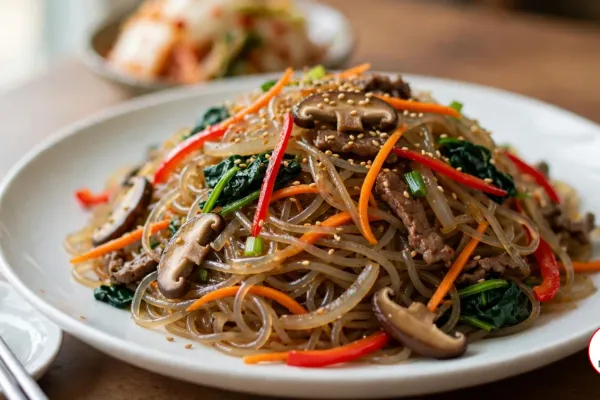
A mound of japchae on a white plate, glossy semi-transparent sweet potato starch noodles tossed with carrot matchsticks, red pepper strips, spinach, onion, sliced shiitake, strips of beef and scallions and topped with sesame seeds, with steel chopsticks on a small dish and a bowl of kimchi behind it on a wooden table
Asian Dishes

Japchae: Korean Glass Noodles Stir-Fried with Beef and Vegetables

November 5, 2026

Five soft white domed idlis on a round stainless-steel plate with a steel spoon, beside a deep steel bowl of orange-brown sambar with a drumstick piece, purple eggplant cubes, halved shallots, glossy curry leaves, a dried red chilli, mustard seeds and chopped cilantro, on a wooden table
Asian Dishes

Idli Sambar: Steamed Rice Cakes with a Light Tiffin Sambar

November 4, 2026

A stainless steel divided hot pot on a black portable gas burner, one side a deep red chilli broth with dried chillies and Sichuan peppercorns and the other a golden broth with shiitake, jujubes, goji berries and scallions, beside plates of marbled beef slices, raw shrimp, tofu, mushrooms, napa cabbage and bok choy, a wire ladle, chopsticks and two small bowls of dipping sauce on a wooden table
Asian Dishes

Hot Pot: Chinese Hot Pot at Home with Spicy and Mild Broths

November 3, 2026

Recent recipes

  • A white plate of long-grain white rice topped with thick, dark olive-green isombe with soft eggplant cubes, flecks of green pepper and a pool of orange-red palm oil, in front of an open aluminium pot of more isombe with a wooden spoon and a small bowl of sliced green onions on a wooden tableIsombe: Rwandan Cassava Leaves with Eggplant and PeanutNovember 5, 2026
  • A mound of japchae on a white plate, glossy semi-transparent sweet potato starch noodles tossed with carrot matchsticks, red pepper strips, spinach, onion, sliced shiitake, strips of beef and scallions and topped with sesame seeds, with steel chopsticks on a small dish and a bowl of kimchi behind it on a wooden tableJapchae: Korean Glass Noodles Stir-Fried with Beef and VegetablesNovember 5, 2026
  • Home-baked Iced VoVo-style biscuits on a white plate on a wooden table, golden shortbread rectangles each topped with two pale pink fondant strips coated in desiccated coconut and a line of red raspberry jam down the middle, with a cup of black tea behindIced VoVo Recipe: Pink Fondant, Raspberry Jam and Coconut BiscuitsNovember 4, 2026
  • Five soft white domed idlis on a round stainless-steel plate with a steel spoon, beside a deep steel bowl of orange-brown sambar with a drumstick piece, purple eggplant cubes, halved shallots, glossy curry leaves, a dried red chilli, mustard seeds and chopped cilantro, on a wooden tableIdli Sambar: Steamed Rice Cakes with a Light Tiffin SambarNovember 4, 2026

Follow us

Where shall we eat today?

  • Vietnamese
  • Asian
  • European
  • African
  • Americas
  • Australia
  • Drinks
  • Surprise me

Recently updated

  • Isombe: Rwandan Cassava Leaves with Eggplant and Peanut
  • Japchae: Korean Glass Noodles Stir-Fried with Beef and Vegetables
  • Iced VoVo Recipe: Pink Fondant, Raspberry Jam and Coconut Biscuits
  • Idli Sambar: Steamed Rice Cakes with a Light Tiffin Sambar
  • Hot Pot: Chinese Hot Pot at Home with Spicy and Mild Broths

Categories

  • Vietnamese Dishes
  • Asian Dishes
  • European Dishes
  • African Dishes
  • American Dishes
  • Australian Dishes
  • Beverages

Pages

  • About Us
  • Contact Us
  • FAQ
  • Privacy Policy
  • RSS

Tags

European dishescomfort foodAfrican recipesLatin American foodWest African recipesAsian recipesAustralian cuisineEast African foodSouth American foodCaribbean cuisineAfrican dishesEastern European foodMexican foodSouth African foodvietnamese cuisineFrench cuisineBalkan foodCaribbean foodeasy dinner recipeItalian cookingMexican cuisinePeruvian foodBalkan cuisinefamily dinnerisland foodLatin American recipesNigerian cuisineNorth African recipessummer grillingAuthentic Vietnamese

All tags

Follow us
© 2026 My Viet KitchenAuthentic Vietnamese flavors, made simple