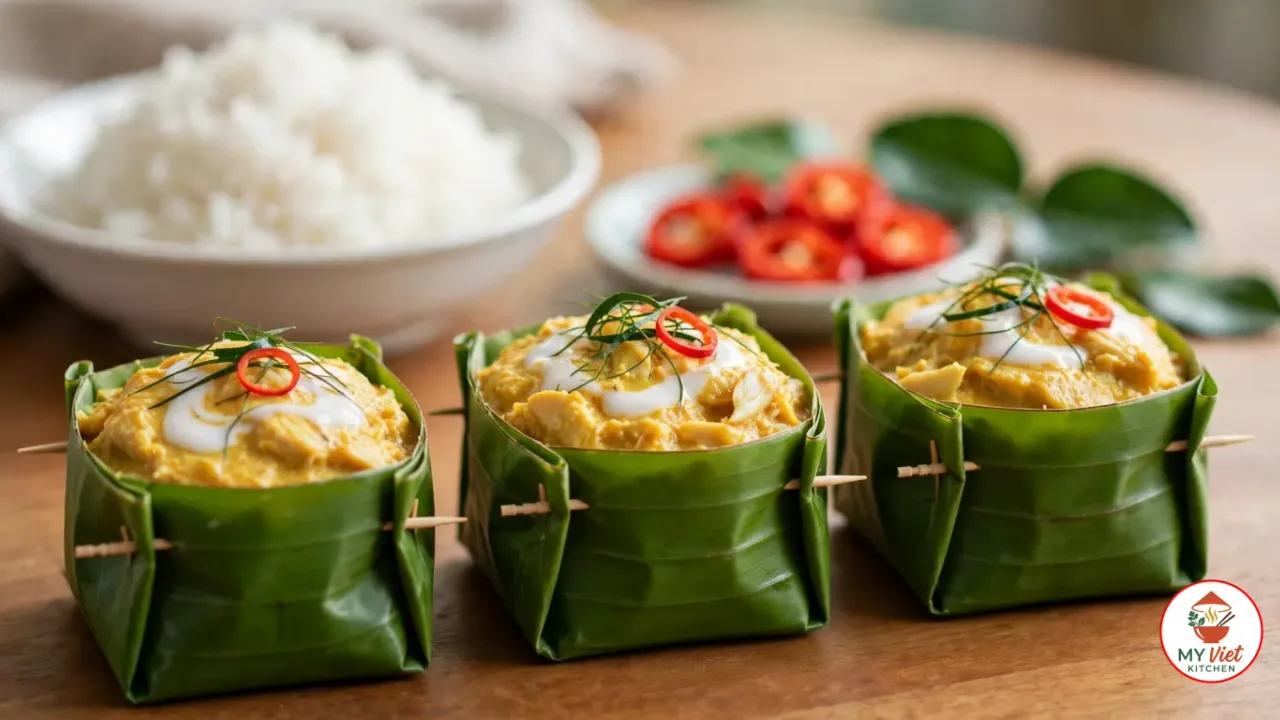
Fish amok is a Khmer steamed fish curry with a mousse-like consistency, also called amok trey (Wikipedia). This recipe pounds a yellow kroeung from lemongrass, galangal and fresh turmeric. White fish goes into it with coconut cream and egg, then into four folded banana-leaf cups lined with noni leaves. Twenty minutes or so of steaming sets them firm but still moist.
Prep Time: 40 minutes | Cook Time: 25 minutes | Total Time: 1 hour 5 minutes | Servings: 4
Difficulty: Medium | Calories: ~260 per serving

What Makes It Amok and Not Just Curry?
Steam. Lara Dunston of Grantourismo, who has researched Cambodian cooking from Siem Reap since 2013, writes that “amok” means to steam in banana leaves in Khmer. The older cooks behind her recipe believe that if it isn’t properly steamed, it isn’t amok trei. She describes the texture as a combination of a mousse, mousseline, soufflé and custard (Grantourismo).
You may have eaten something looser. Dunston’s recipe is not the watery amok-style curry you might have had in Siem Reap tourist restaurants, which can be made in minutes in a wok. Cambodians with less time on their hands make it in curry form too. As Terence Carter puts it, who wants to watch a dish steam for 30 minutes after working in the rice fields all day (Grantourismo)?
Many restaurants in Cambodia also serve less traditional versions made with chicken, tofu or beef. Other deviations include store-bought herb paste, a more liquid consistency and cooking instead of steaming (Wikipedia).
Wikipedia calls fish amok one of Cambodia’s national dishes. It is believed to have been a royal Khmer dish dating back to the Khmer Empire, although some question that it began in Cambodia (Wikipedia). Dunston is more careful with the label. Fish amok is often called the national dish, she writes, but most Cambodians would name nom banh chok or samlor korkor instead. These days it is mainly a restaurant standard and a special-occasion dish (Grantourismo).
Which Kroeung Goes into Fish Amok?
Yellow kroeung. Terence Carter of Grantourismo calls it the foundational kroeung: the most basic and most versatile of the five main Cambodian herb and spice pastes. Fish amok is one of the dishes he lists it for. His version is lemongrass, galangal, kaffir lime zest, turmeric, garlic and shallots. The colour comes from the turmeric and the lemongrass stems (Grantourismo).
Red kroeung is the wrong paste here. Dunston explains that amok is not normally made with it, because its coriander seeds, cumin and dried chilli would make an already rich dish very intense. Orange-red amok uses the same yellow kroeung as a base, with red chilli added (Grantourismo). Step 1 does the same with two soaked dried chillies.
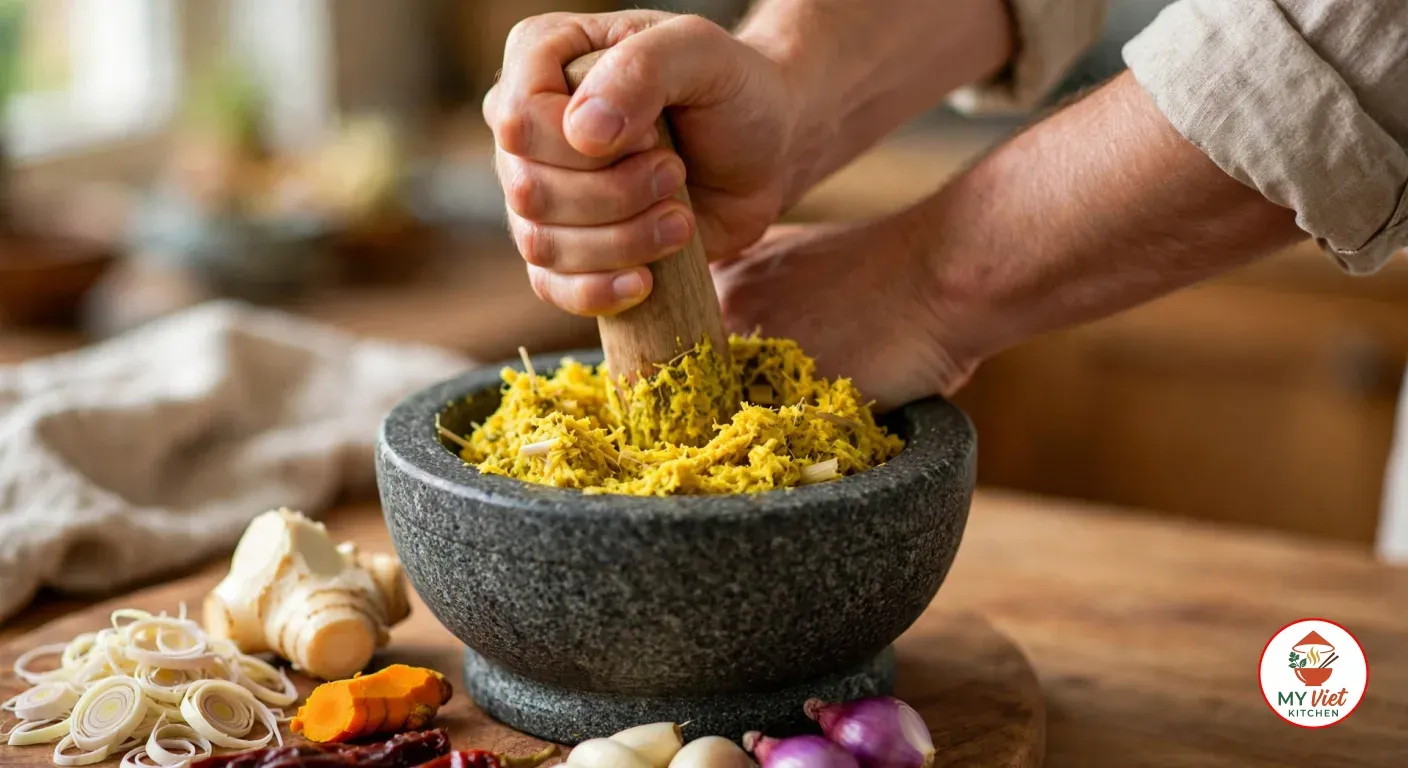
Pound the hardest things first. Carter mashes the lemongrass until its rings disappear, then works in the galangal, turmeric and lime zest, then garlic, then shallots. His finished paste keeps a few lemongrass fibres but is otherwise quite smooth. He says it is best used the same day, as it tends to dry out (Grantourismo). Dunston prefers the taste of a mortar-pounded paste but says a blender or food processor saves a lot of time (Grantourismo). Nite Yun freezes whatever kroeung she doesn’t use (Munchies).
What If You Can’t Find Noni Leaves?
Use Swiss chard or spinach, and expect a different taste. Dunston names slok ngor, also written nhor, as the ingredient that can be difficult to replace. Noni leaf (Morinda citrifolia) gives amok trei its distinctive taste, and traditional recipes ask for young leaves. She finds it at Asian supermarkets in Australia. Recipes written for Western readers swap in kale or spinach, and Chef Joannès Rivière of Cuisine Wat Damnak in Siem Reap recommends Swiss chard (Grantourismo). Nite Yun lines her ramekins with pea shoots or baby spinach (Munchies).
The fermented paste has a local choice too. Dunston writes that most Cambodian cooks use prahok rather than shrimp paste. Prahok is fish that has been fermented. If you can’t find prahok, shrimp paste from an Asian supermarket is fine (Grantourismo). Dissolve either one in a tablespoon of hot water so it mixes evenly into the custard.
Ingredients for Fish Amok
For the Kroeung (makes about 1/2 cup):
- 3 stalks lemongrass, tough outer layers removed, thinly sliced
- 1-inch (2.5 cm) piece galangal, peeled and finely chopped
- 1-inch (2.5 cm) piece fresh turmeric, peeled and finely chopped (or 1 teaspoon ground turmeric)
- 1 teaspoon kaffir lime zest (or 3 kaffir lime leaves, central rib removed, very finely chopped)
- 4 cloves garlic, chopped
- 2 small shallots, chopped
- 2 dried red chillies, soaked in warm water for 15 minutes, seeded
For the Amok:
- 1.1 lb (500 g) skinless firm white fish fillets (catfish, snakehead, cod or snapper), cut into 1-inch (2.5 cm) pieces
- 3/4 cup (180 ml) coconut cream, divided
- 2 large eggs
- 1 tablespoon fish sauce
- 2 teaspoons palm sugar (or light brown sugar)
- 1 teaspoon shrimp paste or prahok, dissolved in 1 tablespoon hot water
- 1/4 teaspoon salt
- 1 cup (20 g) shredded young noni leaves (slok ngor), or Swiss chard or baby spinach
For the Cups and Garnish:
- Banana leaves, enough for 8 rounds 8 inches (20 cm) across (or 4 ramekins)
- Wooden toothpicks
- 2 kaffir lime leaves, central rib removed, very thinly sliced
- 1 long red chilli, thinly sliced
- Steamed jasmine rice, to serve
Step-by-Step Instructions
Step 1: Make the Kroeung
1Pound the lemongrass in a heavy mortar until you can no longer see its rings. Add the galangal, turmeric and lime zest and pound them in, then the garlic, then the shallots. Tear in the soaked chillies and pound until the paste is smooth apart from a few lemongrass fibres and has turned a deep yellow. A blender works too; add a tablespoon of water if the blades stall. You need 3 tablespoons for the amok; freeze the rest in a small container.
Step 2: Mix and Rest the Fish
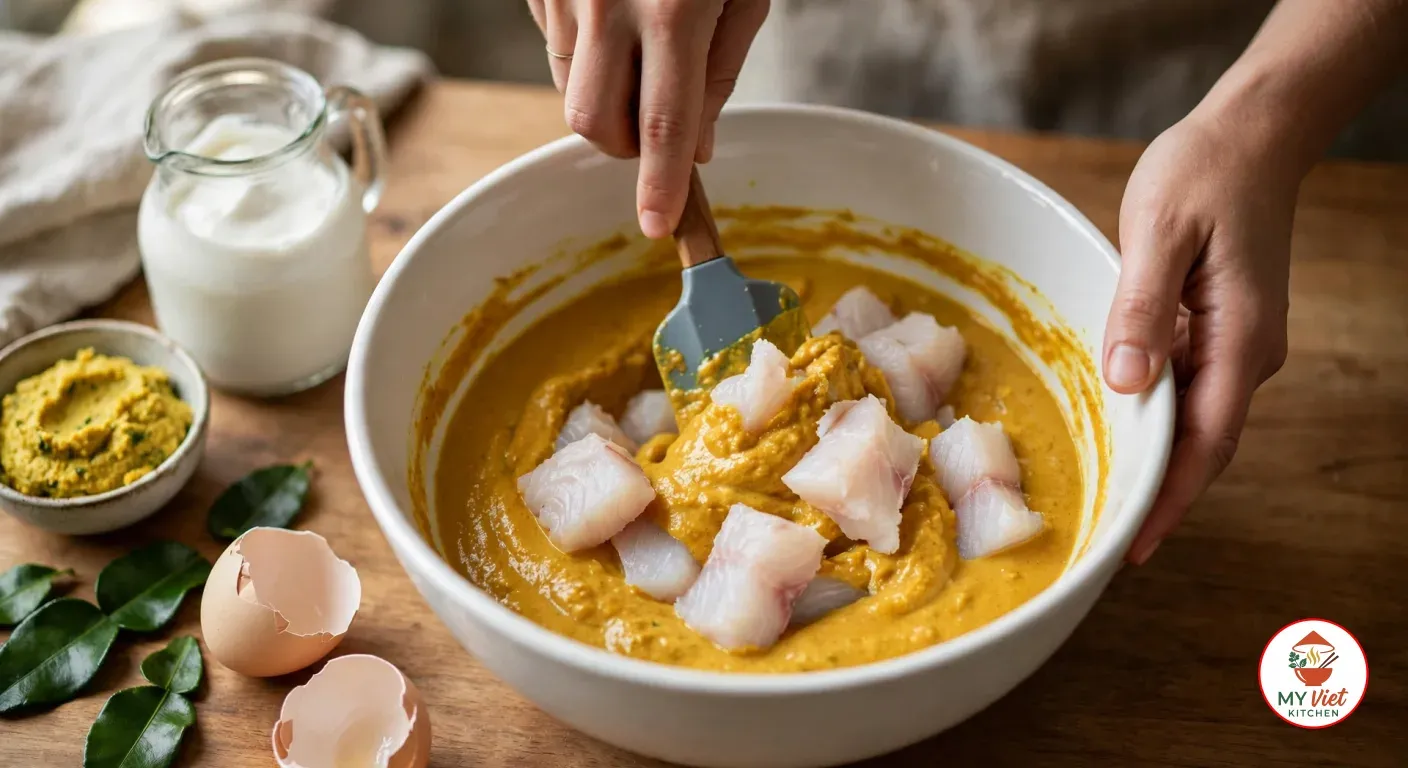
2In a large bowl, whisk 3 tablespoons of the kroeung with 1/2 cup (120 ml) of the coconut cream, the fish sauce, palm sugar, dissolved shrimp paste and salt. Whisk in the eggs until smooth, then fold in the fish until every piece is coated. Microwave or pan-fry a teaspoon of the mixture and taste it: Dunston aims for a little fishy, a little salty, slightly sweet and a tad spicy. Adjust with fish sauce or sugar. Cover and refrigerate the bowl for 15 minutes while you fold the cups.
Step 3: Fold the Banana Leaf Cups
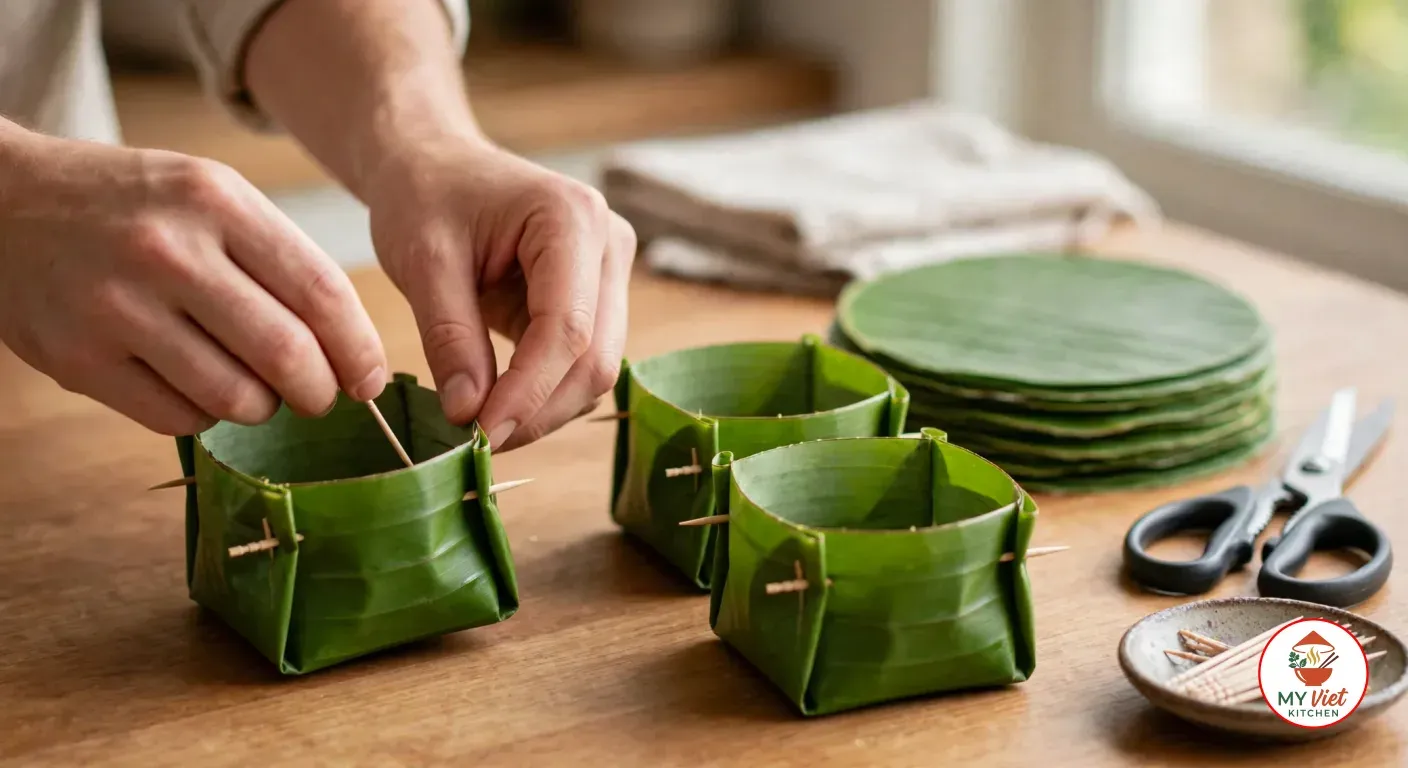
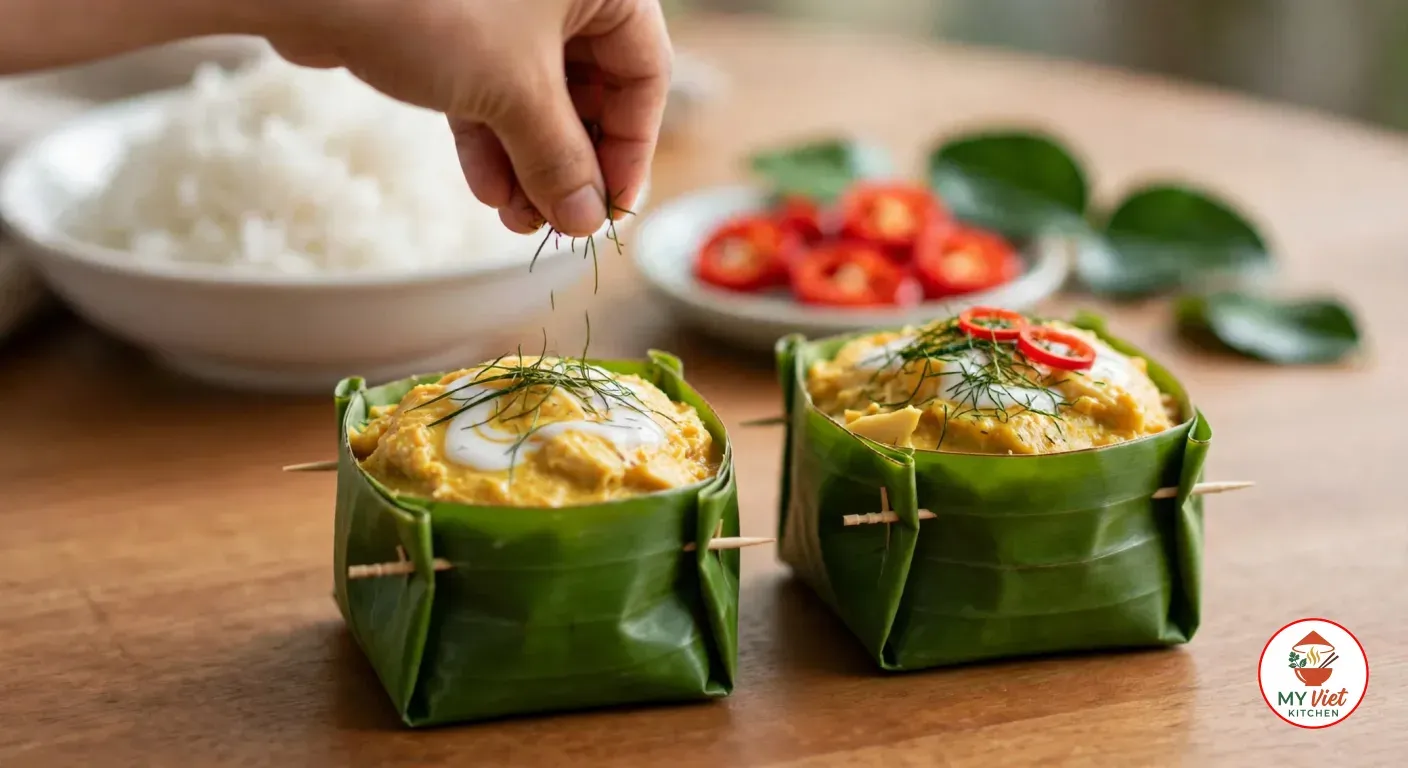
3Soften the banana leaves in warm water, or pass them over a gas flame until glossy, then wipe them dry. Cut 8 rounds about 8 inches (20 cm) across; an upturned plate makes a good template. Stack two rounds with the shiny sides facing out. Raise one side, fold the corner round onto the next side to make a pleat and pin it with half a toothpick. Repeat at the other three corners to make a square-bottomed cup, then trim the rim level. Make 4 cups.
Step 4: Fill and Steam the Cups
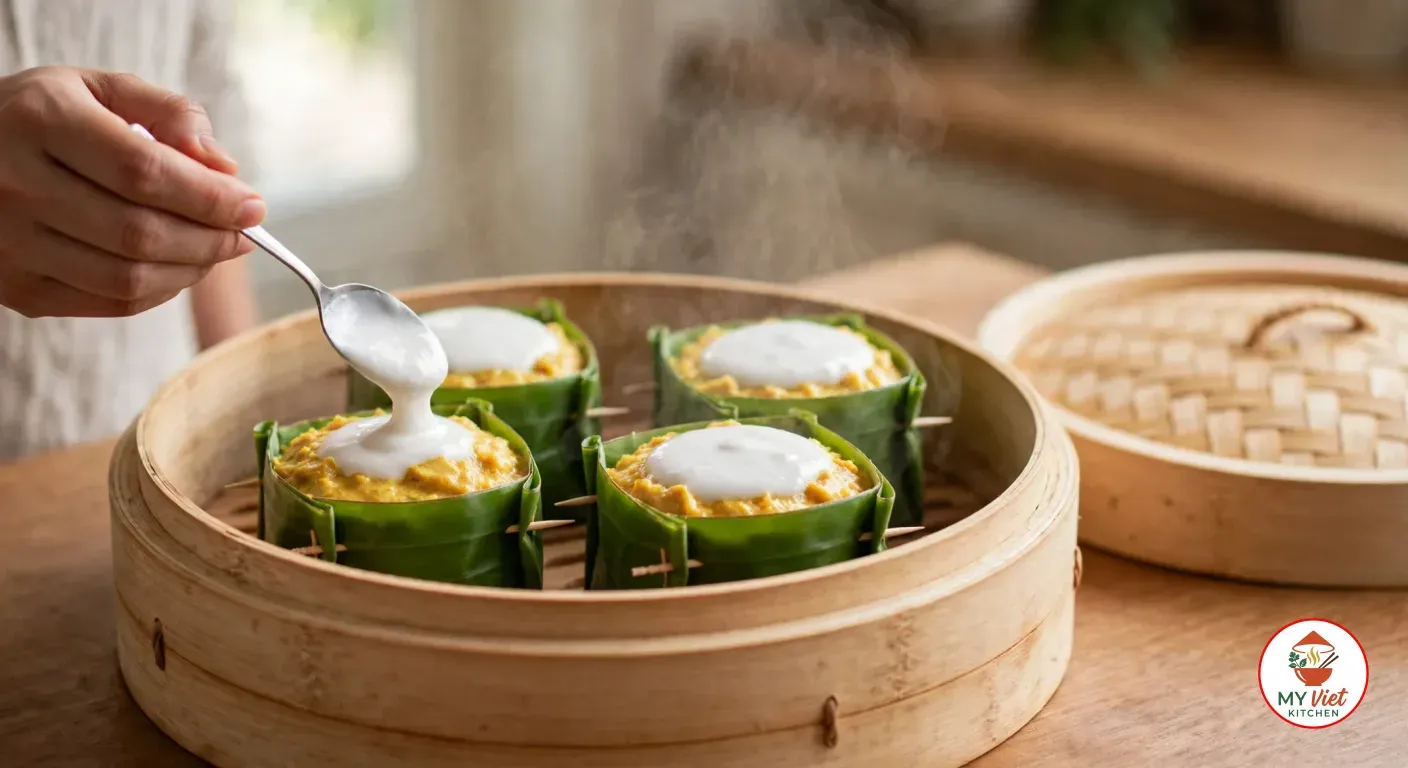
4Bring 2 inches (5 cm) of water to a boil in a wok or pot fitted with a steamer. Put a small handful of noni leaves in the bottom of each cup, spoon in the fish mixture almost to the rim and smooth the top. Set the cups in the steamer, cover and steam over medium heat for 20 minutes. Press the top of one; it should feel firm but still moist. If the middle is still soft, steam 5 to 10 minutes more. Spoon the remaining 1/4 cup (60 ml) coconut cream over the cups, cover and steam 3 minutes more.
Step 5: Garnish and Serve
5Lift the cups out of the steamer with a spatula. Scatter the sliced kaffir lime leaves and red chilli over the coconut cream. Serve hot with jasmine rice, and pull out the toothpicks before eating.
Frequently Asked Questions
What fish is best for fish amok?
A firm, mild white fish, and Cambodian cooks lean toward freshwater species. The older cooks behind Lara Dunston’s recipe prefer goby, snakehead or catfish from the Tonle Sap, while most Western cookbooks suggest a firm white fish such as cod or snapper (Grantourismo). Chef Nak uses snakehead or any firm, mild white fish (Chef Nak). Nite Yun uses cod in the video (Munchies). Buy skinless fillets, or skin them yourself, and cut 1-inch (2.5 cm) chunks.
Can I make fish amok without banana leaves?
Yes. Ramekins work, and so do coconut shells. Dunston lines ramekins, coconut shells or banana-leaf baskets the same way, with noni leaves on the bottom (Grantourismo). Nite Yun’s written recipe divides the mixture between two 10-ounce ramekins and steams them gently for about 10 minutes, then about 10 minutes more after the coconut cream goes on (Munchies). Four smaller ramekins follow the timing in Step 4; check the firmness before adding the cream.
How do you know when fish amok is done?
Press the top of a cup. It should feel firm but still moist, never dry. Dunston steams hers for 20 to 30 minutes and then checks; if it isn’t ready, it goes back in for longer. She adds the last of the coconut cream when it is almost done and steams a few minutes more (Grantourismo). Cup size matters. Chef Nak’s cups are small, cut from 15 cm rounds, and need only 10 minutes before the cream and 2 after (Chef Nak).
Is the video recipe the same as this one?
Close. Nite Yun also makes her own kroeung and steams cod in banana leaf. The video description says she makes kroeung with lemongrass, galangal, garlic and more. She coats the cod with it, chiles, coconut milk and eggs, steams it in individual banana leaf pockets and tops it with more coconut milk (Munchies). Her written recipe adds fingerroot to the kroeung and lines the dish with pea shoots or baby spinach (Munchies). This page leaves out the fingerroot and uses noni leaves or Swiss chard.
Sources
- Fish amok, Wikipedia
- Cambodian Fish Amok Recipe for an Authentic Steamed Fish Curry in the Old Style, Lara Dunston, Grantourismo, May 2017 (updated July 2026)
- Khmer Yellow Kroeung Recipe for Kroeung Samlor Machou, Cambodia’s Essential Spice Paste, Terence Carter, Grantourismo, November 2014 (updated August 2025)
- Fish Amok Recipe | Cambodian Steamed Curry, Chef Nak
- Fish Amok Recipe, Nite Yun, Munchies (VICE), April 2021
- Make Amok, Fish Curry Steamed In Banana Leaves, Munchies, YouTube, April 2021