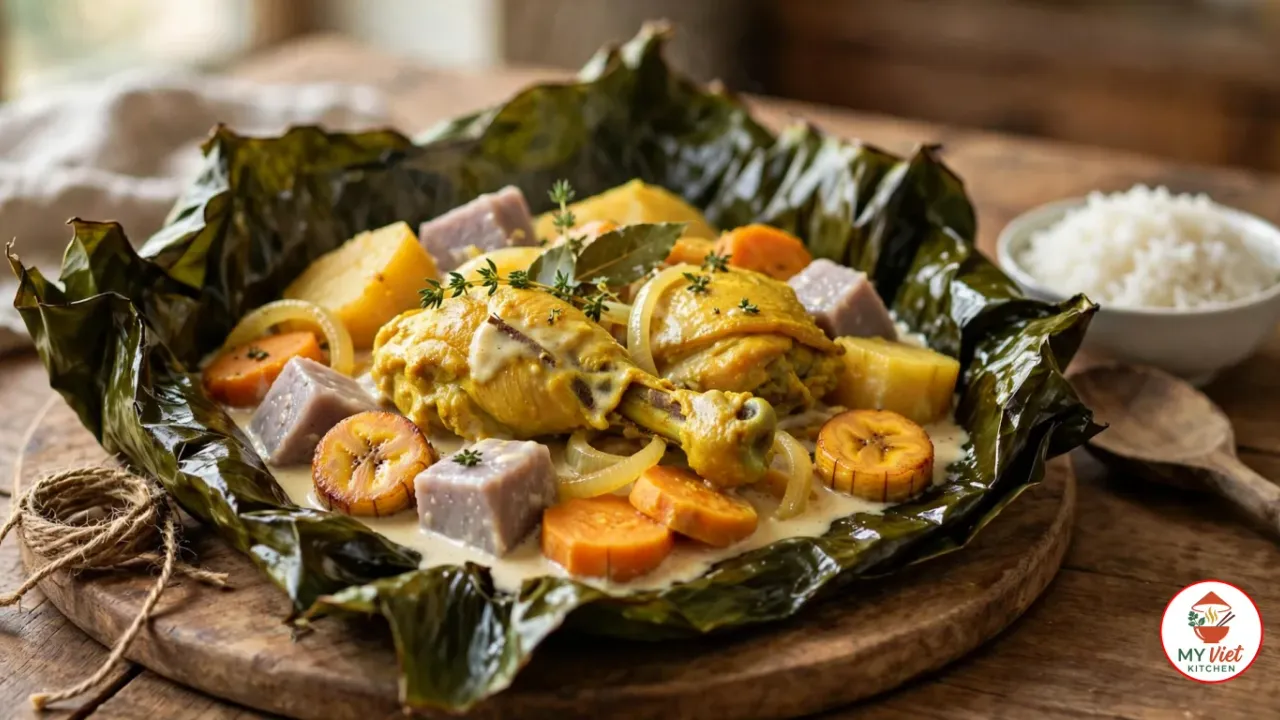
Bougna is the most treasured dish of the Kanak people and the culinary heart of New Caledonia. This traditional wrapped meal brings together bone-in chicken, starchy root vegetables like taro and yam, and rich coconut milk, all bundled inside fragrant banana leaves and slow-cooked until everything melds into a creamy, soul-warming feast. Whether prepared in an underground earth oven or adapted for a home kitchen, bougna delivers a depth of flavor that no ordinary stew can match. In this guide, you will learn exactly how to make authentic bougna at home with step-by-step instructions and expert tips.
Prep Time: 40 minutes | Cook Time: 2 hours 30 minutes | Servings: 6
Difficulty: Medium | Calories: ~480 per serving
What Makes Bougna Special?
Bougna holds a place in Kanak culture that goes far beyond ordinary cooking. It is the centerpiece of ceremonies, family gatherings, and acts of hospitality throughout New Caledonia. When a Kanak family prepares this traditional meal, they are not simply making dinner. Instead, they are continuing a tradition that stretches back centuries to a time when earth oven cooking was the primary method of preparing communal meals across Melanesia. The dish represents generosity, because the large banana leaf parcels are always made to share. As a result, it is deeply tied to the Kanak values of community and togetherness.
What sets bougna apart from other stews and braised dishes is the cooking method itself. By sealing everything inside banana leaves, the ingredients steam in their own juices and in the coconut milk. No flavor escapes. The root vegetables absorb the coconut richness and become incredibly soft, almost dissolving at the edges while holding their shape at the center. Meanwhile, the chicken becomes so tender it falls away from the bone at the lightest touch. The banana leaves also contribute a subtle, grassy sweetness that you simply cannot replicate with foil or a covered pot.
Furthermore, the dish is remarkably versatile. Coastal communities in New Caledonia prepare it with lobster, crab, or freshwater shrimp. Inland villages favor chicken or even wild game. The root vegetables change with the seasons and the garden harvest. This flexibility means that every version is slightly different, shaped by the land, the season, and the cook. If you enjoy exploring Pacific Island cooking traditions, you will also love our guide to kokoda, the Fijian raw fish salad dressed in coconut cream.

Choosing the Right Ingredients for Bougna
The beauty of this recipe lies in simple, high-quality ingredients cooked slowly together. There are no complex spice blends or fancy techniques. However, selecting the right components makes all the difference between a good result and a truly memorable one. Here is what to look for when shopping.
- Chicken thighs (bone-in, skin-on): Bone-in thighs are the best cut for this dish because the bones add body to the coconut sauce and the dark meat stays moist during the long cooking time. Avoid boneless, skinless chicken breast, which dries out and lacks the richness this dish demands.
- Taro root: Taro is essential to the authentic recipe. It turns creamy and slightly purple when cooked, and its earthy flavor pairs beautifully with coconut milk. Look for firm taro with no soft spots at Asian or Pacific Island grocery stores.
- Yam: True tropical yam has a drier, starchier texture than sweet potato. It holds its shape well during cooking and absorbs the coconut sauce without falling apart. If true yam is unavailable, Japanese sweet potato works as a substitute.
- Coconut milk: Use full-fat canned coconut milk for the richest results. Light coconut milk produces a thin, watery sauce that lacks the luxurious body that defines this dish. Shake the can well before opening.
- Banana leaves: Frozen banana leaves are widely available at Asian, Latin, and Pacific Island grocery stores. They are sold in large folded packages and keep well in the freezer for months. Thaw them completely before use and trim away the tough center rib.
Ingredients for Bougna
Main Ingredients:
- 2 pounds bone-in chicken thighs, cut into large pieces
- 1 pound taro root, peeled and cut into 2-inch chunks
- 1 pound yam, peeled and cut into 2-inch chunks
- 1 large sweet potato, peeled and cut into 2-inch chunks
- 1 ripe plantain, sliced into thick rounds
Coconut Sauce and Aromatics:
- 2 cans (27 ounces total) full-fat coconut milk
- 1 large onion, thickly sliced
- 4 cloves garlic, smashed
- 1 thumb-sized piece fresh ginger, sliced
- 2 sprigs fresh thyme
- 2 bay leaves
- 1 teaspoon ground turmeric
- Salt and black pepper to taste
For Wrapping:
- 4 to 6 large banana leaves, trimmed of center rib
- Kitchen twine or banana leaf strips for tying
Pro tip: When peeling taro, wear gloves or coat your hands with a thin layer of cooking oil. Raw taro contains calcium oxalate crystals that can irritate the skin and cause intense itching. The irritation disappears completely once the taro is cooked, so this is only a concern during preparation.
Step-by-Step Instructions
Step 1: Prepare the Banana Leaves
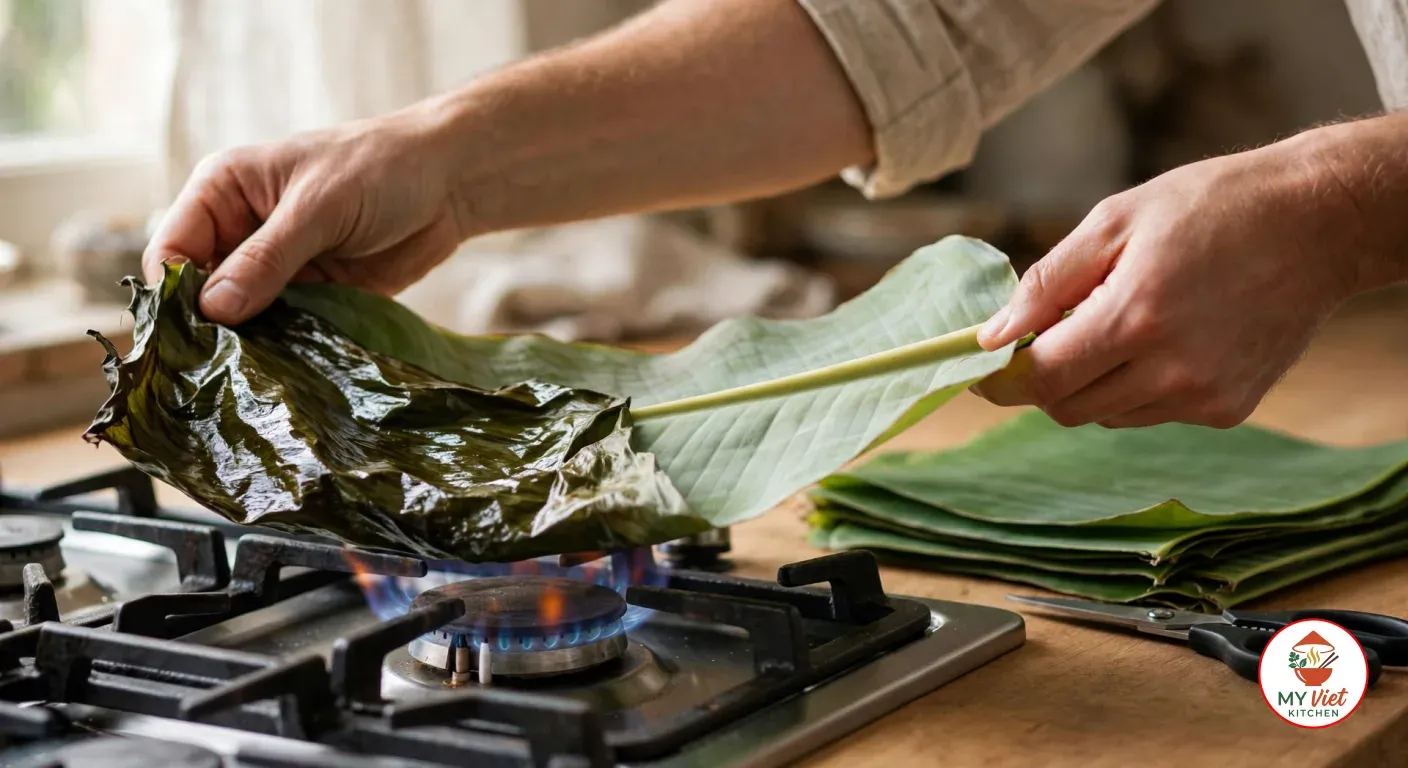
1 Start by making the banana leaves pliable enough to fold without cracking. If using frozen leaves, thaw them completely at room temperature. Then wilt each leaf by passing it briefly over an open gas flame, moving it back and forth for about 10 seconds per section. The leaf will change from matte to glossy as it softens. Alternatively, you can blanch the leaves in a large pot of boiling water for 30 seconds and then pat them dry.
After wilting, use kitchen scissors to trim away the tough center rib from each leaf. This rib is stiff and will cause the leaf to crack when you try to fold it. Lay the prepared leaves flat on your work surface and set them aside. You will need enough leaves to create two or three large parcels, or one very large communal parcel depending on your preference.
Step 2: Season the Chicken and Prepare the Vegetables
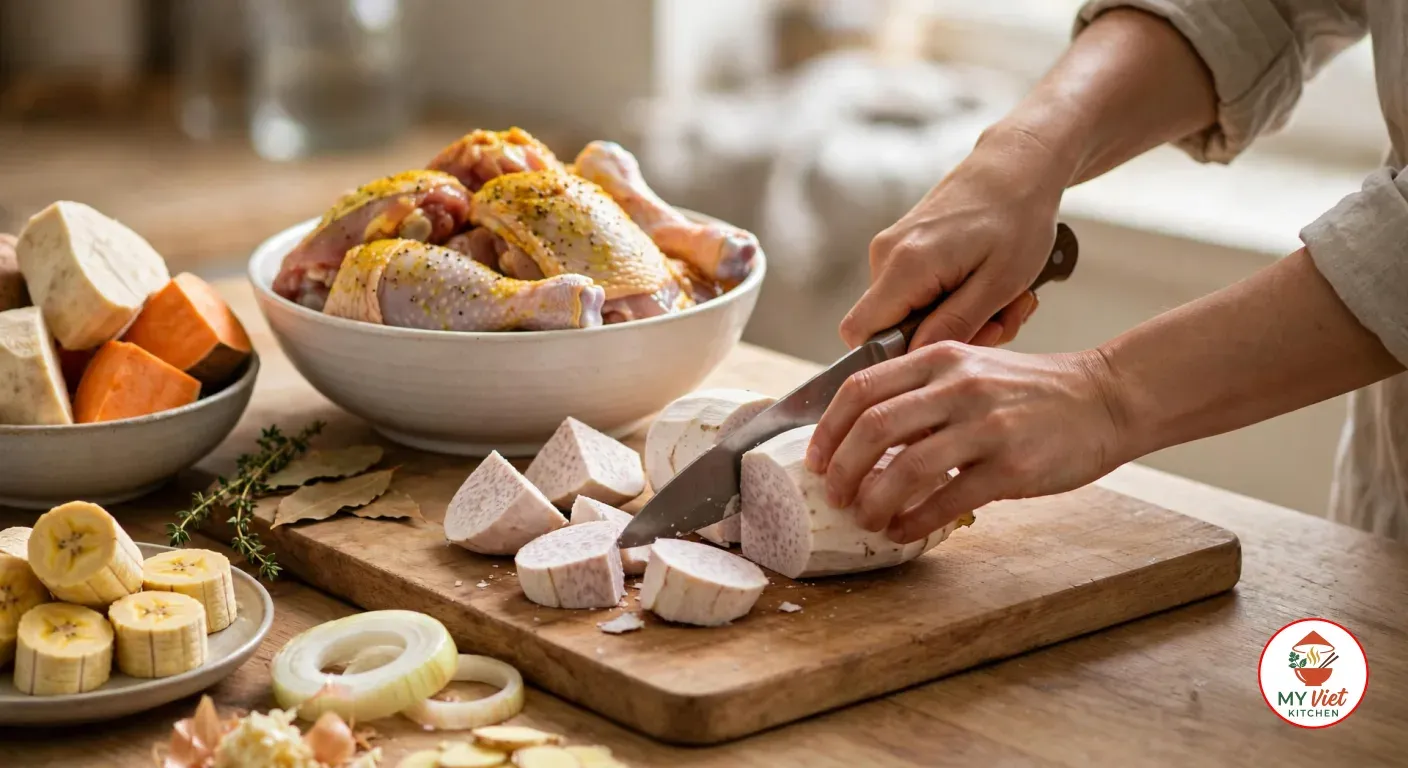
2 Cut the chicken thighs into large pieces, keeping the bone in for maximum flavor. Season them generously with salt, black pepper, and ground turmeric. The turmeric adds a golden color and a warm, earthy undertone that is characteristic of many Pacific Island dishes. Toss the chicken pieces to coat them evenly, then set them aside while you prepare the vegetables.
Peel the taro root, yam, and sweet potato carefully. Cut each into large 2-inch chunks. Keeping the pieces large is important because these root vegetables cook for over two hours. If you cut them too small, they will dissolve into mush and lose their texture entirely. Slice the ripe plantain into thick rounds about 1 inch wide. Thickly slice the onion into rings, smash the garlic cloves with the flat side of your knife, and slice the ginger into thin coins.
Step 3: Layer and Wrap the Bougna Parcels
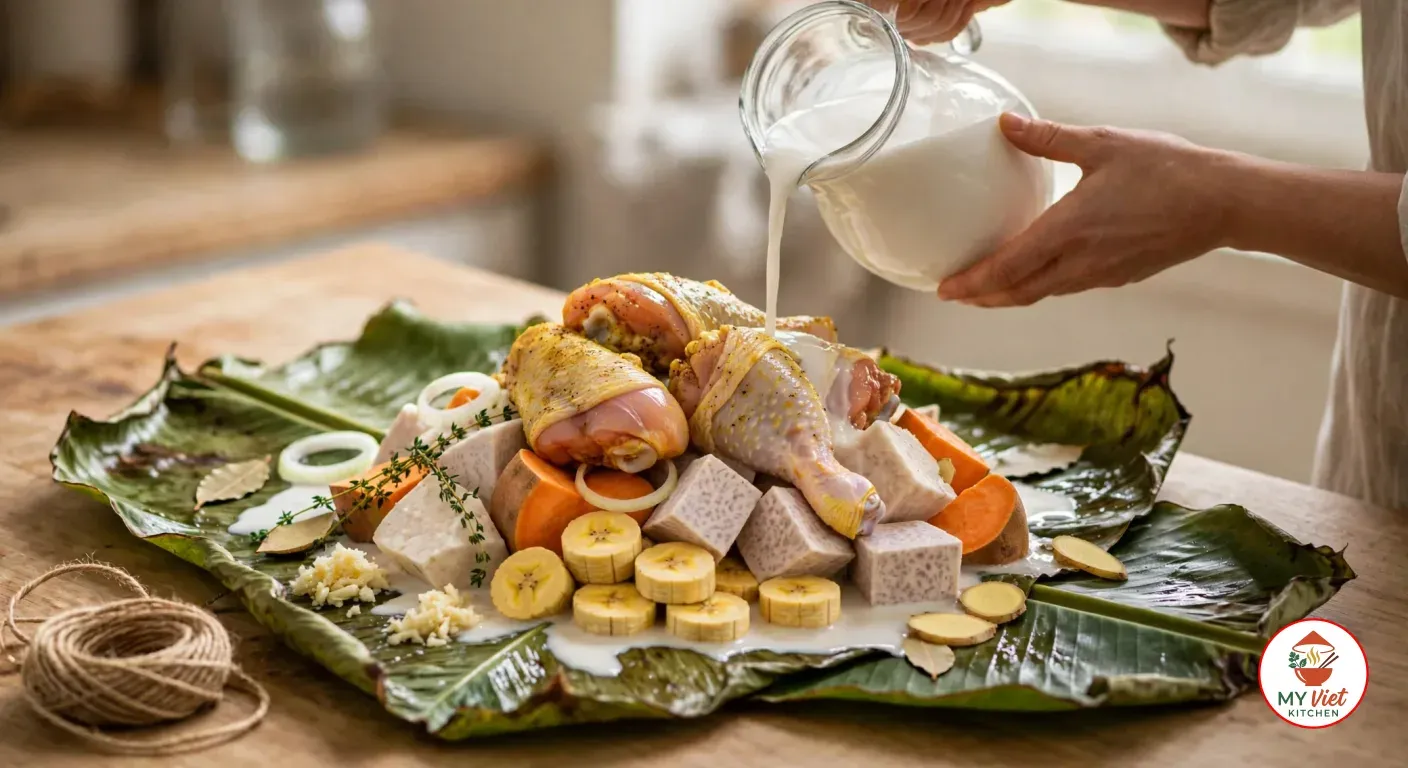
3 Lay two or three banana leaves on a flat surface in a cross or star pattern, overlapping them generously in the center. The overlapping layers create a strong, leak-proof base for the heavy filling. Begin layering the ingredients in the center of the leaves. Place the root vegetables on the bottom first, since they take the longest to cook and benefit from being closest to the heat source.
Next, arrange the seasoned chicken pieces on top of the vegetables. Scatter the onion rings, garlic, ginger slices, thyme sprigs, and bay leaves over the chicken. Finally, pour the full-fat coconut milk evenly over everything. The coconut milk should pool around the vegetables and chicken, creating the sauce that will slowly reduce during cooking. Now fold the banana leaves up and over the filling from all sides, creating a sealed parcel. Tie the bundle securely with kitchen twine, making sure there are no gaps where the coconut milk could leak out. The parcel should feel firm and tight.
Step 4: Slow-Cook the Bougna
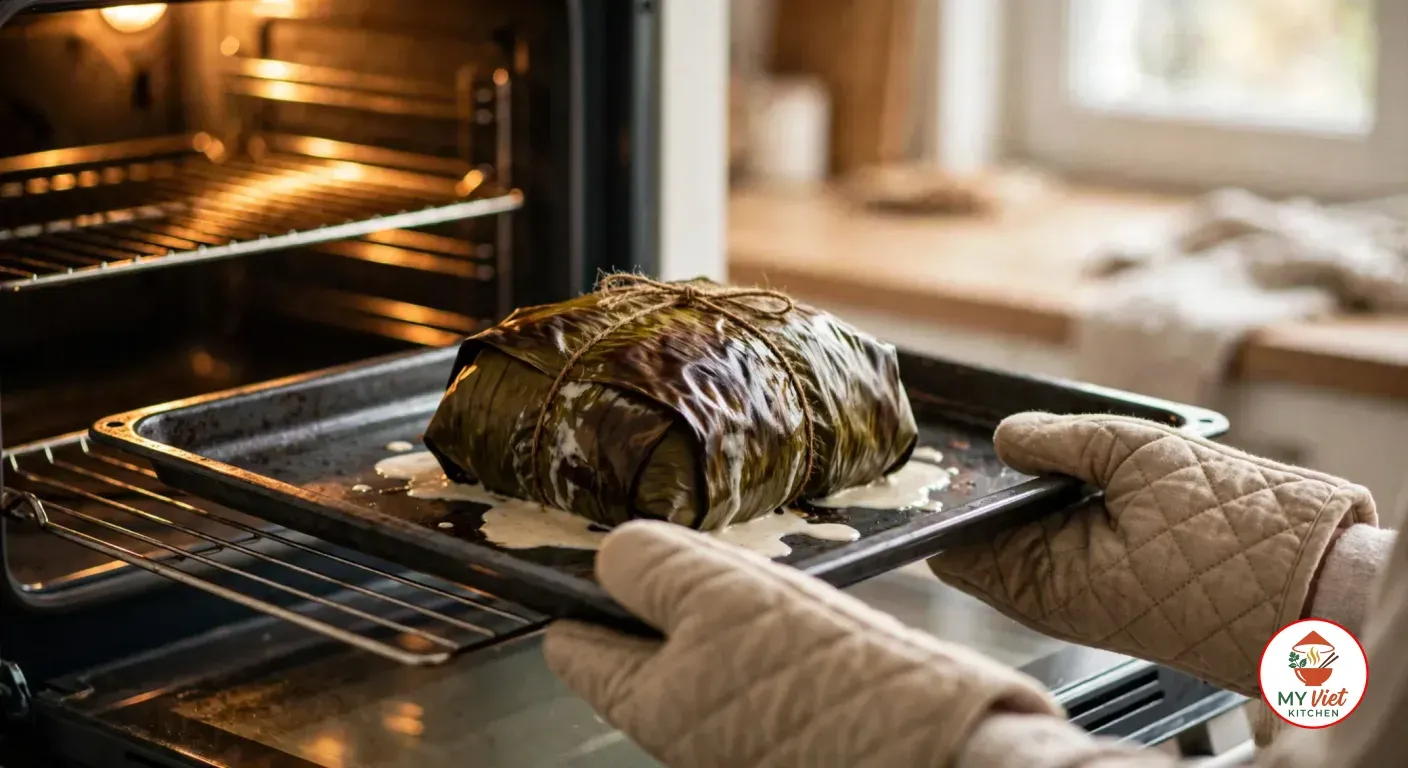
4 For the home oven method, preheat your oven to 325 degrees Fahrenheit. Place the wrapped parcel on a rimmed baking tray to catch any liquid that might seep through. Cook for 2 to 2.5 hours. You will know the dish is ready when the banana leaves have darkened considerably and you can smell the rich coconut and thyme aroma filling your kitchen. If you press gently on the parcel, the vegetables inside should feel soft and yielding.
For a more traditional experience, you can also cook the parcel on a charcoal grill using indirect heat. Set up the grill with coals on one side only and place the parcel on the cool side. Close the lid and maintain a temperature around 300 to 325 degrees Fahrenheit. This method adds a subtle smokiness that complements the coconut beautifully. In addition, the charcoal approach comes closest to the underground earth oven that Kanak cooks have used for centuries. Whichever method you choose, resist the urge to open the parcel early. The sealed environment is what makes this dish so tender and flavorful.
Step 5: Unwrap and Serve
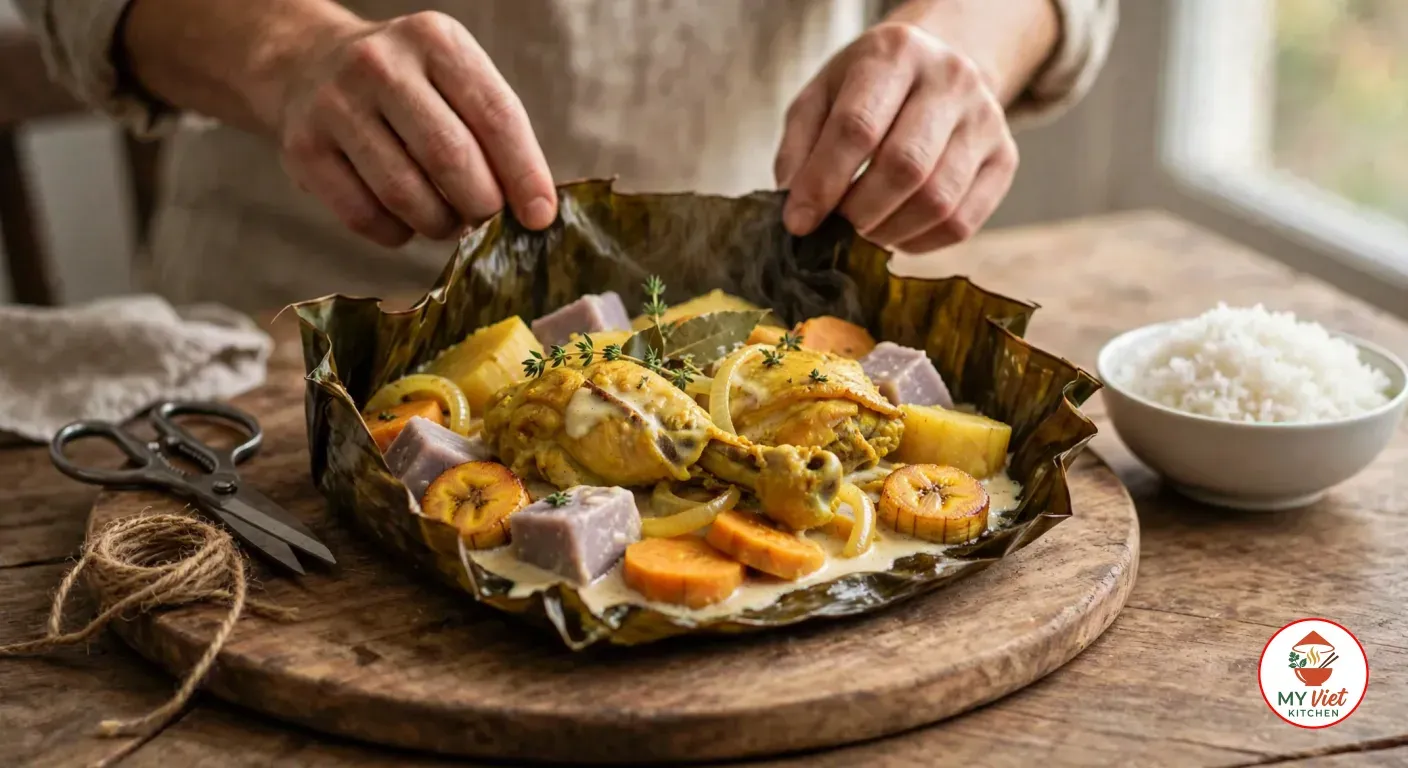
5 Place the cooked parcel on a large serving platter or wooden board. Carefully cut the kitchen twine with scissors and slowly peel back the banana leaves. A cloud of fragrant steam will rise, carrying the aroma of coconut, thyme, and slow-cooked chicken. The coconut milk will have reduced into a thick, creamy sauce that clings to every piece of vegetable and chicken. The taro will have turned slightly purple, the yam will be golden, and the chicken will be falling off the bone.
Serve the dish family-style, directly from the opened banana leaves. Provide a large spoon so guests can scoop the vegetables, chicken, and sauce together. Steamed white rice is the most common accompaniment, and its neutral flavor lets the coconut sauce shine. Opening the parcel at the table is a wonderful moment of shared anticipation and is very much part of the Kanak dining tradition.
Expert Tips for Perfect Bougna
Use Full-Fat Coconut Milk Only
Full-fat coconut milk is absolutely essential for this recipe. Light or reduced-fat coconut milk will produce a thin, watery sauce that lacks the creamy richness this dish is known for. During the long cooking time, the fat in the coconut milk emulsifies with the chicken juices and vegetable starches. As a result, it creates a velvety sauce that coats every ingredient. Look for brands that list coconut extract and water as the only ingredients, with no added gums or stabilizers.
Keep Vegetable Pieces Large
Cut your root vegetables into 2-inch chunks at minimum. The slow cooking time of over two hours will break down small pieces into a formless paste. Large chunks, on the other hand, develop a beautifully soft exterior while maintaining a creamy interior with just enough structure to pick up with a spoon. This contrast of textures is part of what makes bougna so satisfying. In addition, larger pieces absorb the coconut sauce more gradually, resulting in better flavor distribution throughout each bite.
Seal the Parcel Tightly
A leak in your banana leaf parcel means lost coconut milk, and lost coconut milk means a dry result. Take the time to overlap the leaves generously and tie the twine firmly. If you are worried about leaks, wrap the entire parcel in a second layer of leaves or place it inside a large sheet of aluminum foil as insurance. The goal is to trap all the steam and liquid inside so the ingredients braise in their own juices for the entire cooking time.
Bougna vs. Other Pacific Island Wrapped Dishes
Wrapping food in leaves and cooking it slowly is a technique shared across the Pacific Islands. However, each culture has developed its own distinctive version. Here is how this Kanak specialty compares to similar dishes from neighboring island traditions.
| Feature | Bougna (New Caledonia) | Lovo (Fiji) | Hangi (New Zealand) |
|---|---|---|---|
| Wrapping | Banana leaves | Banana leaves | Flax baskets or cloth |
| Cooking method | Underground earth oven | Underground earth oven | Underground earth oven |
| Key liquid | Coconut milk | Coconut cream | No added liquid (steam only) |
| Typical protein | Chicken, lobster, crab | Chicken, pork, fish | Chicken, pork, lamb |
| Root vegetables | Taro, yam, sweet potato | Cassava, taro, breadfruit | Kumara, potato, pumpkin |
| Texture | Creamy and saucy | Smoky and moist | Earthy and steamed |
| Occasion | Ceremonies and gatherings | Celebrations and feasts | Cultural events and holidays |
All three dishes share the communal spirit of earth oven cooking, but the New Caledonian version stands apart because of the generous use of coconut milk. This liquid transforms the parcel contents into something closer to a rich coconut braise than a simple steamed meal. If you want to explore these related traditions, check out our recipes for Fijian lovo feast and New Zealand hangi.
Serving Suggestions
In New Caledonia, bougna is traditionally served as a communal meal where everyone gathers around the opened banana leaf parcel. The dish is substantial enough to be a complete meal on its own, but a few well-chosen sides elevate the experience further.
The Perfect Accompaniments:
- Steamed white rice: The most traditional pairing. Plain rice soaks up the creamy coconut sauce beautifully and provides a neutral base for the rich flavors.
- Fresh tropical fruit salad: A mix of papaya, mango, and pineapple provides a bright, acidic contrast that cuts through the richness of the coconut milk.
- Simple green salad: Crisp lettuce with a squeeze of lime juice offers a refreshing counterpoint to the hearty, starchy filling.
- Fried plantain chips: For added texture, serve crispy plantain chips alongside the soft, slow-cooked vegetables in the parcel.
Beverage Pairings:
- Fresh coconut water: Keeps the coconut theme going while providing a light, hydrating drink that complements the richness.
- Chilled Riesling: A slightly sweet, aromatic white wine balances the savory coconut sauce and earthy root vegetables.
- Ginger beer: The spicy kick of ginger beer pairs wonderfully with the ginger and turmeric in the seasoning.
- Tropical fruit juice: Passion fruit or guava juice adds a fruity sweetness that echoes the Pacific Island spirit of the meal.
Storage and Reheating
Refrigerator: Store leftovers in an airtight container in the refrigerator for up to 3 days. The flavors actually improve overnight as the coconut sauce continues to infuse into the vegetables and chicken. Remove the banana leaves before storing.
Freezer: Bougna freezes well for up to 2 months. Portion the leftovers into individual containers, making sure each portion has a good mix of chicken, vegetables, and sauce. Thaw overnight in the refrigerator before reheating.
Reheating: The best method is gentle stovetop reheating. Place the leftovers in a saucepan over low heat, adding a splash of coconut milk if the sauce has thickened too much. Stir gently and heat until warmed through, about 10 minutes. You can also reheat in the oven at 325 degrees Fahrenheit for 20 minutes, covered with foil to prevent drying out. Avoid the microwave, because it heats unevenly and can make the chicken rubbery.
Common Mistakes to Avoid
1. Using Light Coconut Milk
Light coconut milk lacks the fat content needed to create the thick, creamy sauce that defines bougna. During two hours of cooking, full-fat coconut milk reduces and concentrates into a rich, velvety coating. Light versions simply turn watery and leave the vegetables tasting bland. Always choose full-fat coconut milk. This is not the recipe to cut calories on the coconut component.
2. Cutting Vegetables Too Small
Small vegetable pieces dissolve into mush during the extended cooking time. Taro and yam are dense, starchy roots that need large chunks to maintain some texture after two hours. Cut everything into 2-inch pieces at minimum. The finished dish should have identifiable, spoonable pieces of vegetable suspended in coconut sauce, not a smooth puree.
3. Cooking at Too High a Temperature
Bougna demands low and slow cooking. If you raise the oven temperature above 350 degrees Fahrenheit to speed things up, the coconut milk will separate and become oily rather than creamy. The chicken may also toughen on the outside while remaining undercooked near the bone. Stick to 325 degrees and give the dish the full 2 to 2.5 hours it needs. Patience is the most important ingredient in this recipe.
Frequently Asked Questions
What is bougna?
Bougna is the national dish of New Caledonia and the most important traditional recipe of the Kanak people. It consists of chicken, lobster, or fish combined with root vegetables like taro, yam, and sweet potato, all drenched in coconut milk, wrapped in banana leaves, and slow-cooked in an underground earth oven. The result is a rich, creamy, and deeply aromatic one-pot meal that holds deep cultural significance in Melanesian communities. This Kanak specialty is always prepared for ceremonies and large family gatherings.
Can you make bougna without banana leaves?
Yes, you can substitute banana leaves with aluminum foil or parchment paper. However, banana leaves contribute a subtle earthy, slightly sweet flavor to bougna and help regulate moisture during cooking. If using foil, line it with a layer of parchment paper so the filling does not stick to the metal. Frozen banana leaves are available at most Asian and Latin grocery stores and are well worth seeking out for the most authentic result.
How do you cook bougna without an earth oven?
You can cook bougna very successfully in a standard kitchen oven at 325 degrees Fahrenheit for 2 to 2.5 hours. Place the wrapped parcel on a rimmed baking tray to catch any liquid that might seep through. A charcoal grill with indirect heat or a large Dutch oven on the stovetop over very low heat also work well. The key is long, slow cooking so the root vegetables become completely tender and the coconut milk reduces into a creamy sauce.
What protein is traditionally used in bougna?
The most traditional proteins for bougna are chicken, lobster, crab, and freshwater shrimp. Coastal Kanak communities favor seafood versions, while inland villages typically use chicken. Today, chicken is the most common choice because it is accessible and affordable. For special celebrations, many families combine chicken with lobster tail to create a particularly luxurious version.
What does bougna taste like?
Bougna has a rich, creamy, and mildly sweet flavor driven by the coconut milk that infuses every ingredient during the long cooking process. The root vegetables absorb the coconut richness and become incredibly soft and almost silky. Meanwhile, the chicken turns fall-off-the-bone tender with a gentle earthiness from the banana leaves. Every bite is comforting and warming, with subtle layers from ginger, thyme, and turmeric that emerge as you eat.
Variations and Adaptations
Seafood Bougna:
Replace the chicken with a combination of lobster tails, large prawns, and crab legs. Reduce the cooking time to 1.5 hours since seafood cooks faster than chicken. Add the shellfish on top of the root vegetables so it steams gently rather than sitting in the liquid. This coastal version is traditionally served at weddings and important ceremonies in New Caledonia’s coastal communities. The coconut milk takes on a beautiful sweetness from the shellfish juices.
Vegetarian Bougna:
For a plant-based version, omit the chicken entirely and increase the variety of root vegetables. Add breadfruit, cassava, green banana, and extra taro. Include firm tofu cut into large cubes if you want added protein. The coconut milk and aromatics provide so much flavor that the dish remains deeply satisfying without any meat. This variation is also closer to the simplest historical versions that relied entirely on garden produce.
Dutch Oven Bougna:
If banana leaves are unavailable, you can adapt the recipe for a Dutch oven. Layer the ingredients in the same order inside a heavy, lidded pot. Pour the coconut milk over everything and place a sheet of parchment paper directly on the surface before closing the lid. Cook in the oven at 325 degrees Fahrenheit for 2 hours. While you lose the banana leaf flavor, the Dutch oven’s heavy lid traps moisture effectively and produces a very similar result. This is the most accessible adaptation for home cooks.
The Cultural Significance of Bougna
Bougna is far more than a recipe in New Caledonia. It is a cultural institution that embodies the Kanak values of sharing, respect, and connection to the land. In Kanak tradition, preparing this dish is a communal act. Men typically dig and prepare the earth oven, while women and elders prepare the ingredients and wrap the parcels. Children gather firewood and banana leaves. Every member of the community has a role, and the act of cooking together strengthens social bonds. According to Wikipedia’s entry on bougna, this dish is central to the custom of sharing food during important Kanak ceremonies and gatherings.
Bougna plays an essential role in Kanak ceremonies called coutume, which mark births, marriages, funerals, and other significant life events. Offering it during coutume is an expression of respect and hospitality. The size and contents of the parcel reflect the importance of the occasion. A wedding version, for example, might contain lobster and be large enough to feed dozens of guests. A family gathering calls for a simpler chicken preparation. Through these distinctions, the tradition becomes a language of social meaning that every Kanak person understands.
The earth oven itself holds spiritual significance. Known as a four kanak, the underground oven connects the food to the earth and to ancestral cooking traditions that predate European contact by thousands of years. When Kanak cooks bury the wrapped parcels under hot stones and soil, they are participating in the same ritual their ancestors practiced. This continuity gives the dish a depth of meaning that transcends flavor. For anyone interested in the broader world of Pacific Island cooking traditions, our kalua pig recipe explores a similarly meaningful Hawaiian earth oven tradition.
Conclusion
Making bougna at home is a rewarding culinary journey that connects you to one of the Pacific’s most meaningful food traditions. The process is straightforward: season the chicken, prepare the root vegetables, wrap everything with coconut milk in banana leaves, and cook slowly until tender. There are no complex techniques to master. The dish asks only for good ingredients, careful wrapping, and patience during the long, gentle cooking time. Follow these steps and the dish will emerge from the oven fragrant, creamy, and deeply satisfying.
Whether you prepare this recipe for a family dinner or a larger gathering, the experience of unwrapping the banana leaf parcel at the table creates a moment of shared joy that few other dishes can deliver. The rich coconut sauce, the tender chicken, and the soft, sweet root vegetables combine into something truly special. Once you taste your first homemade version, you will understand why the Kanak people have treasured this recipe for generations. Explore more of our Australian and Oceanian dishes for your next culinary adventure.