Bluff oysters are widely regarded as the finest oysters in New Zealand, and for good reason. Harvested from the wild, frigid waters of Foveaux Strait at the very bottom of the South Island, these plump shellfish deliver a creamy sweetness and clean ocean brininess that no farmed oyster can replicate. Each year, New Zealanders eagerly await the opening of the short harvest season, and restaurants across the country put Bluff oysters at the top of their menus the moment the first catch arrives. This comprehensive guide covers everything you need to know about selecting, shucking, and serving these treasured shellfish at home.
Prep Time: 15 minutes | Cook Time: 10 minutes | Servings: 4
Difficulty: Easy | Calories: ~120 per serving
What Makes Bluff Oysters Special?
Bluff oysters hold an almost legendary status in New Zealand food culture. They are not farmed or cultivated. Instead, they grow wild on the seabed of Foveaux Strait, the turbulent channel that separates the South Island from Stewart Island. The cold, nutrient-dense sub-Antarctic currents that sweep through this strait create ideal growing conditions. As a result, Bluff oysters develop a depth of flavor that is richer, creamier, and more complex than any other oyster variety found in New Zealand waters.
Scientifically known as Ostrea chilensis, this flat oyster species is native to the Southern Hemisphere. Unlike the more common Pacific oyster (Crassostrea gigas), which has a deeply cupped shell and a sharp, briny flavor, the Bluff variety features a smooth, rounded shell and a taste profile that balances sweetness with minerality. The flesh is notably plump and succulent. Many chefs and food writers consider them among the top five oyster varieties in the world, alongside Belon oysters from France and Kumamoto oysters from Japan.
What truly sets these oysters apart, however, is their scarcity. The annual harvest is tightly regulated by the New Zealand government through a strict quota system. Fishers use traditional dredging methods in some of the roughest seas on Earth. The season typically runs from March through August, but it can be shortened or suspended entirely if surveys show the oyster beds are under pressure. This combination of exceptional flavor and genuine rarity is why Bluff oysters command premium prices and inspire such passionate devotion.

Choosing the Best Bluff Oysters
Selecting high-quality oysters is essential because the raw product does all the heavy lifting. There is no sauce or seasoning that can save a poor oyster. When buying them, you want to look for specific signs of freshness and vitality. Here is what to consider when choosing your shellfish.
- Shells should be tightly closed: A live oyster keeps its shell firmly shut. If an oyster is gaping open and does not close when tapped, it is dead and must be discarded. A slightly open shell that snaps shut when touched is perfectly fine and indicates a healthy, living oyster.
- Weight matters: Pick up each oyster and feel its heft. A good specimen feels heavy for its size because it is full of meat and natural brine. Light or hollow-feeling shells often contain a shriveled oyster that has lost moisture.
- Smell the ocean, not fish: Fresh oysters smell like clean seawater. They should have a pleasant, briny aroma with no hint of ammonia, sourness, or fishiness. Any off-putting smell means the oyster has deteriorated and is not safe to eat raw.
- Buy from reputable suppliers: Purchase your oysters from trusted fishmongers or directly from licensed New Zealand seafood suppliers. The best vendors can tell you the harvest date and the specific area of Foveaux Strait where the oysters were dredged.
Ingredients for Bluff Oysters Two Ways
For Raw Bluff Oysters with Mignonette:
- 24 fresh Bluff oysters, in the shell
- 1 lemon, cut into wedges
- 2 tablespoons red wine vinegar
- 1 small shallot, finely minced
- 1 teaspoon cracked black pepper
- Tabasco or hot sauce, to taste
- Crushed ice for serving
For Bluff Oysters Kilpatrick:
- 12 fresh Bluff oysters, shucked on the half shell
- 4 slices streaky bacon, finely diced
- 2 tablespoons Worcestershire sauce
- 1 tablespoon tomato sauce (ketchup)
- 1/2 cup grated Parmesan cheese
- Fresh parsley, chopped, for garnish
- Rock salt for stabilizing shells on the tray
Pro tip: Always shuck your oysters just before serving. Once opened, the oyster begins to lose its precious natural brine and the flesh dries out quickly. If you need to shuck them ahead of time, cover the platter tightly with plastic wrap and refrigerate for no longer than 30 minutes. The fresher the shuck, the better the experience.
Step-by-Step Instructions
Step 1: Shuck the Bluff Oysters
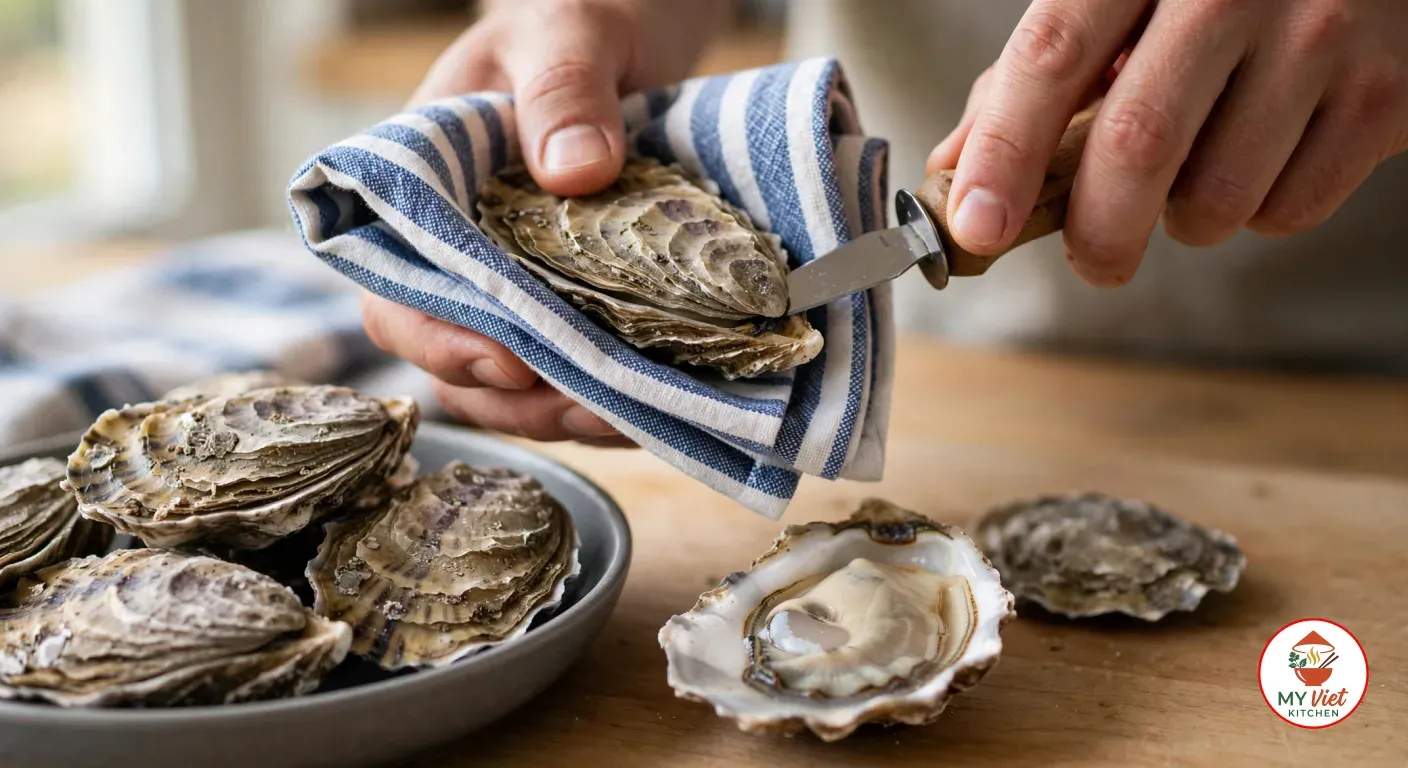
1 Begin by scrubbing the oyster shells under cold running water to remove any grit or debris. Then fold a thick tea towel and place it in your non-dominant hand. Set an oyster flat side up in the towel, with the hinge (the narrow, pointed end) facing toward you. The towel protects your hand in case the knife slips.
Insert the tip of a sturdy oyster knife into the hinge. Apply firm, steady pressure and twist the knife to pop the hinge open. You will feel a distinct give when the shell releases. Next, slide the blade along the inside of the top shell to sever the adductor muscle that holds the two halves together. Lift off the top shell carefully. Then run the knife under the oyster meat to detach it from the bottom shell, keeping the oyster and its brine in the deeper half. Inspect for any shell fragments and remove them. Repeat this process with all 24 oysters, and with the 12 for Kilpatrick if you are making both.
Step 2: Prepare the Mignonette Sauce
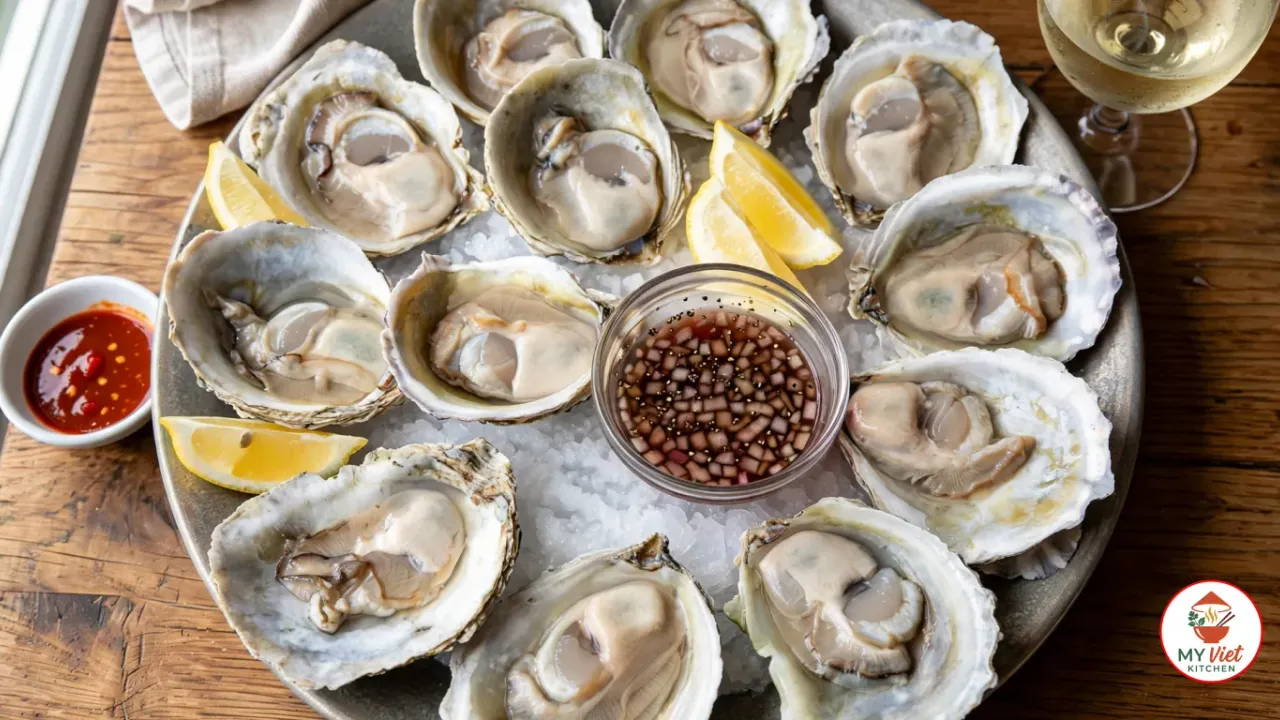
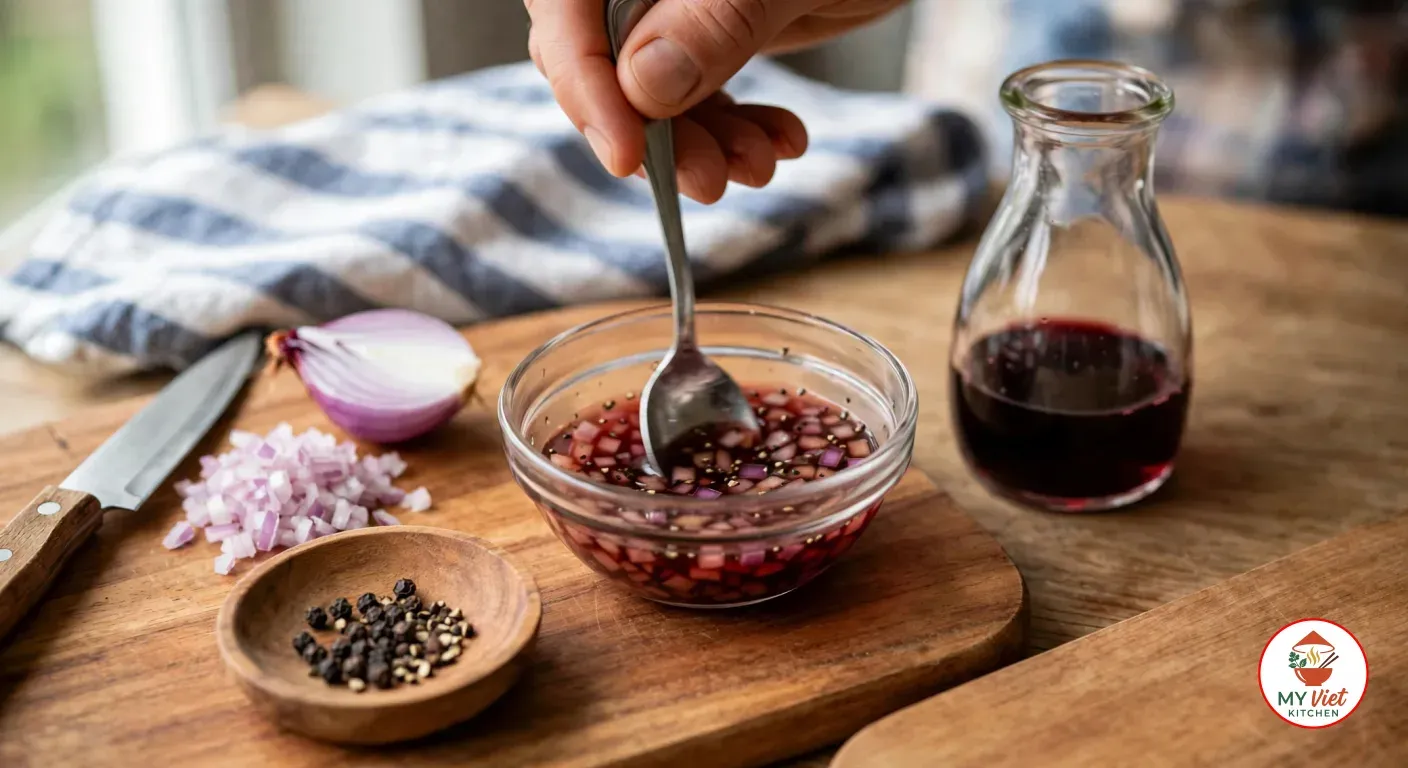
2 While shucking, prepare a classic French mignonette to accompany the raw oysters. Combine the red wine vinegar and finely minced shallot in a small glass bowl. Add the cracked black pepper and stir to combine. Let the mignonette rest for at least 10 minutes at room temperature. During this time, the shallot softens and releases its flavor into the vinegar, creating a sharp yet elegant condiment.
This sauce is deliberately simple because it should complement rather than compete with the oyster’s natural flavor. A small spoonful of mignonette adds bright acidity that highlights the creamy sweetness of the oyster beautifully. You can also offer plain lemon wedges and a few drops of Tabasco as alternatives, since some guests prefer even less interference with the oyster itself.
Step 3: Serve Raw on Crushed Ice
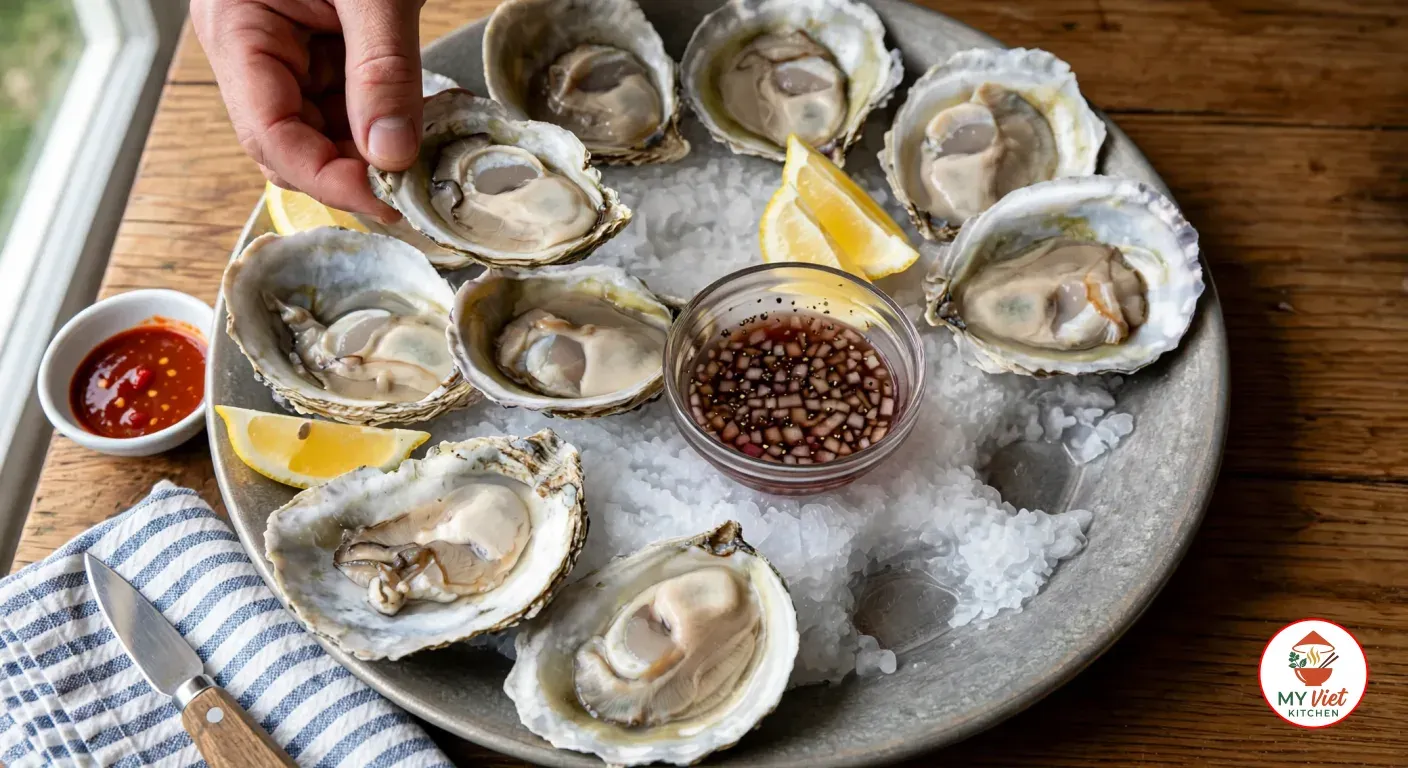
3 Spread a generous bed of crushed ice across a large serving platter. The ice serves two purposes: it keeps the oysters cold and it cradles each half shell so the brine does not spill. Nestle the shucked oysters into the ice, arranging them in a single layer with the meat facing up. Leave space in the center or along the edge for small bowls of mignonette, lemon wedges, and hot sauce.
Serve immediately. Raw oysters are best eaten within minutes of shucking, while the flesh is still glistening and the brine is cold. To eat, lift an oyster shell to your lips, add your chosen condiment, and tip the entire oyster into your mouth in one smooth motion. Chew two or three times to release the full range of flavors before swallowing. The creamy texture and sweet mineral finish are what make these oysters so extraordinary.
Step 4: Make Bluff Oysters Kilpatrick
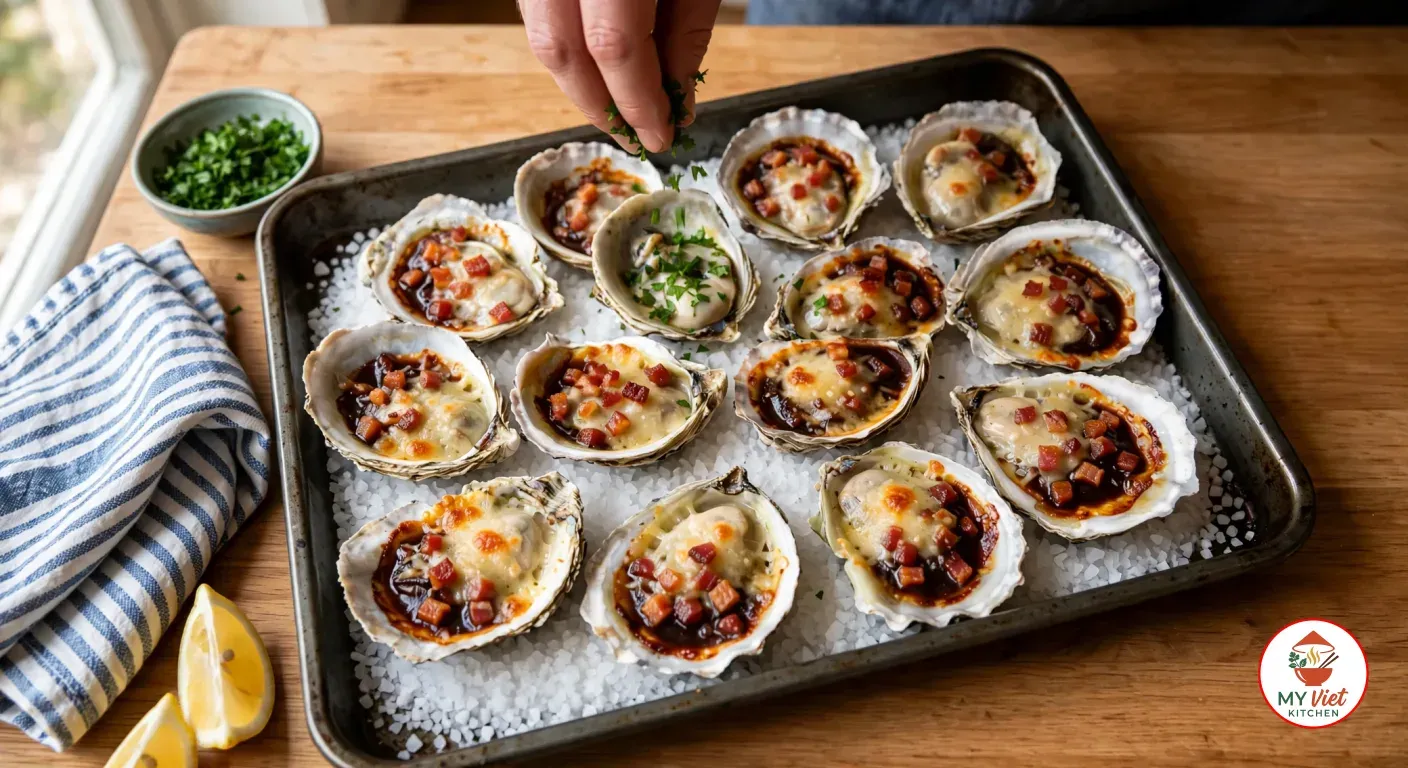
4 For a warm, indulgent preparation, oysters Kilpatrick is a beloved classic across New Zealand and Australia. Preheat your oven broiler to high. Line a baking tray with a layer of rock salt and press the shucked oyster half shells into the salt so they sit level and stable. This prevents the shells from tipping and spilling their precious contents during cooking.
In a small bowl, mix together the Worcestershire sauce and tomato sauce. Spoon a small amount of this mixture over each oyster. Then scatter the finely diced bacon evenly across the twelve shells and top each one with a pinch of grated Parmesan. Place the tray under the broiler for 4 to 5 minutes. Watch carefully because the timing is critical. The bacon should be crisp, the cheese should be melted and lightly golden, and the oyster beneath should be just warmed through but still juicy. Remove from the broiler, garnish with chopped parsley, and serve immediately on the tray.
Expert Tips for Handling Bluff Oysters
Keep Them Cold at All Times
Temperature control is the single most important factor when working with these oysters. From the moment you bring them home, store them in the coldest part of your refrigerator between 1 and 4 degrees Celsius. Place them cup side down on a tray so they retain their natural brine. Cover with a damp cloth rather than sealing them in plastic, because oysters are alive and need to breathe. Never place them in fresh water or on direct ice inside the fridge, as both will kill them before you are ready to serve.
Use the Right Shucking Knife
A proper oyster knife makes all the difference. Choose a short, sturdy blade with a rounded tip and a comfortable handle that provides good grip. Bluff oysters have a strong hinge, so you need a knife that can withstand twisting pressure without bending. Avoid using a regular kitchen knife, as it can easily slip and cause serious injury. A good oyster knife costs very little and lasts for years.
Less Is More with Condiments
These oysters have such a distinctive, nuanced flavor that heavy sauces will mask what makes them special. A squeeze of lemon or a teaspoon of mignonette is all you need for raw service. Avoid cocktail sauce, heavy vinaigrettes, or anything with strong garlic when eating them raw. If you want to cook them, keep the preparation simple and the cooking time very short. The goal is always to let the oyster itself remain the star.
Bluff Oysters vs. Pacific Oysters: A Comparison
New Zealand produces two main types of oysters. The Bluff variety and Pacific oysters are both widely available during their respective seasons, but they differ significantly in origin, flavor, and texture. Understanding these differences helps you choose the right oyster for your intended preparation.
| Feature | Bluff Oysters | Pacific Oysters |
|---|---|---|
| Species | Ostrea chilensis (flat oyster) | Crassostrea gigas (cupped oyster) |
| Origin | Wild, Foveaux Strait only | Farmed, North Island estuaries |
| Season | March to August | Year-round (peak in cooler months) |
| Shell shape | Flat, round, smooth | Deep cup, elongated, rough |
| Flavor | Creamy, sweet, mineral finish | Briny, sharp, metallic |
| Texture | Plump, buttery, succulent | Firm, slightly chewy |
| Price | Premium ($30-50 NZD per dozen) | Moderate ($15-25 NZD per dozen) |
| Best served | Raw or lightly cooked | Raw, fried, or grilled |
Both oysters have their place in New Zealand cuisine. However, the Bluff variety is considered the superior eating experience because of their wild origin and the unique environmental conditions of Foveaux Strait.
Serving Suggestions
These shellfish shine brightest when presented simply and eaten fresh. Whether you serve them raw or gently cooked, the key is to build a setting that complements their delicate character rather than competing with it. Here are the best ways to present them at home.
The Perfect Accompaniments:
- Crusty sourdough bread: A thick slice of warm sourdough with good butter pairs naturally with briny raw oysters and helps cleanse the palate between servings.
- Green salad with vinaigrette: A simple rocket and watercress salad dressed in lemon vinaigrette adds freshness and a peppery bite that echoes the minerality of the oysters.
- Tempura vegetables: Light, crispy tempura makes an elegant companion alongside oysters at a dinner gathering.
- Smoked salmon: Thinly sliced smoked salmon on the same platter creates a stunning seafood spread that impresses guests instantly.
Beverage Pairings:
- New Zealand Sauvignon Blanc: A Marlborough Sauvignon Blanc with its crisp acidity and citrus notes is the classic match for these oysters and the most popular pairing across the country.
- Champagne or sparkling wine: The effervescence and mineral quality of a good Champagne or Methode Traditionnelle lifts the creamy sweetness of each oyster beautifully.
- Dry Riesling: A bone-dry Central Otago Riesling offers a slightly richer pairing while still maintaining the acidity needed to balance the shellfish.
- Stout beer: A creamy Irish-style stout is a time-honored oyster pairing that works surprisingly well, as the roasted malt flavors complement the mineral brininess.
Storage and Handling
Refrigerator: Store live oysters cup side down at 1 to 4 degrees Celsius, covered with a damp cloth. They will keep for up to 5 days after harvest, though the flavor and texture are best within 2 to 3 days. Check daily and discard any oysters that have opened and do not close when tapped.
Freezer: While purists prefer them fresh, you can freeze shucked oysters in their brine for up to 3 months. Place them in a freezer-safe container and cover with their natural liquor. Thaw overnight in the refrigerator before using. Frozen ones are best suited for cooked preparations such as Kilpatrick, chowder, or pan-frying rather than raw service.
Important safety note: Never store live oysters in sealed plastic bags, in fresh water, or submerged in melted ice. All of these will suffocate or kill the oysters. Dead oysters can harbor harmful bacteria and must not be consumed. When in doubt about whether an oyster is alive, tap the shell firmly. If it does not close, throw it away.
Common Mistakes to Avoid
1. Overcooking the Oysters
This is by far the most frequent error when preparing these oysters. Their delicate flesh becomes tough and rubbery within seconds of overcooking. Whether you are broiling Kilpatrick, pan-frying in butter, or making tempura, the oyster needs only enough heat to warm it through. For broiling, 4 to 5 minutes under high heat is sufficient. For pan-frying, 30 to 45 seconds per side is all it takes. Always err on the side of undercooking, because residual heat continues to cook the oyster after you remove it from the heat source.
2. Drowning Them in Sauce
These oysters are prized specifically for their unique creamy flavor and clean mineral finish. Burying them under heavy cocktail sauce, thick mayo, or overpowering garlic butter defeats the entire purpose. A light touch with condiments is essential. Use just enough mignonette, lemon, or Worcestershire to accent the oyster without masking it. Think of condiments as a supporting actor, not the lead.
3. Using Dull or Wrong Knives for Shucking
Attempting to shuck oysters with a butter knife, a screwdriver, or any tool other than a proper oyster knife is dangerous and damages the oyster. A regular kitchen knife is too thin and flexible, creating a real risk of the blade slipping into your hand. Invest in a proper oyster shucking knife with a short, thick blade and a guard. Additionally, always use a folded towel to protect your holding hand.
Frequently Asked Questions
What do Bluff oysters taste like?
These prized shellfish have a distinctive creamy, sweet flavor with a clean mineral finish and subtle metallic brininess. They taste noticeably different from Pacific oysters because of the cold, nutrient-rich waters of Foveaux Strait. The texture is plump and succulent with a smooth, buttery mouthfeel. Many seafood lovers describe the taste as the purest expression of the ocean you can find in New Zealand.
When is Bluff oyster season in New Zealand?
The harvest season typically runs from March to August each year. However, the exact dates are set annually by the New Zealand Ministry for Primary Industries based on stock surveys. The season can be shortened or cancelled entirely if oyster populations are under stress. Peak availability is usually April through June, when the oysters are at their plumpest and most flavorful.
Why are Bluff oysters so expensive?
Several factors drive the premium price. They are wild-harvested from a single location under strict quota management, so supply is inherently limited. The harvest season lasts only a few months each year, while demand across New Zealand and internationally remains very high. Furthermore, the dredging process in the rough, sub-Antarctic waters of Foveaux Strait is physically demanding and costly. These factors combine to make them one of the most premium shellfish varieties in the world.
How do you store fresh Bluff oysters at home?
Store them in the refrigerator at 1 to 4 degrees Celsius, cup side down so they retain their natural brine. Cover with a damp cloth or damp paper towel, but never seal them in an airtight container or submerge them in fresh water. Both methods will suffocate and kill the oysters. Properly stored, live oysters keep for up to 5 days after harvest, though eating them within 2 to 3 days is strongly recommended for the best taste.
Can you eat Bluff oysters cooked?
Absolutely. They are excellent when cooked, and there are several beloved preparations. Kilpatrick with bacon and Worcestershire sauce is the most popular cooked option. Tempura-battered and deep-fried oysters are also outstanding, as are pan-fried oysters in brown butter with garlic. That said, many purists argue that they are best enjoyed raw to fully appreciate their creamy sweetness. If you cook them, keep the heat brief to avoid a rubbery texture.
Variations and Adaptations
Tempura Bluff Oysters:
For a Japanese-inspired twist, dip shucked oysters in a light tempura batter and deep-fry at 180 degrees Celsius for 60 to 90 seconds. The batter should be ice-cold and only barely mixed, with lumps remaining, to achieve maximum crispness. Serve immediately with a dipping sauce of soy, mirin, and grated daikon. This method creates a dramatic contrast between the shattering crust and the silky oyster within.
Pan-Fried in Brown Butter:
Lightly dust shucked oysters in seasoned flour. Heat butter in a skillet over medium-high heat until it foams and turns nutty brown. Add the oysters and cook for just 30 to 45 seconds per side. The exterior gets a thin golden crust while the interior stays creamy and tender. Finish with a squeeze of lemon juice and a scattering of fresh chives. This elegant preparation is perfect for a dinner party starter.
Bluff Oyster Chowder:
A rich chowder is the ideal way to use frozen or slightly older oysters. Saute diced onion, celery, and potato in butter until soft. Add fish stock and simmer until the potatoes are tender. Stir in cream and the shucked oysters with their brine. Cook gently for just 2 to 3 minutes until the oysters are barely warmed through. Season with white pepper and garnish with fresh dill. The oyster liquor gives this chowder an incredible depth of sea flavor.
Grilled with Garlic Herb Butter:
Place shucked oysters on their half shells directly on a hot grill. Spoon a small amount of garlic herb butter (softened butter mixed with minced garlic, parsley, and a pinch of chili flakes) onto each oyster. Close the grill lid and cook for 3 to 4 minutes until the butter melts and bubbles and the edges of the oyster begin to curl. This method adds a subtle smokiness that complements the natural creaminess wonderfully.
The Cultural Significance of Bluff Oysters
These treasured shellfish are deeply woven into the identity of New Zealand’s deep south. The small town of Bluff, located at the very tip of the South Island, has built its reputation almost entirely around these shellfish. For generations, local families have worked the oyster boats that dredge Foveaux Strait, and the knowledge of where to find the best beds has been passed down from father to son. According to the Bluff Oyster and Food Festival, the annual celebration draws thousands of visitors each year to this remote southern town.
The Bluff Oyster and Food Festival, held each May, is one of New Zealand’s most iconic food events. It transforms the town into a celebration of local seafood, with oyster-shucking competitions, cooking demonstrations, live music, and of course, unlimited fresh Bluff oysters. Tickets sell out weeks in advance, and visitors travel from across the country and overseas to attend. The festival captures the communal spirit that defines New Zealand food culture, where sharing great produce with friends is the highest form of hospitality.
For the Ngai Tahu iwi, the indigenous Maori people of the southern South Island, the oyster beds of Foveaux Strait hold particular cultural significance. Known as tio in te reo Maori, these oysters have been harvested by Maori for centuries as a traditional food source. The sustainable management of the oyster fishery today reflects a partnership between commercial interests and indigenous guardianship. This balance ensures that future generations will continue to enjoy Bluff oysters just as their ancestors did.
Conclusion
Preparing Bluff oysters at home is one of the simplest yet most rewarding culinary experiences you can have. There is no complex technique or long ingredient list involved. The entire process comes down to sourcing the freshest oysters you can find, shucking them carefully, and presenting them with restraint. Whether you serve them raw with nothing more than a squeeze of lemon or broil them Kilpatrick style with bacon and Worcestershire, the star of the plate is always the oyster itself.
These extraordinary shellfish from Foveaux Strait represent the very best of New Zealand’s wild seafood. Their limited season, strict harvest quotas, and incomparable flavor make every dozen feel like a genuine occasion. Once you taste your first properly shucked Bluff oyster, you will understand why New Zealanders count down the days until the season opens each year.