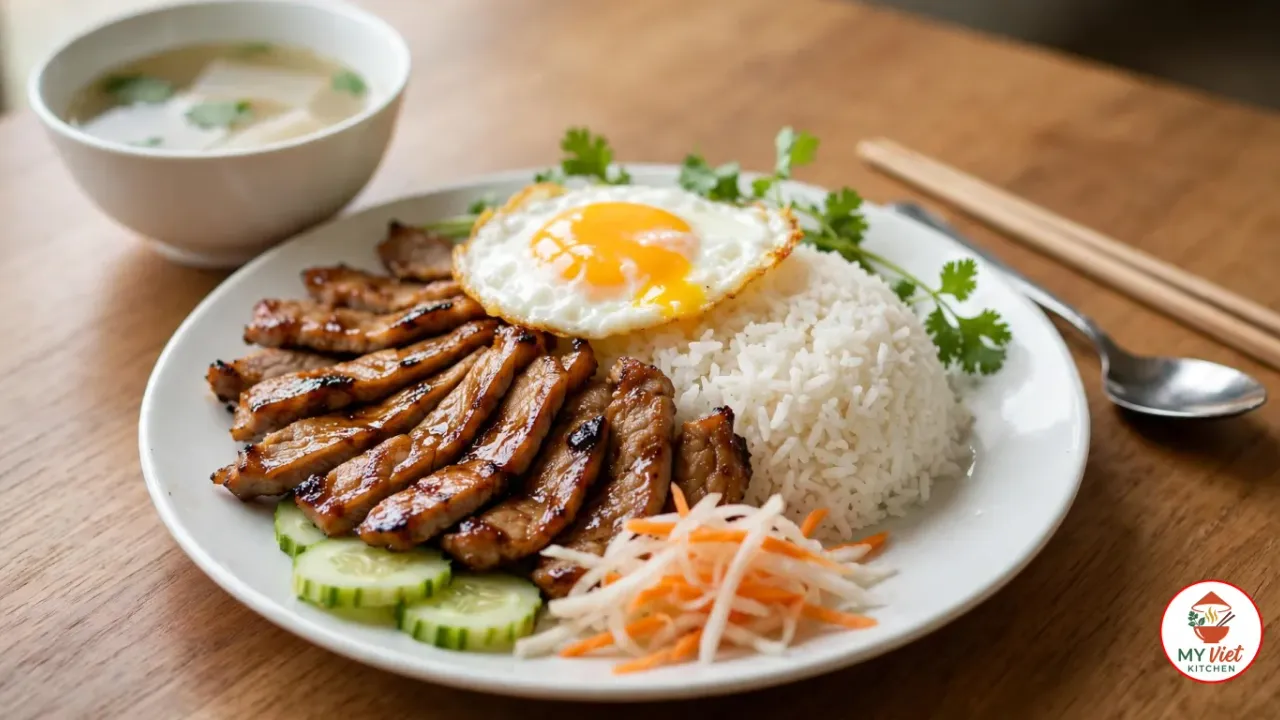
Bai sach chrouk is Cambodia’s most beloved breakfast, a beautifully simple dish of thinly sliced pork marinated in coconut milk and garlic, then grilled until caramelized and served over steamed jasmine rice. This humble yet deeply satisfying meal appears at street stalls across Cambodia every morning, where vendors grill fragrant pork over charcoal fires that fill the air with irresistible smoky sweetness. Making bai sach chrouk at home captures the essence of Cambodian street food in every bite.
Prep Time: 20 minutes (plus marinating) | Cook Time: 15 minutes | Servings: 4
Difficulty: Easy | Calories: ~450 per serving
What Makes Bai Sach Chrouk Special?
Bai sach chrouk proves that the best dishes are often the simplest. While many Southeast Asian recipes rely on complex spice pastes and lengthy preparations, this Cambodian classic achieves greatness through just a handful of ingredients and a hot grill. The magic happens when coconut milk and garlic caramelize over high heat, creating a sweet, smoky crust on tender pork slices.
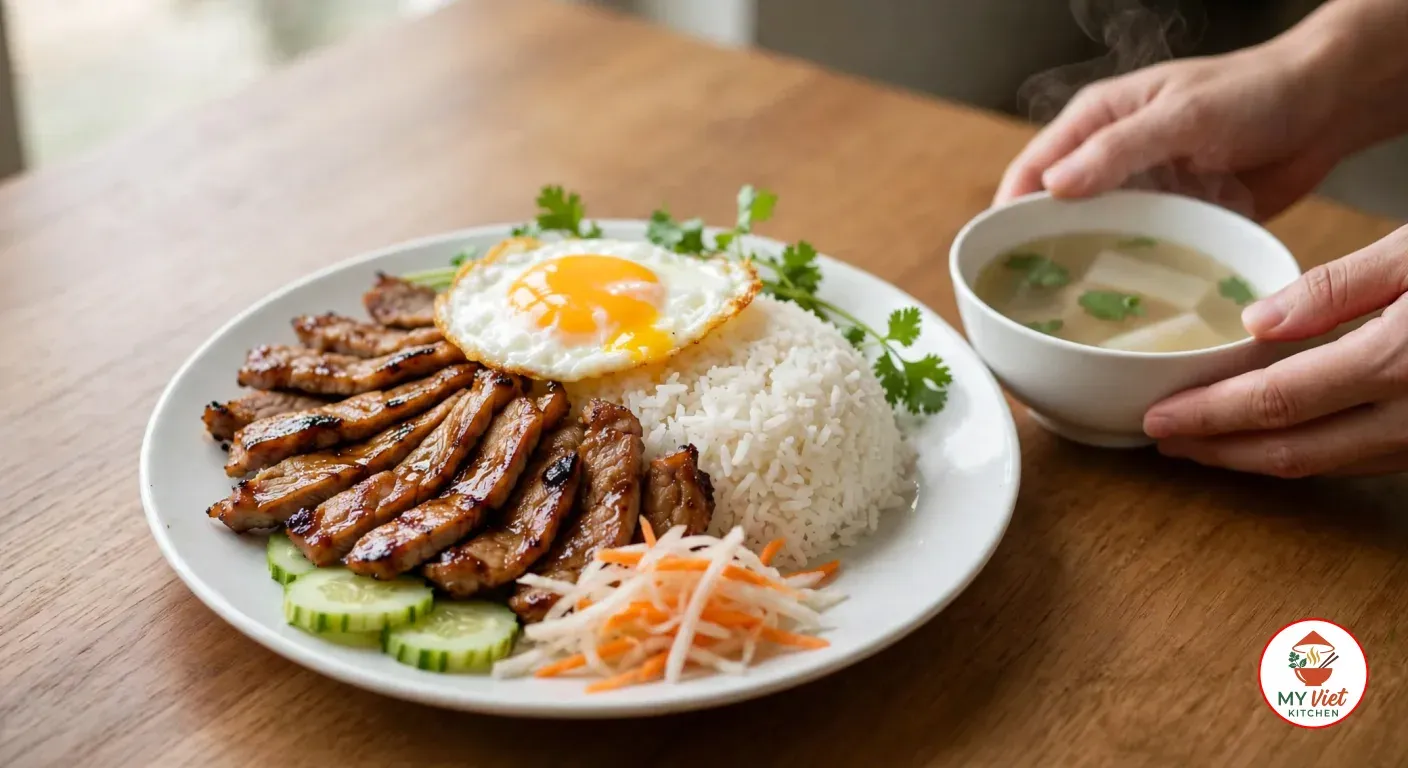
What sets bai sach chrouk apart from other grilled pork dishes is its accompaniments. Each plate comes with a sunny-side-up egg whose runny yolk becomes a rich sauce for the rice. Crunchy pickled daikon and carrots cut through the richness with tangy freshness. Sliced cucumber adds a cool, crisp contrast. Together, these elements create a balanced meal that is both comforting and energizing.
In Cambodia, bai sach chrouk is more than breakfast. It represents the Khmer philosophy of eating well without complication. Street vendors prepare it with practiced efficiency, slicing pork, tending charcoal grills, and assembling plates with a speed that comes from years of daily repetition. Every Cambodian has a favorite bai sach chrouk vendor, and fierce debates about who makes the best version are a beloved national pastime.

Choosing the Right Pork Cut
Selecting the right pork is essential for achieving the authentic bai sach chrouk experience. Here are your best options.
- Pork shoulder (best choice): Higher fat content keeps the meat juicy and flavorful during grilling. Slice it thinly against the grain for tender results.
- Pork loin: A leaner option that cooks quickly and has a milder flavor. Marinate it a bit longer to compensate for the lower fat content.
- Pork belly: Some Cambodian vendors use thin slices of pork belly for extra richness. This creates the most indulgent version with crispy, caramelized fat edges.
Ingredients for Bai Sach Chrouk
For the Marinated Pork:
- 500g pork loin or pork shoulder, thinly sliced
- 100ml coconut milk
- 4 garlic cloves, minced
- 2 tablespoons soy sauce
- 1 tablespoon fish sauce
- 1 tablespoon palm sugar or brown sugar
- 1 teaspoon black pepper
For the Pickled Vegetables:
- 1 small daikon radish, julienned
- 1 carrot, julienned
- 3 tablespoons rice vinegar
- 1 tablespoon sugar
- Pinch of salt
For Assembly:
- 3 cups cooked jasmine rice
- 2 to 4 eggs, fried sunny-side up
- 1 cucumber, sliced
- Fresh cilantro for garnish
- 2 tablespoons vegetable oil
- Clear chicken broth for serving (optional)
Pro tip: For the most authentic bai sach chrouk, marinate the pork overnight. The extended marinating time allows the coconut milk to fully tenderize the meat, and the garlic flavor penetrates deep into every slice. Morning preparation becomes effortless when you marinate the night before.
Step-by-Step Instructions
Step 1: Marinate the Pork
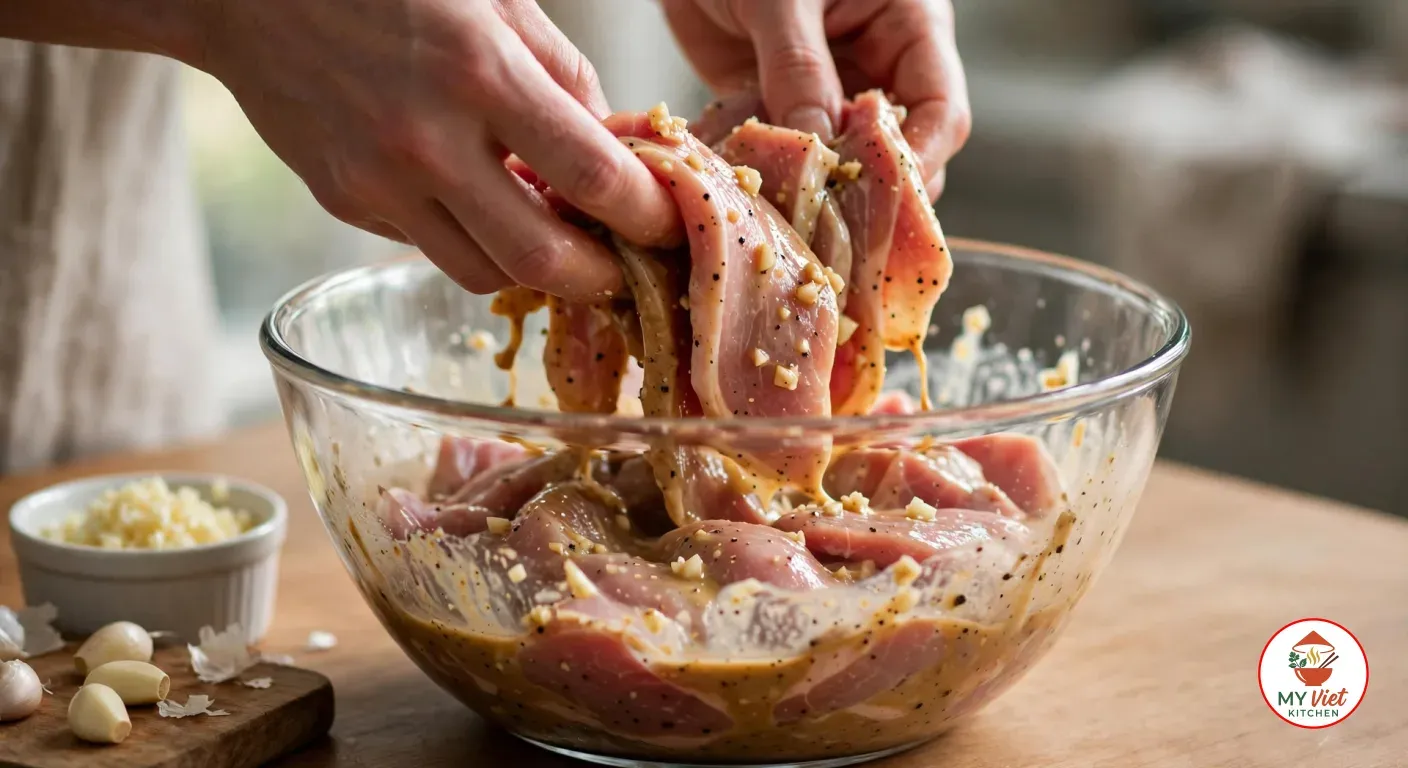
1In a large bowl, whisk together the coconut milk, minced garlic, soy sauce, fish sauce, palm sugar, and black pepper until the sugar dissolves. Add the thinly sliced pork and toss until every piece is evenly coated. Cover the bowl with plastic wrap and refrigerate for at least 2 hours, though overnight marinating produces the best results. The coconut milk will slowly tenderize the pork while the garlic and seasonings infuse it with flavor.
Step 2: Prepare the Pickled Vegetables
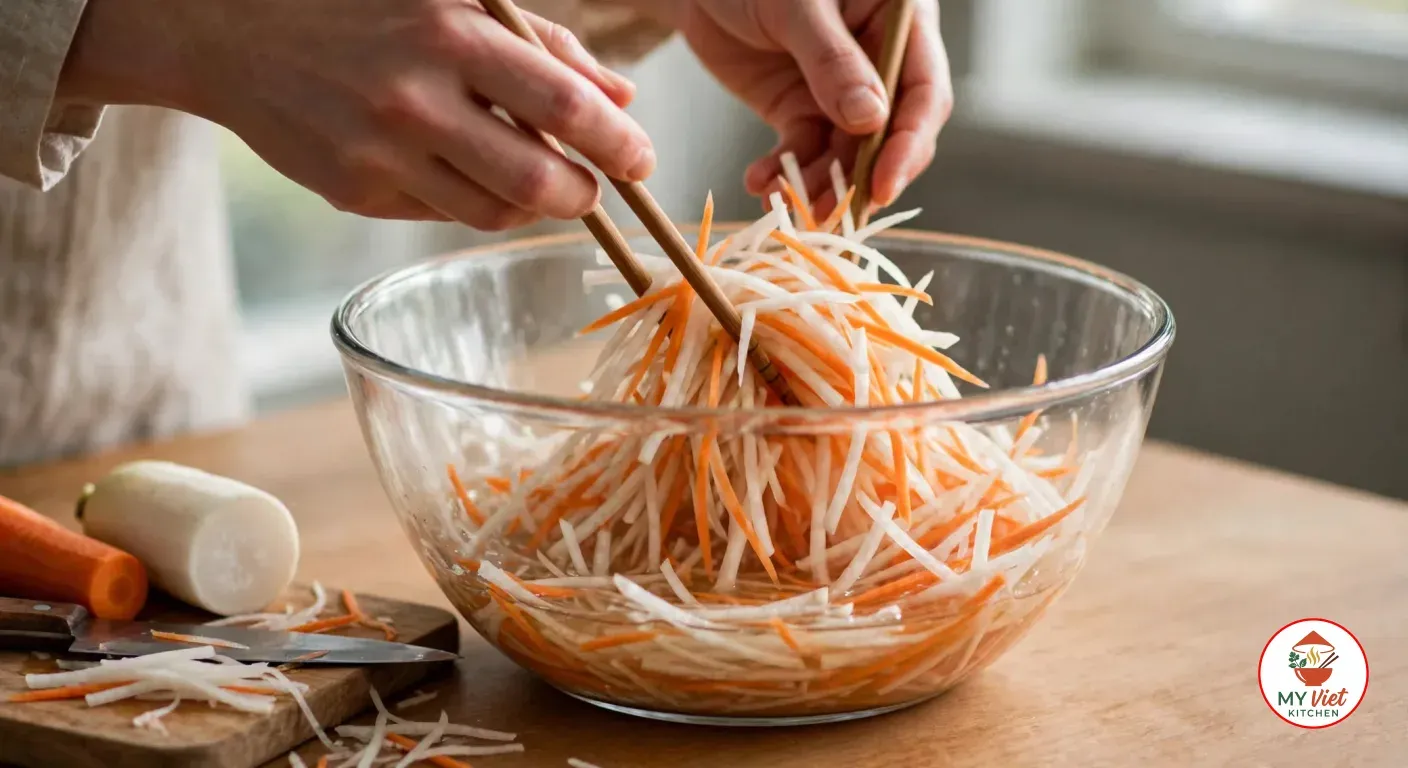
2Julienne the daikon radish and carrot into thin matchstick-sized strips. In a bowl, combine the rice vinegar, sugar, and a pinch of salt. Stir until the sugar dissolves, then add the daikon and carrot strips. Toss well and let the vegetables pickle for at least 30 minutes. These quick pickles provide an essential tangy crunch that balances the rich grilled pork perfectly. You can prepare them up to 3 days ahead and store in the refrigerator.
Step 3: Grill the Pork
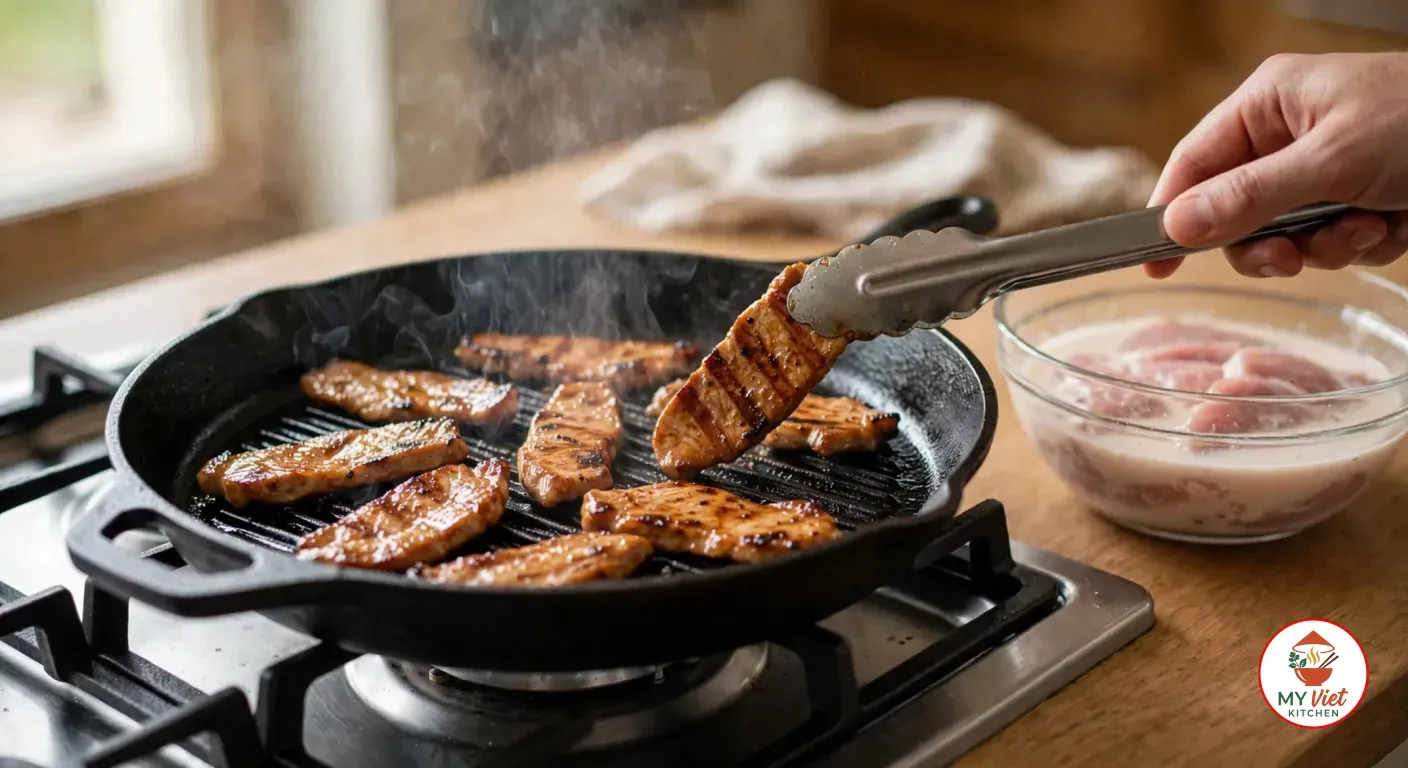
3Preheat your grill, grill pan, or cast iron skillet to medium-high heat. Remove the pork from the marinade and shake off any excess. Lay the pork slices in a single layer on the hot grill surface. Cook for 3 to 4 minutes per side without moving the pieces. You want the coconut milk marinade to caramelize and develop those signature charred spots. Once both sides are golden brown with slightly crispy edges, transfer the grilled pork to a plate and let it rest for 2 minutes.
Step 4: Fry the Eggs
4Heat a tablespoon of vegetable oil in a nonstick pan over medium heat. Crack the eggs into the pan and fry them sunny-side up. Cook until the whites are fully set but the yolks remain soft and runny, about 3 minutes. A runny yolk is essential for bai sach chrouk because it acts as a natural sauce that enriches the rice when broken open. If you prefer a firmer yolk, cook for another minute, but the traditional version always features a gloriously runny center.

Step 5: Assemble the Plates
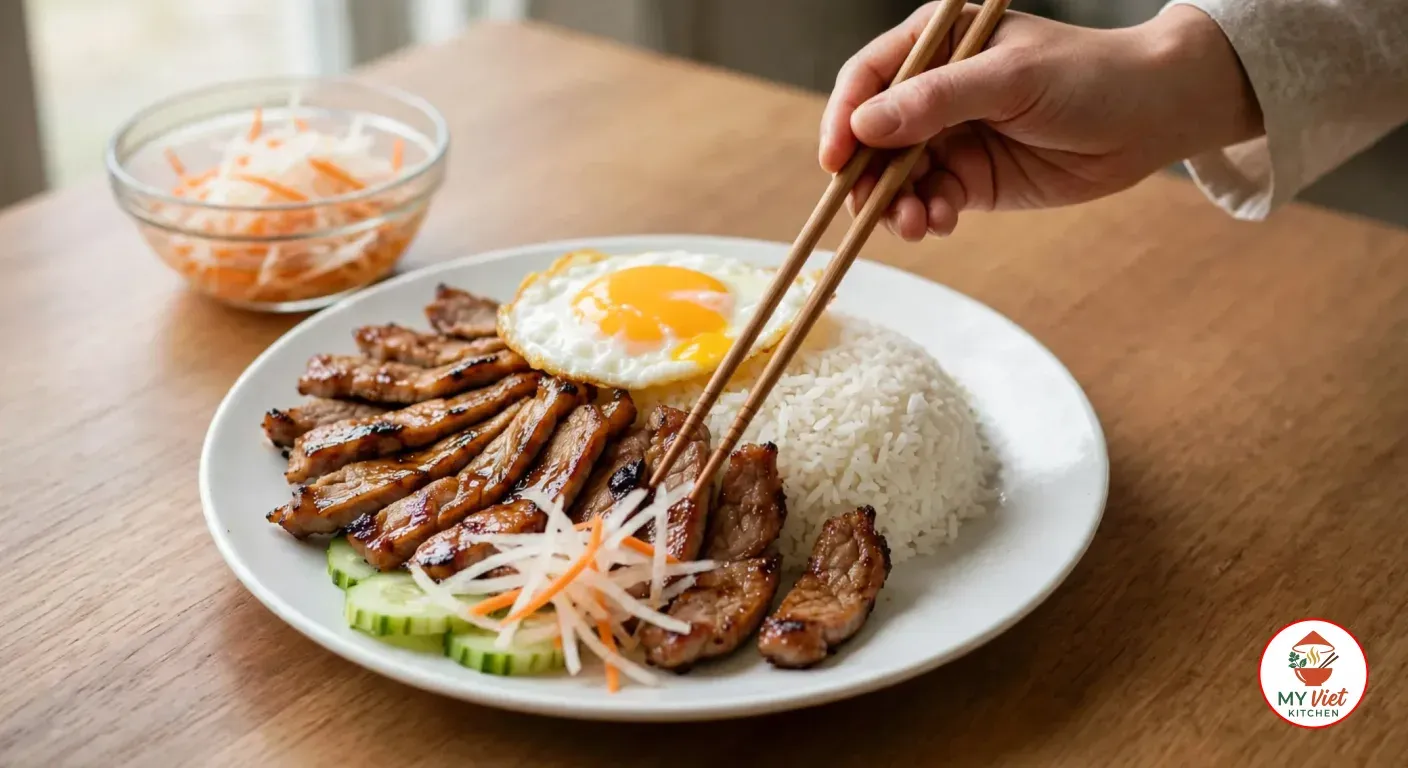
5Place a generous mound of steamed jasmine rice on each plate. Arrange the grilled pork slices beside or on top of the rice, fanning them out to show off their beautiful caramelized color. Add the fried egg, cucumber slices, and a portion of pickled daikon and carrots. Garnish everything with fresh cilantro leaves. Each component has its place on the plate, creating a colorful and appetizing presentation that looks just like the street stall version.
Step 6: Serve with Broth
6Serve each plate of bai sach chrouk immediately while the pork is still warm. If desired, place a small bowl of clear chicken broth alongside the plate. In Cambodia, this broth is sipped between bites to cleanse the palate and add refreshment. Break the egg yolk over the rice and mix it in before eating for the most satisfying experience. Enjoy this authentic Cambodian breakfast alongside other Asian breakfast favorites.
Expert Tips for Perfect Bai Sach Chrouk
Slice the Pork Thin
Thin slices of pork are crucial for authentic bai sach chrouk. Aim for slices about 3 to 5 millimeters thick. Partially freezing the pork for 30 minutes before slicing makes it much easier to cut thin, even pieces. Thin slices cook quickly, absorb more marinade, and develop more caramelized surface area on the grill.
Use Real Charcoal If Possible
While a grill pan works perfectly fine, grilling over real charcoal adds an authentic smoky flavor that defines bai sach chrouk in Cambodia. Street vendors exclusively use charcoal grills, and that wood-smoke character is part of what makes the dish so special. Even a small portable charcoal grill can give you that authentic flavor.
Do Not Overcook the Pork
Because the slices are thin, they cook very quickly. Watch them carefully and flip only once. Overcooked pork becomes tough and dry, losing the tender juiciness that makes bai sach chrouk so appealing. A slight pink center is fine because the residual heat will finish cooking the meat as it rests.
Bai Sach Chrouk vs. Other Asian Pork Rice Dishes
Several Asian cuisines feature grilled pork with rice, but each has its own distinct character. Here is how bai sach chrouk compares to its regional neighbors.
| Feature | Bai Sach Chrouk (Cambodia) | Com Tam (Vietnam) | Char Siu Rice (China) |
|---|---|---|---|
| Marinade Base | Coconut milk and garlic | Lemongrass and fish sauce | Honey and five-spice |
| Cooking Method | Grilled over charcoal | Grilled over charcoal | Roasted or char-grilled |
| Rice Type | Whole jasmine rice | Broken jasmine rice | Steamed white rice |
| Key Accompaniment | Pickled vegetables and egg | Egg cake and fish sauce | Blanched vegetables |
Serving Suggestions
This dish is traditionally served for breakfast, but it works wonderfully for lunch or dinner too. Here are the best ways to serve it.
The Perfect Accompaniments:
- Clear chicken broth: A light broth with daikon or winter melon is the traditional side, sipped between bites for palate refreshment.
- Extra pickled vegetables: More tangy pickles are always welcome to balance the rich pork.
- Fresh chili slices: Add heat to taste. Many Cambodians enjoy their bai sach chrouk with a side of sliced bird’s eye chilies in fish sauce.
- Crispy fried shallots: Sprinkled on top for extra crunch and savory flavor.
Beverage Pairings:
- Iced Cambodian coffee: Strong coffee with condensed milk is the classic breakfast partner.
- Hot jasmine tea: A light tea that complements the pork without competing for attention.
- Soy milk: A popular non-coffee option at Cambodian breakfast stalls.
Storage and Reheating
Refrigerator: Store leftover grilled pork in an airtight container for up to 3 days. Keep the rice, pickles, and pork separate for the best results when reheating.
Freezer: Marinated raw pork freezes well for up to 2 months. Thaw overnight in the refrigerator, then grill fresh. Cooked pork can also be frozen but will lose some of its caramelized texture.
Reheating: Reheat grilled pork in a hot skillet or under the broiler to restore the crispy edges. Avoid the microwave, which makes the pork rubbery. Fresh rice and a new fried egg will make leftover pork taste almost as good as freshly grilled.
Common Mistakes to Avoid
1. Cutting Pork Too Thick
Thick slices will not caramelize properly and take too long to cook through. By the time the center is done, the outside may be burnt. Always slice as thinly as you can manage, ideally 3 to 5 millimeters. Partially freezing the meat makes thin slicing much easier.
2. Skipping the Marinating Time
Rushing the marinating step results in bland meat that lacks the deep, coconut-infused flavor. A minimum of 2 hours is necessary, and overnight is ideal. Coconut milk needs time to tenderize the slices, and garlic needs time to penetrate each piece fully.
3. Forgetting the Pickled Vegetables
Without pickled daikon and carrots, bai sach chrouk feels incomplete and one-dimensional. These tangy vegetables provide the acid and crunch that balance the rich, fatty pork. They are not optional garnish but rather an essential part of the dish that ties everything together.
Frequently Asked Questions
What does the name mean?
The name translates directly to rice with pork in Khmer. Bai means rice, sach means meat, and chrouk means pork. It is Cambodia’s most popular breakfast dish, found at street stalls and morning markets across the country every single day.
What cut of pork works best?
Thinly sliced pork shoulder or loin works best. Shoulder has more fat, which keeps the meat juicy during grilling, while loin is leaner and cooks faster. Both cuts deliver excellent results when sliced thin and marinated properly in the coconut milk mixture.
Can I make this dish without a grill?
Yes, you can use a grill pan, cast iron skillet, or even the broiler in your oven. High heat is the key requirement for creating those caramelized, slightly charred edges. A cast iron pan works especially well because it holds heat evenly and produces excellent browning.
Why is coconut milk used in the marinade?
Coconut milk serves two purposes in this recipe. First, the fat tenderizes the meat and keeps it moist during grilling. Second, the natural sugars caramelize on the grill, creating the signature sweet and smoky crust that defines this dish. No other ingredient can replicate this dual effect.
What is the clear soup served alongside?
A small bowl of light chicken broth is traditionally served with this dish. It usually contains a few slices of daikon or winter melon and fresh herbs. Cambodians sip this broth between bites of pork and rice to cleanse the palate and stay hydrated during the meal.
Variations and Adaptations
Chicken Version:
Replace the pork with thinly sliced boneless chicken thighs for a lighter alternative. Use the same coconut milk marinade and grilling technique. Chicken takes slightly less time on the grill, so watch it carefully to prevent drying out.
Lemongrass Variation:
Add finely minced lemongrass to the marinade for extra fragrance. This variation is popular in some Cambodian provinces where lemongrass grows abundantly. It adds a bright, citrusy note that complements the coconut milk beautifully.
Broken Rice Version:
Serve the grilled pork over broken jasmine rice instead of whole-grain rice for a variation inspired by Vietnamese com tam. Broken rice has a slightly different texture that absorbs sauces and egg yolk even better than regular rice.
The Cultural Significance of Bai Sach Chrouk
Bai sach chrouk is the heartbeat of Cambodian mornings. Before the sun fully rises, vendors across the country fire up their charcoal grills and begin the daily ritual of preparing this essential breakfast. For most Cambodians, the day truly begins with that first plate of grilled pork and rice, washed down with strong iced coffee.
Beyond its role as breakfast, bai sach chrouk represents the accessible side of Cambodian cuisine. While dishes like fish amok appear at special occasions, bai sach chrouk belongs to everyday life. It costs very little, satisfies deeply, and requires no fancy ingredients or equipment. This democratic nature is part of why every Cambodian, from farmers to business owners, claims it as their own.
For travelers visiting Cambodia, eating this dish at a street stall is considered an essential experience. Sitting on a low plastic stool, watching the vendor fan charcoal flames under sizzling pork, and sharing the communal morning meal with locals creates memories that last far longer than any temple visit. Discover more of Southeast Asia’s incredible street food culture through our collection of Asian dishes.
Conclusion
Making bai sach chrouk at home is one of the easiest ways to enjoy authentic Cambodian cooking. Marinate thin pork slices in coconut milk and garlic, grill them hot and fast until caramelized, and serve over jasmine rice with a fried egg, pickled vegetables, and cucumber. Every component plays an important role in creating the balanced, satisfying plate that has fueled Cambodian mornings for generations.
If you loved this bai sach chrouk recipe, explore more Cambodian flavors with our fish amok recipe or browse other Asian breakfast dishes.