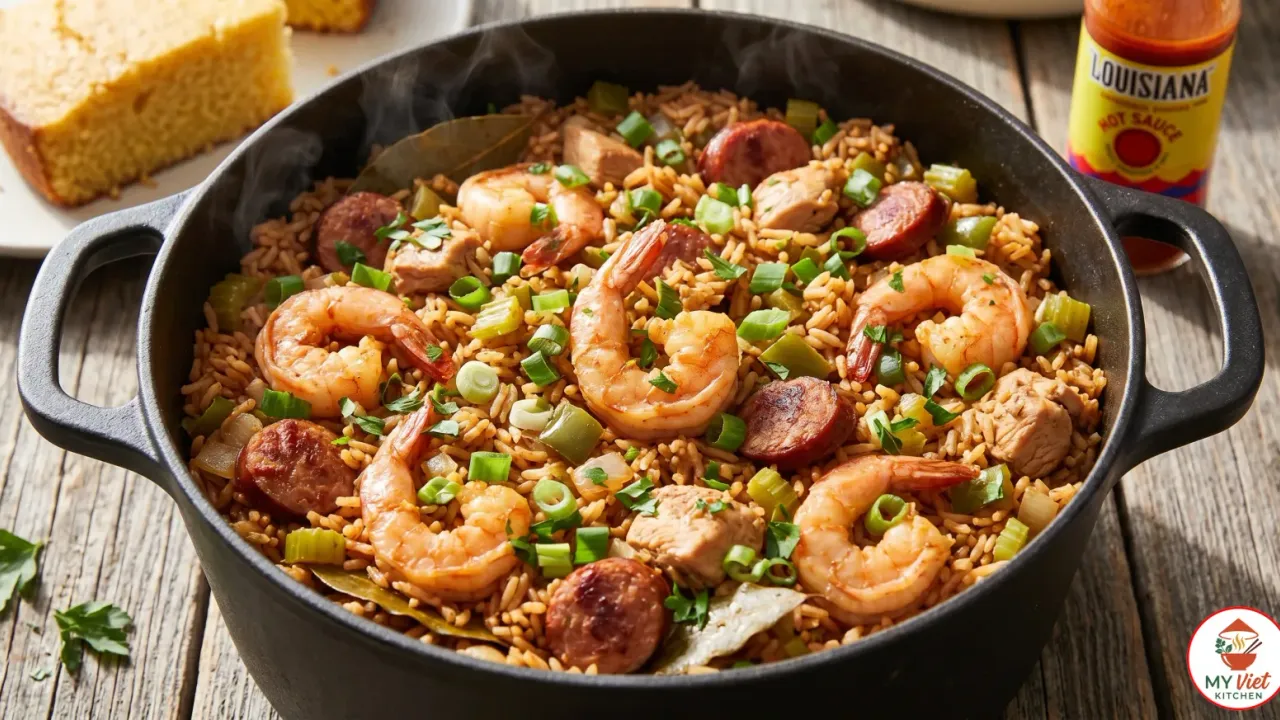
Few dishes capture the soul of Louisiana cooking quite like jambalaya. This one-pot wonder brings together smoky andouille sausage, tender chicken, and plump shrimp in a bed of perfectly seasoned rice. Born from the rich cultural melting pot of New Orleans, jambalaya delivers bold Cajun and Creole flavors that warm you from the inside out. Best of all, this jambalaya recipe comes together in just one hour with minimal cleanup.
Prep Time: 20 minutes | Cook Time: 40 minutes | Servings: 6
Difficulty: Medium | Calories: ~480 per serving
What Makes Jambalaya Special?
Jambalaya stands apart from other rice dishes because of its deep, layered flavor profile. The dish starts with browning the proteins, which creates a rich fond at the bottom of the pot. Then, the holy trinity of onion, celery, and bell pepper builds the aromatic base that defines Louisiana cooking. Finally, the rice absorbs every bit of seasoned broth as it simmers, so each grain carries the full depth of the dish.
Unlike Spanish paella, which inspired it, jambalaya uses bolder spices and smokier meats. The Cajun seasoning blend of paprika, cayenne, garlic, and herbs gives this dish its signature kick. Moreover, the combination of three different proteins creates a complexity that few one-pot meals can match.
Whether you serve it at a casual weeknight dinner or a lively weekend gathering, jambalaya always impresses. It feeds a crowd, reheats beautifully, and tastes even better the next day as the flavors continue to meld together.
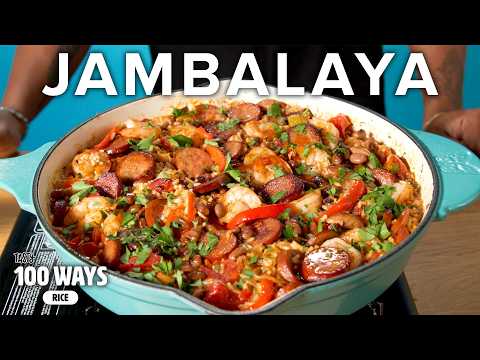
Choosing the Right Sausage
The sausage you pick sets the flavor foundation for your jambalaya. Not all sausages work equally well, so here is what to look for when shopping.
- Andouille Sausage (best choice): This smoky, coarsely ground pork sausage is the traditional pick for jambalaya. It adds a distinctive smoky heat that no other sausage can replicate. Look for it in the specialty meat section.
- Kielbasa: If andouille is unavailable, smoked kielbasa makes a decent substitute. It offers similar smokiness but lacks the spicy Cajun kick. Consider adding extra cayenne to compensate.
- Chorizo: Spanish chorizo brings a paprika-forward flavor that works surprisingly well. However, avoid Mexican chorizo because its loose texture will dissolve into the rice.
Ingredients for Jambalaya
Main Proteins:
- 1 lb andouille sausage, sliced into rounds
- 1 lb boneless skinless chicken thighs, cut into 1-inch pieces
- 1 lb large shrimp, peeled and deveined
The Holy Trinity and Aromatics:
- 1 large onion, diced
- 1 green bell pepper, diced
- 2 celery stalks, diced
- 4 cloves garlic, minced
For the Rice and Broth:
- 1.5 cups long-grain white rice
- 1 can (14.5 oz) diced tomatoes
- 2.5 cups chicken broth
- 2 tablespoons tomato paste
- 2 tablespoons olive oil
- 2 bay leaves
Spices and Garnish:
- 2 teaspoons Cajun seasoning
- 1 teaspoon smoked paprika
- 1 teaspoon dried thyme
- 1 teaspoon dried oregano
- 1/2 teaspoon cayenne pepper
- Salt and black pepper to taste
- 3 green onions, sliced for garnish
- Fresh parsley, chopped for garnish
Pro tip: Toast the rice in the pot for 1 minute before adding liquid. This step coats each grain in fat, which helps it stay separate and fluffy during cooking.
Step-by-Step Instructions
Step 1: Brown the Proteins
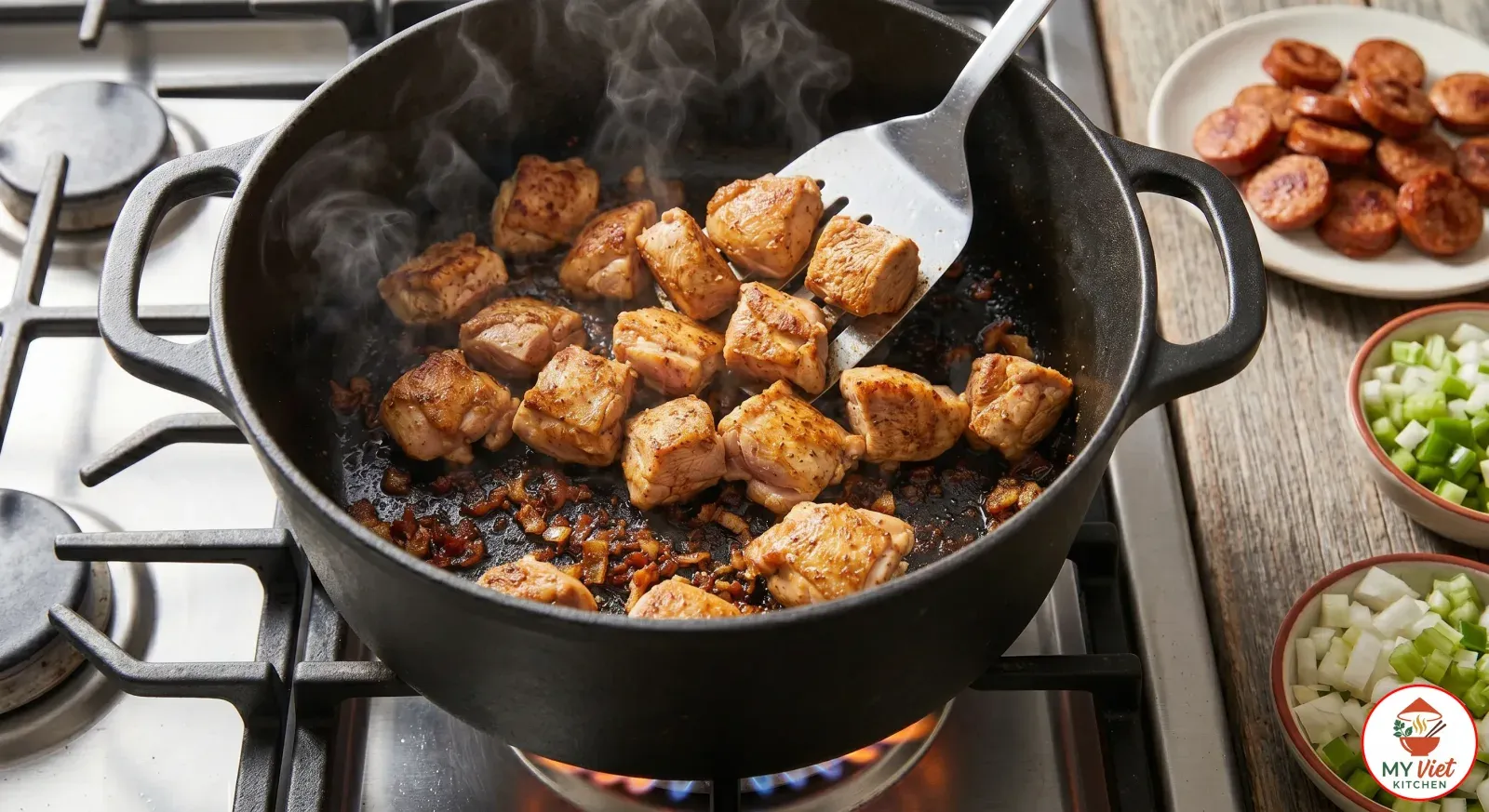
1First, heat 2 tablespoons of olive oil in a large Dutch oven over medium-high heat. Add the andouille sausage slices and cook for 3 minutes until browned on both sides. Then, transfer the sausage to a plate. Next, season the chicken pieces with Cajun seasoning and sear them in the same pot for 4 minutes until golden. Set the chicken aside with the sausage. The browned bits left in the pot add incredible depth to the final dish.
Step 2: Build the Flavor Base
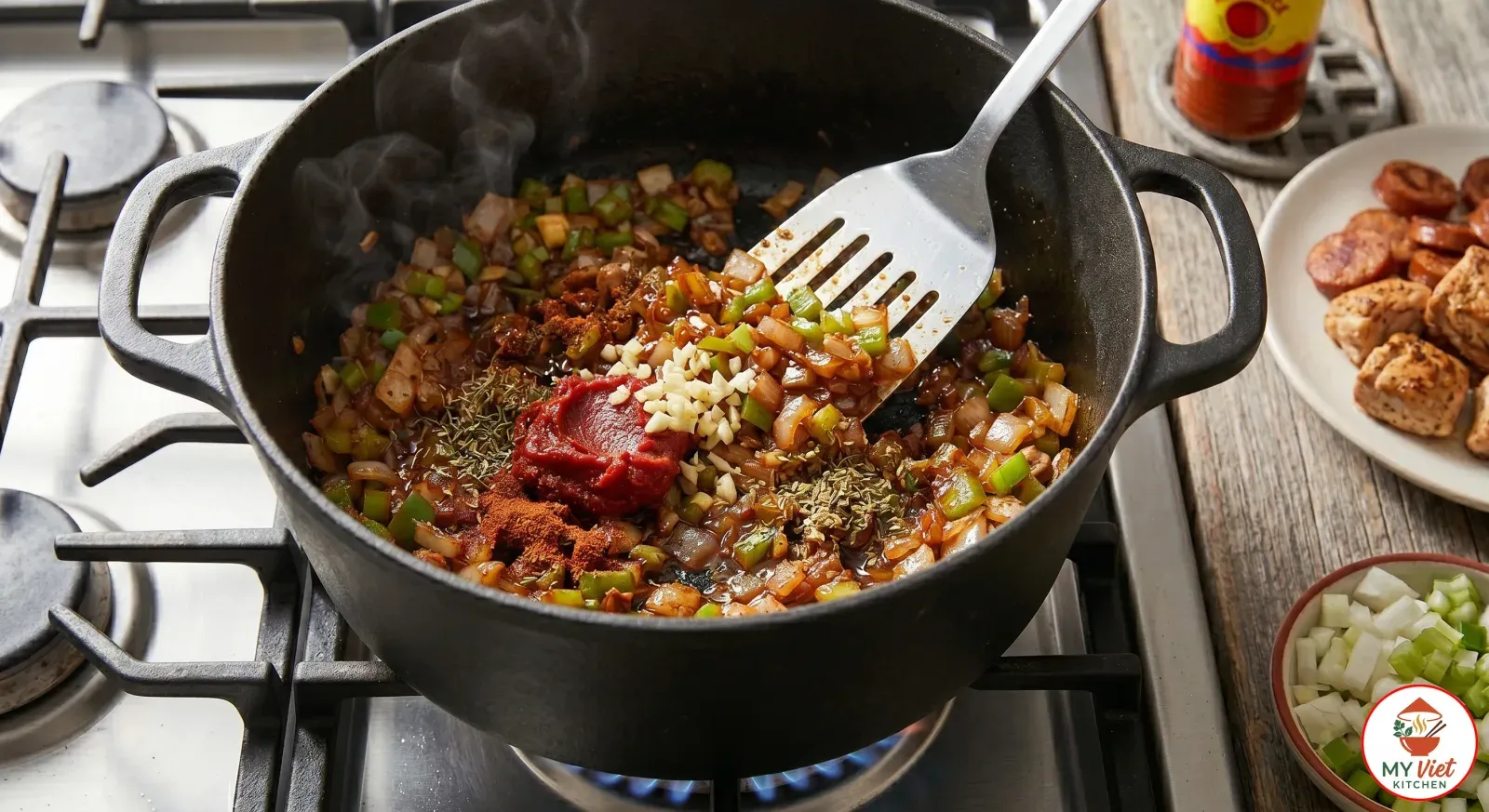
2Now, add the diced onion, bell pepper, and celery to the pot. Cook this holy trinity for 5 minutes until the vegetables soften and turn translucent. Then, stir in the minced garlic, tomato paste, smoked paprika, thyme, oregano, and cayenne. Cook for 1 more minute until the spices become fragrant. The tomato paste caramelizes slightly, which adds a rich sweetness to the base.
Step 3: Add Rice and Liquid
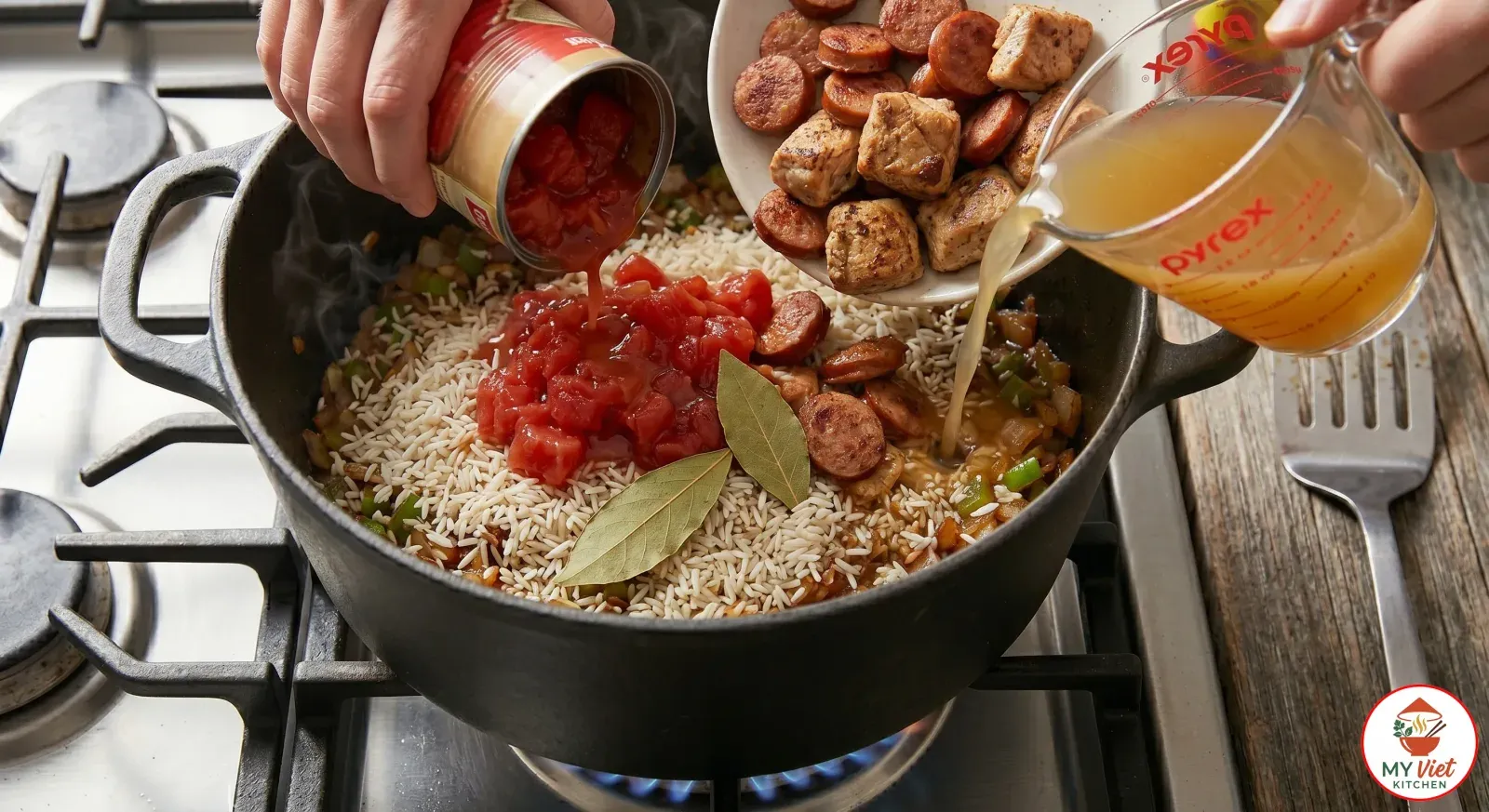
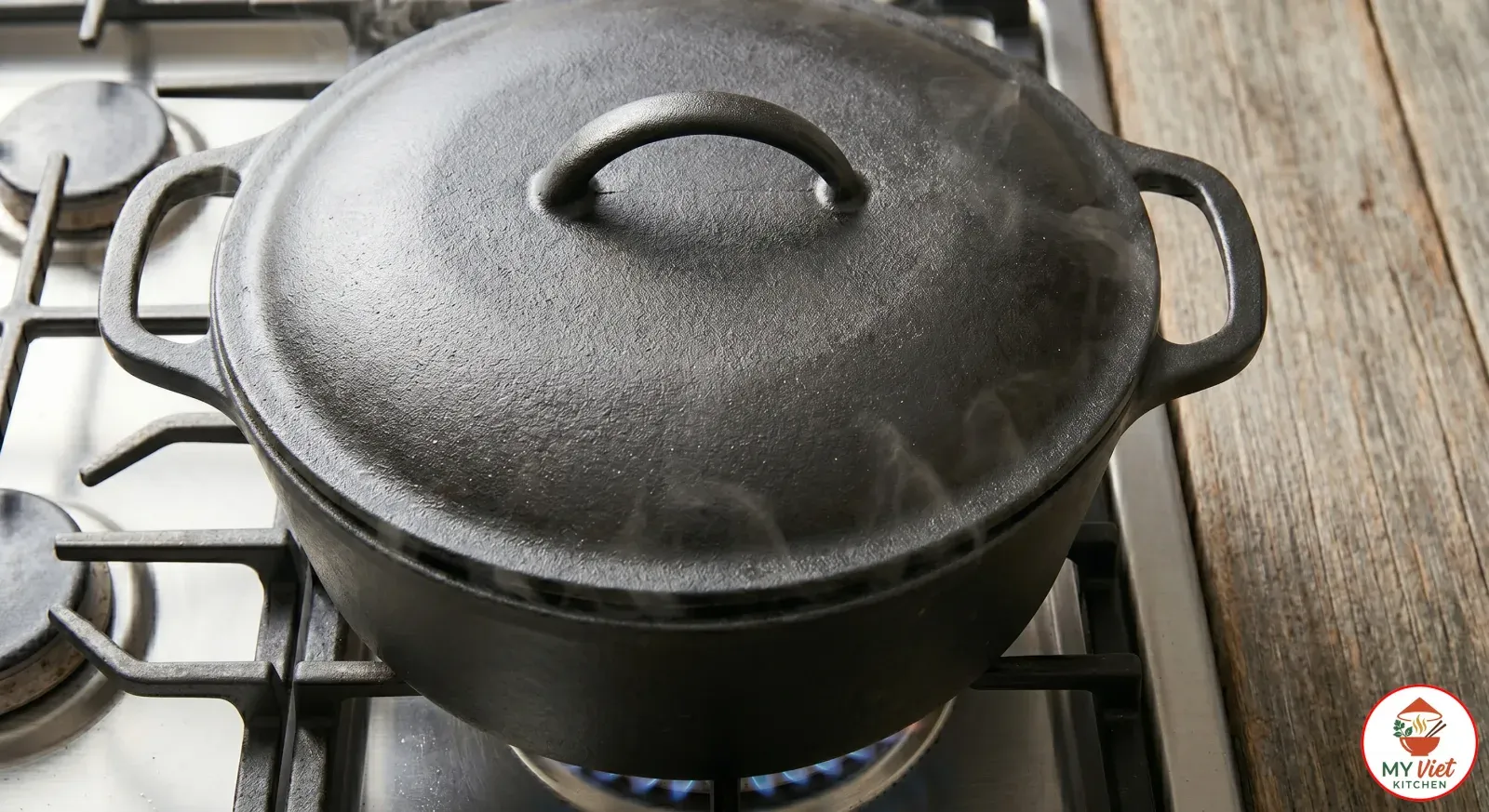
3After that, stir in the rice and toast it for 1 minute. Then, pour in the diced tomatoes with their juices and the chicken broth. Add the bay leaves and return the browned sausage and chicken to the pot. Give everything a good stir, then bring the mixture to a boil. Once boiling, reduce the heat to low and cover the pot tightly. A tight seal traps the steam, which is essential for perfectly cooked rice.
Step 4: Simmer Until Rice Is Tender
4Let the jambalaya simmer on low heat for 25 minutes. Do not lift the lid during this time because steam loss leads to undercooked rice. The rice slowly absorbs the seasoned broth along with all the smoky, savory flavors from the proteins and spices. After 25 minutes, check that the rice is tender and the liquid has been fully absorbed.
Step 5: Add Shrimp and Finish
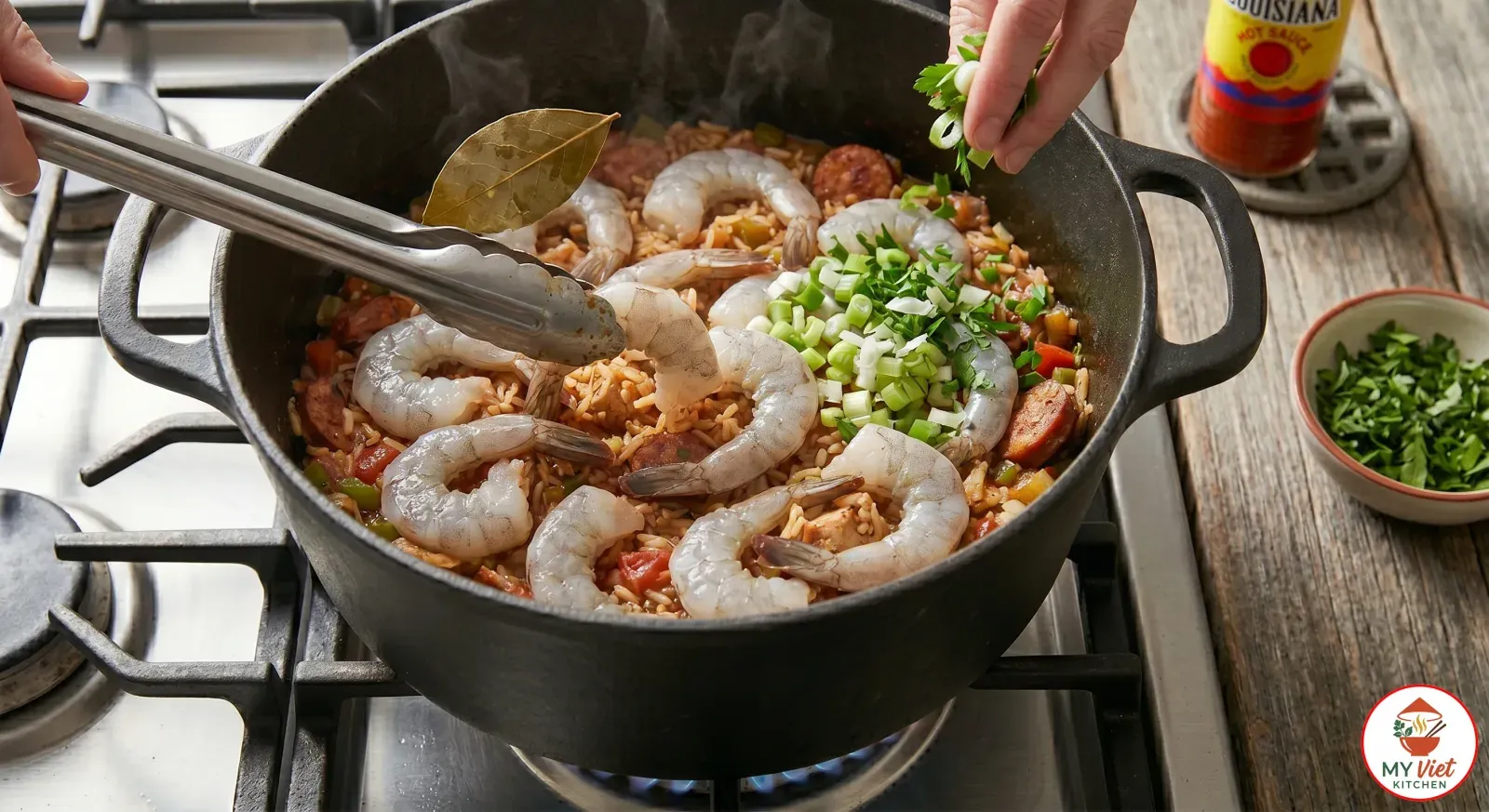
5Finally, nestle the shrimp into the rice in a single layer. Cover the pot again and cook for 5 more minutes until the shrimp turn pink and curl slightly. Then, remove the bay leaves and discard them. Fluff the jambalaya gently with a fork. Garnish with sliced green onions and fresh parsley before serving.
Expert Tips for Perfect Jambalaya
Do Not Stir After Adding the Broth
Once you add the rice and broth, resist the urge to stir. Stirring releases starch from the rice, which turns the dish gummy and sticky. Instead, let the pot do its work undisturbed. The rice will cook evenly as long as you keep the lid sealed tightly.
Use Chicken Thighs Instead of Breasts
Chicken thighs hold up much better during the long simmer than breasts do. They contain more fat and connective tissue, which keeps them moist and tender. Breast meat, on the other hand, often turns dry and stringy in one-pot dishes like jambalaya.
Cajun vs. Creole Jambalaya
Louisiana locals debate this topic passionately. Here is a side-by-side comparison of the two main styles so you can decide which version to try first.
| Feature | Cajun Jambalaya | Creole Jambalaya |
|---|---|---|
| Tomatoes | No tomatoes | Includes tomatoes |
| Color | Brown from browned meat | Red from tomatoes |
| Origin | Rural Louisiana | New Orleans |
| Flavor | Smoky and earthy | Slightly sweeter |
| Protein | Pork, game, sausage | Seafood, chicken, sausage |
Our recipe follows the Creole style because the tomatoes add brightness and moisture. However, you can easily make a Cajun version by simply omitting the diced tomatoes and increasing the broth by half a cup.
Serving Suggestions
Jambalaya is a complete meal on its own, but the right sides take it to the next level. These pairings complement the bold Cajun spices beautifully.
The Perfect Accompaniments:
- Cornbread: Sweet, buttery cornbread soaks up the savory juices and balances the spice.
- Collard Greens: Their earthy, slightly bitter flavor pairs perfectly with the smoky richness of the dish.
- Crusty French Bread: A New Orleans staple that helps you scoop up every last grain of rice.
- Simple Green Salad: A light vinaigrette salad adds freshness and cuts through the richness.
Beverage Pairings:
- Cold Lager: A crisp, cold beer refreshes the palate between spicy bites.
- Sauvignon Blanc: Its bright acidity and citrus notes complement the Cajun spices well.
- Sweet Tea: The classic Southern drink that cools the heat and adds a touch of comfort.
Storage and Reheating
Refrigerator: Store leftover jambalaya in an airtight container for up to 4 days. Interestingly, the flavors actually deepen overnight as the spices continue to meld with the rice.
Freezer: Portion the jambalaya into freezer-safe containers and freeze for up to 3 months. Thaw overnight in the refrigerator before reheating for the best texture.
Reheating: Warm the jambalaya on the stovetop over medium-low heat with a splash of chicken broth. This restores moisture and prevents the rice from drying out. Avoid microwaving because it can make the shrimp rubbery.
Common Mistakes to Avoid
1. Using the Wrong Rice
Short-grain or jasmine rice releases too much starch, which turns your jambalaya into a sticky mess. Always use long-grain white rice or converted rice. These varieties hold their shape and stay fluffy throughout the cooking process.
2. Overcrowding the Pot When Browning
If you add all the meat at once, the temperature drops and the proteins steam instead of sear. Brown the sausage and chicken in separate batches. This ensures a proper Maillard reaction, which builds the flavor foundation for the entire dish.
3. Adding Shrimp Too Early
Shrimp cook in just a few minutes. If you add them at the beginning, they will turn tough and rubbery by the time the rice finishes. Always add shrimp during the last 5 minutes of cooking for the best texture.
Frequently Asked Questions
What is the difference between Cajun and Creole jambalaya?
Cajun jambalaya skips the tomatoes and gets its brown color from browned meat. Creole jambalaya, also called red jambalaya, includes tomatoes for a slightly sweeter and brighter flavor. Both styles rely on the holy trinity of onion, celery, and bell pepper as the aromatic base.
Can I make jambalaya without shrimp?
Absolutely. You can make jambalaya with just chicken and sausage for an equally delicious result. Simply increase the chicken to 1.5 lbs to keep the dish hearty. Alternatively, try crawfish tails or diced smoked ham as a substitute.
What kind of rice works best for jambalaya?
Long-grain white rice produces the best results because it stays fluffy and absorbs the broth evenly. Converted or parboiled rice also works well. Avoid short-grain, sushi, or sticky rice varieties because they release too much starch.
How do I prevent mushy jambalaya rice?
The key is to use the correct rice-to-liquid ratio and avoid stirring once the broth goes in. Keep the lid on tight during the simmer. After cooking, let the pot rest for 5 minutes off the heat before fluffing with a fork.
Can you freeze jambalaya?
Yes, jambalaya freezes beautifully for up to 3 months. Store portions in airtight containers and thaw overnight in the fridge. Reheat on the stovetop with a splash of broth to bring back the original moisture and flavor.
Variations and Adaptations
Vegetarian Jambalaya:
Replace the proteins with black beans, kidney beans, and diced zucchini. Use vegetable broth instead of chicken broth. Then, add smoked paprika generously to mimic the smoky depth of andouille sausage. This version is hearty and packed with flavor.
Seafood Jambalaya:
Skip the chicken and load up on seafood instead. Use shrimp, crawfish tails, crab meat, and oysters for a coastal Louisiana feast. Add the seafood during the last 5 to 8 minutes of cooking since each type cooks quickly.
Slow Cooker Jambalaya:
Brown the proteins and saute the vegetables on the stovetop first. Then, transfer everything to a slow cooker with the rice and broth. Cook on low for 3 to 4 hours. Add the shrimp during the last 20 minutes so they stay tender.
The Cultural Significance of Jambalaya
Jambalaya tells the story of Louisiana itself. The dish blends French, Spanish, West African, and Native American cooking traditions into one harmonious pot. Spanish settlers brought their love of rice dishes from paella, while French Canadians contributed their expertise in bold seasoning. West African cooking techniques and Native American ingredients like filfe powder further shaped the dish into what it is today.
In Louisiana, jambalaya is more than just a meal. Families gather around massive cast-iron pots at festivals, church suppers, and crawfish boils to share this beloved dish. The annual Jambalaya Festival in Gonzales, Louisiana, draws thousands of visitors who compete to cook the best batch. This tradition celebrates community, heritage, and the simple joy of sharing good food together.
Conclusion
Making authentic jambalaya at home is easier than you might expect. With the right sausage, proper browning technique, and a patient simmer, you can create a dish that rivals any Louisiana kitchen. Remember these three keys: brown your proteins well, do not stir after adding the broth, and add the shrimp last.
Now grab your Dutch oven and bring a taste of the bayou to your table tonight. For more hearty one-pot recipes, explore our full collection at My Viet Kitchen. If you enjoy bold Southern flavors, you should also try our BBQ ribs recipe for your next weekend cookout.