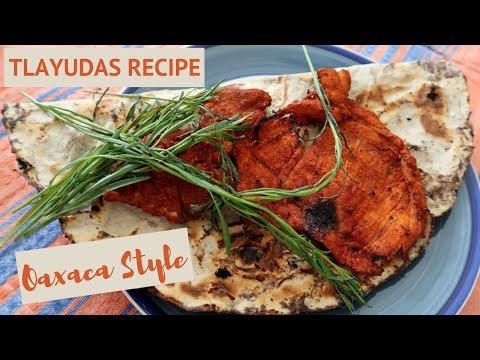
Tlayuda is the undisputed queen of Oaxacan street food, and one bite reveals exactly why. This oversized, crispy tortilla loaded with smoky refried black beans, stretchy quesillo cheese, and vibrant fresh toppings has captivated food lovers from the bustling markets of Oaxaca City to kitchens around the world. Often called the “Mexican pizza,” a tlayuda delivers a flavor experience that is entirely its own. This step-by-step tlayuda recipe brings authentic Oaxacan flavors to your home kitchen, even if you have never visited southern Mexico.
Prep Time: 25 minutes | Cook Time: 20 minutes | Servings: 4
Difficulty: Easy | Calories: ~480 per serving
What Makes Tlayuda Special?
A tlayuda is not simply a large taco or an oversized tostada. It is its own thing entirely, rooted in centuries of Zapotec culture in the Oaxaca Valley. The base is a large corn tortilla, typically 12 to 14 inches wide, that has been dried over charcoal. This drying gives the tortilla a unique feel: chewy and pliable in the center, yet crispy and toasted around the edges.
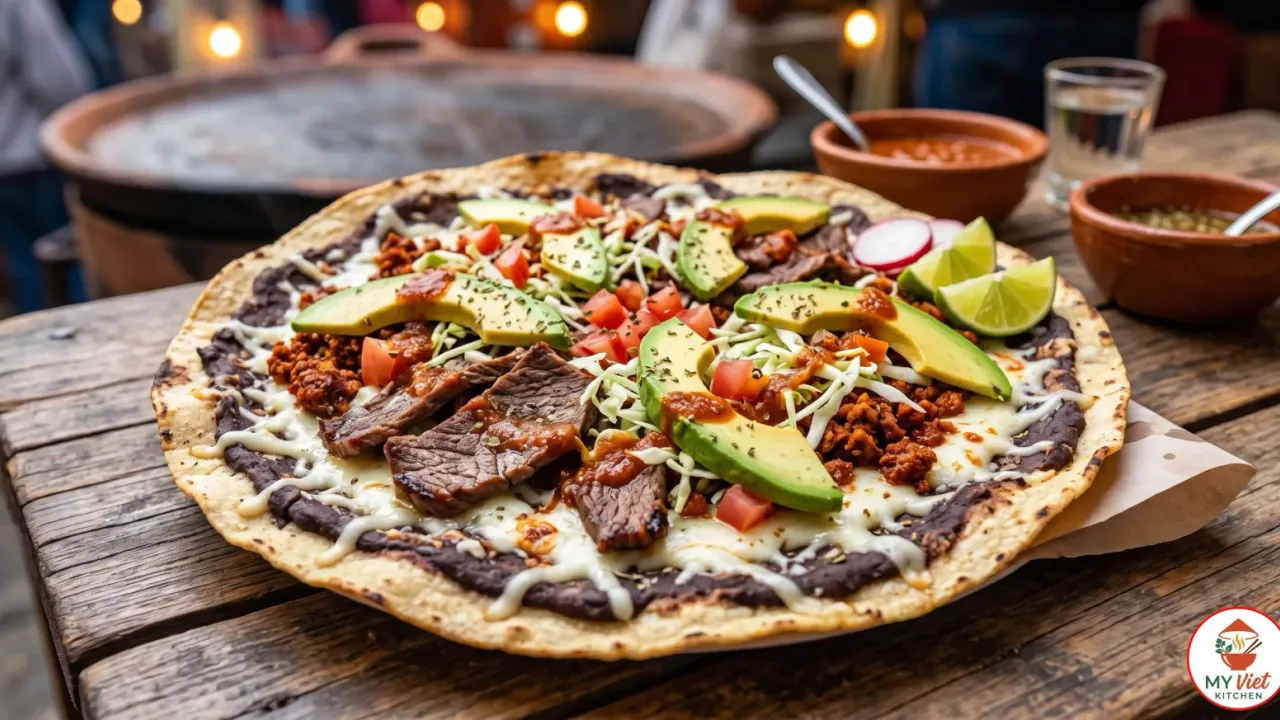
What truly sets the tlayuda apart is its layering. First, the tortilla gets a brush of asiento, the smoky unrefined pork lard that gives it a rich base note. Then comes a thick spread of creamy refried black beans. After that, quesillo, the famous Oaxacan string cheese, is pulled into thin ribbons and laid across the top. Finally, the whole thing cooks on a hot comal until the bottom crisps and the cheese melts into a gooey, stretchy layer.
The fresh toppings go on last: crisp lettuce, juicy diced tomatoes, creamy avocado, and your pick of protein. In Oaxacan markets, you will find tlayudas topped with tasajo (dried beef), cecina (cured pork), chorizo, or chapulines (toasted grasshoppers). This contrast between the hot, crispy base and the cool, fresh toppings is what makes every bite so good.
Choosing the Right Tortilla for Tlayuda
The tortilla is the base of every great tlayuda. The right one makes all the difference. Here are your best options for making this Oaxacan street food at home.
- Large corn tortillas (best choice): Traditional tlayudas use oversized corn tortillas made from nixtamalized masa. They are partly dried to create a firm, chewy texture that holds up under heavy toppings. Look for them at Mexican grocery stores or order online.
- Standard corn tortillas (workable substitute): If you cannot find large tortillas, overlap two standard-sized corn tortillas on the comal. The result is smaller, but the corn flavor stays authentic. Toast them a bit longer to achieve the signature crispness.
- Large flour tortillas (not traditional): Flour tortillas give a softer, chewier result. They work in a pinch for a quick weeknight meal, but they lack the earthy corn flavor and rustic crunch that define a true tlayuda.
Ingredients for Tlayuda
Tortilla Base:
- 4 large corn tortillas (12 to 14 inches), or 8 standard corn tortillas
- 1/4 cup asiento (unrefined pork lard) or vegetable oil
Bean and Cheese Layer:
- 2 cups refried black beans, warm
- 2 cups quesillo (Oaxacan cheese), pulled into thin strings
Fresh Toppings:
- 2 cups shredded lettuce or cabbage
- 2 large ripe tomatoes, diced
- 1 ripe avocado, sliced
- 1/4 cup Oaxacan red salsa or salsa roja
- 1 tablespoon dried Mexican oregano
- Lime wedges for serving
- Radish slices for garnish
- Salt to taste
Protein Options (Choose One or Combine):
- 1/2 cup tasajo (dried beef), grilled and thinly sliced
- 1/2 cup chorizo, cooked and crumbled
- 1/2 cup cecina (cured pork), grilled and sliced
- 1/2 cup grilled chicken breast, shredded
Pro tip: The secret to a truly authentic tlayuda is the asiento. This unrefined pork lard has a deep, smoky flavor that cooking oil simply cannot match. If you cannot find asiento at a Mexican market, render your own. Slowly cook pork fat trimmings over low heat until the dark, rich sediment settles at the bottom of the pot.
Step-by-Step Instructions
Step 1: Prepare the Tortilla Base
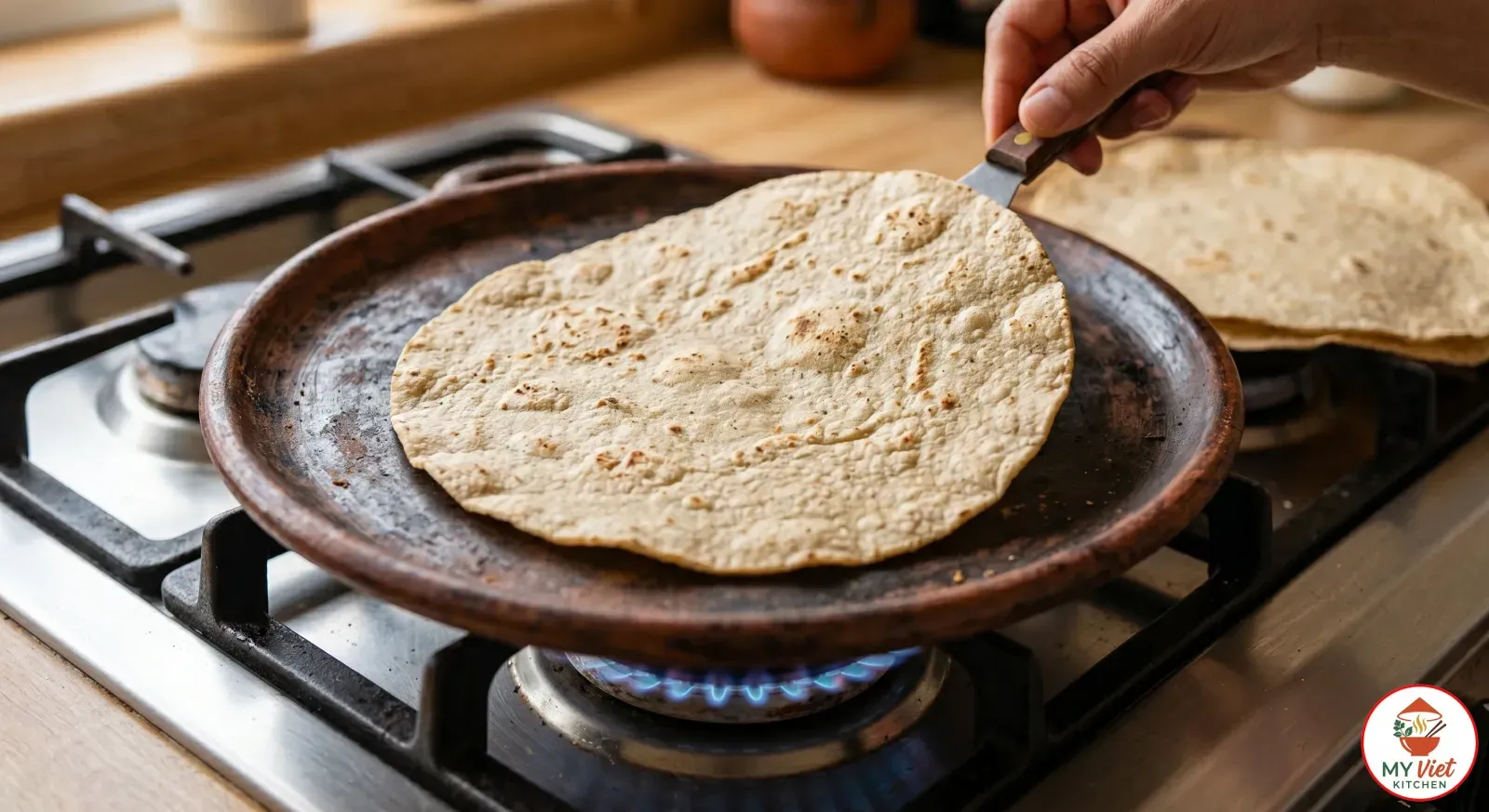
1 Start by warming your large corn tortillas on a dry comal or griddle over medium heat. Give them about 30 seconds per side. This makes them pliable and easy to handle. If you use store-bought tortillas, this step also removes extra moisture and improves the final texture. For the best result, let the tortillas dry near a heat source for 10 minutes before you start building. This partial drying mimics the Oaxacan method and helps the base stay crispy.
Step 2: Spread the Asiento and Beans
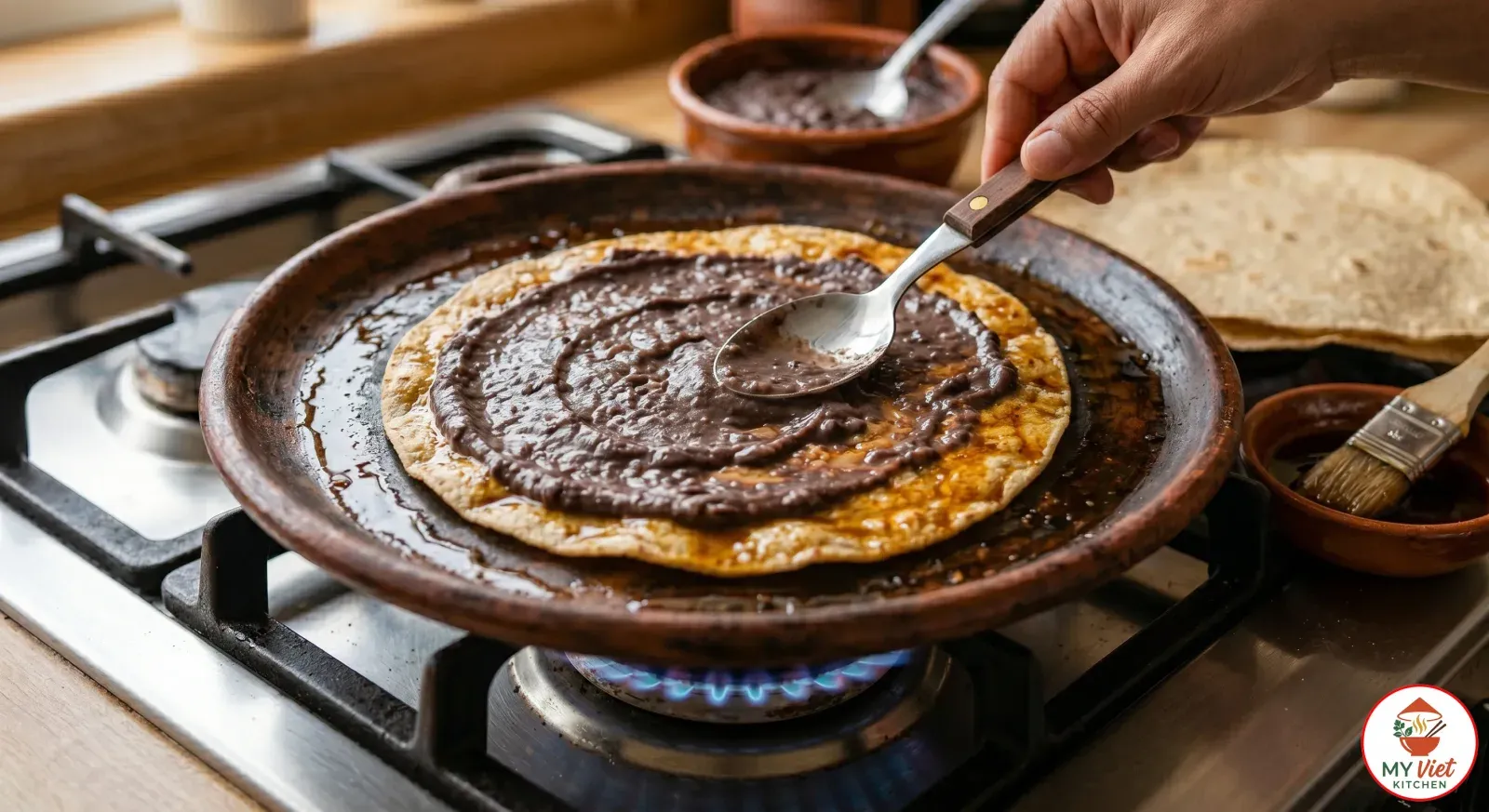
2 Brush one side of the tortilla with a thin layer of asiento or pork lard. Use the back of a spoon to spread it to the edges. Then spoon warm refried black beans over the surface. Spread them evenly, leaving a half-inch border. The bean layer should be thick enough to feel creamy, but not so heavy that it weighs down the tortilla. In Oaxacan markets, vendors spread the beans in one swift motion.
Step 3: Add the Quesillo Cheese
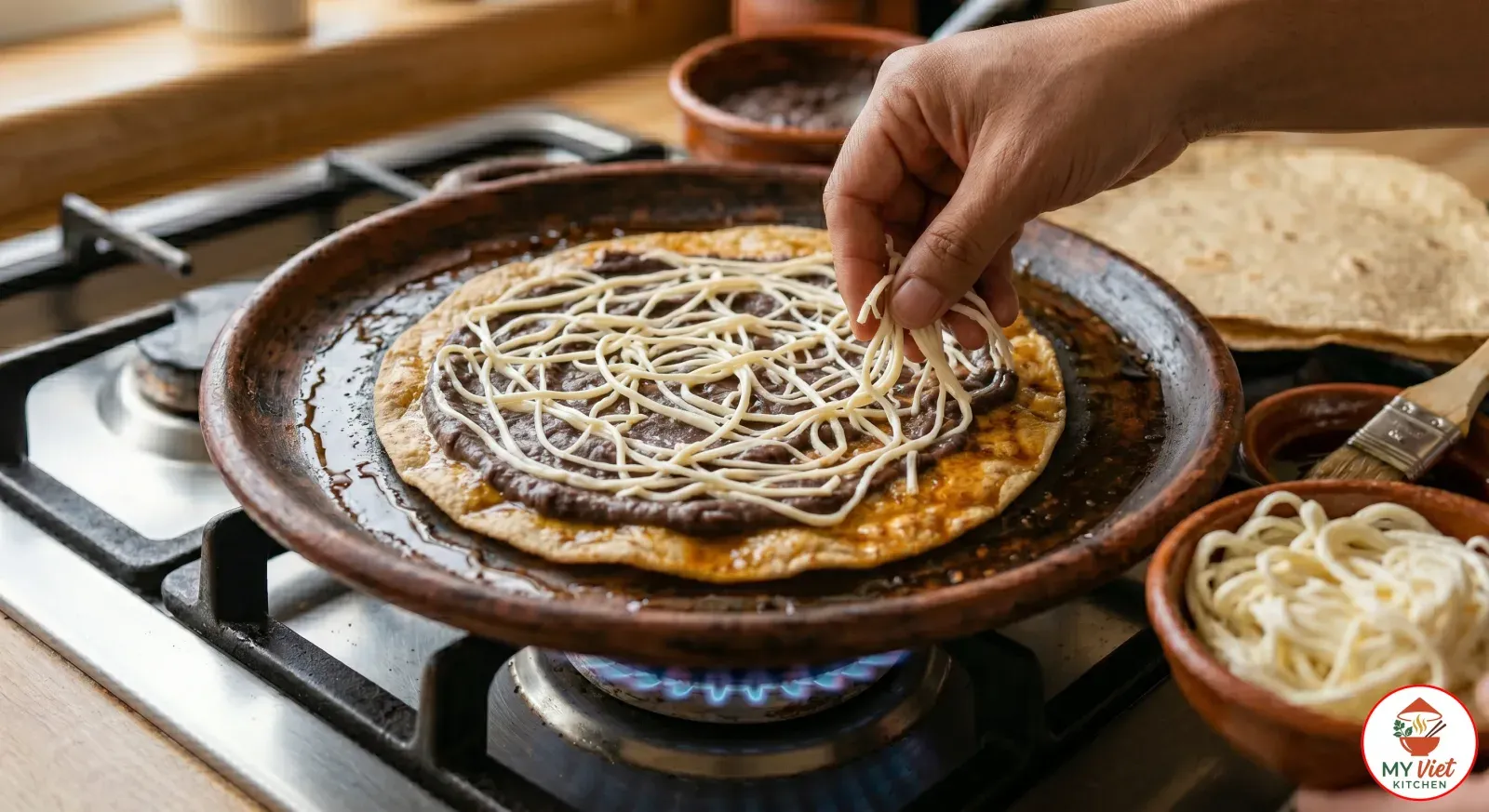
3 Pull the quesillo into thin strings or shred it by hand. Spread the cheese evenly over the bean layer. Quesillo is a semi-soft string cheese that melts well. It creates the stretchy pull that makes every slice of tlayuda so good. If you cannot find quesillo, use mozzarella instead. It has a similar mild flavor and melts the same way. Be generous with the cheese, since it binds the toppings to the base.
Step 4: Cook the Tlayuda on the Comal
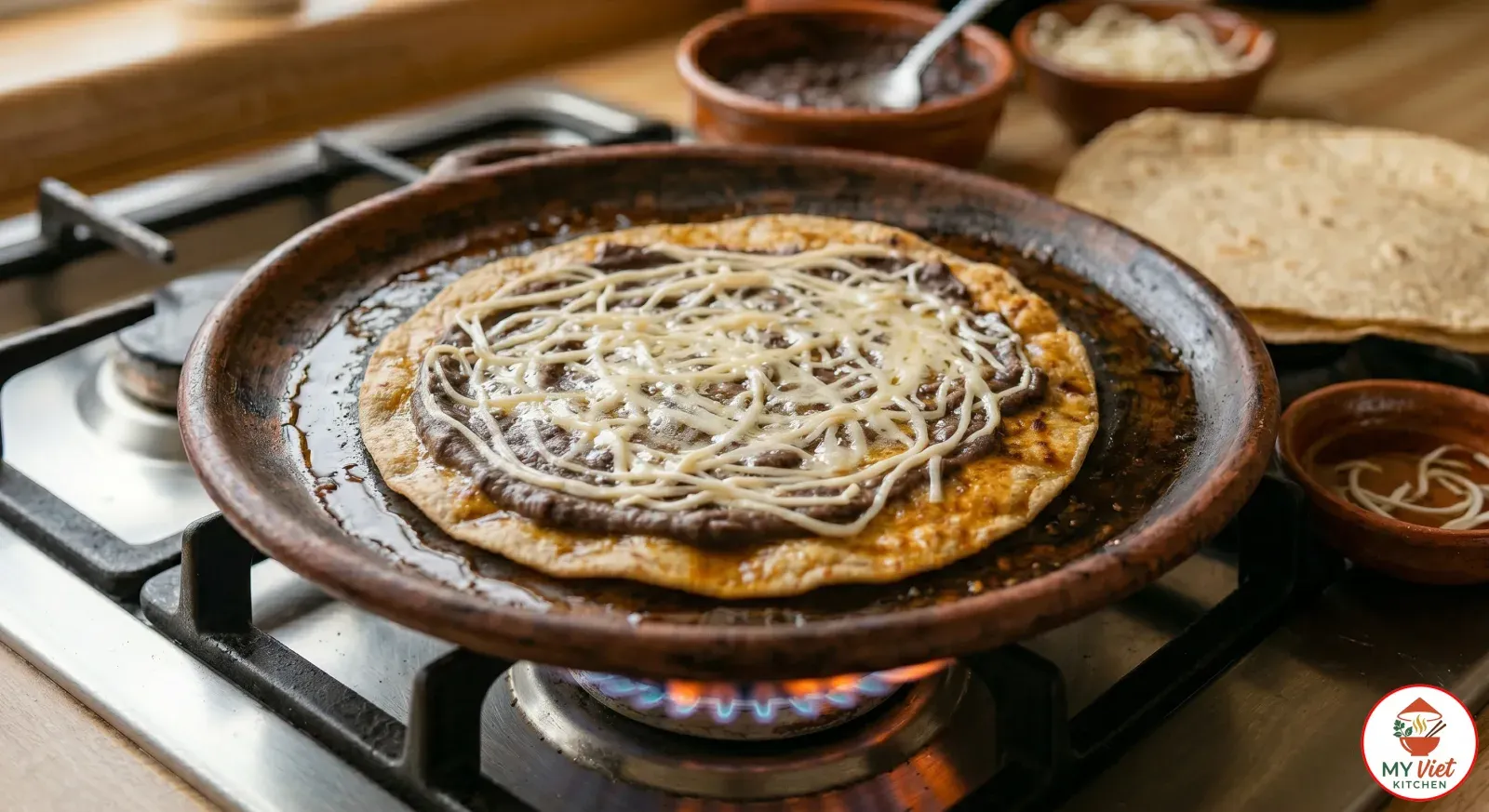
4 Place the assembled tlayuda on a hot comal, cast-iron skillet, or large griddle over medium heat. Cook for 4 to 6 minutes without moving it. The bottom should turn golden brown and crispy while the cheese melts into the beans. You will hear a gentle sizzle and see the edges start to curl up.
For extra smokiness, lift the tlayuda with a spatula and hold it over an open gas flame for 15 to 30 seconds. This charring trick is how Oaxacan street vendors get that smoky aroma. However, watch closely so you do not burn the tortilla.
Step 5: Add the Fresh Toppings
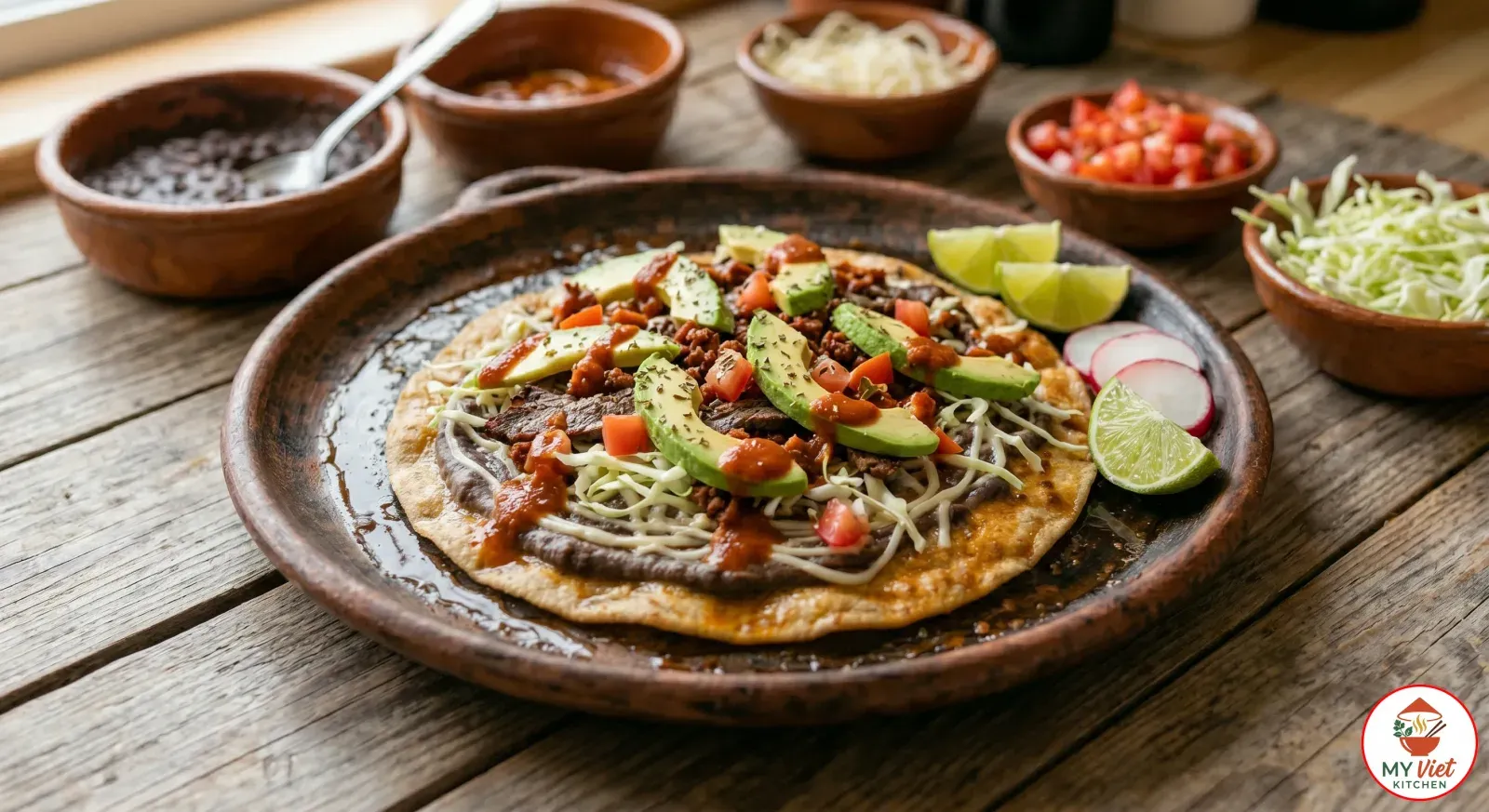
5 Remove the cooked tlayuda from the heat. Move it to a cutting board or plate. Now pile on the fresh toppings: shredded lettuce, diced tomatoes, and avocado slices. Add your cooked protein on top. Then drizzle Oaxacan red salsa across the surface. Finally, sprinkle dried Mexican oregano and squeeze fresh lime juice over it all. The contrast between the hot, crispy base and the cool, fresh toppings is what makes the tlayuda so special.
Step 6: Fold and Serve
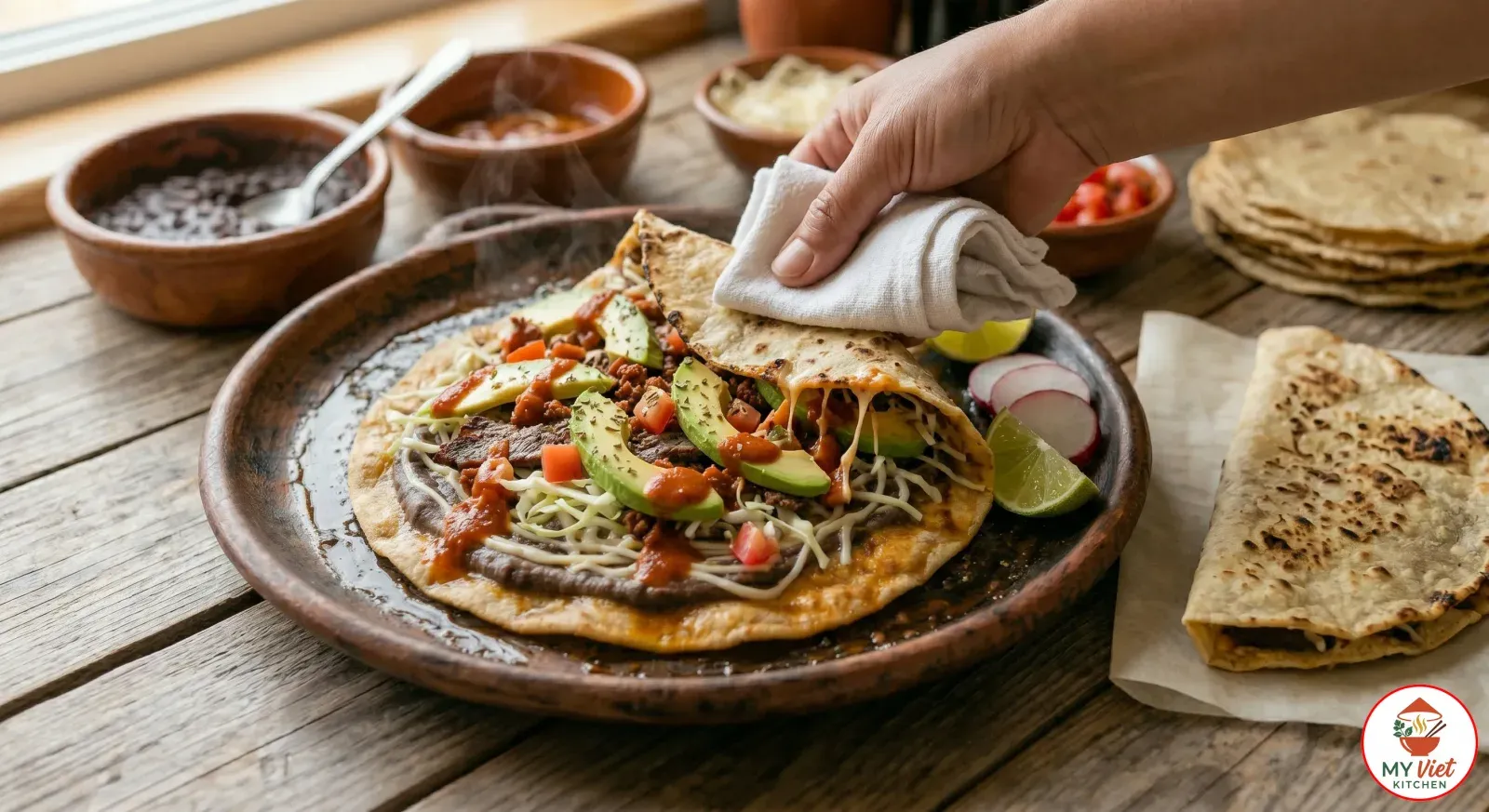
6 You have two ways to serve it. Fold the tlayuda in half like a giant taco, which is how most Oaxacan vendors do it. Or leave it open and cut it into wedges like a pizza. Both ways work great. Serve right away with extra lime wedges and radish slices on the side. A tlayuda is best when the tortilla is still hot and the cheese is stretchy.
Expert Tips for Perfect Tlayuda Results
Use a Properly Heated Comal
A hot comal is key to a crispy bottom. Preheat your comal or cast-iron skillet for at least 5 minutes over medium heat before you place the tlayuda on it. If the surface is not hot enough, the tortilla will steam instead of crisp. You will end up with a soggy base. In Oaxaca, vendors use large clay comales that hold heat evenly.
Warm the Beans Before Spreading
Cold refried beans are thick and hard to spread. They can tear the tortilla and leave an uneven layer. Instead, warm the beans in a small pot with a splash of water or lard until smooth. This simple step ensures even coverage and helps the beans stick to the tortilla.
Add Fresh Toppings After Cooking
Never cook the lettuce, tomatoes, or avocado on the tlayuda. These fresh toppings must go on after the base comes off the heat. The contrast between the hot, crispy tortilla and the cool, fresh veggies is what makes a tlayuda special. Cooking the toppings would ruin their texture and defeat the purpose of this Oaxacan classic.
Tlayuda vs. Other Mexican Dishes: A Comparison
Many people confuse the tlayuda with tostadas or quesadillas. While they share some items, the differences in prep and texture are clear. Here is how a tlayuda stacks up against similar dishes.
| Feature | Tlayuda | Tostada | Quesadilla |
|---|---|---|---|
| Tortilla Size | 12 to 14 inches | 6 inches | 6 to 8 inches |
| Cooking Method | Toasted on comal | Deep-fried | Griddled or fried |
| Texture | Crispy edges, chewy center | Completely crispy | Soft and melty |
| Base Layer | Asiento and refried beans | Refried beans | Cheese only |
| Origin | Oaxaca | Central Mexico | Various regions |
| Serving Style | Folded or open-faced | Open-faced | Folded closed |
Serving Suggestions
In Oaxaca, tlayudas are a late-night street food or a hearty main course. Vendors fold them in half and wrap them in paper for eating on the go. At home, you can serve them as a fun centerpiece for a taco night or a laid-back weekend meal.
Classic Accompaniments:
- Oaxacan red salsa: A smoky salsa made with dried pasilla peppers and roasted tomatoes that adds a deep, complex heat.
- Fresh guacamole: Creamy avocado dip that adds richness alongside the crispy tortilla base.
- Pickled red onions: Their tangy crunch cuts through the richness of the beans and cheese beautifully.
- Black bean soup: A warm bowl of Oaxacan black bean soup makes a comforting pairing for a complete meal.
Beverage Pairings:
- Mezcal: Oaxaca is the birthplace of mezcal, and its smoky flavor is a natural match for the smoky tlayuda base.
- Agua de horchata: This creamy, cinnamon-spiced rice drink provides a cooling and refreshing contrast to the savory toppings.
- Mexican lager: A cold Modelo Especial or Pacifico with a lime wedge is always a crowd-pleasing companion.
- Tejate: An ancient Oaxacan beverage made from cacao, mamey seed, and corn. It is earthy, frothy, and pairs wonderfully with street food.
Storage and Reheating
Refrigerator: Store leftover tlayuda components separately for up to 3 days. Keep the cooked tortilla base, beans, cheese, and fresh toppings in individual airtight containers. Assembled tlayudas do not store well because the toppings make the tortilla soggy.
Freezer: The refried beans freeze beautifully for up to 3 months. Uncooked tortillas can also be frozen with parchment paper between each one. Thaw both in the refrigerator overnight before assembling a fresh tlayuda.
Reheating: Reheat the tortilla base on a hot comal or in a 400-degree oven for 3 to 4 minutes until crispy. Then add fresh toppings right before serving. Never microwave a tlayuda, because the tortilla will turn rubbery instead of crispy.
Common Mistakes to Avoid
1. Overloading the Tortilla
The most common mistake is piling too many toppings onto the tlayuda. Too much weight makes the tortilla hard to fold. It may fall apart when you try to eat it. Keep the toppings balanced and spread them evenly. The tortilla should hold everything without bending or breaking.
2. Skipping the Asiento
Some cooks skip the asiento to save time or cut calories. However, this layer adds the smoky richness that defines an authentic tlayuda. Without it, the dish tastes flat. Even a thin brush of regular lard or oil is much better than a dry tortilla.
3. Using Cold Ingredients
Cold beans and cold cheese do not melt or spread well on the tortilla. Always warm the beans until smooth and let the cheese reach room temp before you start. Cold items lead to uneven layers and poor melting. As a result, the toppings will not stick to the base.
4. Cooking on Low Heat
A tlayuda needs medium to medium-high heat for a crispy base. Low heat dries out the tortilla without making a golden-brown crust. The comal should be hot enough that you hear a sizzle the moment the tortilla hits the surface.
Frequently Asked Questions
What is a tlayuda?
A tlayuda is a large, crispy tortilla from Oaxaca, Mexico. It is spread with asiento, refried black beans, and quesillo cheese, then cooked on a comal until the base crisps and the cheese melts. Fresh toppings like lettuce, tomato, avocado, and grilled meat go on last. While some people call it a “Mexican pizza,” the flavors and textures are distinctly Oaxacan.
What is the difference between a tlayuda and a tostada?
The main differences are size and preparation. A tlayuda uses a 12 to 14-inch tortilla that is toasted on a comal, while a tostada uses a smaller 6-inch tortilla that is deep-fried until completely rigid. Additionally, tlayudas always include asiento and beans as a base, and they can be folded in half. Tostadas are always served flat and open-faced.
Can I make tlayuda with flour tortillas?
You can use large flour tortillas as a substitute, but the result will be softer and less authentic. Corn tortillas provide the earthy flavor and rustic crispness that define a traditional tlayuda. If you use flour tortillas, cook them a bit longer on the comal to achieve more crispness.
What cheese is used on a tlayuda?
Traditional tlayuda uses quesillo, also known as Oaxacan cheese. It is a mild, semi-soft string cheese with excellent melting properties. Mozzarella is the closest widely available substitute because of its similar stretch and mild flavor. Monterey Jack or Chihuahua cheese also work well as alternatives.
What is asiento and can I substitute it?
Asiento is unrefined pork lard, specifically the dark residue at the bottom of the rendering pot. It has a deep, smoky taste that is central to the authentic tlayuda experience. Regular pork lard or manteca works as a substitute. For a lighter option, use vegetable oil, although the smoky flavor will be noticeably absent.
Is tlayuda gluten-free?
Traditional tlayuda made with corn tortillas is naturally gluten-free. Corn masa does not contain gluten. However, check the labels on store-bought tortillas, since some brands add wheat flour. Always use certified corn tortillas if you need a strictly gluten-free version.
Variations and Adaptations
Vegetarian Tlayuda:
Skip the meat and load up on veggies. Add grilled zucchini, roasted poblano peppers, sauteed mushrooms, and extra avocado. Use vegetable oil instead of asiento to keep it fully vegetarian. The mix of creamy beans, melted cheese, and smoky grilled veggies makes a meatless tlayuda that is just as good as the original.
Chapulines Tlayuda (Grasshopper Topping):
For the bold eater, top your tlayuda with chapulines, the famous toasted grasshoppers of Oaxaca. They add a nutty, tangy crunch that locals love. These insects are seasoned with garlic, lime, and chile. They pair well with the creamy bean base. You can find them at Mexican food stores or order them online.
Breakfast Tlayuda:
Turn the tlayuda into a hearty breakfast. Top it with scrambled eggs, crumbled chorizo, and a drizzle of salsa verde. Add queso fresco on top. This morning version is popular in Oaxacan homes. It gives you a protein-packed start to the day that keeps you full for hours.
Oven-Baked Tlayuda:
No comal? Bake the tlayuda in a 425-degree oven for 8 to 10 minutes. Place it right on the oven rack or on a hot baking sheet for the crispiest result. This method works great when you need to make several tlayudas at once for a group.
The Cultural Significance of Tlayuda
The tlayuda is woven deep into the culture of Oaxaca. It is more than street food. It is a living part of Zapotec heritage that has lasted for centuries. The large tortilla reflects the corn-based food ways of Mesoamerica, where maize has held sacred meaning since ancient times. In Oaxacan towns, making tlayuda tortillas by hand is an art passed down through generations of women.
In the Mercado 20 de Noviembre and other markets in Oaxaca City, tlayuda vendors are iconic. They tend charcoal grills from late afternoon into the night, serving locals and tourists alike. The stalls are spots where strangers share tables and stories over this communal food. For many Oaxacans, the smell of a tlayuda on the grill is the smell of home.
In recent years, the tlayuda has gained global fame as food shows and travel media have put Oaxacan cuisine in the spotlight. Despite this attention, the dish stays true to its roots. Unlike many foods that change as they spread, the tlayuda is still made in Oaxaca the same way it has been for generations. That staying power is what makes it so special.
The rich food traditions of the Americas include countless treasures. However, few dishes capture the spirit of a single region as powerfully as the tlayuda captures the soul of Oaxaca.
Conclusion
Making an authentic tlayuda at home is simpler than you might think. Three things matter most: a hot comal for a crispy base, warm beans spread evenly for a creamy layer, and fresh toppings added only after cooking. Follow this tlayuda recipe step by step, and you will nail the essence of Oaxacan street food. Whether you fold it like a giant taco or cut it into wedges like a pizza, every bite brings that perfect mix of crispy, creamy, smoky, and fresh.
Ready to explore more street food from around the world? Browse our collection of dishes from the Americas, including empanadas, arepas, and tacos al pastor. Also, discover our street food recipes from around the globe for more inspiration.