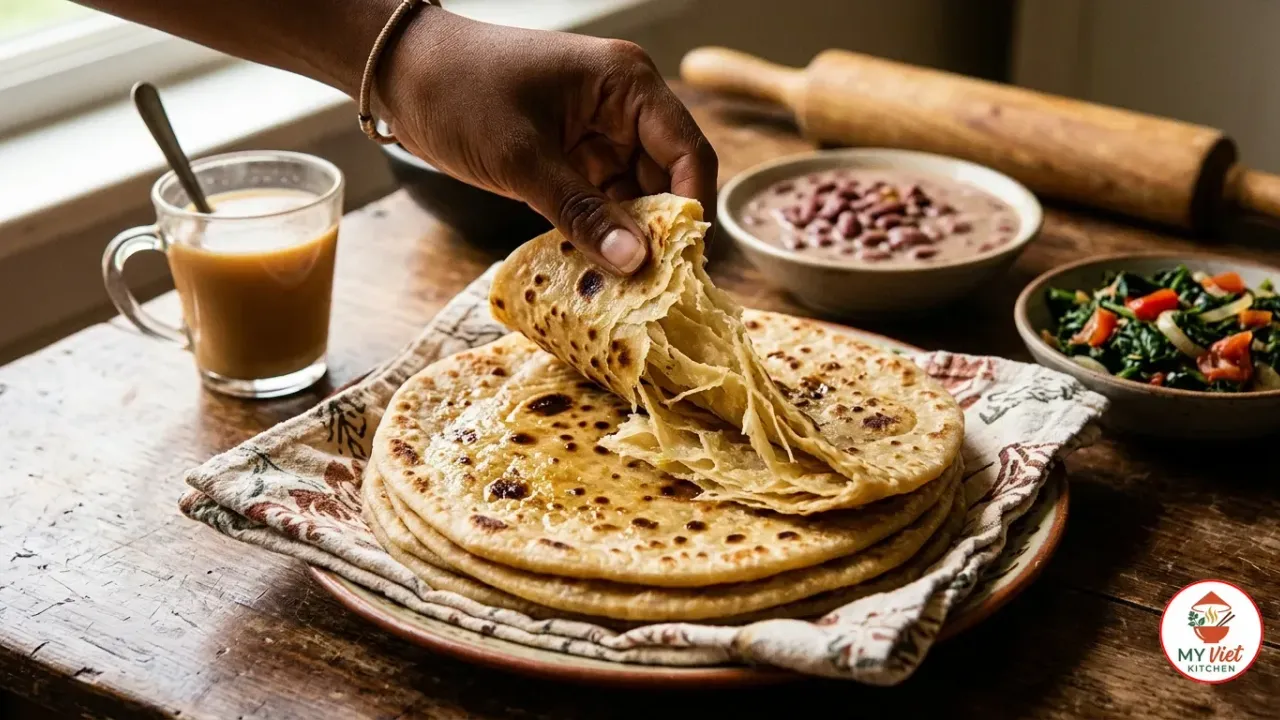
East African chapati is a soft, flaky layered flatbread that has become one of the most beloved staples across Kenya, Tanzania, and Uganda. This east african chapati recipe shows you how to make perfectly tender, golden chapati at home using just flour, water, oil, and a simple spiral-folding technique that creates dozens of paper-thin layers in every piece. Unlike its Indian cousin, East African chapati is richer, more buttery, and tears apart in beautiful, flaky sheets that are perfect for scooping up stews, curries, and grilled meats.
Prep Time: 30 minutes | Cook Time: 25 minutes | Servings: 8 chapatis
Difficulty: Easy | Calories: ~180 per chapati
What Makes This East African Chapati Recipe Special?
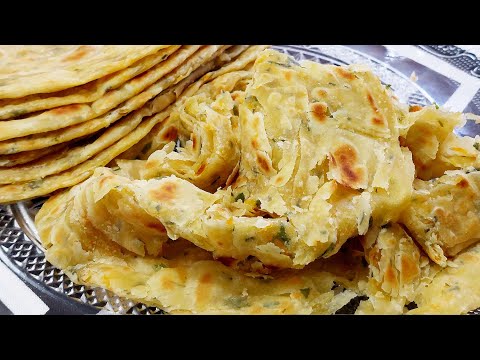
East African chapati stands apart from every other flatbread because of its layered structure. The secret lies in a spiral-folding trick that turns a simple dough into something great. You roll the dough thin, brush it with oil, coil it into a tight spiral, press it flat, and roll it out again. Each fold traps a thin film of oil between layers of dough. When the chapati hits the hot pan, those layers puff and split apart. The result is a bread that is crispy on the outside and soft as cotton on the inside.
This east african chapati recipe captures a method that Swahili cooks have used for ages. Arab and Indian traders brought flatbread skills to East Africa through the Indian Ocean trade routes. Over time, local cooks made the bread their own. Extra oil went into the dough for richness. Cooks invented the spiral-fold trick for flaky layers. White flour took the place of whole wheat for a softer bite. The bread that came out of these changes is not Indian roti or Arabian bread. It is something new.
What makes this east african chapati recipe so good is how simple it is. You need just five basic items from your pantry. There is no yeast, no waiting for dough to rise, and no fancy gear. A frying pan, a rolling pin, and your hands are all you need. Yet the result looks and tastes like it came from a pro kitchen. The golden spots, the flaky layers that peel apart, and the soft, chewy center make this bread truly special.
Choosing the Right Flour for Your Chapati
The flour you pick sets the tone for your chapati. East African cooks have strong views on this, and for good reason. Here are three options ranked by how well they work for this east african chapati recipe.
- All-purpose flour (best choice): This is the standard flour for East African chapati. It has enough gluten to create a pliable, elastic dough that rolls easily and produces soft, tender layers. The moderate protein content strikes the perfect balance between structure and softness.
- Bread flour: Bread flour has higher protein content, which makes the dough more elastic and slightly chewier. The chapati will hold together well, but the texture leans toward dense rather than light and flaky. If you use bread flour, add an extra tablespoon of oil to the dough to compensate for the tighter gluten network.
- Whole wheat flour (50-50 blend): A half-and-half blend of whole wheat and all-purpose flour produces chapati with a nuttier flavor and a slightly heartier texture. Pure whole wheat makes the flatbread too dense and stiff for the flaky East African style. The blend gives you the health benefits of whole grains while maintaining the soft, layered structure.
Ingredients for East African Chapati Recipe
Main Ingredients:
- 3 cups all-purpose flour
- 1 teaspoon salt
- 1 teaspoon sugar
- 2 tablespoons vegetable oil (for the dough)
- 1 cup warm water (not hot, about 40 degrees Celsius)
For Brushing and Cooking:
- 4 tablespoons vegetable oil or melted ghee (for brushing layers)
- Extra flour for dusting the work surface
Optional Flavor Additions:
- 1/2 teaspoon ground turmeric (for golden color)
- 1 tablespoon fresh cilantro, finely chopped
- 1/2 teaspoon cumin seeds
Pro tip: Use warm water around 40 degrees Celsius when mixing the dough. Warm water activates the gluten in the flour more effectively than cold water, which results in a softer, more elastic dough. If the water is too hot, it will partially cook the flour and create a gummy texture. Test with your finger. The water should feel comfortably warm, not hot.
Step-by-Step Instructions
Step 1: Make the Chapati Dough
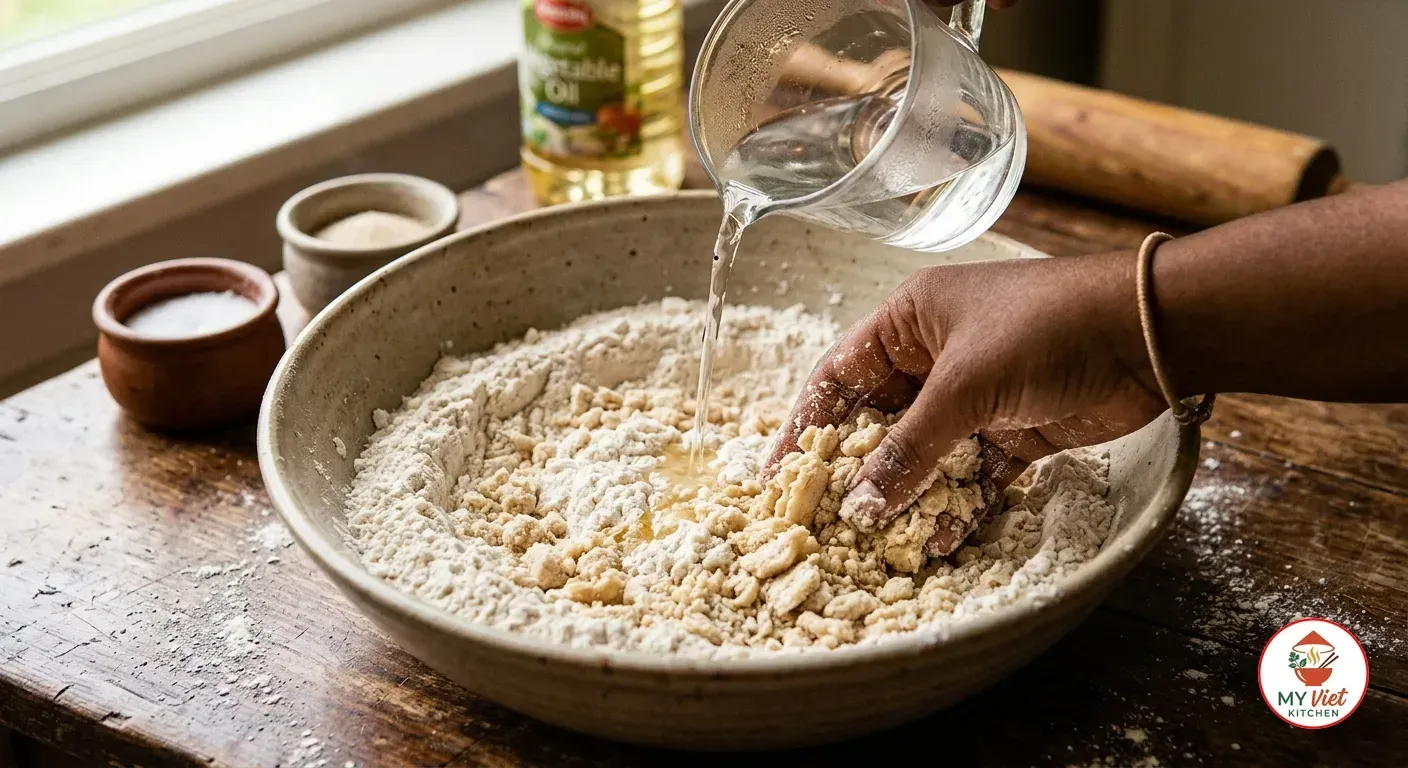
1Combine the flour, salt, and sugar in a large bowl. Add two tablespoons of oil and rub it into the flour with your fingers until the mix looks like coarse crumbs. Pour in the warm water bit by bit while stirring with your other hand. Once the dough comes together, move it to a lightly floured surface. Knead firmly for 10 minutes. Push the dough away with the heel of your palm, fold it back, and turn it a quarter. The done dough should feel smooth, soft, and just a bit tacky. If it sticks to your hands, dust with a tiny bit of flour. Cover the dough with a damp cloth and let it rest for at least 20 minutes. This rest relaxes the gluten, so the dough rolls out thin with ease.
Step 2: Roll, Oil, and Spiral-Fold Each Piece
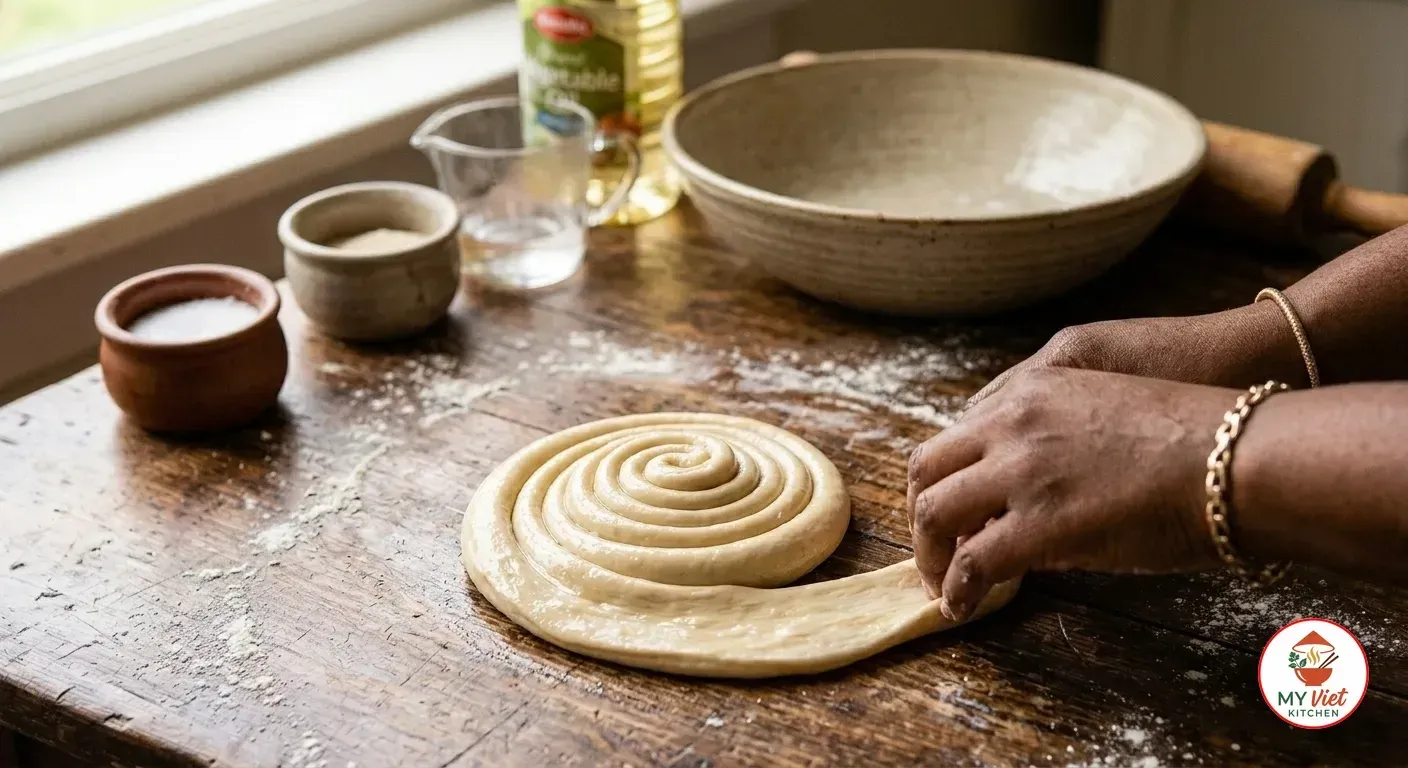
2Divide the rested dough into 8 equal pieces. Roll each piece into a ball with your palms. On a floured surface, roll one ball into a thin circle about 8 inches wide. The thinner you roll, the more layers you get. Brush the whole surface with oil or melted ghee. Starting from one edge, roll the oiled circle into a tight tube, like a newspaper. Then coil that tube into a round disc and tuck the end under. Press the disc flat and roll it out again into a circle about 7 inches wide. This fold-and-roll trick is what makes East African chapati so flaky. Do the same with all 8 balls. Stack the rolled discs between sheets of parchment paper so they do not stick while you work.
Step 3: Cook Each Chapati on a Hot Pan
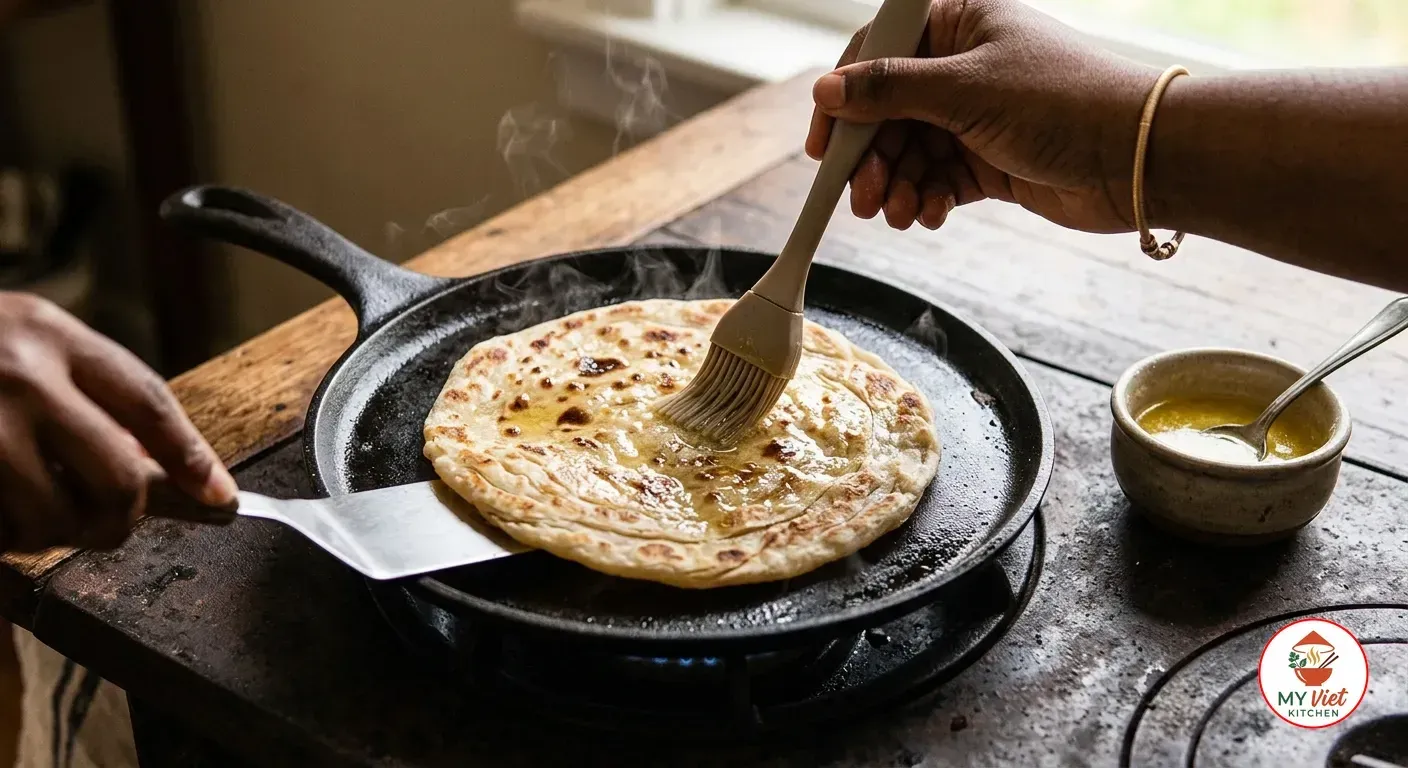
3Heat a flat, heavy pan or cast-iron skillet over medium-high heat. When the pan is hot, place one chapati on the dry surface. Cook for about one minute until bubbles form on top and the bottom has light brown spots. Flip it with a spatula. Brush the top side with oil or ghee. Cook the other side for one more minute until golden spots show up. Flip once more and brush with oil. Press gently around the edges with a folded cloth. This helps the chapati puff a bit and cook evenly. Each chapati takes about two to three minutes total. You want golden brown spots all over, not one dark color.
Step 4: Stack and Keep Warm for Serving
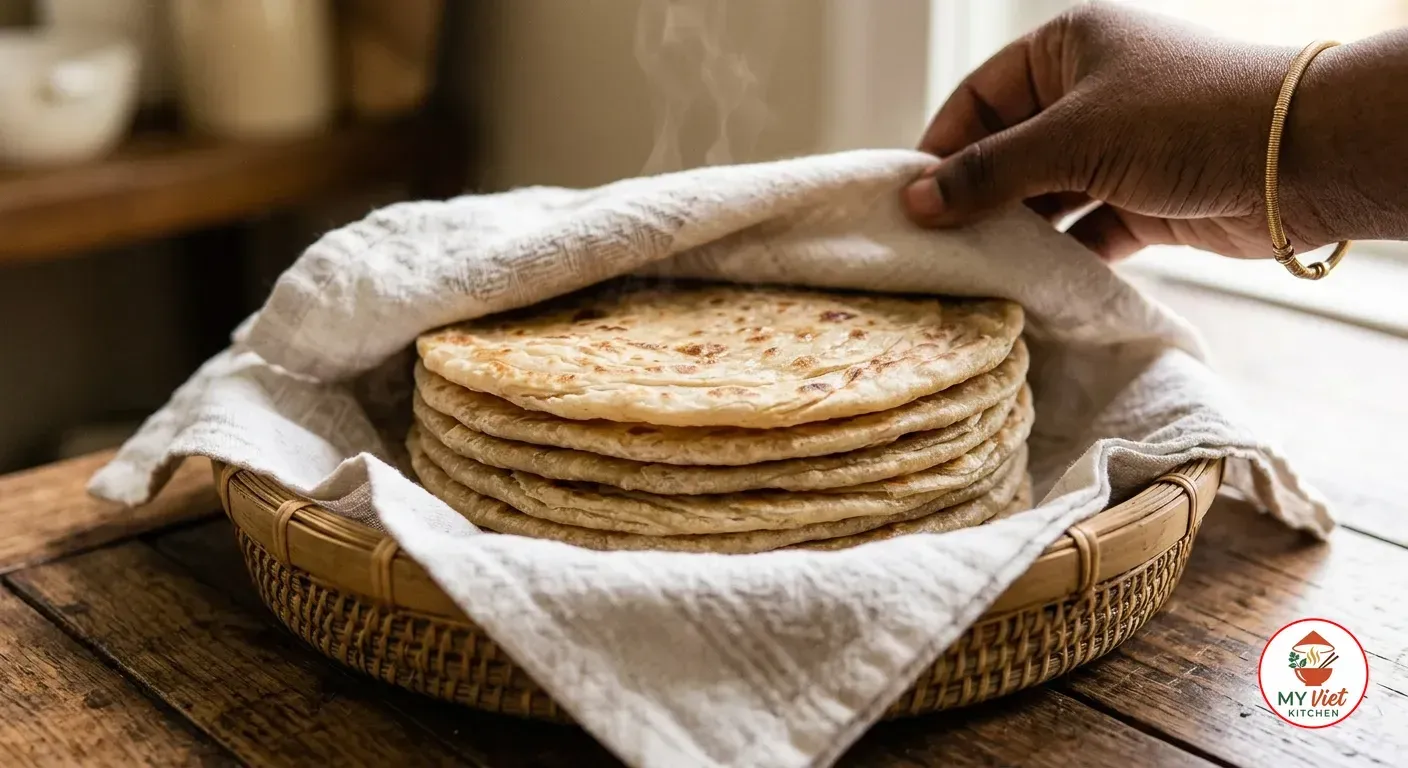
4As each chapati is done, move it to a plate lined with a clean towel. Stack the chapatis on top of each other and fold the towel over them. The steam trapped in the stack keeps softening the layers. By the time you cook the last one, the first chapati will be at peak softness. Serve warm while the layers are still soft and easy to bend. For the best result, tear each chapati by hand. Do not use a knife. Tearing shows off the flaky layers that make East African chapati so special.
Expert Tips for Perfect East African Chapati
Get the Dough Consistency Right
The dough should feel like an earlobe when you pinch it. That soft feel means the gluten has formed well and the water level is right. If the dough feels stiff, add warm water one teaspoon at a time and knead it in. If it feels too wet, add a little flour and work it through. Most home cooks use too much flour, which leads to tough, dense chapati. A slightly tacky dough is always better than a dry one.
Do Not Skip the Resting Time
Resting the dough for 20 minutes is not optional. When you knead, the gluten strands get tight and springy. If you try to roll right away, the dough fights back and will not stay thin. Resting lets those strands relax. After 20 minutes, the dough rolls out into thin circles with very little effort. Some East African cooks rest it for up to an hour for even better results.
Control Your Pan Temperature
Medium-high heat is the goal. If the pan is too hot, the outside burns before the inside cooks, and you end up with raw dough between scorched layers. If the pan is too cool, the chapati dries out and turns stiff. Test by dropping a few drops of water on the pan. The water should sizzle and vanish in about two seconds. That is the right heat for cooking chapati.
East African Chapati vs. Indian Roti: Key Differences
Many people confuse East African chapati with Indian roti or chapati. While they share historical roots, these flatbreads have evolved into distinctly different foods. Here is a detailed comparison.
| Feature | East African Chapati | Indian Roti/Chapati |
|---|---|---|
| Flour | All-purpose white flour | Whole wheat flour (atta) |
| Oil in Dough | Yes, oil mixed into the dough and brushed between layers | Typically no oil in the dough |
| Layering | Spiral-folded to create multiple flaky layers | Single layer, no folding |
| Texture | Flaky, rich, slightly crispy outside and soft inside | Soft, thin, pliable, no flaking |
| Cooking Fat | Oil or ghee brushed on pan during cooking | Cooked dry on a tawa, sometimes finished over open flame |
| Closest Relative | Malaysian roti canai or Indian paratha | Mexican flour tortilla in texture |
Serving Suggestions
In East Africa, chapati is the ultimate companion for saucy dishes. The flaky layers tear apart beautifully and scoop up stews, curries, and vegetables with ease. Here is how to build an authentic spread around your freshly made chapati.
The Perfect Accompaniments:
- Bean stew (maharagwe): Coconut bean stew is the most classic pairing with chapati in Kenya and Tanzania. The creamy, spiced beans cling to the flaky layers perfectly.
- Nyama choma: Grilled meat is a beloved pairing with chapati across East Africa. The soft bread wraps around the smoky, charred meat for a satisfying combination.
- Sukuma wiki (collard greens): Sauteed greens with onions and tomatoes provide a fresh, slightly bitter contrast to the rich, oily chapati. This is an everyday combination in Kenyan households.
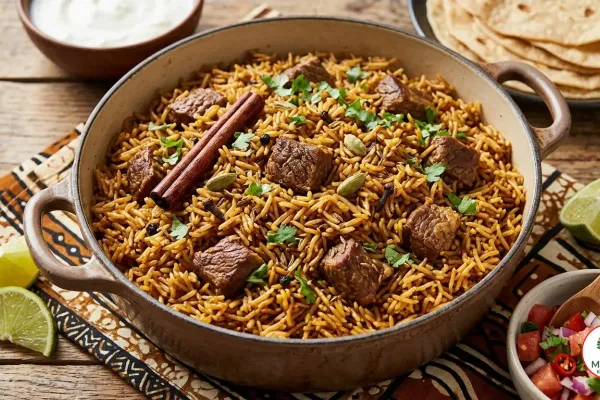
- Pilau: Chapati served alongside spiced rice creates a carbohydrate-rich feast that is a staple at celebrations. Together, they make a filling and festive plate.
- Chicken curry: A fragrant East African chicken curry with its thick, spiced sauce is ideal for dipping and scooping with torn pieces of warm chapati.
Beverage Pairings:
- Chai ya tangawizi (ginger tea): Strong Kenyan tea brewed with ginger, milk, and sometimes cardamom is the traditional drink alongside chapati, especially at breakfast.
- Fresh mango juice: The tropical sweetness of mango juice balances the savory richness of oily chapati, making it a refreshing pairing for afternoon meals.
- Tangawizi soda: Ginger-flavored soda is widely popular in East Africa and its spicy fizz pairs well with the warm flatbread.
Storage and Reheating
Room temperature: Chapati stays fresh at room temperature for up to 2 days when stored in an airtight container or wrapped tightly in aluminum foil. The layers retain their softness better at room temperature than in the refrigerator.
Refrigerator: Store chapatis in a sealed zip-lock bag for up to 5 days. Place a sheet of parchment paper between each chapati to prevent them from sticking together. Let them come to room temperature for 10 minutes before reheating.
Freezer: Chapati freezes exceptionally well for up to 3 months. Separate each piece with parchment paper and seal the stack in a freezer-safe bag. Thaw in the refrigerator overnight or on the counter for 30 minutes before reheating.
Reheating: The best reheating method is on a dry hot pan for about 30 seconds per side. Brush with a thin layer of oil or ghee to restore the original softness and sheen. You can also wrap the chapatis in a damp paper towel and microwave for 15 to 20 seconds. Avoid reheating in the oven, as dry heat makes the chapati stiff and leathery.
Common Mistakes to Avoid
1. Using Too Much Flour When Rolling
This is the most common mistake in any chapati recipe. Excessive flour on the rolling surface creates dry, tough layers that crack instead of flaking apart. Use only a light dusting to prevent sticking. If the dough sticks to the surface, a tiny amount of flour is enough. The dough should feel slightly oily from the brushing step, which naturally prevents most sticking. Consequently, you need far less flour than most people think.
2. Not Rolling the Dough Thin Enough
Thick chapati does not develop proper layers. When the dough is too thick before the spiral fold, the layers end up heavy and bready instead of light and flaky. Roll each disc as thin as you can manage without tearing it. A thickness of about 2 millimeters before oiling and folding produces the best results. After the spiral fold and second roll, the chapati should still be relatively thin.
3. Cooking on a Cold Pan
A properly heated pan is essential for good chapati. If the pan is not hot enough, the chapati sits on the surface and slowly dries out instead of developing quick golden spots and steam pockets. The dough should sizzle lightly the moment it touches the pan. Preheat your skillet for at least two minutes over medium-high heat before cooking the first chapati. Additionally, maintain consistent heat throughout the cooking process.
Frequently Asked Questions
What is the difference between East African chapati and Indian chapati?
East African chapati is richer and flakier than Indian chapati. The East African version uses all-purpose flour, oil brushed between layers, and a spiral-folding technique that creates a laminated texture. Indian chapati uses whole wheat flour, contains no oil in the layers, and cooks on a dry tawa. In terms of texture, East African chapati is closer to an Indian paratha or Malaysian roti canai. The name traveled from India to East Africa, but the bread itself transformed into something distinctly different over centuries of adaptation.
Can I make this east african chapati recipe ahead of time?
Yes, you can prepare the dough up to 24 hours in advance. Wrap it tightly in plastic wrap and refrigerate. Before rolling, bring the dough to room temperature for 30 minutes so it becomes pliable again. You can also roll and fold the chapatis into their spiral discs ahead of time. Stack them between parchment paper, wrap the stack tightly, and refrigerate for up to 12 hours. When ready to serve, simply roll each disc flat and cook on the hot pan.
Why does my chapati become hard after cooling?
Hard chapati after cooling usually means the dough was too dry, the chapati was rolled too thick, or it was not wrapped properly after cooking. The stacking and wrapping step is critical. When you pile the hot chapatis on top of each other and cover them with a towel, the steam softens the gluten structure and keeps the bread tender. If you leave them uncovered, the moisture evaporates quickly and the chapati stiffens. Also, make sure you brush enough oil during cooking.
What is the best oil for East African chapati?
Vegetable oil is the most commonly used fat for chapati in East African homes because of its neutral flavor and availability. However, ghee produces richer, more flavorful results. Many cooks in Mombasa and Zanzibar use ghee for special occasion chapati and vegetable oil for everyday batches. Coconut oil is another excellent option that adds a subtle tropical note. Avoid olive oil, as its strong flavor competes with the mild, wheaty taste of the flatbread.
Variations and Adaptations
Egg Chapati (Chapati Mayai):
This popular street food version involves cooking a partially done chapati and then pouring a beaten egg over it on the pan. The egg sets against the hot flatbread, and you flip the whole thing to cook the egg side until golden. It is essentially a chapati omelette, and it is one of the most popular breakfast items in Tanzania. In Uganda, this same concept became the famous Rolex, where the egg chapati wraps around fresh vegetables.
Sweet Chapati:
For a dessert version, add two extra tablespoons of sugar and a pinch of ground cardamom to the dough. Roll and fold the same way, but brush with melted butter instead of oil for a richer flavor. Cook until golden brown and serve warm with honey or sweetened condensed milk drizzled on top. Sweet chapati is a favorite treat for children across East Africa and pairs beautifully with afternoon chai.
Stuffed Chapati:
Fill your chapati with a spiced potato mixture, similar to an Indian aloo paratha. Mash cooked potatoes with diced green chilies, chopped cilantro, cumin, and salt. Place a spoonful of filling in the center of a rolled disc, fold the edges over the filling, flatten gently, and roll out into a circle. Cook on the hot pan with extra oil. The result is a hearty, filling flatbread that works as a complete meal on its own.
Herb and Spice Chapati:
Mix finely chopped fresh cilantro, a pinch of turmeric, and cumin seeds directly into the dough for a flavored version. The herbs add color and fragrance that complement curries and grilled meats. This variation is especially popular in coastal Kenya, where the Swahili love to incorporate bold flavors into every element of the meal.
The Cultural Significance of Chapati in East Africa
Chapati holds a place of honor in East African food culture that goes far beyond its role as bread. In Kenya, Tanzania, and Uganda, chapati signals celebration. When a family prepares chapati, it often means a special meal is underway. Sunday lunches, religious holidays, weddings, and the arrival of guests all call for freshly made chapati. The flatbread carries so much cultural weight that in many East African communities, a young woman’s ability to make good chapati is considered an important life skill.
The story of chapati in East Africa goes back to the Indian workers who came in the late 1800s to build the Kenya-Uganda Railway. They brought their bread-making skills, and East African cooks quickly picked up the craft. Over time, the bread changed. Cooks switched from whole wheat to white flour for a softer feel. They added more oil and came up with the spiral fold for flaky layers. By the mid-1900s, chapati had become fully East African. Today, it is as much a part of Kenyan and Tanzanian life as ugali or pilau.
In cities like Nairobi and Mombasa, street vendors sell chapati by the stack. Workers buy them for lunch, wrapping them around beans or stewed meat for a quick meal. At home, the kitchen fills with the sound of dough on the counter and the sizzle of bread on the hot pan. In Tanzania, the chapati craft runs deep along the coast, where centuries of Swahili, Arab, and Indian food trade built one of Africa’s richest food cultures. By making this east african chapati recipe, you join a living tradition that spans many lands and many ages.
Conclusion
This east african chapati recipe gives you everything you need to make soft, flaky, golden flatbread at home. Knead the dough until smooth and soft, rest it for at least 20 minutes, and master the spiral-folding technique that creates those beautiful layers. Cook on a properly heated pan, brush generously with oil, and stack the finished chapatis to steam them into perfect softness. Above all, these four steps are the foundation of great chapati every single time.
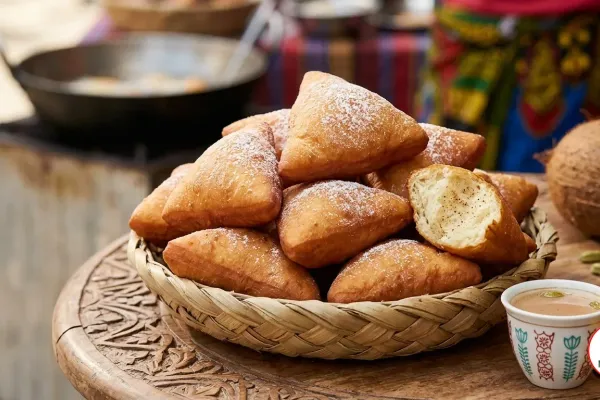
If you enjoy East African cooking, try our pilau recipe for fragrant spiced rice that pairs beautifully with chapati. For another classic flatbread from the region, explore our mandazi recipe for sweet, pillowy East African doughnuts. You can also check out our sambusa recipe for crispy spiced pastries that make the perfect starter alongside chapati and stew.