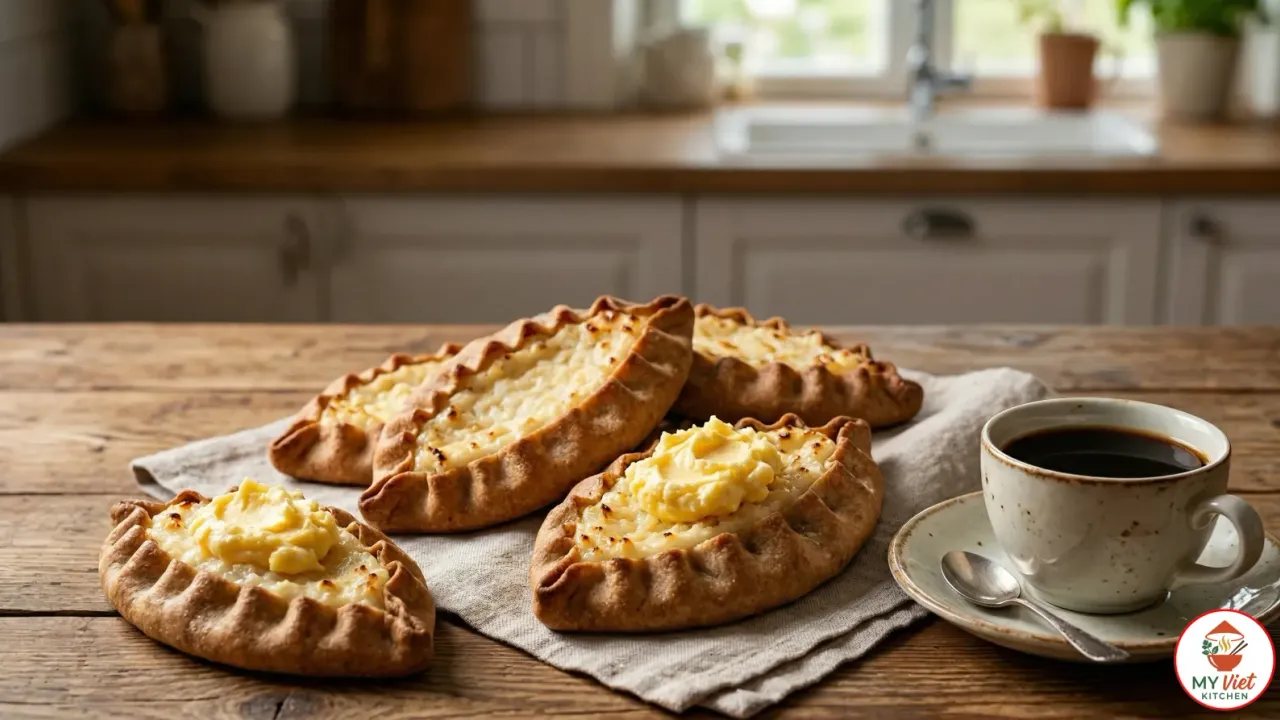
Karjalanpiirakka, or Finnish Karelian pies, are one of the most beloved foods in Finland, and this recipe teaches you how to make them from scratch at home. These small, open-faced pastries feature a paper-thin rye crust crimped around a creamy rice porridge filling, then brushed with butter and topped with rich egg butter called munavoi. Originating in the Karelia region of eastern Finland, karjalanpiirakka carry EU Traditional Speciality Guaranteed status and appear on breakfast tables, coffee spreads, and celebration platters across the country. Follow this step-by-step guide to master these iconic Finnish pastries in your own kitchen.
Prep Time: 45 minutes | Cook Time: 20 minutes | Resting/Cooling: 55 minutes | Servings: 20 pies
Difficulty: Medium | Calories: ~145 per pie
What Makes Karjalanpiirakka Special?
First, karjalanpiirakka stand apart from other filled pastries because of their unusual build. The rye crust is rolled impossibly thin, almost translucent, and then crimped by hand around a mound of slow-cooked rice porridge. The pies bake at very high heat for a short time, which chars the edges of the rye crust while keeping the filling soft and creamy. This contrast between crispy, earthy crust and mild, porridge-like center is what makes every bite distinctive. In fact, no other pastry in European baking delivers quite the same texture.
The history of these pies stretches back centuries in the Karelia region, which straddles the border between Finland and Russia. Originally, Karelian women filled the rye crusts with barley porridge, since rice was expensive and hard to find in the north. As trade routes expanded and rice became affordable, it gradually replaced barley as the preferred filling. The egg butter topping, munavoi, arrived later as a way to add richness to what was otherwise a humble, everyday food. As a result, karjalanpiirakka are now deeply tied to Finnish national identity.
What truly elevates karjalanpiirakka beyond simple hand pies is the care involved in making them. Each pie requires individual rolling, filling, and crimping by hand. Finnish families often make large batches together, turning the process into a social event. The result is a pastry with real character. As a consequence, no two pies look exactly alike, and that handmade touch is part of their charm. Indeed, you find them everywhere in Finland, from gas stations to fine bakeries, but the homemade version always tastes best.
Choosing the Right Rye Flour
Above all, the rye flour you pick sets the flavor and feel of your karjalanpiirakka dough. Not all rye flours behave the same way, so understanding the differences helps you achieve the best results. Here are your main options.
- Fine-ground dark rye flour (best choice): This gives the most authentic flavor and the smoothest dough. Dark rye has a deep, earthy taste that defines traditional karjalanpiirakka. It rolls out thin without crumbling and produces a beautifully crisp crust after baking.
- Medium rye flour: A widely available alternative that works well for beginners. Medium rye is easier to handle than dark rye and still delivers a good rye flavor. The crust will be slightly lighter in color and milder in taste. For that reason, it is a solid choice if your local store does not carry dark rye.
- Light rye flour: This produces a softer, less flavorful crust. Light rye lacks the robust, slightly bitter character that makes karjalanpiirakka taste distinctively Finnish. Use it only as a last resort, and consider adding a teaspoon of caraway seeds to the dough for extra depth.
- Coarse rye meal (not recommended): Rye meal has large, gritty particles that prevent the dough from rolling thin enough. Karjalanpiirakka require a paper-thin crust, and coarse meal simply cannot achieve that. It also tends to crack and tear during crimping. Save rye meal for bread baking instead.
Ingredients for Karjalanpiirakka
Rice Porridge Filling:
- 1 cup short-grain rice (Arborio or pudding rice works well)
- 2 cups water
- 3 cups whole milk
- 1 tablespoon butter
- 1/2 teaspoon salt
Rye Crust Dough:
- 1 1/3 cups fine-ground rye flour
- 1/3 cup all-purpose flour
- 1 cup water
- 1/2 teaspoon salt
Egg Butter (Munavoi):
- 4 hard-boiled eggs, finely chopped
- 1/2 cup (1 stick) butter, softened to room temperature
- 1/4 teaspoon salt
For Assembly:
- Milk for brushing the baked pies
- 2 tablespoons melted butter for brushing
Pro tip: Start the rice porridge first, since it takes the longest and needs to cool before you fill the pies. While the porridge simmers, prepare the dough and boil the eggs. This overlapping approach saves you nearly an hour of total time.
Step-by-Step Instructions
Step 1: Cook the Rice Porridge Filling
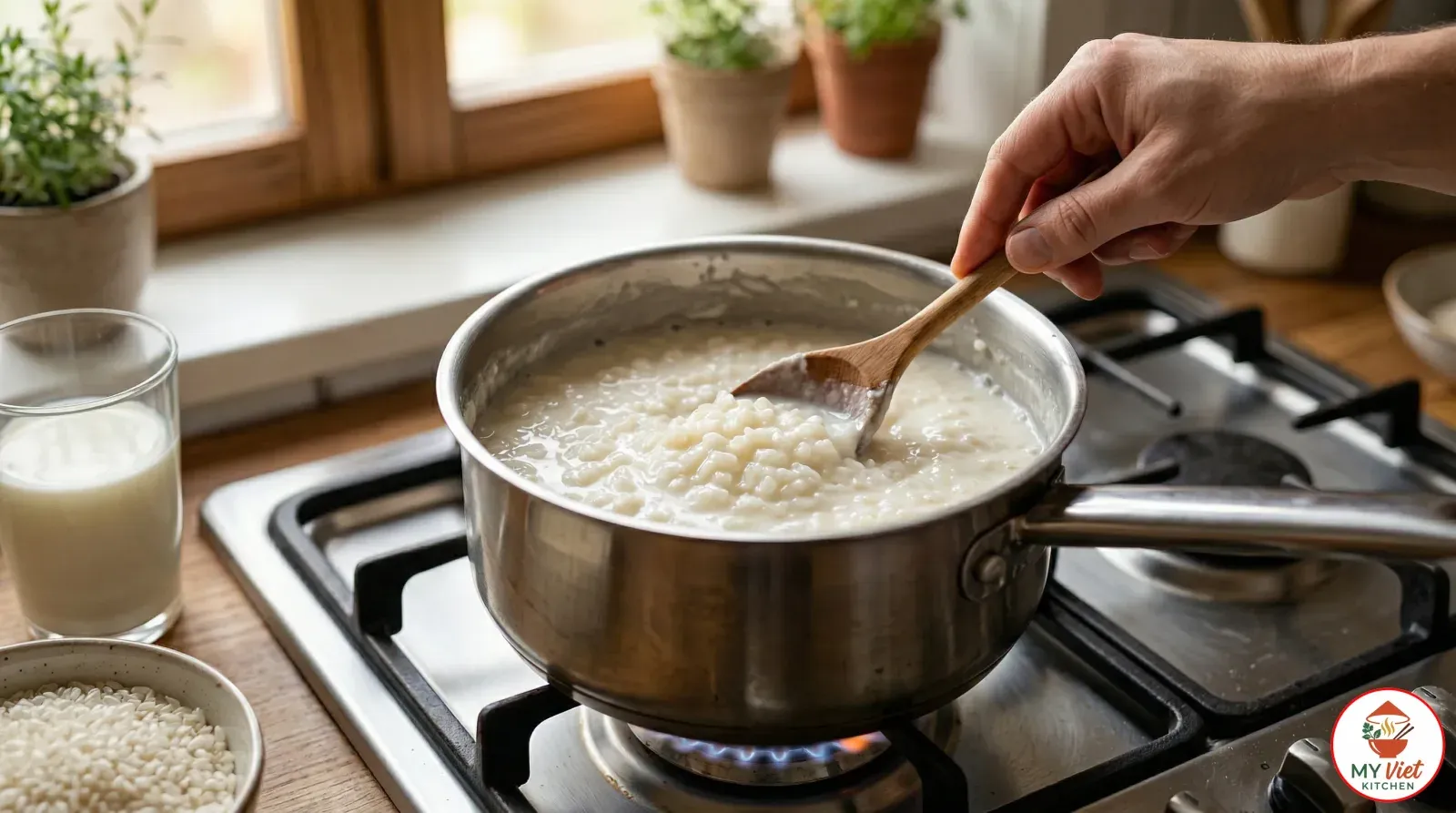
1 Bring 2 cups of water to a boil in a heavy-bottomed saucepan over medium-high heat. Add the short-grain rice and stir once. Reduce the heat to low and let the rice absorb the water, stirring occasionally. This takes about 8 to 10 minutes. Once the water has mostly disappeared, begin adding the whole milk in three or four additions, stirring well between each pour.
Continue simmering the porridge on low heat for 40 to 50 minutes. Stir every few minutes to prevent the rice from sticking to the bottom. The porridge is ready when it reaches a thick, creamy consistency that holds its shape on a spoon. Stir in the butter and salt. Then transfer the porridge to a bowl and let it cool to room temperature. After all, hot filling will make the rye dough soggy and hard to handle, so patience here matters.
Step 2: Prepare the Rye Dough
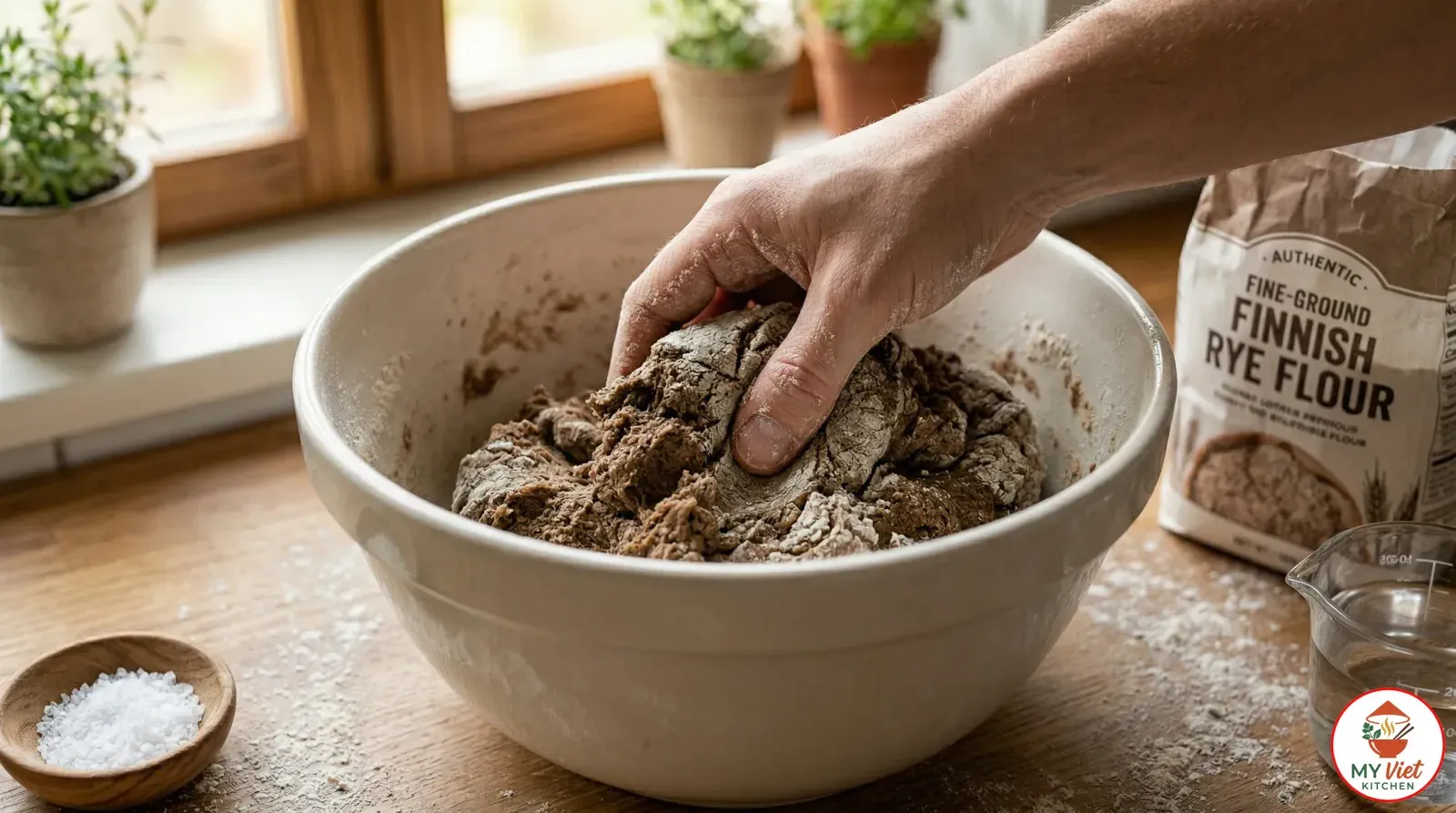
2 Combine the rye flour, all-purpose flour, and salt in a large mixing bowl. Add the water and stir with a fork until the mixture comes together into a shaggy mass. Turn the dough out onto a lightly floured surface and knead it for 2 to 3 minutes. The dough should feel smooth, pliable, and slightly tacky but not wet. If it sticks to your hands, dust with a little more rye flour.
The small amount of all-purpose flour is important because it adds gluten, which gives the dough enough elasticity to roll thin without tearing. Pure rye dough would crack and crumble. However, too much wheat flour makes the crust tough and chewy instead of crisp. Cover the finished dough with a damp kitchen towel and let it rest for 15 minutes. As a result, resting relaxes the dough and makes rolling much easier.
Step 3: Roll and Fill the Pies
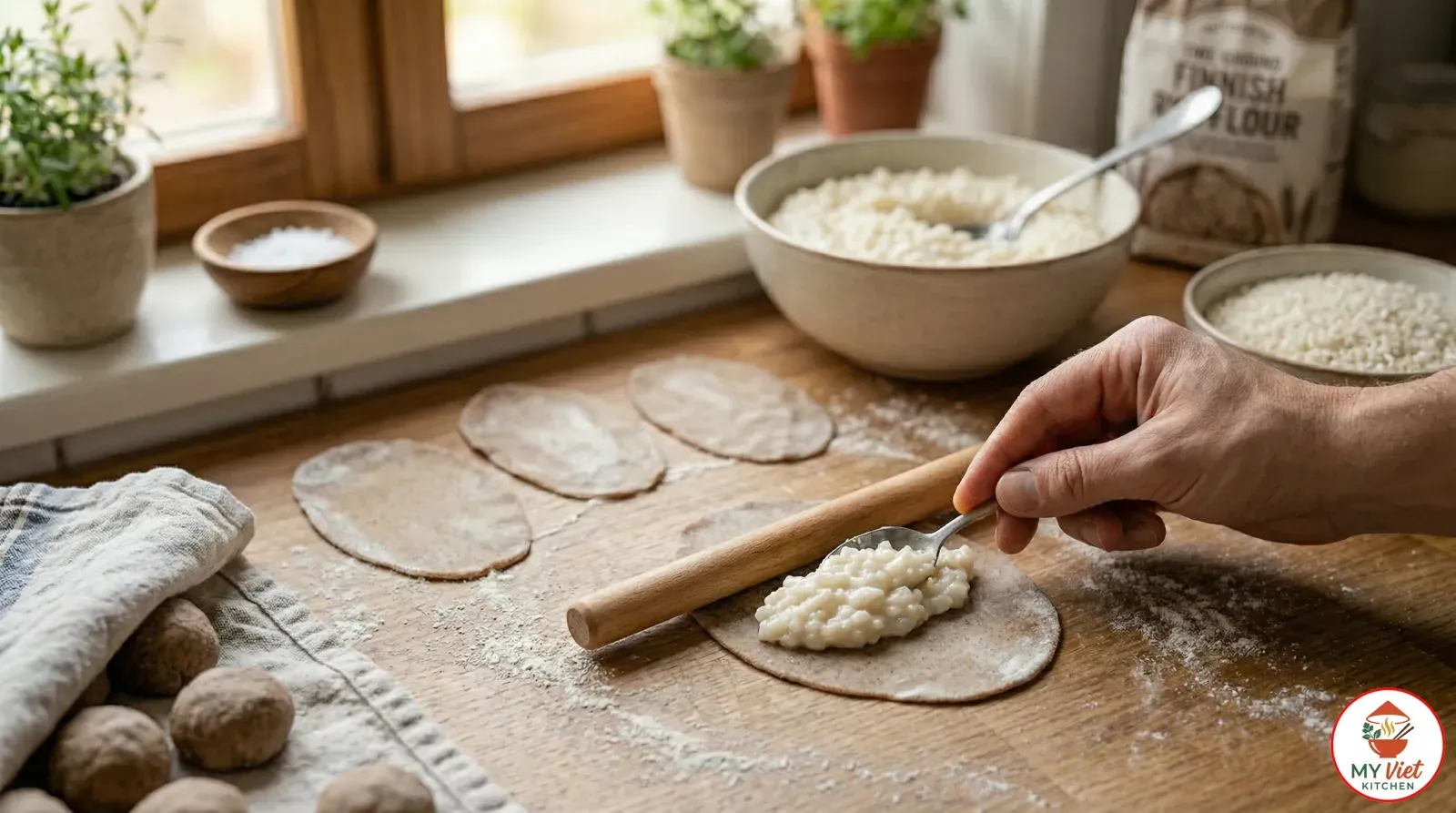
3 Preheat your oven to 480 degrees Fahrenheit, or as high as it will go. Line two baking sheets with parchment paper. Divide the rested dough into 20 equal pieces. Roll each piece into a ball, then flatten it into a thin oval about 6 inches long and 4 inches wide. The dough should be nearly translucent. If you can see the shadow of your hand through it, you have the right thickness.
Spread 1 to 2 tablespoons of cooled rice porridge along the center of each oval. Leave about half an inch of bare dough on all sides. Do not overfill the pies, because too much filling makes crimping difficult and causes the pies to burst open during baking. Work quickly, since rye dough dries out fast. Therefore, keep the unused dough pieces covered with the damp towel at all times.
Step 4: Crimp and Bake the Pies
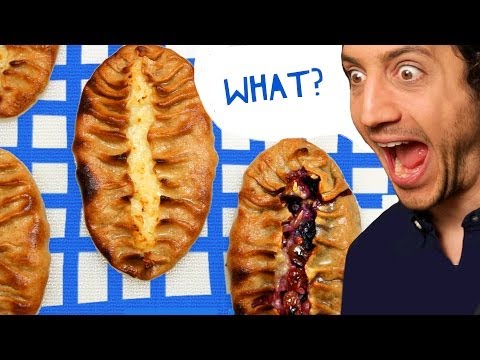
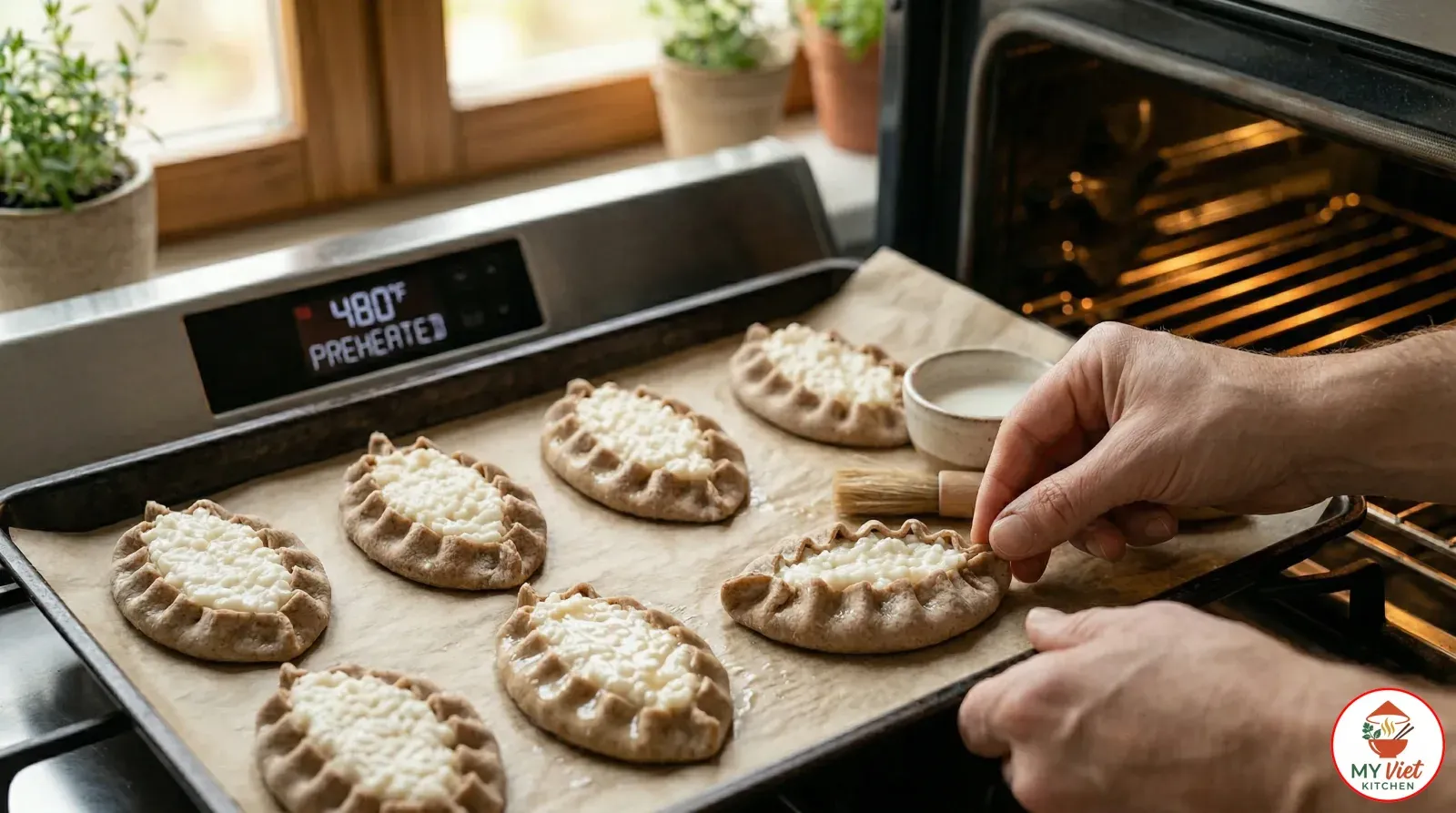
4 Fold the long edges of each dough oval up and over the filling. Use your thumb and forefinger to pleat the edges in a tight, overlapping pattern. The classic karjalanpiirakka shape resembles a narrow boat with a crimped border and an open center where the rice filling peeks through. Pinch the pleats firmly so they hold during baking. Of course, the crimping takes practice, but even imperfect pies taste wonderful.
Place the crimped pies on the prepared baking sheets. Brush each one lightly with milk to promote browning. Bake at 480 degrees Fahrenheit for 12 to 15 minutes. The rye edges should turn golden brown with dark, slightly charred spots. The high heat is essential because it crisps the thin crust quickly before the filling dries out. Remove the pies from the oven and immediately brush them with melted butter. This softens the crust just enough and adds a beautiful sheen.
Step 5: Prepare the Egg Butter and Serve
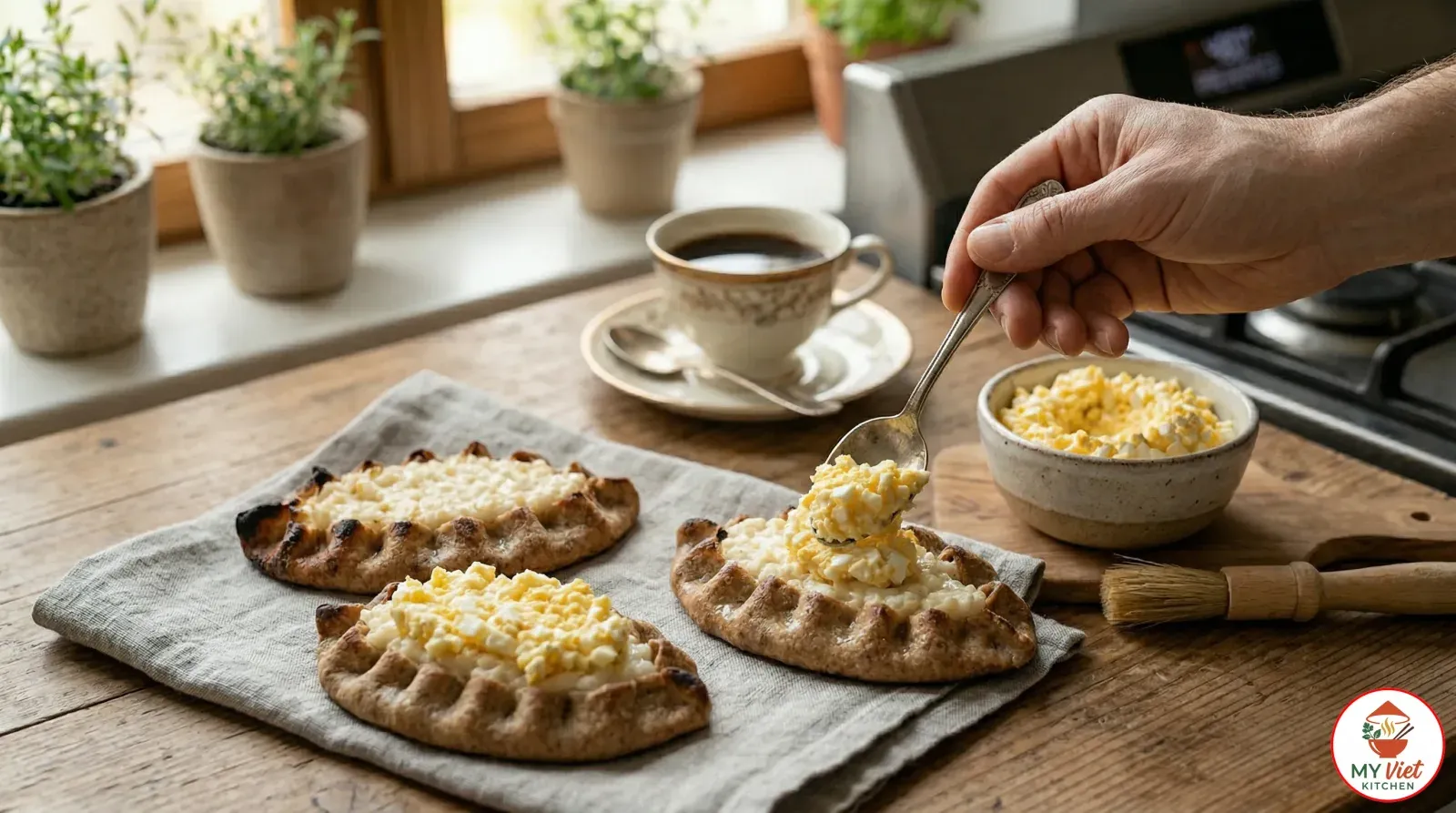
5 While the pies bake, prepare the egg butter. Peel the hard-boiled eggs and chop them finely with a knife. Some cooks prefer a coarse chop for texture, while others mash the eggs with a fork for a smoother spread. Equally, both approaches work well. Place the chopped eggs in a bowl with the softened butter and salt. Mix everything together until the butter and eggs form a cohesive, spreadable mixture.
Spoon a generous amount of egg butter onto each warm pie. The butter melts slightly into the hot crust and filling, creating a rich, indulgent bite. Serve the karjalanpiirakka warm or at room temperature. In Finland, people eat them throughout the day as a snack, with morning coffee, or alongside soup for a light meal. The combination of earthy rye, creamy rice, and rich egg butter is simple yet deeply satisfying.
Expert Tips for Perfect Results
Roll the Dough Paper-Thin
The crust is the defining feature of karjalanpiirakka, and it must be extremely thin. Thick dough produces a heavy, bread-like pie that lacks the signature crispness. Roll each oval until you can almost see through it. Use plenty of rye flour on your surface to prevent sticking. A thin rolling pin or even a wooden dowel works better than a large, heavy pin because it gives you more control over the delicate rye dough.
Keep Unused Dough Covered
Rye dough dries out much faster than wheat dough. Once it dries, it cracks and tears during rolling and crimping. Always keep the dough pieces you are not working with under a damp kitchen towel. If a piece does dry out, knead in a few drops of water to restore its pliability. Working quickly and methodically through the batch also helps avoid this problem.
Bake at Maximum Heat
Traditional Karelian bakers used wood-fired ovens that reached extremely high temperatures. Your home oven should be set as high as it safely goes, ideally 480 degrees Fahrenheit or higher. The blast of heat crisps the thin rye crust in minutes before the filling has a chance to dry out. Lower temperatures produce pale, chewy pies that miss the authentic texture entirely. Preheat the oven for at least 20 minutes to ensure it reaches full temperature.
Brush with Butter Immediately After Baking
The moment the pies come out of the oven, brush them generously with melted butter. This step serves two purposes. First, it softens the crust slightly so the pies are pleasantly chewy rather than shatteringly hard. Second, the butter adds flavor and gives the pies an attractive golden sheen. Some Finnish bakers go further and wrap the buttered pies in a towel for a few minutes, which softens the crust even more.
Karelian Pie Fillings: A Traditional Comparison
While rice porridge is the most popular filling today, karjalanpiirakka have a long history of regional filling variations. Each version reflects local ingredients and traditions from different parts of Karelia and Finland. Here is how the main filling options compare.
| Filling | Texture | Flavor Profile | Cooking Time |
|---|---|---|---|
| Rice porridge (most popular) | Creamy, smooth | Mild, slightly sweet, milky | 40 to 50 minutes |
| Barley porridge (original) | Chewy, hearty | Nutty, earthy, robust | 45 to 55 minutes |
| Mashed potato | Smooth, dense | Savory, buttery | 25 to 30 minutes |
| Carrot and rice | Creamy with texture | Slightly sweet, aromatic | 40 to 50 minutes |
| Rutabaga (lanttu) | Smooth, velvety | Sweet, earthy, peppery | 30 to 40 minutes |
Serving Suggestions
In Finland, karjalanpiirakka appear at nearly every meal and occasion. They work beautifully as a breakfast pastry, an afternoon snack with coffee, or a side dish alongside soup. The key is pairing them with matching flavors and textures that highlight their unique qualities.
The Perfect Accompaniments:
- Egg butter (munavoi): The classic and essential topping. The rich, salty egg butter contrasts beautifully with the mild rice filling and earthy rye crust. Every proper karjalanpiirakka deserves a generous spoonful.
- Finnish pea soup (hernekeitto): A warm bowl of thick pea soup with karjalanpiirakka on the side is a traditional Finnish Thursday meal. The hearty soup and the rich pies make a deeply satisfying combination.
- Smoked salmon or gravlax: Thin slices of cold-smoked salmon or cured gravlax on top of a Karelian pie create an elegant appetizer. The smoky, silky fish pairs wonderfully with the earthy rye crust.
- Fresh seasonal salad: A simple green salad with cucumber and dill dressing provides a crisp, refreshing contrast to the rich, starchy pies. This lighter pairing works well for summer meals.
- Berry preserves: Lingonberry or cloudberry jam spread over a Karelian pie is a beloved Finnish combination. The tart, fruity sweetness balances the savory filling perfectly.
Beverage Pairings:
- Finnish coffee: Finland consumes more coffee per capita than any other country, and karjalanpiirakka are the perfect coffee companion. A strong, medium-roast brew cuts through the richness of the egg butter.
- Piima (Finnish buttermilk): This tangy, slightly sour fermented milk drink is a traditional Finnish beverage. Its acidity refreshes the palate between bites of rich, buttery pie.
- Craft Finnish beer: A light lager or wheat beer from a Finnish brewery provides a crisp, clean pairing. The mild carbonation and gentle bitterness complement the rye and rice flavors nicely.
- Warm berry juice (mehu): Hot lingonberry or blackcurrant juice is a classic Finnish drink during colder months. Its fruity tartness matches the earthy, savory pies beautifully.
Storage and Reheating
Refrigerator: Karjalanpiirakka keep well in the fridge for up to 5 days. Store them in a single layer in an airtight container with parchment paper between layers. The pies actually soften slightly overnight, which some people prefer. Keep the egg butter in a separate container in the refrigerator.
Freezer: These pies freeze beautifully for up to 3 months. Arrange the cooled pies in a single layer on a baking sheet and freeze until solid. Then transfer them to a freezer bag or airtight container. Freeze the pies without egg butter, since the topping does not freeze as well. Add fresh egg butter after reheating.
Reheating: The best way to reheat karjalanpiirakka is in a 350-degree Fahrenheit oven for 5 to 8 minutes. This restores the crispness of the rye crust. Brush them with a little melted butter after warming for the freshest taste. Microwaving works in a pinch, but it makes the crust soft and chewy rather than crisp. For frozen pies, thaw them in the refrigerator overnight before reheating in the oven.
Common Mistakes to Avoid
1. Rolling the Dough Too Thick
Thick dough is the single most common mistake when making karjalanpiirakka at home. A thick crust tastes heavy and bread-like, completely missing the delicate crispness that defines a proper Karelian pie. Each oval should be nearly translucent. If the dough springs back, let it rest for a few more minutes before rolling again. The effort of rolling thin pays off enormously in the final result.
2. Using Hot Filling
Spreading warm or hot rice porridge onto the rye dough creates a soggy, sticky mess. The heat softens the dough, making it nearly impossible to fold and crimp without tearing. Always let the porridge cool completely to room temperature before filling the pies. Spreading it on a wide plate or baking sheet speeds up the cooling process a great deal.
3. Overfilling the Pies
It is tempting to pile on extra rice porridge, but too much filling prevents proper crimping. The dough edges cannot fold neatly over a thick mound of porridge, and overfilled pies burst open in the oven. Use just 1 to 2 tablespoons of filling per pie. A thinner layer of filling also bakes more evenly and allows the rye crust to remain the star of the pastry.
4. Baking at Too Low a Temperature
Karjalanpiirakka need intense heat to achieve their characteristic texture. A low oven temperature produces pale, chewy pies that lack crispness. Set your oven to 480 degrees Fahrenheit or higher. If your oven runs cool, push the temperature up to 500 degrees. The pies should spend only 12 to 15 minutes in the oven. Quick, hot baking is the key to a crisp rye crust with a still-creamy filling inside.
Frequently Asked Questions
What are karjalanpiirakka (Karelian pies)?
Karjalanpiirakka are traditional Finnish pastries from the Karelia region of eastern Finland. They feature a paper-thin rye crust crimped around a creamy rice porridge filling and are served with egg butter called munavoi. These pies hold EU Traditional Speciality Guaranteed status, which means the name is legally protected. They are one of the most iconic and widely eaten foods in all of Finland.
What type of flour do I need for Karelian pies?
Fine-ground rye flour is essential for the crust. A small amount of all-purpose wheat flour adds the elasticity needed to roll the dough thin. Dark rye flour gives the most authentic, earthy flavor, but medium rye also works. Avoid coarse rye meal, because it produces a gritty dough that cannot achieve the paper-thin texture required for proper karjalanpiirakka.
Can I use a different filling instead of rice porridge?
Absolutely. Barley porridge was the original Karelian filling before rice became widely available in Finland, and it remains a popular choice. Mashed potato filling is another traditional option, especially in western Finland. Some modern versions use carrot, rutabaga, or even mushroom fillings. Each one is tasty, though rice porridge remains the top pick across the country.
What is egg butter (munavoi) and can I skip it?
Egg butter, or munavoi, is a mixture of chopped hard-boiled eggs and softened butter. It is the classic topping for karjalanpiirakka and adds richness that complements the mild rice filling. While you can eat the pies without it, most Finns consider the egg butter essential. Skipping it is like eating toast without anything on it. For a lighter alternative, try just a thin spread of butter or a dollop of sour cream.
How do I store and reheat Karelian pies?
Store cooled pies in an airtight container in the refrigerator for up to 5 days. For longer storage, freeze them for up to 3 months without the egg butter topping. Reheat in a 350-degree Fahrenheit oven for 5 to 8 minutes to restore crispness. Brush with melted butter after reheating. Add fresh egg butter just before serving for the best flavor and texture.
Why do my Karelian pies crack when I fold them?
Cracking usually means the dough is too dry or has been sitting out uncovered for too long. Rye dough loses moisture rapidly. Keep unused dough under a damp towel at all times. If the dough feels stiff, knead in a few drops of water. Also ensure you are rolling the dough evenly without thin spots that create weak points during folding.
Variations and Adaptations
Barley Porridge Filling (The Original):
Replace the rice with pearl barley and follow the same cooking method. Barley takes slightly longer to cook and produces a chewier, nuttier filling. This is the oldest and most traditional version of karjalanpiirakka. Many Karelian families still prefer barley over rice. The heartier flavor pairs especially well with egg butter and strong Finnish coffee.
Mashed Potato Filling:
Boil and mash starchy potatoes with butter, milk, and a pinch of nutmeg. Spread the cooled mash into the rye crusts and bake as usual. Potato-filled pies are very popular in western Finland and among those who want a savory, less sweet filling. They also reheat exceptionally well, since mashed potato retains moisture better than rice porridge.
Gluten-Free Adaptation:
While rye contains gluten, you can experiment with a blend of gluten-free oat flour and buckwheat flour for the crust. The texture and flavor will differ from the traditional version, but the result is still tasty. Add a tablespoon of psyllium husk powder to help the dough hold together without gluten. Roll it between two sheets of parchment paper for easier handling.
Vegan Karjalanpiirakka:
The rye crust is naturally vegan. For the filling, cook the rice porridge with oat milk instead of dairy milk. Replace the egg butter topping with a mixture of mashed avocado and nutritional yeast, or simply serve the pies with a drizzle of good olive oil and flaky sea salt. The earthy rye flavor still shines through even without the rich dairy toppings.
The Cultural Significance of Karjalanpiirakka
Karjalanpiirakka carry a weight of meaning that goes far beyond their modest ingredients. They are one of the most powerful symbols of Finnish identity and heritage. In 2003, the European Union granted karjalanpiirakka Traditional Speciality Guaranteed status, making Finland one of the few Nordic countries to receive such recognition for a food item. In other words, the name is legally guarded, and pies sold under it must meet strict rules.
The pies trace their roots to the Karelian people, who lived in the border region between Finland and Russia. After World War II, when Finland ceded parts of Karelia to the Soviet Union, hundreds of thousands of Karelian people moved across Finland. They brought their food traditions with them, and karjalanpiirakka quickly spread from a regional specialty to a national treasure. Today, the pies represent resilience, cultural memory, and the Karelian spirit that shaped modern Finland.
In Finnish homes, making karjalanpiirakka is still a communal activity. Families and friends gather around the kitchen table to roll, fill, and crimp dozens of pies together. Grandmothers teach grandchildren the proper crimping technique. The smell of rye dough baking fills the house. Bakeries across Finland sell millions of karjalanpiirakka every year, and no self-respecting grocery store would dare go without them. More than just food, these small, humble pies are a living connection to Finland’s past and a daily reminder of what makes Finnish culture unique.
Conclusion
This karjalanpiirakka recipe gives you everything you need to make authentic Finnish Karelian pies at home. The keys are simple but important: roll the rye dough paper-thin, cook the rice porridge until thick and creamy, crimp each pie by hand, and bake at the highest heat your oven can reach. Top them with generous egg butter, and you have a taste of Finland that is both humble and extraordinary. The process takes some practice, but the reward is a batch of warm, golden pies that connect you to centuries of Finnish baking tradition.
Ready to explore more Nordic and European baking traditions? Browse our European dishes collection for recipes like Russian blini, Belgian waffles, and Austrian strudel. Each one brings a unique taste of the continent to your table.