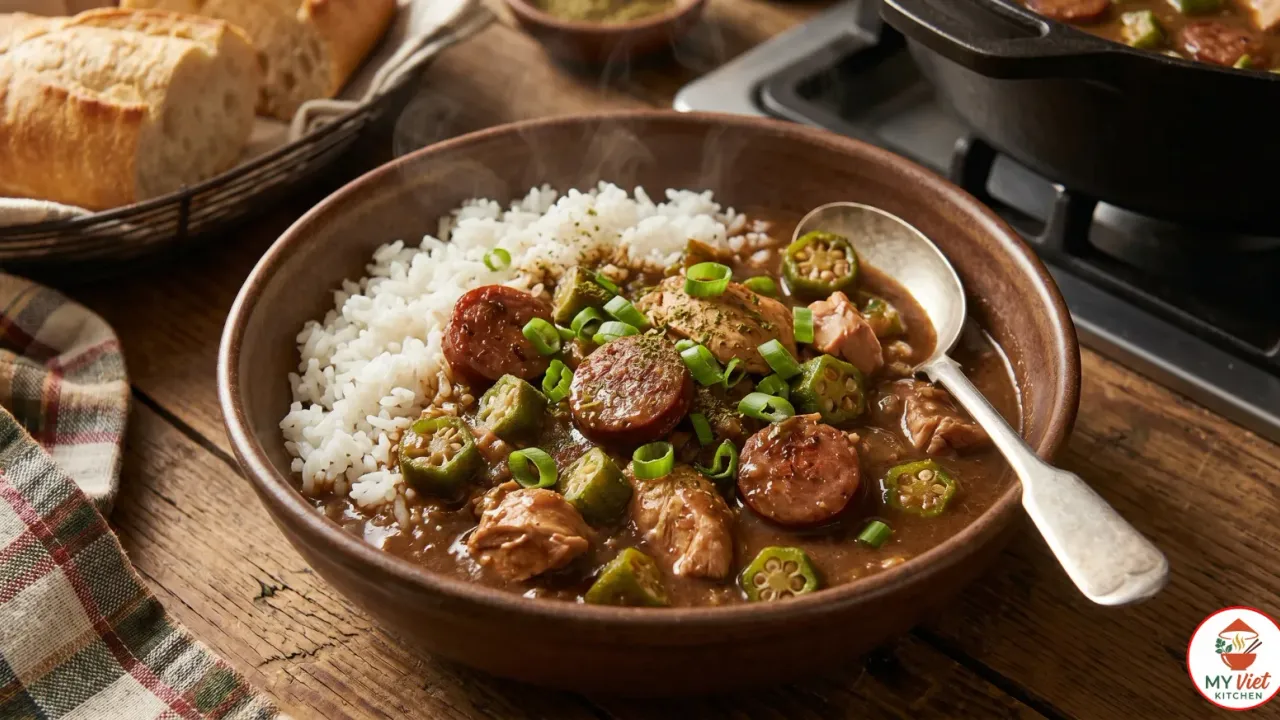
Nothing says Louisiana comfort food quite like a steaming bowl of gumbo. This rich, hearty stew combines a deep chocolate-brown roux with smoky andouille sausage, tender chicken, and fresh okra over fluffy white rice. Born from the diverse culinary traditions of the American South, gumbo delivers layers of bold Cajun and Creole flavor in every spoonful. Best of all, this gumbo recipe feeds a crowd and tastes even better the next day.
Prep Time: 30 minutes | Cook Time: 90 minutes | Servings: 8
Difficulty: Medium | Calories: ~420 per serving
What Makes Gumbo Special?
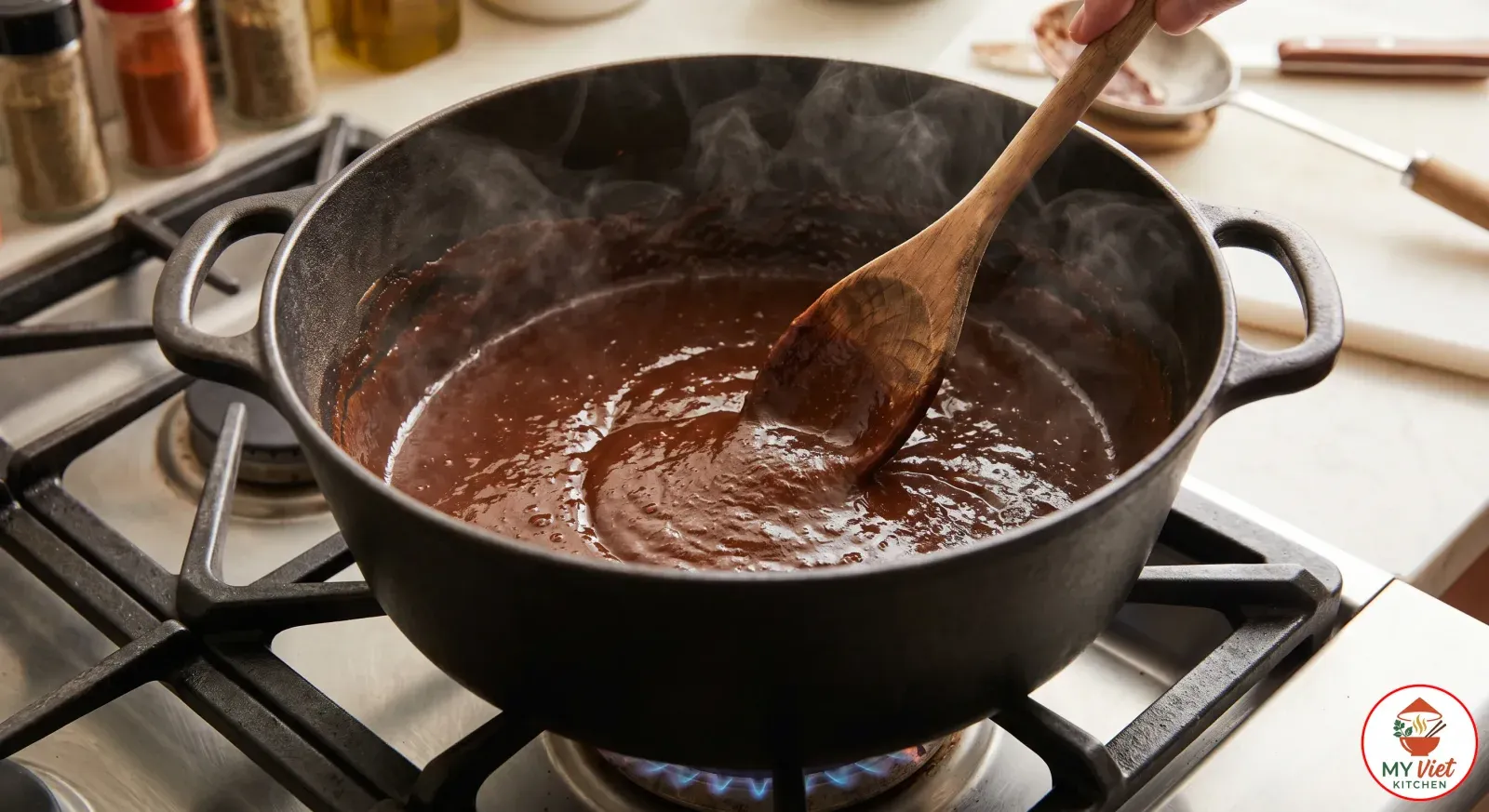
Gumbo stands apart from other stews because of its dark roux, which acts as both the thickener and the primary flavor driver. Unlike a light roux used in gravy, a gumbo roux cooks for up to 45 minutes until it reaches a deep chocolate color. This long, slow process creates a rich, nutty base that no other cooking method can replicate. As a result, the stew develops layers of complexity that simple simmering alone cannot achieve.
Moreover, gumbo draws from French, Spanish, West African, and Choctaw Native American cooking traditions. The holy trinity of onion, celery, and bell pepper comes from French mirepoix. West African cooks introduced okra as a thickener. The Choctaw people contributed file powder from sassafras leaves. Together, these influences create a dish that truly reflects the melting pot of Louisiana culture.
Whether you serve gumbo at a family dinner or a festive gathering, it always brings people together. The aroma of a dark roux simmering with spices fills the entire house, and each bowl delivers warmth and satisfaction from the very first bite.

Choosing the Right Roux for Your Gumbo
The roux is the foundation of every great gumbo. Its color determines the flavor and thickness of your stew, so choosing the right level matters. Here are the three main types to consider.
- Light Roux (Blond): Cooks for about 10 minutes and provides mild thickening with little flavor. It works better for cream-based soups than for gumbo.
- Medium Roux (Peanut Butter): Cooks for 20 minutes and offers a balance of thickening power and toasted flavor. Some home cooks prefer this for a lighter gumbo.
- Dark Roux (Chocolate, best choice): Cooks for 30 to 45 minutes and delivers the deepest flavor with a nutty, smoky complexity. This is the traditional choice for authentic Louisiana gumbo.
Ingredients for Gumbo
For the Dark Roux:
- 1 cup all-purpose flour
- 3/4 cup vegetable oil
Main Proteins:
- 1 lb andouille sausage, sliced into rounds
- 1.5 lbs boneless skinless chicken thighs, cut into bite-sized pieces
The Holy Trinity and Aromatics:
- 1 large onion, diced
- 1 green bell pepper, diced
- 2 celery stalks, diced
- 4 cloves garlic, minced
For the Stew:
- 2 cups fresh or frozen okra, sliced
- 8 cups chicken broth
- 1 can (14.5 oz) diced tomatoes
- 2 bay leaves
- 2 teaspoons Cajun seasoning
- 1 teaspoon smoked paprika
- 1 teaspoon dried thyme
- 1/2 teaspoon cayenne pepper
- Salt and black pepper to taste
- 1 tablespoon file powder (optional, for serving)
For Serving:
- 4 cups cooked white rice
- 3 green onions, sliced for garnish
Pro tip: Keep your chicken broth warm before adding it to the roux. Cold liquid added to a hot roux can cause splattering and uneven mixing. Warm broth blends smoothly and creates a silky stew base.
Step-by-Step Instructions
Step 1: Make the Dark Roux
1First, combine the flour and vegetable oil in a large heavy-bottomed Dutch oven over medium heat. Stir the mixture constantly with a wooden spoon or flat whisk. The roux will progress from white to blond, then to peanut butter, and finally to a deep chocolate brown. This process takes 30 to 45 minutes, so patience is essential. Do not walk away from the stove because the roux can burn in seconds. Once the roux smells nutty and reaches a dark brown color, move immediately to the next step.
Step 2: Cook the Holy Trinity
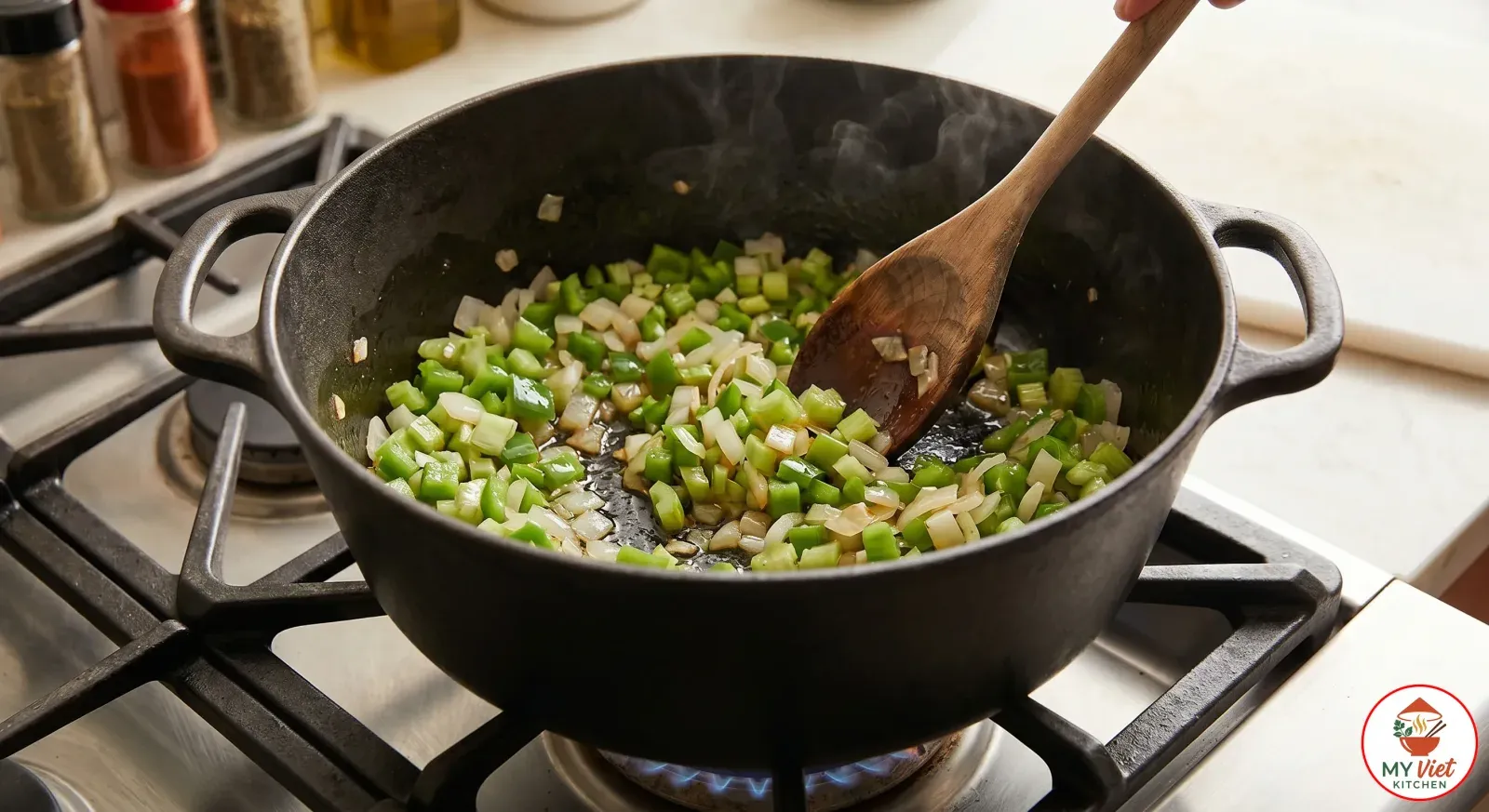
2Now, add the diced onion, bell pepper, and celery directly into the dark roux. Stir well for 5 minutes as the vegetables soften and release their moisture. The sizzling sound means the roux has stopped cooking, which prevents it from burning further. Then, add the minced garlic and stir for 1 more minute until fragrant. This aromatic base forms the flavor backbone of your gumbo.
Step 3: Brown the Proteins and Build the Stew
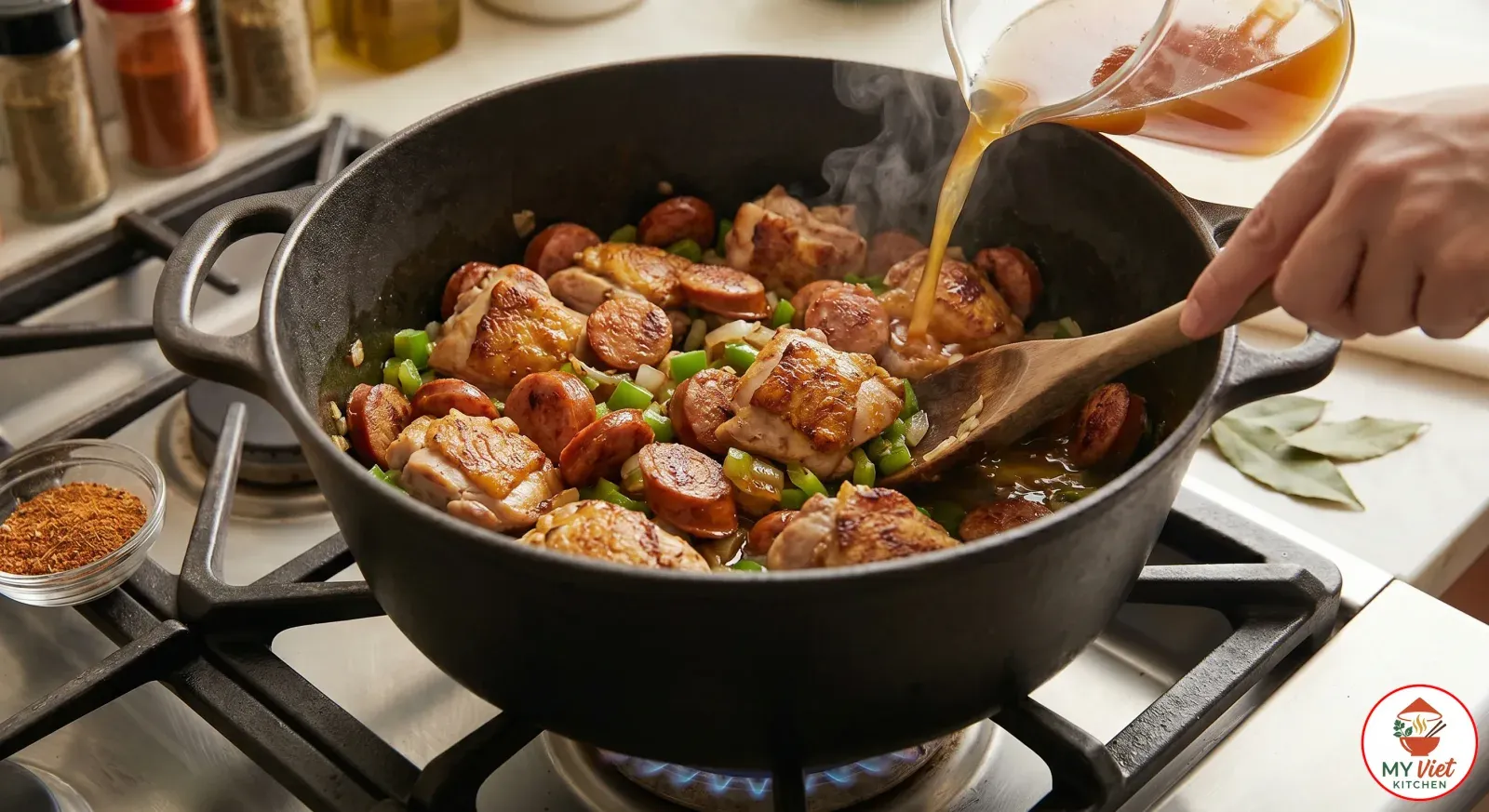
3Meanwhile, brown the andouille sausage in a separate skillet over medium-high heat for 3 minutes per side. Then, sear the chicken pieces until golden on all sides. Add both proteins to the Dutch oven with the roux and vegetables. Next, slowly pour in the warm chicken broth while stirring constantly. Add the diced tomatoes, bay leaves, Cajun seasoning, smoked paprika, thyme, and cayenne pepper. Stir everything together and bring the mixture to a boil.
Step 4: Simmer the Gumbo
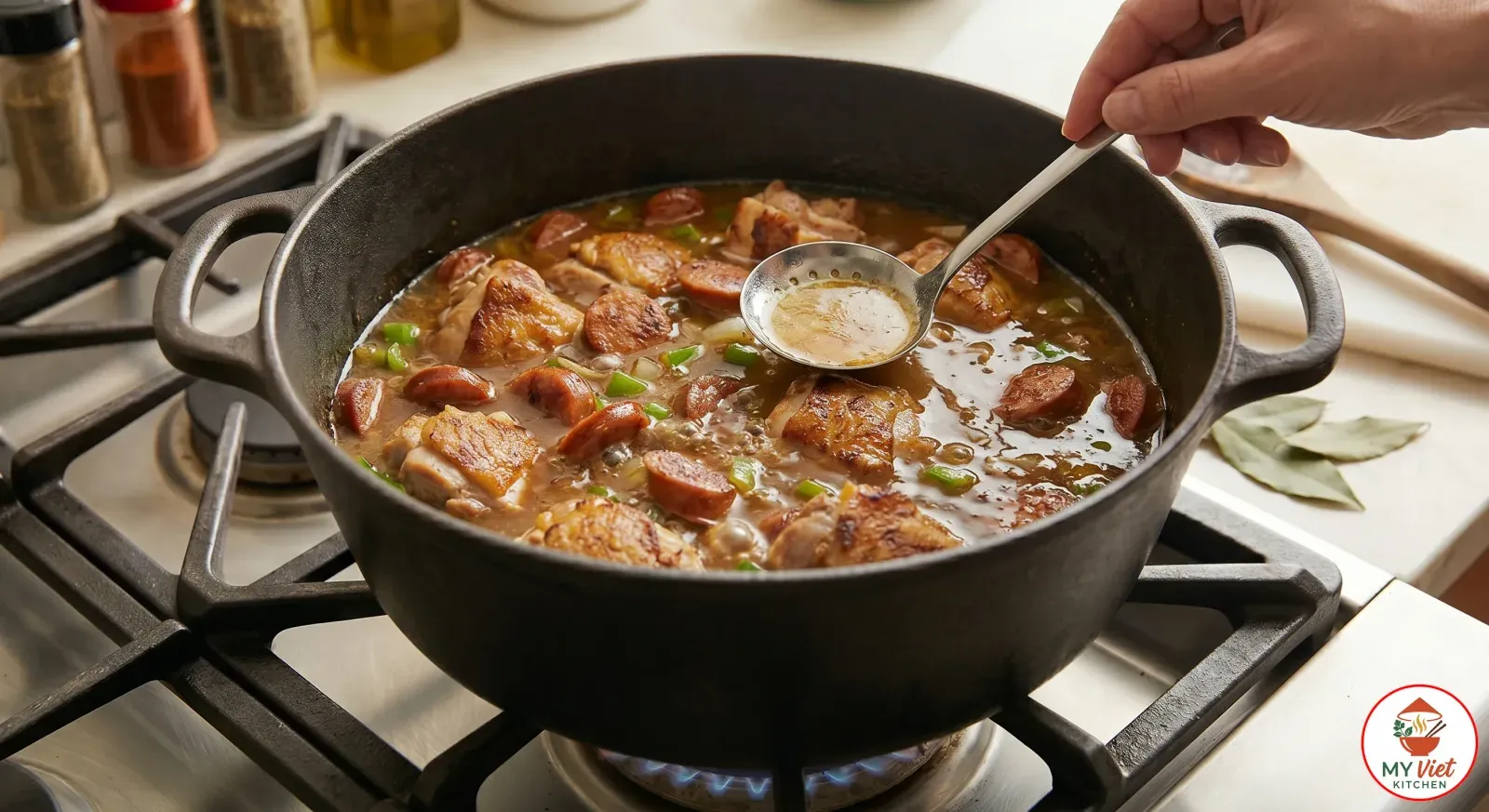
4After the stew reaches a boil, reduce the heat to low. Let the gumbo simmer uncovered for 45 minutes to 1 hour. Stir occasionally to prevent sticking at the bottom. During this time, the roux continues to thicken the stew while the proteins release their flavors into the broth. Skim off any fat that rises to the surface for a cleaner, more refined taste. The gumbo is ready when it reaches a rich, stew-like consistency.
Step 5: Add Okra and Finish
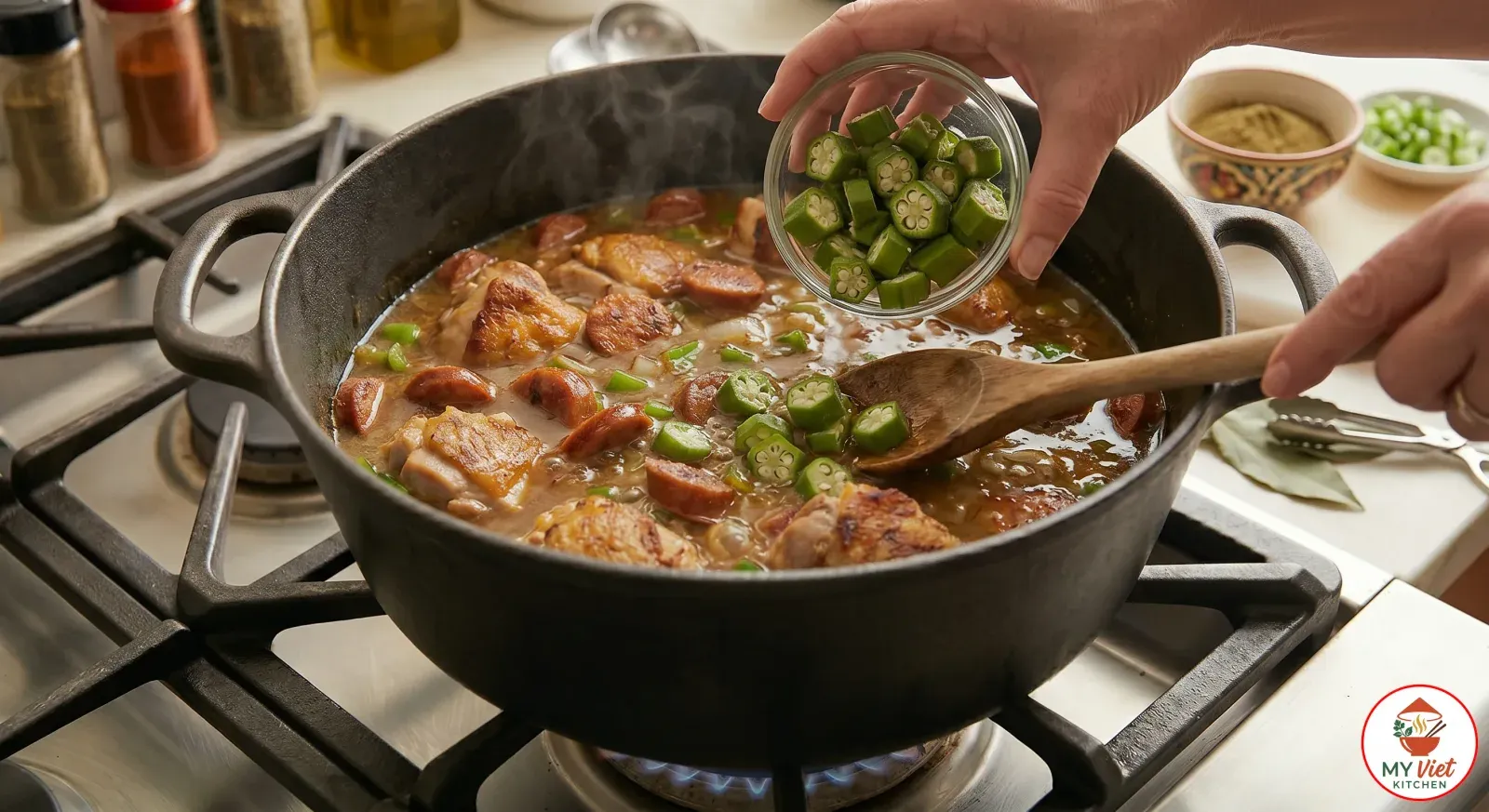
5Finally, stir in the sliced okra during the last 15 minutes of cooking. The okra adds a subtle earthy flavor and helps thicken the stew naturally. Remove the bay leaves and discard them. Taste the gumbo and adjust the salt, pepper, and cayenne to your preference. If you want to use file powder, sprinkle it in just before serving. Ladle the gumbo over steamed white rice in deep bowls and garnish with sliced green onions.
Expert Tips for Perfect Gumbo
Never Rush the Roux
The roux is the soul of your gumbo, so do not try to speed it up by raising the heat. High heat causes the flour to burn before it develops flavor. Instead, keep the burner at medium and stir constantly. A properly made dark roux takes at least 30 minutes. The reward is a deep, nutty flavor that cannot come from any shortcut.
Use Chicken Thighs for Better Flavor
Chicken thighs hold their shape and stay moist during the long simmer. They contain more fat and connective tissue than breasts, which adds richness to the broth. Breast meat tends to dry out quickly in a stew that cooks for over an hour. Therefore, always choose thighs for the best texture and taste.
Gumbo vs. Jambalaya: Key Differences
People often confuse these two iconic Louisiana dishes. Although they share similar ingredients, the cooking methods and textures differ significantly. Here is a clear comparison to help you understand each dish.
| Feature | Gumbo | Jambalaya |
|---|---|---|
| Type | Thick stew served over rice | One-pot rice dish |
| Thickener | Dark roux, okra, or file powder | No thickener needed |
| Rice | Cooked separately and served alongside | Cooked directly in the pot |
| Texture | Soupy and saucy | Drier, each grain absorbs broth |
| Cook Time | 90 minutes to 2 hours | About 1 hour |
If you love gumbo, you should also try our jambalaya recipe for a different take on Louisiana comfort food. Both dishes celebrate the same bold Cajun and Creole traditions in their own unique way.
Serving Suggestions
Gumbo traditionally arrives at the table in deep bowls over a mound of fluffy white rice. The rice absorbs the rich, flavorful broth and gives each spoonful a satisfying texture. Here are the best sides and drinks to round out your meal.
The Perfect Accompaniments:
- Cornbread: Warm, buttery cornbread soaks up the stew juices and adds a touch of sweetness that balances the spice.
- Crusty French Bread: A New Orleans classic that you can tear apart and dip into the broth. It catches every bit of flavor.
- Potato Salad: In Louisiana, many locals add a scoop of creamy potato salad right into the gumbo bowl. It sounds unusual but tastes incredible.
- Coleslaw: A tangy, crunchy coleslaw provides a refreshing contrast to the rich stew.
Beverage Pairings:
- Cold Lager: A crisp beer cuts through the richness and refreshes the palate between bites.
- Zinfandel: A fruity red wine with enough body to stand up to the bold, smoky flavors of the stew.
- Sweet Tea: The classic Southern beverage that cools the heat and adds comfort to any Louisiana meal.
Storage and Reheating
Refrigerator: Store leftover gumbo without the rice in an airtight container for up to 4 days. Notably, the flavors deepen and meld together overnight, so it often tastes even better the next day.
Freezer: Portion the gumbo into freezer-safe containers and freeze for up to 3 months. Always freeze without the rice because cooked rice becomes mushy when thawed. Thaw overnight in the refrigerator before reheating.
Reheating: Warm the gumbo on the stovetop over medium-low heat. Add a splash of chicken broth if the stew has thickened too much in storage. Then, cook fresh rice separately and serve together for the best texture.
Common Mistakes to Avoid
1. Burning the Roux
A burnt roux ruins the entire pot of gumbo because the bitter flavor cannot be masked. If you see black specks or smell something acrid, start over with fresh flour and oil. Keep the heat at medium and stir without stopping. Even 30 seconds of neglect can cause the roux to burn beyond repair.
2. Adding Cold Broth to Hot Roux
Pouring cold liquid into a smoking-hot roux causes dangerous splattering and can create lumps. Always warm your broth beforehand. Then, add it gradually while stirring vigorously. This technique produces a smooth, silky stew without any lumps.
3. Skipping the Long Simmer
Gumbo needs at least 45 minutes of simmering for the flavors to develop fully. Cutting the simmer time short results in a thin, one-dimensional stew. The long, gentle cooking allows the roux, proteins, and spices to meld into something truly extraordinary.
Frequently Asked Questions
What is the difference between gumbo and jambalaya?
Gumbo is a thick stew that you serve over separately cooked rice. Jambalaya, on the other hand, cooks the rice directly in the pot with the proteins and broth. Additionally, gumbo relies on a dark roux for its signature flavor and thickness, while jambalaya skips the roux entirely.
How long does it take to make a dark roux?
A proper dark roux takes 30 to 45 minutes of constant stirring over medium heat. The roux starts white, then gradually turns blond, peanut butter brown, and finally dark chocolate. Do not rush this step because the deep nutty flavor only develops through slow, patient cooking.
Can I make gumbo without okra?
Yes, many cooks make gumbo without okra. Instead, use file powder as your secondary thickener. Add it at the table just before eating because boiling makes it stringy. Some people prefer the flavor without okra, and the dark roux alone provides plenty of body.
What is file powder and do I need it?
File powder comes from dried and ground sassafras leaves. It adds a subtle earthy flavor and also thickens the gumbo slightly. Although it is optional, many traditional recipes call for it. You can find file powder in the spice aisle of most well-stocked grocery stores.
Can you freeze gumbo?
Absolutely. Gumbo freezes well for up to 3 months when stored in airtight containers. Always freeze the stew without rice because the rice turns mushy upon thawing. Cook fresh rice when you reheat and serve for the best results.
Variations and Adaptations
Seafood Gumbo:
Replace the chicken with shrimp, crab, and oysters for a coastal Louisiana version. Add the seafood during the last 10 minutes of cooking since shellfish cooks quickly. This variation highlights the fresh flavors of the Gulf Coast and pairs beautifully with crusty bread.
Gumbo Z’herbes (Green Gumbo):
This traditional Lenten dish uses a variety of greens instead of meat. Combine mustard greens, collard greens, spinach, and turnip greens for a hearty vegetarian version. The dark roux still provides richness, and the greens add a wonderful earthy depth.
Duck and Sausage Gumbo:
For a special occasion, swap the chicken for duck legs. The rich, gamey flavor of duck elevates the gumbo to new heights. Brown the duck legs first, then braise them in the stew until the meat falls off the bone. This version takes more time but delivers unforgettable results.
The Cultural Significance of Gumbo
Gumbo is more than just a recipe. It represents the entire cultural history of Louisiana in one pot. French settlers brought their soup-making traditions. West African cooks introduced okra, which gave the dish its name from the word “ki ngombo.” Spanish colonists contributed their love of bold spices. Meanwhile, the Choctaw people shared file powder as a unique thickener. Each culture added its own layer, and the result is a dish that belongs to everyone.
In Louisiana, gumbo holds a place of honor at family gatherings, church festivals, and community celebrations. Many families guard their gumbo recipes closely, passing them down through generations. The annual World Championship Gumbo Cookoff in New Iberia, Louisiana, draws competitors from across the country who vie for the title of best gumbo. This tradition speaks to the pride and passion that surrounds this beloved dish.
Conclusion
Making authentic gumbo at home requires patience, especially when building the dark roux. However, the reward is a rich, soul-warming stew that captures the very essence of Louisiana cooking. Remember these three keys: stir your roux constantly, use warm broth, and give the stew plenty of time to simmer.
Now grab your Dutch oven and bring the flavors of the bayou to your kitchen. For more hearty comfort food recipes, explore our full collection at My Viet Kitchen. If you enjoy bold Southern flavors, you should also try our jambalaya recipe and our BBQ ribs recipe for your next gathering.