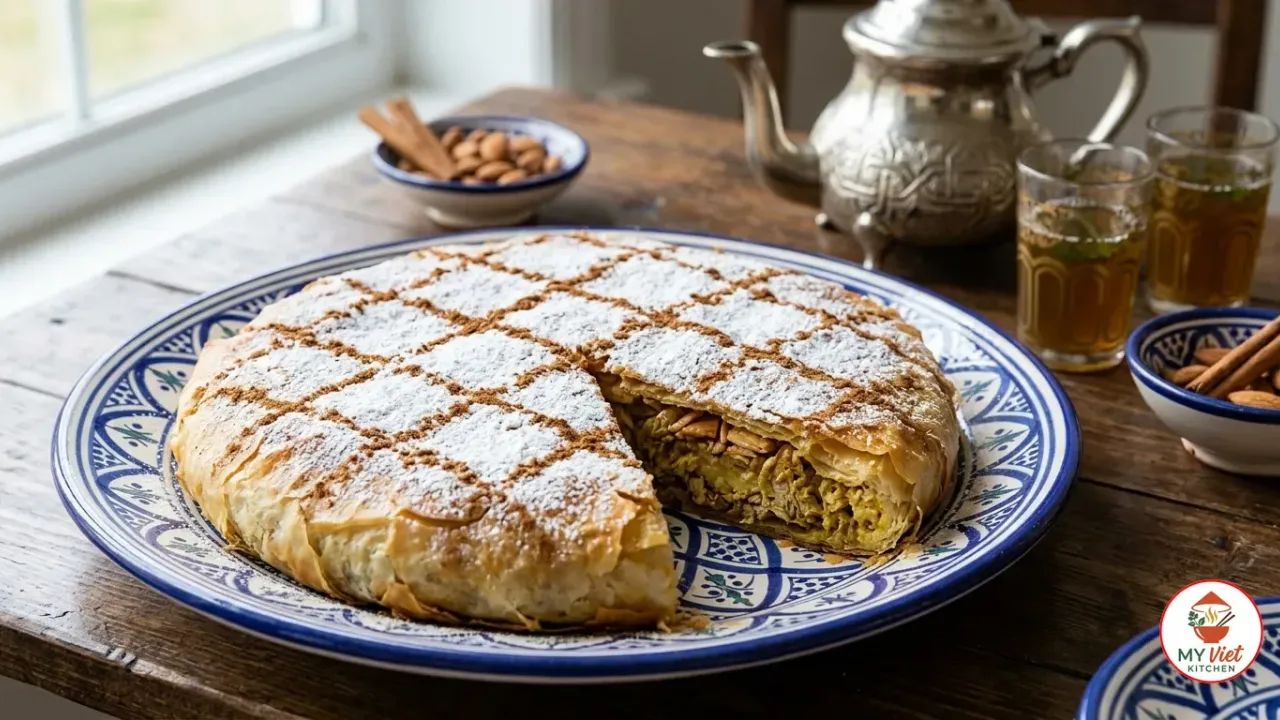
Pastilla is one of the most impressive dishes in all of Moroccan cuisine. Also known as bastilla or bisteeya, this layered pie wraps tender spiced chicken, silky egg custard, and cinnamon-sugar almonds inside shatteringly crispy warqa pastry. If you have ever wanted to try an authentic pastilla recipe at home, this guide walks you through every step so you can recreate this showstopping Moroccan pie in your own kitchen.
Prep Time: 45 minutes | Cook Time: 40 minutes | Servings: 8
Difficulty: Medium | Calories: ~480 per serving
What Makes Pastilla Special?
Pastilla stands apart from every other pie because it boldly mixes sweet and savory in each bite. The filling layers tender spiced chicken with a creamy egg custard and a crunchy almond mix laced with cinnamon and sugar. Then it all gets wrapped in paper-thin warqa pastry, baked until golden, and dusted with powdered sugar.
This dish traces its roots to the Andalusian Moors, who brought it to Morocco long ago. Cooks first made it with pigeon, but today most families use chicken for ease. In Morocco, pastilla appears at weddings, holidays, and big family meals. It signals joy and warmth, because making it takes patience, skill, and good ingredients.
The magic of this pastilla recipe lies in the contrasts. Crispy pastry yields to soft, aromatic filling. Warm spices like ginger and saffron meet the bright sweetness of cinnamon sugar. Each layer plays a distinct role. Together they create something far greater than the sum of their parts. Once you taste an authentic pastilla, you will see why Moroccans call it the crown jewel of their culinary tradition.

Choosing the Right Pastry for Your Pastilla Recipe
The pastry you pick will shape how your finished pastilla recipe turns out. Moroccan cooks use warqa by tradition, but you have good options at your local store.
- Warqa pastry (traditional choice): Paper-thin rounds made on an inverted hot pan. Warqa produces the most delicate crunch and authentic flavor. Look for it at Middle Eastern or North African specialty stores.
- Phyllo dough (best substitute): Widely available in the frozen section of most grocery stores. Brush each sheet generously with melted butter to replicate the richness of warqa. This is the most practical choice for home cooks.
- Spring roll wrappers: A workable option if you cannot find phyllo. They produce a slightly chewier texture but still crisp up nicely when baked with butter.
Ingredients for Pastilla
For the Chicken Filling:
- 1 whole chicken (about 3.5 lbs), cut into pieces
- 1 large onion, finely grated
- 1/2 cup fresh flat-leaf parsley, chopped
- 1/2 cup fresh cilantro, chopped
- 1 teaspoon ground ginger
- 1 teaspoon ground turmeric
- 1 teaspoon ground cinnamon
- 1/2 teaspoon ground white pepper
- 1/4 teaspoon saffron threads, crushed
- 3 tablespoons butter
- 2 tablespoons olive oil
- 1 cup water
- Salt to taste
For the Egg Layer:
- 6 large eggs, beaten
- Reserved cooking broth from the chicken
For the Almond Filling:
- 1.5 cups whole blanched almonds
- 1/3 cup granulated sugar
- 1 tablespoon ground cinnamon
- 2 tablespoons orange blossom water
For Assembly:
- 12 sheets warqa pastry or phyllo dough
- 1/2 cup melted butter for brushing
- Powdered sugar for dusting
- Ground cinnamon for garnish
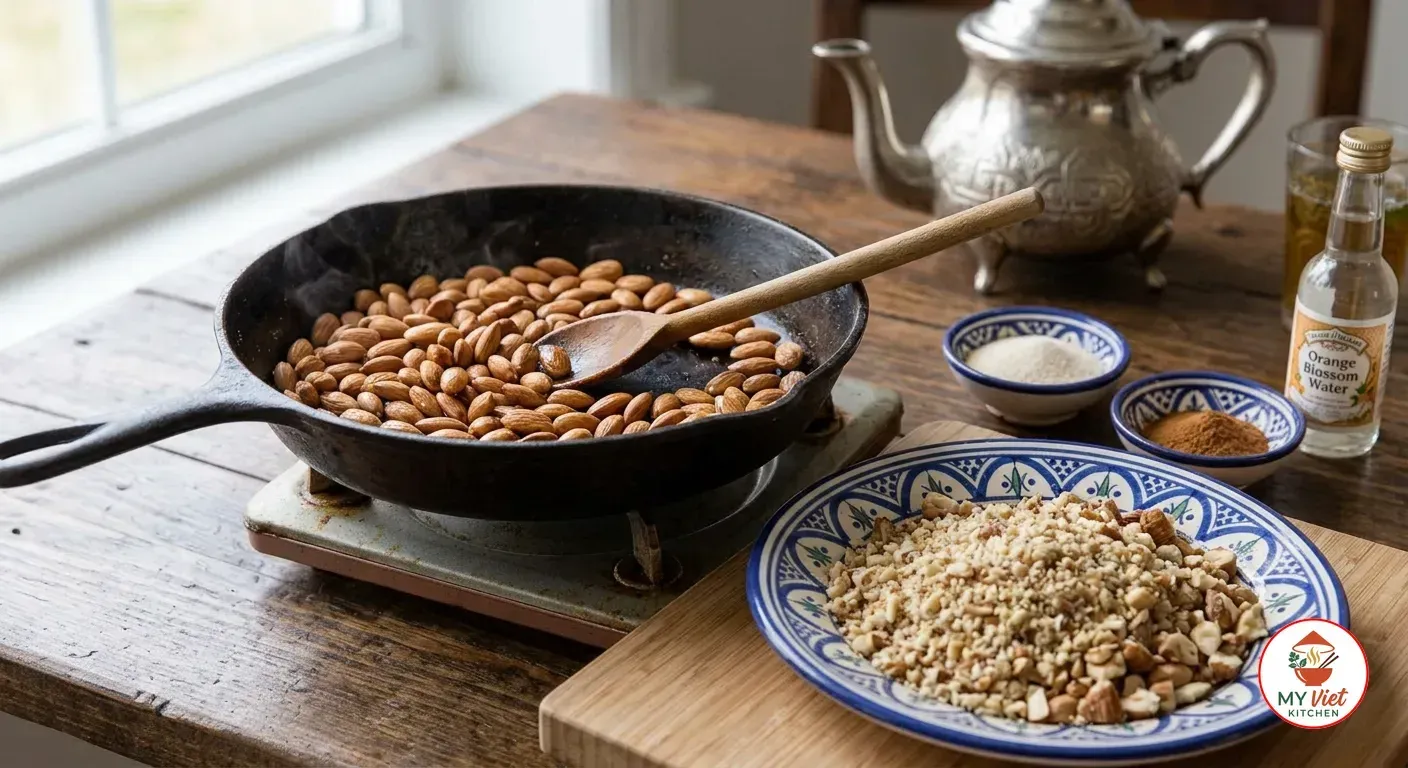
Pro tip: Toast your almonds in a dry skillet until they turn golden and fragrant. This step takes only five minutes but dramatically deepens the nutty flavor in the finished pastilla.
Step-by-Step Instructions
Step 1: Cook the Chicken in Spiced Broth
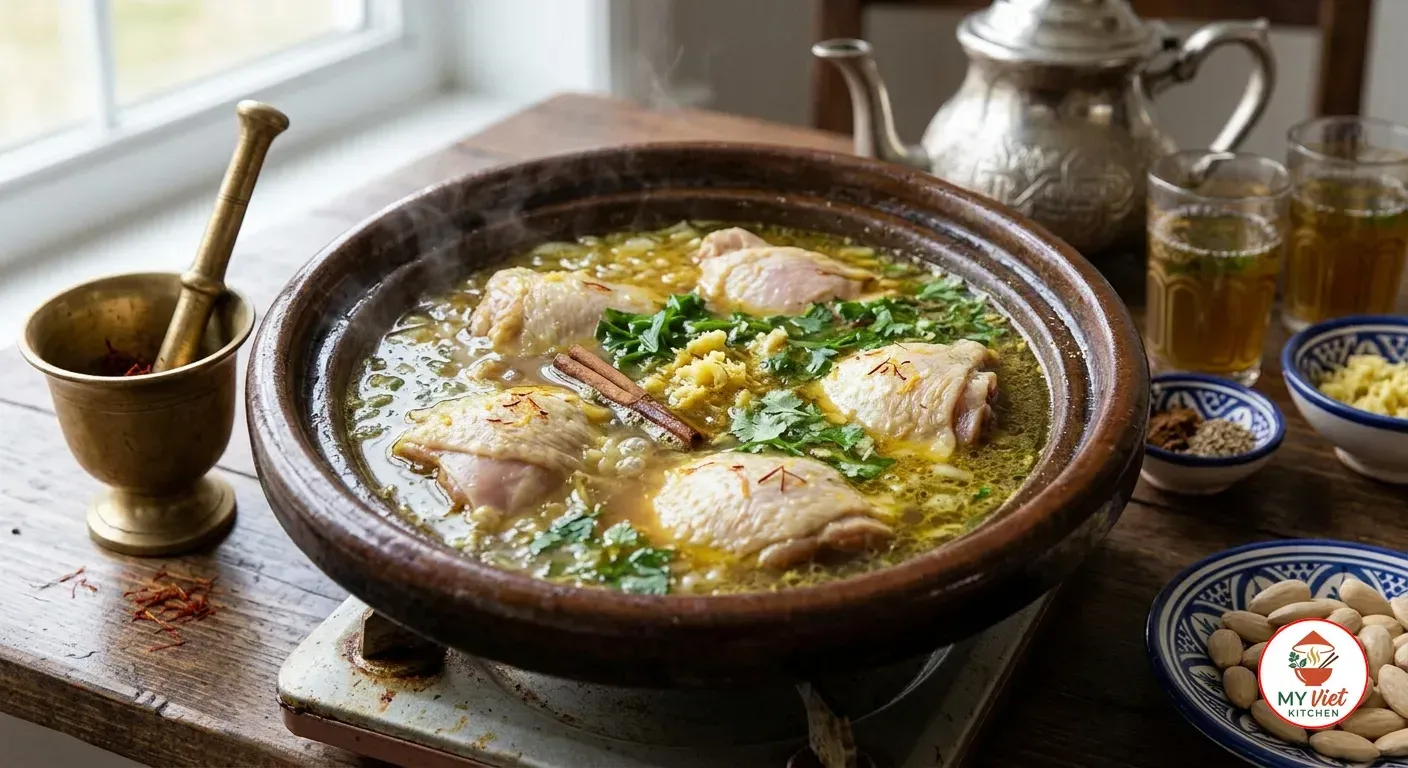
1Place chicken pieces in a large pot with the grated onion, parsley, cilantro, ginger, turmeric, cinnamon, white pepper, saffron, butter, olive oil, and water. Bring everything to a boil over medium-high heat. Then reduce the heat to low, cover the pot, and simmer gently for 45 minutes. The chicken should be very tender and falling off the bone. The slow simmer allows the spices to permeate every fiber of the meat, and the onion and herbs melt into a fragrant, concentrated broth.
Step 2: Shred the Chicken and Make the Egg Custard
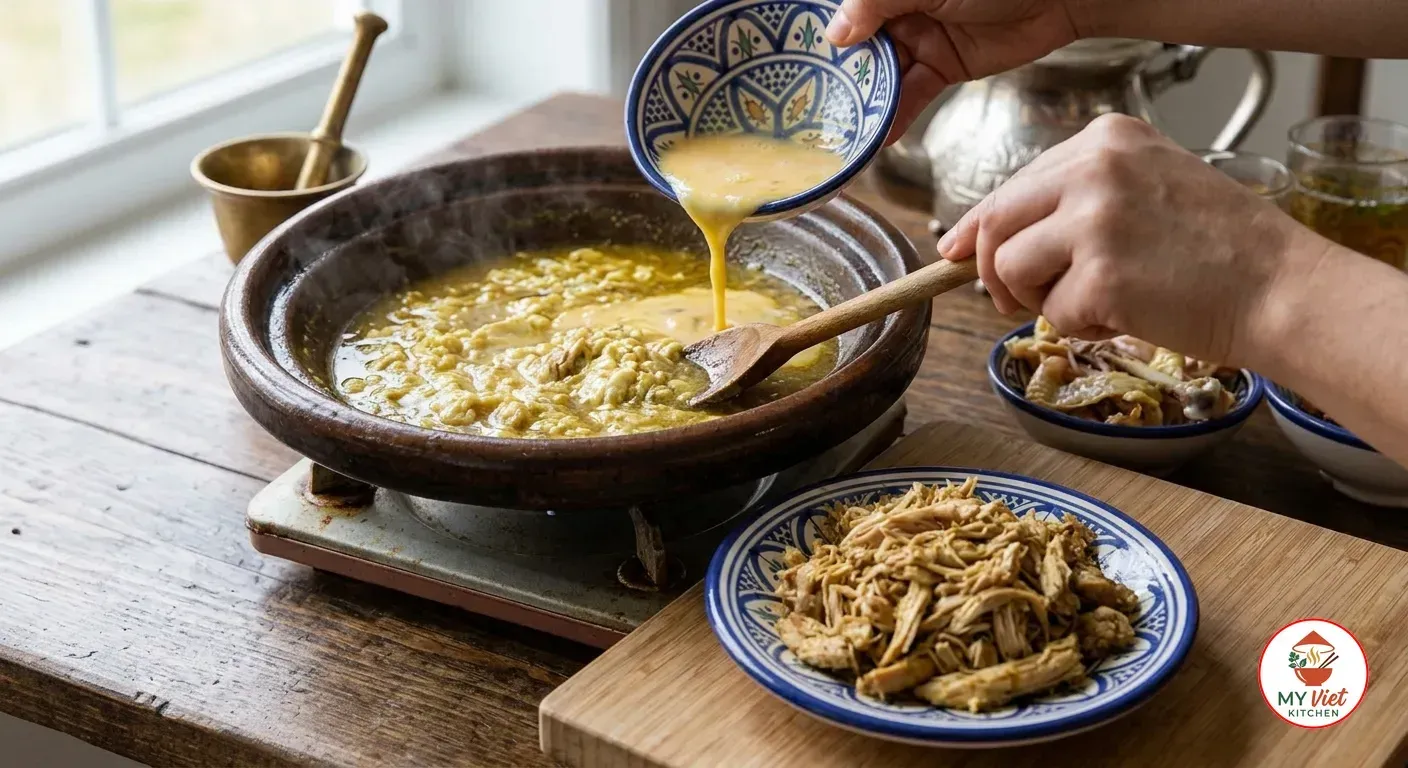
2Remove the chicken from the pot and place it on a cutting board. Shred the meat into small pieces using two forks, discarding the skin and bones. Set the shredded chicken aside. Return the pot with the remaining broth to medium-high heat and reduce the liquid until it becomes thick and saucy, about 10 minutes. Lower the heat to medium-low. Slowly pour in the beaten eggs while stirring constantly with a wooden spoon. Continue stirring for three to four minutes until the eggs form soft, creamy curds mixed into the reduced sauce. Remove the pot from heat immediately to prevent the eggs from overcooking.
Step 3: Prepare the Almond Filling
3Toast the blanched almonds in a dry skillet over medium heat. Stir them frequently for about five minutes until they turn golden brown and release a rich, nutty aroma. Transfer the almonds to a plate and let them cool completely. Once cool, pulse them in a food processor until coarsely chopped. You want a mix of fine pieces and larger chunks for textural interest. Transfer the chopped almonds to a bowl and mix in the sugar, cinnamon, and orange blossom water. The orange blossom water adds a floral note that is essential to authentic Moroccan pastilla.
Step 4: Assemble the Pastilla Layers
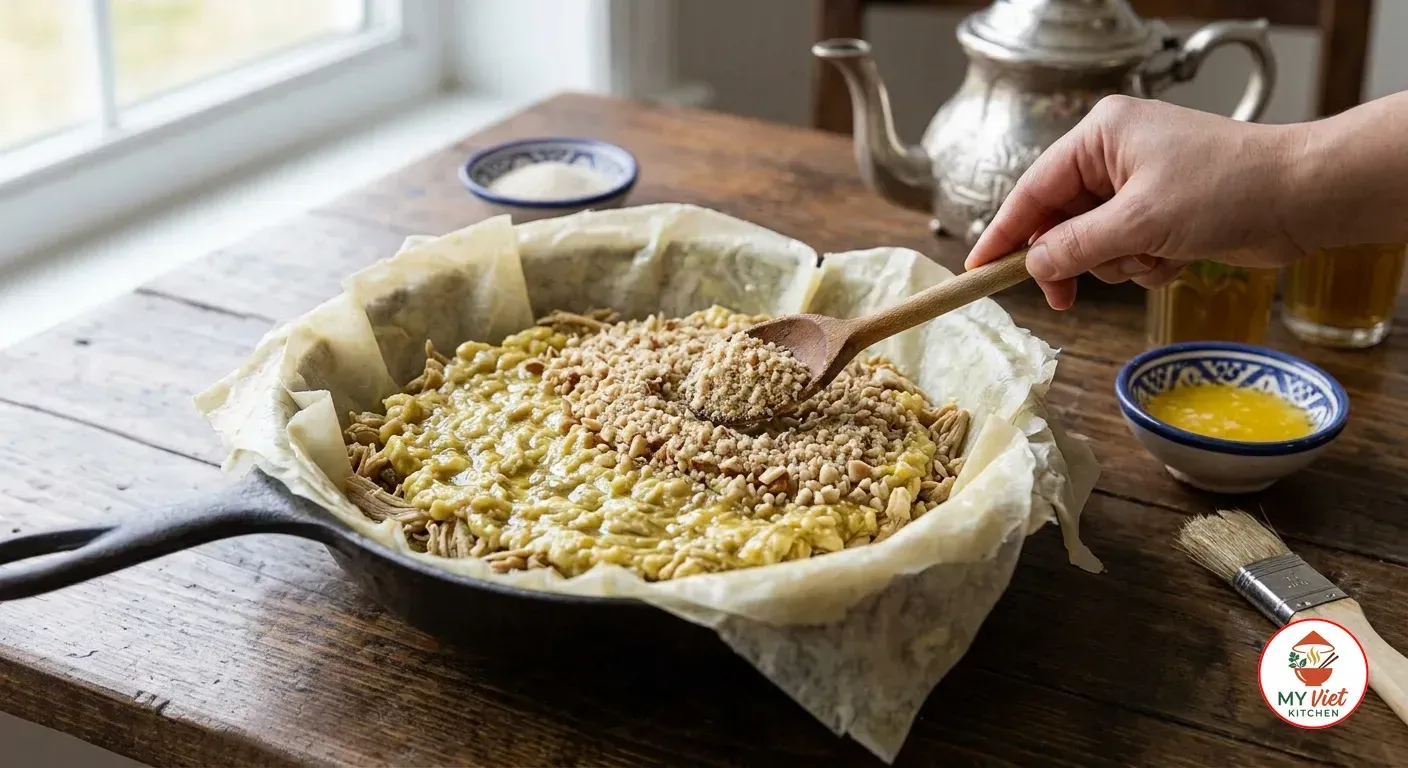
4Preheat your oven to 375 degrees Fahrenheit. Brush a 12-inch round baking pan or oven-safe skillet generously with melted butter. Lay down one sheet of warqa or phyllo dough, letting the edges hang over the sides. Brush it with melted butter. Repeat with five more sheets, rotating each one slightly so the overhang covers the entire rim evenly. Now spread the shredded chicken in an even layer over the pastry base. Spoon the egg custard mixture on top of the chicken and smooth it gently. Add the almond filling as the final layer inside the pie. Fold the overhanging pastry edges up and over the filling. Place the remaining six sheets on top one at a time, brushing each with butter and tucking the edges underneath the pie. Brush the entire top surface with a final coat of melted butter.
Step 5: Bake and Garnish
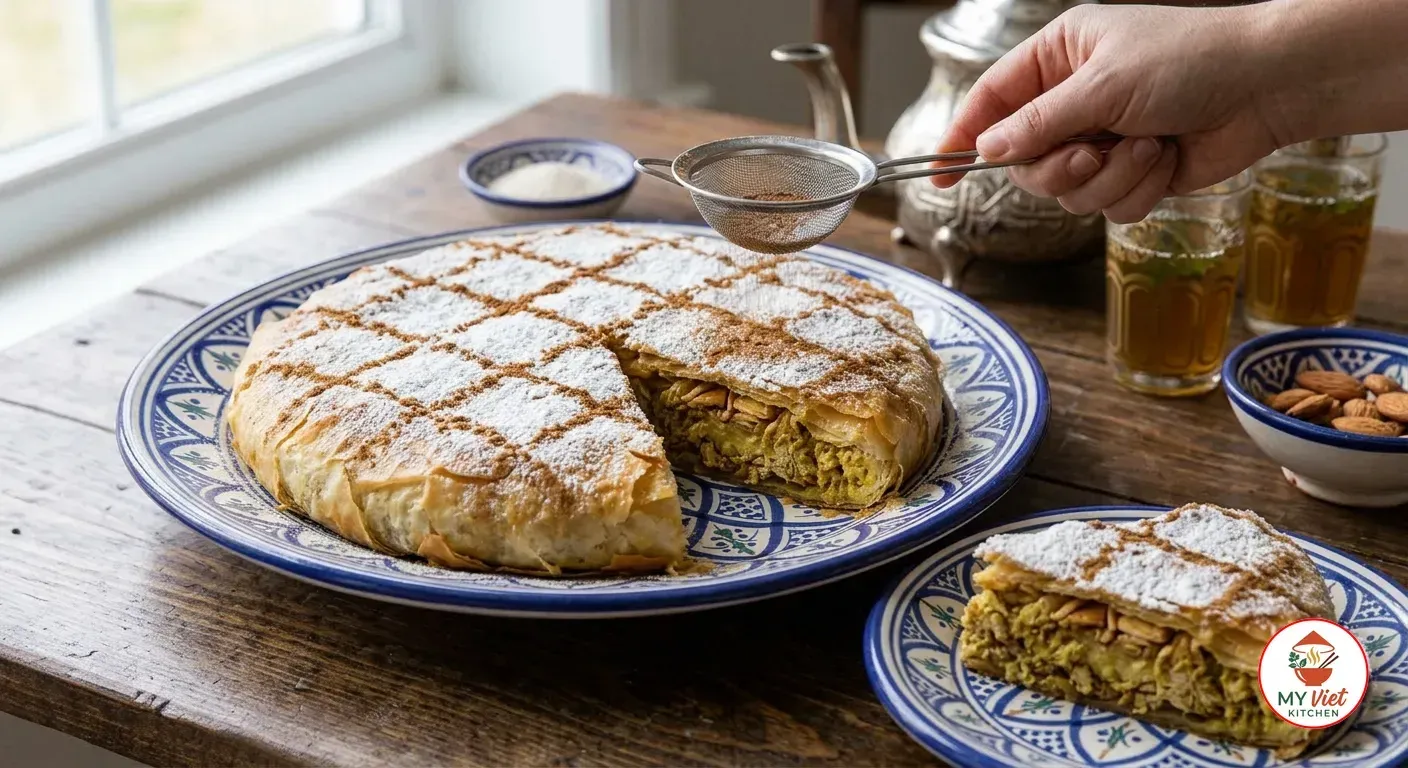
5Bake the pastilla in the preheated oven for 25 to 30 minutes until the pastry turns deep golden brown and feels crispy to the touch. Remove it from the oven and let it cool for five minutes. Carefully invert the pastilla onto a large serving platter. Dust the entire surface generously with powdered sugar. Then use a small sieve to create decorative diagonal lines or a diamond pattern with ground cinnamon on top. Serve the pastilla warm while the pastry remains at its crispiest.
Expert Tips for Perfect Results
Reduce the Broth Thoroughly
The most common reason pastilla turns soggy is excess moisture from the broth. After removing the chicken, reduce the liquid until it coats the back of a spoon. This concentrated sauce will bind the egg custard without releasing water during baking. Take your time with this step, because it makes the difference between a crispy pie and a disappointing one.
Keep the Pastry Covered
Warqa and phyllo dough dry out fast when left open to the air. Cover unused sheets with a damp towel while you work. Brush each layer with butter right after you place it. Dry pastry cracks instead of folding, so work quickly during this part of the pastilla recipe.
Use Orange Blossom Water Sparingly
Orange blossom water adds the floral perfume that sets a great pastilla recipe apart. However, too much will make the dish taste soapy. Start with two tablespoons and taste the mix before adding more. Quality matters, so look for pure distilled orange blossom water from Middle Eastern shops rather than fake versions.
Pastilla Variations Across Morocco
Moroccan families adapt their pastilla recipe based on local customs and what is in season. Here is how the most loved versions compare.
| Variation | Key Differences |
|---|---|
| Traditional Pigeon Pastilla (Fez) | Uses squab for richer, gamier flavor. Considered the most prestigious version. |
| Chicken Pastilla (Modern) | Most popular today. Milder flavor, easier to prepare, and more affordable. |
| Seafood Pastilla (Essaouira) | Features shrimp, fish, and Chinese vermicelli. Lighter and served without sugar. |
| Milk Pastilla (Dessert) | Sweet version filled with milk custard, almonds, and orange blossom cream. |
Serving Suggestions
In Morocco, pastilla traditionally arrives at the table as a grand first course or the centerpiece of a celebration meal. The host presents the whole pie on an ornate platter, and guests eat with their hands, tearing off pieces of the crispy pastry.
The Perfect Accompaniments:
- Moroccan salad: A simple tomato and cucumber salad dressed with lemon juice and olive oil cuts through the richness of the pie.
- Harira soup: Serve a small bowl of harira alongside pastilla for a complete Moroccan feast, especially during Ramadan celebrations.
- Moroccan couscous: Fluffy steamed couscous with vegetables provides a hearty companion that rounds out the meal beautifully.
- Pickled vegetables: Tangy pickled carrots or turnips add a refreshing contrast to the sweet and savory flavors of the pastilla.
Beverage Pairings:
- Moroccan mint tea: The classic pairing. Sweet, refreshing mint tea complements the warm spices and cleanses the palate between bites.
- Almond milk: A chilled glass of almond milk echoes the nutty flavors in the pie and provides a cooling contrast.
- Gewurztraminer wine: For those who enjoy wine, this aromatic white pairs beautifully with the cinnamon and floral notes of pastilla.
Storage and Reheating
Refrigerator: Store leftover pastilla in an airtight container for up to 3 days. The flavors actually deepen overnight as the spices continue to meld together.
Freezer: Freeze unbaked assembled pastilla wrapped tightly in plastic wrap and aluminum foil for up to 2 months. Bake directly from frozen at 375 degrees Fahrenheit, adding 10 to 15 extra minutes to the baking time.
Reheating: Reheat individual slices in a 350 degree Fahrenheit oven for 10 to 15 minutes until the pastry crisps up again. Avoid microwaving, because it will make the delicate pastry layers turn soft and soggy. Add a fresh dusting of powdered sugar after reheating for the best presentation.
Common Mistakes to Avoid
1. Skipping the Broth Reduction
Leaving too much liquid in the filling is the number one mistake home cooks make with pastilla. Excess moisture seeps into the pastry during baking and creates a soggy bottom. Always reduce the broth until it is thick and concentrated before adding the eggs. This single step prevents the most frustrating outcome.
2. Overcooking the Eggs
The egg layer should form soft, moist curds rather than dry scrambled eggs. Stir constantly over medium-low heat and remove the pot from the burner the moment the eggs set into a creamy, custard-like consistency. They will continue cooking from residual heat, so err on the side of slightly underdone.
3. Using Stale Spices
Moroccan cooking depends heavily on the quality and freshness of spices. Stale ginger, cinnamon, and saffron will produce a flat, dull flavor no matter how perfectly you execute the technique. Buy whole spices when possible and grind them fresh. At minimum, replace ground spices every six months for the best results in your pastilla.
Frequently Asked Questions
What is pastilla?
Pastilla is a traditional Moroccan pie that layers spiced shredded chicken or pigeon with a creamy egg custard and sweetened toasted almonds inside crispy warqa pastry. The finished pie gets dusted with powdered sugar and cinnamon. It is one of the most celebrated dishes in Moroccan cuisine, typically served at weddings, holidays, and important family gatherings.
Can you make pastilla with phyllo dough?
Yes, phyllo dough works excellently as a substitute for traditional warqa pastry. Brush each sheet generously with melted butter before layering to achieve a similar flaky, golden result. Phyllo dough is available in the frozen section of most grocery stores, making it the most practical option for home cooks preparing this pastilla recipe outside of Morocco.
Is pastilla sweet or savory?
Pastilla is both sweet and savory simultaneously, which is part of what makes it so remarkable. The chicken filling brings warm, savory spices. The almond layer contributes sweetness from sugar and cinnamon. Meanwhile, the powdered sugar dusting reinforces the sweet element. This interplay of contrasting flavors defines the dish and reflects a core principle of Moroccan culinary philosophy.
What protein can you use besides chicken?
The original pastilla uses pigeon, which remains the most traditional and prized version in cities like Fez. Seafood pastilla featuring shrimp and white fish is popular in coastal areas. You can also make a vegetarian version using seasoned mushrooms and caramelized onions as the main filling, though this is a modern adaptation rather than a traditional recipe.
How long does it take to make pastilla from scratch?
Plan for about 85 minutes total, including 45 minutes of prep work and 40 minutes of cooking and baking. The chicken needs 45 minutes to simmer, but you can prepare the almond filling and organize your pastry sheets during that time. Assembly takes about 10 minutes once all the components are ready.
Variations and Adaptations
Seafood Pastilla:
Replace the chicken with a mix of shrimp, white fish, and Chinese vermicelli noodles. Season with garlic, ginger, and a squeeze of fresh lemon juice. Seafood pastilla typically skips the sugar dusting and almond layer, relying instead on the natural sweetness of the shellfish. This lighter version originated in the coastal city of Essaouira.
Mini Pastilla Rolls:
Instead of one large pie, roll the filling into individual cigar-shaped pastries using single sheets of warqa or phyllo. These bite-sized versions are perfect for appetizers and party platters. Bake them at 375 degrees Fahrenheit for 15 to 20 minutes until golden and crispy. They also freeze beautifully for make-ahead entertaining.
Vegetarian Pastilla:
Create a meat-free version by sauteing a generous amount of mixed mushrooms with caramelized onions, garlic, and the same Moroccan spice blend. Keep the almond layer and egg custard for authenticity. The mushrooms provide a rich, earthy depth that satisfies even dedicated meat lovers.
The Cultural Significance of Pastilla
Pastilla holds a place of deep honor in Moroccan food culture. Families pass the recipe down through the years, and each home guards its own version with pride. In Fez, the culinary heart of Morocco, pigeon pastilla is the peak of local gastronomy. The dish calls for patience and care. Moroccan cooks see these as acts of love and respect for their guests.
The sweet-and-savory blend in pastilla reflects a core idea in Moroccan cooking. Instead of keeping flavors apart, Moroccan food embraces contrast. This pastilla recipe shows that idea well, because every bite gives warmth, sweetness, crunch, and spice at once. Serving pastilla to guests sends a clear message: you matter, and this meal took real care to prepare.
During Moroccan celebrations, pastilla often appears alongside other iconic dishes like tagine and couscous. Together, these dishes form a feast that tells the story of Morocco’s rich culinary heritage, shaped by Berber, Arab, Andalusian, and French influences over many centuries.
Conclusion
This pastilla recipe is fully doable at home, even if you have never used warqa or phyllo before. Focus on three things: reduce your broth well, keep the egg custard soft, and toast your almonds to a deep gold. These steps will give you a great result every time. The layering part is quite forgiving, so do not worry about getting it perfect on your first try.
Once you slice into that crispy, golden shell and reveal the fragrant layers beneath, you will experience one of the most rewarding moments in home cooking. For more Moroccan and North African recipes, explore our collection of Moroccan dishes and bring the flavors of Morocco into your kitchen today.