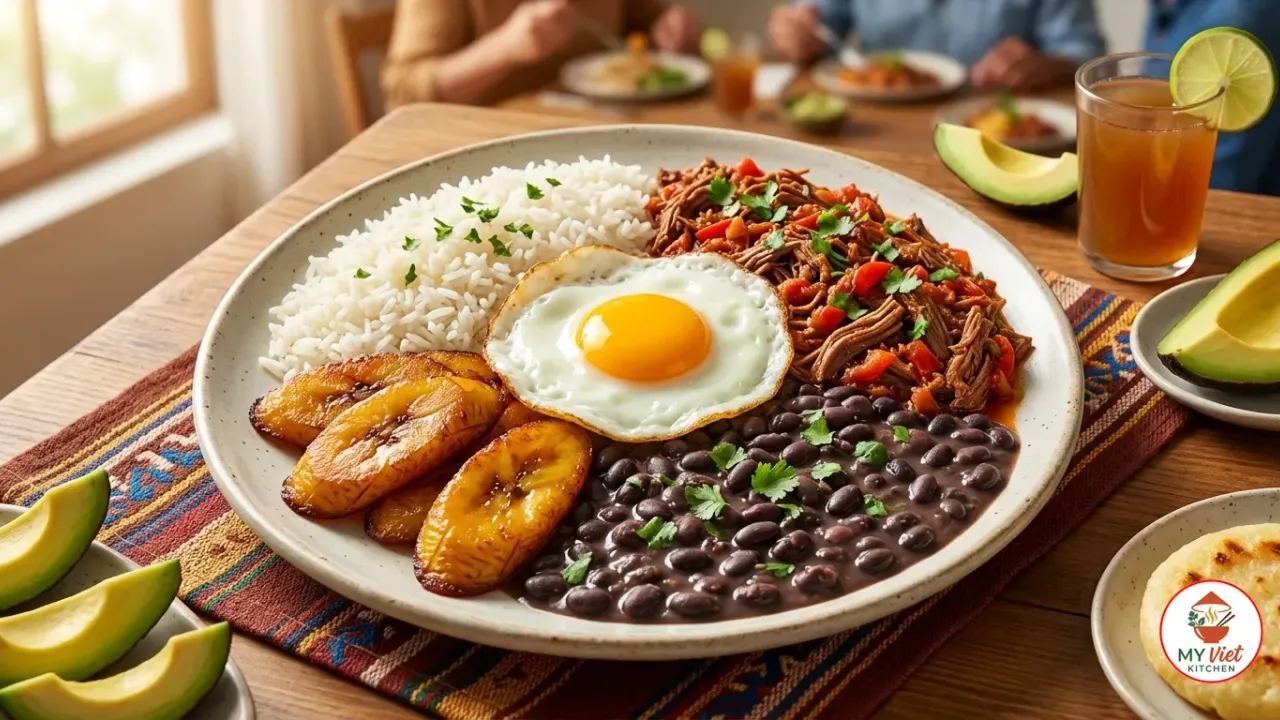
Pabellon criollo is the undisputed national dish of Venezuela, and one taste reveals exactly why. This magnificent plate brings together tender shredded beef simmered in a rich tomato sofrito, creamy slow-cooked black beans, fluffy white rice, and golden fried sweet plantains. Each component contributes a distinct flavor and texture, and together they create a harmony that defines Venezuelan cooking. This pabellon criollo recipe guides you through every step, so you can recreate this beloved Latin American classic at home with authentic results.
Prep Time: 30 minutes | Cook Time: 2 hours 30 minutes | Servings: 6
Difficulty: Medium | Calories: ~620 per serving
What Makes Pabellon Criollo Special?
Pabellon criollo is not simply a meal. It is a bold statement on a plate. People in Venezuela see it as their most prized food tradition, and it shows up on tables from Caracas to Maracaibo for daily lunches and festive events alike. Unlike many national dishes that rely on one star item, pabellon criollo calls for four parts that must all come together well. Each part stands for a pillar of the country’s identity: European roots in the beef, African heritage in the plantains, native origins in the beans, and colonial ties in the rice.
What truly sets pabellon criollo apart is how the flavors play off each other in every bite. Savory, cumin-spiced beef sits next to the earthy sweetness of black beans. Meanwhile, fluffy rice soaks up both sauces, and sweet fried plantains add pops of sugar. As a result, every forkful tastes different based on what you scoop up. This lively contrast is what makes pabellon criollo so deeply satisfying.
This dish also reflects a deep Venezuelan love of cooking with patience. Beef simmers low and slow until it falls apart. Beans cook gently for hours until they form a thick, velvety broth. Nothing about pabellon criollo is rushed, and that slow care is what builds the rich depth of flavor. Furthermore, every part of this meal is very affordable. It uses humble items and turns them into something truly great.

Choosing the Right Beef for Pabellon Criollo
Your choice of beef cut shapes the taste and feel of the carne mechada. Cooks in Venezuela are very picky about this, because a bad cut gives you dry, stringy meat or a soft mess that lacks the long fibers you need. Here are your best options.
- Flank steak (best choice): This is the traditional cut for pabellon criollo. Flank steak has a pronounced grain that shreds into beautiful long fibers after slow cooking. It holds its structure while remaining tender and absorbs the sofrito sauce exceptionally well.
- Beef brisket: An excellent alternative with rich beefy flavor and good marbling. Brisket takes slightly longer to cook but produces incredibly moist, tender shreds. It works especially well if you prefer a richer, more succulent result.
- Skirt steak: Another popular option in Venezuelan households. Skirt steak shreds easily and cooks faster than flank or brisket. However, it can be slightly tougher if not simmered long enough, so allow at least 90 minutes of cook time.
Ingredients for Pabellon Criollo
For the Shredded Beef (Carne Mechada):
- 2 pounds flank steak or beef brisket
- 1 large onion, quartered (for boiling)
- 4 garlic cloves, smashed
- 2 bay leaves
- 1 teaspoon whole black peppercorns
- 2 tablespoons vegetable oil
- 1 large onion, finely diced (for sofrito)
- 1 large red bell pepper, finely diced
- 4 garlic cloves, minced
- 1 cup canned crushed tomatoes
- 1 tablespoon ground cumin
- 1 teaspoon smoked paprika
- Salt and black pepper to taste
- Fresh cilantro for garnish
For the Black Beans (Caraotas Negras):
- 2 cups dried black beans, soaked overnight
- 1 medium onion, halved
- 4 garlic cloves, smashed
- 1 teaspoon ground cumin
- 2 tablespoons vegetable oil
- 3 tablespoons sugar
- Salt to taste
For the White Rice (Arroz Blanco):
- 3 cups long-grain white rice
- 4 cups water
- 1 tablespoon vegetable oil
- 1 teaspoon salt
For the Fried Plantains (Platanos Maduros):
- 4 ripe plantains (black-skinned), peeled and sliced diagonally
- Vegetable oil for frying
Pro tip: The secret to deeply flavorful carne mechada is reserving a cup of the beef cooking broth and adding it to the sofrito. This rich, collagen-laden liquid melds everything together and gives the shredded beef a silky, saucy consistency instead of drying out in the skillet.
Step-by-Step Instructions
Step 1: Boil and Shred the Beef
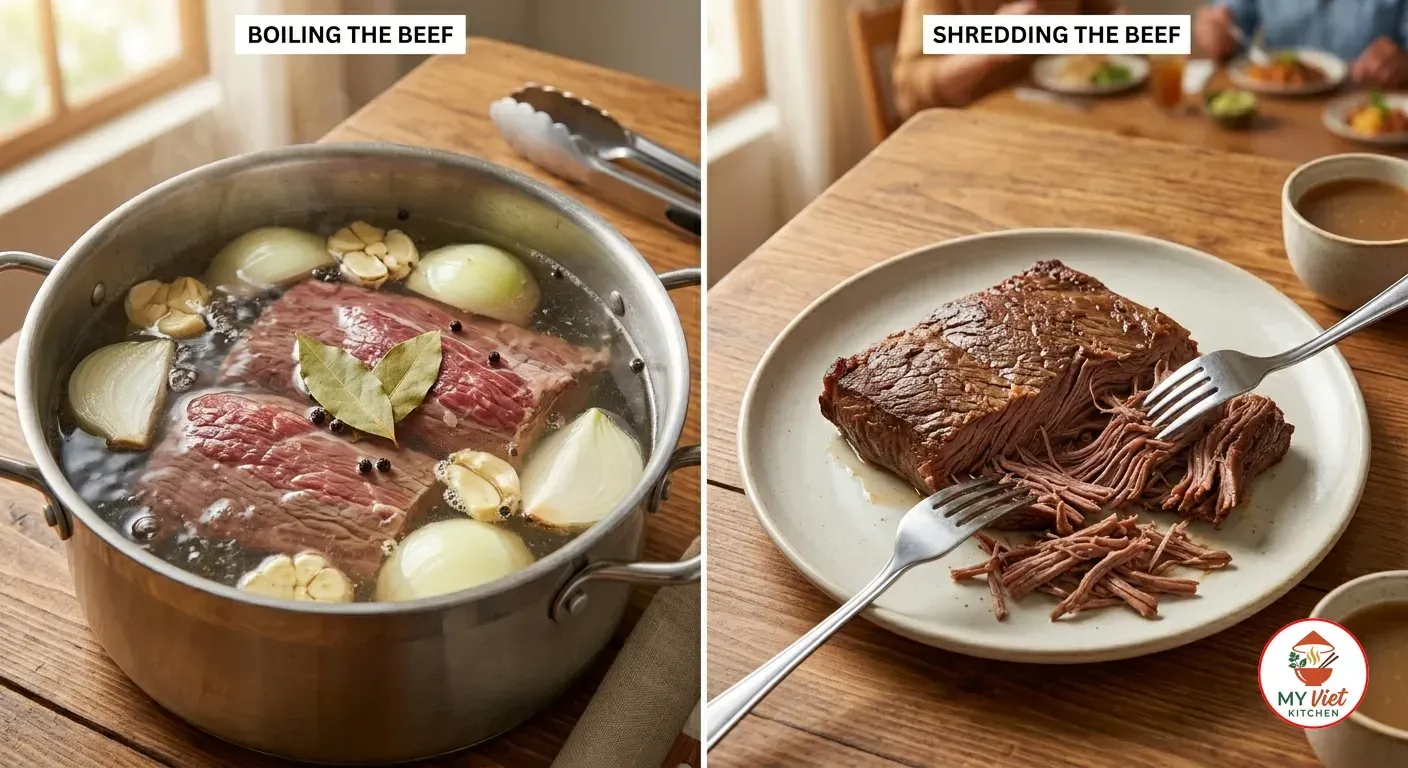
1 Place the flank steak in a large pot and add the quartered onion, smashed garlic, bay leaves, and whole peppercorns. Cover everything with cold water by about two inches. Bring to a boil over high heat, then immediately reduce to a gentle simmer. Skim off any foam that rises to the surface during the first 10 minutes. This keeps the broth clean and clear.
Simmer the beef for 1.5 to 2 hours until it is completely fork-tender and pulls apart easily. The exact time depends on the thickness of your cut. Once tender, remove the meat from the broth and let it cool for 10 minutes. Then shred it along the grain using two forks, pulling the fibers apart into thin strips. Reserve at least 1 cup of the cooking broth for the next step, because this liquid carries tremendous flavor.
Step 2: Prepare the Sofrito and Season the Beef
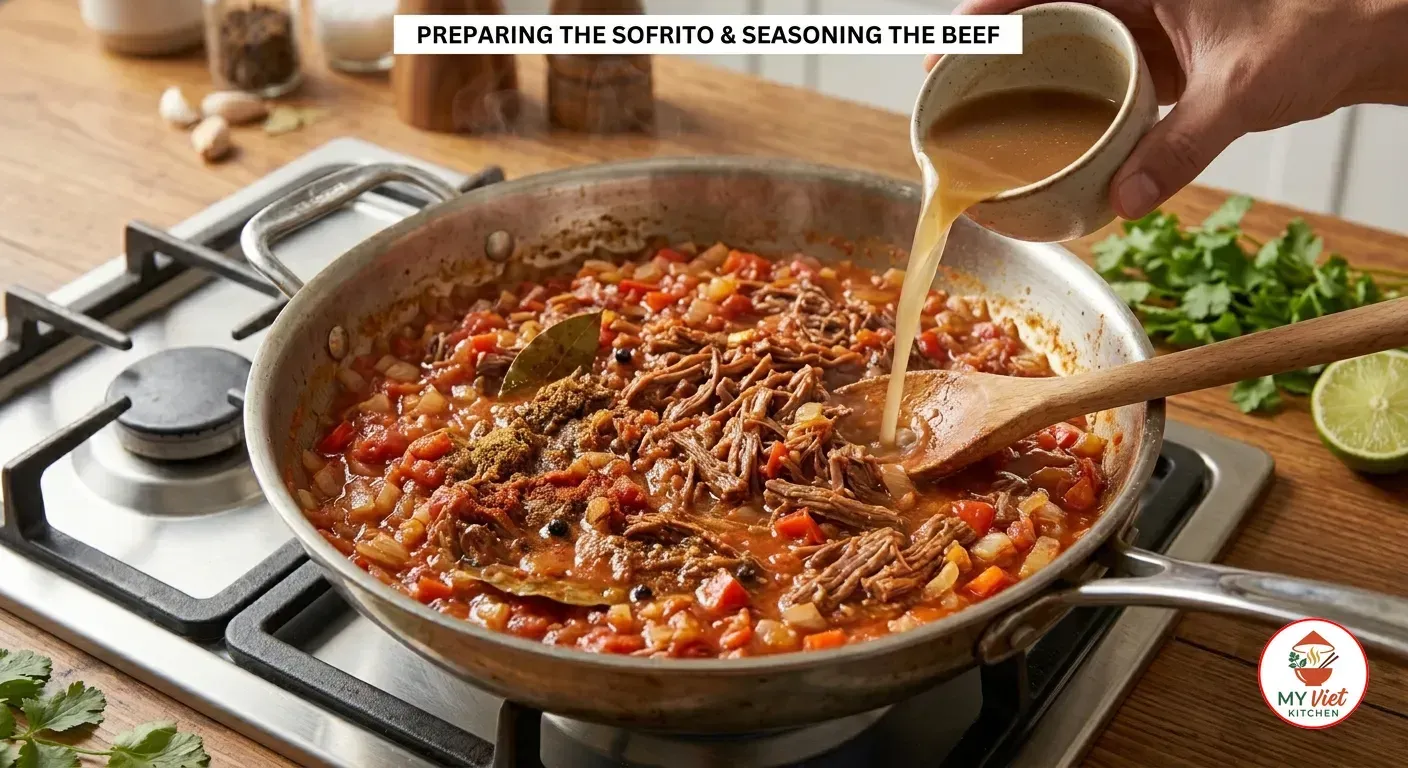
2 Heat 2 tablespoons of vegetable oil in a large skillet over medium heat. Add the finely diced onion and red bell pepper. Saute for 5 to 6 minutes until the vegetables soften and turn translucent. The bell pepper adds sweetness that is essential to the authentic flavor. Next, add the minced garlic and cook for just 1 minute until fragrant. Be careful not to burn it.
Stir in the crushed tomatoes, ground cumin, and smoked paprika. Cook this mixture for about 5 minutes until the sauce thickens and the raw tomato smell fades. Then add all of the shredded beef and pour in the reserved cup of cooking broth. Stir everything together and simmer uncovered for 15 to 20 minutes. During this time, the beef absorbs the sofrito and the liquid reduces into a rich, clinging sauce. Season generously with salt and pepper.
Step 3: Cook the Black Beans
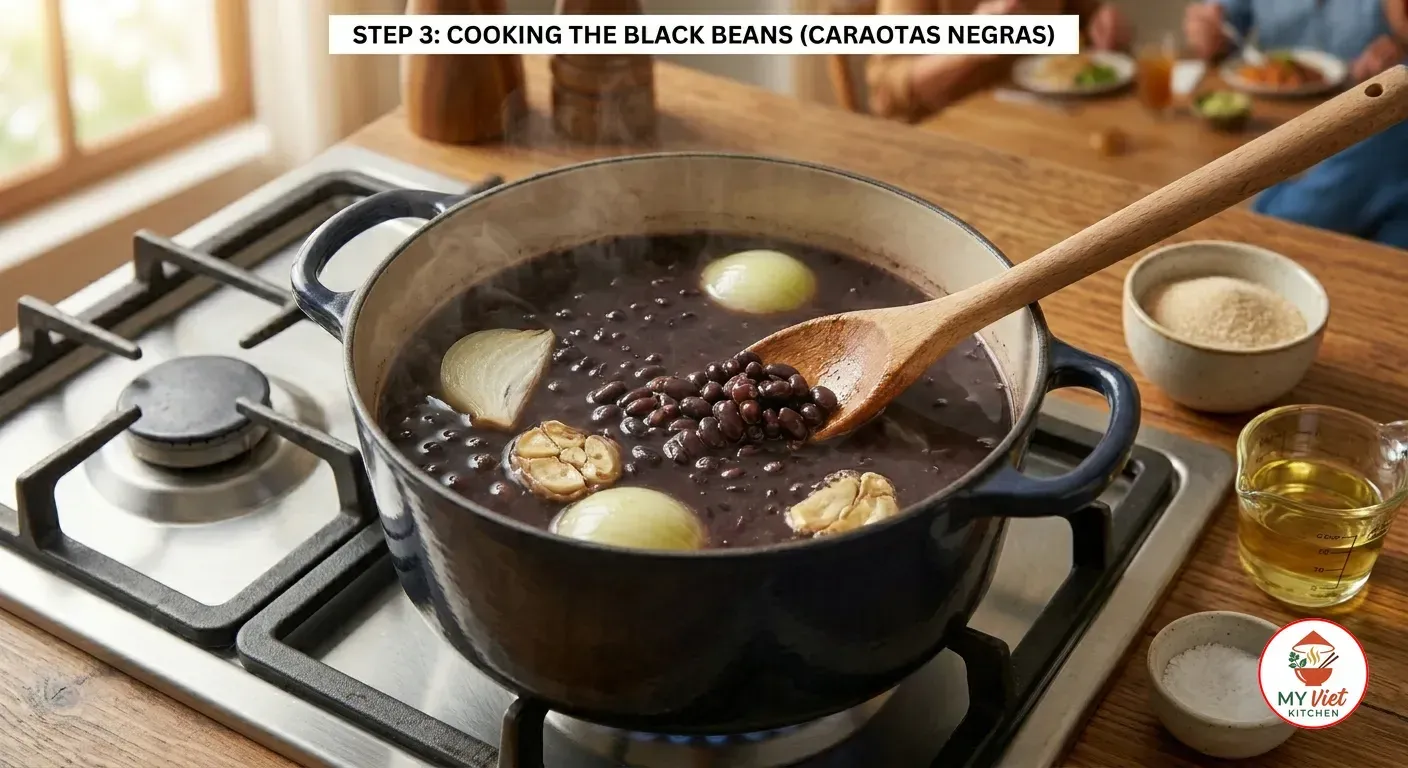
3 Drain the overnight-soaked beans and transfer them to a large pot. Add fresh water to cover the beans by about 3 inches. Drop in the halved onion, smashed garlic, and ground cumin. Bring to a boil over high heat, then reduce to a steady simmer. Cook for 1.5 to 2 hours until the beans are completely tender and creamy inside.
During the last 30 minutes, add the sugar, oil, and salt. Sugar is a classic touch in Venezuela. It tames the earthy bite of the beans and gives the broth a soft, round sweetness. To thicken the broth, press a few spoonfuls of beans against the side of the pot with a wooden spoon. This frees up starch and makes the thick, creamy texture that real caraotas negras are known for.
Step 4: Cook the White Rice
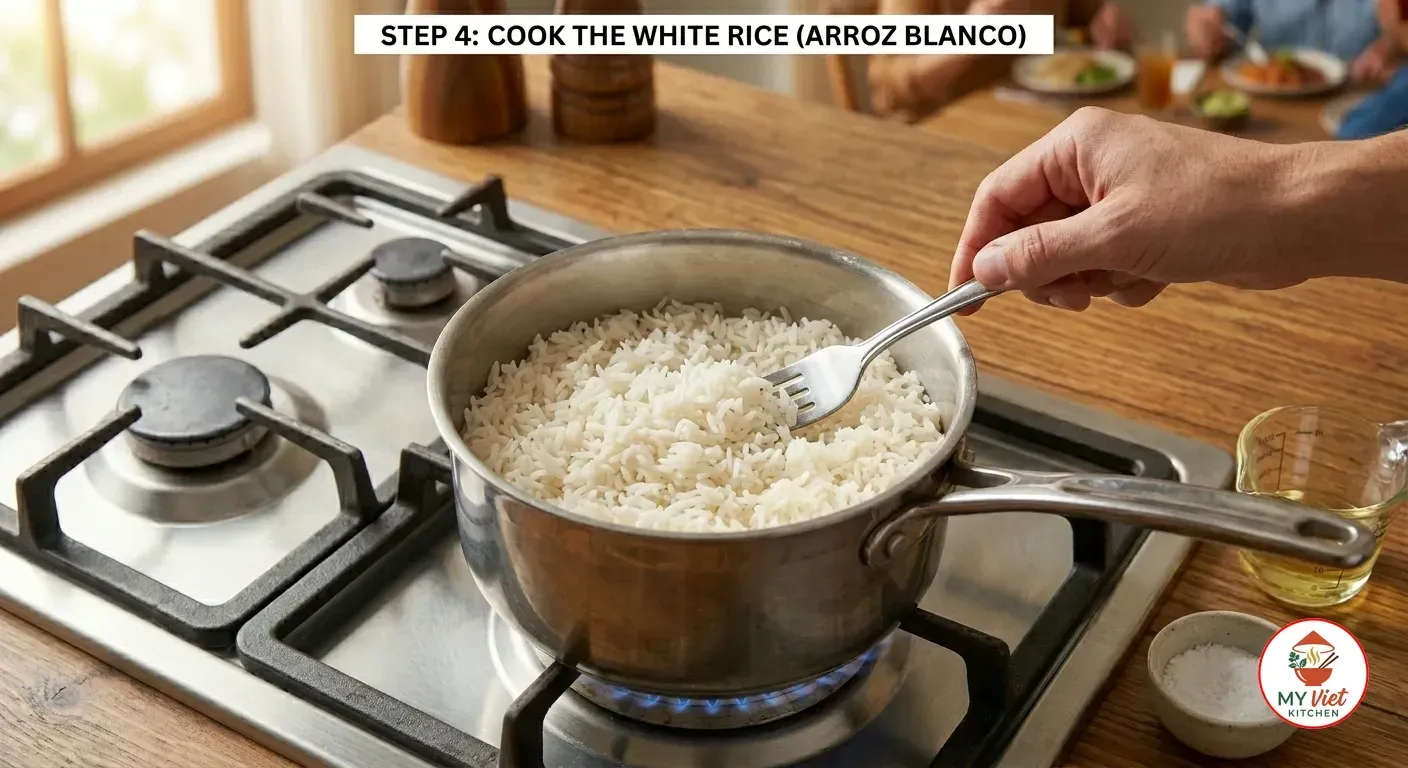
4 Rinse the rice under cold running water until the water runs clear. This removes excess surface starch and prevents the rice from becoming gummy. In a medium pot, heat the oil over medium heat. Add the rinsed rice and toast it for 1 to 2 minutes, stirring constantly. Toasting the grains in oil before adding water creates a subtle nutty flavor and helps each grain stay separate after cooking.
Pour in the water and salt. Bring to a vigorous boil, then immediately reduce the heat to the lowest possible setting. Cover the pot tightly and cook for 18 to 20 minutes without lifting the lid. After the time is up, remove the pot from heat. However, keep the lid on for an additional 5 minutes to let the rice finish steaming. Finally, fluff gently with a fork. The grains should be perfectly dry, fluffy, and separate.
Step 5: Fry the Plantains
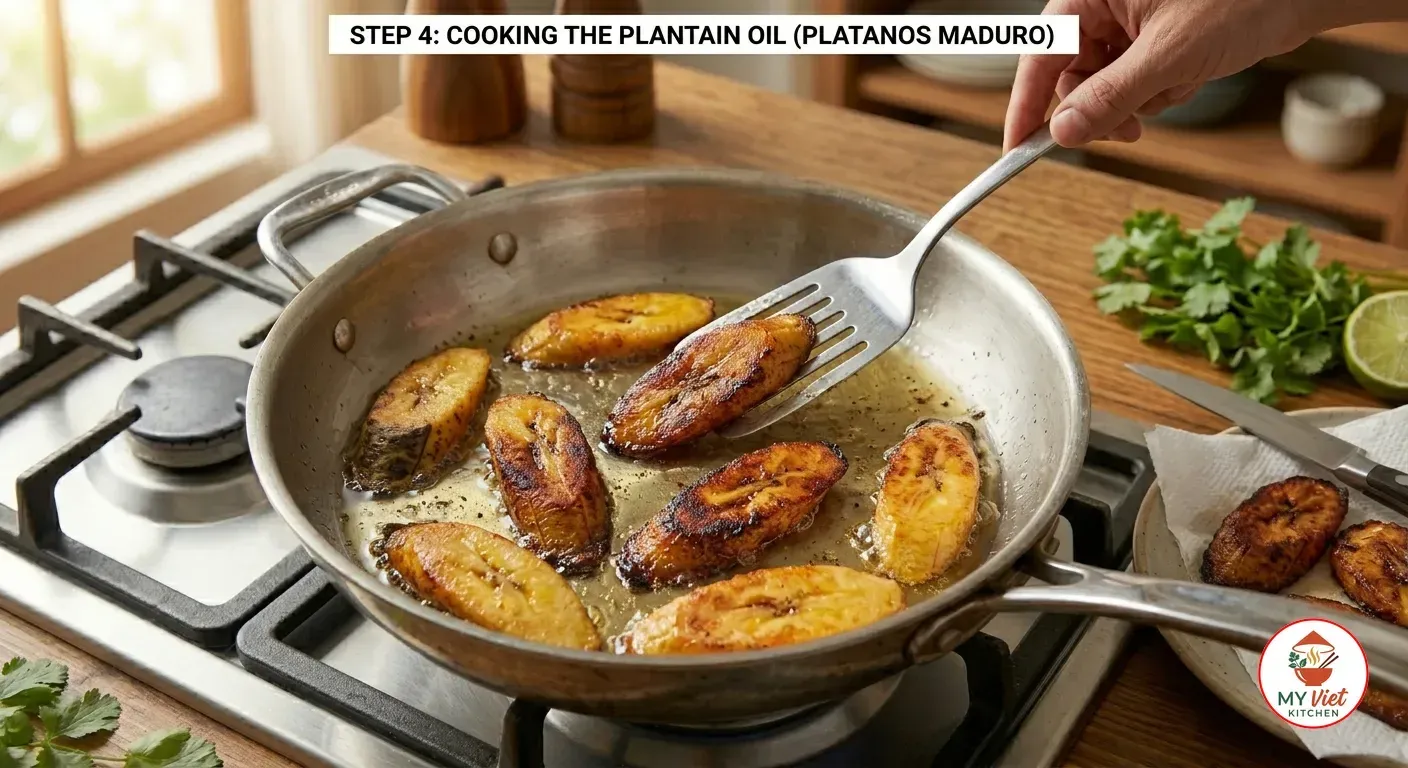
5 Pour about half an inch of vegetable oil into a heavy skillet and heat it over medium heat until it reaches approximately 350 degrees Fahrenheit. While the oil heats, peel the ripe plantains and slice them diagonally into pieces about half an inch thick. The diagonal cut creates more surface area for caramelization.
Carefully place the plantain slices into the hot oil in a single layer, working in batches to avoid overcrowding. Fry for 2 to 3 minutes per side until they turn deep golden brown with slightly crispy edges. The natural sugars in ripe plantains caramelize rapidly, so watch them closely. Transfer the finished slices to a paper towel-lined plate. They should be golden on the outside and soft, sweet, and almost custardy on the inside.
Step 6: Assemble and Serve
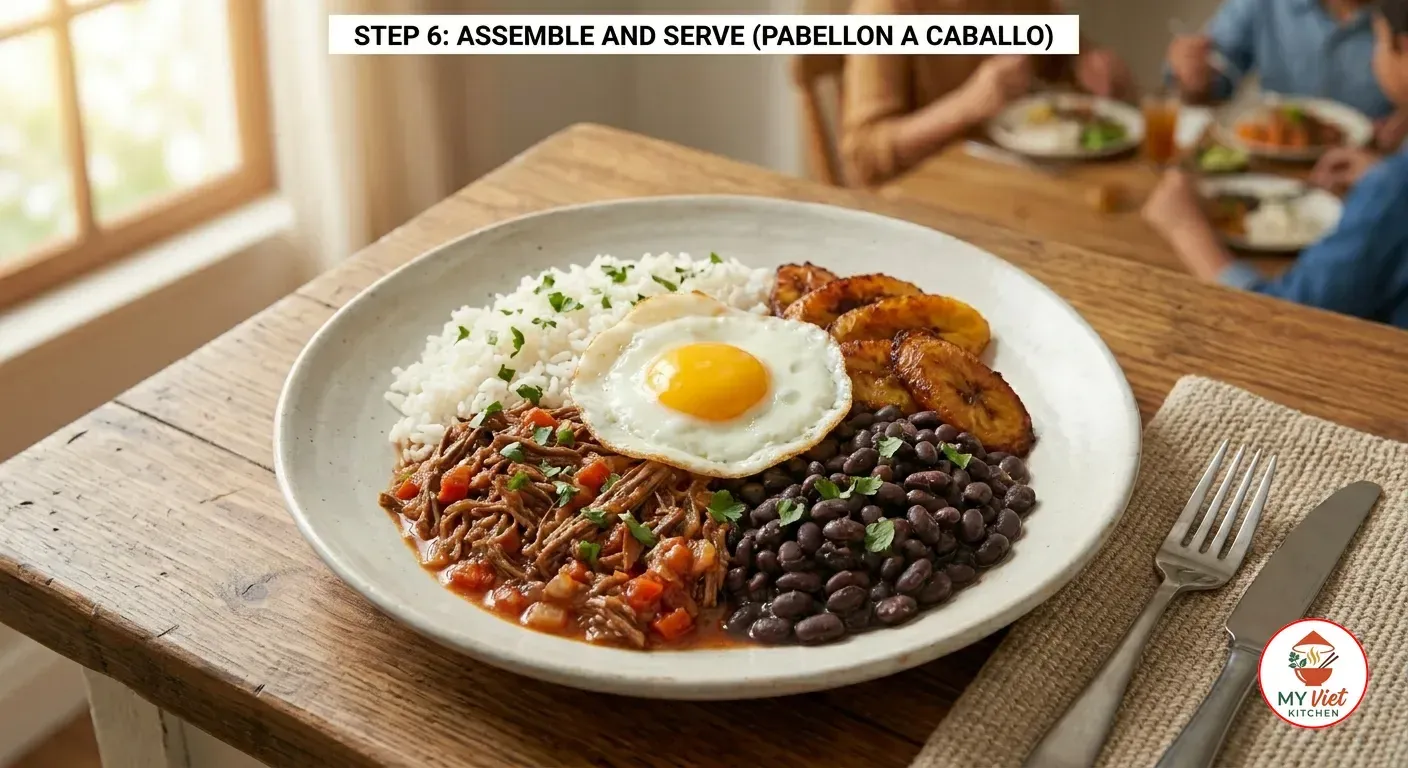
6 Now comes the most satisfying moment. Mound a generous portion of fluffy white rice in the center of each plate. Place the saucy shredded beef on one side and spoon the black beans with their thick, dark broth on the other. Arrange the golden fried plantain slices alongside everything. Garnish with fresh cilantro leaves for color and brightness. For the traditional “pabellon a caballo” variation, top the entire plate with a perfectly fried egg, letting the runny yolk act as an extra sauce.
Expert Tips for Perfect Pabellon Criollo
Shred the Beef While Still Warm
Always shred the beef while it is still warm but cool enough to touch. Warm meat pulls apart into long, even fibers much more easily than cold meat. If the beef cools all the way down, the fibers tighten and clump up. As a result, you get chunky, uneven bits instead of the thin strands that define real carne mechada.
Use Very Ripe Plantains
Your plantains must be very ripe with skins that are mostly black. At this stage, the starch has fully turned to sugar. So they brown and crisp up nicely when fried. They also give you the sweet contrast you need next to the savory beef and earthy beans. Green or half-ripe plantains taste starchy and do not give the right sweetness at all.
Add Sugar to the Black Beans
Many cooks outside Venezuela skip the sugar in the beans, but this is a mistake. Real caraotas negras always include a few spoons of sugar. It does not make the beans taste sweet. Instead, it rounds out the earthy edge and gives a richer, more balanced taste. Think of it the same way you add a pinch of sugar to tomato sauce.
Pabellon Criollo vs. Similar Latin Dishes
Many Latin American countries have dishes with similar core items. However, each one reflects its own local traditions and flavor style. Here is how pabellon criollo stacks up against its closest cousins across the region.
| Dish | Country | Key Differences | Signature Flavor |
|---|---|---|---|
| Pabellon Criollo | Venezuela | Shredded beef in sofrito, black beans with sugar, fried sweet plantains, white rice | Sweet-savory balance, cumin-forward |
| Ropa Vieja | Cuba | Shredded beef with olives and capers in tomato sauce, served with rice and beans | Briny, olive-accented, tangy |
| Casado | Costa Rica | Rice, beans, protein, plantains, salad, and tortilla all on one plate | Mild, balanced, fresh |
| Bandeja Paisa | Colombia | Red beans, ground beef, chicharron, arepa, avocado, fried egg, sausage | Hearty, smoky, protein-heavy |
| Gallo Pinto | Nicaragua / Costa Rica | Rice and beans cooked together, often served for breakfast | Earthy, simple, comforting |
Serving Suggestions
In Venezuela, pabellon criollo is always served as one big plate with all four parts. The fun of this dish is mixing it all as you eat. Each forkful has a new mix of flavors and textures. However, you can also add a few sides to make the meal even better.
The Perfect Accompaniments:
- Fried egg (pabellon a caballo): A sunny-side-up egg on top turns the dish into “pabellon a caballo.” The runny yolk adds richness and acts as an extra sauce that ties everything together.
- Arepas: These golden Venezuelan corn cakes are perfect for scooping up the beans and beef. They add a satisfying crunch and corn flavor.
- Avocado slices: Cool, creamy avocado provides a fresh counterpoint to the warm, savory components. In many Venezuelan homes, sliced avocado is always on the table.
- Queso blanco: A crumble of mild white cheese adds saltiness and a creamy texture that complements the beans beautifully.
Beverage Pairings:
- Papeloncillo con limon: A traditional Venezuelan drink made with panela (raw cane sugar) and fresh lime juice. It is sweet, tart, and incredibly refreshing alongside the rich pabellon.
- Malta: This dark, sweet, non-alcoholic malt beverage is a Venezuelan staple and pairs perfectly with the savory-sweet contrast of the dish.
- Chicha venezolana: A creamy rice-based drink flavored with cinnamon and vanilla. Its sweetness and thickness provide a cooling balance to the cumin-heavy beef.
- Polar Pilsen beer: Venezuela’s most popular beer is crisp and light, making it an ideal match for cutting through the richness of the fried plantains and saucy beef.
Storage and Reheating
Refrigerator: Store each component separately in airtight containers for up to 4 days. The beef and beans actually taste better the next day, because the flavors deepen overnight. Keep the rice and plantains separate to maintain their textures.
Freezer: The shredded beef and black beans freeze exceptionally well for up to 3 months. Portion them into freezer-safe bags and press out all air before sealing. The rice also freezes well, but fried plantains do not hold up to freezing. Therefore, fry fresh plantains when you reheat the other components.
Reheating: Warm the beef in a skillet over medium-low heat with a splash of broth to restore moisture. Reheat the beans in a small pot over low heat, stirring occasionally. The rice reheats best in a microwave with a tablespoon of water sprinkled over it. Alternatively, steam the rice in a pot with a tight lid on the lowest heat for 5 minutes.
Common Mistakes to Avoid
1. Using the Wrong Beef Cut
Lean cuts like sirloin dry out during the long cook and do not shred well. Always pick a cut with good fat and fiber, like flank steak or brisket. These cuts break down into tender, juicy shreds that hold sauce nicely. A bad cut choice is the top reason people end up with tough, dry carne mechada.
2. Skipping the Overnight Bean Soak
Dried black beans must soak in cold water all night long. This step lets them absorb water evenly and cuts the cook time in half. Without soaking, some beans turn mushy while others stay hard. Additionally, soaking gets rid of some of the sugars that cause gas and bloating.
3. Using Green Plantains Instead of Ripe Ones
Green plantains make tostones, which are savory and starchy. While tasty on their own, they do not belong in pabellon criollo. This dish calls for platanos maduros: sweet fried plantains from very ripe, black-skinned fruit. You need that sweetness to balance the plate, so only use fully ripe ones.
4. Rushing the Beef Simmering Time
If the beef does not cook long enough, it will not shred well. You need at least 90 minutes, and most cuts do best with a full 2 hours. Test by pulling at the meat with a fork. If it does not fall apart into thin strands, keep cooking. Do not rush this step, because beef that is not fully tender just cannot be pulled into the fine fibers this dish needs.
Frequently Asked Questions
What is pabellon criollo?
Pabellon criollo is the national dish of Venezuela. It features four key components served together on one plate: shredded beef in a tomato sofrito known as carne mechada, slow-cooked black beans called caraotas negras, fluffy white rice, and fried sweet plantains known as platanos maduros. The dish represents the cultural diversity of Venezuela and is enjoyed across all regions of the country.
What cut of beef is best for pabellon criollo?
Flank steak is the traditional and best choice because it has a strong grain structure that shreds into long, beautiful fibers after slow simmering. Beef brisket and skirt steak are also excellent alternatives. Avoid lean cuts like sirloin, because they dry out during the long cooking process and do not produce the desired shredded texture.
Can I use canned black beans for pabellon criollo?
Yes, canned black beans work as a time-saving shortcut. Drain and rinse two 15-ounce cans, then simmer with garlic, cumin, sugar, and water for 20 to 30 minutes. However, dried beans produce a noticeably richer, creamier broth that is considered essential to the authentic experience. If time permits, cooking from dried beans is always the better choice.
What is the difference between pabellon criollo and ropa vieja?
Both dishes feature shredded beef in a tomato-based sauce, but they come from different traditions. Pabellon criollo is Venezuelan and always includes black beans, white rice, and fried sweet plantains as inseparable components. In contrast, ropa vieja is Cuban and uses olives, capers, and a slightly different spice profile. The accompaniments and overall flavor philosophy differ significantly.
How do I choose the right plantains?
Look for plantains with skins that are mostly black with some yellow patches. At this stage, the starches have converted to sugars, which is what gives the fried plantains their characteristic sweetness. If your plantains are still green or yellow, place them in a brown paper bag at room temperature for 2 to 4 days until they ripen fully.
Is pabellon criollo gluten-free?
Yes, all four components of pabellon criollo are naturally gluten-free. The beef, black beans, white rice, and plantains contain no gluten. However, always check labels on canned tomatoes and any packaged seasonings for hidden wheat-based additives. Stick with whole, fresh spices for the safest approach.
Variations and Adaptations
Pabellon a Caballo:
The most popular variation adds a fried egg on top of the assembled plate. “A caballo” means “on horseback,” and the egg sits on top like a rider. The runny yolk mixes with the beans and beef to create an incredibly rich, silky sauce. This version is especially popular for breakfast and brunch in Venezuela.
Pabellon Vegetariano:
Replace the shredded beef with shredded young jackfruit or seasoned shredded mushrooms. Both alternatives mimic the texture of carne mechada remarkably well. Season the substitute with the same sofrito, cumin, and smoked paprika. The beans, rice, and plantains remain unchanged. This plant-based version is gaining popularity across Venezuelan restaurants worldwide.
Pabellon with Shark (Cazón):
In coastal Venezuelan regions, particularly on Isla Margarita, the traditional beef is sometimes replaced with shredded shark or flaky white fish. The fish version uses a similar sofrito base but has a lighter, oceanic character. This coastal adaptation showcases the regional diversity within Venezuelan cuisine and offers an interesting alternative for seafood lovers.
Slow Cooker Pabellon Criollo:
For a hands-off approach, place the beef with onion, garlic, bay leaves, and peppercorns in a slow cooker with enough water to cover. Cook on low for 8 hours or high for 4 hours. The beef becomes incredibly tender and shreds effortlessly. Meanwhile, cook the beans in a separate slow cooker or on the stovetop. This method is especially convenient for busy weekdays when you want a home-cooked meal ready at dinner time.
The Cultural Significance of Pabellon Criollo
Pabellon criollo is far more than food in Venezuela. It is a national icon that tells the story of the country’s mixed roots on a single plate. “Criollo” means creole, a term for the blend of native, African, and European cultures during the colonial era. Every part of the dish holds deep meaning. Beef recalls the cattle ranches of the vast llanos plains. Black beans trace back to native farming. Rice reflects Asian and European crop exchange. And plantains stand for the African diaspora’s lasting mark on the land.
In homes across the country, pabellon criollo is a dish of reunion and warmth. Families serve it on holidays, Sunday lunches, and homecomings. For the millions of Venezuelans now living abroad, making pabellon criollo is an act of love and memory. It links them to home, to family, and to a food legacy that has lasted for centuries. You can find the dish in Venezuelan cultural writing and on national heritage lists.
A key idea runs through this dish: simple, cheap items, when cooked with care, can become something great. A plate of pabellon criollo costs very little to make. Yet it gives you a full, balanced, and deeply filling meal. In this way, pabellon criollo is the soul of Latin American home cooking at its very best.
Conclusion
This pabellon criollo recipe does take a few hours, but every minute pays off. Give each part the time it needs. Simmer the beef until it shreds with ease. Cook the beans until they form a thick, creamy broth. Toast the rice for fluffy, loose grains. And fry the plantains to golden, sweet perfection. Follow this pabellon criollo recipe step by step, and you will create a plate that captures the true heart of Venezuelan cuisine.
Ready to explore more Latin American classics? Browse our collection of Latin American dishes, including Venezuelan arepas, empanadas, and Cuban ropa vieja. Also, discover our rice recipes from around the world for more inspiration.