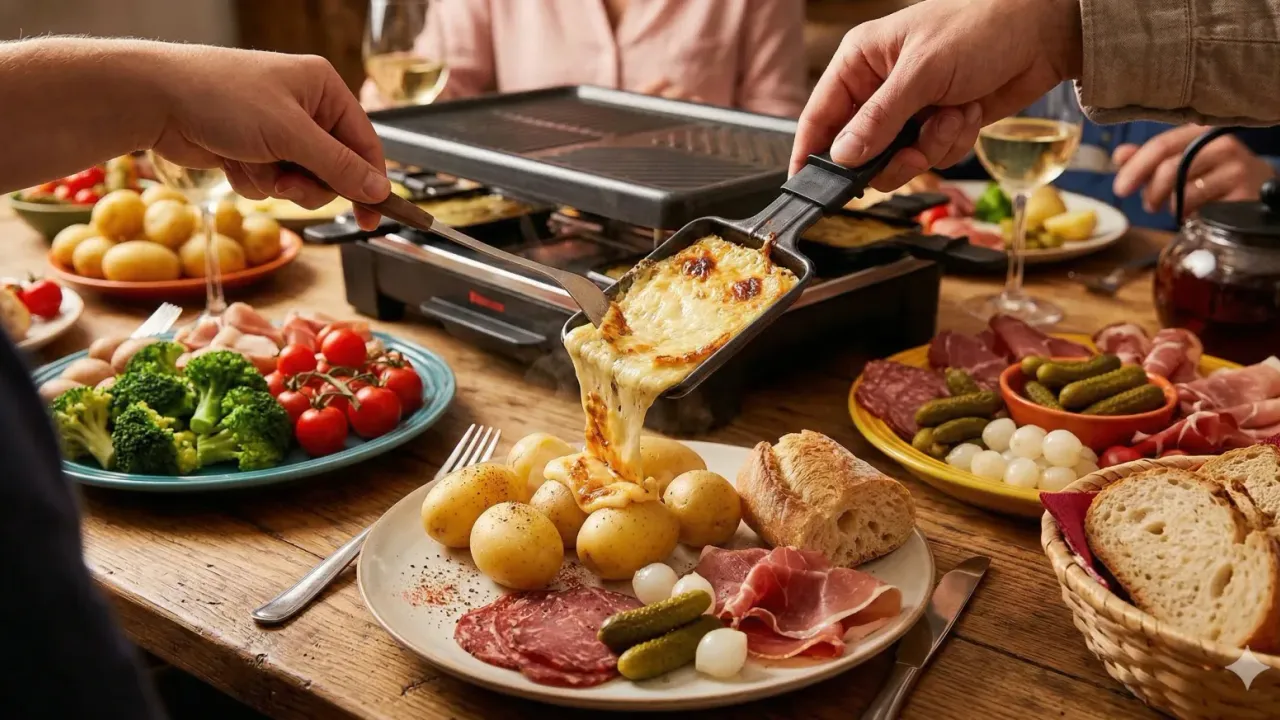
Raclette is Switzerland’s most beloved communal meal, and this raclette recipe shows you exactly how to recreate it at home. Picture this: bubbling, golden cheese scraped over steaming potatoes, with tangy pickles and cured meats on the side. Few dishes deliver as much warmth and joy as a proper Swiss raclette dinner. Whether you own a raclette grill or just have a broiler, this guide walks you through every detail.
Prep Time: 20 minutes | Cook Time: 30 minutes | Servings: 4
Difficulty: Easy | Calories: ~650 per serving
What Makes Raclette Special?
Most cheese dishes focus on the cheese alone. However, raclette is different because it turns the act of melting cheese into a shared experience. Everyone gathers around the table, each person melting their own portion in small trays. The meal unfolds slowly, round after round, as the conversation flows and the cheese keeps bubbling. As a result, it is a meal designed for togetherness, not speed.
The magic lies in how raclette cheese behaves under heat. Unlike many cheeses that turn greasy or stringy, raclette melts into a smooth, creamy pool with a rich nutty flavor. Furthermore, as the surface caramelizes, it develops crispy golden edges that add texture and a slightly toasted taste. This combination of silky interior and crispy exterior is what makes raclette so addictive. In fact, once you scrape that first golden layer onto a warm potato, you understand why the Swiss have been doing this for centuries.
Historically, raclette originated in the Swiss canton of Valais, where Alpine herders would melt a half-wheel of cheese by the fire and scrape the softened layer onto bread and potatoes. The word “raclette” comes from the French word “racler,” meaning to scrape. Today, modern raclette grills have replaced the open fire. However, the spirit of the dish remains the same: simple ingredients, good company, and as much melted cheese as you can eat.

Choosing the Right Raclette Cheese
The cheese is the heart of this dish. Not all cheeses melt the same way, so your choice matters greatly. Here are the best options for a successful raclette dinner.
- Swiss raclette cheese (best choice): Authentic raclette from Valais has a semi-hard texture and a nutty, slightly fruity flavor. It melts beautifully into a smooth, creamy layer without becoming oily. Look for wheels marked “Raclette du Valais AOP” for the highest quality. Specialty cheese shops and online retailers carry it year-round.
- French raclette cheese: Made in the Savoie and Franche-Comte regions of France, this version is milder and slightly creamier than Swiss raclette. It works perfectly well and is often easier to find at grocery stores. Some French versions come pre-sliced for convenience.
- Gruyere or Fontina (substitute): If raclette cheese is unavailable, Gruyere offers a similar nutty depth and excellent melting behavior. Fontina from Italy melts even more smoothly, though its flavor is milder. Either makes a solid stand-in. Avoid pre-shredded bags, because the anti-caking coating prevents proper melting.
Ingredients for Raclette
The Cheese:
- 1.5 pounds raclette cheese, sliced into 1/4-inch pieces
- Fresh ground black pepper
- Paprika for garnish (optional)
Potatoes and Vegetables:
- 2 pounds small waxy potatoes (fingerling or Yukon Gold)
- 1 small head of broccoli, cut into florets and blanched
- 1 cup cherry tomatoes
- 1 jar cornichons (small French pickles)
- 1 jar pickled pearl onions
Cured Meats and Extras:
- 4 ounces thinly sliced Bundnerfleisch (Swiss air-dried beef)
- 4 ounces thinly sliced prosciutto or coppa
- Crusty bread or baguette slices
- Mixed salad greens (optional side)
Pro tip: Take the raclette cheese out of the refrigerator 30 minutes before you start. Room-temperature cheese melts faster and more evenly. Cold cheese takes longer to bubble, and the edges can burn before the center softens. This small step makes a noticeable difference in how smoothly the cheese flows off the tray.
Step-by-Step Instructions
Step 1: Boil the Potatoes
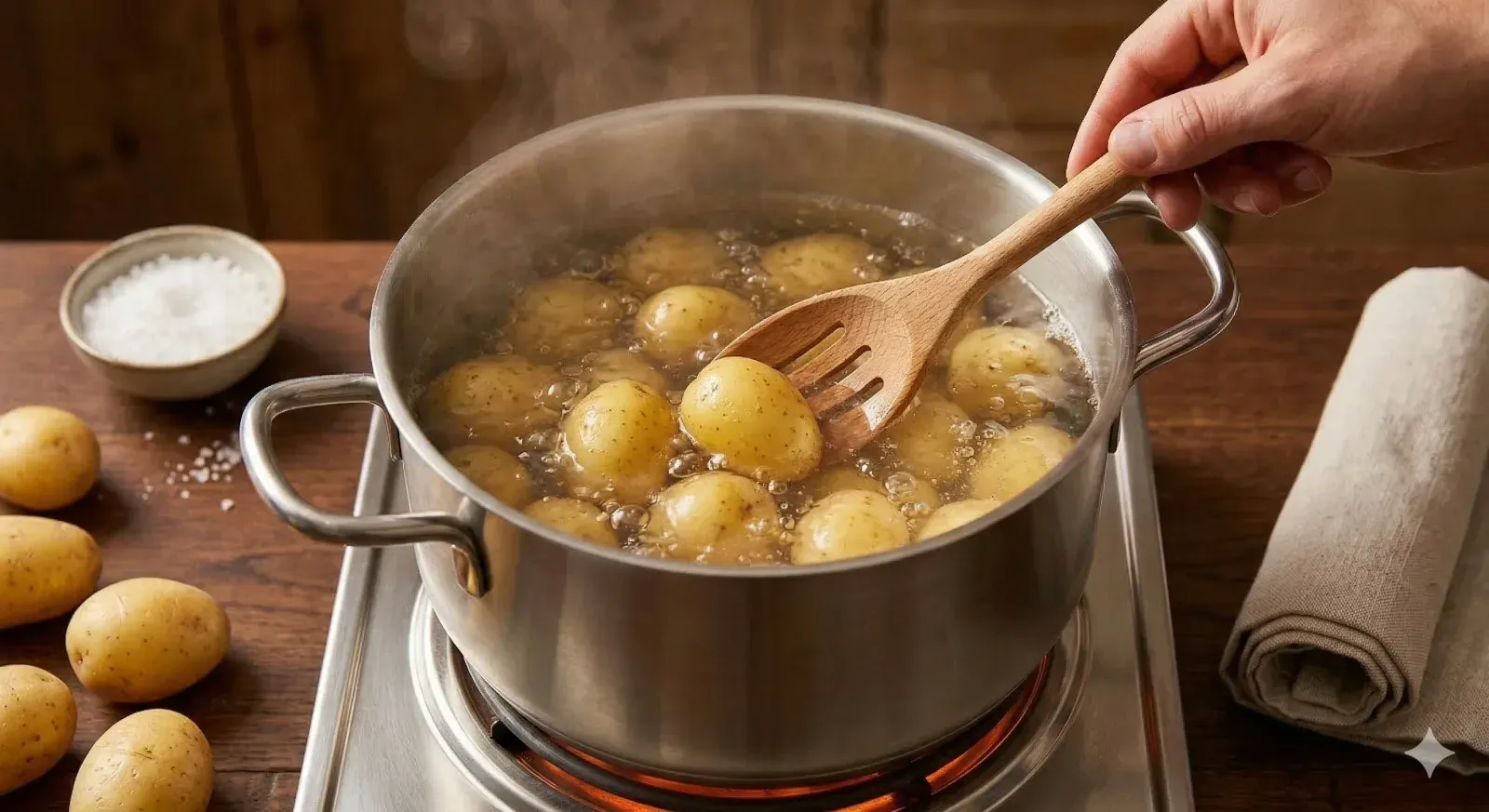
1 Place the small waxy potatoes in a large pot of salted water. Bring the water to a boil over high heat. Then reduce to a steady simmer and cook for 18 to 22 minutes. The potatoes are done when a fork slides into the center with no resistance. Drain them well and transfer to a towel-lined bowl to stay warm.
Additionally, keep the skins on the potatoes. The skin holds the potato together under the weight of melted cheese. It also adds a pleasant earthy flavor that pairs beautifully with the rich, nutty raclette. Waxy varieties like fingerlings hold their shape perfectly. In contrast, starchy potatoes like Russets would crumble and fall apart, so avoid those entirely.
Step 2: Prepare the Accompaniments
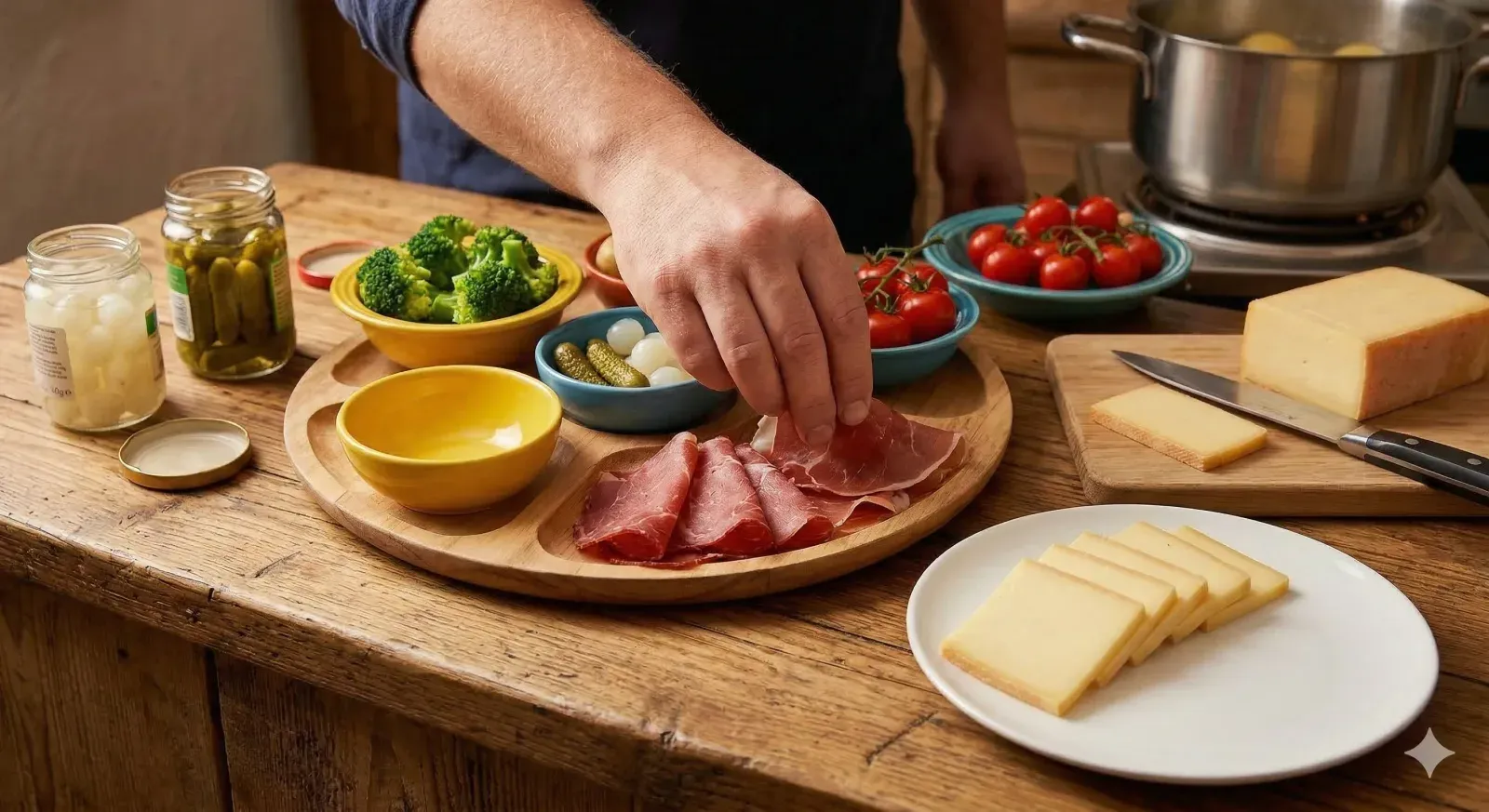
2 While the potatoes simmer, arrange all the accompaniments on a large serving platter. Fan out the sliced Bundnerfleisch and prosciutto on one side. Place the cornichons and pickled pearl onions in small bowls. Scatter the cherry tomatoes and blanched broccoli florets across the platter for color and freshness.
Next, slice the raclette cheese into pieces that fit your grill trays. Each slice should be about a quarter-inch thick. If you are using a broiler instead, cut the slices slightly thinner so they melt faster. Lay the cheese slices on a separate plate near the grill so everyone can grab them easily. Having everything prepped and within arm’s reach is essential, because once the melting starts, nobody wants to leave the table.
Step 3: Melt the Cheese
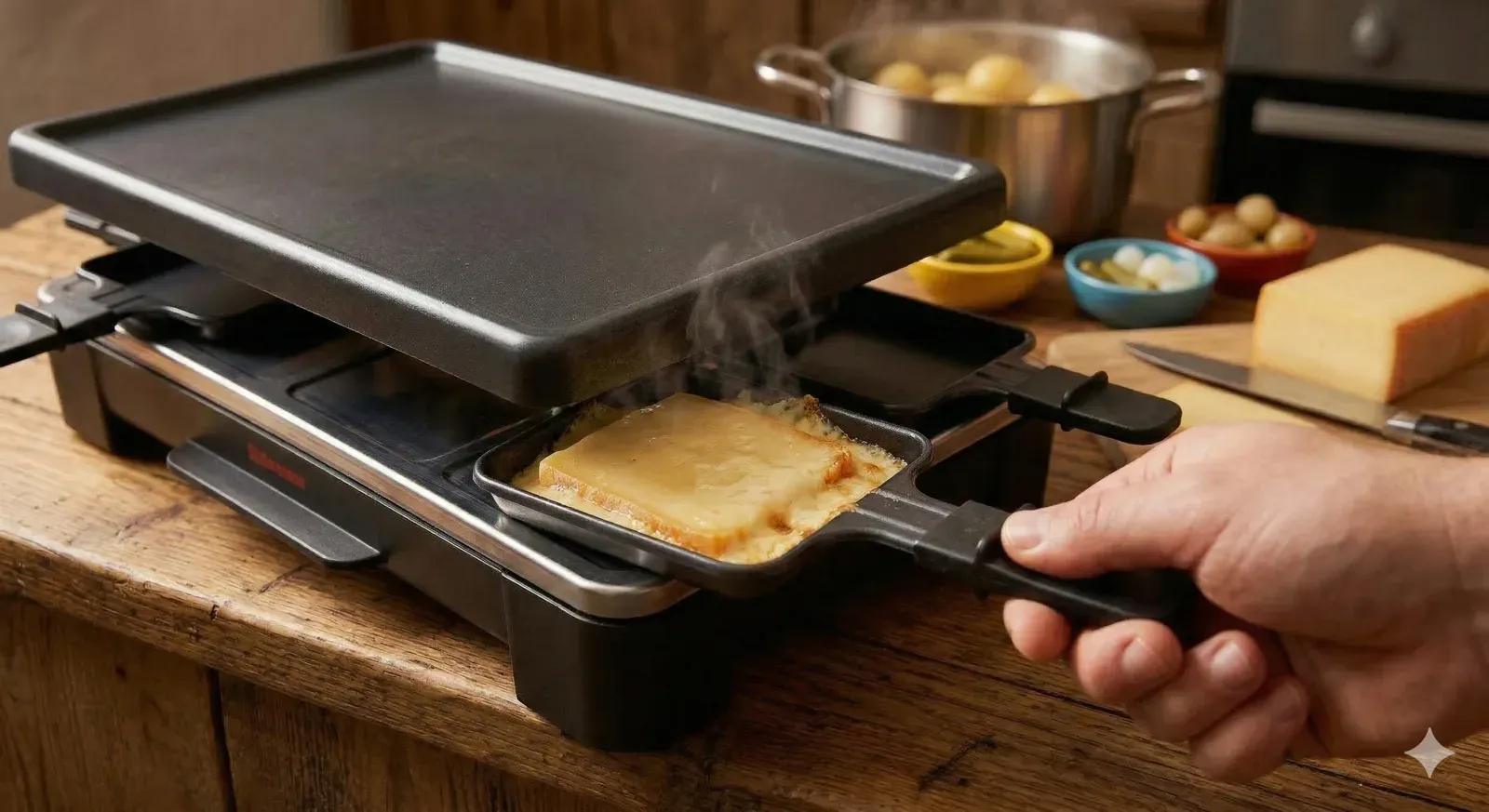
3 Turn on the raclette grill and let it heat up for 3 to 5 minutes. Place one or two slices of raclette cheese into each individual tray. Slide the trays under the heating element. Watch as the cheese slowly softens, then bubbles, then turns golden at the edges. This takes about 3 to 5 minutes per round.
Alternatively, for the broiler method, preheat your oven’s broiler on high. Place cheese slices on a parchment-lined baking sheet. Position the sheet about 4 inches from the heat source. Broil for 2 to 3 minutes, watching carefully. The cheese should be bubbly and golden but not burned. Remove immediately and scrape onto your plate. A cast iron skillet over medium-low heat is another option that works surprisingly well.
Step 4: Scrape and Serve
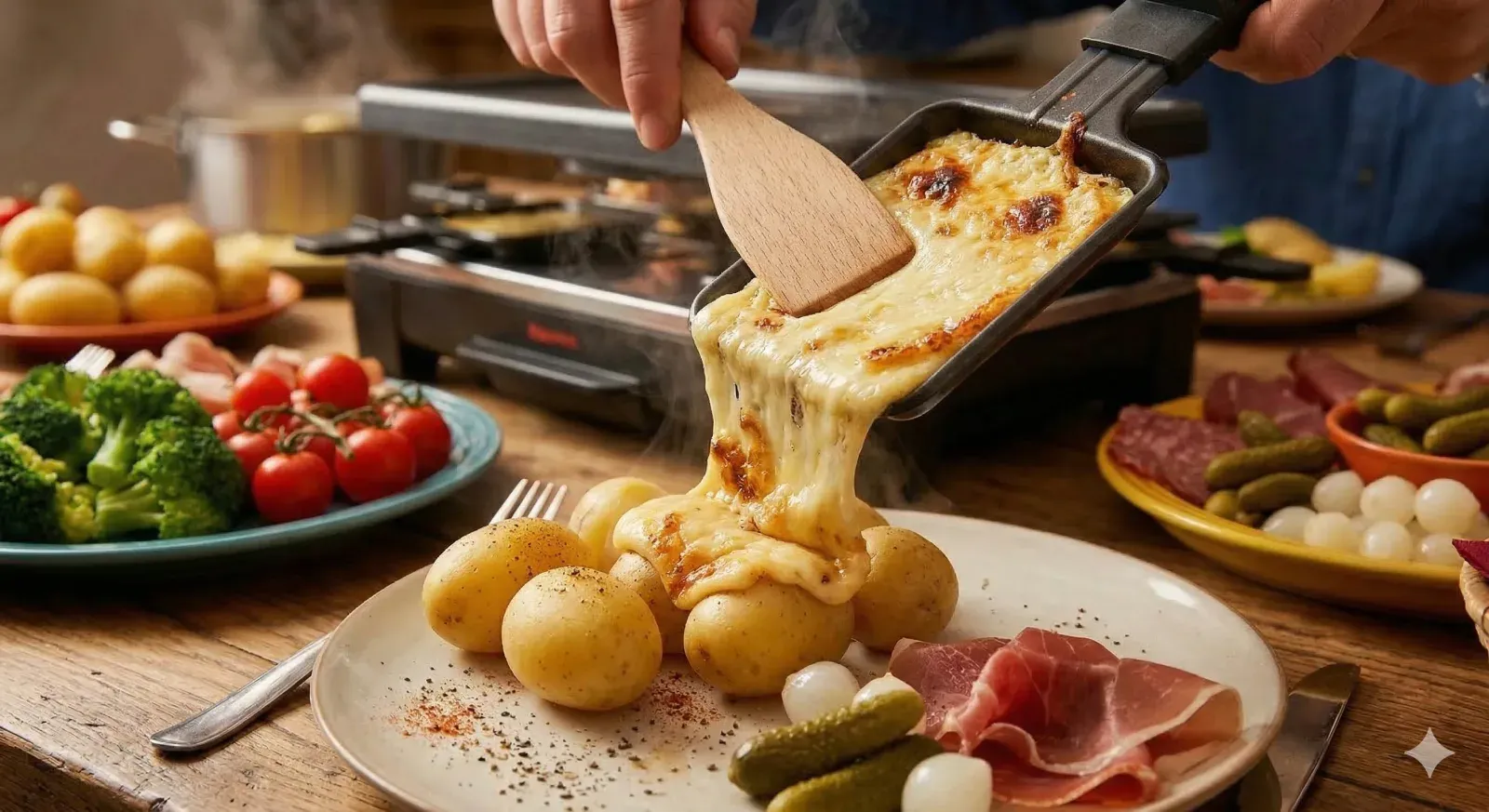
4 Tilt the raclette tray at an angle over your plate. Use a wooden spatula or the flat side of a knife to scrape the melted cheese onto a warm potato. The cheese should slide off in one smooth, glossy sheet. Moreover, the crispy golden bits from the bottom of the tray are the best part, so make sure you scrape every last bit.
Add cornichons, pickled onions, and a few slices of dried meat to your plate. Finish with a generous crack of black pepper and a light dusting of paprika. Then reload your tray with fresh cheese and start the next round. A proper raclette dinner lasts at least an hour, with everyone going back for four to six rounds. There is no rush. The meal is meant to be savored slowly.
Expert Tips for the Perfect Raclette
Let the Cheese Reach Room Temperature
Cold cheese straight from the fridge melts unevenly. Consequently, the edges burn while the center stays firm and rubbery. Pull the cheese out 30 minutes before you start cooking. At room temperature, it softens uniformly under the heat. Therefore, the result is a smoother, creamier melt with better flavor development across the entire slice.
Do Not Overload the Trays
It is tempting to pile cheese high in the tray for a bigger portion. However, thick layers take too long to melt through. The bottom burns before the top softens. One or two thin slices per tray is ideal. They melt quickly, develop those prized crispy edges, and scrape off cleanly. You can always go back for more rounds.
Keep the Potatoes Warm
Cold potatoes cause the melted cheese to solidify on contact. This creates a waxy, unpleasant texture instead of a smooth, glossy coating. Wrap the boiled potatoes in a clean towel inside a bowl. Alternatively, keep them in a low oven at 200 degrees Fahrenheit. Warm potatoes allow the cheese to stay liquid and cling to every crevice.
Raclette Across the Alpine Region
While raclette is proudly Swiss, the tradition of melting cheese has spread across the Alps. Each region adds its own twist to the concept. Here is how different areas approach this beloved dish.
| Region | Cheese Used | Key Differences | Serving Style |
|---|---|---|---|
| Valais, Switzerland | Raclette du Valais AOP | Strong, nutty, aged 3 to 6 months | Half-wheel melted by fire, scraped onto potatoes with cornichons |
| Fribourg, Switzerland | Raclette de Fribourg | Milder, creamier, slightly smoky | Tabletop grill with boiled potatoes and pickled vegetables |
| Savoie, France | French raclette or Reblochon | Softer, more pungent, washed rind | Often served with charcuterie and French bread alongside potatoes |
| Vorarlberg, Austria | Austrian mountain cheese | Firm, slightly sweet, herbs added | Melted over Spaetzle or roasted potatoes with fried onions |
| South Tyrol, Italy | Local Alpine cheese blends | Mixed cheeses, sometimes smoked | Served with speck, dark rye bread, and pickled red cabbage |
Serving Suggestions
A raclette dinner is already a complete meal in itself. Still, the right accompaniments and drinks can elevate the experience further. Here is what to serve alongside your raclette spread.
Classic Accompaniments:
- Cornichons: These tiny, tart French pickles are the essential raclette side. Their sharp acidity cuts through the richness of the melted cheese and cleanses your palate between rounds.
- Pickled pearl onions: Sweet and tangy, these small onions add crunch and brightness. They balance the heavy cheese wonderfully and are a staple on every Swiss raclette table.
- Bundnerfleisch or viande des Grisons: Swiss air-dried beef, thinly sliced. Its salty, concentrated flavor pairs perfectly with the creamy cheese. A few slices per round is all you need.
- Mixed green salad: A light salad with a simple vinaigrette adds freshness. It provides a welcome break from the richness and keeps the meal from feeling too heavy.
Beverage Pairings:
- Fendant (Chasselas) white wine: This is the traditional Swiss pairing. It is a dry, crisp white wine from the Valais region with mineral notes that complement the cheese without competing.
- Hot black tea: Swiss tradition holds that warm drinks help digest the cheese better than cold ones. Black tea is a common non-alcoholic choice at raclette dinners throughout Switzerland.
- Kirsch (cherry brandy): A small glass of kirsch between rounds is a Swiss custom. The strong spirit is believed to aid digestion and prevent the cheese from sitting too heavily in the stomach.
- Sparkling water with lemon: If you prefer something lighter, sparkling water works well. The bubbles help cut through the richness. Avoid ice-cold still water, which the Swiss say makes melted cheese harden in your stomach.
Storage and Reheating
Unmelted cheese: Wrap leftover raclette cheese tightly in wax paper or parchment, then place it in a resealable bag. It keeps in the refrigerator for up to 2 weeks. Do not use plastic wrap directly on the cheese, because it traps moisture and encourages mold growth. Wax paper lets the cheese breathe while staying fresh.
Leftover potatoes: Store boiled potatoes in a sealed container in the fridge for up to 3 days. Reheat them in a 350-degree oven for 10 minutes or in a skillet with a bit of butter. Furthermore, they also make excellent home fries the next morning when sliced and pan-fried until golden.
Melted cheese: Once raclette cheese has been melted, it does not reheat well. Unfortunately, it becomes rubbery and loses its smooth texture. Only melt as much as you plan to eat in each round. This is why the round-by-round format of raclette works so perfectly. You always eat the cheese at its freshest.
Common Mistakes to Avoid
1. Using the Wrong Potatoes
Starchy potatoes like Russets fall apart after boiling. They crumble under the melted cheese and turn into a mushy mess. Instead, waxy varieties hold their shape and provide a firm base for the cheese to cling to. Fingerlings and baby Yukon Golds are the best choices. Their creamy texture complements the richness of the raclette beautifully.
2. Serving Cold Potatoes
When melted raclette hits a cold potato, it solidifies almost instantly. You end up with a waxy sheet of cheese sitting on top instead of a flowing, creamy coating. Always keep the potatoes warm throughout the meal. A towel-lined bowl or a low oven does the job perfectly. Temperature makes the difference between good raclette and great raclette.
3. Melting Cheese Too Quickly
Blasting the cheese with maximum heat causes the fat to separate. The result is a greasy, broken mess instead of a smooth melt. Keep the heat at a moderate level and let the cheese melt slowly. Patience rewards you with a silky, cohesive layer that has golden, crispy edges. Those caramelized bits are the best part of the whole meal.
4. Skipping the Acidic Sides
Raclette without cornichons or pickled onions is incomplete. The acidity from pickles is not optional garnish. It plays a critical role in balancing the heavy richness of the cheese. Without it, the meal becomes overwhelming after two rounds. The tangy bite of a cornichon resets your palate and makes each round taste as good as the first.
Frequently Asked Questions
What is raclette and how is it served?
Raclette is both a Swiss semi-hard cheese and the traditional dish made from it. The cheese is melted using a tabletop grill, then scraped onto boiled potatoes. Cornichons, pickled onions, and cured meats accompany the meal. It is a communal dining experience where everyone melts their own cheese in individual trays. The name comes from the French word “racler,” meaning to scrape.
Can I make raclette without a raclette grill?
Absolutely. A broiler works well as a substitute. Place cheese slices on a parchment-lined baking sheet and broil for 2 to 3 minutes until bubbly. You can also melt the cheese in a cast iron skillet over medium-low heat. Some people even use a regular oven set to 400 degrees. The grill is convenient but not essential for enjoying this Swiss classic at home.
What cheese can I substitute for raclette?
Gruyere is the closest substitute. It has a similar nutty flavor and melts smoothly. Fontina from Italy is another excellent option with a milder taste. Appenzeller and young Comte also work in a pinch. The key quality to look for is good melting behavior. Stay away from pre-shredded cheeses, because the anti-caking agents create a grainy texture when melted.
What are the best potatoes for raclette?
Small waxy potatoes are ideal. Fingerlings, baby Yukon Golds, and new potatoes all hold their shape after boiling. They provide a sturdy base for the melted cheese to coat. Avoid large starchy varieties like Russets or Idaho potatoes. These break apart easily and create a mushy texture that does not work with the dish.
How much raclette cheese do I need per person?
The standard Swiss guideline is 200 to 250 grams per person. That equals about 7 to 9 ounces. This amount allows for four to six rounds of melting. If you are serving many side dishes and appetizers, you may get by with 150 grams per person. It is always wise to buy a bit extra. Running out of cheese at a raclette dinner is the ultimate host faux pas.
What drinks pair best with raclette?
Swiss tradition calls for Fendant, a dry white wine from the Valais region. Its crisp acidity pairs perfectly with the rich cheese. Hot black tea is also a traditional choice. The Swiss believe warm drinks help digest the cheese better than cold ones. Kirsch, a cherry brandy, is served between rounds as a digestif. Avoid ice-cold water during the meal.
Variations and Adaptations
Raclette with Vegetables:
For a vegetarian version, expand the vegetable selection. Add blanched asparagus, roasted bell peppers, grilled zucchini, and sauteed mushrooms to the platter. Artichoke hearts and sun-dried tomatoes also pair beautifully with melted raclette. The cheese coats vegetables just as well as it coats potatoes, and the variety of flavors keeps each round interesting.
Raclette Burger Style:
Melt a thick slice of raclette over a grilled beef patty. The cheese creates a rich, flowing topping that beats standard American cheese by miles. Add cornichons as your pickle and a swipe of Dijon mustard. This Swiss-inspired burger is a creative way to use leftover raclette cheese. It works especially well on a brioche bun with caramelized onions.
Raclette Tartine (Open-Faced Sandwich):
Toast a thick slice of crusty sourdough bread. Layer on thinly sliced ham or prosciutto. Top with a generous portion of melted raclette cheese and finish with a few cornichons. This is a popular lunch in Swiss mountain restaurants. It takes five minutes and delivers all the comfort of a full raclette dinner in a single handheld portion.
The Cultural Significance of Raclette
In Switzerland, raclette is far more than a cheese dish. It is a national tradition tied to community, winter, and Alpine identity. During the colder months, Swiss families gather around the raclette grill as a weekly ritual. The slow pace of the meal encourages long conversations and deep connection. In a world of fast food and quick bites, raclette insists that you slow down and stay at the table.
The dish holds a special place in the Valais canton, where raclette cheese production supports entire mountain communities. Small-scale dairy farmers produce the cheese from cows that graze on Alpine pastures rich with wildflowers. This terroir gives Valais raclette its distinctive flavor. The Swiss government protects Raclette du Valais with an AOP designation, ensuring that only cheese made in the region can carry the name.
Beyond Switzerland, raclette has become a global winter trend. Raclette pop-ups and restaurants have appeared in cities from London to Tokyo to New York. Social media has amplified the appeal, with videos of melting cheese racking up millions of views. Despite this international fame, the dish remains rooted in Swiss hospitality. At its core, raclette is still about gathering around a table and sharing something warm with the people you care about.
Conclusion
This raclette recipe gives you everything you need for an unforgettable Swiss cheese dinner at home. The keys are simple: use quality raclette cheese, keep your potatoes warm, melt slowly for golden edges, and always serve cornichons on the side. Whether you own a raclette grill or use your broiler, the result is the same: round after round of bubbling, nutty, melted perfection.
Ready to explore more European comfort food? Browse our full collection of European dishes, including Swiss fondue, German kasespatzle, and Hungarian goulash. Each recipe is tested, detailed, and ready for your kitchen.