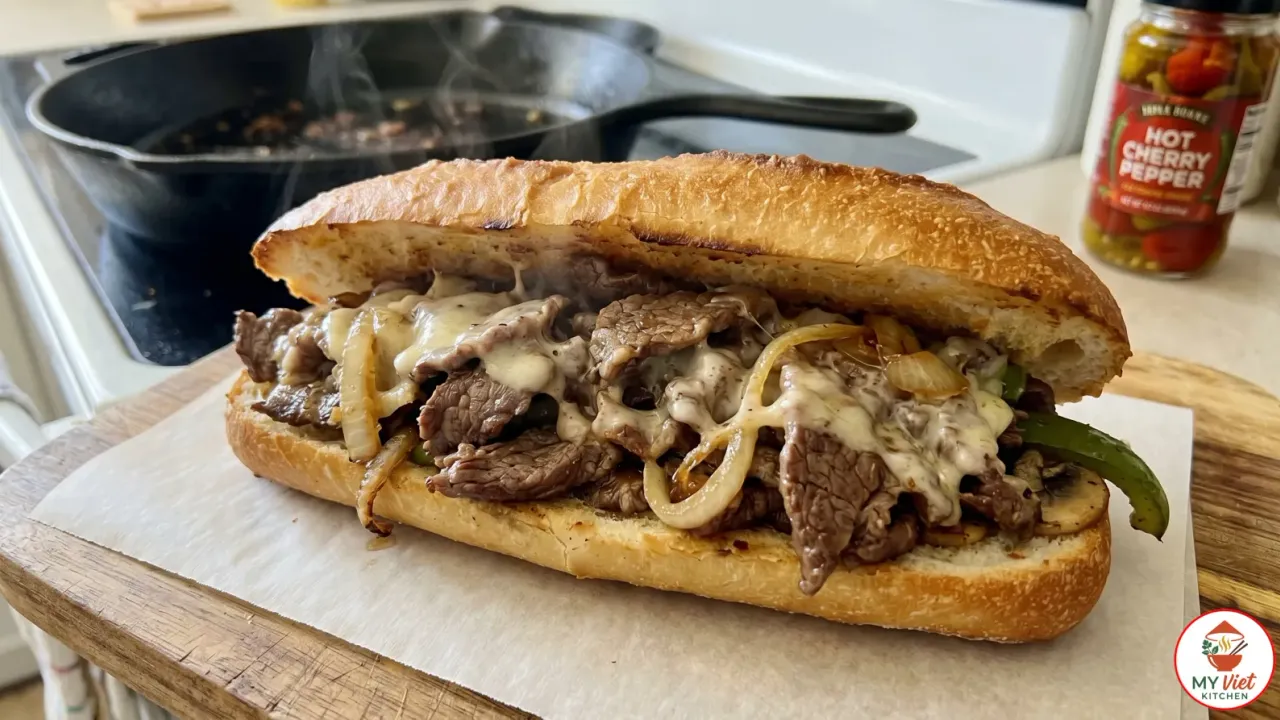
Juicy, cheesy, and loaded with tender sliced steak, the Philly cheesesteak is one of America’s most beloved sandwiches. This homemade Philly cheesesteak recipe captures the authentic flavor of Philadelphia’s iconic street food with thinly sliced ribeye, melted provolone cheese, and perfectly caramelized onions stuffed into a crusty hoagie roll. Whether you crave a hearty weeknight dinner or a crowd-pleasing game day meal, this sandwich delivers bold flavor in just 30 minutes.
Prep Time: 15 minutes | Cook Time: 15 minutes | Servings: 4
Difficulty: Easy | Calories: ~650 per serving
What Makes Philly Cheesesteak Special?
The Philly cheesesteak holds a legendary place in American food culture. It was created in 1930 by Pat Olivieri, a hot dog vendor in South Philadelphia, who decided to grill some beef and put it on a roll. According to Visit Philadelphia, the sandwich quickly became the city’s signature dish. Since then, it has inspired fierce debates about the best cheese, the right roll, and the proper way to order one.
What sets a great Philly cheesesteak apart from an ordinary steak sandwich is the technique. The steak must be sliced paper-thin so that it cooks in seconds on a blazing hot griddle. As a result, every bite delivers tender, juicy meat rather than tough, chewy strips. Additionally, the cheese must melt directly over the hot steak so that it becomes one with the filling.
Furthermore, the hoagie roll plays a critical role in the experience. A proper roll has a crusty exterior that holds up to the juicy filling, while the soft interior absorbs the savory meat juices without turning soggy. This balance of textures is what separates an authentic Philly cheesesteak from a disappointing imitation.

Choosing the Right Steak
Selecting the right cut of beef is the most important decision in this recipe. The steak determines the flavor, tenderness, and juiciness of your finished sandwich. Here is what you need to know about each option.
- Ribeye (best choice): This cut delivers the most flavor because of its rich marbling. The intramuscular fat melts during cooking and bastes the meat from within, so every bite tastes buttery and tender.
- Top Round: A leaner and more affordable option that still works well when sliced thinly. However, it lacks the juiciness of ribeye, so you may want to add a bit more butter to the griddle.
- Sirloin: This cut offers a good balance of flavor and leanness. It is slightly more tender than top round but not as rich as ribeye. For the best results, choose sirloin with visible marbling.
Ingredients for Philly Cheesesteak
Main Ingredients:
- 1.5 lbs ribeye steak (thinly sliced)
- 4 hoagie rolls (6 to 8 inches each)
- 8 slices provolone cheese
- 1 large yellow onion (thinly sliced)
- 2 tablespoons vegetable oil
- 2 tablespoons unsalted butter
Seasonings:
- 1 teaspoon salt
- 1/2 teaspoon black pepper
- 1/2 teaspoon garlic powder
Optional Toppings:
- 1 green bell pepper (thinly sliced)
- 8 oz white mushrooms (sliced)
- Hot cherry peppers (for extra kick)
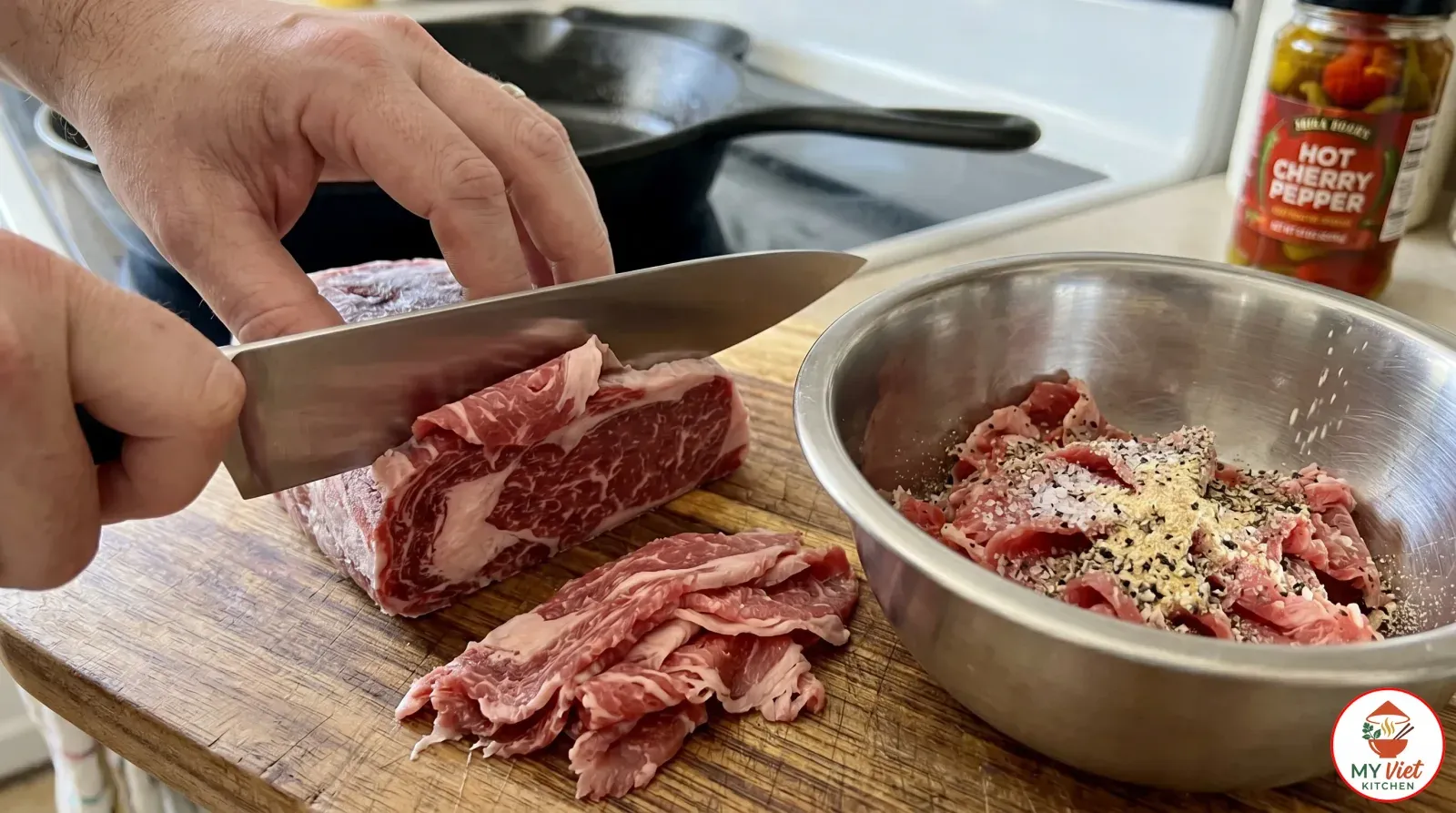
Pro tip: Freeze the ribeye for 30 to 45 minutes before slicing. The firm texture makes it much easier to cut paper-thin slices with a sharp knife. If your butcher or deli counter has a meat slicer, ask them to shave the ribeye for you instead.
Step-by-Step Instructions
Step 1: Prepare the Steak
1First, place the ribeye in the freezer for 30 to 45 minutes until it feels firm but not frozen solid. Then, use a sharp knife to slice the steak as thinly as possible against the grain. Cutting against the grain shortens the muscle fibers, so each slice stays tender after cooking. After slicing, season the meat with salt, black pepper, and garlic powder. Toss everything together in a bowl and set it aside while you prepare the vegetables.
Step 2: Cook the Onions and Peppers
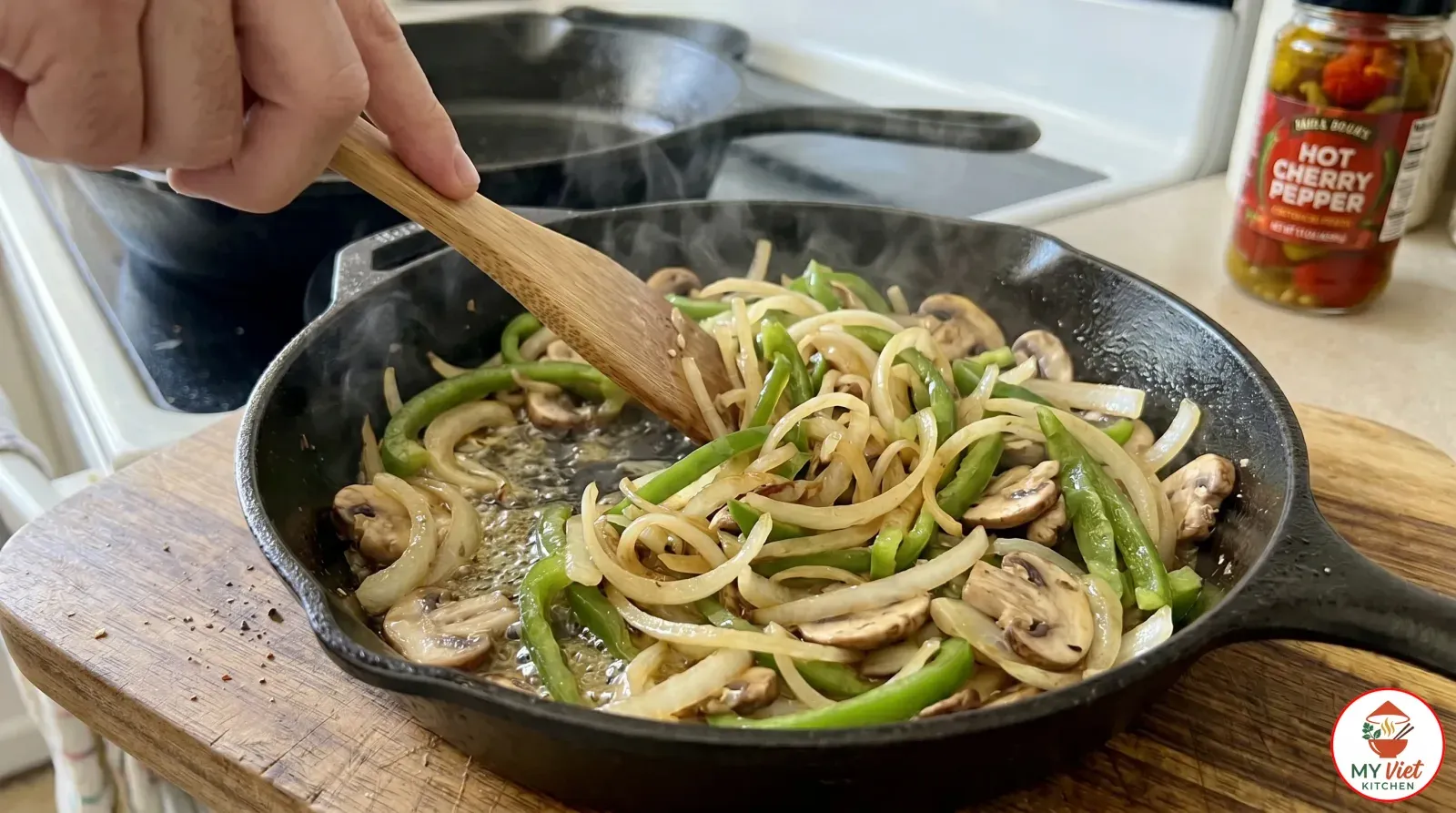
2Next, heat the butter in a large cast-iron skillet or flat griddle over medium heat. Add the sliced onions and cook them for 8 to 10 minutes, stirring occasionally, until they turn golden brown and caramelized. The slow cooking draws out the natural sugars, so the onions develop a deep, sweet flavor. If you are adding bell peppers and mushrooms, toss them in during the last 3 minutes. Then, transfer the vegetables to a plate and keep them warm.
Step 3: Sear the Steak
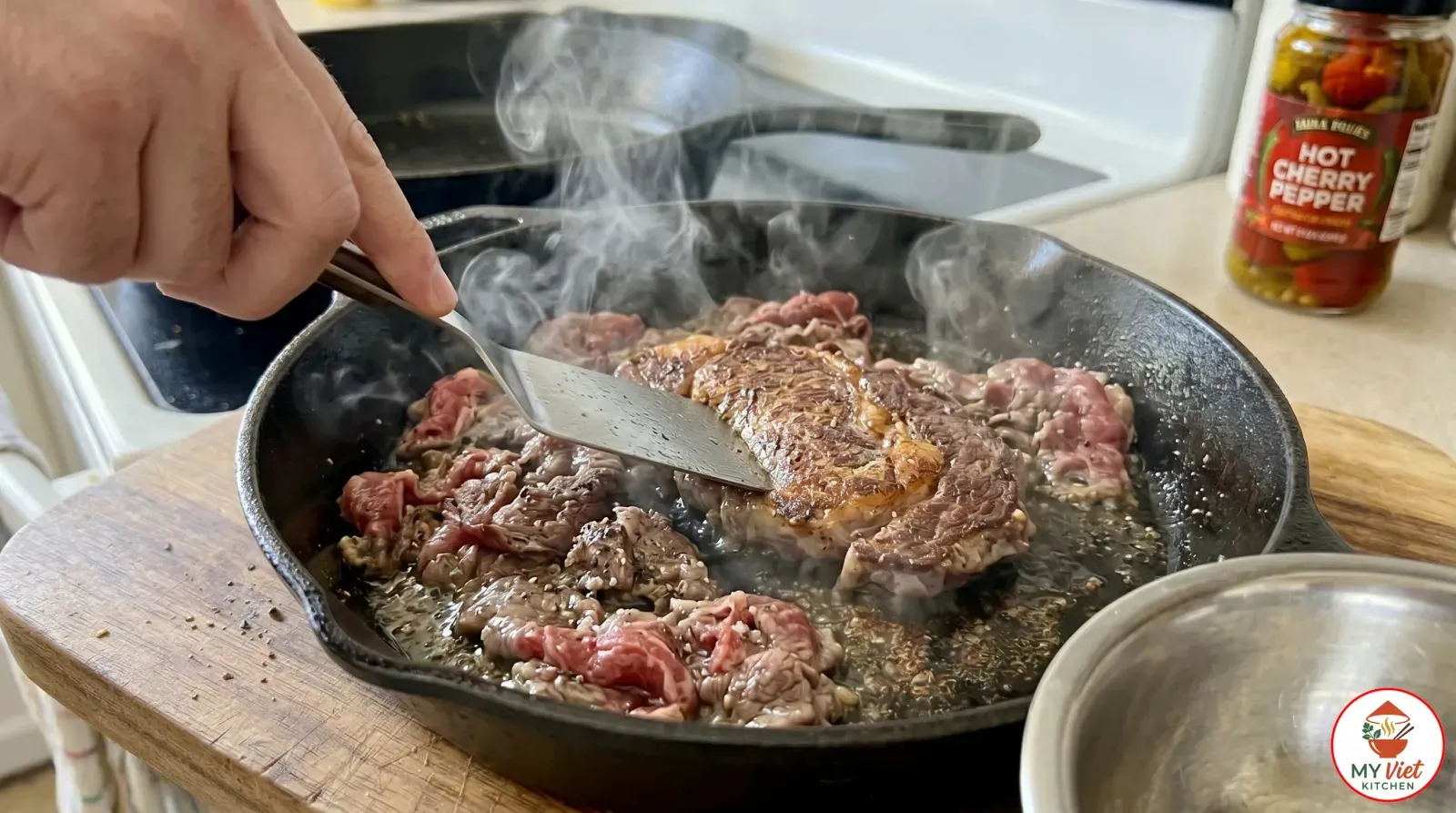
3Now, increase the heat to high and add vegetable oil to the same skillet. When the oil begins to shimmer, spread the seasoned steak slices in a single layer across the pan. Let them sear without moving for about 1 minute to develop a golden crust. After that, use a spatula to chop and flip the meat on the griddle. Continue cooking for another 1 to 2 minutes until the steak is cooked through. The high heat creates a beautiful Maillard reaction that adds rich, savory depth to the flavor.
Step 4: Melt Cheese and Assemble
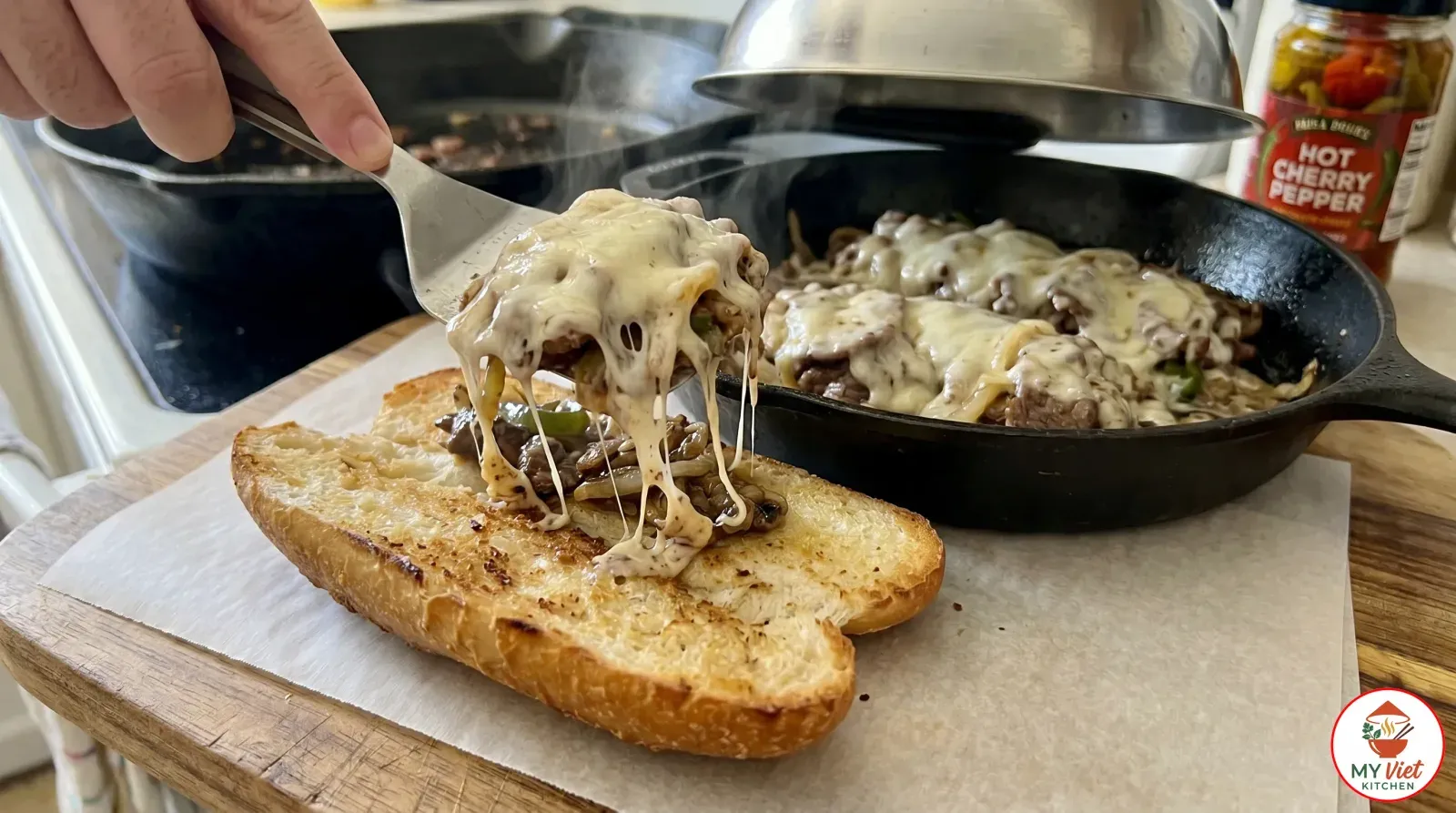
4Finally, divide the steak into four equal portions directly on the skillet. Spoon the caramelized onions over each portion, then lay two slices of provolone cheese on top. Cover the skillet with a lid or aluminum foil dome for about 1 minute until the cheese melts into a gooey blanket. Meanwhile, split the hoagie rolls and toast them lightly under the broiler for 30 seconds. Use a spatula to scoop each cheesy steak portion into a toasted roll. Serve immediately while the cheese is still melting.
Expert Tips for Perfect Philly Cheesesteak
Use a Blazing Hot Griddle
High heat is essential for a proper Philly cheesesteak. A smoking hot cast-iron skillet or flat-top griddle sears the thin steak slices quickly, which locks in the juices and creates flavorful browning. If the pan is not hot enough, the meat will steam instead of sear, and you will end up with gray, soggy steak. Therefore, always preheat your cooking surface for at least 2 minutes before adding the meat.
Toast the Rolls for Structure
A quick toast under the broiler gives the hoagie rolls a crispy exterior that stands up to the juicy filling. Without toasting, the bread absorbs the meat juices too quickly and falls apart in your hands. In addition, toasting adds a subtle crunch that contrasts beautifully with the soft, melted cheese inside.
Philly Cheesesteak Cheese Comparison
The cheese debate is the most passionate topic among Philly cheesesteak lovers. Each option brings a different texture and flavor to the sandwich. Here is a comparison to help you choose your favorite.
| Cheese Type | Flavor Profile | Melting Quality | Best For |
|---|---|---|---|
| Provolone | Sharp and tangy | Melts smoothly in sheets | Balanced, savory flavor |
| American | Mild and creamy | Melts into a silky coating | Classic diner-style taste |
| Cheez Whiz | Bold and salty | Pours directly over meat | Authentic Pat’s King style |
| Mozzarella | Mild and milky | Stretchy and gooey | Pizza-style variation |
Serving Suggestions
A Philly cheesesteak is a satisfying meal on its own, but the right sides turn it into a true feast. The rich, cheesy sandwich pairs best with items that add crunch, acidity, or freshness to the plate.
The Perfect Accompaniments:
- Crispy French Fries: Thin-cut fries with a sprinkle of salt are the most classic side dish for any cheesesteak. They add a satisfying crunch alongside the soft sandwich.
- Pickle Spears: The tangy acidity of dill pickles cuts through the richness of the cheese and meat. Moreover, their crisp snap contrasts with the tender steak.
- Coleslaw: A creamy or vinegar-based coleslaw adds freshness and a slight crunch that balances the heavy, cheesy filling.
- Onion Rings: If you love onions in your cheesesteak, a side of crispy battered onion rings doubles down on that sweet allium flavor.
Beverage Pairings:
- Cold Lager: A crisp, ice-cold lager washes down the rich cheese and steak with a refreshing finish.
- Iced Tea: A tall glass of unsweetened iced tea cleanses the palate between bites without adding sweetness.
- Cherry Soda: For a classic Philly pairing, a cold cherry soda brings nostalgic sweetness that complements the savory sandwich.
Storage and Reheating
Refrigerator: Store leftover cheesesteak filling in an airtight container for up to 3 days. Keep the filling separate from the rolls so the bread does not become soggy overnight.
Freezer: Freeze the cooked steak and onion mixture in freezer-safe bags for up to 2 months. Thaw overnight in the refrigerator before reheating, and assemble fresh sandwiches when ready to serve.
Reheating: Warm the filling in a skillet over medium-high heat for 3 to 4 minutes until heated through. Then, add fresh cheese on top and cover until it melts. Scoop the reheated filling into freshly toasted rolls for the best texture.
Common Mistakes to Avoid
1. Cutting the Steak Too Thick
Thick slices of steak will not cook quickly enough on a hot griddle. As a result, you get chewy, tough meat that does not blend with the cheese and onions. Always slice the steak as thinly as possible, and use the freezer trick to make cutting easier. Paper-thin slices cook in seconds and create that signature melt-in-your-mouth texture.
2. Using the Wrong Bread
A soft, flimsy roll will fall apart under the weight of the juicy filling. You need a hoagie roll with a sturdy crust that can hold everything together without crumbling. Italian-style rolls with a chewy interior work best for this sandwich. Avoid using baguettes, which are too hard, or sandwich bread, which is too soft.
3. Not Getting the Pan Hot Enough
If your skillet is only medium-warm, the steak releases moisture and steams rather than sears. Consequently, you miss out on the golden crust and deep flavor that high-heat cooking produces. Wait until the oil shimmers and just begins to smoke before adding the meat. That intense heat is what gives a Philly cheesesteak its signature flavor.
Frequently Asked Questions
What is the best cheese for a Philly cheesesteak?
Provolone is the most popular traditional choice for a Philly cheesesteak. It melts smoothly and adds a sharp, tangy flavor that pairs well with the savory beef. American cheese and Cheez Whiz are also authentic options. In particular, Cheez Whiz is the original choice at Pat’s King of Steaks and delivers a creamy, bold flavor.
What cut of beef is best for Philly cheesesteak?
Ribeye is the gold standard for a Philly cheesesteak because of its generous marbling and rich flavor. The fat melts during cooking and keeps every slice tender and juicy. Top round and sirloin are leaner alternatives that still produce good results when sliced thinly. However, they do not match the buttery richness that ribeye provides.
How do you slice steak thin enough for cheesesteak?
Place the ribeye in the freezer for 30 to 45 minutes until it firms up. Then, use a sharp chef’s knife to cut the meat into the thinnest slices you can manage. Always cut against the grain for the most tender results. Alternatively, you can ask your butcher to shave the meat on a deli slicer, which gives the most consistent thin slices.
Should you put peppers on a real Philly cheesesteak?
A traditional Philly cheesesteak from Pat’s King of Steaks or Geno’s Steaks contains only steak, cheese, and onions. Purists argue that bell peppers do not belong on an authentic cheesesteak. Nevertheless, many Philadelphia locals enjoy adding sauteed green peppers, mushrooms, or hot cherry peppers. Ultimately, it comes down to personal preference.
What type of bread is used for a Philly cheesesteak?
An authentic Philly cheesesteak uses an Amoroso’s hoagie roll or a similar Italian-style roll. The ideal bread has a crusty exterior and a soft, chewy interior that absorbs the juices without falling apart. If you cannot find Amoroso’s rolls, look for any fresh Italian hoagie roll with a sturdy crust at your local bakery.
Variations and Adaptations
Chicken Cheesesteak:
Replace the ribeye with thinly sliced chicken breast for a lighter alternative. Season the chicken with the same spices and cook it on a hot griddle. Chicken cheesesteak has become equally popular in Philadelphia, and many shops offer it right alongside the beef version.
Pizza Cheesesteak:
Add marinara sauce and mozzarella cheese to the classic cheesesteak for a pizza-inspired twist. Spread a thin layer of warm marinara on the toasted roll before loading in the steak and cheese. This combination works especially well for people who love both pizza and cheesesteak flavors. You can find more creative sandwich ideas on My Viet Kitchen.
Mushroom Swiss Cheesesteak:
Swap the provolone for Swiss cheese and load up on sauteed mushrooms. The earthy mushroom flavor pairs beautifully with the nutty, melty Swiss cheese. This variation offers a slightly more sophisticated taste while keeping the satisfying heartiness of the original.
The Cultural Significance of Philly Cheesesteak
The Philly cheesesteak is much more than a sandwich in Philadelphia. It represents the city’s working-class identity, its passion for bold flavors, and its fierce local pride. The rivalry between Pat’s King of Steaks and Geno’s Steaks, which face each other at the corner of 9th Street and Passyunk Avenue, has become one of the most famous food feuds in America.
Every Philly local has a strong opinion about the best cheesesteak spot, and the debate extends far beyond Pat’s and Geno’s. Shops like Jim’s Steaks, Tony Luke’s, and Dalessandro’s each have loyal followings. In fact, ordering a cheesesteak in Philadelphia is a ritual with its own language. You order “whiz wit” for Cheez Whiz with onions or “provolone without” for provolone and no onions. This cultural shorthand reflects how deeply the sandwich runs through the city’s identity.
Conclusion
Making an authentic Philly cheesesteak at home is simpler than you might think. The key steps are slicing the steak paper-thin, using a blazing hot skillet, and choosing a quality hoagie roll. Remember to caramelize the onions slowly for sweetness and melt the cheese directly over the hot meat for the best results.
Now it is your turn to fire up the griddle and build the ultimate cheesesteak. For more delicious American recipes, explore our full collection at My Viet Kitchen. If you enjoy hearty sandwiches, you might also love our classic lobster roll or our Southern fried chicken for your next meal.