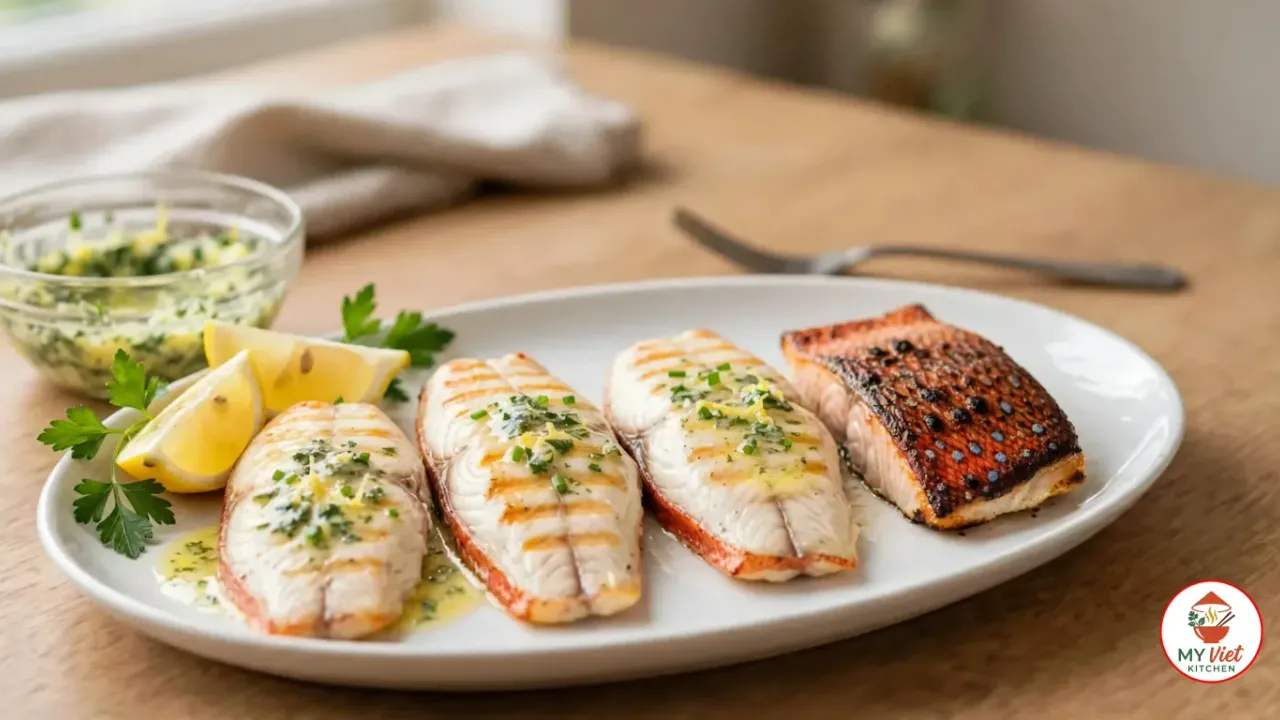
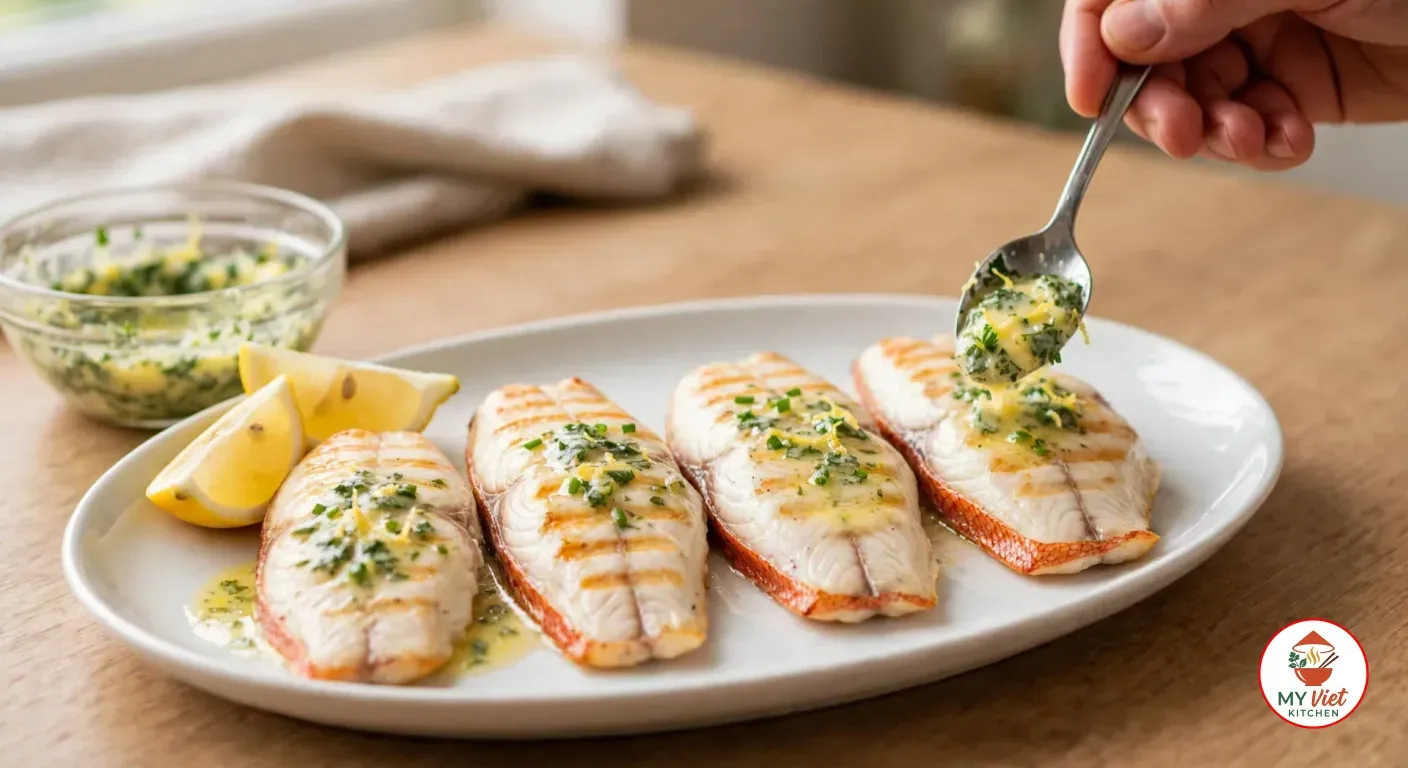
Grilled coral trout is a fillet of tropical reef grouper cooked over the bars of a hot grill: mild, white, finely flaked flesh under red skin dotted with blue. This recipe gives four skin-on fillets most of their time skin side down, turns them once for a minute or two, and finishes them with a lemon, parsley and chive butter. Below: what the fish is, when to cook it whole, and how its lean flesh changes the way you grill.
Prep Time: 15 minutes | Cook Time: 25 minutes | Total Time: 40 minutes | Servings: 4
Difficulty: Easy | Calories: ~315 per serving

What Is Coral Trout?
Coral trout is not a trout. The common coral trout, Plectropomus leopardus, is a grouper in the family Serranidae and grows to 75 cm. It is usually red to greenish brown, with numerous small, dark-edged blue dots on its fins and over the upper two-thirds of its head and body. Its colour can change with the time of day, the habitat and what the fish is doing. In Australia it lives from north-western Western Australia, around the tropical north and south to the southern Great Barrier Reef (Australian Museum).
At the market, several similar species are sold under the one name, all with red skin and bright blue spots. The common coral trout is the one you will see most often; passionfruit and vermicular coral trout are rare. Supply is year round, peaking in eastern Australia from September to November (Sydney Fish Market).
Common coral trout dominates the catch in Queensland’s Reef Line Fishery. The national stock status report of June 2023 classes coral trout stocks as sustainable in that fishery, in the Torres Strait and in Western Australia. In Queensland’s Gulf of Carpentaria their status is undefined (fish.gov.au). Catching your own in Queensland? The minimum size is 38 cm, with a combined possession limit of 7 across all trout species. Coral reef fin fish, coral trout included, also have two five-day closed seasons in October and November each year (Queensland Government).
Should You Grill Coral Trout Whole or as Fillets?
Both work. Coral trout is sold whole, gilled and gutted, and as fillets. Sydney Fish Market notes that its attractive skin makes it ideal for cooking whole, and advises scoring a whole fish at the thickest part of the flesh. Fish of 0.6 to 1.0 kg are sometimes called plate size (Australian Tropical Foods).
Justine Schofield’s whole fish for the grill, on SBS Food, wraps a coral trout of about 1.5 kg, gutted and scored, in banana leaves with lime, chilli and ginger. Each side gets 10 to 12 minutes, and the recipe notes that the fish stays really moist cooked this way (SBS Food).
Fillets suit a weeknight better. Four portions are done in under 10 minutes on the grates, there is no carving at the table, and you can check every piece for bones before it goes on.
Expect about half the weight of a whole fish to end up as fillet: Sydney Fish Market puts the average yield at 50%. When buying fillets, look for white, firm, lustrous, moist flesh without brown markings or oozing water. A whole fish should have lustrous skin, firm flesh and a pleasant, fresh sea smell. Refrigerated, either keeps up to 3 days.
How Does Lean, Delicate Flesh Change the Grilling?
Coral trout has low oiliness and fine flakes (Sydney Fish Market). Australian Tropical Foods warns against handling the fish too much, because the delicate flakes are easily damaged (Australian Tropical Foods). For grilled coral trout, that means three things.
Turn each fillet once. Leave it skin side down until the skin lets go of the bars, then slide a thin fish spatula right under it. A fillet that sticks will tear if you pull it; give it another 30 seconds instead.
Let the skin take the heat. It sits between the flesh and the hot iron and holds the flakes together when you turn the fillet. Watch the sides: once the white has crept most of the way up, flip. The flesh side then needs only 1 to 2 minutes.
Even out the thickness. Sydney Fish Market suggests cutting thick fillets into serving-size portions so the heat goes through evenly. A thin tail end next to a thick head end will dry out before the middle is done. Lean fish leaves little margin, so start checking at the low end of each time range.
The butter follows the same guide, which pairs coral trout with butter, citrus and herbs including chives, dill and parsley (Sydney Fish Market). The video above takes another route. In it, chef Paul Breheny barbecues coral trout and serves it with a lemongrass and saffron sauce; the description says he also shows how to tell when the fish is cooked (The Hook and The Cook).
Ingredients for Grilled Coral Trout
For the Lemon Butter:
- 4 tablespoons (55 g) unsalted butter, softened
- 1 lemon, zested and juiced
- 1 small garlic clove, finely grated
- 2 tablespoons finely chopped flat-leaf parsley
- 1 tablespoon finely chopped chives
- 1 pinch fine salt
For the Fish:
- 4 skin-on coral trout fillets, scaled (about 6 oz / 170 g each, 1 inch / 2.5 cm thick)
- 2 tablespoons extra virgin olive oil
- 1 teaspoon sea salt flakes
- 1/2 teaspoon freshly ground black pepper
- 1 tablespoon neutral oil, such as canola, for the grill grates
For Serving:
- 1 lemon, cut into wedges
Step-by-Step Instructions
Step 1: Make the Lemon Butter
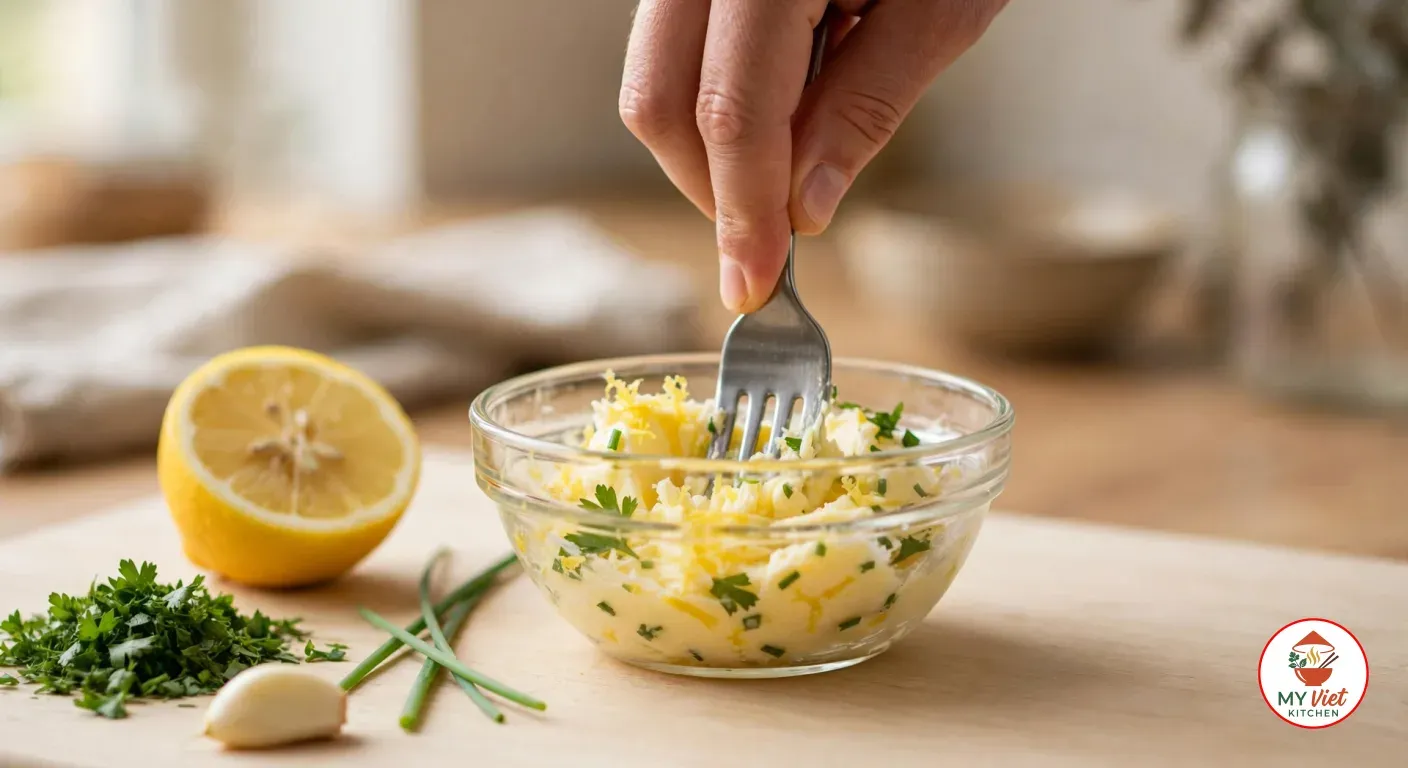
1Zest the lemon, then juice it. In a small bowl, mash the softened butter with the zest, 1 tablespoon of the juice, the garlic, parsley, chives and a pinch of salt until it is evenly flecked with green. Keep the rest of the juice for serving. Leave the butter at room temperature so it melts as soon as it touches the hot fish.
Step 2: Prepare the Fillets
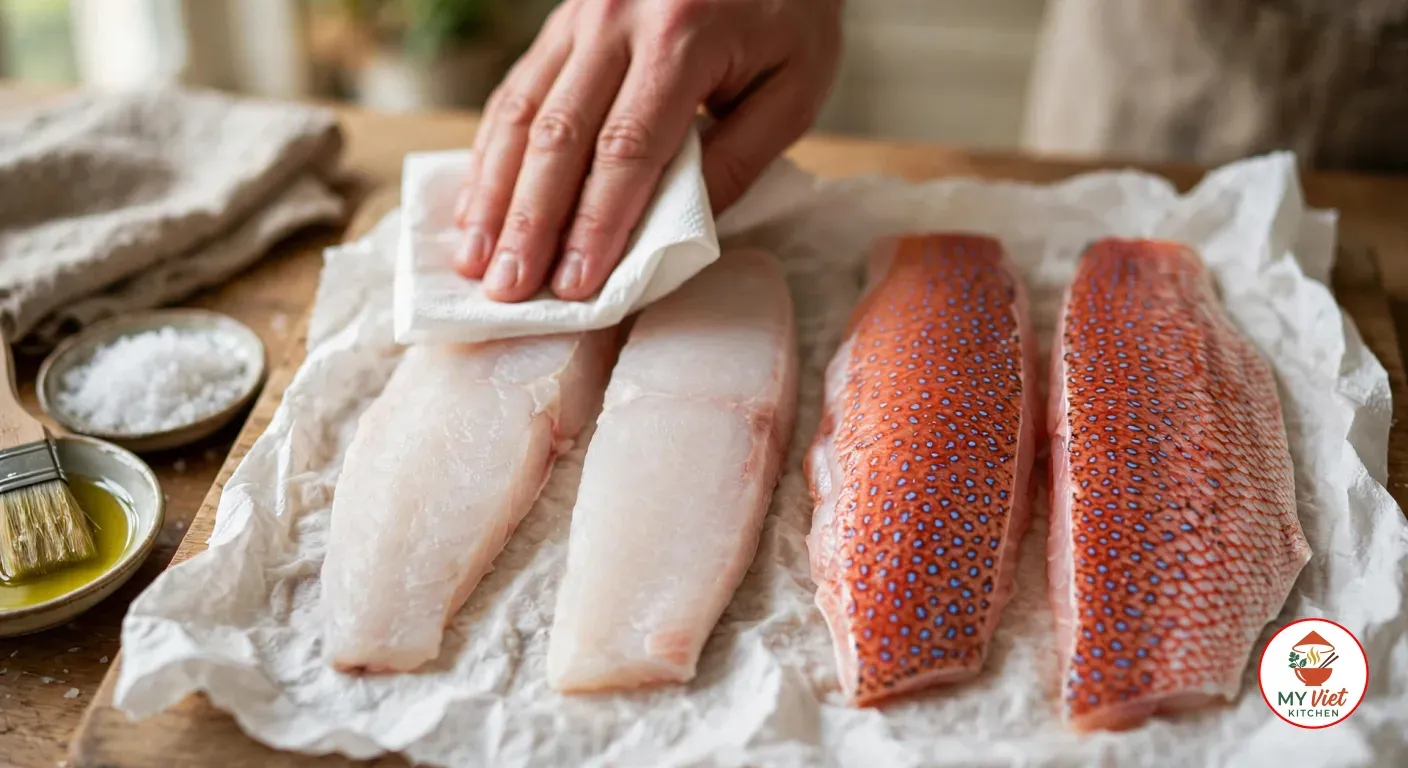
2Run a fingertip along each fillet and pull out any pin bones with tweezers. Scrape off any scales left on the skin with the back of a knife. If a fillet is much thicker at one end or bigger than a portion, cut it into serving-size pieces so they cook evenly. Pat both sides dry with paper towels, the skin especially. Just before grilling, brush both sides with the olive oil and season with the sea salt flakes and pepper.
Step 3: Heat and Oil the Grill
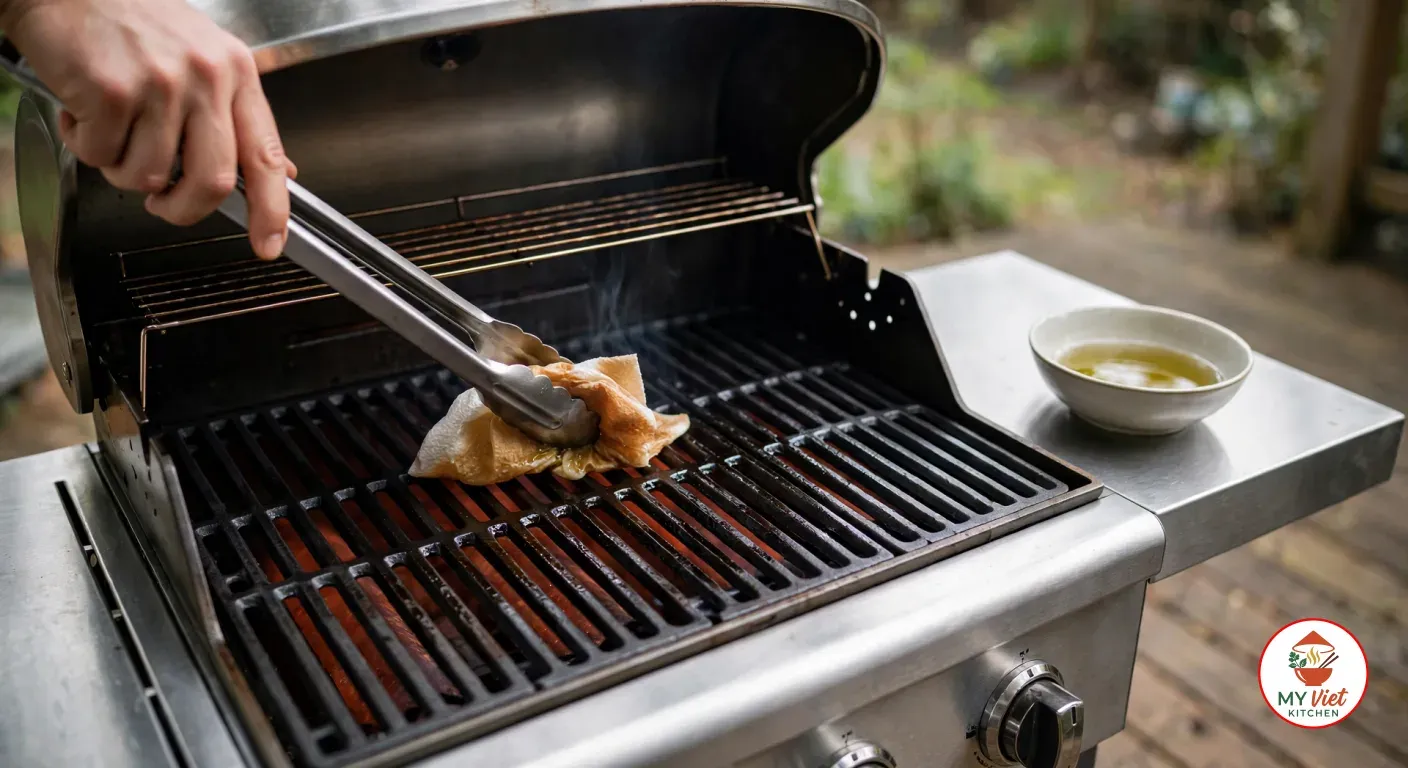
3Heat a gas grill with the lid closed on medium-high, 400 to 450°F (200 to 230°C), for 10 to 15 minutes. Scrub the grates clean with a grill brush. Fold a paper towel into a pad, dip it in the neutral oil and wipe it over the grates with long tongs until they shine.
Step 4: Grill the Coral Trout
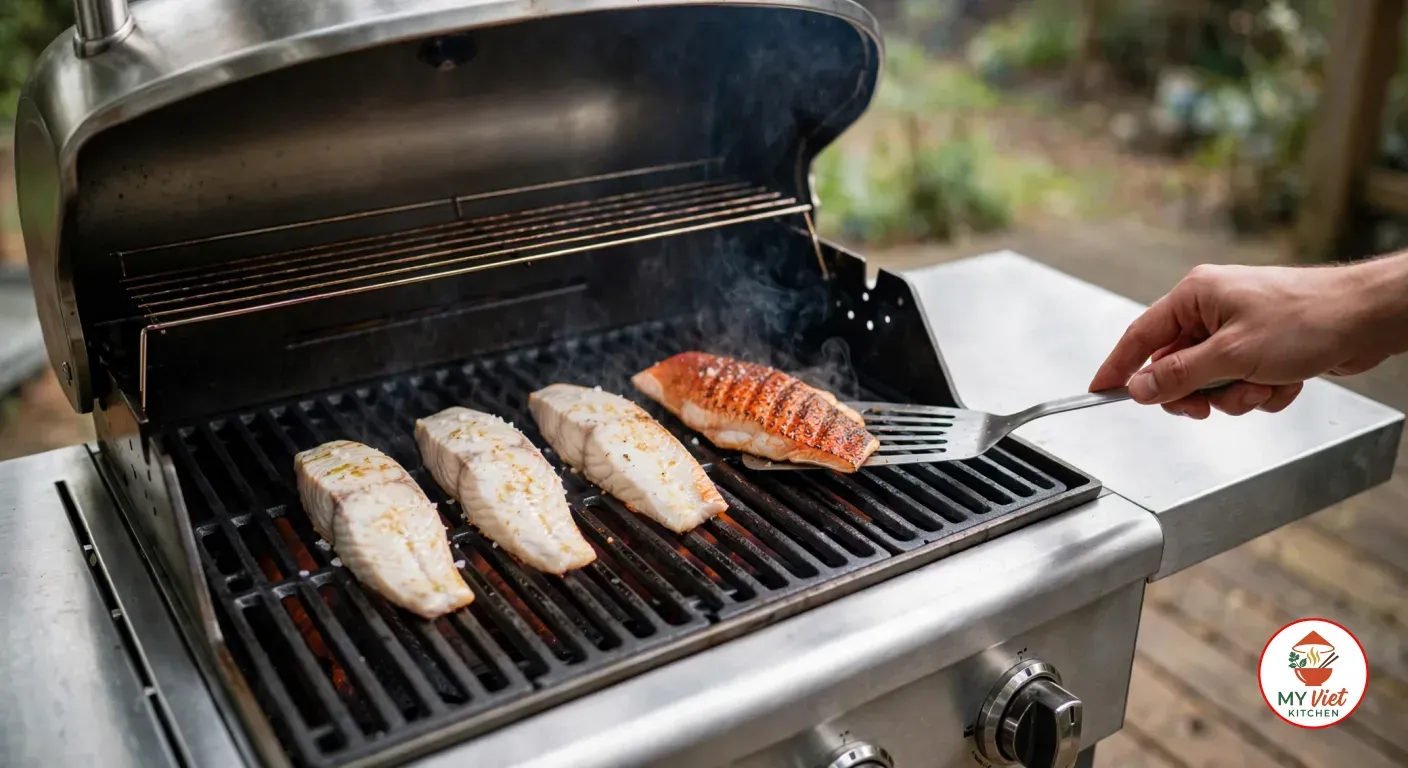
4Lay the fillets skin side down on the grates and press each one gently so the skin touches the bars all over. Shut the lid. Give them 5 to 6 minutes untouched. By then the skin should come away from the bars by itself, with the cooked white band reaching roughly three-quarters of each fillet’s depth. Slide a thin fish spatula under each fillet and turn it once. Cook the flesh side for 1 to 2 minutes, until the centre is just opaque and a thin skewer slides through with no resistance.
Step 5: Butter and Serve
5Lift the fillets onto a warm platter, flesh side up. Top each one with a spoonful of the lemon butter and let them rest for 2 minutes while it melts. Squeeze a little of the saved lemon juice over the top and serve with the lemon wedges.
Frequently Asked Questions
What does coral trout taste like?
Mild, slightly sweet and clean. Sydney Fish Market describes a mild flavour, low oiliness and moist, firm flesh with fine flakes and few bones. Smaller fish taste slightly stronger, and fish from estuaries can taste slightly muddy. Australian Tropical Foods calls the flavour mild, delicate and sweet, with white flesh (Australian Tropical Foods).
Can coral trout cause ciguatera poisoning?
It can. Queensland Health lists coral trout among the warm-water reef fish able to carry ciguatera toxin, which does not change a fish’s look, smell or taste and is not destroyed by cooking or freezing. It advises avoiding the head, roe, liver and other viscera, where the toxin concentrates, and fish over around 6 kg whole weight. The first time you eat a warm-water ocean fish, have no more than 300 grams. Cases are often anglers’ family members who eat the larger fish of a catch (Queensland Health).
Do you eat coral trout skin?
You can when it has crisped on the grill, but you don’t have to. Sydney Fish Market’s species guide says the thick skin is best removed. For grilled coral trout, this recipe keeps it on only to protect the flesh on the grates. The fillets go to the table flesh side up, so anyone can lift the white flakes off the skin with a fork.
What fish can you use instead of coral trout?
Sydney Fish Market lists other rockcods, bass groper, hapuku, leatherjackets, Murray cod, pearl perch, red emperor and West Australian dhufish as alternatives. Cooking a whole fish instead? Justine Schofield’s SBS recipe works with a coral trout or with a whole baby barramundi or snapper (SBS Food).
Sources
- Common Coral Trout, Plectropomus leopardus (Lacépède, 1802), Australian Museum
- Coral Trout species guide, Sydney Fish Market, sydneyfishmarket.com.au
- Coral Trout, Australian Tropical Foods
- Coral Trout (2023), Status of Australian Fish Stocks Reports, fish.gov.au, June 2023
- Size and possession limits in tidal waters, Queensland Government, updated September 2026
- Naturally occurring seafood toxins, Queensland Health, Queensland Government, updated June 2021
- Whole barbecued fish with lime and chilli, Justine Schofield, SBS Food, November 2018
- How to: BBQ CORAL TROUT Recipe by Chef Paul Breheny, TheHookandTheCook, YouTube, July 2016