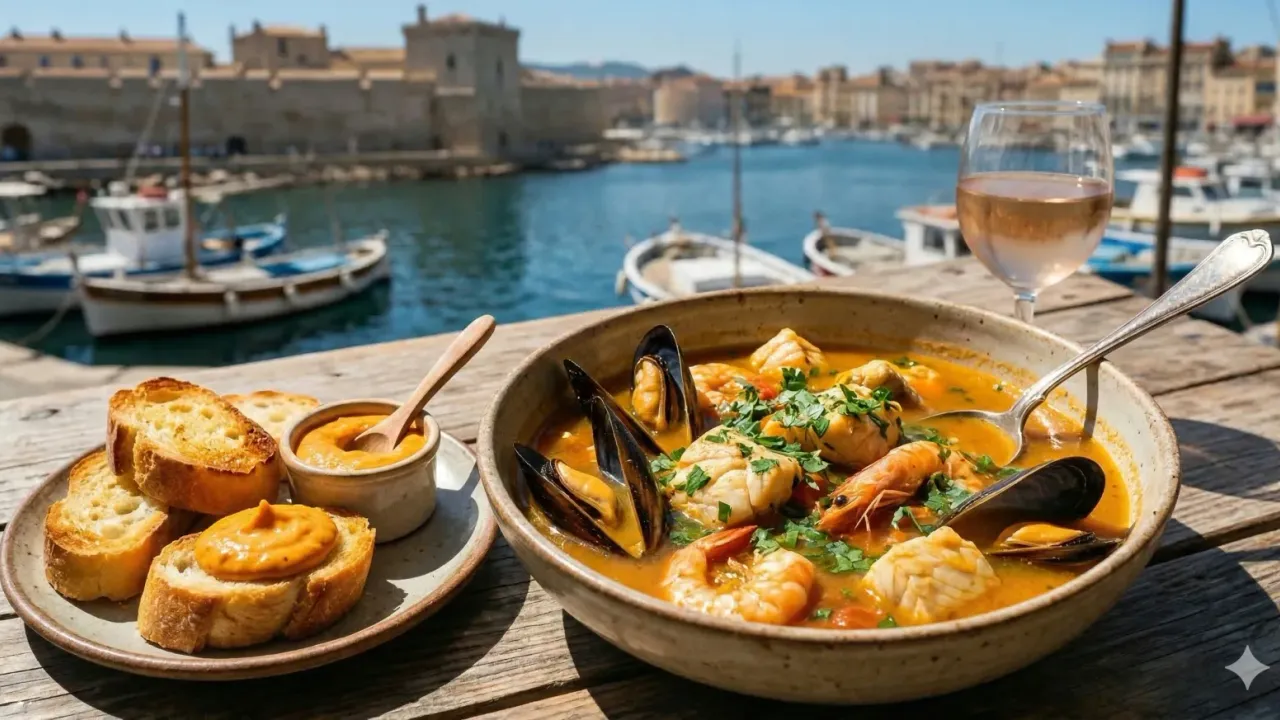
Bouillabaisse is the crown jewel of Provençal cooking, a magnificent seafood stew that has defined the port city of Marseille for centuries. This bouillabaisse recipe brings together firm white fish, tender shellfish, and a fragrant saffron-tomato broth into one of the most celebrated dishes in all of French cuisine. Served with crusty bread and fiery rouille, it transforms simple ingredients into a feast worthy of any special occasion.
Prep Time: 40 minutes | Cook Time: 45 minutes | Servings: 6
Difficulty: Medium | Calories: ~480 per serving
What Makes Bouillabaisse Special?
Bouillabaisse began as a humble fisherman’s meal in the old port of Marseille. After a long day on the Mediterranean, fishermen would cook the bony rockfish that nobody wanted to buy. They simmered everything in seawater with wild fennel, garlic, and whatever herbs grew on the rocky hillsides. Over time, however, this scrappy stew evolved into one of France’s most prized dishes. Today, bouillabaisse graces the tables of elegant restaurants along the Côte d’Azur.
What sets bouillabaisse apart from ordinary fish soup is the layering of flavors. Saffron gives the broth its golden hue and earthy perfume. Orange zest adds a subtle citrus brightness that lifts the richness of the seafood. Furthermore, the combination of fennel and leeks creates an aromatic backbone that no other fish stew replicates. Each element serves a purpose, and together they produce a broth so flavorful that some diners drink it like a fine consommé.
In Marseille, the Charte de la Bouillabaisse was established in 1980 to protect the dish’s authenticity. Restaurants that sign this charter agree to use specific fish, prepare the broth a certain way, and serve the dish with rouille and toasted bread. As a result, bouillabaisse is not just a recipe but a cultural institution. Making it at home connects you to generations of Mediterranean cooks who believed that the sea could produce something truly extraordinary.

Choosing the Right Fish for Bouillabaisse
The fish selection is the single most important decision in this bouillabaisse recipe. You need varieties that hold their shape during simmering, because flaky fish will dissolve into the broth. Additionally, using at least three different types creates the complex flavor that defines an authentic bouillabaisse.
- Monkfish (top choice): Dense and meaty, monkfish stays firm even after long cooking. Its lobster-like texture makes it the backbone of any serious bouillabaisse. Cut it into thick medallions for the best results.
- Sea bass or branzino: Mild and sweet, sea bass adds delicate flavor without overpowering the broth. It holds together well if you cut it into large pieces. Moreover, its clean taste pairs beautifully with the saffron.
- Red snapper: Firm-fleshed and slightly sweet, snapper is an excellent choice when Mediterranean species are unavailable. Leave the skin on for extra body in the stew.
- Shellfish (mussels and shrimp): Mussels release briny liquor into the broth and add visual drama. Shell-on shrimp contribute sweetness and extra seafood flavor. Always add shellfish last since they cook quickly.
- Fish to avoid: Skip cod, tilapia, and sole. These flaky fish break apart too easily in a simmering stew. They turn to mush instead of holding their shape as distinct pieces in the bowl. Consequently, the presentation suffers and the texture becomes unpleasant.
Ingredients for Bouillabaisse
Seafood:
- 2 pounds firm white fish fillets (monkfish, sea bass, snapper), cut into large chunks
- 1 pound mussels, scrubbed and debearded
- 1/2 pound large shrimp, shell-on
Aromatic Vegetables:
- 1 large fennel bulb, thinly sliced
- 2 medium leeks, white and light green parts, sliced
- 1 large onion, diced
- 4 cloves garlic, minced
Broth and Seasonings:
- 1 can (14 ounces) crushed tomatoes
- 2 tablespoons tomato paste
- 1 cup dry white wine
- 4 cups fish stock or seafood broth
- 1/2 teaspoon saffron threads
- 1 strip orange zest (about 3 inches)
- 1/4 cup olive oil
- 2 bay leaves
- 1 teaspoon dried thyme
- 1/2 teaspoon red pepper flakes
- Salt and black pepper to taste
- Fresh parsley for garnish
For Serving:
- 1 baguette, sliced and toasted
- Rouille (garlic-saffron aioli)
Pro tip: Bloom your saffron before adding it to the pot. Soak the threads in 2 tablespoons of warm water for 10 minutes while you prep the vegetables. This releases the color and aroma much faster than dropping dry threads into the broth. The soaking liquid turns deep gold, and that liquid goes into the pot along with the threads. You will notice a significant difference in both color and flavor.
Step-by-Step Instructions
Step 1: Build the Aromatic Base
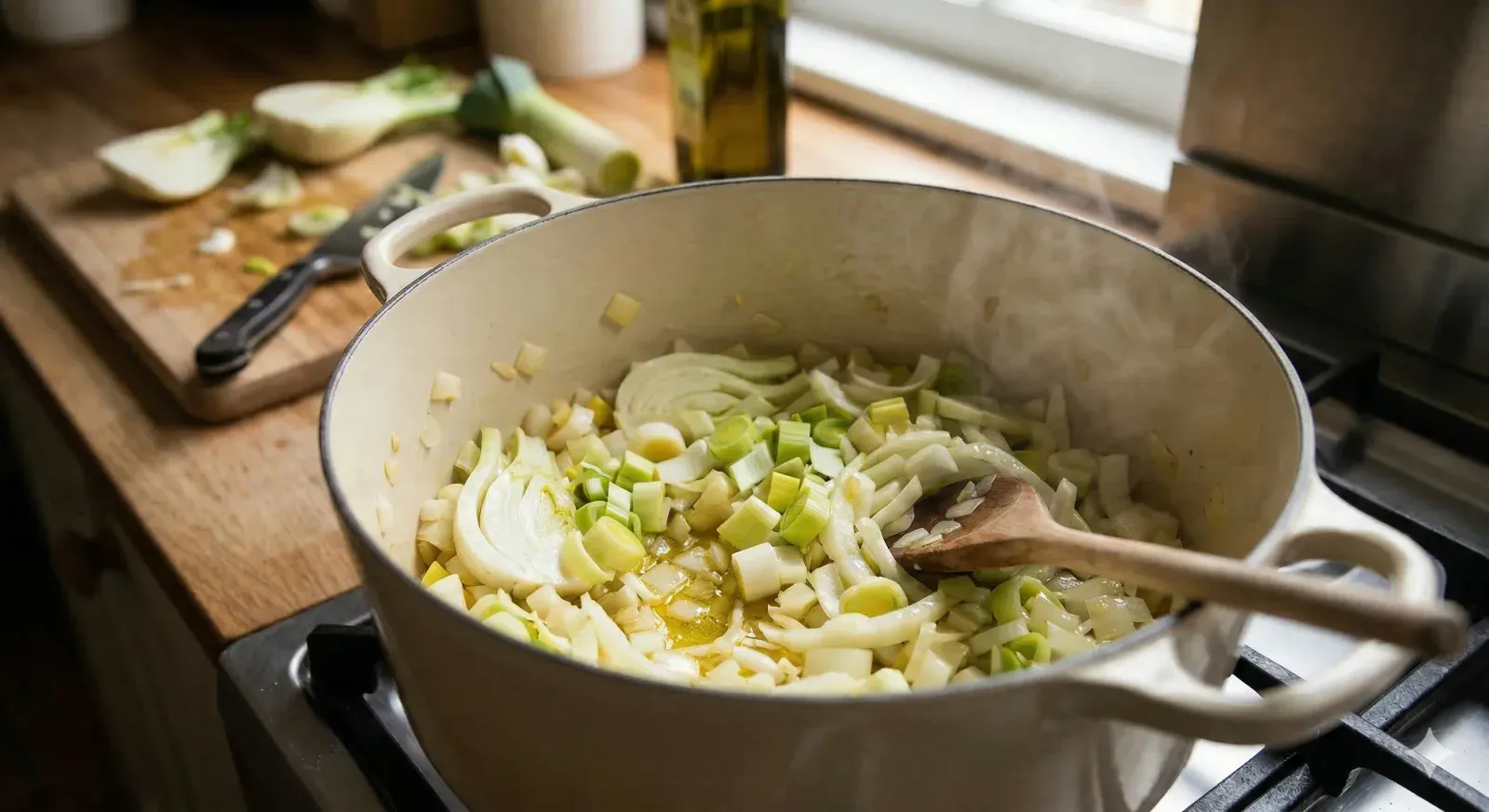
1 Heat the olive oil in a large Dutch oven or heavy-bottomed stockpot over medium heat. Add the sliced fennel, leeks, and diced onion. Cook for 8 to 10 minutes, stirring occasionally, until the vegetables soften and turn translucent. The fennel will release a gentle anise aroma that forms the foundation of your bouillabaisse.
Next, add the minced garlic, tomato paste, and red pepper flakes. Stir constantly for about 1 minute until the garlic becomes fragrant and the tomato paste darkens slightly. This brief toasting step concentrates the tomato flavor and removes the raw, tinny taste that paste can have. Meanwhile, your saffron should be blooming in its warm water bath.
Step 2: Create the Saffron-Tomato Broth
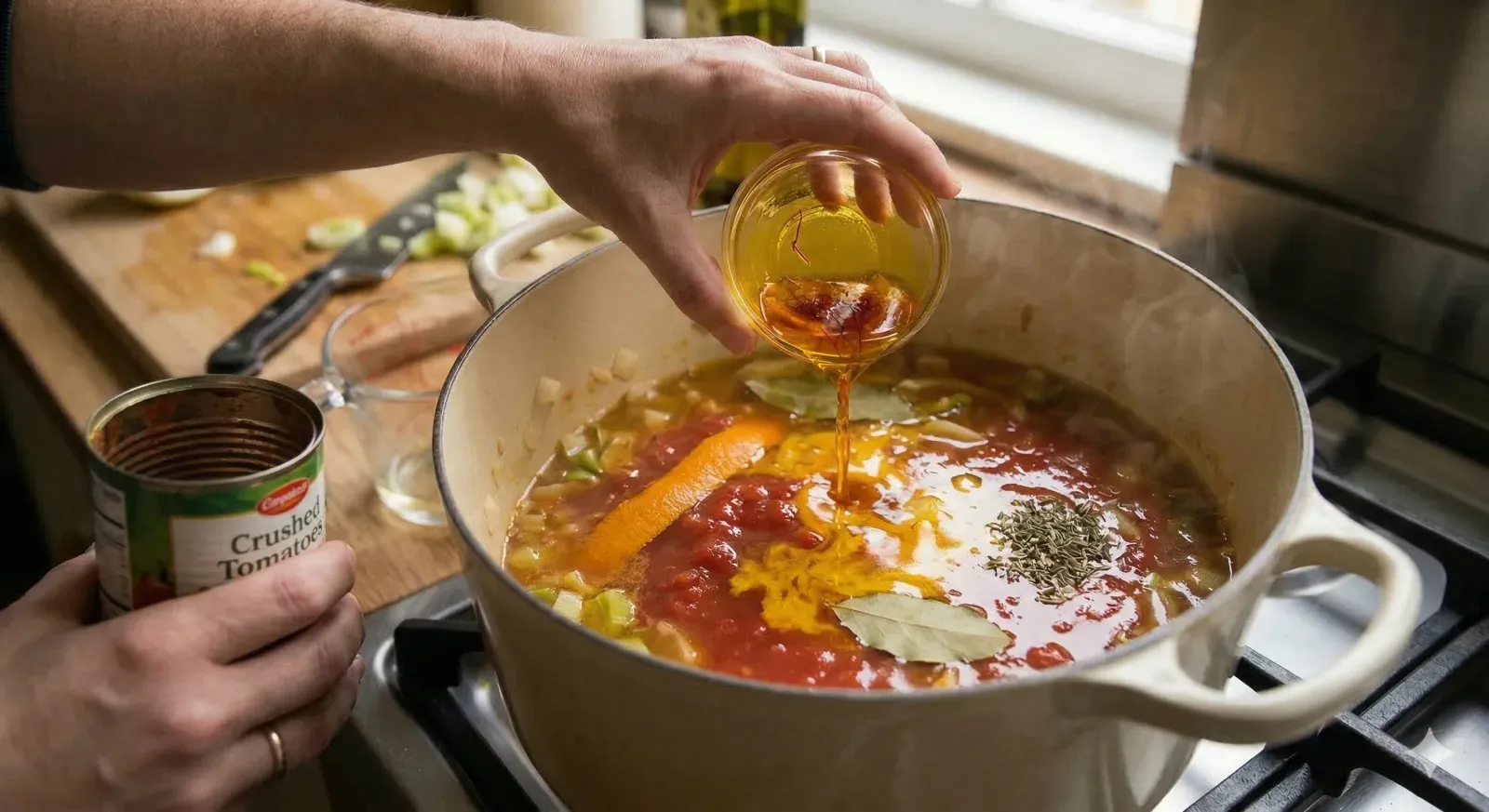
2 Pour in the white wine and use a wooden spoon to scrape up any browned bits from the bottom of the pot. Let the wine bubble for 2 minutes to cook off the sharpest alcohol notes. Then add the crushed tomatoes, fish stock, bloomed saffron with its soaking liquid, orange zest strip, bay leaves, and dried thyme.
Bring everything to a boil, then lower the heat to a steady simmer. Cook uncovered for 20 minutes. During this time, the broth transforms. The saffron stains it deep gold, the tomatoes break down and thicken slightly, and the orange zest perfumes the liquid with subtle citrus. Therefore, do not rush this step. A well-developed broth is what separates a great bouillabaisse from a forgettable one. Taste the broth at the 20-minute mark and adjust salt as needed.
Step 3: Add the Firm Fish
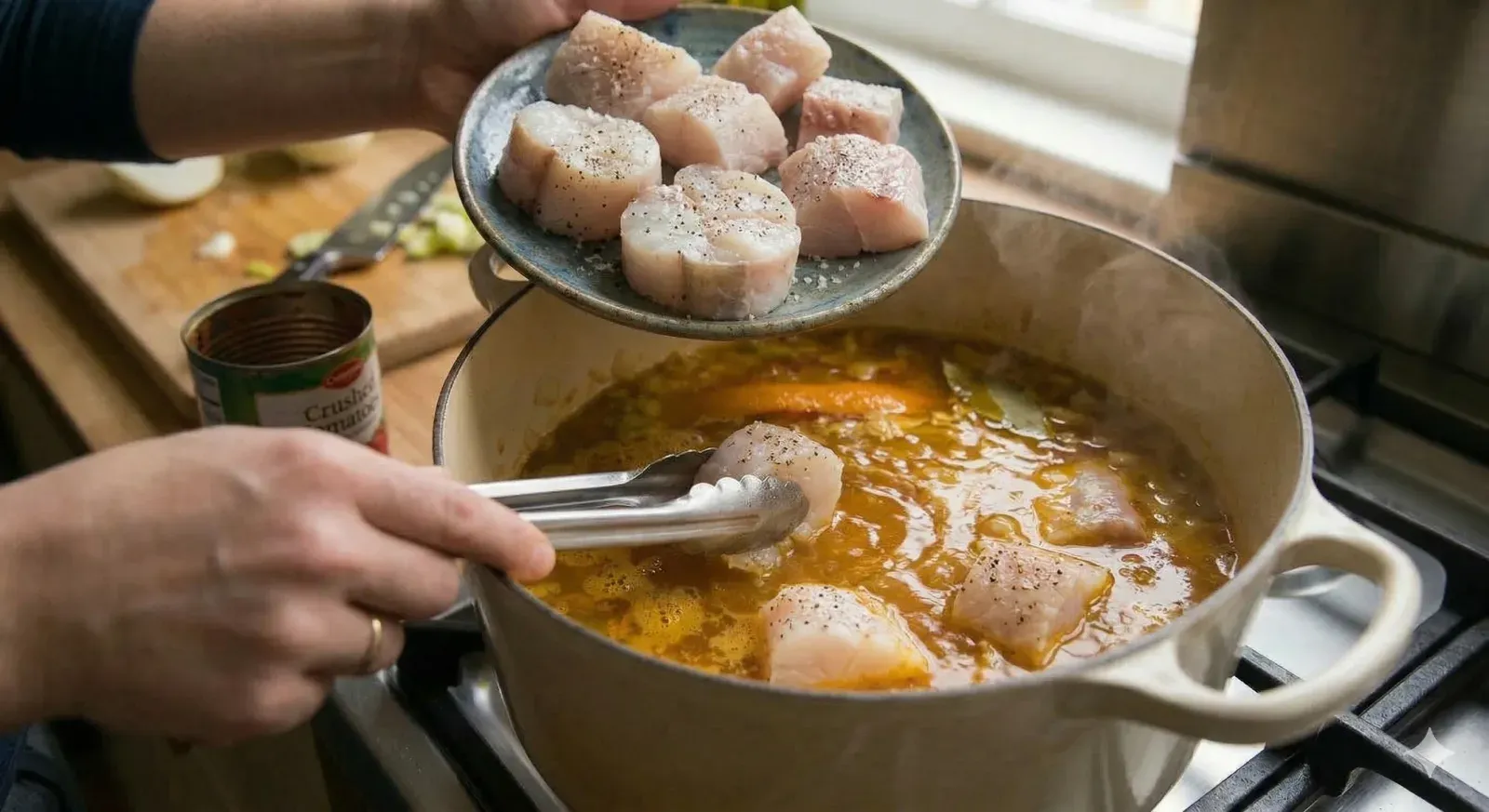
3 Season the fish chunks generously with salt and pepper. Gently nestle the firmest fish, such as monkfish, into the simmering broth first. These dense pieces need a head start. Let them cook for about 5 minutes before adding the more delicate varieties like sea bass and snapper.
Handle the fish with care at this stage. Resist the urge to stir vigorously, as the pieces will break apart. Instead, use a large spoon to gently push the fish beneath the surface of the broth. The goal is whole, intact chunks of fish sitting in the bowl at the end. In fact, traditional bouillabaisse in Marseille presents the fish almost like a separate course. Patience here pays off enormously in the final presentation.
Step 4: Add Shellfish and Finish
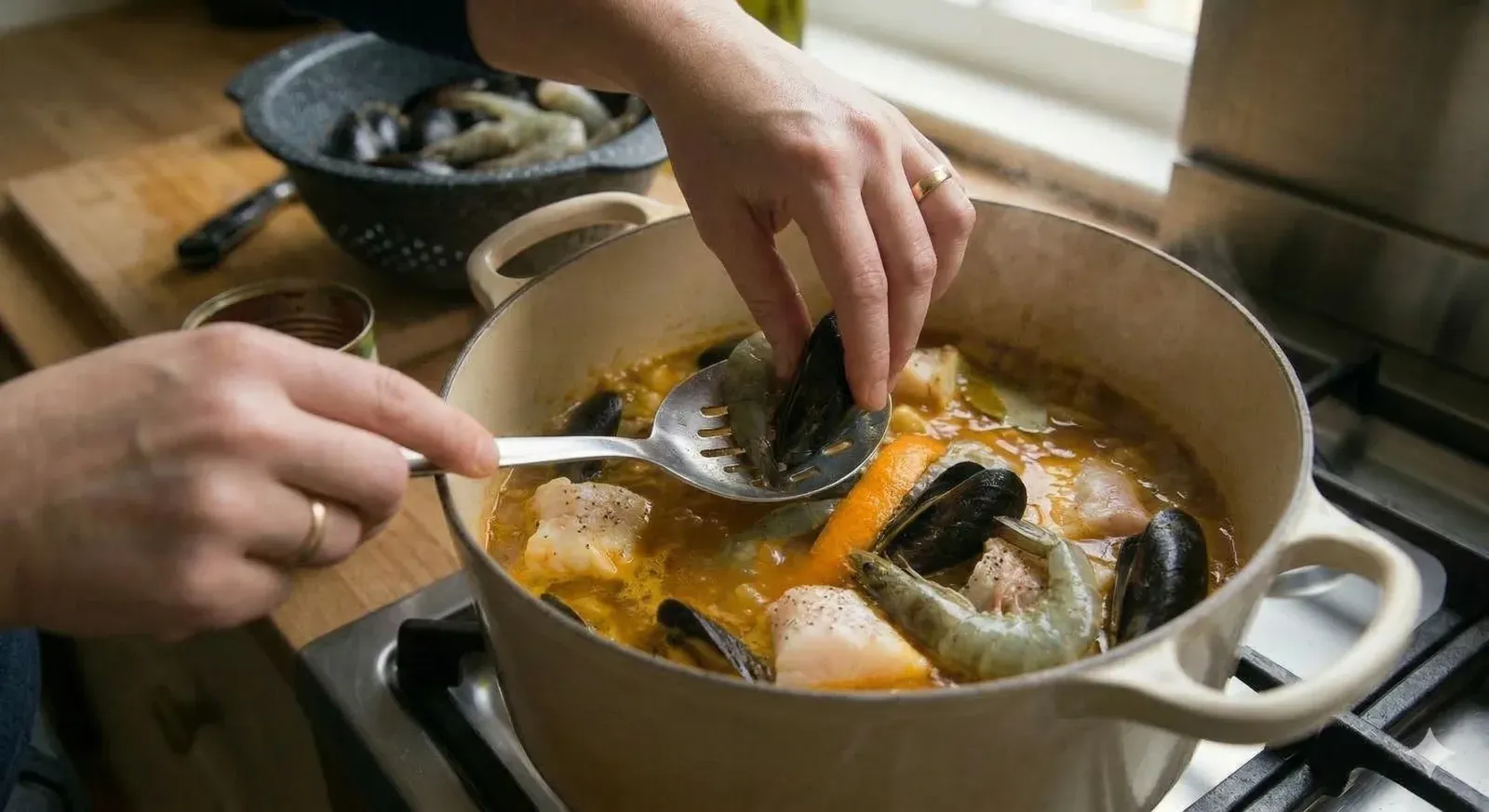
4 Tuck the mussels and shrimp into the broth around the fish pieces. Cover the pot tightly and cook for 5 to 7 minutes. The mussels will open and release their briny liquor directly into the stew. The shrimp will curl and turn pink when done. Discard any mussels that remain closed after cooking, as they are not safe to eat.
Remove the bay leaves and orange zest strip. Taste the broth one final time and adjust salt, pepper, or a pinch more red pepper flakes if you want extra heat. Ladle the bouillabaisse into wide, shallow bowls. Arrange the seafood so it sits on top of the broth beautifully. Scatter fresh parsley over each bowl. Serve immediately with toasted baguette slices and a generous dollop of rouille on the side. Each guest can spread the rouille on the bread and drop it into the broth, or stir it directly into the stew for extra richness.
Expert Tips for Perfect Bouillabaisse
Use Homemade Fish Stock
Store-bought fish stock works in a pinch, but homemade stock elevates your bouillabaisse dramatically. Save fish bones and shrimp shells, then simmer them with onion, celery, and a splash of white wine for 30 minutes. Strain and use immediately. The gelatin from the bones gives the broth a silky body that you cannot get from a carton. Moreover, homemade stock contains no added sodium, so you control the seasoning perfectly.
Add Fish in Stages
Different fish cook at different speeds. Monkfish is dense and needs more time than delicate sea bass. Adding everything at once means some pieces overcook while others stay raw. Start with the firmest fish and work your way to the most delicate. Shellfish always go in last. This staggered approach ensures every piece of seafood reaches the table perfectly cooked.
Do Not Skimp on Saffron
Saffron is expensive, but it is not optional in a bouillabaisse. Even a small pinch transforms the color and fragrance of the broth. Use genuine saffron threads, not powdered turmeric substitutes. Although turmeric adds color, it lacks the floral complexity that defines this Provençal stew. Half a teaspoon of threads is enough for a full pot.
Mediterranean Fish Stews: A Regional Comparison
Nearly every Mediterranean country has its own version of fish stew. Bouillabaisse stands apart, but understanding its relatives helps you appreciate what makes the Marseille original unique. Here is how the major Mediterranean fish stews compare.
| Dish | Country | Key Flavors | Defining Feature |
|---|---|---|---|
| Bouillabaisse | France (Marseille) | Saffron, fennel, orange zest | Multiple firm fish, served with rouille |
| Cioppino | USA (San Francisco) | Tomato, garlic, red wine | Italian-American, more tomato-forward |
| Zarzuela | Spain (Catalonia) | Paprika, almonds, brandy | Nut-thickened sauce, often with lobster |
| Cacciucco | Italy (Livorno) | Tomato, chili, red wine | At least five types of fish, served over toast |
| Psarosoupa | Greece | Lemon, celery, egg-lemon sauce | Light, clear broth with avgolemono finish |
Serving Suggestions
In Provence, bouillabaisse is traditionally served as a complete meal in two stages. First, the broth arrives in a tureen with toasted bread and rouille. Then the fish follows on a separate platter. At home, however, you can serve everything together in wide, shallow bowls for a more casual presentation.
Classic Accompaniments:
- Rouille: This spicy garlic-saffron mayonnaise is non-negotiable. Spread it on toasted bread and float the bread in the broth, or stir a spoonful directly into your bowl. The heat and richness transform each bite.
- Toasted baguette (croutons): Thick slices of crusty bread, rubbed with garlic and toasted until golden, serve as the vessel for the rouille. They also soak up the saffron broth beautifully.
- Simple green salad: A lightly dressed salad of mixed greens with a lemon vinaigrette cleanses the palate between spoonfuls of rich broth. Keep the dressing light so it does not compete with the stew.
- Steamed potatoes: Small waxy potatoes, boiled until tender and added to the bowl, are a traditional addition in some versions. They soak up the broth and add substance to the meal.
Beverage Pairings:
- Provence rosé: Dry, crisp, and mineral-driven, a chilled Provence rosé is the classic pairing. Its acidity cuts through the richness of the broth without overwhelming the delicate fish flavors.
- White Burgundy or Chablis: A medium-bodied white wine with good acidity complements the saffron and fennel notes in the broth. Avoid heavily oaked wines, which can clash with the seafood.
- Pastis with water: For an authentic Provençal experience, serve pastis diluted with cold water before the meal. Its anise flavor echoes the fennel in the bouillabaisse and sets the mood perfectly.
- Sparkling mineral water: A bottle of cold sparkling water with a squeeze of lemon refreshes the palate between bites. It also keeps the focus on the complex flavors in the bowl.
Storage and Reheating
Refrigerator: Store leftover bouillabaisse broth in a sealed container for up to 2 days. However, it is best to store the broth and seafood separately. Fish and shellfish become rubbery when reheated multiple times. If possible, eat the seafood the same day and save only the broth.
Freezer: The broth base freezes well for up to 2 months. Cool it completely before portioning into freezer-safe containers. Do not freeze the cooked seafood, as the texture suffers badly. Instead, thaw the broth, reheat it to a simmer, and poach fresh seafood just before serving.
Reheating: Warm the broth gently on the stove over medium-low heat. Bring it to a bare simmer, not a boil. If you have leftover fish, add it to the hot broth only long enough to warm through, about 2 minutes. Overheating will turn the fish dry and chalky. Consequently, gentle reheating is the key to preserving quality.
Common Mistakes to Avoid
1. Using Flaky Fish
Delicate fish like tilapia, sole, or cod dissolve in a simmering stew. Within minutes, they fall apart and turn the broth murky and chunky. Bouillabaisse needs firm, meaty fish that hold their shape. Monkfish, sea bass, and snapper are the right choices. Choose fish that you can cut into thick, sturdy pieces.
2. Overcooking the Seafood
Seafood cooks fast. Adding all the fish and shellfish at the same time guarantees that some pieces overcook. Firm fish needs only 8 to 10 minutes total. Mussels and shrimp need just 5 to 7 minutes. Therefore, stagger the additions and watch closely. Overcooked shrimp turn tough, and mussels become chewy and flavorless.
3. Skipping the Orange Zest
Orange zest seems like a minor detail, but it is a signature ingredient in authentic bouillabaisse. The citrus oils brighten the heavy, saffron-rich broth and prevent it from tasting flat. Use a vegetable peeler to remove a wide strip of zest, avoiding the bitter white pith. This small addition makes a surprisingly large difference in the finished dish.
4. Stirring Too Aggressively
Vigorous stirring breaks the fish into small pieces and ruins the presentation. Once the seafood enters the pot, use a gentle hand. Push pieces down into the broth with a large spoon rather than stirring in circles. The fish should arrive in the bowl as beautiful, intact chunks. Treat the pot with the same care you would use for poaching eggs.
Frequently Asked Questions
What fish is best for bouillabaisse?
Traditional bouillabaisse uses firm white fish that hold their shape during simmering. Monkfish, sea bass, John Dory, and red snapper are all excellent choices. For the best results, use at least three different varieties. The mix of flavors creates depth that a single type of fish cannot achieve. Avoid flaky varieties like sole or tilapia, which fall apart too quickly in the broth.
Is bouillabaisse the same as fish soup?
No, and this distinction matters in Provence. Generic fish soup is typically blended smooth and served as a starter. Bouillabaisse, in contrast, features large pieces of whole fish and shellfish in a clear saffron broth. It is a main course. In many Marseille restaurants, the broth and the seafood are even served as two separate courses. The preparation, ingredients, and presentation are all fundamentally different.
Can I make bouillabaisse without saffron?
Technically you can, but the result will not be bouillabaisse. Saffron provides the signature golden color and the distinctive floral, honey-like aroma that defines this dish. Without it, you have a pleasant fish stew, but not the real thing. If cost is a concern, remember that you need only half a teaspoon. A small amount goes a remarkably long way. There is no true substitute that replicates both the color and flavor.
What is rouille and do I need it?
Rouille is a thick, fiery sauce made from garlic, olive oil, saffron, breadcrumbs, and cayenne pepper. It is traditionally spread on toasted bread slices and floated on the broth. You can also stir it directly into the stew. Rouille adds heat, creaminess, and a garlicky punch that ties the whole dish together. Although it requires extra effort, it is considered an essential part of the bouillabaisse experience in Provence.
How long does bouillabaisse take to cook?
Plan on about 1 hour and 25 minutes from start to table. The broth base needs 20 minutes of simmering. The seafood adds another 10 to 12 minutes. Prep work, including slicing vegetables and cleaning shellfish, takes roughly 40 minutes. However, you can prepare the broth a day ahead to save time on the day you serve it.
Can I make bouillabaisse ahead of time?
You can prepare the broth base up to a day ahead. Cool it, refrigerate, and reheat when ready. The flavors actually deepen overnight. However, always add the seafood fresh, right before serving. Reheated fish and shellfish become rubbery and lose their delicate texture. Bring the broth to a simmer, add the seafood, and cook just until done.
Variations and Adaptations
Lobster Bouillabaisse:
For a luxurious version, add split lobster tails to the pot along with the firm fish. The lobster shells release extra flavor into the broth. Cook the lobster pieces for 8 to 10 minutes until the shells turn bright red. This elegant variation turns a special dish into a true showstopper for dinner parties.
Quick Weeknight Version:
Use a good-quality store-bought fish stock and skip the 20-minute simmer. Buy pre-cut fish from the seafood counter to eliminate prep time. Frozen mussels and peeled shrimp save even more effort. You lose some depth, but you gain a satisfying seafood stew in under 30 minutes. Add a generous pinch of saffron and a strip of orange zest to keep the essential bouillabaisse character.
Bouillabaisse with Potatoes:
Some Provençal cooks add small waxy potatoes to the broth during the simmering stage. Cut them into thick rounds and let them cook for 15 minutes before adding the fish. The potatoes absorb the saffron broth and turn golden. As a result, each bite offers a starchy contrast to the tender seafood. This heartier version works well for cold-weather meals.
Dairy-Free and Gluten-Free:
Bouillabaisse is naturally dairy-free and gluten-free as written. The rouille can be made with gluten-free breadcrumbs or thickened with boiled potato instead. Serve with gluten-free crusty bread if needed. No other changes are necessary, making this an excellent choice for guests with dietary restrictions.
The Cultural Significance of Bouillabaisse
Bouillabaisse is far more than a fish stew. It is a symbol of Marseille itself, a dish that reflects the city’s identity as a Mediterranean port where cultures, ingredients, and traditions converge. Phoenicians, Greeks, and Romans all left their marks on the cuisine of this region. Centuries later, the fishermen who created bouillabaisse were simply continuing a long tradition of cooking whatever the sea provided.
The dish carries deep social meaning as well. In Marseille, bouillabaisse has always been communal food, meant to be shared around a large table with family and friends. The ritual of serving the broth first, then the fish, turns a meal into an event. Furthermore, the 1980 Charte de la Bouillabaisse elevated the dish from folk food to protected cultural heritage. Restaurants that follow the charter commit to using at least four types of local fish and preparing the broth according to tradition.
Today, bouillabaisse connects us to the broader story of Mediterranean cooking. Every coastal culture has its own fish stew, from Italian cacciucco to Spanish zarzuela. Yet bouillabaisse holds a unique place because of its specific combination of saffron, fennel, and orange zest. These three ingredients, all native to the Mediterranean basin, create a flavor profile that is unmistakably Provençal. Making this dish at home is an act of participating in a culinary tradition that stretches back hundreds of years.
Conclusion
This bouillabaisse recipe captures the spirit of Marseille’s legendary fish stew in a way that works beautifully in a home kitchen. The keys are simple: build a fragrant saffron-tomato broth, choose firm fish that hold their shape, add the seafood in stages, and serve it all with crusty bread and fiery rouille. Follow these steps carefully, and you will produce a pot of golden, aromatic stew that looks and tastes like it came from a seaside bistro in Provence.
Ready to explore more French and European classics? Browse our European dishes collection, including coq au vin, ratatouille, and cassoulet. For more seafood inspiration, check out our Asian seafood dishes for bold flavors from across the Pacific.