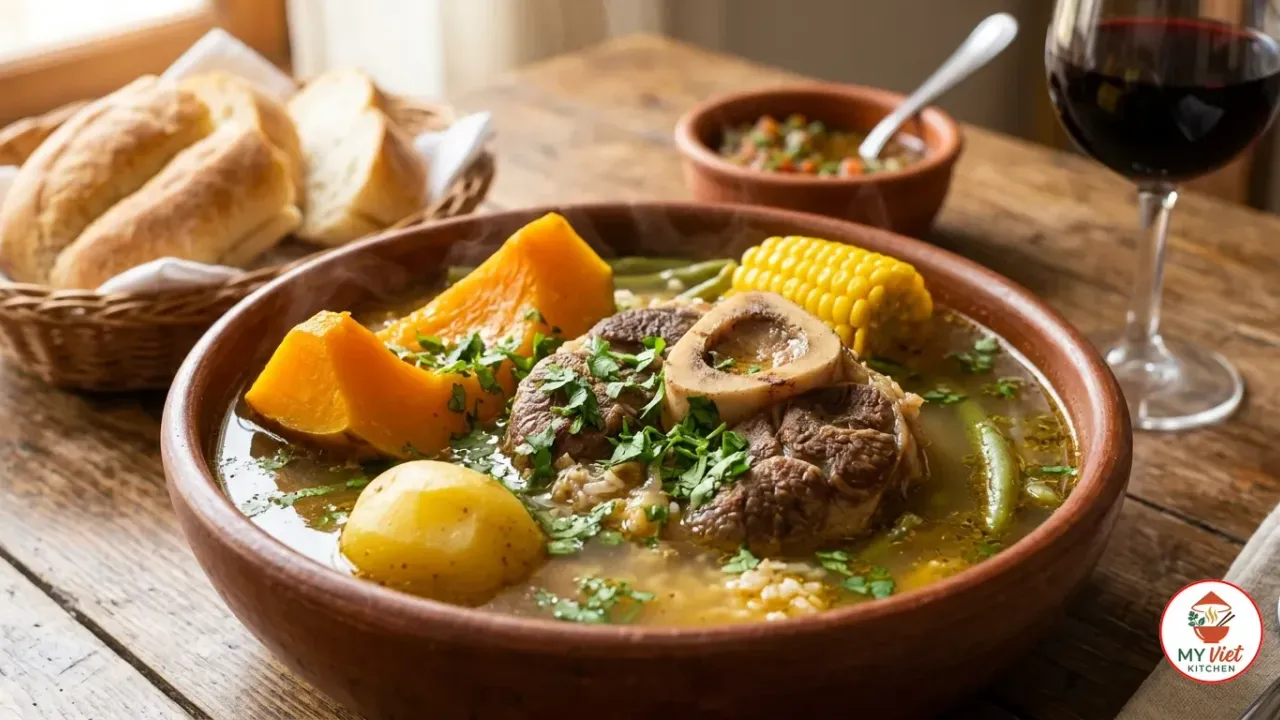
Cazuela is Chile’s most cherished homestyle stew, and this cazuela recipe brings its soul-warming goodness straight to your kitchen. This hearty Chilean stew features tender bone-in beef simmered low and slow with corn on the cob, butternut squash, potatoes, and green beans in a golden, aromatic broth. Every bowl delivers a complete meal in a single serving. Follow this recipe step by step for a pot of cazuela that captures the honest, nourishing spirit of Chilean home cooking.
Prep Time: 25 minutes | Cook Time: 90 minutes | Servings: 6
Difficulty: Easy | Calories: ~380 per serving
What Makes Cazuela Special?
Cazuela stands apart from most stews because it celebrates simplicity above all else. There is no fancy spice paste, no thickener, and no complex layering of flavors. Instead, the dish relies on good raw ingredients and the patience of a long, gentle simmer. Bone-in beef releases collagen and marrow into cold water as it heats. As a result, this builds a broth that tastes deeply savory and looks golden. Then the vegetables cook in that broth, soaking up its richness while adding their own sweetness and starch.
What truly defines cazuela is its look on the plate. Unlike thick stews where all the parts melt into one, a proper cazuela arrives with each element intact. You see a big piece of beef on the bone, a wedge of bright orange squash, a half potato, a chunk of corn, and a handful of green beans. In other words, each item holds its shape. This approach reflects a Chilean food idea that values honest, clear ingredients over heavy sauces and disguises.
Cazuela has fed Chilean families for ages. It shows up on lunch tables from Arica in the north to Punta Arenas in the south. Grandmothers make it every week. Also, restaurants list it as a daily special when the weather turns cool. In fact, many Chileans call it the national dish, even more so than empanadas. So making cazuela at home ties you to one of South America’s oldest and most loved food traditions.

Choosing the Right Beef Cut for Cazuela
The beef cut you pick shapes the quality of your cazuela broth. Bone-in cuts give the richest flavor because the marrow and connective tissue melt into the liquid as it simmers. Here are the best options for this Chilean stew.
- Beef shank (best choice): Cross-cut shanks have a central marrow bone surrounded by lean meat and connective tissue. As a result, they produce the most flavorful and gelatinous broth. Each piece holds together beautifully after simmering and looks impressive in the bowl.
- Short ribs: Bone-in short ribs offer excellent marbling that bastes the meat from within as it cooks. The fat renders into the broth, adding body and a silky mouthfeel. Short ribs work especially well if you prefer a richer, more full-bodied stew.
- Bone-in chuck: Chuck roast with the bone attached is an affordable alternative that delivers good flavor. It has more intramuscular fat than shank, so the meat stays moist and tender. Cut it into large, equal pieces so every bowl gets a generous portion.
Ingredients for Cazuela
For the Broth and Beef:
- 2 pounds bone-in beef shank or short ribs, cut into large pieces
- 8 cups cold water
- 1 large white onion, quartered
- 4 cloves garlic, smashed
- 2 bay leaves
- 1 teaspoon whole black peppercorns
- 1 tablespoon salt
For the Vegetables:
- 6 small yellow potatoes, peeled and halved
- 3 ears corn on the cob, each cut into 2 pieces
- 1 pound butternut squash, peeled and cut into 6 large wedges
- 1 cup green beans, trimmed and cut into 2-inch pieces
For Seasoning and Finishing:
- 1/2 cup long-grain white rice
- 1 medium white onion, finely diced
- 1 teaspoon ground cumin
- 1 teaspoon sweet paprika
- 1 teaspoon dried oregano
- 1/4 cup fresh cilantro, chopped, for garnish
- Merken or red pepper flakes for serving (optional)
Pro tip: Start the beef in cold water rather than boiling water. Cold water extracts more protein and collagen from the bones gradually, which produces a cleaner, more flavorful broth. Boiling water seals the outside of the meat too quickly and traps impurities inside.
Step-by-Step Instructions
Step 1: Build the Broth
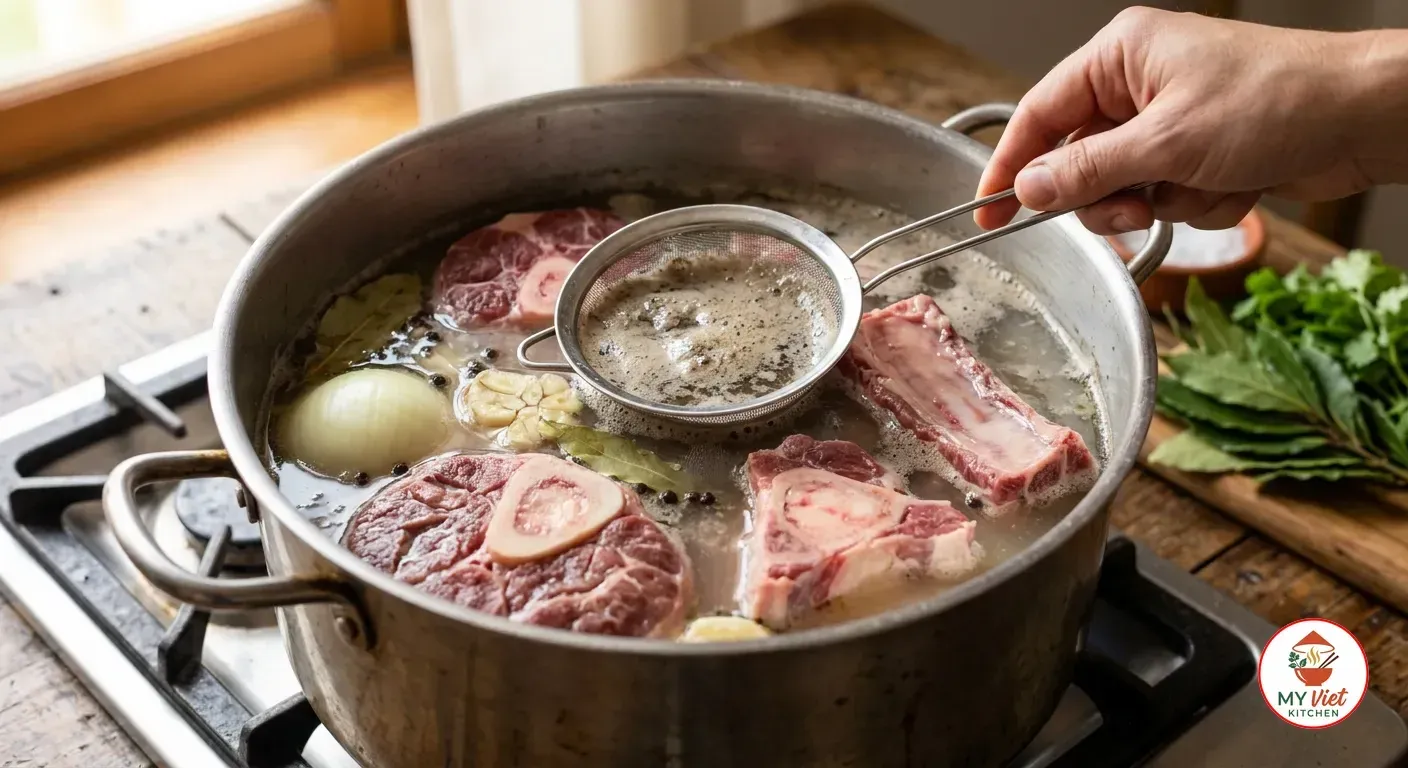
1 Place the beef pieces in a large stockpot and cover with 8 cups of cold water. Add the quartered onion, smashed garlic cloves, bay leaves, peppercorns, and salt. Set the pot over high heat and bring it to a boil. As soon as it boils, foam and impurities will rise to the surface. Skim these off with a spoon or fine mesh strainer.
Then reduce the heat to a gentle simmer and partially cover the pot. Let the beef cook for 60 to 70 minutes until it feels tender when you poke it with a fork. The broth should turn a clear, light gold. Do not rush this step with high heat because a rolling boil makes the broth cloudy and the meat tough. After all, a patient, slow simmer is the base of every great cazuela.
Step 2: Add the Base Vegetables
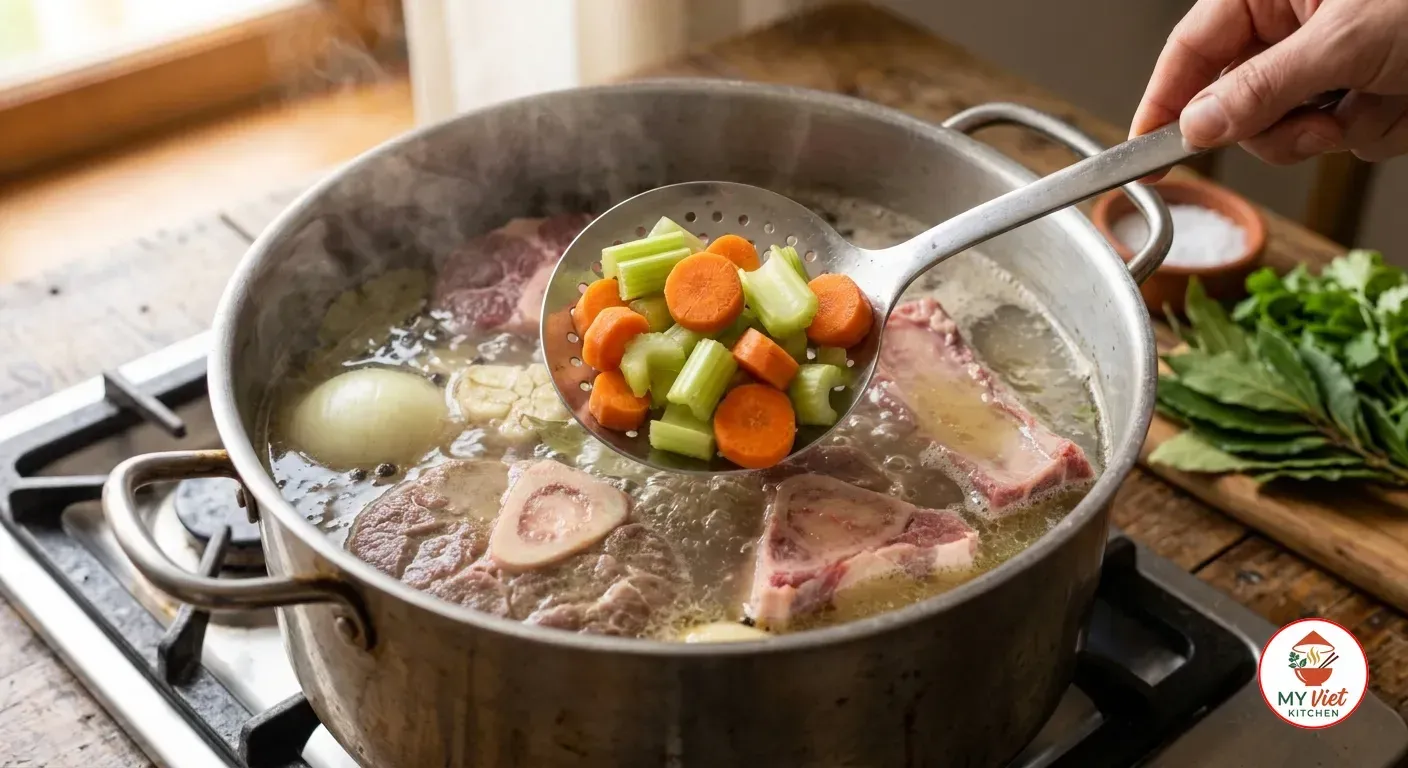
2 Once the beef is tender, fish out the quartered onion and bay leaves with a slotted spoon. They have served their purpose and would turn mushy if left in. Now add the halved potatoes, corn pieces, and butternut squash wedges to the pot. These hearty vegetables need about 15 minutes to begin softening in the simmering broth.
Keep the heat at a steady, gentle simmer. The squash will start to soften at the edges, giving off its natural sweetness and tinting the broth a deeper gold. Meanwhile, the potatoes soak up the beefy flavor. Also, the corn adds a light sweetness that rounds out every spoonful. Stir gently and try not to break the squash, since how it looks in the bowl matters for a proper cazuela.
Step 3: Add Rice and Aromatics
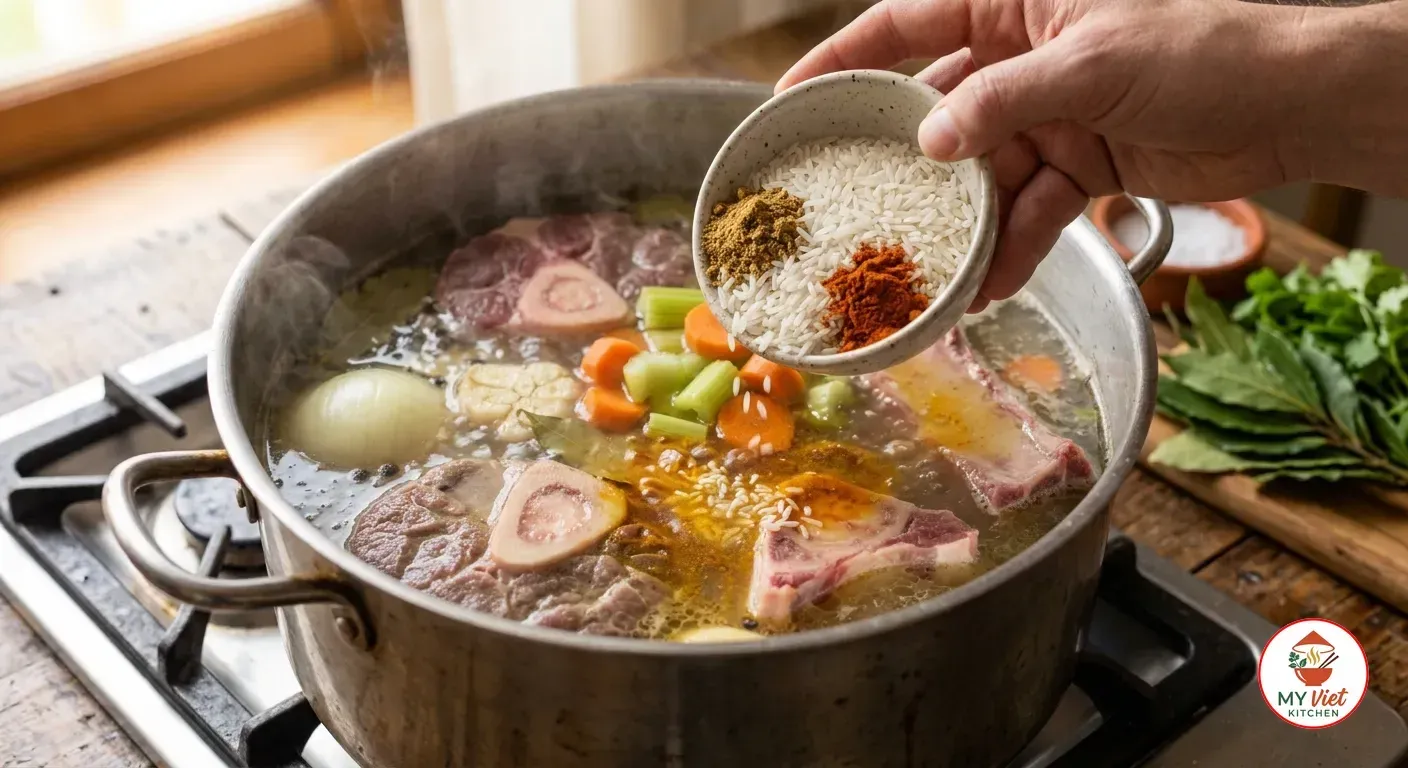
3 Sprinkle the rice directly into the simmering broth and stir gently. Then add the finely diced onion, ground cumin, sweet paprika, and dried oregano. These aromatics bloom in the hot liquid and give the cazuela its characteristic warmth. The rice releases starch as it cooks, which thickens the broth just enough to give it a satisfying body.
Simmer for 10 minutes, stirring now and then so the rice does not settle on the bottom. At this point, your kitchen should fill with a savory, cozy aroma. The broth shifts from a simple stock into something richer. Taste it now and adjust the salt if needed. Essentially, the cumin and paprika should add warmth in the background without taking over the clean, honest taste of the beef and vegetables.
Step 4: Finish with Green Beans and Serve
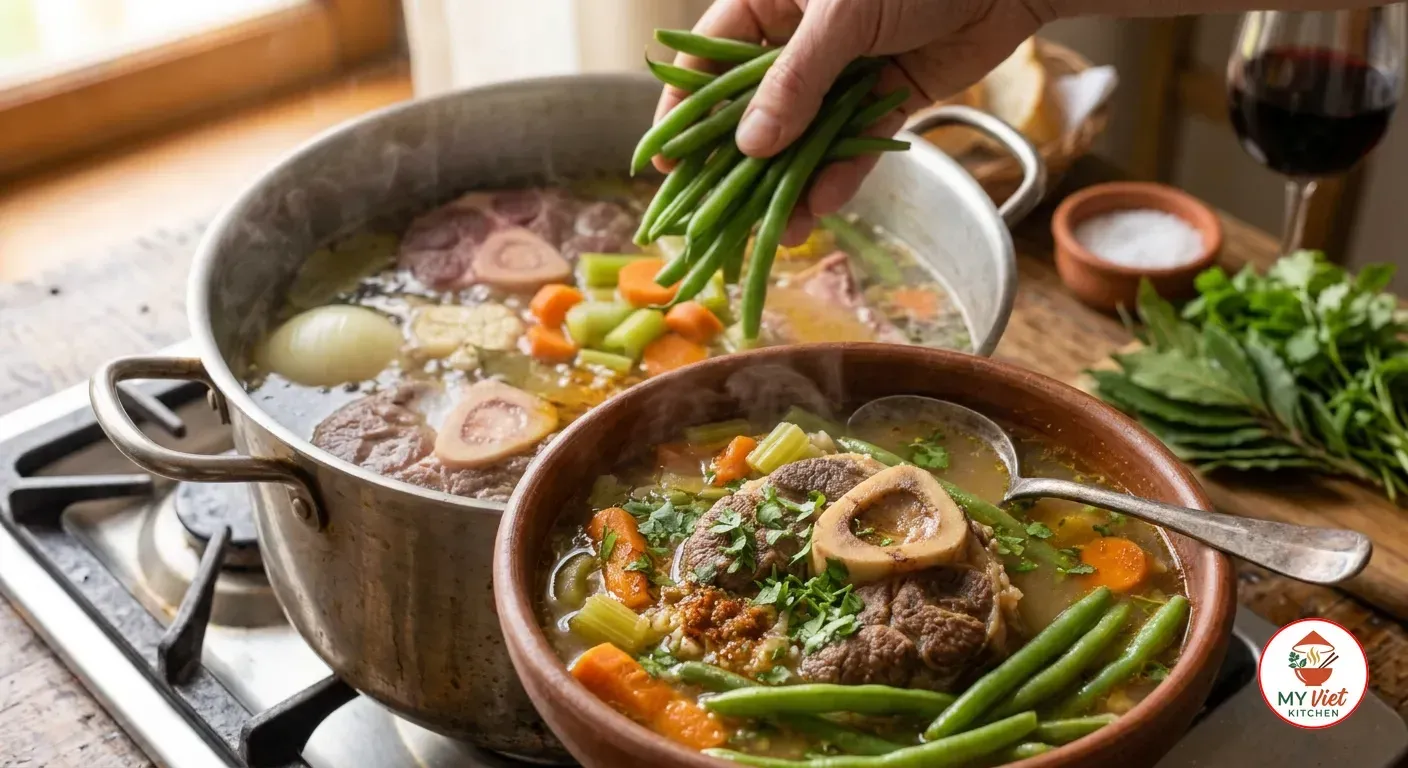
4 Add the green beans to the pot and cook for 5 more minutes. You want them tender-crisp, with a slight bite that contrasts the soft potatoes and squash. The green beans also add a pop of color to each bowl. Once they are ready, remove the pot from the heat.
Next, ladle the cazuela into deep, wide bowls. Each serving should include a piece of bone-in beef, a wedge of squash, a half potato, a piece of corn, and a big spoonful of green beans in the golden broth. Then scatter fresh cilantro over the top and offer merken, the smoky Chilean chili flake, on the side. Serve right away while the broth is steaming hot and the flavors are at their peak.
Expert Tips for Perfect Cazuela
Skim the Broth Early and Often
During the first 10 minutes of simmering, proteins from the beef rise to the top as gray foam. Removing this foam is key for a clear, clean broth. Use a fine mesh skimmer or a large spoon. If you skip this step, the bits get pulled back into the liquid and make the broth murky and bitter. In short, a few minutes of skimming pays off with a much better result.
Cut Vegetables Large
Cazuela is not a chunky soup with small, even dice. Each piece should be big enough to stand on its own in the bowl. For example, halve the potatoes rather than quartering them. Cut the squash into thick wedges. Leave the corn in large sections. This keeps the vegetables from falling apart during the long cook. It also stays true to how Chileans present each ingredient with care and respect.
Season in Stages
First, add salt when you start the broth. Then taste and adjust after the vegetables go in. The potatoes and rice soak up salt as they cook, so the broth can taste bland if you only salt it once. A final check before serving makes sure every element tastes right. This technique works for most stews, but it matters most for cazuela because the broth is front and center.
Cazuela vs. Other South American Stews
South America has a rich tradition of hearty one-pot meals. Here is how cazuela compares to other beloved stews from the continent.
| Feature | Cazuela (Chile) | Sancocho (Colombia) | Puchero (Argentina) |
|---|---|---|---|
| Broth style | Clear, golden, light | Thick, starchy, hearty | Rich, meaty, robust |
| Key vegetables | Squash, corn, potatoes | Yuca, plantain, corn | Sweet potato, corn, cabbage |
| Protein | Beef shank or chicken | Chicken, pork, or fish | Mixed meats and sausage |
| Thickener | Rice starch, squash | Yuca starch | None, brothy |
| Garnish | Cilantro, merken | Lime, cilantro, avocado | Salsa criolla |
Serving Suggestions
In Chile, cazuela is typically a lunch dish. It arrives at the table in a deep, wide bowl with everything arranged so you can see each ingredient. The broth comes first, followed by the meat and vegetables. Here are the traditional accompaniments that complete a proper Chilean cazuela.
The Classic Accompaniments:
- Crusty bread: A thick slice of marraqueta, the classic Chilean bread, is essential for soaking up the golden broth. Tear pieces off and dip them into the bowl as you eat. The bread absorbs the savory liquid and becomes a highlight of the meal.
- Pebre: This fresh Chilean salsa made from tomatoes, onion, cilantro, and aji pepper adds brightness and a touch of heat. Spoon it directly into the cazuela or spread it on bread. The acidity cuts through the richness of the broth beautifully.
- Ensalada chilena: A simple salad of sliced tomatoes and white onion dressed with olive oil, salt, and a squeeze of lemon. This light, fresh side balances the hearty warmth of the stew and is the most traditional pairing in Chilean cooking.
Beverage Pairings:
- Chilean Carmenere: This medium-bodied red wine with soft tannins and notes of dark fruit complements the beefy broth without overpowering the vegetables. Carmenere is Chile’s signature grape and the natural choice for its national stew.
- Mote con huesillo: A traditional Chilean drink made from dried peaches and husked wheat. Its sweet, fruity flavor refreshes the palate between spoonfuls of the savory stew. It is particularly popular in summer months.
- Kunstmann lager: A crisp Chilean craft beer from the south. Its clean, malty character pairs well with the honest flavors of cazuela without competing for attention.
Storage and Reheating
Refrigerator: Cazuela stores well in the fridge for up to 3 days. The broth develops even deeper flavor overnight as the beef and vegetables continue to release their essence. Store the stew in a large sealed container and keep the broth with the solids so nothing dries out.
Freezer: You can freeze cazuela for up to 2 months. Remove the potatoes before freezing because they turn grainy when thawed. Let the stew cool completely, then transfer it to freezer-safe containers with an inch of headspace. Thaw overnight in the refrigerator before reheating.
Reheating: Warm the cazuela gently on the stove over medium-low heat. Add a splash of water or broth if the liquid has reduced too much during storage. Bring it to a gentle simmer and heat until the beef and vegetables are warmed through. Avoid boiling vigorously because the squash pieces may break apart. Garnish with fresh cilantro after reheating for the best color and flavor.
Common Mistakes to Avoid
1. Boiling the Broth Too Hard
A rolling boil breaks the meat fibers too fast and blends the fat into the broth. As a result, it turns cloudy and greasy. Cazuela broth should stay at a gentle simmer where small bubbles barely break the top. This slow method gives you the clear, golden liquid that defines a proper cazuela. If the broth starts to bubble hard, turn down the heat right away.
2. Using Boneless Meat
Boneless stewing beef gives you tender meat, but the broth will taste flat and thin. The bones add collagen, gelatin, and marrow that no spice can replace. Specifically, these give the broth a rich feel that coats your mouth with every sip. So always pick bone-in cuts. The bone also looks great in each serving bowl.
3. Adding All Vegetables at Once
Each vegetable needs a different cook time. If you add the green beans with the potatoes, they will turn army green and mushy before the potatoes are done. Instead, stagger them as this recipe directs. Potatoes and squash go in first because they take longer. Then green beans go in last since they need only 5 minutes. This careful timing keeps each vegetable at its best.
4. Cutting Vegetables Too Small
Small vegetable pieces melt into the broth during the long simmer. Consequently, your cazuela turns into a thick, muddy soup. The whole point of this dish is to see and taste each item on its own. So cut everything into large, bold pieces that hold their shape. A wedge of squash and a half potato should greet you when you look into the bowl. That visual charm is part of what makes cazuela special.
Frequently Asked Questions
What does cazuela taste like?
Cazuela tastes clean, savory, and deeply comforting. The broth carries the richness of slow-cooked beef bones, and the squash and corn add natural sweetness. The potatoes bring earthiness, while the cumin and oregano give gentle warmth. Overall, it tastes wholesome rather than heavy or spiced. Most people call it a warm hug in a bowl.
What is the difference between cazuela and carbonada?
Cazuela uses large, whole pieces of meat and vegetables in a clear broth. By contrast, carbonada has smaller diced bits in a thicker base. Also, carbonada often includes sweet items like raisins and peaches that you would never find in cazuela. In essence, cazuela celebrates purity, while carbonada plays with the contrast between sweet and savory.
Can I make cazuela with chicken instead of beef?
Absolutely. Cazuela de ave, the chicken version, is equally beloved in Chile. Use bone-in chicken thighs or drumsticks and reduce the initial simmering time to 30 to 35 minutes. The broth will be lighter and more delicate than the beef version, but every bit as satisfying. Some families alternate between beef and chicken cazuela throughout the week.
Why do Chileans add rice to cazuela?
The rice works as a natural thickener. As it cooks, it lets out starch that gives the liquid a silky body without making it heavy. Not every Chilean family adds rice, but it is a common tradition that brings extra texture. If you prefer a fully clear broth, simply leave the rice out.
What cut of beef is best for cazuela?
Bone-in beef shank is the top choice for this dish. The central marrow bone melts into the broth and gives it a rich, gelatinous quality that boneless cuts cannot match. Short ribs are an excellent alternative with more fat and marbling. Whichever cut you choose, make sure it has a bone. The bone is not optional in cazuela because it is the secret behind the golden, full-bodied broth.
Is cazuela healthy?
Indeed, cazuela is one of the most balanced stews you can make. Each bowl gives you protein from the beef, carbs from potatoes and corn, vitamins from the squash and green beans, and minerals from the bone broth. At around 380 calories per serving, it fills you up without weighing you down. For that reason, many Chilean families serve it because it provides a full, wholesome meal in a single bowl.
Variations and Adaptations
Cazuela de Ave (Chicken Version):
Simply replace the beef with 3 pounds of bone-in chicken thighs and drumsticks. Then reduce the first simmering time to 30 minutes. The rest of the recipe stays the same. Chicken cazuela has a lighter, more delicate broth that works well in warm weather. In fact, many Chilean homes treat it as the default version during spring and summer.
Cazuela de Cerdo (Pork Version):
Use bone-in pork ribs or pork shoulder with bones for a richer, sweeter broth. Simmer the pork for 50 to 60 minutes before adding vegetables. The pork fat gives the broth a round, velvety feel. Additionally, toss in a cinnamon stick during the first simmer for a subtle aroma that works well with the pork. Although less common, this version is deeply satisfying.
Vegetarian Cazuela:
Skip the meat and build the broth from roasted vegetable scraps, dried mushrooms, and kombu for umami depth. Then increase the squash and add chickpeas for protein. Also use smoked paprika instead of regular paprika for a deeper, smokier taste. Although different, this version stays true to the spirit of cazuela while working for plant-based eaters.
The Cultural Significance of Cazuela
Cazuela holds a place in Chilean life that goes far beyond the kitchen. It is comfort, memory, and identity all simmered in one pot. The dish traces its roots to the colonial era, when Spanish settlers brought cocido, a boiled meat and vegetable stew, to Chile. Over time, local cooks swapped in their own ingredients. Squash from the valleys, corn from the center, and potatoes from the south took the place of turnips and chickpeas. As a result, something brand new and deeply Chilean was born.
In Chilean homes, cazuela is more than a recipe. It is a weekly ritual. Mothers and grandmothers make it on set days, and each family guards its own version with quiet pride. For instance, some insist on choclo, the large-kerneled Chilean corn. Others swear by zapallo camote, a special type of squash. These small choices show how personal the dish is. Accordingly, if you ask a Chilean about their family’s cazuela, you often unlock a flood of stories about childhood, home, and love shown through food.
Beyond the home, cazuela shows up in Chilean literary and cultural life as a symbol of warmth and grit. Pablo Neruda, Chile’s Nobel Prize-winning poet, wrote about the honest joys of simple food. Indeed, this stew lives that idea. It asks for no rare items, no fancy skill, and no pretension. Ultimately, making cazuela at home ties you to a living food tradition that has fed a nation through every season.
Conclusion
This cazuela recipe gives you a true taste of Chile in your own kitchen. The keys are simple: use bone-in beef for a rich broth, cut your vegetables large, simmer with patience, and season in stages. Follow this cazuela recipe step by step for a pot of golden, warming stew that captures the heart of Chilean home cooking. In the end, every bowl brings warmth, balance, and a deep joy that only honest, slow-cooked food can give.
Looking for more Latin American favorites? Explore our American dishes collection for recipes like Peruvian aji de gallina, empanadas, and Colombian ajiaco. You can also browse our full range of Asian dishes for more global comfort food inspiration.