Mulukhiyah is one of the oldest and most cherished stews in Egyptian cooking. This silky green stew starts with finely chopped jute leaves simmered in rich chicken broth, then finished with a sizzling garlic and coriander sauce called taqlia. If you want an authentic mulukhiyah recipe that captures the soul of Egyptian home cooking, this guide walks you through every step with the detail you need to get it right.
Prep Time: 25 minutes | Cook Time: 50 minutes | Servings: 6
Difficulty: Medium | Calories: ~380 per serving
What Makes Mulukhiyah Special?
Mulukhiyah holds a place in Egyptian culture that runs deeper than almost any other dish. The stew takes its name from the Arabic word for jute leaves, and Egyptians have eaten it in some form since the time of the pharaohs. According to legend, the Fatimid caliph Al-Hakim once banned mulukhiyah because he believed it stirred desire in those who ate it. The people rebelled, and the ban was quickly lifted. That story says everything about how fiercely Egyptians love this stew.
Walk into any Egyptian home on a Friday afternoon, and you will likely smell mulukhiyah simmering on the stove. Friday lunch is the most important family meal of the week, and this stew appears at the table more than any other. Mothers pass the recipe to daughters generation after generation. Each family guards small variations in technique, especially around how finely to chop the leaves and how much garlic to use in the taqlia.
What sets this mulukhiyah recipe apart from other green stews is its unique and captivating texture. The jute leaves release a natural mucilage when cooked, giving the stew a silky and slightly viscous body that coats every grain of rice. Meanwhile, the taqlia delivers an explosive punch of fried garlic and toasted coriander that transforms the mild leaves into something bold and deeply savory. In short, no other dish tastes quite like it.
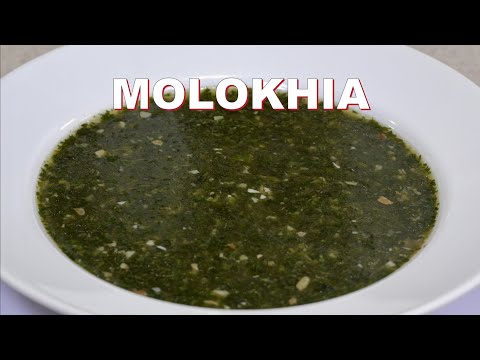
Choosing the Right Mulukhiyah Leaves
The type of mulukhiyah leaves you use directly shapes the flavor and texture of your finished stew. Getting this right is key to a great mulukhiyah recipe. Here are the best options available outside Egypt.
- Frozen mulukhiyah (best choice): Frozen leaves come already blanched and often pre-chopped. They produce the closest result to fresh leaves and require no soaking. Simply thaw, chop if needed, and add directly to the broth. Most Middle Eastern grocery stores carry them.
- Dried mulukhiyah leaves: These lightweight dried leaves have a concentrated earthy flavor. Soak them in warm water for 15 minutes before chopping. Dried leaves work well and store for months in the pantry, though they yield a slightly less vibrant green color than frozen.
- Fresh jute leaves: If you can find fresh jute leaves at an African or Asian market, strip them from the stems and chop them very finely. Fresh leaves give the brightest flavor and color, but they require the most preparation time.
Ingredients for Mulukhiyah
For the Chicken Broth:
- 1 whole chicken (about 3.5 pounds), cut into pieces
- 8 cups water
- 1 large onion, quartered
- 2 bay leaves
- 5 whole cardamom pods
- 1 cinnamon stick
- Salt and black pepper to taste
For the Mulukhiyah Stew:
- 1 pound frozen mulukhiyah leaves (or 8 oz dried jute leaves)
- 6 cups strained chicken broth from above
For the Garlic Taqlia:
- 10 cloves garlic, minced
- 1 tablespoon ground coriander
- 1 teaspoon ground cumin
- 1/4 teaspoon cayenne pepper
- 3 tablespoons ghee or butter
- 2 tablespoons vegetable oil
For Serving:
- 3 cups cooked white rice
- Lemon wedges
- Crispy pita bread or Egyptian baladi bread
Pro tip: Use a generous amount of garlic in the taqlia. Egyptian cooks typically use far more garlic than you might expect, and this bold garlic sauce is what gives mulukhiyah its signature aroma. Ten cloves is the minimum for an authentic result.
Step-by-Step Instructions
Step 1: Prepare the Chicken Broth
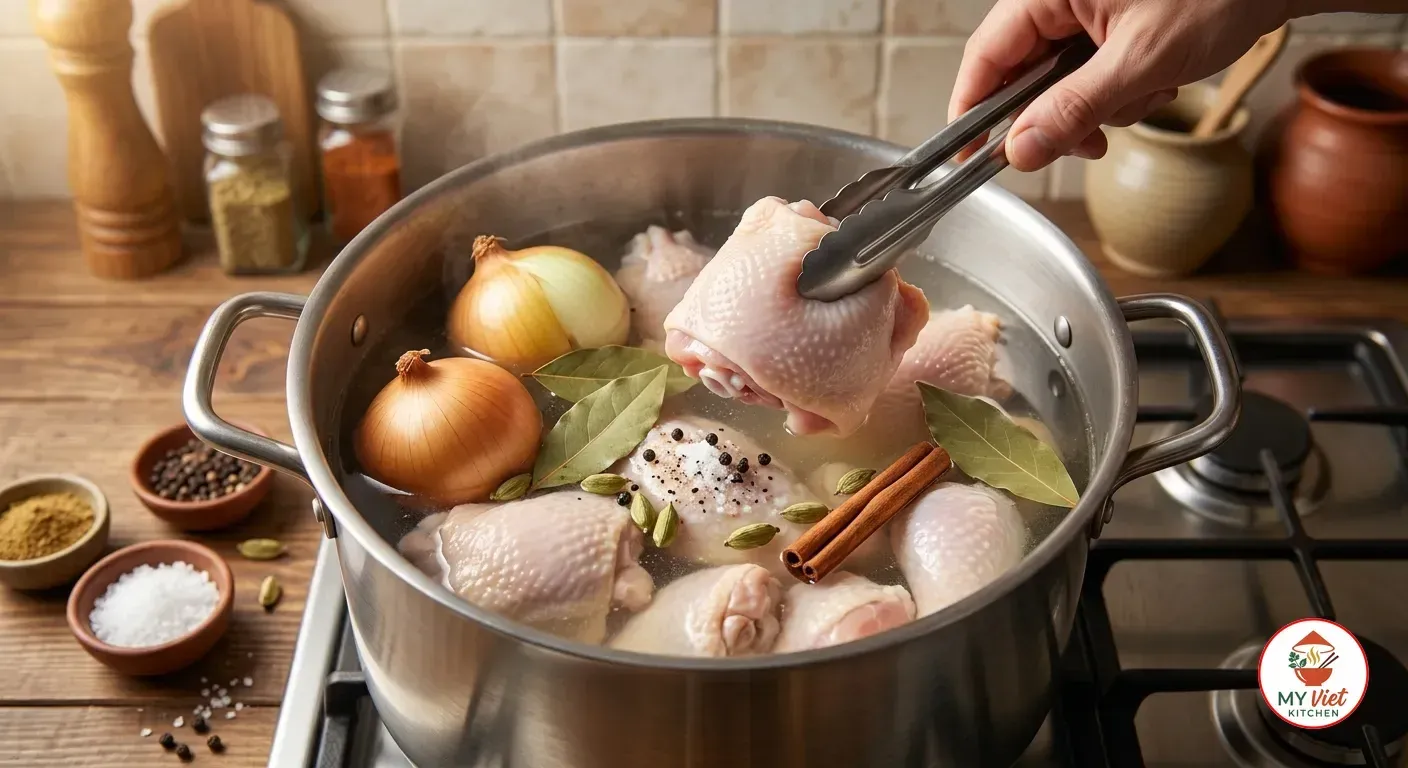
1Place the chicken pieces in a large pot and cover with eight cups of cold water. Add the quartered onion, bay leaves, cardamom pods, cinnamon stick, salt, and black pepper. Bring the water to a boil over high heat. As foam rises to the surface, skim it off with a spoon. This step keeps your broth clear and clean-tasting. Once you have removed the foam, reduce the heat to a gentle simmer. Cook for 45 minutes until the chicken is completely tender and falls easily from the bone. The broth should taste rich and deeply savory.
Step 2: Prepare the Mulukhiyah Leaves
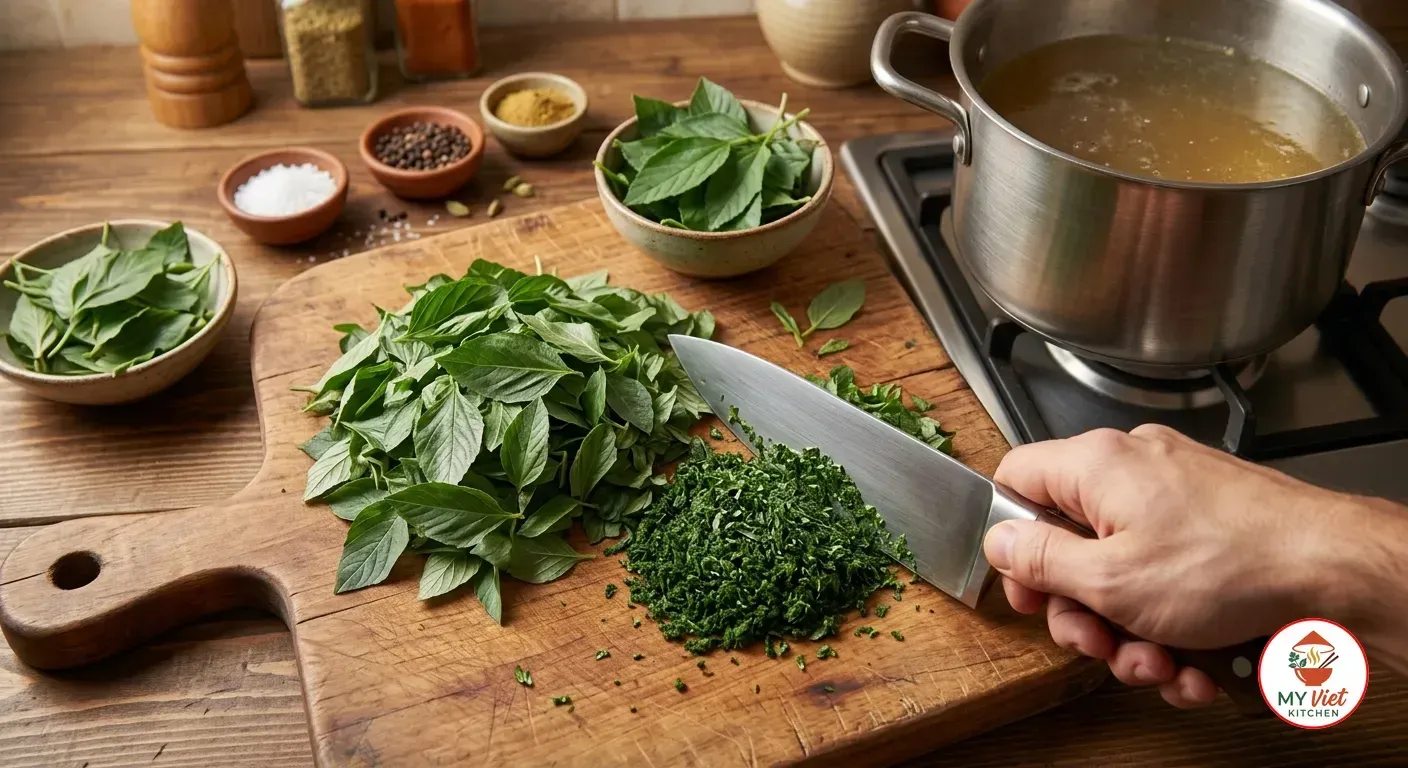
2While the chicken cooks, prepare your mulukhiyah leaves. If using frozen leaves, thaw them completely and chop them as finely as possible. The traditional Egyptian technique calls for mincing the leaves almost to a paste using a special curved blade called a makhrata. At home, a sharp knife and a steady hand will do the job. If you use dried leaves instead, soak them in warm water for 15 minutes, drain well, and then chop finely. The finer you chop, the silkier your finished stew will be.
Step 3: Cook the Mulukhiyah Stew
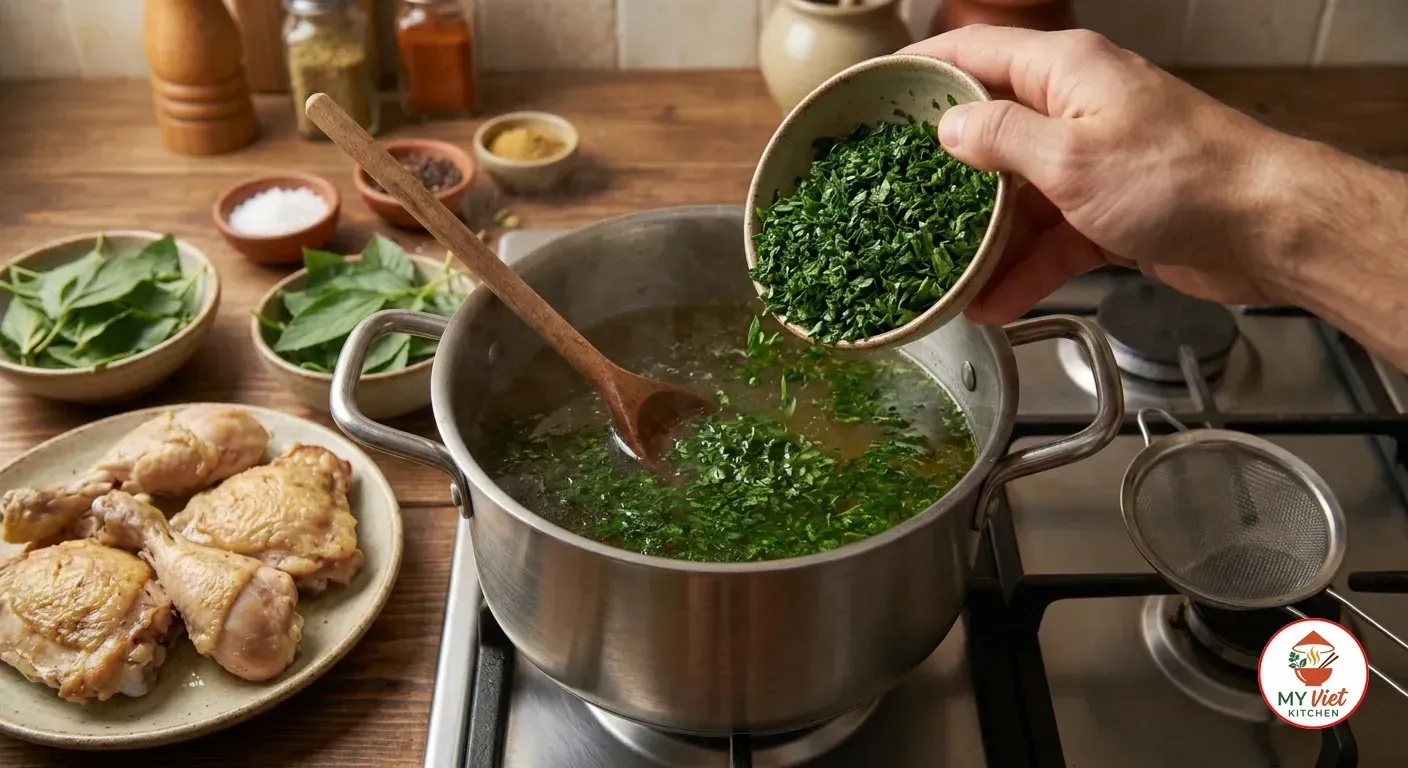
3Remove the chicken pieces from the broth and set them aside on a plate. Strain the broth through a fine mesh sieve to remove the onion, bay leaves, and whole spices. Return the clear broth to the pot and bring it back to a simmer over medium heat. Add the chopped mulukhiyah leaves to the simmering broth and stir well. Cook for about 10 minutes, stirring occasionally. The stew will thicken and develop its characteristic silky texture. Do not cover the pot during this step, because covering it can cause the leaves to darken and lose their bright green color.
Step 4: Make the Garlic Taqlia and Serve
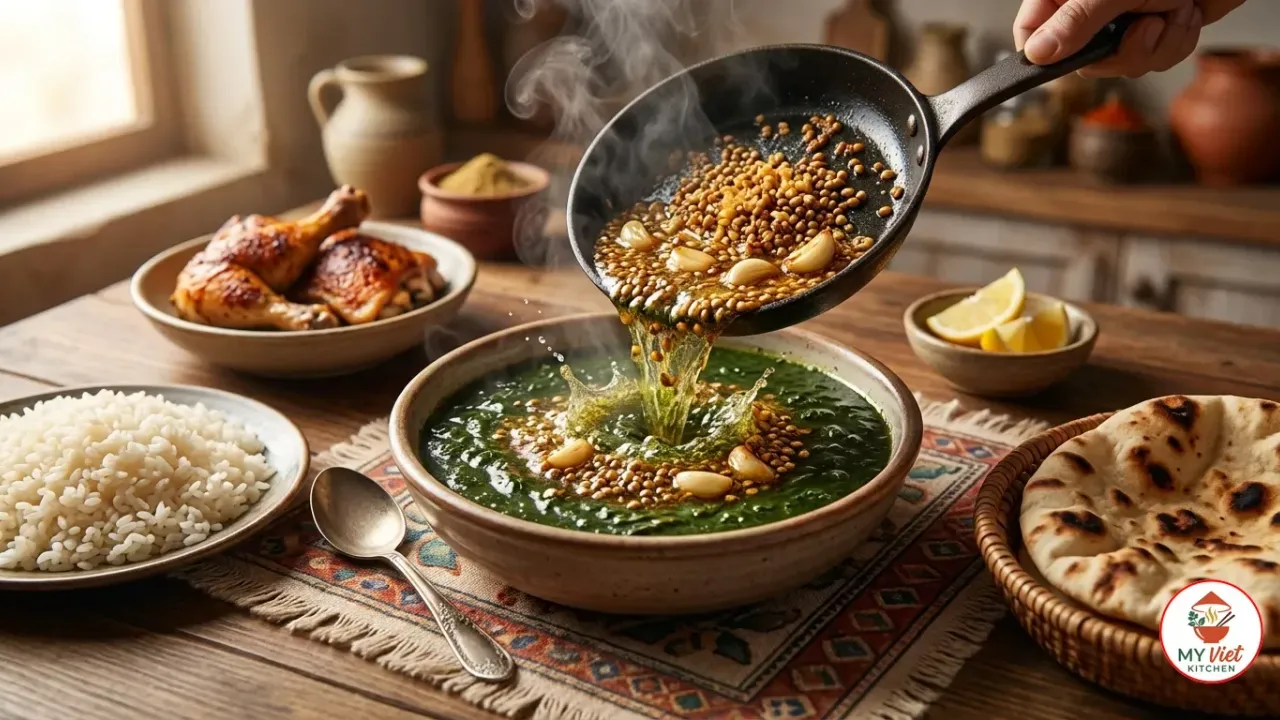
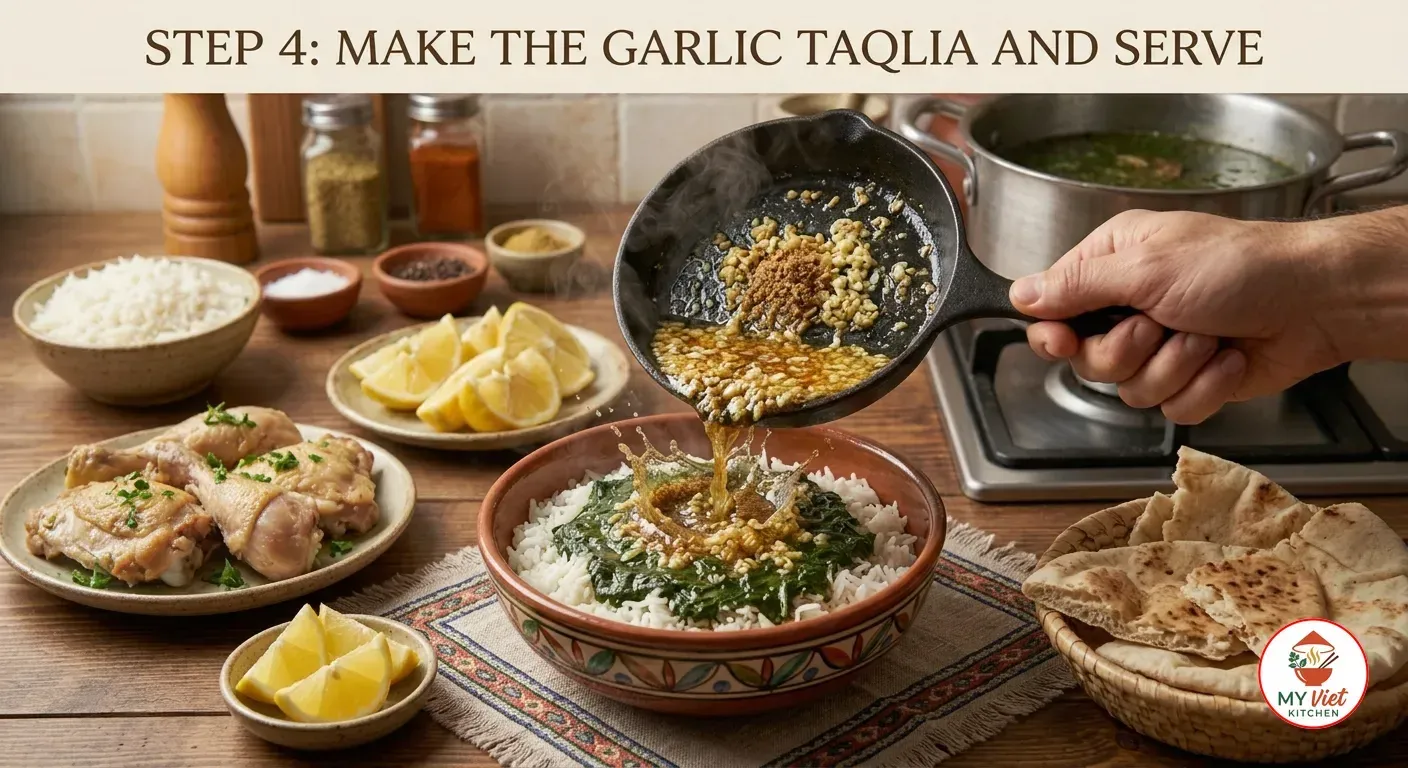
4The taqlia is the heart of this mulukhiyah recipe, and timing matters. Heat the ghee and vegetable oil together in a small pan over medium heat. Add all the minced garlic at once and stir constantly. Fry the garlic until it turns golden, which takes about two minutes. Work quickly here, because garlic goes from golden to burned in seconds. As soon as the garlic is golden, add the ground coriander, cumin, and cayenne. Stir for 30 seconds until the spices bloom and the kitchen fills with an incredible aroma. Then pour the entire sizzling taqlia directly into the pot of mulukhiyah. You will hear a dramatic sizzle. Stir to combine, then ladle the stew over white rice. Place the chicken pieces alongside, and serve with lemon wedges and crispy pita bread.
Expert Tips for Perfect Mulukhiyah
Chop the Leaves as Fine as Possible
The texture of your mulukhiyah depends entirely on how finely you chop the leaves. Coarsely chopped leaves produce a stringy stew, while finely minced leaves yield the smooth and silky consistency that defines great mulukhiyah. In Egypt, cooks use a special half-moon blade to mince the leaves on a wooden board. At home, a food processor works for a rough chop, but finish with a knife for the best control.
Never Boil the Stew After Adding Leaves
Once the mulukhiyah leaves enter the broth, keep the heat at a gentle simmer. Boiling causes the leaves to clump and sink to the bottom, which ruins the even distribution you want. Additionally, high heat breaks down the mucilage too quickly and thins the stew instead of letting it develop body. A calm, steady simmer for 10 minutes gives the best result.
Make the Taqlia at the Last Minute
The garlic taqlia must go into the stew while it is still sizzling. If you let it cool before adding it, you lose the dramatic flavor release that happens when hot fat meets the liquid. That sizzle is not just for show. In fact, the rapid temperature change creates new aromatic compounds that deepen the flavor of the entire stew. So have your taqlia pan ready right before you plan to serve.
Mulukhiyah Across the Arab World
While Egypt claims mulukhiyah as a national treasure, several neighboring countries prepare their own versions. Here is how the most popular regional styles compare.
| Region | Key Differences |
|---|---|
| Egypt (Classic) | Finely chopped leaves in chicken broth with garlic-coriander taqlia. Served over white rice with chicken on the side. |
| Lebanon and Palestine | Whole leaves cooked with chicken and onions in a stew-like preparation. Served with vermicelli rice and toasted pita. |
| Jordan | Whole leaves braised with lamb or chicken and served over a bed of flatbread soaked in broth, called mansaf-style. |
| Tunisia | Cooked with beef and white beans. The stew is thicker and heartier than the Egyptian version. |
| Upper Egypt | Prepared with rabbit instead of chicken. Rabbit mulukhiyah is considered the most traditional and flavorful version. |
Serving Suggestions
In Egypt, mulukhiyah arrives at the table as the centerpiece of a full family meal. The stew goes over a mound of white rice, with chicken pieces arranged alongside. Building the right spread around your mulukhiyah turns a great dish into a memorable feast.
The Perfect Accompaniments:
- White rice: Plain Egyptian short-grain rice is the traditional base. The stew soaks into each grain, creating bites that are silky and satisfying. Some cooks toast vermicelli noodles in butter before adding rice for extra flavor.
- Crispy pita bread: Tear toasted or fried pita into pieces and place them in the bottom of your bowl before ladling the stew over the top. The bread soaks up the broth and adds a wonderful contrast in texture.
- Koshari: For a larger Egyptian spread, serve mulukhiyah alongside koshari. Together, these two dishes showcase the comfort food traditions of Egypt at their finest.
- Egyptian salad: A simple salad of diced tomatoes, cucumber, onion, and lemon juice provides a fresh contrast to the rich, earthy stew.
Beverage Pairings:
- Lemon mint juice: The bright acidity of lemon mixed with fresh mint cuts through the richness of the stew perfectly. This is a popular choice at Egyptian dinner tables.
- Tamarind juice: The sweet-tart flavor of tamarind pairs beautifully with the earthy mulukhiyah leaves and provides a refreshing balance.
- Karkade (hibiscus tea): This ruby-red Egyptian tea, served cold or hot, offers a floral tartness that refreshes the palate between bites of the savory stew.
Storage and Reheating
Refrigerator: Store leftover mulukhiyah stew and chicken separately in airtight containers for up to 4 days. The stew actually improves overnight as the garlic and coriander flavors continue to meld into the broth.
Freezer: Freeze the mulukhiyah stew without rice in freezer-safe containers for up to 3 months. The jute leaves hold their texture well after freezing. Thaw overnight in the refrigerator before reheating.
Reheating: Warm the stew gently in a saucepan over medium-low heat, adding a splash of chicken broth to thin it slightly. Stir occasionally until heated through. For the best result with this mulukhiyah recipe, make a fresh small batch of taqlia and stir it into the reheated stew just before serving. This restores the bold garlic aroma that fades during storage.
Common Mistakes to Avoid
1. Skipping the Taqlia
Without the garlic and coriander taqlia, mulukhiyah tastes flat and one-dimensional. The taqlia is not an optional garnish. Instead, it serves as the primary flavor engine that transforms mild jute leaves into a bold, aromatic stew. So always make the taqlia and add it while sizzling hot for maximum impact.
2. Overcooking the Leaves
Mulukhiyah leaves need only about 10 minutes in the broth. If you cook them too long, the leaves break down completely and the stew loses its bright green color. It turns dull and muddy. Furthermore, overcooking destroys the delicate nutty flavor that makes mulukhiyah distinctive. Therefore, set a timer and watch closely once the leaves enter the pot.
3. Using Weak Broth
In any mulukhiyah recipe, the broth provides the backbone of the entire dish. A watery, underseasoned broth produces a bland stew that no amount of taqlia can fix. For the best results, use a whole chicken and simmer it with aromatic spices for a full 45 minutes. Taste the broth before adding the leaves, and adjust the salt until it tastes rich and satisfying on its own.
Frequently Asked Questions
What is mulukhiyah?
Mulukhiyah is a traditional Egyptian stew made from finely chopped jute leaves cooked in rich chicken broth and finished with a sizzling garlic and coriander sauce called taqlia. The dish has a smooth, silky texture and deep green color. Egyptians consider it one of their most important comfort foods, and the recipe dates back thousands of years to the era of the pharaohs.
Where can I buy mulukhiyah leaves?
You can find frozen or dried mulukhiyah leaves at Middle Eastern grocery stores, African markets, and online specialty retailers. Frozen mulukhiyah is the most convenient option and produces excellent results. Some Asian grocery stores also carry jute leaves under names like “molokhia” or “saluyot” in the frozen section. Check the international aisle of larger supermarkets as well.
Can I make mulukhiyah without chicken?
Yes, you can make a vegetarian version using vegetable broth. The jute leaves and garlic taqlia still deliver bold flavor on their own. In fact, some Egyptian cooks also prepare mulukhiyah with rabbit, lamb, or shrimp depending on the region. Rabbit mulukhiyah is particularly prized in Upper Egypt and considered the most traditional preparation.
Why is my mulukhiyah slimy?
The slightly viscous texture comes from natural mucilage in the jute leaves, similar to what you find in okra. In Egyptian cooking, this silky quality is actually desirable and prized. However, if you prefer less viscosity, avoid stirring too vigorously and add a generous squeeze of lemon juice, which helps reduce the slippery texture while adding bright flavor.
What does mulukhiyah taste like?
Mulukhiyah has a unique earthy and slightly nutty flavor with hints of spinach and green tea. On its own, the leaves taste mild and gentle. The garlic and coriander taqlia adds a bold aromatic punch that transforms the dish. Meanwhile, the rich chicken broth provides a meaty backbone that makes the stew deeply satisfying and comforting.
Variations and Adaptations
Rabbit Mulukhiyah (Upper Egyptian Style):
For this mulukhiyah recipe variation, replace the chicken with a whole rabbit cut into pieces. Rabbit gives the broth a deeper, gamier flavor that many Egyptians consider superior to chicken. In Upper Egypt, rabbit mulukhiyah is the gold standard for this dish. Cook the rabbit for about one hour until tender, then follow the same steps. The result is richer and more intense than the chicken version.
Shrimp Mulukhiyah (Coastal Style):
In coastal cities like Alexandria, cooks sometimes prepare mulukhiyah with shrimp. Use a light fish or shrimp broth as the base, and add peeled shrimp during the last five minutes of cooking. The seafood version is lighter and brighter than the traditional chicken preparation. Finish with the same garlic taqlia for a wonderful surf-meets-earth flavor combination.
Whole-Leaf Mulukhiyah (Levantine Style):
In Lebanon and Palestine, cooks leave the jute leaves whole rather than chopping them. The whole leaves are braised with chicken and onions in a thicker stew. This version has a heartier, more rustic texture compared to the silky Egyptian style. Serve it over vermicelli rice with toasted pine nuts on top for an authentic Levantine presentation.
The Cultural Significance of Mulukhiyah
Mulukhiyah is far more than a recipe in Egypt. Above all, it represents family, tradition, and the deep roots of Egyptian food culture. The dish appears at nearly every important gathering, from Friday family lunches to wedding feasts and holiday celebrations. For many Egyptians living abroad, the smell of mulukhiyah cooking instantly brings them back to their mother’s kitchen.
The preparation of mulukhiyah is often a communal activity. In rural Egypt, women gather to strip the jute leaves from their stems, and then the chopping begins. The rhythmic sound of the makhrata blade against the wooden board signals that something special is about to arrive at the table. Indeed, this shared labor strengthens bonds and keeps the culinary tradition alive across generations.
Furthermore, mulukhiyah connects modern Egypt to its ancient past. Historians believe that the pharaohs ate a version of this stew, and ancient texts reference jute leaves as a valued food crop along the Nile. The fact that Egyptians still prepare essentially the same dish thousands of years later speaks to the enduring power of Egyptian cuisine. In a rapidly changing world, mulukhiyah remains a constant source of comfort and identity for millions of people.
Conclusion
This authentic mulukhiyah recipe brings one of Egypt’s most treasured dishes into your kitchen. First, build a rich chicken broth with warm spices. Then simmer finely chopped jute leaves until the stew turns silky and green. Finally, finish with a sizzling garlic and coriander taqlia that fills your kitchen with an unforgettable aroma. If you master those three elements, you will make a bowl that rivals what Egyptian grandmothers have served for generations.
Whether you serve this mulukhiyah recipe for a cozy family dinner or a special weekend gathering, it delivers comfort and tradition in every spoonful. For more authentic Egyptian and African recipes, explore our collection of African dishes and discover the rich culinary heritage of the continent.