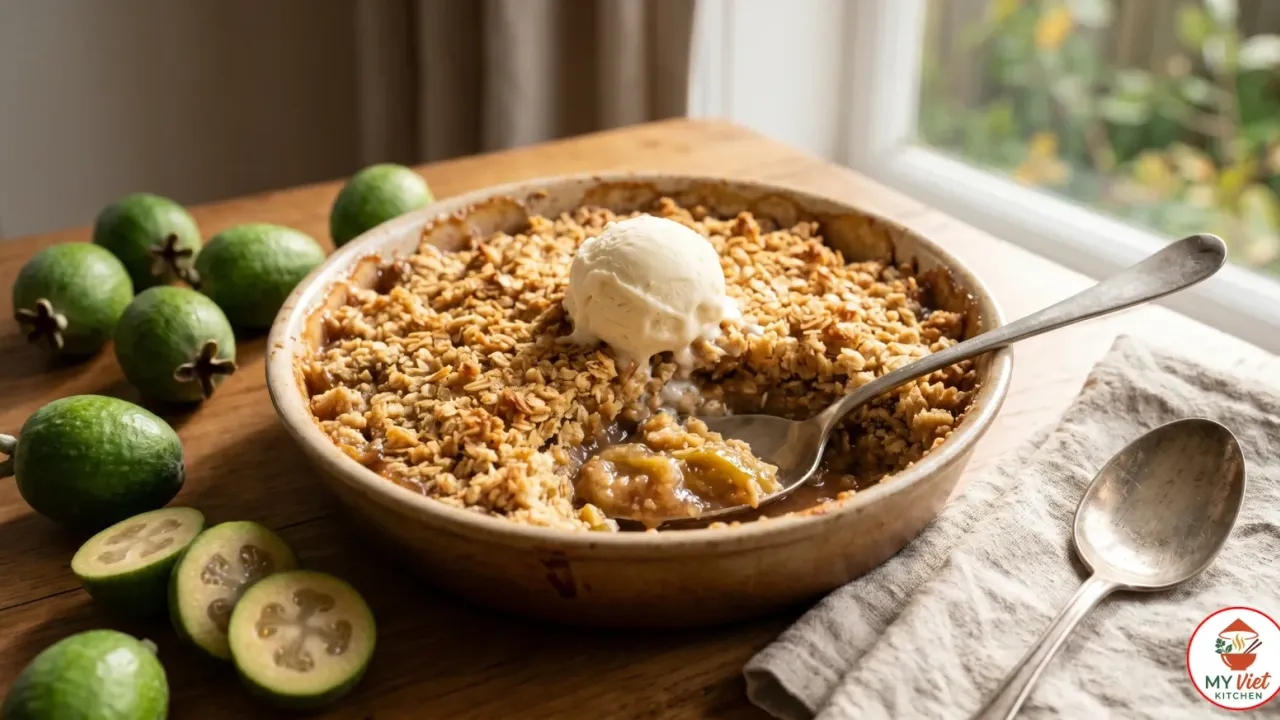
Feijoa crumble is the quintessential New Zealand autumn dessert, and for good reason. This beloved bake pairs soft, fragrant feijoa fruit with a buttery, golden oat crumble topping that shatters with every spoonful. When feijoa season arrives in March and April, kitchens across New Zealand fill with the unmistakable tropical aroma of this extraordinary fruit. This easy feijoa crumble recipe captures everything that makes the dish a Kiwi classic, and you can have it on the table in under an hour.
Prep Time: 20 minutes | Cook Time: 35 minutes | Servings: 6
Difficulty: Easy | Calories: ~345 per serving
What Makes Feijoa Crumble Special?
This dessert holds a special place in New Zealand food culture because it celebrates a fruit that most of the world has never tasted. Feijoas grow abundantly in backyards, farms, and hedgerows across the country, yet they remain virtually unknown outside of New Zealand, parts of Australia, and South America. As a result, this crumble feels deeply personal to Kiwis. It is a dish tied to childhood memories, neighbourhood fruit swaps, and the comforting rhythms of autumn cooking.
The flavour of feijoa is genuinely unlike anything else. It blends notes of pineapple, guava, strawberry, and a whisper of spearmint into something entirely its own. When baked, these flavours intensify and the flesh turns silky and jammy. The crumble topping adds contrast with its golden crunch, while brown sugar and cinnamon round out the sweetness. Together, these elements create a dessert that is simultaneously rustic and sophisticated.
What also sets this dish apart from other fruit crumbles is the texture of the cooked fruit. Unlike apples, which hold their shape, or berries, which dissolve into sauce, feijoas soften into tender, aromatic pieces that still have enough body to provide substance. This balance means every spoonful delivers both a burst of fruity flavour and a satisfying bite. It is no wonder that New Zealanders look forward to feijoa season every single year.

Choosing the Right Feijoas for Your Crumble
The quality of your finished dessert depends almost entirely on the ripeness of the fruit you use. Feijoas have a narrow window of perfect ripeness, so selecting them carefully is essential. Here is what to look for when choosing feijoas for baking.
- Perfectly ripe (best choice): The fruit yields slightly when you press it gently, similar to a ripe avocado. Cut it open and the centre should be translucent and jelly-like with a strong, sweet perfume. This is the ideal stage for crumble because the fruit is at peak sweetness and flavour.
- Slightly underripe: The flesh is still white and opaque throughout. These feijoas lack sweetness and aroma. They will produce a bland crumble, so let them ripen on the counter for 2 to 3 days before using them.
- Overripe: The flesh has turned brown and gritty, with a fermented smell. Overripe feijoas taste unpleasant when baked and should be composted rather than used in cooking.
- Fallen fruit from the tree: In New Zealand, the best feijoas are often the ones that have naturally dropped from the tree. This is a sign that the fruit has reached full maturity. Collect them promptly and use them within a day or two for the best flavour in your crumble.
If you are new to working with feijoas, you might also enjoy our mango sticky rice recipe, which showcases another tropical fruit in a beloved dessert format.
Ingredients for Feijoa Crumble
Feijoa Base:
- 8 to 10 ripe feijoas, peeled and sliced
- 2 tablespoons caster sugar
- 1 tablespoon lemon juice
- 1 teaspoon vanilla extract
Crumble Topping:
- 1 cup plain flour (150 grams)
- 3/4 cup rolled oats (65 grams)
- 1/2 cup brown sugar, packed (100 grams)
- 1/4 cup desiccated coconut (20 grams)
- 1/2 teaspoon ground cinnamon
- Pinch of salt
- 100 grams cold butter, cubed (about 7 tablespoons)
Pro tip: Keep the butter as cold as possible when making the crumble topping. Cold butter creates steam pockets during baking that result in a crunchier, more layered texture. If your kitchen is warm, cube the butter and return it to the fridge for 10 minutes before rubbing it into the dry ingredients. This small step makes a noticeable difference in the final crumble.
Step-by-Step Instructions
Step 1: Prepare the Feijoa Base
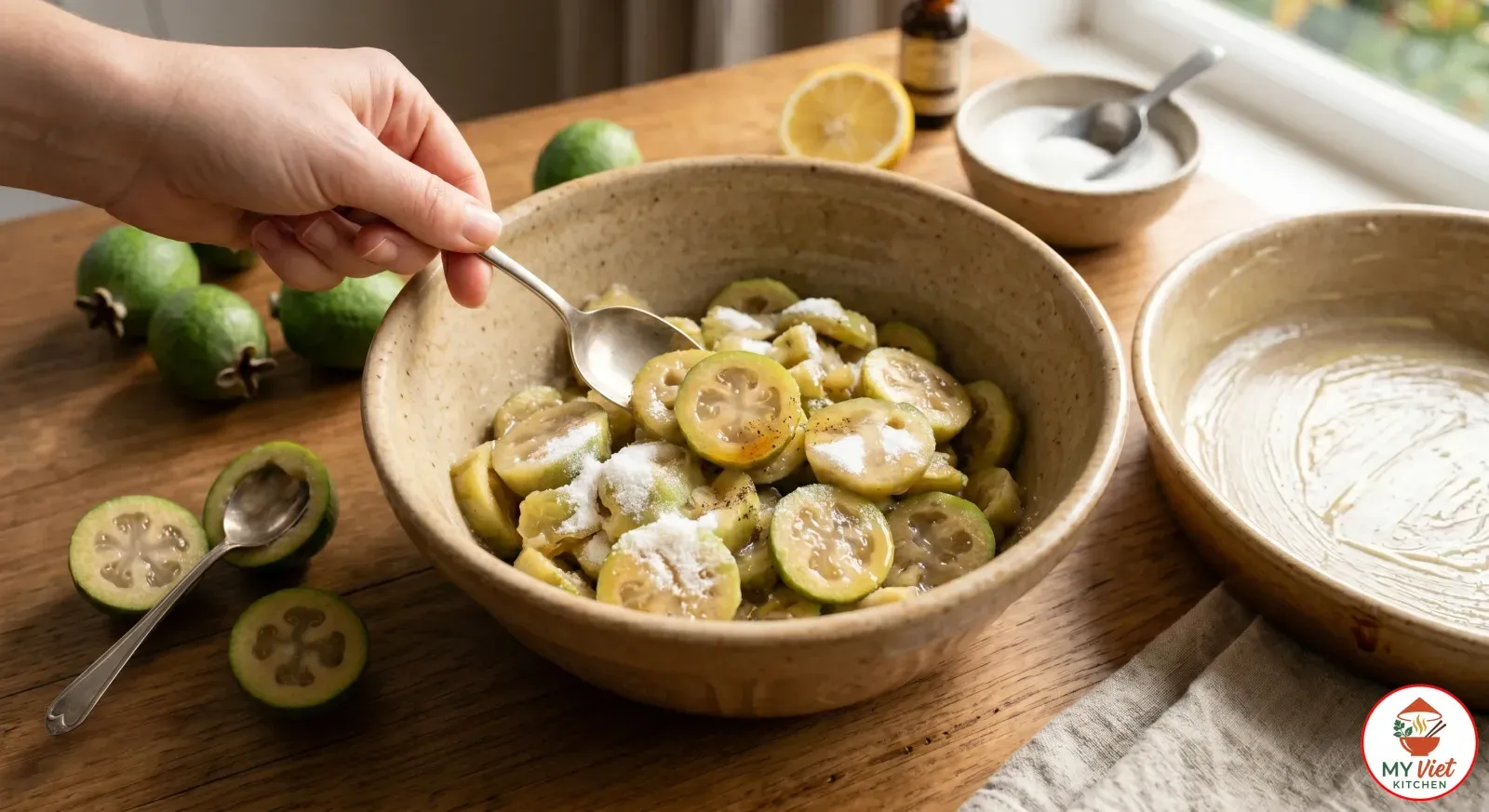
1 Preheat your oven to 180 degrees Celsius (350 degrees Fahrenheit). Cut each feijoa in half lengthwise and scoop out the flesh with a teaspoon. This method is faster than peeling with a knife and wastes less fruit. Slice the scooped flesh into pieces roughly 1 centimetre thick so they cook evenly.
Place the feijoa slices in a mixing bowl and add the caster sugar, lemon juice, and vanilla extract. Toss everything together gently until the fruit is evenly coated. The lemon juice brightens the flavour of the feijoas and also prevents the flesh from browning. Transfer the fruit mixture into a greased 20 by 28 centimetre baking dish. Spread it into an even layer so the crumble topping covers the fruit uniformly. Set the dish aside while you prepare the topping.
Step 2: Make the Crumble Topping
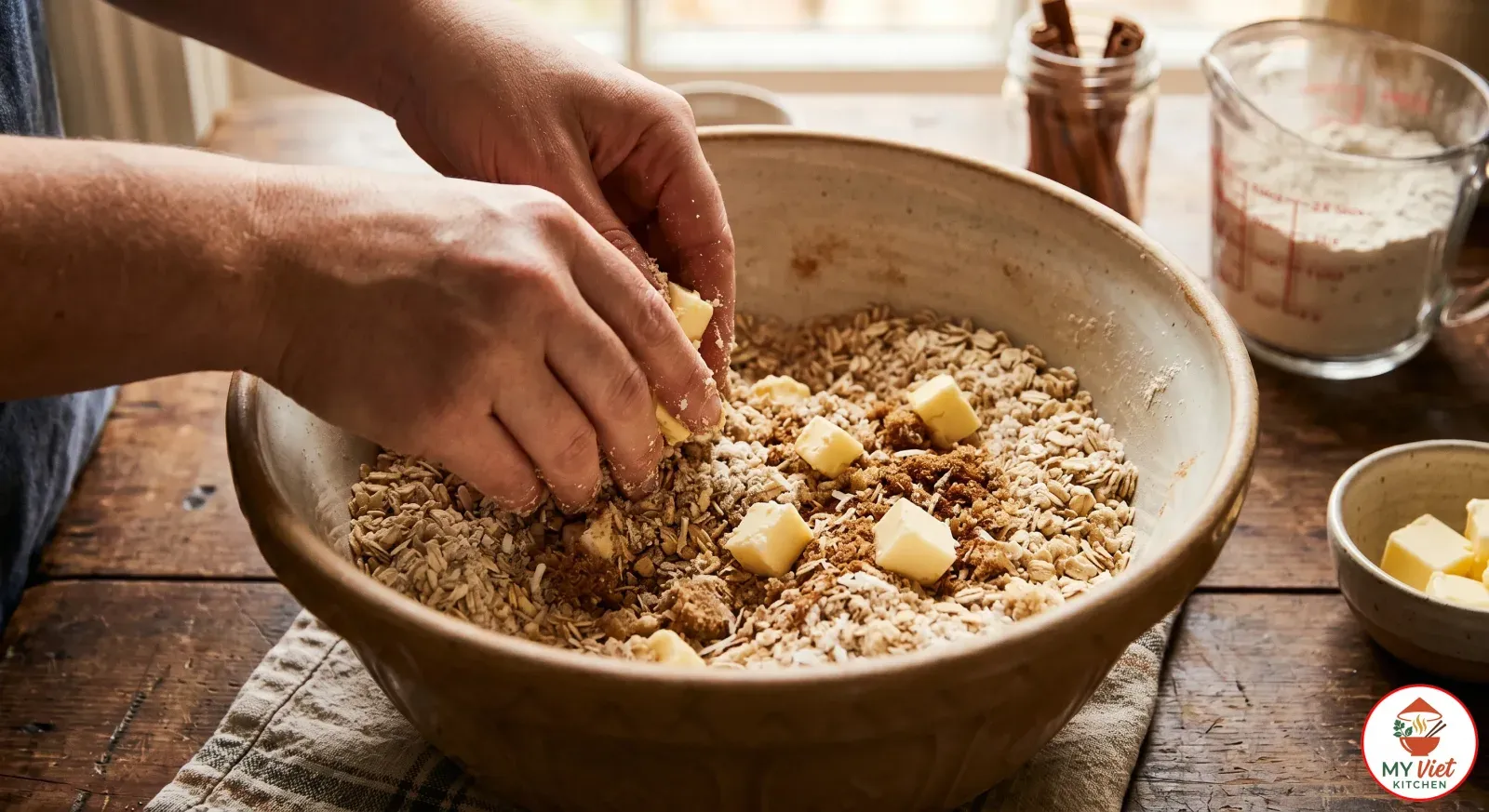
2 In a large bowl, combine the plain flour, rolled oats, brown sugar, desiccated coconut, ground cinnamon, and a pinch of salt. Whisk the dry ingredients together briefly so the cinnamon distributes evenly. Add the cold cubed butter to the bowl.
Using your fingertips, rub the butter into the dry mixture. Work quickly and lightly, pressing the butter pieces between your thumb and fingers to flatten them into the flour. Continue until the mixture looks like coarse breadcrumbs with some pea-sized lumps of butter scattered throughout. These larger pieces are important because they melt during baking and create golden, extra-crunchy clusters in the topping. Avoid overworking the mixture, as this produces a dense, biscuit-like topping rather than a light, crumbly one.
Step 3: Assemble and Bake the Feijoa Crumble
3 Scatter the crumble topping evenly over the feijoa base. Make sure the fruit is covered completely, but do not press the topping down. Loose crumble bakes up lighter and crunchier because air circulates through the gaps. Pressing it flat compacts the mixture and results in a heavy, cake-like layer instead.
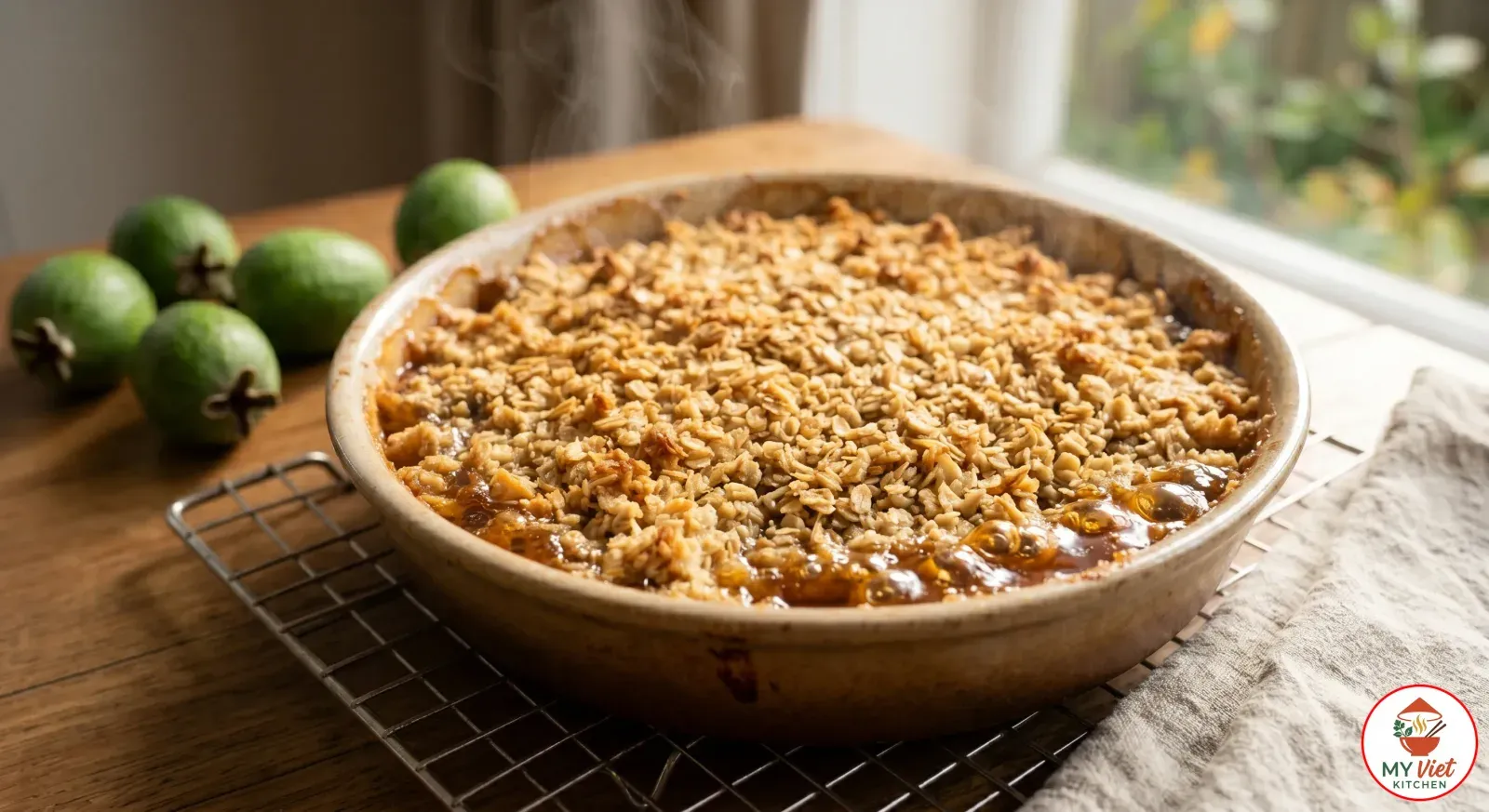
Place the baking dish on the middle rack of the preheated oven. Bake for 30 to 35 minutes until the topping turns a deep golden brown and you can see the feijoa juices bubbling around the edges of the dish. The bubbling is a reliable signal that the fruit has cooked through and released its natural sugars. If the topping browns too quickly before the fruit finishes cooking, cover the dish loosely with aluminium foil for the final 10 minutes.
Step 4: Rest and Serve
4 Remove the baking dish from the oven and let it rest on a wire rack for 10 minutes before serving. This resting time allows the fruit juices to thicken slightly so the crumble holds together better when spooned into bowls. Cutting into it immediately will result in a watery, runny base.
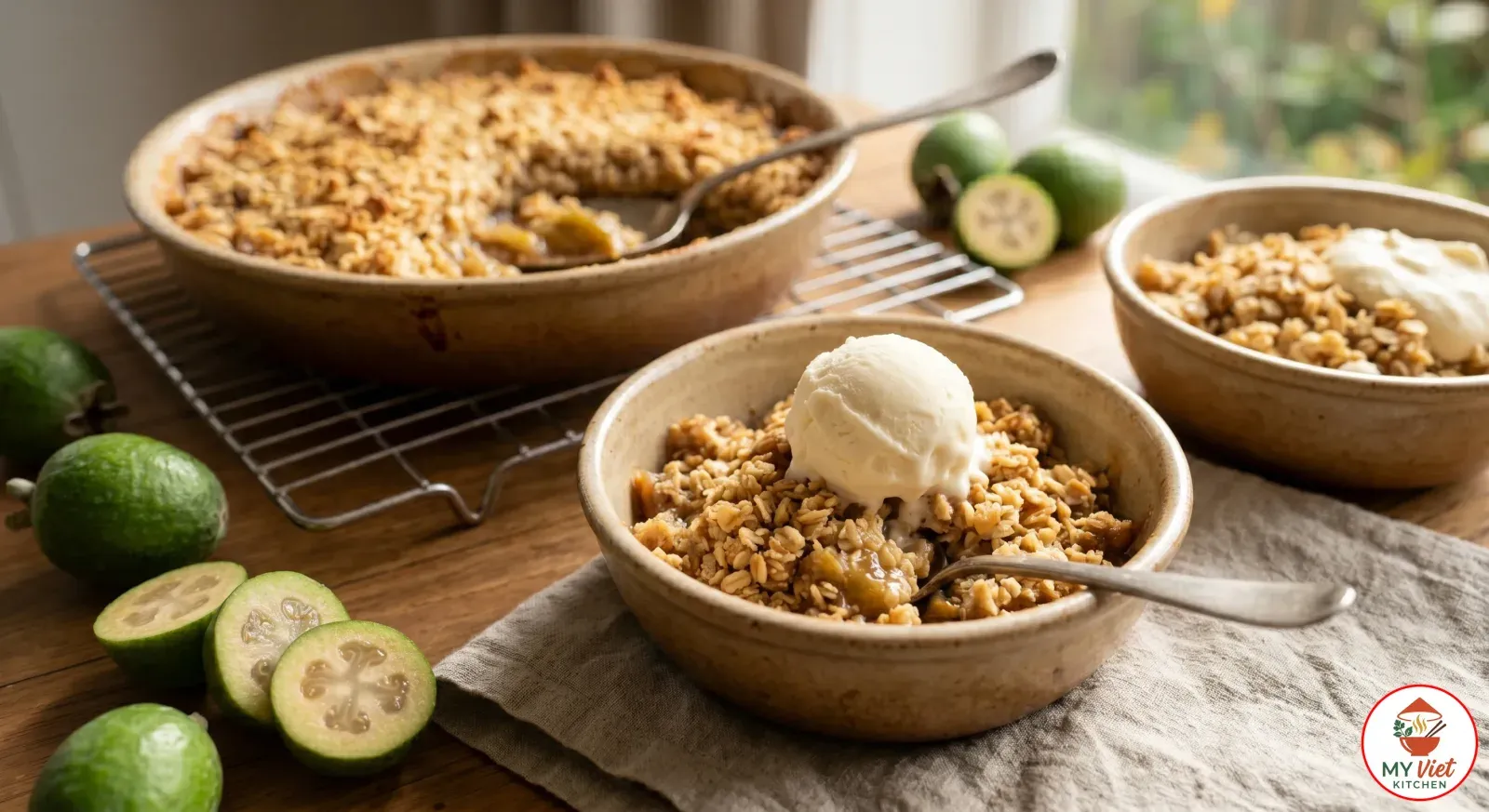
Spoon generous portions into warm bowls and add your preferred topping. A scoop of vanilla ice cream is the classic New Zealand choice because the cold creaminess contrasts beautifully with the hot, bubbling fruit. Alternatively, pour over some fresh cream or add a dollop of thick Greek yoghurt for a lighter option. This dessert is best served on the day it is baked, while the topping is still crisp and shattering.
Expert Tips for the Perfect Feijoa Crumble
Use a Mix of Feijoa Varieties
New Zealand grows several feijoa varieties, including Apollo, Gemini, Unique, and Kakariki. Each has a slightly different flavour profile and sweetness level. Mixing two or three varieties in your crumble creates a more complex flavour than using a single type. If you only have access to one variety, that works perfectly well too. The important thing is that the fruit is ripe and fragrant.
Do Not Skip the Lemon Juice
Lemon juice serves two important purposes in this recipe. First, it prevents the cut feijoa flesh from oxidising and turning brown before baking. Second, the acidity balances the sweetness of the sugar and brings out the complex tropical notes in the fruit. Without the lemon juice, the crumble can taste flat and one-dimensional. Even a single tablespoon makes a significant difference to the overall flavour balance.
Get the Right Crumble-to-Fruit Ratio
The ideal ratio features a generous layer of topping that is roughly the same thickness as the fruit layer beneath it. Too little topping leaves the fruit exposed and the crumble feels sparse. Too much topping overwhelms the delicate feijoa flavour and makes the dessert feel heavy. This recipe is calibrated for a standard 20 by 28 centimetre dish. If you use a larger dish, increase the topping proportionally to maintain the balance.
Feijoa Crumble vs. Other Fruit Crumbles
Crumbles are a beloved dessert tradition across many countries, but each culture brings different fruits and flavours to the dish. Here is how the New Zealand feijoa crumble compares to other popular versions from around the world.
| Feature | NZ Feijoa Crumble | British Apple Crumble | Australian Rhubarb Crumble |
|---|---|---|---|
| Star fruit | Feijoa | Bramley apple | Rhubarb |
| Season | Autumn (March-May) | Autumn (Sept-Nov) | Winter-Spring |
| Flavour profile | Tropical, aromatic, sweet-tart | Tart, mellow, familiar | Sharp, tangy, bright |
| Topping style | Oats, coconut, brown sugar | Flour, butter, white sugar | Oats, almond meal |
| Common pairing | Vanilla ice cream | Custard | Double cream |
| Sugar needed | Moderate | Moderate to high | High |
The key difference is the fruit itself. Feijoas bring an aromatic complexity that apples and rhubarb cannot match. However, all three crumbles share the same comforting appeal of warm baked fruit beneath a crunchy, buttery topping. If you enjoy crumbles and crisps, our Vietnamese banana dessert offers another warm fruit-based treat with a tropical twist.
Serving Suggestions
In New Zealand, feijoa crumble is traditionally served as a casual family dessert after a weekend roast dinner. It is also a popular choice at potlucks, school bake sales, and autumn gatherings. The beauty of this dessert is its versatility. You can dress it up for a dinner party or keep it simple for a weeknight treat.
The Perfect Accompaniments:
- Vanilla ice cream: The classic Kiwi pairing. The cold, creamy ice cream melts into the hot crumble and creates a heavenly contrast of temperatures and textures.
- Whipped cream: A lighter option that lets the feijoa flavour take centre stage without competing sweetness.
- Custard: Warm, pourable custard turns the crumble into pure comfort food, especially on cold autumn evenings.
- Greek yoghurt: A tangy, protein-rich option for those who want a slightly healthier topping without sacrificing creaminess.
Beverage Pairings:
- New Zealand Riesling: A slightly sweet Riesling from Marlborough or Nelson complements the tropical notes of the feijoa beautifully.
- Flat white coffee: New Zealand’s iconic coffee pairs wonderfully with the crumble for an afternoon tea setting.
- Feijoa cider: Several NZ craft breweries produce feijoa cider, which creates a thematic pairing that doubles down on the fruit.
- English breakfast tea: A simple pot of tea is the most traditional accompaniment and lets the crumble remain the star.
Storage and Reheating
Refrigerator: Store any leftovers covered in the fridge for up to 3 days. The topping will soften during storage, but reheating restores most of the crunch. Keep it in the original baking dish or transfer individual portions to airtight containers.
Freezer: You can freeze this dessert for up to 2 months. Wrap the baking dish tightly with plastic wrap and then aluminium foil. Alternatively, freeze the unbaked crumble and bake it directly from frozen, adding 10 to 15 minutes to the cooking time. You can also freeze just the crumble topping in a sealed bag for up to 3 months, ready to sprinkle over fresh fruit whenever you like.
Reheating: The oven is the best method for reheating this dessert. Place individual portions on a baking tray and warm at 170 degrees Celsius (340 degrees Fahrenheit) for 10 to 12 minutes until heated through and the topping crisps again. Avoid the microwave because it turns the crumble topping soft and soggy, which ruins the textural contrast that makes this dessert so enjoyable.
Common Mistakes to Avoid
1. Using Underripe Feijoas
Underripe feijoas have white, opaque flesh that lacks sweetness and aroma. Baking does not fix this problem. The crumble will taste bland and chalky rather than fragrant and tropical. Always wait until the fruit is properly ripe with translucent, jelly-like flesh and a strong perfume before using it. If your feijoas are not quite ready, leave them on the kitchen counter for 2 to 3 days until they soften.
2. Pressing Down the Topping
It is tempting to press the crumble topping flat to create an even surface, but this compacts the mixture and prevents air from circulating during baking. A pressed topping bakes into a solid, dense layer similar to a biscuit rather than a light, shatter-crisp crumble. Instead, scatter the topping loosely and let it fall naturally. The uneven surface creates hills and valleys that bake at different rates, producing a wonderful mix of crunchy golden peaks and softer, chewier pockets.
3. Adding Too Much Sugar
Ripe feijoas are naturally sweet, so this recipe uses only a moderate amount of added sugar. Overloading the fruit base with sugar masks the distinctive feijoa flavour and turns the dessert into generic sweetness. Trust the natural flavour of the fruit. The 2 tablespoons of caster sugar in the base is enough to enhance the feijoas without overpowering them. Most of the sweetness should come from the brown sugar in the topping.
4. Not Letting It Rest Before Serving
Serving the crumble straight from the oven is a common mistake. The fruit juices need 10 minutes to settle and thicken slightly. Without this resting period, the base will be watery and the juices will flood the bowl rather than cling to the fruit. Patience at this final stage ensures every spoonful has the right proportion of crunchy topping, tender fruit, and thickened juices.
Frequently Asked Questions
What does feijoa crumble taste like?
This baked dessert has a uniquely aromatic flavour that is unlike any other fruit dessert. The baked feijoa fruit becomes soft and fragrant with notes of pineapple, guava, and mint. Paired with the buttery, crunchy oat topping and a hint of cinnamon, the overall taste is sweet, tangy, and deeply comforting. Feijoas have a flavour profile that no other fruit replicates, so this crumble tastes genuinely distinctive.
Can you freeze feijoa crumble?
Yes, this dessert freezes well for up to 2 months. You can freeze either the assembled but unbaked version or the fully baked crumble. For best results, freeze it unbaked and then bake directly from frozen, adding 10 to 15 extra minutes of baking time. Another great option is to freeze just the topping mixture in a sealed bag so you can make a fresh feijoa crumble whenever the fruit is available.
How do you know when feijoas are ripe enough for crumble?
Ripe feijoas feel slightly soft when gently squeezed, similar to a ripe kiwifruit. Cut one open and the centre should be translucent and jelly-like with a sweet, aromatic fragrance. Avoid fruit with brown or gritty flesh, as it has passed its peak. Slightly underripe feijoas with white, opaque flesh will taste bland and lack the aromatic sweetness essential for a good crumble.
What can I use instead of feijoas?
The closest substitution is a mix of ripe pear and pineapple, which approximates the sweet-tart tropical character of feijoas. Guava also works as a substitute because feijoas belong to the same botanical family, Myrtaceae. However, no single fruit perfectly replicates the distinctive aromatic quality that makes feijoa crumble so special. For the most authentic result, use ripe feijoas when they are in season during autumn months.
Do you need to peel feijoas for crumble?
Yes, you should peel feijoas before making a crumble. The skin is technically edible, but it has a bitter, astringent taste that becomes more pronounced when baked. The easiest method is to cut each feijoa in half and scoop out the flesh with a teaspoon rather than peeling with a knife. This approach is faster and wastes less fruit. The scooped flesh is ready to slice and use immediately.
Variations and Adaptations
Feijoa and Apple Crumble:
Combining feijoa with sliced Granny Smith apple is one of the most popular variations in New Zealand. The apple adds bulk and a familiar tartness that pairs beautifully with the aromatic feijoa. Use a 50/50 split of fruit. This combination stretches your feijoas further when you have a smaller harvest, and the apple helps the base hold together more firmly. It is a wonderful option for feeding a larger crowd.
Gluten-Free Feijoa Crumble:
Replace the plain flour with an equal amount of almond meal for a naturally gluten-free topping. The almond meal adds a rich, nutty flavour that complements the feijoa beautifully. Keep the oats, but ensure you use certified gluten-free oats. This version produces a slightly denser, more fragrant topping that many people actually prefer over the original. If you enjoy gluten-free baking, our Vietnamese baked banana cake is another excellent option.
Ginger and Feijoa Crumble:
Add 2 tablespoons of finely chopped crystallised ginger to the fruit base and replace the cinnamon with 1 teaspoon of ground ginger in the topping. The warmth of ginger amplifies the tropical character of the feijoa and adds a gentle heat that makes the crumble feel even more warming on a cold autumn evening. This variation is particularly popular in the South Island where the cooler temperatures call for spicier desserts.
Vegan Feijoa Crumble:
Substitute the butter with an equal weight of cold coconut oil for a fully vegan crumble. Coconut oil behaves similarly to butter when rubbed into flour and produces a crisp, golden topping. The faint coconut flavour works particularly well with the tropical notes of the feijoa. Serve it with coconut yoghurt or dairy-free vanilla ice cream for a completely plant-based dessert.
The Cultural Significance of Feijoa in New Zealand
Feijoas occupy a truly unique place in New Zealand culture. Originally native to southern Brazil, Uruguay, and northern Argentina, the fruit was introduced to New Zealand in the early 1900s. It thrived in the temperate climate and quickly became a backyard staple across the country. Today, nearly every suburban garden in New Zealand seems to have at least one feijoa tree, and the annual autumn harvest is a significant cultural moment.
During feijoa season, a generous spirit takes hold. Neighbours leave bags of feijoas on each other’s doorsteps. Office workers bring boxes to share with colleagues. According to New Zealand Herald, the country produces an estimated 800 tonnes of feijoas commercially each year, yet a vast amount of the fruit comes from private trees. Children grow up eating feijoas straight from the tree, biting off the end and squeezing the flesh directly into their mouths. For many Kiwis, the taste of feijoa is the taste of autumn itself.
This deep cultural connection is why feijoa crumble resonates so strongly. It is not just a recipe but a seasonal ritual that connects families to their gardens, their neighbours, and the rhythms of the New Zealand year. Making a feijoa crumble from freshly picked fruit is one of the simple pleasures that define the Kiwi way of life. If you enjoy learning about food traditions from the Pacific region, explore our collection of Asian dishes for more culturally rich recipes.
Conclusion
Making a feijoa crumble at home is one of the simplest and most rewarding baking projects you can tackle. The entire process takes under an hour, the ingredient list is short, and the technique is forgiving enough for complete beginners. The key to success lies in using ripe, fragrant feijoas, keeping the butter cold for the topping, and resisting the urge to press the crumble flat or overload the fruit with sugar. Follow these principles and your crumble will emerge from the oven golden, bubbling, and irresistible.
Whether you are a New Zealander celebrating the annual feijoa harvest or a curious food lover trying this extraordinary fruit for the first time, this feijoa crumble delivers pure comfort in every spoonful. The combination of aromatic baked fruit, shattering oat topping, and cold vanilla ice cream is genuinely hard to beat. Once you taste it, you will understand why Kiwis count down the days until feijoa season each year. For more comforting dessert recipes, browse our European dishes collection.