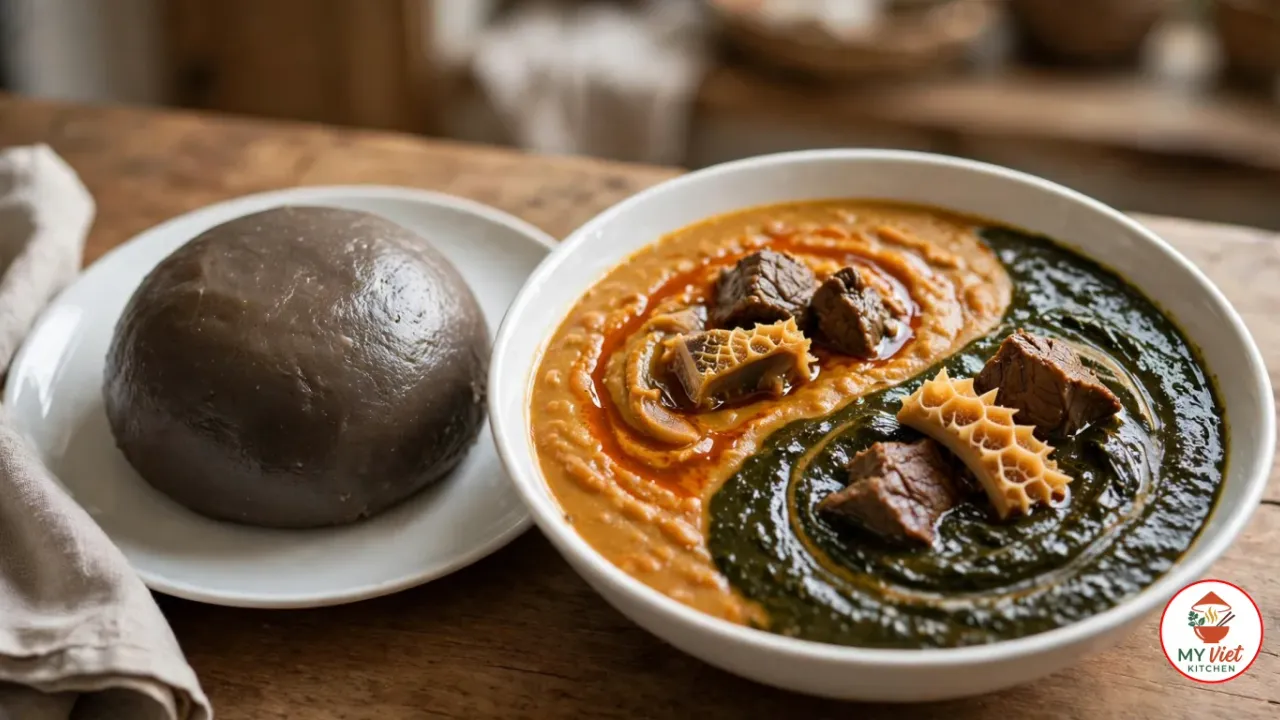
Amala with gbegiri is one of the most iconic meals in Yoruba cuisine. This beloved Nigerian dish brings together three distinct elements: amala, a smooth and stretchy swallow made from yam flour; gbegiri, a rich and creamy bean soup; and ewedu, a silky jute leaf soup. Together, these three components form what Yoruba people call “abula,” a word that means “mixture.” In Lagos, Ibadan, and across southwestern Nigeria, amala with gbegiri holds a place of deep cultural pride. This recipe walks you through every step to make all three components at home, from cooking the beans to shaping the perfect amala mound.
Prep Time: 20 minutes | Cook Time: 50 minutes | Servings: 4
Difficulty: Medium | Calories: ~480 per serving
What Makes Amala with Gbegiri Special?
Amala with gbegiri stands apart from other Nigerian swallow-and-soup combinations because of its layered complexity. While most Nigerian meals pair one swallow with one soup, the abula tradition demands three separate preparations served together. Each element plays a specific role. The amala provides the starchy base with a distinctly earthy, smoky flavor that comes from sun-dried yam flour. Gbegiri brings protein-rich creaminess from pureed beans. Meanwhile, ewedu adds a slippery, viscous quality that helps the amala glide down smoothly.
This trio originated among the Yoruba people of southwestern Nigeria. Cities like Ibadan are especially famous for their amala joints, small roadside restaurants that serve nothing but amala with gbegiri and ewedu all day long. According to Nigerian culinary traditions, amala became popular because yam tubers were abundant in Yoruba farmlands. Families discovered that drying and grinding yam into flour extended its shelf life through the rainy season. Over time, this practical preservation method produced a beloved food with a unique taste that fresh yam could never replicate.
Beyond the taste, amala with gbegiri carries emotional weight for many Nigerians. It evokes memories of family gatherings, local bukas, and the comforting routines of home. In the Yoruba diaspora, finding a place that serves proper amala with gbegiri often becomes a mission. The dish represents home in ways that transcend simple nutrition.

Choosing the Right Yam Flour for Amala
The quality of your yam flour determines whether your amala turns out smooth or lumpy. Since yam flour is the single ingredient in amala, there is nowhere to hide a bad choice. Here are the main options available.
- Elubo isu (yam flour, best choice): This is the traditional choice made from peeled, dried, and ground yam tubers. It produces a dark brown amala with an earthy, slightly smoky flavor. Good elubo isu should feel fine and powdery with no lumps or sour smell. Nigerian brands offer the most authentic results.
- Elubo lafun (cassava flour): Some families use cassava flour instead, which produces a lighter colored amala with a milder taste. Lafun amala is popular in certain Yoruba communities. However, it lacks the robust depth of flavor that yam-based amala delivers.
- Plantain flour (amala ogede): Made from dried unripe plantains, this variety has a slightly sweet undertone. Plantain flour amala is darker than yam flour amala and has a different texture. It pairs well with gbegiri but offers a distinctly different eating experience.
Ingredients for Amala with Gbegiri
For the Amala:
- 2 cups yam flour (elubo)
- 3 cups boiling water
For the Gbegiri Soup:
- 1 cup black-eyed peas or honey beans, soaked overnight
- 1/3 cup palm oil
- 3 large tomatoes, blended
- 2 Scotch bonnet peppers, blended
- 1 large onion, chopped
- 2 tablespoons ground crayfish
- 1 tablespoon locust beans (iru)
- 2 seasoning cubes (Maggi or Knorr), crushed
- 1 teaspoon salt
- 1/4 pound assorted beef, boiled
- 1/4 pound tripe (shaki), cleaned and boiled
- 1/4 pound cow skin (ponmo), cleaned and boiled
- 1/4 pound dried fish, cleaned and deboned
For the Ewedu Soup:
- 1 bunch ewedu leaves (jute mallow), washed and stripped from stems
- 1 teaspoon potash or baking soda
- 1/2 teaspoon salt
- 1 tablespoon locust beans (iru)
Pro tip: Soak your beans overnight to cut the cooking time in half. Also, for the smoothest gbegiri, blend the cooked beans while they are still warm. Warm beans break down more easily and produce a silkier paste than cold ones.
Step-by-Step Instructions
Step 1: Cook and Blend the Beans for Gbegiri
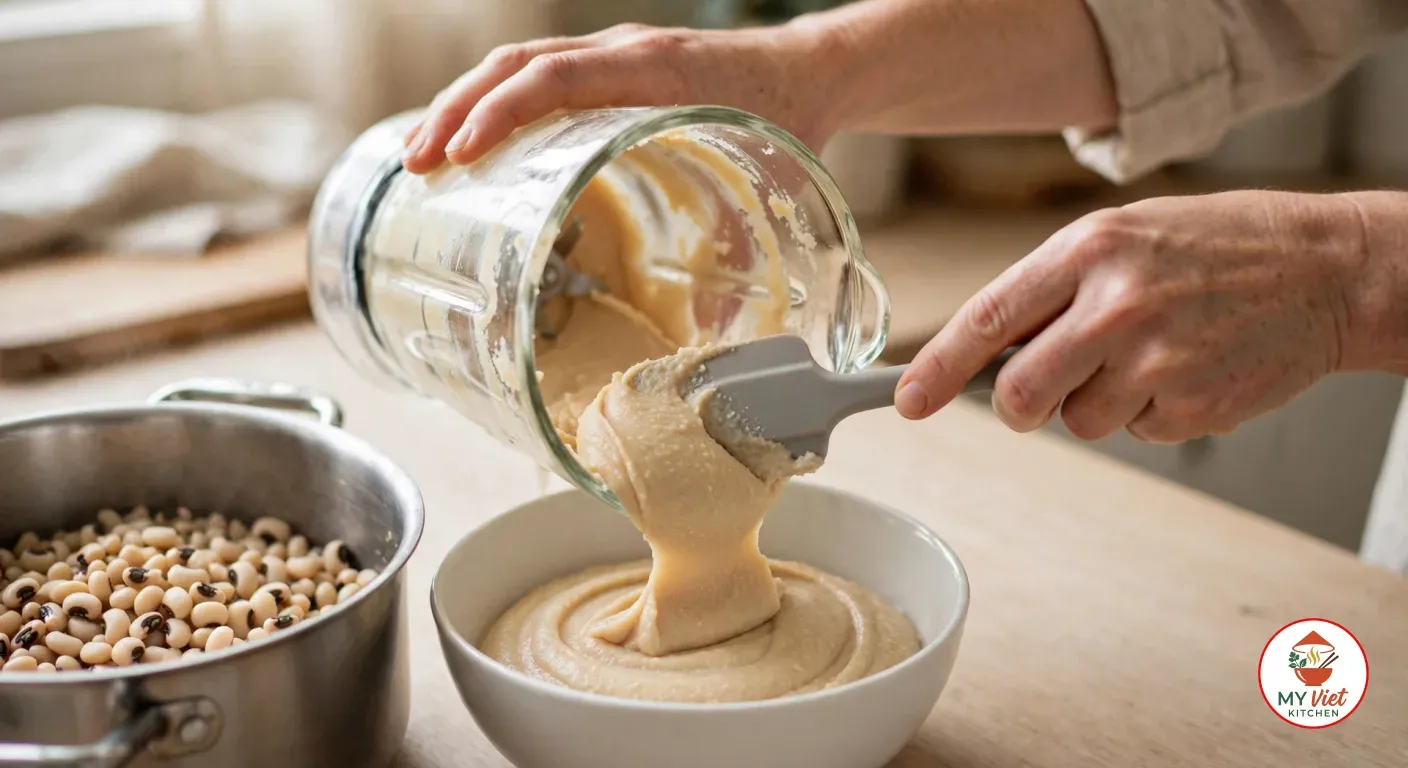
1Start by draining the soaked beans and placing them in a large pot. Cover with fresh water, about 2 inches above the beans. Bring to a boil over high heat, then reduce to medium and cook for 40 to 50 minutes. The beans are ready when they feel very soft and the skins start peeling off on their own. Drain most of the water, leaving just enough to help with blending. Then pour the cooked beans into a blender and process until completely smooth. You want a thick, creamy paste with no chunks. Set this paste aside while you build the soup base.
Step 2: Build the Gbegiri Soup Base
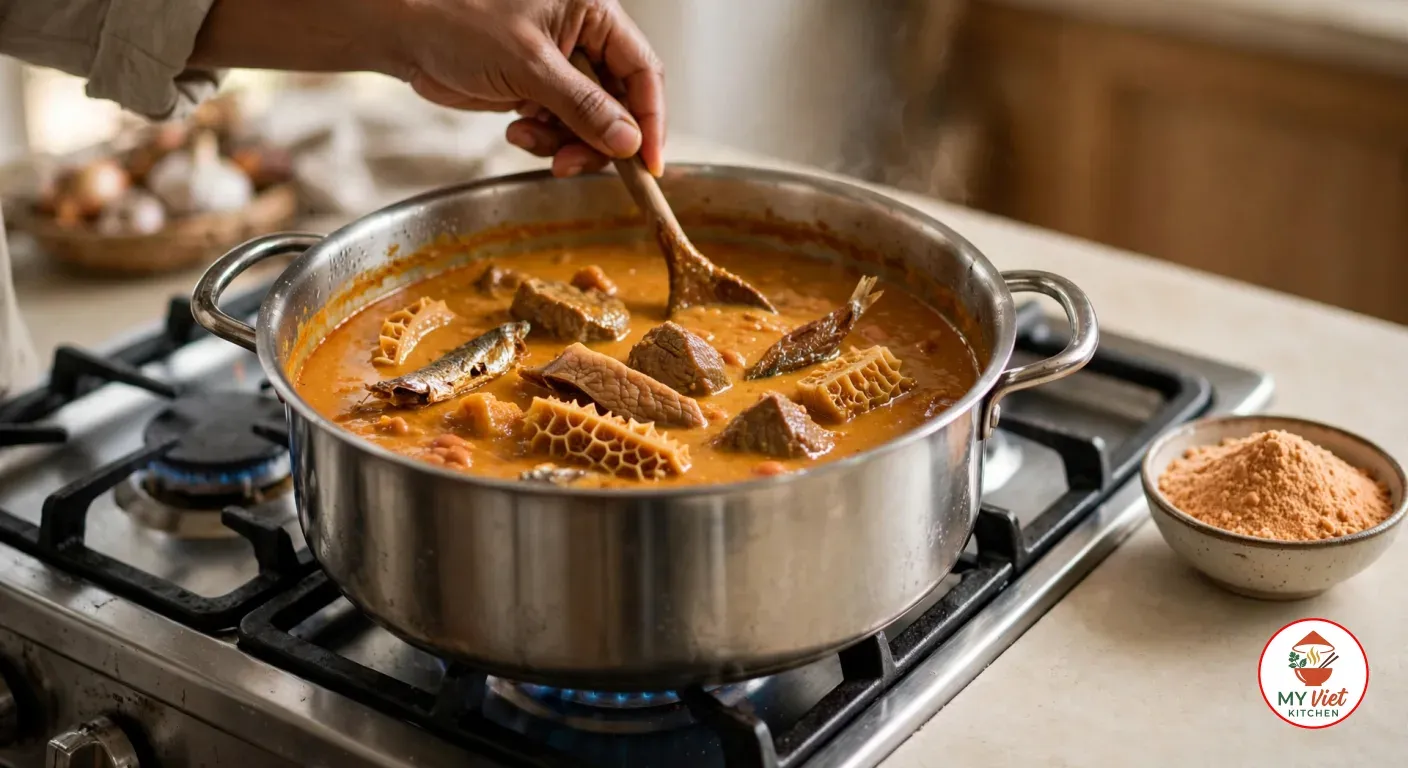
2Heat the palm oil in a heavy pot over medium heat until it turns clear. This step removes the raw taste from the oil. Add the chopped onion and fry for 2 to 3 minutes until soft. Pour in the blended tomatoes and Scotch bonnet peppers. Cook this mixture for 15 minutes, stirring often, until the oil rises to the surface. Now stir in the blended bean paste. Add the ground crayfish, locust beans, seasoning cubes, and salt. Mix well and let the gbegiri simmer for 10 more minutes. The finished soup should look thick, creamy, and golden from the palm oil. Add the boiled meats, tripe, cow skin, and dried fish. Stir gently and cook for 5 minutes so the proteins absorb the soup flavors.
Step 3: Prepare the Ewedu Soup
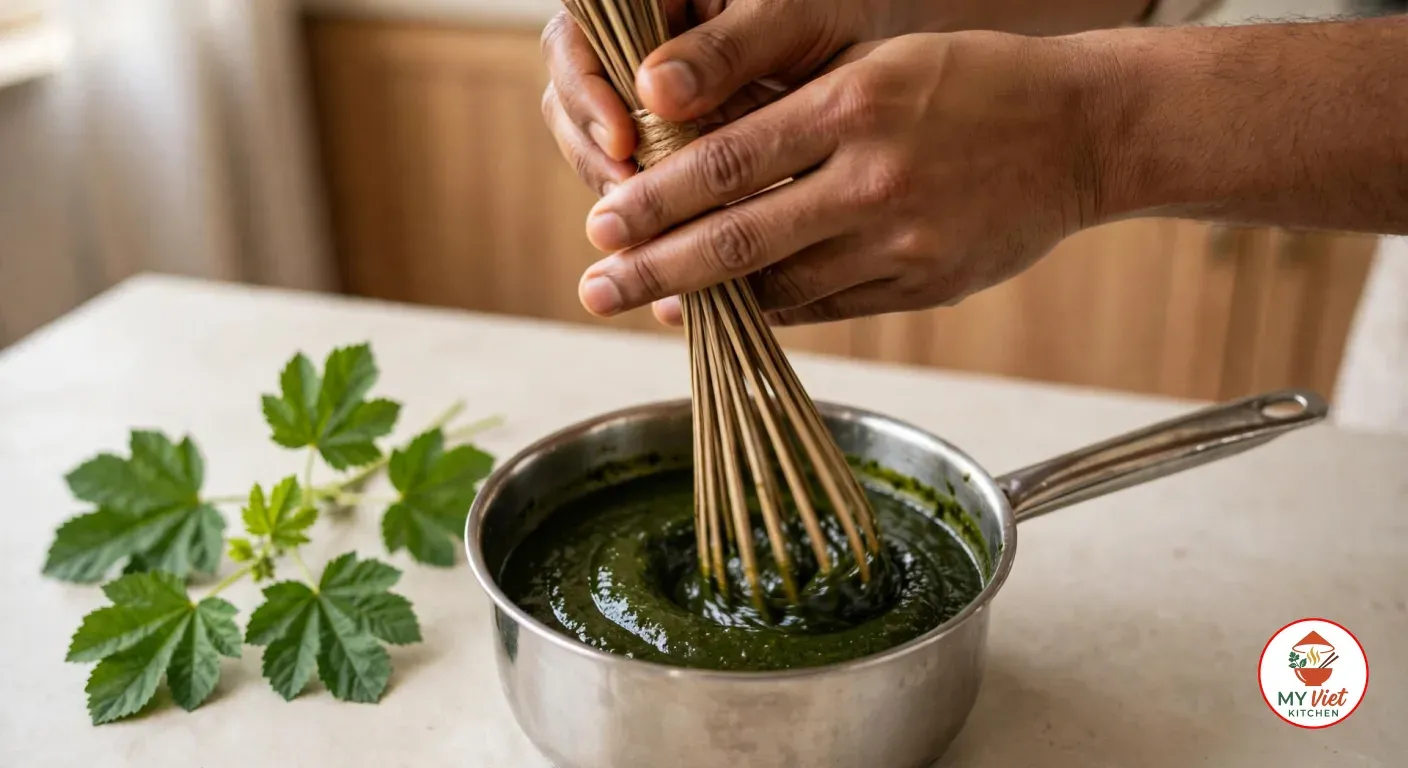
3While the gbegiri simmers, prepare the ewedu. Strip the jute mallow leaves from their woody stems. Wash them in several changes of water. Place the leaves in a pot and add just enough water to cover them. Add a pinch of potash or baking soda. This alkaline agent breaks down the leaves faster and produces the signature slimy texture. Boil for 5 minutes until the leaves soften completely. Then use a traditional ijabe whisk or a hand blender to break the leaves into a smooth, viscous consistency. Season with salt and locust beans. The finished ewedu should flow like thick honey.
Step 4: Make the Amala
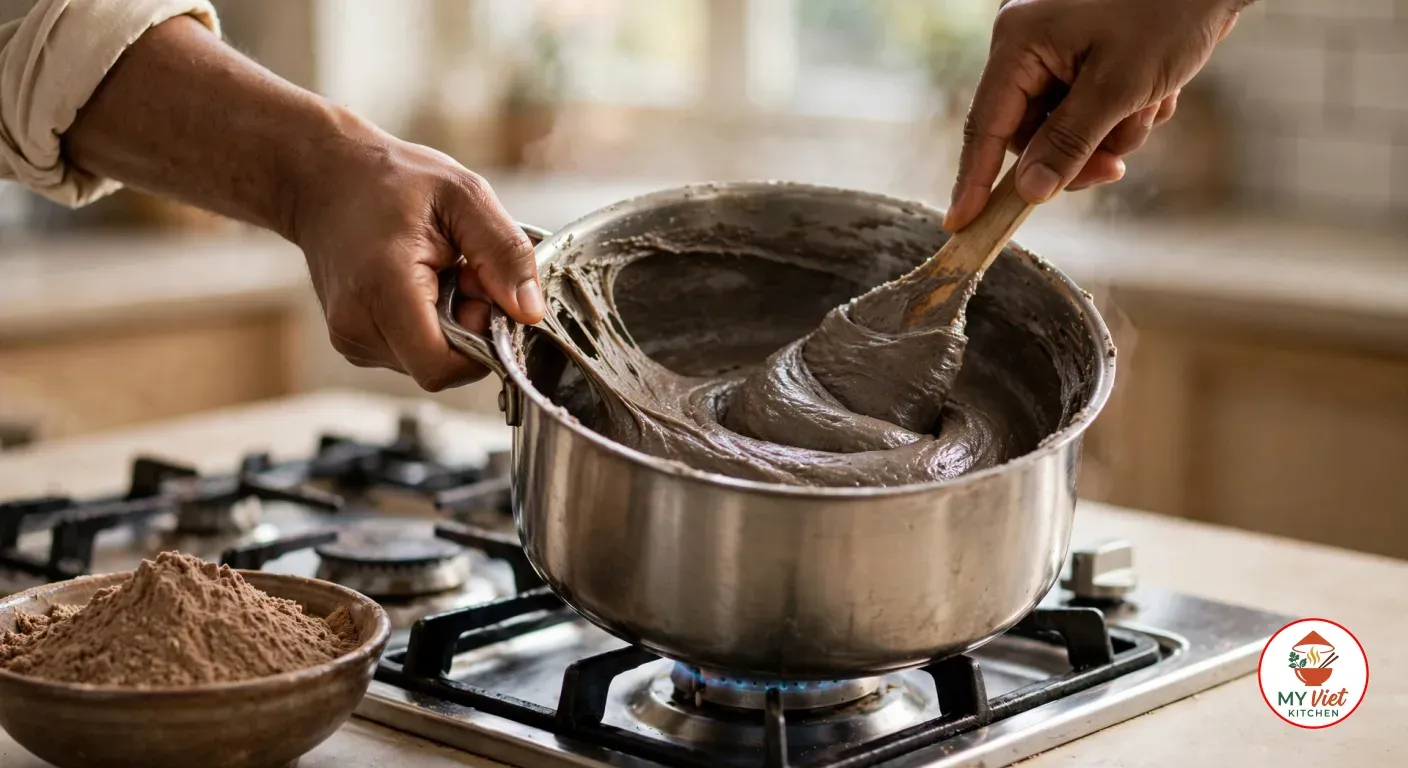
4Bring 3 cups of water to a rolling boil in a sturdy pot. Reduce the heat to medium-low. Gradually sprinkle the yam flour into the boiling water while stirring vigorously with a wooden spatula or turning stick. Add a little flour at a time and stir hard before adding more. This prevents lumps from forming. Continue adding flour and stirring until the mixture pulls away from the sides of the pot. The amala should feel smooth, stretchy, and firm enough to hold its shape. Cover the pot and let it cook on low heat for 2 minutes. Then stir one final time to ensure even texture throughout.
Step 5: Serve Amala with Gbegiri and Ewedu
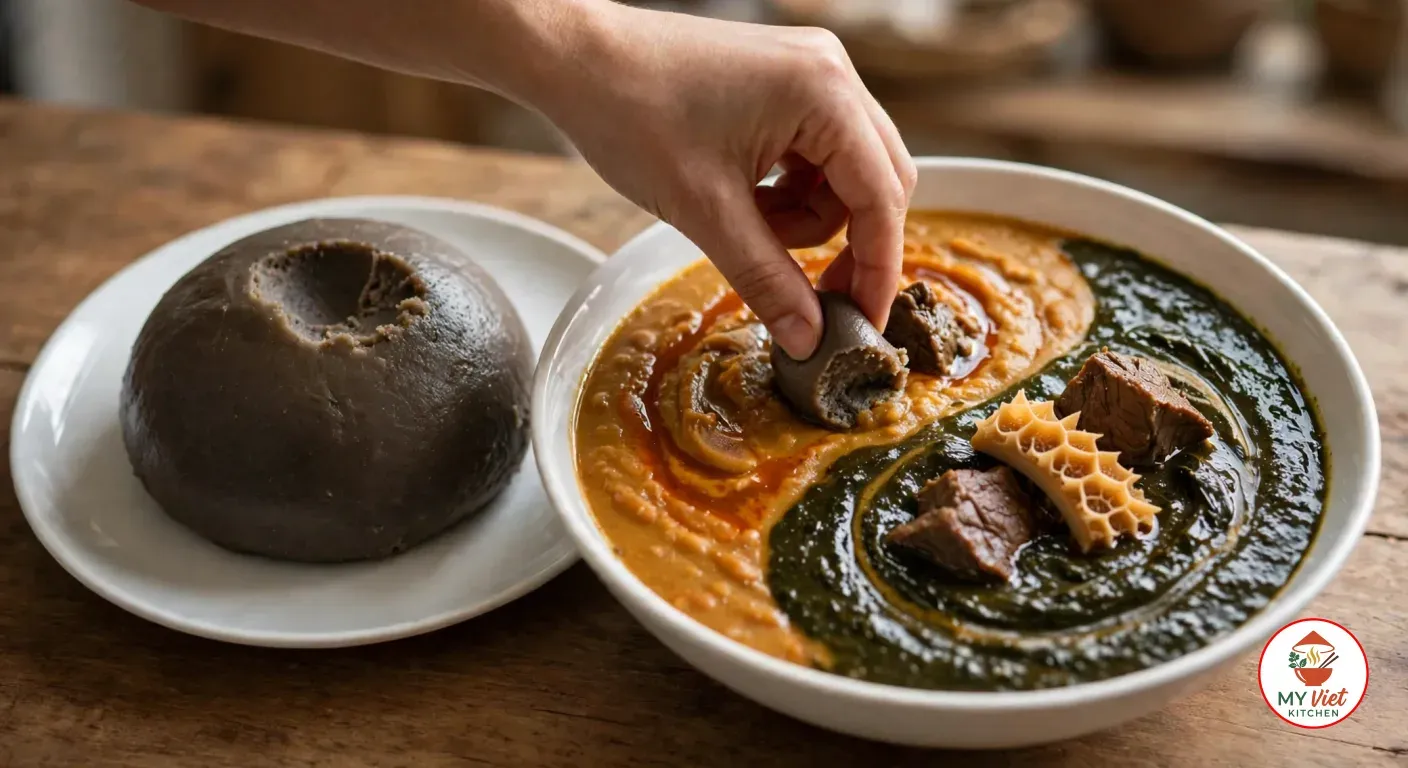
5Scoop the hot amala onto a plate or into a deep bowl. Wet your hands slightly and shape it into a smooth, round mound. In a separate bowl, pour the gbegiri and ewedu side by side. Some families prefer to keep them separate so diners can dip into each one. Others pour both soups into the same bowl, creating a beautiful swirl of golden gbegiri and green ewedu. Place the assorted meats and fish on top of the soup. To eat, pinch off a small piece of amala, press it slightly to form a scoop, and dip it into the soup. This is the traditional way to enjoy amala with gbegiri in Yoruba culture.
Expert Tips for Perfect Amala with Gbegiri
Master the Stirring Technique
Making amala requires arm strength and patience. Stir with your dominant hand using a wooden spatula while holding the pot handle with the other. Apply firm, continuous pressure against the bottom and sides of the pot. The key is to never stop stirring once you begin adding flour. Even a brief pause allows lumps to form. If you find the dough too stiff to stir, add a splash of hot water and continue working it until smooth.
Get the Gbegiri Consistency Right
Gbegiri should flow like a thick, creamy soup, not like a paste. If your blended beans produce a paste that is too thick, add warm water gradually while the soup simmers. Stir after each addition until you reach a consistency similar to cream of mushroom soup. On the other hand, if your gbegiri seems too thin, let it simmer uncovered for a few extra minutes. The water will evaporate and the soup will thicken naturally.
Use Locust Beans Generously
Locust beans, known as iru in Yoruba, are the secret weapon in both gbegiri and ewedu. They add a deep, fermented umami flavor that ties the two soups together. Fresh locust beans from the fridge section of an African grocery store deliver the strongest flavor. Dried versions work too, but soak them in warm water for 10 minutes first to soften them. Start with one tablespoon per soup and adjust to your taste.
Amala vs. Other Nigerian Swallows
Nigeria offers a wide range of swallows, each with its own texture, color, and flavor. Here is how amala compares to other popular choices across the country.
| Feature | Amala | Pounded Yam | Eba (Garri) | Fufu |
|---|---|---|---|---|
| Base Ingredient | Dried yam flour | Fresh boiled yam | Cassava flakes | Fermented cassava |
| Color | Dark brown | White | Light yellow | White |
| Texture | Smooth, stretchy | Smooth, elastic | Firm, slightly grainy | Soft, smooth |
| Flavor | Earthy, smoky | Mild, neutral | Slightly sour | Mildly sour |
| Region | Yoruba (Southwest) | Yoruba (Southwest) | Nationwide | Nationwide |
Serving Suggestions
The traditional way to serve amala with gbegiri follows a specific arrangement that maximizes the dining experience. In Yoruba households and bukas alike, presentation matters because it sets the stage for the meal.
The Perfect Accompaniments:
- Gbegiri and ewedu together (abula style): Pour both soups into the same bowl and let them swirl together naturally. This classic presentation allows each bite to carry flavors from both soups at once.
- Assorted meats (asun or proteins): Top the soup with a mix of beef, tripe, cow skin, and fish. The variety of textures from soft meat to chewy tripe makes every bite interesting.
- Pepper soup on the side: A small bowl of pepper soup alongside the main meal helps cleanse the palate between bites. Indeed, many amala joints in Lagos offer this pairing.
- Efo riro as an alternative soup: If you prefer a vegetable-forward option, swap the gbegiri for efo riro. This combination is equally popular in Yoruba homes and offers a different but equally satisfying experience.
Beverage Pairings:
- Zobo (hibiscus drink): The tart, fruity flavor of zobo refreshes the palate between bites. Served chilled, it provides a welcome counterbalance to the rich, creamy gbegiri.
- Palm wine: This mildly sweet, effervescent traditional drink pairs naturally with amala and bean soup. The combination has deep roots in Yoruba dining culture and celebrations.
- Cold water or kunu: For a simpler option, cold water works perfectly. Kunu, a millet-based drink, also complements the earthy flavors of amala without competing for attention.
Storage and Reheating
Refrigerator: Store leftover amala, gbegiri, and ewedu in separate airtight containers for up to 3 days. The gbegiri thickens significantly during refrigeration because the bean starch continues to absorb moisture. The ewedu also firms up but returns to its original consistency when reheated.
Freezer: Freeze gbegiri and ewedu separately for up to 2 months. Amala freezes less successfully because it becomes grainy when thawed. For this reason, most cooks prefer to make fresh amala and freeze only the soups.
Reheating: Warm the gbegiri on the stovetop over low heat, adding a splash of water to restore its creamy consistency. Reheat ewedu the same way. For leftover amala, wrap it in plastic wrap and microwave for 30 seconds, or steam it briefly over boiling water. Fresh amala always tastes better, so consider making only as much as you need for each meal.
Common Mistakes to Avoid
1. Adding All the Yam Flour at Once
Dumping all the yam flour into the boiling water at once creates a lumpy mess that no amount of stirring can fix. Instead, add the flour in small batches. Sprinkle a little, stir vigorously until incorporated, then add more. This gradual approach gives you control over the texture. It also allows you to stop adding flour once the amala reaches the right consistency.
2. Undercooking the Beans for Gbegiri
If the beans are not cooked until very soft, the gbegiri will taste grainy instead of creamy. The beans should mash easily when pressed between two fingers. Undercooked beans also resist blending and leave small chunks in the soup. Take the extra time to cook them thoroughly. Soft beans blend into a smooth paste that gives gbegiri its signature velvety texture.
3. Skipping the Potash in Ewedu
Potash or baking soda serves an important purpose in ewedu preparation. This alkaline ingredient breaks down the cell walls of the jute leaves, which releases the mucilage that gives ewedu its slimy texture. Without it, the ewedu will lack that signature viscous quality. Use only a small pinch because too much potash makes the ewedu bitter and changes its color to an unappealing dark green.
Frequently Asked Questions
Can I use canned beans for gbegiri?
Yes, canned black-eyed peas work as a shortcut for gbegiri. Drain and rinse them first, then blend directly since they are already cooked. However, canned beans produce a slightly thinner soup compared to home-cooked beans. To compensate, simmer the gbegiri for a few extra minutes to thicken it. The flavor will be milder, but the convenience saves about 45 minutes of cooking time.
Is amala with gbegiri healthy?
Amala with gbegiri offers a balanced nutritional profile. The yam flour in amala provides complex carbohydrates and dietary fiber. Gbegiri delivers plant-based protein from the beans along with iron and B vitamins. Ewedu contributes vitamins A and C from the jute leaves. The palm oil adds vitamin E and beta-carotene. Overall, this meal covers carbohydrates, proteins, and micronutrients in a single sitting. Portion control helps manage the calorie count.
What can I substitute for ewedu leaves?
If ewedu leaves are unavailable, okra makes the closest substitute because it produces a similar slimy texture. Slice fresh okra thinly and boil it briefly until it becomes viscous. Frozen jute mallow leaves from Asian grocery stores also work well. They are the same plant used in Middle Eastern and Asian cooking, known as molokhia. Simply thaw and prepare them the same way as fresh ewedu.
How spicy is traditional gbegiri soup?
Traditional gbegiri carries moderate heat from Scotch bonnet peppers. Most Yoruba families use 1 to 3 peppers per batch depending on their heat tolerance. For a milder version, use only 1 pepper with the seeds removed. The creamy bean base already mellows the heat significantly compared to other Nigerian soups. So even with 2 peppers, gbegiri remains gentler on the palate than pepper soup or egusi soup.
Variations and Adaptations
Plantain Amala (Amala Ogede):
Replace yam flour with plantain flour for a slightly sweeter, darker swallow. Plantain amala has a denser texture and pairs especially well with gbegiri because the sweetness of the plantain contrasts with the savory bean soup. Prepare it exactly the same way as regular amala. Just add the plantain flour to boiling water and stir vigorously.
Gbegiri with Smoked Fish Only:
For a lighter version of gbegiri, skip the assorted meats and use only smoked catfish or mackerel. The smoked fish adds rich flavor without the heavier proteins. This version cooks faster since you do not need to boil meats separately. It is a popular weeknight adaptation in many Yoruba households when time is short.
Vegan Amala with Gbegiri:
You can make a fully plant-based version by leaving out the meats, fish, and crayfish. Instead, boost the locust beans to two tablespoons for extra umami depth. Add mushrooms to the gbegiri for texture and savory flavor. The bean soup already provides substantial protein on its own. Pair with the ewedu for a complete vegan Nigerian meal that loses none of the traditional satisfaction.
The Cultural Significance of Amala with Gbegiri
Amala with gbegiri occupies a central place in Yoruba identity. The dish goes beyond mere sustenance. In Ibadan, often called the amala capital of Nigeria, entire neighborhoods are known for their amala spots. Vendors start preparations before dawn, boiling beans and preparing ewedu to meet the morning rush. Workers, students, and business people line up for plates of amala with gbegiri as their midday fuel. The meal powers the city in a very real sense.
Amala with gbegiri also plays a role in Yoruba ceremonies and celebrations. At naming ceremonies, weddings, and funerals, serving amala shows respect for tradition and guests alike. It signals that the host understands and honors Yoruba foodways. In fact, older family members often judge the quality of a celebration partly by the quality of the amala served. A smooth, lump-free amala paired with rich gbegiri reflects the care that went into the event.
In the broader Nigerian context, amala with gbegiri has crossed ethnic boundaries to become a nationally recognized comfort food. Restaurants in Abuja, Port Harcourt, and other cities outside Yoruba land now serve it proudly. Furthermore, Nigerian communities in London, Houston, Toronto, and other diaspora cities have established amala joints that keep this tradition alive abroad. Every plate of amala with gbegiri served anywhere in the world carries forward a Yoruba legacy of resourcefulness, flavor, and communal eating.
Conclusion
Amala with gbegiri is a meal that rewards every minute of preparation. The smooth, earthy amala, the creamy golden gbegiri, and the silky green ewedu come together in a trio that has sustained and delighted Yoruba families for generations. By choosing good yam flour, cooking your beans until truly soft, and mastering the stirring technique, you can recreate this iconic Nigerian meal at home. The three-component format might seem involved at first, but each element is straightforward on its own.
If you enjoyed this recipe, explore more of our African food collection for dishes from across the continent. Also try our efo riro recipe for another beloved Yoruba stew. Or discover ewa agoyin, the legendary Lagos street food that also celebrates the humble bean in spectacular fashion.