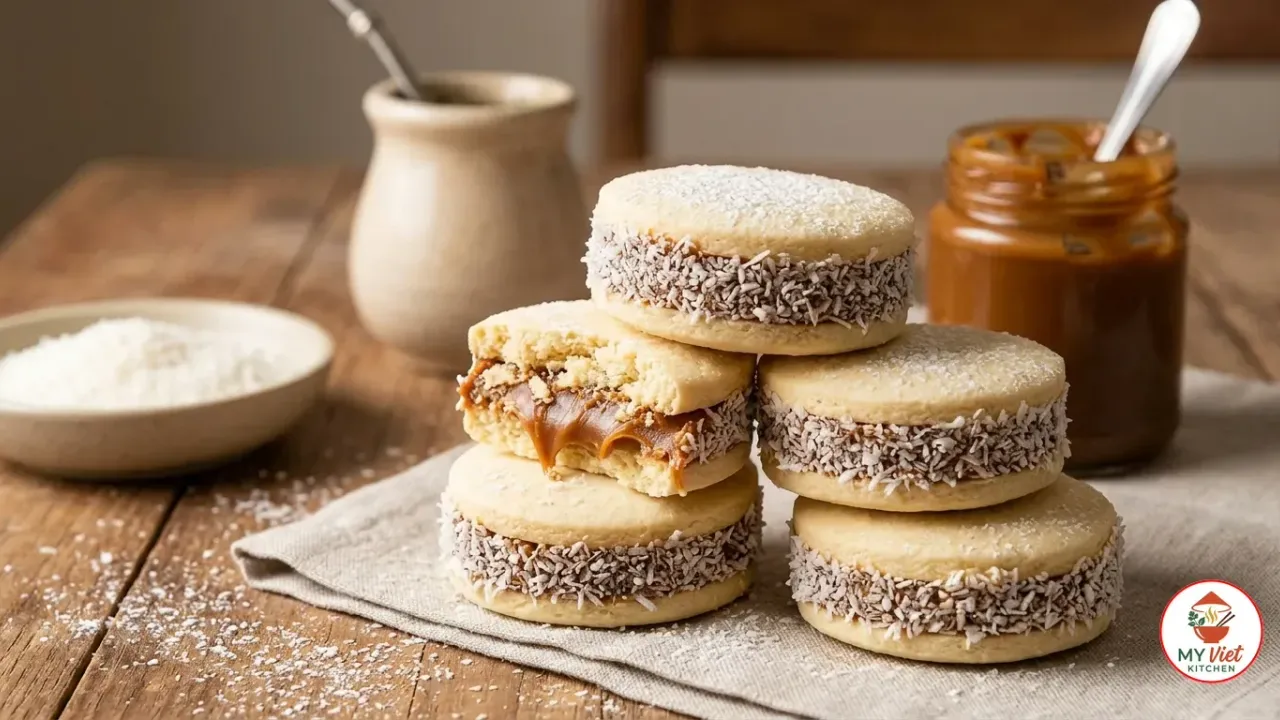
Alfajores are the tender, melt-in-your-mouth sandwich cookies that Argentina has loved for generations. This alfajores recipe shows you how to make these delicate cornstarch cookies at home, filling them with thick, caramelized dulce de leche and rolling the edges in shredded coconut. Known across South America as the ultimate afternoon treat, alfajores deliver a texture unlike any other cookie. They crumble softly on the tongue, leaving behind the rich sweetness of slow-cooked milk caramel. Whether you grew up eating them from a Buenos Aires kiosk or are discovering them for the first time, this recipe brings authentic Argentine baking to your kitchen.
Prep Time: 30 minutes | Cook Time: 12 minutes | Servings: 20 sandwich cookies
Difficulty: Easy | Calories: ~165 per cookie
What Makes Alfajores Special?
The secret to alfajores is the unusual dough. Most cookies rely on flour for structure, but alfajores flip that ratio. Cornstarch makes up half or more of the dry mix. This changes the texture in a big way. Cornstarch has no gluten, so the cookies lack any chewiness. Instead, they bake into something between a shortbread and a cloud. They hold together when you pick them up, yet they dissolve the moment you bite in.
The filling is equally important. Dulce de leche is not caramel in the American sense. It is sweetened milk cooked slowly for hours until the sugars turn deep amber. This slow process creates rich flavors of toffee, vanilla, and toasted milk. Good dulce de leche has a thick, fudge-like body that holds the two cookie halves together while adding moisture. Without it, alfajores would simply be a nice shortbread. With it, they become something truly special.
The history of alfajores traces back to Moorish Spain, where the original version was a confection made with almonds, honey, and spices wrapped in a thin wafer. Spanish colonists brought the concept to South America in the 18th century, and Argentine bakers changed it completely. They swapped almond paste for cornstarch cookies and replaced honey with the dulce de leche that local dairy farms made in bulk. Today, Argentina consumes over a billion alfajores per year, making them arguably the most popular snack in the country.
Choosing the Right Dulce de Leche
The dulce de leche you use determines whether your alfajores taste homemade or professional. Not all dulce de leche is created equal, and the differences matter enormously in this recipe. Here are the options worth considering.
- Argentine brands (best choice): Havanna and La Serenisima produce thick, intensely flavored dulce de leche that Argentine bakers swear by. If you can find them at a Latin grocery store or online, they deliver the most authentic result. The consistency is spreadable but firm, perfect for holding two cookies together.
- Homemade from condensed milk: Simmering an unopened can of sweetened condensed milk in water for 2 to 3 hours produces excellent dulce de leche. The flavor is deep and caramelized, and you control the thickness by adjusting the cooking time. This method requires patience but costs very little.
- Store-bought international brands: Nestle La Lechera and similar products are widely available. They work well but tend to be thinner than Argentine versions. If yours is too runny, simmer it gently in a saucepan for 10 to 15 minutes until it thickens to a paste that holds its shape on a spoon.
Ingredients for Alfajores
Cookie Dough:
- 1 cup cornstarch
- 1 cup all-purpose flour
- 1/2 teaspoon baking powder
- 1/4 teaspoon baking soda
- 1/4 teaspoon fine sea salt
- 1/2 cup unsalted butter, softened
- 1/2 cup powdered sugar
- 3 large egg yolks
- 1 teaspoon vanilla extract
- 1 teaspoon lemon zest
- 1 tablespoon pisco or brandy (optional)
Filling and Coating:
- 1 cup dulce de leche (thick consistency)
- 1 cup shredded coconut for rolling (optional)
- Powdered sugar for dusting (optional)
Pro tip: Use powdered sugar instead of granulated in the dough. Powdered sugar dissolves instantly into the butter, creating a smoother, more tender cookie. Granulated sugar leaves tiny pockets of undissolved crystals that make the texture slightly gritty. This detail separates good alfajores from truly exceptional ones.
Step-by-Step Instructions
Step 1: Mix the Dry Ingredients
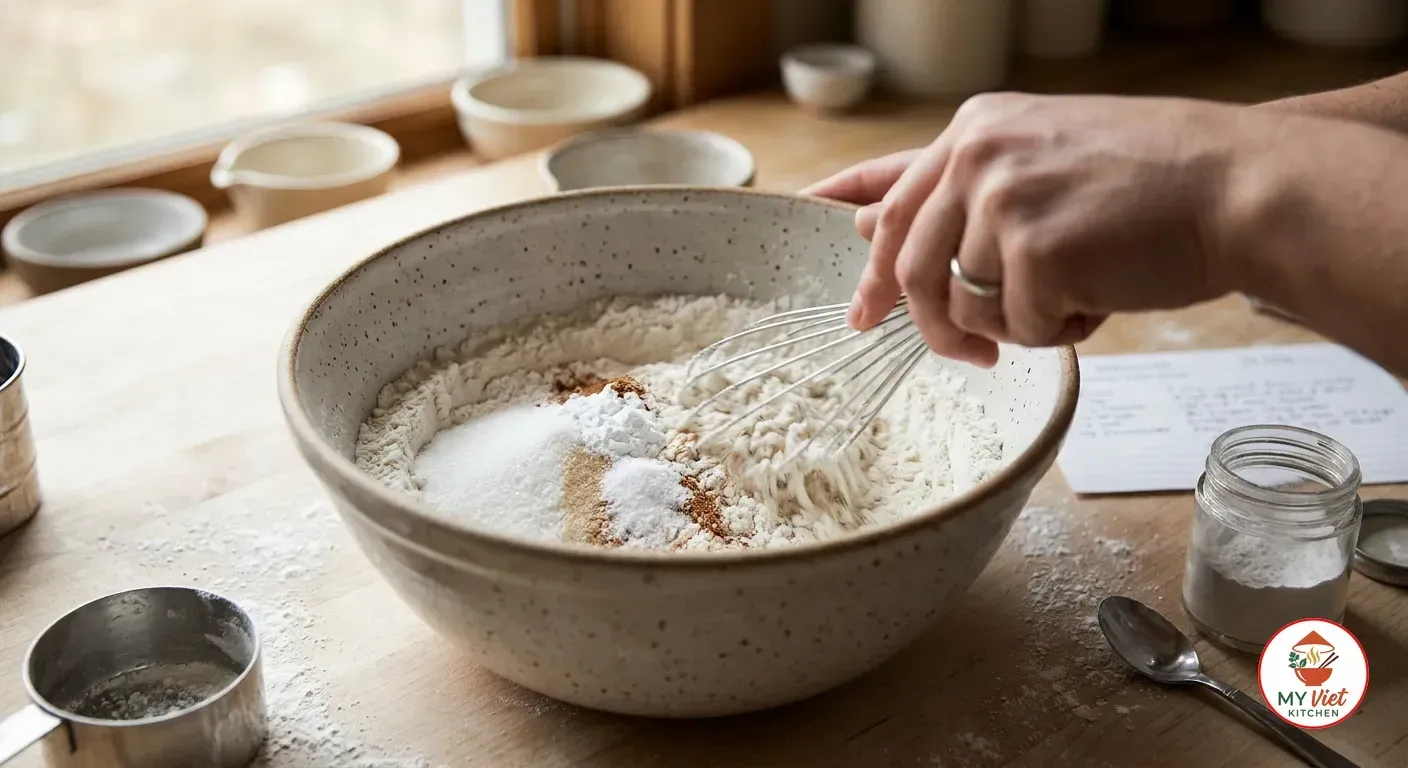
1 Whisk together the cornstarch, all-purpose flour, baking powder, baking soda, and salt in a medium bowl. This ratio is the single most important factor for the right texture. A one-to-one mix creates the classic Argentine alfajores that crumble softly. Some recipes use even more cornstarch for an ultra-tender result. However, a balanced ratio gives you cookies sturdy enough to handle without falling apart.
Sift the mixture if your cornstarch has any lumps. Cornstarch tends to compact in the box, and even small clumps will create dry pockets in the finished cookies. A quick pass through a fine sieve ensures a perfectly uniform dough. Set the bowl aside while you prepare the wet ingredients.
Step 2: Cream the Butter and Sugar
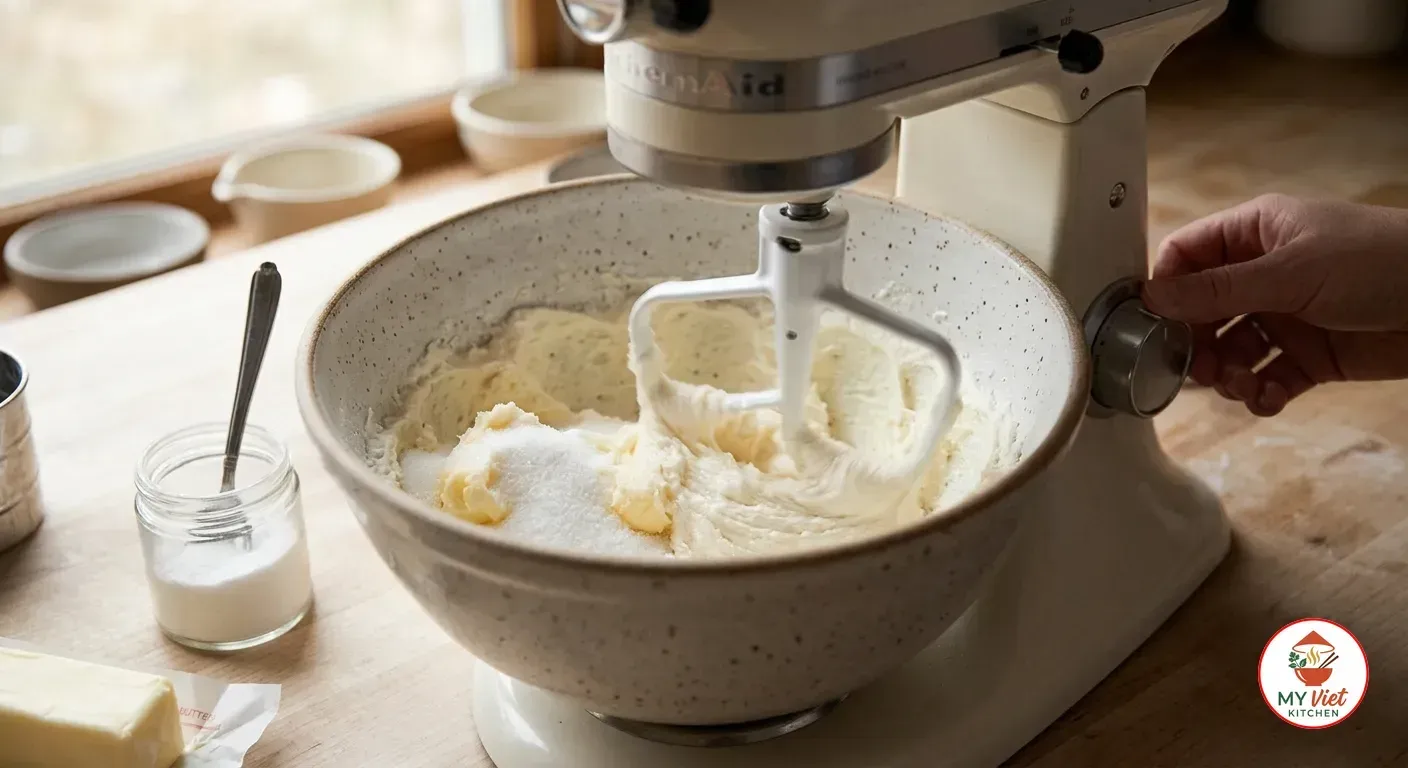
2 In a large bowl, beat the softened butter and powdered sugar with an electric mixer on medium speed for about 3 minutes. The mixture should turn pale, fluffy, and lighter in volume. This step matters because the dough has no strong leavener. The air you whip into the butter gives the cookies most of their lift.
Add the egg yolks one at a time, beating well after each one. Then mix in the vanilla extract, lemon zest, and pisco or brandy if using. The lemon zest lifts the rich dough with a bright citrus note. It also balances the sweet dulce de leche filling. Pisco is used in some Argentine and Peruvian alfajores recipes. It adds a faint warmth that fades during baking but leaves a more complex flavor behind.
Step 3: Form the Dough and Chill
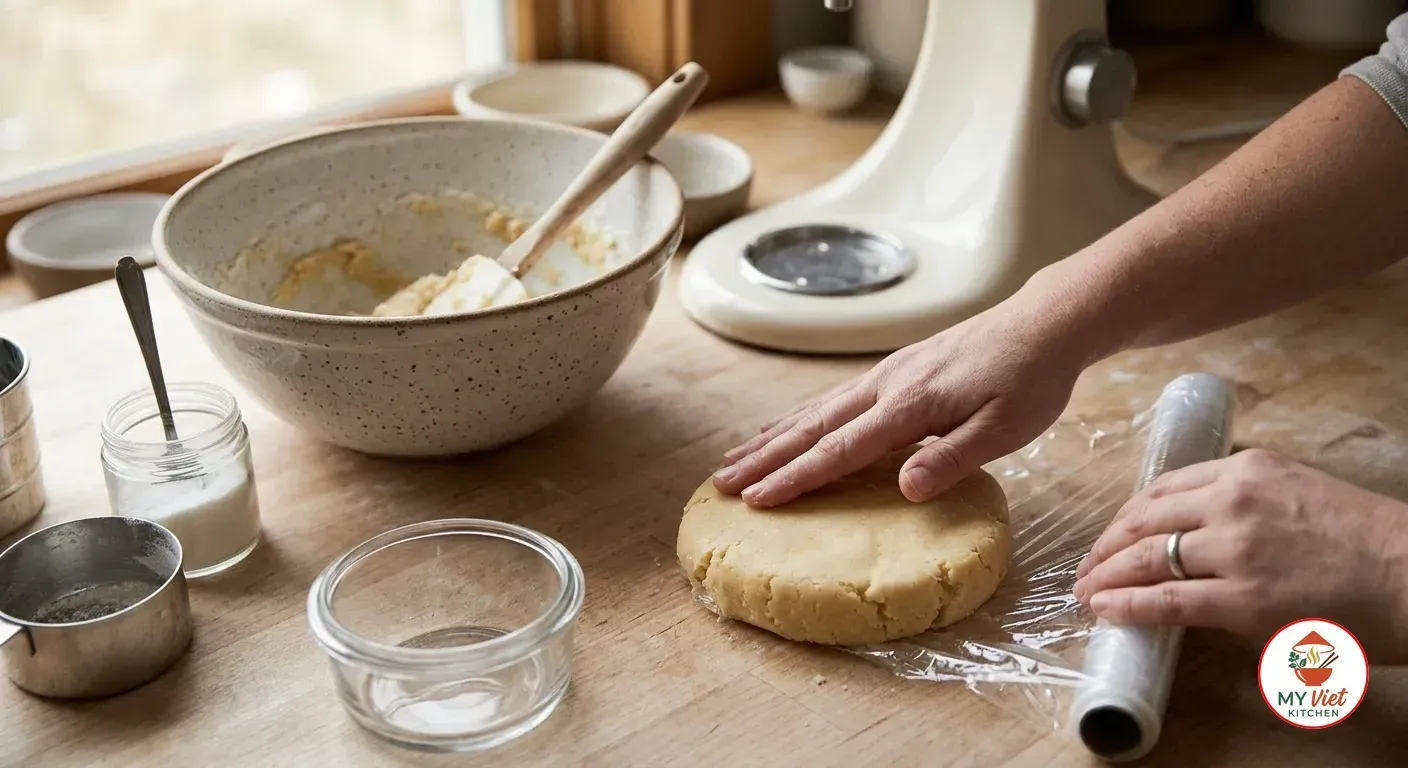
3 Gradually add the dry mix to the butter mixture. Fold gently with a spatula or mix on the lowest speed. Stop as soon as no dry streaks remain. Too much mixing builds gluten, which makes the cookies tough. The dough should feel soft and a bit sticky but not wet. If it seems too crumbly, add a teaspoon of milk. If it sticks to everything, add a tablespoon more cornstarch.
Shape the dough into a flat disk and wrap it tightly in plastic. Chill for at least 1 hour. Cold butter firms up and makes the dough much easier to roll. You can also chill the dough overnight for an even more tender cookie. If you do, let it sit out for 10 minutes before rolling so it softens just enough to work with.
Step 4: Roll, Cut, and Bake
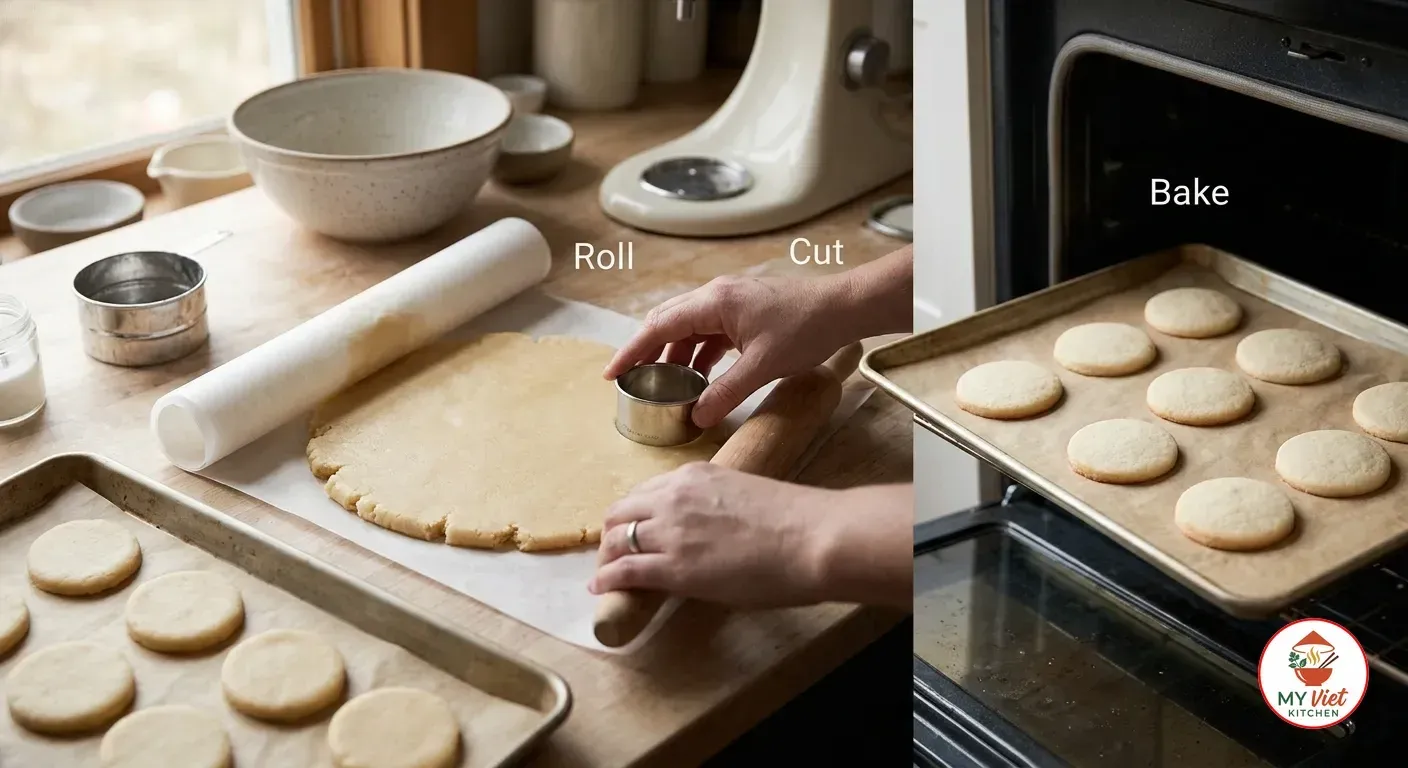
4 Preheat your oven to 350 degrees Fahrenheit (175 degrees Celsius). Line two baking sheets with parchment paper. Roll the chilled dough between two sheets of parchment to about 1/4 inch thick. Rolling between parchment stops sticking without adding extra flour. Use a 1.5-inch round cutter to stamp out circles. Gather scraps gently, re-roll once, and cut more rounds.
Place the rounds on the sheets about 1 inch apart. These cookies do not spread much, so they can sit close together. Bake for 10 to 12 minutes, rotating the sheet halfway through. They are done when the edges turn barely golden and the tops still look pale. Do not overbake them. Brown alfajores lose their soft texture and turn hard. Let them cool fully on the sheet before you touch them. They are very fragile when warm.
Step 5: Assemble the Alfajores
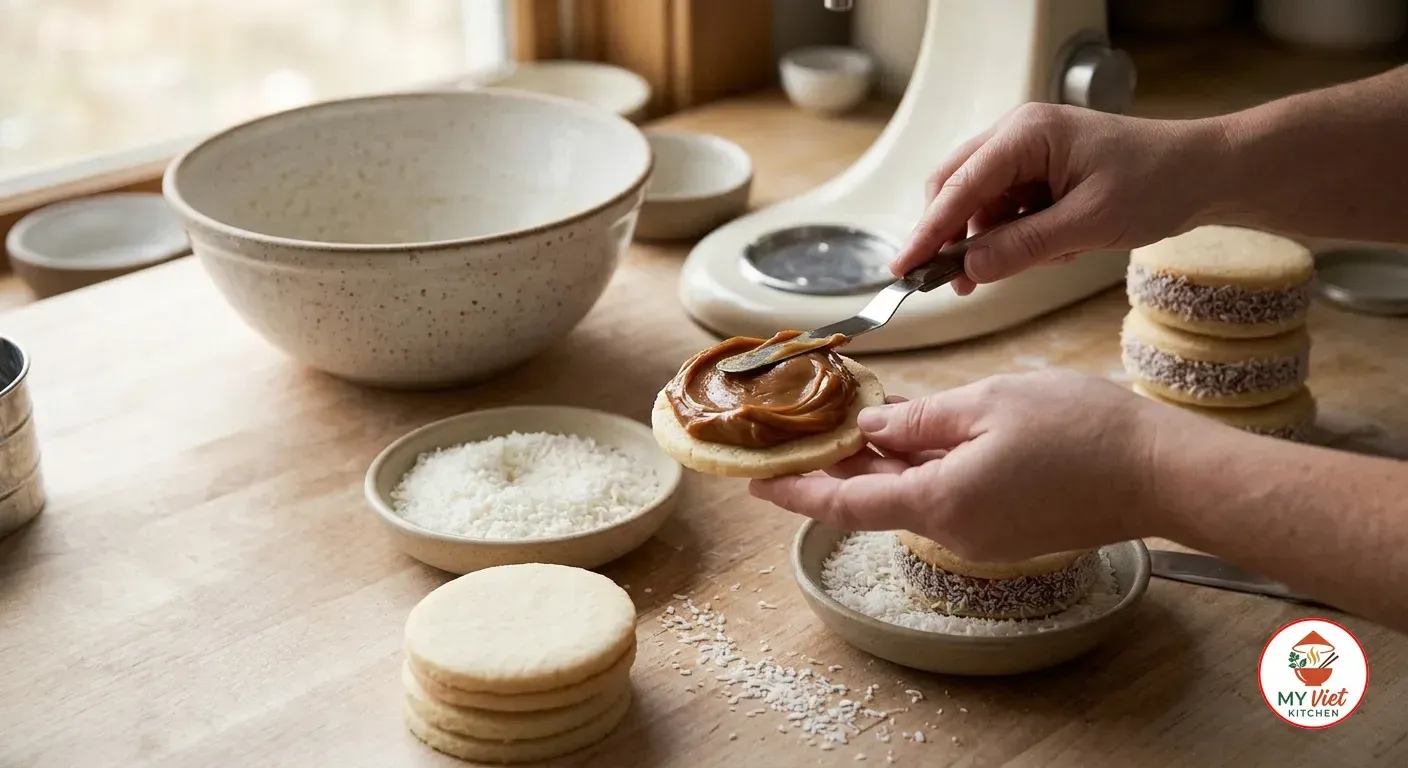
5 Match up cookie pairs of similar size. Spread a generous teaspoon of dulce de leche onto the flat side of one cookie, then press the flat side of a second cookie gently on top. Do not squeeze hard, or the delicate shells will crack. The dulce de leche should just peek out from the edges, forming a visible ring of caramel between the two halves.
For the classic Argentine finish, roll the exposed dulce de leche edge through a shallow plate of shredded coconut. The coconut sticks to the caramel and adds a subtle tropical sweetness and texture. Alternatively, skip the coconut and dust the assembled alfajores generously with powdered sugar for the style known as alfajores de maizena. Both presentations are traditional and equally delicious.
Expert Tips for Perfect Alfajores
Keep Everything Cold
This dough is soft and sticky because of all the butter and egg yolks. If it warms up while you roll, it gets hard to handle and the cookies spread too much. Work fast. If the dough feels tacky, slide the parchment onto a tray and pop it back in the fridge for 10 minutes. Cold dough cuts cleanly and holds its shape in the oven.
Measure Cornstarch by Weight
Cornstarch packs down easily in the cup. A loose scoop can weigh 30 percent less than a packed one, and that throws off the whole recipe. For best results, weigh your cornstarch. One cup is about 120 grams. If you lack a scale, spoon the cornstarch into the cup and level it with a knife. Do not scoop straight from the box.
Let Them Rest After Assembling
Fresh alfajores are good, but ones that have rested for a day are even better. As they sit, moisture from the dulce de leche soaks into the crumb. This makes them softer and almost cake-like inside. In fact, many Argentine bakeries fill their alfajores the night before and sell them the next morning. Store yours in an airtight box at room temperature and try one the next day. You will notice a clear boost in texture.
Alfajores Across South America
Argentina may be the heartland of alfajores, but nearly every country in South America has its own version. The cookies traveled from Spain to the New World and then evolved differently in each region. Here is how the major styles compare.
| Country | Style | Key Differences | Typical Coating |
|---|---|---|---|
| Argentina | Alfajores de Maizena | Cornstarch cookies, dulce de leche filling, extremely tender | Shredded coconut or powdered sugar |
| Uruguay | Alfajor Uruguayo | Nearly identical to Argentine, often chocolate-coated | Dark or white chocolate glaze |
| Peru | Alfajor Peruano | Butter cookies with manjar blanco, sometimes with pisco | Powdered sugar |
| Chile | Alfajor Chileno | Thinner wafer-style cookies, manjar filling | Meringue coating or powdered sugar |
| Spain | Alfajor Andaluz | Almond and honey filling, the original Moorish version | Sugar glaze or plain |
Serving Suggestions
In Argentina, alfajores are eaten at any hour. They appear at breakfast alongside a cup of coffee, tucked into lunchboxes for an afternoon snack, and offered to guests with tea after dinner. The ritual is simple: unwrap, bite, and let the cookie dissolve. Here are the best ways to enjoy them at home.
The Perfect Accompaniments:
- Fresh berries: Strawberries and raspberries cut through the richness of the dulce de leche. A small bowl of berries alongside a plate of alfajores makes an elegant dessert spread without being overwhelming.
- Ice cream: Crumble an alfajor over a scoop of vanilla ice cream for a deconstructed dessert. In Argentina, heladerias sell alfajor-flavored ice cream that combines dulce de leche gelato with cookie pieces.
- Other South American treats: Build a dessert table with alfajores alongside Brazilian brigadeiros, Chilean sopaipillas, or Peruvian suspiro limeno for a continental tasting experience.
Beverage Pairings:
- Mate: The classic Argentine pairing. The bitter, grassy flavor of yerba mate balances the intense sweetness of dulce de leche. Sharing mate and alfajores is a deeply social ritual in Argentina, Uruguay, and southern Brazil.
- Espresso or cortado: A short, strong coffee stands up to the richness of alfajores without overpowering the delicate cookie. A cortado, with its small splash of steamed milk, mirrors the dairy richness of the filling.
- Black tea: English breakfast or Earl Grey tea provides tannins that cleanse the palate between bites. The pairing is popular in Argentina, where British tea culture blended with local customs during the 19th century.
- Dessert wine or Malbec: A glass of late-harvest Torrontes or a fruity Malbec pairs beautifully with the caramel notes in dulce de leche. For a non-alcoholic option, try sparkling water with a squeeze of lemon.
Storage and Reheating
Room temperature: Assembled alfajores keep beautifully for 3 to 5 days in an airtight container. They actually improve with time as the dulce de leche softens the cookies. Store them in a single layer separated by parchment paper to prevent sticking.
Refrigerator: In hot weather, store alfajores in the fridge for up to 1 week. The dulce de leche firms up when cold, so let them sit at room temperature for 15 minutes before eating. Cold alfajores taste muted, and the filling becomes too stiff to enjoy properly.
Freezer: Freeze unfilled cookie shells in an airtight container for up to 2 months. Place parchment between layers to prevent breakage. Thaw at room temperature for 30 minutes before filling. You can also freeze assembled alfajores, though the coconut coating may become slightly soggy upon thawing. Assembled frozen alfajores keep for up to 1 month.
Common Mistakes to Avoid
1. Overbaking the Cookies
This is the most common error when making alfajores. The cookies should come out of the oven looking barely done, with pale tops and the faintest golden tinge at the edges. If they turn golden brown all over, they have overbaked. Overbaked alfajores lose their signature tenderness and become dry and crumbly in a bad way. Remember that they continue cooking on the hot baking sheet for several minutes after leaving the oven.
2. Using Thin Dulce de Leche
Runny dulce de leche oozes out of the cookie sandwich and makes a sticky mess. It also fails to hold the two halves together, causing alfajores to slide apart. Always use thick, paste-like dulce de leche. If yours is too thin, transfer it to a small saucepan and cook over low heat, stirring constantly, until it thickens enough to hold a mound on a spoon without spreading.
3. Overworking the Dough
The flour in alfajores dough contains gluten, and aggressive mixing activates it. Tough, dense cookies are the result. Fold the dry ingredients into the wet mixture just until combined, and stop the moment no dry streaks remain. When re-rolling scraps, press them together gently rather than kneading. Cookies from the second roll will always be slightly less tender, so handle them with extra care.
4. Assembling While Warm
Warm alfajores are incredibly fragile. The cornstarch-heavy dough needs time to cool and firm up before you can handle the cookies. If you try to spread dulce de leche on a warm cookie, it will crumble into pieces. Patience is essential here. Let them cool on the baking sheet for at least 20 minutes, then transfer them carefully to a wire rack until completely cool to the touch.
Frequently Asked Questions
What is the difference between alfajores and regular sandwich cookies?
Alfajores use a high ratio of cornstarch to flour, which creates an extraordinarily tender, crumbly cookie that practically dissolves on the tongue. Regular sandwich cookies rely mostly on all-purpose flour and have a firmer, crunchier texture. Dulce de leche filling is also softer and richer than typical cookie fillings like buttercream or jam. Overall, alfajores offer a more delicate and refined bite than any standard sandwich cookie.
Can I make dulce de leche at home for alfajores?
Absolutely. The easiest method is to simmer an unopened can of sweetened condensed milk in a pot of water for 2 to 3 hours. Keep the can fully submerged at all times and never let the pot boil dry. Let the can cool completely before opening. For a safer oven method, pour sweetened condensed milk into an oven-safe dish, cover with foil, and place in a water bath at 425 degrees Fahrenheit for about 90 minutes. Both methods produce rich, deeply caramelized dulce de leche.
Why are my alfajores crumbling apart?
Some fragility is normal and desirable. However, if the cookies fall apart when you pick them up, the dough may contain too much cornstarch or too little butter. Measure ingredients carefully, especially the cornstarch. Also make sure you cream the butter and sugar long enough to create proper structure. Finally, always let baked cookies cool completely on the baking sheet before attempting to move them. Warm cookies break easily.
How long do alfajores stay fresh?
Assembled alfajores keep for 3 to 5 days at room temperature in an airtight container. Many people find they taste even better on the second day, after the dulce de leche has had time to soften the cookie interior. Unfilled shells last up to a week stored airtight, and they freeze well for up to 2 months. Always store them in a single layer with parchment between layers to avoid sticking and breakage.
What is the best dulce de leche brand for alfajores?
Argentine brands like Havanna and La Serenisima are the gold standard. They produce a thick, intensely flavored dulce de leche specifically designed for pastry. In the United States, Nestle La Lechera is widely available and works well for alfajores. The most important factor is thickness. Your dulce de leche should hold a mound on a spoon. If it flows freely, cook it down in a saucepan before using.
Can I make alfajores gluten-free?
Yes, and alfajores are one of the easiest cookies to adapt for a gluten-free diet. Since the dough already contains a large amount of cornstarch, simply replace the all-purpose flour with more cornstarch or a gluten-free flour blend. The result is even more delicate and melt-in-your-mouth than the original. Verify that your baking powder is certified gluten-free, and use naturally gluten-free dulce de leche for the filling.
Variations and Adaptations
Chocolate-Coated Alfajores:
Dip assembled alfajores halfway into melted dark or white chocolate. Place them on parchment to set. This variation adds a layer of snap and richness that pairs well with the tender interior. Use good chocolate with at least 60 percent cacao for the best flavor. Some shops in Buenos Aires dip the whole cookie, creating alfajores de chocolate. These are among the most popular store-bought treats in Argentina.
Alfajores de Mousse:
Fold whipped cream into dulce de leche at a one-to-one ratio. This makes an airy, mousse-like filling that is less sweet. Argentine cafes love this version in summer, when a lighter dessert is welcome. Keep mousse-filled alfajores in the fridge, since the cream is perishable. Eat them within 24 hours for the best taste.
Lemon or Passionfruit Curd Alfajores:
Swap the dulce de leche for a thick fruit curd. Lemon curd pairs well with the buttery cookie, and passionfruit curd adds a bright tropical note. Spread the curd a bit thinner than you would dulce de leche, since fruit curds pack more flavor per bite. These are great in summer and appeal to anyone who likes less sweetness.
The Cultural Significance of Alfajores
In Argentina, alfajores occupy a place in daily life that few other foods can match. Every kiosk, gas station, and corner store stocks multiple brands. Children grow up debating whether Havanna or Cachafaz makes the superior alfajor. Office workers keep a box in their desk drawer. Grandmothers bake them by the dozens for family gatherings. The alfajor is not merely a cookie in Argentina. It is a cultural institution, a comfort food, and a point of fierce regional pride.
Mar del Plata, a coastal resort town south of Buenos Aires, claims the title of alfajor capital of Argentina. Dozens of artisanal producers operate there, and tourists return home with boxes stacked in their luggage. Havanna started as a small confiteria in this city back in 1948. It has since grown into a global brand with shops across Latin America, Europe, and the Middle East. Its famous triple alfajor features three cookies stacked with two layers of dulce de leche and coated in chocolate, and it remains one of the most iconic treats in Argentine food culture.
Beyond Argentina, alfajores connect a vast network of Spanish-speaking cultures. Peruvian bakers add pisco to the dough and serve them at every celebration. Uruguayan versions are nearly identical to the Argentine style, fueling a good-natured rivalry between the two nations. Chilean alfajores take a thinner, more delicate form with a meringue finish. Each country claims its version is the best, but all share the same Moorish roots that traveled from Andalusia to the Americas centuries ago. Making alfajores at home connects you to this rich, layered history.
Conclusion
This alfajores recipe gives you everything you need to make authentic Argentine dulce de leche cookies at home. The keys are straightforward: use the right cornstarch-to-flour ratio, avoid overbaking, choose thick dulce de leche, and let the assembled cookies rest before serving. Follow these steps carefully and you will produce alfajores that rival the best confiterias in Buenos Aires. The tender, dissolving crumb, the rich caramel filling, and the coconut or powdered sugar finish make alfajores one of the most satisfying cookies you will ever bake.
Ready to explore more South American and global desserts? Browse our South American dishes collection for more recipes, or try our Portuguese egg tarts and Italian tiramisu for a world tour of beloved desserts.