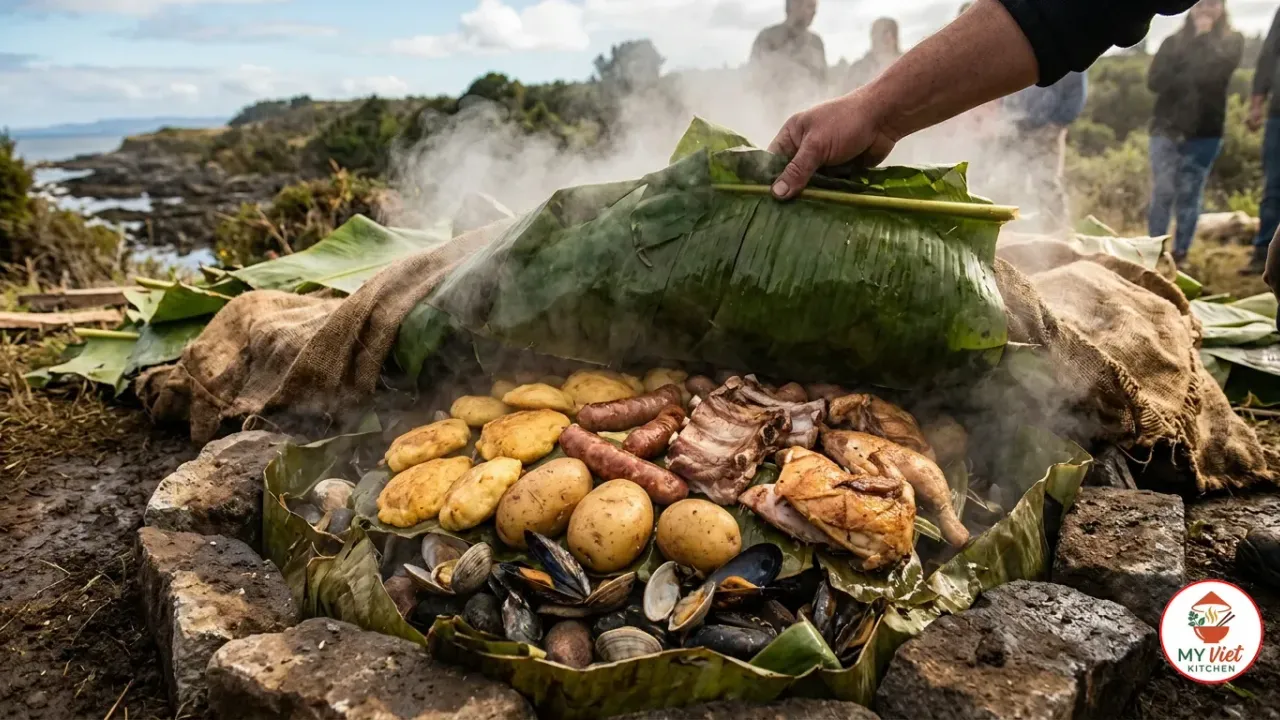
Curanto is one of the oldest and most dramatic cooking methods in all of South America — a monumental Chilean earth oven feast where shellfish, meats, sausages, potatoes, and dumplings slow-cook together in a stone-lined pit buried under leaves and earth. Originating on the windswept island of Chiloe in southern Chile, this ancient technique transforms a hole in the ground into a roaring underground oven. The result is food infused with smoke, mineral steam, and the briny essence of the Pacific. This guide walks you through every step of making authentic curanto at home.
Prep Time: 90 minutes | Cook Time: 2 hours | Servings: 10
Difficulty: Hard | Calories: ~620 per serving
What Makes Curanto Special?
Curanto stands apart from every other feast because it uses the earth itself as the oven. There are no pots, no grills, and no steel. Instead, the cook digs a pit, heats stones with a big fire, and layers raw food right on the hot rocks. Then leaves and earth seal it all shut. As a result, hot steam moves through the layers. It cooks each item while giving it a smoky, earthy taste from the stones below. In other words, every bite holds the flavor of fire, earth, and sea in a way no kitchen tool can match.
The roots of curanto stretch back thousands of years to the Huilliche and Mapuche peoples of southern Chile. Finds from the Chiloe area show that local groups used this earth oven method long before the Spanish arrived. Because the cold, wet climate of the south made open fires hard to keep lit, burying food under earth gave steady heat and shelter from wind and rain. Over time, Spanish settlers added pork, sausages, and wheat bread to the local shellfish and potato base. As a result, modern curanto blends old native skill with new world meats. It tells the whole story of Chile in a single meal.
What truly lifts curanto above a mere cooking method is its role as a group feast. Making curanto takes many hands. One group digs the pit and tends the fire. Another cleans shellfish. Others shape milcao dumplings and sort the meats. The big reveal is the best part — the earth peeled back to show steaming piles of golden shellfish, tender pork, and smoky potatoes. In Chiloe, curanto marks weddings, holy days, and the start of summer. Indeed, sharing a curanto is one of the deepest acts of warmth and welcome in Chilean life.
Choosing the Right Stones for Curanto
The stones are the engine of curanto. They store the heat from the fire and release it slowly over the two-hour cook. Because the stones do all the heavy lifting, selecting the right type is critical to both safety and success. Here are your best options.
- Volcanic basalt (best choice): Dense, non-porous, and able to withstand extreme heat without cracking. Basalt holds heat for hours and releases it evenly. In Chiloe, cooks have relied on local volcanic stone for generations because it never shatters in the fire.
- Granite river stones: Another excellent option. Granite is dense and handles high temperatures well. Choose stones roughly the size of a large fist. Avoid any with visible cracks or layered grain, as these may split when heated.
- Stones to avoid: Never use limestone, sandstone, or any porous rock. These contain trapped moisture that expands when heated. As a result, they can explode violently, sending dangerous fragments in every direction. Also avoid stones pulled from creek beds unless you are certain they are dense and dry throughout.
Ingredients for Curanto
Shellfish Layer:
- 3 pounds (1.4kg) fresh mussels, scrubbed and debearded
- 2 pounds (900g) fresh clams (littleneck or Manila), purged and scrubbed
Meat Layer:
- 2 pounds (900g) bone-in pork ribs, cut into 3-rib sections
- 1 pound (450g) smoked pork sausages (longaniza or kielbasa)
- 1 whole smoked chicken, quartered
Potato and Dumpling Layer:
- 3 pounds (1.4kg) medium potatoes, skin on and scrubbed
- 4 cups grated raw potatoes (squeezed dry) for milcao dumplings
- 1 cup cooked mashed potatoes for milcao dumplings
- 2 tablespoons rendered pork lard or unsalted butter
- Salt to taste
For Wrapping and Serving:
- Large banana leaves, cabbage leaves, or aluminum foil
- Wet burlap sacks or damp towels
- Pebre salsa for serving
- Crusty bread
Pro tip: Purge your clams the night before by soaking them in cold salted water for several hours. The clams will expel sand and grit from their shells. Change the water twice during this soak. Additionally, check every mussel and clam before cooking. If a shell stays open when you tap it firmly, the animal is dead and you should discard it. Fresh, live shellfish close tightly when disturbed. This single step prevents the gritty, unpleasant bites that ruin many curanto attempts.
Step-by-Step Instructions
Step 1: Dig the Pit and Heat the Stones
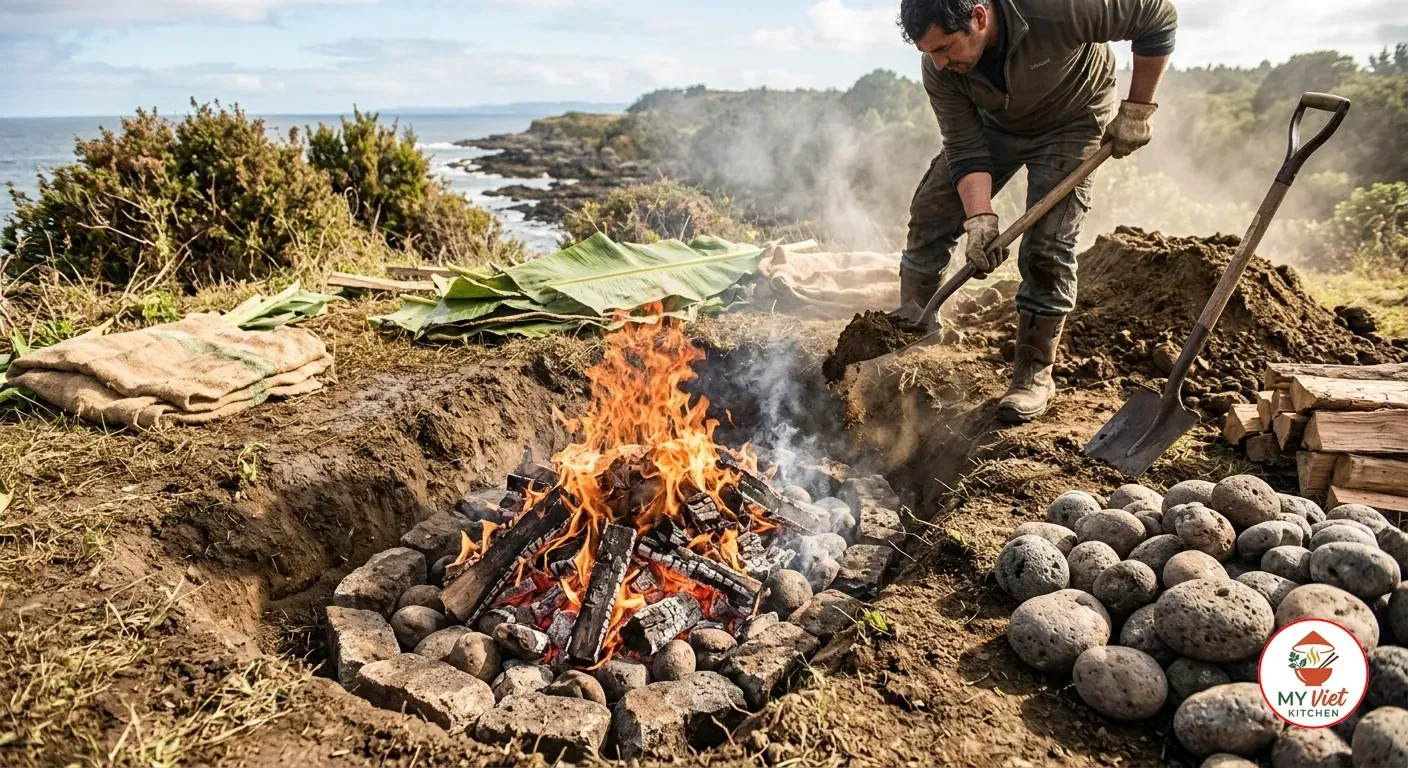
1 Choose a safe outdoor location away from trees and structures. Then dig a pit roughly 3 feet deep and 4 feet wide. The walls should slope slightly inward so the pit narrows at the bottom. Next, line the bottom with a single layer of dense stones, fitting them together as tightly as possible to create a continuous heat surface.
Build a large hardwood fire directly on top of the stones. Use oak, beech, or any dense hardwood that burns hot and long. Let the fire rage for 1.5 to 2 hours. During this time, the stones absorb an enormous amount of heat. You know the stones are ready when they glow red-orange and the wood has burned down to white ash. At that point, rake out all remaining embers and ash with a long-handled shovel. Because any lingering ash will create a bitter taste on the shellfish, take your time clearing the pit. The exposed stones should radiate visible waves of heat.
Step 2: Prepare the Milcao Dumplings
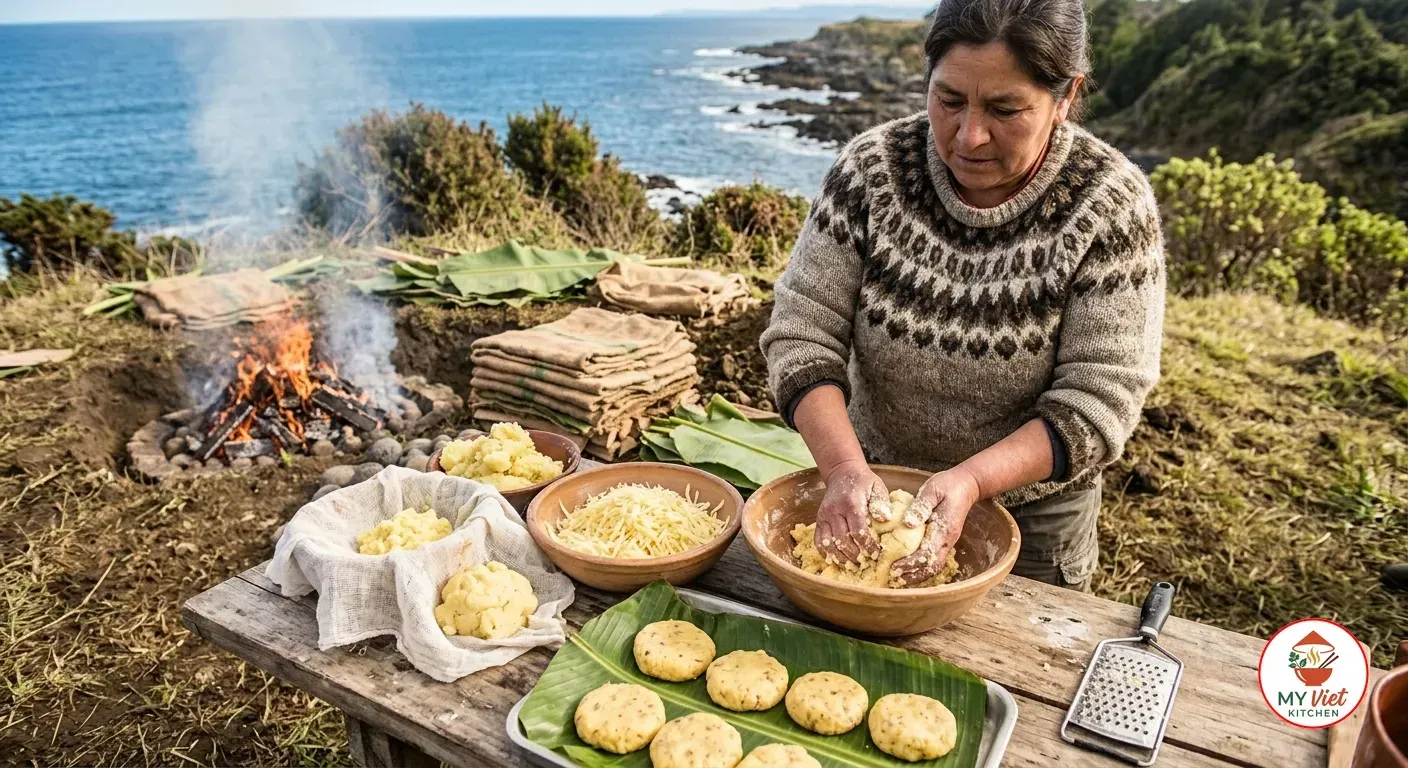
2 While the fire heats the stones, prepare the milcao dumplings. First, peel and finely grate 4 cups of raw potatoes. Then wrap the grated potato in cheesecloth or a clean kitchen towel and squeeze out as much liquid as possible. This step is critical because excess moisture makes the dumplings fall apart during cooking.
Transfer the squeezed potato shreds to a large bowl. Add 1 cup of warm mashed potatoes and 2 tablespoons of rendered pork lard. Season with salt. Knead the mixture with your hands until it forms a smooth, pliable dough. If the dough feels too dry, add a splash of the reserved potato water. Then shape the dough into thick patties about 3 inches across and 1 inch thick. Set them aside on a tray lined with banana leaves. Notably, milcao dumplings are the soul of curanto in Chiloe. They absorb the smoky steam and pork fat during cooking, turning into dense, savory cakes that taste like nothing else.
Step 3: Layer the Shellfish on the Hot Stones
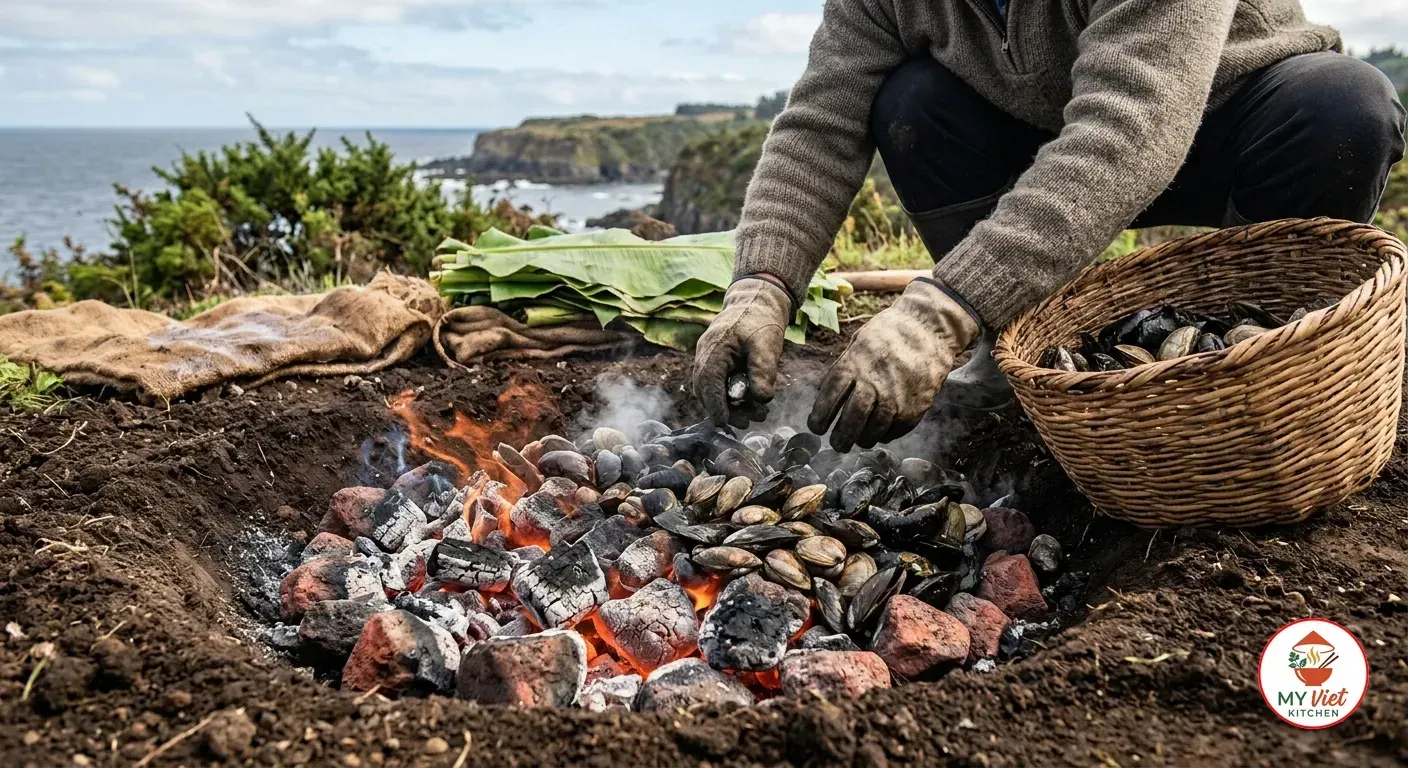
3 Work quickly once the stones are cleared. Place the scrubbed mussels and purged clams directly onto the hot stones in a single, even layer. Because shellfish need the most intense heat to open fast, they always go on the bottom. Within minutes, you will hear the shells begin to pop and hiss as the extreme heat forces them open.
Immediately cover the shellfish with a generous layer of banana leaves or large cabbage leaves. Overlap the leaves so no gaps remain. These leaves serve two purposes. First, they protect the shellfish from direct contact with the meat layer above. Second, they trap the briny juices released by the opening shells, creating a pool of concentrated seafood broth that steams upward and flavors everything. In Chiloe, cooks traditionally use nalca leaves, which are the giant leaves of the Chilean rhubarb plant. Banana leaves are the best substitute outside of Chile.
Step 4: Add the Meats, Potatoes, and Dumplings
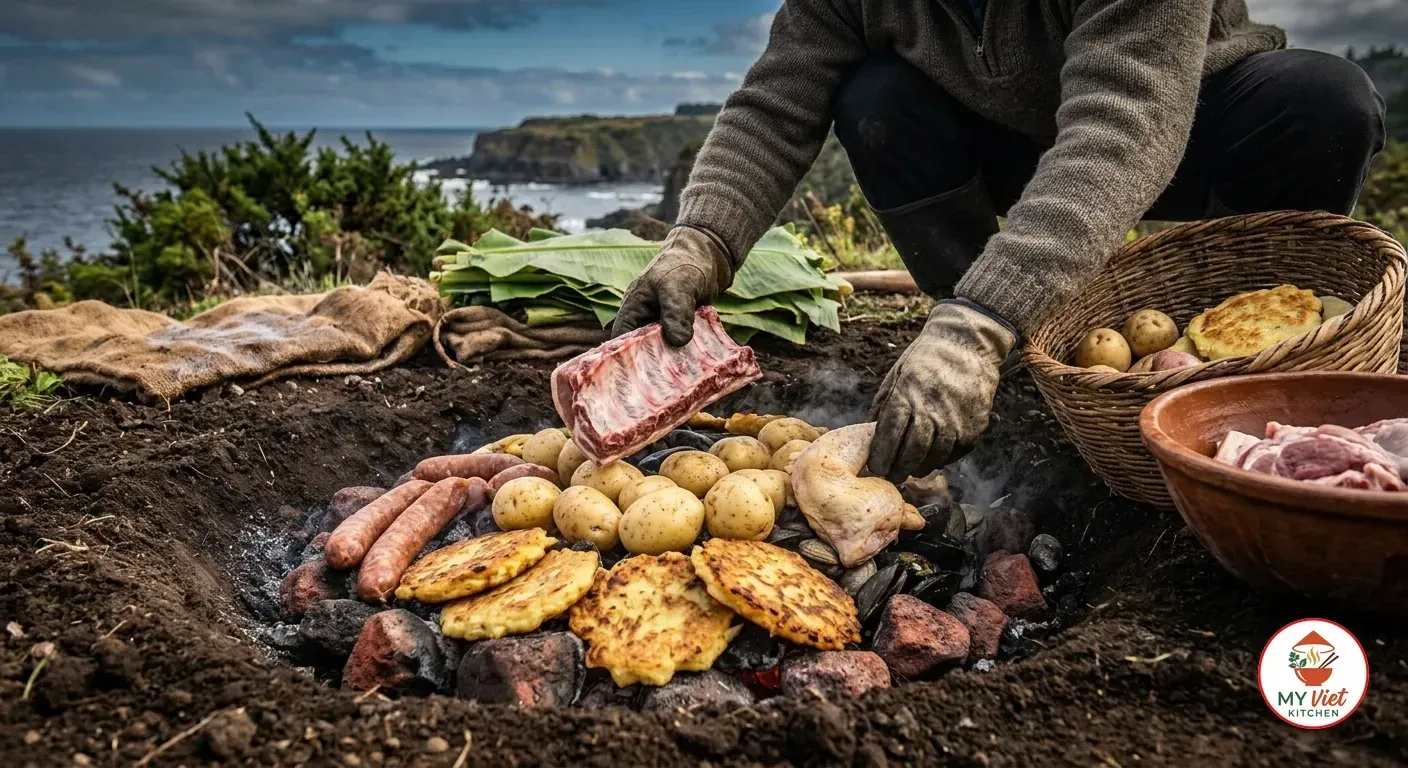
4 On top of the leaf layer, arrange the pork ribs, smoked sausages, and chicken quarters in an even layer. Because pork ribs need long, slow cooking to become tender, they benefit from the steady steam rising from the shellfish and stones below. Space the meats evenly so heat circulates around each piece.
Cover the meats with another layer of banana leaves. Then place the whole potatoes and milcao dumplings on top. Since potatoes and milcao sit furthest from the heat source, they cook in gentle steam rather than intense direct heat. As a result, they absorb flavor from the rising smoke without burning. Also, the fats dripping from the pork and sausages below travel upward as vapor and coat the dumplings. This layering logic is the genius of curanto. Each ingredient sits at the height that matches its ideal cooking temperature.
Step 5: Seal and Cook the Pit
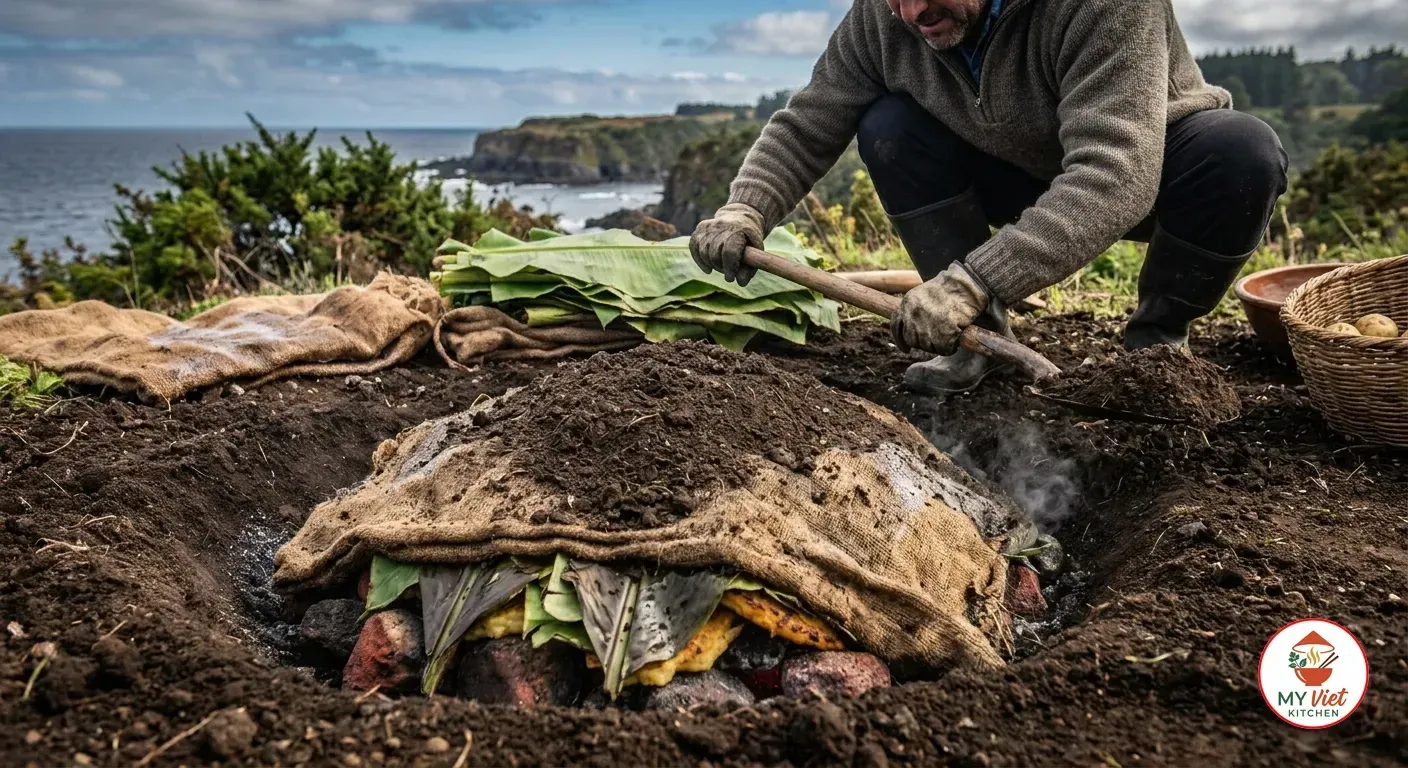
5 Cover the top layer of potatoes and dumplings with a final, thick covering of banana leaves. Overlap them generously. Then lay wet burlap sacks or damp towels over the leaves. Finally, shovel a mound of earth over the entire pit until no steam escapes from any gap. The seal must hold tight for the full cooking time.
Let the sealed curanto cook for 1.5 to 2 hours. During this time, the trapped steam circulates through every layer. Because the hot stones at the bottom generate constant heat, the temperature inside the pit stays remarkably even. You will notice small wisps of steam escaping from tiny gaps in the earth seal. After about 90 minutes, a rich aroma of smoked shellfish and roasted pork will drift from the pit. At that point, the curanto is likely ready. However, if you have any doubt, wait the full 2 hours. Patience rewards you with tender pork that falls off the bone.
Step 6: Unearth and Serve the Curanto
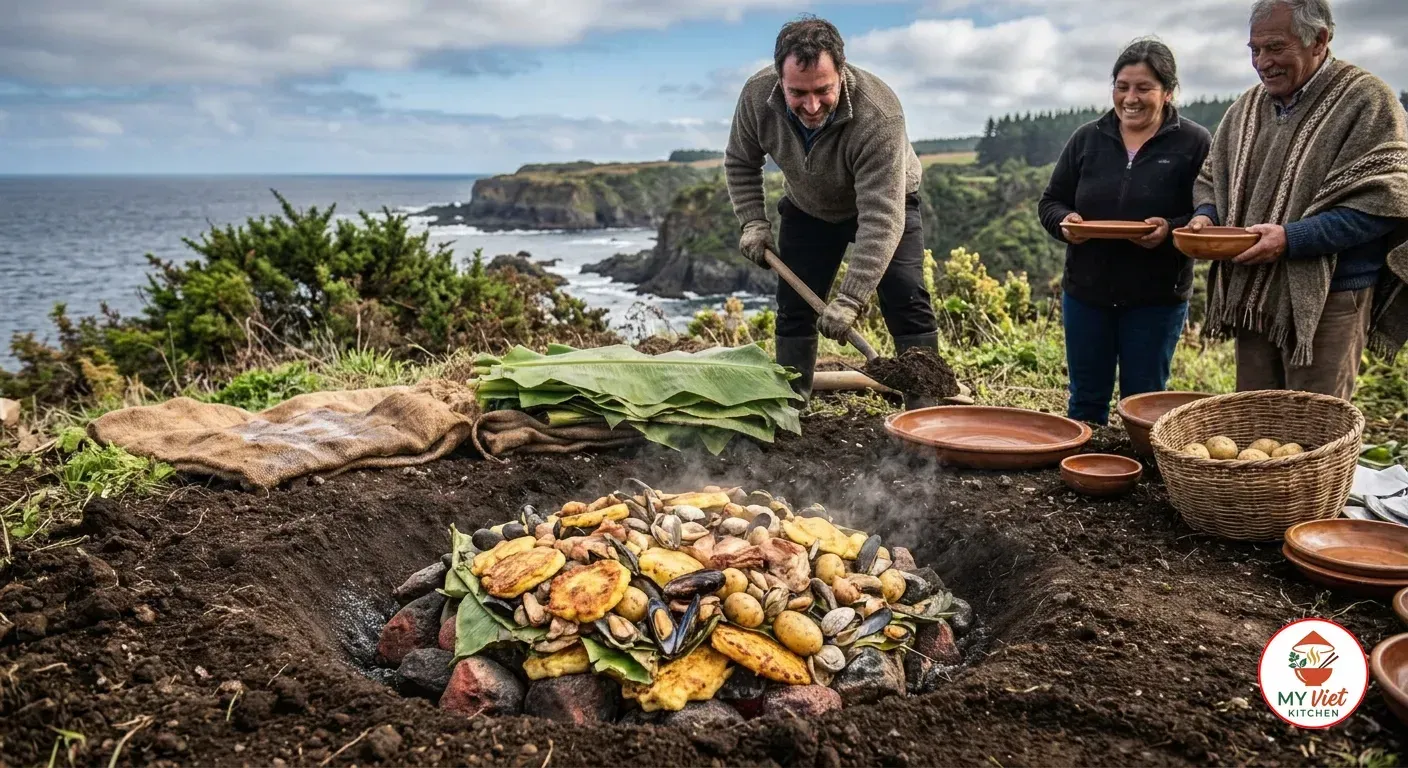
6 Gather your guests around the pit for the grand reveal. Carefully remove the earth with a shovel. Then peel back the burlap and leaf layers one by one. Steam will surge upward in a dramatic cloud, carrying the most incredible aroma of smoked shellfish, pork, and earth.
Lift out the food in reverse order. First remove the potatoes and milcao dumplings. Then the meats. Finally, uncover the shellfish at the bottom. Arrange everything on large serving platters. The mussels and clams should be wide open with plump, juicy flesh inside. The pork ribs should pull apart with gentle pressure. Serve immediately with pebre salsa, crusty bread, and Chilean white wine. In Chiloe, the moment of unearthing is celebrated with cheers and applause. Accordingly, this is not a meal you serve quietly. It deserves a crowd and a celebration.
Expert Tips for Perfect Curanto
Heat the Stones Thoroughly
The most common curanto failure is undercooking because the stones were not hot enough. Therefore, burn your fire for at least 1.5 hours and use dense hardwood that produces sustained heat. Softwoods like pine burn fast and leave the stones lukewarm. You want the stones to glow visibly red before you clear the fire. If they are merely warm to the touch, add more wood and wait another 30 minutes. Once the stones are ready, work fast during the layering phase. Every minute of delay means lost heat.
Seal the Pit Completely
A proper seal is essential for curanto to work. If steam escapes freely, the pit loses heat and the food dries out instead of steaming. Use multiple layers of overlapping leaves, then wet burlap, and finally a thick mound of earth. In particular, pay attention to the edges where the seal meets the ground. Pack earth firmly around the entire perimeter. During cooking, if you see large jets of steam escaping, add more earth to those spots immediately.
Respect the Layering Order
The layering order in curanto follows precise culinary logic. Shellfish go on the bottom because they need the highest heat and cook fastest. Meats go in the middle where moderate heat breaks down their collagen over 2 hours. Potatoes and dumplings sit on top where gentle steam cooks them without burning. If you reverse this order, the shellfish overcook into rubber while the pork stays raw. Consequently, always follow the traditional sequence from bottom to top.
Curanto vs. Other Earth Oven Traditions
Earth oven cooking appears in cultures worldwide. Each tradition uses hot stones and buried food, but the ingredients and techniques differ. The following comparison shows how Chilean curanto relates to its global counterparts.
| Earth Oven | Country | Primary Ingredients | Cooking Medium |
|---|---|---|---|
| Curanto | Chile | Shellfish, pork, potatoes, milcao dumplings | Hot stones, banana/nalca leaves, earth seal |
| Hangi | New Zealand | Lamb, chicken, kumara, pumpkin, cabbage | Volcanic stones, flax baskets, earth seal |
| Pachamanca | Peru | Lamb, pork, potatoes, fava beans, corn | Hot stones, herbs, earth seal |
| Kalua pig | Hawaii | Whole pig, banana leaves, sweet potatoes | Lava rocks, banana/ti leaves, earth seal |
| Barbacoa | Mexico | Beef cheeks, lamb, maguey leaves | Hot coals, maguey leaves, earth seal |
Serving Suggestions
Curanto is a complete feast that needs very few accompaniments. The combination of shellfish, pork, sausages, chicken, potatoes, and dumplings already provides an extraordinary range of flavors and textures. However, a few traditional additions round out the meal beautifully.
Traditional Accompaniments:
- Pebre salsa: Chile’s iconic fresh salsa made from cilantro, onion, tomato, aji peppers, and olive oil. The bright acidity and gentle heat of pebre cut through the richness of the smoked pork and add a vibrant freshness to the shellfish. Serve it in a large bowl for guests to spoon over their plates.
- Crusty bread: A simple rustic loaf or sopaipilla for soaking up the briny juices that collect on the serving platters. In Chiloe, guests use bread to absorb every drop of the precious shellfish broth that clings to the mussels and clams.
- Simple green salad: Dressed with olive oil and lemon juice. The crisp lettuce and acid provide a refreshing contrast to the heavy, smoky proteins. Keep the dressing minimal so it does not compete with the complex flavors of the curanto.
- Chapalele bread: Another traditional Chilote side, these boiled wheat and potato dumplings are heavier than milcao. They soak up juices beautifully and add another starchy element to the feast.
Beverage Pairings:
- Chilean Sauvignon Blanc: A crisp, mineral-driven white wine from the Casablanca Valley pairs brilliantly with the shellfish. The wine’s bright acidity matches the briny mussels and clams, while its herbal notes echo the leafy aromatics from the banana leaf wrapping.
- Chilean Carmenere: For those who prefer red wine, a medium-bodied Carmenere from the Colchagua Valley complements the smoked pork and sausages. Its soft tannins and dark fruit flavors stand up to the rich meats without overwhelming the delicate shellfish.
- Chicha de manzana (apple cider): The traditional drink of the Chiloe archipelago. This lightly fermented apple cider has gentle sweetness and fizz that refresh the palate between bites of heavy, smoky food. It is the most authentic beverage pairing for curanto.
Storage and Reheating
Refrigerator: Store leftover curanto in airtight containers for up to 3 days. Separate the shellfish from the meats and potatoes. The shellfish lose their texture fastest, so eat those first. The pork and sausages actually improve overnight as the smoky flavors deepen.
Freezer: Freeze the meats and milcao dumplings for up to 2 months. Wrap them tightly in plastic and then foil. However, avoid freezing the cooked shellfish. Frozen mussels and clams turn rubbery and lose their delicate ocean flavor when thawed and reheated.
Reheating: Steam is the best reheating method because it mimics the original cooking environment. Place leftovers in a steamer basket over boiling water for 10 to 15 minutes. Alternatively, wrap portions in foil and heat in a 325-degree Fahrenheit oven for 20 minutes. Avoid the microwave, which dries out the shellfish and makes the milcao gummy.
Common Mistakes to Avoid
1. Using the Wrong Stones
Porous or wet stones can crack or explode under extreme heat. Always use dense, non-porous stones like basalt or granite. Before placing stones in the pit, inspect each one for cracks or visible layers. If a stone has any fissures, discard it. The safety risk of exploding rocks is real and serious. Similarly, never pull stones directly from a riverbed and use them the same day. Let collected stones dry completely for at least a week before exposing them to fire.
2. Rushing the Stone-Heating Phase
Impatient cooks often start layering before the stones are hot enough. If the stones are only moderately warm, they will lose their heat within 30 minutes, and the pit will turn into a lukewarm holding area. As a result, shellfish stay closed, pork remains tough, and potatoes come out raw in the center. Give the fire a full 1.5 to 2 hours to do its work. There is no shortcut for this step.
3. Poor Seal Leading to Steam Loss
A leaky seal turns your curanto from a pressurized steam oven into an open-air warming tray. Without trapped steam, the food dries out and cooks unevenly. Use overlapping leaves with no gaps, then wet burlap, then a thick layer of packed earth. Check the seal during the first 10 minutes and patch any visible steam leaks. The earth layer should be at least 4 inches thick at its thinnest point.
Frequently Asked Questions
What is curanto and where does it come from?
Curanto is a traditional cooking method from the Chiloe archipelago in southern Chile. It involves cooking shellfish, meats, potatoes, and dumplings in a stone-lined earth pit. The technique dates back thousands of years to the indigenous Huilliche people. Today, it remains a cornerstone of Chilean cultural identity and appears at festivals, weddings, and family gatherings throughout the south of the country.
Can I make curanto without digging a pit?
Yes. The stovetop version, called curanto en olla, uses a large stockpot with the same layering order. Place shellfish on the bottom, cover with leaves, add meats and sausages, add more leaves, and top with potatoes and milcao. Cover tightly and cook over medium heat for about 1.5 hours. While it lacks the smoky earth flavor of the pit version, curanto en olla captures the essential layered cooking technique and is practical for home cooks without outdoor space.
What are milcao dumplings made of?
Milcao dumplings combine grated raw potatoes with cooked mashed potatoes and pork lard. The raw potato provides starch and chewiness. The mashed potato adds smoothness and binding. Pork lard gives richness and helps the dumplings hold together during the long steam cook. They are a defining element of authentic Chilote curanto and cannot be easily substituted.
How many people does a curanto serve?
A standard curanto pit feeds 8 to 12 people generously. The recipe in this guide serves 10. However, curanto scales easily. In Chiloe, community curanto pits can serve 50 or more people by digging a larger pit and multiplying the ingredients. The technique stays the same regardless of scale. Just ensure you have enough stones to cover the pit floor and enough leaves to create solid barriers between each layer.
What shellfish can I use for curanto?
Mussels and clams are the traditional shellfish for curanto. In Chile, cooks use cholga mussels and almejas clams. Outside of Chile, any fresh mussels and littleneck or Manila clams work perfectly. Some versions also add razor clams or picorocos (giant barnacles). The key requirement is that all shellfish must be alive and fresh. Discard any that do not close when tapped before cooking.
Variations and Adaptations
Curanto en Olla (Stovetop Version):
For cooks without access to outdoor space, curanto en olla replicates the dish in a large pot. Use a heavy-bottomed stockpot of at least 12 quarts. Layer ingredients in the same order, starting with shellfish on the bottom. Add a splash of white wine to generate initial steam. Cover tightly and cook over medium heat for 90 minutes. The result lacks the smoky depth of pit cooking but delivers the same layered flavors. This version is popular throughout urban Chile.
Seafood-Forward Curanto:
Some coastal communities in Chiloe prepare a seafood-heavy curanto that reduces the meat and increases the shellfish. In addition to mussels and clams, this version adds razor clams, sea urchins, and abalone. The pork is reduced to a few sausages for flavor. As a result, the finished dish tastes intensely of the ocean. This variation works well for smaller gatherings where shellfish is abundant and fresh.
Modern Restaurant Curanto:
Fine dining restaurants in Santiago and Valparaiso have adapted curanto into plated presentations. The chef cooks each element separately using modern techniques, then assembles them on the plate with a concentrated shellfish broth. While this approach allows precise control over each component, it sacrifices the communal, earthy spirit that defines traditional curanto. Nevertheless, restaurant versions have helped introduce curanto to international audiences who may never visit Chiloe.
The Cultural Significance of Curanto
Curanto is far more than a recipe in Chile. It is a living link to the country’s pre-Columbian past and a powerful symbol of community, generosity, and cultural memory. On the island of Chiloe, where curanto originated, the dish carries deep spiritual and social meaning. Preparing curanto requires collaboration. No single person can dig the pit, tend the fire, clean the shellfish, and prepare the dumplings alone. Therefore, the act of making curanto strengthens bonds between families, neighbors, and generations.
The Huilliche and Mapuche peoples built earth oven cooking as a smart reply to their harsh land. The cold, rainy coast gave them plenty of shellfish and potatoes. Hot stones gave heat that wind and rain could not kill. Over thousands of years, this method grew deep into the culture of the south. Spanish settlers later added pork and sausages, but the native core of curanto stayed the same. In 2011, Chile named curanto part of its living cultural heritage. This act showed how much the dish means to the whole nation. Today, the Festival Costumbrista de Chiloe celebrates curanto alongside other traditional practices every February, drawing thousands of visitors to witness this ancient feast firsthand.
Conclusion
Making curanto at home is a bold project that pays off with one of the best meals in South American cooking. The method is old yet simple. Dig a pit. Heat the stones until they glow. Layer shellfish, meats, potatoes, and milcao in the right order. Then seal it all under earth. Two hours later, you dig up a feast that tastes of fire, ocean, and tradition. Whether you build a full pit in your yard or use a large stockpot on the stove, curanto gives you a shared meal like no other.
If you enjoy exploring traditional cooking methods from around the world, try our guides to Argentine asado, Peruvian pachamanca, and Colombian ajiaco for more South American culinary adventures.