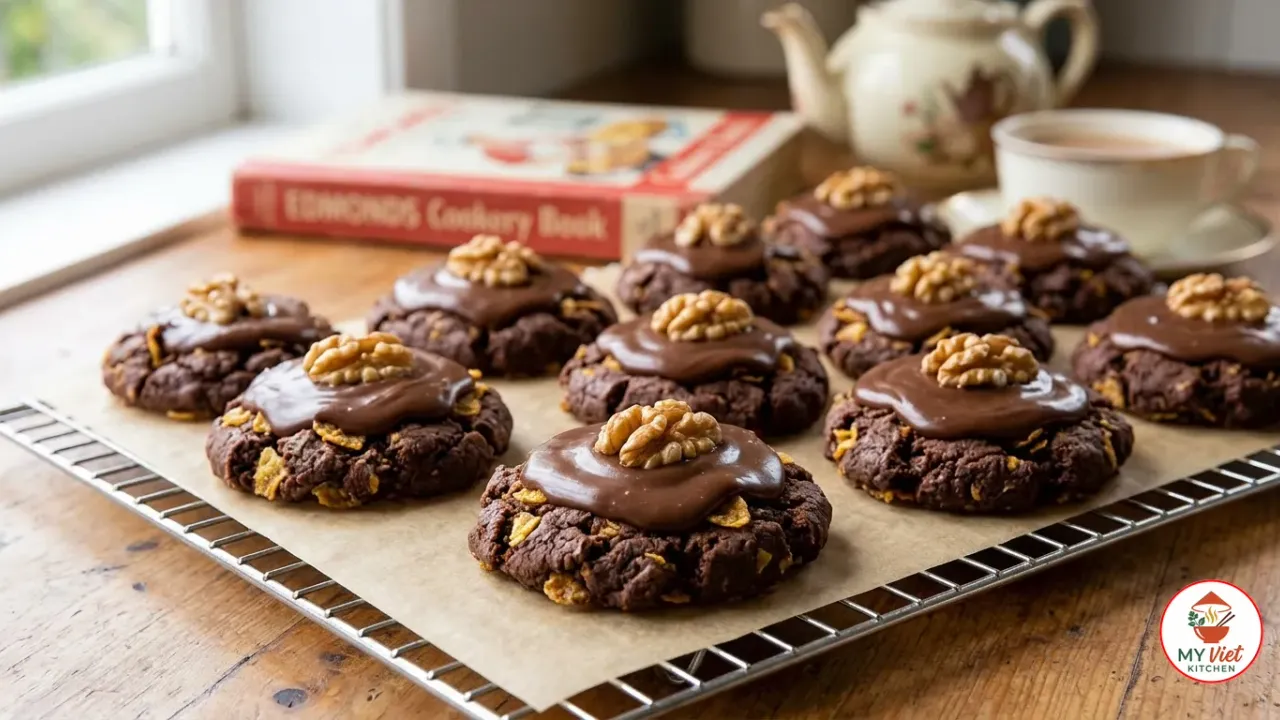
The Afghan biscuit is New Zealand’s most beloved homemade cookie, and for good reason. This dark, crumbly chocolate treat hides a satisfying crunch from crushed cornflakes beneath a glossy layer of chocolate icing, crowned with a single walnut half. Every Kiwi baker knows this recipe by heart, because it appears in the legendary Edmonds Cookery Book that sits on nearly every kitchen shelf in New Zealand. This step-by-step guide shows you exactly how to make these iconic cookies at home, whether you grew up baking them or are discovering this treasured Kiwi treat for the very first time.
Prep Time: 15 minutes | Cook Time: 15 minutes | Servings: 24 biscuits
Difficulty: Easy | Calories: ~145 per serving
What Makes the Afghan Biscuit Special?
The Afghan biscuit occupies a unique place in New Zealand’s baking culture. Unlike most cookies that rely on eggs, vanilla, or brown sugar for their identity, this iconic treat builds its character on just three defining elements: cocoa powder for deep chocolate flavor, crushed cornflakes for an unexpected crunch, and a thick chocolate icing cap finished with a walnut half. The result is a cookie that manages to be simultaneously rich, crispy, and satisfying without being overly sweet.
What truly sets this cookie apart from other chocolate treats is its texture. The dough contains no eggs, which means there is no binding agent pulling the crumb together into a chewy structure. Instead, butter alone holds the flour and cocoa in a tender, shortbread-like matrix. When you bite into a properly made one, it crumbles and shatters rather than bending. The cornflakes embedded throughout the dough add pockets of crispness that contrast with the soft, buttery crumb. On top, the chocolate icing sets to a smooth, fudgy layer that cracks slightly when you bite through it.
This combination of textures is what makes this cookie so addictive. Furthermore, the simplicity of the recipe means there is nowhere to hide mistakes. Every ingredient plays a critical role, and the technique, while straightforward, rewards attention to detail. A great batch should be dark as coffee, crumbly as shortbread, and studded with cornflake shards that catch the light.

The History Behind New Zealand’s Afghan Biscuit
The origins of the name remain one of New Zealand’s most enduring culinary mysteries. The most popular theory suggests that the dark, rough-textured appearance of these cookies reminded early bakers of the rugged Afghan landscape. Another theory links the name to the Afghan camel drivers who worked in Australia and New Zealand in the 19th century. Regardless of its etymology, the Afghan biscuit has been a fixture of Kiwi baking since at least the 1930s.
The recipe gained nationwide fame through the Edmonds Cookery Book, first published in 1908 and now in its revised editions. This cookbook is New Zealand’s bestselling book of any genre, and the recipe inside it is considered the definitive version. Generations of New Zealanders have learned to bake by making these cookies from the Edmonds recipe, often as their very first solo project in the kitchen. As a result, the biscuit carries a powerful sense of nostalgia.
Today, these treats appear at school bake sales, office morning teas, and family gatherings throughout New Zealand. In addition, they remain a staple at cafes across the country, typically displayed alongside other classic Kiwi bakes like lamingtons and Anzac biscuits. The Afghan biscuit has become so deeply embedded in New Zealand’s food identity that many Kiwis are surprised to learn the recipe is virtually unknown outside their country.
Choosing the Right Ingredients for Afghan Biscuits
Because this recipe uses so few ingredients, the quality of each one matters enormously. There are no spices, extracts, or fillings to mask a poor choice of cocoa or butter. Consequently, selecting the right components will determine whether your biscuits taste ordinary or outstanding.
- Butter (best quality you can find): Use real unsalted butter at room temperature. Butter is the primary fat and flavor carrier in this recipe, so margarine or butter blends will produce an inferior result. The butter must be soft enough to cream with sugar but not melted, as melted butter changes the texture entirely.
- Cocoa powder (Dutch-process preferred): Dutch-process cocoa has been treated with an alkalizing agent, which gives it a darker color, smoother flavor, and less acidity than natural cocoa. It produces a richer, more chocolatey result. However, natural cocoa works perfectly well and is more widely available.
- Cornflakes (plain, unsweetened): Use basic, unfrosted cornflakes. Sweetened or flavored varieties add unwanted sugar and may burn in the oven. Crush the cornflakes lightly by hand or in a bag so they break into rough pieces, not fine crumbs. The pieces should be clearly visible in the finished biscuit.
- Dark chocolate for icing: Choose a dark chocolate with 55 to 70 percent cocoa content. This provides enough bitterness to balance the sweet dough without overwhelming the delicate cocoa flavor of the biscuit itself. Avoid chocolate chips, because they contain stabilizers that prevent smooth melting.
Ingredients for Afghan Biscuits
Biscuit Dough:
- 200g (7 oz) butter, softened at room temperature
- 1/2 cup (100g) caster sugar
- 1 1/4 cups (155g) all-purpose flour
- 1/4 cup (25g) cocoa powder
- 2 cups cornflakes, lightly crushed
Chocolate Icing and Topping:
- 200g (7 oz) dark chocolate, roughly chopped
- 1 tablespoon butter
- 24 walnut halves
Pro tip: Crush the cornflakes inside a sealed plastic bag by pressing gently with your hands. You want irregular pieces roughly the size of your thumbnail, not uniform crumbs. These larger shards create the signature craggy texture that defines a great Afghan biscuit. If you crush them too finely, the biscuit loses its distinctive crunch and becomes just another chocolate cookie.
Step-by-Step Instructions
Step 1: Cream the Butter and Sugar
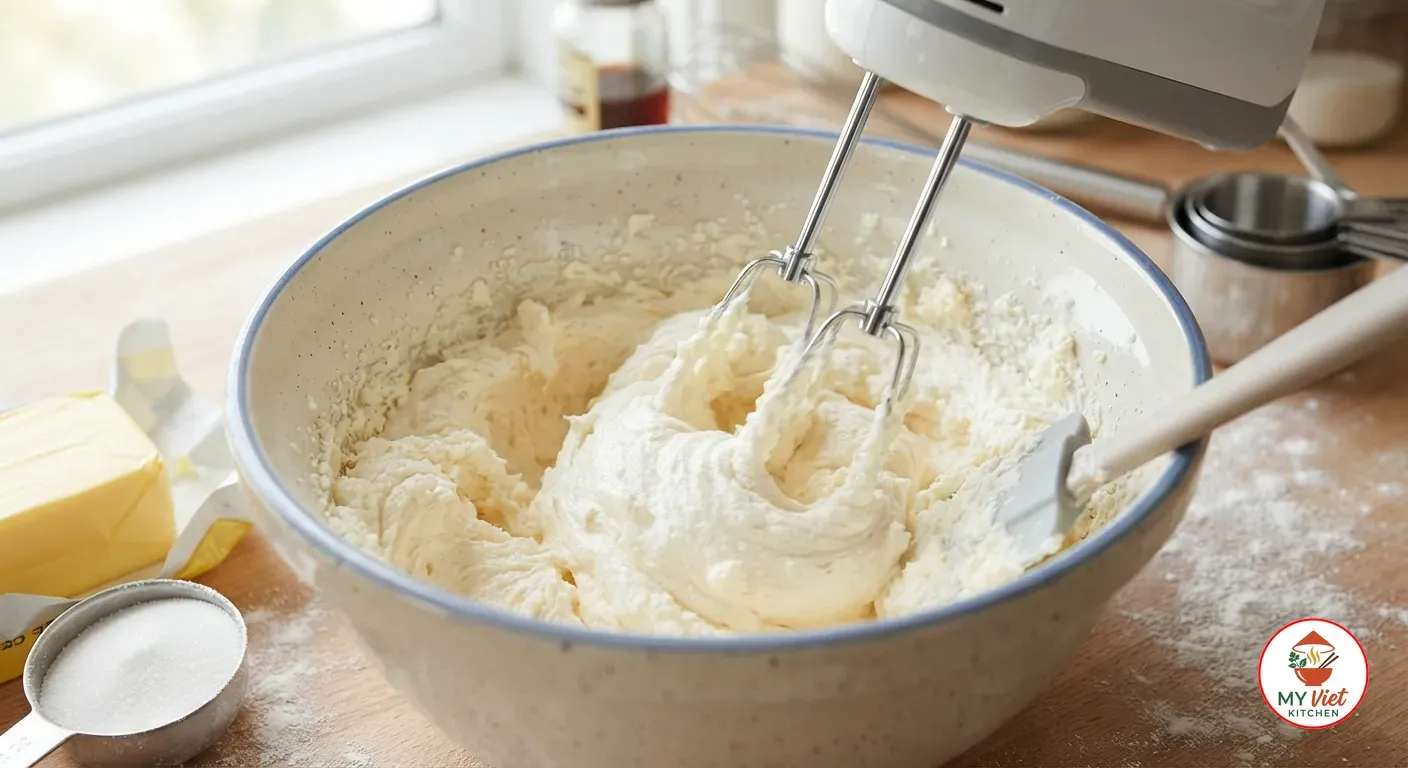
1 Preheat your oven to 350 degrees Fahrenheit (180 degrees Celsius). Line two large baking trays with parchment paper and set them aside. In a large mixing bowl, place the softened butter and caster sugar. Beat them together with an electric mixer on medium speed for about 3 minutes until the mixture becomes pale and fluffy. This step is important because the aeration created during creaming gives the biscuit its tender crumb. If you skip this step or rush it, the biscuits will be dense and heavy rather than light and crumbly.
Step 2: Sift and Combine Dry Ingredients
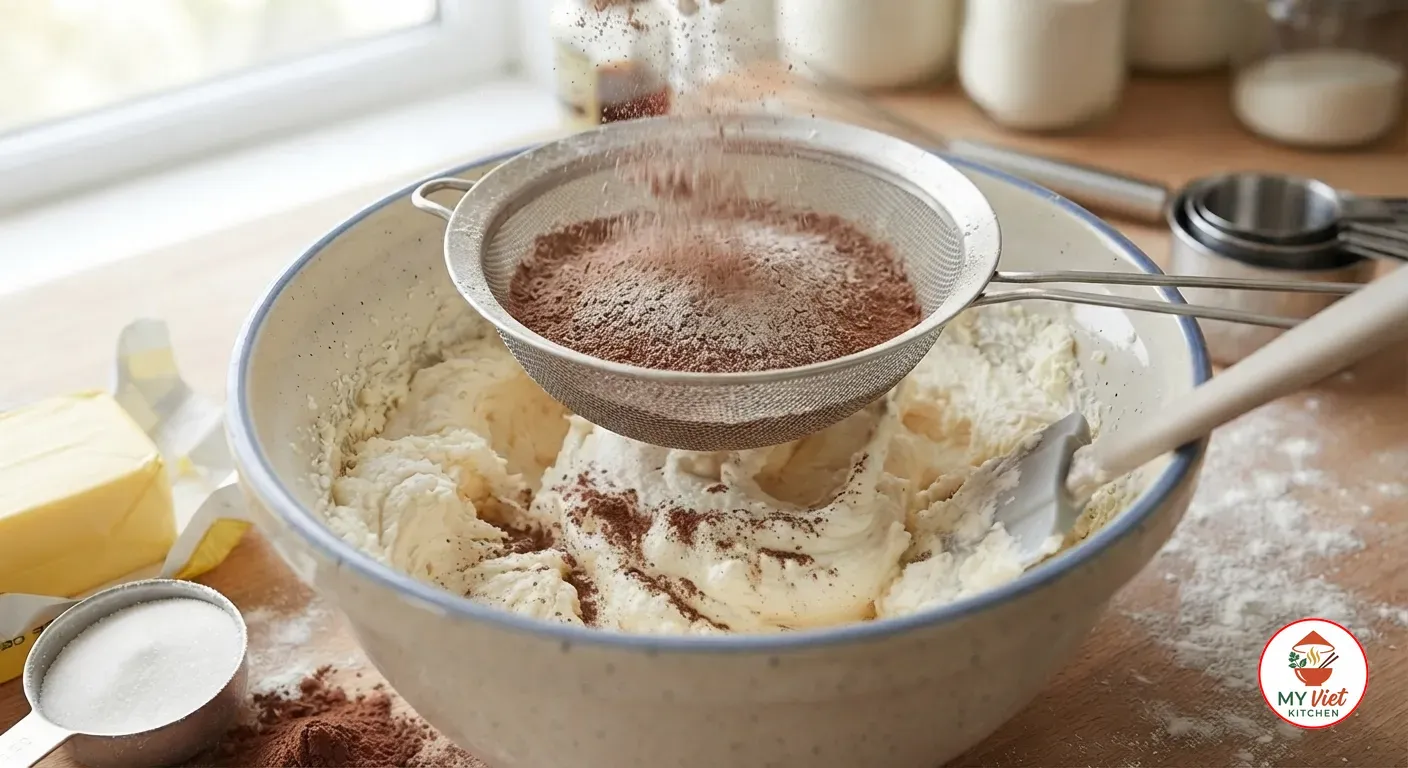
2 Sift the flour and cocoa powder together directly into the creamed butter mixture. Sifting is not optional here, because cocoa powder clumps easily, and those clumps will create bitter pockets in the finished biscuit. Using a wooden spoon or spatula, stir the dry ingredients into the butter until just combined. The dough will look dark, thick, and slightly crumbly at this stage. Do not overmix, as overworking the dough develops gluten strands that make the biscuit tough instead of tender. Stop mixing the moment you no longer see streaks of flour.
Step 3: Fold in the Cornflakes
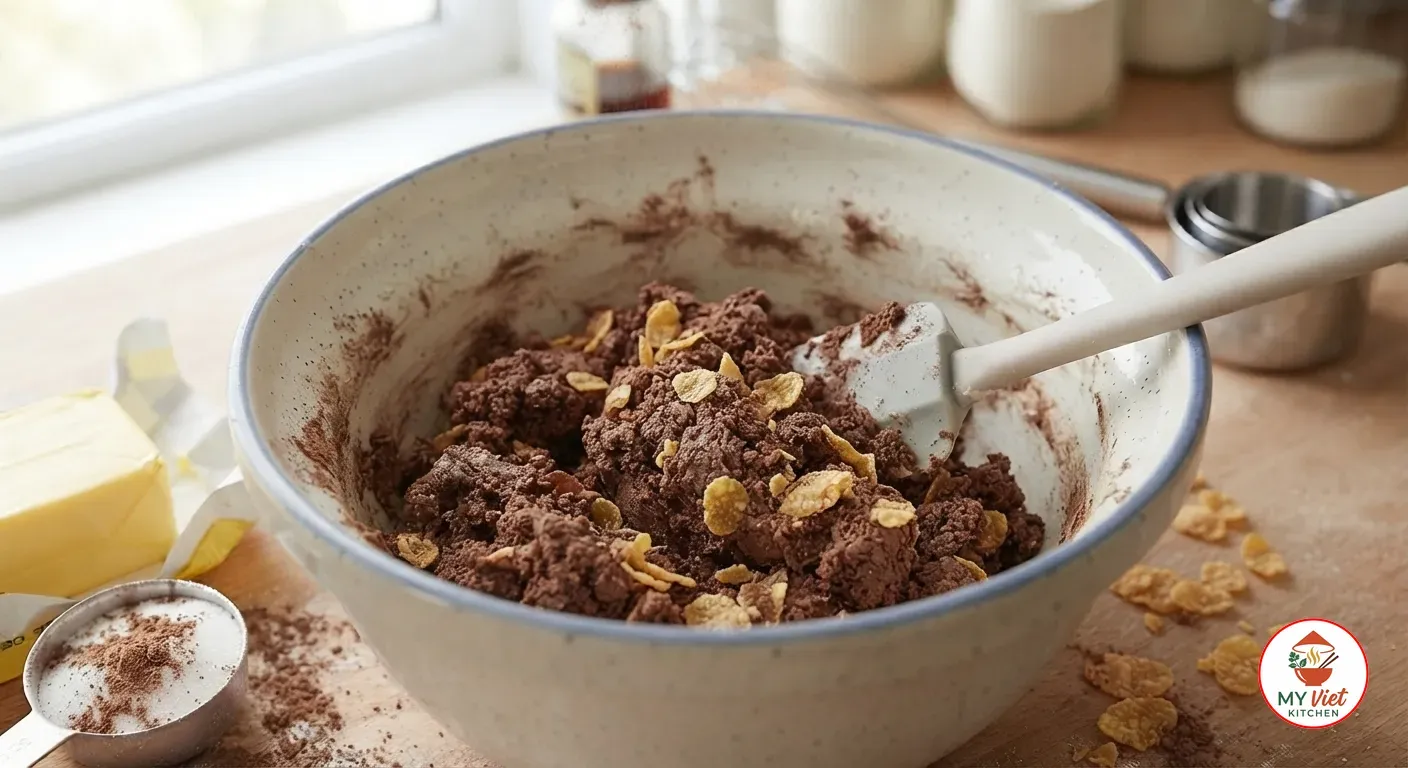
3 Add the lightly crushed cornflakes to the dough. Fold them in gently using a spatula, turning the bowl as you go. The goal is to distribute the cornflake pieces evenly throughout the dough without crushing them further. After about 10 to 12 folds, every section of dough should contain visible cornflake shards. This is the step that transforms an ordinary chocolate cookie into an Afghan biscuit. The cornflakes create the rough, craggy surface and the satisfying crunch that define this classic Kiwi treat.
Step 4: Shape and Bake
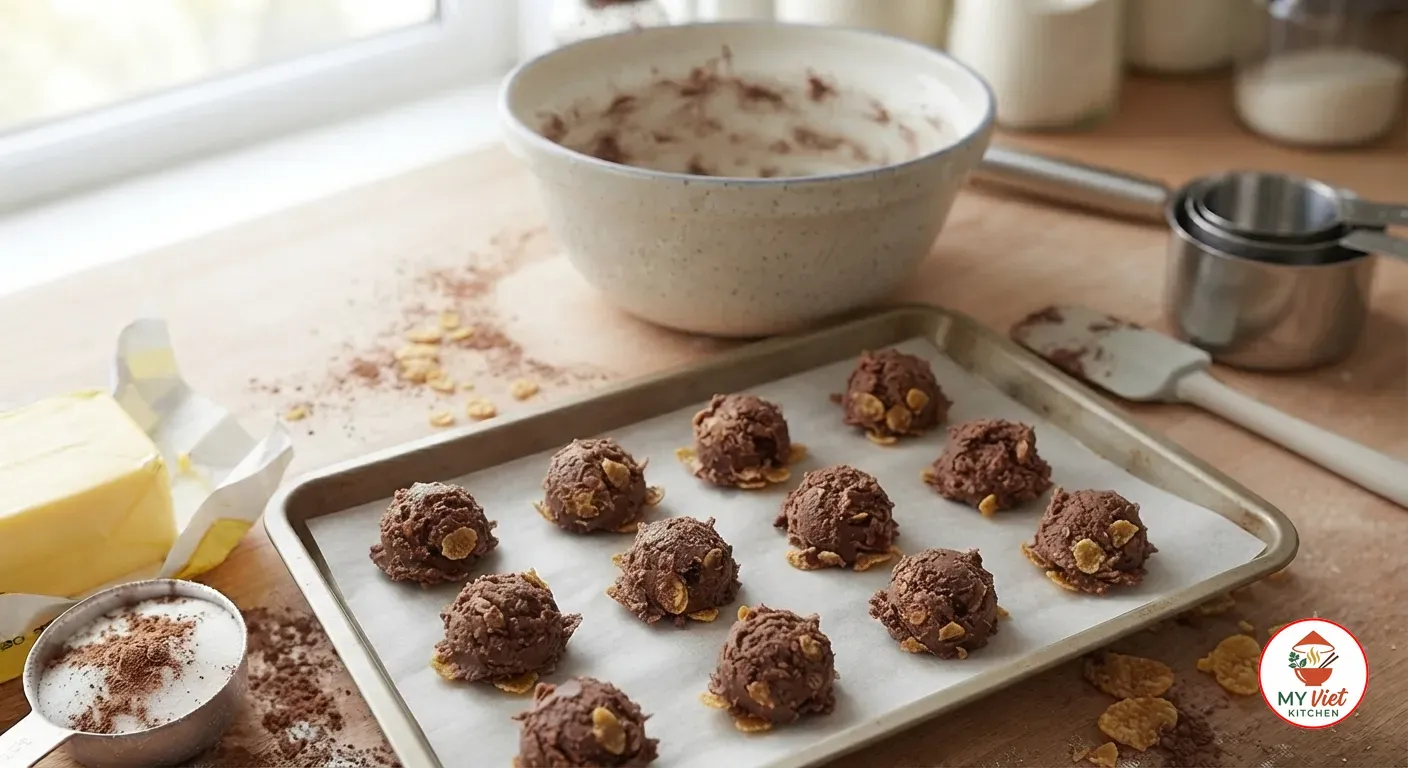
4 Scoop heaped tablespoons of dough and roll them into rough balls between your palms. Place each ball on the prepared baking tray, leaving about 3 centimeters of space between them. These biscuits do not spread much during baking, so they do not need as much room as a typical drop cookie. Flatten the top of each ball slightly with the back of a fork. Bake in the preheated oven for 12 to 15 minutes until the biscuits feel firm on the surface but still give slightly when pressed in the center.
Overbaking is the enemy of a good result. Because the dough is already dark from the cocoa, you cannot rely on color to judge doneness. Instead, touch the surface gently. A perfectly baked biscuit feels set and dry on top while remaining soft underneath. It will firm up considerably as it cools. Let the biscuits sit on the baking tray for 5 minutes before transferring them to a wire rack. Moving them too soon will cause them to break apart.
Step 5: Make the Chocolate Icing and Finish
5 Once the biscuits have cooled completely, prepare the chocolate icing. Chop the dark chocolate into small, even pieces and place them in a heatproof bowl with 1 tablespoon of butter. Set the bowl over a saucepan of gently simmering water, making sure the bottom of the bowl does not touch the water. Stir occasionally until the chocolate and butter melt together into a smooth, glossy icing. Alternatively, you can melt the chocolate in the microwave in 20-second intervals, stirring between each burst.
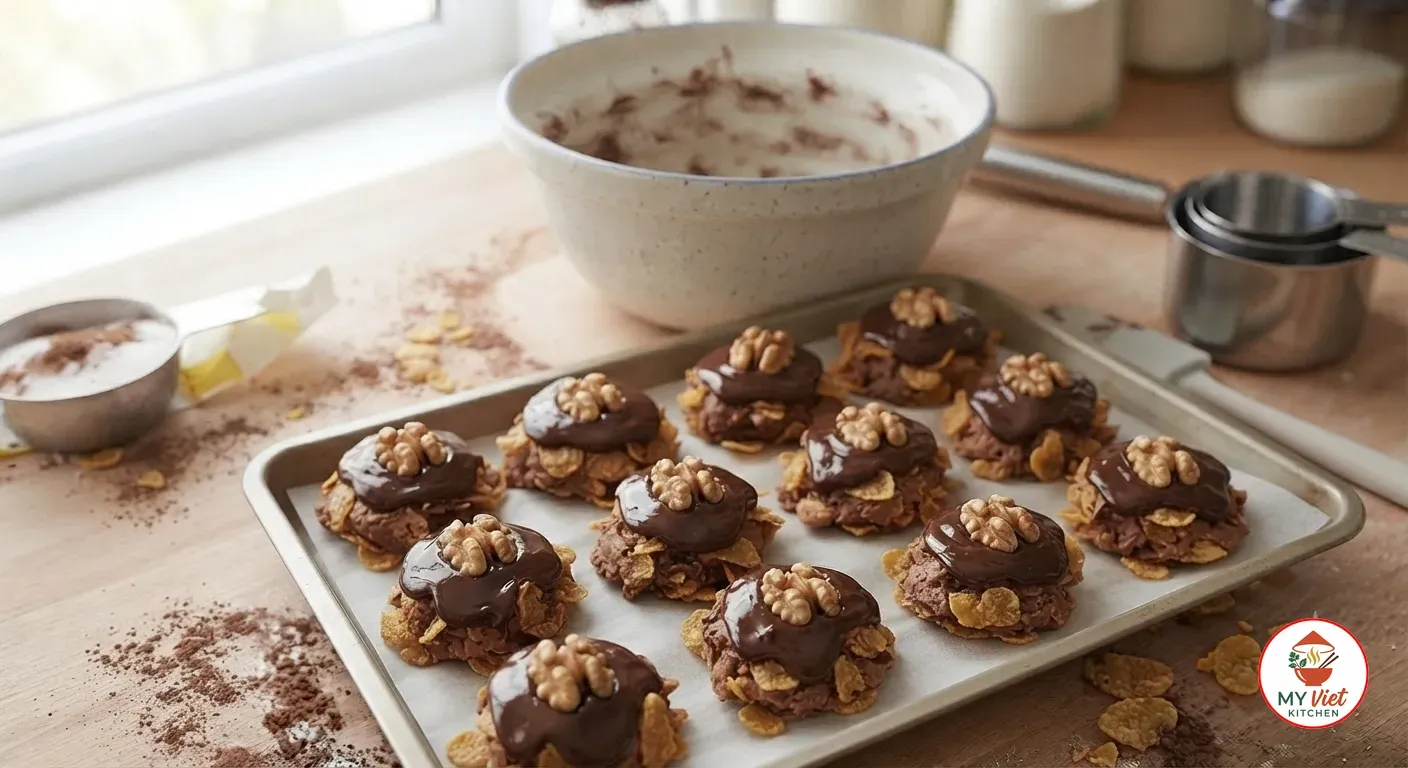
Spoon a generous dollop of the melted chocolate onto the top of each cooled biscuit. Use the back of the spoon to spread it to the edges. While the icing is still soft, press a walnut half firmly into the center of each biscuit. The walnut is not just decoration; its mild bitterness and crunch complement the sweet chocolate icing beautifully. Allow the icing to set completely at room temperature, which takes about 30 minutes. For faster setting, place the finished biscuits in the refrigerator for 10 minutes.
Expert Tips for Perfect Afghan Biscuits
Butter Temperature Matters
The butter for your dough must be softened but not melted. Softened butter at about 65 degrees Fahrenheit creams properly with sugar, trapping tiny air pockets that give the biscuit its light, crumbly texture. Melted butter, on the other hand, produces a flat, dense cookie because those air pockets never form. If your butter is too cold, it will not cream smoothly and the dough will have an uneven consistency. Take the butter out of the refrigerator 30 to 45 minutes before you start baking.
Do Not Crush the Cornflakes Too Fine
One of the most common mistakes when making these cookies is pulverizing the cornflakes into powder. Fine cornflake dust absorbs moisture from the butter and essentially disappears into the dough, robbing the biscuit of its signature crunch. You want rough, irregular pieces that you can see and feel in every bite. Crush them just enough that they incorporate into the dough without falling out. Think of the cornflakes as the textural backbone of the entire cookie.
Cool Completely Before Icing
Patience is essential at the icing stage. If you spread melted chocolate onto a warm biscuit, the heat causes the chocolate to become thin and runny. It slides off the surface and pools around the base instead of setting in a thick, glossy layer on top. Moreover, the warmth can cause the biscuit to crumble beneath the weight of the spoon. Wait until the biscuits are completely cool to the touch before applying the icing. The chocolate will set faster and look far more professional.
Afghan Biscuit vs. Other Chocolate Cookies
The Afghan biscuit is often compared to other chocolate cookies from around the world. However, its construction and texture place it in a category of its own. Here is how this Kiwi classic stacks up against similar treats.
| Feature | Afghan Biscuit (NZ) | Chocolate Chip Cookie (US) | Chocolate Crackle (AU) |
|---|---|---|---|
| Contains eggs | No | Yes | No |
| Baked | Yes | Yes | No (set in fridge) |
| Cereal included | Cornflakes | None | Rice puffs |
| Icing | Dark chocolate | None | None |
| Texture | Crumbly, crunchy | Chewy, soft | Crispy, light |
| Nut topping | Walnut half | None | None |
| Primary fat | Butter | Butter | Copha (coconut oil) |
As the table shows, this cookie stands apart thanks to its egg-free dough, cornflake crunch, and layered finish of chocolate icing and walnut. While a chocolate chip cookie aims for chewy indulgence, the Kiwi classic delivers a more refined, textured experience that balances rich cocoa flavor with satisfying crispness.
Serving Suggestions
In New Zealand, Afghan biscuits are traditionally served alongside a cup of tea or coffee during morning or afternoon tea. They are a staple at social gatherings, potlucks, and bake sales. The richness of the chocolate pairs exceptionally well with hot beverages, and the small, manageable size makes them ideal for sharing.
Best Ways to Enjoy Afghan Biscuits:
- With a flat white: New Zealand’s signature coffee drink is the perfect partner for one of these cookies. The creamy milk foam softens the rich chocolate flavor.
- On a biscuit platter: Arrange these alongside other classic Kiwi bakes like Anzac biscuits and ginger crunch for an impressive afternoon tea spread.
- As a dessert base: Crumble the biscuits over vanilla ice cream for a quick and indulgent sundae topping.
- With fresh fruit: Strawberries and raspberries provide a tart, fresh counterpoint to the sweet chocolate icing.
Beverage Pairings:
- English breakfast tea: The tannic, malty character of black tea cuts through the buttery richness of the biscuit.
- Hot chocolate: For a fully indulgent chocolate experience, pair the biscuit with a mug of proper hot cocoa.
- Pinot noir: A light New Zealand pinot noir from Martinborough or Central Otago complements the dark chocolate notes beautifully.
- Cold milk: Sometimes the simplest pairing is the best. Cold whole milk and a chocolate biscuit is a timeless combination.
Storage and Shelf Life
Room temperature: Store the biscuits in an airtight container at room temperature for up to 5 days. Place sheets of parchment paper between layers to prevent the chocolate icing from sticking. The biscuits maintain their crunch well for the first 2 to 3 days. After that, the cornflakes gradually soften as they absorb moisture from the butter.
Freezer: These cookies freeze well for up to 3 months. For best results, freeze them without the chocolate icing. Place the cooled, un-iced biscuits in a single layer on a baking tray and freeze until solid. Then transfer them to a freezer-safe bag or container. When ready to serve, thaw at room temperature for 30 minutes and apply fresh chocolate icing and walnut halves.
Icing note: If you freeze iced biscuits, the chocolate may develop a whitish bloom as it thaws. This bloom is harmless and does not affect the flavor, but it diminishes the visual appeal. That is why icing them fresh after thawing produces the best presentation.
Common Mistakes to Avoid
1. Overbaking the Biscuits
Because the dough is already dark brown from the cocoa, visual cues are unreliable when judging whether these cookies are done. Many bakers leave them in the oven too long, producing dry, hard cookies that crumble to dust. The correct approach is to bake until the surface feels firm but the center still gives slightly when pressed. The biscuits continue to firm up as they cool on the tray. When in doubt, pull them out a minute early rather than a minute late.
2. Using Melted Butter
Melting the butter instead of softening it is a shortcut that ruins the texture of the biscuit. Melted butter does not cream with sugar because there is no solid structure to trap air bubbles. Without those air pockets, the biscuit bakes flat and dense. The texture becomes greasy and heavy rather than light and crumbly. Always start with room-temperature butter and cream it properly for the best results.
3. Skipping the Cooling Step
These cookies are extremely fragile when they first come out of the oven. Moving them immediately to a wire rack almost always results in broken cookies. The 5-minute rest on the baking tray allows the butter in the dough to start solidifying, which gives the biscuit enough structural integrity to be lifted without cracking. Similarly, icing a warm biscuit causes runny, messy results. Patience at both cooling stages pays dividends in both appearance and texture.
Frequently Asked Questions
Why are they called Afghan biscuits?
The exact origin of the name is uncertain and debated among food historians. The most widely accepted theory is that the dark, rough, craggy appearance of these cookies was thought to resemble the rugged terrain of Afghanistan. References to this cookie have appeared in New Zealand cookbooks since at least the 1930s, and the Edmonds Cookery Book helped cement it in the national vocabulary. Regardless of how the name came about, the Afghan biscuit is now inseparable from New Zealand’s baking identity.
Can I use milk chocolate instead of dark chocolate for the icing?
You can absolutely use milk chocolate, and many Kiwi bakers do. However, dark chocolate is the traditional choice because its slight bitterness provides contrast against the sweet, buttery dough. Milk chocolate creates a sweeter overall flavor that some people prefer. As a compromise, try a semi-sweet chocolate with around 55 percent cocoa content. This gives you a balance between the richness of dark chocolate and the approachability of milk chocolate.
What can I use instead of cornflakes?
Cornflakes are essential to the authentic experience, but if you need an alternative, rice puffs or bran flakes are the best substitutes. Rice puffs create a lighter, airier crunch, while bran flakes add a nuttier depth. Avoid heavily sweetened cereals or granola, as they will make the biscuits overly sweet and may caramelize and burn during baking. Keep in mind that any substitution will change the character of the cookie, so use plain cornflakes whenever possible.
Are Afghan biscuits gluten-free?
The traditional recipe is not gluten-free because they contain both all-purpose flour and cornflakes made from corn and malt extract (which contains gluten). To make a gluten-free version, substitute the flour with a gluten-free baking blend and use certified gluten-free cornflakes or rice puffs. The texture will differ slightly, but the flavor remains very close to the original. Be sure to also check that your cocoa powder is processed in a gluten-free facility.
How long do Afghan biscuits last?
When stored in an airtight container at room temperature, these cookies remain fresh for up to 5 days. The cornflakes may soften slightly after the second day as they absorb moisture from the butter, but the overall flavor stays excellent. For longer storage, freeze the biscuits without icing for up to 3 months and add fresh chocolate topping after thawing. This approach preserves both the crunch and the glossy appearance of the icing.
Variations and Adaptations
White Chocolate Afghan Biscuit:
For a modern twist on the classic recipe, replace the dark chocolate icing with melted white chocolate. The contrast between the dark cocoa dough and the pale white icing creates a striking visual effect. Use a good-quality white chocolate with high cocoa butter content for the smoothest melting. Top with a macadamia nut instead of a walnut to complement the sweeter, creamier icing.
Peanut Butter Afghan Biscuit:
Add 2 tablespoons of smooth peanut butter to the creamed butter and sugar. The peanut butter adds a salty, nutty dimension that deepens the chocolate flavor considerably. Keep the dark chocolate icing and walnut topping as usual. The peanut butter also helps bind the dough slightly, making these a little less crumbly than the traditional version.
Espresso Afghan Biscuit:
Dissolve 1 tablespoon of instant espresso powder into the softened butter before creaming. The coffee intensifies the chocolate flavor without making the biscuit taste like a mocha. This variation is particularly popular among adults who find the original slightly too sweet. The espresso adds a sophisticated edge that pairs beautifully with an afternoon long black.
Vegan Afghan Biscuit:
Since the traditional recipe contains no eggs, making a vegan version is simpler than you might expect. Substitute the butter with a high-quality vegan butter block and use dairy-free dark chocolate for the icing. Check that your cornflakes are vegan, as some brands contain vitamin D3 derived from lanolin. Top with a walnut half as usual. The result is remarkably close to the original, and most people cannot tell the difference.
The Cultural Significance of the Afghan Biscuit
The Afghan biscuit holds a place in New Zealand’s food culture that extends far beyond its simple ingredients. It is a touchstone of Kiwi identity, a recipe that connects generations through shared memories of school bake sales, family kitchens, and Saturday afternoon baking sessions. In a country where baking is considered a fundamental domestic skill, the Afghan biscuit often serves as the first recipe a child learns to make independently. Its forgiving dough and simple technique make it ideal for beginners, while its distinctive flavor keeps experienced bakers coming back to it year after year.
The Edmonds Cookery Book, which features the definitive recipe, has sold more copies in New Zealand than any other book. It is traditionally given as a gift to young people leaving home for the first time, and this page is often the most stained and dog-eared in the entire volume. This cultural significance means the recipe has remained virtually unchanged for decades. While modern bakers experiment with variations, the classic combination of cocoa, cornflakes, chocolate icing, and walnut remains the standard against which all versions are measured.
For visitors to New Zealand, tasting one of these cookies offers genuine insight into Kiwi food culture. It represents the country’s preference for honest, unpretentious baking that prioritizes flavor and texture over elaborate decoration. If you enjoy exploring baked goods from different cultures, you might also appreciate our recipes for Hong Kong egg tarts and Portuguese pastel de nata, two other beloved regional pastries with fascinating histories.
Conclusion
Making Afghan biscuits at home is one of the simplest and most rewarding baking projects you can take on. With just five ingredients for the dough and a quick chocolate icing to finish, the entire process takes under 30 minutes of active work. The key to success lies in the details: cream the butter thoroughly, keep the cornflakes chunky, bake until just set, and wait for complete cooling before you ice. Follow these principles, and your cookies will have that perfect balance of crumbly, crunchy, and chocolatey that has made them a Kiwi icon.
Whether you are a New Zealander recreating a childhood favorite or a curious baker discovering this Kiwi classic for the first time, this recipe delivers an experience unlike any other cookie. The combination of buttery shortbread-like crumb, cornflake crunch, glossy dark chocolate, and earthy walnut is unique in the world of baking. Once you taste your first homemade batch, you will understand why this humble biscuit has earned its place as New Zealand’s most treasured cookie. Explore more of our Oceanian dishes for more baking inspiration from this part of the world.