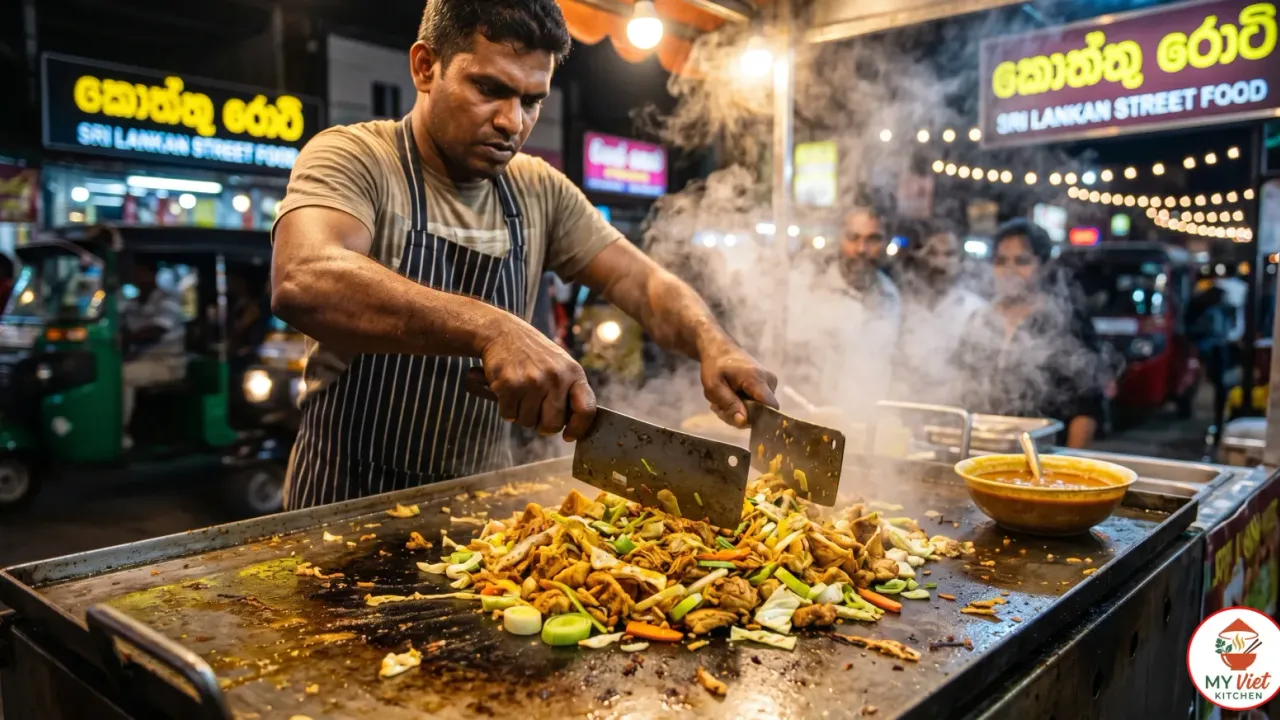
Kottu roti is Sri Lanka’s most famous street food, a sizzling, rhythmic stir-fry of chopped flatbread, vegetables, eggs, and spices that fills the air with an irresistible aroma. The iconic clanging of metal cleavers on a flat iron griddle is the soundtrack of Sri Lankan nights, drawing hungry crowds to street stalls across the island. This recipe brings that electrifying street food experience right to your home kitchen, so you can enjoy authentic kottu roti any time you crave it.
Prep Time: 20 minutes | Cook Time: 15 minutes | Servings: 4
Difficulty: Easy | Calories: ~380 per serving
What Makes Kottu Roti Special?
Kottu roti is more than a dish. It is a performance. In Sri Lanka, kottu roti vendors stand behind large flat griddles, wielding two heavy metal cleavers that they use to chop and mix the ingredients in a hypnotic rhythm. The clanging sound carries through the streets, signaling that fresh kottu roti is being made. Each vendor has their own unique rhythm, and the faster the chopping, the more skilled the cook.
The dish itself is essentially a stir-fry built on chopped godamba roti, a thin, stretchy flatbread similar to Malaysian roti canai. The roti strips are combined with vegetables, eggs, and protein, then moistened with curry sauce. Because the roti pieces are irregular, each bite offers a different texture. Some pieces are crispy, others are soft and sauce-soaked, and some are perfectly chewy.
What makes kottu roti truly brilliant is how it transforms simple, everyday ingredients into something extraordinary. Leftover roti, yesterday’s curry, and whatever vegetables are on hand come together in a dish that is far greater than the sum of its parts. It is resourceful, flavorful, and endlessly satisfying.

Choosing the Right Roti
The flatbread is the foundation of kottu roti, so choosing the right one matters. Here are your best options.
- Godamba roti (best choice): A thin, slightly elastic Sri Lankan flatbread that holds up perfectly when chopped and stir-fried. It tears into irregular pieces that create varied textures.
- Paratha or roti canai: Flaky, layered flatbreads that work as excellent substitutes. Their buttery layers add extra richness to the dish.
- Flour tortillas: An accessible alternative that produces good results. Use the thicker variety for better texture when chopping.
Ingredients for Kottu Roti
Main Ingredients:
- 4 godamba roti or paratha (store-bought or homemade)
- 200g boneless chicken, cut into small pieces
- 2 eggs, beaten
- 1/2 cup leftover curry sauce or gravy
- 2 tablespoons soy sauce
- 2 tablespoons vegetable oil
- Salt and pepper to taste
Vegetables and Aromatics:
- 1 large leek or 3 spring onions, sliced
- 1 medium carrot, finely diced
- 1/2 cup cabbage, finely shredded
- 3 green chilies, sliced
- 10 curry leaves
- 2 garlic cloves, minced
Spices:
- 1 teaspoon curry powder
- 1/2 teaspoon chili flakes
- 1/2 teaspoon turmeric powder
Pro tip: Use day-old roti for the best results. Fresh roti is too soft and will become mushy when stir-fried. If using freshly made roti, let them cool completely and dry out slightly before chopping. You can also pop them in the oven at low heat for a few minutes.
Step-by-Step Instructions
Step 1: Prepare the Roti
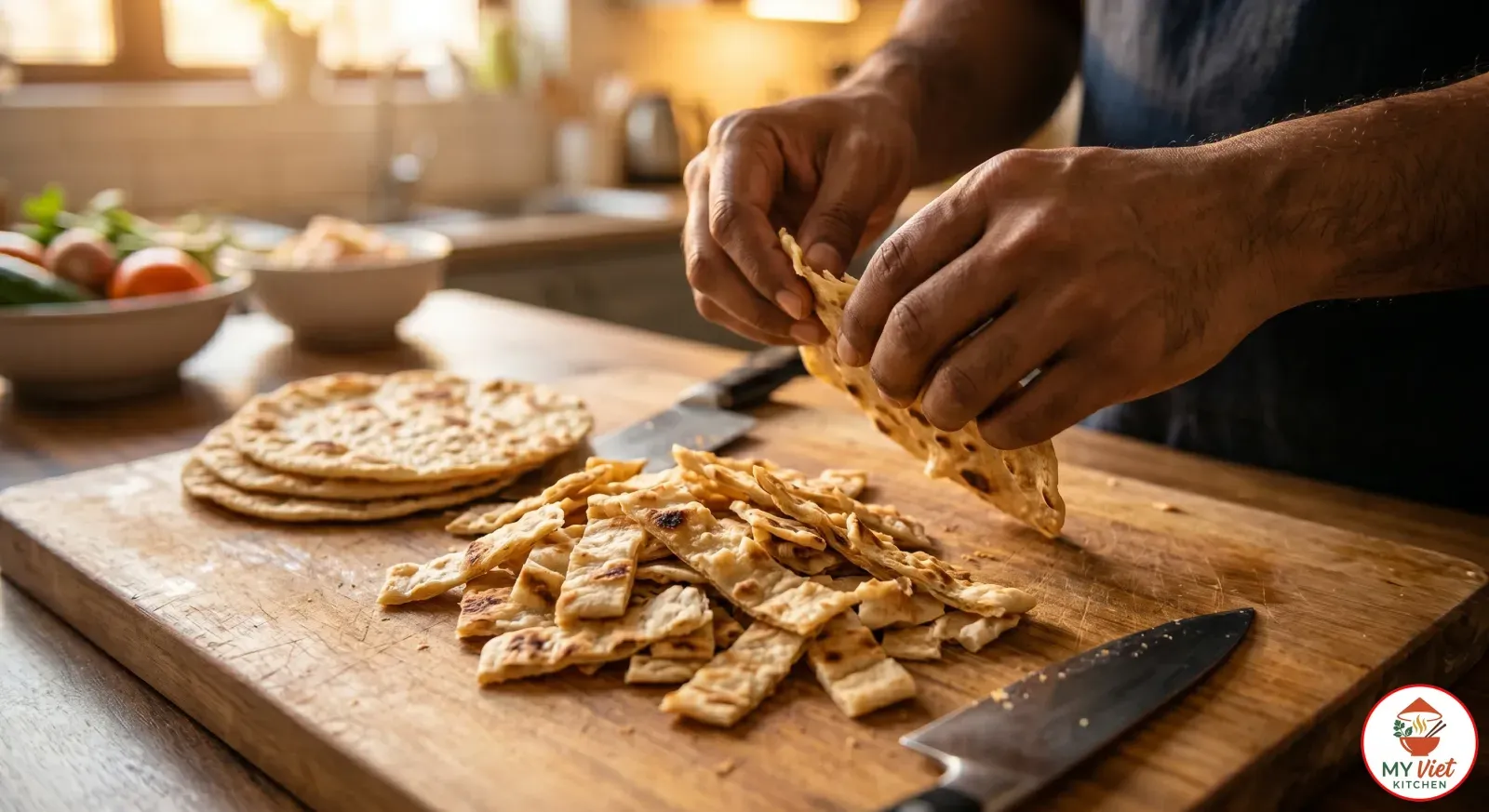
1If using fresh roti, cook them on a hot griddle first and let them cool completely. Once cool, tear or cut the roti into small, irregular strips about 1 inch wide and 2 to 3 inches long. The pieces do not need to be uniform because that variety in size is part of what gives kottu roti its character. Larger pieces stay chewy while smaller ones get crispy. Set the torn roti aside on a plate.
Step 2: Cook the Chicken
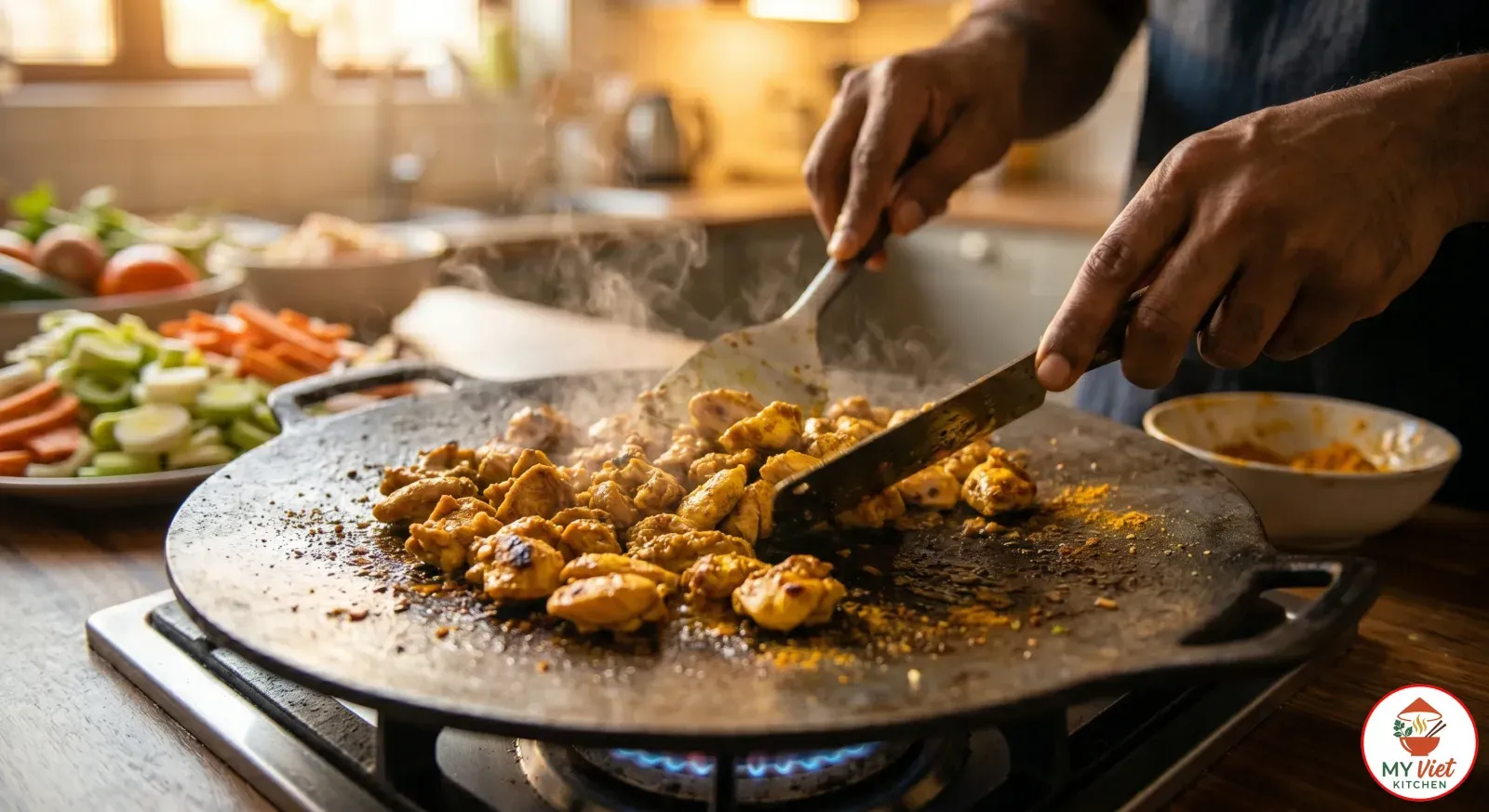
2Heat the vegetable oil in a large flat pan, griddle, or wok over high heat. Add the chicken pieces along with the curry powder, turmeric, and a pinch of salt. Stir-fry vigorously for 4 to 5 minutes until the chicken is cooked through and has some golden spots. High heat is important here because it creates a light char that adds smoky depth. Remove the chicken and set it aside while you cook the vegetables.
Step 3: Stir-Fry the Vegetables
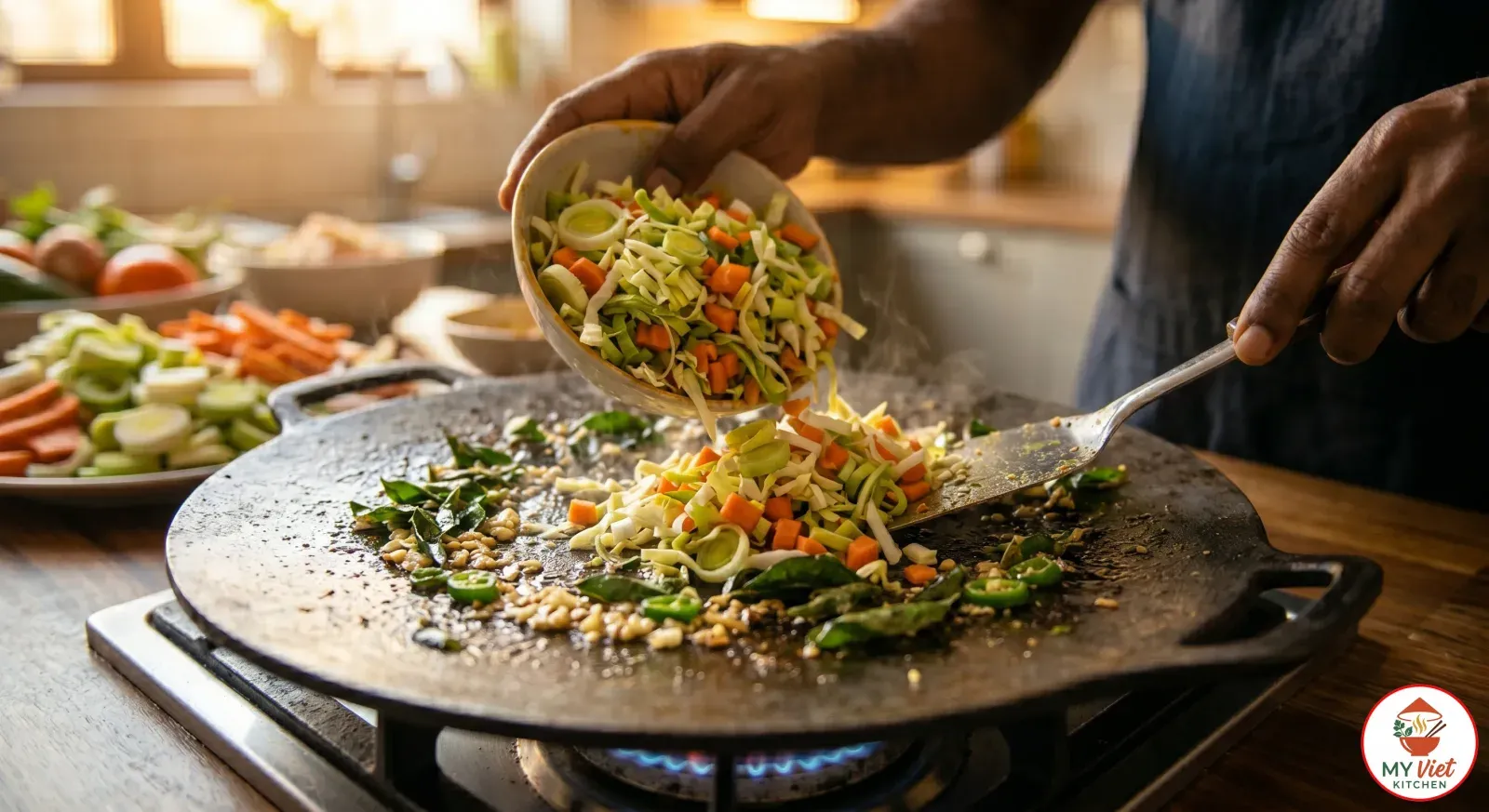
3Add a splash more oil to the same pan. Toss in the minced garlic, sliced green chilies, and curry leaves. Stir for 30 seconds until fragrant and the curry leaves begin to crackle. Then add the sliced leek, diced carrot, and shredded cabbage. Keep the heat high and stir-fry for 2 to 3 minutes. The vegetables should be slightly softened but still have some crunch. Overcooking them makes the final dish soggy.
Step 4: Add the Roti and Chop
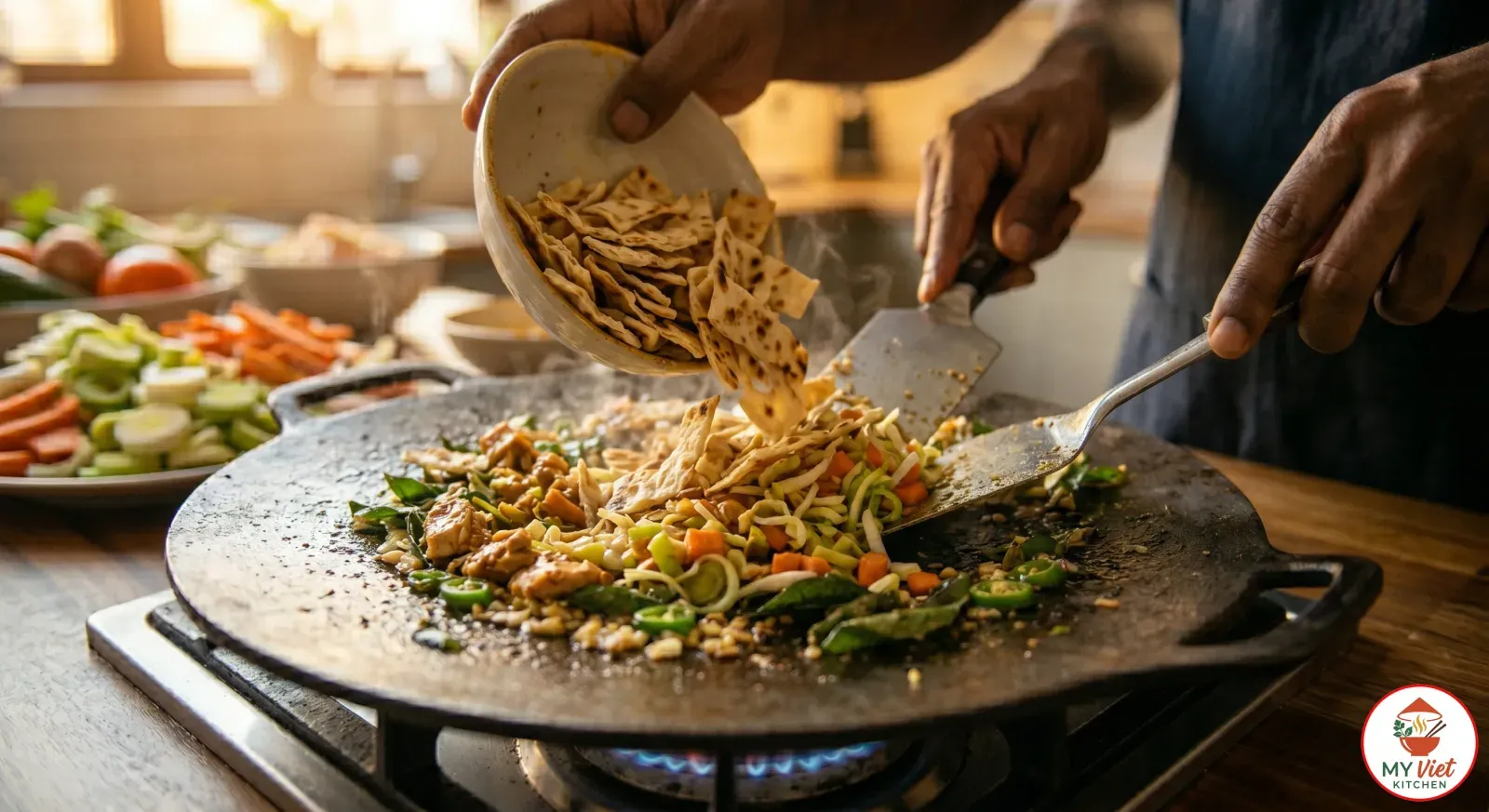
4Add the torn roti strips to the pan along with the cooked chicken. Now comes the signature move: using two metal spatulas, heavy spoons, or the flat side of two knives, chop and toss the mixture vigorously on the griddle. This chopping breaks the roti into smaller, uneven pieces while mixing everything together. Work quickly and rhythmically, just like the street vendors. Chop and flip for about 2 minutes until the roti is evenly mixed with the vegetables and chicken.
Step 5: Add Eggs and Sauce
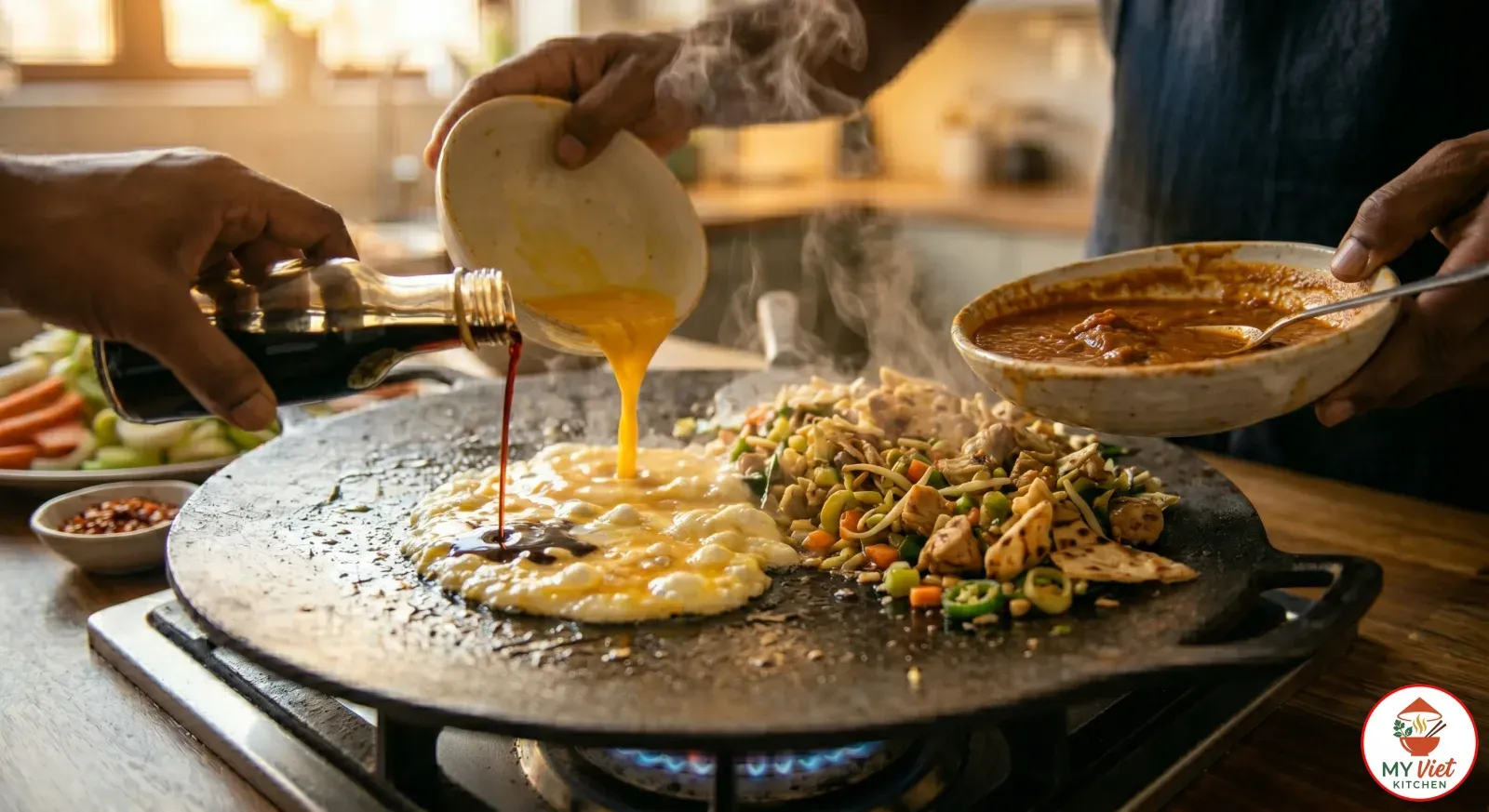
5Push the roti mixture to one side of the pan. Pour the beaten eggs onto the empty hot surface and let them start to set for about 15 seconds. Then quickly scramble the eggs and chop them into the roti mixture. Add the soy sauce, chili flakes, and the leftover curry sauce. The curry sauce is what gives kottu roti its rich, saucy character. Chop and toss everything together until the sauce coats every piece evenly.
Step 6: Serve Hot
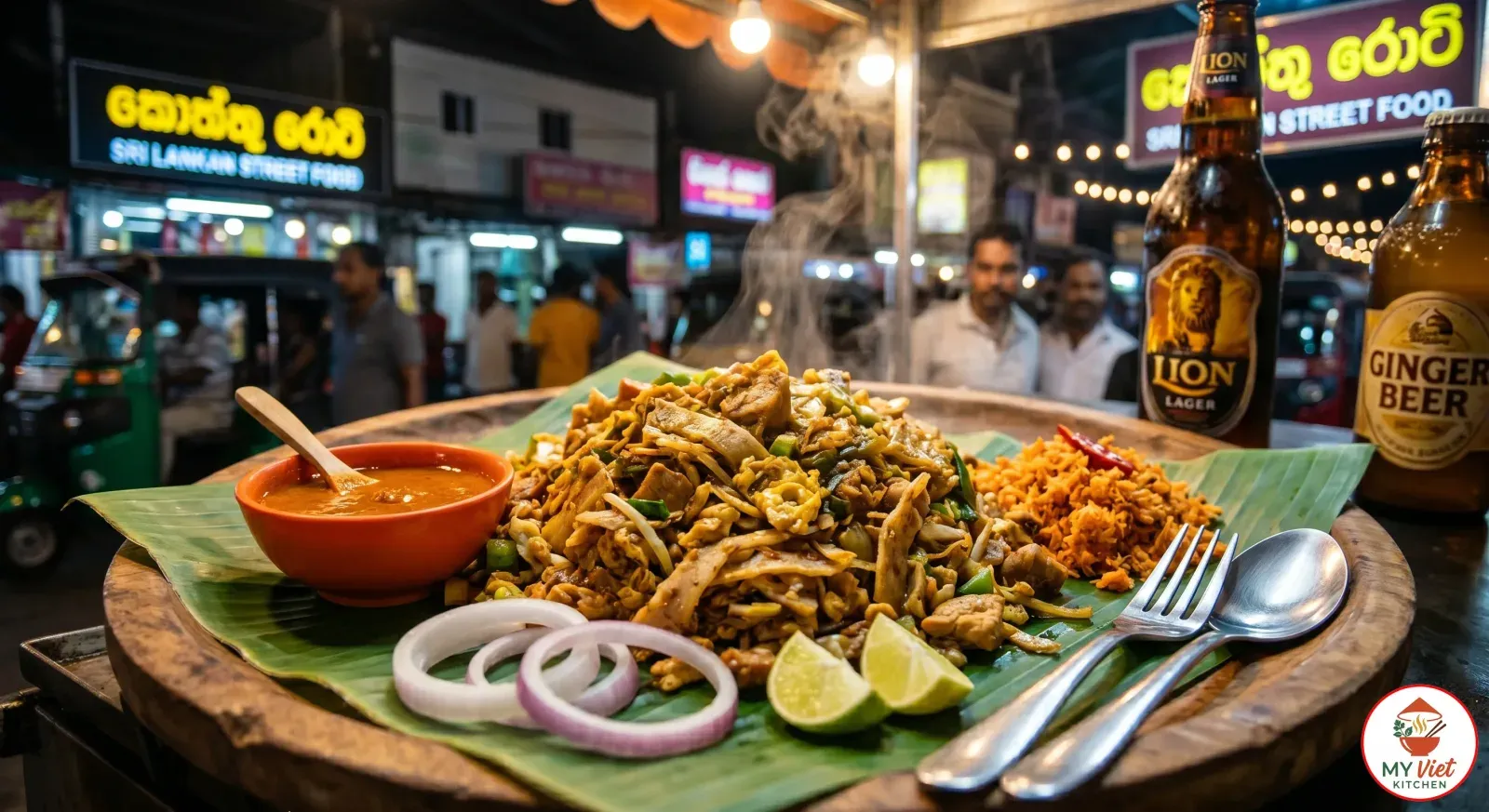
6Give the kottu roti a final vigorous toss and taste for seasoning. Add more soy sauce or salt if needed. The dish should be flavorful, slightly spicy, and well-coated with curry sauce without being soggy. Plate it immediately while still steaming hot. In Sri Lanka, kottu roti is traditionally served on a plate or in a banana leaf. Pair it with a side of extra curry sauce for dipping, and enjoy this incredible Asian street food classic.
Expert Tips for Perfect Kottu Roti
Keep the Heat High
High heat is essential for authentic kottu roti. It creates the smoky, charred flavor known as “wok hei” and prevents the roti from becoming soggy. If your pan is not hot enough, the ingredients will steam instead of fry, resulting in a limp and bland dish. Preheat your pan until a drop of water evaporates on contact.
Use Leftover Curry Sauce
The curry sauce is what transforms kottu roti from a simple stir-fry into something magical. Use leftover chicken curry, dhal curry, or any flavorful gravy you have on hand. If you do not have leftovers, make a quick curry sauce by simmering coconut milk with curry powder, garlic, and onions for 10 minutes.
Embrace the Chopping Technique
The chopping technique is not just for show. It breaks the roti into varied sizes, mixes everything evenly, and helps the sauce penetrate each piece. Use two sturdy spatulas and work with a rhythmic motion. Speed matters more than precision here.
Kottu Roti Varieties in Sri Lanka
Sri Lankan stalls offer many types of kottu roti, each with its own character. Here are the most popular versions you will find across the island.
| Variety | Key Ingredient | Flavor Profile |
|---|---|---|
| Chicken kottu | Boneless chicken pieces | Most popular, savory and rich |
| Egg kottu | Extra eggs, no meat | Lighter, vegetarian-friendly |
| Cheese kottu | Melted cheese on top | Modern twist, creamy and indulgent |
| Seafood kottu | Shrimp, squid, or fish | Coastal specialty, briny depth |
| Dolphin kottu | No actual dolphin, a mix of vegetables | Budget-friendly and healthy |
Serving Suggestions
In Sri Lanka, kottu roti is typically a late-night street food, enjoyed after a long evening out. However, it also makes an excellent lunch or dinner at home. The dish is complete on its own but pairs well with a few accompaniments.
The Perfect Accompaniments:
- Extra curry sauce: A small bowl of warm curry sauce for dipping takes the dish to another level.
- Pol sambol: Spicy coconut relish that adds heat and crunch.
- Sliced onions and lime: A simple side of raw onion rings with lime juice provides a fresh, sharp contrast.
- Raita or yogurt: Cool yogurt helps balance the heat for those who prefer milder flavors.
Beverage Pairings:
- Lion Lager: Sri Lanka’s most popular beer is the classic pairing with kottu roti.
- Ginger beer: A sweet, spicy soft drink that complements the flavors.
- Plain lassi: A yogurt-based drink that cools the palate after each spicy bite.
Storage and Reheating
Refrigerator: Store leftover kottu roti in an airtight container for up to 2 days. It tastes best when freshly made, but leftovers are still enjoyable.
Freezer: Kottu roti does not freeze particularly well because the roti pieces can become soggy when thawed. It is best enjoyed fresh.
Reheating: Reheat in a hot pan or wok over high heat for 3 to 4 minutes, tossing frequently. This restores some of the crispy texture. Adding a splash of curry sauce while reheating helps revive the flavors. Avoid microwaving, which makes the roti rubbery.
Common Mistakes to Avoid
1. Using Fresh, Soft Roti
Freshly cooked roti is too soft and moist for kottu roti. The pieces will fall apart and turn mushy when stir-fried. Always use day-old or cooled roti that has dried slightly. This gives the pieces enough structure to hold up during the vigorous chopping and tossing.
2. Overcrowding the Pan
If you pack too much into the pan, the temperature drops and the ingredients steam rather than fry. Cook in batches if your pan is small. A large, flat griddle gives you the most space and the best results, similar to what street vendors use.
3. Adding Too Much Sauce
The curry sauce should coat the roti, not drown it. Start with half a cup and add more gradually. The kottu roti should be moist and flavorful but not wet. Soggy kottu is a common home cooking mistake that ruins the texture contrast.
Frequently Asked Questions
What is the rhythmic sound associated with kottu roti?
The iconic sound comes from metal cleavers rhythmically chopping the roti on a flat iron griddle. In Sri Lanka, you can hear this distinctive clanging from street stalls, and it serves as both a cooking technique and a way to attract customers. The rhythmic chopping is part of what makes kottu roti such a theatrical street food experience.
Can I make kottu roti with store-bought flatbread?
Yes, store-bought paratha or roti canai are excellent substitutes for godamba roti. Flour tortillas also work in a pinch. The key is to use flatbread that is slightly chewy and holds up well when chopped and stir-fried.
What makes kottu roti different from fried rice?
While both are stir-fried dishes, kottu roti uses chopped flatbread instead of rice. This gives it a chewier, more substantial texture. The bread pieces absorb curry sauce differently than rice, creating pockets of concentrated flavor. The chopping technique also creates irregular pieces that offer varied textures in every bite.
Is kottu roti spicy?
Traditional kottu roti has moderate heat from green chilies and chili flakes, but you can easily adjust the level. Reduce or remove the green chilies for a milder version, or add extra chili flakes and hot sauce for more fire. Most Sri Lankan stalls will ask how spicy you want it.
Can I make vegetarian kottu roti?
Absolutely. Skip the chicken and add more vegetables such as bell peppers, mushrooms, and green beans. You can also add tofu or paneer for extra protein. Vegetable kottu roti is equally delicious and is a popular option at Sri Lankan restaurants and street stalls.
Variations and Adaptations
Cheese Kottu Roti:
A modern Sri Lankan creation that has become wildly popular. After the final toss, top the kottu roti with generous shredded cheese and cover the pan briefly to melt it. The melted cheese creates a gooey, indulgent layer that pairs surprisingly well with the spicy curry flavors.
Seafood Kottu Roti:
Replace the chicken with shrimp, squid, or a mix of seafood. Add the seafood during the vegetable stage and cook for 3 to 4 minutes. The briny flavor of seafood combined with curry sauce creates a coastal variation that is popular in beach towns along the Sri Lankan coast.
Breakfast Kottu:
A simpler version made with just roti, eggs, and onions. Skip the curry sauce and use more eggs instead. This lighter version is perfect for a quick, hearty breakfast and takes only about 10 minutes to prepare.
The Cultural Significance of Kottu Roti
Kottu roti is one of the most democratic foods in Sri Lanka. It is enjoyed by people of all backgrounds, from office workers grabbing a late dinner to families celebrating special occasions. The dish emerged as a street food in the latter half of the 20th century, born from the practical need to use leftover roti and curry from earlier meals.
The rhythmic chopping of kottu roti has become synonymous with Sri Lankan street life. In cities like Colombo, Kandy, and Galle, the sound of metal on metal echoing from roadside stalls is as characteristic as the call to prayer or the rumble of tuk-tuks. For many Sri Lankans living abroad, the sound of kottu roti being made is a powerful trigger of nostalgia.
In recent years, kottu roti has gained international recognition, appearing on global food lists and in restaurants around the world. It represents the best of Sri Lankan culinary ingenuity: taking simple ingredients and transforming them into something extraordinary through technique, spice, and passion.
Conclusion
Making kottu roti at home is a fun, fast, and deeply satisfying experience. The keys to success are simple: use day-old roti, keep the heat high, and embrace the rhythmic chopping technique. With good curry sauce and fresh vegetables, you will create a dish that captures the vibrant spirit of Sri Lankan street food culture.
If you loved this kottu roti recipe, explore more Sri Lankan dishes like hoppers, or discover other street food favorites in our Asian dishes collection.