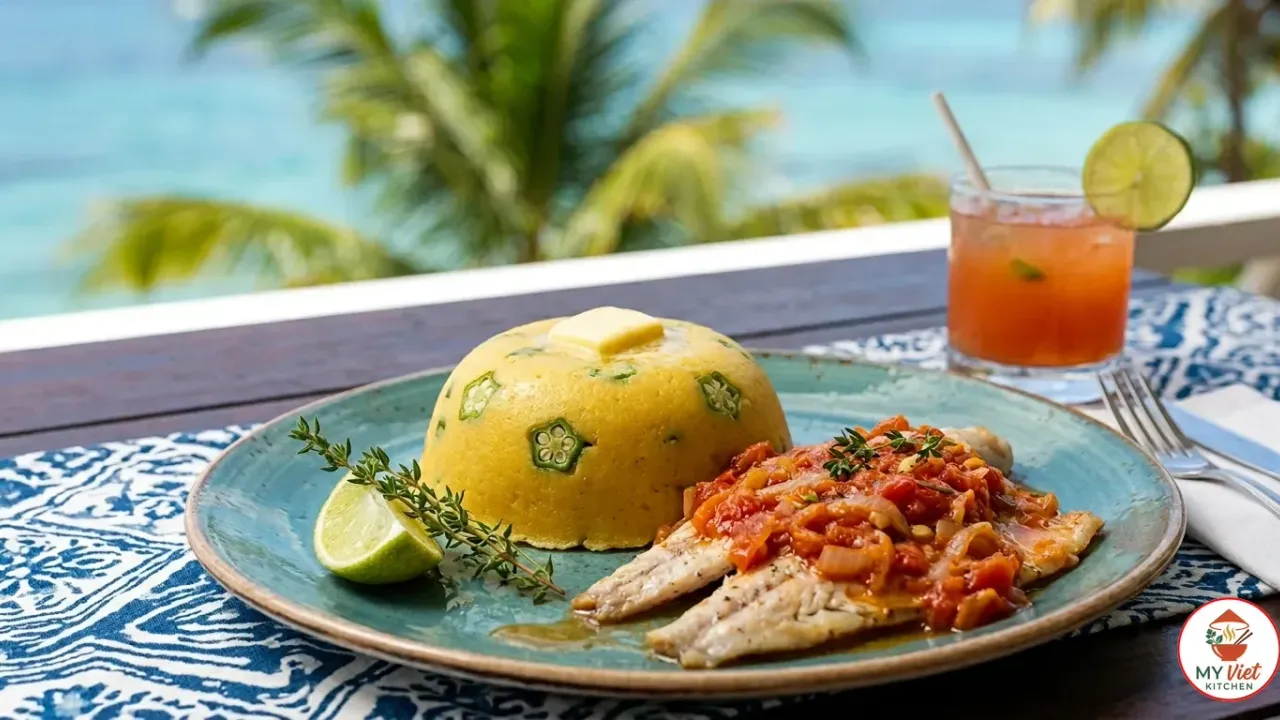
Flying fish and cou-cou is the beloved national dish of Barbados and one of the Caribbean’s most iconic culinary treasures. This elegant pairing brings together delicately seasoned flying fish, steamed in a fragrant Creole tomato sauce, alongside silky smooth cou-cou made from cornmeal and okra. Known locally as the pride of Bajan cuisine, this flying fish and cou-cou recipe captures the flavors of the island in every bite. Whether you are recreating a taste of Barbados at home or discovering this dish for the first time, this step-by-step guide delivers authentic results.
Prep Time: 25 minutes | Cook Time: 40 minutes | Servings: 4
Difficulty: Medium | Calories: ~385 per serving
What Makes Flying Fish and Cou-Cou Special?
Flying fish and cou-cou is not simply a meal in Barbados. It is a national symbol. The dish shows the island’s deep tie to the sea and its African culinary roots. Generations of Bajan cooks turned humble ingredients into something extraordinary. In essence, the pairing of tender, herb-scented fish with smooth cornmeal is a study in balance. There is protein and starch. There is bright acidity and mellow sweetness. And there is the heat of Scotch bonnet against the cooling richness of butter.
What separates this dish from other Caribbean fish preparations is the interplay of textures and the role of the cou-cou. Unlike plain rice or bread, cou-cou is enriched with okra. This creates a uniquely silky, almost elastic consistency that polenta simply cannot replicate. Moreover, the natural mucilage released by the okra binds the cornmeal into something firm enough to hold a dome shape. Yet it is also soft enough to melt on the tongue when paired with the Creole sauce.
The Creole sauce itself is a cornerstone of Bajan cooking. It is built from fresh tomatoes, onion, garlic, thyme, and a whole Scotch bonnet. As a result, the flavor is tangy, sweet, and gently fiery. Because the fish steams right in this sauce, it absorbs the aromatics while staying moist and flaky. Simply put, every element on the plate has a purpose. Together they create one of the best seafood dishes in the Caribbean.

Choosing the Right Fish for Flying Fish and Cou-Cou
The type of fish you use is the most important choice in this recipe. Authentic flying fish has a mild, sweet flavor and a delicate texture. It absorbs seasoning beautifully. However, flying fish can be hard to find outside the Caribbean. As a result, here are your best options.
- Fresh flying fish (best choice): If you can find fresh or frozen flying fish at a Caribbean market or specialty fishmonger, this is the authentic option. The fillets are thin, tender, and cook quickly. They have a clean, ocean-sweet flavor that pairs perfectly with the bold Creole sauce.
- Red snapper fillets (excellent substitute): Snapper has a similar mild sweetness and firm-yet-flaky texture. It holds up well during steaming and absorbs the sauce without falling apart. Cut thicker fillets in half horizontally to mimic the thin profile of flying fish.
- Sea bass or mahi-mahi: Both are excellent alternatives with clean, mild flavors. Sea bass is slightly richer, while mahi-mahi has a firmer bite. Either works beautifully in the Creole sauce. Avoid oily fish like mackerel or salmon, because their strong flavors overpower the delicate herb seasoning.
Ingredients for Flying Fish and Cou-Cou
For the Flying Fish:
- 4 whole flying fish fillets (or substitute with snapper or sea bass)
- 2 limes, juiced
- 3 cloves garlic, minced
- 1 small onion, finely diced
- 1 Scotch bonnet pepper, seeded and minced
- 2 tablespoons fresh thyme leaves
- 2 tablespoons fresh marjoram, chopped
- 1 tablespoon fresh chives, chopped
- Salt and black pepper to taste
For the Cou-Cou:
- 2 cups fine yellow cornmeal
- 8 fresh okra pods, sliced into thin rounds
- 3 cups water
- 1 tablespoon butter
- Salt to taste
For the Creole Sauce:
- 2 tablespoons vegetable oil
- 1 medium onion, sliced
- 2 cloves garlic, minced
- 3 large tomatoes, diced
- 1 tablespoon tomato paste
- 1 Scotch bonnet pepper, whole
- 1 cup water or fish stock
- 1 teaspoon brown sugar
- 1 tablespoon fresh thyme leaves
- Salt and black pepper to taste
- 1 tablespoon butter for finishing
Pro tip: In Barbados, cooks always wash fish with lime juice before seasoning. The acid neutralizes any fishy odor, firms the flesh slightly, and creates a clean canvas for the herb marinade. Never skip this step, because it makes a noticeable difference in the final flavor and aroma of the dish.
Step-by-Step Instructions
Step 1: Season the Flying Fish
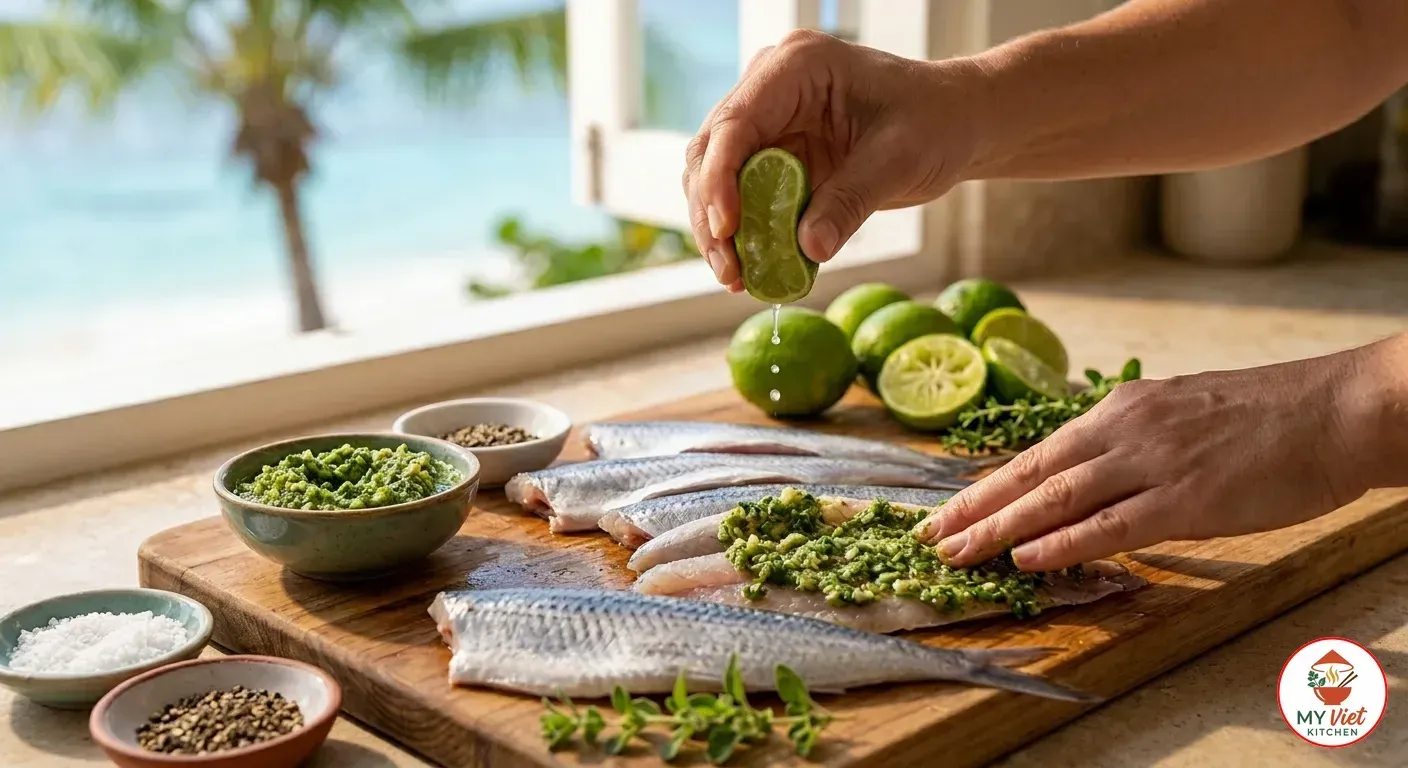
1 Rinse the flying fish fillets under cold running water and pat them completely dry with paper towels. Squeeze the juice of both limes generously over each fillet, rubbing the acid into the flesh on both sides. This lime wash is a non-negotiable step in Bajan cooking. It serves a dual purpose: first, it removes any residual fishiness. Second, it gently firms the delicate flesh so it holds together during steaming.
Next, combine the minced garlic, finely diced onion, seeded Scotch bonnet pepper, thyme, marjoram, and chives in a small bowl. Then spread this green seasoning mixture evenly over each fillet. Press it firmly into the surface. Season with salt and black pepper. Let the fish marinate for at least 15 minutes at room temperature, or up to 2 hours in the refrigerator for deeper flavor penetration.
Step 2: Cook the Okra for Cou-Cou
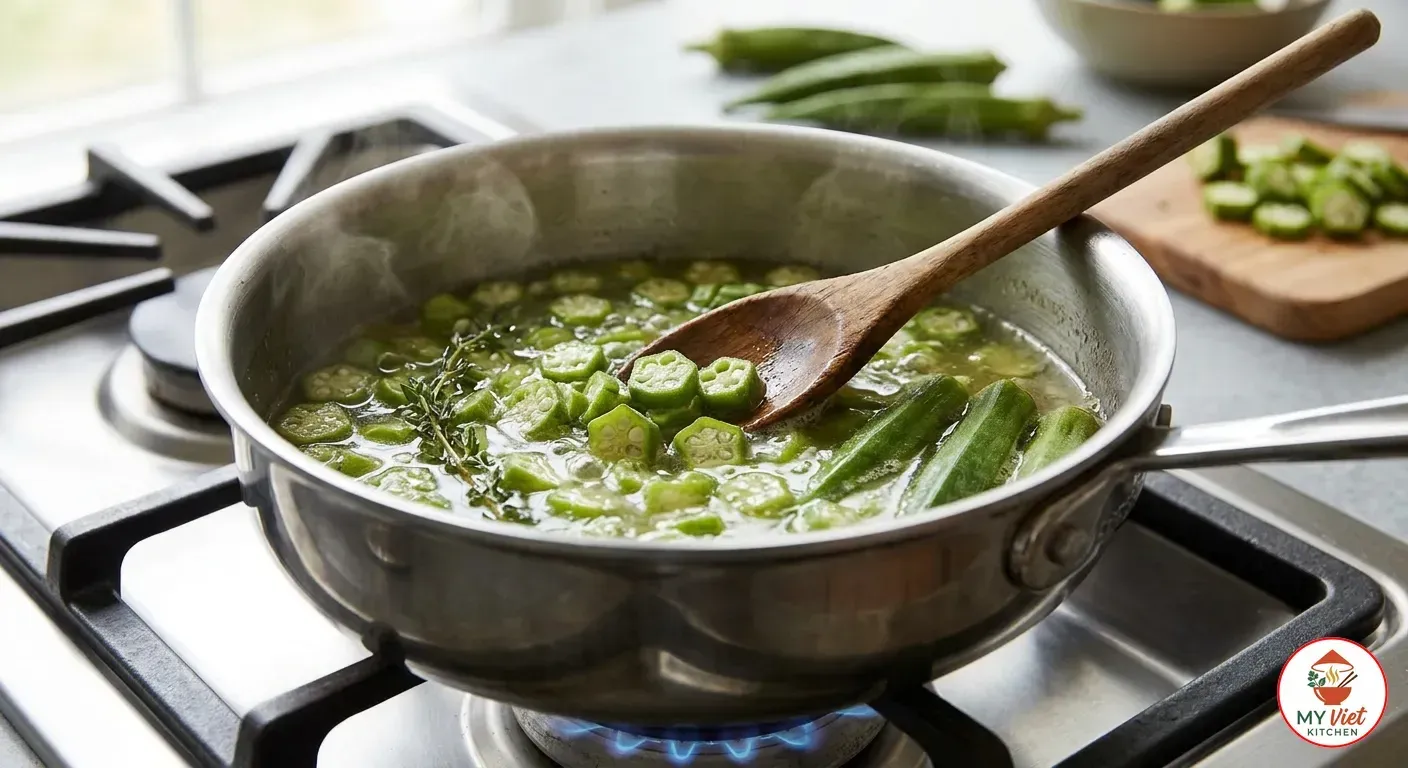
2 Bring 3 cups of salted water to a rolling boil in a medium heavy-bottomed saucepan. Add the sliced okra and reduce the heat to medium. Cook for about 10 minutes until the okra is completely tender and the water takes on a slightly viscous, slippery quality. This viscosity is essential because it is the okra’s natural mucilage that gives cou-cou its distinctive silky texture.
Do not discard any of this liquid. The okra water is the cooking medium for the cornmeal. Although some cooks remove the okra at this point and add it back later, in the traditional Barbadian method, the okra stays in the pot throughout. Consequently, the pieces soften further and integrate completely into the finished cou-cou.
Step 3: Make the Cou-Cou
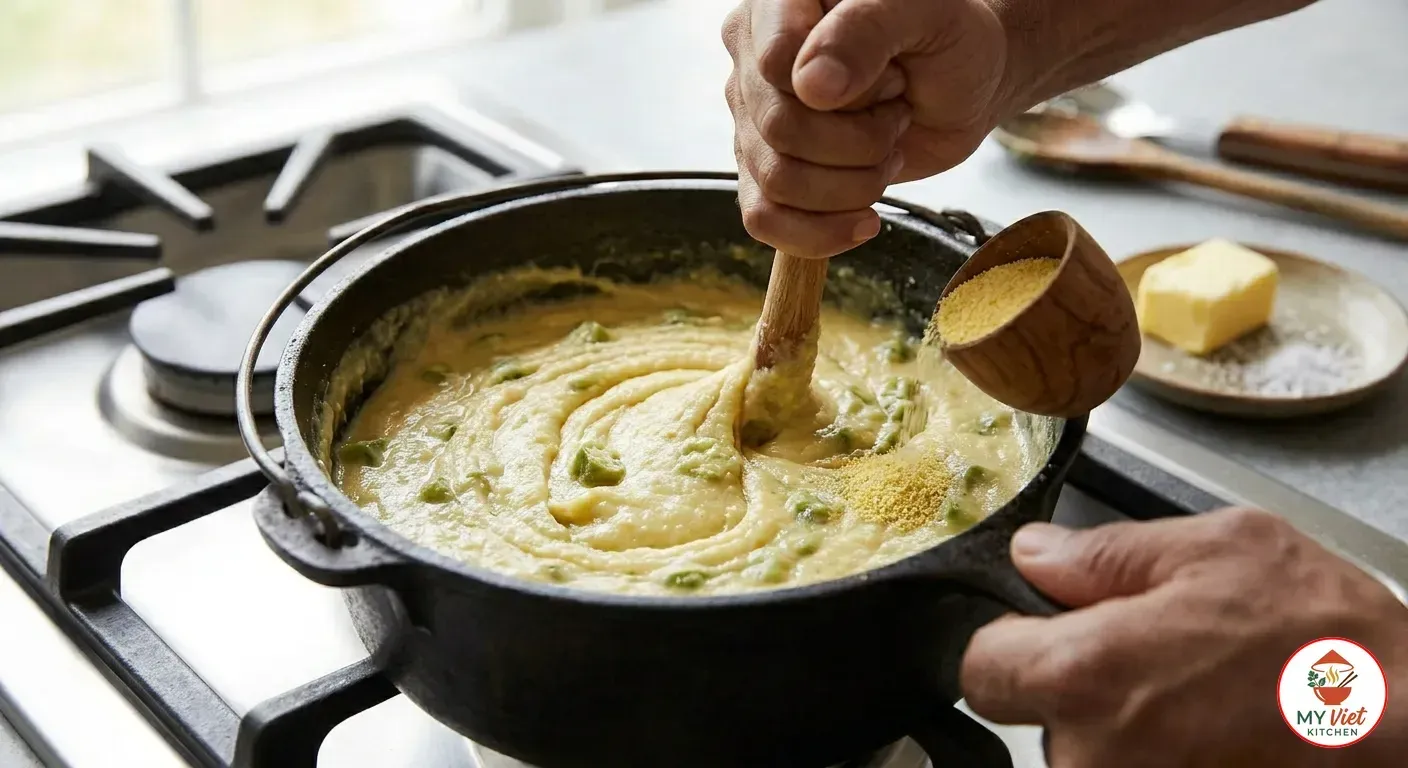
3 With the okra water at a gentle simmer, begin adding the cornmeal in a very slow, thin stream with one hand while stirring constantly and vigorously with the other. A wooden spoon works well, but a traditional Barbadian cou-cou stick, which resembles a thick wooden dowel, is ideal because it provides better leverage for the heavy mixture.
Then reduce the heat to low and continue stirring without stopping for 10 to 15 minutes. The mixture will progressively thicken until it pulls cleanly away from the sides of the pot. Essentially, this continuous stirring breaks down the cornmeal granules. It produces a smooth, lump-free result. When done, stir in the butter and adjust the salt. The finished cou-cou should be glossy, pliable, and hold its shape when pressed with a spoon.
Step 4: Prepare the Creole Sauce
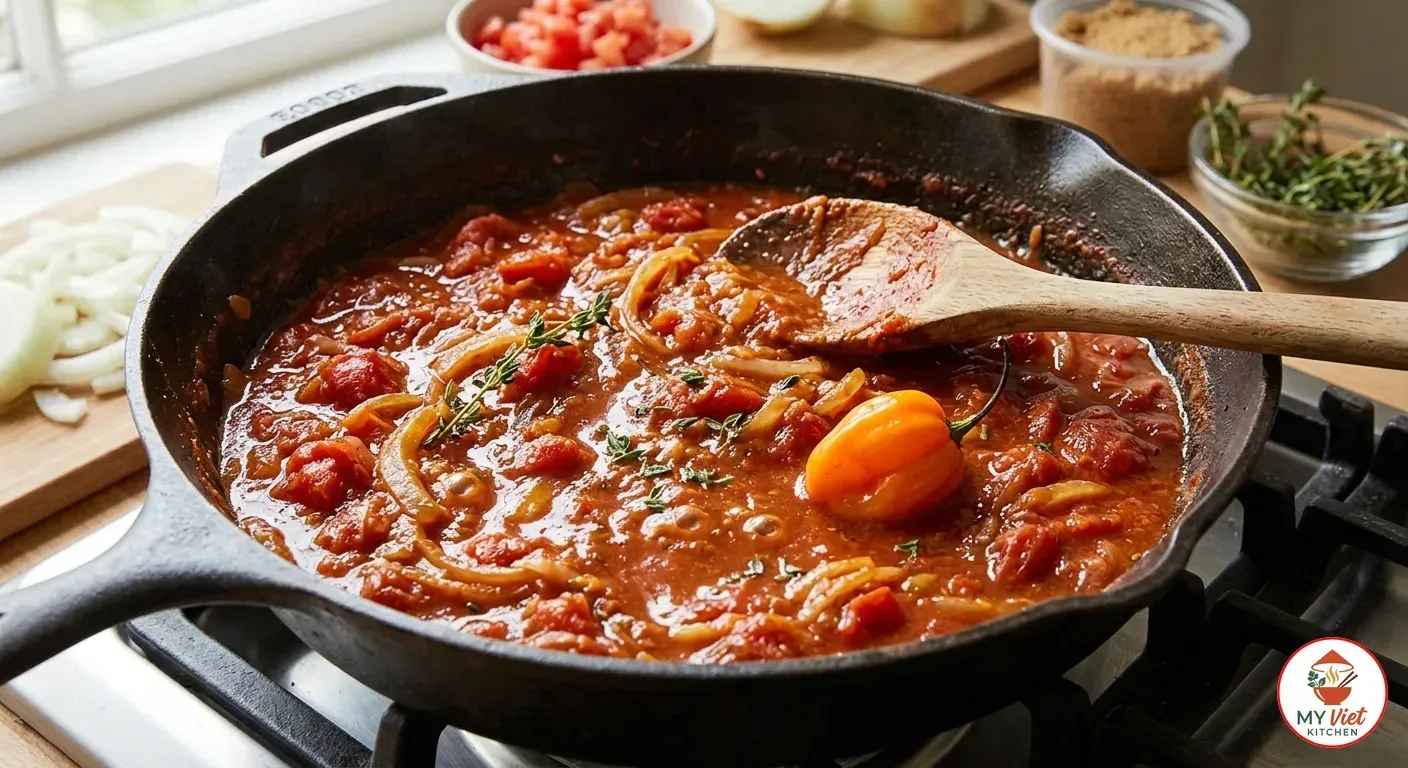
4 While the cou-cou rests, heat the vegetable oil in a large, deep skillet over medium heat. Add the sliced onion and cook for about 3 minutes until softened and translucent. Add the minced garlic and stir for 30 seconds until fragrant. Now add the diced tomatoes, tomato paste, whole Scotch bonnet pepper, water or fish stock, brown sugar, and fresh thyme.
Stir everything together and bring to a gentle simmer. Cook uncovered for 15 minutes, stirring occasionally, until the tomatoes break down completely. The sauce should thicken to a rich, spoonable consistency. Notably, the brown sugar balances the acidity of the tomatoes. Meanwhile, the whole Scotch bonnet imparts gentle warmth without overwhelming heat. Because the pepper stays whole, you get its flavor without releasing the full force of its capsaicin. Taste and adjust the seasoning as needed.
Step 5: Steam the Flying Fish in the Sauce
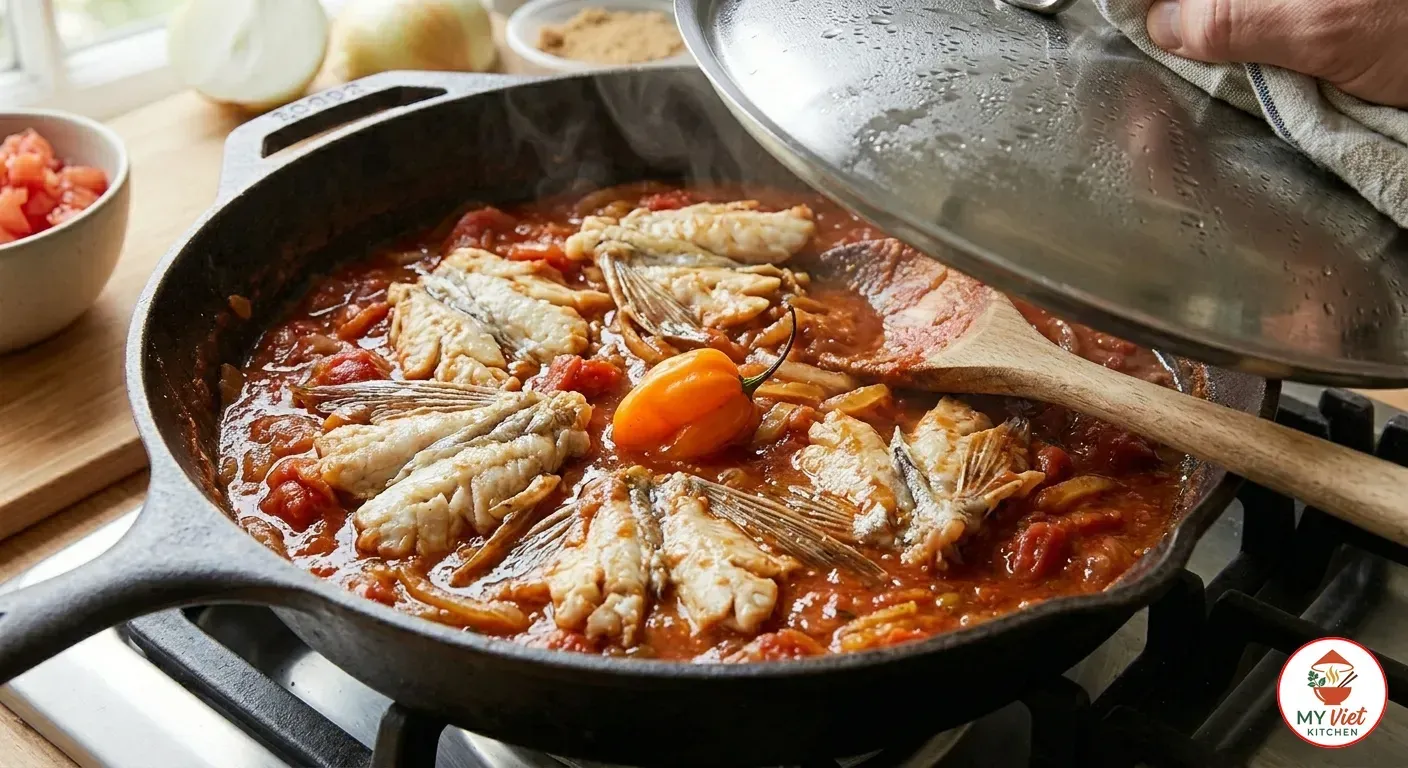
5 Gently place the seasoned flying fish fillets into the simmering Creole sauce in a single layer. Use a spoon to ladle some of the sauce over the top of each fillet so they are partially submerged. Cover the skillet with a tight-fitting lid, reduce the heat to low, and let the fish steam for 8 to 10 minutes.
The fish is done when the flesh turns completely opaque and flakes easily with a fork. Since flying fish fillets are thin, they cook quickly. Therefore, do not overcook them or they will become dry and rubbery. Remove the whole Scotch bonnet pepper before serving. Finally, finish the sauce by stirring in the tablespoon of butter. This adds a glossy sheen and rounds out the flavors beautifully.
Step 6: Mold the Cou-Cou and Serve
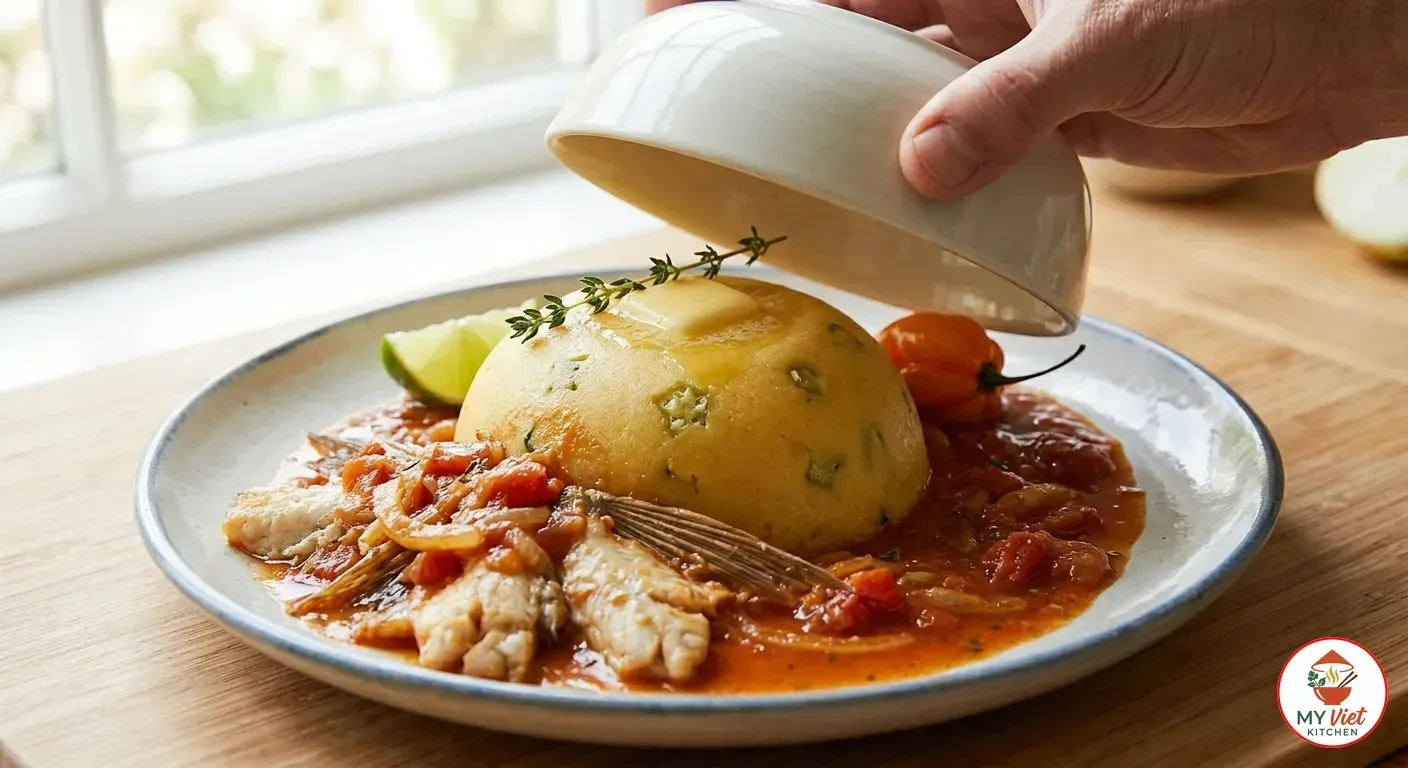
6 First, grease a small round bowl generously with butter. Pack the hot cou-cou firmly into the bowl using the back of a spoon. Press out any air pockets. Then quickly invert the bowl onto a serving plate and lift it away to reveal a smooth, golden dome. This presentation is the traditional Bajan way. It gives the dish its signature elegant appearance.
Place the steamed flying fish fillets alongside the cou-cou dome. Spoon the Creole sauce generously over both the fish and the cou-cou, allowing it to pool around the base of the dome. Top the cou-cou with a small pat of butter and garnish with a sprig of fresh thyme. Serve immediately while everything is piping hot.
Expert Tips for Perfect Flying Fish and Cou-Cou
Use a Cou-Cou Stick for the Smoothest Texture
A traditional cou-cou stick works far better than a regular spoon. Its round shape creates friction that breaks down cornmeal granules fast. If you do not have one, use the handle end of a thick wooden spoon. Above all, the key is vigorous stirring. Stir in one direction for the smoothest result.
Keep the Scotch Bonnet Whole in the Sauce
Placing the Scotch bonnet pepper in the sauce without cutting it gives you its fruity, aromatic warmth without the full searing heat. If the pepper bursts during cooking, the sauce becomes significantly spicier. For a milder version, remove the pepper after 5 minutes. For more heat, pierce it once with a knife before adding it to the sauce.
Choose Fresh Okra Over Frozen
Fresh okra releases far more mucilage than frozen. This is key for the proper texture of cou-cou. In contrast, frozen okra tends to be waterlogged. It produces a thinner, less cohesive result. Select small, firm okra pods that snap cleanly when bent. In addition, larger pods can be fibrous and tough.
Flying Fish and Cou-Cou vs. Similar Caribbean Dishes
Cornmeal-based sides appear throughout the Caribbean and West Africa, each with regional distinctions. Here is how cou-cou compares to its closest relatives.
| Dish | Origin | Key Ingredients | Texture |
|---|---|---|---|
| Cou-Cou (Barbados) | Barbados | Cornmeal, okra, butter | Silky, elastic, dome-shaped |
| Fungi (Antigua) | Antigua & Barbuda | Cornmeal, okra | Similar to cou-cou, slightly denser |
| Polenta (Italy) | Italy | Cornmeal, butter, cheese | Creamy, soft, no okra viscosity |
| Fufu (West Africa) | Ghana, Nigeria | Cassava, plantain, or yam | Stretchy, dough-like, pounded |
| Turn Cornmeal (Jamaica) | Jamaica | Cornmeal, coconut milk | Firm, slightly sweet, sliceable |
Serving Suggestions
In Barbados, flying fish and cou-cou is traditionally served as a complete meal, with the cou-cou dome acting as the starchy foundation and the sauced fish providing protein and flavor. However, Bajan cooks often enhance the plate with a few carefully chosen sides that complement the main components without competing.
The Perfect Accompaniments:
- Pickled cucumber salad: A simple vinegar-dressed cucumber salad provides a sharp, refreshing contrast to the rich cornmeal and tomato sauce.
- Bajan macaroni pie: This baked macaroni and cheese casserole is a staple side on the island and adds comfort-food richness to the plate.
- Steamed vegetables: Simple steamed christophene (chayote), carrots, or green beans dressed with butter and a squeeze of lime keep the meal light and balanced.
- Coleslaw: A tangy coleslaw with a light lime vinaigrette adds crunch and acidity that pairs beautifully with the soft textures of the fish and cou-cou.
Beverage Pairings:
- Rum punch: The classic Barbadian rum punch with lime, sugar, Angostura bitters, and Mount Gay rum is the quintessential island pairing.
- Mauby: A traditional bark-brewed drink with a bittersweet, root-beer-like flavor that cuts through rich dishes beautifully.
- Sorrel drink: A chilled hibiscus and spice beverage popular during the holidays but refreshing year-round alongside seafood.
- Banks beer: Barbados’s own lager beer, served ice-cold, is the local favorite for washing down a plate of flying fish and cou-cou.
- Coconut water: Fresh coconut water from a green coconut is a non-alcoholic option that complements the tropical flavors naturally.
Storage and Reheating
Refrigerator: Store the flying fish and Creole sauce in an airtight container for up to 2 days. Store the cou-cou separately in its own container, as it firms up considerably when cold. The sauce and fish actually taste better the next day as the flavors continue to meld.
Freezer: The Creole sauce with fish freezes well for up to 2 months. However, cou-cou does not freeze well because the okra mucilage breaks down during thawing, producing a grainy texture. It is best to make cou-cou fresh each time.
Reheating: Reheat the fish and sauce gently on the stovetop over low heat. Add a tablespoon of water or stock if the sauce has thickened too much. For leftover cou-cou, place it in a saucepan with 2 to 3 tablespoons of water. Cover and warm over low heat, stirring until smooth. Alternatively, slice firm cou-cou and pan-fry it in butter until golden on each side.
Common Mistakes to Avoid
1. Adding Cornmeal Too Quickly
Dumping all the cornmeal into the okra water at once guarantees lumps that no amount of stirring will fix. The cornmeal must be added in a slow, steady stream while you stir constantly. This gradual incorporation allows each granule to hydrate evenly. If lumps do form, press them against the side of the pot with the back of the spoon to break them apart.
2. Overcooking the Flying Fish
Flying fish fillets are thin and delicate. They need only 8 to 10 minutes of gentle steaming in the sauce. Overcooking turns them dry, tough, and rubbery. Remove the lid and check after 8 minutes. The fish should be opaque throughout and flake easily. If you are using a thicker substitute like snapper, add 2 to 3 minutes to the cooking time.
3. Skipping the Lime Wash
Washing the fish with lime juice is a fundamental step in Bajan fish preparation. The citric acid removes any lingering fishy odor. Additionally, it slightly denatures the surface proteins, which firms the flesh and helps it hold together during cooking. Without this step, the fish can taste and smell less clean. This is especially true if using a substitute that is not perfectly fresh.
4. Using Too Little Okra
The okra is not a garnish or afterthought in cou-cou. On the contrary, it is a structural ingredient. Using too few pods means the cou-cou will lack its signature silky, elastic texture. Instead, it will resemble dry, crumbly polenta. Eight okra pods for 2 cups of cornmeal is the correct ratio. In particular, fresh, young okra releases the most mucilage.
Frequently Asked Questions
What is flying fish and cou-cou?
Flying fish and cou-cou is the official national dish of Barbados. It consists of flying fish fillets seasoned with a fresh herb blend, steamed in a Creole tomato sauce, and served alongside cou-cou, a smooth side dish made from cornmeal and okra. The dish represents Barbadian identity, the island’s fishing heritage, and its African culinary roots.
What can I use instead of flying fish?
Red snapper is the best substitute because it has a similar mild, sweet flavor and a firm texture that holds up during steaming. Sea bass and mahi-mahi also work very well. Tilapia is an acceptable budget option, though it is softer and less flavorful. Avoid oily fish like mackerel or salmon, because their strong taste overpowers the delicate Bajan seasoning.
What does cou-cou taste like?
Cou-cou has a mild, slightly sweet corn flavor with a smooth, creamy texture that falls somewhere between soft polenta and mashed potatoes. The okra adds a subtle earthy undertone and a uniquely silky consistency. When finished with butter and topped with the tangy Creole sauce, cou-cou becomes rich and deeply satisfying.
Is cou-cou the same as polenta?
While both are made from cornmeal, cou-cou and polenta are distinct dishes. Cou-cou includes okra, which gives it a silky, slightly elastic texture that polenta lacks. Cou-cou is also traditionally molded into a dome shape for serving, whereas polenta is usually served soft, creamy, baked, or grilled. The okra is the defining difference.
Why is flying fish important to Barbados?
Flying fish are so integral to Barbadian culture that the island is known as “The Land of the Flying Fish.” The species appears on the Barbadian dollar coin, the national coat of arms, and official tourism branding. For centuries, flying fish was the most abundant and affordable protein available to local fishing communities. The dish of flying fish and cou-cou was officially declared the national dish of Barbados, cementing its place in the island’s identity.
How do I prevent lumps in cou-cou?
The secret to lump-free cou-cou is patience and constant stirring. Add the cornmeal in a very thin, slow stream while stirring vigorously with a wooden spoon or cou-cou stick. Keep the heat low so the mixture does not seize before the cornmeal is fully incorporated. Stirring consistently in one direction also helps produce a smoother texture than changing direction randomly.
Variations and Adaptations
Fried Flying Fish Version:
Instead of steaming the fish in sauce, many Bajan cooks prefer to pan-fry the seasoned fillets until golden and crispy, then serve them on top of the cou-cou with the Creole sauce drizzled over the plate. Dredge the fillets lightly in seasoned flour before frying in hot oil for 2 to 3 minutes per side. This version adds a satisfying crunch that contrasts beautifully with the soft cou-cou.
Breadfruit Cou-Cou:
In some parts of the Caribbean, breadfruit replaces cornmeal in the cou-cou. Boiled breadfruit is mashed with butter and combined with cooked okra. This creates a starchier, denser variation. The flavor is nuttier and more substantial. This adaptation is especially popular in Trinidad and Tobago.
Spicy Pepper Sauce Version:
For those who love heat, replace the whole Scotch bonnet in the sauce with two minced Scotch bonnets and add a tablespoon of Bajan pepper sauce at the end. This intensifies the heat dramatically while maintaining the fruity, aromatic character of the pepper. Serve with extra pepper sauce on the side for guests who want even more fire.
Vegan Adaptation:
Replace the fish with thick slices of pan-seared eggplant or firm tofu. Use vegetable stock in the Creole sauce. Also substitute the butter in the cou-cou with coconut oil. The sauce and cou-cou are so flavorful that this plant-based version is deeply satisfying. Season the eggplant or tofu with the same herb blend for authenticity.
The Cultural Significance of Flying Fish and Cou-Cou
Flying fish and cou-cou occupies a place in Barbadian culture that goes far beyond the dinner table. It tells the story of an island shaped by the sea, by African heritage, and by centuries of resourceful cooking. In Barbados, serving this dish is an act of cultural pride.
The roots of cou-cou trace directly to West African fufu and cornmeal porridges. Enslaved Africans brought these techniques to the Caribbean. Over generations, they merged with the island’s seafood and local herbs to create something new. Importantly, the okra in the cou-cou is itself an African ingredient. It was carried across the Atlantic and cultivated throughout the Caribbean. As a result, every plate of flying fish and cou-cou is a living connection to the resilience and creativity of the African diaspora.
The Land of the Flying Fish
Barbados was once so abundant with flying fish that the species became a symbol of the nation. Indeed, the fish appears on the Barbadian dollar coin, the coat of arms, and even on the tails of the national airline’s planes. Fishermen in Oistins, the famous fishing village on the south coast, have brought in flying fish catches for generations. Furthermore, the Friday night fish fry at Oistins is a pilgrimage for both locals and visitors. Flying fish and cou-cou is always the star of the menu.
Today, as Barbados shares its cuisine with the world, flying fish and cou-cou has become an ambassador for Bajan culture. It appears in fine dining restaurants and humble roadside stalls alike. For Bajans abroad, cooking this dish is a way to carry the island home with them.
Conclusion
This authentic flying fish and cou-cou recipe brings the national dish of Barbados to your kitchen with clear, reliable technique. The keys to success are threefold. First, wash and generously season your fish with lime and fresh herbs. Second, stir the cornmeal slowly and patiently into the okra water for a silky cou-cou. Third, build a Creole sauce that balances tomato acidity with the gentle warmth of a whole Scotch bonnet. Master these three elements and you will capture the essence of Bajan cooking. Whether you are making it for a Caribbean-themed dinner or a weeknight meal, flying fish and cou-cou rewards the cook with extraordinary flavor.
Craving more Caribbean flavors? Explore our collection of Caribbean dishes, including jerk chicken, Caribbean roti, and rice and peas. Also discover our seafood recipes from around the world for more inspiration.