Cuy, the traditional roasted guinea pig of Peru and Ecuador, stands as one of the most culturally significant dishes in all of South America. This cuy recipe walks you through preparing, marinating, and roasting a whole guinea pig the way Andean families have done for thousands of years. With a bold spice rub built on cumin, aji panca, and the fragrant black mint called huacatay, the meat roasts until tender and the skin turns shatteringly crispy. Follow this cuy recipe step by step to bring an authentic piece of Andean heritage to your table.
Prep Time: 30 minutes | Cook Time: 90 minutes | Servings: 4
Difficulty: Medium | Calories: ~320 per serving
What Makes This Cuy Recipe Special?
Cuy is far more than a curiosity or a dare for adventurous eaters. In the highlands of Peru and Ecuador, roasted guinea pig is a dish of celebration, ceremony, and deep cultural pride. Andean people first raised guinea pigs for food around 5000 BCE. That makes cuy one of the oldest meats still eaten in the Americas. Today, Peru alone eats an estimated 65 million guinea pigs every year. The dish stays central to festivals, family meals, and holidays across the Andes.
What sets a great cuy recipe apart from a mediocre one is the quality of the marinade and the roasting technique. The meat is lean and mild, close to dark-meat rabbit with a subtle gamey note. It pairs well with bold Andean spices. A proper marinade built on garlic, cumin, aji panca paste, and huacatay soaks into the meat over several hours. It brings layers of earthy, smoky, and herbal flavor. Slow roasting at moderate heat then renders the thin fat layer under the skin. A final blast of high heat crisps that skin into something extraordinary, shattering at the first bite.
This cuy recipe follows the traditional method used in the Cusco region of Peru, where the dish reaches its highest expression. This cuy recipe is straightforward: clean, marinate, roast, and serve with boiled potatoes, corn, and a bright aji sauce. No complicated techniques are needed, just patience and respect for a tradition that stretches back millennia.

Choosing the Right Guinea Pig for Cuy
Finding a guinea pig for cooking takes some planning, especially outside South America. The animal must be raised for food, never a pet-store guinea pig. Here are your main options for finding quality cuy.
- Latin American butcher shops: In cities with large Peruvian or Ecuadorian communities, specialty butchers often carry whole dressed guinea pigs, either fresh or frozen. Ask for “cuy pelado” or “cuy limpio,” which means the animal has been cleaned and is ready for cooking.
- Online specialty suppliers (best option for most cooks): Several online farms ship frozen dressed guinea pigs directly to your door. This is the most reliable option if you do not live near a Latin American neighborhood. The animals arrive vacuum-sealed and frozen, typically weighing between 1.5 and 2 pounds each.
- Local farms: Some small farms in the United States raise guinea pigs for the Andean community. Check farmers markets or community boards in areas with Peruvian and Ecuadorian populations. Farm-fresh cuy has the best flavor and texture because it has not been frozen.
Ingredients for Cuy
Main Ingredients:
- 1 whole dressed guinea pig (about 1.5 to 2 pounds)
- 2 pounds yellow potatoes, boiled and halved
- 4 ears of corn, boiled and halved
- Fresh lettuce leaves for plating
For the Marinade:
- 4 cloves garlic, minced
- 1 tablespoon aji panca paste
- 1 tablespoon ground cumin
- 1 teaspoon smoked paprika
- 1 teaspoon black pepper
- 1 teaspoon salt
- 2 tablespoons vegetable oil
- 1 tablespoon white vinegar
- 1 tablespoon huacatay paste (Peruvian black mint)
- 1 teaspoon dried oregano
For the Aji Sauce and Garnish:
- 1 cup aji sauce (blend aji amarillo peppers, white onion, lime juice, and cilantro)
- Salsa criolla (sliced red onion, lime juice, fresh cilantro, and a pinch of aji amarillo)
- Lime wedges for squeezing
Pro tip: If you cannot find huacatay paste at your local Latin grocery, substitute with a mix of equal parts fresh mint and basil blended with a little olive oil. The flavor will not be identical, but it captures the herbal, slightly anise-like quality that huacatay brings to the marinade. Aji panca paste is available in jars at most Latin American stores and online.
Step-by-Step Instructions
Step 1: Clean and Prepare the Cuy
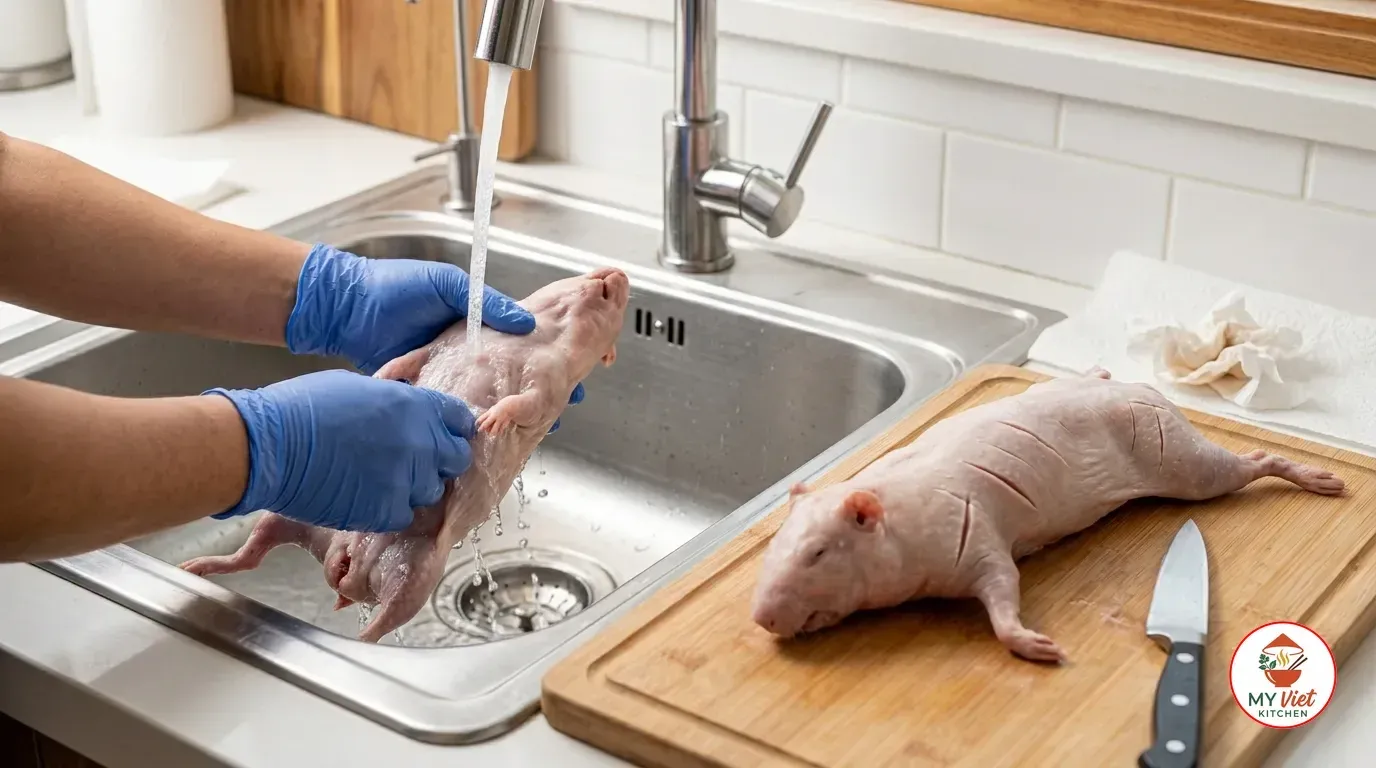
1 Rinse the dressed guinea pig thoroughly under cold running water. Pay special attention to the cavity, removing any remaining organs or blood clots. Pat the entire animal dry with paper towels, inside and out. Good drying is key because wet skin will not crisp well in the oven.
Next, use a sharp knife to make shallow diagonal cuts along the inner thighs and the thickest parts of the shoulders. These cuts let the marinade soak deep into the meat for even flavor. Also, the cuts help heat reach the thick parts, so the whole cuy cooks at the same rate.
Step 2: Marinate the Cuy
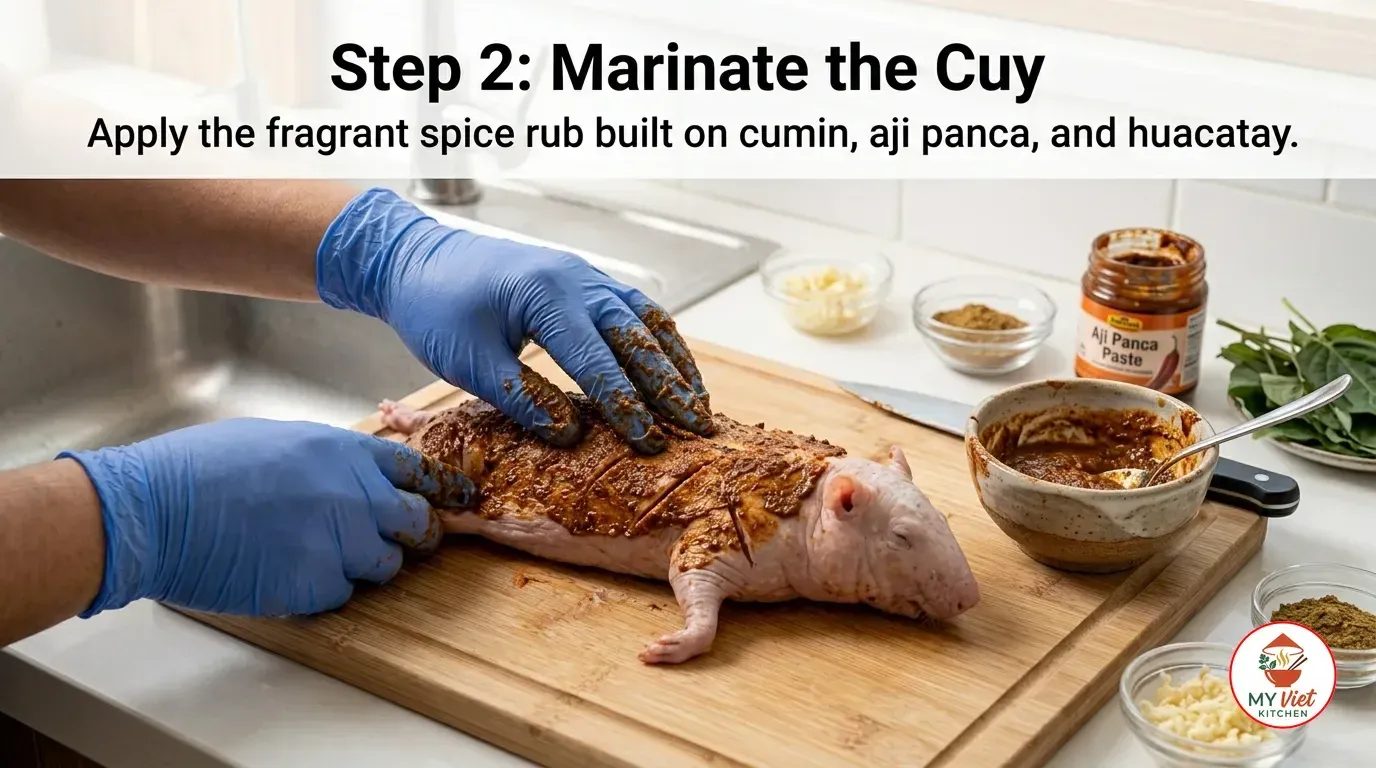
2 In a small bowl, combine the minced garlic, aji panca paste, ground cumin, smoked paprika, black pepper, salt, vegetable oil, white vinegar, huacatay paste, and dried oregano. Stir the mixture until it forms a thick, fragrant paste. The vinegar does two things: it softens the meat and helps the spices stick to the skin.
Rub this paste all over the guinea pig. Push it into the score marks, inside the body, and over all the skin. Put the cuy in a large dish or zip bag and chill for at least 2 hours. For the best results, marinate overnight. The longer the marinade sits, the deeper the cumin and aji panca flavors penetrate the lean meat. Take the cuy out of the fridge 30 minutes before roasting so it warms up.
Step 3: Roast the Cuy
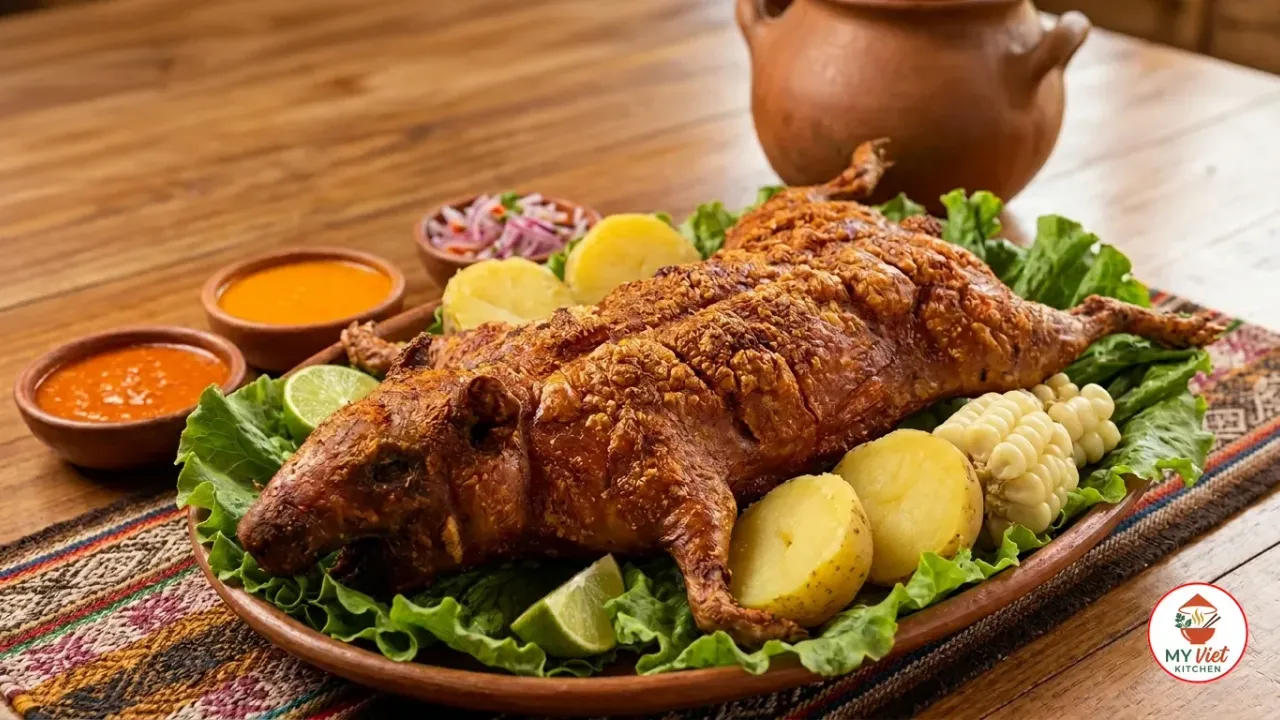
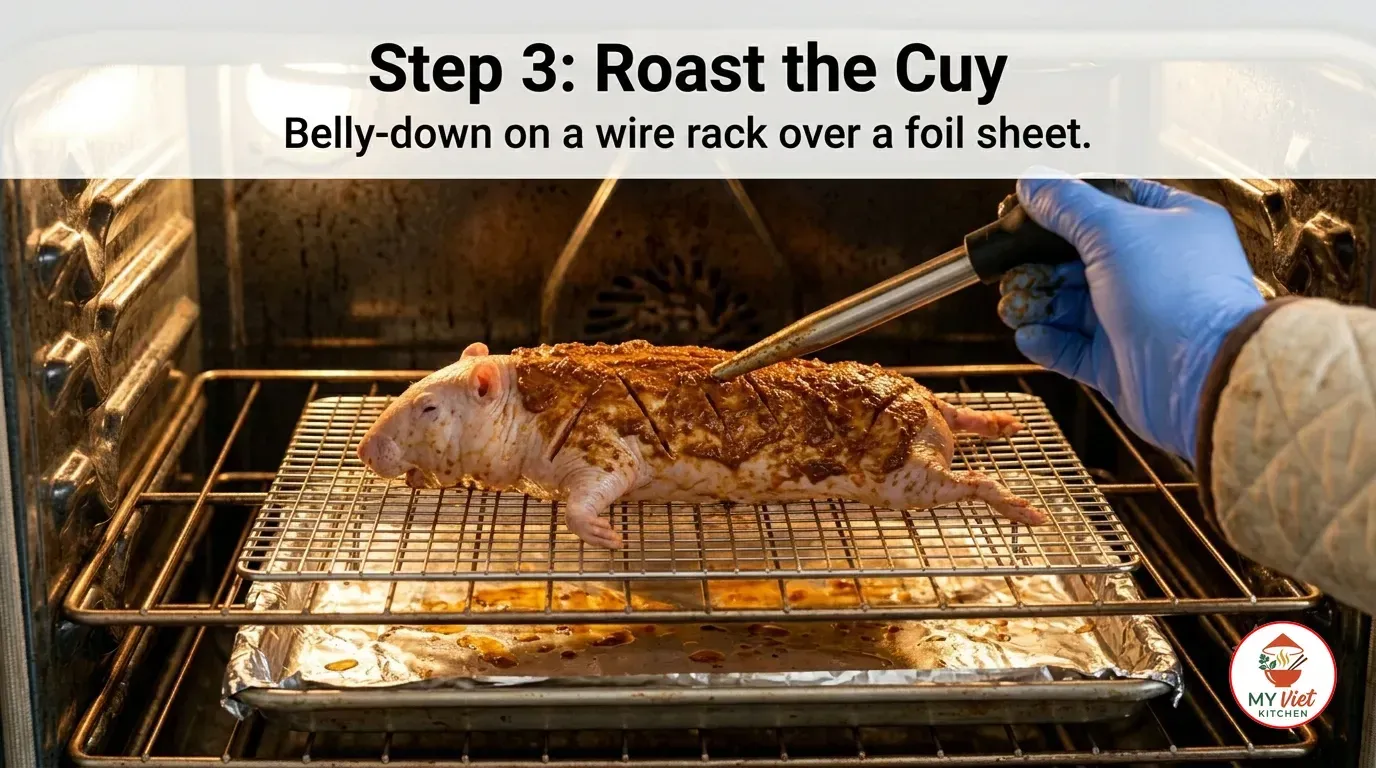
3 Preheat your oven to 375 degrees Fahrenheit. Place a wire rack over a foil-lined baking sheet. Position the guinea pig on the rack, belly side down, with the legs spread outward in a flat, splayed position. This traditional positioning is key to any good cuy recipe because it maximizes skin exposure to heat and ensures even browning.
Roast for 60 to 75 minutes at 375 degrees, basting with the accumulated pan drippings every 20 minutes. Basting keeps the meat moist and builds layers of flavor on the skin. After 60 minutes, check the thickest part of the thigh with a meat thermometer. The internal temperature should reach 165 degrees Fahrenheit. For the final 10 minutes, increase the oven temperature to 425 degrees. This burst of high heat transforms the skin from golden to deeply crispy and crackling. Watch carefully during this stage because the thin skin can go from perfectly crisp to burnt in just a few minutes.
Step 4: Prepare the Sides and Serve
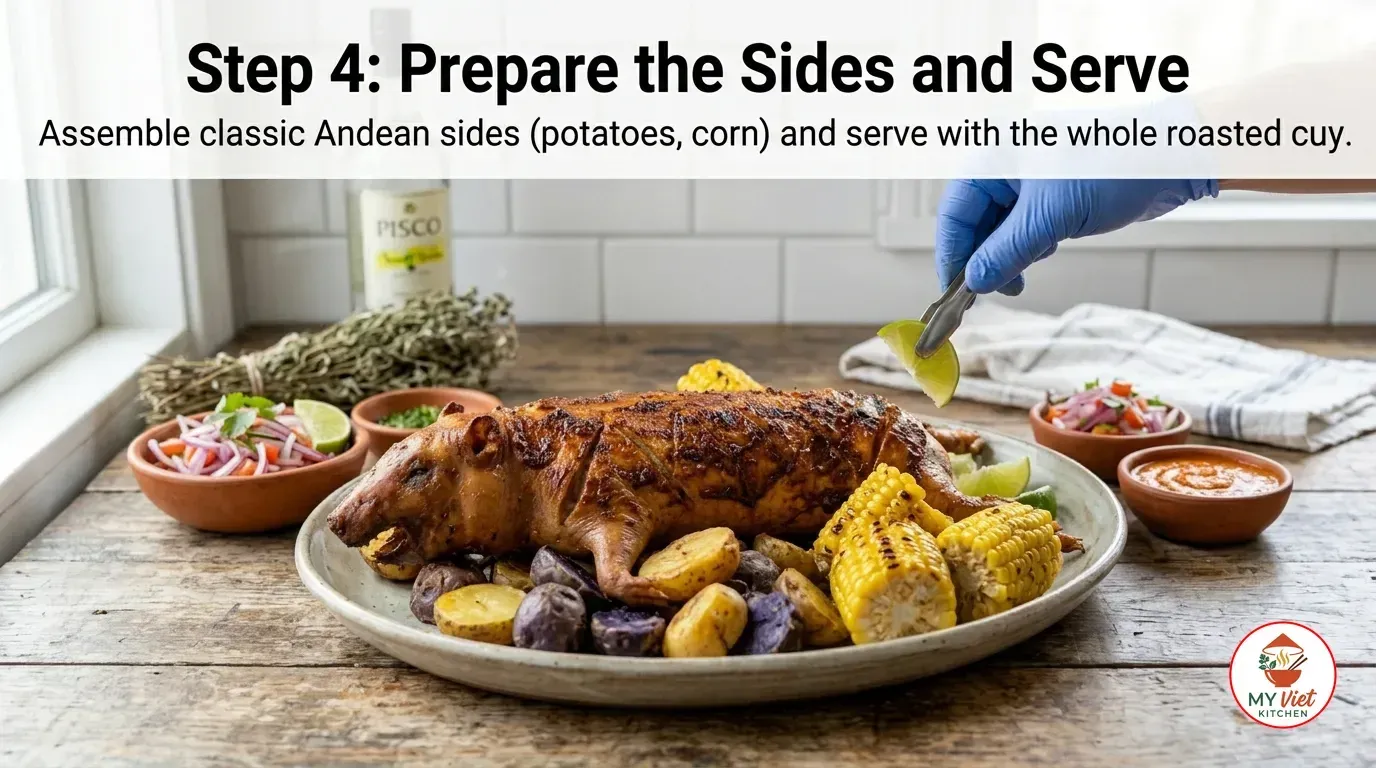
4 While the cuy roasts, prepare the traditional accompaniments. Boil the yellow potatoes until fork-tender, about 20 minutes, then halve them. Boil the corn until sweet and tender, about 10 minutes, then cut each ear in half. Prepare the salsa criolla by tossing thinly sliced red onion with lime juice, chopped cilantro, and a touch of aji amarillo paste.
Line a large serving platter with fresh lettuce leaves. Place the roasted cuy in the center of the platter and arrange the boiled potatoes and corn around it. Serve the aji sauce and salsa criolla in small bowls on the side. In Peru, cuy is traditionally carved at the table, starting with the hind legs, then the forelegs, and finally the back and rib sections. Squeeze fresh lime over each piece before eating for a burst of brightness that lifts the rich, smoky meat.
Expert Tips for Perfect Roasted Cuy
Dry the Skin Completely Before Roasting
The key to crispy cuy skin is removing all moisture from the surface before the cuy goes into the oven. After patting it dry, go one step further. Place the cuy uncovered in the fridge for an hour. The cold, dry air pulls moisture from the skin, much like the trick used for Peking duck. Dry skin crisps fast in a hot oven instead of steaming.
Marinate Overnight for the Deepest Flavor
While two hours of marinating gives good results, an overnight rest in the spice rub makes a big difference in any cuy recipe. The cumin, aji panca, and huacatay need time to work through the lean meat. Guinea pig has less fat than chicken, so it soaks up marinades fast. After a full night, every bite holds the deep, bold Andean spice flavor, not just a thin coat on top.
Baste Regularly and Finish Hot
Basting every 20 minutes accomplishes two things. First, it keeps the lean meat from drying out during the long roast. Second, it builds a glaze of concentrated pan drippings on the skin that adds another layer of savory flavor. The final temperature increase to 425 degrees is essential for that signature crackling texture. Without this step, the skin stays soft and chewy instead of shattering between your teeth.
Cuy al Horno vs. Cuy Chactado: A Comparison
Peru has two famous preparations of cuy, and each region fiercely defends its preferred method. Both deliver extraordinary flavor, but the techniques and textures are quite different. Here is how they compare.
| Feature | Cuy al Horno (Roasted) | Cuy Chactado (Fried) |
|---|---|---|
| Region | Cusco and the Sacred Valley | Arequipa and southern highlands |
| Method | Marinated and oven-roasted whole | Flattened under a stone and deep-fried |
| Skin texture | Crispy and crackling from dry heat | Extremely crunchy from hot oil |
| Meat texture | Tender and juicy from slow roasting | Slightly drier but with intense flavor |
| Spice profile | Cumin, aji panca, huacatay | Garlic, cumin, aji, sometimes chicha de jora |
| Typical sides | Boiled potatoes, corn, aji sauce | Fried potatoes, rocoto relleno, salad |
Serving Suggestions
In Peru and Ecuador, cuy is always the centerpiece of the table. It arrives whole on a large platter, and the host carves it in front of guests as a gesture of hospitality. The sides are simple but essential, chosen to complement the rich, gamey meat with starch, freshness, and heat. Here are the traditional accompaniments that complete a proper cuy meal.
Traditional Accompaniments:
- Boiled yellow potatoes: Peruvian yellow potatoes have a buttery, creamy texture that absorbs the juices from the cuy. They are boiled until just tender and served halved alongside the meat. If you cannot find Peruvian papas amarillas, Yukon Gold potatoes work well.
- Corn on the cob (choclo): Andean corn has enormous, starchy kernels that taste nothing like sweet corn. Boiled choclo is mild, chewy, and acts as a neutral canvas for the bold aji sauce. Regular sweet corn is an acceptable substitute.
- Aji sauce: A bright, spicy sauce made from aji amarillo peppers, white onion, lime juice, and fresh cilantro. This sauce ties everything together, cutting through the richness of the meat with heat and acidity.
- Salsa criolla: Thinly sliced red onion dressed with lime juice and cilantro. This refreshing garnish provides crunch and sharpness that balance the fatty, crispy skin of the cuy.
Beverage Pairings:
- Chicha de jora: This traditional Andean corn beer has been paired with cuy for centuries. Its mild sweetness and slight tang complement the spiced meat perfectly. You can find chicha at Peruvian restaurants or brew it at home from dried jora corn.
- Cusquena beer: Peru’s flagship lager is crisp, clean, and refreshing enough to cut through the richness of roasted cuy. A cold bottle alongside the hot, spiced meat is a classic Peruvian combination.
- Pisco sour: The national cocktail of Peru pairs well with cuy, especially before the meal. The citrus and egg white foam cleanse the palate and prepare it for the bold Andean flavors ahead.
- Chicha morada: A non-alcoholic purple corn drink sweetened with pineapple, cinnamon, and clove. Its fruity sweetness provides a refreshing contrast to the savory, spiced meat.
Storage and Reheating
Refrigerator: Leftover roasted cuy keeps well in the fridge for up to 3 days. Store the meat in a sealed container, separated from the sides. The skin will lose some crispness in the fridge, but the meat stays flavorful.
Freezer: You can freeze cooked cuy for up to 1 month. Wrap the pieces tightly in plastic wrap, then place them in a freezer bag. Remove as much air as possible to prevent freezer burn. Thaw overnight in the refrigerator before reheating.
Reheating: The best way to reheat cuy is in the oven at 400 degrees Fahrenheit for 10 to 15 minutes. This method re-crisps the skin while warming the meat through. Avoid the microwave, as it makes the skin rubbery. Place the cuy on a wire rack over a baking sheet for the best results, allowing hot air to circulate around the entire piece.
Common Mistakes to Avoid
1. Skipping the Overnight Marinade
Guinea pig meat is very lean, which means it needs the marinade to deliver both flavor and moisture. Any good cuy recipe demands at least 2 hours of marinating. Without it, you get bland, dry meat that does not represent what cuy should taste like. Give the spice rub at least 2 hours, and ideally a full night, to do its work. The difference between a 30-minute marinade and an overnight soak is remarkable.
2. Roasting at Too High a Temperature from the Start
Starting at 425 degrees or higher causes the skin to burn before the meat cooks through. Guinea pig has thin, delicate skin that chars quickly under intense direct heat. Instead, begin at 375 degrees to cook the meat gently, then raise the temperature only for the final 10 minutes to crisp the skin. This two-stage approach is a hallmark of every trusted cuy recipe and gives you the best of both worlds.
3. Not Drying the Skin Before Roasting
Wet skin steams rather than crisps. After marinating, wipe off any excess liquid from the surface and pat the skin dry before placing it in the oven. Alternatively, let the marinated cuy sit uncovered in the refrigerator for 1 hour before roasting. This simple step transforms the texture of the finished skin from chewy and soft to crackling and golden.
4. Forgetting to Baste During Roasting
Guinea pig is so lean that the meat dries out fast without basting. Every 20 minutes, open the oven and spoon the collected drippings over the cuy. This adds moisture and builds a beautiful glaze on the skin. If drippings are scarce early on, brush the cuy with a mix of oil and minced garlic.
Frequently Asked Questions
What does cuy taste like?
Cuy tastes similar to dark-meat rabbit or a cross between chicken thigh and duck. The meat is lean, slightly gamey, and remarkably tender when cooked properly. Most people who try cuy for the first time are surprised by how mild and pleasant the flavor is. The skin, when roasted until crispy, is widely considered the best part and tastes similar to perfectly crispy chicken skin with a richer, more complex flavor.
Where can I buy guinea pig for cooking?
In the United States, you can buy dressed guinea pigs from Latin American butchers, Peruvian grocery stores, and online meat suppliers. Many ship frozen cuy to your door. Some farmers markets in areas with Andean communities also carry fresh cuy. Always purchase from a reputable source that raises guinea pigs specifically for human consumption. Never use a pet-store guinea pig, as those animals are not bred or fed for food purposes.
Is it safe to eat guinea pig?
Absolutely. Cuy has been consumed in the Andes for over 5,000 years and is a mainstream protein source for millions of people. Guinea pig meat is high in protein, low in fat and cholesterol, and rich in omega-3 fatty acids. Organizations including the Food and Agriculture Organization of the United Nations have studied cuy as a sustainable protein source for developing communities worldwide.
What is the difference between cuy al horno and cuy chactado?
Cuy al horno refers to oven-roasted guinea pig, which is the method in this cuy recipe. The animal is marinated in Andean spices and slow-roasted until the skin crisps. By contrast, cuy chactado comes from the Arequipa region, where the guinea pig is flattened under a heavy stone and deep-fried in oil until extremely crunchy. Both preparations are delicious, but they deliver very different textures and eating experiences.
How many people does one cuy serve?
One whole guinea pig weighs between 1.5 and 2 pounds dressed. As a main course for one hungry person, that is a generous serving. When you add potatoes, corn, and sides, one cuy can stretch to serve two people comfortably or up to four as part of a larger spread. At traditional Andean festivals, each guest typically receives their own whole cuy.
What is the nutritional value of cuy?
Cuy is one of the healthiest meats you can eat. A 100-gram serving has about 21 grams of protein and only 8 grams of fat. That is far less fat than beef, pork, or even chicken. The meat is also rich in omega-3 fatty acids and has lower cholesterol levels than most other red meats. In fact, the UN has studied guinea pig as a protein source for food security in poor regions.
Variations and Adaptations
Cuy Chactado (Arequipa-Style Fried Cuy):
For the Arequipa method, marinate the cuy as described above, then flatten it by pressing it under a heavy cast-iron skillet or a clean river stone. Heat a large pan with about an inch of vegetable oil to 350 degrees. Fry the flattened cuy for 8 to 10 minutes per side until the skin turns deeply golden and ultra-crunchy. Serve with fried potatoes and rocoto relleno, a stuffed spicy pepper that is the signature side dish of Arequipa.
Ecuadorian Cuy Asado (Spit-Roasted):
In the highlands of Ecuador, cuy is traditionally roasted on a spit over an open wood fire. The marinade typically features achiote (annatto) paste, garlic, cumin, and beer, giving the meat a bright orange color and a slightly malty flavor. To approximate this at home, add a tablespoon of achiote paste and two tablespoons of dark beer to the marinade. Then, roast the cuy on a rotisserie attachment if your oven has one, or use the standard roasting method with frequent turning.
Grilled Cuy (Modern Adaptation):
For outdoor cooking, split the marinated cuy in half lengthwise and grill over medium-high indirect heat for 40 to 50 minutes, turning once. Move the halves to direct heat for the final 5 minutes to crisp the skin. Grilling adds a smoky dimension that pairs exceptionally well with the Andean spice rub. This method works especially well for summer gatherings and is becoming increasingly popular at Peruvian restaurants in North America.
The Cultural Significance of Cuy
Cuy holds a sacred and deeply symbolic place in Andean culture. Long before the Inca Empire rose to power, Andean people raised guinea pigs inside their homes, often in the kitchen near the fire. These small animals gave families protein at altitudes where cattle could not survive. Over time, cuy became a core part of Andean spiritual life, medicine, and joy.
In Andean folk medicine, healers still use guinea pigs in a practice called “sobada de cuy.” A healer passes a live guinea pig over a patient’s body to diagnose illness. After the ritual, the animal is opened and studied. Healers believe the cuy absorbs the disease and shows its source. This practice has faded in cities but lives on in the rural highlands. It shows how the guinea pig means far more to Andean culture than just food.
Today, cuy remains the centerpiece of Andean celebrations. At weddings, baptisms, and village festivals throughout Peru and Ecuador, no feast is complete without roasted guinea pig. In Cusco, the former capital of the Inca Empire, one of the most famous paintings in the Cathedral depicts the Last Supper with Jesus and his disciples eating cuy instead of lamb. This image says everything about how central the guinea pig is to Andean identity and pride. Making cuy at home is not just cooking a meal. It is joining one of the oldest food traditions in the Americas.
Conclusion
This cuy recipe brings one of South America’s most ancient and celebrated dishes into your kitchen. The keys to success are straightforward: source a quality guinea pig, build a bold marinade with cumin, aji panca, and huacatay, roast slowly at moderate heat, and finish with a blast of high temperature for crackling skin. Serve it on a platter with boiled potatoes, corn, and a bright aji sauce, and you have a meal that honors thousands of years of Andean tradition.
Ready to explore more unique dishes from the Americas? Browse our American dishes collection for recipes like Colombian ajiaco, ceviche, and empanadas. For even more global flavors, discover our full range of Asian dishes from across the continent.