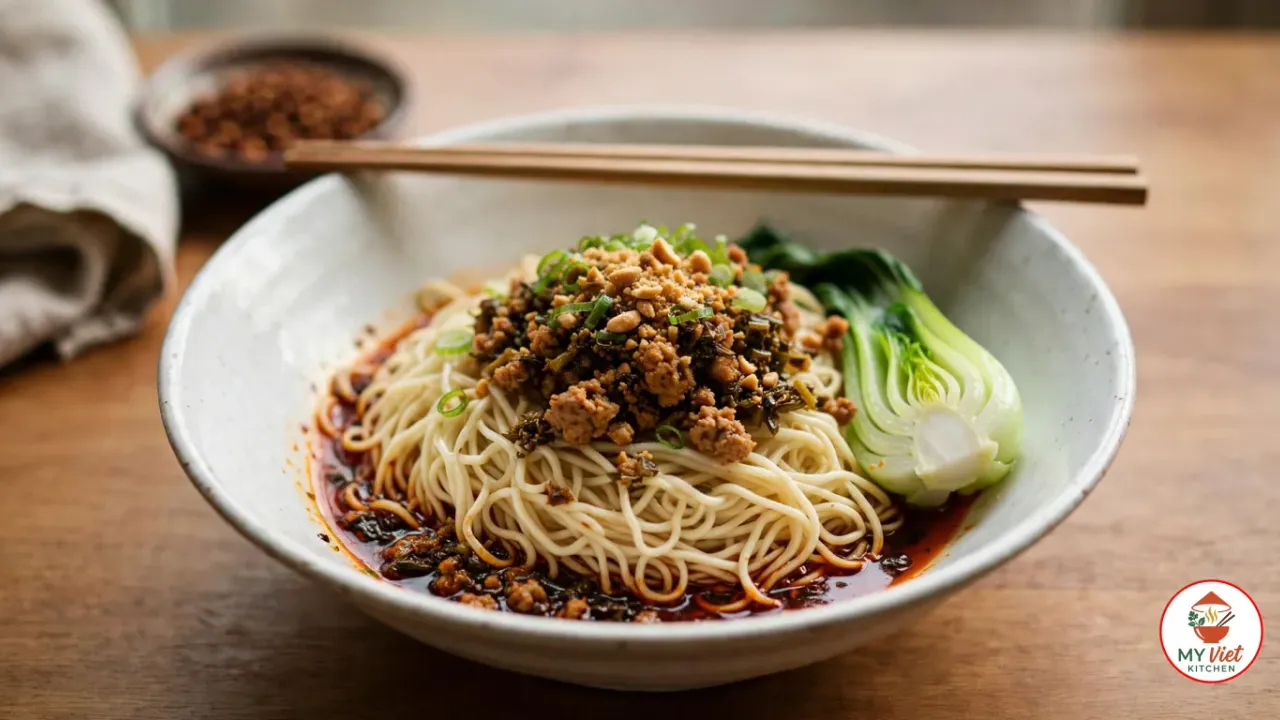
Dan dan noodles are a Sichuan street snack of wheat noodles tossed with chili oil, Sichuan pepper and a crisp topping of minced pork. This recipe makes the Chengdu style: a few spoonfuls of sauce at the bottom of each bowl, no broth, ya cai fried into the pork and only 1 teaspoon of sesame paste per serving. It serves 4 in 35 minutes. If ya cai or Sichuan pepper is hard to find, the swaps are below.
Prep Time: 15 minutes | Cook Time: 20 minutes | Total Time: 35 minutes | Servings: 4
Difficulty: Easy | Calories: ~620 per serving

Chengdu Bowl or Saucy Sesame Bowl: Which One Is This?
The Chinese name, 担担面 (dandanmian), comes from the dan, a carrying pole that street vendors balanced on one shoulder, with a basket of noodles at one end and the sauce at the other. Wikipedia places the dish’s origin in Chengdu, the capital of Sichuan. There it is served with no soup in a small bowl, covered in a mala meat sauce and pickles, with peanuts and scallions on top (Wikipedia).
The soup variant comes from Hong Kong. According to the same article, it tones down the spice and sometimes includes sesame paste or peanut butter. It is uncommon in Sichuan but widespread in the rest of China and in Chinese restaurants overseas (Wikipedia).
Even in Sichuan the bowl varies. Taylor Holliday of The Mala Market notes that some versions there include a small bit of sesame paste and some don’t. Some come with leafy greens, and the sauce runs from soupy to just enough to coat the noodles. In Chengdu the dish is almost always served in a very small snack bowl, while American restaurants normally serve larger portions (The Mala Market).
This recipe stays on the Chengdu side. Each bowl gets about 3 1/2 tablespoons of sauce, mostly chili oil, soy sauce and vinegar, and the noodles look plain until you toss them. Elaine of China Sichuan Food explains that street vendors mixed each bowl of noodles with the prepared sauce before serving, so the traditional dish cannot be soupy (China Sichuan Food). Want a saucier, takeout-style bowl? Use 2 teaspoons of sesame paste per bowl and add 2 more tablespoons of hot stock to each one.
What Is Ya Cai, and What Can Replace It?
Ya cai (芽菜) is a pickle of mustard green stems made in Yibin, in southern Sichuan. The Mala Market describes two fermentations. Dried stems are salted and sealed for three to six months, boiled with brown sugar for eight to nine hours and dried again. Star anise, Sichuan pepper and other spices then go in for another three to six months (The Mala Market).
America’s Test Kitchen credits ya cai with the fermented tang in dan dan mian, and says it adds savory funk, warm spice and a slight sweetness. The best-known brand, Sichuan Yibin Suimi Yacai, comes in small foil packets sold online or in the refrigerated section of well-stocked Chinese markets. “Suimiyacai” as one word on the label means the pickle is already cut into pieces the size of rice grains (America’s Test Kitchen).
Because the pickle is salty, the same guide suggests cutting the salt in a dish by about a quarter when you add it (America’s Test Kitchen). That is why the pork here gets only 1 teaspoon of soy sauce. If you want less salt still, Elaine suggests soaking the pickle in cold water for 10 minutes and straining it before use (China Sichuan Food).
No ya cai at all? Finely chopped zha cai, the preserved mustard tuber, is the usual stand-in. It is spiced differently and has a different texture, but The Mala Market says it works well as a substitute in many dishes, especially noodles (The Mala Market). Or leave the pickle out, as America’s Test Kitchen allows in its dan dan mian, and raise the soy sauce in the pork from 1 to 2 teaspoons (America’s Test Kitchen).
Which Other Ingredients Can You Swap?
Sichuan peppercorns. Their tingling, numbing effect comes from hydroxy-alpha sanshool. From 1968 to 2005 the US Food and Drug Administration banned imports because the peppercorns could carry citrus canker, and heat treatment was required until 2007 (Wikipedia). Today Asian markets keep them in the spice aisle. Nothing else gives the same buzz, so buy them rather than substitute. Grind only what you need: The Mala Market notes that the powder keeps its numbing punch for only a few weeks (The Mala Market).
Sesame paste, vinegar and sweet bean sauce. Chinese sesame paste is made from roasted sesame and is much darker and far less astringent than Middle Eastern tahini (Wikipedia). At 1 teaspoon per bowl, tahini is a fair swap, and America’s Test Kitchen lists it as one. The same recipe accepts balsamic vinegar for Chinese black vinegar and hoisin for sweet wheat paste (America’s Test Kitchen).
Noodles. Sichuan cooks typically use a round wheat noodle that is often alkaline. The alkaline water, kansui in Japanese, makes the noodles springier and chewier and helps them hold up in sauce. The Mala Market suggests fresh Chengdu-style noodles or Japanese ramen, and says to check the label for sodium carbonate (The Mala Market). America’s Test Kitchen also accepts fresh lo mein or ramen noodles (America’s Test Kitchen).
Ingredients for Dan Dan Noodles
For the Pork Topping:
- 1 tablespoon vegetable oil or lard
- 8 ounces (225 g) ground pork, not too lean
- 1 tablespoon Shaoxing wine
- 2 teaspoons sweet bean sauce (tianmianjiang) or hoisin sauce
- 1 teaspoon light soy sauce
- 1/3 cup (45 g) ya cai (Sichuan preserved mustard greens)
For the Sauce:
- 1 teaspoon whole Sichuan peppercorns
- 1/4 cup (60 ml) Sichuan chili oil with its flakes
- 3 tablespoons light soy sauce
- 4 teaspoons Chinkiang black vinegar
- 4 teaspoons Chinese sesame paste
- 1 teaspoon sugar
- 1/4 cup (60 ml) hot chicken stock
For the Noodles and Toppings:
- 12 ounces (340 g) fresh round wheat noodles, or 8 ounces (225 g) dried
- 4 baby bok choy, halved lengthwise
- 1/4 cup (35 g) roasted peanuts, crushed
- 2 green onions, thinly sliced
Step-by-Step Instructions
Step 1: Toast and Grind the Sichuan Pepper
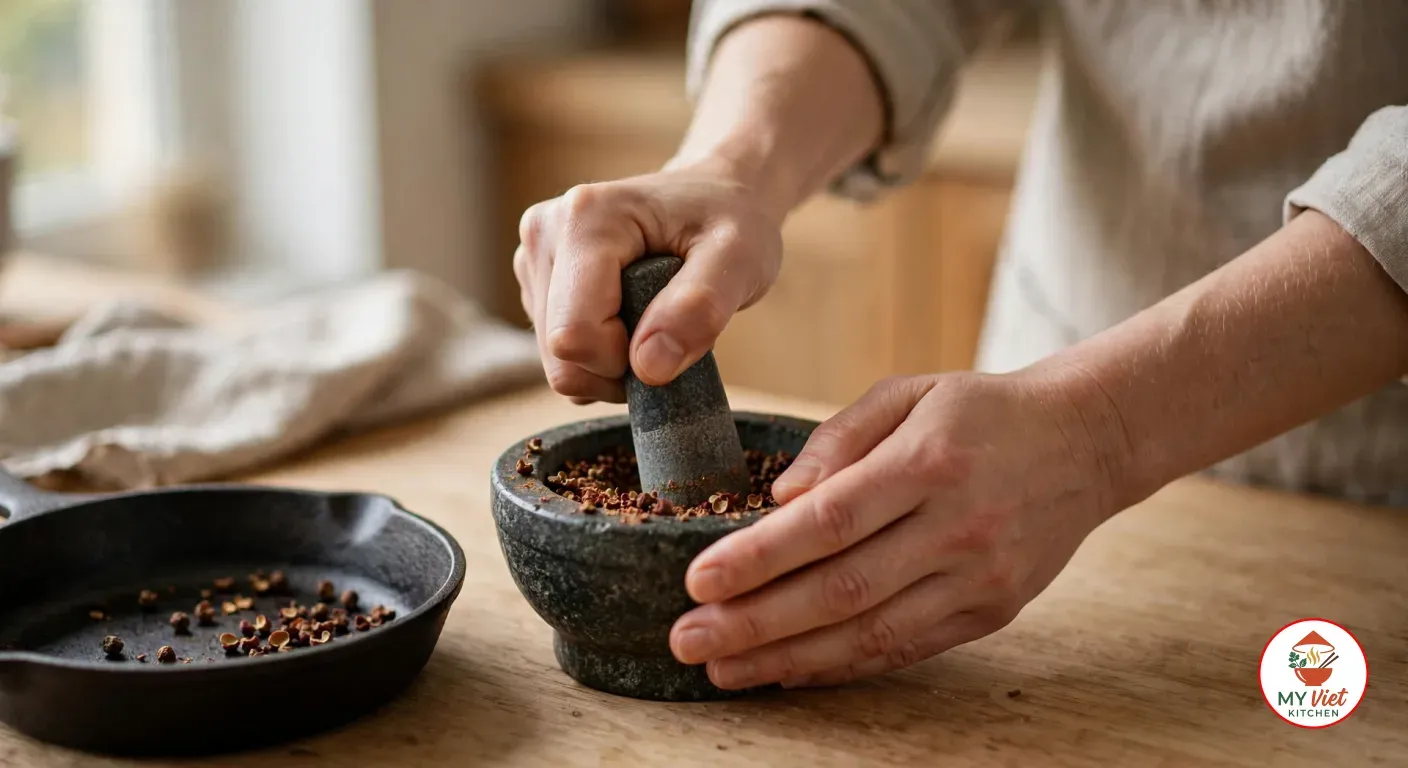
1Tip the peppercorns onto a plate and pick out any shiny black seeds and twigs, which you don’t want in the powder. Set a small, dry pan on medium-low and shake the husks in it until they smell strongly floral, 1 to 2 minutes, and stop before they darken. Let them cool on the plate, then grind them in a mortar or spice grinder. Sift the powder through a fine sieve to catch the tough husks that won’t break down. You need only about 1/2 teaspoon of powder for the four bowls.
Step 2: Fry the Pork and Ya Cai
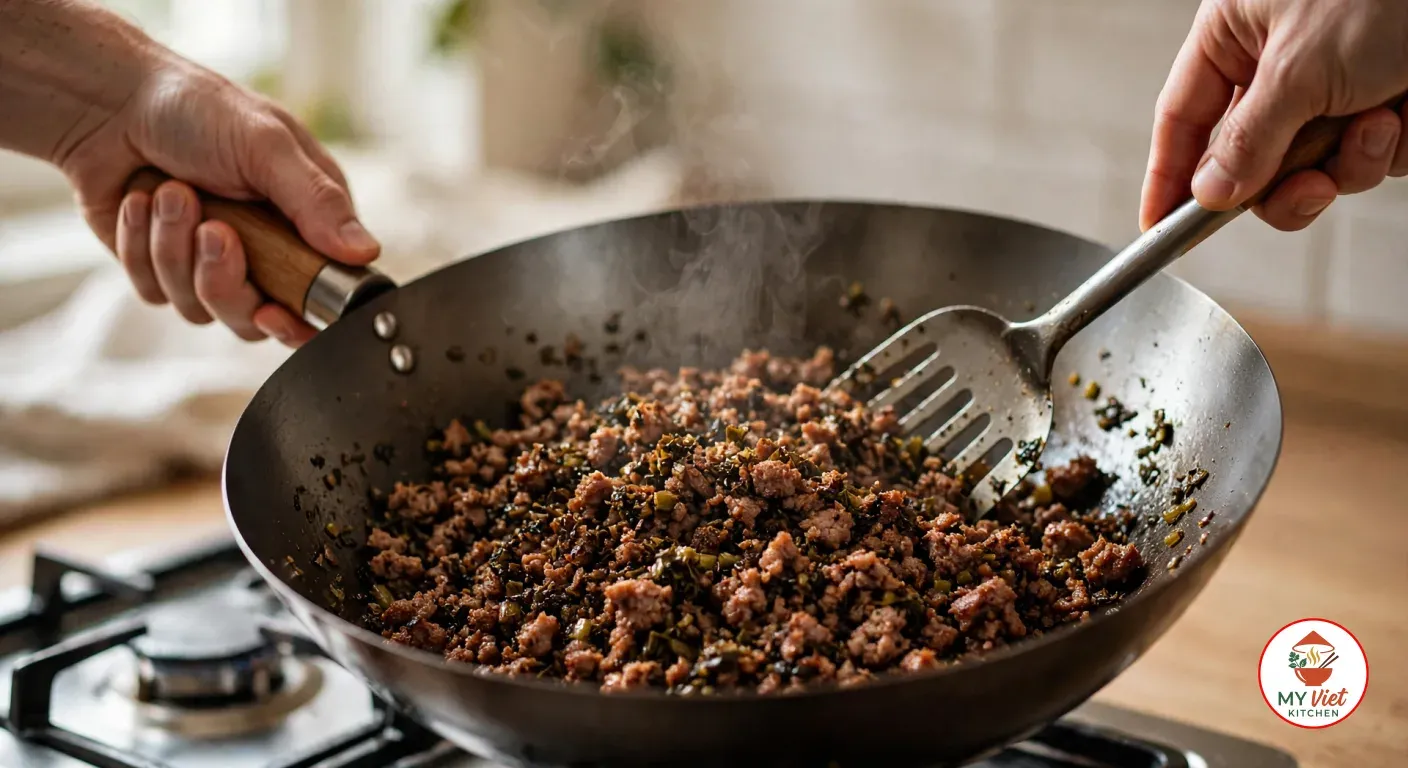
2Set the wok over high heat with the oil, and when the oil shimmers, add the pork. Press it into a thin layer with the spatula, and break it into small bits as it cooks, frying for 3 to 4 minutes until no pink remains. Add the Shaoxing wine, sweet bean sauce and 1 teaspoon of soy sauce. Give it another 3 to 4 minutes on the heat, until the wine has cooked off and the pork is dry and crisp at the edges. Stir in the ya cai for 1 minute, until it smells savory, then take the wok off the heat.
Step 3: Build the Sauce in the Bowls
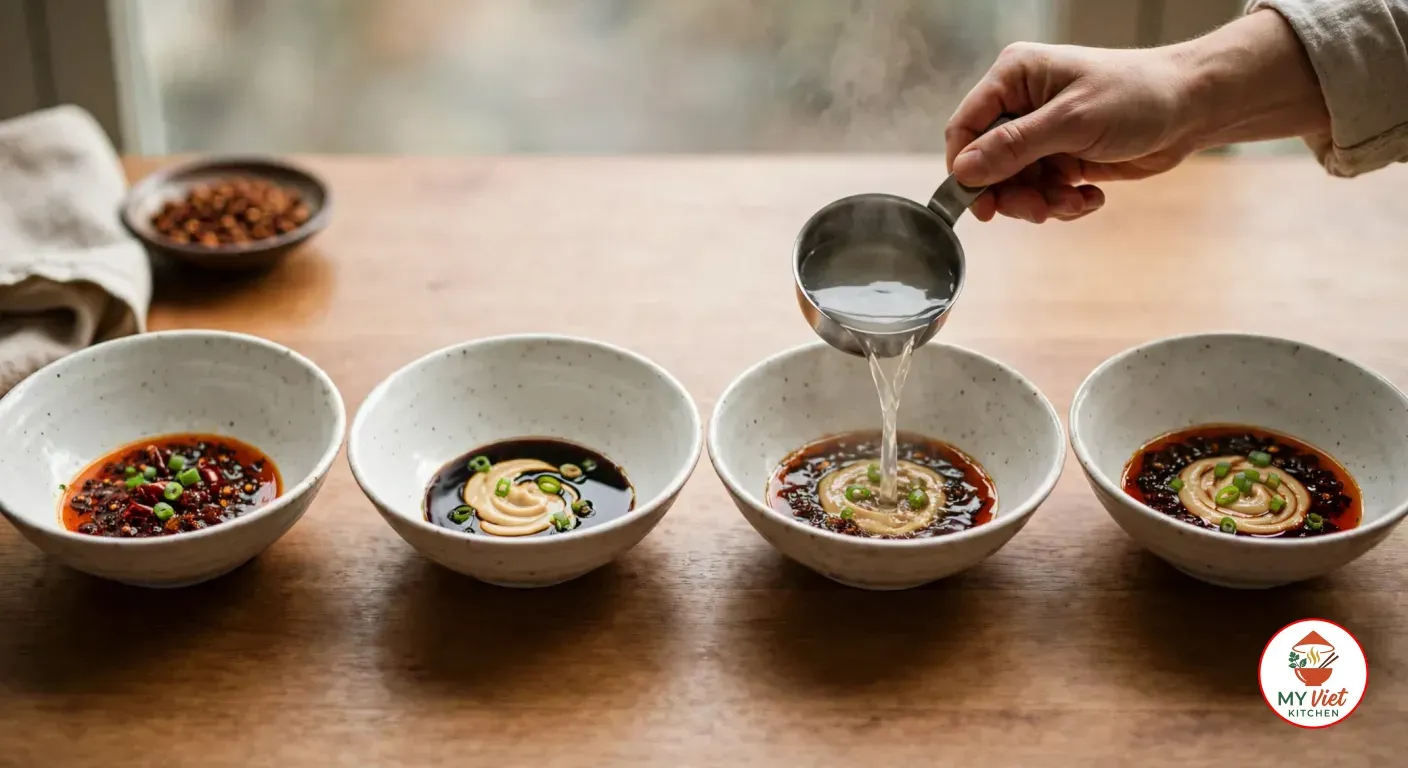
3Warm 4 bowls with hot water from the tap, then dry them. In each bowl, stir 1 teaspoon of sesame paste with 1 tablespoon of hot stock until smooth; the paste blends more easily before the oil goes in. Add 1 tablespoon of chili oil with flakes, 2 1/4 teaspoons of soy sauce, 1 teaspoon of black vinegar, 1/4 teaspoon of sugar and a pinch of the ground Sichuan pepper to each bowl. Taste one: it should be salty, sour and hot all at once, because the noodles will dilute it.
Step 4: Boil the Greens and Noodles
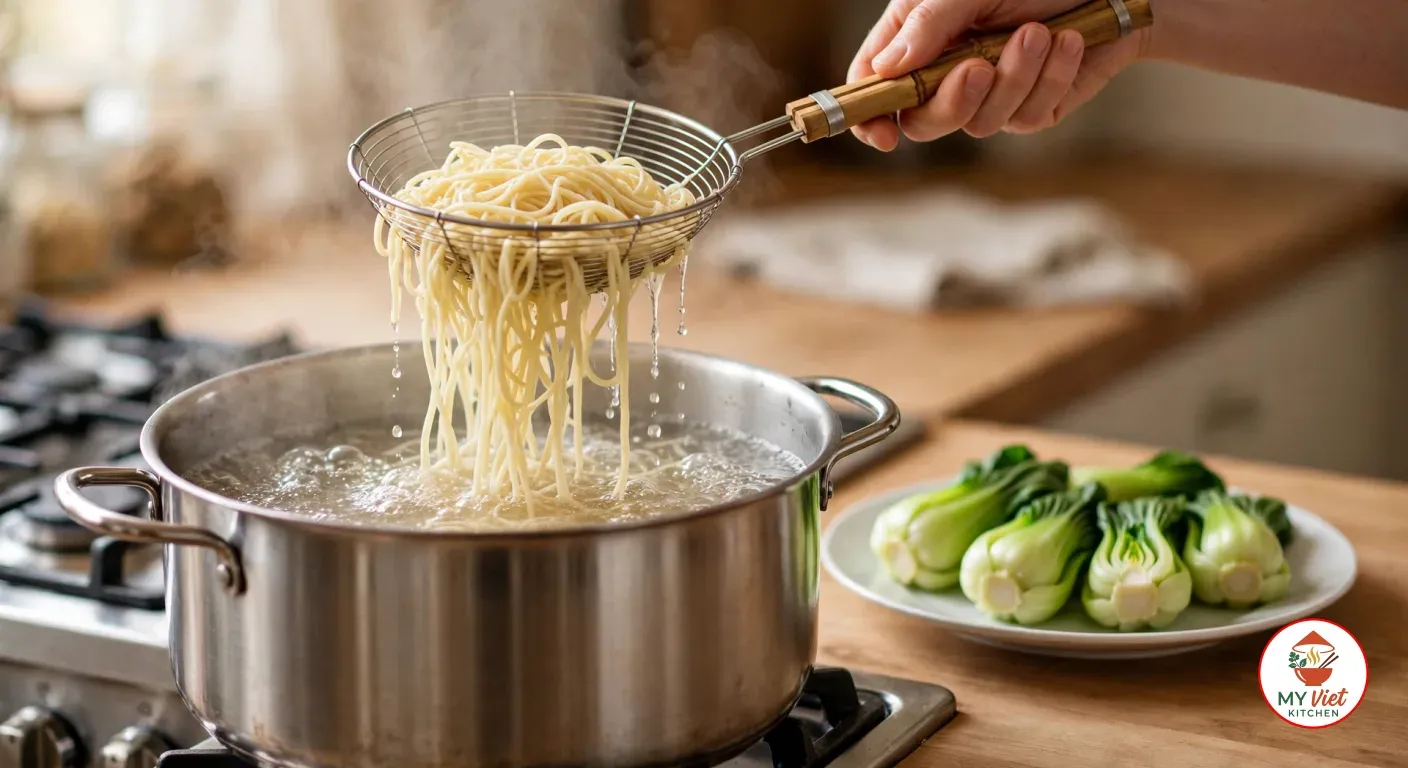
4Once a large pot of water reaches a rolling boil, drop in the bok choy. Give it 1 minute, just until the leaves turn bright green, and lift it out with a spider. Add the noodles to the same water and stir so they don’t clump. Cook until just tender, 2 to 3 minutes for fresh noodles or as the packet directs for dried. Before you drain them, scoop out 1/2 cup (120 ml) of the cooking water and keep it by the bowls.
Step 5: Assemble and Toss
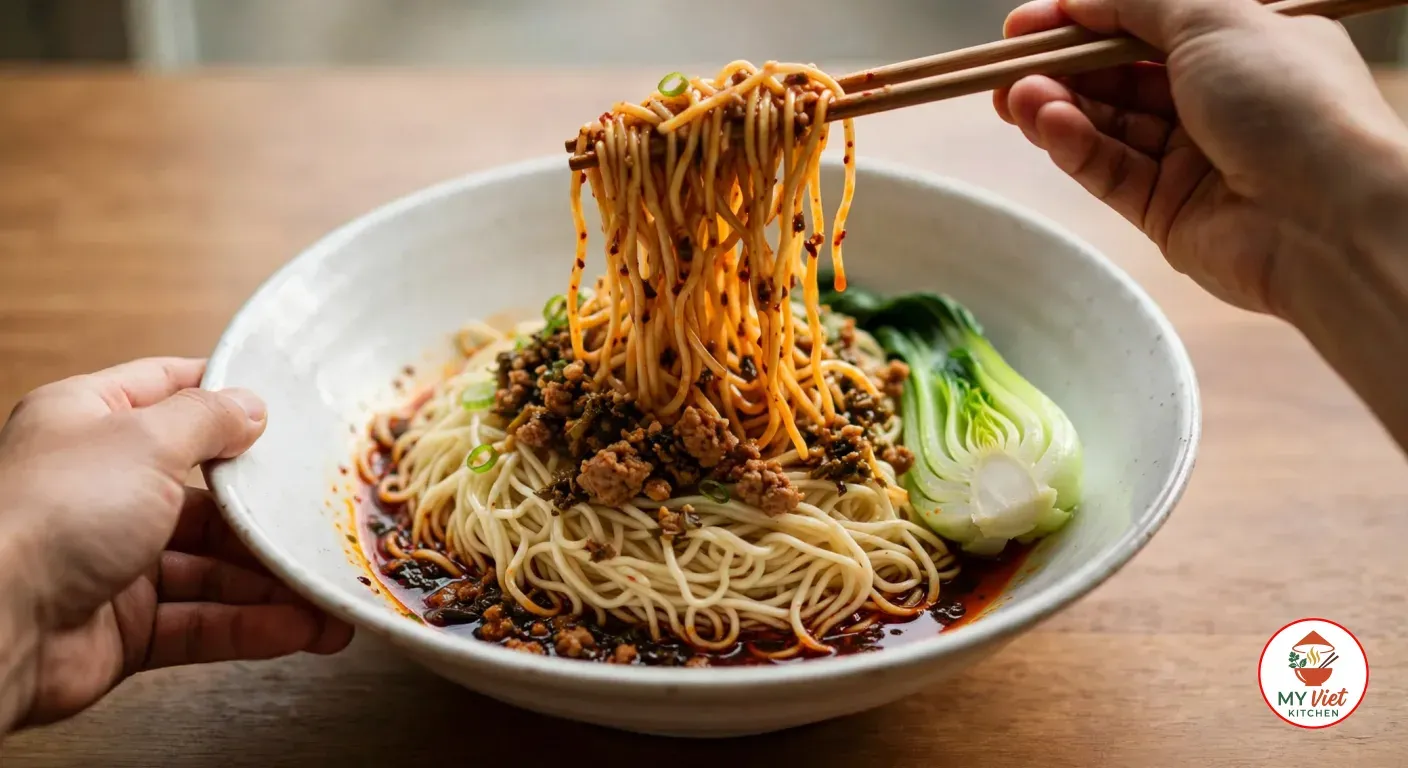
5Drain the noodles but leave them a little wet, and divide them among the bowls on top of the sauce. Add the bok choy, a quarter of the pork, the peanuts and the green onions to each bowl. Serve it like this, with the sauce hidden underneath, and toss at the table. Lift the noodles from the bottom up until every strand is coated red. If they look dry, add the reserved noodle water 1 tablespoon at a time.
Frequently Asked Questions
Why do my dan dan noodles taste dry after tossing?
The noodles soaked up the sauce, or they were drained too well. Splash in the saved cooking water a spoonful at a time and toss again until the strands look glossy. Taylor Holliday of The Mala Market calls the ratio of sauce to noodles the key to the dish, and she keeps some noodle water back for exactly this (The Mala Market).
Are peanuts the traditional topping?
Not originally. Elaine of China Sichuan Food writes that the traditional method serves dan dan noodles with fried soybeans or peas, and that crushed peanuts have become the more popular topping (China Sichuan Food). Either works here. Use 1/4 cup (35 g) of whichever you choose, and add it just before tossing so it stays crunchy.
How can I make dan dan noodles less spicy?
Use 2 teaspoons of chili oil per bowl instead of 1 tablespoon, and take more oil than flakes from the jar. Keep the Sichuan pepper. Its tingle comes from a compound called hydroxy-alpha sanshool, not from chili heat (Wikipedia). A little extra sugar, about 1/4 teaspoon per bowl, also softens the burn.
Is the video recipe the same as this one?
It is close in style. Chinese Cooking Demystified describes its bowl as fresh noodles with a pork and yacai topping in a pool of spicy, chili-oil-based sauce. The channel calls a quality homemade Sichuan chili oil the first step, and covers it in a separate video (Chinese Cooking Demystified). This recipe works with a good jar of Sichuan chili oil, though homemade oil is just as welcome. Use the amounts on this page, since the video’s written recipe is a separate one.
Sources
- Dandan noodles, Wikipedia
- Sichuan Dandanmian ft. Yacai (Dandan Noodles, 担担面), Taylor Holliday, The Mala Market, May 2014 (updated September 2026)
- Sourcing Yibin Suimiyacai (Preserved Mustard Greens, 芽菜), The Mala Market, May 2014
- Dan Dan Noodles, Elaine, China Sichuan Food, updated January 2026
- Bring On the (Preserved Vegetable) Funk, Cook’s Illustrated, America’s Test Kitchen
- Dan Dan Mian (Sichuan Noodles with Chili Sauce and Pork), Lan Lam, America’s Test Kitchen, August 2020
- Sichuan pepper, Wikipedia
- Tahini, Wikipedia
- Dan Dan Noodles - How to Make Authentic, Street Food style Dandan Noodles (担担面), Chinese Cooking Demystified, YouTube, September 2017