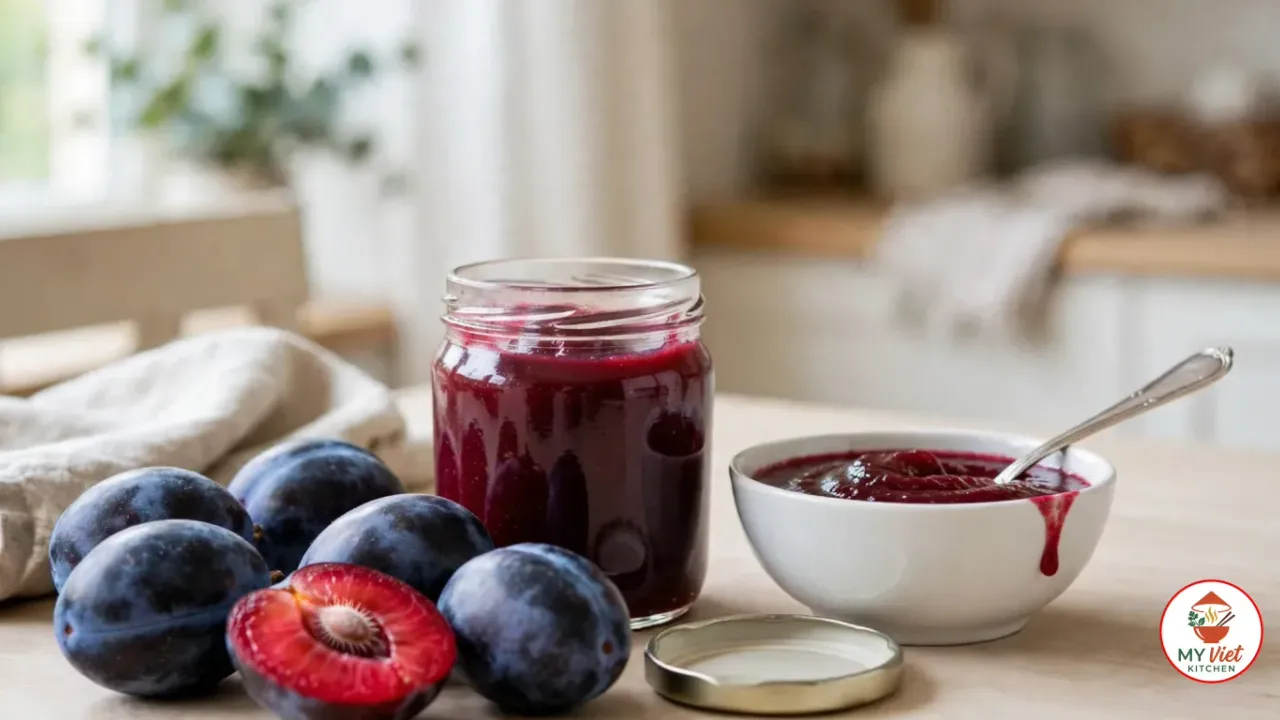
Davidson plum sauce is a sweet-sour purple condiment cooked from the fruit of Davidsonia, rainforest trees of New South Wales and Queensland whose plums are so sour they are rarely eaten fresh. This recipe pits 500 g of fresh or frozen plums, simmers them with raw sugar, cider vinegar, ginger and warm spices, and blends them smooth. Spoon it beside roast lamb, duck or a cheese board. It takes 50 minutes and makes about 2 cups (500 ml).
Prep Time: 15 minutes | Cook Time: 30 minutes | Total Time: 50 minutes (includes a 5-minute rest; thaw frozen plums first) | Servings: 16 (2 tablespoons each)
Difficulty: Easy | Calories: ~50 per serving
How Much Sugar Do Davidson Plums Need?
More than any plum you know. AgriFutures Australia describes the fruit as dark blue-purple outside and deep reddish-pink inside, with a juicy pulp and a sharp acidic taste that means it is rarely eaten fresh (AgriFutures Australia). Warndu’s native food guide gives 3.9 g of sugars per 100 g, and calls the taste tart, slightly astringent and a little bitter (Warndu).
Published recipes answer that with a lot of sugar. Sustainable Gardening Australia suggests cooking the fruit with recipes for European plums and notes that some cooks use twice the sugar those recipes call for (Sustainable Gardening Australia). Linda Woodrow’s sauce at The Witches Kitchen uses 2 1/2 cups of brown sugar for 5 cups of plum pulp, half as much by volume (The Witches Kitchen). Jam goes further: GardensOnline weighs the plums and adds an equal weight of white sugar (GardensOnline).
This Davidson plum sauce starts lower, with 3/4 cup (165 g) of raw sugar to 500 g of fruit, so it stays sharp enough to cut through lamb fat or a rich cheese. Taste it after blending. If it still makes you wince, add sugar a tablespoon at a time. With the full extra 1/4 cup you are close to the Witches Kitchen ratio.
Cook it in stainless steel or enamel. GardensOnline warns that the fruit is acidic enough to draw a metallic taste out of aluminium or iron pots (GardensOnline).
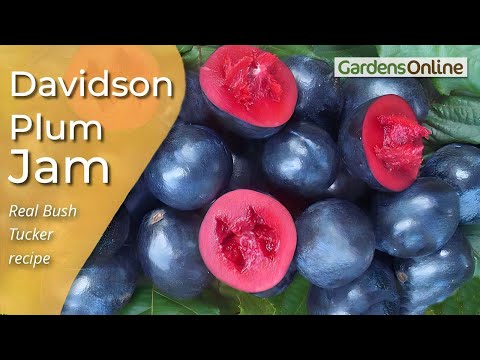
The video above is that GardensOnline jam, not a sauce. The pitting and the blending of skins are the same as here. After that, the jam boils for about 30 to 40 minutes with its equal weight of sugar until it passes a cold-plate test. This sauce simmers for 25 minutes with less sugar and is meant to stay pourable.
Which Davidson Plums Can You Buy?
There are three species. Davidsonia jerseyana grows in lowland subtropical rainforest in New South Wales, and D. johnsonii in New South Wales and south-east Queensland. D. pruriens, also called Ooray or Queensland Davidson’s plum, is the tallest. All have sour, edible fruit with burgundy flesh. Small plantations in both states supply the market, mainly with D. jerseyana and D. pruriens (Wikipedia).
Buy farmed fruit rather than picking wild trees. D. jerseyana is listed as endangered in New South Wales and nationally. The state’s profile names fruit collection for bush food among its threats and asks for a permit before anyone collects fruit from the wild (NSW BioNet).
Fresh fruit has a short window. D. jerseyana fruits in early to mid-summer. D. pruriens fruits in winter in the wild, and over a longer season in cultivation (Sustainable Gardening Australia). The rest of the year, look for frozen plums, which Warndu lists as available all year. Warndu’s guide also records that Aboriginal people ate the plums raw (Warndu).
The CSIRO key to tropical rainforest plants describes D. pruriens, native to north-east Queensland, as a fruit about 3–5 by 4–6 cm holding one or two flat stones with fringed edges. The stones are often taken for seeds, but each usually holds a single seed. The same entry says the fruit is still sought after for jam and wine. It also notes that hydrogen cyanide has been reported from D. pruriens, and that eating the fruit has caused vomiting and stomach pain, citing Everist (1974) (CSIRO, Australian Tropical Rainforest Plants).
Can You Keep Davidson Plum Sauce in the Pantry?
Not safely with this recipe. Keep it in the fridge or freezer. The Food Safety Information Council warns that home bottling can’t match the heat schedules canneries use to kill botulism spores. It advises sticking to high-acid fruit, because acid (low pH) stops the bacteria from growing (Food Safety Information Council). Davidson plums taste sharply acidic (AgriFutures Australia), but this sauce has not been tested for shelf-stable bottling.
Some cooks fill hot jars and seal them. The Witches Kitchen does this and says the sugar and vinegar keep the sauce a long time. For extra safety it boils the sealed jars for 20 minutes (The Witches Kitchen). The US National Center for Home Food Preservation does not recommend open-kettle canning, filling hot jars with no further processing, because it does not prevent all risks of spoilage (NCHFP).
For fridge storage, boil clean jars for 15 minutes, as The Witches Kitchen does, and fill them with hot sauce (The Witches Kitchen).
The NCHFP gives about 1 month in the fridge for an opened jar of full-sugar cooked jam. It warns that lower-sugar spreads may keep for less time, and that any jar with mould, yeast or an alcohol smell should be thrown out whole (NCHFP). Davidson plum sauce made this way has far less sugar than jam, so use it well within that month. Freeze the rest in an ice-cube tray, then bag the cubes so you can thaw a few at a time.
Ingredients for Davidson Plum Sauce
For the Sauce:
- 1 lb 2 oz (500 g) Davidson plums, fresh or frozen and thawed
- 3/4 cup (165 g) raw sugar, plus up to 1/4 cup (55 g) more to taste
- 1/2 cup (125 ml) water
- 2 tablespoons (30 ml) apple cider vinegar
- 1 teaspoon finely grated fresh ginger
- 1/2 teaspoon ground cinnamon
- 1/4 teaspoon ground cloves
- 1/4 teaspoon salt
- 1/2 teaspoon ground lemon myrtle (optional)
- 1 small red chili, seeded and finely sliced (optional)
Step-by-Step Instructions
Step 1: Pit the Plums
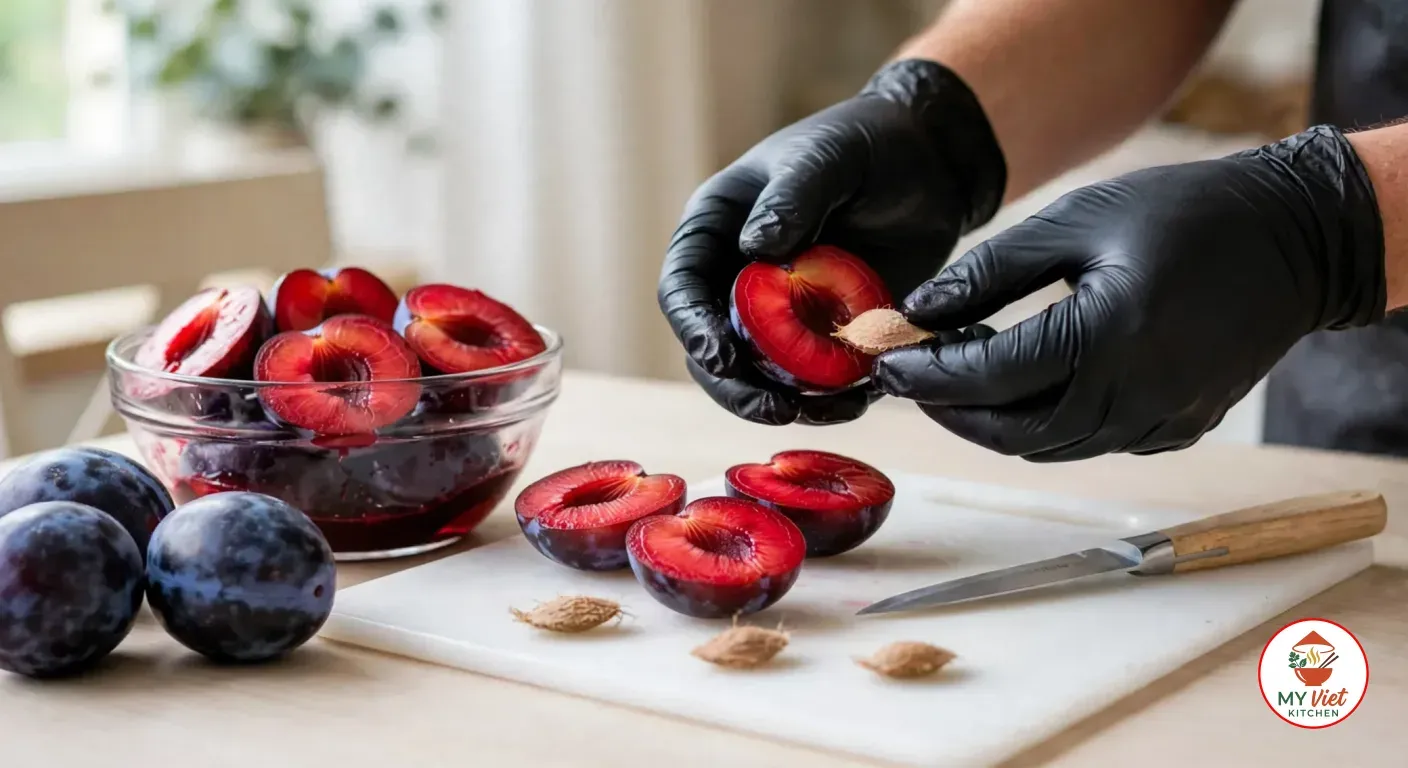
1Rinse the plums under cold water. If they are frozen, thaw them in a bowl first so you keep every drop of juice. Put on gloves, because the juice stains skin and wooden boards, and work on a plastic or glass board. Cut each plum around its middle, twist the halves apart and pull out the one or two flat, fibrous stones with your fingertips or the tip of a teaspoon. Squeeze each half gently to feel for a stone you missed. Keep the skins on: they soften in the pot and blend smooth.
Step 2: Simmer with Sugar and Water
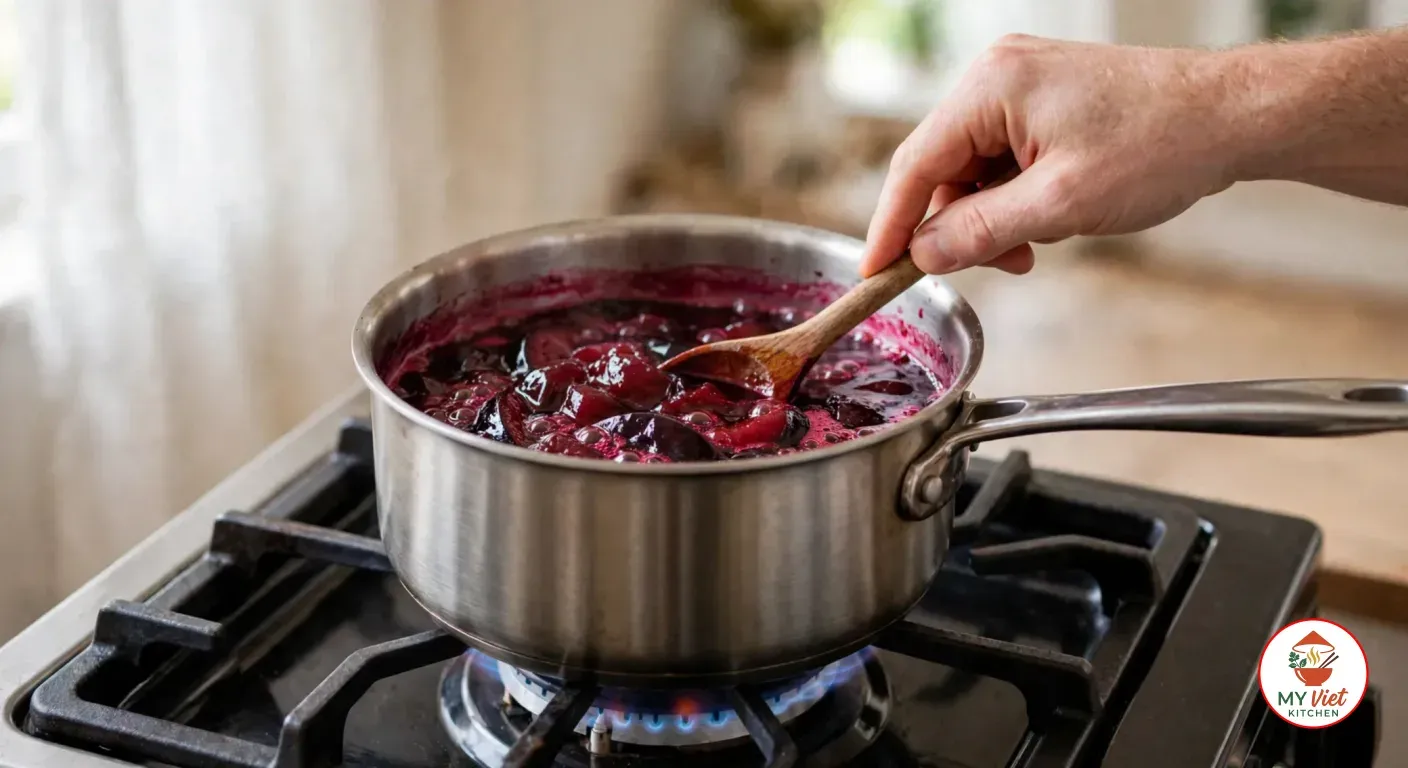
2Put the 3/4 cup of raw sugar and the water in a medium stainless steel or enamel saucepan over medium heat. Stir until the sugar has dissolved and the liquid looks clear, about 2 minutes. Add the pitted plums and any juice from the bowl. Once it reaches a gentle boil, lower the heat and let it bubble softly for 15 minutes. Stir every few minutes, scraping the base of the pan. The fruit is ready when the halves have collapsed into a loose, deep purple pulp and the skins have gone soft.
Step 3: Add the Vinegar and Spices
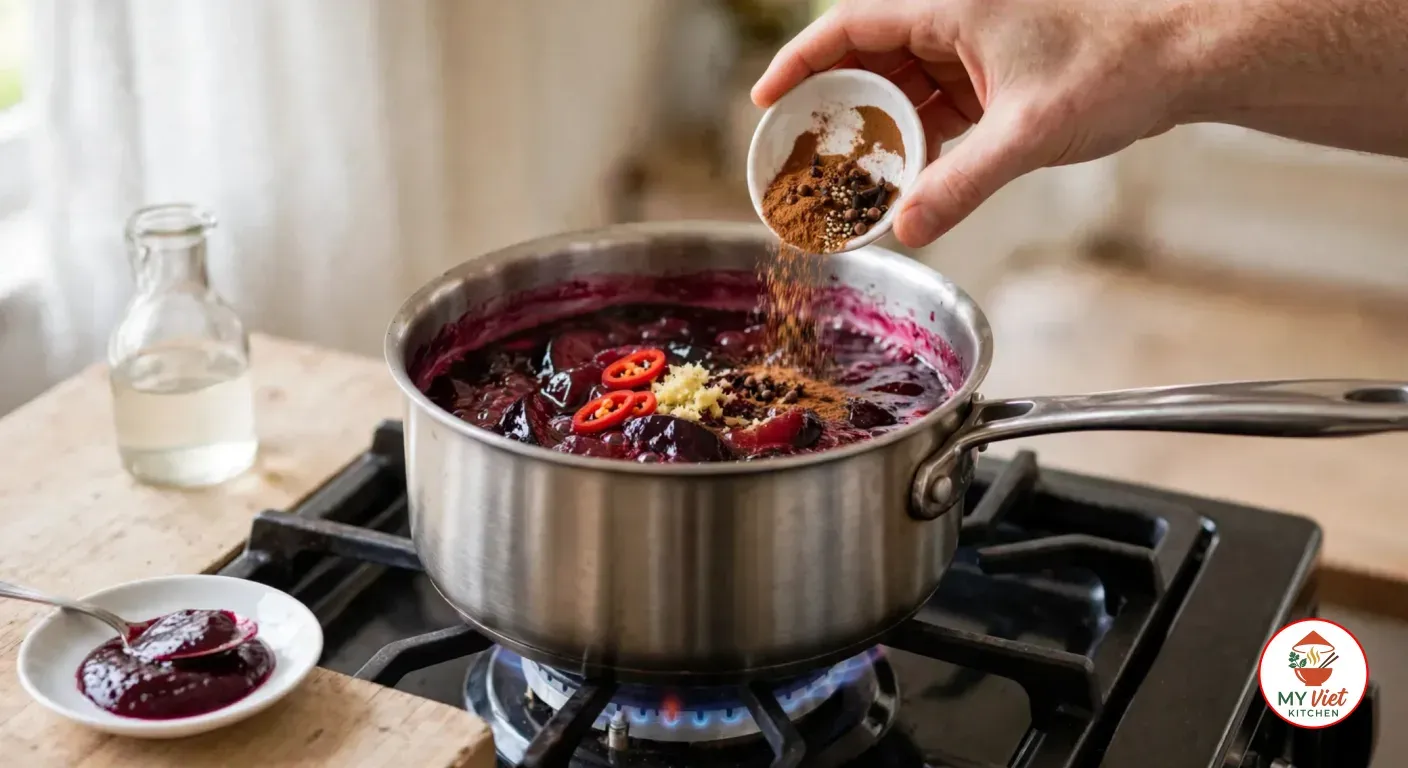
3Put a saucer in the freezer. Stir the cider vinegar, ginger, cinnamon, cloves and salt into the pan, with the lemon myrtle and chili if you are using them. Simmer uncovered for 10 minutes more on low, stirring often, as the thicker pulp catches more easily. Drop a spoonful onto the cold saucer and tilt it. The sauce should run slowly, syrupy but still pourable. If it runs like juice, give it 2 or 3 minutes more and test again.
Step 4: Blend and Adjust the Sugar
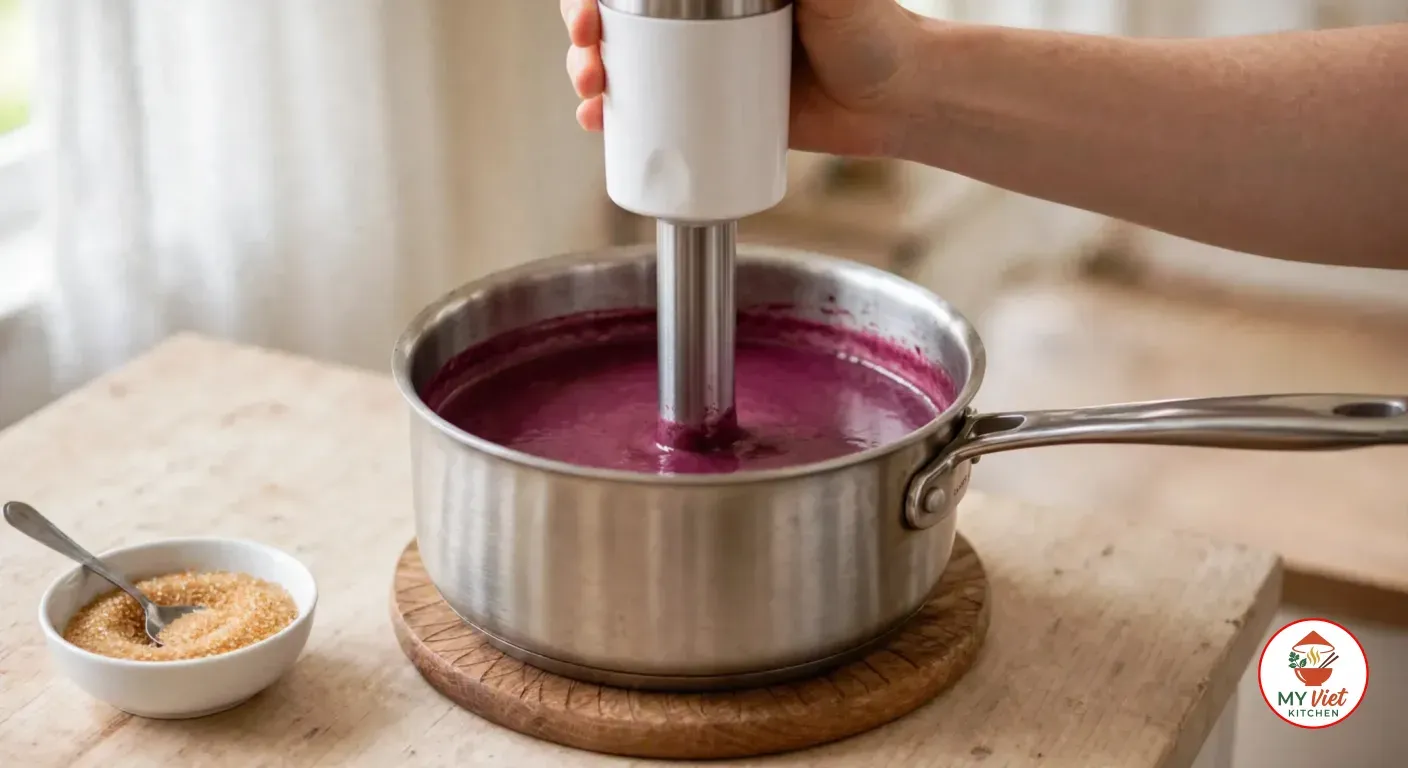
4Take the pan off the heat and leave it for 5 minutes so it spits less when you blend. Blend with a stick blender, keeping the head under the surface, until no flecks of skin remain. For a glossy pouring sauce, push it through a fine sieve with the back of a spoon. Taste a little once it has cooled on the spoon. If it is still too sharp, stir in up to 1/4 cup (55 g) more sugar, 1 tablespoon at a time, tasting after each.
Step 5: Jar and Refrigerate
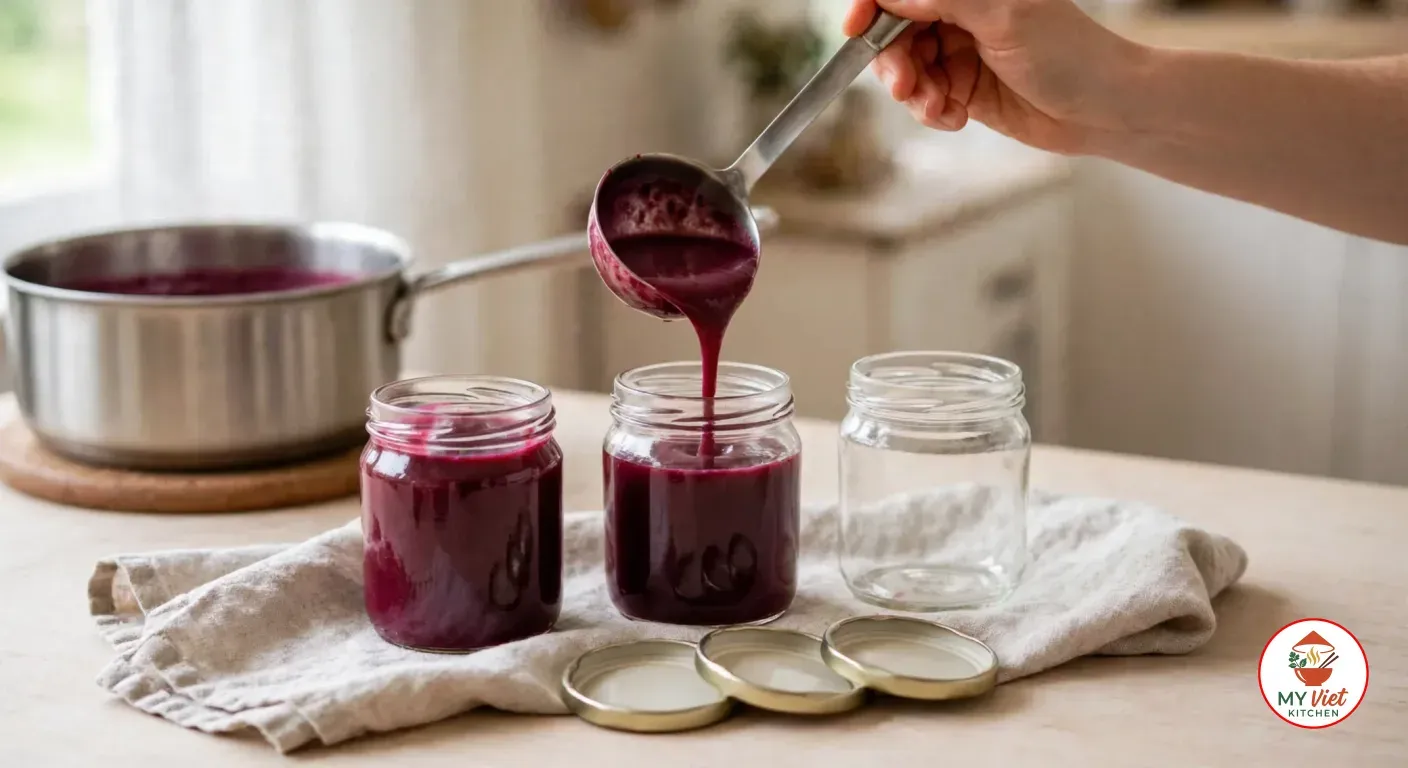
5Return the sauce to low heat for 2 minutes, stirring, so any sugar you added dissolves. Meanwhile, take clean jars and lids that have been boiled for 15 minutes out of the water with tongs. Ladle in the hot sauce, leaving a little space at the top, wipe the rims and close the lids. Let the jars cool to room temperature, then refrigerate them. Use the sauce well within a month, and freeze any you won’t get through.
Frequently Asked Questions
Do I need to peel Davidson plums for sauce?
No. Only the stones come out. The skins soften in the pot and disappear when you blend, and GardensOnline blends its plums skins and all for jam (GardensOnline). If you want a very smooth, glossy sauce for drizzling, push the blended sauce through a fine sieve and scrape the underside of the mesh.
Can I use frozen Davidson plums?
Yes, and outside the short fresh season you will have to. Warndu lists the fruit as available all year frozen (Warndu). Thaw the plums in a bowl so you can pit them, and tip the purple juice that collects into the pan with the fruit.
Is Davidson plum sauce the same as Chinese plum sauce?
No. Chinese plum sauce is a light-brown sweet-and-sour condiment made from sweet plums, seasoned with sugar, vinegar, salt, ginger and chili (Wikipedia). Davidson plums look like European plums but are not closely related to them (Wikipedia). Their sauce is purple, much sharper and less sweet, so expect a different result if you swap one for the other.
Why did my Davidson plum sauce set like jam in the fridge?
The fruit has plenty of pectin. The Witches Kitchen’s jam recipe says Davidson plums have enough pectin to set reliably with nothing added (The Witches Kitchen). Cooking past the syrupy stage, or adding the full extra 1/4 cup of sugar, makes a firmer set. Warm a portion with a splash of water and stir until it pours again.
Sources
- Focus on Davidson Plum, AgriFutures Australia (RIRDC), December 2014
- Warndu’s Davidson Plum, Warndu, July 2020
- Davidson’s Plum, Sustainable Gardening Australia, October 2021
- Davidson plum sauce, The Witches Kitchen, January 2016
- Davidson plum jam, The Witches Kitchen, December 2015
- Davidson Plum Jam - how to make it., GardensOnline, YouTube, May 2021
- Davidson’s Plum (Davidsonia jerseyana) profile, NSW BioNet Threatened Species, October 2022
- Davidsonia pruriens, Australian Tropical Rainforest Plants, CSIRO, 2020
- Home bottling and canning, Food Safety Information Council
- Equipment and Methods Not Recommended, National Center for Home Food Preservation
- Storing Home-Canned Jams and Jellies, National Center for Home Food Preservation, October 2005
- Davidsonia, Wikipedia
- Plum sauce, Wikipedia